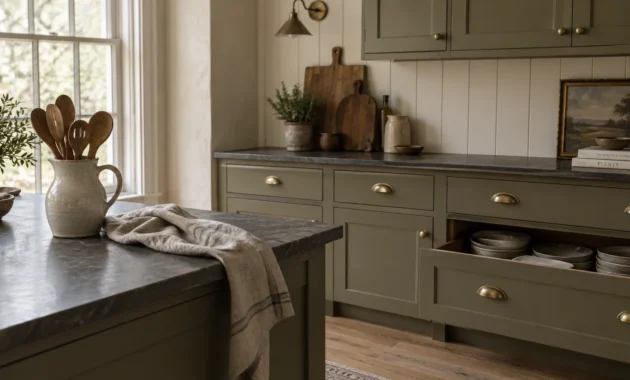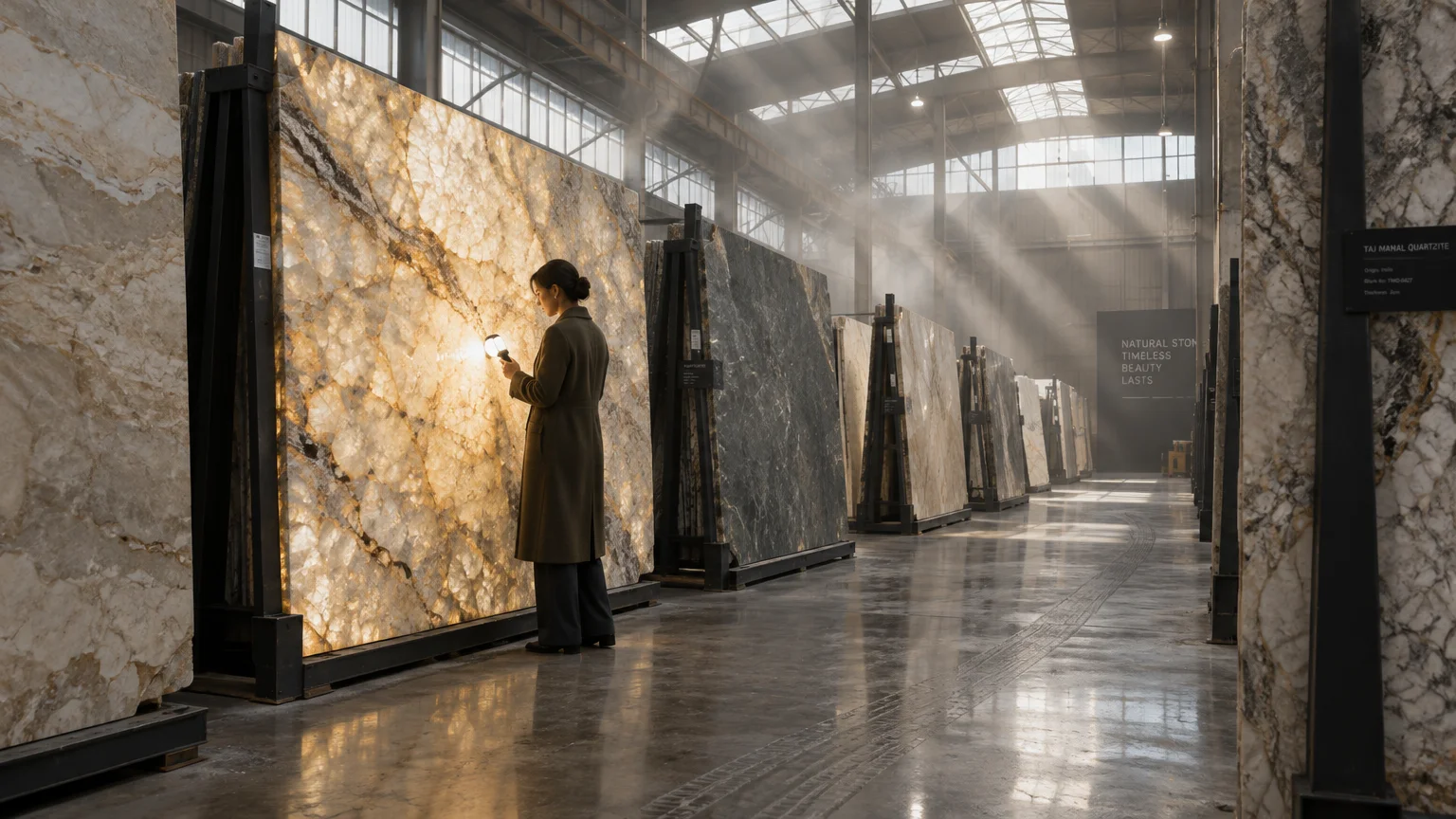
Homeowners are officially retiring speckled granite in favor of surfaces that balance architectural sophistication with effortless resilience. Modern kitchens now demand materials that elevate ambient light, celebrate tactile beauty, and resist intense daily culinary wear.
Evolving health regulations and shifting design sensibilities have accelerated this aesthetic migration toward organic textures and mineral-rich slabs. You can now curate a truly enduring focal point that reflects thoughtful craftsmanship rather than builder-grade conformity.
Exploring these countertop trends 2027 will help you choose high-performance granite alternatives that redefine your culinary workspace. Here are the leading modern countertops commanding luxury interiors today.
Trend #1: Natural Quartzite and Crystalline Drama
Natural quartzite has officially captured the summit of luxury kitchen design. Formed under immense subterranean heat and pressure, this genuine metamorphic stone delivers hypnotic veining alongside diamond-level durability.
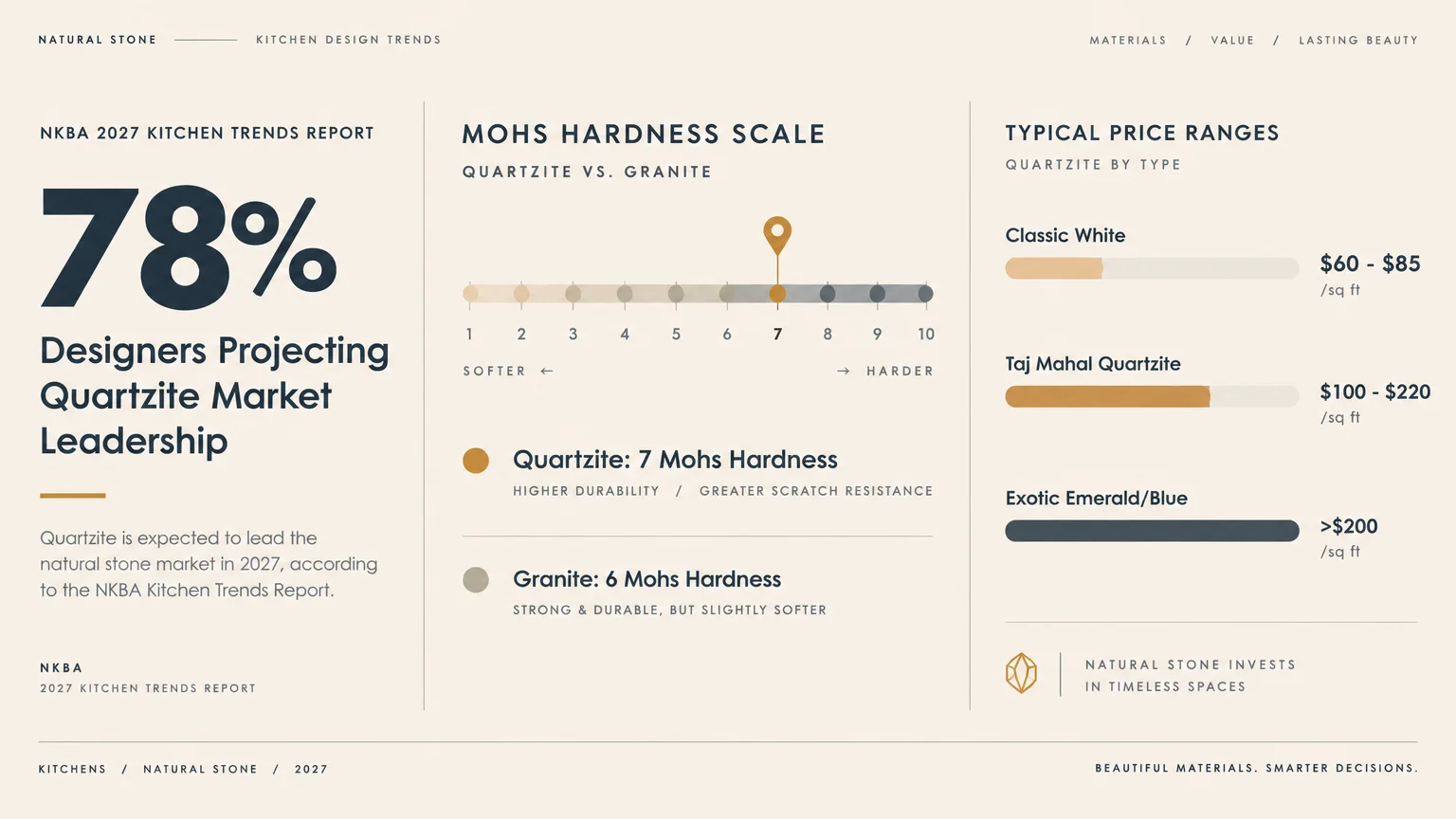
According to the National Kitchen & Bath Association (NKBA) 2027 Kitchen Trends Report, 78% of designers expect quartzite to lead the market over the next three years. This marks the first time natural quartzite has surpassed engineered quartz.
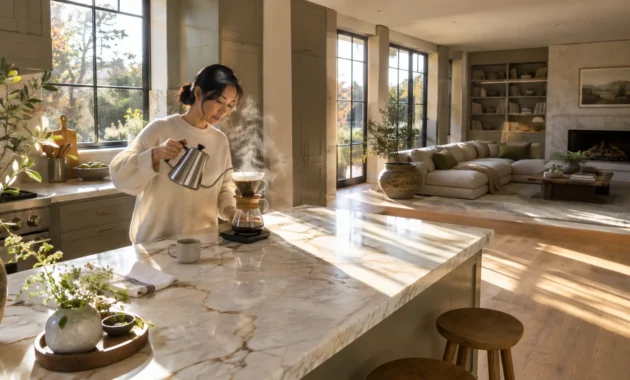
Unlike the busy, speckled patterning of traditional granite, quartzite offers fluid, luminous patterns that closely mirror high-end marble. You gain an ethereal, translucent surface that catches and bounces natural light across your kitchen.
Quartzite registers a seven on the Mohs hardness scale, making it significantly harder than granite. It actively resists scratches from wayward kitchen knives and easily withstands searing cookware.
Slabs like Taj Mahal quartzite command immense popularity for their soft, creamy backgrounds and subtle amber striations. You can expect installed pricing for Taj Mahal to run between $100 and $220 per square foot.
Entry-level varieties, such as Classic White, typically start around $60 to $85 per square foot installed. Rare, exotic slabs with dramatic emerald or blue tones can easily exceed $200 per square foot.
Quartzite also remains completely exempt from emerging legislative bans targeting high-silica synthetic stones. Its pure geologic provenance provides peace of mind for both fabrication safety and household longevity.
Be cautious when purchasing, as some dishonest vendors mislabel softer dolomitic marble as quartzite. Always perform a simple glass scratch test on a sample slab before finalizing your order.
To maintain its pristine visual balance, apply a high-grade penetrating sealer once every few years. This simple ritual ensures your investment remains impervious to stubborn red wine and citrus stains.
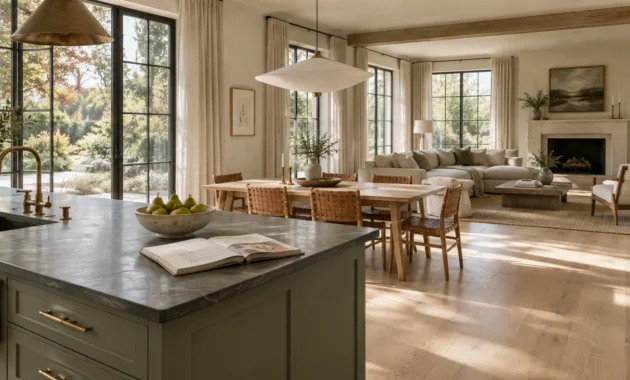
Incorporating quartzite creates a commanding, organic focal point that effortlessly complements wide-plank wood flooring and understated dining room palettes.
Trend #2: Ultra-Compact Sintered Stone
Ultra-compact sintered stone represents a monumental breakthrough in modern surface engineering. Innovative brands like Dekton utilize extreme heat and immense pressure to sinter raw minerals without synthetic resins.
This proprietary metamorphic process replicates the natural geological formation of stone in mere hours rather than millennia. The resulting slab possesses virtually zero porosity and zero organic binders.
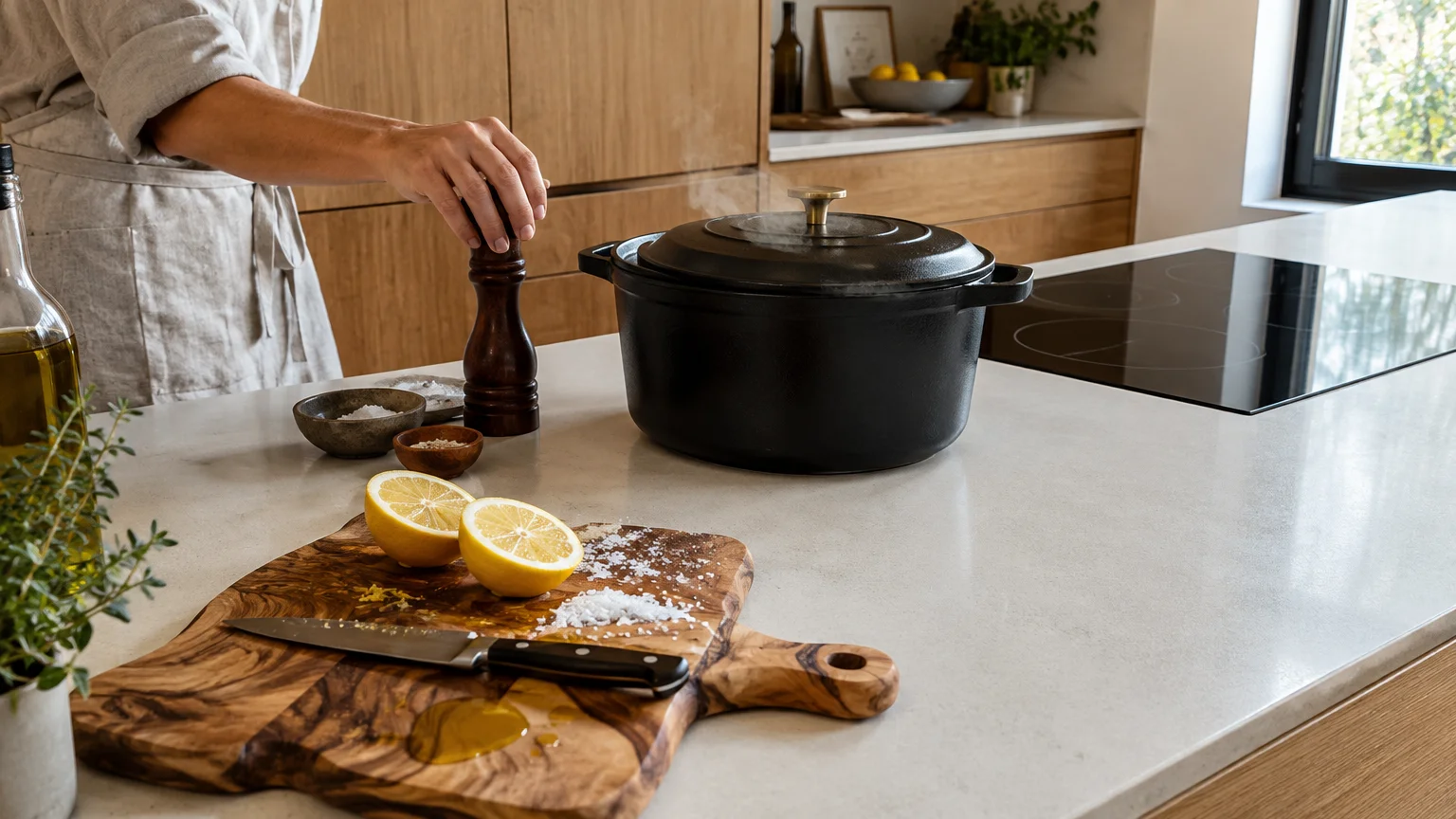
Because sintered stone contains no petroleum resins, you can place scorching pans directly onto its surface without thermal shock. It will never scorch, crack, discolor, or emit noxious chemical odors during heavy culinary prep.
Sintered stone also serves as an impervious shield against everyday culinary accidents. Sharp kitchen knives cannot scratch its ultra-dense surface, and acidic substances like vinegar or lemon juice wipe away without etching.
Installed costs generally run between $80 and $180 per square foot. The specialized diamond tooling required for precision cutting and edge polishing accounts for this premium investment.
Crucially, sintered stone holds broad exemptions under international and domestic silica crackdowns. Fabricators can safely cut and polish the material, ensuring that supply chains remain entirely uninterrupted by regulatory bans.
The ultra-dense composition also makes sintered stone impervious to ultraviolet degradation and severe freeze-thaw cycles. You can extend your kitchen countertop directly into an outdoor terrace for a continuous entertaining layout.
Available in profiles as thin as 4 millimeters, these slabs can clad cabinet faces and kitchen island sides. This versatility unlocks cohesive architectural volumes that harmonize with minimalist dining rooms.
Always verify that your chosen installer holds manufacturer certification for sintered surfaces. Specialized handling prevents edge tension fractures during transport and installation.
Trend #3: Large-Format Porcelain Slabs
Large-format porcelain slabs have rapidly transitioned from European architectural showcases into high-end residential interiors. These expansive surfaces offer mesmerizing stone patterns without the fussy sealing rituals demanded by granite.
Porcelain slabs average between $50 and $120 per square foot installed, positioning them among the most cost-effective granite alternatives. They deliver elite visual appeal without exhausting your total renovation budget.
Modern high-definition manufacturing allows porcelain to replicate the delicate veining of rare Italian calacatta marble. Advanced full-body printing ensures the coloration and veining flow through the slab rather than staying on the surface.
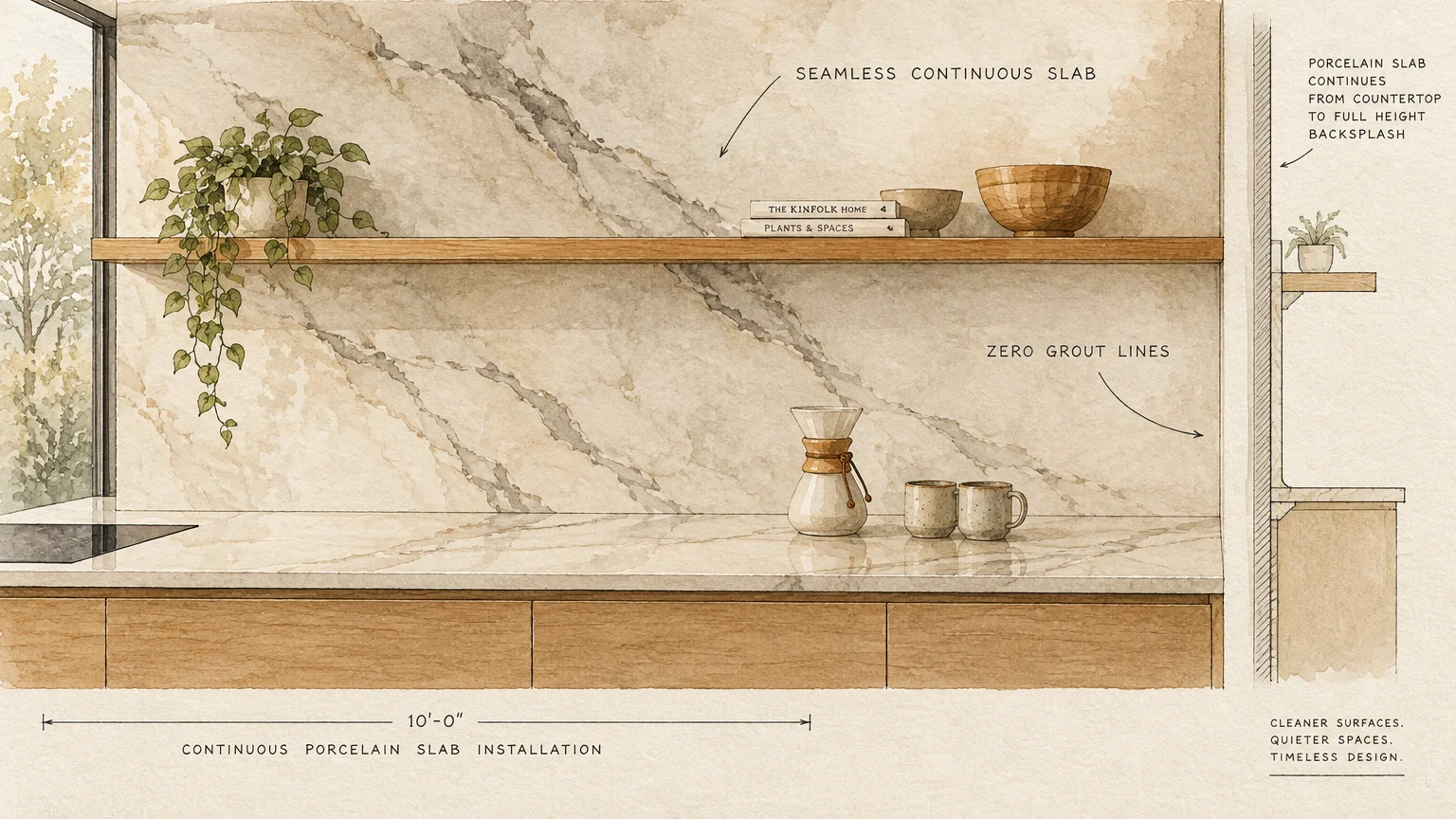
Designers capitalize on porcelain’s lightweight profile to craft seamless, monolithic culinary spaces. You can run the exact same slab vertically to form a dramatic, grout-free, full-height backsplash.
The NKBA reports that 81% of designers prioritize intentional material zoning over expanding kitchen square footage. Continuous porcelain backsplashes maximize vertical sightlines and create visual cohesion across adjoining living zones.
Porcelain boasts complete non-porosity, meaning it harbors neither bacteria nor persistent food odors. A damp microfiber cloth and mild soap are all you need to keep its surface sparkling.
Because porcelain consists of vitrified natural clays, it remains completely exempt from silica bans. You can remodel your kitchen with confidence knowing your surfaces meet the strictest workplace safety guidelines.
While the surface itself resists all heat and scratches, unmitigated edge impacts can cause chips. Pair porcelain slabs with soft mitered or rounded edge profiles to shield vulnerable perimeters.
Its lightweight nature also allows for installation directly over existing surfaces during fast-track renovations, saving substantial demolition expenses.
Trend #4: Low-Silica and Circular Composite Surfaces
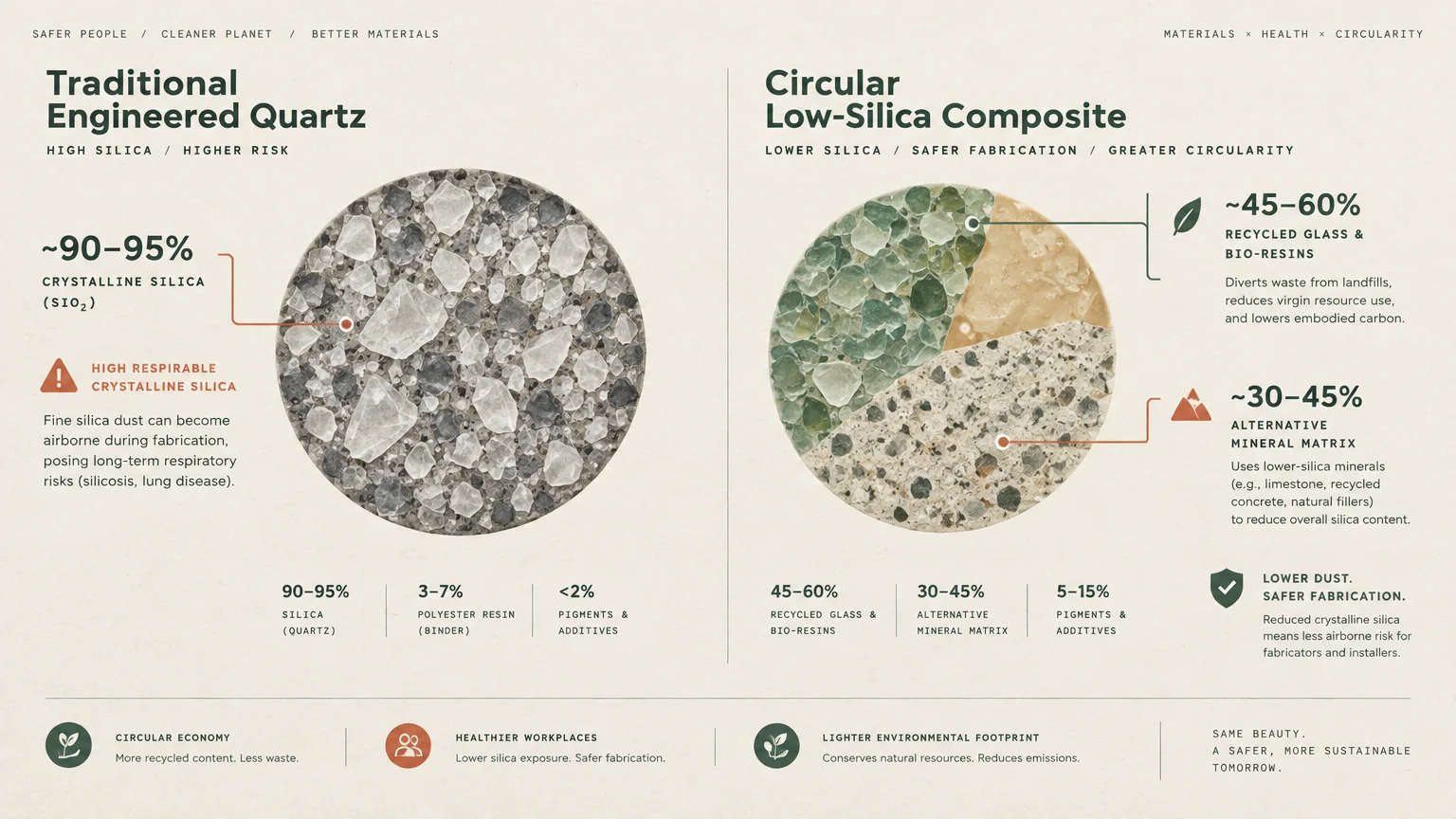
Engineered quartz countertops are undergoing the most significant technical transformation since their invention. Global regulatory shifts have ignited an urgent evolution toward low-silica, mineral-based composites.
Australia pioneered this transformation by enacting a historic ban on engineered stone containing 1% or more crystalline silica on July 1, 2024. A complete import ban followed shortly thereafter on January 1, 2025.
In the United States, the Cal/OSHA Standards Board unanimously voted on May 21, 2026, to draft emergency standards limiting crystalline silica to under 1%. A formal phase-out plan followed in September 2026.
Additionally, an August 15, 2026 U.S. Section 201 safeguard measure imposed tariffs of up to 50% on imported quartz. These economic factors have compelled top manufacturers to innovate with astonishing speed.
Industry leaders are answering with bio-resins and circular mineral blends. For example, Caesarstone debuted its Icon collection, featuring approximately 80% recycled content and virtually zero crystalline silica.
These modern countertops deliver the beloved stain resistance of legacy quartz while radically reducing environmental impact. You can support ethical manufacturing without sacrificing performance or aesthetic refinement.
Prices for these advanced low-silica surfaces range from $50 to $150 per square foot installed. Luxury styles featuring intricate bookmatched veins sit around $185 per square foot.
Their smooth, non-porous structure requires zero sealing or waxing throughout their lifespan. They stand as a testament to conscientious engineering in modern interior architecture.
When specifying engineered surfaces, ask your fabricator for certified low-silica documentation. This step guarantees your project aligns with emerging health standards and avoids future supply chain delays.
These sustainable surfaces pair gracefully with zero-VOC cabinet finishes, supporting healthier indoor air quality throughout your entire home.
Trend #5: Matte, Honed, and Tactile Leathered Finishes
The era of glaring, mirror-polished granite has officially drawn to a close. Discerning homeowners are embracing tactile surfaces that celebrate quiet luxury through subtle, touchable texture.
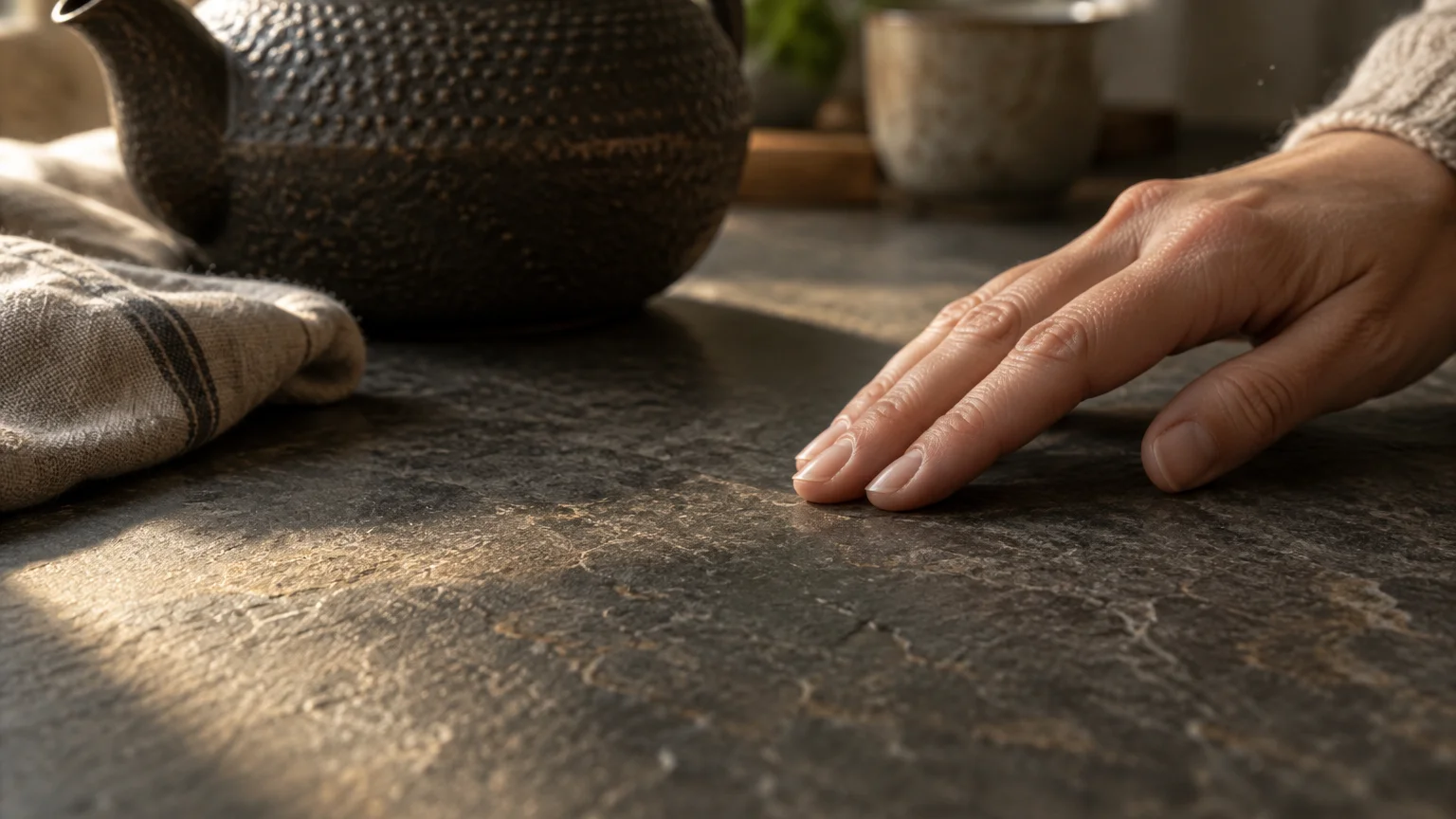
Honed, brushed, and leathered finishes diffuse ambient light rather than bouncing harsh glare across your kitchen. This softness creates an inviting, serene environment that integrates naturally with adjacent open-concept living rooms.
A leathered finish involves running diamond-tipped brushes over the stone’s surface to produce a soft, undulating texture. This gentle process accentuates the slab’s natural mineral landscape while maintaining structural strength.
Tactile finishes offer immense practical advantages for active family kitchens. Their textured grain naturally conceals water spots, smudges, and stray fingerprints far better than reflective gloss.
Honed surfaces introduce a velvety, satin finish that complements both contemporary flat-panel cabinetry and traditional millwork. This understated matte aesthetic lets the raw beauty of natural stone speak without visual noise.
Pairing textured countertops with raw timber flooring and textured plaster walls creates a layered, biophilic interior. You will appreciate the grounding sensory experience every time you prepare a meal.
While honed finishes require vigilant sealing against oils, the resulting depth of character easily outweighs the modest maintenance. It creates an authentic, artisanal ambiance that polished surfaces simply cannot replicate.
The NKBA reports that matte and textured finishes now dominate designer preferences over traditional polished stones. Specifying a leathered finish gives your kitchen a custom, high-end feel that resists fleeting trends.
To preserve the tactile appeal, clean these surfaces with pH-neutral stone soaps rather than abrasive scouring powders.
Trend #6: Architectural Soapstone and Living Patina
For those who appreciate timeless provenance, architectural soapstone provides an irresistible alternative to mass-produced granite. This dense steatite stone infuses kitchens with quiet, heritage-inspired drama.
Soapstone commands installed rates between $70 and $170 per square foot. Its heirloom quality ensures your kitchen workspace appreciates in aesthetic character as it matures over decades.
Its primary aesthetic attraction lies in its velvety, talc-infused touch and deep, smoky undertones. Hues range from soft charcoal grays to muted forest greens threaded with gentle white veining.
Unlike granite, soapstone is completely chemically inert and non-porous. You do not need synthetic chemical sealers, as wine, citrus acids, and cooking oils cannot penetrate its dense mineral matrix.
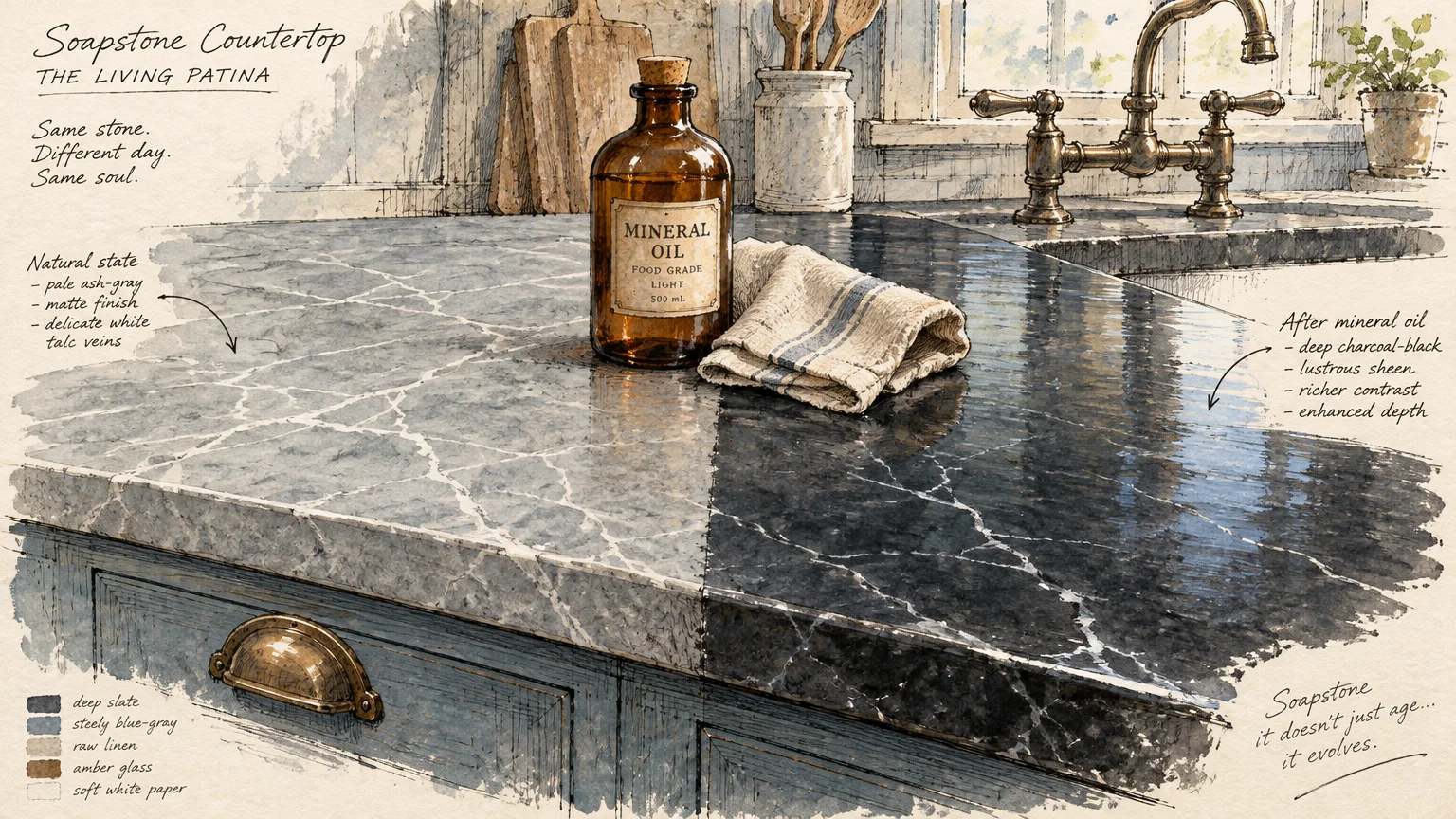
Soapstone embraces a living patina that tells the story of your culinary adventures. While its surface can incur minor scratches from heavy cast iron, you can easily buff them away with fine sandpaper.
Many designers recommend treating soapstone with organic mineral oil or beeswax to deepen its charcoal richness. This optional ritual highlights the stone’s hidden veins and provides a uniform, satin sheen.
Because soapstone retains radiant heat exceptionally well, it handles hot cookware without cracking or blistering. It effortlessly bridges the gap between historical farmhouse charm and sleek urban minimalism.
Soapstone also absorbs sound remarkably well, eliminating the harsh acoustic clatter typical of polished granite surfaces. This sonic damping fosters a calmer, more peaceful atmosphere during bustling family gatherings.
Pair soapstone countertops with unlacquered brass faucets and warm walnut shelving for a rich, storied kitchen design.
Trend #7: Monolithic Waterfall Profiles and Fluted Curved Islands
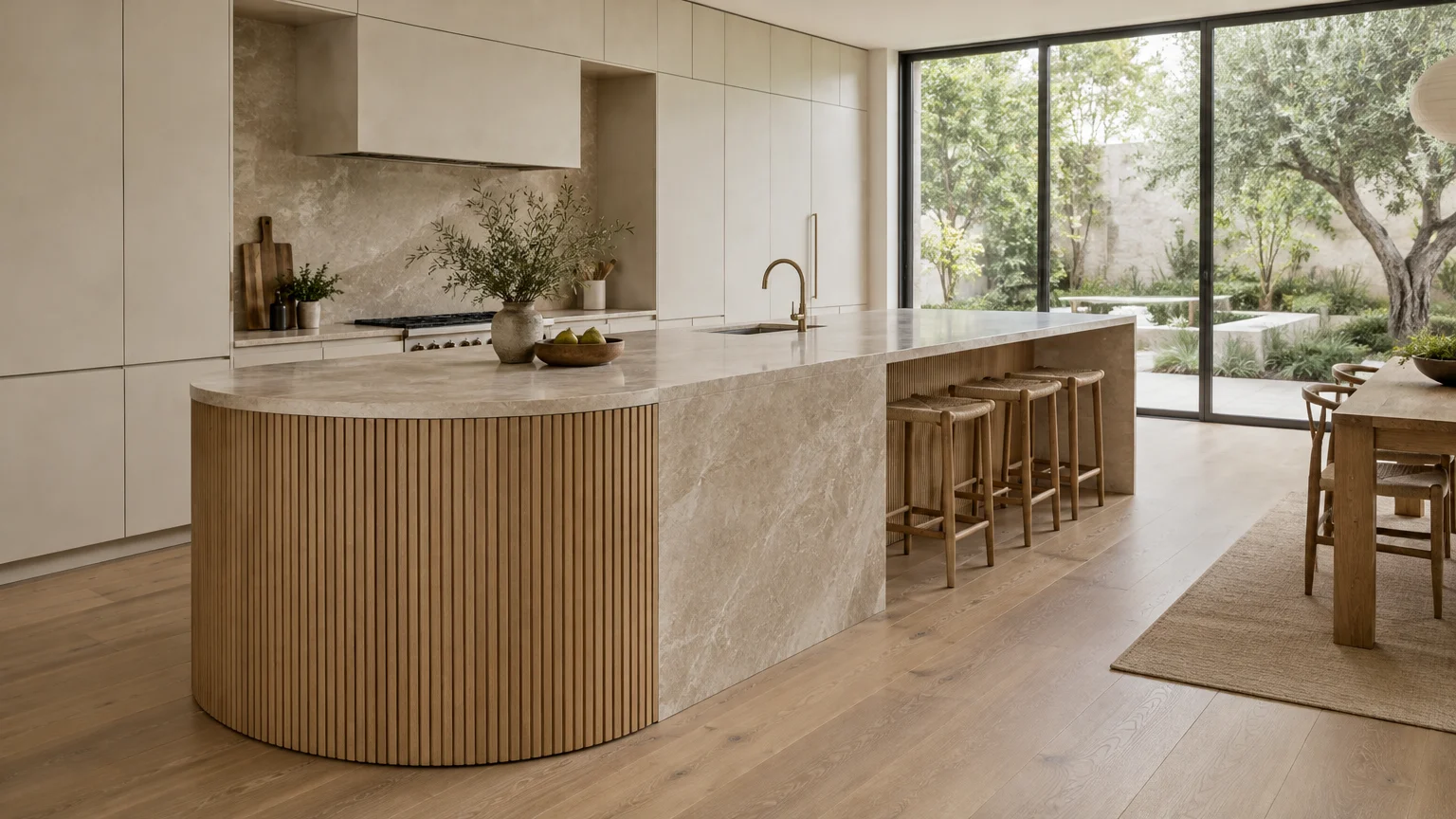
The traditional 1.5-inch eased edge countertop has yielded to sculptural, architectural installations. Modern kitchen countertop ideas now treat the island as a three-dimensional stone sculpture rather than a simple flat work surface.
Waterfall edges, where the stone cascades vertically down island gables to meet the floor, remain a cornerstone of this movement. They establish dramatic visual boundaries that delineate kitchen prep zones from adjoining dining areas.
Designers are also rounding sharp corners into organic, curved profiles that soften circulation pathways. Soft radius corners invite fluid movement and create an open, hospitable atmosphere in shared living layouts.
Fabricators achieve these sculptural profiles through mitered aprons that simulate massive, multi-inch slabs of stone. This engineering trick gives your island a substantial, monolithic presence without adding excessive weight to your floor joists.
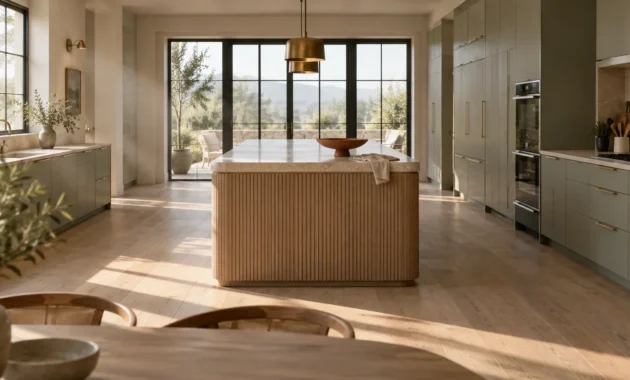
Fluted stone detailing along island aprons and perimeter bases provides another layer of tactile interest. The subtle interplay of light and shadow turns structural stone into a captivating work of art.
Integrating flush-mounted stone sinks carved from the same slab elevates this monolithic aesthetic further. The seamless transition between basin and counter eliminates grime-collecting silicone joints entirely.
These custom fabrications require master craftsmen, but the dramatic architectural payoff anchors your home with unmistakable luxury. Expect custom mitered detailing to add 15% to 30% to your overall fabrication labor costs.
Use bookmatched slabs for waterfall transitions to guarantee that veining cascades uninterrupted from the top surface to the floor.
Trend #8: Commercial-Grade Stainless Steel Accents
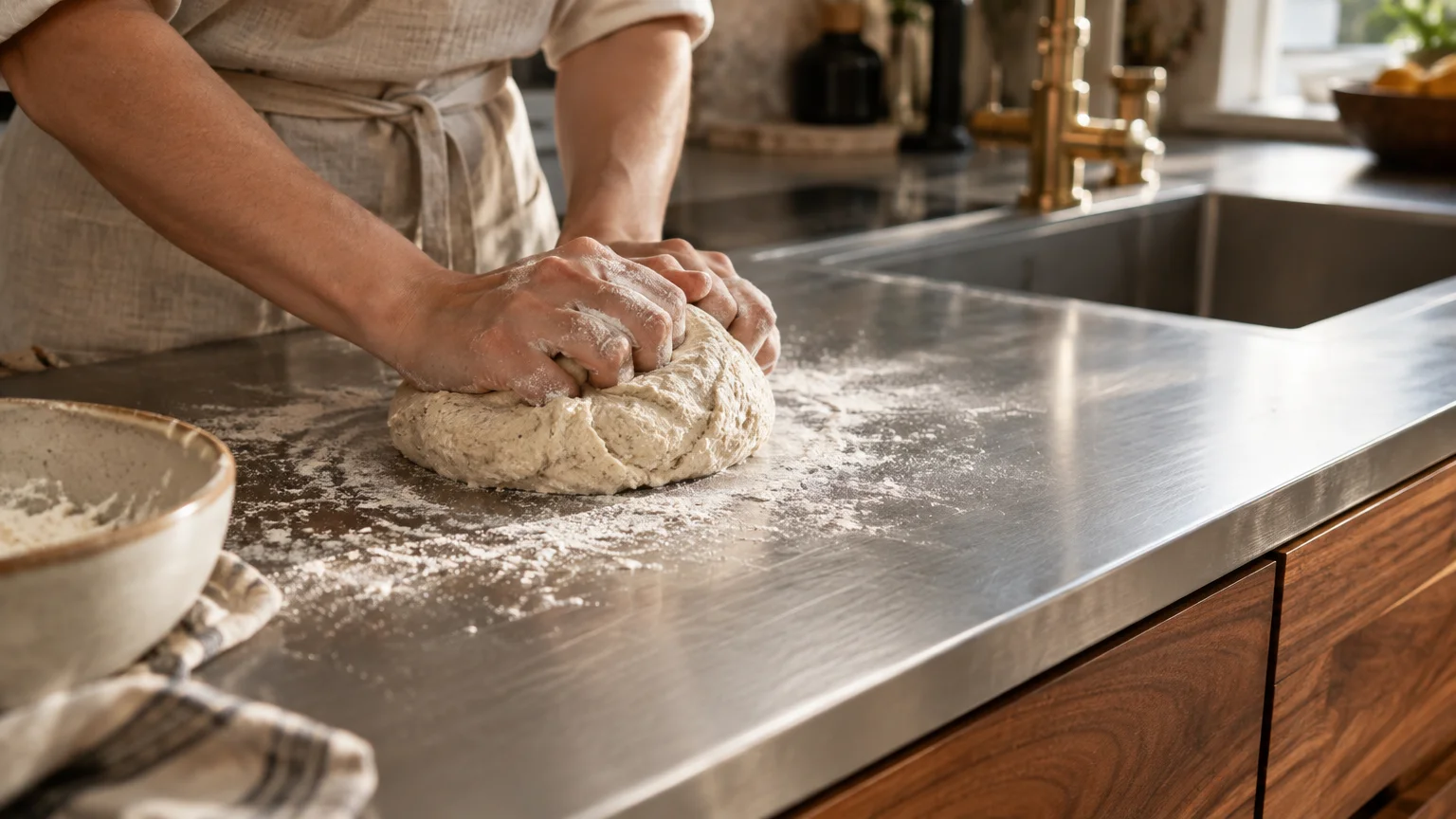
Stainless steel is making a sophisticated residential comeback, shedding its sterile industrial reputation in favor of refined, chef-level functionality. Discerning homeowners frequently pair stainless worktops with warm natural stone on central islands.
Installed costs for custom stainless steel range between $90 and $210 per square foot. Fabricators tailor these surfaces specifically to your cabinetry dimensions and cooking configuration.
Stainless steel is completely non-porous, antibacterial, and practically indestructible. It easily resists high temperatures, allowing you to set roasting pans directly onto the metal without hesitation.
Rather than fearing scratches, embrace the soft, brushed patina that stainless steel develops through regular culinary use. This evolving texture imparts an authentic, professional spirit to your culinary zone.
Modern design schemes juxtapose cool stainless steel alongside warm timber cabinetry and unlacquered brass hardware. This balance prevents the space from feeling clinical while ensuring elite functionality.
Integrated stainless sinks with seamless, coved corners eliminate dirt traps and facilitate effortless cleanup. A simple swipe with a soapy sponge keeps the surface hygienically pristine.
Stainless steel is also 100% recyclable, aligning with sustainable architectural goals. It delivers unmatched performance for home chefs who take their cooking seriously.
Consider specifying a marine-grade 316 alloy if your kitchen borders outdoor entertaining areas or coastal environments. This alloy prevents pitting and guarantees lifelong resilience against salt air and moisture.
By limiting stainless steel to high-intensity cooking zones, you achieve functional brilliance without overpowering the warmth of your living space.
Trend #9: Warm Earth Tones and Creamy Travertine Alternatives
Sterile white kitchens and cool gray granites have officially lost their dominance in luxury residential interiors. The design world is eagerly turning toward rich, grounding palettes rooted in the natural landscape.
The NKBA 2027 report reveals that 96% of designers prioritize warm neutrals like creamy off-whites, taupes, browns, and greiges. Homeowners crave welcoming environments that radiate organic warmth and comfort.
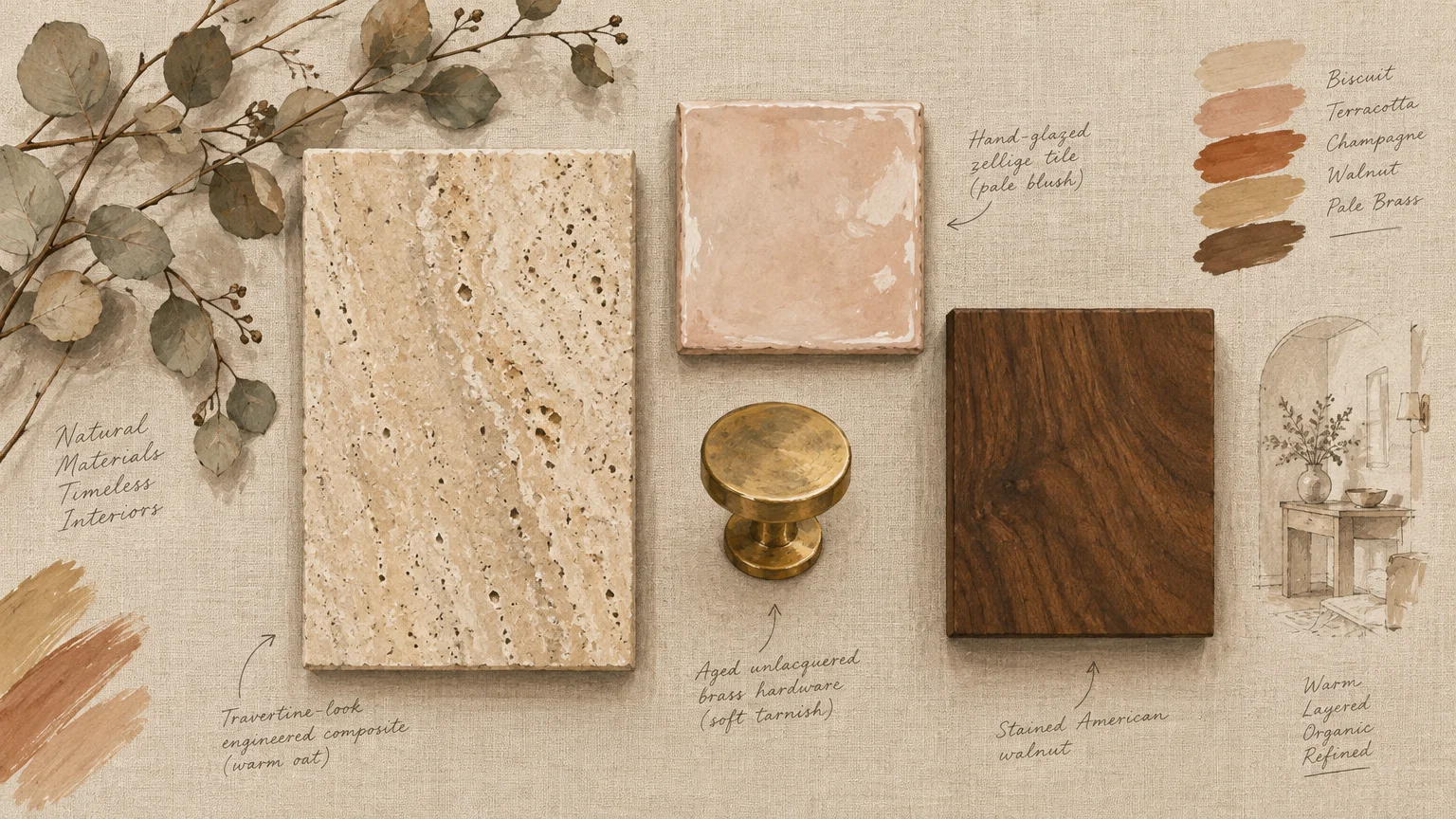
While authentic travertine is often too soft and porous for heavy kitchen duty, modern alternatives capture its linear beauty. Manufacturers replicate travertine’s vein-cut striations across ultra-durable porcelain and sintered stone slabs.
These warm, sand-hued surfaces harmonize beautifully with white oak cabinetry, terracotta floor tiles, and unpolished bronze fixtures. They form a soothing visual foundation that anchors open-concept living and dining areas.
Warm taupes and rich espresso veins introduce visual depth without overwhelming delicate decorative accents. The subtle tonal shifts evoke the tranquility of serene desert landscapes.
This palette shift also reflects a broader longing for biophilic design elements that connect indoor spaces to the natural world. Choosing warm, mineral-rich countertops fosters a deeply relaxing sanctuary in the heart of your home.
By moving away from stark whites, you establish a timeless backdrop that gracefully absorbs evolving design accessories over decades. Warm neutrals also blend seamlessly with vintage dining tables and artisanal ceramics.
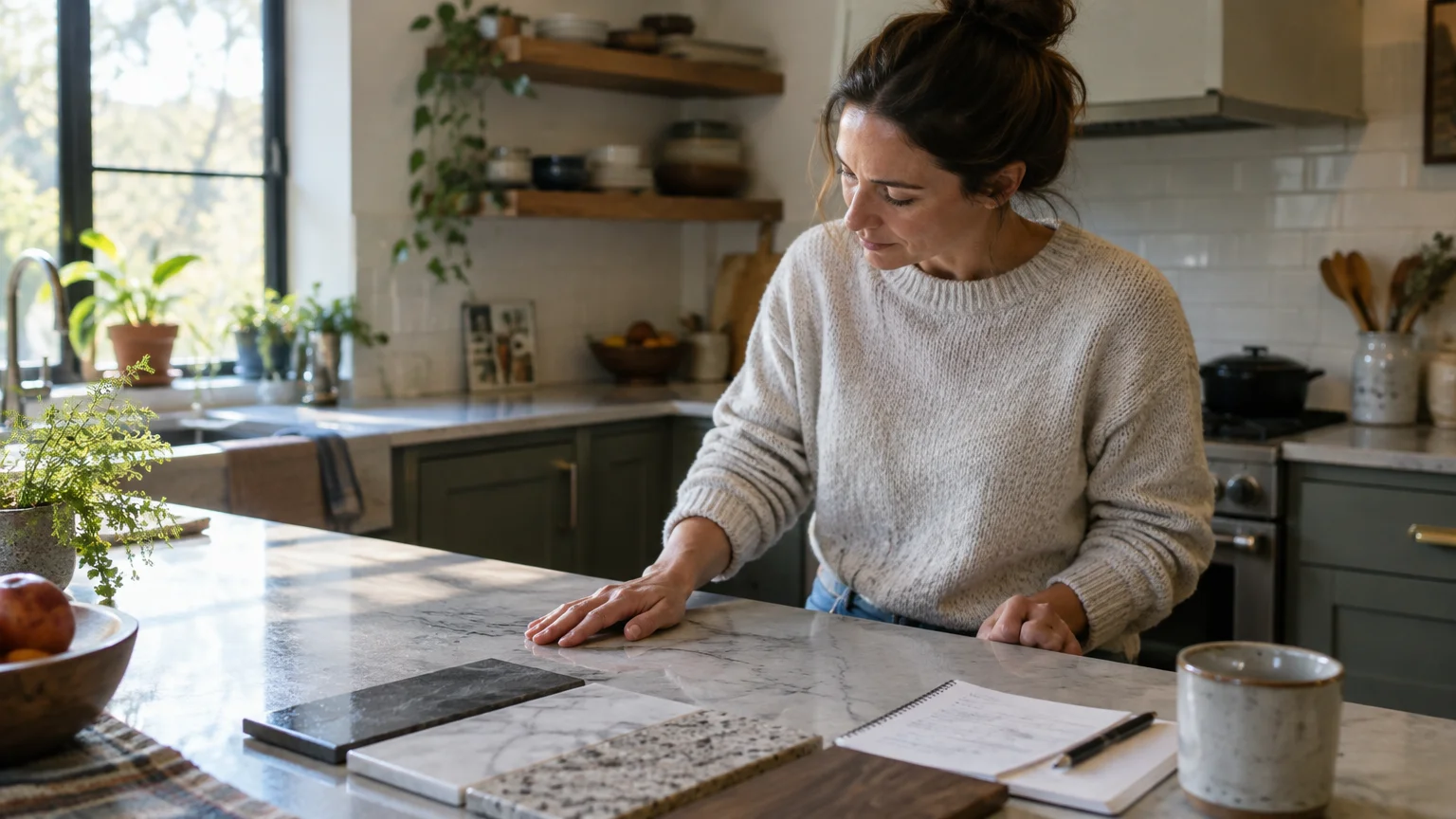
Sample these earthy slabs beneath both morning sunlight and evening warm-spectrum LED lighting before making your final selection. This precaution ensures the undertones remain balanced throughout all hours of the day.
The Big Picture: Weaving These Trends into Your Home
Integrating modern countertops into your home requires an intentional balance of performance, budget, and personal lifestyle. Countertops typically represent 10% to 11% of an overall kitchen renovation budget.
Avoid treating your countertops as isolated design elements. Instead, treat them as the central anchor connecting your perimeter cabinetry, hardwood flooring, and adjacent dining room aesthetic.
Mixing materials offers an effective strategy for maximizing both visual texture and culinary utility. For instance, combine a durable quartzite island with a stainless steel perimeter counter for high-heat cooking zones.
Ensure your chosen countertop tones harmonize with adjacent living areas in open-concept floor plans. Echoing stone undertones in your dining table base or living room fireplace mantel creates organic visual continuity.
Lighting plays a decisive role in showcasing the tactile nuances of honed or leathered surfaces. Specify 2700K to 3000K warm LED lighting under your cabinets to reveal the subtle mineral textures.
Always prioritize lifestyle compatibility over fleeting social media trends. If you adore natural patina and embrace gentle wear, soapstone will reward you with decades of character.
Conversely, if you demand effortless maintenance and zero staining anxiety, invest in sintered stone or porcelain slabs. Selecting materials that fit your daily habits guarantees long-term satisfaction.
Consult with certified fabricators early in your planning phase to evaluate slab dimensions and seam placements. Proper seam planning preserves veining flow and enhances the structural integrity of your installation.
By anchoring your remodel in enduring quality and thoughtful craftsmanship, you create a kitchen that feels authentic, luxurious, and timeless.
Frequently Asked Questions
Is quartzite genuinely more durable than traditional granite?
Yes, natural quartzite registers higher on the Mohs hardness scale than traditional granite, making it exceptionally resistant to scratches and chips. It handles high culinary heat without scorching or cracking.
However, because quartzite contains pure quartz crystals, it still requires periodic sealing to shield against oil and acid staining. Performing an annual water droplet test will reveal when your seal needs replenishment.
Why are engineered quartz countertops facing bans and regulations?
Standard engineered quartz contains up to 90% crystalline silica, which generates toxic respirable dust during dry cutting and fabrication. Inhaling these fine particles causes silicosis, a severe and incurable occupational lung disease.
Australia enacted a total ban on engineered stone containing 1% or more crystalline silica, while California introduced strict emergency phase-out standards. These safety mandates are driving manufacturers to produce low-silica, bio-based alternatives.
Can you successfully mix two different countertop materials in one kitchen?
Yes, pairing two distinct countertop materials is one of the most effective ways to establish intentional functional zoning. The NKBA reports that 81% of designers favor dedicated zoning over sheer kitchen expansion.
A popular pairing places dramatic natural quartzite on a central dining island while installing durable stainless steel or sintered stone along cooking walls. This combination balances show-stopping elegance with bulletproof utility.
What is the most cost-effective alternative to granite that still looks high-end?
Large-format porcelain slabs offer the best balance of luxury aesthetics and budget efficiency, averaging $50 to $120 per square foot installed. They mirror the look of rare marble without marble’s fragile maintenance.
Porcelain requires no periodic sealing, resists all food acids, and can extend vertically up your wall as a full-height backsplash. It delivers an unmistakably upscale aesthetic while protecting your bottom line.
For the latest color forecasts, consult industry leaders like Pantone and paint companies like Benjamin Moore. For professional design standards, refer to the American Society of Interior Designers (ASID).
Disclaimer: This article reflects design trend analysis and predictions. Personal taste and timeless design principles should always guide your decorating choices.