Choosing the right home furniture essentials transforms how you live, rest, and host guests every day. Instead of chasing fleeting fads, focus on ten foundational pieces that pair enduring craftsmanship with modern ergonomics.
This guide breaks down the must have furniture silhouettes shaping residential interiors right now. You will find exact room clearances, material standards, and safety benchmarks to shop with confidence.
Whether you are furnishing a compact apartment or refreshing a multi-room residence, these designer furniture tips help you invest wisely. Apply these proven proportions to build stylish home decor that performs for decades.
Furniture Trend #1: The Curved Modular Sofa
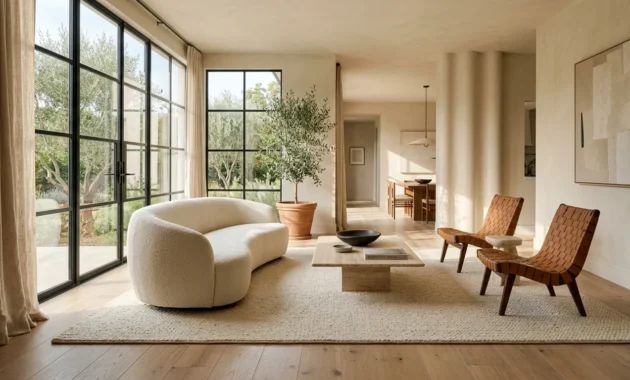
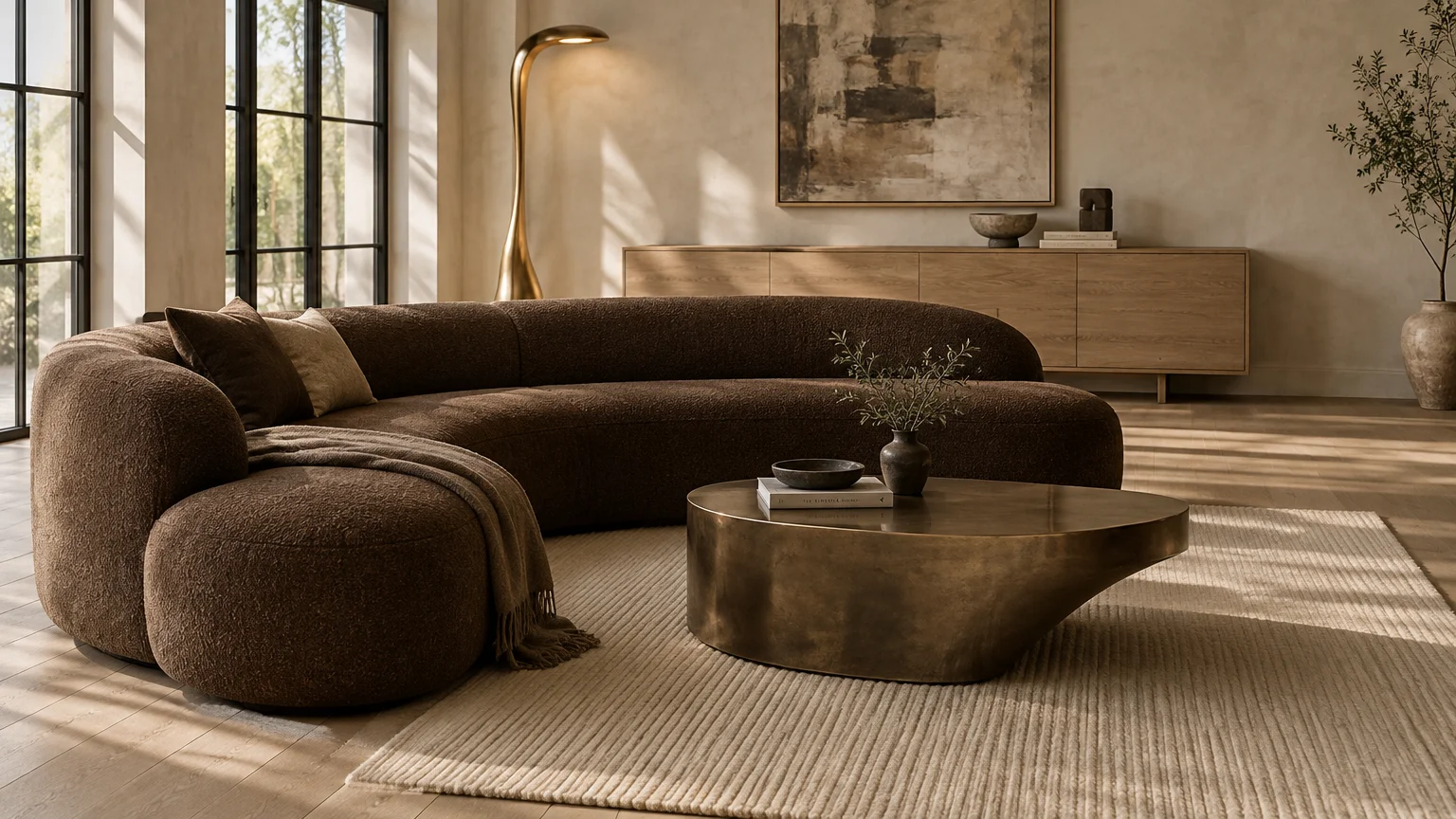
Soft, sweeping seating has replaced rigid, boxy silhouettes as the centerpiece of contemporary furniture for living room layouts. Modular seating lets you reconfigure sections as your household grows or your floor plan changes.
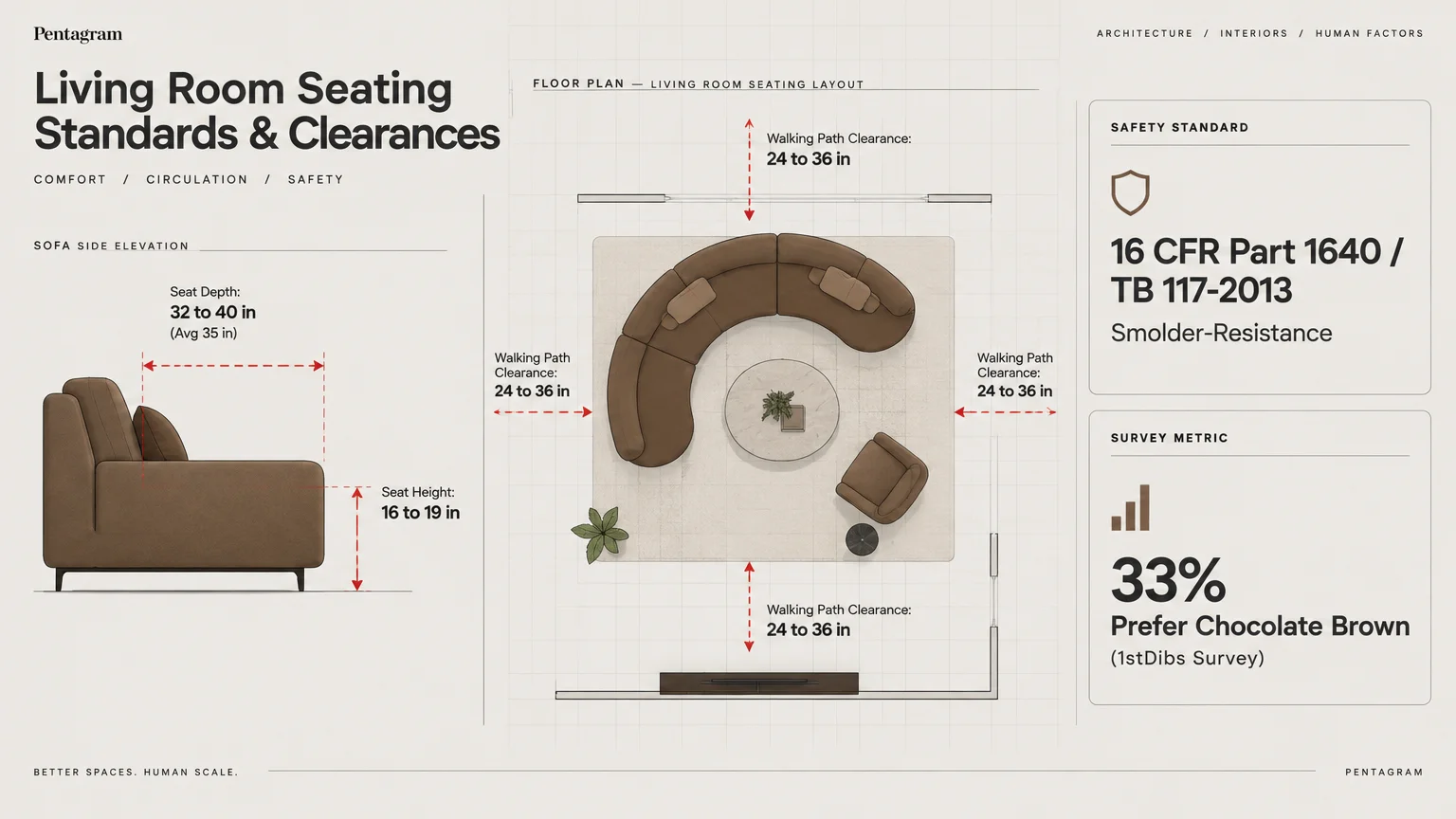
According to 1stDibs’ ninth annual Interior Designer Trends Survey—published November 17, 2025, and polling 468 design professionals worldwide for 2026—demand continues rising for curved and skirted furniture. Respondents also named chocolate brown the top trending color at 33%.
Upholstery choices emphasize tactile boucle, performance velvet, and heavyweight linen in warm espresso, cocoa, and camel tones. These textured weaves soften expansive rooms while concealing everyday wear from family members and pets.
Sizing and Safety Benchmarks for Living Room Seating
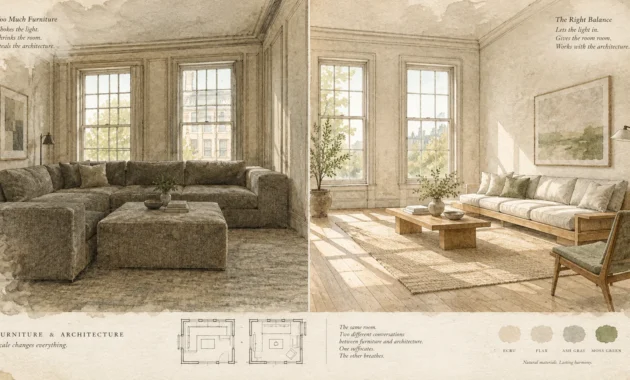
Standard sofas measure 32 to 40 inches deep, averaging 35 inches, with seat heights around 16 to 19 inches. Always maintain 24 to 36 inches for walking paths around major living room seating.
Inspect frame construction for kiln-dried hardwood and reinforced corner blocks before purchasing. Under CPSC regulation 16 CFR Part 1640, residential upholstered furniture must pass California Technical Bulletin 117-2013 smolder-resistance testing.
Check under the seat cushions for a permanent label stating the piece complies with U.S. CPSC requirements for upholstered furniture flammability. Fires where upholstered furniture ignited first accounted for 16% of U.S. residential fire deaths.
Furniture Trend #2: Sculptural Low-Profile Coffee Tables
A coffee table anchors your seating arrangement and provides an immediate surface for books, drinks, and curated objects. Today’s standout designs treat the table like functional floor sculpture crafted from honed travertine, cast bronze, or solid walnut.
In its 2026 Trends Outlook Report (January 2026), the American Society of Interior Designers (ASID) noted rising interest in tactile, fluid, or melted-style metallic finishes. Pairing a liquid-metal side table or low plinth coffee table with plush upholstery creates compelling material contrast.
Drum bases, fluted pedestals, and asymmetrical organic tops eliminate sharp corners in high-traffic zones. You gain unobstructed sightlines across the room while elevating everyday furniture for living room gatherings.
Coffee Table Proportions That Work
Select a table standing 16 to 18 inches high, sitting level with or 1 to 2 inches below your sofa seat. Leave a comfortable 14 to 18 inches between the table edge and the front of the sofa.
For rectangular coffee tables, aim for a length equal to one-half to two-thirds of your sofa’s total width. Most living rooms accommodate tables measuring 42 to 60 inches long by 24 to 30 inches deep.
Furniture Trend #3: Vintage-Inspired Skirted Accent Chairs
Accent chairs introduce character, extra seating, and tailored contrast alongside a neutral sofa. Tailored waterfall skirts, turned wooden legs, and pleated aprons are returning to residential interiors with renewed architectural polish.
The 1stDibs 2026 designer survey reported that maximalism (39%) and eclecticism (38%) rank as the most requested interior styles. Designers also observed growing collector appetite for 1920s–1950s pieces and pre-1920s antiques.
Adding a pair of skirted club chairs or vintage mid-century armchairs keeps your room from looking like a single showroom catalog. High-end homeowners increasingly favor layered spaces that unite multiple design eras.
According to the 1stDibs 2025 Luxury Outlook Report, demand for mixed-provenance and vintage-contemporary hybrid interiors climbed 34% year-over-year among verified high-net-worth buyers. You can achieve that depth by reupholstering a sturdy vintage frame in modern wool or mohair.
Ergonomics and Placement Tips
Look for accent chairs with seat heights between 16 and 19 inches so guests sit at eye level with sofa occupants. Swivel mechanisms hidden beneath tailored skirts allow easy rotation toward a fireplace or conversation group.
Verify that newly upholstered residential chairs meet California Technical Bulletin 117-2013 smolder-resistance standards under 16 CFR Part 1640. Keep at least 36 inches of clearance behind pulled-out chairs near doorways.
Furniture Trend #4: Compliant Solid-Wood Dressers and Chests
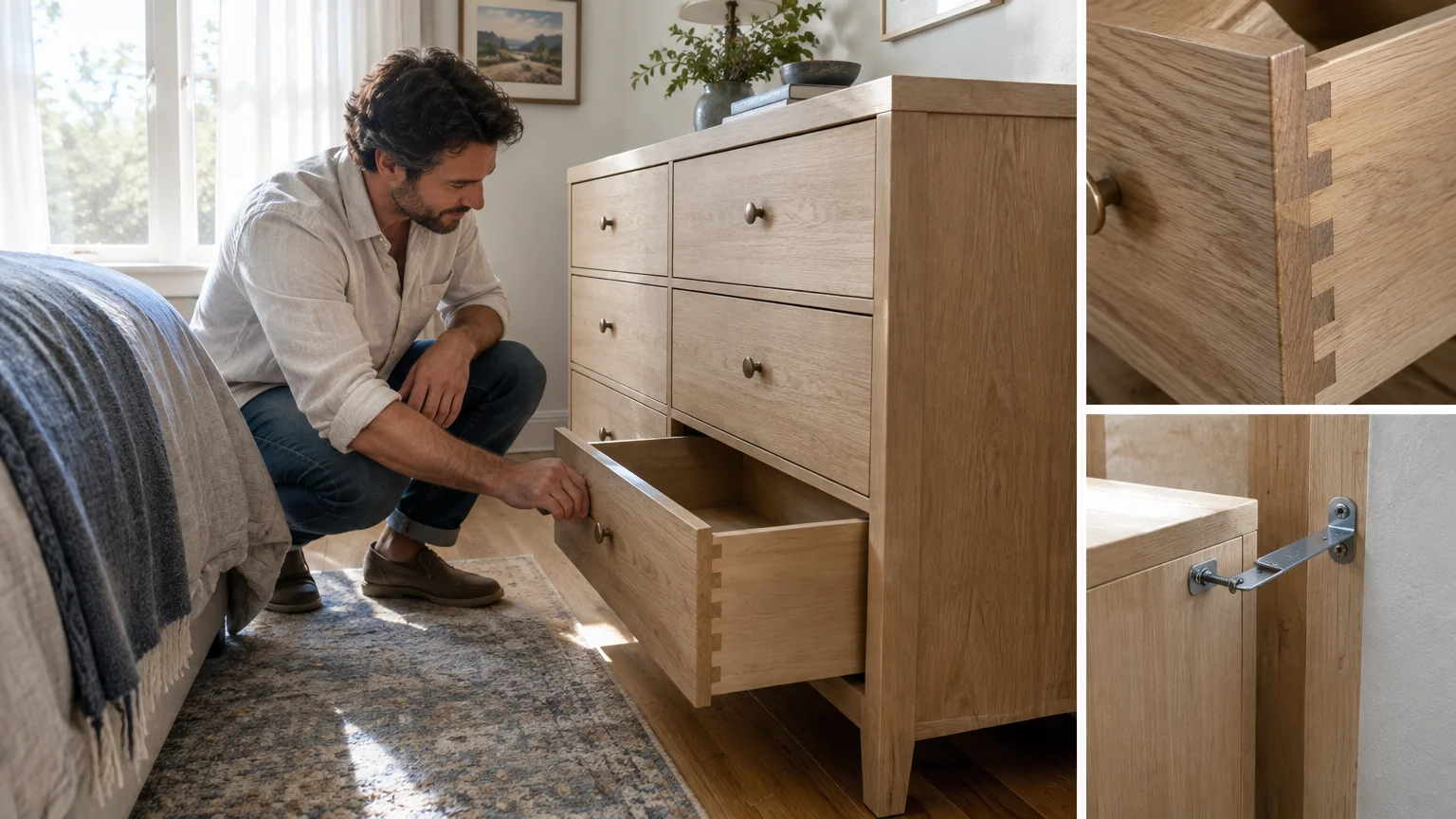
Bedroom case goods store daily wardrobes while setting the architectural tone of your private retreat. Solid white oak, American walnut, and ash dressers showcase artisan provenance through hand-rubbed oil finishes, mitered corners, and dovetail drawer boxes.
Material health matters just as much as joinery inside enclosed sleeping spaces. Under 40 CFR Part 770 (EPA TSCA Title VI), the U.S. Environmental Protection Agency strictly limits formaldehyde emissions from hardwood plywood, MDF, and particleboard used in finished furniture.
On October 28, 2026, the EPA issued a final rule (91 FR 67771) updating incorporated voluntary consensus test methods, including ASTM D6007-22, ASTM E1333-22, and ISO 12460-2:2024. Checking for TSCA Title VI compliance labels protects indoor air quality whenever you buy composite-core case goods.
Tip-Over Laws and Wall-Anchoring Essentials
Structural stability is mandatory for free-standing clothing storage units manufactured after September 1, 2023. Under the federal STURDY Act (16 CFR Part 1261), the CPSC adopted ASTM F2057-23 as a mandatory safety standard.
Units at least 27 inches tall, weighing at least 30 pounds, with at least 3.2 cubic feet of enclosed storage must pass rigorous stability tests. Testing simulates children up to 60 pounds (protecting kids up to 72 months old) on carpet with loaded, open drawers.
Since July 8, 2026, importers must also file certificate data electronically through the CPSC PGA Message Set in ACE. However, older vintage dressers and pre-rule pieces remain common in homes.
The CPSC’s 2023 Tip-Over Report (February 2024) recorded an annual average of 17,800 emergency-department-treated tip-over injuries from 2020 to 2022, with 44% (7,800) involving children under 18. From January 2013 through July 2023, 217 fatalities were reported, with 71% involving children and 44% occurring in bedrooms.
On July 29, 2025, the CPSC noted a nearly 50% drop in tip-over injuries and deaths over ten years of its Anchor It! campaign. Because the STURDY Act is not retroactive, always anchor all dressers, tall chests, and shelving units directly to wall studs.
Furniture Trend #5: Architecturally Scaled Dining Tables and Seating
Your dining table hosts weeknight family dinners, holiday feasts, and afternoon work sessions. Extension mechanisms—such as butterfly leaves and hidden brass tracks—give compact rooms effortless capacity when guests arrive.
Trestle bases, sculptural twin cylinders, and chamfered edge profiles bring architectural weight without crowding chairs underneath. Choose solid timber or sealed stone surfaces that develop natural patina rather than delicate high-gloss veneers.
Mixing upholstered host chairs with sculpted wooden side chairs adds visual rhythm around the perimeter. That deliberate contrast aligns with eclectic, personalized interiors that prioritize both comfort and visual interest.
Dining Room Clearances and Ergonomics
Standard dining tables stand 28 to 30 inches high and pair best with chairs whose seats measure 17 to 19 inches off the floor. This pairing provides 10 to 12 inches of comfortable legroom beneath the apron or tabletop.
Budget 24 inches of table edge per diner for armless side chairs, or 28 to 30 inches per person for armchairs. Leave 36 inches of clearance behind pushed-in chairs, expanding to 42 to 48 inches along primary traffic routes.
Furniture Trend #6: Wellness-Focused Bed Frames and Nightstands
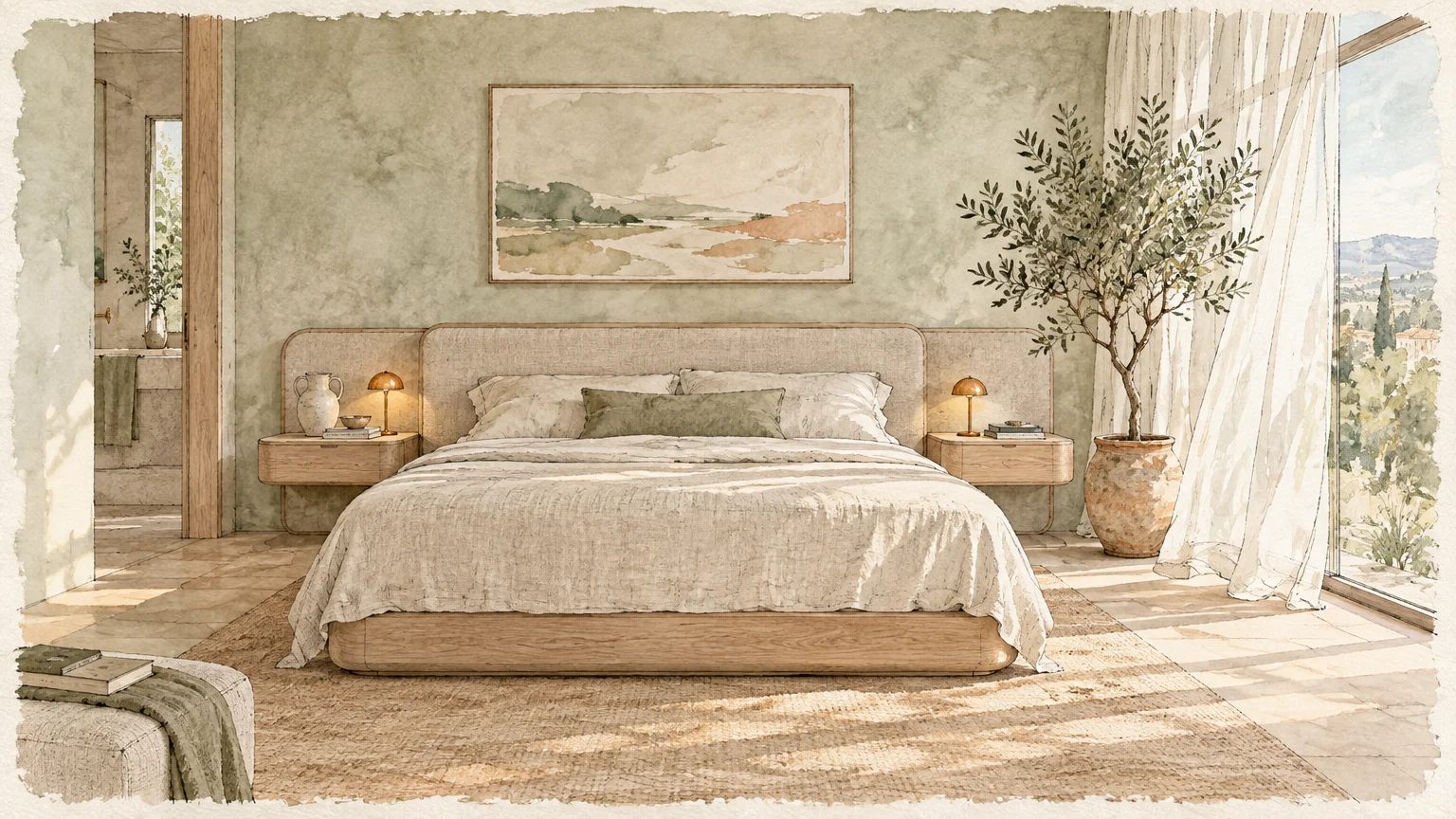
Bedrooms have evolved from purely functional sleeping quarters into restorative sanctuaries designed for physical recovery. ASID’s 2026 Trends Outlook Report highlights a decisive shift toward wellness—prioritizing sleep quality, stress reduction, focus, and overall health.
Padded headboard frames in organic cotton, wool bouclé, or limewashed oak panels dampen ambient noise and support upright evening reading. Low-VOC finishes and breathable natural upholstery contribute directly to calmer nighttime environments.
Paired nightstands with concealed cord routing and soft-close drawers eliminate bedside visual clutter. Selecting pieces with generous top surfaces keeps lighting, water carafes, and books within effortless reach.
Standard Bed Dimensions and Side Clearances
Confirm exact mattress dimensions before ordering a custom bed frame: Twin (38 by 75 inches), Full (54 by 75 inches), Queen (60 by 80 inches), King (76 by 80 inches), and California King (72 by 84 inches).
Average finished bed heights fall around 24 to 25 inches once mattress and foundation meet. Leave at least 24 inches minimum—and ideally 30 inches—on open sides of the bed for smooth movement and linen changes.
Choose nightstands measuring 24 to 30 inches tall so their surfaces sit level with or 1 to 2 inches above your finished mattress top. That alignment prevents awkward reaching in the dark and keeps bedside lamps at an ideal reading height.
Furniture Trend #7: Low-Slung Media Consoles and Credenzas
Media consoles bridge heavy electronics and refined living room millwork. Fluted oak doors, perforated cane panels, and sliding tambours conceal speakers and routers while allowing remote signals and airflow to pass through.
Long horizontal credenzas ground large walls and balance tall drapery or oversized artwork above. Look for integrated rear ventilation slots and adjustable interior shelving to accommodate changing hardware over time.
When shopping for engineered wood consoles, verify EPA TSCA Title VI (40 CFR Part 770) compliance labels on packaging or product tags. Low-emission cores keep living spaces healthier without sacrificing crisp cabinet alignment.
Screen Placement and Stability Rules
Mount or rest your television so the center of the screen sits at seated eye level, typically around 42 inches above the floor. Maintain a viewing distance equal to 2.5 to 3 times the screen’s diagonal measurement—roughly 8 to 10 feet for a 55-inch display.
Make sure your console extends wider than the television frame on both sides for visual balance and physical stability. Following CPSC guidance, anchor tall shelving units and TV stands to wall studs, especially if you have young children at home.
Furniture Trend #8: Adaptable Home Office Desks
Flexible work schedules and multigenerational households have made dedicated, ergonomic work zones essential in nearly every home. ASID’s 2026 Trends Outlook Report underscores rising client demand for adaptable spaces that support focus throughout the day.
Writing desks with slim solid-wood tops and discreet cable trays blend seamlessly into guest bedrooms or open-plan living corners. You no longer need bulky corporate cubicles to achieve productive daily posture.
Pair your desk with a supportive task chair wrapped in residential fabric or supple saddle leather. When the workday ends, clean desktop storage trays keep the corner looking like intentional, stylish home decor.
Desk Measurements for Daily Comfort
Standard home office desks measure 29 to 30 inches high, 24 to 30 inches deep, and 40 to 72 inches wide depending on your monitor setup. Deeper tabletops prevent eye strain and leave generous room for forearms and keyboards.
Ensure you leave 36 to 42 inches of unobstructed clearance behind the desk so your chair rolls back smoothly without hitting walls or adjacent bookshelves.

Furniture Trend #9: Fluid Metallic Statement Lighting
Lighting functions as architectural jewelry that transforms flat rooms into atmospheric spaces after sunset. Sculptural pendants, articulated floor lamps, and cast-metal wall sconces define zones without adding physical partitions.
ASID’s 2026 trend analysis specifically notes client enthusiasm for tactile, fluid, or melted-look metallic finishes in both furniture and lighting. Brushed pewter, aged brass, and hand-formed bronze shades catch warm bulb light with organic shimmer.
Layering three light sources—overhead ambient fixtures, reading task lamps, and low-glare accent sconces—supports circadian wellness. Dimmer switches give you instant control over evening relaxation and daytime productivity.
Proportion Guidelines for Fixtures
Hang dining chandeliers so the bottom edge rests 30 to 36 inches above the tabletop, preventing glare while preserving clear eye contact across meals. Choose a fixture diameter spanning roughly one-half to two-thirds the width of your dining table.
In living rooms, position arched floor lamps so shades clear walking paths cleanly without looming into conversation sightlines. Warm color temperatures between 2700K and 3000K flatter natural wood grains and rich chocolate-brown textiles.
Furniture Trend #10: Anchoring Oversized Area Rugs
No furniture arrangement feels finished without a properly scaled rug anchoring the floor plane. Hand-knotted wool, flatweave kilims, and undyed jute add acoustic softness, underfoot warmth, and clear spatial boundaries in open floor plans.
Consumer demand across this category continues climbing steadily. According to U.S. Department of Commerce Bureau of Economic Analysis (BEA) state household spending data released September 30, 2026, Americans spent $763 per person ($260.6 billion total) on furniture, furnishings, and floor coverings in 2025.
That figure rose 3.8% from $739 per person in 2024 and jumped substantially from $548 per person in 2019. Investing in an appropriately sized wool or silk-blend rug protects hardwood floors while pulling disparate seating pieces into one cohesive composition.
Sizing Rules for Living and Dining Rugs
Avoid floating a tiny rug in the center of the room like a postage stamp. Living room rugs—commonly 8 by 10 feet or 9 by 12 feet—should extend at least 6 to 8 inches past each end of your sofa.
Place at least the front legs (or all four legs) of sofas and accent chairs onto the rug to unify the seating group. Leave roughly 18 inches of bare floor visible between the rug border and surrounding walls.
Under dining tables, select a rug extending at least 24 inches beyond all four sides of the table. That extra margin keeps chair back legs squarely on the weave when guests pull out to sit.
Curating Your Space: Choosing Timeless Pieces
Smart furnishing balances current aesthetic energy with disciplined budgeting and proven longevity. According to the U.S. Bureau of Labor Statistics (BLS) Consumer Expenditures Summary — 2025 (released October 29, 2026), U.S. households spent an average of $2,355 on household furnishings and equipment in 2025.
That total represented 2.9% of $81,905 average annual household spending and edged down 2.4% from $2,414 in 2024. With households spending selectively, every major furniture acquisition needs to earn its footprint through durable materials and classic proportions.
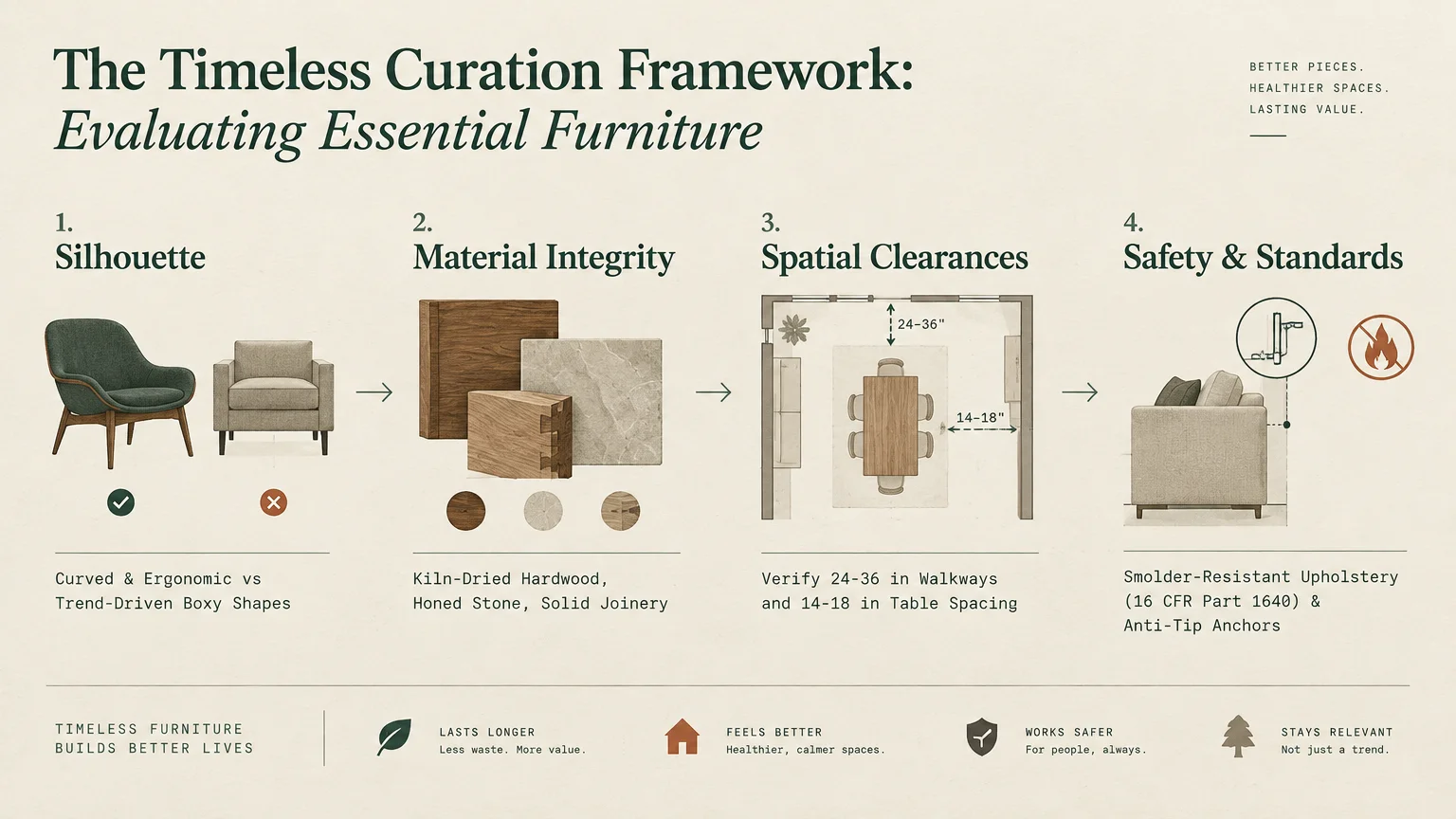
Prioritize investment-grade construction—kiln-dried timber, eight-way hand-tied springs, and solid brass hardware—on high-use anchor pieces like sofas, beds, and dining tables. Express bolder color or trend-driven texture through easily swapped lighting, accent pillows, and vintage side chairs.
Before committing to a full room plan, tape out footprints on your floor using painter’s tape to verify every 24- to 36-inch walkway. Testing scale in real space prevents expensive return fees and cramped layouts.
Track emerging furniture design at global fairs like Salone del Mobile Milano. For design history context, reference collections curated by the Museum of Modern Art (MoMA).
Frequently Asked Questions
How do I mix vintage finds with brand-new furniture without creating visual chaos?
Unify different eras by repeating two elements across the room, such as warm walnut tones or matte metallic accents. Balance ornate pre-1920s antiques with clean-lined contemporary pieces so neither style overwhelms the space.
Keep room proportions consistent by matching seat heights within a 1- to 2-inch range across your living area. Let one bold silhouette or rich chocolate-brown textile anchor the palette while supporting pieces stay understated.
What labels should I check to verify furniture safety and low emissions?
On new upholstered seating, confirm the permanent label stating compliance with U.S. CPSC requirements for upholstered furniture flammability under 16 CFR Part 1640. On composite wood dressers, media consoles, and bookshelves, look for EPA TSCA Title VI (40 CFR Part 770) certification.
For dressers and clothing chests manufactured after September 1, 2023, verify ASTM F2057-23 compliance under the federal STURDY Act. Regardless of manufacture date, always install wall-anchoring kits into structural studs.
Which home furniture essentials offer the best return on a modest budget?
Allocate the largest share of your budget to your primary mattress, living room sofa, and everyday dining table. These items endure hours of daily weight and friction, making solid joinery and high-density cushioning worth every dollar.
Save money on sculptural accent tables, decorative lighting, and bedroom benches by sourcing well-made vintage pieces or natural-fiber rugs. You can upgrade hardware or lampshades later for an instant custom look.
How do I maintain natural wood, stone, and tactile upholstery long term?
Dust solid hardwood surfaces weekly with a dry microfiber cloth and position pieces away from direct heating vents or harsh afternoon sun. Wipe spills on honed stone coffee tables promptly with pH-neutral soap and reapply penetrating sealer annually.
Vacuum textured bouclé and wool upholstery gently using a soft brush attachment every two weeks to lift trapped grit. Rotating seat cushions monthly distributes wear evenly and extends foam resilience for years.
Disclaimer: This article reflects design trend analysis and predictions. Personal taste and timeless design principles should always guide your decorating choices.