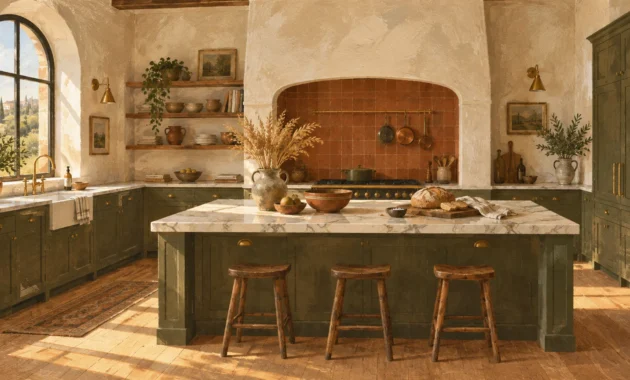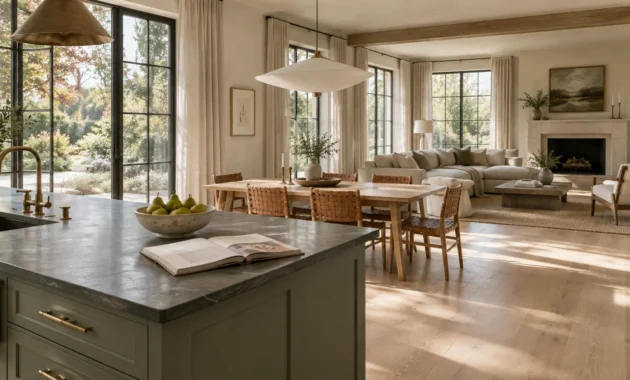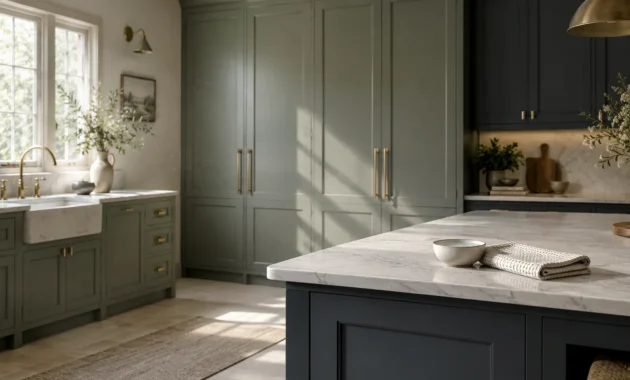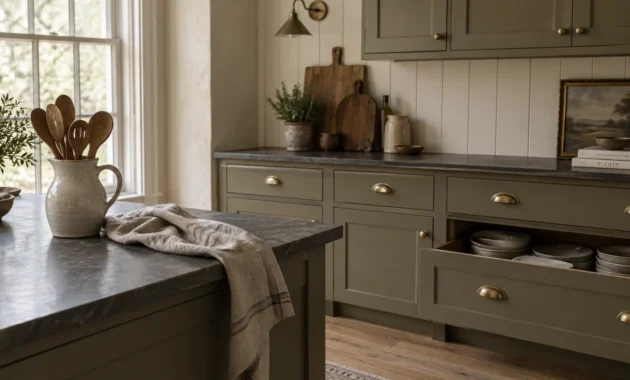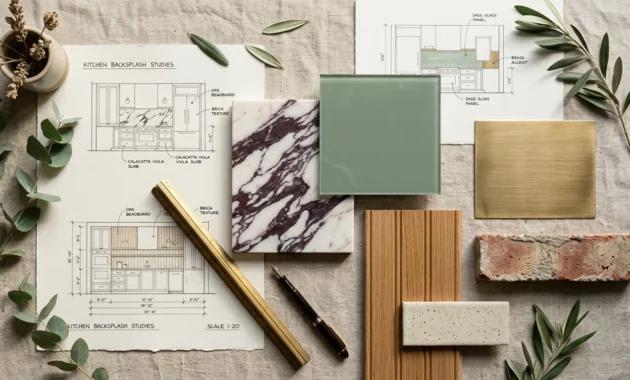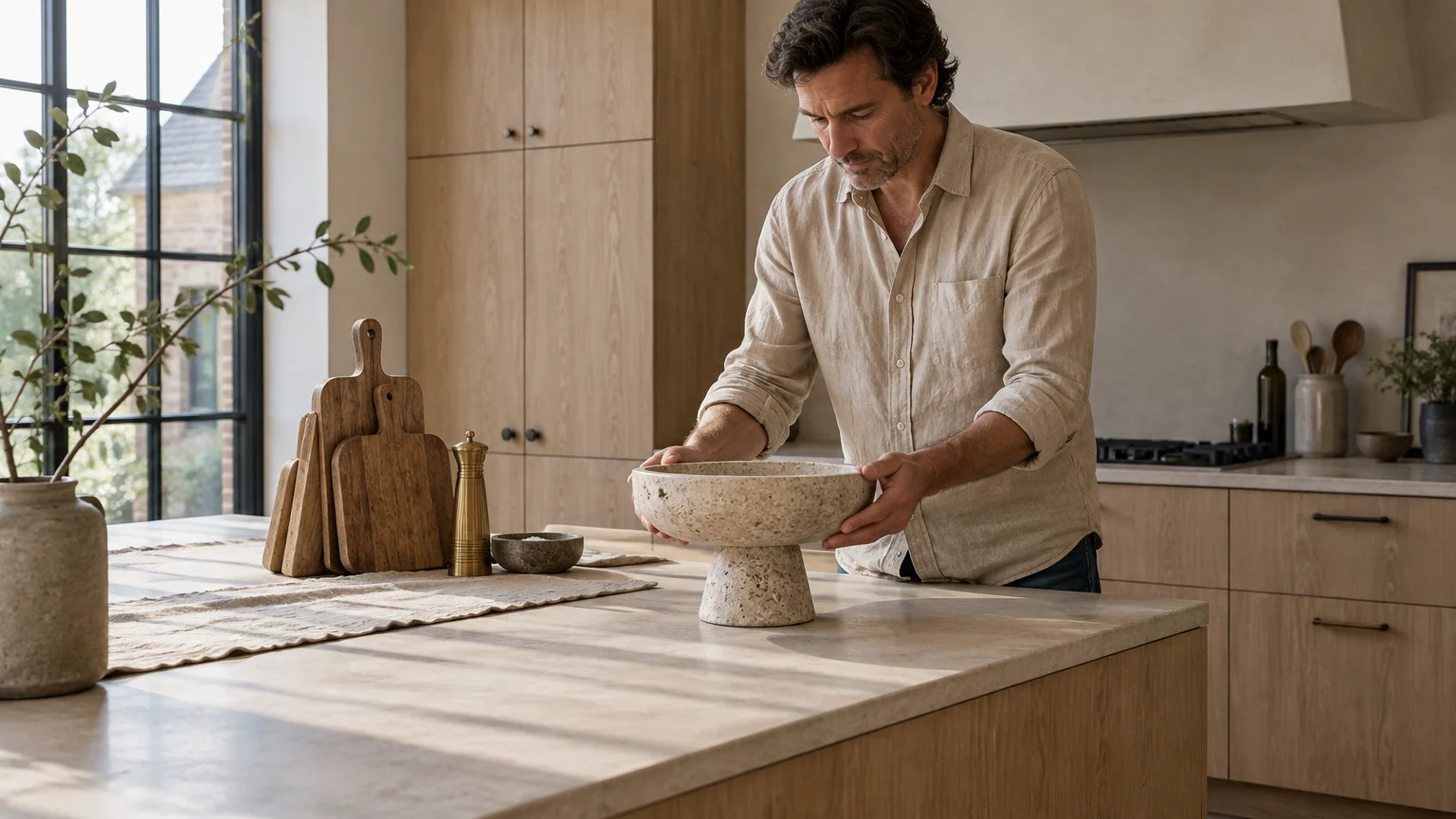
Transforming your kitchen island from a utilitarian workspace into an editorial focal point requires intentional curation rather than random counter clutter. A thoughtfully styled island anchors your open-concept living space while balancing refined elegance with practical culinary preparation.
Designers rely on distinct statement objects to establish scale, tactile depth, and visual rhythm across expansive countertop surfaces. By selecting decor items with architectural presence and honest materials, you instantly elevate your kitchen styling tips into timeless home design.
Explore these seven essential decor items that bridge high-concept luxury and functional daily living. Master these curated additions to give your kitchen island a purposeful, designer-led presence.
Trend #1: Sculptural Footed Fruit Bowls
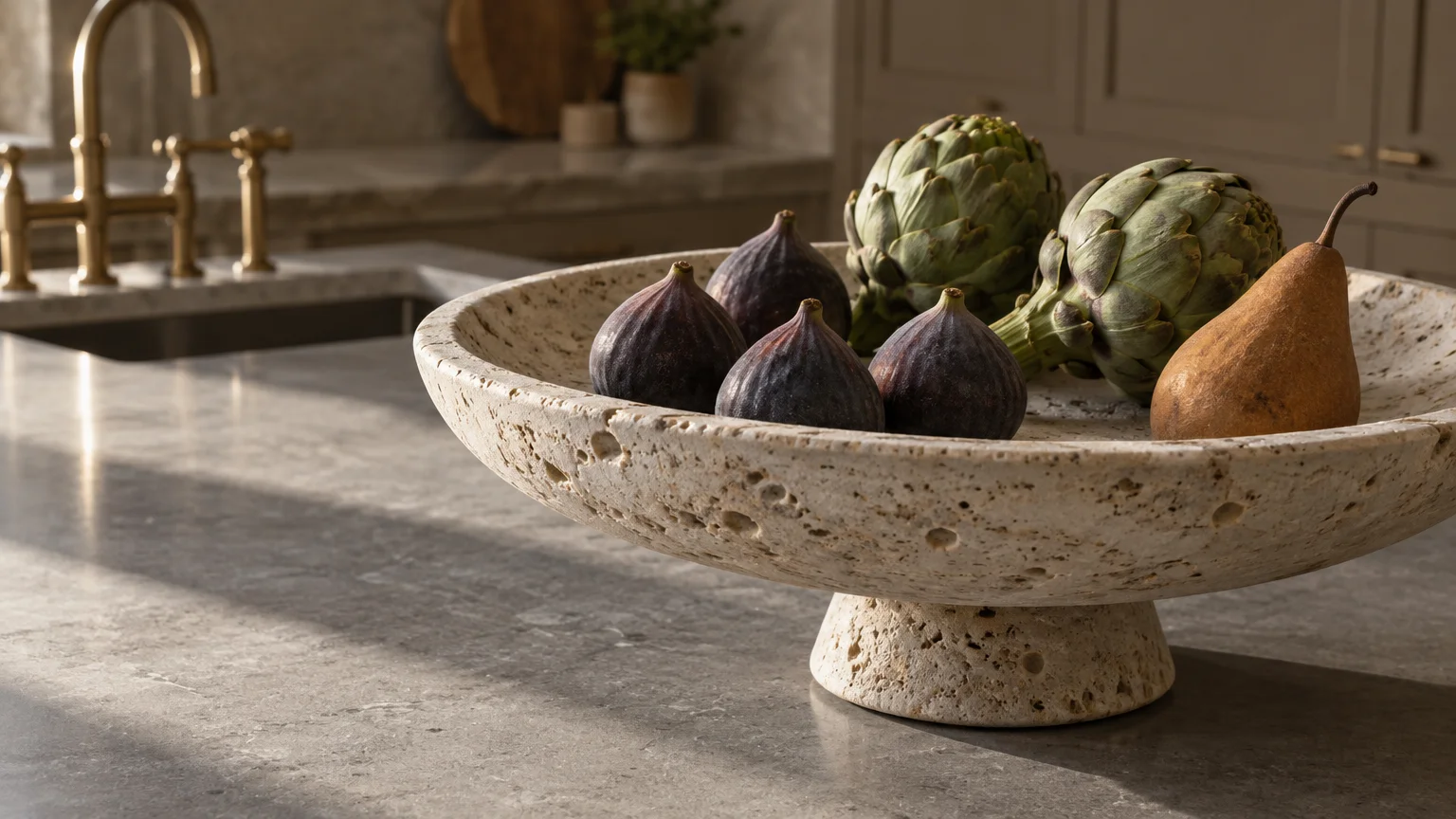
Elevating produce above the countertop plane creates immediate architectural depth. A footed bowl acts as a sculptural pedestal, lifting organic textures into your primary sightlines.
Solid marble, rough-hewn travertine, and unglazed stoneware currently dominate luxury kitchen island decor. These tactile materials offer structural weight that effortlessly anchors expansive quartz or granite surfaces.
Instead of filling the vessel to the brim, curate a restrained selection of fresh produce. A single layer of dark mission figs, artichokes, or green pears introduces subtle biophilic color without visual clutter.
This design philosophy aligns directly with quiet luxury, where understatement replaces excessive abundance. The vessel itself commands respect as a decorative art object even when completely empty.
Pair warm terracotta pedestals with cool quartz surfaces to break up monochromatic kitchen palettes. The contrast between honed matte stone and earthy clay enriches the room’s ambient warmth.
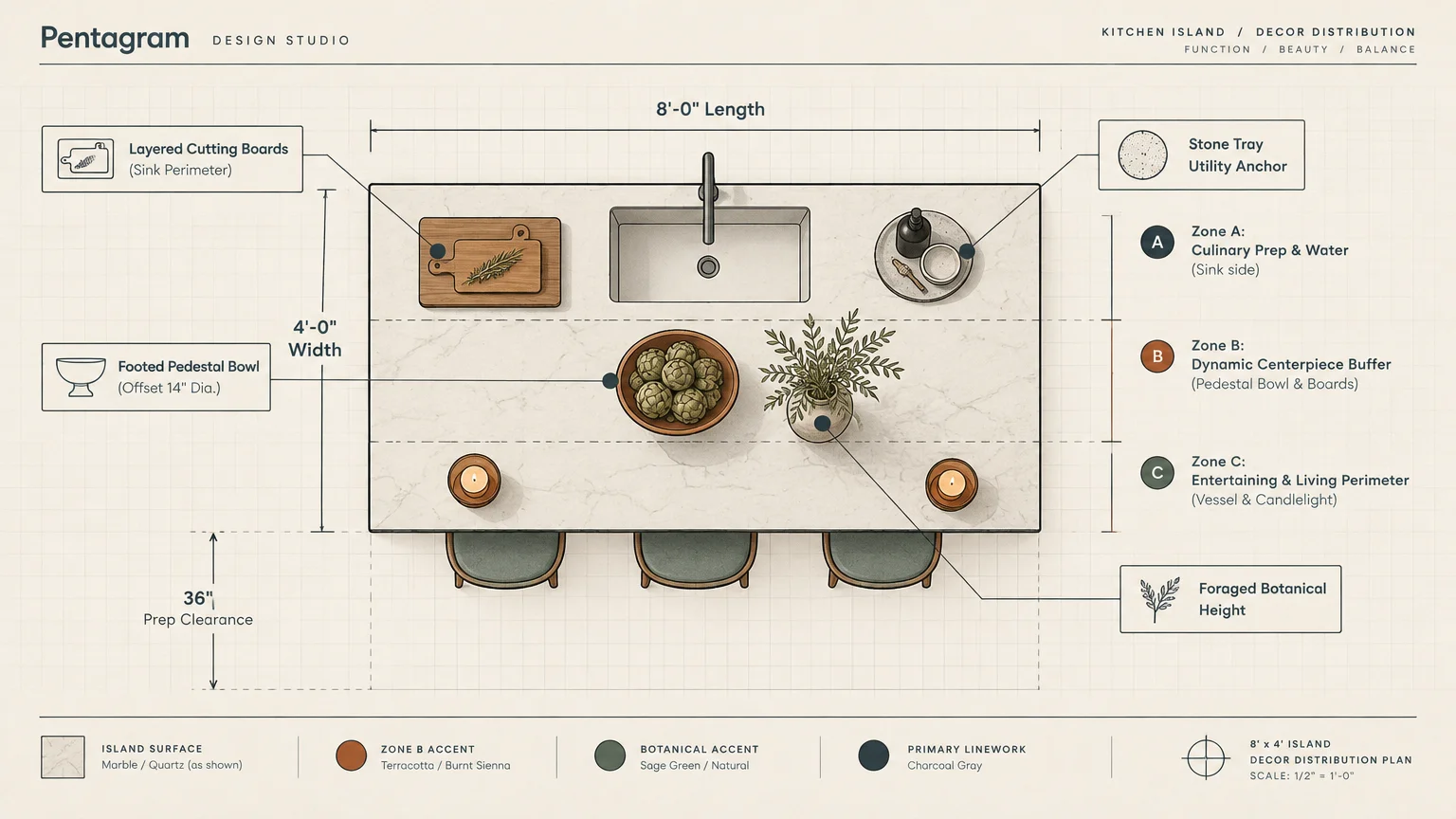
For islands exceeding eight feet, choose a pedestal bowl with a diameter of at least fourteen inches. Generous scale ensures your kitchen island centerpiece commands the space rather than appearing lost on a vast surface.
Place the footed bowl slightly off-center toward the living room perimeter to preserve functional prep zones. This asymmetric placement feels intentional, effortless, and distinctly high-end.
Clean natural stone bowls with gentle, pH-neutral soaps to avoid dulling their honed protective sealants. Proper maintenance preserves the organic texture of luxury stoneware for decades of daily use.
Trend #2: Monumental Artisan Cutting Boards
Lean or layer heavy vintage cutting boards against an island prep sink to introduce instant architectural history. Thick end-grain butcher blocks and European breadboards ground sterile modern surfaces with rich organic grain.
Designers celebrate pieces with authentic provenance, including subtle knife markings, deep knots, and aged patinas. These honest imperfections soften sleek cabinetry and industrial metallic hardware.
Select hardwoods such as white oak, black walnut, or reclaimed olive wood to ensure enduring resilience. Their natural oils provide a soft luster that reflects daylight beautifully across the counter.
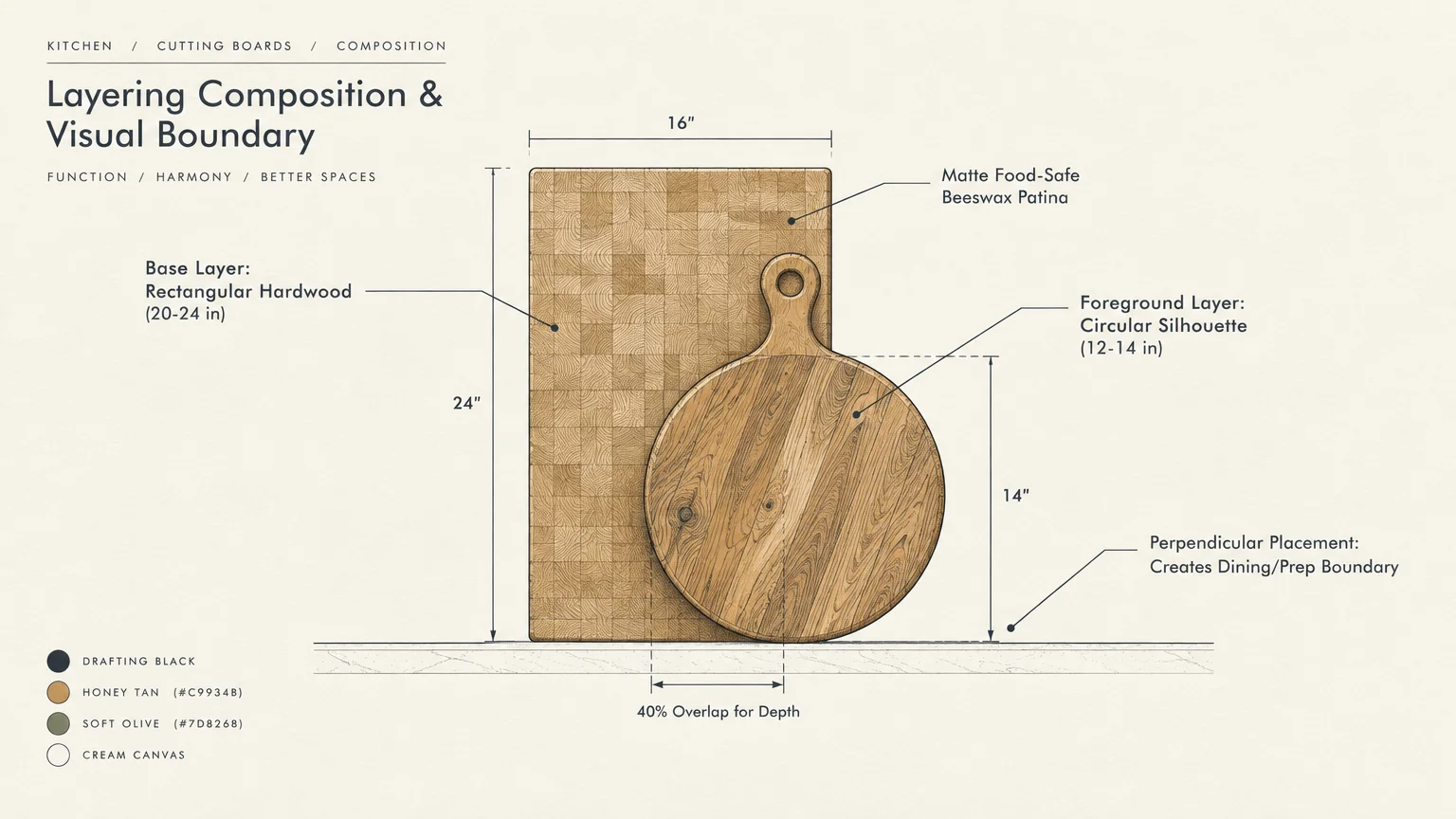
Layer two distinct boards by overlapping an elongated rectangular silhouette behind a circular or paddle-shaped piece. This compositional technique builds textural depth while keeping functional prep tools within immediate reach.
Avoid high-gloss lacquered boards in favor of matte, mineral-oil-treated finishes. Natural wood grain communicates grounded craftsmanship that bridges contemporary minimalism and traditional warmth.
Position your board display perpendicular to the island seating to create an attractive boundary between dining and prep zones. This visual boundary organizes counter activities without requiring physical partitions.
Maintain the wood regularly with food-safe beeswax to preserve its deep, lustrous patina over time. A well-loved board tells a visual story of culinary gathering and artisanal care.
Look for vintage boards at salvage markets or specialized antique dealers for unmatched historic character. Reclaimed wood imparts a soulful narrative that newly manufactured alternatives cannot duplicate.
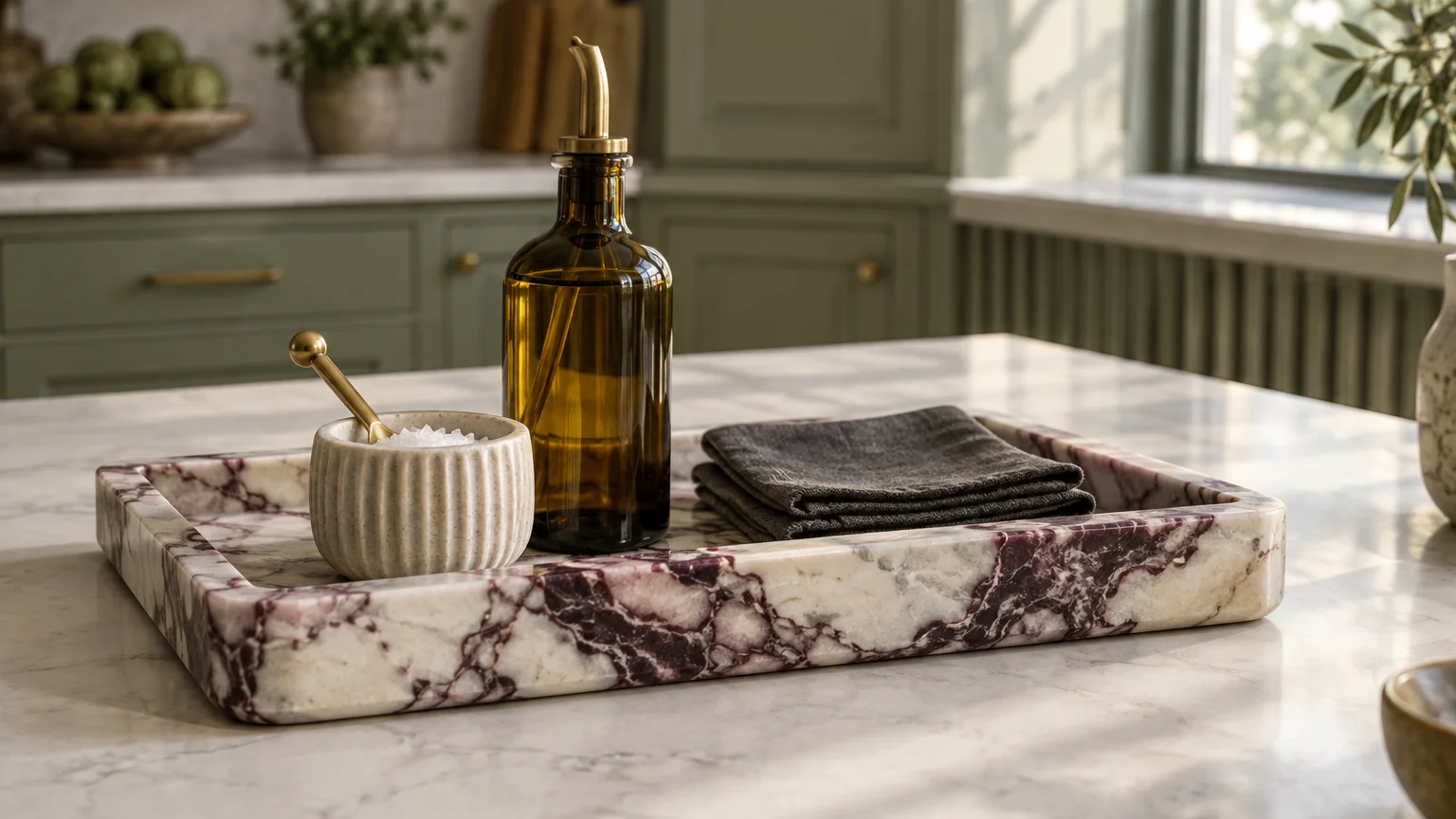
Trend #3: Vintage Travertine and Marble Trays
Containment serves as the secret weapon of professional interior stylists. A heavy stone tray establishes a dedicated perimeter, transforming loose utilitarian objects into a deliberate design vignette.
Porous travertine, scalloped Calacatta viola, and deep forest-green marble provide striking geological contrast. These dramatic stone patterns act as micro-installations on neutral waterfall countertops.
Place your high-use daily essentials directly onto the stone tray for effortless organization. A stoneware crock, a glass vessel, and a small cloche immediately read as an artistic collection rather than untidy counter spread.
The tray effectively manages negative space by defining clear boundaries. Everything resting inside its perimeter looks intentional; everything outside remains clear workspace.
Match the tray finish to complementary materials found across adjacent living or dining spaces. This subtle cross-room continuity unifies open-concept floor plans through shared architectural details.
Opt for low-profile trays with beveled or scalloped rims to maintain horizontal sightlines across the room. Low edges preserve unobstructed conversation paths between cooks and seated guests.
Integrate small felt protectors under heavy stone trays to protect delicate countertop surfaces from scratches. Practical preservation ensures both your island and your decor withstand heavy daily rotation.
Consider rectangular or rounded oblong trays depending on whether your island cabinetry features rigid lines or soft curves. Balancing geometric forms creates a harmonious, visually restful aesthetic.
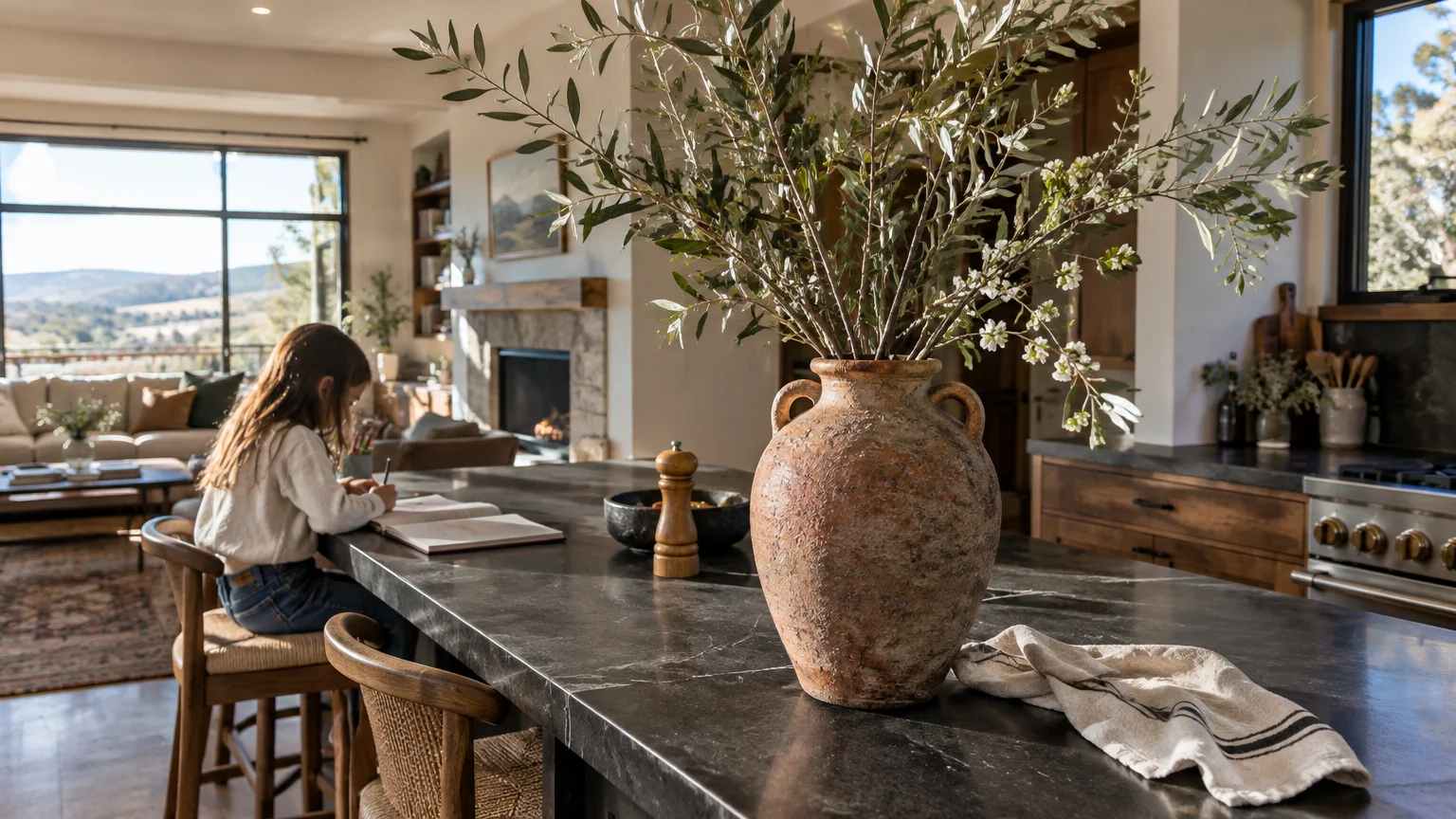
Trend #4: Oversized Ceramic Vessels with Foraged Botanicals
Countertop arrangements often suffer from horizontal stagnation when every item sits at the exact same height. Introducing an oversized ceramic pitcher or unglazed earthenware amphora establishes dramatic, room-anchoring verticality.
Large-scale vessels draw the eye upward toward pendant lighting, connecting your island styling with overhead architecture. This vertical line breaks up vast expanses of flat stone.
Fill your vessel with tall, foraged seasonal botanicals rather than tight commercial floral arrangements. Clipped olive branches, blossoming quince, or dramatic autumn beech sprigs introduce dynamic biophilic movement.
Asymmetrical foliage encourages the eye to wander naturally through the kitchen environment. The architectural silhouettes of real branches offer an organic energy that synthetic greenery simply cannot replicate.
Embrace vessels with chalky, tactile slip finishes, textured grog, or aged earthenware patinas. These weathered surfaces capture changing natural light, infusing timeless character into sleek modern settings.
Maintain appropriate proportions by keeping branch heights slightly below your low-hanging decorative pendant fixtures. This clearance prevents visual competition and keeps sightlines pleasantly open.
Swap the botanical contents every few weeks to reflect subtle seasonal shifts outside your windows. This rotating organic element keeps your kitchen atmosphere constantly refreshed and attuned to nature.
If using dry botanicals, weigh down the interior base of lightweight ceramics with washed river stones. Added weight prevents top-heavy stems from tipping over during casual family gatherings.
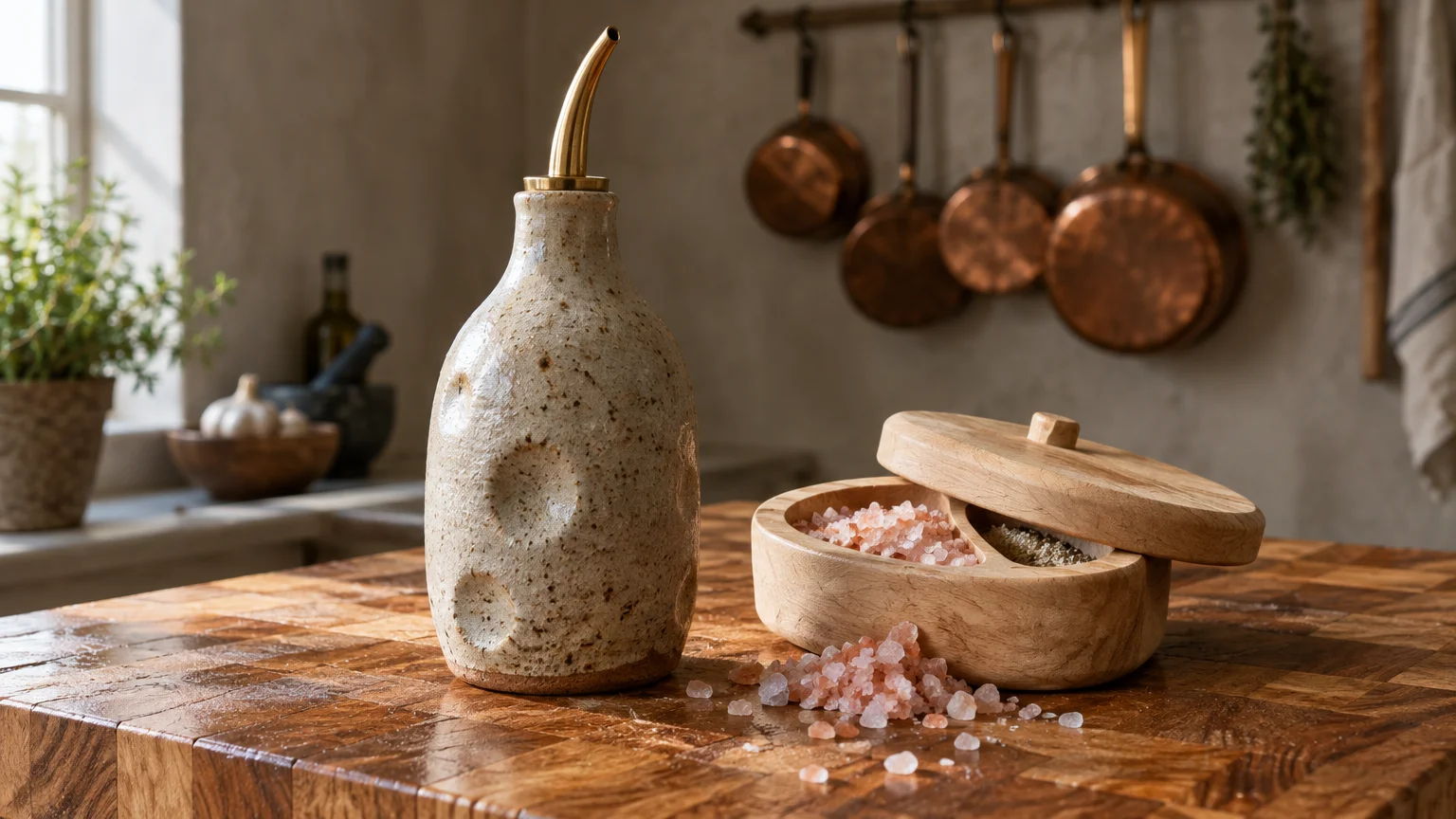
Trend #5: Handcrafted Culinary Oil Cruets and Salt Cellars
True styling excellence balances aesthetic refinement with functional cooking requirements. Displaying artisan cruets and pinch cellars celebrates culinary performance while treating raw ingredients as visual assets.
Replace commercial branded packaging with hand-thrown ceramic oil bottles and ribbed amber glass dispensers. Removing chaotic marketing labels immediately establishes serene visual harmony across the counter.
Accompany your oil cruet with a two-compartment marble cellar housing flake sea salt and whole peppercorns. A miniature brass spoon adds a flash of metallic jewelry to the arrangement.
Keeping these cooking staples near the cooktop edge of the island ensures seamless culinary flow. Beautiful utility proves that a curated kitchen remains an active, working laboratory rather than a sterile museum.
Choose cruets with weighted brass or stainless pour spouts that prevent dripping onto stone surfaces. Thoughtful details protect natural marble from acidic citrus dressings and staining cooking oils.
Group these culinary tools tightly as an intimate triad to maintain visual rhythm. Odd-numbered clusters naturally feel more spontaneous and aesthetically pleasing than rigid, symmetrical pairings.
Coordinate the ceramic glaze of your cruets with nearby backsplash tile or cabinet hardware. These micro-connections anchor your small decor choices within the broader interior design scheme.
Seek out independent ceramic artists whose unique maker marks add genuine artisanal soul to your countertops. Handcrafted tableware brings human warmth into precision-engineered kitchen spaces.
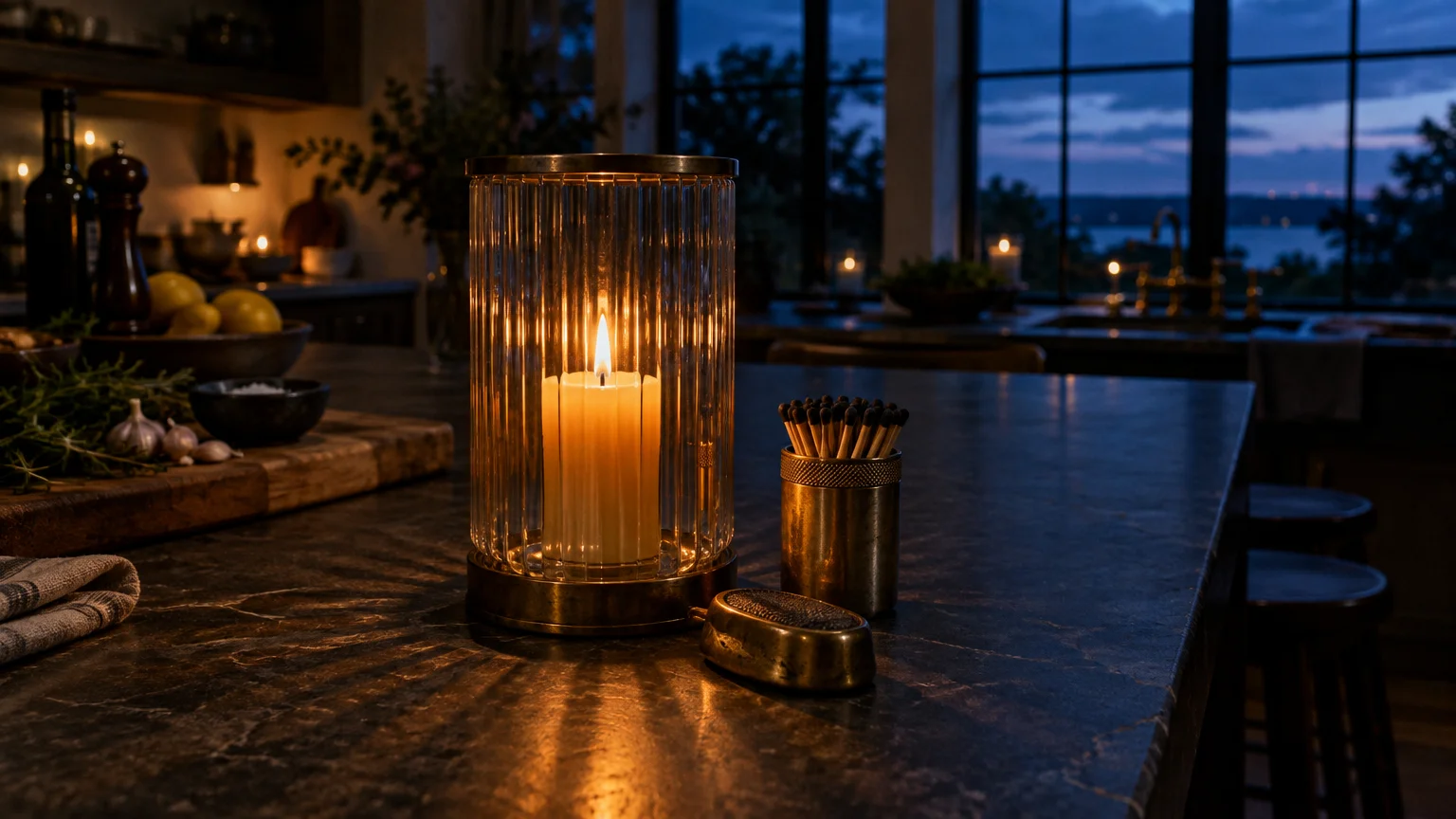
Trend #6: Cast Brass Accents and Fluted Candle Lanterns
Downward recessed can lights often feel clinical and harsh once evening meal preparation concludes. Adding a heavy cast brass lantern or fluted hurricane creates inviting pools of atmospheric warmth for casual entertaining.
Living metals such as unlacquered brass and blackened bronze develop a stunning, authentic patina over time. Their warm undertones balance the cold surfaces of stainless steel appliances and polished stone.
Heavy pillar candles housed in fluted glass diffuse light softly, casting intricate shadows across your island surface. This gentle glow signals a seamless transition from bustling daytime tasks to relaxed nighttime hospitality.
Select substantial metal bases that offer sturdy, tip-resistant weight amidst bustling kitchen social gatherings. Sturdy construction guarantees both effortless style and critical household safety.
Contrast sleek polished island countertops with the raw, hammered textures of artisanal cast iron or sand-cast brass. Varied surface finishes keep monochromatic kitchen schemes visually layered and dynamic.
When unlit during the daytime, a sculptural brass hurricane functions as a handsome, architectural metal statement. The metallic gleam reflects sunshine, adding bright highlights to the center of the kitchen.
Keep scents minimal around food prep zones by burning completely fragrance-free beeswax or soy pillar candles. Pure ambient light enhances the room’s mood without clashing with delicate cooking aromas.
Pair metallic lanterns with matte stone vessels nearby to create an intentional push-and-pull between reflective and light-absorbing textures. This material tension creates rich, layered elegance throughout the room.
Trend #7: Curated Artful Cookbooks on Architectural Stands
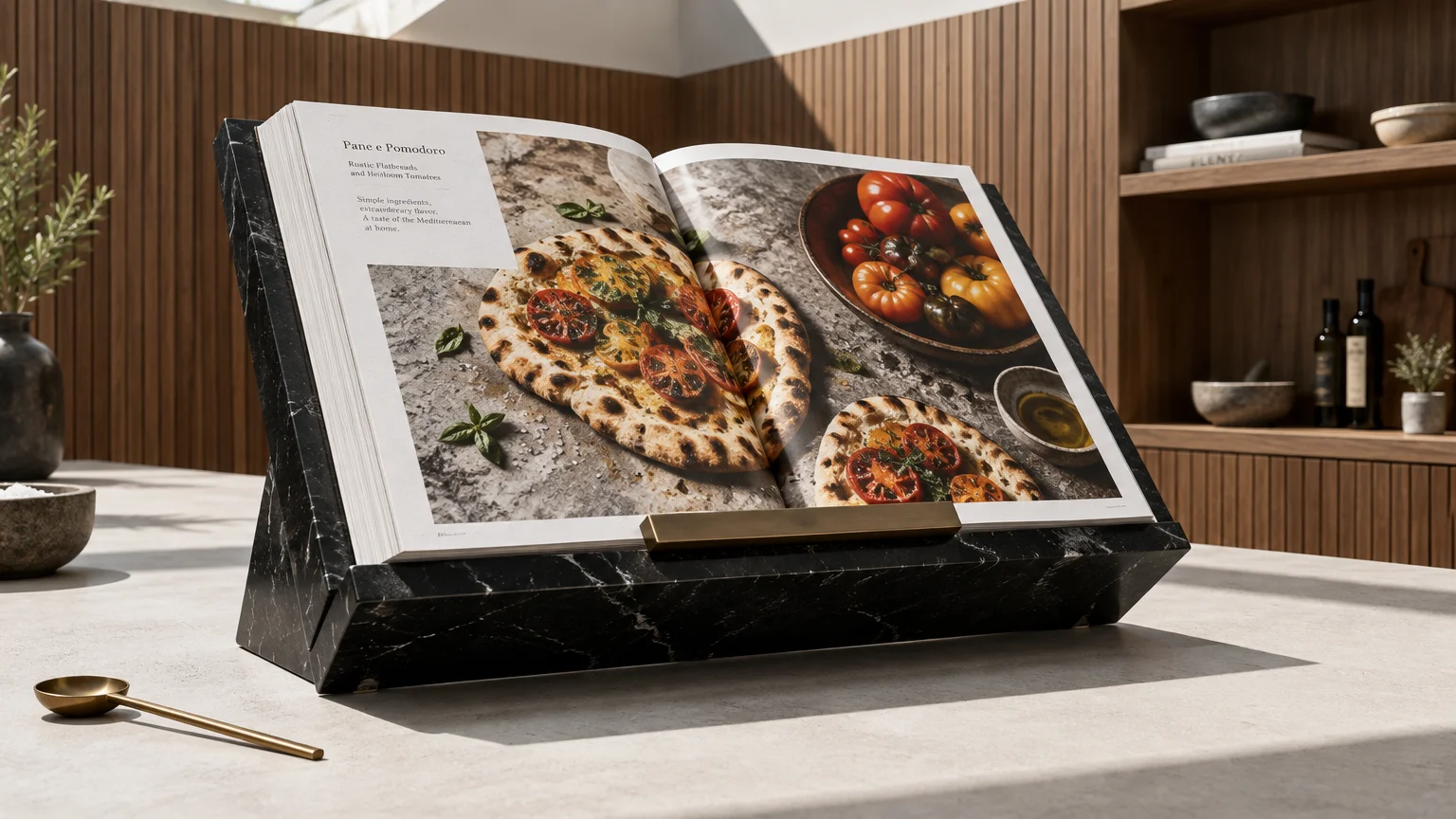
Books inject personality, intellect, and color into functional culinary spaces. Displaying a beloved, photography-rich volume on an easel treats cookbook covers as rotating gallery artwork.
Modern stands crafted from minimalist blackened iron, heavy raw oak, or clear acrylic provide architectural structure. These sculptural supports keep covers elevated safely away from moisture and spills.
Select culinary monographs featuring linen spines, striking typography, and evocative food photography. Highlighting volumes that reflect your personal travel memories or culinary passions adds genuine authenticity to the room.
Prop the book open to a visually stunning page featuring vibrant produce or artisanal baking techniques. Rotating the open spread weekly alters the island’s focal color story effortlessly.
Alternatively, stack two oversized volumes horizontally beside an architectural bowl to create varied platform elevations. Horizontal book stacks provide a textured base for smaller accessories like brass snuffers or stone beads.
Cookbooks humanize the kitchen island, reminding visitors that cooking remains a deeply creative, cultural act. They signal hospitality, welcoming family and friends to gather, browse, and linger.
Choose linen-bound volumes with palettes that echo your adjoining living room soft furnishings. This deliberate color bridge ties your kitchen island directly into adjacent entertainment spaces.
Position your stand at the quiet corner of the island furthest from sink splashes and cooking splatters. Thoughtful zone placement preserves your treasured art books for years of visual enjoyment.
The Big Picture: Weaving These Trends into Your Home
Harmonizing your kitchen island styling requires viewing the surface as part of your broader residential landscape. Never treat the island as an isolated showpiece detached from neighboring rooms.
Apply the interior designer’s rule of thirds to establish balanced, asymmetric groupings across the counter. Clustering your items into one or two defined zones leaves ample breathing room for daily meal preparation.
Establish textural dialogue by juxtaposing polished stone against coarse linen, aged timber, and unglazed ceramic clay. This tactile interplay generates rich visual interest without relying on jarring, saturated colors.
Maintain negative space rigorously; unoccupied counter real estate represents the true hallmark of quiet luxury. Overcrowding your island creates visual chaos and restricts functional prep zones.
Align your island color story with adjacent living room furnishings to create a fluid, unbroken decorative narrative. Repeating subtle accent hues throughout open-plan living zones produces a calm, harmonious aesthetic.
Edit your countertop objects regularly to adapt to seasonal entertaining routines and shifting household requirements. A dynamic, evolving arrangement feels authentic, personal, and continuously inspiring.
For the latest color forecasts, consult industry leaders like Pantone and paint companies like Benjamin Moore. For professional design standards, refer to the American Society of Interior Designers (ASID).
Disclaimer: This article reflects design trend analysis and predictions. Personal taste and timeless design principles should always guide your decorating choices.
Frequently Asked Questions
How do I prevent my kitchen island decor from cluttering prep space?
Establish designated functional zones by keeping decor restricted to the center or outer entertainment side of the counter. Grouping items onto a single tray allows you to relocate everything in seconds during intensive food prep.
Prioritize decor pieces that double as culinary tools, such as sculptural salt cellars and artisanal cutting boards. Multipurpose items justify their surface footprint by combining daily utility with high-end aesthetic appeal.
How tall should a kitchen island centerpiece be?
Keep your centerpiece heights either comfortably below eye level or tall and airy enough not to obstruct vision. Solid objects should generally measure under twelve inches high to preserve comfortable sightlines across the room.
If you choose tall botanical branches, ensure their stems branch out above seated eye level. This height separation prevents foliage from blocking conversations between seated diners and the host.
Can I mix different wood tones and metals on the island?
Mixing wood grains and metal finishes enriches your kitchen with collected, lived-in sophistication. Pair dark walnut cutting boards with white oak cabinetry to create intentional, organic contrast.
For metals, establish one dominant finish across cabinet pulls and introduce unlacquered brass or blackened iron accents through decor. Limiting your palette to two complementary finishes maintains visual harmony.
How often should I restyle my kitchen island?
Adjust your island display seasonally to incorporate fresh regional foliage and changing produce varieties. Rotating branches from spring blossoms to autumnal leaves keeps the kitchen deeply attuned to the natural calendar.
Keep your structural foundation pieces, such as stone trays and wood boards, consistent throughout the year. Swapping only the botanicals, cookbooks, and produce allows effortless aesthetic reinvention with minimal effort.