True quiet luxury goes far beyond bouclé armchairs and plaster walls; it lives in the unseen cadence of a well-tended home. Knowing which household items to replace before they degrade protects both your architectural finishes and your family.
A proactive home maintenance schedule turns routine upkeep into an effortless design ritual. Below, discover the fifteen everyday essentials silently aging past their prime—and exact timelines for when to replace them.
Trend #1: Flush-Mount Smoke Alarms and Architectural Safety
Modern interiors favor recessed, paintable ceiling fixtures that disappear into crisp drywall planes, yet outdated detectors undermine even the sharpest architectural restraint. Smoke alarms lose sensor sensitivity long before their plastic housings yellow or collect dust.
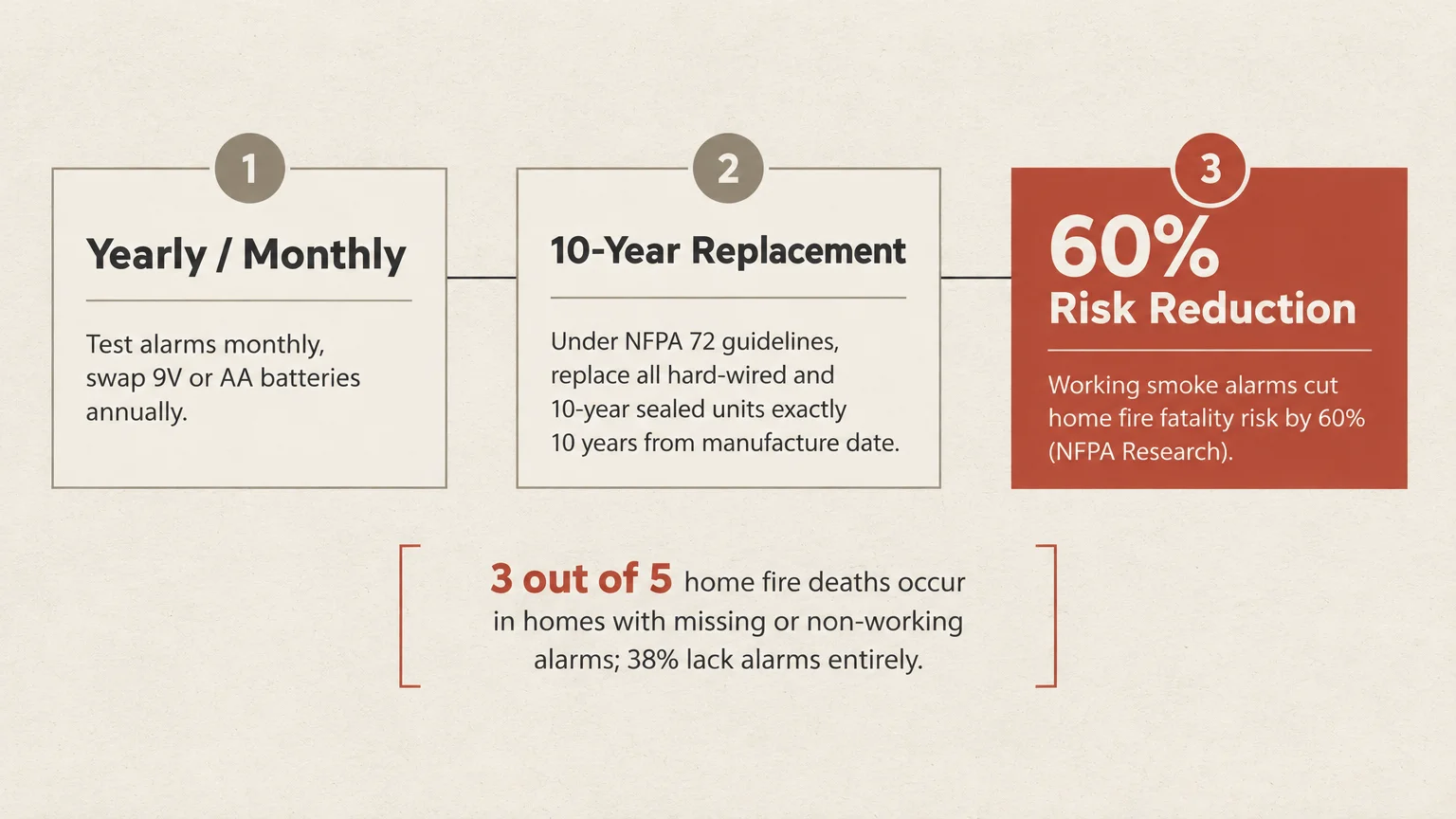
Under NFPA 72 guidelines, you must replace all smoke alarms—including hard-wired units and sealed 10-year lithium battery models—exactly 10 years from the manufacture date stamped on the back. Replace any unit sooner if it fails a routine check.
For units powered by traditional 9V or AA batteries, swap batteries at least once a year and test every alarm monthly. According to NFPA Research, working smoke alarms cut the risk of dying in a home fire by 60%.
Roughly 3 out of 5 home fire deaths happen in residences with non-working or missing alarms, and 38% occur in homes lacking alarms altogether. Treating fire safety as part of your annual aesthetic refresh keeps every room genuinely livable.
Trend #2: Discreet Carbon Monoxide and Combo Sensors
Sleek, low-profile detectors blend effortlessly beside minimalist trim, but their internal chemistry works on a strict countdown. Electrochemical carbon monoxide sensors gradually lose accuracy, even when the exterior casing looks showroom-new.
Industry standards from NFPA and Underwriters Laboratories dictate replacing CO and combination alarms every 7 to 10 years, depending on the model. Check your manufacturer stamp carefully during your seasonal home safety walk-through.
First Alert advises replacing most CO and combo alarms after 7 years, while Kidde notes that models produced from 2013 onward generally carry a 10-year lifespan. Older pre-2013 Kidde units were engineered for a 7-year window.
Since 2009, UL has required CO alarms to sound an end-of-life warning chirp, according to Kidde. Never silence that chirp with fresh paint or drywall dust; install a fresh unit immediately to safeguard your indoor sanctuary.
Trend #3: Sculptural Fire Extinguishers in Open Kitchens
Matte-black and brushed-brass canisters now sit proudly beside marble range hoods, merging culinary prep with smart home safety. Still, treating an extinguisher as static decor creates a dangerous blind spot near open flames.
Under NFPA 10 standards, disposable extinguishers have a fixed useful life and must be replaced at the interval printed on the nameplate. Discard them sooner if you spot low pressure, corrosion, a clogged nozzle, prior discharge, or a broken tamper seal.
If you invest in rechargeable dry chemical or halogenated-agent models, schedule professional internal maintenance every 6 years and hydrostatic testing every 12 years. Water, foam, and carbon dioxide units require both inspections every 5 years under NFPA 10.
Mount your canister within arm’s reach of the range, tucked inside a custom pull-out or styled on a stone ledge. Beautiful utility only works when the hardware inside remains pressure-ready.
Trend #4: Braided Supply Hoses Behind Bespoke Laundry Millwork
Custom laundry rooms showcase fluted cabinetry, honed limestone counters, and integrated drying drawers—all of which sit inches from vulnerable plumbing. Rubber washing machine hoses degrade silently under constant water pressure behind sleek appliance panels.
Insurers and manufacturers advise replacing rubber supply hoses every 3 to 5 years while checking monthly for bulges, cracks, or dampness. Stepping up to stainless-steel braided lines adds durability, yet regular inspection remains essential.
An Insurance Institute for Business & Home Safety (IBHS) study of 525 claims revealed that nearly 55% of washing machine water damage claims stem from failed supply hoses. Those preventable incidents average over $6,000 per claim.
IBHS and State Farm report that failure rates climb sharply after 5 years, with failed hoses averaging 8.7 years and nearly 80% bursting before age 10. At roughly 70 psi, one split hose dumps 600 to 650 gallons per hour across your hardwood.
Trend #5: Biophilic Air Flow via HVAC Filters and Water Heaters
Biophilic design—the practice of weaving nature’s rhythms into interiors through daylight, organic textures, and clean air—starts inside your mechanical closet. Dust-choked filters force systems to strain, circulating stale particulates across velvet upholstery and plaster walls.
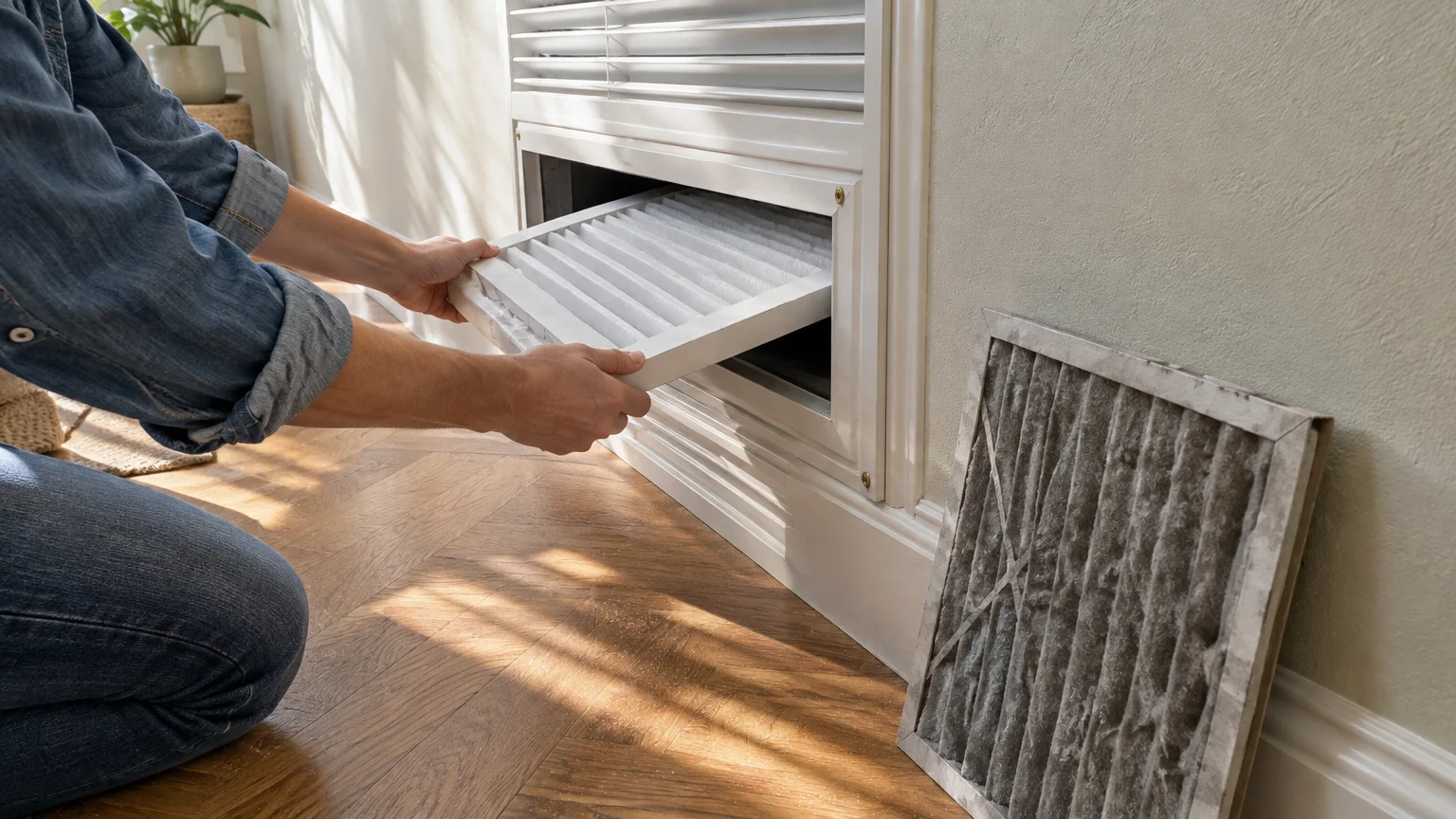
ENERGY STAR recommends checking HVAC air filters every month, particularly during peak summer cooling and winter heating runs. Replace or clean them at least every 3 months, or sooner whenever gray lint coats the pleats.
Heating and cooling consume nearly half of the average U.S. household’s energy budget, costing more than $900 annually according to ENERGY STAR. Fresh filters protect both indoor air clarity and long-term operating efficiency.
While inspecting your utility alcove, check the date tag on your hot water tank. ENERGY STAR advises planning a proactive swap for water heaters over 10 years old before rust triggers a basement flood.
Trend #6: Concealed Surge Protectors for Cord-Free Living
Designers conceal charging hubs inside credenzas and floating nightstands to preserve visual calm, yet hidden power strips quietly exhaust their protective capacity. Every minor voltage spike wears down the metal oxide varistors (MOVs) inside your surge protector.
Electrical safety and insurance specialists recommend replacing point-of-use surge protectors every 3 to 5 years for laptops, televisions, and audio gear. Swap units serving major appliances every 2 to 3 years.
Replace any surge unit immediately after a lightning strike, major power surge, or whenever the grounded protection light stops glowing. Look for the UL 1449 mark and a clear Joule rating so you never mistake a basic strip for real protection.
Pair slim, flat-plug units with cord channels carved into custom media consoles. Safeguarding bespoke OLED screens and smart lighting bridges begins with knowing when to replace your unseen electrical buffers.
Trend #7: Restorative Mattresses in Quiet Luxury Primary Suites
Quiet luxury celebrates tactile restraint—monochromatic wool rugs, limewashed walls, and restorative sleep sanctuaries free from visual noise. Yet even the finest Belgian linen duvet cannot mask a sagging mattress core that steals your morning energy.
Both the Better Sleep Council and the Sleep Foundation place average mattress longevity at 7 to 10 years. Innerspring beds typically peak around 7 to 8 years, while high-density foam or latex spans 8 to 10 years or longer.
Despite that timeline, the Mattress Recycling Council reports that disposed mattresses average 13.9 years of use. Waiting an extra half-decade silently erodes posture and sleep depth.
A 2009 Oklahoma State University experiment cited by the Better Sleep Council found that replacing a mattress 5 or more years old immediately boosted sleep quality and eased minor back discomfort. Rotate yours seasonally and schedule your next upgrade on time.
Trend #8: Crisp Pillow Profiles for Effortless Bed Layering
Interior stylists create cloud-like primary beds by layering crisp percale shams with breathable European squares, yet tired inserts quickly deflate that tailored silhouette. Flattened pillows strain cervical alignment and trap unseen moisture deep inside the fill.
The Sleep Foundation notes that most sleep specialists advise replacing standard pillows every 1 to 2 years. Memory foam cushions last roughly 2 to 3 years, while resilient natural latex stretches to 2 to 4 years.
Washable pillows need laundering every 3 to 6 months, and the UK-based Sleep Council recommends replacing pillows every 2 to 3 years overall. Neglecting that schedule turns your headboard vignette into an allergen reservoir.
According to The Sleep Council, an aged, unwashed pillow can carry up to 10% of its weight in dead skin cells, mold, dust mites, and allergen-laden droppings. Zippered breathable protectors extend freshness between scheduled swaps.
Trend #9: Sink-Side Discipline and Weekly Sponge Swaps
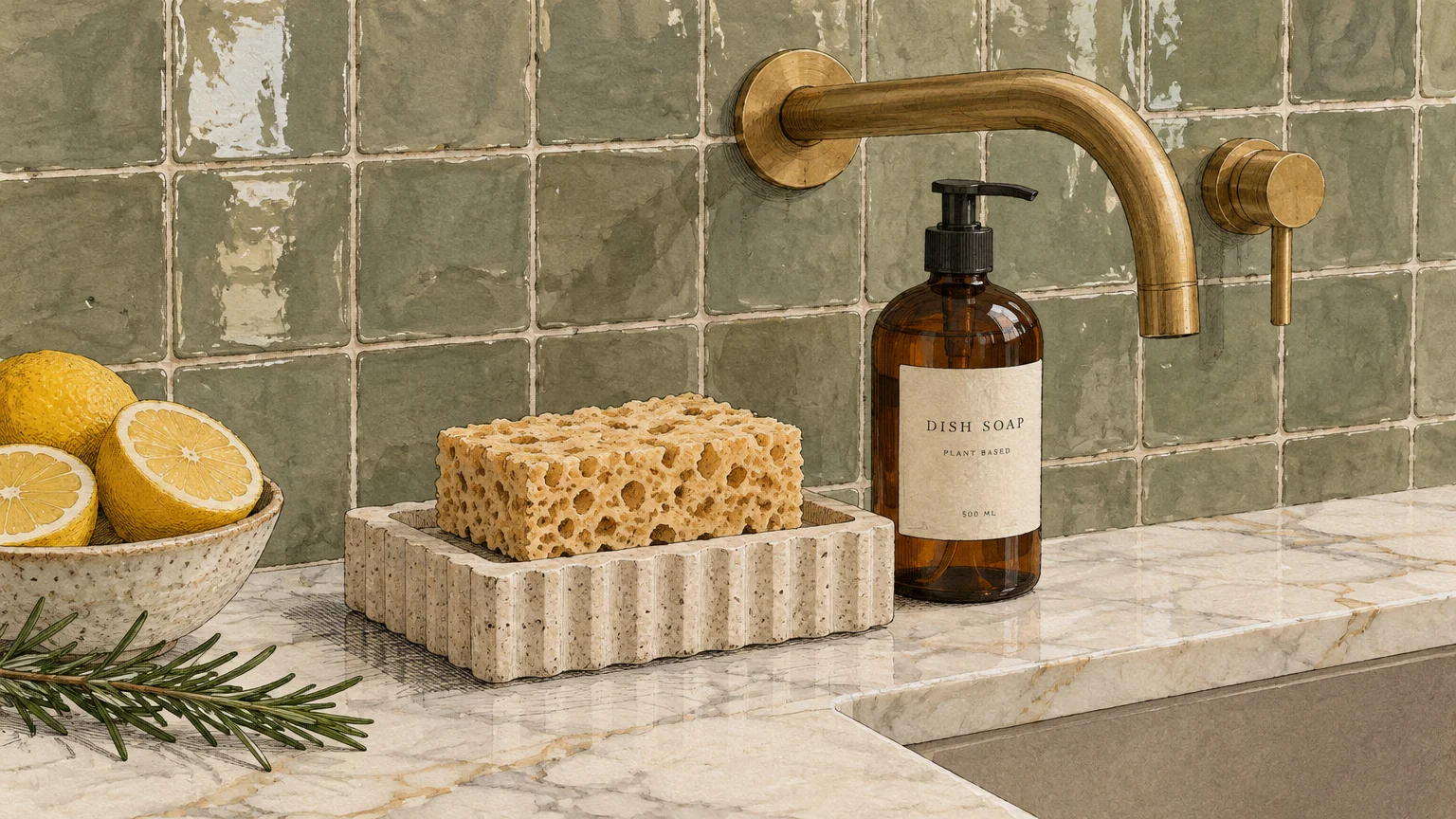
Sculptural stone aprons and unlacquered brass bridge faucets elevate daily kitchen chores into calm, sensory moments. Unfortunately, a damp, frayed cellulose sponge left beside the soap dispenser ruins both the visual poetry and countertop hygiene.
Microbiologists, including Dr. Robert Tibbetts at Henry Ford Health, recommend replacing kitchen sponges every week—and discarding them immediately after wiping raw meat juices. Keeping a slender stoneware caddy stocked with fresh replacements simplifies this tiny ritual.
A 2017 Scientific Reports study identified 362 bacterial groups inside used sponges at densities reaching 45 billion microbes per square centimeter. Remarkably, regularly sanitized sponges carried no fewer bacteria than neglected ones.
USDA Agricultural Research Service testing found that microwaving a wet, non-metallic sponge for 1 minute eliminated 99.99999% of bacteria, while a dishwasher dry cycle cleared 99.9998%, beating 10% bleach or lemon soaks at 37% to 87%. Still, weekly replacement remains safest.
Trend #10: End-Grain Cutting Boards with Authentic Provenance
Artisanal walnut boards leaned against a zellige tile backsplash lend instant warmth and culinary provenance—the visible story of craftsmanship and origin. Once knife blades carve deep trenches into wood or plastic, however, rustic patina turns into a food-safety hazard.
The USDA advises retiring cutting boards when surfaces become heavily scarred or develop deep grooves that trap food debris and resist thorough scrubbing. Cross-contamination lingers inside microscopic fissures long after you wipe away dinner prep.
An NSF International kitchen hygiene investigation similarly uncovered dangerous microorganisms tucked inside hard-to-clean cracks, worn utensils, and aging blender gaskets. Knowing when to replace kitchen items protects both guests and your culinary investment.
Sand and re-oil thick butcher blocks while grooves remain shallow, or retire deeply gouged boards to decorative dry-goods serving duty. Keep dedicated, fresh boards for raw proteins and crisp produce.
Trend #11: Unblemished Nonstick Cookware for Clean Culinary Prep
Open pot racks and glass-front pantries showcase cookware as living sculpture, making scratched, warped skillets an eyesore as well as a performance drag. Damaged nonstick surfaces force you to add extra oil and compromise effortless food release.
Manufacturers such as Tefal skip fixed calendar limits, advising instead to replace kitchen items when a pan warps, cracks, flakes, scratches down to bare metal, or begins sticking. Treat coating wear as your clear cue to retire the skillet.
While the FDA notes studies show negligible PFAS migration into food from intact nonstick pans, an Australian imaging study estimated one crack in a PTFE coating can shed around 9,000 plastic particles. Severely broken coatings can release roughly 2.3 million particles.
Preserve fresh nonstick surfaces by cooking below roughly 500°F (260°C), never preheating empty pans, and switching to silicone or wooden turners. Investing in durable stainless or enameled cast iron alongside one pristine nonstick skillet elevates everyday cooking.
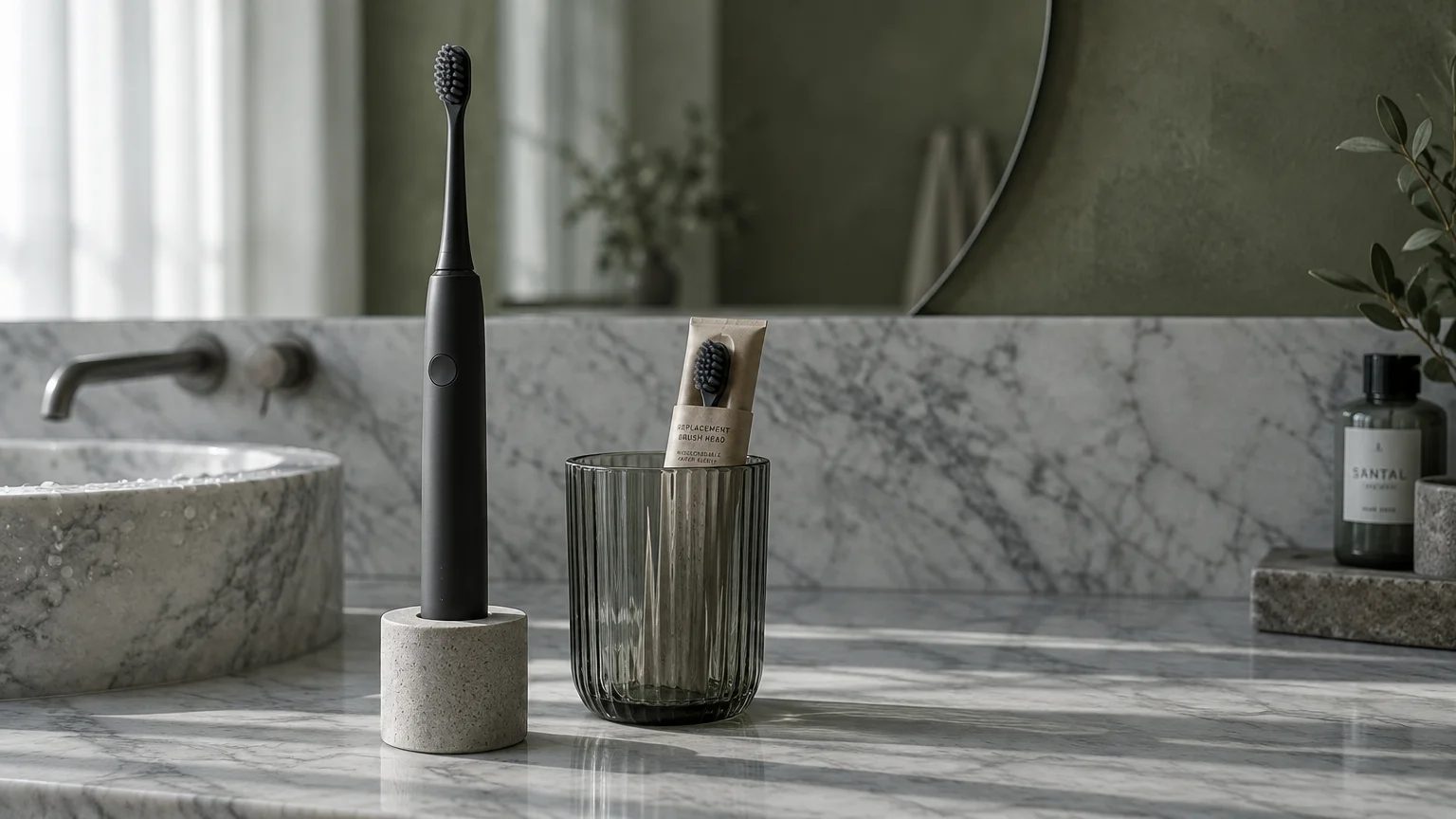
Trend #12: Architectural Vanity Styling and Toothbrush Hygiene
Fluted travertine cups and minimal counter trays turn morning routines into calming spa rituals, provided the tools inside look crisp rather than frayed. Splayed bristles clean poorly and signal it is past time for an upgrade.
The American Dental Association (ADA) recommends replacing manual toothbrushes and electric brush heads every 3 to 4 months. Swap them sooner whenever bristles appear visibly matted, bent, or discolored.
After brushing, rinse bristles thoroughly under running tap water and store your brush upright in open air to dry completely. Closed travel caps or sealed vanity drawers trap humidity and encourage microbial growth.
Order multipacks of matte-toned brush heads at the start of every quarter so your bathroom vignette stays cohesive. Small, rhythmic swaps preserve both enamel health and serene counter proportions.
Trend #13: Mold-Free Bath Textures and Natural Loofahs
Spa-inspired wet rooms pair warm cedar benches with botanical soaps and woven exfoliators hung neatly from brass hooks. Yet steam-filled showers turn porous bath scrubbers into damp incubators remarkably fast.
Dermatology experts at Cleveland Clinic recommend replacing natural loofahs every 3 to 4 weeks because organic fibers trap dead skin cells and lingering moisture. Plastic mesh shower poufs hold up slightly longer, needing replacement every 2 months.
Toss any scrubber immediately if you detect a musty scent or spot dark mold flecks tucked between the folds. Hanging scrubbers outside the direct splash zone near an exhaust fan slows bacterial buildup.
Consider rotating washable organic cotton washcloths or quick-drying silicone body brushes if you crave minimalist longevity. Fresh textures keep your wet room feeling genuinely restorative rather than neglected.
Trend #14: Curated Vanity Drawers and Expired Sunscreen
Thoughtful bathroom organization mirrors capsule wardrobe dressing—every bottle inside your linen tower earns its footprint through active performance. Clinging to half-empty beach lotions from summers past clutters shelves and leaves skin unprotected.
Under FDA regulations (21 CFR 211.137), sunscreen is classified as an over-the-counter drug and must display an expiration date unless manufacturer stability testing proves full potency for at least 3 years. Discard undated bottles 3 years after purchase.
Toss any sunscreen sooner if it bakes in a hot car, sits in direct poolside sunlight, turns watery, or changes color and scent. UV filters break down quietly long before the bottle runs dry.
In 2026, the FDA issued final order OTC000008 – 1, formally classifying PABA and trolamine salicylate as not generally recognized as safe and effective and removing them as permitted active sunscreen ingredients. Audit your vanity tray each spring to keep formulas current.
Trend #15: Edited Makeup Organizers and Fresh Mascara
Lucite drawer dividers and marble vanity trays make daily getting-ready routines feel effortless, yet clinging to dried cosmetic tubes silently undermines eye health. Every stroke transfers skin flora from your lashes directly back into dark, moist mascara.
Because wand applicators repeatedly introduce bacteria and fungi into the tube, the FDA advises discarding mascara after 2 to 4 months. Toss any tube sooner if the formula thickens, flakes, or smells off.
Never stretch a fading tube by adding tap water or eye drops, which dilutes preservatives and accelerates contamination. Pumping the wand up and down also forces air inside and dries the formula prematurely.
Streamlining your tray to one or two active tubes mirrors broader design shifts toward intentional curation over clutter. Keeping a quarterly calendar reminder turns beauty hygiene into second nature.
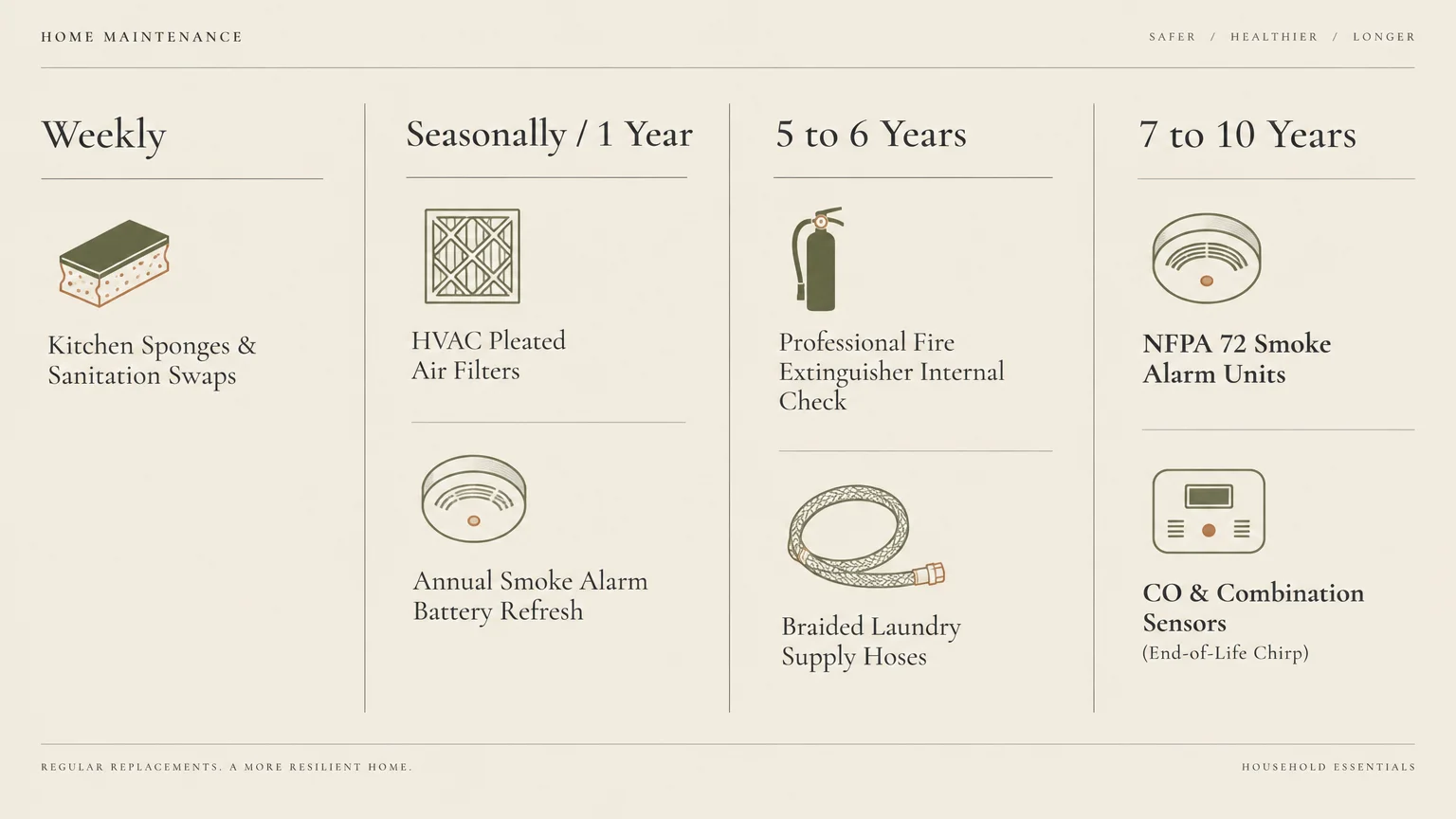
The Big Picture: Weaving These Trends into Your Home
Refreshing your home does not demand gut renovations or constant shopping; it flourishes through disciplined editing and smart timing. Treating functional replacements with the same care as upholstery palettes transforms hidden upkeep into quiet luxury.
Build a simple home maintenance schedule tied to the turn of each season. Test alarms and swap filters as spring arrives, audit bath textiles and sunscreens before summer travel, inspect hoses in autumn, and refresh kitchen tools before winter entertaining.
Pair technical updates with thoughtful material choices—unlacquered metals, solid end-grain woods, and breathable natural fibers—that age with grace between replacement cycles. Thoughtful home safety and elevated aesthetics always reinforce one another.
For the latest color forecasts, consult industry leaders like Pantone and paint companies like Benjamin Moore. For professional design standards, refer to the American Society of Interior Designers (ASID).
Frequently Asked Questions
How can I track when to replace household items without cluttering my space?
Keep a digital home maintenance schedule synced to recurring calendar reminders on the first day of each season. You can also write installation dates with a fine metallic marker on hidden backings of filters, alarms, and pillows.
Which items pose the biggest hidden risk to hardwood and millwork?
Aging rubber washing machine hoses top the list because bursts can release 600 to 650 gallons per hour under typical household pressure. Water heaters over 10 years old also deserve proactive replacement before they fail.
Should I replace kitchen items based on age or visible wear?
Follow strict timelines for sponges—weekly replacement protects against microbial buildup—while relying on visible wear for cutting boards and nonstick cookware. Deep knife grooves, peeling coatings, or warped pan bases are your clear replacement cues.
What is the easiest way to upgrade bathroom hygiene without losing spa style?
Swap damp loofahs every 3 to 4 weeks, store toothbrushes upright in open air, and purge mascara every 2 to 4 months. Grouping fresh backups inside lidded stone canisters keeps vanity counters calm and clutter-free.
Disclaimer: This article reflects design trend analysis and predictions. Personal taste and timeless design principles should always guide your decorating choices.