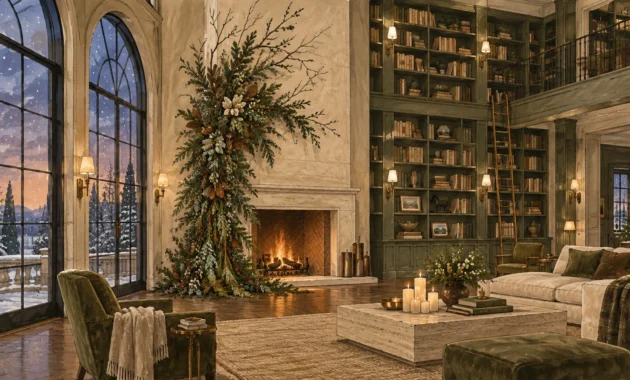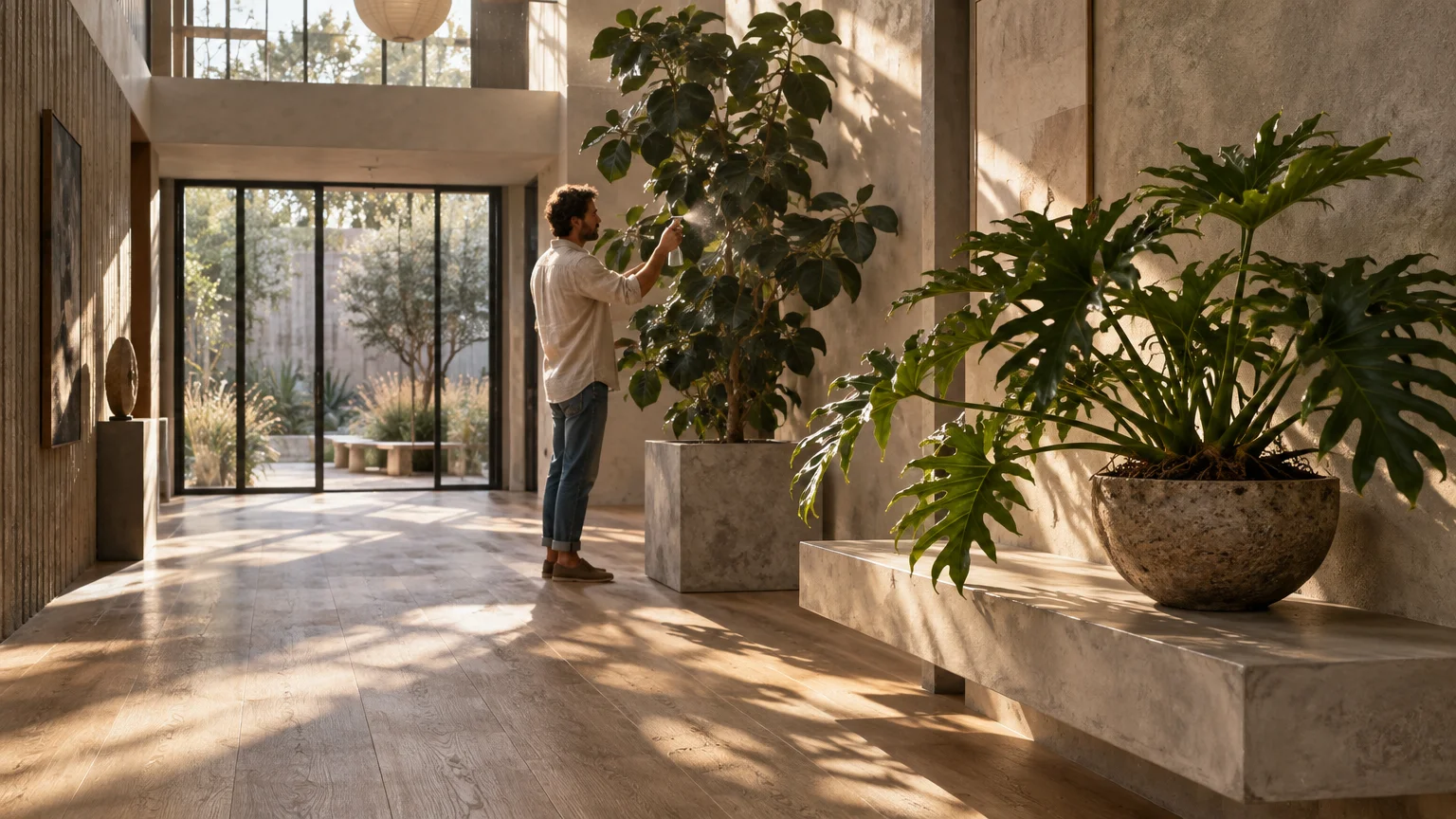
Your sunlit windowsills can only hold so many terracotta pots before they look cluttered. Modern houseplant decor treats greenery as living architecture that anchors corners, credenzas, and open shelving.
Moving plants deeper into your home creates visual drama, yet it demands smart light and hardware choices. A few feet away from glass, usable light drops sharply while wet potting soil adds serious weight.
These ten fresh indoor plant display ideas blend high-end styling with proven horticultural specs. You will learn how to stage thriving greenery anywhere without sacrificing your walls or finishes.
Trend #1: Architectural Floating Plant Shelves with Integrated LED Lighting
Sleek floating plant shelves turn blank drywall into living wall sculptures. Instead of cramming foliage onto narrow window ledges, designers now stack staggered planks across dining walls and study alcoves.
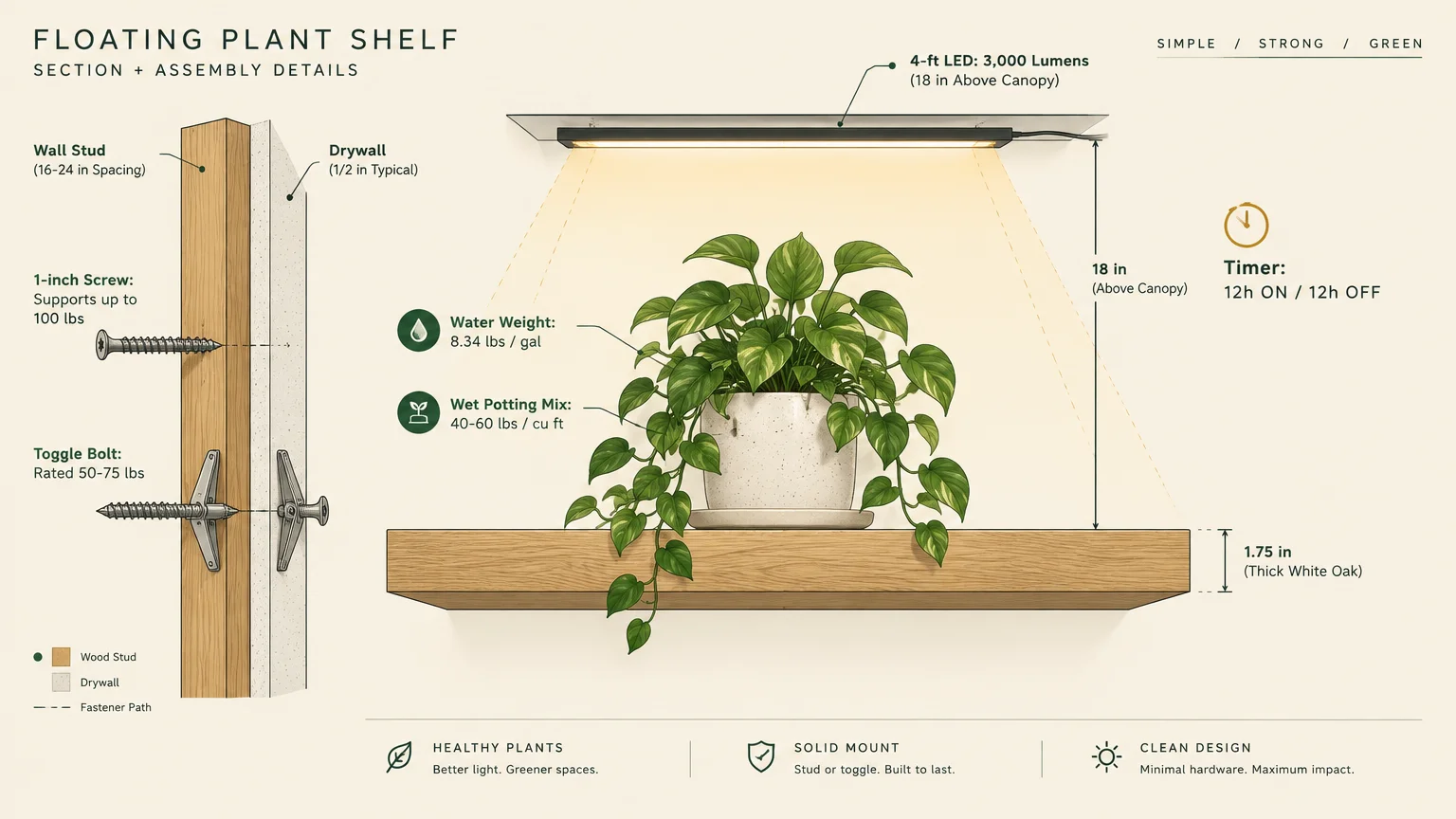
Weight management starts before you drill a single hole. Water weighs 8.34 pounds per gallon, and saturated peat or coir potting mixes reach 40 to 60 pounds per cubic foot.
A single 5-gallon container holds 27 to 40 pounds of wet mix before you even count the ceramic vessel. Heavy planters therefore demand real structural backing behind your drywall.
Wall studs typically sit 16 to 24 inches apart. Driving number-four or larger screws one inch into a wood stud supports up to 100 pounds cleanly.
Where studs do not align, space brackets at least 12 inches apart to distribute outward leverage. Choose molly bolts or toggle bolts rated for 50 to 75 pounds rather than weak plastic expansion anchors.
Deeper shelves pull harder on upper fasteners, so match shelf depth to lighter trailing pots. Safe capacity always stops at your weakest shelf, bracket, or wall fastener.
Tucking slim full-spectrum LED fixtures beneath upper planks keeps lower foliage thriving far from daylight. Aim for a 4-foot daylight LED fixture delivering at least 3,000 lumens mounted roughly 18 inches above your canopy.
Doubling the distance between a bulb and your leaves drops light intensity to one-quarter. Run grow lights on a 12-hours-on, 12-hours-off timer because foliage needs daily darkness to respire.
Trend #2: Sculptural Ceiling-Hung Canopies Over Unused Corners
High ceilings often leave upper room corners feeling cold and unfinished. Suspending woven or matte ceramic planters at staggered heights draws the eye upward while softening sharp architectural lines.
Never screw a heavy hook into hollow drywall alone. Watering turns light baskets into swinging loads that stress weak fasteners, so always anchor ceiling hangers directly into a solid ceiling joist.
Natural light fades faster than most homeowners realize once a basket hangs away from glass. Full outdoor sunlight delivers 10,000 to 12,000 foot-candles, while north-facing windows rarely exceed 400 foot-candles.
Hanging a planter three to ten feet from an east or west window provides medium to low light—roughly 75 to 150 foot-candles. Fluorescent interior spaces without daylight often drop to 40 foot-candles or less.
Match trailing varieties to your corner’s true foot-candle reading. Boston Ferns and Spider Plants adapt gracefully to bright or medium zones, while Heartleaf Philodendrons tolerate dimmer interior corners.
Elevation also serves as practical protection if you share your home with curious animals. Keep toxic cascading vines such as Golden Pothos high enough that dropped leaves never land within reach on armchairs.
Slip inner plastic nursery pots inside seamless ceramic cachepots—outer decorative sleeves without drainage holes. You can lift the liner down to your sink for soaking without dripping across hardwood floors.
Trend #3: Kitchen Islands and Open Millwork Connected to Nature
Today’s kitchens function as social sanctuaries rather than sterile prep zones. According to the NKBA/KBIS 2026 Kitchen Trends Report, 71 percent of homeowners rank an outdoor connection as a priority kitchen feature.
That same report notes 59 percent of respondents see wood-grain cabinetry growing in popularity. Pairing warm white oak or walnut millwork with lush greenery reinforces this organic shift inside your cooking space.
Style a shallow ceramic trough along the center of a spacious island, or tuck upright foliage into open upper cubbies. These intentional plant styling ideas replace cluttered utensil crocks with calm texture.
Placement near working appliances requires careful thermal awareness. Tropical foliage thrives between 65 and 75 degrees Fahrenheit by day, and sudden bursts of dry oven heat scorch tender leaf edges.
Keep planters clear of stove vents, dishwashers, and direct hot-air registers. Cold winter drafts near exterior kitchen doors can also trigger chilling injury once air dips below 50 to 55 degrees.
If your island sits ten feet from a south window, natural light hovers near 150 foot-candles—ideal for sturdy Cast Iron Plants or Peperomia. Discreet full-spectrum pendant grow bulbs easily bridge the gap over darker islands.
Run supplemental pendants for 14 hours daily during dim winter months. You gain vibrant culinary atmosphere without sacrificing practical prep space on your countertops.
Trend #4: Quiet Luxury Ceramic Pedestals and Oversized Floor Specimens
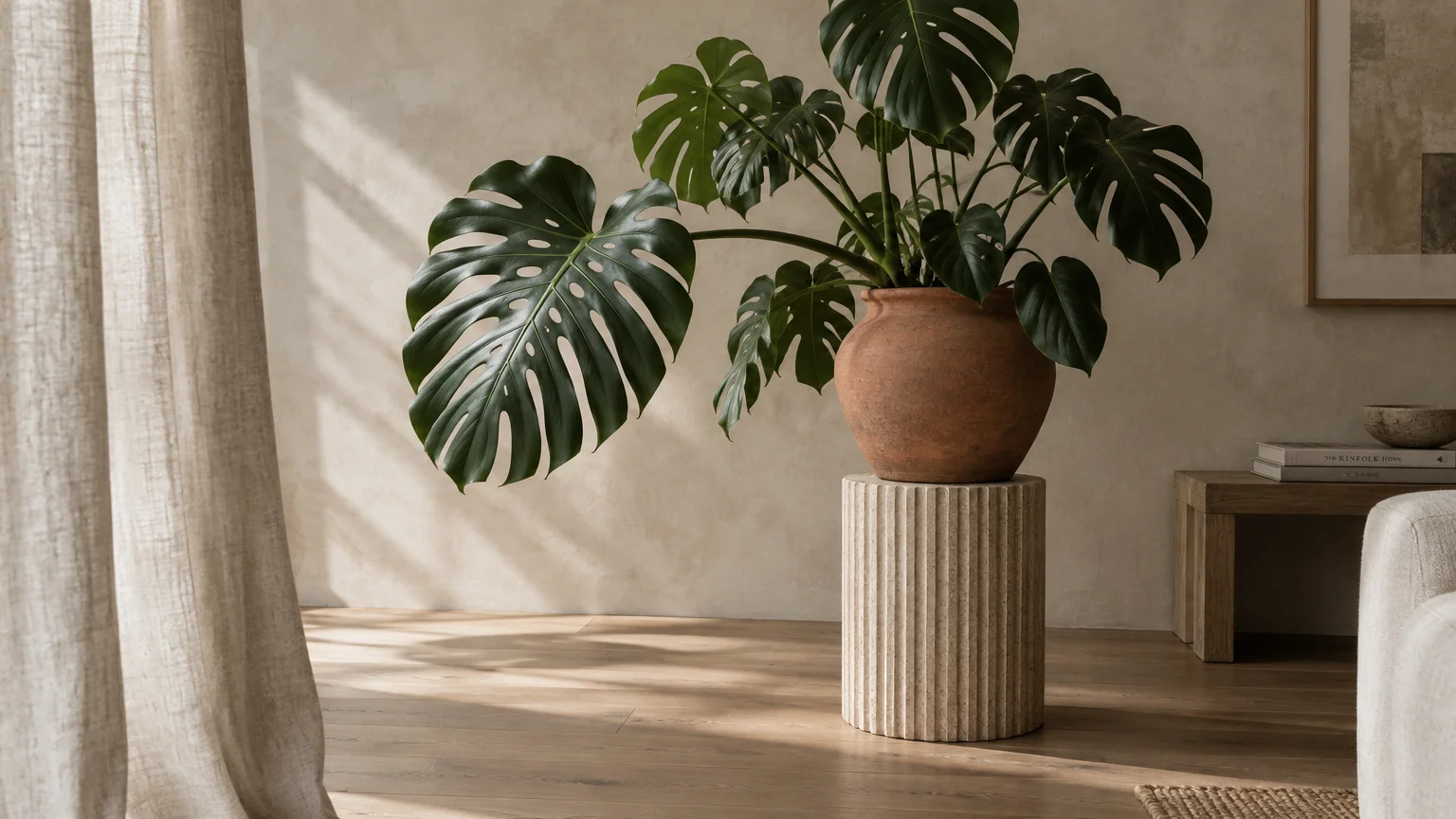
Design lovers are trading busy clutter for quiet luxury—an understated style built on tactile materials, muted palettes, and effortless restraint. One sculptural floor specimen in a hand-thrown vessel commands more presence than ten tiny pots.
Homeowners increasingly value provenance, meaning the documented origin and artistry behind a piece. Roughly 66 percent of Americans own at least one houseplant, and Statista reports ceramic pots capture 38 percent of decorative pot sales.
Raising an oversized ceramic planter onto a travertine plinth or fluted timber pedestal turns greenery into gallery-grade sculpture. Elevation also pulls foliage closer to window light without consuming extra floor space.
Skip heavy outdoor yard dirt when potting large indoor trees. Wet mineral garden soil weighs 100 to 120 pounds per cubic foot, whereas saturated peat or coir potting mix weighs roughly half as much.
Lightweight potting mixes protect your back during repotting and guard wood floors against excessive point loads. Slip thick felt pads or cork coasters under every stoneware pedestal to prevent moisture rings.
Position tall specimens directly in front of an east or west window, or within five feet of a south window, for roughly 300 foot-candles of bright indirect light. Right against south glass, direct sunlight surges to 1,500 foot-candles.
Rotate your floor specimen a quarter-turn every two weeks. Consistent turning keeps trunks balanced and stops branches from leaning awkwardly toward the pane.
Trend #5: Dedicated Wellness Room Alcoves and Botanical Libraries
Homeowners are carving out quiet corners devoted purely to mental restoration. The 2026 U.S. Houzz Emerging Summer Trends Report logged a 112 percent year-over-year surge in searches for biophilic design—design that weaves nature directly into interiors.
That same Houzz report tracked a 164 percent jump in wellness room searches and a 139 percent rise in calming spaces. Pairing built-in bookcases with trailing plants creates an immediate refuge from daily screens.
Frame a linen reading chair with tall shelving where vintage hardcovers mingle with matte clay planters. Stick to a restful palette of sage, warm putty, and unglazed stoneware instead of glossy plastic pots.
Reading comfortably requires around 75 foot-candles of ambient light, which matches low-light foliage zones. Place shade-tolerant greenery three to ten feet from east or west windows, or beside north glass.
Balance botanical comfort against book preservation when regulating room moisture. Most houseplants prefer 50 to 60 percent relative humidity, yet heated winter interiors frequently fall below 30 percent.
Still, the U.S. EPA and ASHRAE recommend keeping whole-home humidity below 60 percent—ideally between 30 and 50 percent. Excess dampness lets mold germinate on drywall, timber, and paper bindings within 24 to 48 hours.
Group planters closely on a lower library ledge so their leaves share gentle local moisture without soaking the room. Your books stay crisp while your plants stay supple.
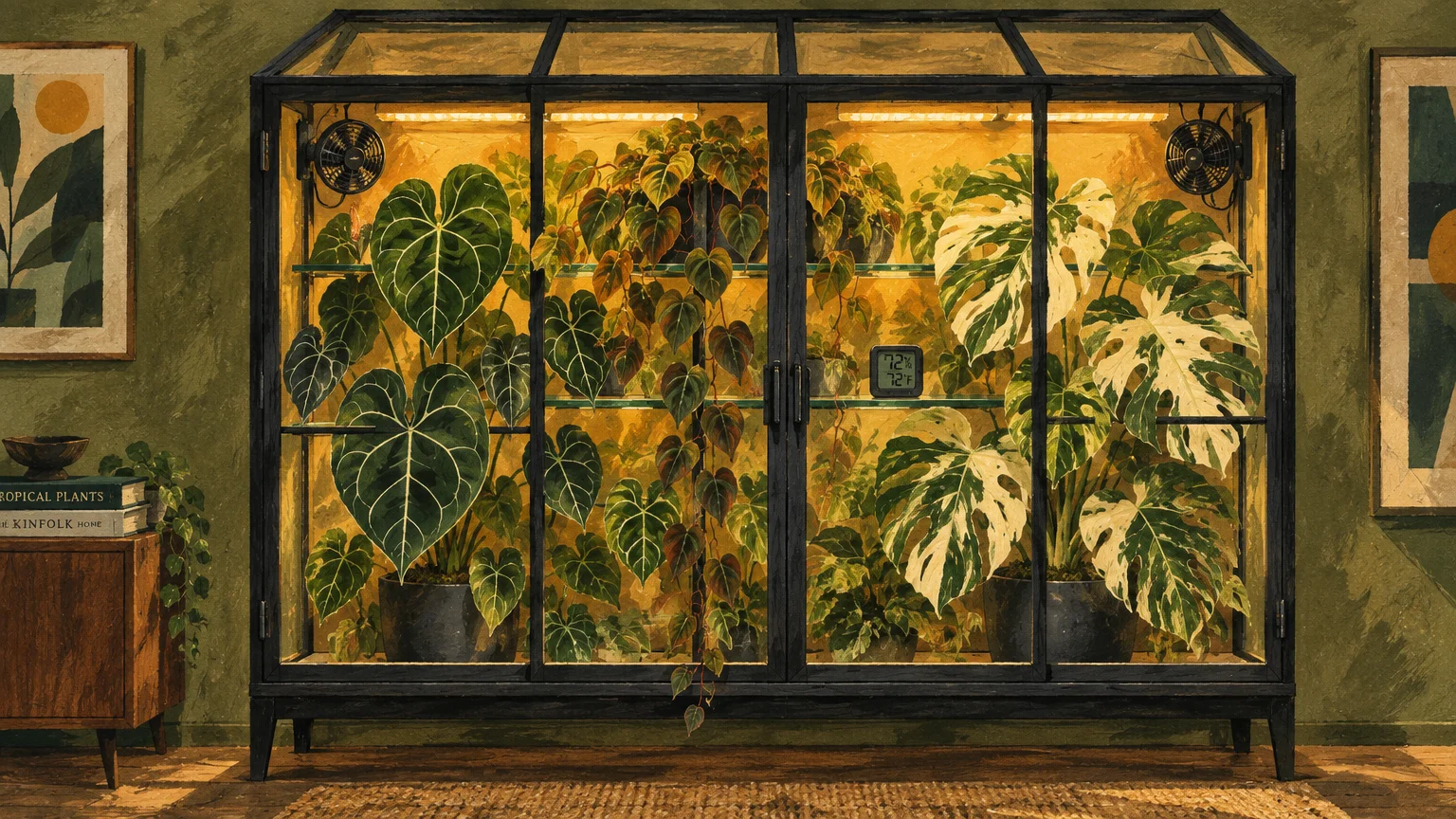
Trend #6: Collector-Grade Glass Display Cabinets for Rare Foliage
Unusual foliage has evolved from casual decor into coveted design artifacts. Garden Media Group’s 2026 Garden Trends Report identifies houseplants as the fastest growing category of collectible items, led by Gen Z and Millennials.
Yet rare botanicals carry real risk for newcomers. A 2024 National Gardening Association poll found roughly 30 percent of first-time plant buyers lose at least one plant within 90 days of purchase.
Converted steel-and-glass curio cabinets solve that fragility with tailored museum flair. Enclosed vitrines hold gentle warmth and humidity around variegated rarities while framing every leaf behind crisp dark mullions.
Inside a glass cabinet, cool-running LED tubes mounted roughly four inches above compact foliage promote tight growth. Check your daily light integral—most general houseplants thrive on 4 to 6 moles per square meter per day.
Shade-loving specimens target 6 to 8, while part-shade varieties prefer 10 to 12. Run interior strips 14 to 16 hours daily when cabinets stand away from sunny windows.
Tuck a whisper-quiet miniature fan inside the top corner to circulate air continuously. Gentle movement clears stagnant condensation before fungal spots mar delicate leaves.
Maintain daytime cabinet temperatures between 65 and 75 degrees Fahrenheit, dropping five to ten degrees at night. Keep glass vitrines off cold winter windowpanes where temperatures fall below 40 degrees.
Trend #7: Elevated Dining Credenzas and Sideboard Vignettes
Low dining credenzas offer generous horizontal space that often sits bare between dinner parties. Styling a sculptural plant vignette alongside unlacquered brass candlesticks and framed sketches anchors the whole dining room.
Follow classic visual balance along your sideboard surface. Offset a tall arching Phalaenopsis Orchid on one end with a compact Peperomia and stacked art monographs near the center.
Guard heirloom walnut or lacquered surfaces against hidden water damage. Never set porous terracotta directly onto finished timber; rest every planter on sealed ceramic saucers cushioned with cork pads.
Many enthusiasts place shallow pebble trays beneath dining room orchids to boost ambient moisture. Make certain the pot base sits high and dry on top of the pebbles rather than resting in water.
Standing water wicks straight upward through drainage holes and invites fatal root rot. Pour off excess saucer runoff within minutes after every watering.
Keep sideboard specimens tidy by tailoring your feeding calendar to natural light cycles. Fertilize actively growing plants only every one to three months from March through September, then pause during winter dormancy.
Restrained seasonal feeding prevents leggy winter stems that spoil clean vignette proportions. Your dining room stays composed across every season.
Trend #8: Bathroom Steam Sanctuaries—Without the Mold Risk
Transforming a primary bath into a tranquil retreat ranks among the smartest indoor garden ideas. Soft ferns beside a freestanding tub temper sleek porcelain, marble slabs, and brushed nickel fixtures.
Leave decorative handheld misters off your vanity tray. Misting lifts humidity only briefly, and frequent standing droplets on foliage actually encourage leaf diseases.
Rely instead on natural shower steam—paired with reliable mechanical exhaust fans. Keep overall bathroom humidity under 60 percent to meet U.S. EPA and ASHRAE mold-prevention standards.
Damp drywall and painted trim can grow mold within 24 to 48 hours if steam lingers in stagnant corners. Run your exhaust fan after bathing so air clears while potting mix holds gentle warmth.
Frosted privacy glass filters out more daylight than clear panes, dropping usable brightness quickly. Verify whether your bath counter receives 75 to 150 foot-candles before committing greenery there.
In windowless powder rooms, rotate hardy Cast Iron Plants monthly with twin pots kept in brighter rooms. Swapping two identical specimens every few weeks keeps dim spaces effortlessly lush.
Reserve built-in shower niches for Boston Ferns only when real daylight reaches the tile. Wet fronds trapped in dark corners decline within weeks.
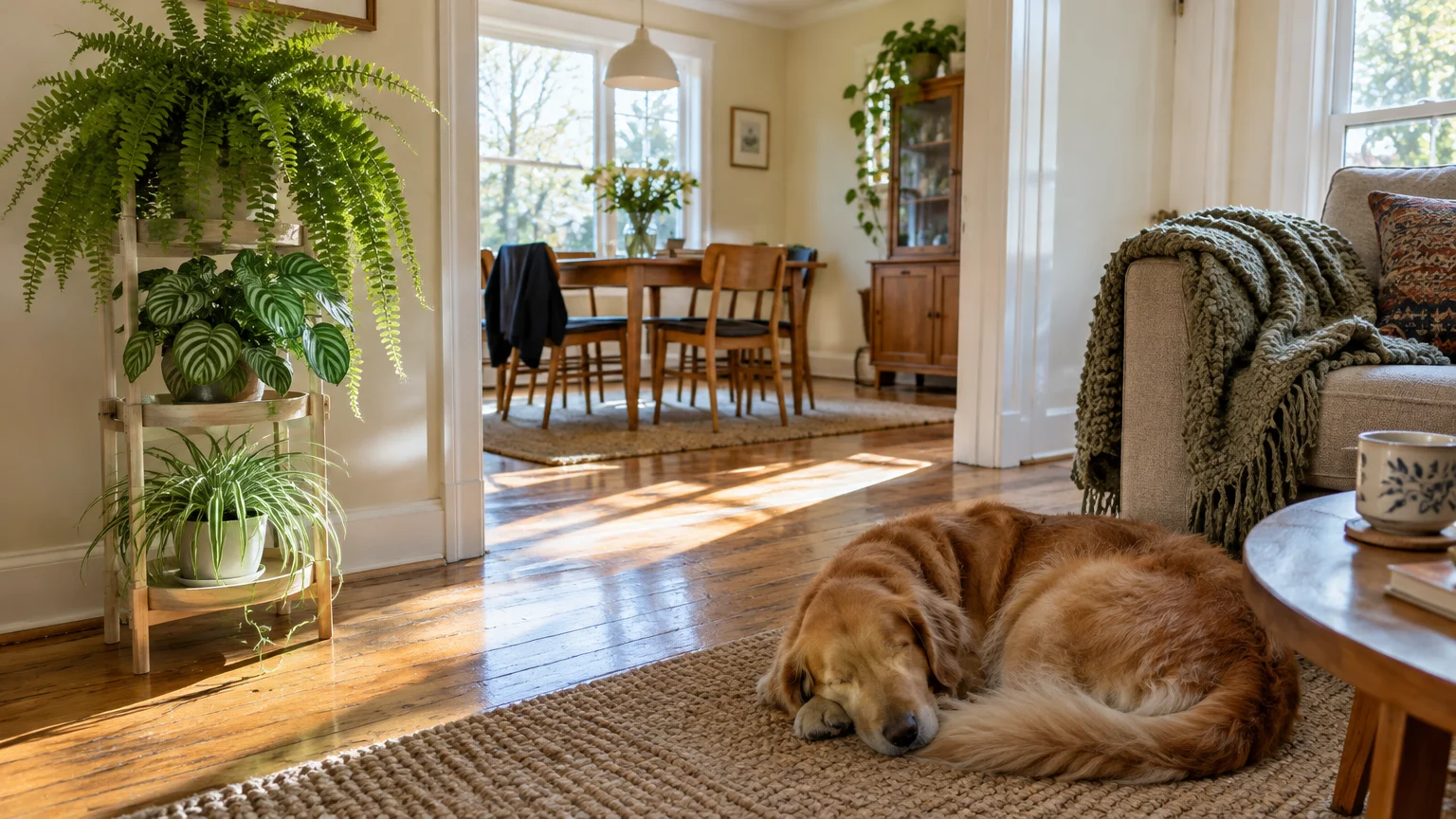
Trend #9: Pet-Safe Tiered Plant Stands for Open-Plan Living
Multi-tiered brass or blackened steel plant stands double as airy room dividers in open floor plans. They separate a sofa lounge from an entry hall without blocking sightlines or natural daylight.
Before placing pots on lower rungs at nose level, audit every botanical tag for pet safety. Several popular houseplants contain insoluble calcium oxalate crystals that injure dogs and cats.
The ASPCA classifies Golden Pothos, Philodendron, Monstera, ZZ Plant, Peace Lily, Chinese Evergreen, Dumb Cane, and Anthurium as toxic to pets. Chewing those species triggers oral burning, drooling, vomiting, and swallowing difficulty.
Thankfully, non-toxic alternatives deliver equally bold texture for your plant styling ideas. Replace hazardous climbers and broad leaves with ASPCA-approved Boston Ferns, Parlor Palms, and arching Spider Plants.
Round out your tiers with Cast Iron Plants, Peperomia, Phalaenopsis Orchids, African Violets, and Christmas Cactus—all non-toxic to dogs and cats. Anchor upright palms on bottom shelves and let Spider Plant offsets cascade overhead.
Keep in mind that nibbling any non-toxic leaf can still cause mild stomach upset in curious pets. Save the ASPCA 24-hour Poison Control line—888-426-4435—in your contacts for peace of mind.
Select wide-base metal stands that resist bumps from energetic tails. Smart species choices let refined greenery and playful pets share your living space safely.
Trend #10: Living Room Gallery Walls Featuring Mounted Botanical Art
Flat picture frames no longer dominate living room gallery walls. Designers now weave dimensional wall planters, mounted ferns, and glazed ceramic pockets straight into curated art grids.
Combining living foliage with framed prints introduces organic depth across solid drywall. Maintain crisp spacing—around two to three inches between frames and planters—so the wall reads as one unified installation.
Match every wall-mounted planter to tested drywall hardware. Plain nails in hollow drywall support only a few pounds, whereas a 1.5-inch nail angled at 45 degrees into a stud holds up to 20 pounds.
Between studs, plastic expansion anchors cover 10 to 25 pounds, and threaded drywall anchors hold 25 to 75 pounds. For heavy glazed ceramic pockets packed with damp mix, install sturdy toggle bolts.
Living room feature walls frequently stand over eight feet from windows with zero direct sun. Those zones often measure under 75 foot-candles, causing unlit foliage to stretch and thin out.
Aim subtle ceiling track spotlights fitted with full-spectrum grow bulbs onto your living gallery wall. Connect them to concealed smart plugs running 12 to 14 hours daily.
Lift wall pockets down to the sink before watering so drips never streak matte paint. Let containers drain thoroughly before hanging each piece back in its grid.
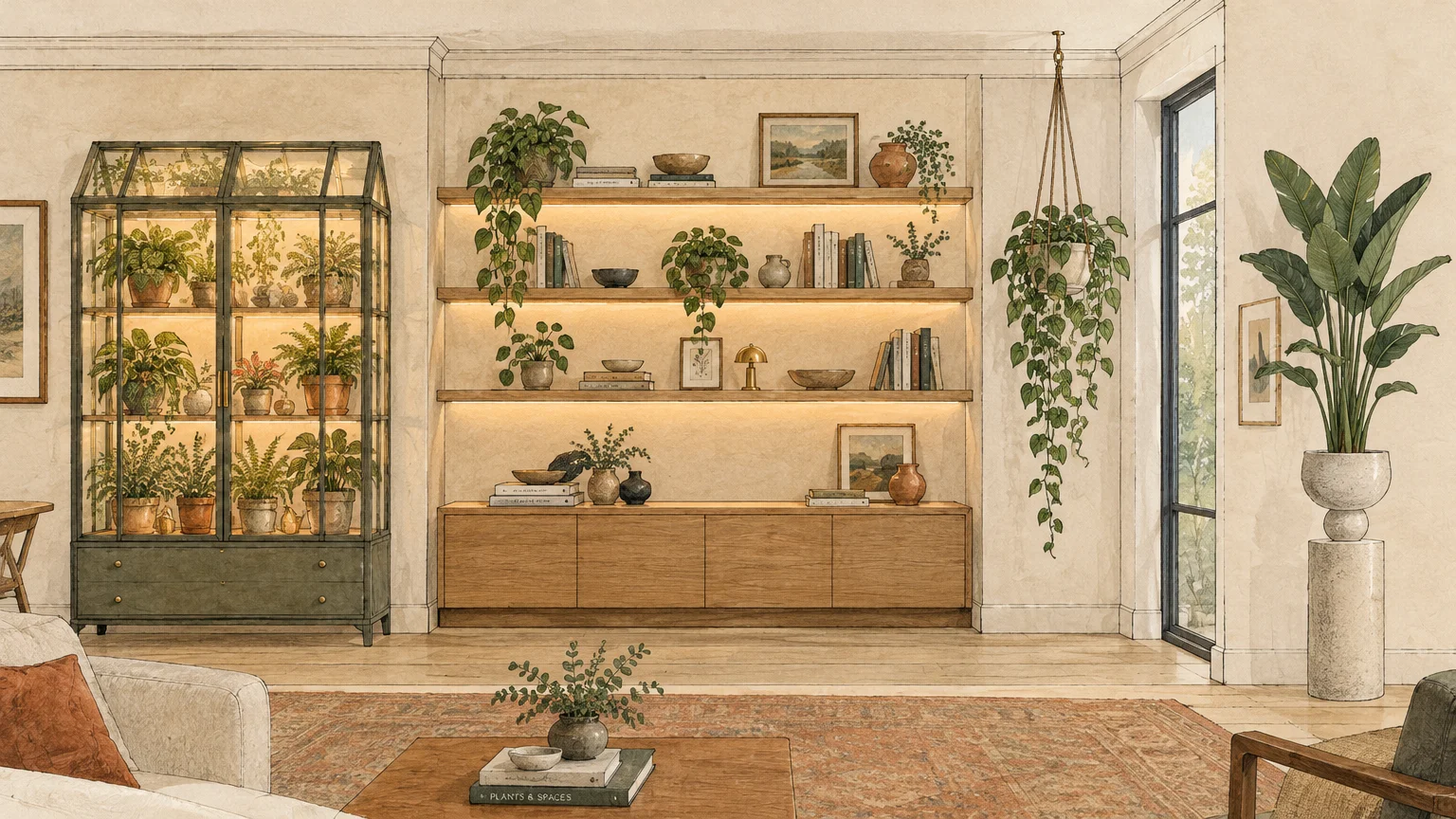
The Big Picture: Weaving These Trends into Your Home
Memorable houseplant decor feels cohesive because containers echo your home’s underlying finishes. Repeat two or three signature materials—such as unlacquered brass, pale travertine, or warm terracotta—from room to room.
Contrast leaf hues thoughtfully against paint undertones so greenery reads sharply. Deep charcoal, warm clay, or soft putty walls make variegated and emerald foliage glow like sculptural jewelry.
For the latest color forecasts, consult industry leaders like Pantone and paint companies like Benjamin Moore. For professional design standards, refer to the American Society of Interior Designers (ASID).
Display indoor greenery for visual joy, organic texture, and quiet restoration—not as mechanical air filters. While the 1989 NASA Clean Air Study removed volatile compounds inside tiny sealed chambers, lived-in rooms exchange air constantly.
A 2019 Drexel University analysis by Bryan E. Cummings and Michael S. Waring in the Journal of Exposure Science & Environmental Epidemiology clarified that scale. Matching typical building ventilation requires roughly 10 to 1,000 plants per square meter.
Opening two windows refreshes indoor air far faster than a crowded shelf of pothos. Anchor your indoor garden ideas around architectural balance, healthy light, and lasting craftsmanship instead.
Start with one corner, measure your true foot-candles, and invest in dependable mounting hardware. Your home will feel calmer, richer, and thoughtfully tailored to daily life.
Frequently Asked Questions
How far from a window can I place indoor plants without grow lights?
Low-light foliage typically thrives near 75 foot-candles, extending three to ten feet from east or west windows. Beside sunny south windows, usable low light reaches 15 to 20 feet into a room.
Beyond eight feet from windows with zero direct sun, light drops too low for steady growth. Add full-spectrum LED fixtures running 12 to 16 hours daily in dimmer interior zones.
How much weight can drywall hold for plant shelves and hanging planters?
Hollow drywall fails quickly under wet planters because a 5-gallon pot holds 27 to 40 pounds of wet potting mix alone. Driving screws one inch into wood studs supports up to 100 pounds.
Between studs, rely on threaded drywall anchors rated for 25 to 75 pounds or heavy toggle bolts. Always anchor swinging ceiling hangers directly into solid ceiling joists.
Do houseplants raise indoor humidity enough to cause mold?
A few scattered pots rarely create excess dampness, especially when heated winter homes fall below 30 percent relative humidity. Closely packed plant rooms and sealed cabinets, however, require steady airflow.
Keep whole-home humidity below 60 percent—ideally 30 to 50 percent—per U.S. EPA and ASHRAE guidance. Mold can sprout on damp drywall or timber within 24 to 48 hours.
Should I mist my indoor plants or use pebble humidity trays?
Skip misting because it lifts humidity only momentarily while wet leaves invite stubborn plant diseases. Clustering pots together creates gentle local moisture without spotting wood trim.
When using pebble trays, keep pot bottoms resting strictly above the waterline. Direct water contact wicks moisture upward into soil and triggers root rot.
Which stylish display plants are safest around dogs and cats?
Choose ASPCA-classified non-toxic options including Boston Ferns, Parlor Palms, Spider Plants, and Cast Iron Plants. Phalaenopsis Orchids, Peperomia, African Violets, and Christmas Cactus also style beautifully without toxicity hazards.
Keep toxic favorites such as Monstera, Golden Pothos, Philodendron, ZZ Plant, and Peace Lily out of reach. Contact ASPCA Animal Poison Control at 888-426-4435 if a pet ingests questionable leaves.
Disclaimer: This article reflects design trend analysis and predictions. Personal taste and timeless design principles should always guide your decorating choices.