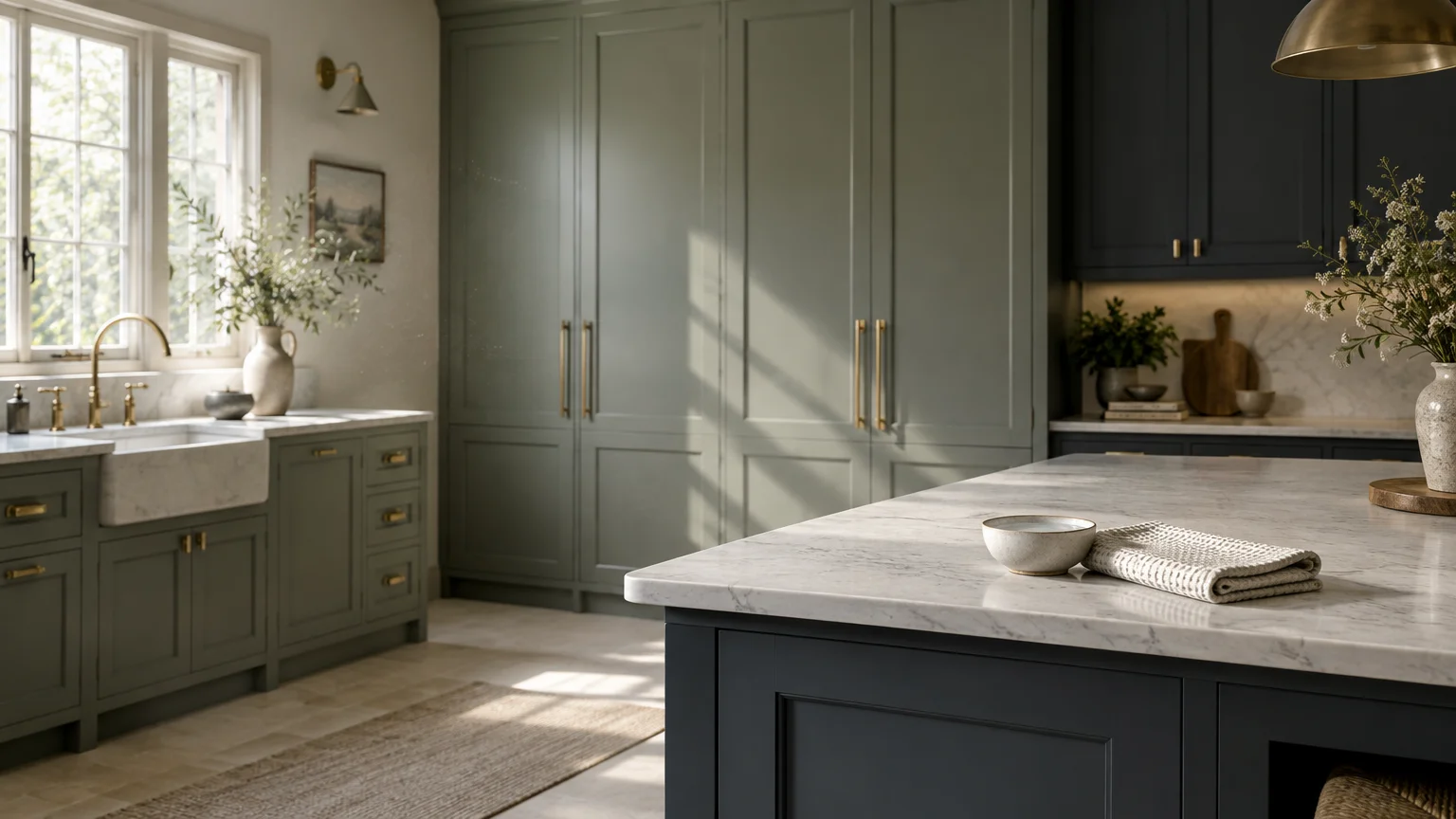
Painted cabinetry defines the architectural character of luxury kitchens and living spaces today. Preserving these bespoke finishes requires knowing which everyday cleaning habits inadvertently strip protective topcoats and degrade pigment.
Discerning homeowners invest significantly in custom factory-cured enamels, hand-brushed oil bases, and velvety designer tones. Yet unvetted maintenance routines can quickly turn a quiet luxury showcase into chipped, chalky woodwork.
Mastering how to clean painted kitchen cabinets safeguards your investment while preserving rich undertones and flawless sheen. Avoiding common cleaning painted cabinets mistakes ensures your bespoke millwork ages with lasting grace and enduring beauty.
Trend #1: Scouring Ultra-Matte Finishes with Abrasive Melamine Sponges
Modern interior schemes increasingly favor velvety, ultra-matte cabinetry to cultivate an atmosphere of understated quiet luxury. Designers celebrate these chalky, non-reflective surfaces in deep slate and espresso for their tactile depth.
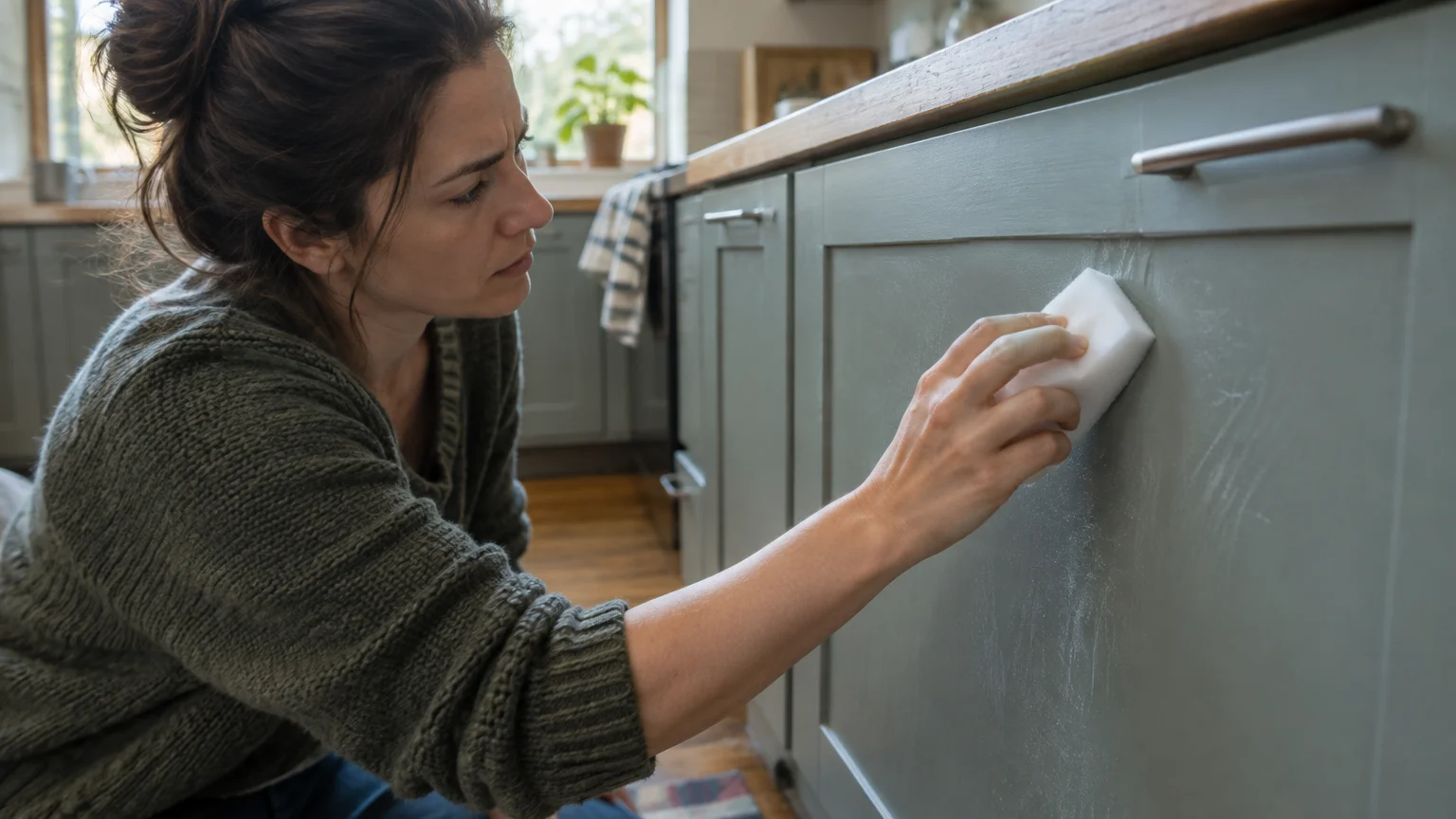
However, homeowners often compromise these refined surfaces by reaching for melamine foam sponges during cleanup. While marketed as miraculous stain erasers, these dense foam blocks function as ultra-fine sandpaper.
Melamine foam features a microscopic hardness comparable to glass, matching roughly 3000-grit abrasive paper. When you scrub matte enamel with melamine, you buff away the delicate micro-texture that diffuses light.
This abrasive friction creates permanent shiny spots across your doors, producing irreparable damaged cabinet paint. You cannot polish these flat areas back to a uniform sheen, leaving complete repainting as your only remedy.
Over time, spot-scrubbing with melamine leaves patchy halos that catch daylight at awkward angles. You cannot polish these flat spots back to uniform sheen; repainting the entire face remains the only recourse.
Instead, apply gentle cabinet cleaning tips by choosing plush split-fiber microfiber cloths paired with lukewarm water. Microfiber lifts stubborn surface soils through capillary attraction rather than physical abrasion, preserving your velvety finish flawlessly.
Trend #2: Drenching Fluted and Shaker Profiles with Excess Water
Architectural millwork, characterized by reeded accents and tailored Shaker framing, brings sculptural depth to contemporary kitchens. These dimensional profiles capture ambient light and shadow beautifully throughout your living space.
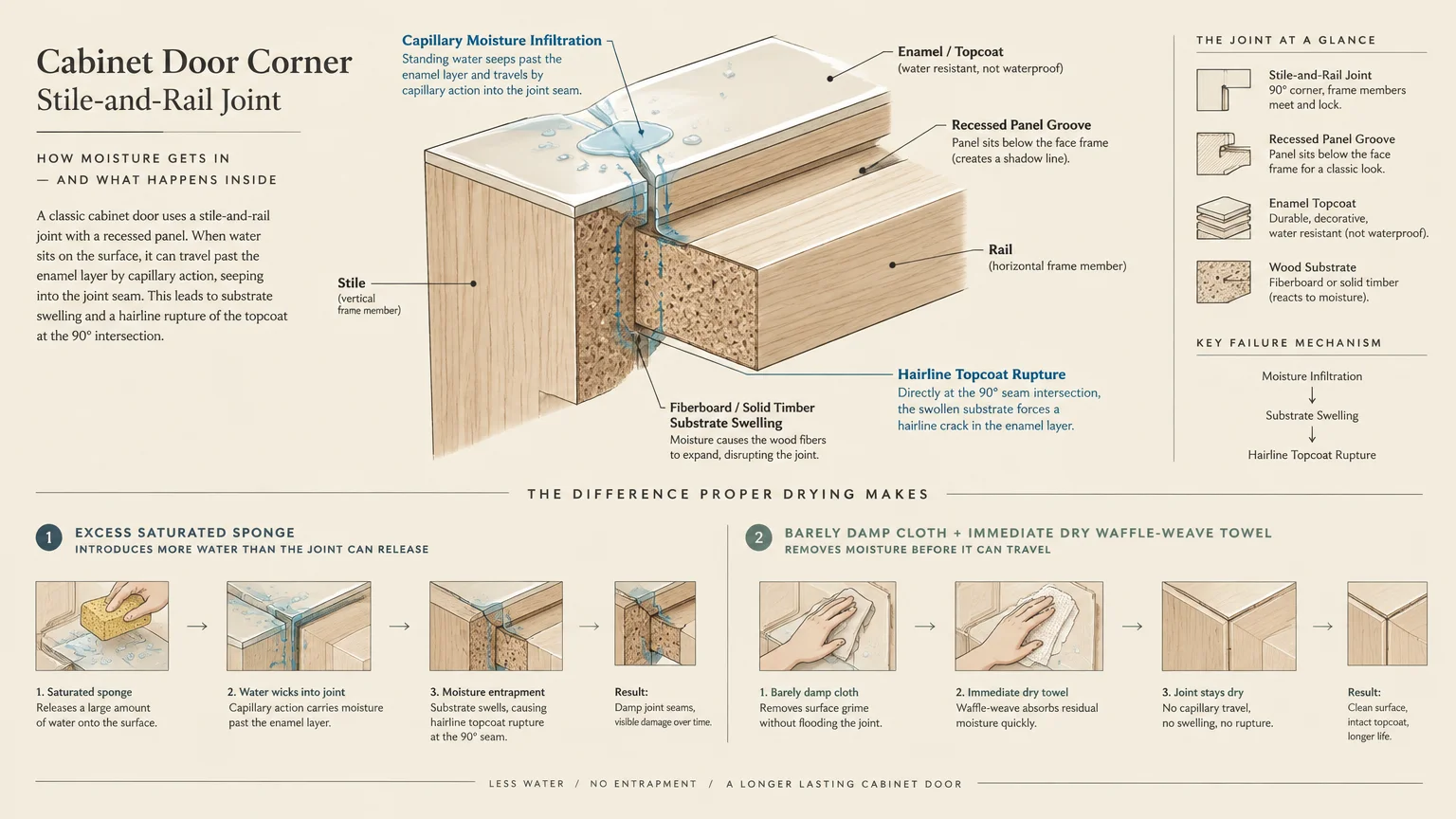
Unfortunately, intricate relief lines invite liquid to settle during aggressive wet-cleaning routines. Saturating these profiles with dripping sponges drives moisture straight into vulnerable joinery seams.
Capillary action draws moisture deep beneath the paint film at delicate joint intersections. Medium-density fiberboard and solid timber substrates readily absorb standing water; consequently, the internal wood fibers swell rapidly.
This expansion causes topcoats to rupture along stile-and-rail intersections, creating unsightly hairline cracks. Hidden humidity also causes primer decay that permanently distorts door geometry and invites mold.
Capillary action draws moisture deep beneath the paint film at joint junctions. Once trapped, hidden humidity causes primer decay and substrate swelling that permanently distorts door geometry.
Mastering how to clean painted kitchen cabinets requires using a barely damp, well-wrung cloth. Follow every damp pass immediately with a dry waffle-weave towel to capture lingering droplets along recessed seams.
Trend #3: Stripping Moody Saturated Hues with Harsh Chemical Degreasers
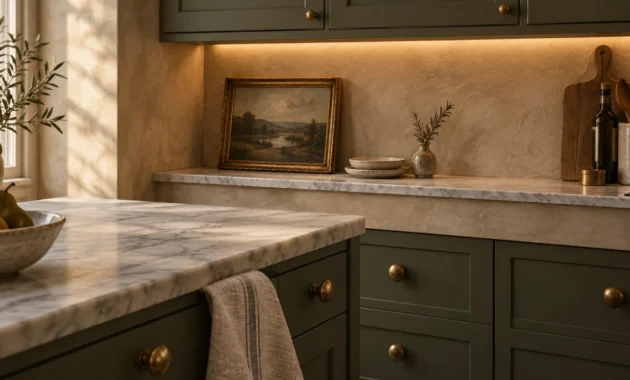
Saturated jewel tones—such as hunter green, aubergine, and deep indigo—now dominate high-end open-plan kitchens. These expressive pigments require high-grade alkyd or urethane enamels to maintain their captivating tonal resonance.
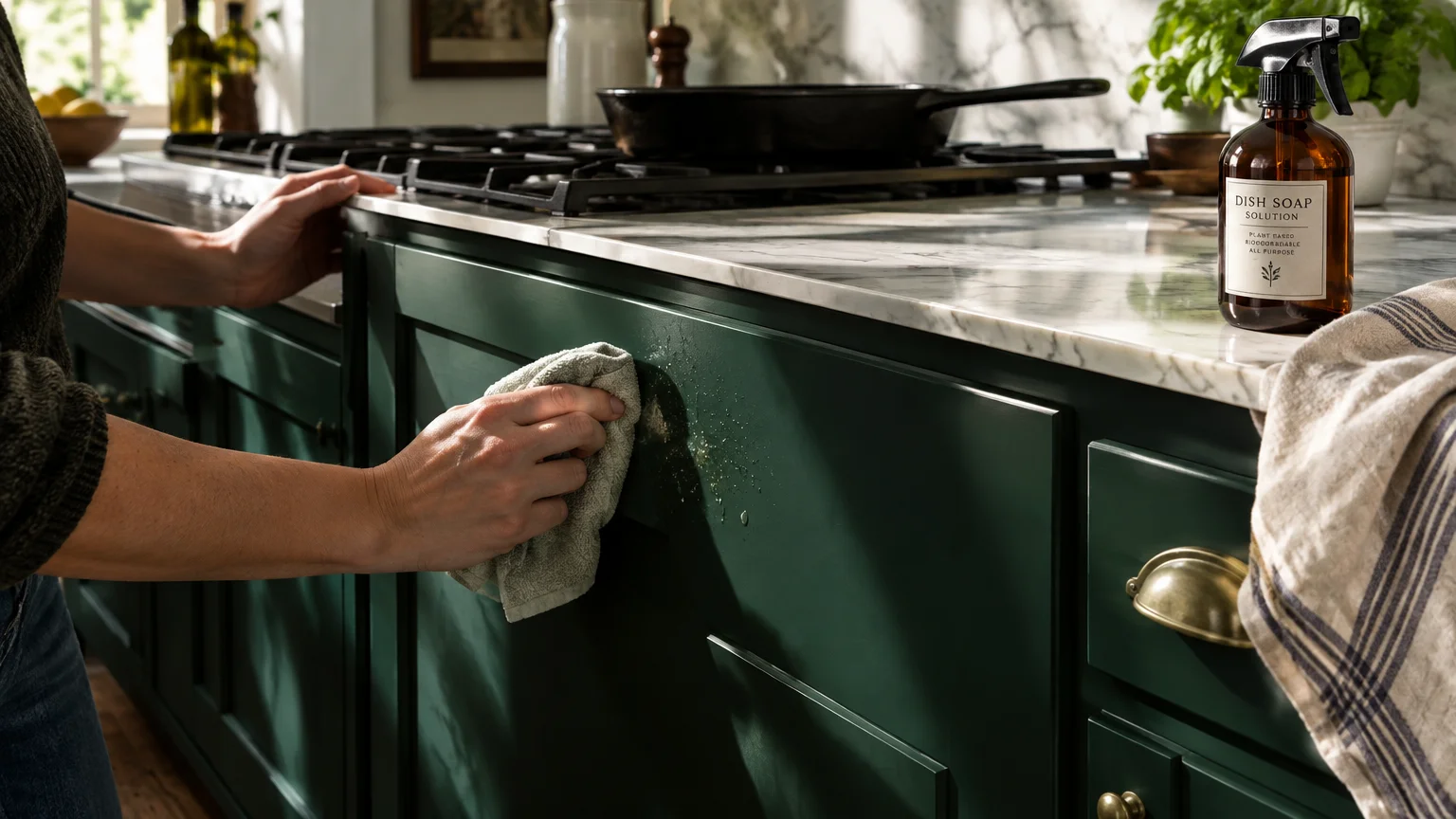
When stubborn grease splatters appear near cooking ranges, many reach for commercial solvent degreasers. Unfortunately, industrial solvents attack the protective polyurethane binders holding the paint matrix together.
You may notice pigment transferring directly onto your rag; this signals catastrophic binder breakdown. Continued chemical exposure strips away lustrous topcoats, leaving behind a dull, chalky patina that ruins chromatic depth.
Solvent degradation often begins subtly as slight hazing before exposing raw undercoats. Choosing non-caustic formulations protects your color depth from irreversible chemical erosion.
Solvent damage often starts subtly as slight dullness before exposing raw undercoats. Choosing non-caustic formulations protects your color depth from irreversible chemical erosion.
The best cleaner for painted cabinets is a simple solution of warm water and concentrated pH-neutral dish soap. This gentle surfactant emulsifies airborne oils efficiently without dissolving resinous paint polymers.
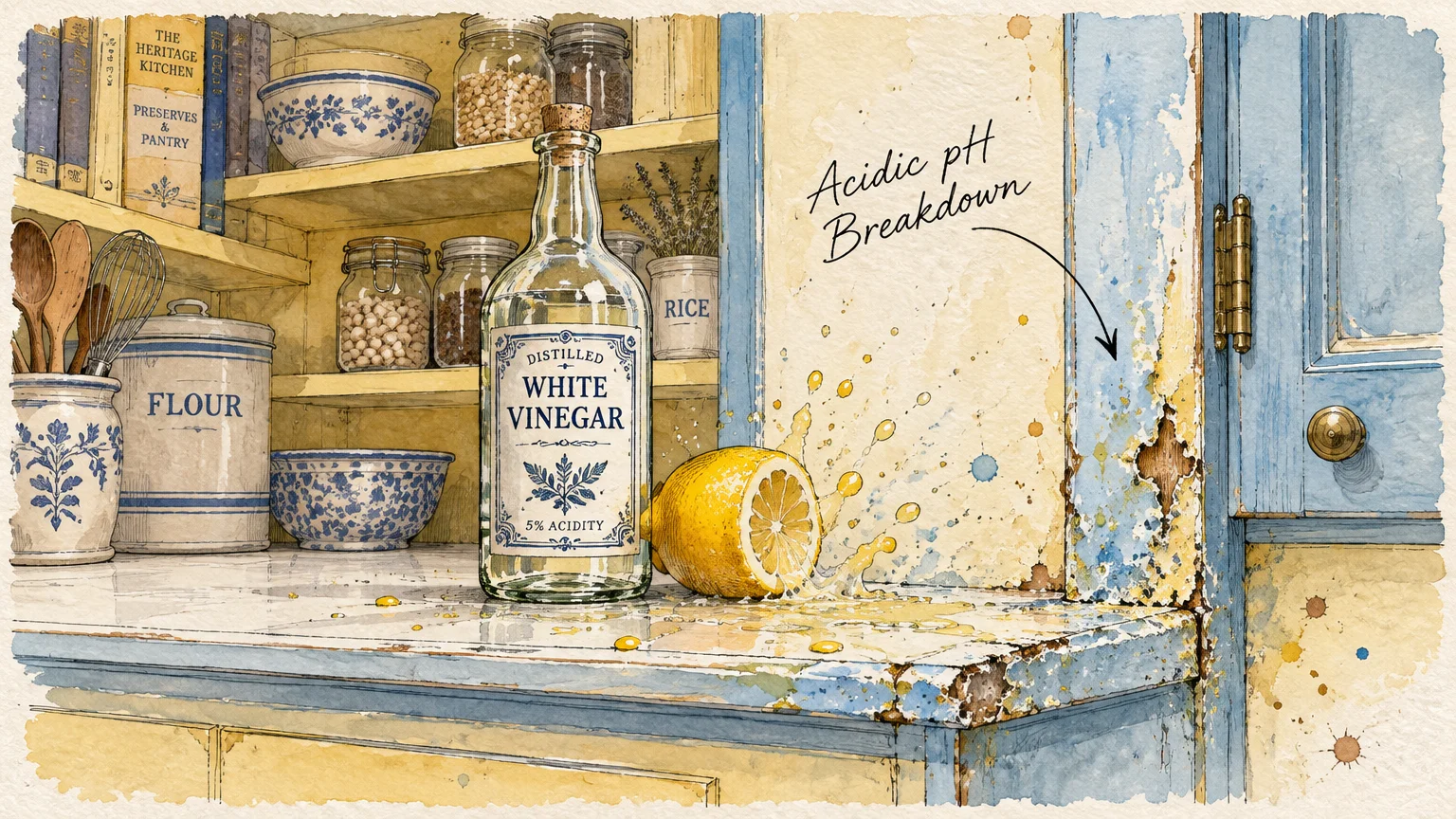
Trend #4: Dissolving Heritage Pastel Enamels with Vinegar and Acidic Mixtures
Chalky buttermilk yellows, heritage sage, and delicate shell pinks evoke nostalgic European estate charm. These sophisticated pastels rely on delicate waterborne enamel formulations that prioritize soft clarity over heavy gloss.
A prevalent domestic trend champions homemade white vinegar solutions for eco-friendly sanitizing. However, acetic acid aggressively breaks down the acrylic binders found in modern architectural coatings.
Repeated acidic contact softens the paint film, turning a crisp surface tacky and vulnerable. Dust and airborne cooking oils quickly adhere to this compromised layer, embedding dark grime into the paint itself.
Once acetic acid compromises the acrylic resin, ordinary kitchen humidity exacerbates paint softness. Sidestep these cleaning painted cabinets mistakes by banishing vinegar, lemon juice, and citric acids from your cabinetry maintenance routine.
Once acetic acid compromises the acrylic resin, ordinary kitchen humidity exacerbates paint softness. Banish pantry acids entirely to ensure your heritage enamels remain durable and resilient.
Pure castile soap diluted in warm water provides an effective, pH-balanced alternative. Your heritage pastels will maintain their pristine, unblemished glow without chemical softening.
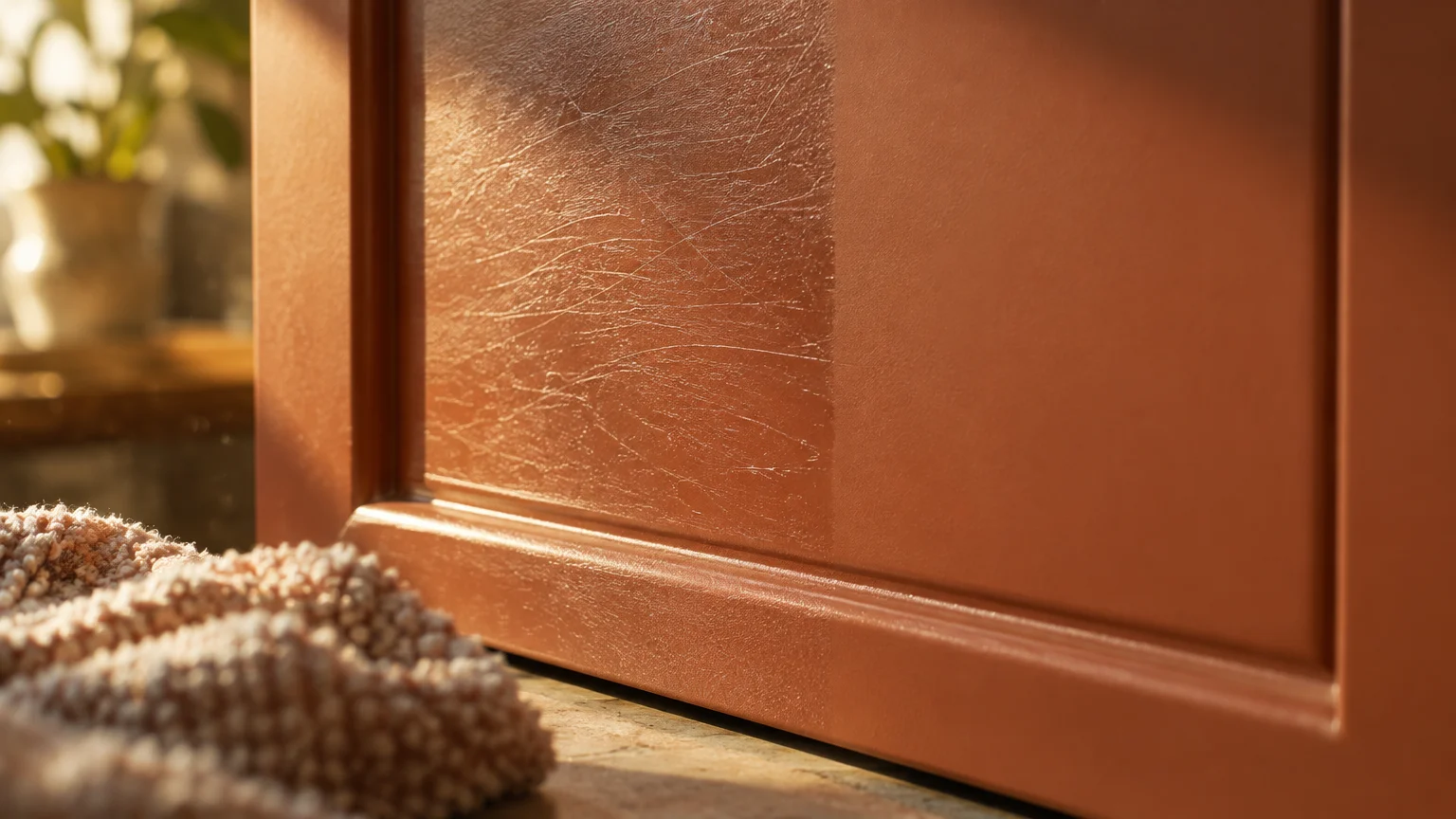
Trend #5: Buffing Earth-Toned Satin Surfaces with Dry, Coarse Towels
Warm earth palettes—encompassing mushroom taupes, terracotta, and soft clay—celebrate organic modernism in modern cabinetry. Designers frequently specify satin sheens to introduce a silky, light-bouncing luminosity across these tranquil expanses.
However, running a dry paper towel or coarse cotton rag over dusty doors invites instant damage. Airborne dust consists of microscopic mineral silica and fine particulate matter.
Wiping dry dust across painted surfaces creates micro-marring, etching hundreds of fine scratches into the sheen. Over time, these micro-scratches diffuse ambient light unevenly, turning your elegant satin finish cloudy.
Micro-scratching progressively destroys the optical refraction that gives custom paints their depth. Protecting your finish requires respecting the delicate nature of high-end architectural coats.
Micro-scratching progressively destroys the optical refraction that gives custom paints their depth. Protecting your finish requires respecting the delicate nature of high-end architectural coats.
Always dampen your dusting cloth with purified water before touching the paint. A damp microfiber cloth traps particulates within its fibers rather than dragging them across your woodwork.
Trend #6: Corroding Painted Surrounds with Harsh Disinfectant Wipes
Unlacquered brass pulls, burnished bronze latches, and minimalist steel channels introduce sculptural metallic glamour to bespoke cabinetry. Homeowners frequently sanitize these high-touch contact points with commercial disinfectant wipes.
Most commercial sanitizing wipes contain quaternary ammonium compounds, hydrogen peroxide, or harsh bleach derivatives. These caustic chemistries corrode delicate metal patinas while actively deteriorating adjacent painted boundaries.
As liquid drips from the wipe behind backplates and hinges, it softens the curing agents in the paint. The paint film subsequently blisters, chips, and peels away around the hardware perimeter.
Corrosive bleach seepage also permanently tarnishes unlacquered brass and antique copper pulls. Preserving hardware elegance requires keeping harsh commercial disinfectants away from luxury millwork assemblies.
Corrosive bleach seepage also tarnishes unlacquered brass and antique copper pulls. Preserving hardware elegance requires keeping harsh commercial disinfectants away from luxury millwork assemblies.
Protect both custom hardware and painted framing by cleaning pulls with a lightly dampened cloth designated solely for metal. Controlled application keeps chemical moisture entirely away from vulnerable paint edges.
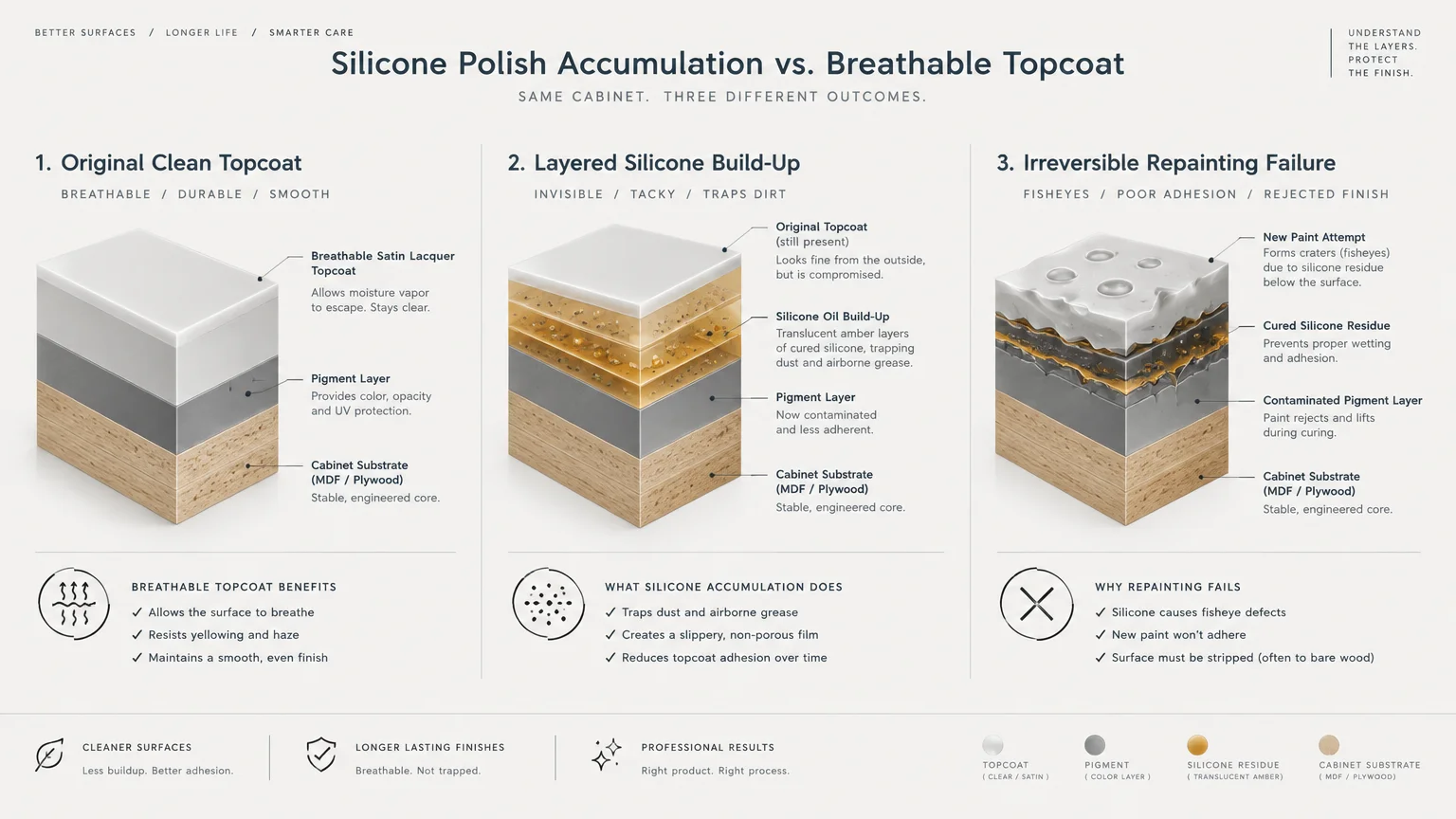
Trend #7: Smothering Two-Tone Cabinetry Under Heavy Silicone Furniture Polishes
Two-tone millwork—pairing rich stained walnut bases with painted porcelain upper cabinetry—creates architectural harmony across open floor plans. This juxtaposition highlights the authentic materiality and craftsmanship of modern interiors.
In an effort to impart instant showroom shine, some homeowners apply aerosol furniture waxes and silicone-based polishes. Unfortunately, modern painted cabinetry features synthetic enamels that do not absorb topical conditioning oils.
Instead of nourishing the finish, silicone forms an impermeable, greasy film across the painted surface. This sticky barrier traps cooking vapors and oxidizes over time, turning pale painted doors dingy and yellow.
Crucially, silicone contamination creates severe fisheye defects if you ever attempt professional paint touch-ups. Removing this stubborn layer requires mineral spirits, subjecting delicate finishes to unnecessary chemical exposure.
Wax build-up creates an uneven, gummy sheen that smears whenever touched by fingertips. Removing this stubborn layer requires mineral spirits, subjecting delicate finishes to unnecessary chemical exposure.
Rely solely on water-dampened microfiber cloths to restore natural luster. True quality paint needs no artificial glazing agents to project quiet, refined brilliance.
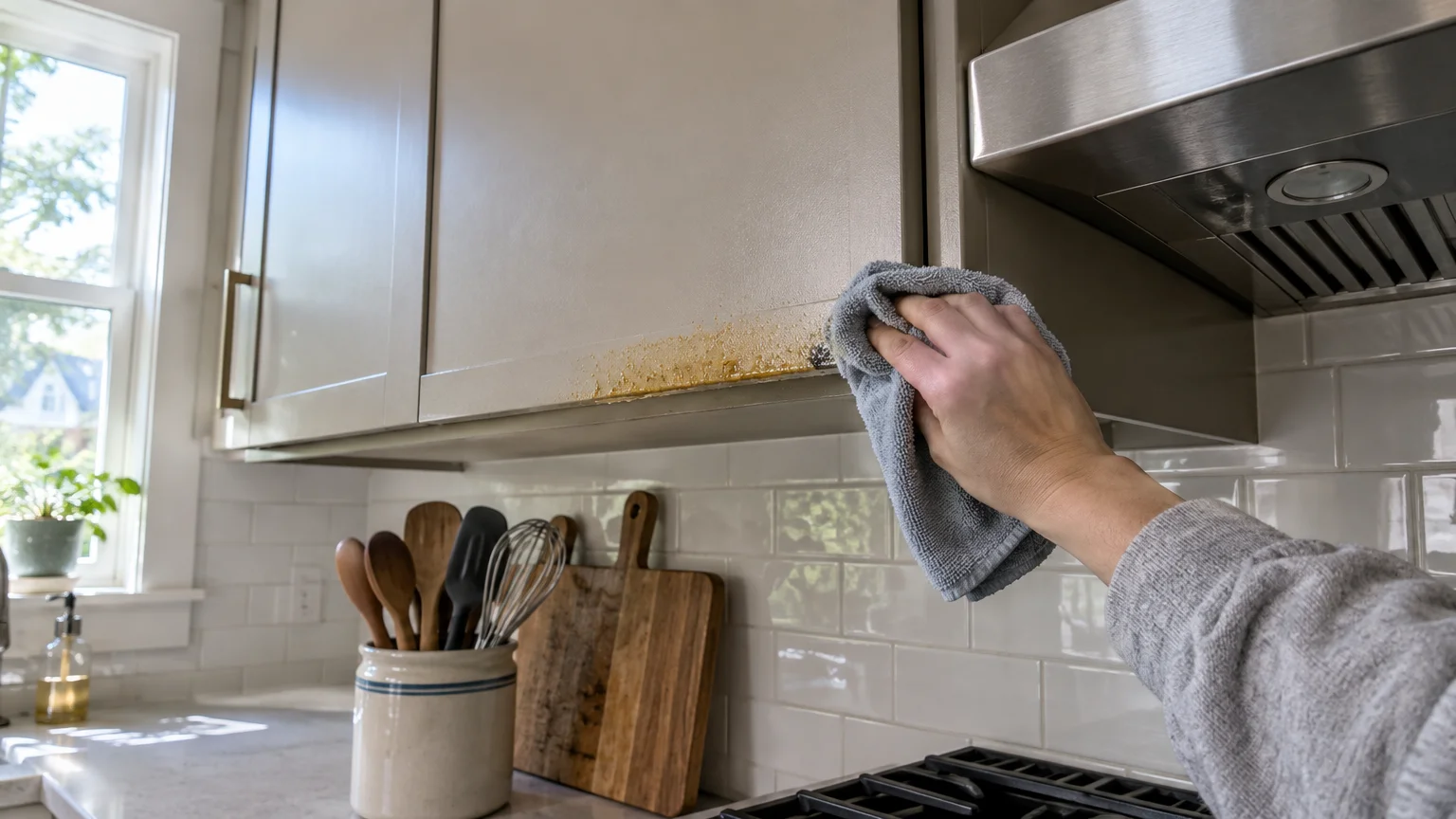
Trend #8: Allowing Cooking Oils to Oxidize and Cure onto Flat Panels
Handleless flat panels and seamless slab doors embody sleek European minimalism in contemporary residences. These expansive, unadorned surfaces celebrate uninterrupted planes of bespoke color.
However, flat panels near exhaust hoods catch airborne cooking aerosols every time you sauté or sear. If you neglect these microscopic oil droplets, they undergo polymerization under ambient light and heat.
Within weeks, sticky cooking vapors crosslink into a hardened, amber-colored varnish that fuses to the paint. Removing this cured layer requires forceful abrasion or harsh solvents, inevitably resulting in damaged cabinet paint.
Prompt attention prevents sticky lipid films from bonding chemically to cabinet doors. Simple weekly wipedowns ensure cooking residues never turn into intractable lacquer-destroying deposits.
Prompt attention prevents sticky lipid films from bonding chemically to cabinet doors. Simple weekly wipedowns ensure cooking residues never turn into intractable lacquer-destroying deposits.
A warm, soapy cloth removes fresh lipid droplets in seconds without friction. Consistent, low-effort maintenance protects your minimalist doors from stubborn buildup effortlessly.
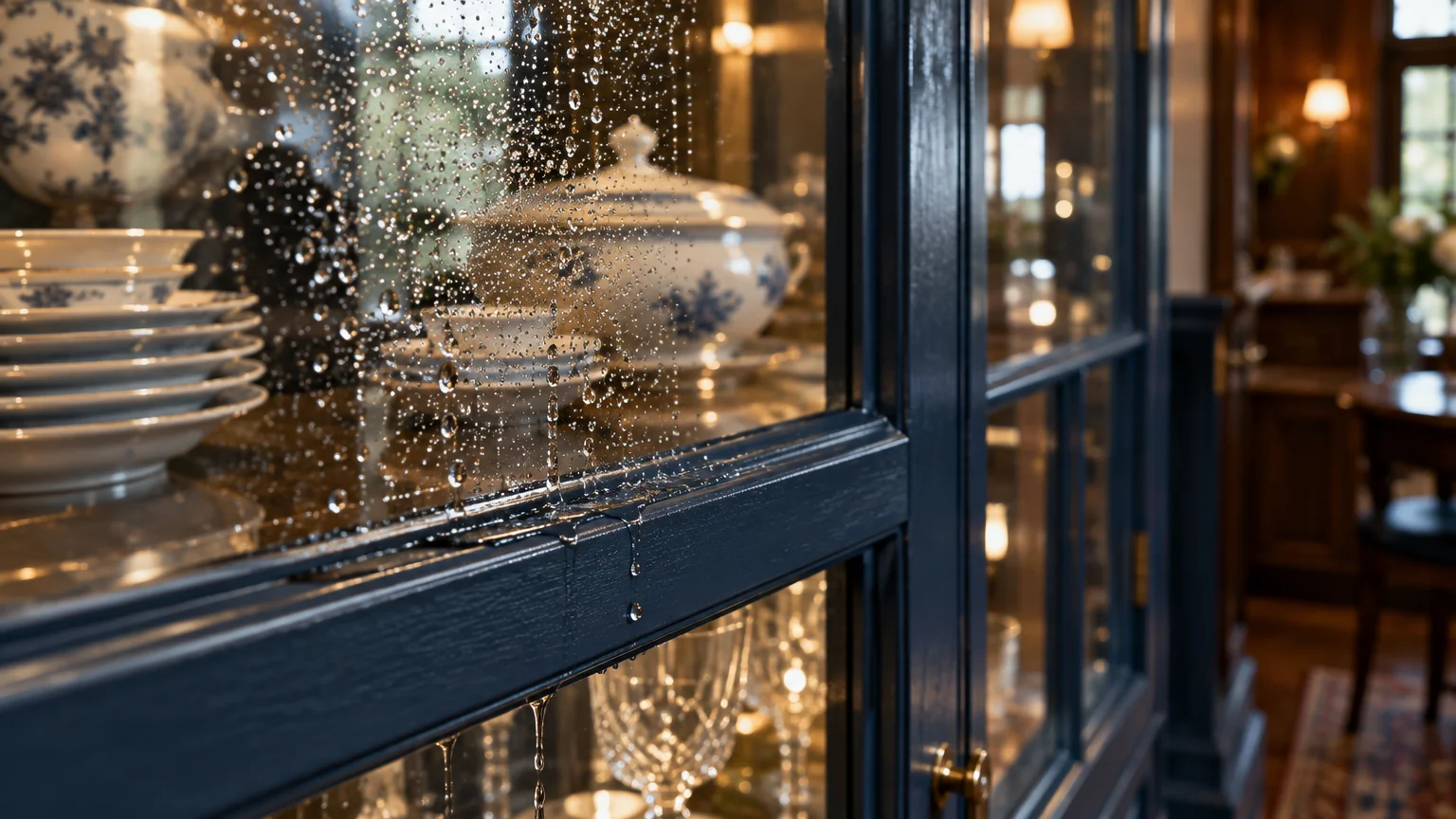
Trend #9: Overspraying Glass Vitrines with Ammonia-Based Cleaners
Curated display cabinetry featuring reeded glass, antique mirror inserts, or steel muntins brings bespoke elegance to modern dining zones. These vitrines showcase cherished ceramic provenance and artisanal glassware behind protective panes.
A classic cleaning error occurs when spraying blue glass cleaners directly onto the glazed panels. Liquid runoff quickly pools in the tiny crevices where glass meets painted wooden glazing beads.
Ammonia is an aggressive chemical solvent that readily dissolves paint binders and latex polymers. Trapped ammonia causes painted glazing bars to turn brittle, peel, and discolor into an unappealing chalky white.
Capillary action pulls liquid cleaner behind glass panes where drying air cannot reach. This trapped moisture slowly rots muntin joints while turning protective paint coatings into soft paste.
Capillary action pulls liquid cleaner behind glass panes where drying air cannot reach. This trapped moisture slowly rots muntin joints while turning protective paint coatings into soft paste.
Always apply glass cleaner directly onto a lint-free towel rather than spraying the cabinet face. This targeted technique guarantees zero overspray touches your painted wooden borders.
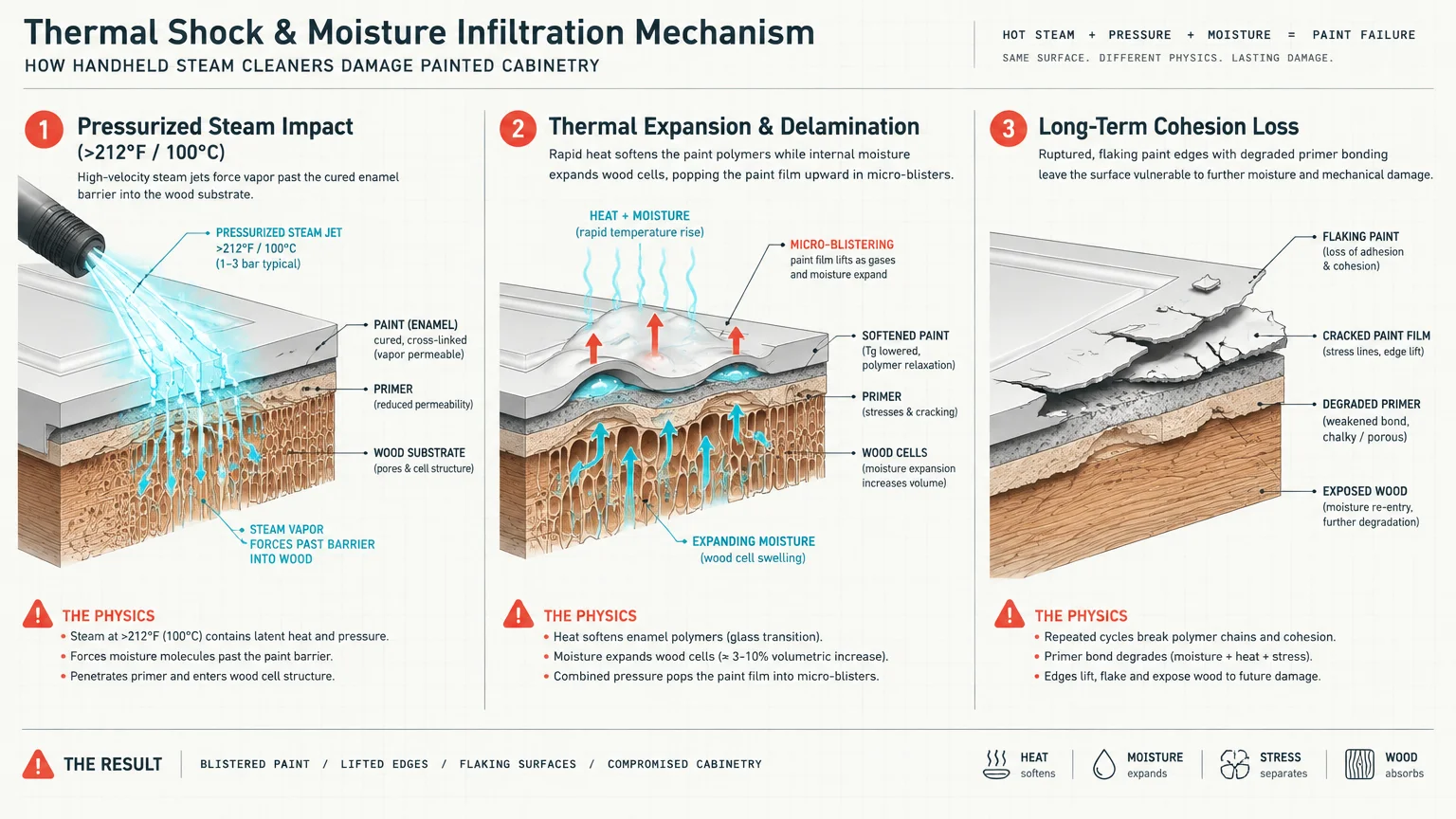
Trend #10: Thermal Shocking Artisanal Finishes with High-Pressure Steam
Hand-brushed artisanal finishes and layered historical glazes lend depth and pedigree to bespoke culinary architecture. These delicate coatings showcase subtle brushmarks and custom glaze patinas that mass-produced cabinetry cannot replicate.
Modern homeowners often purchase pressurized handheld steam cleaners, assuming pure water vapor offers the safest sanitizing method. However, high-pressure steam subjects architectural coatings to severe thermal shock.
Superheated moisture penetrates micro-fissures in the paint, liquefying the bond between primer and timber substrate. The coating expands rapidly, causing immediate blistering, delamination, and permanent clouding of the clear topcoat.
Excessive heat also dissolves the water-resistant primers essential to humid kitchen environments. Hand cleaning with tepid water remains the gold standard for preserving delicate bespoke finishes.
Excessive heat also dissolves the water-resistant primers essential to humid kitchen environments. Hand cleaning with tepid water remains the gold standard for preserving delicate bespoke finishes.
Respecting the thermodynamic limits of fine finishes ensures your investment retains its heirloom quality. Patient, gentle care maintains the artisanal integrity of hand-crafted cabinetry indefinitely.
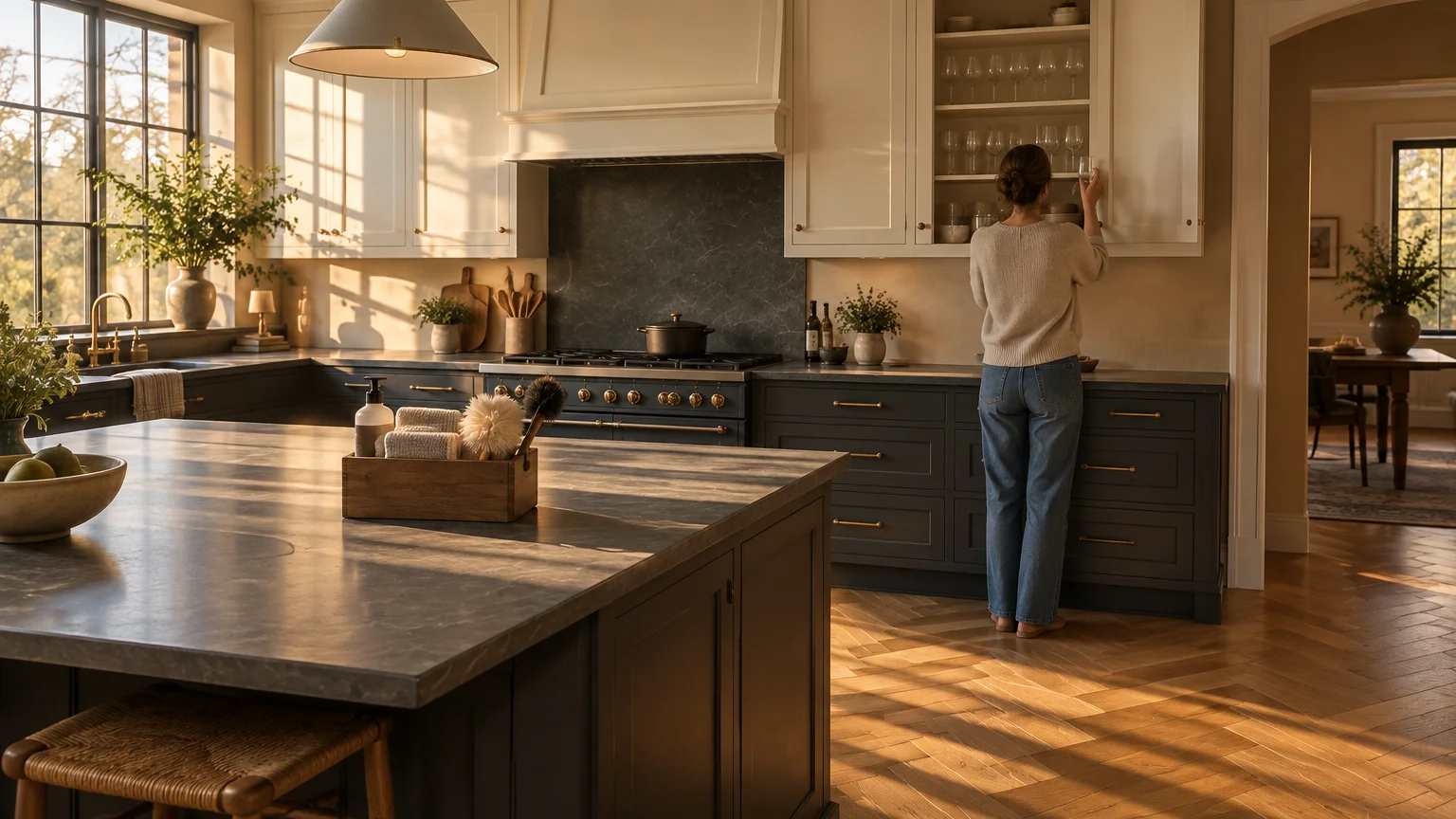
The Big Picture: Weaving These Trends into Your Home
Creating a breathtaking interior requires balancing visionary aesthetics with conscious, long-term preservation. Painted millwork serves as the architectural foundation of your home, setting the mood across kitchens, sculleries, and living salons.
Preserving this bespoke foundation does not demand complex chemical arsenals or arduous labor. In reality, the most sophisticated cabinet cleaning tips center on minimalism and restraint.
Select premium microfiber textiles, prioritize pH-neutral castile cleansers, and manage moisture levels diligently. These gentle practices preserve subtle undertones and factory-cured sheens without risking expensive restoration work.
Invest in dedicated cleaning supplies kept exclusively for your cabinetry to prevent cross-contamination. Clean cloths and pristine sponges eliminate the risk of transferring grit or harsh bathroom cleaners to your woodwork.
Consider your cabinetry maintenance as an essential extension of your interior design vision. Treating custom millwork with mindful curation safeguards your home’s enduring beauty and architectural pedigree.
When you align intelligent cleaning habits with timeless color palettes, your living spaces remain effortlessly elevated. True luxury lies in how gracefully your curated environment endures through everyday life.
Frequently Asked Questions
What is the absolute best cleaner for painted cabinets?
The safest and most effective cleaner is a mixture of lukewarm water and a few drops of pH-neutral liquid dish soap. This gentle solution emulsifies grease without compromising acrylic binders or delicate topcoats.
Always apply the solution with a damp microfiber cloth, and immediately wipe the surface dry with a clean towel. This prevents water from lingering in delicate joinery seams.
How can you repair damaged cabinet paint caused by harsh chemicals?
Minor surface hazing from acidic or alkaline cleansers can sometimes be buffed out using a fine finishing glaze or carnauba paste wax. However, chemical blistering or peeling down to the primer requires professional intervention.
You must lightly sand the damaged section, apply a stain-blocking primer, and repaint using an exact color match from your original paint batch. Seamless repairs demand matching both pigment and sheen precisely.
How often should you perform deep cleaning on painted kitchen cabinets?
Wipe down high-contact drawer fronts and areas around the cooktop weekly to prevent airborne grease from polymerizing. Reserve comprehensive, top-to-bottom cabinet cleanings for a bi-annual or seasonal cadence.
Infrequent, gentle maintenance preserves paint integrity far better than aggressive, irregular deep scrubbing. Consistent care prevents dirt accumulation without subjecting delicate enamel to unnecessary wear.
Are baking soda pastes safe for stubborn stains on painted millwork?
Avoid using baking soda pastes on painted surfaces because sodium bicarbonate is inherently abrasive. While it effectively scours uncoated sinks, it creates microscopic scratches across satin and semi-gloss enamels.
Instead, address stubborn grease marks with an enzyme-based, paint-safe cleaner or pure diluted castile soap. Allow the solution to dwell for two minutes before wiping it away with a soft cloth.
For the latest color forecasts, consult industry leaders like Pantone and paint companies like Benjamin Moore. For professional design standards, refer to the American Society of Interior Designers (ASID).
Disclaimer: This article reflects design trend analysis and predictions. Personal taste and timeless design principles should always guide your decorating choices.