On October 14, 2026, Benjamin Moore officially named Webster Green HC-130 its 2027 Color of the Year, signaling a decisive shift toward grounded sophistication. Following 2026’s Silhouette AF-655, this adaptable mid-tone green promises stability and quiet optimism across modern interiors.
With a Light Reflectance Value of 20.2, Webster Green bridges the gap between moody heritage shades and livable everyday neutrals. You can deploy it across kitchen cabinets, drenched home offices, or crisp front doors without overwhelming your space.
Here is how to translate the leading interior color trends for 2027 into practical, enduring room upgrades. You will learn exact sheen pairings, color combinations, and technical application tips for flawless results.
Trend #1: Heritage Provenance and Quiet Luxury
Designers are moving away from sterile white boxes in favor of rooms that feel collected over decades. This cultural shift centers on provenance—the sense that your home’s finishes carry authentic architectural history rather than fleeting novelty.
Webster Green HC-130 fits this movement naturally because it belongs to Benjamin Moore’s 191-color Historical Colors collection. Also cross-referenced as Willow Grove 636, the hue was chosen from over 3,500 colors by Andrea Magno and her team for balancing stability with optimistic energy.
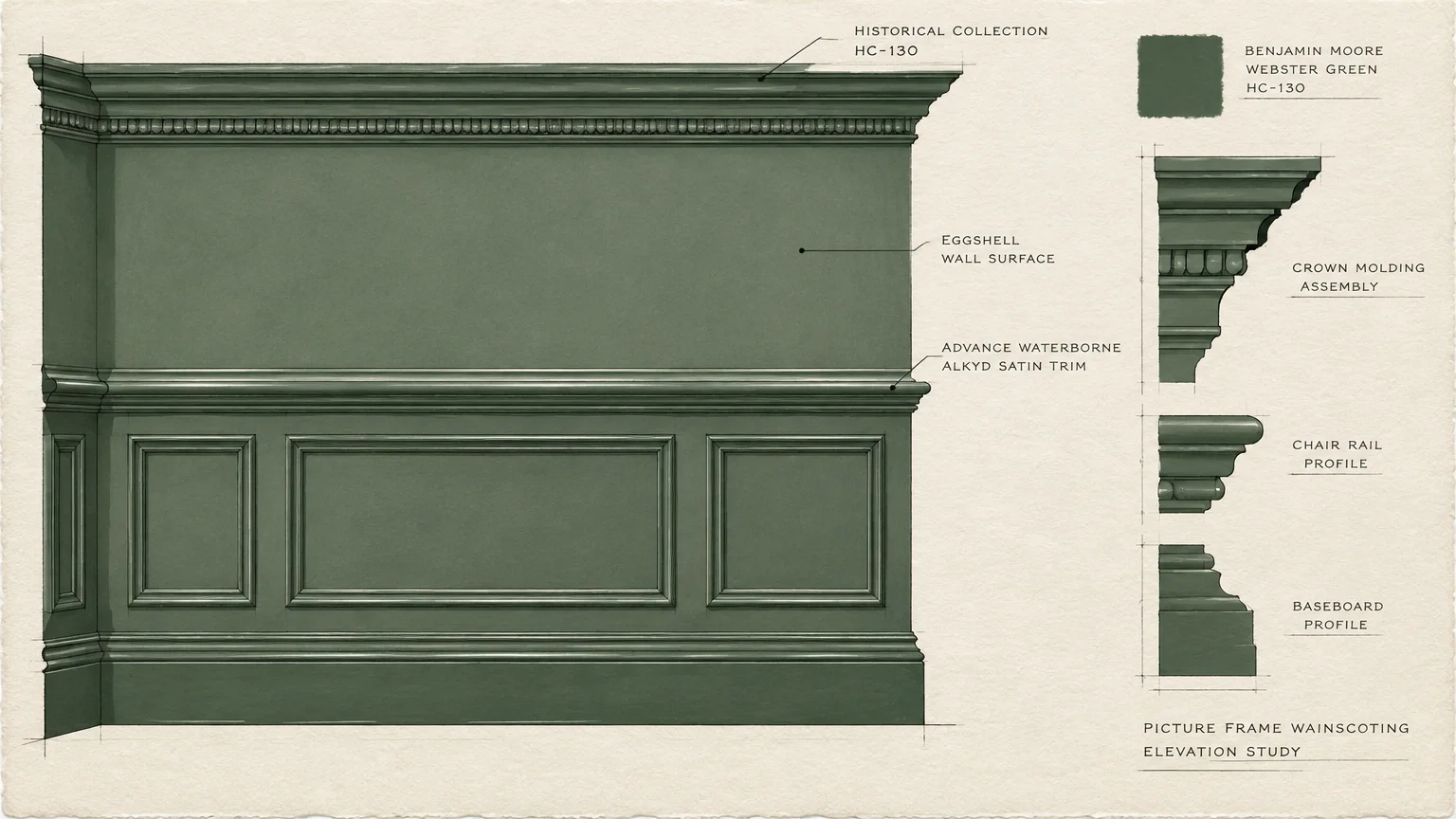
You can bring quiet luxury—understated elegance built on craftsmanship rather than loud branding—into a newer home through painted millwork. Adding picture-frame wainscoting or crown molding instantly creates depth when you coat it in a tailored green.
Pairing Sheen Across Historic Profiles
To mimic vintage architectural woodwork, contrast your wall and trim finishes rather than relying on bright white baseboards. Authorized Benjamin Moore retailers suggest pairing an eggshell finish on walls with semi-gloss or satin on surrounding trim and doors.
For interior woodwork, doors, and built-in wainscoting, use ADVANCE Waterborne Interior Alkyd to achieve a furniture-grade flow. It covers 400 to 500 square feet per gallon and dries to the touch in four to six hours at 77 degrees Fahrenheit.
Wait at least 16 hours before applying your second coat of ADVANCE on trim. Although it handles light contact sooner, the finish needs up to 30 days to reach optimum hardness and its final sheen.
Trend #2: Architectural Color Drenching in Mid-Tone Spaces
Color drenching—coating your walls, baseboards, window casings, and even ceilings in a single hue—remains one of the defining 2027 paint colors strategies. By eliminating jarring white outlines around doors and windows, you let your eye read the room’s proportions uninterrupted.
Because Webster Green carries an LRV of 20.2 on a zero-to-100 scale, it occupies a sweet spot for drenching. Ultra-dark greens can swallow small rooms whole, whereas this medium-dark shade feels enveloping yet luminous.
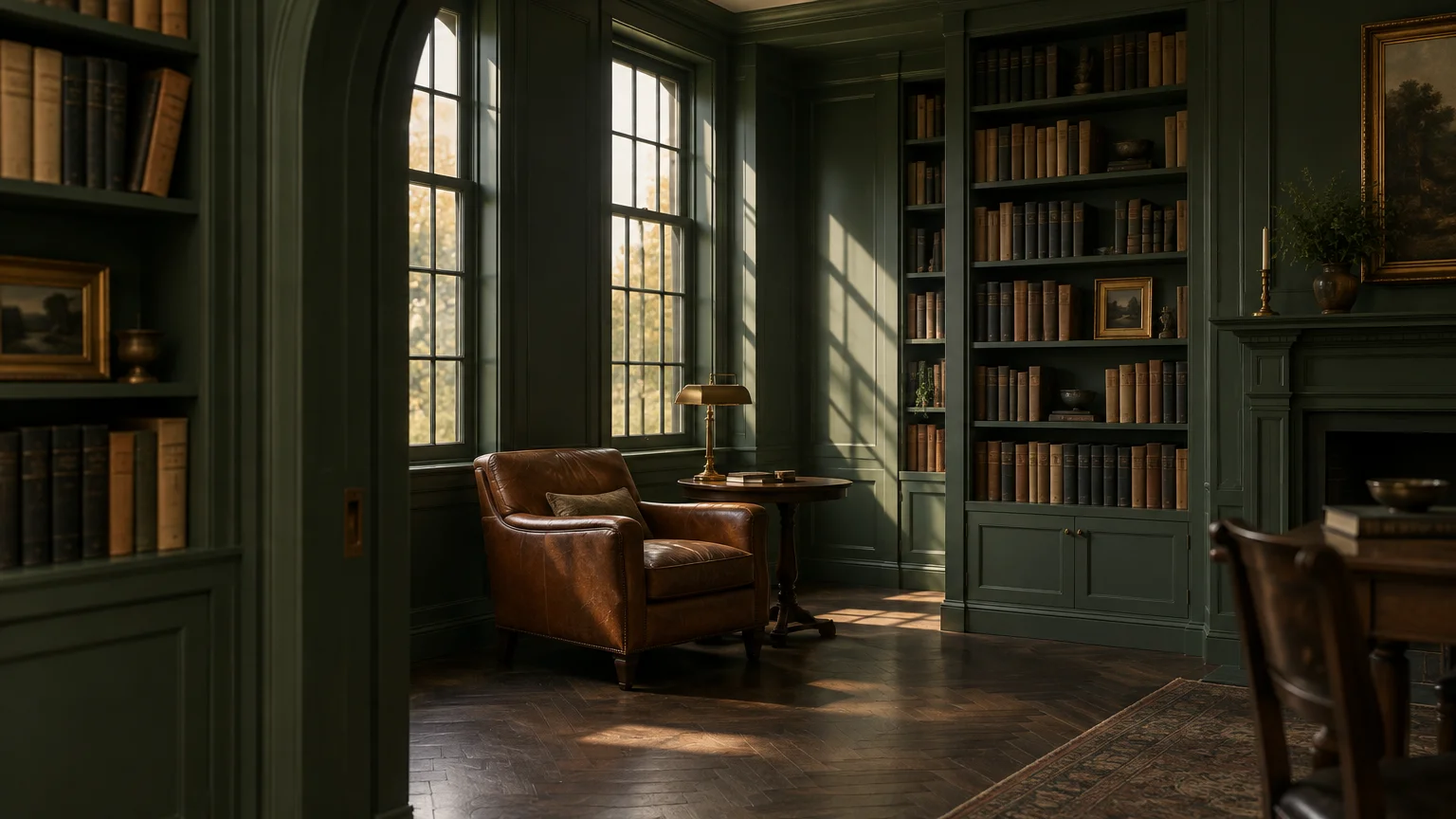
Living rooms, dining rooms, and studies respond especially well to monochrome treatment in this historical green. The continuous color makes framed artwork, brass sconces, and natural wood furniture pop with gallery-like clarity.
Choosing Your Drenching Formula and Roller
When drenching an entire room in a saturated mid-tone, pigment richness matters. Aura Interior Paint uses Color Lock Technology with Gennex Waterborne Colorants to keep deep shades uniform and scrubbable, ranging from 46.99 to 108.99 dollars across quart and gallon sizes.
Plan on 350 to 400 square feet of coverage per gallon with Aura Interior, applying it with a shed-resistant 3/8-inch nap roller cover. You can recoat Aura in just one hour at 77 degrees Fahrenheit and 50 percent relative humidity.
If you prefer Regal Select Interior for general walls, expect to pay 78.99 dollars per gallon for Flat or 84.99 dollars for Matte and Eggshell. It delivers 400 to 450 square feet per gallon and recoats in one to three hours.
Whichever wall line you pick, check your room thermometer before opening the can. Both Aura Interior and Regal Select require air and surface temperatures between 50 and 90 degrees Fahrenheit during application.
Exercise patience before scrubbing away scuffs or fingerprints on newly drenched walls. Benjamin Moore’s technical data sheets advise waiting two full weeks before washing either Aura Interior or Regal Select surfaces.
Trend #3: Biophilic Kitchen Cabinetry and Built-Ins
Biophilic design—the practice of weaving natural elements and hues into interiors to lower stress and restore focus—continues to reshape kitchen layouts. Homeowners want cooking spaces that echo botanical landscapes rather than clinical showrooms.
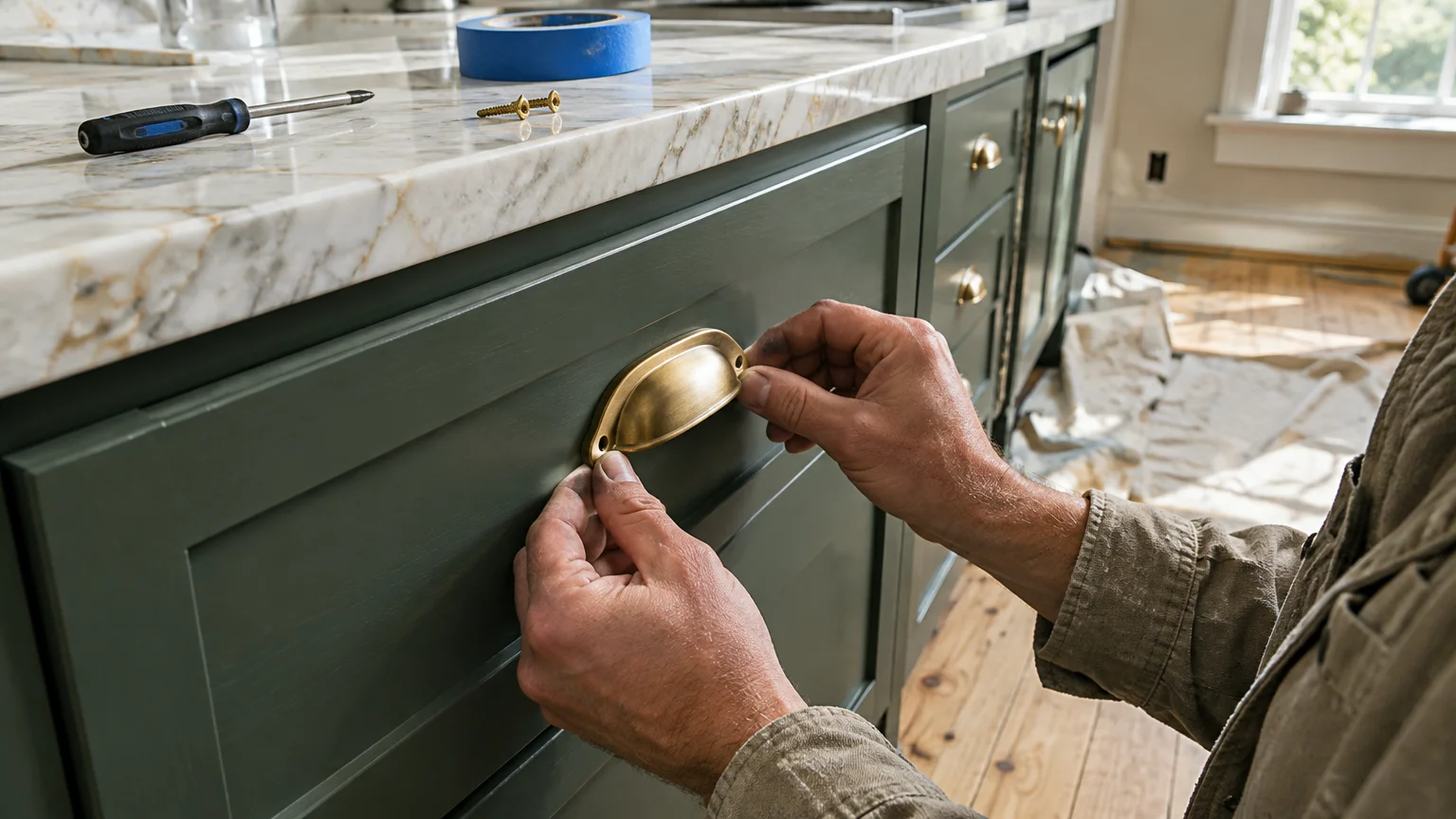
Applying Webster Green to perimeter cabinets, a statement island, or floor-to-ceiling library bookcases delivers instant organic warmth. Among top green paint ideas, painted millwork offers high visual impact because cabinetry anchors the room’s architecture.
Pair green lower cabinets with honed marble, butcher block, or soapstone countertops for tactile balance. Unlacquered brass or aged bronze hardware bridges the green’s earthy depth without feeling overly shiny.
Preparing and Curing Durable Cabinet Finishes
Do not reach for standard wall paint when tackling kitchen doors or busy bookshelves. While ben Interior is a great zero-VOC wall option covering 400 to 450 square feet per gallon, Benjamin Moore recommends ADVANCE or INSL-X Cabinet Coat for cabinets.
Start by cleaning grease thoroughly and sanding any glossy existing alkyd surfaces so your primer and paint grip properly. Skipping surface prep on old oil-based woodwork invites peeling around pulls and hinges.
Once you apply ADVANCE, respect its cure window before reloading dishes or heavy hardcovers onto shelves. Benjamin Moore warns against heavy abrasion or returning shelves to service for three to five days with Semi-Gloss K793, or five to seven days with Matte K791.
Trend #4: High-Impact Entryways and Exterior Curb Appeal
Your entryway sets the emotional tone before guests ever step into your living room. Using the benjamin moore color of the year 2027 on an interior foyer or front door signals confidence from the threshold.
Webster Green transitions smoothly between indoor hallways and exterior facades because it echoes surrounding foliage and evergreen landscaping. On brick, limestone, or crisp off-white siding, a green front door feels timeless rather than trendy.
Inside the foyer, painting lower wainscoting or an interior mudroom bench in Webster Green disguises everyday scuff marks from shoes and bags. It turns high-traffic transition zones into intentional design statements.
Specialized Products for Doors and Trim
Standard interior latex rarely stands up to UV rays, temperature swings, and constant hand contact around a doorknob. For front doors and exterior trim, reach for Aura Grand Entrance, which Benjamin Moore formulates specifically for rich color and tough performance.
Aura Grand Entrance comes in quarts only, with each quart covering 100 to 125 square feet. Plan on applying two coats, allowing four to six hours to dry to the touch and waiting overnight before recoating.
Avoid slamming or tightly latching a freshly painted entry door too early. Aura Grand Entrance reaches full cure in five to seven days, so keep weatherstripping clear during that first week.
If you are painting exterior trim or doors with Aura Exterior Soft Gloss, Low Lustre, or Flat, watch seasonal forecasts closely. Aura Exterior Low Lustre applies down to 40 degrees Fahrenheit, and Flat goes down to 35 degrees Fahrenheit, offering wider spring and autumn windows.
Trend #5: Earthy Contrasts with the 2027 Color Trends Palette
Color rarely lives in isolation inside a well-designed home. Alongside Webster Green HC-130, Benjamin Moore released seven supporting hues that form a cohesive eight-color palette for 2027.
Understanding how these neighboring shades interact lets you map out sightlines across open-concept floor plans. Rather than guessing which undertones clash, you can pull directly from this curated system.
Brightening Webster Green with Airy Off-Whites and Blues
If your rooms face north or lack generous windows, pair Webster Green with White Down OC-131. This soft off-white keeps trim, upper walls, and ceilings luminous without looking stark or clinical next to historical green.
For coastal or airy bedrooms, introduce Nelson Blue CW-635 as an adjacent wall color or ceiling accent. This watery pale blue cools down Webster Green’s earthiness and creates a serene, sky-inspired flow.
Warming Up Spaces with Golden Neutrals and Spiced Browns
Rooms built around warm oak floors or terracotta tile thrive when you layer Shakespeare Tan 228 beside Webster Green. As a golden neutral, Shakespeare Tan bridges traditional woodwork and green cabinetry effortlessly.
To add richer contrast in dining rooms or libraries, incorporate Antique Copper 1169 through accent walls, painted dining chairs, or textiles. Its warm, spiced brown notes amplify the natural warmth hiding inside Webster Green’s undertones.
Creating Moody Depth with Complex Accents
Modern interiors increasingly embrace unexpected, softened pairings that feel curated rather than predictable. Wild Aster 1240—a pale-gray-toned pink—offers a sophisticated botanical counterpoint when used in powder rooms, bedding, or upholstered accent chairs.
When you want tonal layering across connected living spaces, look to Durango 2137-30, a deep olive-toned neutral. Moving from a Webster Green foyer into a Durango den feels cohesive yet subtly distinct.
Finally, anchor high-drama spaces with Townsend Harbor Brown HC-64, a rich burgundy-brown from the Historical Colors family. Combining Webster Green wainscoting with Townsend Harbor Brown velvet drapes or leather seating delivers immediate old-world club elegance.
Trend #6: Lighting-Responsive Rooms and Sheen Layering
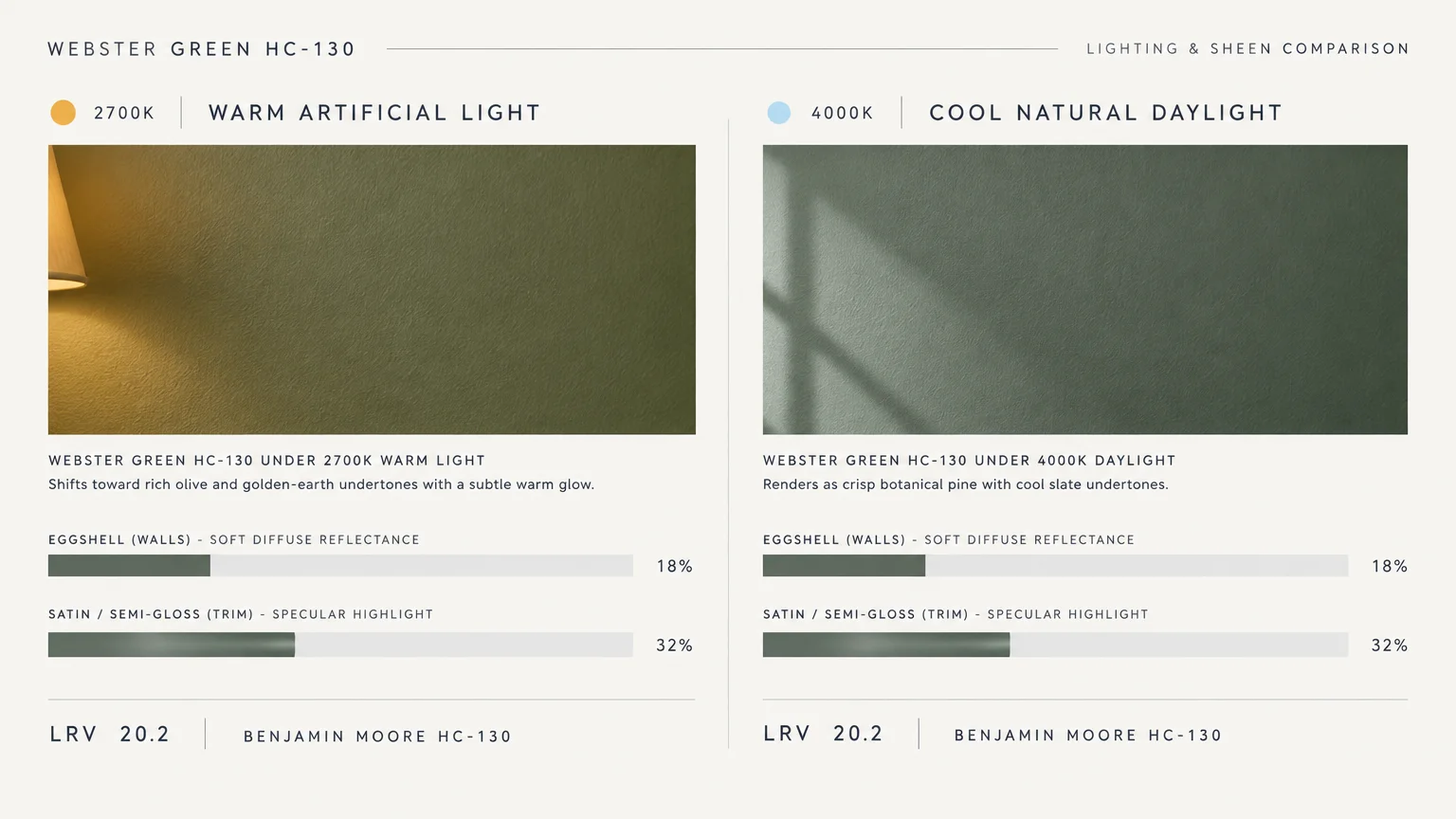
Because Webster Green sits at an LRV of 20.2, its personality shifts dramatically as light moves across your home. Morning daylight brings out crisp botanical notes, whereas warm evening lamps draw out cozy, shadowed depth.
Treating this color responsiveness as a design tool rather than a surprise prevents costly repaints. You can test how your specific bulbs and window exposures interact with the paint before investing in multiple gallons.
A Smart Sampling Protocol Before You Commit
Never rely on a tiny paper chip or a glowing smartphone screen to finalize your 2027 paint colors. Order Benjamin Moore’s liquid Paint Color Samples, which contain eight ounces of real interior paint in an eggshell finish.
Each sample covers roughly a two-by-two-foot test square, though keep in mind that liquid samples are final sale and non-refundable. Paint large poster boards rather than your drywall directly so you can move swatches around the room.
If you want zero brush cleanup, pick up Peel and Stick samples coated with authentic eggshell paint. You can reposition these adhesive sheets near window casings, tucked behind bookshelves, and beside kitchen counters from dawn until midnight.
Matching Aura Finishes to Each Surface
Sheen controls both light bounce and cleanability, so vary your finish deliberately across surfaces. In the Aura Interior lineup, Matte N522 softens drywall imperfections and absorbs glare in quiet bedrooms or formal dining rooms.
Eggshell N524 gives living rooms and hallways gentle light reflection with easier wipe-down performance. For humid bathrooms, kids’ spaces, or busy mudrooms, Satin N526 delivers heightened moisture resistance.
Reserve Semi-Gloss N528 for baseboards, door frames, and window sashes where crisp highlights frame the architecture. Layering multiple sheens of Webster Green adds sculptural nuance without introducing a second color.
Trend #7: Restorative Bedrooms and Cocooning Studies
As remote work and screen fatigue persist, homeowners are transforming bedrooms and private offices into restorative sanctuaries. Interior color trends for 2027 favor hues that quiet visual noise and invite deep focus or restful sleep.
Webster Green excels in cocooning spaces because mid-tone greens psychologically register as balanced and non-fatiguing. Sitting inside a green study during back-to-back video calls feels far calmer than staring at bright glare.
In primary bedrooms, painting the wall behind your headboard—or enveloping all four walls—anchors crisp linen bedding and natural walnut nightstands. Add warm brass reading lamps and bouclé armchairs to soften the room’s geometry.
Prioritizing Indoor Air Quality and Storage
When painting bedrooms where your family sleeps, low-odor and low-emission formulas protect indoor air quality. Regal Select Interior keeps volatile organic compounds under 50 grams per liter, meeting strict VOC compliance standards everywhere.
For nurseries or ultra-sensitive households, ben Interior offers zero VOCs alongside an extended open time that helps DIY painters blend roller marks smoothly. It covers 400 to 450 square feet per gallon for straightforward bedroom makeovers.
If you store leftover touch-up cans in a basement or garage, guard them against extreme seasonal swings. Benjamin Moore advises storing Regal Select strictly between 40 and 90 degrees Fahrenheit so the paint stays usable next year.
The Big Picture: Weaving These Trends into Your Home
Bringing Webster Green HC-130 into your home works best when you match ambition with technical discipline. Start with one high-reward space—such as a powder room, front door, or study—before committing your entire first floor.
Measure your wall height and width carefully, subtracting doors and windows, so you buy the right volume. Using 350 to 450 square feet per gallon as your baseline prevents mid-project store runs and color-batch mismatches.
Always check your calendar against cure schedules before hosting dinner parties or hanging heavy art. Giving walls two weeks before washing and giving ADVANCE-painted cabinets up to a week before heavy use protects your investment.
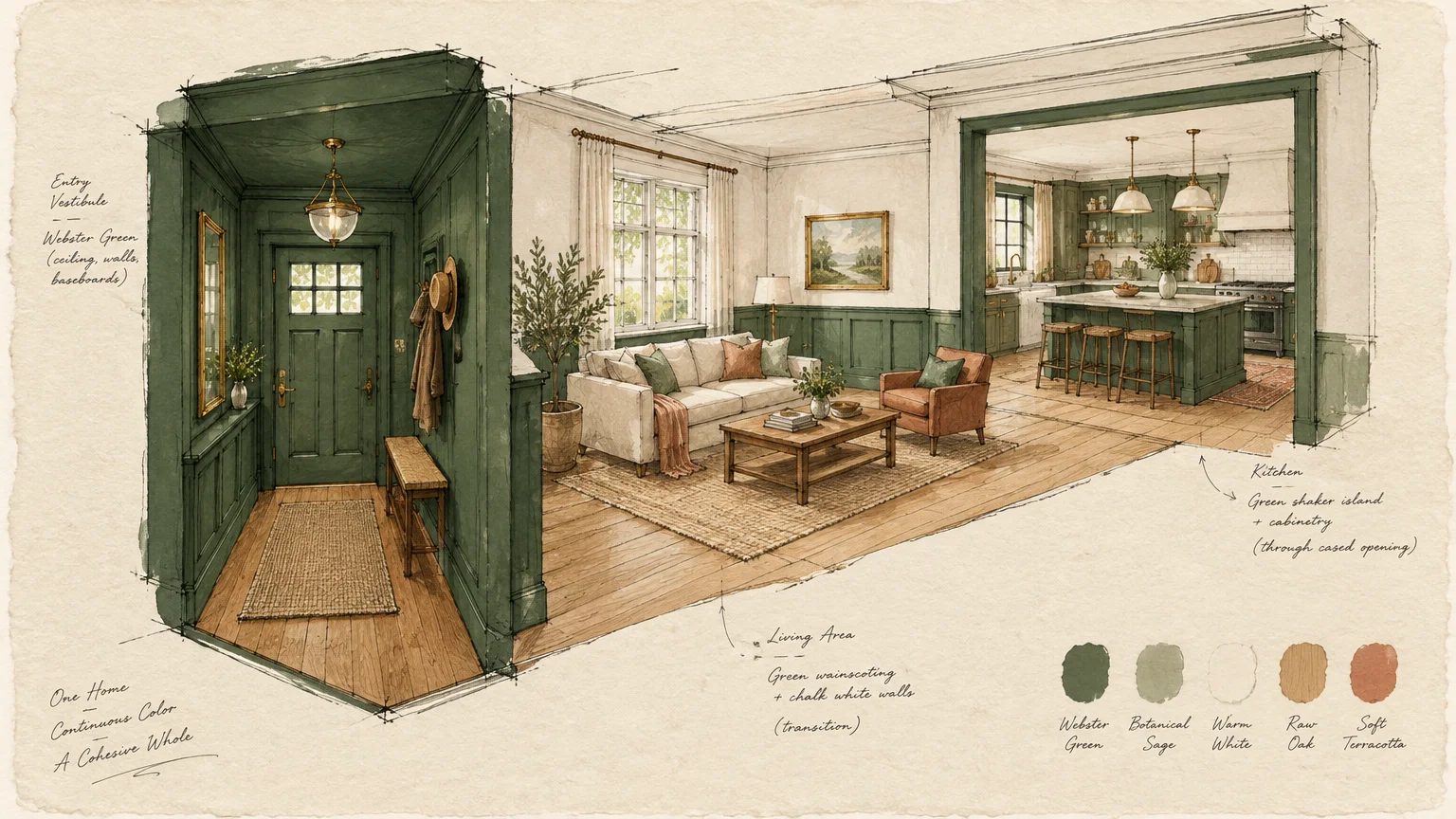
Finally, use the eight-color 2027 palette as your whole-home compass. Linking a Webster Green kitchen to a White Down living room or a Shakespeare Tan hallway creates effortless visual continuity.
For the latest color forecasts, consult industry leaders like Pantone and paint companies like Benjamin Moore. For professional design standards, refer to the American Society of Interior Designers (ASID).
Frequently Asked Questions
What kind of color is Webster Green HC-130?
Webster Green HC-130 is a balanced, mid-tone historical green selected by Benjamin Moore as its 2027 Color of the Year. With an LRV of 20.2, it sits in the medium-dark range and is also cross-referenced as Willow Grove 636.
Which colors pair best with Webster Green?
Benjamin Moore’s Color Trends 2027 palette pairs Webster Green with seven supporting shades for effortless coordination. Options range from White Down OC-131 and Nelson Blue CW-635 to Shakespeare Tan 228, Antique Copper 1169, Wild Aster 1240, Durango 2137-30, and Townsend Harbor Brown HC-64.
What paint finish should I choose for walls versus cabinets?
Choose Matte or Eggshell in Aura Interior or Regal Select for walls to keep glare soft and washable after two weeks. For kitchen cabinets, doors, and built-in shelves, use ADVANCE Waterborne Interior Alkyd or INSL-X Cabinet Coat for superior hardness and durability.
How much does Benjamin Moore paint cost for Webster Green?
On Benjamin Moore’s U.S. site in late 2026, Regal Select lists at 78.99 dollars per gallon for Flat and 84.99 dollars for Matte and Eggshell. Aura Interior ranges from 46.99 to 108.99 dollars across quart to gallon sizes, though independent retailers set final local pricing.
How should I test Webster Green before buying a full gallon?
Use Benjamin Moore’s eight-ounce liquid Paint Color Samples in eggshell—covering roughly two by two feet—on movable poster boards, or try repositionable Peel and Stick samples. Inspect the swatch under morning sunlight, afternoon shadows, and evening artificial lamps before deciding.
What temperatures are safe for applying Webster Green paint?
For Aura Interior, Regal Select, and ADVANCE, apply paint only when air and surface temperatures sit between 50 and 90 degrees Fahrenheit. For exterior trim and doors, Aura Exterior Low Lustre applies down to 40 degrees Fahrenheit, and Flat goes down to 35 degrees Fahrenheit.
Disclaimer: This article reflects design trend analysis and predictions. Personal taste and timeless design principles should always guide your decorating choices.