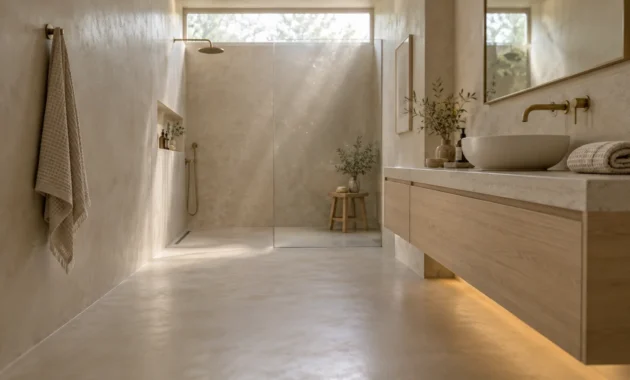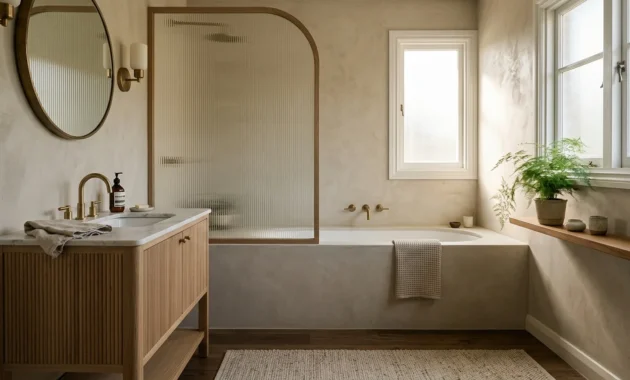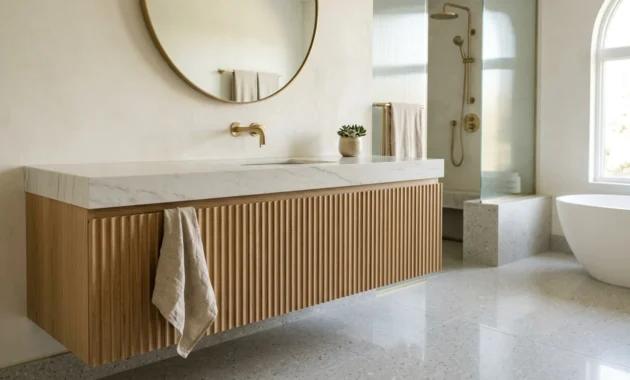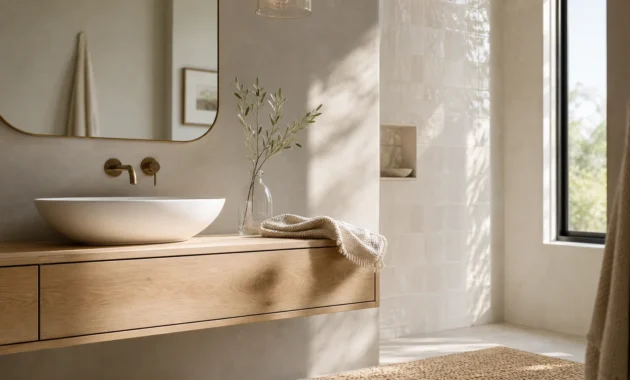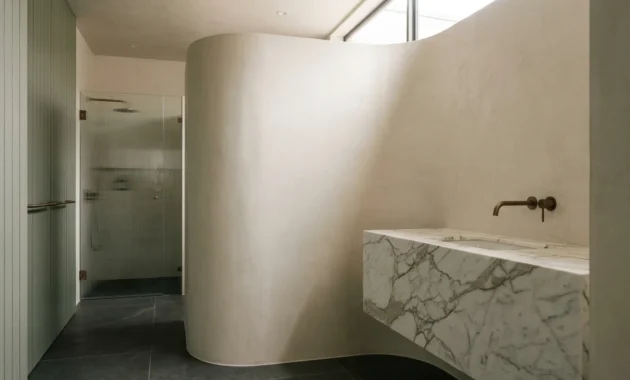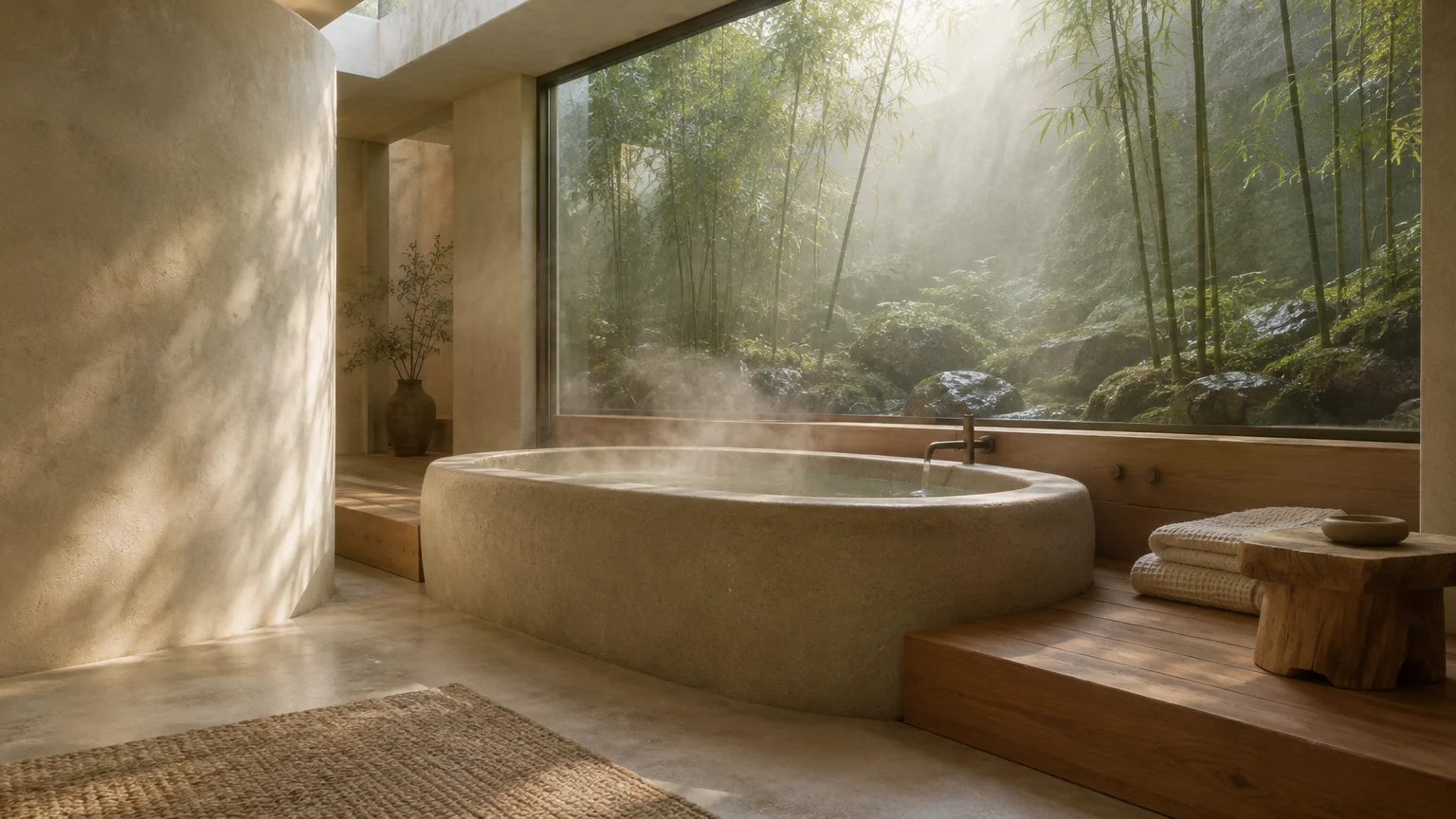
Transform your primary bath into an authentic wellness sanctuary with the right atmospheric palette. Thoughtful, calming bathroom colors lower sensory friction the moment you cross the threshold each morning.
High-end hospitality design now bypasses cold monochrome tile in favor of layered, tactile earthiness. Integrating these curated spa bathroom ideas allows you to design an enduring personal escape at home.
Explore twelve predictive bathroom color schemes that quiet the mind and elevate daily self-care rituals. Each refined pairing balances modern architectural restraint with organic serenity to create timeless visual comfort.
Trend #1: Eucalyptus Mist and Warm Alabaster
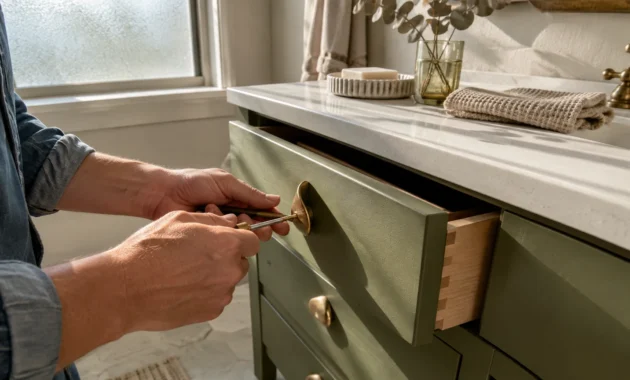
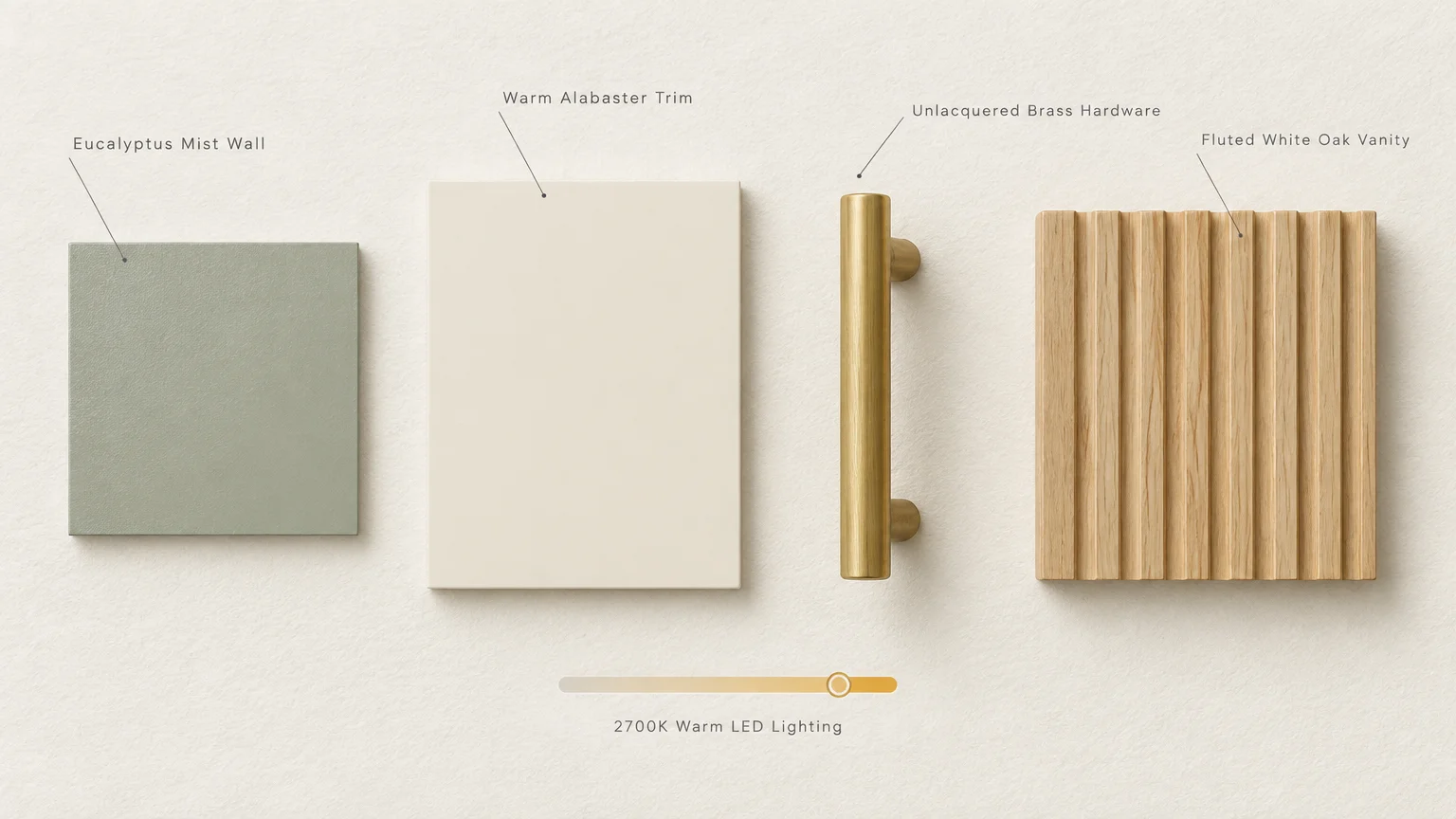
Eucalyptus mist introduces an airy botanical serenity that calms your senses the moment you step inside. Pairing it with warm alabaster trim tempers the cool undertone with creamy, sunlit comfort.
This biophilic palette directly mirrors the restorative flora used in luxury hydrotherapy treatments. It connects your indoor space to natural gardens without demanding heavy botanical prints or distracting patterns.
Apply this relaxing bathroom paint in an eggshell or velvet sheen on the walls. The low luster prevents harsh glare while repelling moisture effectively.
Complement the painted drywall with unlacquered brass hardware and fluted white oak vanities. Natural wood grains supply organic warmth, bridging the gap between soft green and creamy alabaster.
Avoid stark, blue-toned whites in this configuration. Brilliant white creates an aggressive clinical contrast, whereas creamy alabaster softens architectural transitions seamlessly.
Install 2700K warm LED lighting beneath the vanity mirror to showcase these earthy undertones. Warm lighting prevents soft eucalyptus tones from skewing gray on overcast mornings.
Trend #2: Japanese Hinoki and Gentle Bone
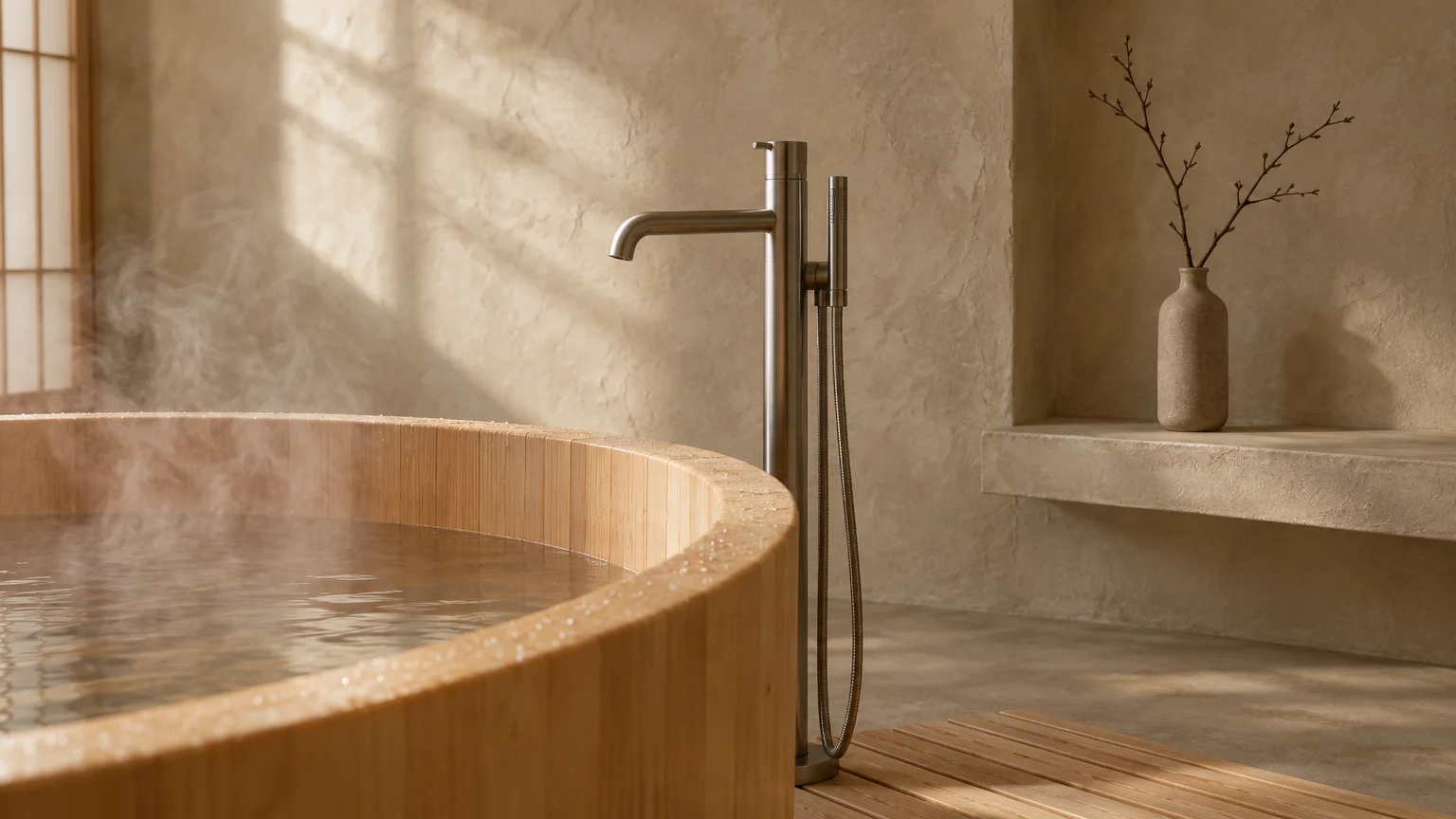
Inspired by ancient onsen bathhouses, this concept celebrates raw blonde timber paired with quiet mineral neutrals. Gentle bone offers an earthy, limestone-like backdrop that enhances natural wood grain.
Japandi design relies heavily on this restrained harmony to eliminate visual clutter. By reducing color saturation, your eyes rest easily, allowing tactile textures to guide the sensory experience.
Choose a matte lime wash in bone for the walls to establish subtle textural movement. The permeable finish absorbs moisture gracefully while creating a velvety, suede-like patina.
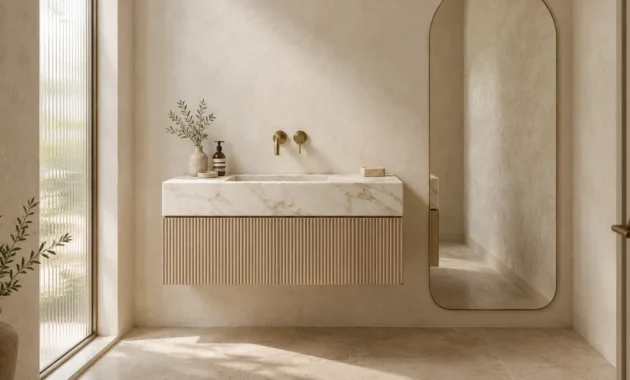
Introduce hinoki or cedar through slatted shower duckboards, floating vanities, and soaking tub surrounds. When warmed by steam, these aromatic woods release an authentic forest aroma.
Ground the scheme using brushed nickel faucets and soft beige micro-cement flooring. This combination ensures long-lasting visual serenity and authentic minimalist poise.
Keep accessories sparse; a single unglazed ceramic vase holding dried branches completes this look. Emphasizing negative space allows your mind to decompress fully after intense days.
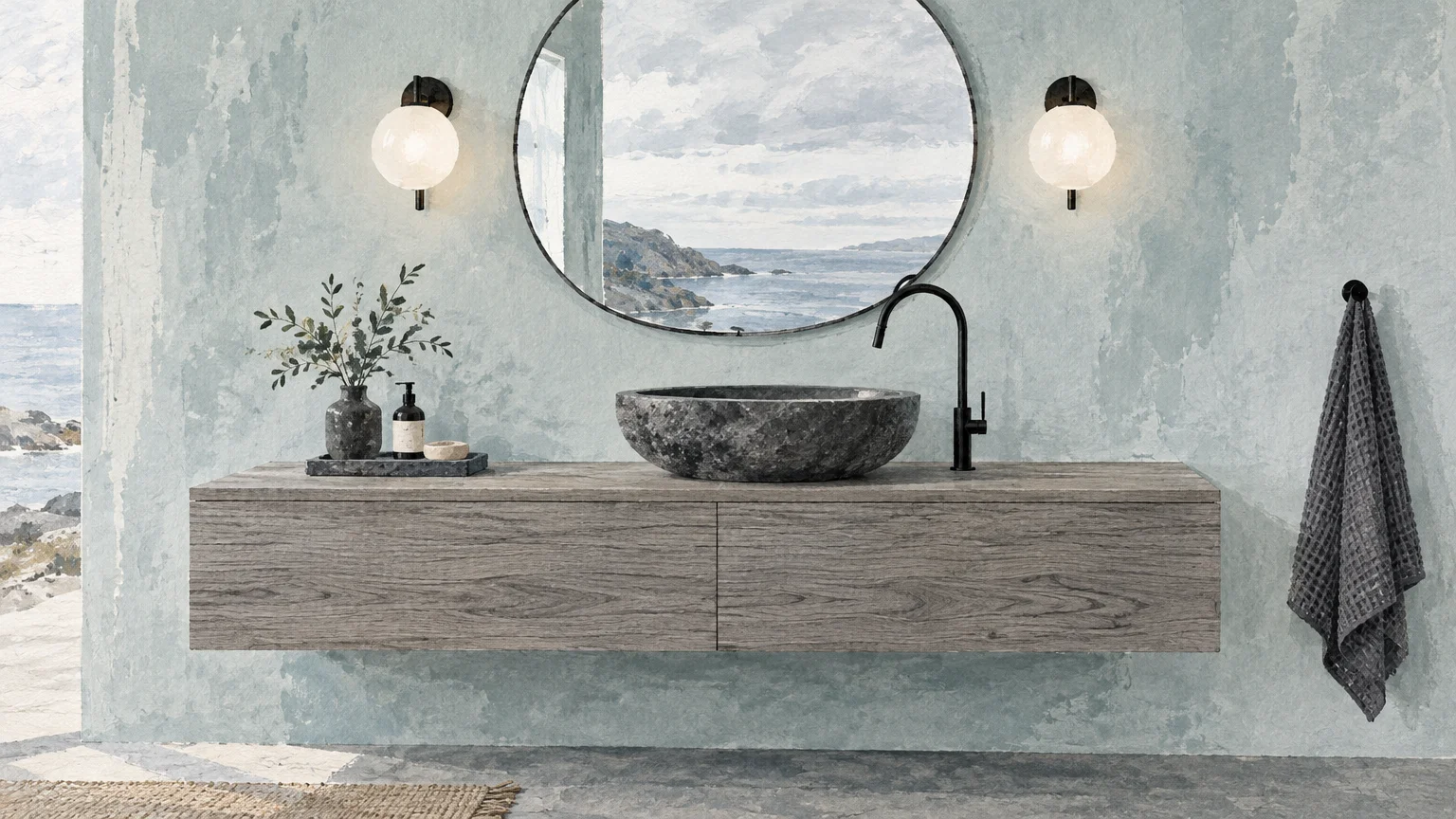
Trend #3: Nordic Sea Salt and Driftwood Gray
Nordic sea salt evokes the brisk, cleansing atmosphere of Scandinavian coastal springs. This muted, gray-infused cyan softens incoming morning light and visually expands compact bathroom layouts.
Driftwood gray provides the ideal anchor along baseboards, cabinetry, and open shelving. The resulting interplay feels cool yet remarkably grounded, reminiscent of weathered coastal piers.
Incorporate tumbled basalt tiles or charcoal soapstone counter surfaces to deepen the composition. The subtle tonal shifts keep the room from reading as flat or icy.
Finish the space with textured waffle-weave linen towels and matte black plumbing fixtures. The crisp accents create modern architectural definition against the misty perimeter.
For lighting, select opal glass sconces that cast an even, shadowless glow across the vanity. Diffused light mirrors the calming quality of coastal daylight.
Avoid high-gloss lacquers here. Matte and satin finishes ensure your sea salt walls read as stone and water rather than plastic.
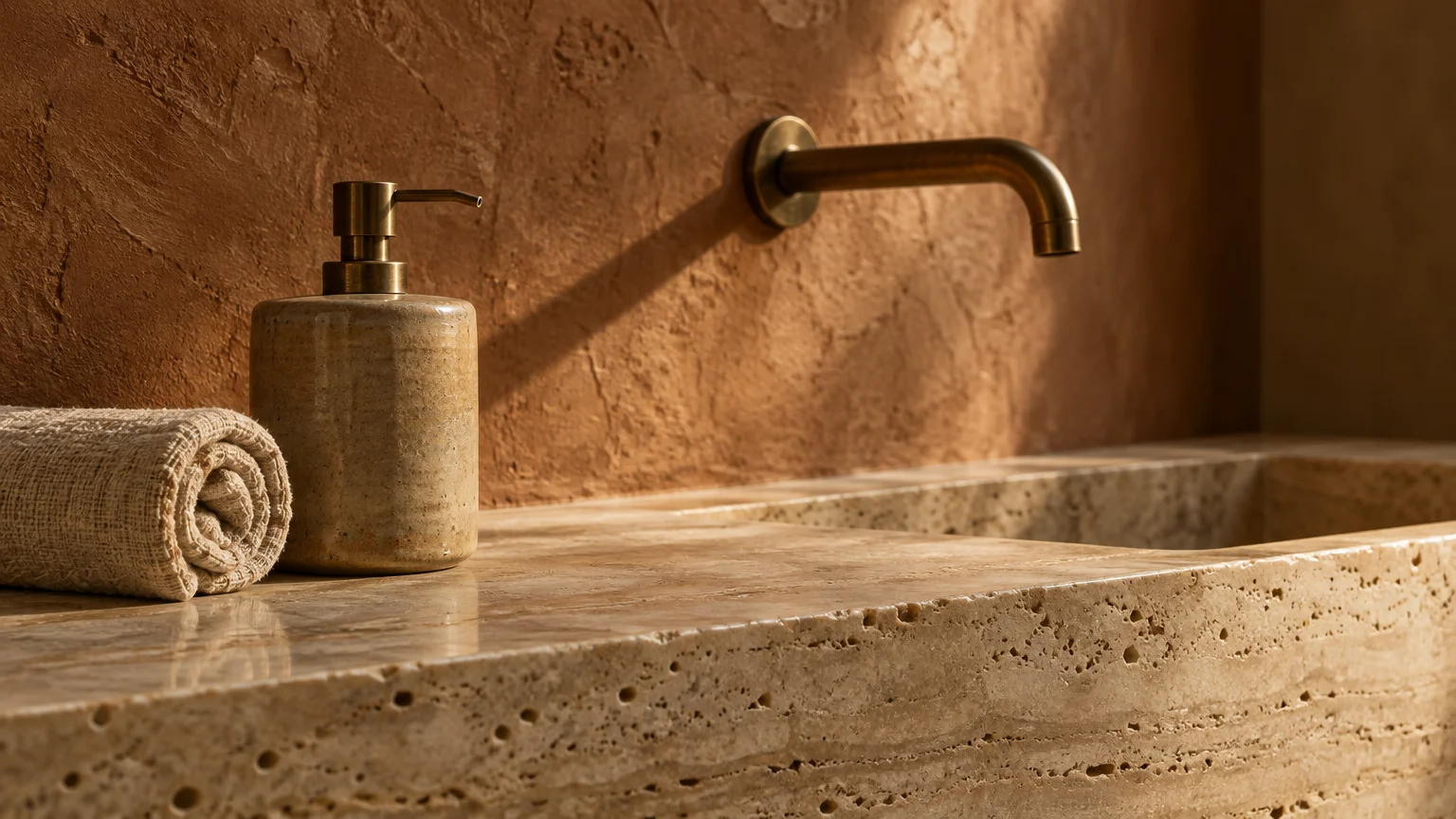
Trend #4: Mineral Clay and Creamy Travertine
Mineral clay delivers grounding warmth, drawing from the thermal muds of luxury European spas. When combined with creamy Italian travertine, the room exudes effortless historic provenance and tactile richness.
This aesthetic answers our collective craving for earthy sanctuary and sensory grounding. It transforms cold, clinical washrooms into inviting, womb-like retreats that encourage unhurried evening soaking.
Apply a breathable roman clay or Venetian plaster finish across the ceiling and walls. The variegated surface catches natural light with a velvety, stone-like warmth.
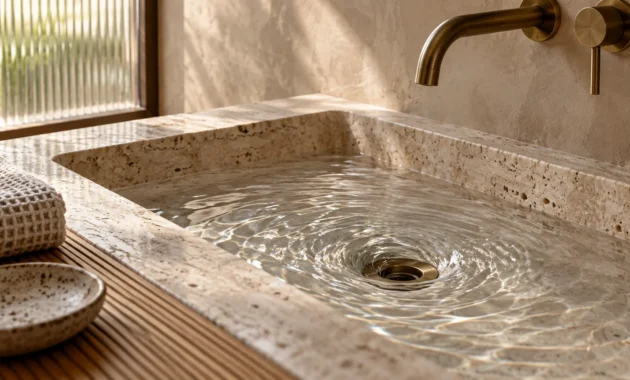
Specify unsealed, honed travertine for countertops, vessel sinks, and integrated shower benches. Pair with aged bronze brassware to complete this timeless, Mediterranean-inspired color narrative.
Introduce deep terracotta accents through hand-dipped beeswax candles and artisanal clay soap dishes. These small decorative touches reinforce the artisanal, handcrafted ethos of the room.
Avoid polished chrome fixtures in this setting. The high reflectivity clashes abruptly with the matte, geologic honesty of raw stone and clay.
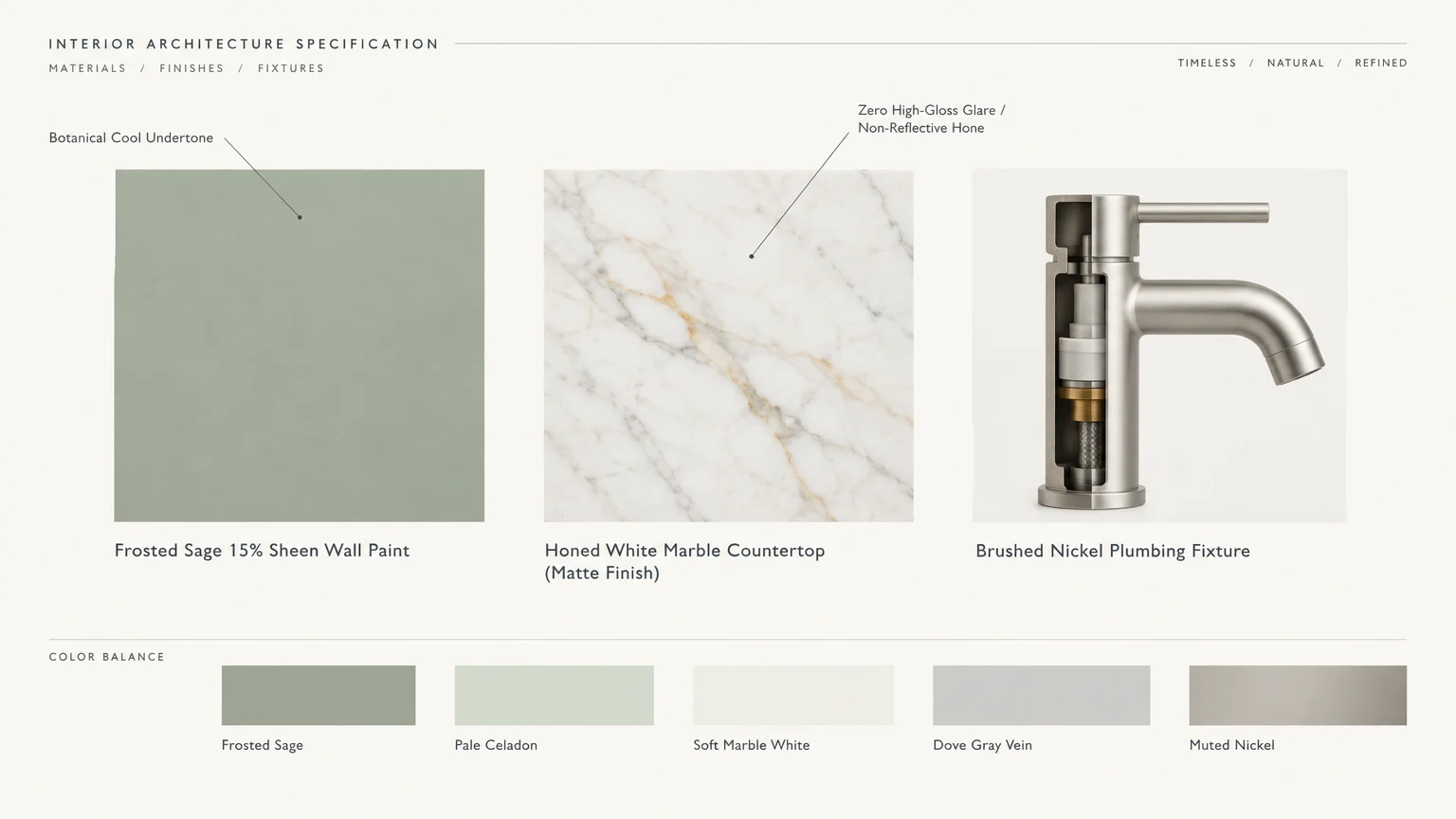
Trend #5: Frosted Sage and Honed White Marble
Frosted sage brings an elegant, silvery herbal quality that feels deeply restorative. When paired with honed Carrara or Calacatta marble, the scheme achieves timeless, five-star luxury.
This combination capitalizes on the soothing power of spa bathroom colors inspired by native alpine foliage. It evokes the crisp air and alpine mineral water of mountain retreats.
Install frosted sage beadboard or tongue-and-groove wainscoting alongside full-height slab marble walls. The distinct contrast between painted woodwork and organic stone veining enriches the room.
Incorporate polished nickel fixtures to catch the light with subtle jewelry-like luster. The warm silver undertones of nickel complement the gray veins winding through natural marble.
Add live eucalyptus branches in a fluted glass vase to perfume the warm shower steam. The real plant creates an olfactory link to the painted walls.
Choose a satin paint finish for the sage surfaces. This formula withstands moisture while providing a soft, luxurious touch under vanity lighting.
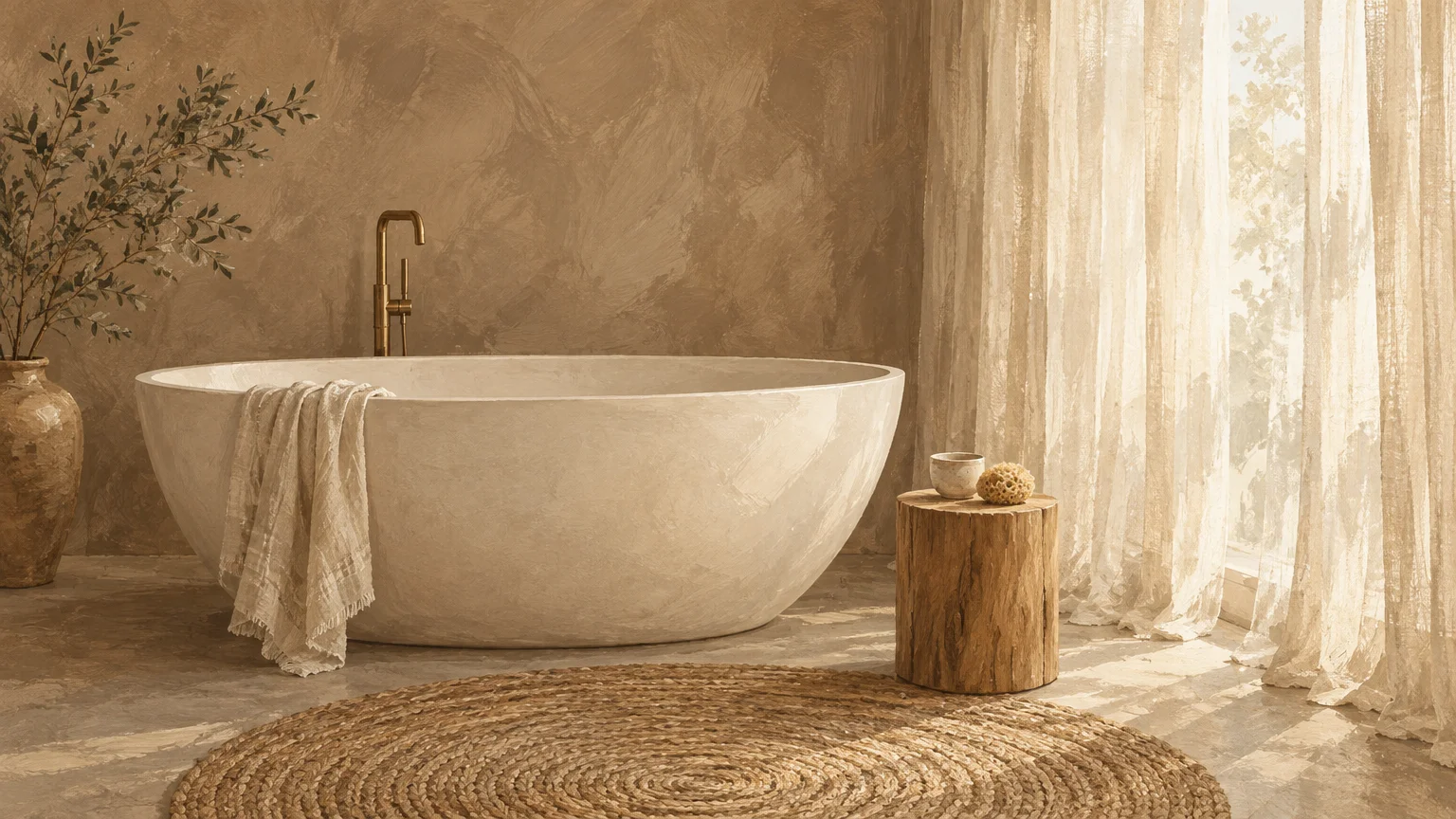
Trend #6: Cashmere Taupe and Washed Linen
Cashmere taupe represents the pinnacle of quiet luxury, balancing warm brown and cool gray undertones. Pairing it with washed linen creates an enveloping, cocoon-like haven free from jarring contrasts.
This tonal, monochromatic palette works exceptionally well in windowless bathrooms or compact powder rooms. By wrapping surfaces in a unified neutral value, boundaries dissolve and stress levels decrease.
Select a velvety matte emulsion for the walls and color-drench the baseboards and trim. Consistent coloration across architectural trim elongates wall heights while establishing tranquil intimacy.
Layer in unbleached Belgian linen drapery, bouclé seating stools, and raw limestone accessories. These tactile touches ensure your monochromatic space feels inviting rather than vacant.
Complement the taupe palette with warm cove lighting hidden along drop ceilings or behind mirrors. Soft uplighting enhances the velvety wall texture without producing sharp shadows.
Avoid using pitch-black accents here. Deep charcoal or dark espresso wood provides soft grounding contrast without breaking the monochromatic visual rhythm.
Trend #7: Celadon Glaze and Brushed Brass
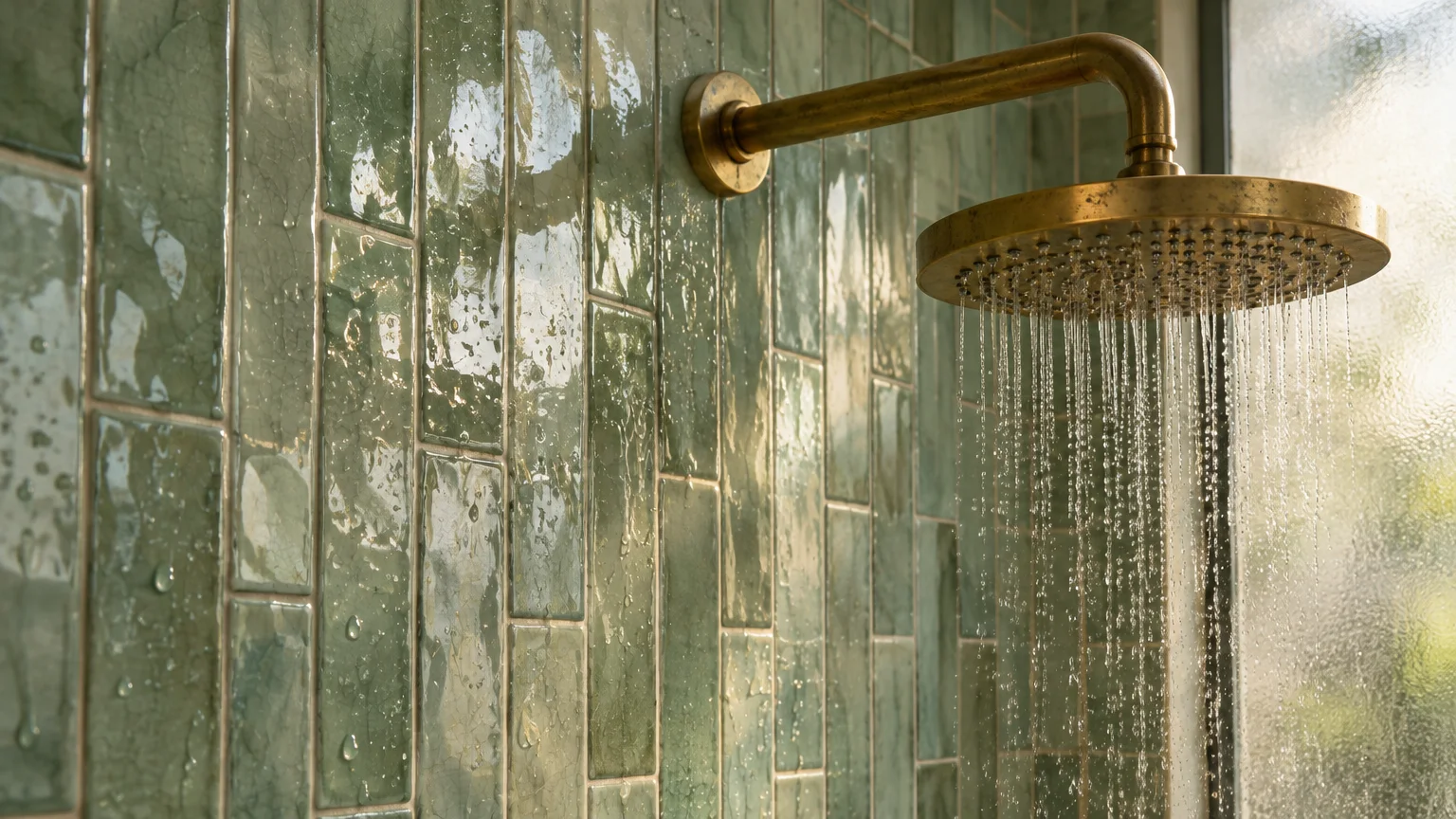
Celadon glaze recalls classic hand-thrown pottery, offering a luminous, watery green-gray finish. Pairing this reflective tint with brushed satin brass injects radiant warmth into peaceful morning routines.
Glossy surfaces reflect ambient daylight around the room, mimicking sunlight dancing across open water. It brings a poetic, fluid dimension to smaller, light-deprived primary suites.
Utilize handcrafted zellige wall tiles across the shower or vanity splash zones. Their irregular surface contours generate enchanting highlights and subtle chromatic variation.
Anchor the space with pale white-oak cabinetry and satin brass hardware. The metallic warmth balances the aquatic glaze, ensuring the bathroom feels welcoming throughout the year.
Paint adjacent dry walls in a soft, pale celadon eggshell to extend the tile work seamlessly. This chromatic continuity prevents the bathroom from feeling visually fragmented.
Incorporate crisp white porcelain sinks and freestanding tubs to provide clean resting points for your eyes. The pure porcelain keeps the watery palette feeling fresh and vibrant.
Trend #8: Coastal Fog and Weathered Slate
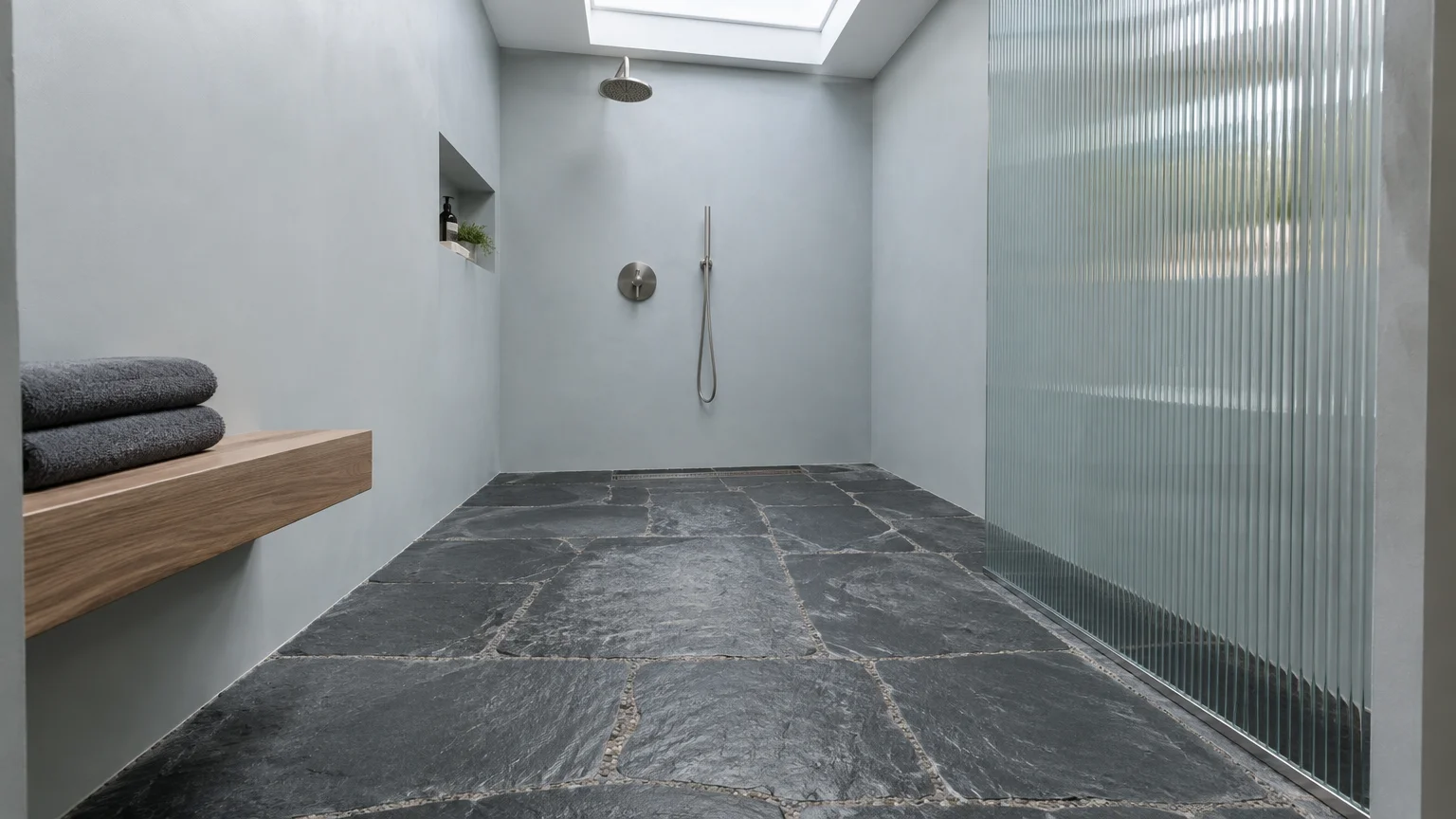
Coastal fog captures the brooding, contemplative romance of Pacific Northwest seaside retreats. Pairing this misty, medium-gray paint with dark, split-face slate creates dramatic, grounding depth.
Many homeowners mistakenly assume spa designs require bright, sunlit rooms. In truth, deeper, moody tones foster psychological retreat, signaling the brain to unwind after hectic workdays.
Lay large-format slate tiles in an offset pattern across the floor and shower base. The tactile riven surface feels remarkably grounding underfoot, particularly over radiant heat systems.
Paint your walls and ceilings in coastal fog to soften the boundary between surfaces. This atmospheric envelopment mimics the quiet hush of coastal mist rolling over coastal bluffs.
Accent the dark stone with warm walnut cabinetry and matte black plumbing hardware. Rich wood grain prevents the cool slate from feeling cold or unapproachable.
Use focused spotlighting on stone textures to create dramatic grazing shadows. Highlighting the stone’s clefts adds authentic mountain-lodge luxury to your evening baths.
Trend #9: Desert Sandstone and Muted Terracotta
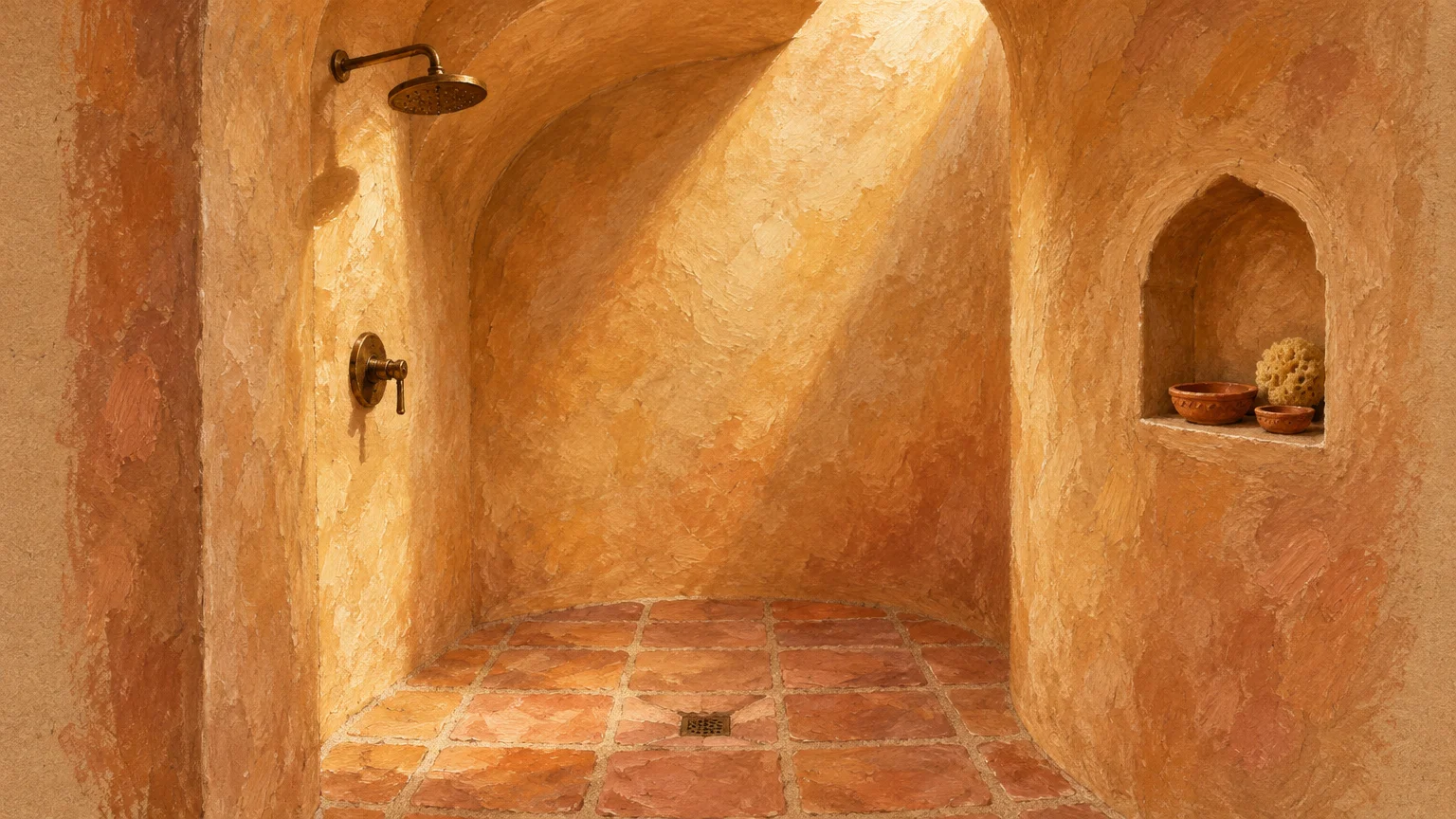
Desert sandstone delivers sun-warmed tranquility, referencing red-rock canyons and holistic desert wellness resorts. Pairing this pale golden hue with muted terracotta invites grounding warmth into your daily bath.
This palette moves away from cool aquatic blues, offering an energizing yet meditative thermal sanctuary. It produces a soft, flattering ambient glow that boosts skin tones in vanity mirrors.
Incorporate curved architectural niches coated in breathable terracotta lime plaster. These soft alcoves provide display nooks for bath salts, artisan sponges, and botanical skincare.
Complement the clay tones with raw cedar shelving and tumbled terracotta floor pavers. The textured surfaces create authentic sensory escapism reminiscent of luxury Sedona retreats.
Install oil-rubbed bronze or raw copper tapware that ages gracefully over time. The developing living patina aligns with the organic, weathered character of desert stone.
Add a potted desert succulent or olive branch to punctuate the terracotta backdrop with natural green. This single pop of contrast anchors the warm color balance.
Trend #10: Midnight Indigo and Cloud White
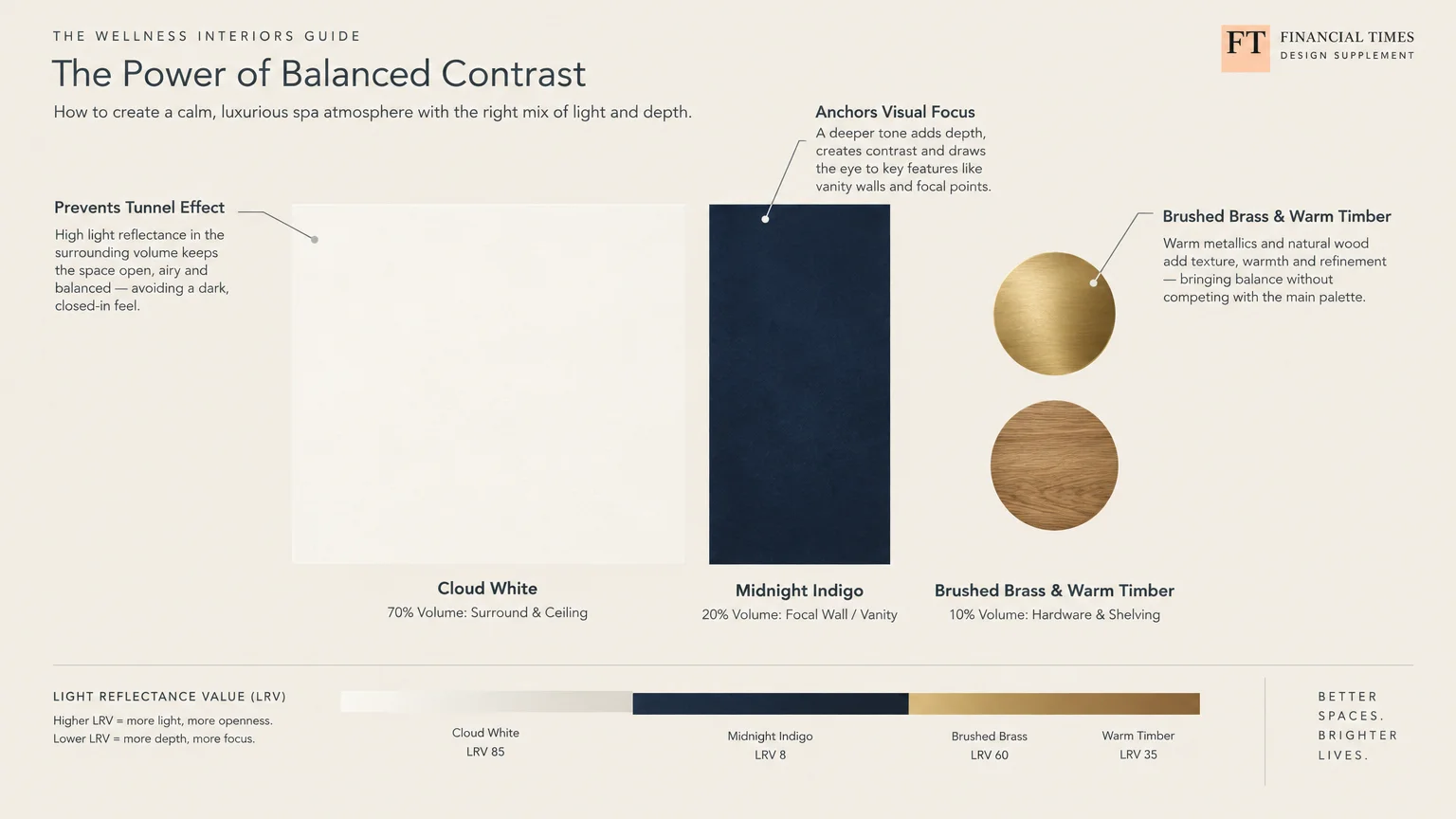
Midnight indigo provides a dramatic, nocturnal retreat that mimics starry skies above open-air hot springs. When framed by cloud white millwork, the contrast feels crisp, intentional, and deeply tranquil.
Color psychology demonstrates that deep navy and indigo tones decelerate your heart rate. This enveloping shade creates a cocoon-like environment ideal for evening unwinding and restorative hydrotherapy.
Saturate the upper walls in a deep midnight matte finish while tiling lower walls in creamy white. This high-contrast approach grounds the perimeter without overwhelming the room’s ambient brightness.
Accentuate the deep blue with polished chrome fittings and beveled mirrors. The reflective elements mirror light like moonlight across calm, dark waters.
Add plush, hotel-grade white bathrobes and towels to enhance the five-star residential retreat feeling. The crisp textile brightness pops elegantly against the nocturnal walls.
Install dimmable backlighting behind vanity mirrors to produce a celestial halo effect. Soft glowing perimeters ease eye strain during late-night bathing rituals.
Trend #11: Pale Olive and Warm Sand
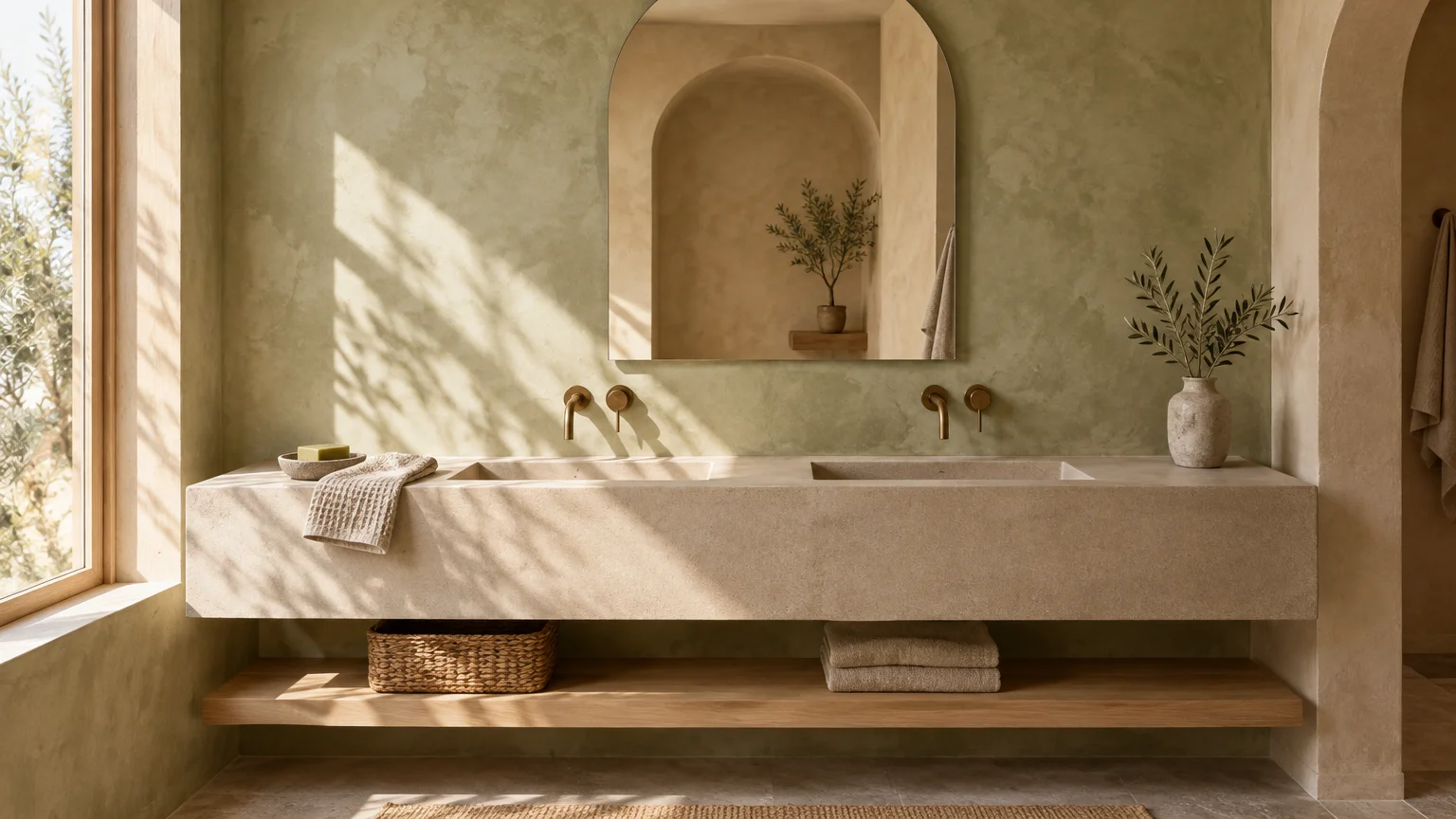
Pale olive channels the rustic simplicity of Mediterranean thermal bathhouses and ancient olive groves. Paired with warm sand, this pairing delivers organic modernism with an earthy, therapeutic sensibility.
The yellow undertones in pale olive keep the bathroom feeling sun-drenched and restorative even during gray winters. It evokes quiet country landscapes and promotes an effortless connection to nature.
Install seamless micro-cement or tadelakt plaster in warm sand across walls and shower enclosures. This smooth, grout-free application evokes traditional hammam architecture and streamlines maintenance.
Specify olive-toned cabinetry paired with oil-rubbed bronze hardware and woven jute baskets. These organic textures infuse your daily routine with grounded, tactile elegance.
Incorporate reclaimed timber stools and linen window shades to heighten the artisanal aesthetic. Unfinished timber patinas soften modern fixtures with historical integrity.
Avoid using cold fluorescent light tubes. Instead, install 3000K ambient LED fixtures that highlight the earthy yellow-green nuance of olive pigment.
Trend #12: Soft Pewter and Translucent Glass
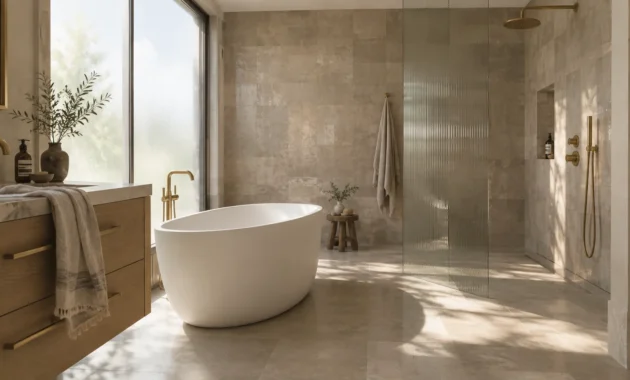
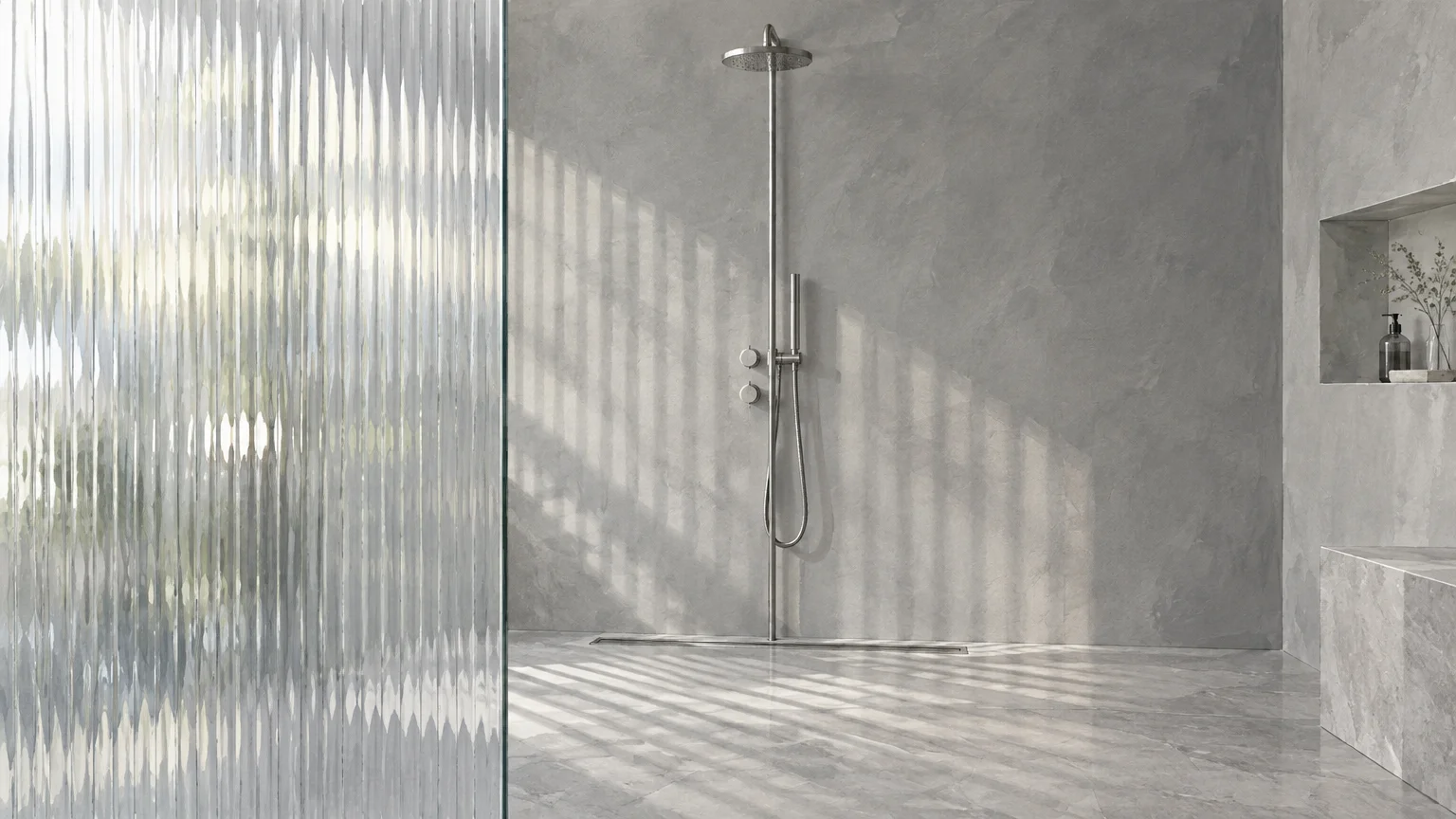
Soft pewter merges gentle silver tones with subtle beige warmth, creating an ethereal mineral aesthetic. Pairing pewter surfaces with translucent fluted glass yields a light-filled sanctuary of total clarity.
This palette suits homeowners who prefer clean, architectural simplicity over saturated pigments. It creates a vaporous atmosphere reminiscent of luxury steam rooms and thermal plunge facilities.
Install reeded or fluted glass shower partitions to diffuse incoming light while maintaining privacy. The ribbed texture scatters reflections beautifully across pewter-painted surfaces.
Incorporate brushed stainless steel fixtures and pale terrazzo tile embedded with river quartz pebbles. This refined material mix delivers lasting durability alongside understated, spa-inspired luxury.
Paint ceilings one half-shade lighter than the pewter walls to lift room volume visually. The subtle gradation creates a seamless horizon line that calms tired eyes.
Finish with minimalist acoustic ceiling panels or thick bath rugs to dampen hard surface echoes. Eliminating acoustic reverberation completes your auditory spa retreat.
The Big Picture: Weaving These Trends into Your Home
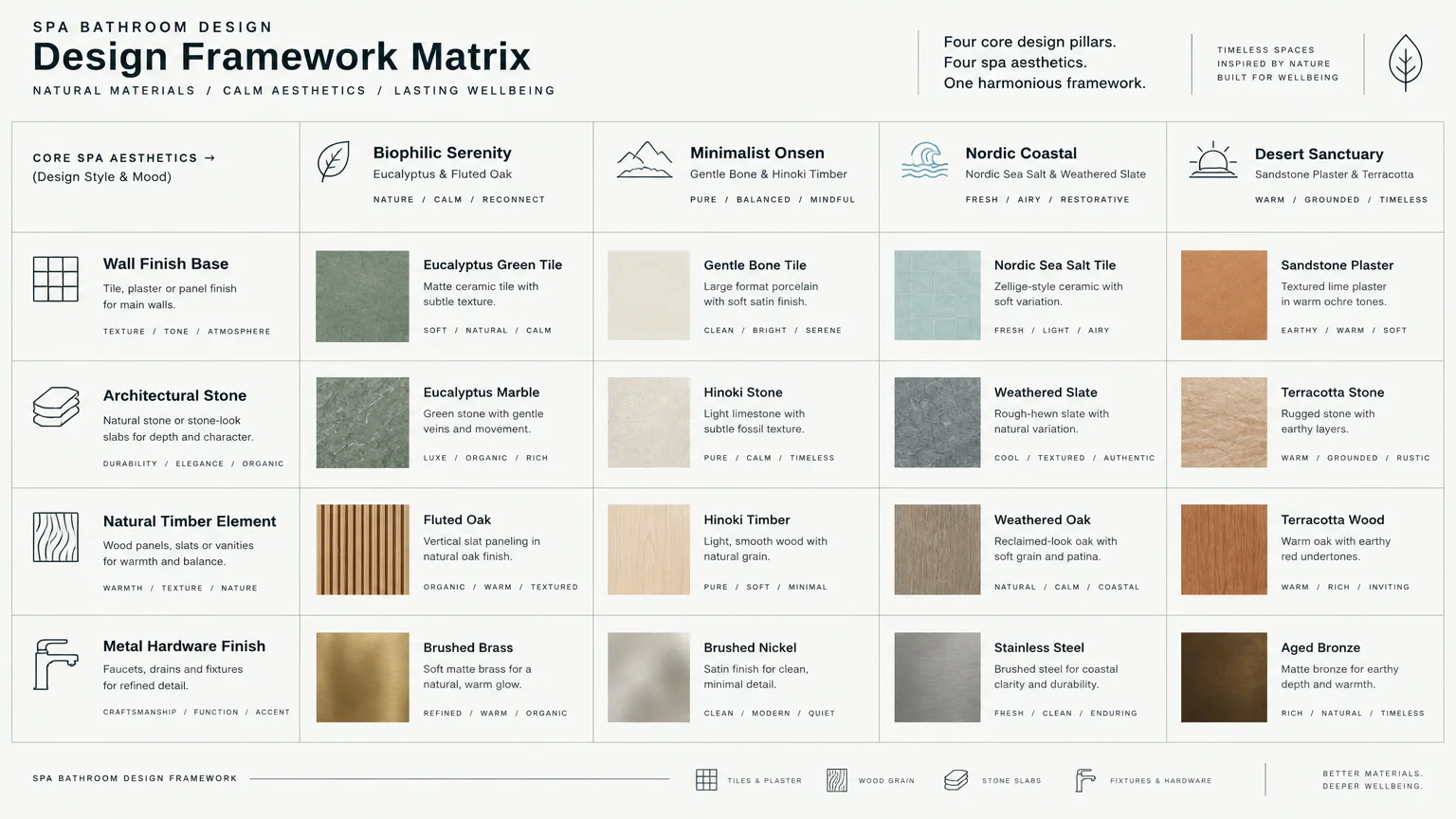
Designing an enduring home sanctuary requires balancing fleeting color trends against timeless architectural fundamentals. Always evaluate how natural daylight shifts across your space from sunrise to dusk before purchasing paint.
Test expansive swatches directly on primed drywall rather than relying on small paper cards. Observing pigments against your chosen stone slabs avoids expensive undertone clashes later.
Incorporate quiet luxury by limiting your overall palette to two primary tones and one grounding accent. Restraint prevents sensory overload and fosters genuine psychological decompression.
Never neglect tactile variety when planning your bathroom renovation. Pairing smooth matte paint with rugged split slate or reeded timber creates sensory depth without chromatic noise.
Integrate layered lighting controls to match your physiological needs throughout the day. Bright morning illumination energizes daily routines, while dimmed accent sconces facilitate evening relaxation.
For the latest color forecasts, consult industry leaders like Pantone and paint companies like Benjamin Moore. For professional design standards, refer to the American Society of Interior Designers (ASID).
Frequently Asked Questions
Which paint finish works best for relaxing spa bathrooms?
Satin and eggshell finishes deliver the ideal balance of moisture resistance and soft light diffusion. They resist mildew while preventing the clinical, reflective glare typical of high-gloss enamels.
For dry ceiling zones, choose a breathable matte finish. Matte ceilings absorb overhead lighting beautifully, creating a soothing, velvety expanse above your soaking tub.
How can I make a windowless bathroom feel like an open-air spa?
Prioritize light-reflective neutrals like Nordic sea salt or gentle bone paired with translucent fluted glass. These pale tones scatter artificial light without casting stark, harsh shadows.
Install dimmable 2700K to 3000K LED perimeter lighting to simulate warm, indirect daylight. Adding leafy tropical plants like snake plants thrives under ambient light while purifying indoor air.
Can I combine warm and cool tones in one spa bathroom?
You can successfully mix temperatures by choosing a dominant hue and balancing it with an organic counterpoint. For example, pair cool celadon glazed tile with warm white-oak cabinetry or unlacquered brass.
The key lies in maintaining consistent color saturation across all materials. Muted, desaturated cool tones harmonize effortlessly with warm, earthy neutrals.
Will deep color schemes make my bathroom feel cramped?
Deep shades like midnight indigo or coastal fog blur room boundaries by eliminating distinct shadow corners. This technique creates an expansive cocoon effect that feels deeply tranquil rather than confining.
Maintain balanced proportions by pairing dark walls with bright plumbing porcelain and reflective mirror surfaces. Strategic illumination keeps rich, moody palettes feeling expansive and indulgent.
Disclaimer: This article reflects design trend analysis and predictions. Personal taste and timeless design principles should always guide your decorating choices.