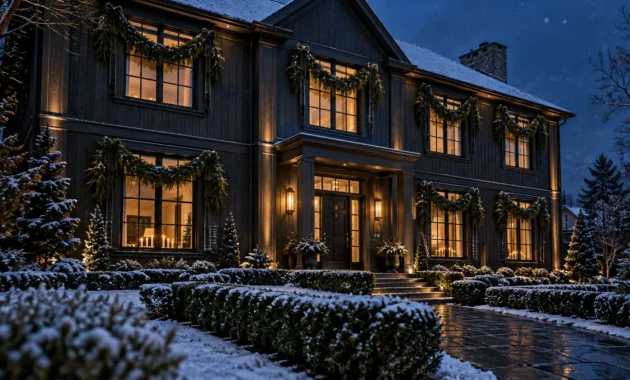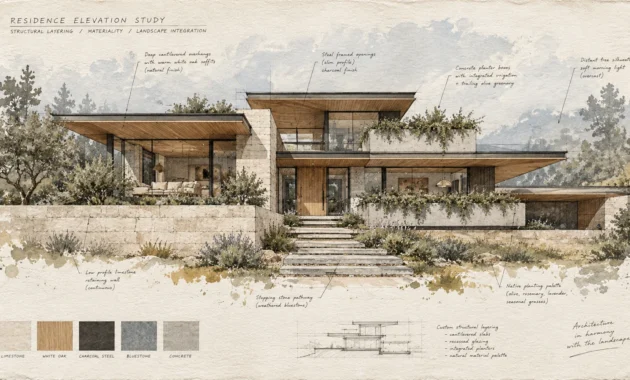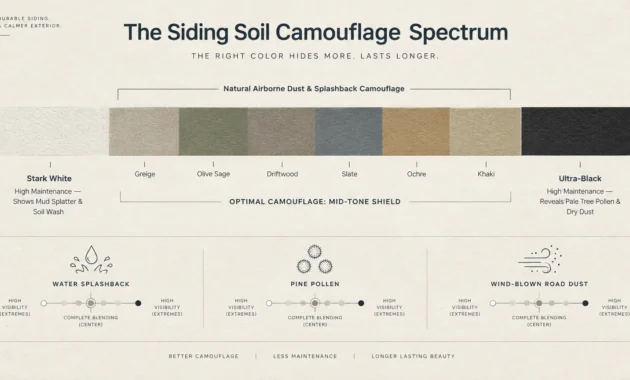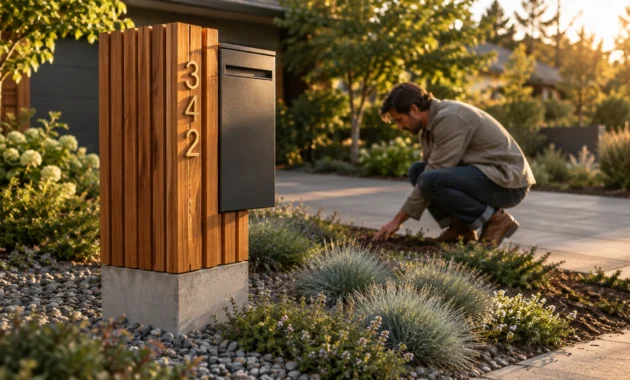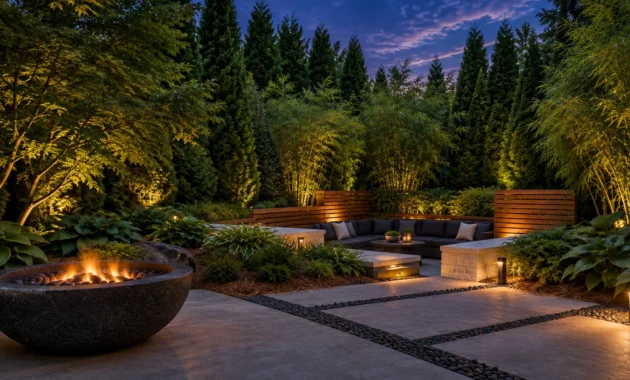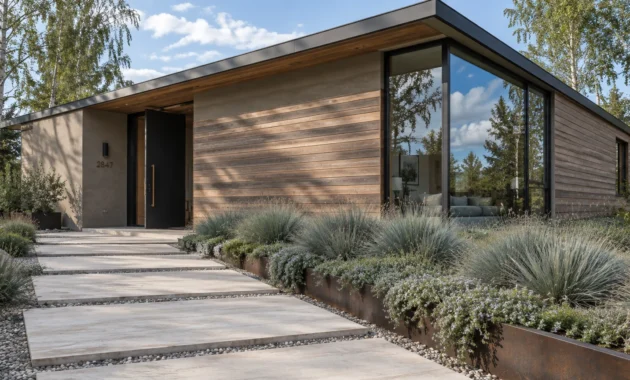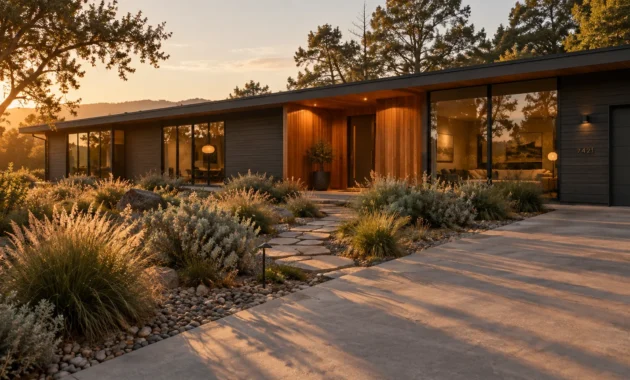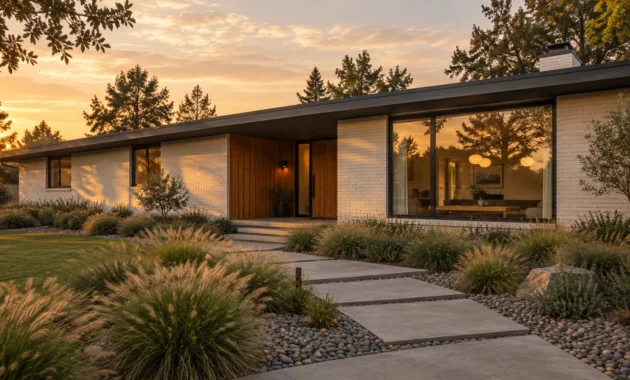
Choosing timeless exterior house color combinations protects your home’s architectural character and elevates your property value. According to the National Association of REALTORS®, 97% of REALTORS® consider curb appeal important in attracting buyers.
Trends shift rapidly, yet classic palettes grounded in natural stone, warm timber, and balanced contrast hold their elegance for decades. You can pair resilient finishes with thoughtful outdoor upgrades to transform your façade.
This architectural guide breaks down eight enduring house paint colors and material pairings that deliver lasting luxury. You will also find practical application standards and verified cost benchmarks to plan your exterior refresh.
Exterior Trend #1: Warm Chalk White, Matte Black Trim, and Natural Cedar
Architectural Palette and Material Synergy
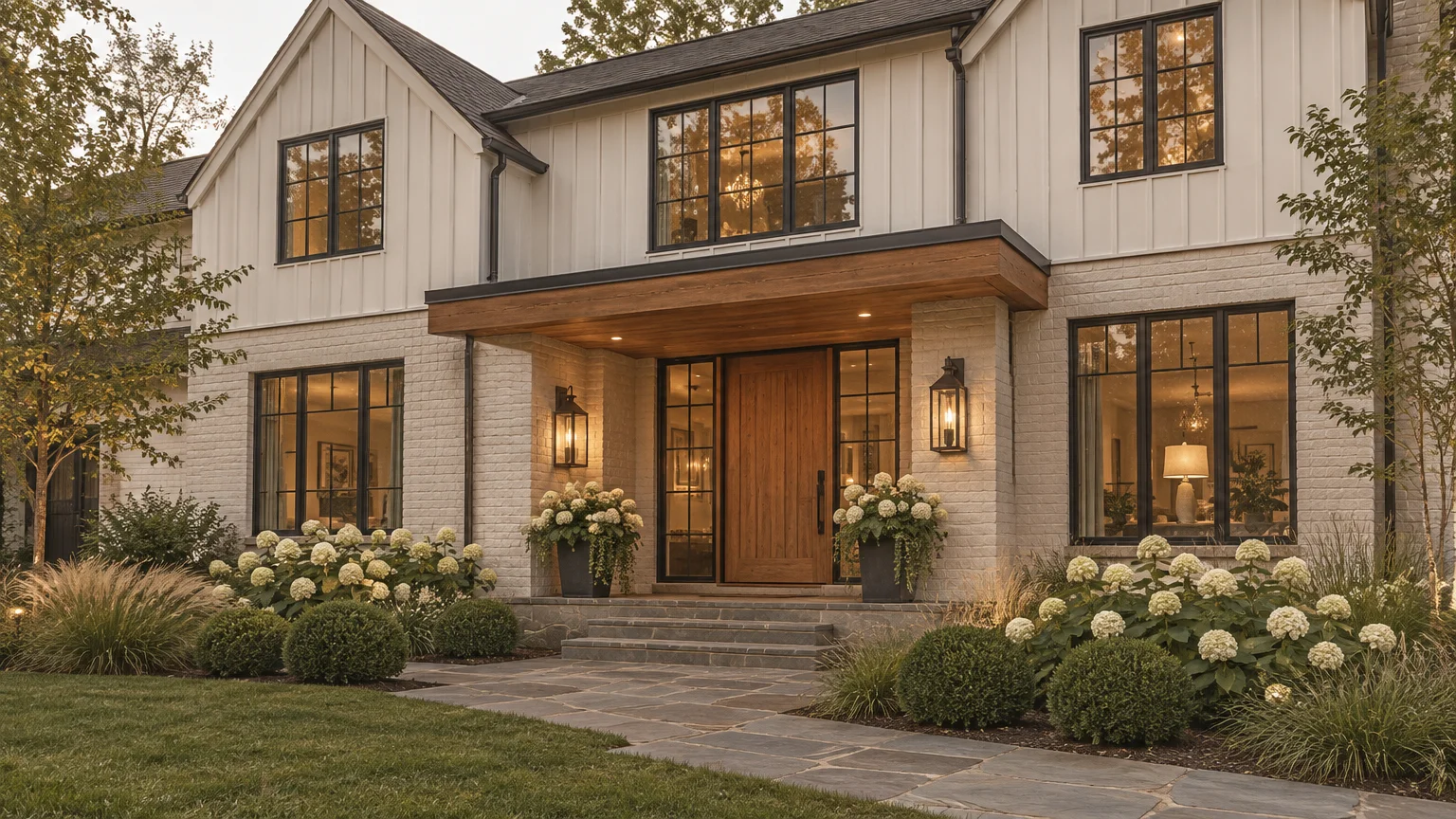
Stark, blue-undertone whites often look clinical under bright midday sun. Warm chalk white softens your home exterior design while highlighting crisp rooflines, deep eaves, and intricate millwork.
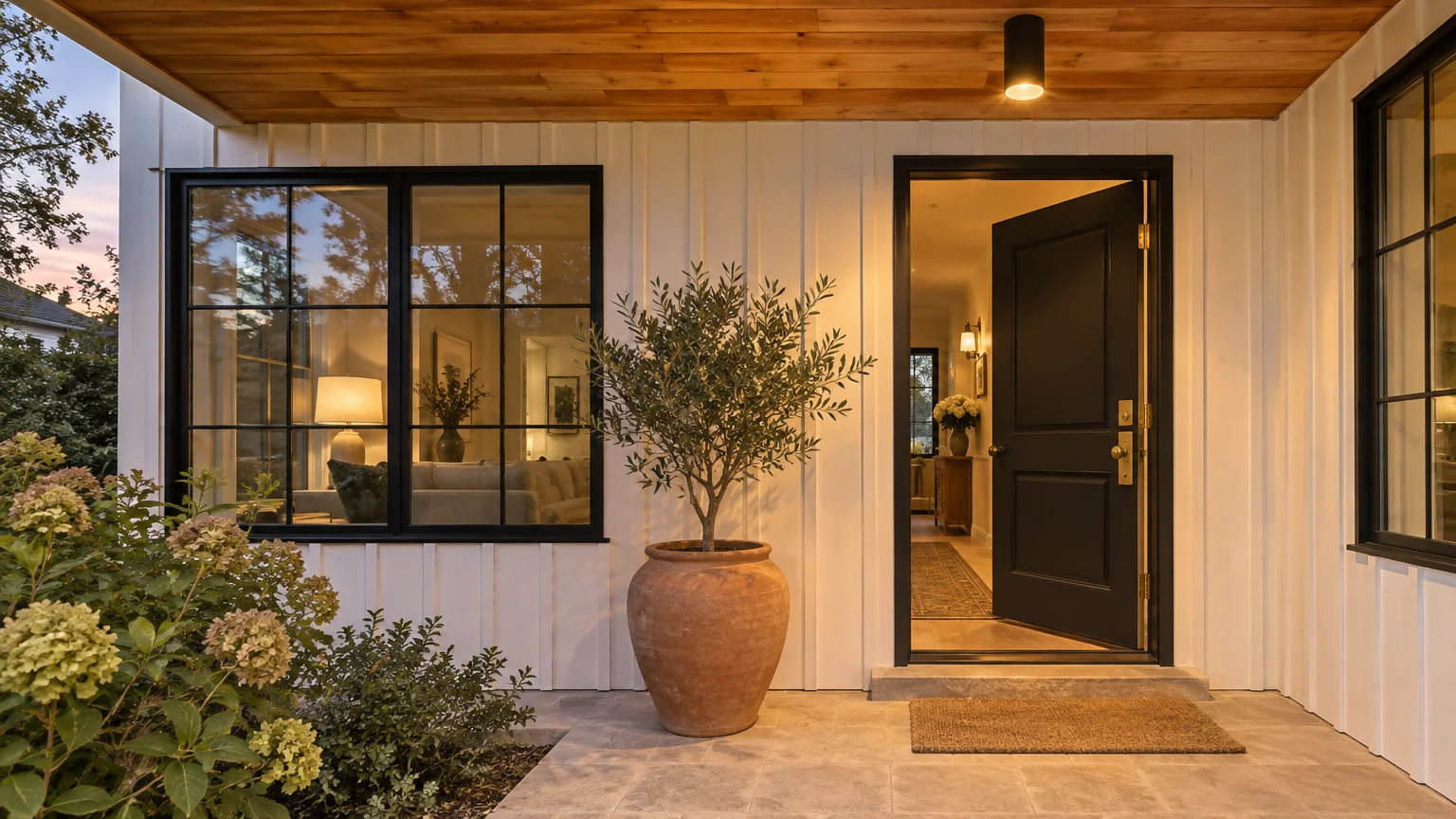
Framing those chalky elevations with matte black aluminum-clad windows introduces sharp architectural definition. Adding Western red cedar soffits or porch ceilings injects organic warmth that prevents the high-contrast scheme from feeling austere.
When installing natural wood accents, specify ventilated rainscreen systems behind your siding. A rainscreen creates a narrow drainage cavity between the cladding and sheathing, allowing trapped moisture to evaporate before rot develops.
Entryway Payoff and Outdoor Living
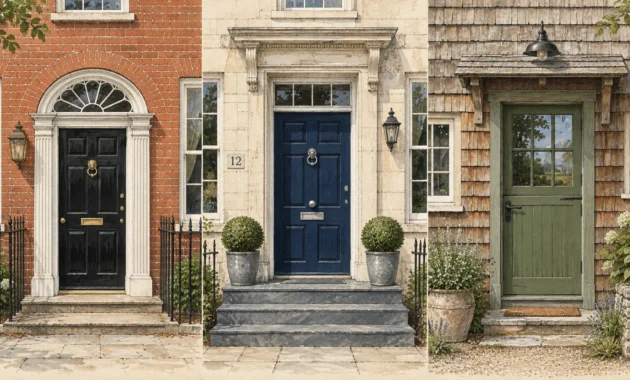
Your front door serves as the focal anchor for a crisp white façade. Research from Zillow’s June 2026 survey of over 2,000 recent buyers and shoppers shows a light blue-green front door on a solid white exterior generated a $5,023 offer premium.
If you prefer a bolder focal point, Zillow’s 2022 buyer research found that classic black front doors commanded an average of $6,449 more in offer prices. Both options outperform jarring shades like pale pink, which reduced offers by $6,516.
Extend this palette onto your patio with honed limestone pavers, black powder-coated dining chairs, and warm 2700K brass wall sconces. Soft downward lighting grazes chalky textures at dusk without creating harsh glare.
Substrate Longevity
Fiber cement siding—an engineered composite of sand, cellulose, and cement—holds warm white coatings for 10 to 15 years. Painted brick requires repainting roughly every 10 to 20 years, making mineral-based masonry paints an excellent long-term investment.
Exterior Trend #2: Deep Espresso-Charcoal, Warm Putty, and Bronze Hardware
Heritage Depth Over Cool Grays
Stark cool grays have steadily yielded to rich, earthen neutrals with subtle brown undertones. Benjamin Moore underscored this architectural shift by naming Silhouette AF-655—a deeply grounded espresso-charcoal hue—as its 2026 Color of the Year.
Wrapping a contemporary or modern-traditional home in espresso-charcoal creates dramatic presence against manicured evergreens. Pairing that dark body with warm putty fascia and trim keeps windows and dormers visually balanced.
Finish the elevation with dark anodized bronze gutters, downspouts, and lantern fixtures. Unlike bright chrome or stark black, oil-rubbed bronze picks up the warm espresso pigments naturally.
High-Performance Cladding and Heat Rules
Dark house paint colors demand high-performance cladding designed to withstand thermal expansion. Fiber cement boards and engineered wood composites resist warping far better than older synthetic sidings.
Exercise extreme caution if your home features vinyl siding. Sherwin-Williams’ Duration Exterior data sheet warns against painting vinyl darker than its original shade or using colors with a Light Reflectance Value (LRV) below 56.
Dark pigments absorb intense solar heat, which can buckle standard vinyl panels. Unless you select specialized heat-reflective formulations like Sherwin-Williams’ 100-color VinylSafe® palette, keep vinyl colors above an LRV of 55.
Patio Grounding
Anchor dark exteriors with dry-stacked granite planters and weathered bluestone walkways. Charcoal-toned composite pergola beams mirror the siding while framing an inviting outdoor lounge.
Exterior Trend #3: Sage Olive Green, Creamy Alabaster, and Aged Brass
Botanical Harmony
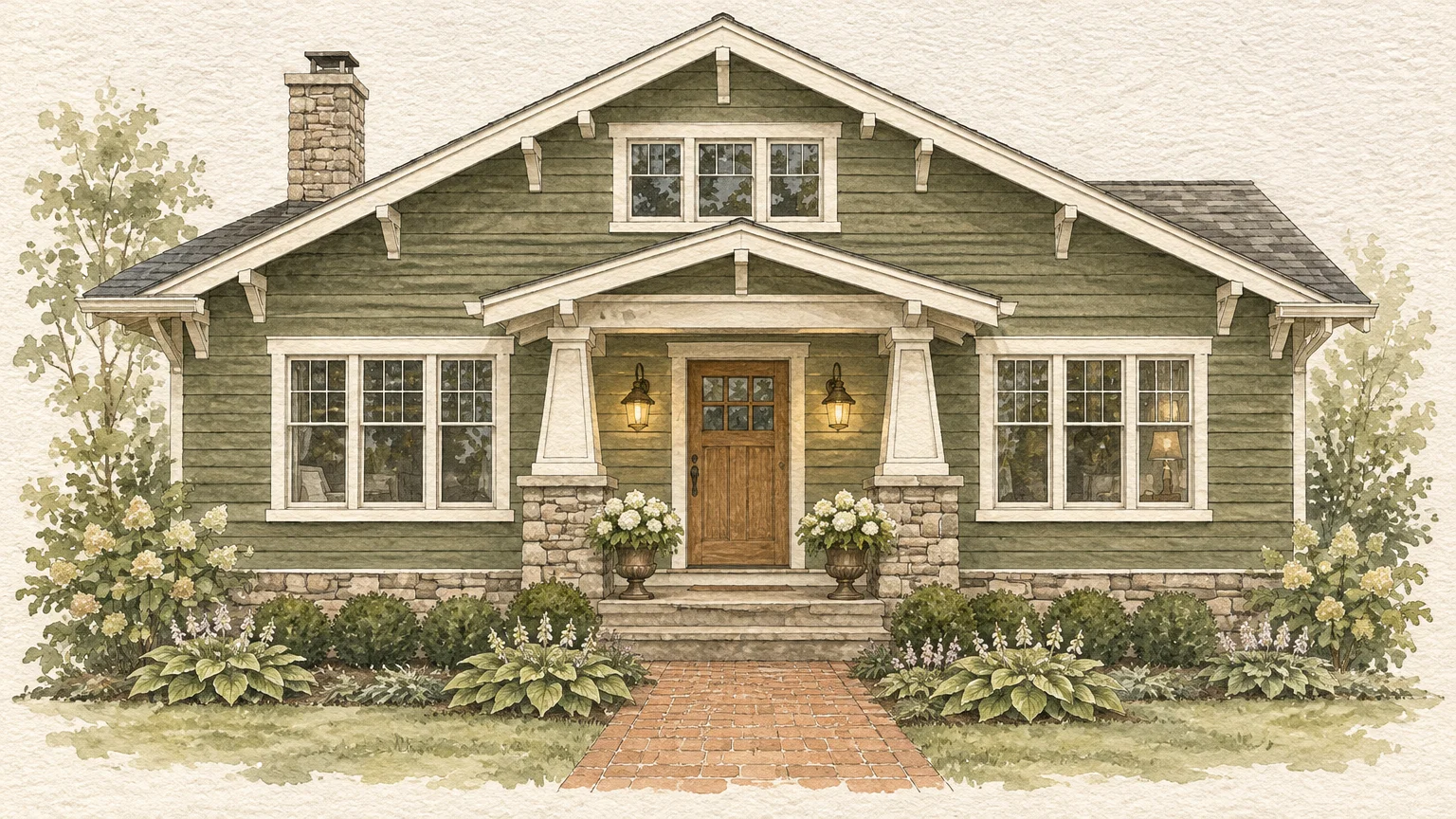
Few timeless exterior colors integrate as effortlessly with mature landscaping as sage olive green. Its muted gray-green base echoes natural foliage, letting your home settle gracefully into wooded lots or suburban gardens.
Creamy alabaster trim outlines window casings, corner boards, and porch railings without harsh visual contrast. The gentle off-white keeps the muted olive from looking muddy on overcast afternoons.
Homeowners consistently gravitate toward nature-driven entryways as well. A 2023 Opendoor survey noted that 20% of homeowners prefer forest green front doors, proving botanical tones hold widespread buyer appeal.
Landscaping and Patio Materials
Amplify this earthy combination with xeriscape planting—a drought-tolerant landscaping approach using native ornamental grasses, lavender, and gravel borders. Decomposed granite paths and cedar garden beds echo the organic palette.
Install aged unlacquered brass kickplates, house numbers, and carriage lanterns along your front porch. Over several seasons, brass develops a living patina that complements olive siding far better than shiny nickel.
Maintenance Realities
Sage olive looks extraordinary on traditional bevel wood siding or cedar shakes. Keep in mind that wood siding generally needs repainting every 3 to 7 years, extending to 10 to 15 years only with top-tier paint and proactive maintenance.
Exterior Trend #4: Dark Red Brick, Charcoal Accents, and Slate Trim
Honoring Unpainted Masonry
Historic dark red brick remains one of the most resilient building materials in residential architecture. Rather than covering textured brick with paint, frame it with tailored charcoal accents and slate-gray trim.
Charcoal shutters, dark bronze gutter aprons, and slate fascia modernize red masonry immediately. Painting window sashes charcoal also creates the illusion of deeper, steel-framed architectural openings.
Keep masonry sills and lintels in natural limestone or subtle warm gray to break up large expanses of brick. This disciplined contrast honors classic Georgian, Colonial, and Tudor proportions.
Data-Backed Door Pairing
Choosing the right entryway color transforms a brick façade from dated to refined. Zillow’s June 2026 study revealed that on a dark red brick home, a charcoal or dark gray front door delivered up to a $3,753 offer premium.
Light blue-green doors also performed strongly on dark red brick, adding up to $2,460 in buyer offers. Avoid mismatched hues, as Zillow noted poorly paired front doors can cut offers by as much as $6,738.
Outdoor Room Continuity
Extend your brick architecture into the yard with herringbone brick walkways bordered by dark slate edging. Wrought-iron railings and black woven lounge chairs tie seamlessly back to your charcoal window trim.
Before painting wood trim adjacent to porous brick, monitor recent rainfall carefully. Sherwin-Williams recommends waiting at least one full day after heavy rain so trapped moisture cannot blister fresh exterior latex.
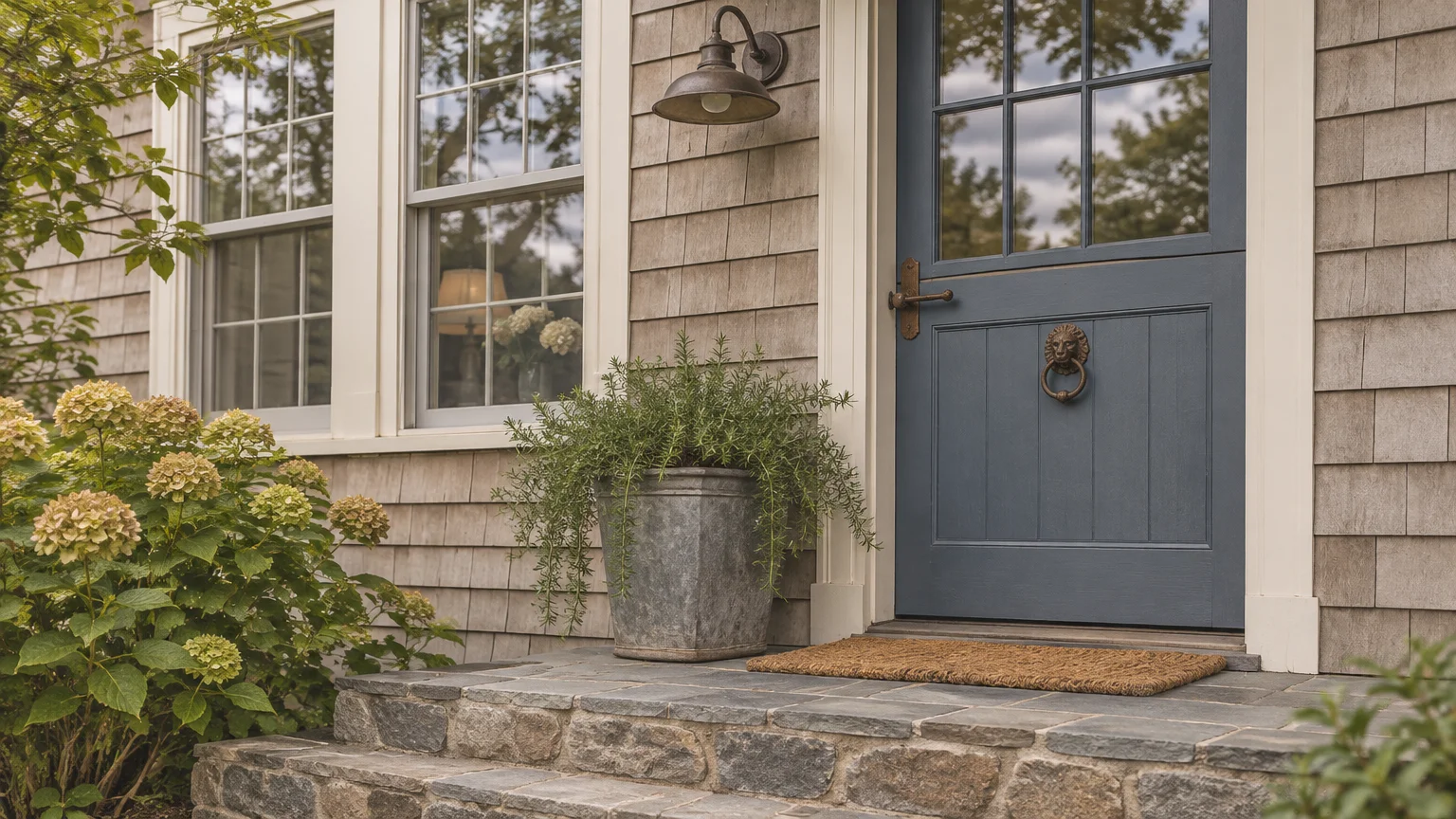
Exterior Trend #5: Soft Greige, Crisp Ivory, and Slate Blue Doors
The Versatility of Warm Greige
Greige—a balanced hybrid of gray and beige—bridges traditional stone cottages and transitional suburban homes. It shifts subtly from warm taupe at sunrise to tailored stone gray by late afternoon.
Pairing greige stucco or lap siding with crisp ivory trim gives your eaves, corbels, and fascia clean architectural separation. Ivory avoids the starkness of pure white while keeping your curb appeal colors polished.
This combination works seamlessly beneath weathered wood-tone roof shingles or dark charcoal architectural shingles. Warm limestone or river-rock wainscoting further grounds the neutral body.
Nuanced Front Door Strategy
On soft greige siding, a slate blue front door delivers understated luxury. Zillow’s 2022 buyer study found that slate blue front doors added an average of $1,537 to offer prices.
However, pay close attention to undertone matching if your home incorporates light-colored masonry. Zillow’s June 2026 study warned that on light brick homes, a light blue-green door lowered offers by $4,221, and dark gray lowered offers by $3,741 compared to white.
When greige siding meets light buff brick, stick with a crisp ivory or rich stained wood entryway. Matching contrast levels to your masonry ensures your color investment boosts resale confidence.
Terrace Finishes
Pair greige façades with sandblasted travertine patio tiles and teak dining tables. Soft taupe outdoor cushions and brushed bronze wall washers complete a serene backyard sanctuary.
Exterior Trend #6: Slate Blue, Linen White, and Weathered Teak
Coastal and Craftsman Permanence
Muted slate blue carries enduring charm across coastal Shingle-style homes, Craftsman bungalows, and suburban farmhouses. Its gray undertones prevent the blue from reading overly bright or nautical under intense sunlight.
Framing slate blue siding with linen white trim brightens deep front porches and highlights tapered Craftsman columns. Linen white offers just enough creamy warmth to harmonize with natural wood decking.
Introduce weathered teak on porch ceilings, Dutch doors, or outdoor shower enclosures. Left unstained or lightly oiled, teak silvers gracefully while maintaining dense natural weather resistance.
Door Value and Material Upgrades
If your entryway needs more than a coat of paint, consider upgrading the door unit itself. According to the NAR 2025 Remodeling Impact Report, a new front door earns a 7.5 out of 10 homeowner Joy Score.
That same report shows a new steel front door recovers 100% of its installation cost at resale, while fiberglass recovers 80%. Both materials resist seasonal swelling far better than unsealed softwood.
Avoid painting your entryway cement gray against slate blue siding. Zillow’s 2022 data showed cement gray front doors actually reduced home offers by $3,365.
Backyard Synergy
Continue the coastal-Craftsman mood with gray cobblestone driveways and teak Adirondack chairs around a stone firepit. Galvanized steel or satin-nickel marine-grade sconces withstand salt air and humid summers effortlessly.
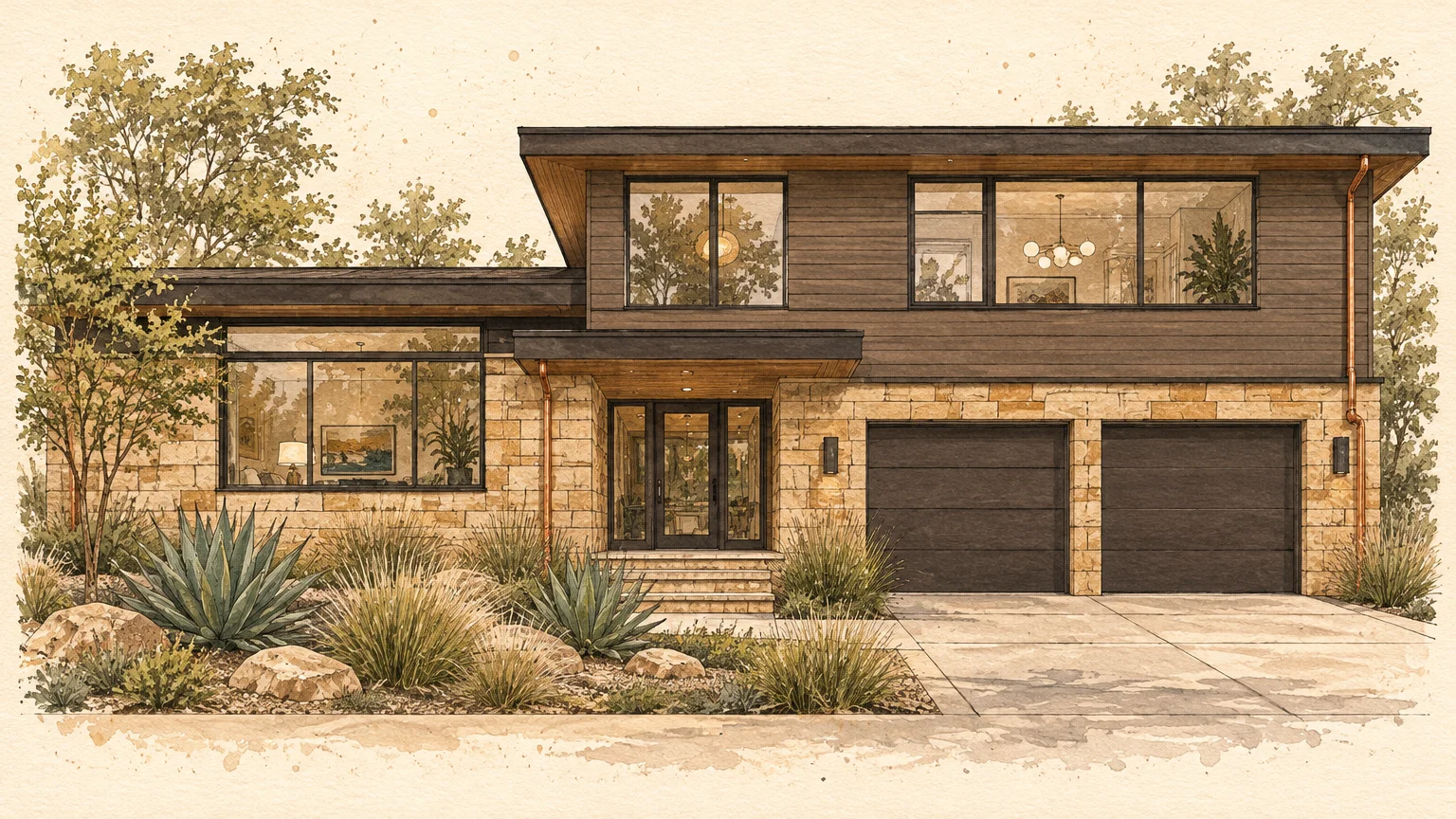
Exterior Trend #7: Warm Sandstone, Rich Taupe, and Espresso Trim
Sun-Baked Architectural Calm
Homes in bright, arid climates require house paint colors that soften harsh midday glare. Warm sandstone stucco paired with rich taupe accent walls reflects sunlight gently while anchoring the building to desert or hillside terrain.
Deep espresso window frames and fascia cut sharp geometric lines across smooth stucco volumes. Dark framing draws the eye outward toward expansive views through floor-to-ceiling sliding glass doors.
Stucco exteriors typically require repainting every 5 to 10 years under standard acrylic coatings. Upgrading to breathable elastomeric or specialty masonry coatings extends that cycle past 15 years.
Xeriscape and Courtyard Living
Sandstone and taupe thrive alongside architectural xeriscape planting featuring sculptural agave, olive trees, and basalt boulders. Pour broom-finished warm concrete pads for a minimalist dining courtyard.
Shade your patio with steel-and-espresso louvered pergolas to match your window trim. Integrated low-voltage step lights along stucco retaining walls turn outdoor terraces into dramatic evening retreats.
Calculating Masonry Coverage
Before ordering materials for textured stucco, adjust your paint estimates carefully. Industry standards published by Sherwin-Williams, Benjamin Moore, Behr, and PPG cite 400 square feet per gallon per coat on smooth, previously painted surfaces.
Rough or porous stucco absorbs noticeably more coating on the first pass. Plan for two full exterior coats and budget extra primer to seal hairline shrinkage cracks thoroughly.
Exterior Trend #8: Heritage Navy, Bright Chalk Trim, and Mid-Tone Brown Wood
Commanding Curb Appeal
Deep heritage navy projects architectural authority across Colonial revivals, Cape Cods, and modern coastal residences. Unlike black, navy retains subtle chromatic richness when struck by afternoon light.
Crisp chalk white trim accentuates crown molding, window pediments, and wrap-around porch balustrades. The sharp contrast draws attention to traditional carpentry details that mid-tone sidings often hide.
Grounding navy siding with a mid-tone brown stained mahogany or oak front door adds unmistakable warmth. Zillow’s 2022 research linked mid-tone brown front doors to an average $300 offer increase.
Copper Accents and Outdoor Living
Pair heritage navy with half-round copper gutters and standing-seam metal porch roofs. As copper oxidizes from bright penny to deep chocolate brown and verdigris, it creates rich visual layers against dark blue cladding.
Out back, warm cedar-toned composite decking resists fading and splintering while echoing your stained front door. Add navy-and-white striped Sunbrella cushions and classic Chippendale-style patio chairs for timeless poolside polish.
Climate Protection
Because dark navy absorbs substantial UV radiation, invest in 100% acrylic exterior finishes formulated for superior fade resistance. Avoid using heritage navy on standard vinyl siding unless you choose a heat-reflective VinylSafe® formulation.
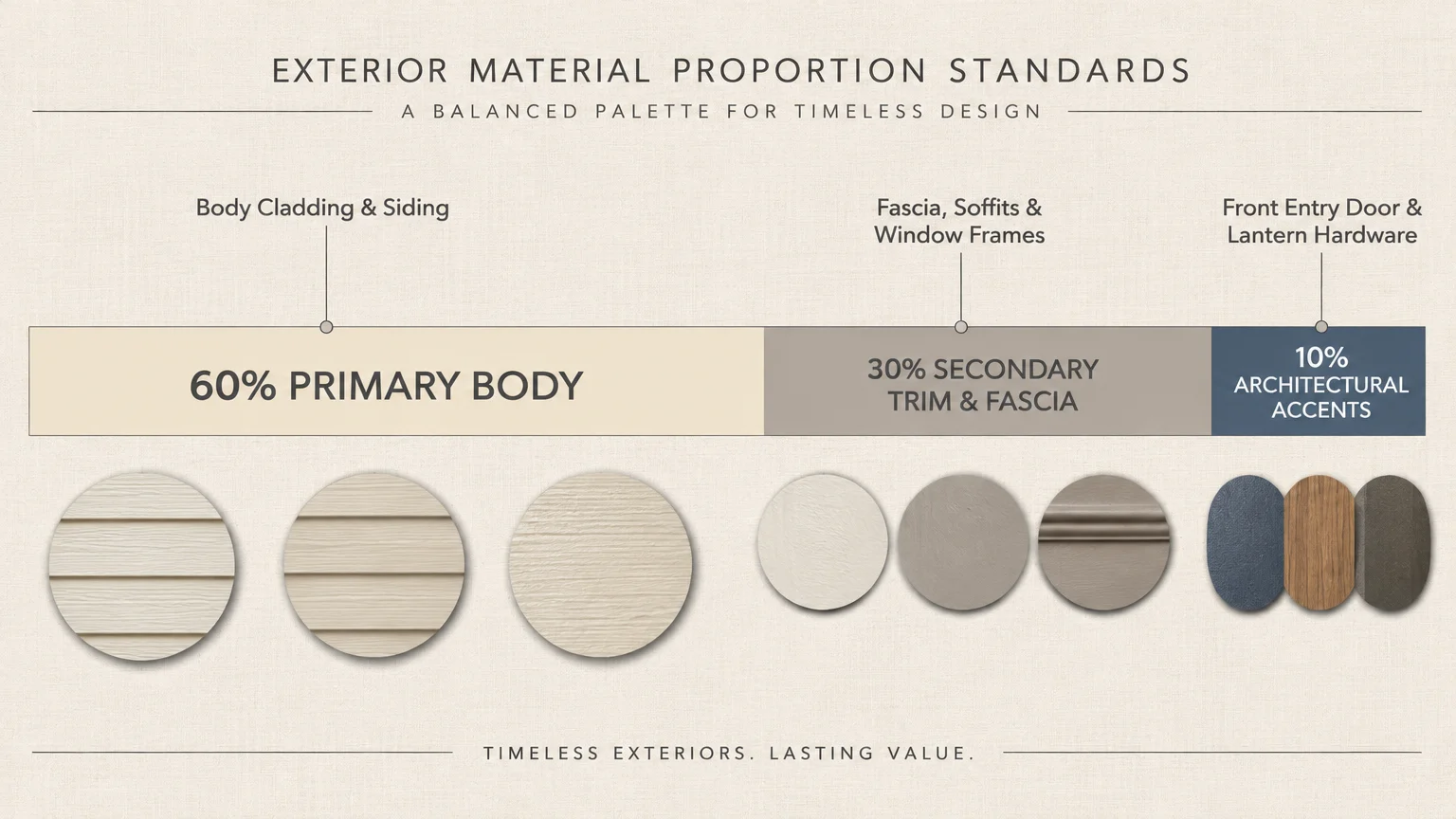
Creating a Lasting Impression: A Cohesive Exterior Look
Aligning Architecture, Landscaping, and Value
The best exterior house color combinations unify your roof, masonry, siding, and landscaping into one deliberate composition. Always test large sample boards on both shaded north walls and sunlit south elevations before committing.
Cohesive curb appeal pays measurable dividends when you decide to sell. According to NAR’s Remodeling Impact Report on Outdoor Features, 92% of REALTORS® have advised sellers to improve curb appeal prior to listing.
Furthermore, NAR’s 2025 report notes that 46% of home buyers are less willing to compromise on a property’s condition. Painting exterior siding delivers an impressive 8.8 out of 10 homeowner Joy Score, rewarding you daily long before resale.
Budgeting Your Exterior Painting Project
Understanding realistic pricing helps you allocate funds between surface prep, premium coatings, and outdoor lighting upgrades. Based on 39,126 verified projects tracked by Angi through October 2026, the national average exterior painting cost is $3,178.
Most homeowners spend between $1,819 and $4,551, while larger or multi-story residences range from $7,700 to $12,000. Contractors typically charge $1.50 to $4.00 per square foot of paintable surface area.
Expect extras such as power washing, scraping, or local permits to add $200 to $300 to your invoice. Labor accounts for 75% to 95% of professional project totals, with contractors billing $25 to $100 per hour per painter compared to the 2025 Bureau of Labor Statistics median painter wage of $23.75 per hour.
Quality exterior paint runs $40 to $70 per gallon in 2026, reaching $80 for flagship lines. Two finish coats are standard, covering roughly 400 square feet per gallon per coat on smooth substrates.
Following Manufacturer Application Standards
Even the finest timeless exterior colors fail prematurely if applied during poor weather. Benjamin Moore specifies exterior painting between 35°F and 100°F with low humidity, citing 77°F as optimal.
Standard Benjamin Moore Aura Exterior requires surface temperatures between roughly 40°F and 100°F, whereas specialty Element Guard applies down to 35°F and resists rain after 60 minutes. Sherwin-Williams similarly warns against applying standard exterior latex below 35°F.
Watch overnight forecasts carefully, because nighttime dips below 35°F prevent latex paint from coalescing properly even after a 50°F afternoon. For exterior wood stains, Sherwin-Williams recommends 50°F to 90°F, with 70°F ideal.
Across Sherwin-Williams, Benjamin Moore, and PPG technical sheets, surfaces must stay more than 5°F above the dew point during application. Respect recoat windows—typically 4 hours for Aura Exterior and Duration, though Sherwin-Williams Resilience develops moisture resistance in 2 hours—and keep temperatures stable for 24 hours while initial curing takes one week.
Lead Paint Safety and VOC Compliance
If your home predates 1978, test existing coatings before sanding or scraping. Lead-based residential paint was banned in 1978, yet roughly 75% of pre-1978 U.S. homes still contain lead paint.
Under the EPA Renovation, Repair, and Painting (RRP) Rule (40 CFR Part 745), paid contractors disturbing 20 square feet or more on pre-1978 exteriors—or performing any window replacement or demolition—must hold EPA lead-safe certification. Unpaid DIY homeowners working on their own primary residence are exempt, though the EPA strongly advises testing and dust containment.
Check local volatile organic compound (VOC) limits when ordering primers and topcoats. Federal EPA AIM rules cap exterior flat paints at 250 g/L, nonflat paints at 380 g/L, and primers at 350 g/L, while stricter standards like California’s CARB cap flat paints at 50 g/L and high-gloss nonflats at 150 g/L.
For architectural inspiration, review projects featured by Architectural Digest. For exterior color forecasts, consult annual reports from Sherwin-Williams and Benjamin Moore.
Frequently Asked Questions
How often do different exterior siding materials need repainting?
Most homes require fresh paint every 5 to 10 years, stretching to 10 to 13 years in mild climates with thorough preparation. Wood siding demands repainting every 3 to 7 years, though top-tier paint and vigilant caulking can extend that to 10 to 15 years.
Aluminum siding and standard stucco both average 5 to 10 years, while specialty masonry coatings push stucco past 15 years. Fiber cement siding holds paint 10 to 15 years, and painted brick lasts 10 to 20 years.
Can I paint dark timeless colors over vinyl siding safely?
You should avoid applying dark house paint colors directly onto standard vinyl siding because trapped solar heat causes panels to warp and buckle. Sherwin-Williams’ Duration Exterior guidelines warn against going darker than the original vinyl or dipping below an LRV of 56.
If you want deeper contrast on vinyl, select a shade from a heat-reflective palette like Sherwin-Williams’ VinylSafe® collection. Otherwise, keep your siding selection at an LRV of 55 or higher.
Which front door colors deliver the best return on investment?
Context with your siding determines your payoff, as Zillow’s June 2026 research shows poorly matched door colors can reduce offers by up to $6,738. On solid white homes, a light blue-green door brought a $5,023 offer premium, while black doors averaged $6,449 more in 2022.
On dark red brick, charcoal or dark gray doors added up to $3,753 and light blue-green added $2,460. Avoid dark gray or light blue-green on light brick, where white doors outperformed both by thousands.
What is the best time of year to paint a house exterior?
Schedule exterior painting during dry spring or early fall weeks when daytime temperatures sit comfortably mild. Ensure surface temperatures stay more than 5°F above the dew point and avoid nights dipping below 35°F.
Always allow porous wood and masonry at least one full dry day after heavy rain before applying primer. Stable, dry weather over the first 24 hours lets the film coalesce and cure properly over the following week.
Disclaimer: This article reflects design trend analysis and predictions. Personal taste and timeless design principles should always guide your decorating choices.