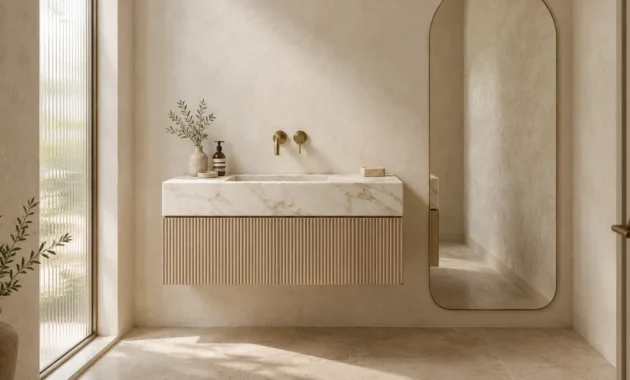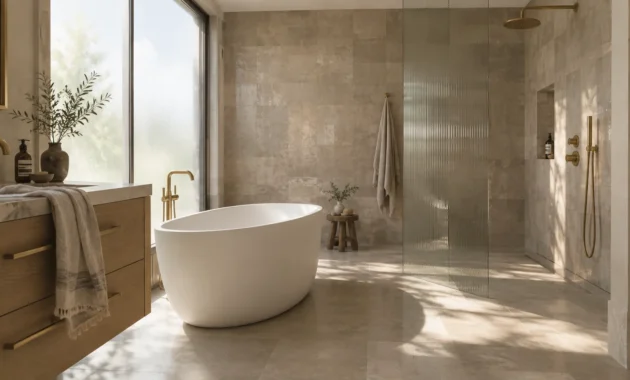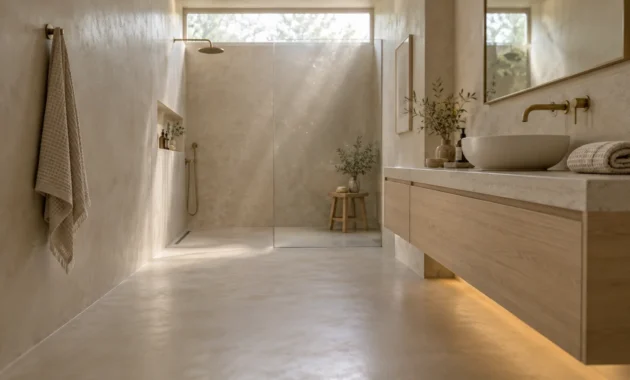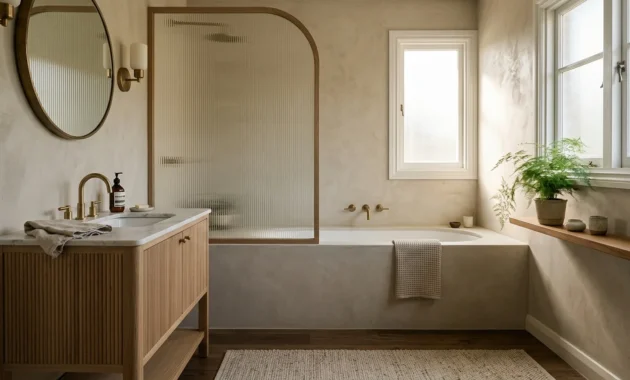
Turning a cramped, utilitarian washroom into a serene sanctuary does not require gutting your plumbing or draining your savings. Smart, low-cost updates deliver calming sensory rewards that rival high-end resort retreats.
While a full U.S. bathroom remodel averages $12,157—or up to $16,500 on some national benchmarks—cosmetic upgrades skip heavy demolition entirely. Swapping fixtures, layering warm lighting, and refreshing textiles transform daily routines on a realistic bathroom makeover budget.
These ten approachable spa bathroom ideas focus on tactile comfort, clean air, and effortless wellness rituals you can finish over a weekend.
Bathroom Trend #1: Water-Saving Rainfall and Handheld Showerheads
Nothing resets a tense afternoon faster than stepping beneath a steady, enveloping cascade of warm water. Upgrading your showerhead delivers instant resort polish without touching the wall tile or calling a plumber.
Modern dual-function fixtures combine a broad rainfall canopy with a detachable handheld wand on a flexible hose. This pairing gives you gentle overhead immersion for relaxation and targeted spray pressure for rinsing hair or cleaning glass.
Materials, Finishes, and Water Efficiency
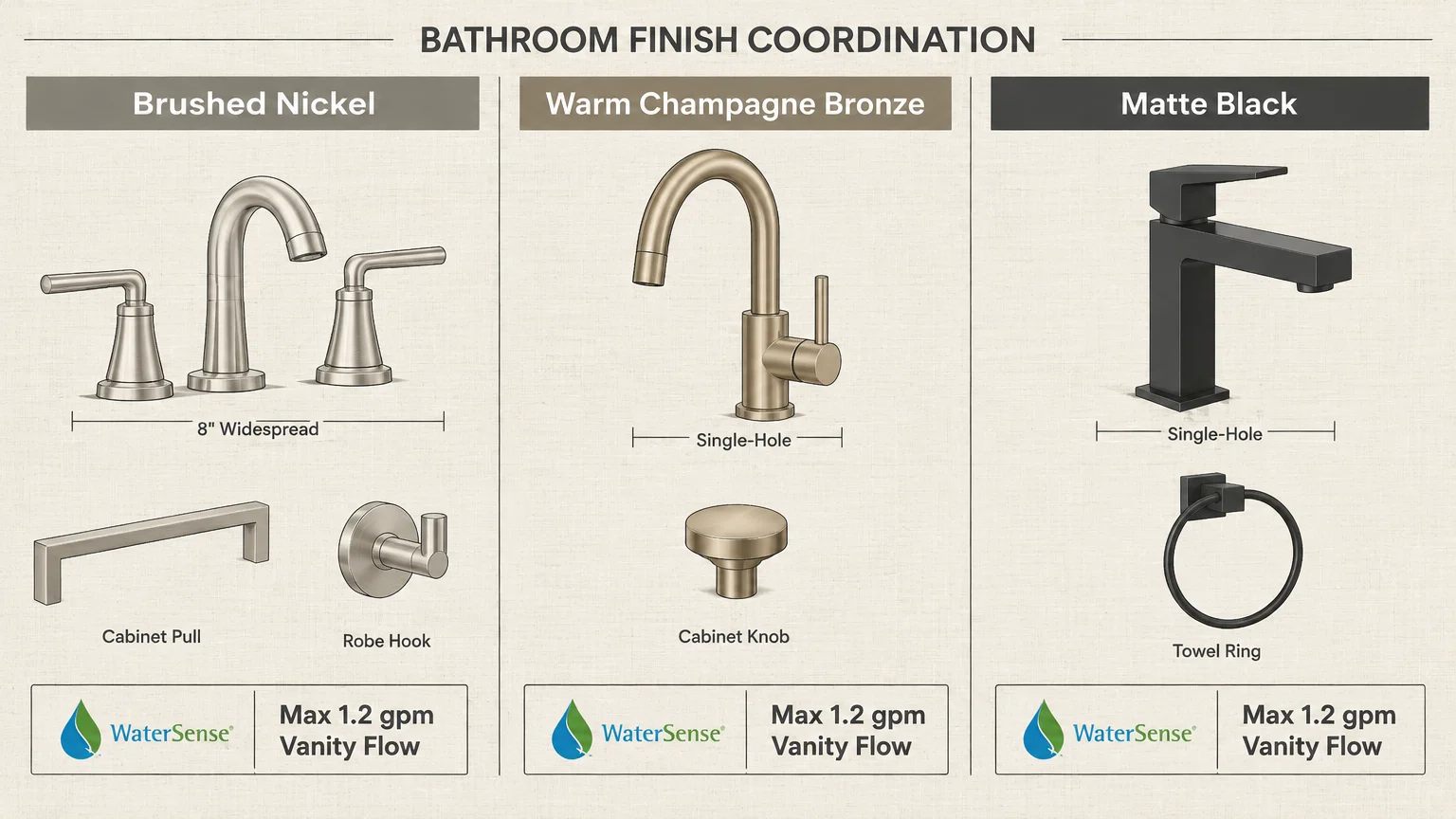
Look for solid brass or durable polymer heads finished in brushed nickel, warm champagne bronze, or matte black to match existing trim. Silicone nozzles let you wipe away mineral buildup with a quick swipe of your thumb.
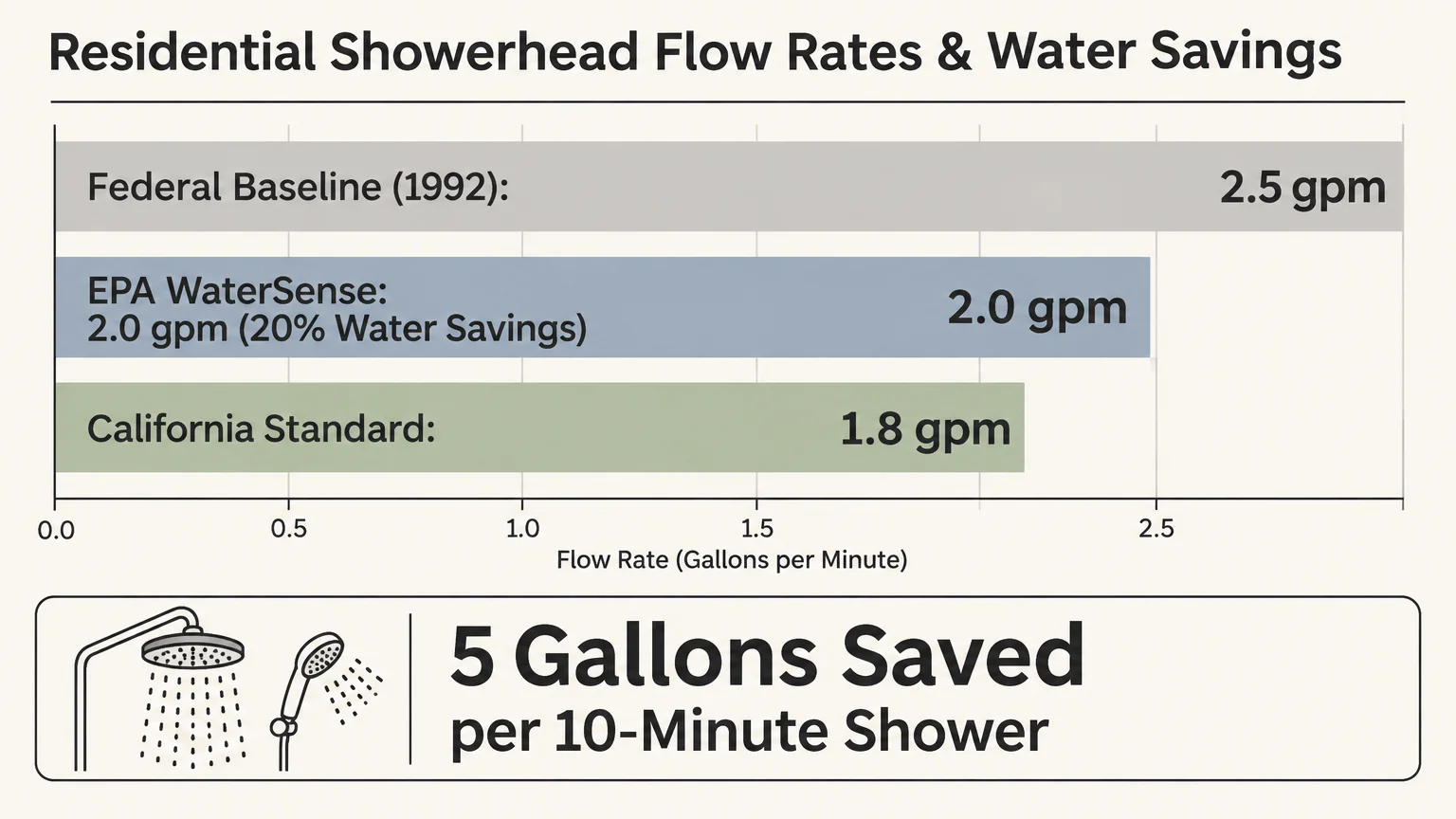
Under federal Energy Policy Act of 1992 rules, standard U.S. showerheads cannot exceed 2.5 gallons per minute (gpm)—a measure of how much water flows out every sixty seconds. Fourteen states enforce tighter ceilings, including California at 1.8 gpm since 2018 and Colorado at 2.0 gpm.
Choosing an EPA WaterSense-certified model caps flow at 2.0 gpm, using 20% less water than the federal baseline while preserving crisp pressure through air-induction chambers. That single swap saves 5 gallons during every 10-minute shower.
Why This Budget Swap Matters
Showering accounts for nearly 17% of indoor residential water use—roughly 40 gallons a day for an average family, totaling 1.2 trillion gallons annually nationwide. Since 2006, WaterSense fixtures have helped U.S. households save over 1.5 trillion gallons and $32.6 billion on utilities.
Note that on April 15, 2025, the U.S. Department of Energy reverted its regulatory showerhead definition to the original statutory wording, so verifying the WaterSense label directly remains your smartest shopping shortcut. Threading on a new head takes minutes with a wrench and plumber’s tape.
Bathroom Trend #2: Layered Warm-to-Neutral Spa Lighting
Harsh overhead glare flattens stone textures and triggers eye strain the moment you step inside. Resort designers rely on layered illumination—blending soft ambient washes with crisp task light—to make a relaxing bathroom feel twice as inviting.
You can replicate that tranquil mood simply by upgrading bulbs, adding a plug-in sconce outside wet zones, or installing a dimmer switch. Controlling brightness shifts your space from bright morning prep to quiet evening wind-down.
Color Temperature and Visual Accuracy
Pay close attention to Kelvin ratings, which measure light warmth, alongside the Color Rendering Index (CRI)—a scale indicating how accurately a bulb reveals true skin and tile tones. Lighting specialists consider a CRI of 90 or higher essential for bathrooms.
A 2026 empirical bathroom-lighting study recommended 2700K to 3500K at 100 to 150 lux around bathing zones for calm evening restoration. Around the vanity mirror, aim for neutral 3500K to 4300K light at 500 to 700 lux so grooming stays sharp.
Warm 2700K to 3000K bulbs flatter natural wood and warm white paint during an evening soak. Swapping cool blue utility tubes for high-CRI LED bulbs is one of the fastest cheap bathroom upgrades available.
Moisture Ratings and Electrical Safety
Water and electricity demand strict respect whenever you refresh bathroom decor or add fixtures. Under the U.S. National Electrical Code, every 125-volt, 15- and 20-amp bathroom receptacle—plus any outlet within 6 feet of a tub or shower—requires Ground-Fault Circuit Interrupter (GFCI) protection.
Code also mandates at least one outlet within 3 feet of a sink basin while prohibiting outlets inside tubs or showers. Any light fixture placed near steam or splash zones must carry a UL listing for damp or wet locations.
Bathroom Trend #3: Plush Hotel-Grade Towels and Tactile Textiles
Visual calm starts with soft, unified textiles that quiet visual clutter along towel bars and vanity shelves. Replacing mismatched, frayed linens with cohesive spa textiles transforms both touch and sight in one afternoon.
Swap stiff bath mats for a slatted teak or bamboo floor tray paired with a thick, absorbent runner. Rolling extra hand towels inside a woven basket introduces effortless boutique-hotel order beside the sink.
Understanding Towel Weight and Dry Times
Shoppers often judge towels by thickness alone, yet textile benchmarks rely on grams per square meter (GSM)—a density measurement telling you how heavy and absorbent fabric feels. Matching GSM to your room’s airflow prevents musty odors.
Towels rated at 300 to 400 GSM stay lightweight and dry rapidly between uses, making them ideal for humid guest baths. Everyday balanced towels sit between 400 and 600 GSM, offering dependable loft without heavy bulk.
True luxury spa towels span 600 to 900 GSM, enveloping your shoulders in deep pile after a long soak. Because dense fibers retain moisture longer, reserve 600-plus GSM sets for spaces with reliable ventilation and generous hanging space.
Affordable Styling Touches
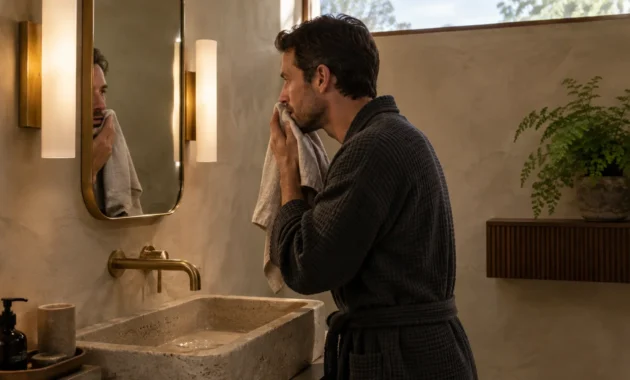
Stick to serene, mineral-inspired hues such as warm alabaster, oatmeal, sage, or slate gray so stacks look curated rather than busy. Hanging a plush cotton waffle-weave robe on a wall peg adds vertical softness without crowding tight floor plans.
Adding a weighted fabric shower curtain hung several inches higher than standard rod height draws the eye upward. That simple visual trick mimics the airy proportions of a custom zero-threshold shower—a curbless, flush-floor wet zone prized in modern spas.
Bathroom Trend #4: Low-VOC Satin Paint and Micro-Mosaic Accents
Fresh wall color delivers remarkable impact when major tile demolition sits outside your bathroom makeover budget. Across 28,374 verified U.S. projects in 2026, full remodels averaged $12,157—with most spanning $6,651 to $17,662—while broader national benchmarks reached $16,500.
By contrast, cosmetic refreshes that keep plumbing intact—covering paint, hardware, faucets, and lighting—typically fall between $3,000 and $10,000. European homeowners see similar gaps, averaging 2,500 to 6,000 euros in Italy or 700 to 1,000 euros per square meter in France for non-structural updates.
Choosing Moisture-Resistant Sheen and Clean Air Formulas
Flat wall paint absorbs steam, spots easily, and invites peeling around mirrors and baseboards. Choose a satin or semi-gloss sheen engineered for high-humidity spaces so droplets bead cleanly and wipe away without dulling the finish.
Check the label for zero- or low-volatile organic compounds (VOCs)—chemical gases released into indoor air at room temperature. According to the U.S. Environmental Protection Agency (EPA), indoor VOC exposure can trigger headaches, nausea, and eye, nose, or throat irritation.
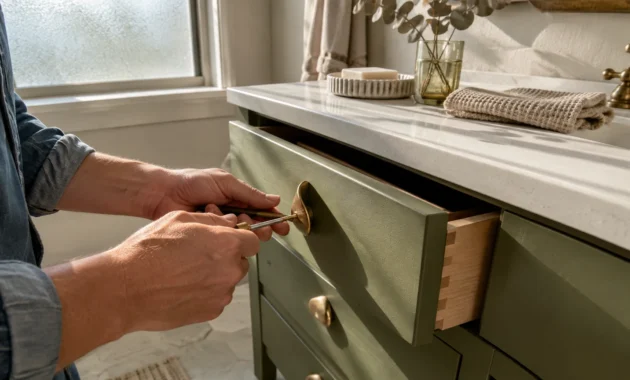
Earthy clay tones, soft eucalyptus greens, and warm limestone whites bring organic calm to windowless powder rooms. Painting dated vanity cabinetry in deep olive or warm taupe anchors the room without buying new millwork.
Adding Tactile Detail With Micro-Mosaics
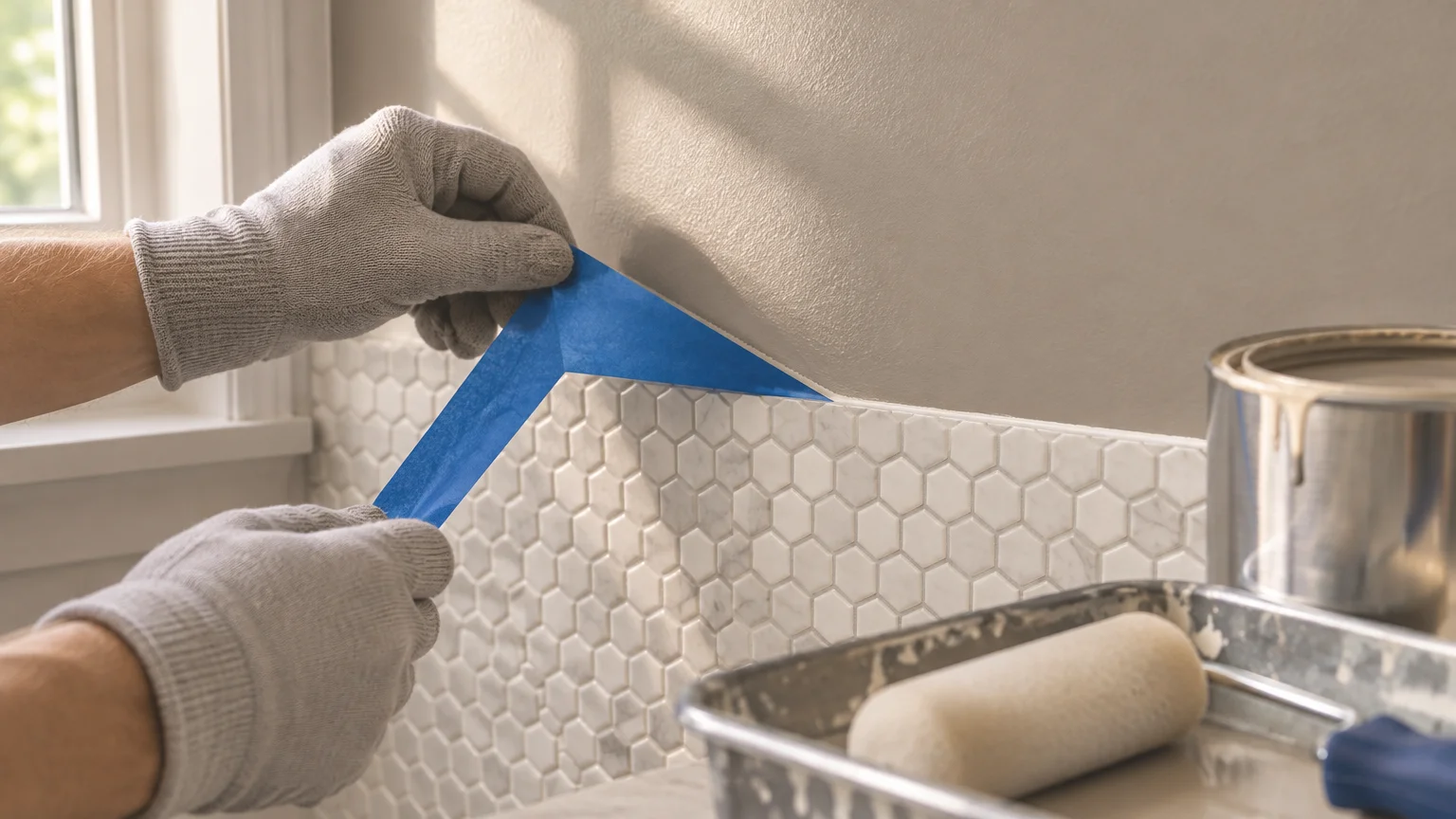
If your vanity backsplash feels plain, frame the dry sink wall with micro-mosaic—tiny interlocking tile sheets measuring an inch or less that create subtle shimmer and texture. Peel-and-stick stone-look or glass micro-mosaic sheets install cleanly over flat drywall in an afternoon.
Keep peel-and-stick accents strictly outside direct shower spray so moisture never compromises the adhesive backing. Paired with crisp painted trim, subtle texture elevates everyday bathroom decor without heavy mortar work.
Bathroom Trend #5: Whisper-Quiet Humidity Control and Air Circulation
A true wellness sanctuary feels crisp and breathable rather than heavy with lingering steam. Poor airflow clouds mirrors, warps cabinet veneer, and turns tranquil surfaces into breeding grounds for mildew.
Improving ventilation rarely requires ripping open ceilings when an existing duct already runs outdoors. Upgrading an aging motor kit, clearing dust-caked grilles, or adding a programmable timer switch immediately boosts comfort.
Target Humidity and Airflow Benchmarks
The U.S. EPA advises keeping indoor relative humidity between 30% and 50%, and always below 60%, to discourage mold, bacteria, and dust mites. Drying damp surfaces within 24 to 48 hours stops spore growth before stains take hold.
For bathrooms under 100 square feet, the Home Ventilating Institute recommends 1 cubic foot per minute (CFM) of exhaust airflow per square foot, delivering eight complete air changes hourly. International Residential Code baselines similarly call for 50 CFM intermittent or 20 CFM continuous airflow.
Always confirm your exhaust duct vents directly outdoors rather than terminating inside an attic or crawl space, where trapped vapor rots framing. Running your fan on a timer for roughly one hour after showering clears residual dampness effortlessly.
Silencing Mechanical Noise
Nothing disrupts a relaxing bathroom faster than a rattling fan motor roaring overhead. Look for ENERGY STAR-certified models capped at 2.0 sones—a unit measuring perceived loudness, with 1.5 sones or below registering as a soft whisper.
Certified fans also use about 48% less energy than standard builder-grade units while pulling steam steadily out of sight. Pairing a quiet fan with a simple wall humidity sensor automates fresh air whenever showers run long.
Bathroom Trend #6: Pet-Safe Botanicals and Living Spa Greenery
Lush foliage softens hard porcelain and stone, echoing the indoor-outdoor stillness of luxury bathhouses. Placing living plants on vanity corners or floating wall shelves brings organic vitality to a sterile room.
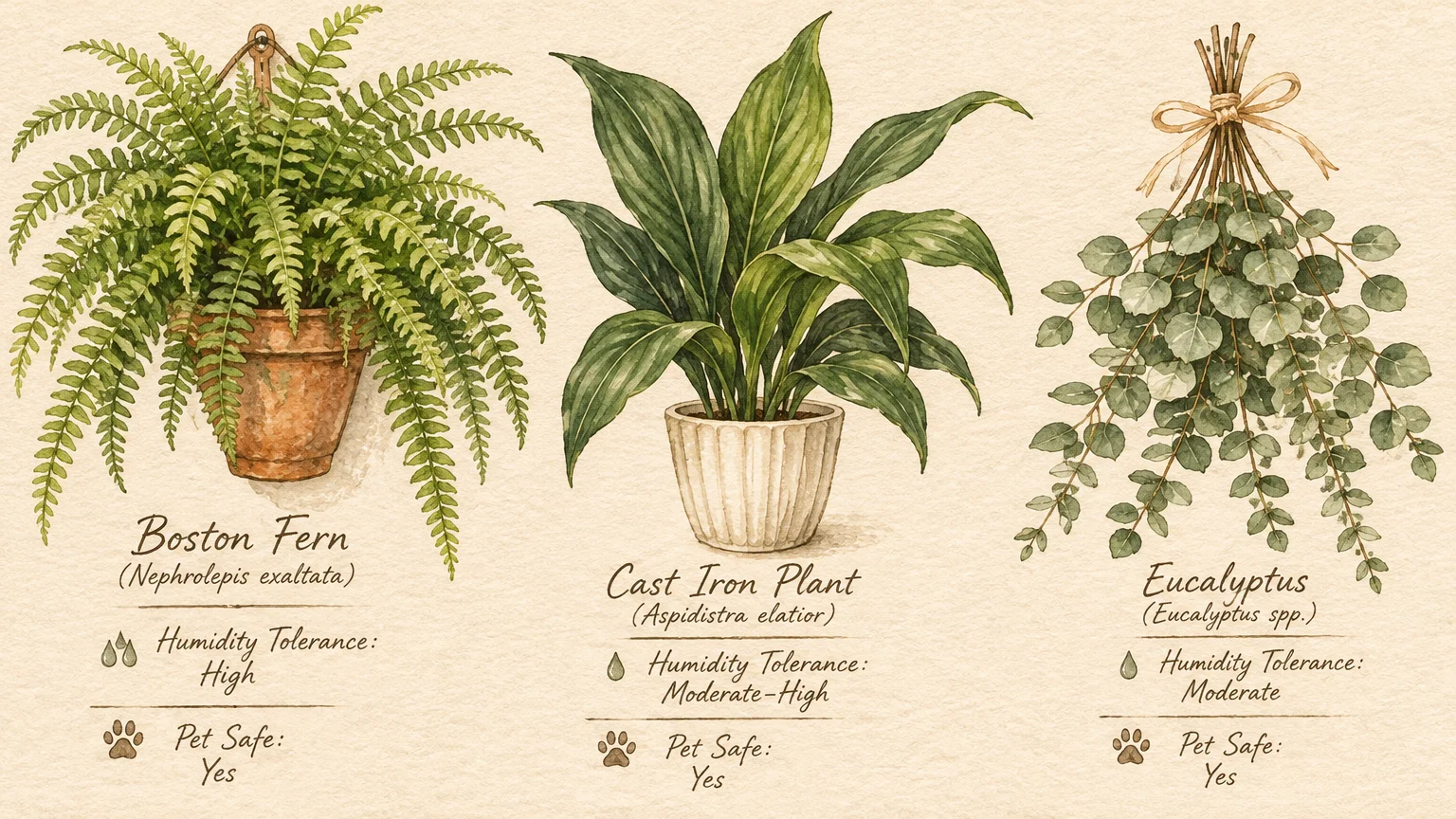
Before hanging trendy dried eucalyptus over your showerhead or tucking vines beside the tub, verify whether your household includes curious cats or dogs. Many popular bathroom plants carry compounds that sicken pets if chewed.
Hidden Risks in Popular Bathroom Stems
Fresh eucalyptus bundles release crisp scent in hot steam, yet the ASPCA classifies eucalyptus as toxic to dogs, cats, and horses due to eucalyptol. Chewing fallen leaves can trigger drooling, vomiting, diarrhea, and physical weakness.
Several ubiquitous houseplants—including pothos, philodendron, snake plant, aloe vera, ZZ plant, dieffenbachia, and peace lily—also appear on ASPCA toxicity lists. True lilies from the Lilium and Hemerocallis families pose extreme danger because even tiny exposures can cause fatal kidney failure in cats.
Thriving Non-Toxic Alternatives
Fortunately, several humidity-loving plants flourish in steamy light while keeping furry companions safe. ASPCA-verified non-toxic options include Boston ferns, spider plants, African violets, parlor palms, areca palms, and certain orchids.
Even safe greenery can cause mild stomach upset if a pet eats large amounts of plant fiber, so elevate pots onto high shelves or hanging macramé planters. Group a cascading Boston fern beside a stoneware soap dispenser for effortless, resort-inspired polish.
Bathroom Trend #7: Safe Aromatherapy and Steam-Infused Rituals
Scent anchors emotional memory faster than any visual accessory, turning five quiet minutes at the sink into a grounding ritual. You do not need expensive spa machines to weave gentle botanical fragrance into daily habits.
However, concentrated essential oils demand careful handling around sensitive skin, open flames, and household pets. Thoughtful placement and mild formulations protect your household while preserving calm.
Essential Oil Risks for Pets and Skin
According to the ASPCA, concentrated oils—including tea tree, eucalyptus, peppermint, cinnamon, clove, pine, wintergreen, sweet birch, citrus, and ylang ylang—can poison pets through ingestion, skin contact, or inhalation. Cats lack a key liver enzyme needed to break down terpenes and phenols safely.
As little as 7 to 8 drops of concentrated tea tree oil can seriously harm a pet. If you diffuse oils at all, run the diffuser briefly in a room pets cannot enter and skip diffusion entirely if animals have respiratory conditions.
The National Association for Holistic Aromatherapy warns against applying undiluted essential oils directly to skin, urging patch testing and generous room ventilation. Never place oil bottles near candles or lighters because concentrated oils are highly flammable.
Gentle, Pet-Considerate Ways to Layer Scent
Skip heavy aerosol sprays in favor of mild, rinse-off aromatics such as unscented Epsom salts lightly misted with hydrosols or dried chamomile sachets tucked into linen drawers. Natural cedar blocks inside vanity cabinets impart crisp woodland notes without airborne mist.
Using lightly scented castile hand soap or a cotton bar soap cured with oat milk satisfies sensory cravings safely. Clean ventilation lets gentle fragrance linger lightly instead of overwhelming small rooms.
Bathroom Trend #8: Flameless Ambience and Smart Candle Placement
Flickering warmth softens glossy tile reflections and signals your nervous system to slow down at dusk. Candlelight remains one of the most requested spa bathroom ideas for evening decompression.
Still, compact bathrooms pack flammable towels, robes, shower curtains, and paper products dangerously close to open flames. Modern flameless lighting delivers identical golden warmth while eliminating fire hazards completely.
Understanding Bathroom Candle Fire Risks
Between 2020 and 2024, U.S. fire departments responded to an annual average of 5,894 home structure fires started by candles, according to the National Fire Protection Association (NFPA). Those fires caused 63 civilian deaths, 532 injuries, and $286 million in yearly property damage.
Over half of home candle fires begin when flammable decor, towels, curtains, or paper sit too close to an open flame. Another 21% stem from unattended or misused candles, with fires peaking sharply every December.
Smart Safety Rules and Modern Alternatives
When lighting real wax candles, NFPA guidelines advise keeping flames at least 1 foot from anything that can burn, using sturdy non-combustible holders, and trimming wicks to 1/4 inch. Always extinguish open flames before stepping out of the room or falling asleep.
Realistic rechargeable LED pillars carved from genuine beeswax mimic gentle flicker safely inside recessed tub niches or beside flowing curtains. Grouping three varying heights on a ceramic tray creates instant spa drama with zero soot.
Bathroom Trend #9: Coordinated WaterSense Faucets and Hardware
Mismatched chrome knobs, pitted towel rings, and leaky builder-grade faucets quietly date an otherwise clean room. Unifying metal finishes across your vanity, shower, and cabinetry creates bespoke architectural cohesion on a tight timeline.
Because you retain existing supply lines and sink cutouts, swapping a single-hole or centerset faucet plus cabinet pulls requires only basic hand tools. That keeps expenses firmly inside the modest cosmetic refresh tier.
Selecting Durable Finishes and Certified Flow Rates
Look for ceramic disc valves inside replacement faucets to prevent annoying drips and ensure smooth handle resistance for years. Finishes applied through physical vapor deposition—a vacuum bonding process—resist tarnishing and water spots far better than thin electroplating.
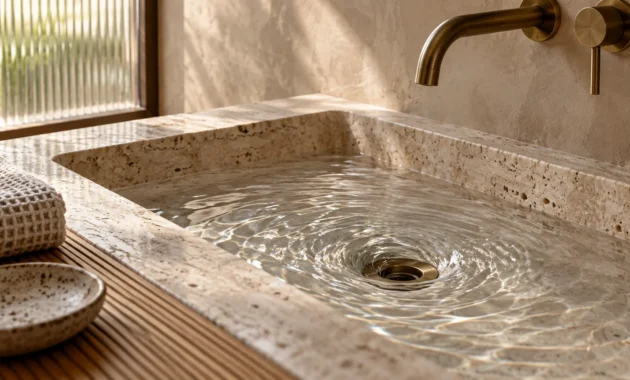
While federal law caps residential bathroom faucets at 2.2 gpm, EPA WaterSense-labeled faucets limit flow to 1.5 gpm, trimming water consumption by 32% without sacrificing rinsing power. If your existing faucet body looks solid, simply twisting on a certified 1.5 gpm aerator upgrades performance in seconds.
Mixing Metals Like a Designer
You do not need every piece of metal in your bathroom to match identically for a polished look. Pair warm brushed brass cabinet pulls and mirror frames with grounded matte black plumbing fixtures for intentional contrast.
Keep fixed metals—such as shower trim, sink faucets, and drain plates—consistent within two tones maximum so compact quarters feel calm. Swapping plastic toilet levers and flimsy robe hooks for solid metal equivalents finishes the tailored transformation.
Bathroom Trend #10: Safe Thermal Therapy and Hydro-Soak Accessories
Spas harness thermal therapy—the deliberate use of warm water, steam, or alternating cool rinses to ease muscle tension and quiet stress. You can bring structured hydro-soak rituals home using thoughtful accessories and careful temperature discipline.
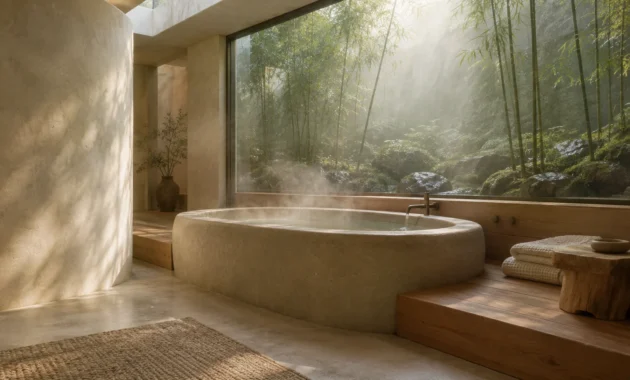
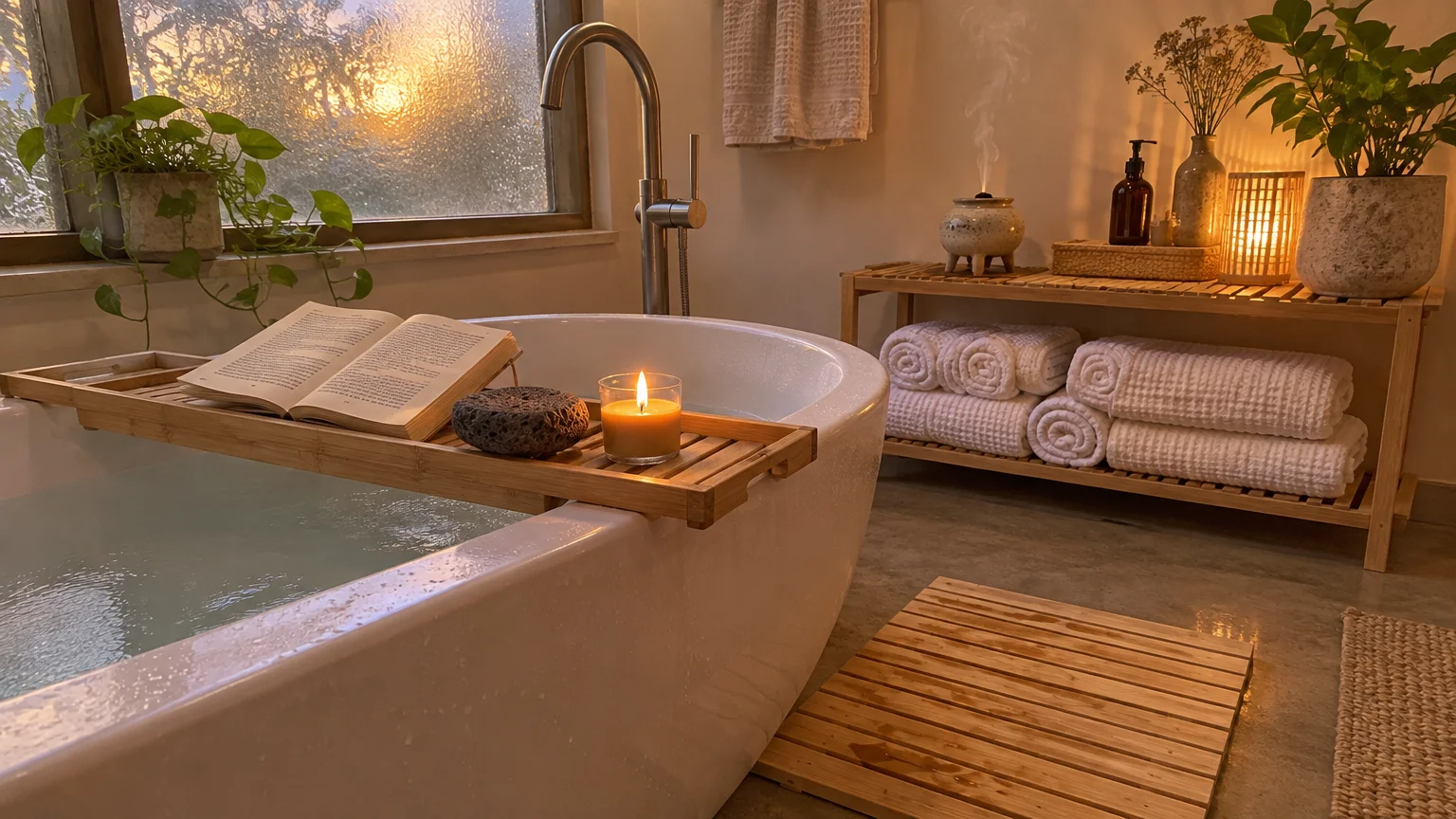
An adjustable bamboo tub caddy, a supportive bath pillow, and a stone carafe turn an ordinary acrylic alcove into a restorative retreat. Comfort only works well, however, when water temperature stays safely calibrated.
Water Heater Settings and Scald Prevention
Both the U.S. Consumer Product Safety Commission (CPSC) and the American Academy of Pediatrics recommend setting residential water heaters no higher than 120°F (49°C). Lowering overly hot tanks curbs energy waste while protecting every bather from sudden surges.
CPSC burn data shows third-degree burns occur in just 2 seconds at 150°F, 6 seconds at 140°F—5 seconds per NFPA figures—30 seconds at 130°F, and around 5 minutes at 120°F. According to the NFPA, scald burns lead all burn injuries among children under age five, with 34% occurring inside bathrooms.
Dialing In the Ideal Soak
Test bathwater with a digital thermometer or your wrist before stepping in, aiming for roughly 100°F for adults and cooler temperatures for infants or older adults. Pair a twenty-minute warm soak with a brief, brisk cool rinse afterward to leave skin refreshed rather than overheated.
Keep clutter off tub ledges by storing bath salts inside apothecary glass jars on your caddy rather than lining up plastic bottles. When everything within arm’s reach looks intentional, daily hygiene shifts smoothly into restorative wellness.
Creating a Spa-Like Retreat at Home
Layering multiple cheap bathroom upgrades works best when you edit thoughtfully rather than crowding every surface at once. Start by clearing countertops down to daily essentials stored inside matching ceramic trays or woven baskets.
Connect your visual story through two or three repeating textures—such as warm oak, matte stoneware, and crisp woven cotton—set against one quiet wall color. Consistent materials calm visual noise immediately, even inside tight apartment baths.
Pair sensory shifts together so every visit engages touch, sight, and air quality harmoniously. Quiet fan airflow protects fresh satin paint and plush towels, while layered 2700K evening bulbs highlight greenery and frameless candlelight.
For professional standards in bathroom design, refer to the National Kitchen + Bath Association (NKBA). Explore fixture and material innovations showcased at events like the International Contemporary Furniture Fair (ICFF).
Take changes one weekend project at a time so each adjustment fits your actual habits. When design serves quiet daily routines rather than chasing fleeting novelty, your home sanctuary stays timeless.
Frequently Asked Questions
Which budget spa upgrades deliver the fastest visual impact?
Replacing builder-grade overhead bulbs with 90-plus CRI warm LEDs, repainting walls in low-VOC satin neutrals, and unifying towel sets change a room’s mood overnight. Swapping a WaterSense showerhead alongside matching cabinet hardware completes the polish without heavy tools.
How can I mix metal finishes without making a small bathroom look chaotic?
Anchor the room with one dominant metal on plumbing fixtures—such as brushed nickel or matte black—and introduce a single secondary accent on mirrors, lighting, or cabinet pulls. Repeating that secondary tone at least twice makes the pairing look deliberate.
Are plush luxury towels practical in windowless bathrooms?
Heavy 600 to 900 GSM towels feel wonderfully soft, though they hold moisture longer when air stagnates. If your bath relies on an intermittent fan without natural sunlight, choose 400 to 600 GSM cotton or waffle weaves that dry cleanly between showers.
How long do cosmetic spa updates hold up under daily moisture?
Satin moisture-resistant paint, PVD-coated hardware, and WaterSense ceramic-disc faucets perform reliably for years when humidity stays between 30% and 50%. Running a quiet exhaust fan for roughly an hour after bathing protects every finish from premature peeling or mildew.
Disclaimer: This article reflects design trend analysis and predictions. Personal taste and timeless design principles should always guide your decorating choices.