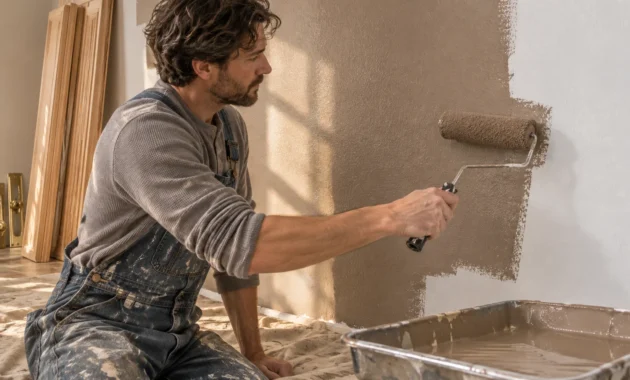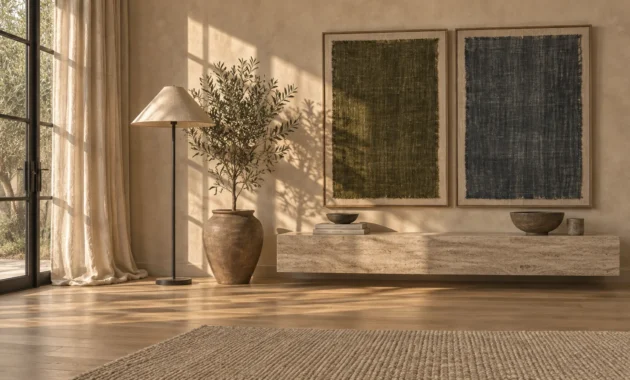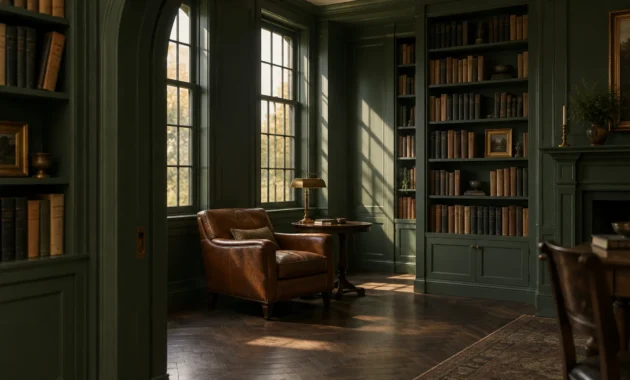
For decades, designers treated the ceiling as an architectural afterthought coated in stark, builder-grade white. Today, fresh ceiling paint ideas transform that neglected fifth wall into the defining anchor of your entire room.
Shifting your gaze upward lets you alter perceived ceiling height, balance harsh natural light, and unlock bold interior paint colors without buying new furniture. Whether you crave quiet luxury or dramatic intimacy, overhead color delivers immediate architectural impact.
You can execute these transformative room makeover ideas in a single weekend using smart sheen selection and precise Light Reflectance Value metrics. Explore six high-impact directions reshaping modern residential ceilings right now.
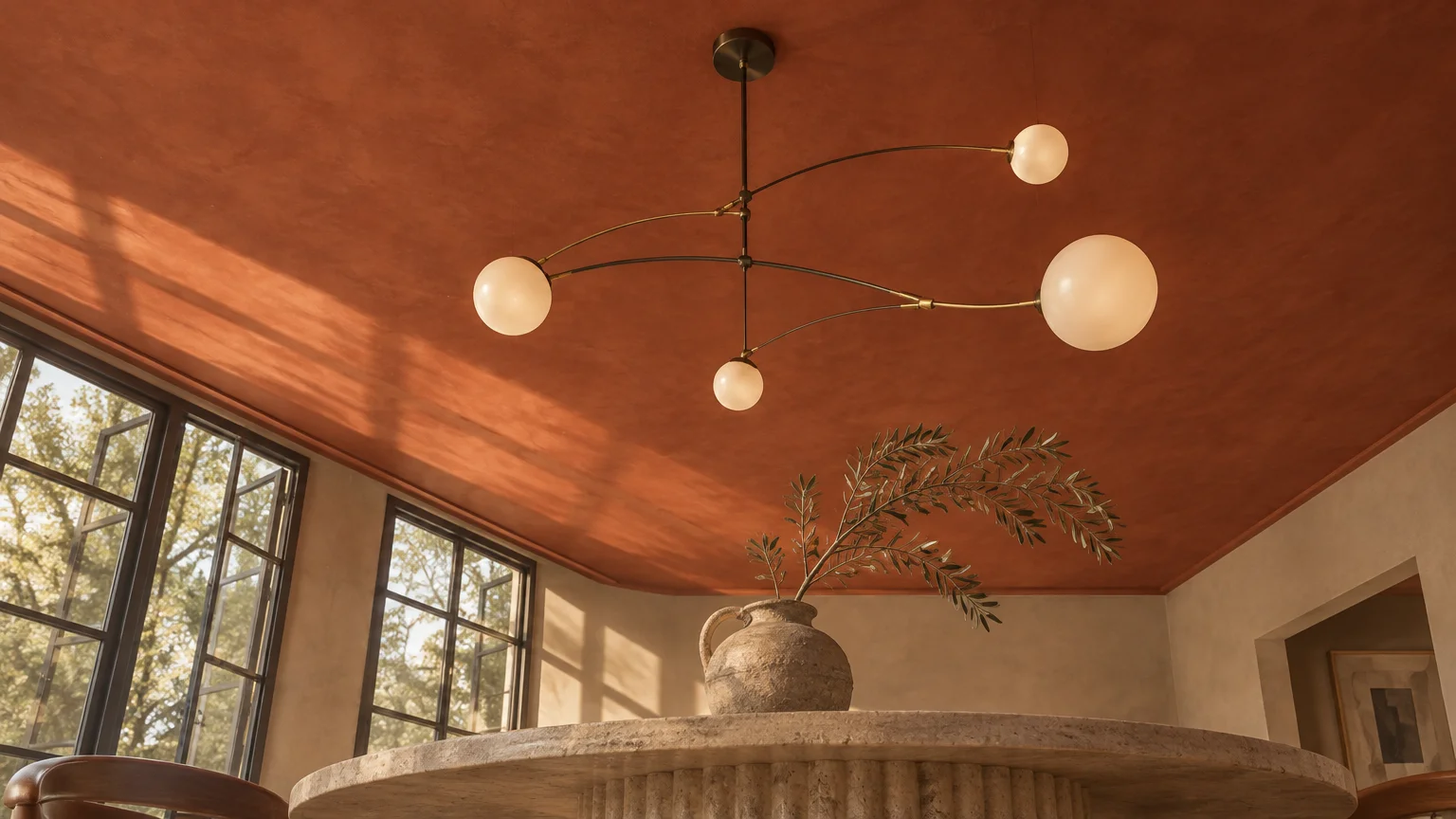
Trend #1: Monochrome Color Drenching in Warm Earth Tones
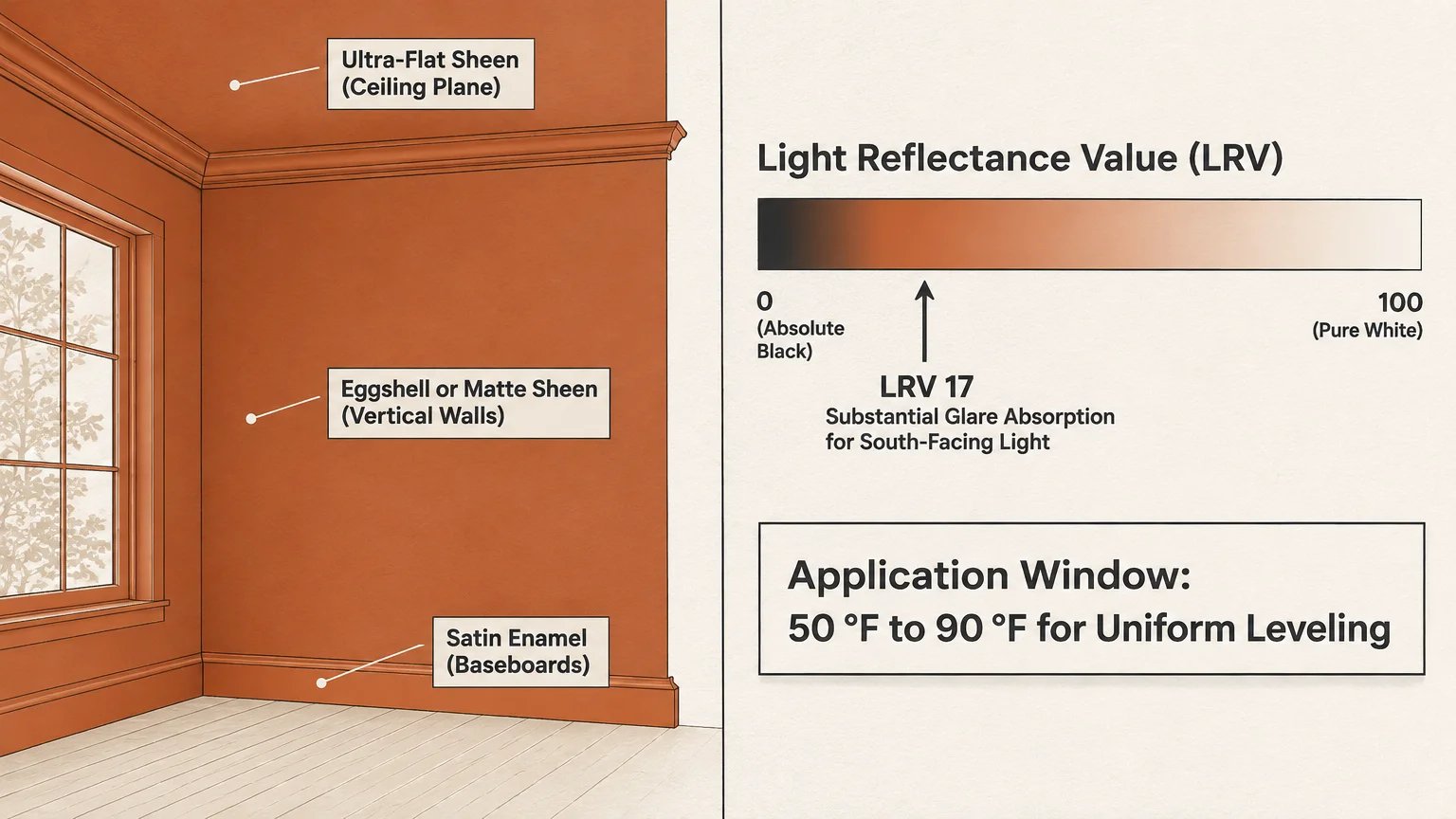
Color drenching envelops your walls, trim, crown molding, and ceiling in one continuous hue. By erasing high-contrast white borders, you blur sharp room corners and create a seamless, expansive visual cocoon.
This painted ceiling trend has moved swiftly from boutique hospitality suites into mainstream residential architecture. According to Zillow’s 2026 Home Trends Report, mentions of color drenching jumped 149% year over year in residential listing descriptions.
Warm terracotta, russet, and deep cacao tones lead this enveloping movement. Houzz’s 2026 summer trends report revealed that homeowner searches for rust colors rose 178%, while searches for chocolate brown climbed 153%.
Those earthy tones also resonate with discerning homebuyers evaluating turnkey finishes. Zillow’s 2026 Paint Color Analysis found that buyers valued warm chocolate brown bedrooms $2,277 higher than standard white bedrooms.
Choosing the Right Warmth and Light Reflectance
Before rolling deep clay or espresso overhead, check the paint’s Light Reflectance Value, or LRV. Measured from 0 for absolute black to 100 for pure white, LRV predicts exactly how much light your ceiling reflects.
Dutch Boy’s 2027 Color of the Year, Deep Rooted, offers a rich terracotta with an LRV of 17. Because it absorbs substantial glare, this hue softens harsh afternoon sun in south-facing living spaces and studies.
You can preserve an airy feeling in smaller rooms by pairing a drenched terracotta ceiling with crisp linen upholstery and warm brass sconces. That balanced contrast embodies quiet luxury—effortless sophistication grounded in tactile restraint rather than loud ornament.
Application Specs for Seamless Drenching
Achieving a flawless drenched look requires careful attention to surface gloss and room temperature. Use an ultra-flat ceiling formula on your overhead plane even when your walls wear a washable matte or eggshell sheen.
Keep your room between 50 °F and 90 °F during painting, as specified by Benjamin Moore and HGTV Home by Sherwin-Williams technical guidelines. Controlled temperatures ensure uniform leveling and prevent visible lap marks across wide overhead spans.
Trend #2: Biophilic Herbal and Olive Greens Overhead
Biophilic design—the practice of weaving natural colors, light, and organic textures into built spaces—continues to dominate upscale home decor ideas. Extending botanical green across your ceiling mimics the calming sensation of standing beneath a forest canopy.
This shift reflects a deep cultural desire for restorative domestic sanctuaries. A Behr survey found that 77% of Americans turn to nature when daily life feels chaotic, fueling demand for grounded interior palettes.
Major paint authorities echoed that instinct across their 2027 Color of the Year announcements. Leading brands converged on muted, herbal, and olive greens engineered to soothe busy living spaces.
Tailoring Green Depth to Your Ceiling Height
Your ceiling height dictates whether you should select a luminous herbal tint or a moody woodland shade. Sherwin-Williams selected Celery as its 2027 Color of the Year, offering a fresh green with warm yellow undertones and an LRV of 71.
With its high light reflectance, Celery lifts low eight-foot ceilings and brightens dim breakfast nooks without feeling sterile. You get gentle botanical character while maintaining the spacious bounce of a pale neutral.
For lofty dining rooms or cozy dens, consider deeper mid-tone options like Benjamin Moore’s 2027 pick, Webster Green, at LRV 20. Behr’s 2027 selection, Grounded, pushes further into earthy olive territory with brown undertones and an LRV near 11.
Soft, misty jade tones like Behr’s 2026 pick, Hidden Gem, also perform beautifully in primary suites. In Zillow’s 2026 Paint Color Analysis, sage green bedrooms commanded $1,035 more in perceived value than white rooms.
Calculating Coverage Before You Roll
Measure your ceiling square footage carefully before purchasing tinted greens, since darker pigments often require two full coats. Coverage rates vary noticeably across dedicated ceiling formulations.
Benjamin Moore’s Waterborne Ceiling Paint covers 400 to 450 square feet per gallon, while Sherwin-Williams Premium Ceiling Paint spans 350 to 400 square feet. Behr’s Ultra Stain-Blocking Ceiling formula covers 250 to 400 square feet depending on surface porosity.
Ordering an extra quart for touch-ups prevents frustrating dye-lot mismatches later. Keep leftover paint sealed tightly in a climate-controlled closet so your ceiling stays pristine for years.
Trend #3: Atmospheric Slate Blues and Nocturnal Skies
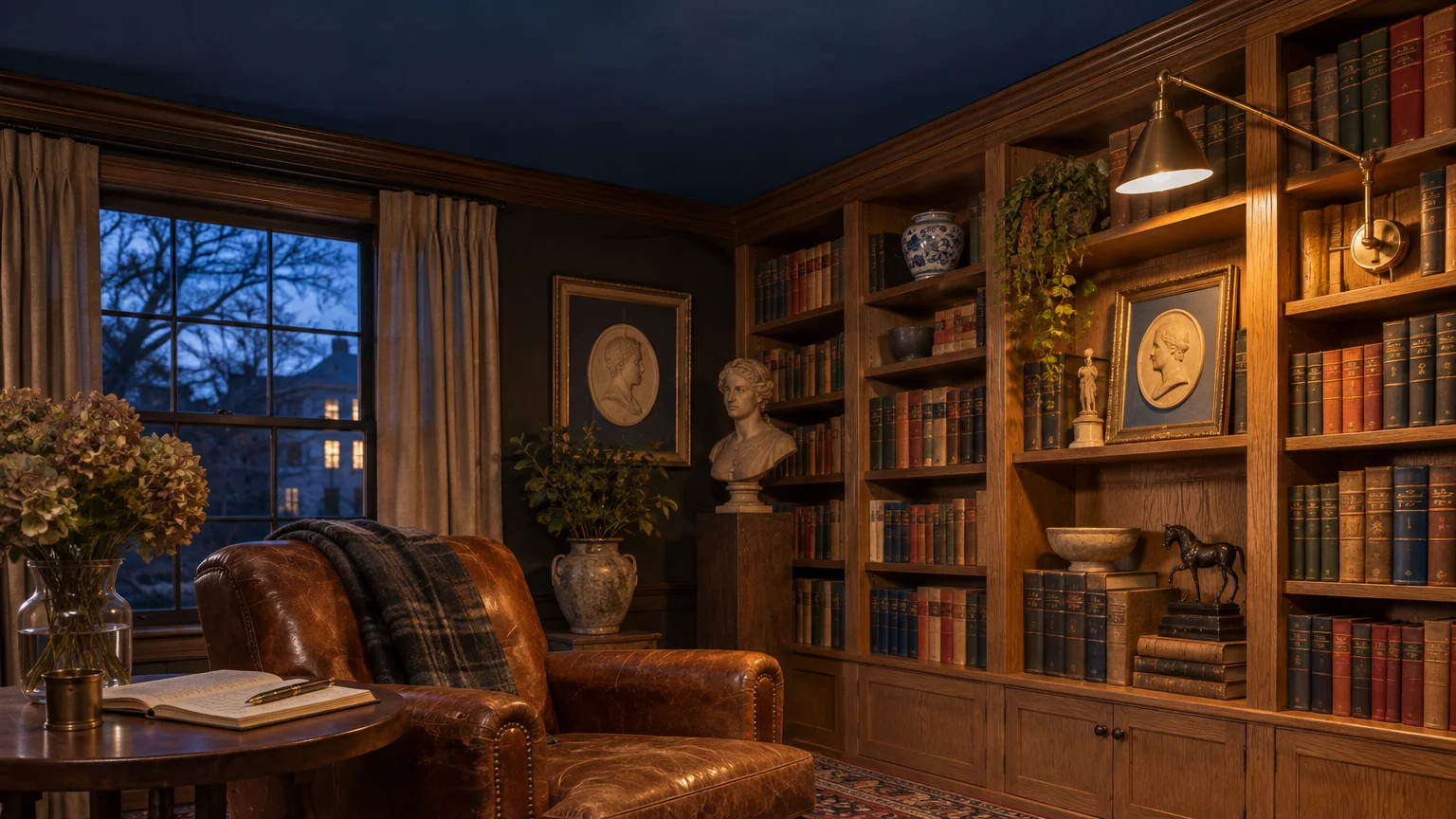
Painting an overhead plane blue draws on centuries of architectural provenance—the documented lineage of historic design traditions. Classic Southern porch ceilings and European neoclassical salons long relied on sky hues to extend rooms outward.
Modern interpretations trade sugary pastels for smoky, complex slate blues with subtle gray undertones. Valspar’s 2027 Color of the Year, Cottage Door, captures this refined direction with a weathered blue rated at LRV 26.
Glidden and PPG leaned into deeper twilight territory with Artifact, a smoky blue carrying an LRV of 20. Both tones bring crisp architectural poise to sunlit living rooms, mudrooms, and formal dining spaces.
Resale Appeal of Overhead Blues
Blue remains one of the safest chromatic investments you can make during a home refresh. Zillow’s 2026 Paint Color Analysis showed that buyers valued pale blue living rooms $1,723 above white alternatives.
Deeper nocturnal shades deliver strong returns in private sleeping quarters as well. Zillow’s prior paint research indicated that deep blue bedrooms can boost buyer offer estimates by over $1,800.
Pair smoky blue ceilings with unlacquered brass chandeliers, pale oak flooring, and textured bouclé seating. The cool overhead tone tempers warm wood grain and keeps sunlit rooms feeling balanced throughout the day.
Selecting the Best Rollers and Brushes
Rich blue pigments reveal roller streaks quickly if you choose the wrong applicator sleeve. Match your roller nap thickness strictly to your ceiling’s underlying texture before cutting in the perimeter.
Purdy recommends a 3/8-inch nap roller cover for smooth drywall ceilings, a 1/2-inch nap for lightly textured surfaces, and a 3/4-inch nap for textured finishes. Sherwin-Williams specifies synthetic roller covers and nylon or polyester brushes for water-based ceiling paints.
Skip natural mohair or sheepskin covers when applying modern latex hues. Natural fibers absorb water, swell during application, and leave uneven stippling across smoky blue ceilings.
Maintain a wet edge by rolling narrow three-foot sections across the shortest span of the room. Overlapping damp paint prevents visible stripes when bright morning sunlight hits the finished blue surface.
Trend #4: Soft Cloud Whites and Whisper-Tinted Neutrals
Not every transformative ceiling relies on saturated pigment to reshape a room’s mood. Replacing chalky builder white with a nuanced, whisper-soft neutral elevates minimalist spaces through subtle light modulation.
Pantone underscored this shift toward quiet clarity by naming Cloud Dancer, a soft, airy white, its 2026 Color of the Year. Unlike cool blue-toned whites that turn icy under LED bulbs, balanced soft whites flatter skin tones and natural stonework.
Consider tinting your ceiling paint to 25% of your wall color’s formula if you use warm greige or oatmeal walls. That whisper of shared pigment ties the envelope together while keeping the overhead surface distinctly luminous.
Why Ultra-Flat Specular Gloss Matters
Drywall seams, tape lines, and subtle framing bows stand out sharply under oblique window light. Dedicated ceiling paints solve this problem through engineered ultra-flat sheen profiles.
Both Benjamin Moore’s Waterborne Ceiling Paint and Sherwin-Williams Premium Ceiling Paint register a specular gloss of 0 to 2 units at an 85-degree angle. That near-zero sheen scatters incoming light instead of bouncing glare across structural flaws.
Under U.S. EPA architectural coating standards referencing ASTM Method D 523-89, any flat coating measures under 15 on an 85-degree meter. Choosing an ultra-flat 0 to 2 unit ceiling formula gives you far superior flaw concealment.
Mastering Recoat and Cure Schedules
Rushing a second coat over damp white paint often pulls up the base layer and leaves rough patches. Respect manufacturer dry times measured at 77 °F and 50% relative humidity.
Benjamin Moore’s Waterborne Ceiling Paint dries to the touch in 1 hour and accepts a second coat in 1 to 2 hours. Full curing for gentle washing requires 2 weeks, or 14 days.
Sherwin-Williams Premium and ProMar ceiling paints also dry to the touch in 1 hour, though their data sheets specify a 4-hour recoat window. HGTV Home by Sherwin-Williams ceiling paint allows recoating after 2 hours.
Turn off ceiling fans and avoid running humidifiers while your neutral ceiling dries. Steady, gentle airflow helps waterborne binders crosslink evenly into a velvety, streak-free finish.
Trend #5: Charcoal Accents and Art Deco Geometric Ceilings
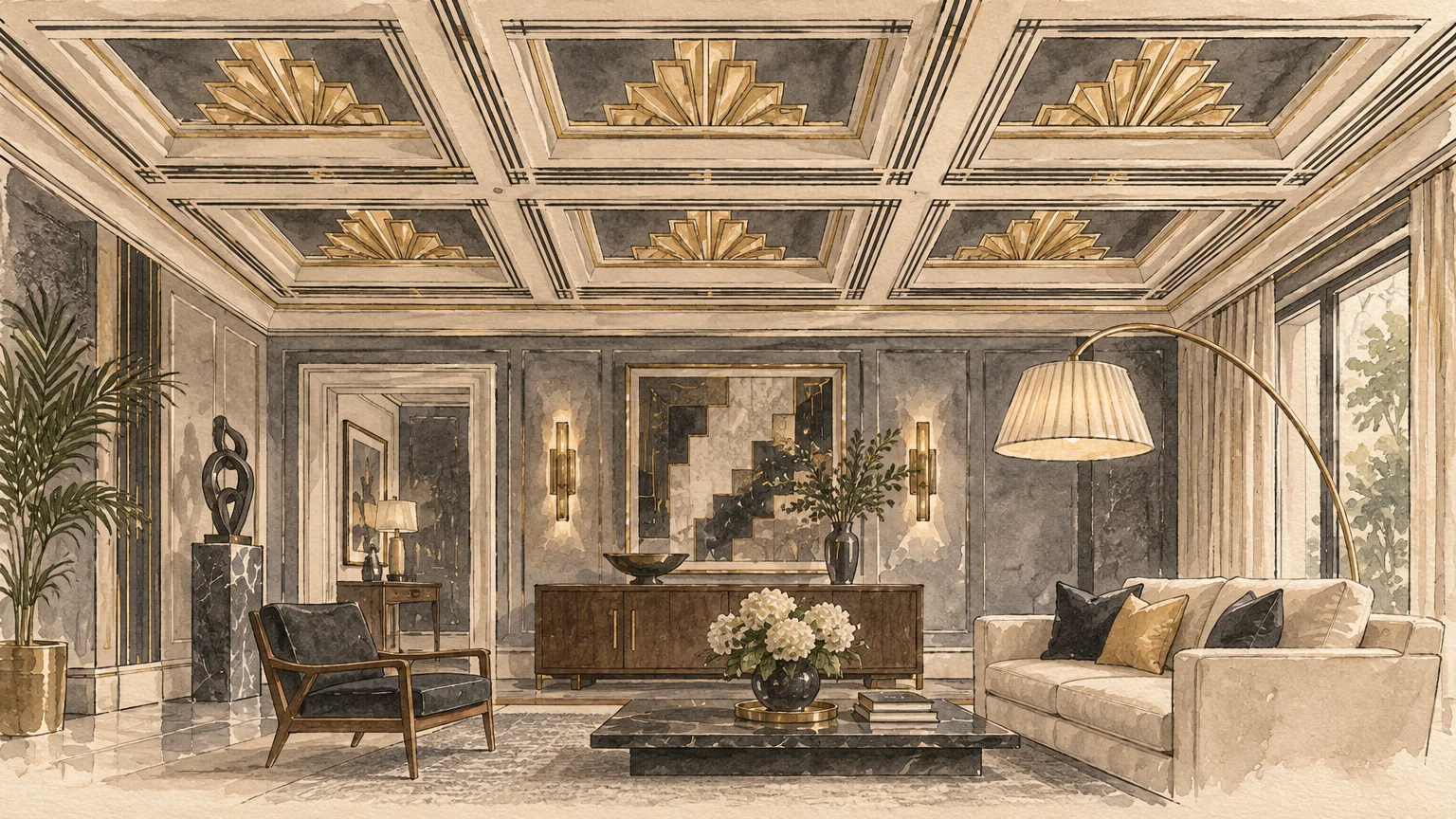
Architectural drama is surging back into residential design through stepped tray ceilings, crisp coffers, and painted geometric borders. According to Houzz, searches for Art Deco interiors grew 22% year over year in 2026.
Charcoal gray anchors this tailored revival with graphic precision. Rather than overwhelming an entire room, painting the recessed center panel of a tray ceiling in deep charcoal frames your chandelier like a tailored tuxedo.
In Zillow’s 2026 Paint Color Analysis, charcoal gray added $1,509 in perceived value to living rooms and $1,240 to bedrooms compared with white. That strong buyer reception confirms dark neutrals have evolved into modern classics.
Colors to Avoid Overhead
While moody charcoal and warm browns boost perceived property value, harsh yellow tones can undermine your room makeover ideas. Zillow’s 2026 Paint Color Analysis revealed that ochre yellow reduced perceived home value by $18,164.
Strong yellow ceilings cast an unflattering golden glare onto upholstery, artwork, and skin tones. Stick to disciplined charcoal, smoked slate, or soft mineral whites when designing geometric ceiling inlays.
For sharp Art Deco borders, seal painter’s tape edges with a thin swipe of your base ceiling color before rolling dark charcoal. That trick seals microscopic drywall texture so your finished geometric lines stay razor sharp.
Planning Labor Time and Tall-Ceiling Math
Detailed geometric lines and multi-level coffers demand steady pacing and realistic labor estimates. BrushQuote notes that painters typically roll 150 to 250 square feet per hour per coat on smooth eight-foot ceilings.
A standard two-coat bedroom ceiling takes roughly four total labor hours once you factor in taping and cutting edges. However, architectural height and roof pitch expand your paint volume and labor timeline quickly.
BrushQuote reports that ceilings taller than 12 feet often incur a 25% to 50% professional upcharge due to scaffolding needs. Additionally, a steep 12/12 vaulted ceiling pitch adds roughly 41% more paintable surface area than a flat ceiling.
Trend #6: Ultra-Matte Mineral Hues with Zero-VOC Purity
Modern luxury prioritizes indoor air quality just as highly as visual poise. Homeowners increasingly select velvety mineral hues formulated with zero or near-zero volatile organic compounds, known as VOCs.
Because ceiling paint covers hundreds of square feet overhead, low-emission formulas help keep bedrooms and nurseries comfortable immediately after application. You achieve a soft, chalky finish reminiscent of historic plaster without lingering chemical odors.
U.S. EPA national standards cap flat interior coatings at 250 grams per liter of VOCs and nonflat coatings at 380 grams per liter. Stricter regional rules in Massachusetts and Washington, D.C. limit flat architectural coatings to 100 grams per liter.
Dedicated ceiling leaders beat those limits effortlessly. Benjamin Moore’s Waterborne Ceiling Paint registers 0 grams per liter, while Sherwin-Williams Premium Ceiling Paint contains less than 50 grams per liter.
If you live in PaintCare stewardship states—including California, New York, Washington, Colorado, or Washington, D.C.—expect a small recycling fee at checkout. That built-in fee ranges from $0.30 to $2.45 per container and funds responsible leftover paint recovery.
Safety Checks Before Painting Older Ceilings
Before you sand, scrape, or prime an older ceiling, verify your home’s construction era to protect your household. The U.S. EPA banned residential lead-based paint in 1978, yet roughly three-quarters of pre-1978 U.S. homes—over 38 million properties—still contain some lead paint.
Under the EPA Renovation, Repair and Painting Rule, paid contractors disturbing more than 6 square feet of interior painted surface per room in pre-1978 homes must hold EPA certification. Even if you handle DIY prep yourself, dry scraping creates hazardous lead dust.
Textured or popcorn ceilings carry an additional precaution in homes built before 1980 or prior to the 1990s. U.S. EPA indoor air guidelines warn that spray-applied decorative ceiling finishes and joint compounds from those decades may contain asbestos.
Under the Clean Air Act, spray-applied surfacing materials containing more than 1% asbestos were banned. Always send a sample to an accredited lab before scraping, sanding, or disturbing suspicious textured ceilings.
The Big Picture: Weaving These Trends into Your Home
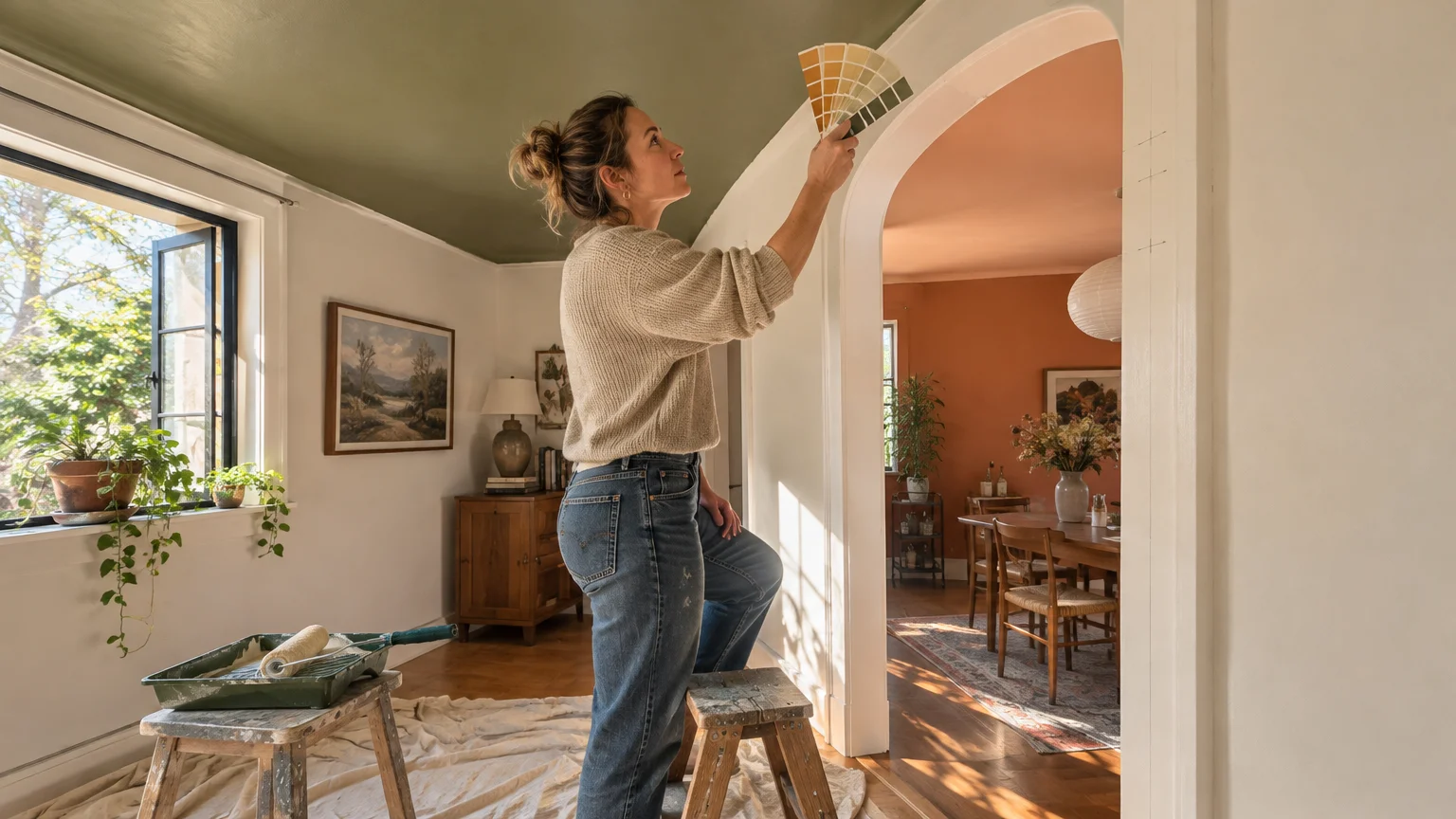
The strongest ceiling paint ideas connect seamlessly with your flooring, millwork, and natural light rather than acting as isolated stunts. Treat your overhead color as a quiet architectural tool that anchors your room’s proportions.
Start with one contained space—such as a powder room, dining room, or primary bedroom—before committing to whole-home color drenching. Observing how your chosen pigment shifts from crisp morning light to warm evening lamplight builds confidence quickly.
Beyond daily visual enjoyment, thoughtful interior paint colors deliver tangible financial upside. Angi reports that interior painting yields an average return on investment near 107%, while Zillow’s 2026 analysis notes that repainting top-performing colors across rooms can add over $5,000 to an offer.
For the latest color forecasts, consult industry leaders like Pantone and paint companies like Benjamin Moore. For professional design standards, refer to the American Society of Interior Designers (ASID).
Realistic Budgeting for DIY and Pro Projects
DIY ceiling refreshes remain among the most cost-effective home decor ideas available. The Home Depot lists one-gallon ceiling paints between $20 and $50 on average, with Behr Premium Plus Ultra Pure White Ceiling Flat retailing around $33.98.
Hiring professionals saves neck strain and delivers razor-sharp cut lines around crown molding. Angi reports a $250 national average to paint a ceiling, with most projects falling between $200 and $500, or $0.50 to $5 per square foot.
BrushQuote cites residential rates of $1.50 to $3.50 per square foot, totaling $250 to $600 for a two-coat bedroom ceiling, alongside a $200 to $300 room minimum. Broader or high-detail ceiling projects listed by Thumbtack average $1,620, ranging from $778 to $3,307.
Scale also matters dramatically when updating whole homes. Fixr data shows that painting a 2,200-square-foot home with 12-foot ceilings costs roughly one-third more than an identical home with eight-foot ceilings—$14,816 to $27,574 versus $11,001 to $20,474.
Disclaimer: This article reflects design trend analysis and predictions. Personal taste and timeless design principles should always guide your decorating choices.
Frequently Asked Questions
Does painting a ceiling a dark color make a room feel smaller?
A dark ceiling visually lowers high ceilings and creates cozy intimacy, yet it rarely makes a room feel cramped when balanced well. Drenching your walls and ceiling in the same low-LRV hue blurs corners and tricks your eye into reading continuous depth.
What paint sheen works best for painted ceilings?
Always choose an ultra-flat ceiling paint rated at 0 to 2 specular gloss units at an 85-degree angle. This ultra-matte finish absorbs grazing window light and hides drywall tape seams far better than eggshell or satin paints.
How much does it cost to paint a standard bedroom ceiling?
A DIY weekend refresh typically costs $20 to $50 per gallon of ceiling paint plus rollers and painter’s tape. Hiring a residential pro averages $250 nationally, or $250 to $600 for a two-coat 12-by-14-foot bedroom ceiling.
Can I scrape and repaint an older popcorn ceiling myself?
Never scrape or sand a textured ceiling in a home built before 1980 without laboratory testing first. U.S. EPA guidelines warn that older spray-applied popcorn textures may contain asbestos, and pre-1978 layers often contain hazardous lead-based paint.
What roller nap and temperature give the smoothest finish?
Use a 3/8-inch synthetic roller nap on smooth drywall, stepping up to 1/2-inch or 3/4-inch synthetic covers for textured ceilings. Apply paint when room temperatures sit between 50 °F and 90 °F so coatings level smoothly without roller marks.