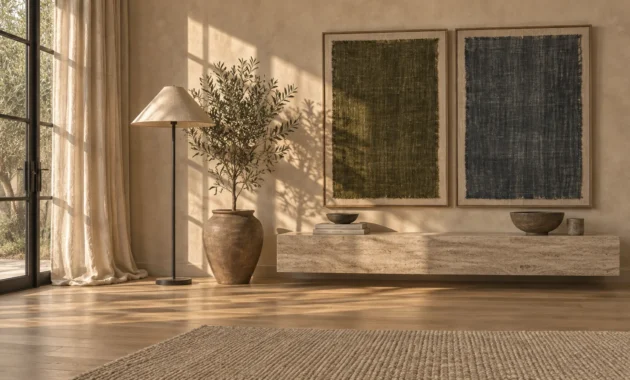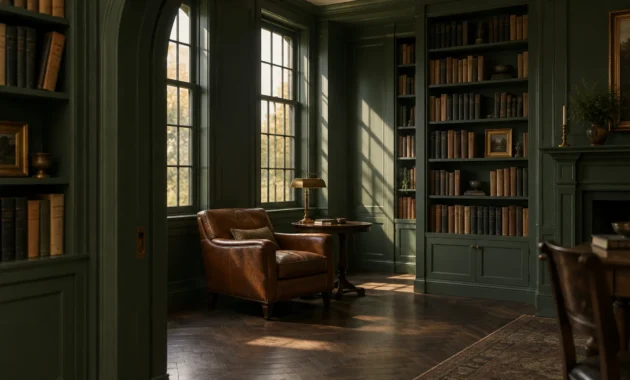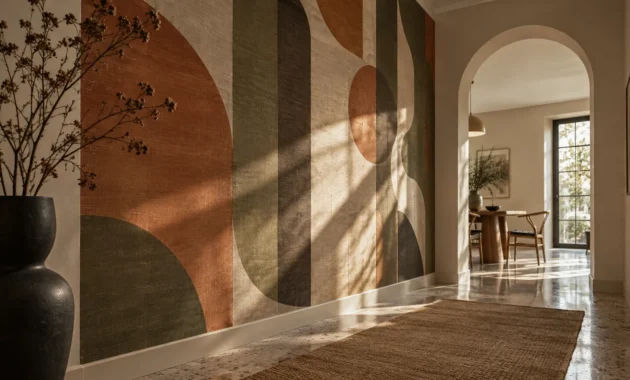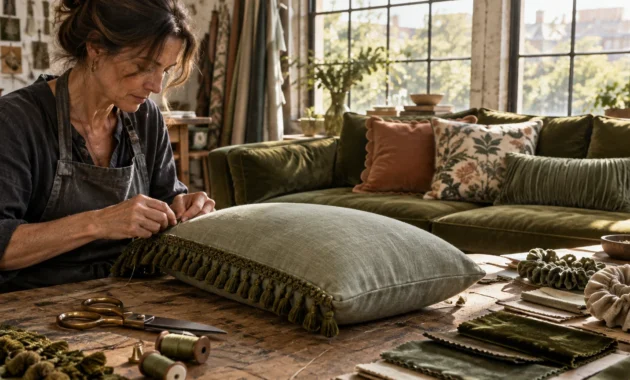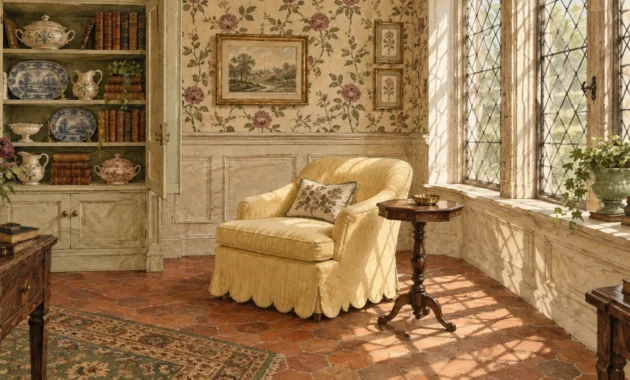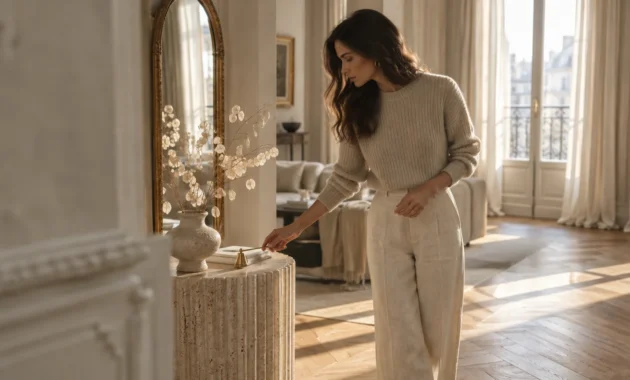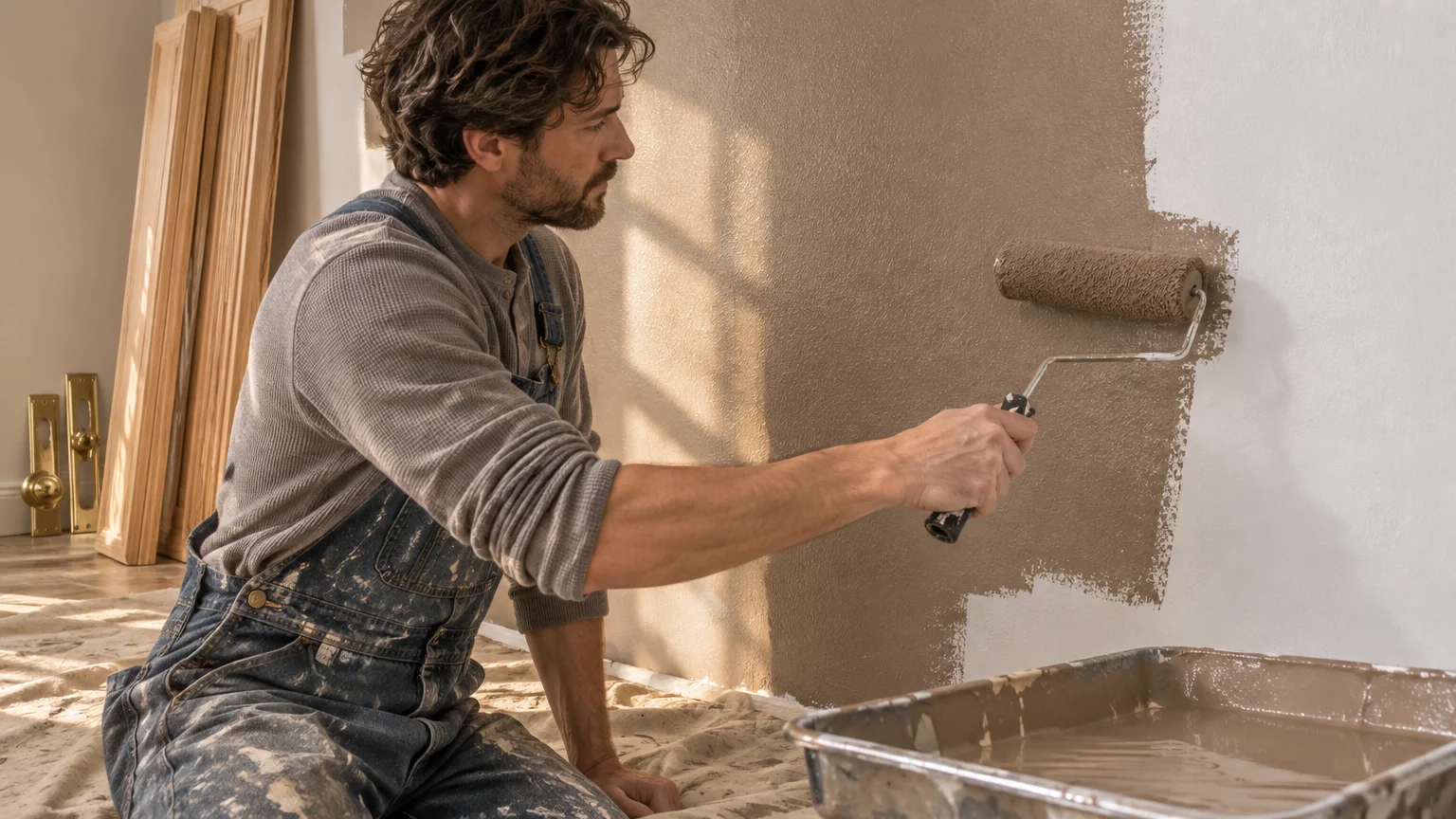
Your walls set the emotional temperature of every room before a single piece of furniture enters the space. Heading into 2027, top decorators are retiring sterile neutrals and jarring accents in favor of grounded, heritage-inspired hues.
Switching away from dated paint colors protects your daily comfort and your home equity alike. Below, discover the seven shades falling out of favor—and the exact designer-backed alternatives poised to replace them.
Trend #1: Stark, Hospital-Grade Cool White
For over a decade, crisp gallery white reigned as the default backdrop for open-concept living. Now, those icy, blue-toned whites feel clinical rather than serene, making living spaces resemble waiting rooms instead of sanctuaries.
Between August and October 2026, not a single major U.S. paint brand selected stark white for its 2027 Color of the Year. Every major forecaster bypassed blank minimalism to embrace soulful pigments with genuine depth.
According to the NKBA 2027 Kitchen Trends Report, released October 14, 2026, 96% of surveyed industry professionals expect neutral palettes to remain dominant in 2027. However, designers are pivoting sharply from cool whites toward warm taupes, mushroom tones, and earthy browns.
Cabinetry trends confirm this decisive shift away from sterile white surfaces. In the Houzz 2026 U.S. Kitchen Trends Study of 1,780 renovating homeowners, natural wood cabinets rose 6 percentage points in one year to 29%, overtaking white cabinets at 28%.
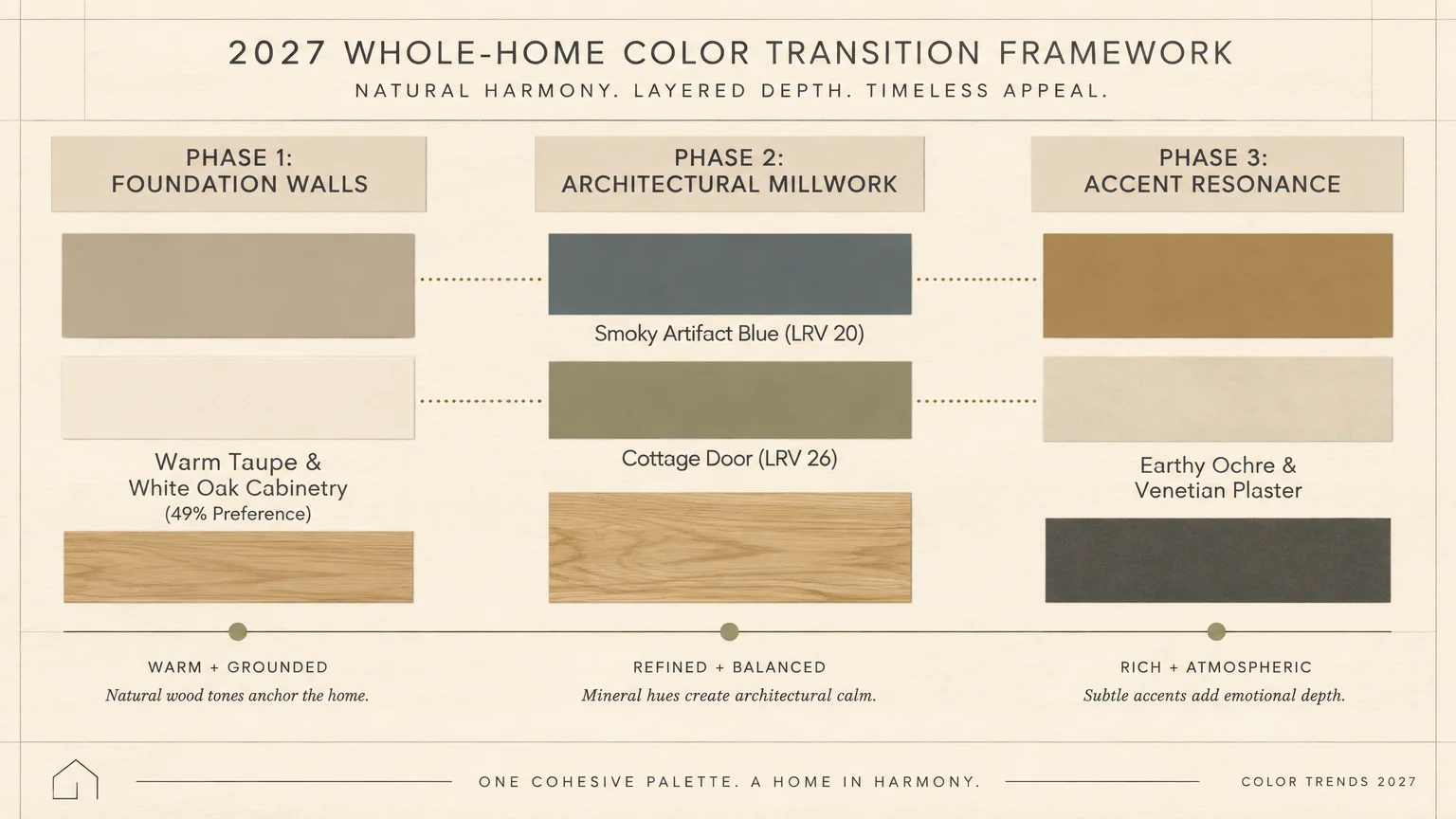
The NKBA report echoes that organic momentum, with 49% of professionals naming white oak as their top wood preference for 2027. Homeowners clearly crave tactile warmth and visible grain over flat, bleached paint.
Wall texture is also replacing flat white drywall across modern interiors. The Houzz 2026 Emerging Trends Report documented massive search spikes compared to flat painted walls, including a 109% jump for limewash and an 82% rise for Venetian plaster.
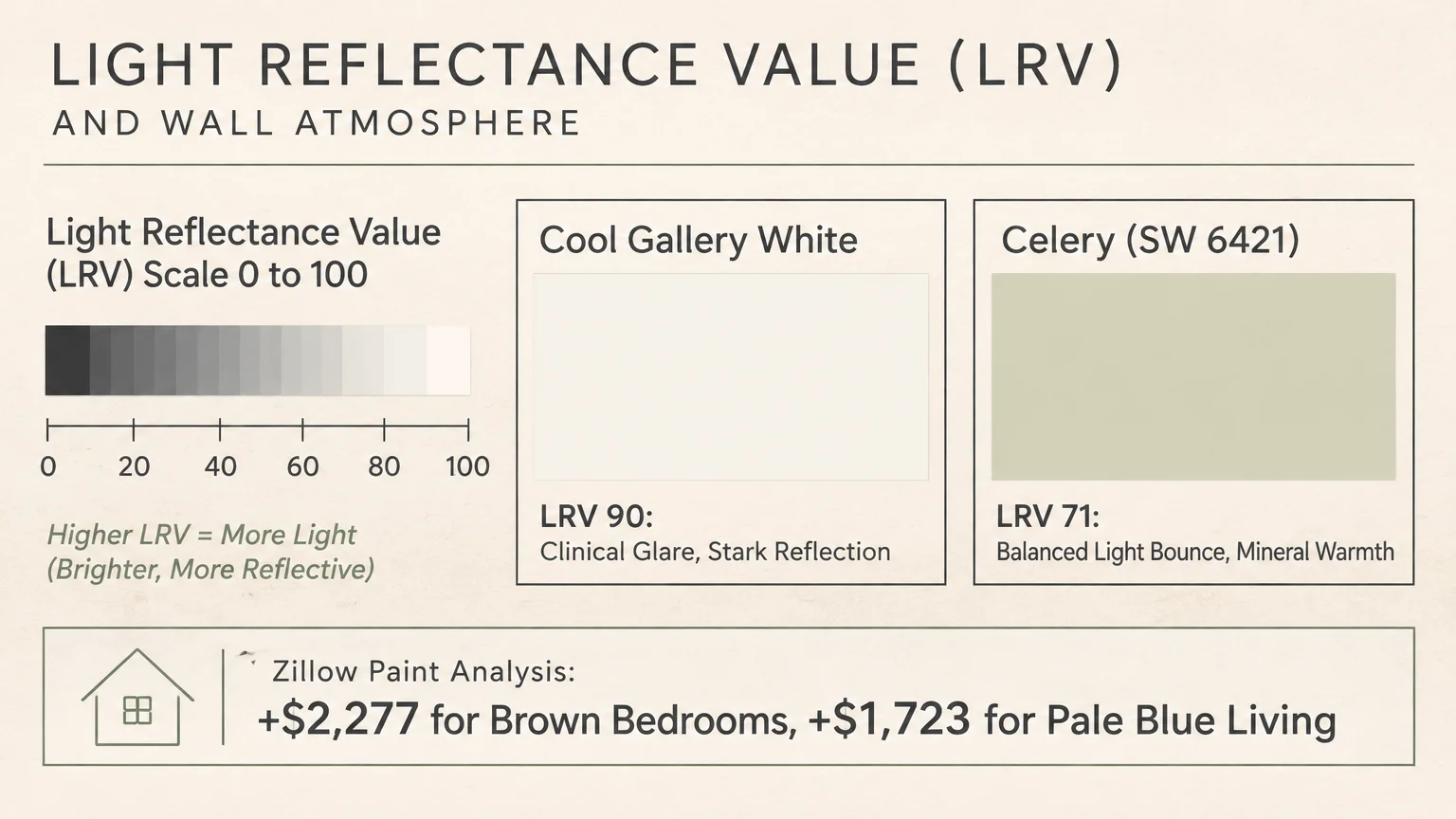
High-gloss or ultra-bright whites also fail to maximize resale appeal. In Zillow’s 2026 Paint Color Analysis of more than 4,000 buyers, shoppers offered $2,277 more than white for chocolate brown bedrooms and $1,723 more for pale blue living rooms.
To refresh your home without losing brightness, study a shade’s Light Reflectance Value (LRV) before buying a gallon. LRV measures the percentage of visible light a color reflects on a scale from 0 for pure black to 100 for pure white.
Swap blinding whites sitting near LRV 90 for nuanced, light-bouncing tones with subtle yellow or mineral undertones. Sherwin-Williams and HGTV Home by Sherwin-Williams spotlighted Celery (SW 6421) at LRV 71 for 2027, proving airy rooms do not require sterile white paint.
Trend #2: Flat, Cold Battleship Gray
Cold mid-tone gray became the unofficial uniform of 2010s renovations, covering everything from suburban foyers to flip-house exteriors. Entering 2027, that lifeless, slate-cold hue ranks near the top of paint colors out of style.
Cool gray fails because it strips natural warmth from wood floors, brass hardware, and human skin tones. Under overcast skies or cool LED bulbs, flat gray walls quickly turn gloomy and depressing.
Paint authorities confirmed gray’s exit during their autumn 2026 announcements. Not one major U.S. paint company championed a cool gray for 2027, steering homeowners toward smoky blues and silvery botanicals instead.
Look at Valspar’s 2027 selection, announced August 5, 2026: Cottage Door (8004-38E), a greyed mid-tone powder blue with an LRV of 26. It delivers the calm restraint homeowners liked about gray while introducing authentic coastal character.
Glidden and PPG took a similarly atmospheric direction on September 14, 2026, by naming Artifact (PPG10-16) their 2027 pick. Sitting at LRV 20, this warm smoky blue wraps walls in quiet luxury—an aesthetic rooted in understated elegance rather than flashy statements.
Note one important distinction before you paint over every gray surface in your home. Zillow’s June 16, 2026 analysis revealed that deep, moody charcoal gray still commands strong buyer premiums across multiple rooms.
Prospective buyers offered $1,509 more for charcoal gray living rooms, $1,373 more in kitchens, and $1,240 more in bedrooms compared to white. Rich charcoal provides architectural drama, whereas flat mid-gray simply looks tired.
If your hallway currently wears cool battleship gray, test a muted blue-gray or soft silvery sage next to your trim. Dulux’s Soulful Sage, announced in September 2026, offers an effortless bridge between neutral restraint and organic color.
Trend #3: Builder-Grade Sterile Greige
Developers invented greige—a cautious blend of gray and beige—to offend nobody during quick real estate turnovers. Unfortunately, designing strictly for theoretical neutrality leaves rooms feeling generic and devoid of provenance.
In interior design, provenance refers to a sense of authentic origin, heritage, and lived-in history. Sterile builder greige communicates the opposite: a rushed, cookie-cutter finish applied without regard for natural light or architecture.
Every major U.S. paint manufacturer left greige off its 2027 Color of the Year podium. Instead, brands embraced earth-anchored tones that celebrate biophilic design—the practice of connecting indoor spaces closely to the natural world.
Behr exemplified this pivot on August 26, 2026, by selecting Grounded (T27-01), a mossy olive green with subtle brown undertones. You get the versatility of a neutral paired with the soothing calm of forest foliage.
Consumer search behavior reflects this appetite for character-rich neutrals over flat greige. Houzz’s 2026 Emerging Trends Report recorded a 91% search surge for modern organic and a 126% spike for dark ceilings.
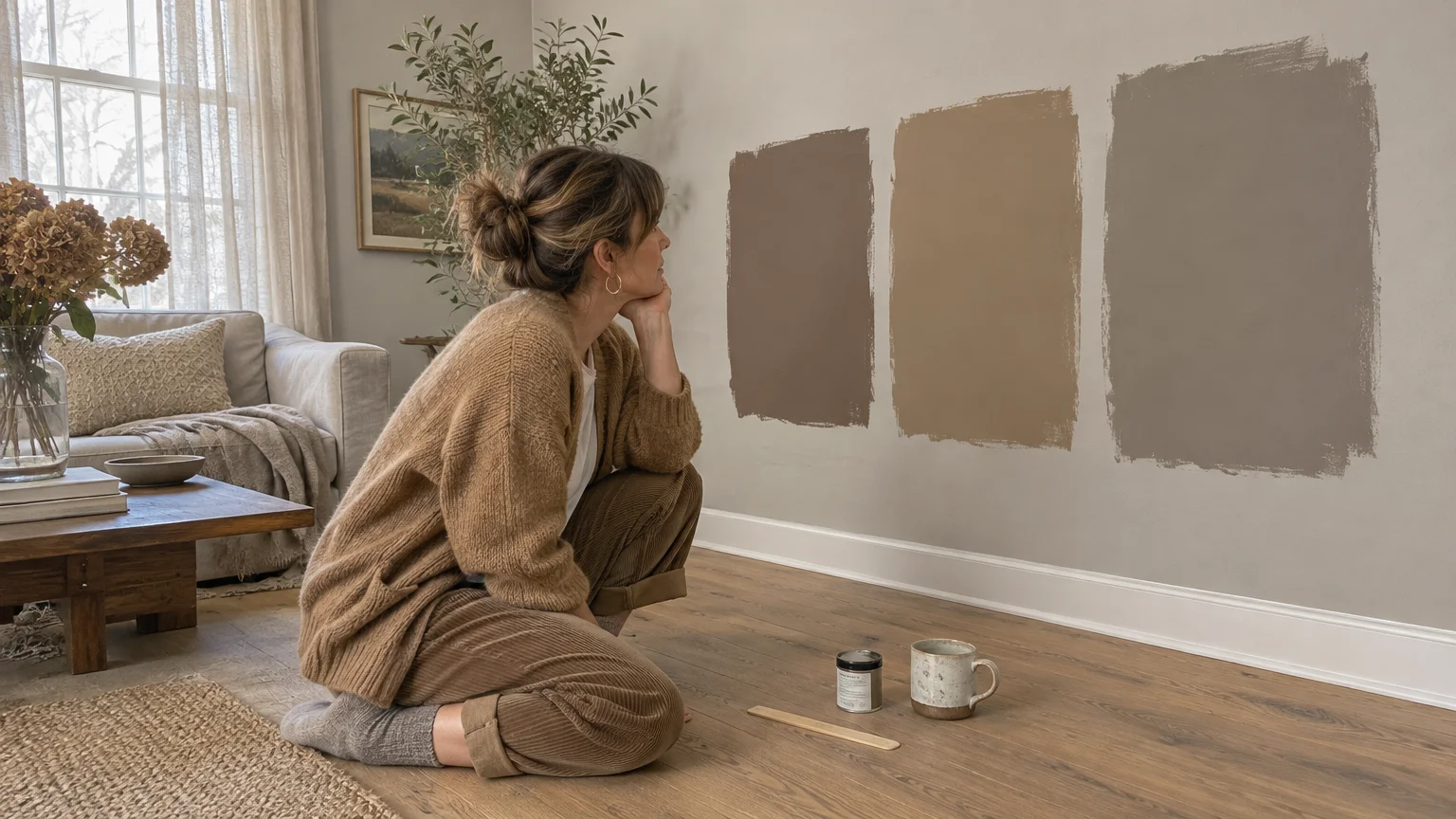
Replacing builder greige does not force you into bold primary colors. You can lean into warm mushroom, caramel-tinged taupe, or earthy clay hues that harmonize with linen textiles and raw timber.
Before committing to a warm neutral, paint large poster boards and move them around the room at morning, noon, and dusk. You will immediately see whether your room’s exposure pulls a mushroom tone cozy or muddy.
Remember that painting an entire 2,500-square-foot home represents a meaningful investment, averaging $5,046 nationally in 2026. Choosing a nuanced taupe or mossy neutral ensures you will not crave another expensive overhaul in two years.
Trend #4: Harsh Ochre and Mustard Yellow
A brief retro revival encouraged brave homeowners to drench dining rooms and foyers in heavy ochre and mustard yellow. By 2027, designers warn that aggressive golden-brown walls overwhelm adjoining spaces and distort surrounding artwork.
Ochre acts unpredictably in shifting daylight, often turning sickly or muddy once artificial evening lighting kicks in. Rather than radiating sunshine, dense yellow-ochre can make compact rooms feel claustrophobic.
Real estate data exposes just how severely ochre yellow alienates modern buyers. According to Zillow’s 2026 Paint Color Analysis, painting interiors ochre yellow throughout a home can slash buyer offer prices by an astonishing $18,164.
That $18,164 penalty stands as the single costliest color mistake in Zillow’s 2026 study. Few paint mistakes carry a financial sting steep enough to erase thousands in hard-earned equity overnight.
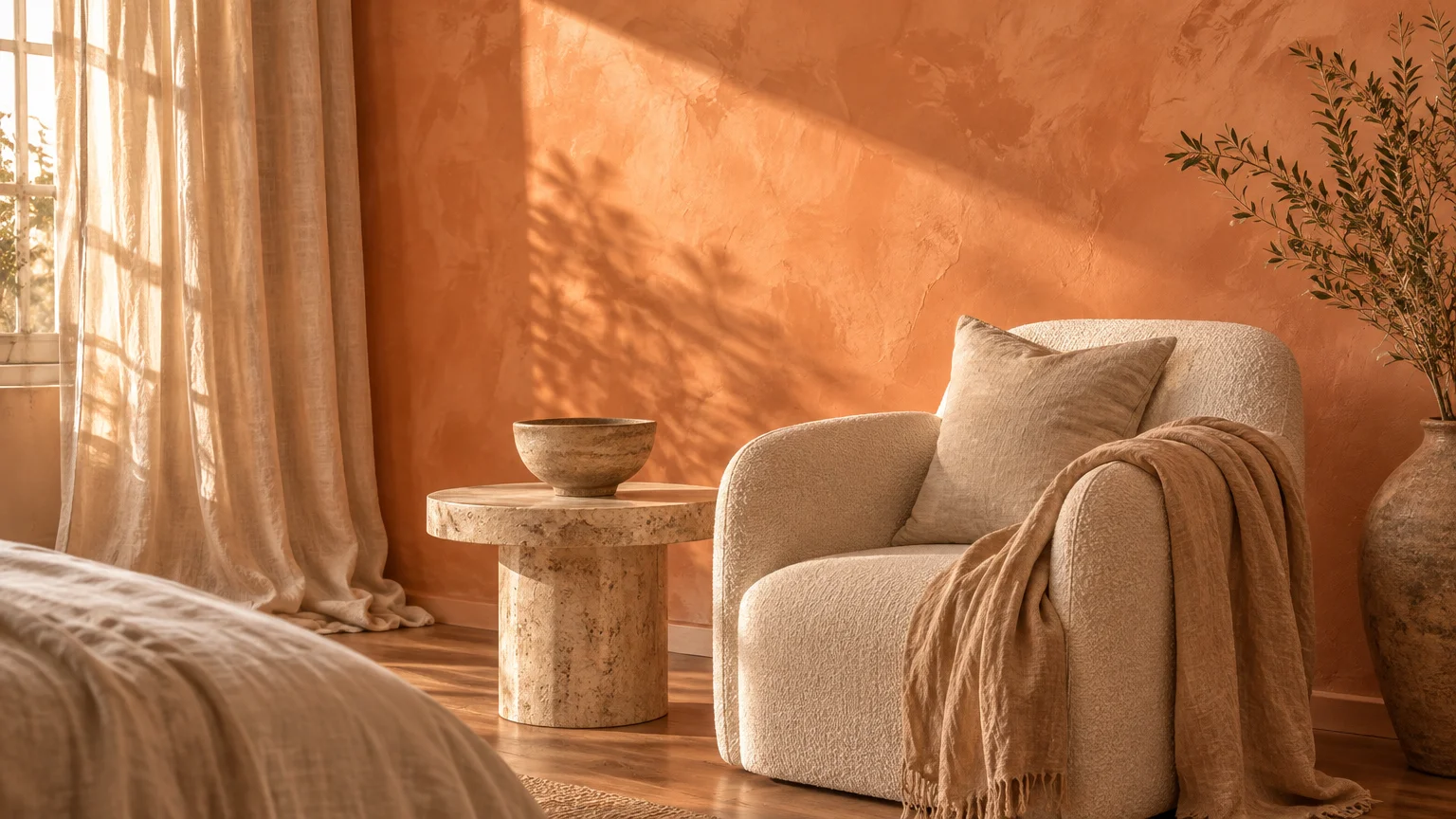
Fortunately, you can capture warm, sunlit energy without sacrificing visual harmony or resale value. Look toward earthy terracottas and botanical yellow-greens that soften yellow’s sharpest edges.
Dutch Boy’s 2027 Color of the Year, Deep Rooted (311-7DB), announced August 25, 2026, delivers grounded warmth through an earthy terracotta orange at LRV 17. It channels Mediterranean warmth and artisan pottery without harsh glare.
Prefer something lighter and fresher for a breakfast nook or guest bath? Pair natural woven shades with Sherwin-Williams’ Celery, which weaves a delicate yellow undertone into a restorative herbal green.
When covering saturated ochre walls, always budget for a dedicated coat of high-hiding primer first. Retail primer costs $20 to $60 per gallon in 2026 and prevents stubborn yellow undertones from bleeding through your new finish.
Trend #5: Glossy, High-Energy Tomato Red
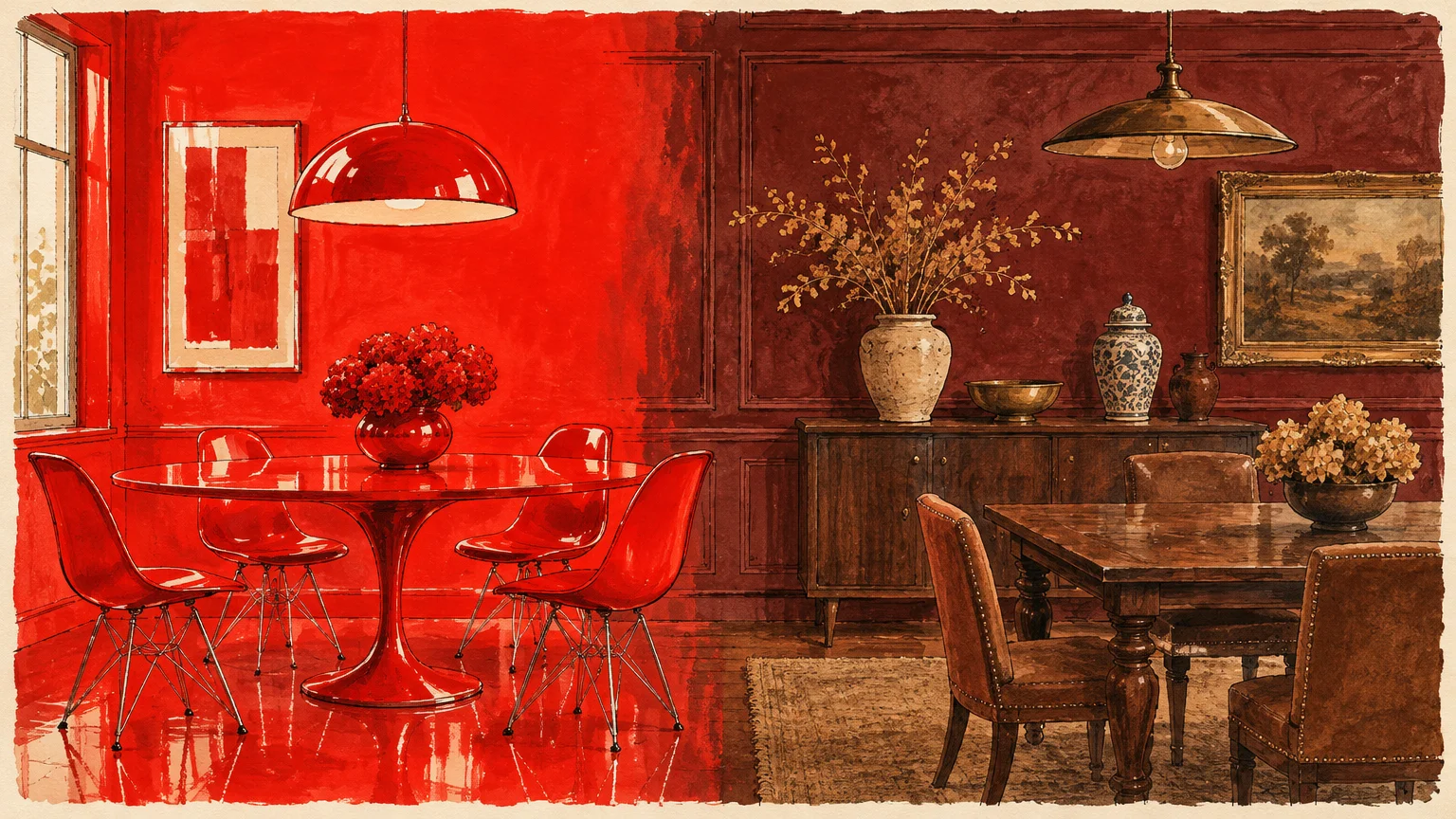
Once celebrated as an appetite-stimulating dining room classic, fire-engine and tomato red feel jarring in 2027’s calmer interiors. High-chroma primary reds demand constant visual attention, working against modern homes designed for decompression.
Kitchens suffer the sharpest backlash against bright red paint. Zillow’s 2026 research shows that red kitchens can drag buyer offers down by roughly $8,000.
Today’s homeowners treat the kitchen as a multi-functional gathering lounge rather than a loud diner. In this relaxed environment, fiery red walls clash violently with popular white oak cabinetry and veined natural stone.
If you still adore dramatic, wine-inspired warmth, shift from bright tomato tones into deeper, dustier territory. Zillow’s 2026 buyer survey found that dark plum kitchens actually added $867 to purchase offers.
Deep plum and smoky aubergine feel tailored, scholarly, and grounded alongside brushed bronze or aged brass fixtures. You retain rich evening intimacy without triggering visual fatigue over morning coffee.
Terracotta-based reds also align effortlessly with 2027 color trends. Dutch Boy’s Deep Rooted trades artificial brightness for clay-baked authenticity, anchoring dining rooms with quiet confidence.
Covering an existing red wall requires patience and proper coverage calculations to avoid patchy streaks. Standard interior paint covers 350 to 400 square feet per gallon, while premium acrylics stretch to 400 to 450 square feet.
Because bold red pigments bleed easily, start with a gray-tinted primer covering 200 to 300 square feet per gallon. That foundational step cuts down the number of finish coats you need and delivers crisp, true color.
Trend #6: Dusty, Over-Saturated Millennial Pink
For nearly ten years, sugary Millennial pink migrated from boutique packaging onto living room walls and velvet sofas. Moving into 2027, that sweet, nostalgic blush registers as dated rather than effortlessly chic.
Over-saturated pinks struggle to transition gracefully as household tastes mature. They often read overly thematic, boxing your furniture and textiles into a fleeting mid-2010s aesthetic.
Market data confirms that buyers hesitate when facing bubblegum or pastel pink walls. Zillow’s 2026 Paint Color Analysis found that Millennial pink shaved thousands off buyer offers, mirroring the resistance to loud yellows and reds.
Interior design trends for 2027 favor layered, grown-up neutrals and complex, grayed-down botanicals over candy pastels. Designers still welcome subtle warmth on bedroom walls, provided the undertone feels earthy rather than sugary.
Rust-Oleum captured that evolved sensibility in November 2026 by naming Mauve Classic (RO1130) its featured shade. This smoky mauve carries dusty, heritage sophistication that pairs handsomely with charcoal upholstery and warm walnut.
Alternatively, consider stepping into rich cocoa tones for primary bedrooms craving cocooning comfort. Zillow’s 2026 study crowned chocolate brown bedrooms the top-performing shade overall, boosting buyer offers by $2,277 over white.
You can soften dark brown or smoky mauve bedrooms with crisp oatmeal bedding and unlacquered brass sconces. That balanced contrast delivers hotel-caliber quiet luxury while eliminating any trace of dated pastel sweetness.
Before painting a bedroom rich chocolate or mauve, check your lamp color temperatures. Warm 2700K bulbs bring out cozy plum and espresso notes, whereas cool daylight bulbs can make brown walls appear flat.
Trend #7: Neon-Bright, Artificial Mint and Kelly Green
Green undeniably dominates 2027 color forecasts, yet not every shade of green survives the transition. Synthetic, hyper-bright Kelly green, electric lime, and icy toothpaste mint are squarely out of style.
Neon and candy-coated greens feel disconnected from the authentic outdoor landscapes homeowners want to channel. When walls look artificially dyed, they break the soothing calm of a biophilic room.
Instead, designers are rallying behind muted, historic, and moss-toned greens with unmistakable provenance. According to the NKBA 2027 Kitchen Trends Report, 83% of pros expect green to serve as a leading color or accent in 2027, down slightly from 86% previously.
Major paint brands reinforced this organic green consensus across every 2027 forecast. Benjamin Moore announced Webster Green (HC-130) on October 14, 2026—a classic mid-tone historic green originally from its 1976 Historical Colors collection with an LRV around 20.
Meanwhile, Behr selected mossy Grounded, Dulux introduced Soulful Sage, and Sherwin-Williams unveiled herbal Celery under its broader 2027 Rewild Colormix Forecast. From pale herbs to heritage forest hues, every winning green leans distinctly earthy.
Shoppers reward balanced greens at closing time, too. In Zillow’s 2026 study, sage green was the sole shade to rank in the top tier in every room, adding $1,035 in bedrooms and nearly $500 in living rooms.
Surprisingly, homeowner adoption still trails designer enthusiasm in cabinetry. The Houzz 2026 U.S. Kitchen Trends Study revealed that only 6% of renovating homeowners actually chose green cabinets, giving early adopters a fresh, distinctive look.
Swap glossy mint bathroom walls for silvery sage or historic olive paired with honed marble or white oak. You will achieve timeless serenity that ages gracefully well past 2027.
The Big Picture: Weaving These Trends into Your Home
Retiring dated paint colors does not mean stripping your personality from your rooms. Smart 2027 color updates focus on balancing earthy pigments, tactile wall finishes, and disciplined budgeting.
According to Zillow consumer data from 2024, 32% of sellers painted before listing their homes. Zillow home trends expert Amanda Pendleton noted that strategically repainting rooms in top-performing hues can add over $5,000 to a seller’s bottom line.
Long-term homeowners benefit financially as well, with Angi estimating in 2026 that interior painting yields an average resale ROI around 107%. Few home improvements deliver stronger visual impact per dollar spent.
Before hiring a crew or buying brushes, map out realistic 2026 material and labor figures. Retail interior paint ranges from $15 to over $60 per gallon per NerdWallet’s February 2026 data, with broader residential tiers reaching $20 to $100.
Contractor-grade supply-house paint runs $34 to $52 per gallon, or $145 to $225 for a five-gallon bucket, totaling $0.20 to $0.32 per square foot per coat for materials alone per Staxen’s October 2026 pricing.
If you hire professionals for a full interior repaint on a 2,500-square-foot home—covering walls, ceilings, and trim—expect a 2026 national average of $5,046, typically ranging from $4,618 to $6,109. Partial refreshes average $1,051.
Per Housecall Pro and CertaPro Painters in 2026, single rooms typically run $400 to $1,200, or $2 to $6 per square foot based on home footprint. Angi notes labor makes up 75% to 95% of pro bills, while wall prep adds $0.50 to $0.75 per square foot.
Planning a DIY weekend refresh? Respect manufacturer dry and cure timelines so your fresh coat resists scuffs and peeling.
At 77°F and 50% relative humidity, standard interior latex wall paint dries to the touch in 1 hour and accepts a second coat in 4 hours. However, Sherwin-Williams and Benjamin Moore advise waiting two to three weeks for full curing before washing walls or pushing furniture flush against them.
Cabinet projects demand even more patience when using waterborne alkyd enamels like Benjamin Moore Advance. Allow 4 to 6 hours to touch, 16 hours between coats, five to seven days before reloading shelves, and up to 30 days for complete curing.
Watch weather and room climate closely while working. Never apply cabinet alkyd above 85% relative humidity, avoid painting in temperatures exceeding 100°F per Sherwin-Williams guidance, and skip space heaters—Benjamin Moore warns that an 11°C (~20°F) shift can alter final paint color.
Prioritize indoor air quality by checking Volatile Organic Compound (VOC) limits on every can. Under the U.S. EPA Federal AIM Rule, flat interior coatings cap at 250 g/L and non-flat coatings cap at 380 g/L before tinting.
For cleaner bedroom air, look for low-VOC formulas under 50 g/L or zero-VOC bases under 5 g/L before colorants under California’s SCAQMD Rule 1113 standards. Green Seal (GS-11) certifies flat paints at 50 g/L or less and non-flat paints at 150 g/L or less.
Finally, treat homes built before 1978 with strict lead-safety precautions. Paid contractors disturbing over 6 square feet per interior room must hold EPA Lead-Safe Certification and never use open-flame torches, heat guns above 1,110°F, or unshrouded high-speed dry sanders.
Although DIY homeowners working on their own primary residence remain legally exempt from the RRP Rule, the EPA strongly urges testing pre-1978 paint first. Seal off work zones with heavy plastic, keep children and pregnant women away, use wet sanding or HEPA-vacuum sanders, and wet-mop afterward.
For the latest color forecasts, consult industry leaders like Pantone and paint companies like Benjamin Moore. For professional design standards, refer to the American Society of Interior Designers (ASID).
Note that as of mid-November 2026, Pantone had not yet unveiled its 2027 Color of the Year, with its announcement scheduled for early December 2026. Watching that release alongside warm 2027 paint forecasts will help you finalize confident room updates.
Frequently Asked Questions
What paint colors are replacing cool gray and stark white in 2027?
Major paint brands are replacing cool gray and stark white with smoky blues, muted botanical greens, warm mushroom taupes, and rich terracottas. Standout 2027 selections include Valspar’s Cottage Door, Glidden’s Artifact, Behr’s Grounded, Dutch Boy’s Deep Rooted, and Benjamin Moore’s Webster Green.
Which outdated paint colors hurt home resale value the most?
According to Zillow’s 2026 Paint Color Analysis, ochre yellow throughout an interior ranks as the worst offender, cutting buyer offers by $18,164. Red kitchens follow closely by lowering offers roughly $8,000, while Millennial pink also trims thousands from sale prices.
How much should I budget to repaint my home before 2027?
For a full interior professional repaint on a 2,500-square-foot home, the 2026 national average is $5,046, with partial refreshes averaging $1,051. Single rooms generally cost $400 to $1,200 professionally, while DIY painters pay $15 to $100 per gallon depending on paint tier.
How long should I wait before washing walls or reloading painted cabinets?
Standard latex wall paint dries to recoat in 4 hours at 77°F, yet requires two to three weeks to fully cure before washing or pressing furniture against walls. Waterborne alkyd cabinet enamels need five to seven days before shelf use and up to 30 days to cure.
What does Light Reflectance Value (LRV) mean when selecting new colors?
LRV measures how much visible light a paint shade reflects on a 0-to-100 scale, where 0 is pure black and 100 is pure white. Checking LRV prevents surprises, helping you balance moody hues like LRV 17 Deep Rooted against airy shades like LRV 71 Celery.
Is it safe to sand and repaint walls in a home built before 1978?
Disturbing pre-1978 paint carries lead dust hazards, so always test older surfaces before scraping or sanding. Use wet sanding or HEPA-vacuum sanders, seal doorways with heavy plastic, keep children and pregnant women out of the area, and hire EPA Lead-Safe Certified pros for major work.
Disclaimer: This article reflects design trend analysis and predictions. Personal taste and timeless design principles should always guide your decorating choices.