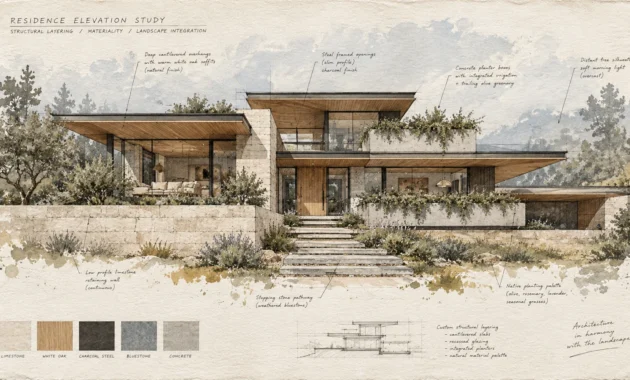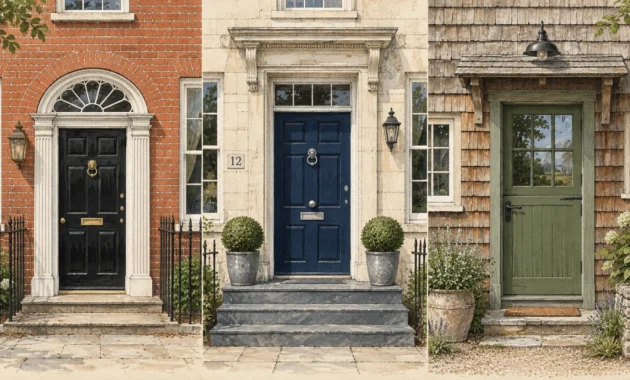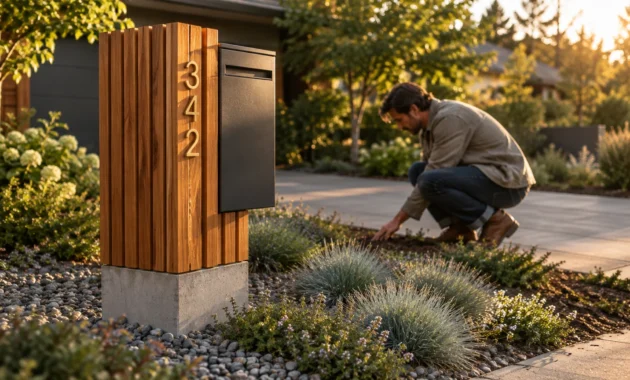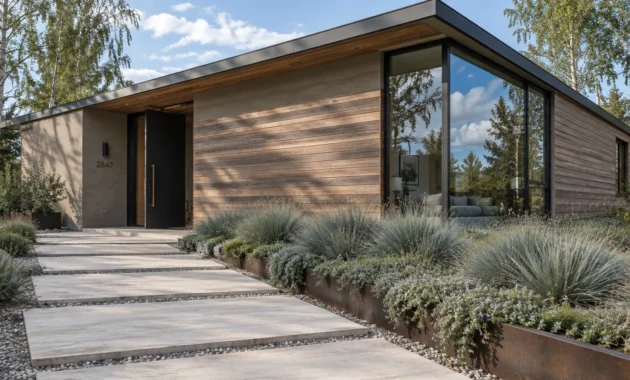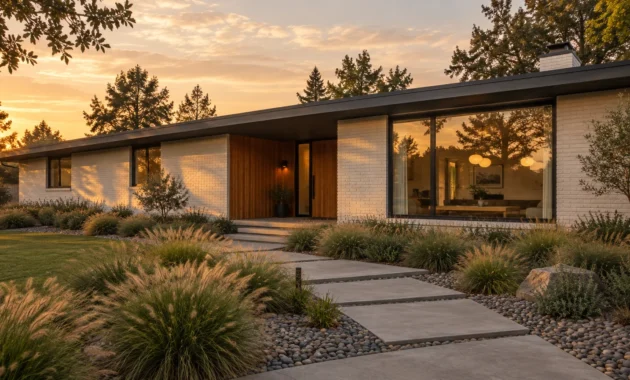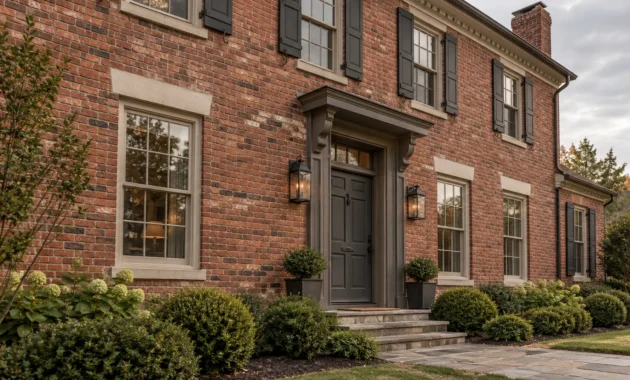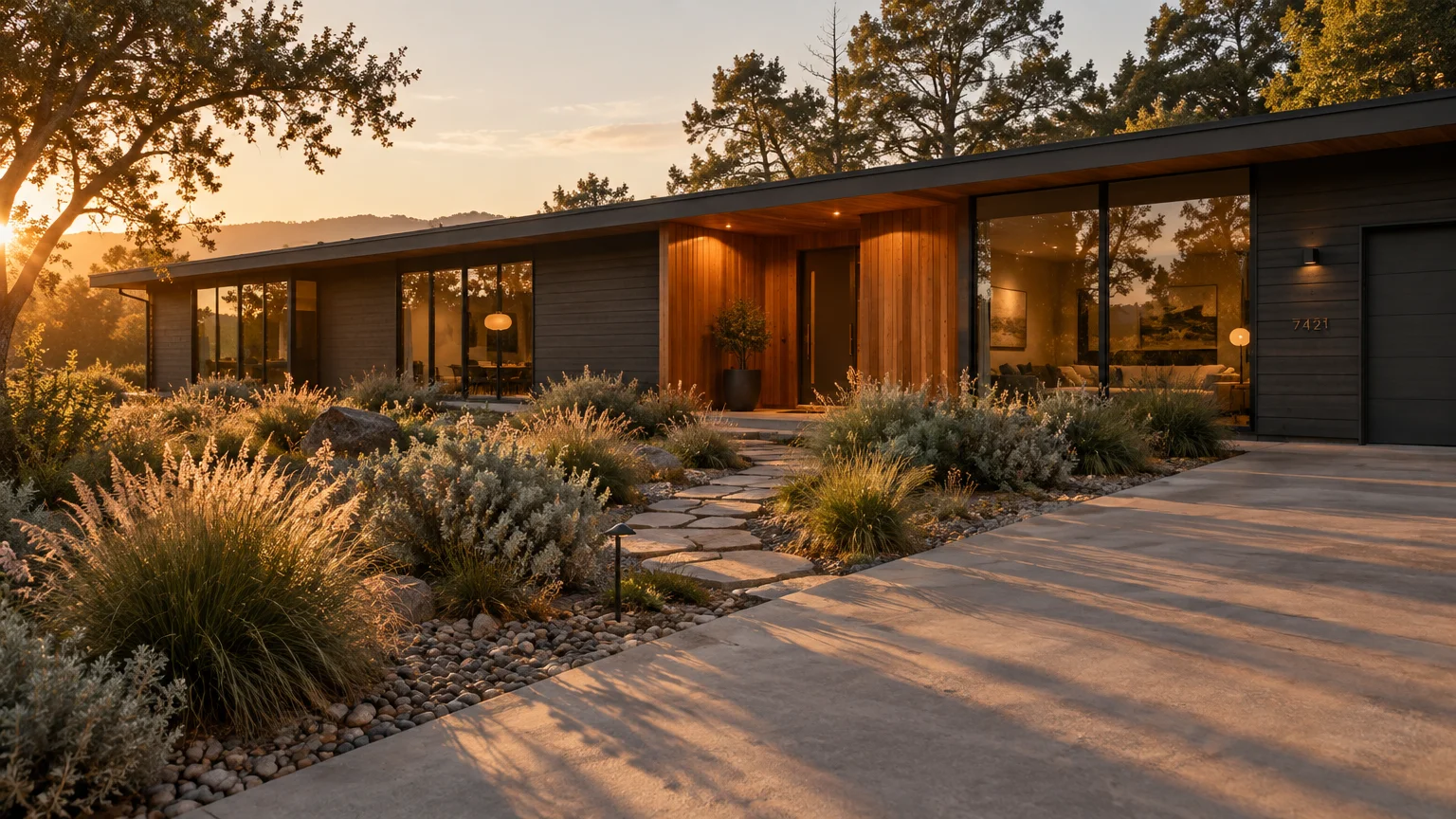
Transforming a traditional ranch into a contemporary showpiece starts with a deliberate exterior color overhaul. The right architectural palette accentuates horizontal rooflines while erasing dated mid-century suburban motifs.
Today’s sophisticated palettes pair deep mineral saturations and organic neutrals with mixed materials like cedar, steel, and stone. Selecting an intentional shade delivers an immediate elevation in exterior presence and street-level luxury.
Whether your home features smooth siding or textured brick, color reframes vintage proportions into sleek modern architecture. These nine curated exterior paint colors redefine single-story living with undeniable sophistication.
Trend #1: Deep Cast-Iron Charcoal
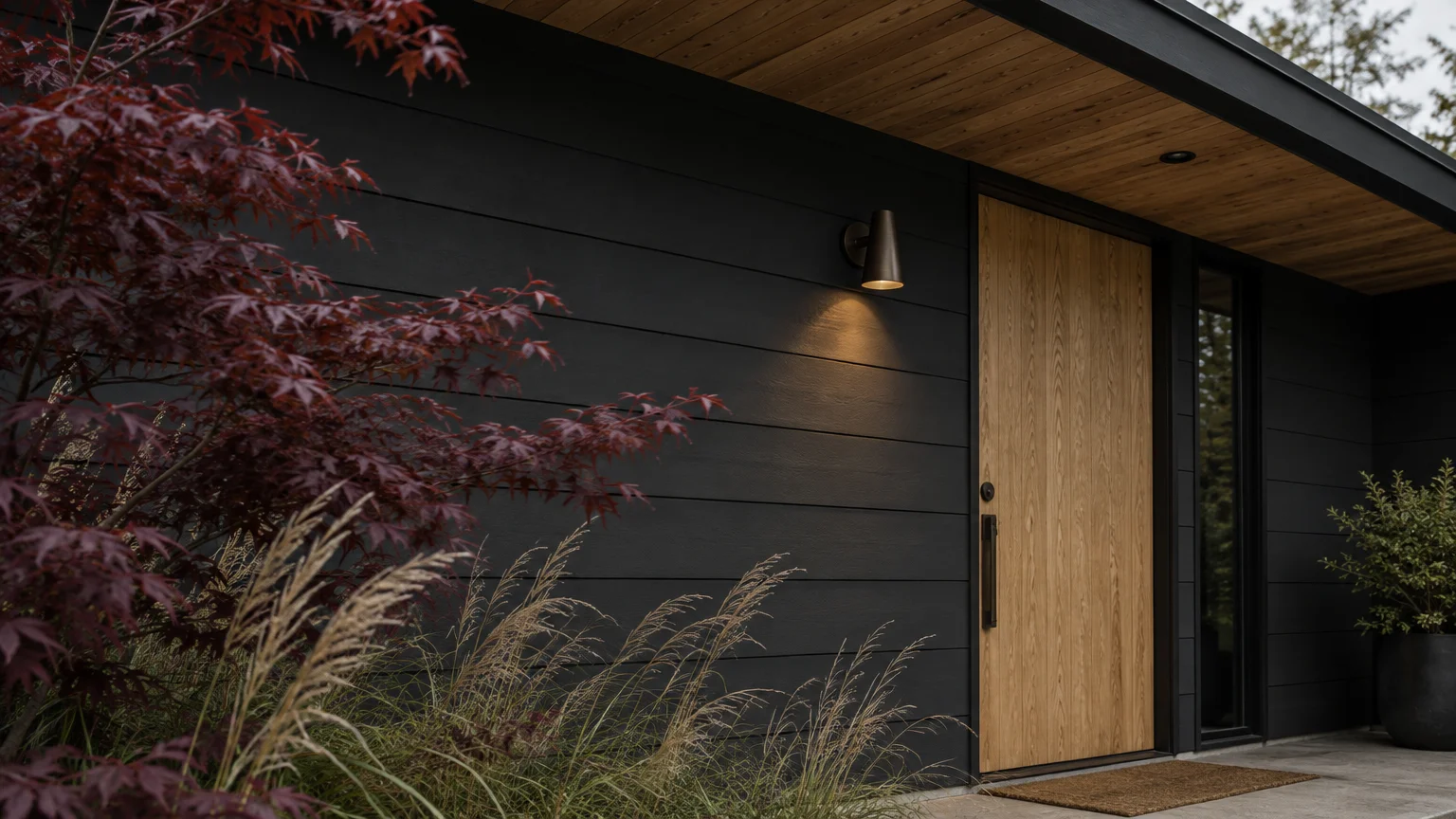
Cast-iron charcoal introduces profound architectural drama to single-story homes by accentuating their grounded horizontal footprint. This moody, near-black hue absorbs harsh sunlight and sharpens rooflines without feeling stark or uninviting.
Designers favor dark charcoal because it unifies disparate materials across vintage facades. It turns disjointed brick, composite siding, and vintage fascia boards into a unified, sculptural silhouette.
Pair charcoal with warm tongue-and-groove cedar soffits or white oak front doors to introduce textural contrast. The rich timber offsets the deep body color while emphasizing organic modernism.
For elevated ranch house curb appeal, integrate matte black window casements and minimalist bronze light fixtures. This monochrome harmony reinforces quiet luxury while honoring your home’s authentic low-profile architecture.
Charcoal works exceptionally well when surrounding native landscape plantings. The dark facade acts as a dramatic gallery backdrop that makes ornamental grasses and Japanese maples pop.
Use a flat or matte exterior finish to maintain a velvety, non-reflective surface across broad elevations. This prevents uneven siding textures from catching unflattering glare under direct sun.
Trend #2: Alabaster Cream and Warm Plaster
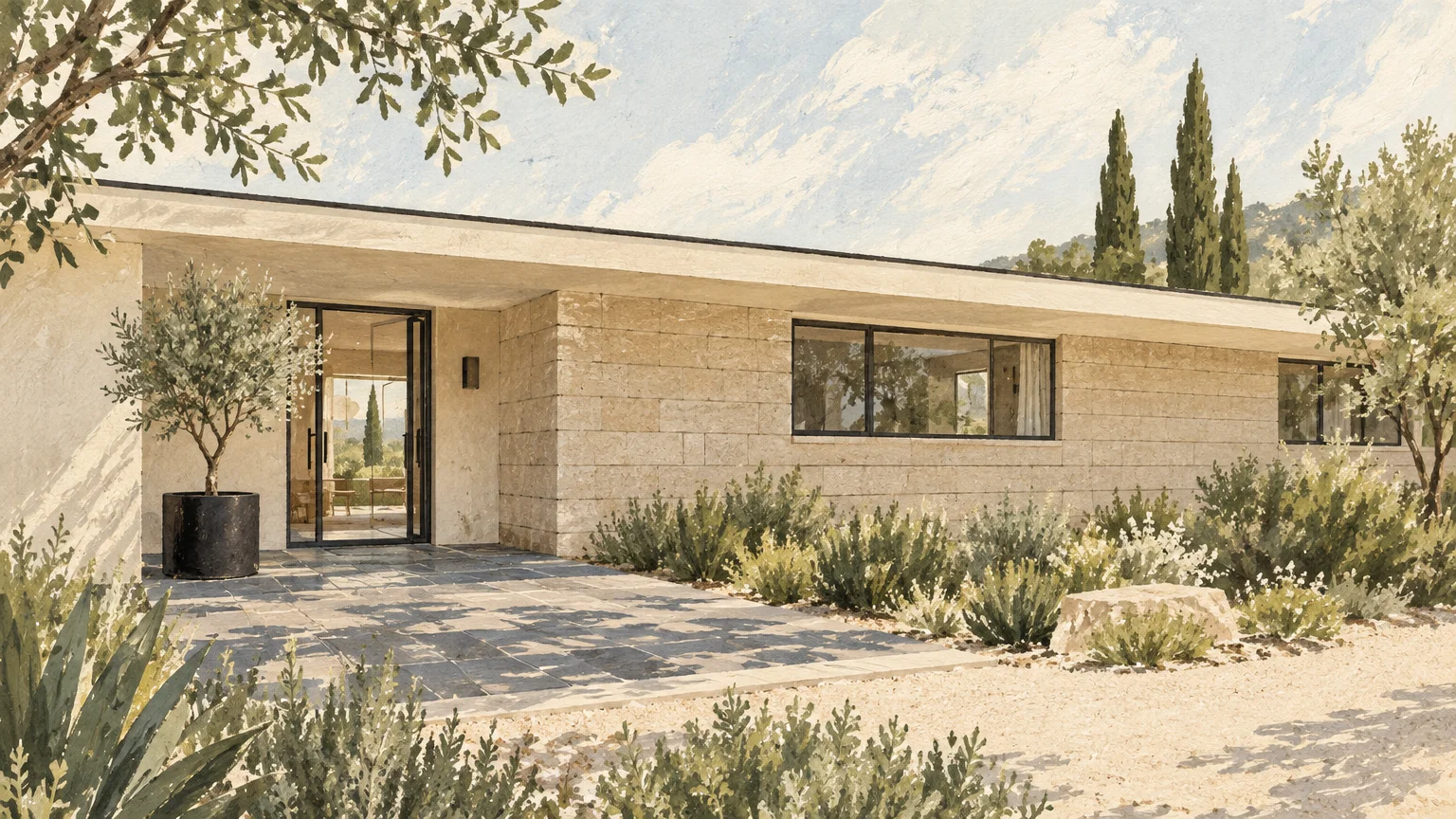
Modern off-white has abandoned the icy undertones of past decades in favor of tactile warmth. Alabaster cream softens sprawling ranch elevations, reflecting natural light across long horizontal planes.
This luminous neutral celebrates European plaster finishes and quiet luxury styling. It offers an expansive visual effect that makes compact one-story layouts feel substantially larger from the street.
When applying this shade to textured stucco or painted slump block, subtle beige undertones prevent visual glare. The soft coloration captures shifting shadows throughout the day, providing dynamic visual depth.
Complement alabaster walls with aged brass hardware and honed bluestone porch pavers. This refined palette bridges historical mid-century craftsmanship with contemporary editorial restraint.
For your modern ranch exterior, select an off-white trim just half a shade lighter than the siding. This tonal treatment avoids high-contrast banding and preserves unbroken architectural sightlines.
Incorporate black steel planters and olive trees near the entryway to anchor the bright facade. The deliberate organic accents create an inviting, sophisticated transition from landscape to interior.
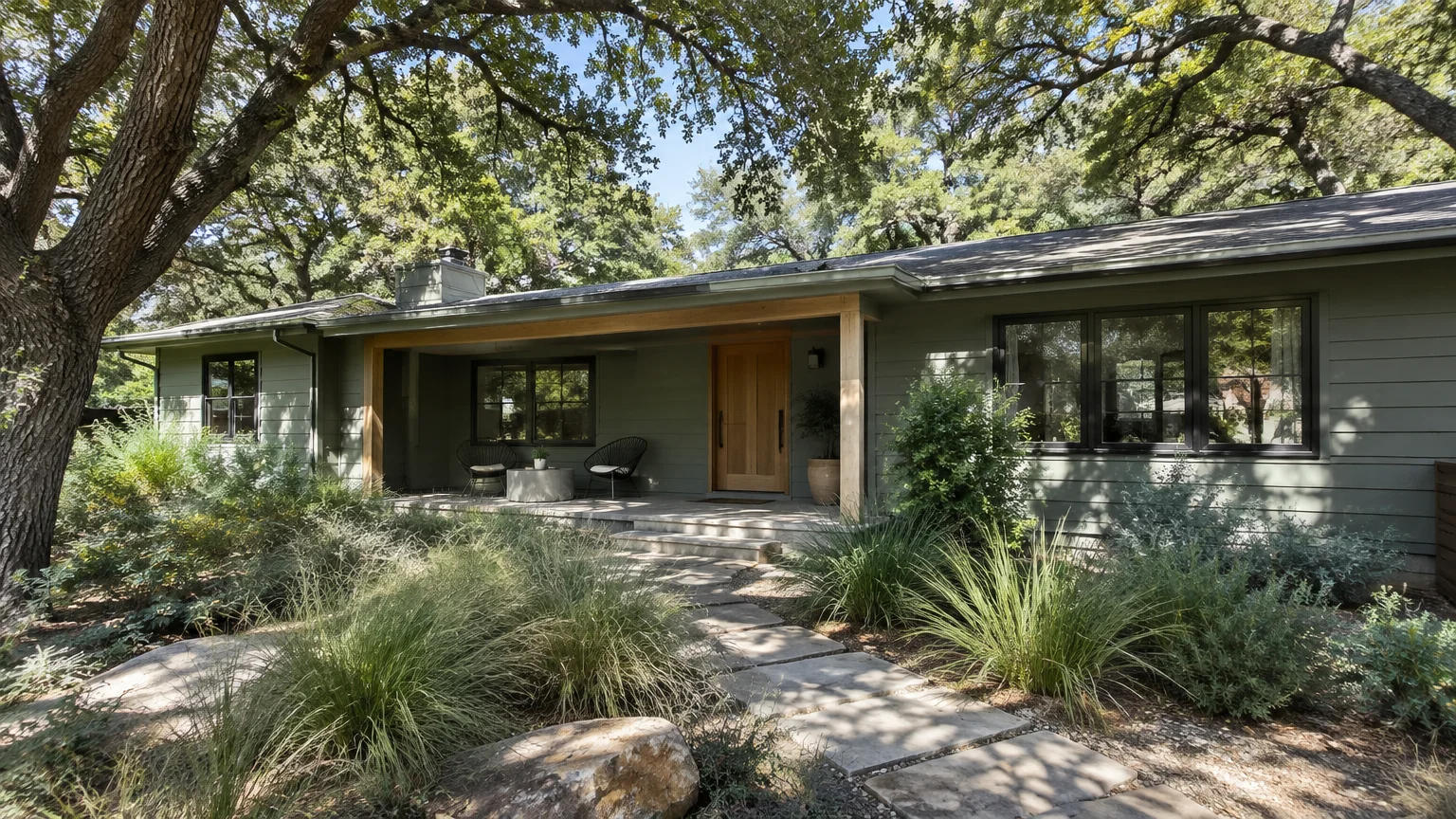
Trend #3: Muted Eucalyptus Sage
Muted eucalyptus brings biophilic harmony to one-story home paint colors by mirroring organic surroundings. This subdued green possesses subtle gray and slate undertones that keep it sophisticated rather than rustic.
The resurgence of earthy green stems from a desire to ground residential architecture within its natural site. Single-story ranches naturally interact with landscape canopies, making botanical tones remarkably cohesive.
This shade camouflages aging siding flaws by diffusing midday glare across broad elevations. It flatters both horizontal lap siding and vertical board-and-batten profiles with effortless grace.
Layer eucalyptus siding against charcoal eaves, black window muntins, and dry-stacked limestone retaining walls. The contrast injects modern architectural vigor while maintaining an undeniably serene street presence.
Introduce matte black iron house numbers and olive-toned pottery near the entryway. These deliberate exterior paint ideas establish an inviting arrival sequence that feels both tailored and grounded.
Eucalyptus also complements copper gutters that develop a natural verdigris patina over time. This dynamic interaction between paint and metal celebrates authentic material provenance.
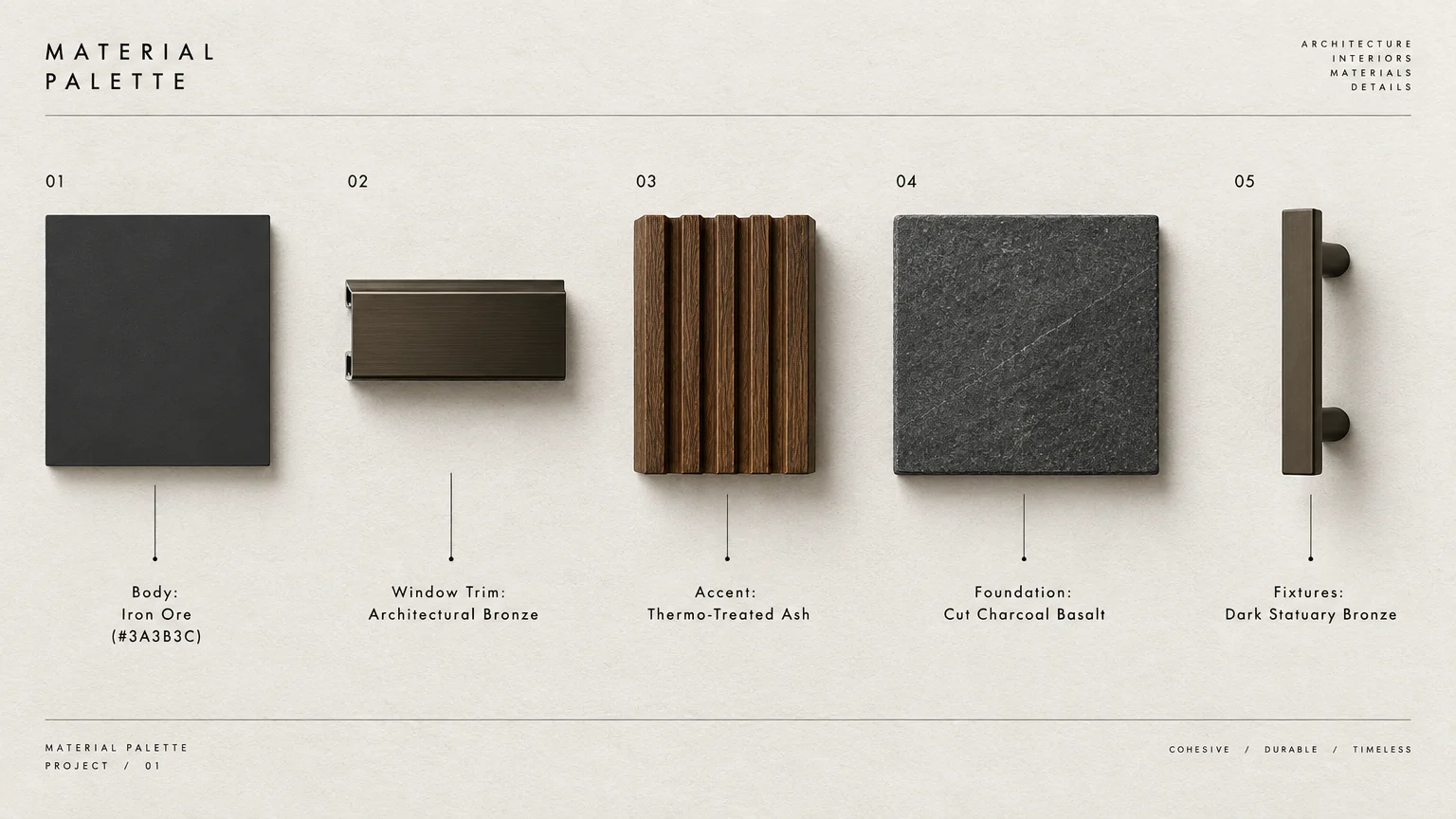
Trend #4: Saturated Iron Ore and Bronze
Saturated iron ore sits gracefully between deep charcoal and umber, radiating warmth and metallic gravitas. This complex neutral transforms ranch home exterior colors from dated suburban staples into striking modernist sanctuaries.
Brown-black pigments react dynamically to sun angles, shifting from chocolate velvet in morning light to charcoal at dusk. This nuanced behavior lends architectural depth to low-pitched gable roofs.
The shade highlights linear window expanses and continuous eave profiles characteristic of mid-century ranches. It frames glass elements cleanly, drawing the eye toward indoor-outdoor living spaces.
Accent this deep body tone with natural white oak accents and dark bronze gutters. The intentional metallics elevate utilitarian details into cohesive aesthetic assets.
When renovating original exterior brick, applying saturated iron ore eliminates outdated red and orange tones. The uniform matte finish establishes a bespoke, custom-built impression.
Balance the moody facade with integrated landscape lighting that grazes exterior walls from below. Warm illumination reveals subtle surface textures while providing welcoming evening ambiance.
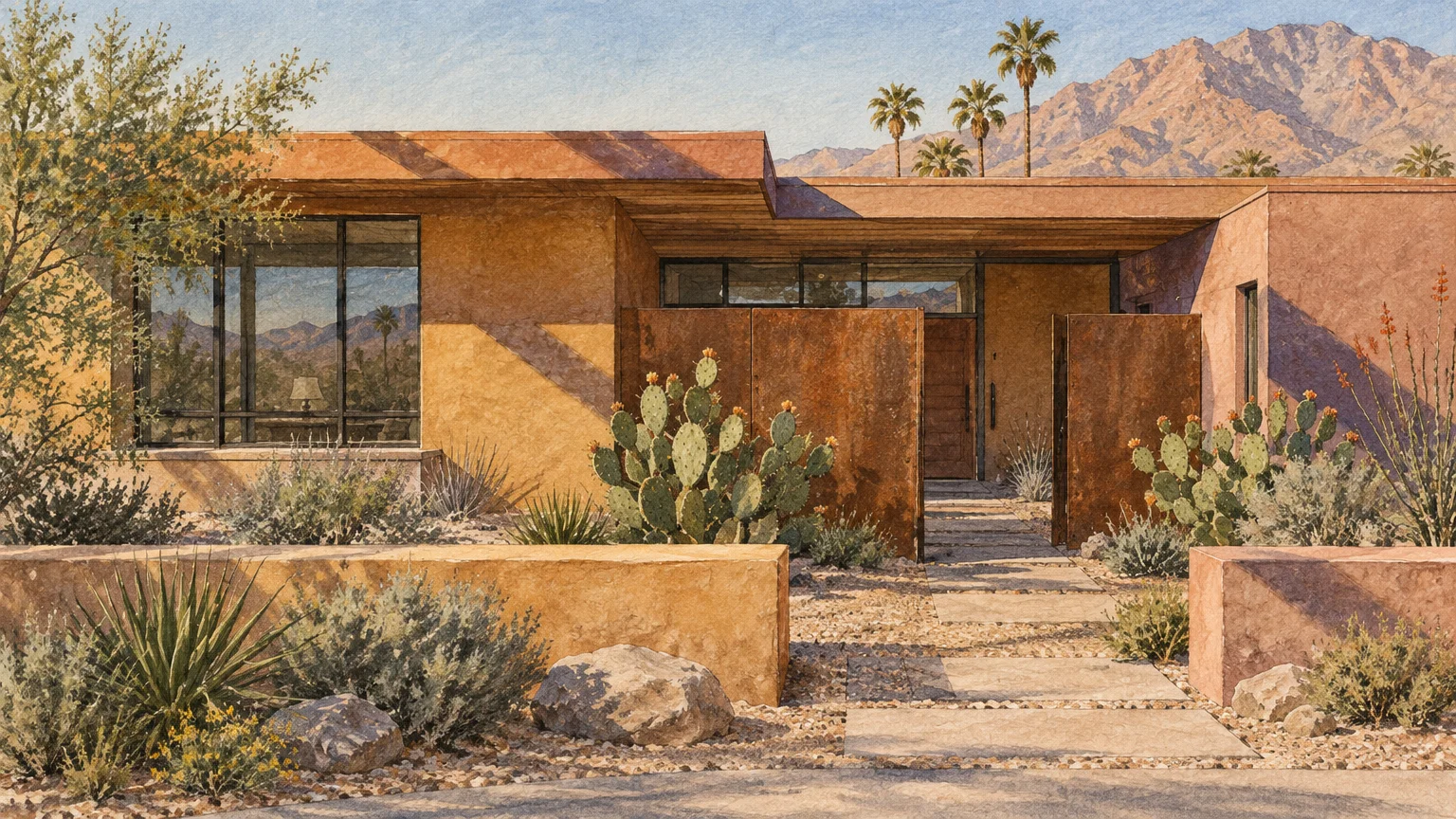
Trend #5: Desert Ochre and Terracotta Taupe
Desert ochre draws inspiration from sun-drenched rammed-earth architecture and southwestern design heritage. Blended with muted terracotta taupe, this palette introduces authentic provenance and artisanal soul to ranch renovations.
Warm desert tones resonate with homeowners seeking character beyond standard gray palettes. This color range evokes vacation serenity and effortless warmth across sprawling single-story layouts.
Ochre pairs exquisitely with desert landscaping, such as agave, architectural cacti, and decomposed granite pathways. It visually anchors your ranch into the terrain, reinforcing intentional organic modernism.
Frame terracotta taupe siding with soft off-black fascias and natural cedar garage doors. This visual counterweight prevents the warm earth tones from feeling nostalgic or dated.
Incorporate clay outdoor sconces and blackened steel planters along the front walkway. These tactile accents balance raw earthy beauty with clean contemporary lines.
This palette performs exceptionally well in regions with intense sunlight, where cool tones appear washed out. Earthy pigments absorb brilliant light, retaining their depth and rich character all day.
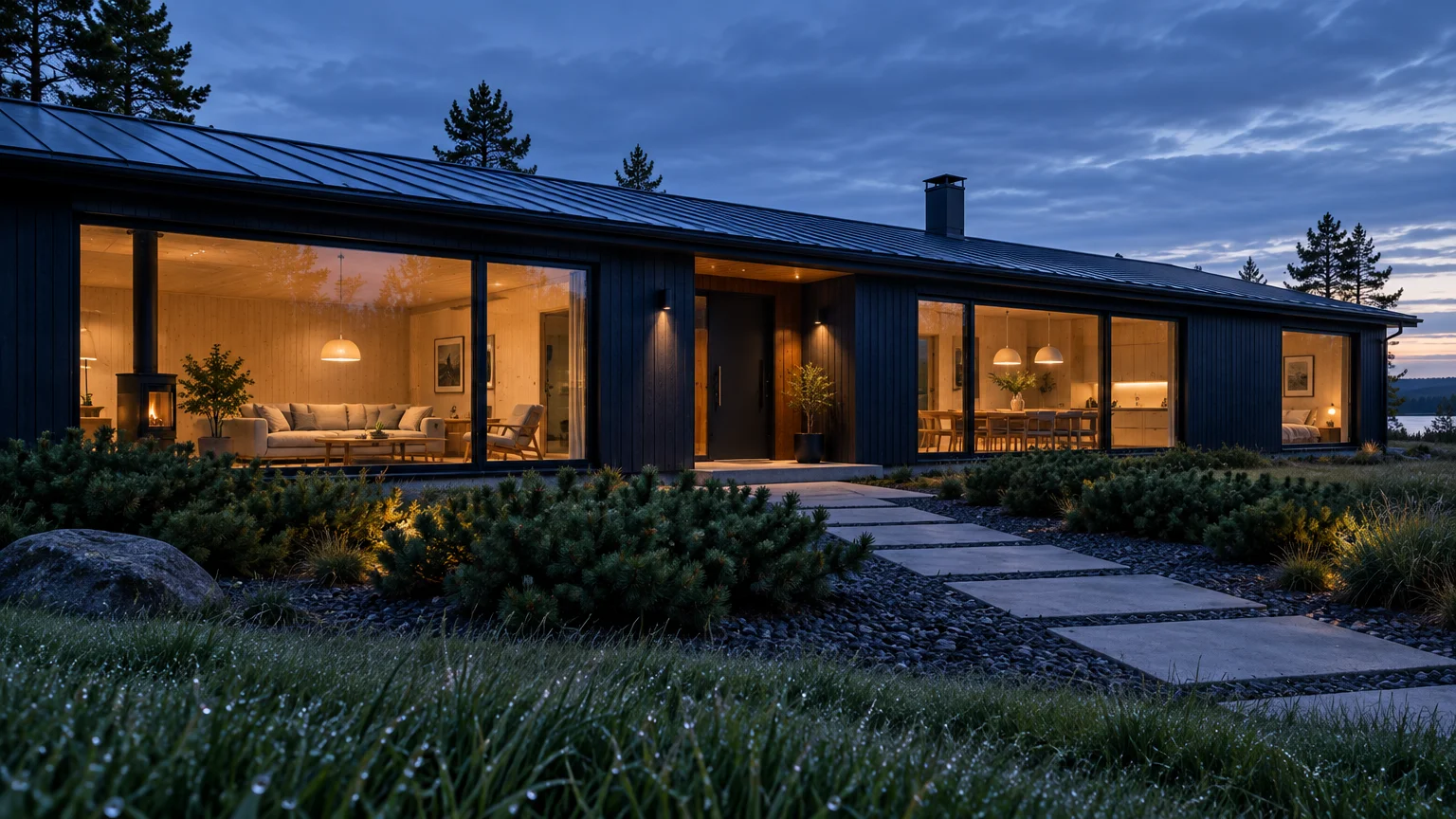
Trend #6: Nordic Ink and Midnight Slate
Nordic ink delivers a midnight navy foundation infused with heavy graphite undertones. Unlike traditional maritime navies, this dark slate tone projects refined restraint and progressive architectural elegance.
Deep blue-black tones recede visually, making low-slung ranch exteriors appear crisper and more intentional against open skies. The shade lends dignified gravity to wide, horizontal rooflines.
This striking hue pairs beautifully with clear cedar siding inserts and crisp black composite windows. The interplay of cool ink and honey wood tones creates undeniable curb appeal.
Utilize low-gloss satin or flat sheens when coating large siding expanses in midnight slate. Flat sheens absorb exterior reflections and hide minor surface imperfections across older panels.
A brushed stainless steel entry lockset and poured-concrete front steps complete this contemporary Nordic aesthetic. The clean palette demonstrates how bold color choices revitalize mid-century geometry.
Nordic ink also forms a striking contrast with pale concrete driveways and architectural paver layouts. The clean juxtaposition emphasizes geometric precision from the street.
Trend #7: Pale Greige with Olive Undertones
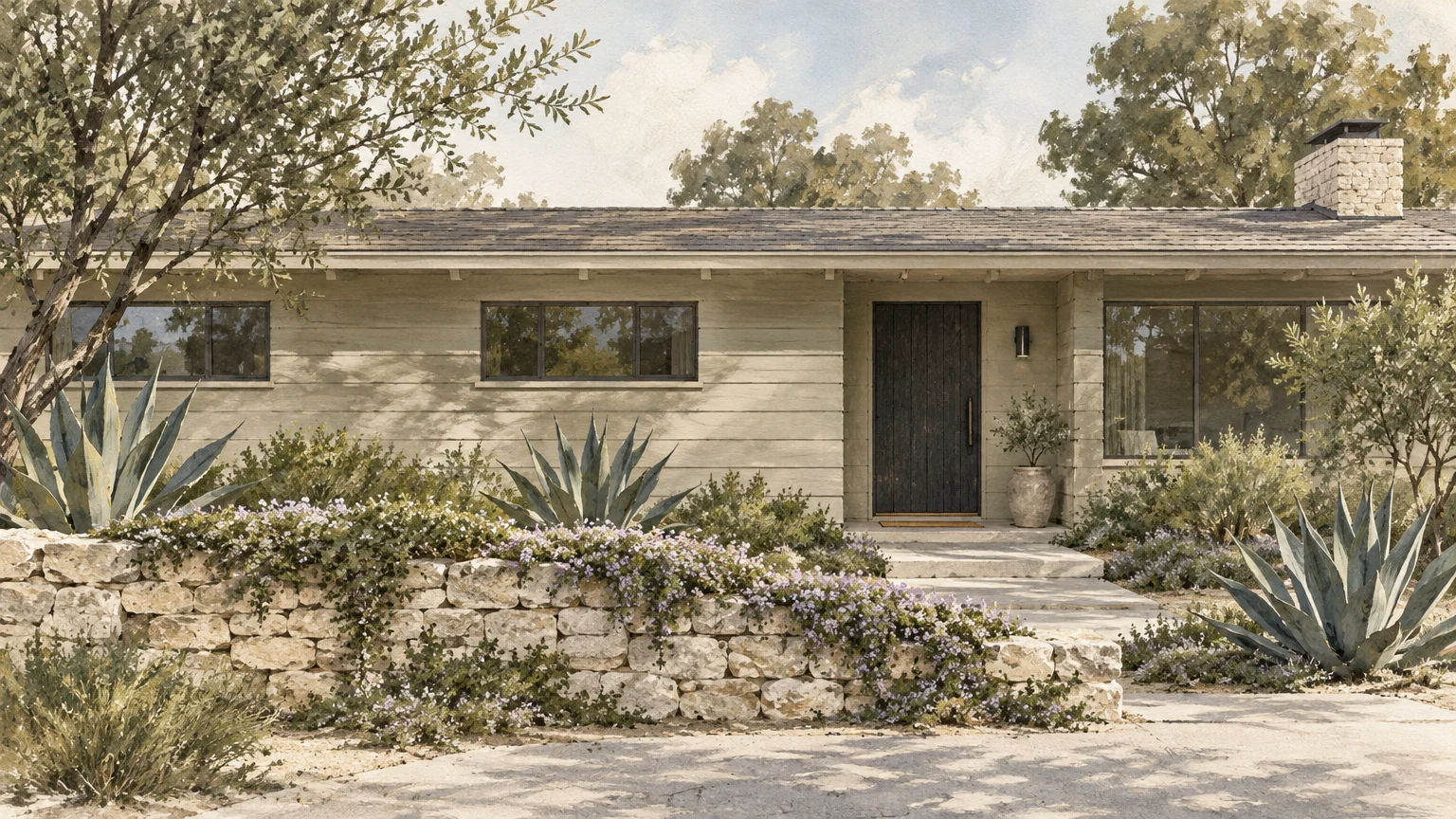
Pale greige infused with olive undertones represents the ultimate transitional neutral for one-story ranches. It marries the contemporary sleekness of gray with the approachable warmth of organic beige.
This versatile color adapts effortlessly to changing seasonal light, never pulling sterile or dingy. The faint olive undertone creates subtle kinship with lush lawn grasses and surrounding evergreen shrubs.
When applied to brick or vertical siding, olive greige provides a calming, unified exterior envelope. It modernizes segmented ranch facades without clashing with neighborhood architectural contexts.
Contrast this body color with rich walnut front doors and crisp slate-gray window trim. The subtle step-down in tone outlines your home’s architectural features without stark demarcations.
Greige also complements poured-in-place concrete entry paths and natural flagstone hardscaping. It allows organic garden elements and architectural hardscapes to shine without competing for attention.
Use satin white trim on porch ceilings to subtly bounce light into adjacent interior living spaces. This thoughtful architectural touch brightens ranch interiors that suffer from deep roof overhangs.
Trend #8: Smoky Mineral Graphite
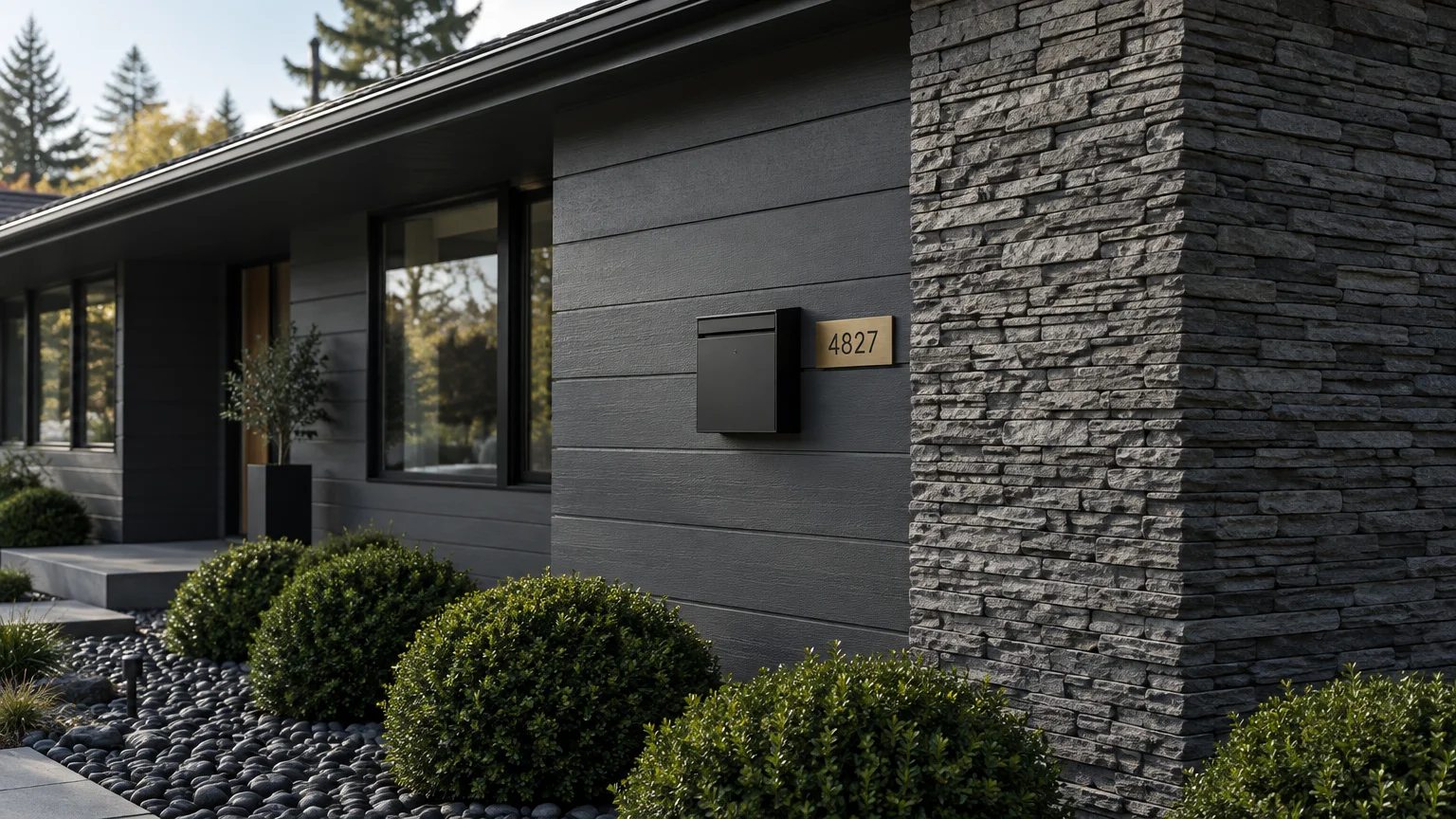
Mineral graphite bridges the gap between deep charcoal and mid-tone industrial gray. It delivers a modern, urban edge to classic ranch proportions while maintaining an understated, quiet luxury presence.
This shade emphasizes clean planar transitions between exterior siding, roof overhangs, and front porches. By eliminating visual clutter, graphite focuses attention on the home’s horizontal structural elegance.
It serves as an ideal pairing for homes with exposed steel structural columns or cable railings. The industrial tone highlights architectural honesty and contemporary renovation materials.
Add blonde timber details on the front porch ceiling to create a welcoming, luminous entry glow. Soft exterior uplighting brings out the complex mineral pigments after sunset.
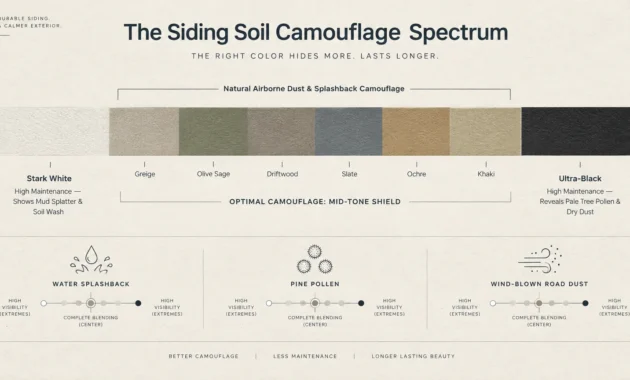
Graphite is remarkably forgiving in areas prone to dust or environmental wear. It maintains a clean, polished appearance far longer than pure black or pale white surfaces.
Pair it with oversized charcoal concrete pavers and river rock borders along foundation walls. The cohesive monochrome hardscape anchors your single-story elevation to the surrounding ground plane.
Trend #9: Weathered Clay and Muted Driftwood
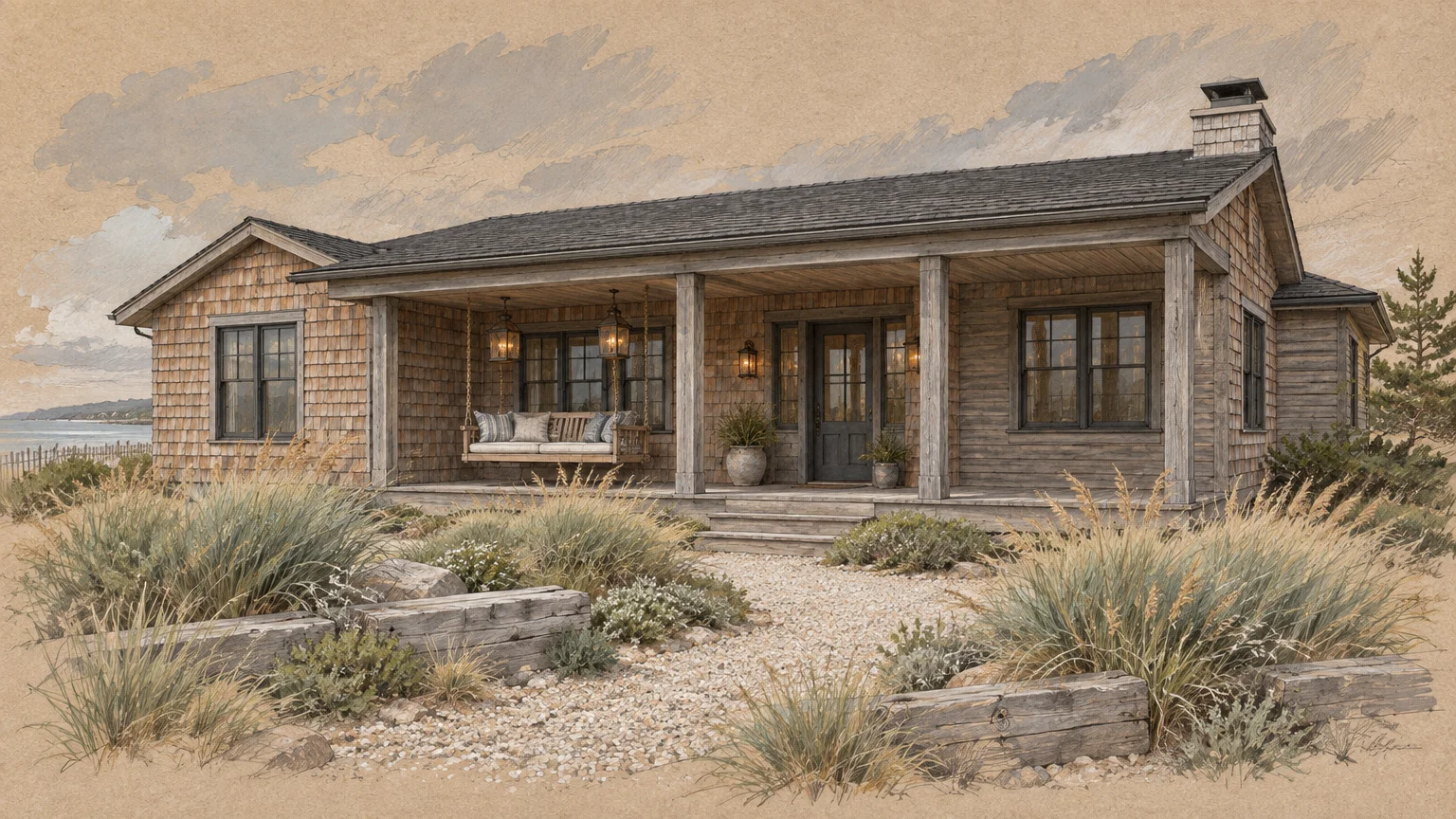
Weathered clay captures the gentle, tactile patina of sun-bleached coastal timber and aged stone. It delivers casual luxury, transforming rigid ranch silhouettes into warm, inviting retreats.
This desaturated driftwood tone speaks directly to the rise of warm minimalism in exterior design. Homeowners appreciate its soft, sun-washed character, which resists cyclical design fads.
The color complements original fieldstone chimneys and exposed aggregate foundations frequently found on mid-century ranches. It harmonizes diverse exterior textures under one cohesive, relaxed envelope.
Accentuate weathered clay with oil-rubbed bronze outdoor lanterns and dark charcoal window sashes. The dark details deliver modern graphic framing against the pale, earthy body.
Install native drought-tolerant landscaping and gravel ground cover to complete this relaxed, organic look. Your home will project understated refinement that feels entirely at home in its environment.
Apply an ultra-flat exterior acrylic formula to accentuate the chalky, mineral-like finish of this organic hue. The matte surface creates an artisanal, lime-washed appearance without high maintenance demands.
The Big Picture: Weaving These Trends into Your Home
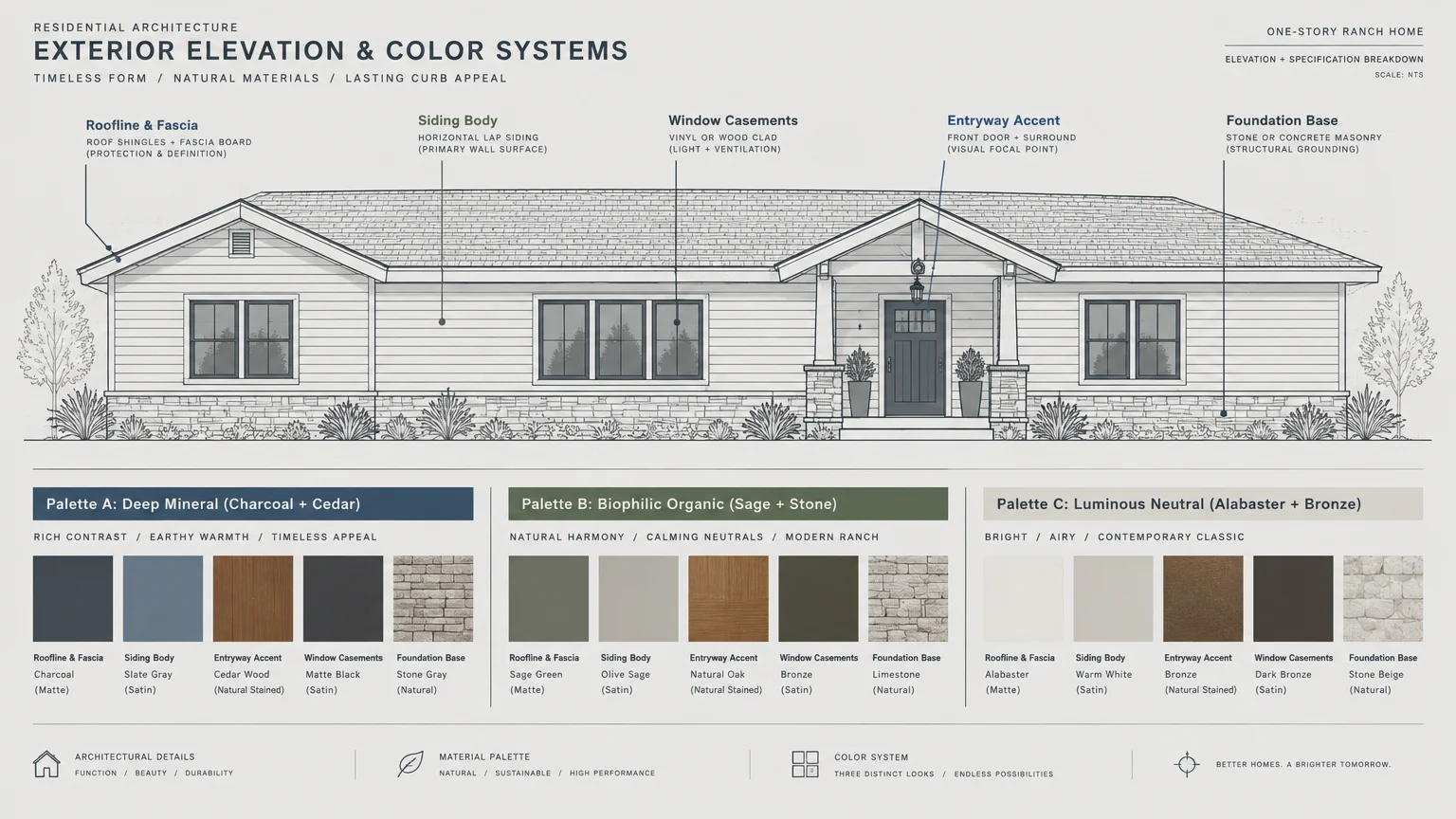
Updating your ranch home exterior colors requires balancing aspirational trends with practical site conditions. Consider your existing roof color, natural sunlight exposure, and fixed hardscape textures before purchasing paint.
Testing physical paint samples on various exterior elevations remains crucial. Watch how direct sunlight and shaded canopy areas alter undertones from sunrise to dusk.
Factoring renovation logistics into your budget ensures a seamless transformation. Professionally painting an average single-story home typically ranges between $1,500 and $4,500, or $1.50 to $4.00 per square foot.
Ranch homes sit on the lower end of whole-house labor costs because painters rarely require complex scaffolding. Single-story accessibility makes prep work faster and considerably safer for professional painting crews.
Standard exterior acrylic latex paint provides coverage of 350 to 400 square feet per gallon on smooth siding. Textured stucco or unpainted brick reduces coverage to 200 to 250 square feet per gallon.
A standard 1,500-square-foot one-story ranch generally requires 7 to 10 gallons for two complete topcoats. Always reserve extra paint for high-porosity masonry surfaces and future surface touch-ups.
The financial upside of updated curb appeal is well documented in real estate research. A fresh exterior paint job yields an average ROI of roughly 51% to 55%.
Real estate data indicates enhanced curb appeal can boost overall home perceived value by 2% to 7%. In fact, 92% of Realtors recommend homeowners tackle curb appeal improvements before listing properties.
If your ranch was built prior to 1978, observe EPA Renovation, Repair, and Painting regulations. Disturbing more than 20 square feet of exterior paint requires certified lead-safe practices during surface preparation.
Homeowners Associations frequently enforce 30- to 60-day Architectural Review Committee approval windows for non-neutral exterior color changes. Submit large paint swatches and material samples early to prevent unexpected project delays.
Coordinate your exterior body color with interior views through large picture windows and sliding patio doors. Establishing visual continuity between indoor flooring, wall palettes, and outdoor facades produces true architectural cohesion.
For the latest color forecasts, consult industry leaders like Pantone and paint companies like Benjamin Moore. For professional design standards, refer to the American Society of Interior Designers (ASID).
Frequently Asked Questions
How do you make a ranch house look modern with paint?
Focus on modern paint strategies that emphasize horizontal planes while minimizing disjointed exterior trim. Choose monochromatic or tonal color schemes that unify brick, siding, and foundation materials under one hue.
Contrast rich, earthy body colors with dark window frames and natural wood accents. This intentional pairing creates high-end architectural depth without structural modifications.
What is the most popular exterior color for a one-story ranch home?
Warm alabaster whites, sophisticated greiges, and deep mineral charcoals currently dominate modern ranch renovations. These versatile shades modernize classic mid-century lines while harmonizing with varied roof tones and natural surroundings.
Designers favor shades with warm, earthy undertones over cool, clinical grays. Earthy bases integrate seamlessly with stone, wood, and lush landscaping.
Should ranch house trim be lighter or darker than the siding?
Contemporary design embraces both tonal matching and dark architectural framing. Painting trim the exact same color as your siding creates a sleek, seamless envelope that visually enlarges your home.
Conversely, applying dark charcoal or black trim against lighter body colors establishes sharp, modern graphic framing. Avoid stark white trim on dark bodies, which breaks horizontal flow.
What sheen is best for ranch house exterior paint?
Flat or low-sheen satin finishes work best on exterior siding and masonry surfaces. Flat sheens diffuse sunlight and minimize surface imperfections on vintage wood, brick, or stucco.
Reserve satin or semi-gloss finishes for exterior doors, window trim, and architectural metalwork. This subtle variation in sheen adds depth without creating distracting exterior glare.
Disclaimer: This article reflects design trend analysis and predictions. Personal taste and timeless design principles should always guide your decorating choices.