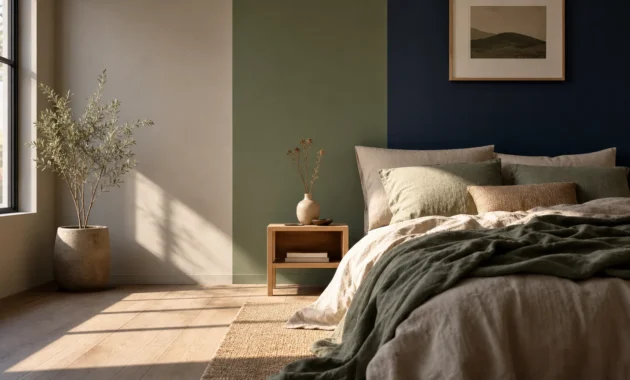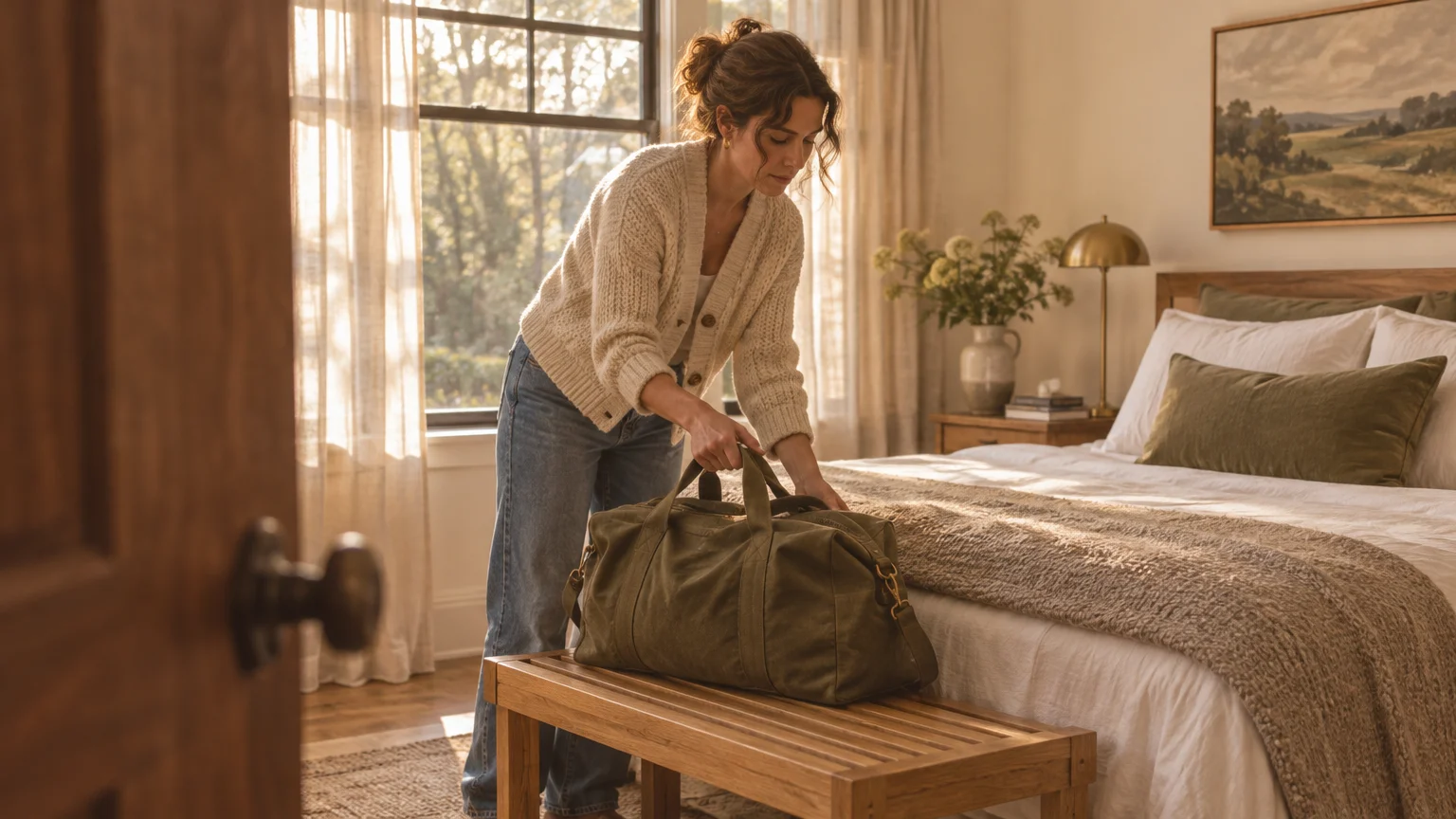
Great guest room ideas turn an occasional spare space into a restorative retreat where visitors actually sleep well. When 36% of holiday guests end up on couches or air mattresses and 32% sleep worse than usual, thoughtful bedroom design changes everything.
A Hilton survey conducted by Morning Consult also shows that 53% of holiday guests have made excuses to shorten family stays, and 38% need alone time within 24 hours.
You can eliminate that friction before anyone unpacks. These eight guest bedroom decor trends blend sleep science, ergonomic proportions, and quiet luxury so hosting guests feels effortless.
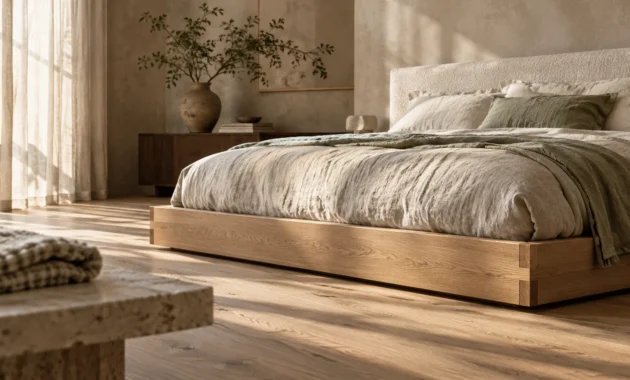
Bedroom Trend #1: Quiet Luxury Through Tactile Layering
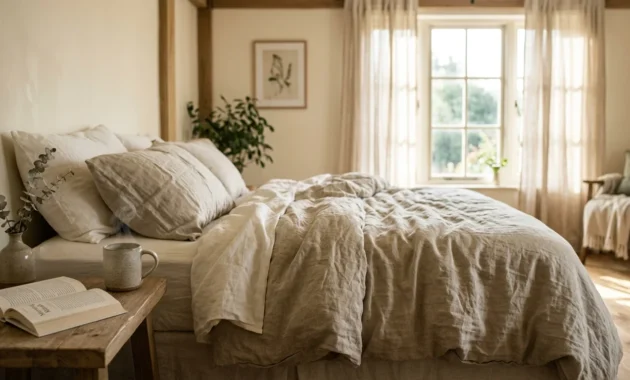
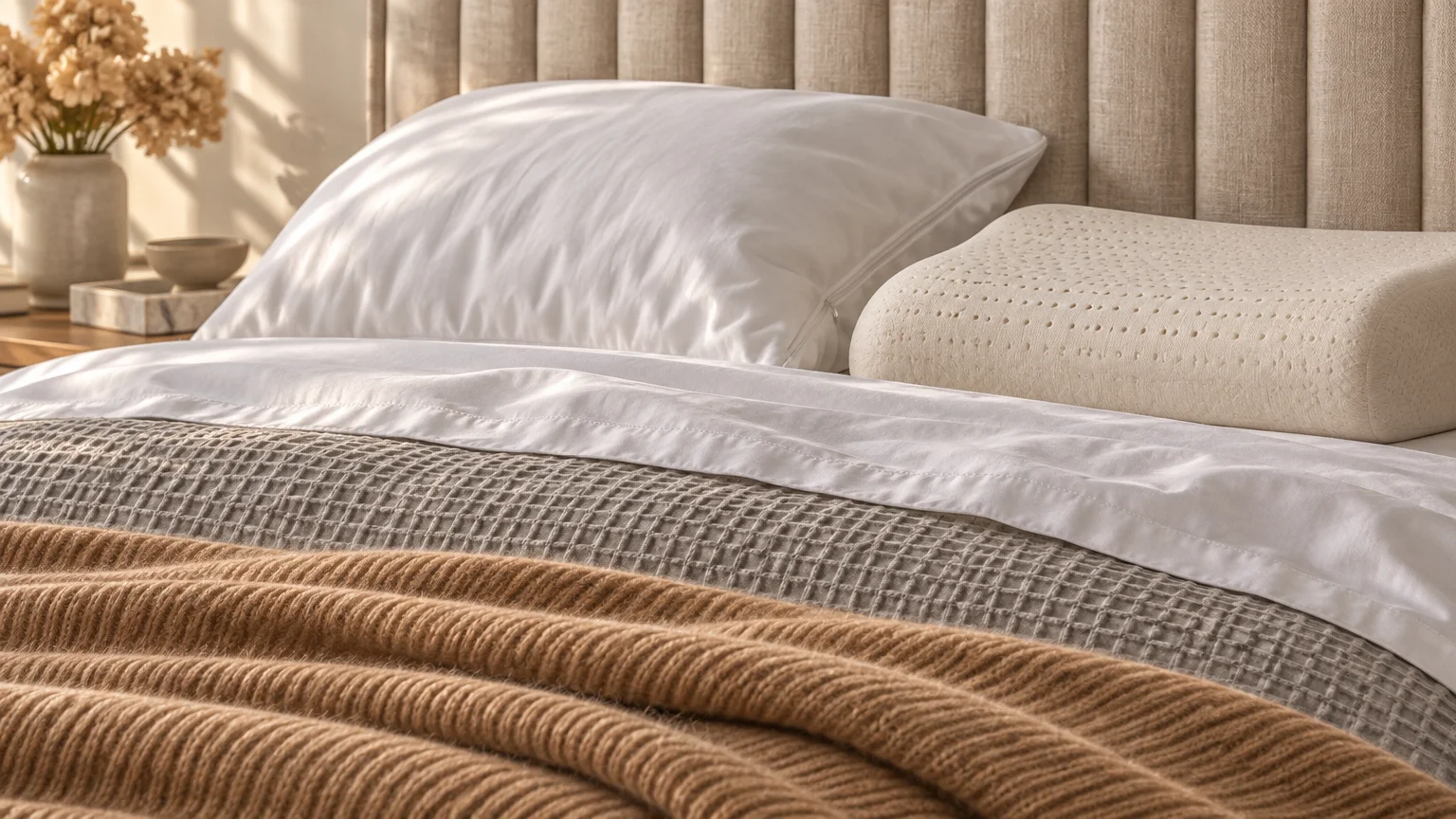
Quiet luxury replaces flashy ornamentation with understated materials that prioritize physical comfort from the moment a visitor sits on the bed. Tactile layering builds that comfort by combining contrasting weaves, weights, and textures across sheets, quilts, and throws.
Start with breathable base sheets rather than chasing inflated marketing numbers. The Sleep Foundation notes that quality sheets span 200 to 800 thread count, while textile guides identify 200 to 400 thread count single-ply cotton as the most breathable option.
Pair crisp percale or washed linen sheets with a medium-weight cotton quilt and a folded wool or cashmere-blend throw at the foot of the bed. This tiered approach lets warm and cool sleepers adjust their insulation without digging through hallway closets at midnight.
Pay close attention to pillow freshness, because flat or worn inserts immediately degrade sleep quality. The Sleep Foundation recommends replacing pillows every one to two years, though well-made pillows can last up to five years with proper care.
Offer two firmness profiles per guest—one medium-plush down alternative and one supportive contour or latex option—so side and back sleepers stay aligned. Dress every pillow in zippered cotton protectors beneath removable pillowcases.
Build a hygienic laundering routine around verified allergen thresholds before visitors arrive. A 1992 study in the Journal of Allergy and Clinical Immunology established that washing bedding at 130°F (54°C) or hotter kills dust mites outright.
Cold washes remove over 90% of mite allergens without killing live mites, so reserve delicate decorative shams for a 15-minute cycle in a hot dryer to eliminate mites safely.
Finally, pair breathable bedding with a cool room baseline. The National Sleep Foundation recommends keeping bedrooms between 60°F and 67°F, while the Sleep Foundation frequently cites 65°F (18.3°C) as an optimal target for deep rest.
Bedroom Trend #2: Circadian Lighting and Glare-Free Bedside Task Zones
Harsh overhead fixtures make a guest bedroom feel clinical and disrupt natural sleep rhythms right when travelers need to unwind. Circadian lighting solves this by shifting evening illumination toward warm spectrums that support natural melatonin production.
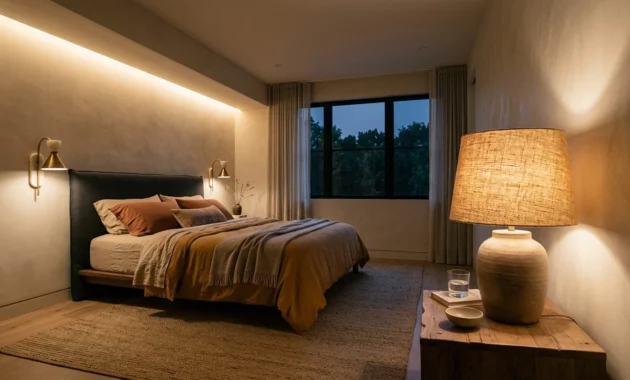
Swap cool white bulbs for warm white LEDs rated between 2700K and 3000K in primary lamps, or 2200K to 2700K for low evening wind-down light. According to Lumora lighting research, cool light above 5000K suppresses melatonin by 50%.
Encourage visitors to transition away from overhead glare by placing intuitive dimmers and bedside switches within arm’s reach. Switching to 2700K light one to two hours before bed helps guests fall asleep faster in an unfamiliar room.
Ensure your bedside fixtures deliver enough focused output for late-night reading without lighting up the entire room. Bedroom lighting guidelines specify 350 to 400 lumens per reading lamp to prevent eye strain.
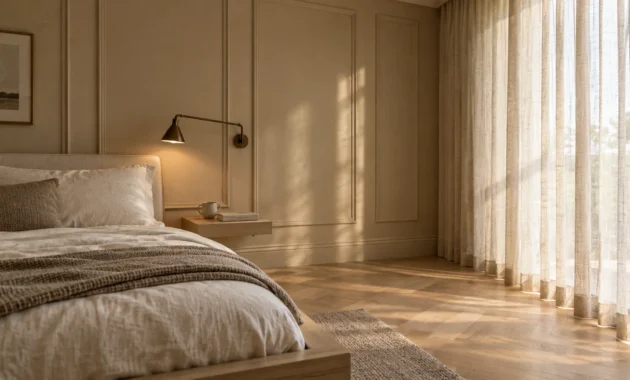
Position lamps and wall sconces using precise ergonomic heights rather than guesswork. Monulo and standard decorating measurement guides advise placing the bottom of the lampshade 20 to 26 inches above the top of the mattress.
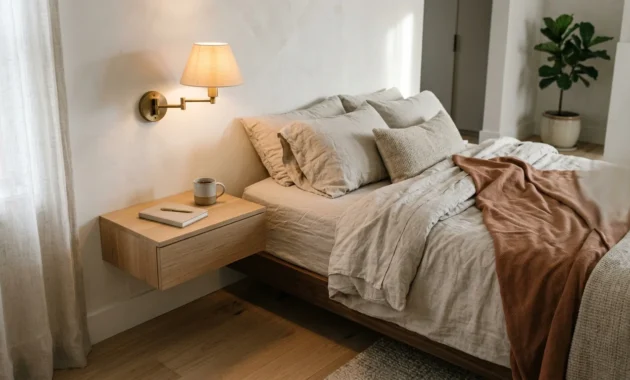
If you prefer wall-mounted swing-arm sconces to free up surface area in a small guest room, mount them no more than 3 inches outward from the edge of the headboard. Choose opaque linen or metal shades that direct illumination downward onto pages.
Anchor your lighting with properly scaled nightstands so guests have room for water glasses, phones, and books. Design measurement guides recommend nightstands that sit level with or 2 to 4 inches above the mattress top, typically measuring 24 to 28 inches high.
Match nightstand width to bed scale for balanced visual proportions: aim for 17 to 20 inches wide beside a Twin, 21 to 30 inches beside a Queen, and 31 to 36 inches or wider beside a King.
Bedroom Trend #3: Small Guest Room Spatial Choreography
Space constraints keep many homeowners from welcoming visitors comfortably. A Zillow survey conducted by The Harris Poll found that 20% of Americans have blamed their home’s size to avoid holiday hosting, while 17% are considering converting unused rooms.
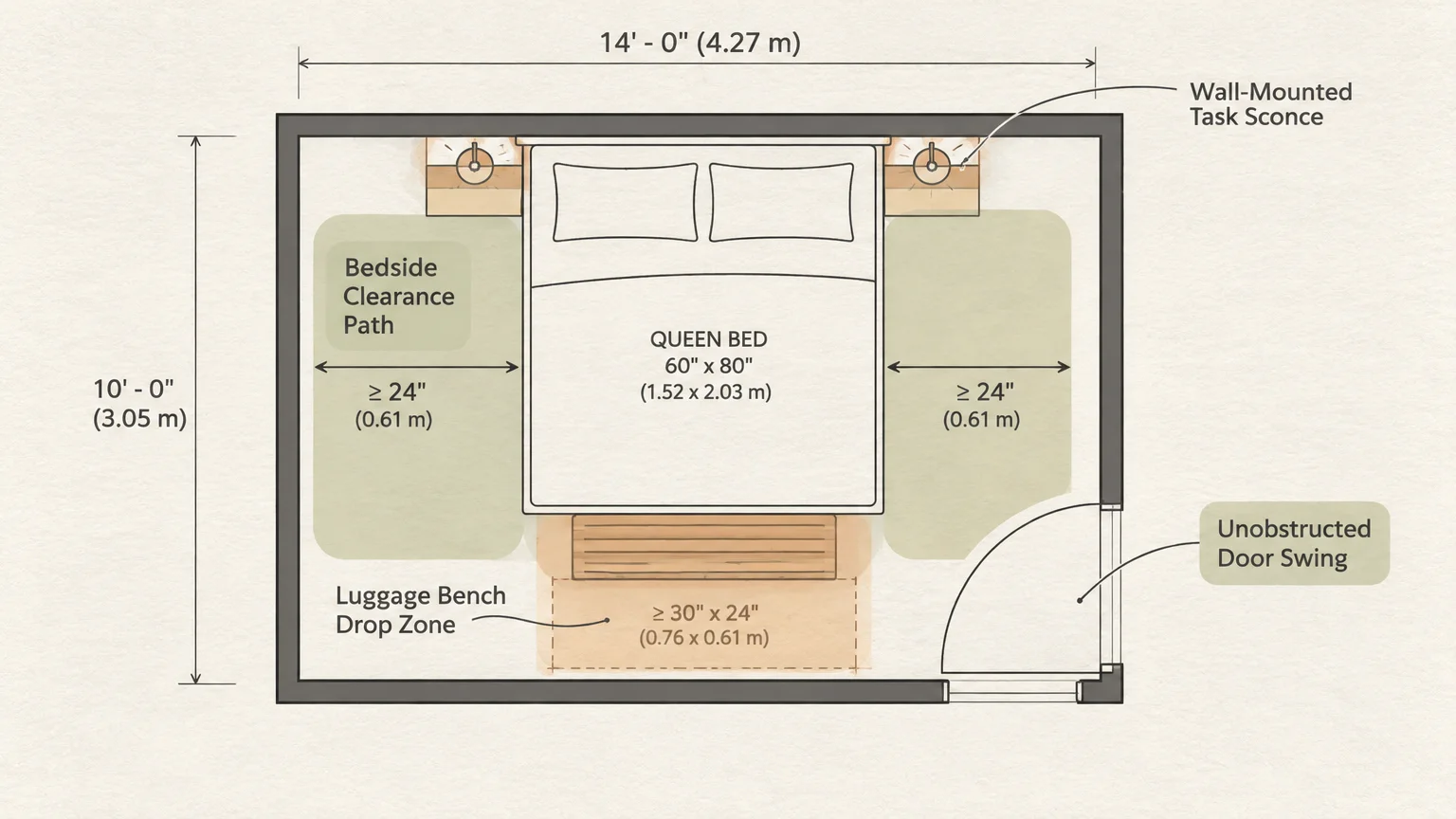
Spatial choreography addresses tight footprints by prioritizing human movement paths over oversized furniture. Instead of squeezing the largest possible bed frame against a wall, plan the room around unobstructed walkways and functional door swings.
Wayfair’s room-planning guidelines establish a minimum of 24 inches of clear floor space on open sides and at the foot of a bed, with 30 to 36 inches serving as the comfortable ideal.
Leave at least 36 inches of clear space in front of any dresser so guests can open drawers without sidestepping. Verify that inward-swinging entry and closet doors maintain a clean 30-inch arc without striking nightstands or bed corners.
Choose a mattress size that respects your room’s actual dimensions. Custom Comfort Mattress and Rayon sizing standards place a Twin at 38 to 39 by 75 inches for a minimum 7-by-10-foot room, and a Full at 54 by 75 inches.
According to Amerisleep, a Queen mattress measures 60 by 80 inches and requires at least a 10-by-10-foot room, while a 76-by-80-inch King demands at least 12 by 12 feet. A California King measures 72 by 84 inches and needs an 11-by-13-foot footprint.
When you host both solo relatives and couples throughout the year, modular Twin XL mattresses offer remarkable flexibility. Each Twin XL measures 38 to 39 by 80 inches, and pushing two together creates a full-length Split King.
Keep in mind that Zillow’s survey also revealed 70% of Americans consider three nights or fewer the ideal holiday stay. Smart clearances and agile bedding make even compact rooms feel generous across a long weekend.
Bedroom Trend #4: Acoustic Dampening and Microclimate Control
Even the prettiest guest bedroom decor fails if hallway footsteps, street traffic, or stale indoor air keep visitors awake. Modern bedroom design treats acoustic dampening and microclimate control as foundational luxuries rather than afterthoughts.
Acoustic dampening relies on soft, dense architectural layers to absorb sound waves instead of letting them bounce off bare drywall and hardwood. World Health Organization guidelines recommend keeping nighttime indoor bedroom noise below 30 decibels for restorative sleep.
Similarly, the U.S. Environmental Protection Agency identifies 45 decibels indoors as the upper threshold to avoid sleep interference. You can lower ambient noise dramatically by layering heavy pinch-pleat blackout drapery over sheer linen shades.
Add a generously padded, upholstered headboard to absorb sound near the sleeper’s ears while creating an architectural focal point. Decorating measurement guidelines note that 47-to-48-inch headboards stay visible above propped pillows, while 52 inches or taller adds stronger presence.
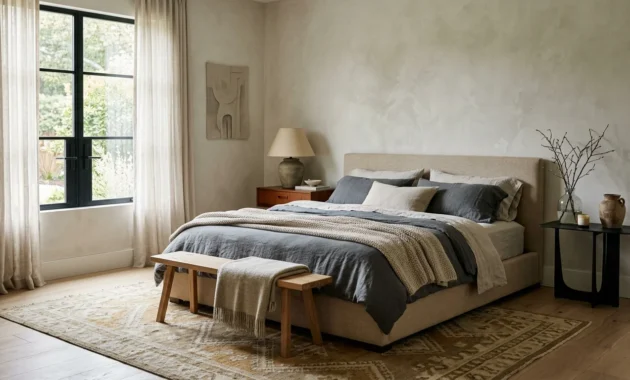
Ground the floor with a plush wool or dense cotton area rug to quiet footsteps at dawn and dusk. Interior designer Emily Henderson recommends leaving at least 24 inches of exposed rug on three sides of the bed.
In practice, that means pairing a 5-by-8-foot rug with a Twin bed, a 6-by-9-foot rug with a Full, an 8-by-10-foot rug with a Queen, and a 9-by-12-foot rug with a King. In very tight rooms, place two 2-by-3-foot runners along the sides.
Next, calibrate air moisture so guests wake up refreshed rather than congested. The U.S. Environmental Protection Agency advises keeping indoor relative humidity between 30% and 50%, noting that levels above 60% accelerate mold, bacteria, and dust mite growth.
A whisper-quiet tabletop humidifier in winter or a concealed dehumidifier in humid climates protects both textile longevity and respiratory comfort without cluttering your visual design.
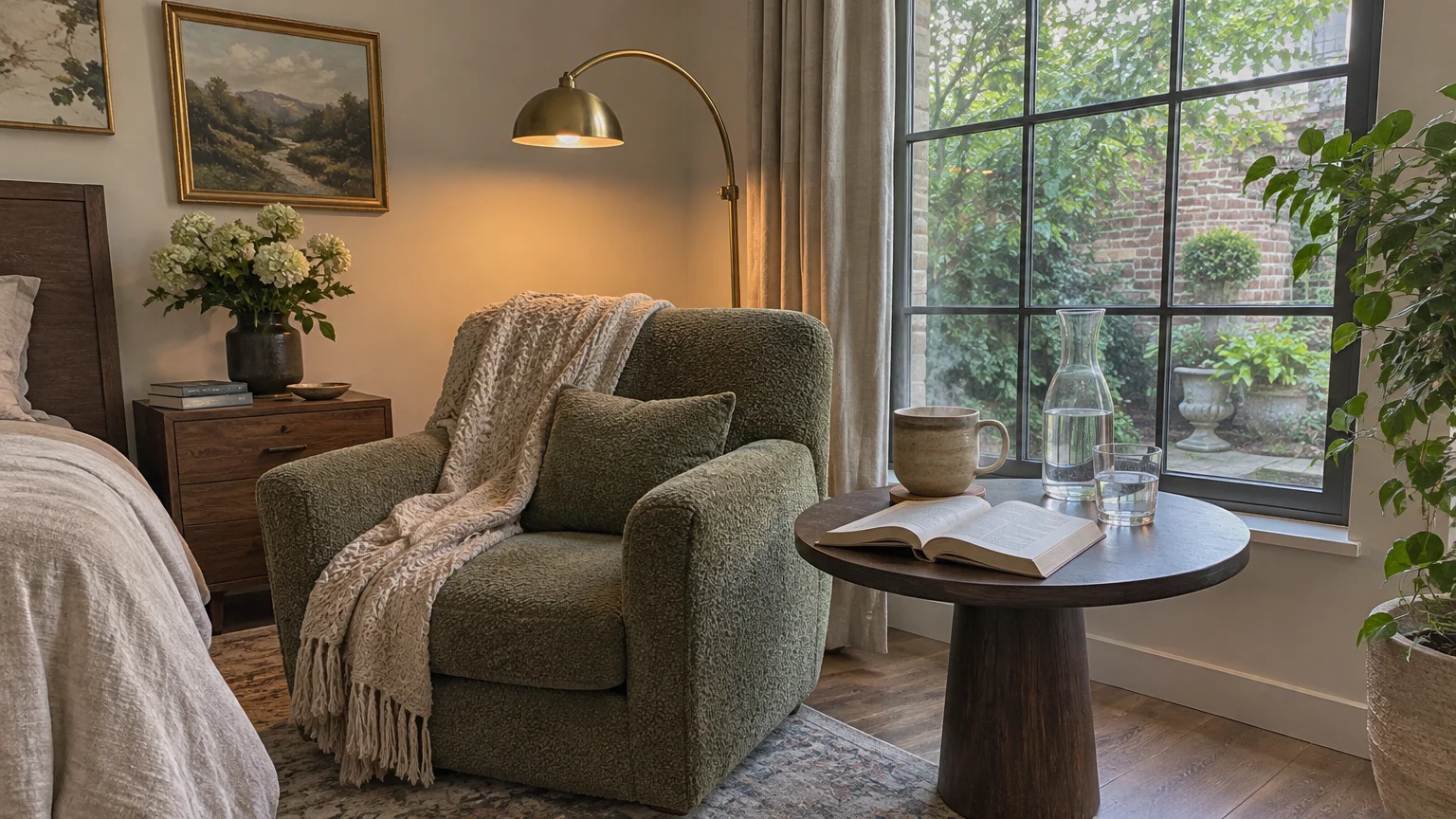
Bedroom Trend #5: Private Lounge Corners and Autonomous Retreat Zones
Travel and family gatherings drain social batteries quickly, even among close relatives. Recall the Hilton and Morning Consult data showing that 38% of holiday guests need solo downtime within 24 hours of arriving.
Micro-zoning gives your visitors permission to decompress privately without feeling confined to the top of the bed. By carving out a compact lounge or laptop perch inside the guest room, you transform a sleeping box into a self-contained suite.
In medium or large rooms, angle an upholstered slipper chair beside a window with a slim side table and dedicated reading lamp. Choose armless silhouettes in boucle or performance linen to preserve visual airiness and keep walkways clear.
In a small guest room, mount a narrow floating desk or fold-down wall console along an unused stretch of wall. Pair it with a lightweight woven stool that slides completely underneath when guests need extra dressing space.
Anchor the foot of the bed with a tailored bench or lidded storage trunk rather than forcing luggage onto the carpet or mattress. Decorating measurement guides place end-of-bed benches at 15 to 21 inches deep and slightly below mattress height.
Equip every retreat zone with frictionless hospitality details so guests never have to ask for basics. Set a small ceramic tray on the desk or nightstand holding a glass water carafe, spare charging cables, and clearly printed Wi-Fi details.
Add an accessible surge-protected outlet strip at tabletop height rather than hiding plugs behind heavy bed frames. Giving visitors independent access to power, seating, and hydration reduces awkwardness and encourages longer, happier stays.
Bedroom Trend #6: Biophilic Palettes and Restorative Natural Finishes
Travel fatigue hits especially hard during peak holiday seasons. An American Hotel & Lodging Association and Morning Consult survey reported that 46% of Americans planned an overnight family trip within four months, including 34% for Thanksgiving and 37% for Christmas.
Biophilic design helps weary travelers reset by bringing calming organic tones, matte textures, and living materials indoors. Rather than painting a spare room stark hospital white, lean into mineral hues pulled from earth, foliage, and stone.
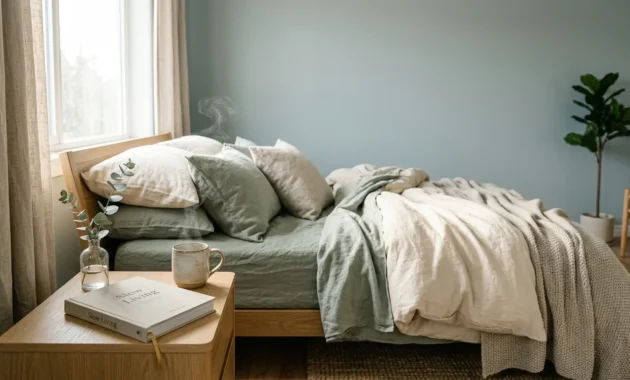
Soft sage, muted eucalyptus, warm oat, clay taupe, and chalky bone create an enveloping cocoon that flatters both morning daylight and warm 2700K evening bulbs. Apply matte or eggshell zero-VOC mineral paints to eliminate chemical odors before guests arrive.
Balance painted walls with tactile natural woods such as white oak, ash, or walnut finished in satin oil rather than glossy lacquer. Grain variations bring subtle visual warmth without competing for attention.
Introduce unlacquered brass, blackened bronze, or ceramic hardware on dressers and closet doors to deepen the handcrafted feel. These living finishes soften over time and prevent guest bedroom decor from looking like a sterile catalog display.
Add one low-maintenance botanical element, such as a snake plant or trailing pothos in a textured stoneware planter, to soften sharp architectural corners. If the room lacks natural light, arrange dried eucalyptus or olive branches in a heavy glass vessel.
Keep wall art intentionally calm and spacious—think oversized botanical prints, serene coastal photography, or a single woven textile hanging. Restraint ensures tired visitors process a peaceful visual field the moment they close the door.
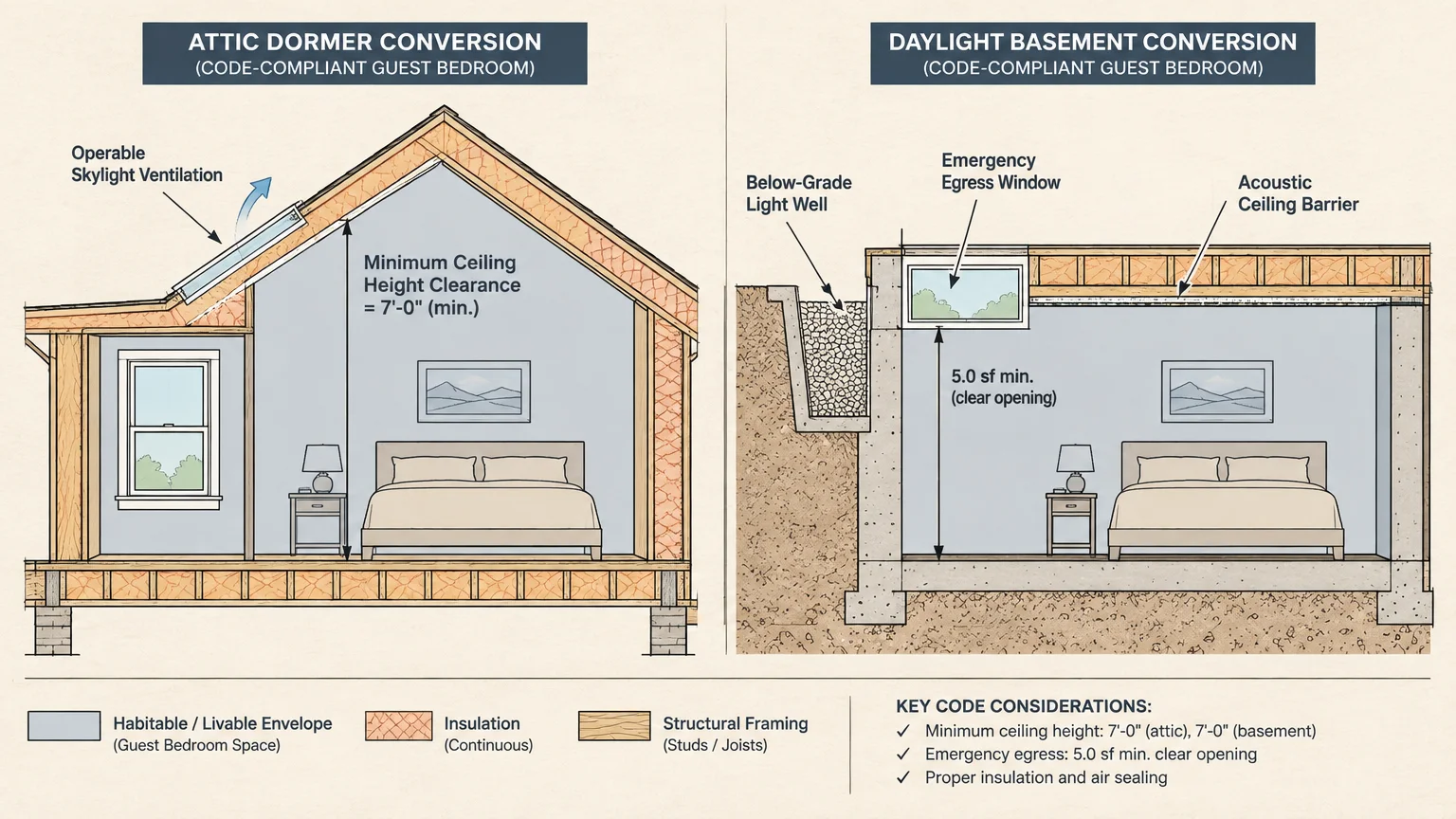
Bedroom Trend #7: Code-Compliant Attic and Basement Guest Conversions
Homeowners eager to expand hosting capacity are increasingly looking upward and downward into underused square footage. That same Zillow survey notes that 16% of Americans have considered buying a larger home, while 17% explore converting existing unused space.
Before ordering furniture for a finished basement, bonus room, or attic loft, ensure the space meets legal habitability and life-safety standards. Guest safety is the ultimate foundation of hospitable design.
Under International Residential Code Sections R304.2 and R304.3, a legal habitable bedroom requires at least 70 square feet of floor area and cannot measure less than 7 feet in any horizontal direction. Notably, the code does not require a built-in closet.
Ceiling geometry matters just as much in upper-level conversions. International Residential Code Section R305.1 mandates a minimum 7-foot ceiling height across habitable spaces.
In attics with sloped ceilings, at least 50% of the required floor area must measure 7 feet or taller, and any floor space beneath a ceiling lower than 5 feet cannot count toward the minimum area. Tuck low dressers or reading nooks beneath those knee walls.
Every sleeping room—including basement and attic suites—also needs a legal emergency escape route under International Residential Code Section R310. Each bedroom must feature at least one operable window or exterior door that opens from inside without keys or tools.
An egress window must offer at least 5.7 square feet of net clear opening, or 5.0 square feet at or below grade, with a minimum 24-inch clear height, a 20-inch clear width, and a sill no higher than 44 inches above the floor.
Complete the space with properly placed fire and gas detection. NFPA 72 and the International Residential Code require smoke alarms inside every sleeping room, outside each separate sleeping area, and on every floor of the home.
Mount wall smoke alarms within 12 inches of the ceiling and at least 10 feet from cooking appliances. Install interconnected carbon monoxide alarms outside every sleeping area and on every level, and test them monthly.
According to a 2023 CDC study cited by the NFPA covering 2005 through 2018, unintentional non-fire carbon monoxide poisoning causes roughly 101,847 emergency visits, 14,365 hospitalizations, and at least 430 deaths annually—making reliable detectors nonnegotiable.
Bedroom Trend #8: Low-Stress Turnkey Hosting Systems
Creating an inviting sanctuary should not exhaust the host. A Talker Research survey of 2,000 U.S. residents revealed that 35% find holiday hosting stressful, spending an average of 10 hours cleaning before guests arrive and 10 hours after they leave.
Meanwhile, a YouGov poll found that 30% of adults host overnight guests a few times a year, 10% host a few times a month, and 11% host monthly or weekly. Smart room systems cut turnaround time dramatically regardless of your hosting cadence.
Turnkey staging builds easy maintenance directly into your furniture and storage selections. Choose a bed frame with removable, machine-washable slipcovers or wipeable performance velvet rather than delicate silk or raw linen upholstery.
Dedicate one deep dresser drawer or lidded under-bed bin exclusively to pre-washed, folded guest linens—freshly laundered at 130°F—so remaking the bed takes five minutes instead of an afternoon. Store spare pillows inside breathable cotton zip bags to keep dust off between visits.
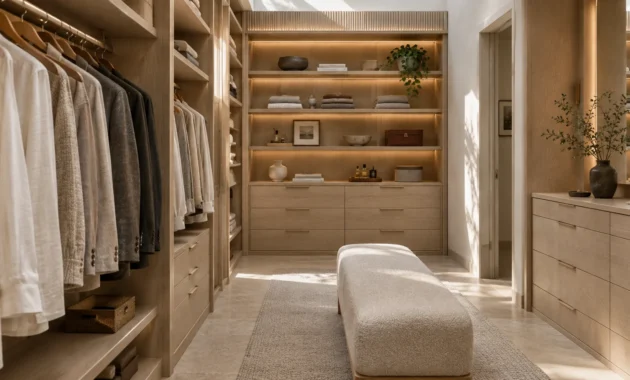
Clear at least half of the closet rod and supply matching velvet or wooden hangers so visitors never live out of crumpled suitcases. Add a row of sturdy brass wall hooks behind the door for coats, robes, and damp towels.
Keep surfaces streamlined by styling nightstands with only essential functional objects rather than fragile knickknacks. Fewer decorative trinkets mean faster dusting before arrivals and safer tabletops for guests navigating dark rooms at night.
Finally, tuck a small, restocked basket of travel-sized toiletries inside the top dresser drawer or closet shelf. Having a spare toothbrush, unscented lotion, earplugs, and makeup wipes ready solves late-night packing mistakes without extra errands.
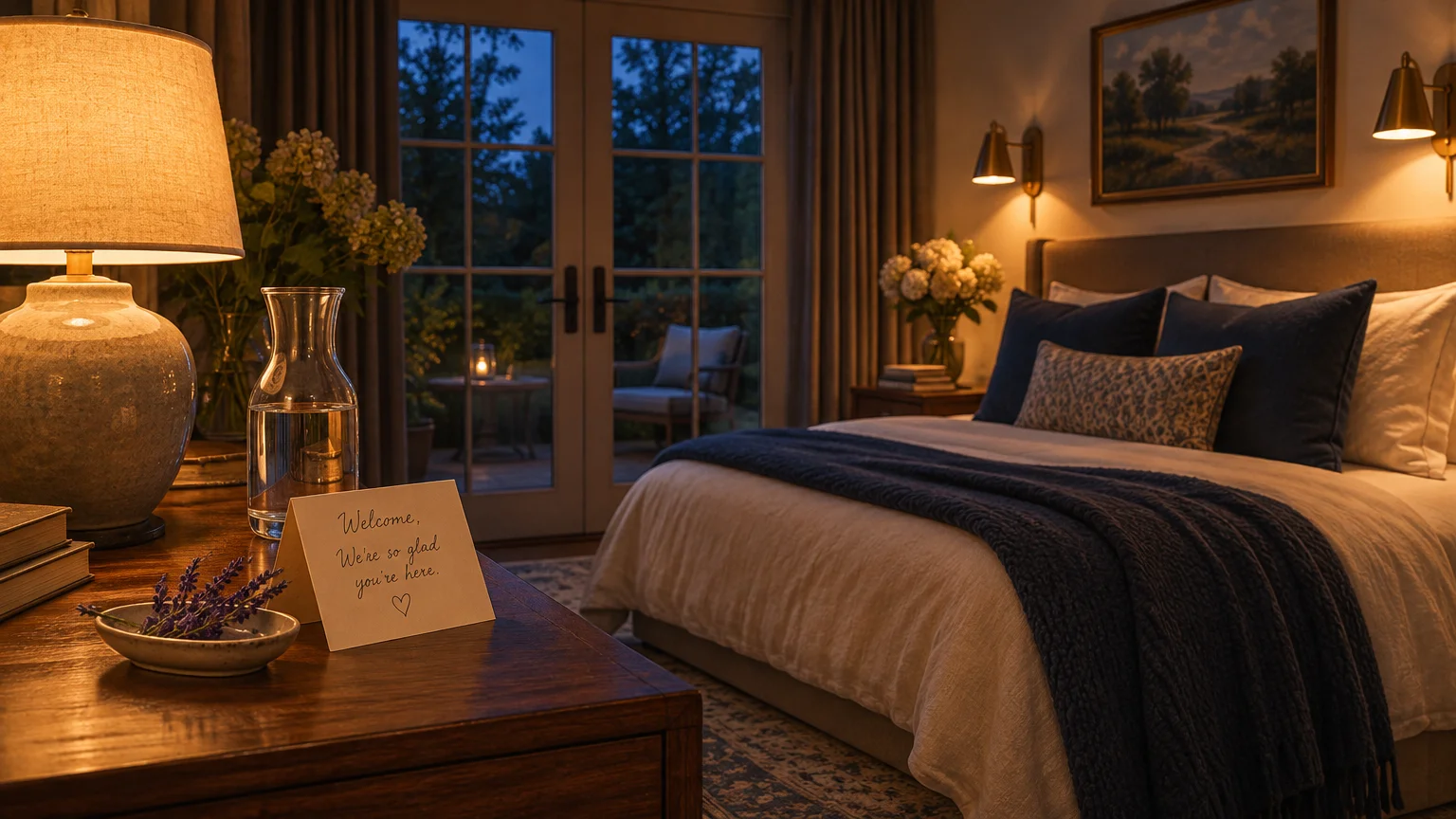
Designing Your Personal Sanctuary
Bringing these eight guest room ideas together works best when you layer decisions in order of impact rather than buying decorative accents first. Start by mapping your floor plan with 24-to-36-inch walkways, safe door swings, and properly scaled mattress proportions.
Next, invest in sleep fundamentals: a supportive mattress, breathable 200-to-400 thread count cotton sheets, dual-firmness pillows, and a quiet microclimate held near 65°F with 30% to 50% humidity.
Layer your lighting and acoustic textiles over that foundation. Pair 2700K bedside lamps delivering 350 to 400 lumens with blackout drapery and an appropriately sized wool rug to quiet indoor noise below 30 decibels.
Finally, weave in your aesthetic point of view through biophilic paint tones, warm oak finishes, and a compact lounge chair or luggage bench. When function leads and style follows cleanly, your spare bedroom transforms into a space both guests and household members treasure.
For healthy sleep guidance, consult experts at the Sleep Foundation. For bedding and textile inspiration, explore resources highlighted by Elle Decor.
Frequently Asked Questions
How do you design a small guest room without sacrificing comfort?
Prioritize clearance measurements over oversized furniture by keeping at least 24 inches of walkway space around the bed and 36 inches in front of dresser drawers. Pair a Queen or Twin XL setup with wall-mounted swing-arm lamps and an under-bed storage drawer to free up floor area.
What lighting and temperature settings help guests sleep best?
Use warm white 2700K bulbs with 350 to 400 lumens for bedside reading, keeping lampshades 20 to 26 inches above the mattress to eliminate glare. Set your thermostat between 60°F and 67°F and maintain 30% to 50% indoor humidity for uninterrupted rest.
How should you prioritize your guest bedroom decor budget?
Allocate the majority of your budget to sleep quality—specifically a supportive mattress, fresh pillows, breathable cotton bedding, and blackout window treatments. You can save on case goods by pairing thrifted solid-wood nightstands with updated brass hardware and warm mineral paint.
Can you mix multiple bedroom trends without the space feeling cluttered?
Yes, anchor the space with one cohesive color palette—such as muted sage, warm oat, and oiled oak—and repeat those tones across your tactile bedding, rugs, and drapery. Combining clean spatial choreography with quiet luxury textiles naturally unifies lighting, seating, and storage.
Disclaimer: This article reflects design trend analysis and predictions. Personal taste and timeless design principles should always guide your decorating choices.