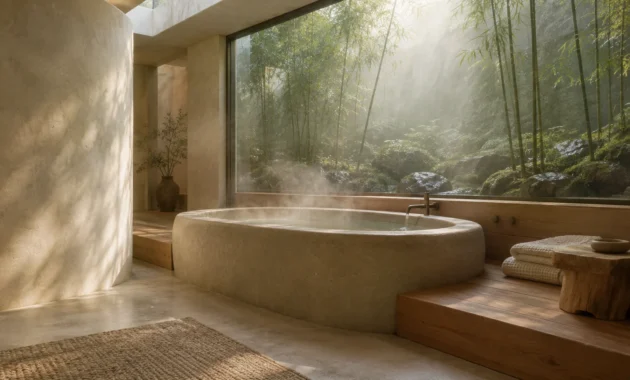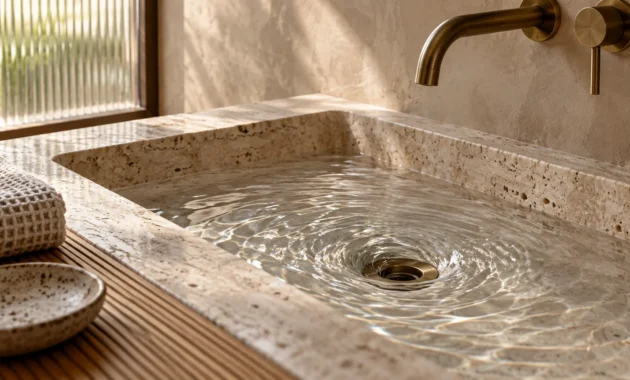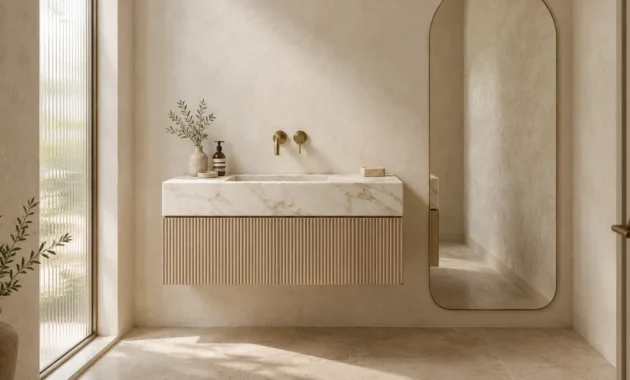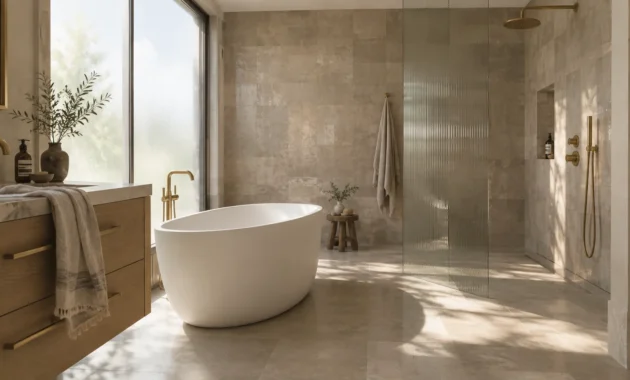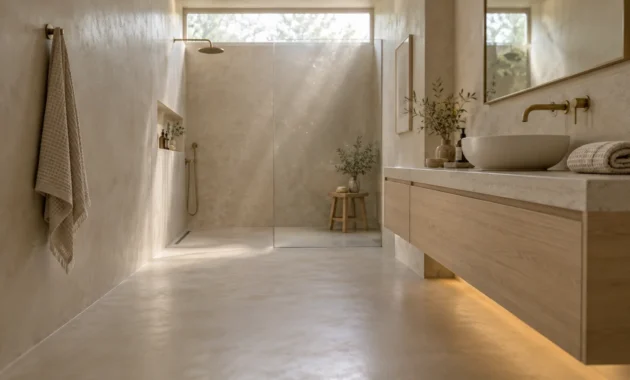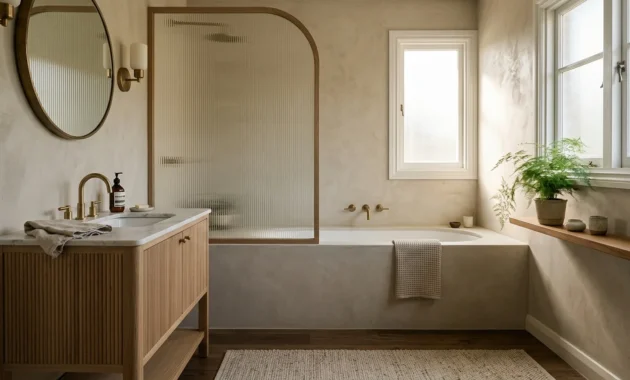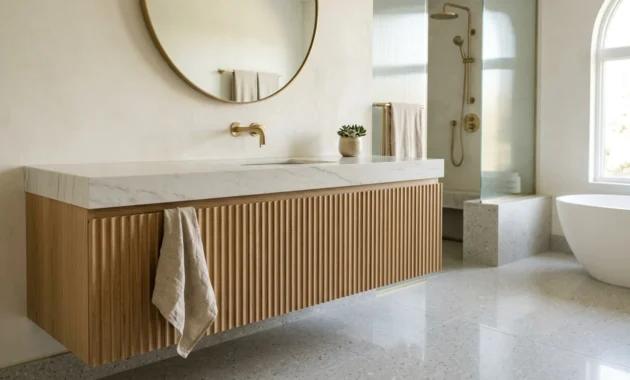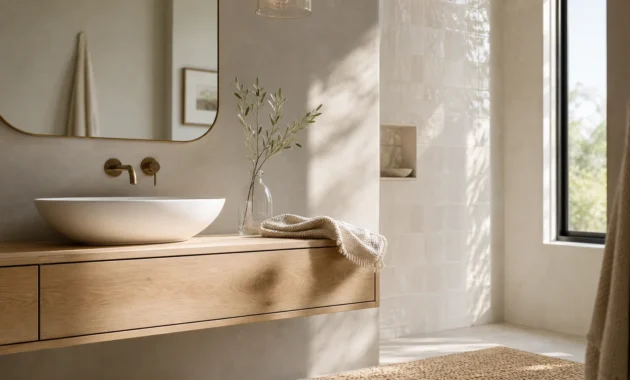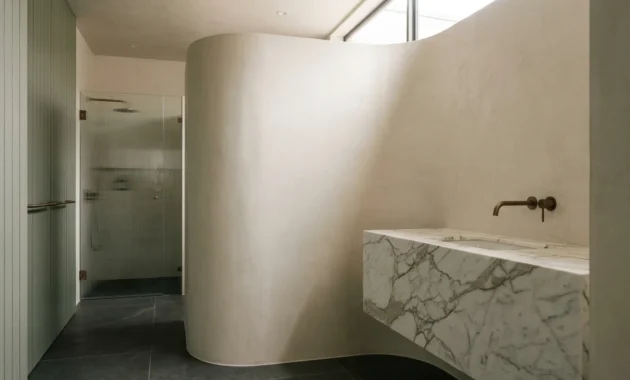
You can transform your bathroom into a serene personal retreat without committing to an expensive structural demolition. Strategic aesthetic updates deliver high-impact visual shifts that rival five-star bespoke spa suites.
Discerning design enthusiasts understand that true quiet luxury emerges from tactile textures, curated finishes, and layered lighting rather than aggressive construction work. These nuanced choices establish enduring elegance throughout your morning ritual.
Focusing on high-impact focal points allows you to achieve a dramatic bathroom refresh while preserving your current floor plan. Thoughtful material choices grant your private sanctuary authentic character and effortless architectural refinement.
Trend #1: Sculptural Hardware and Patinated Metals
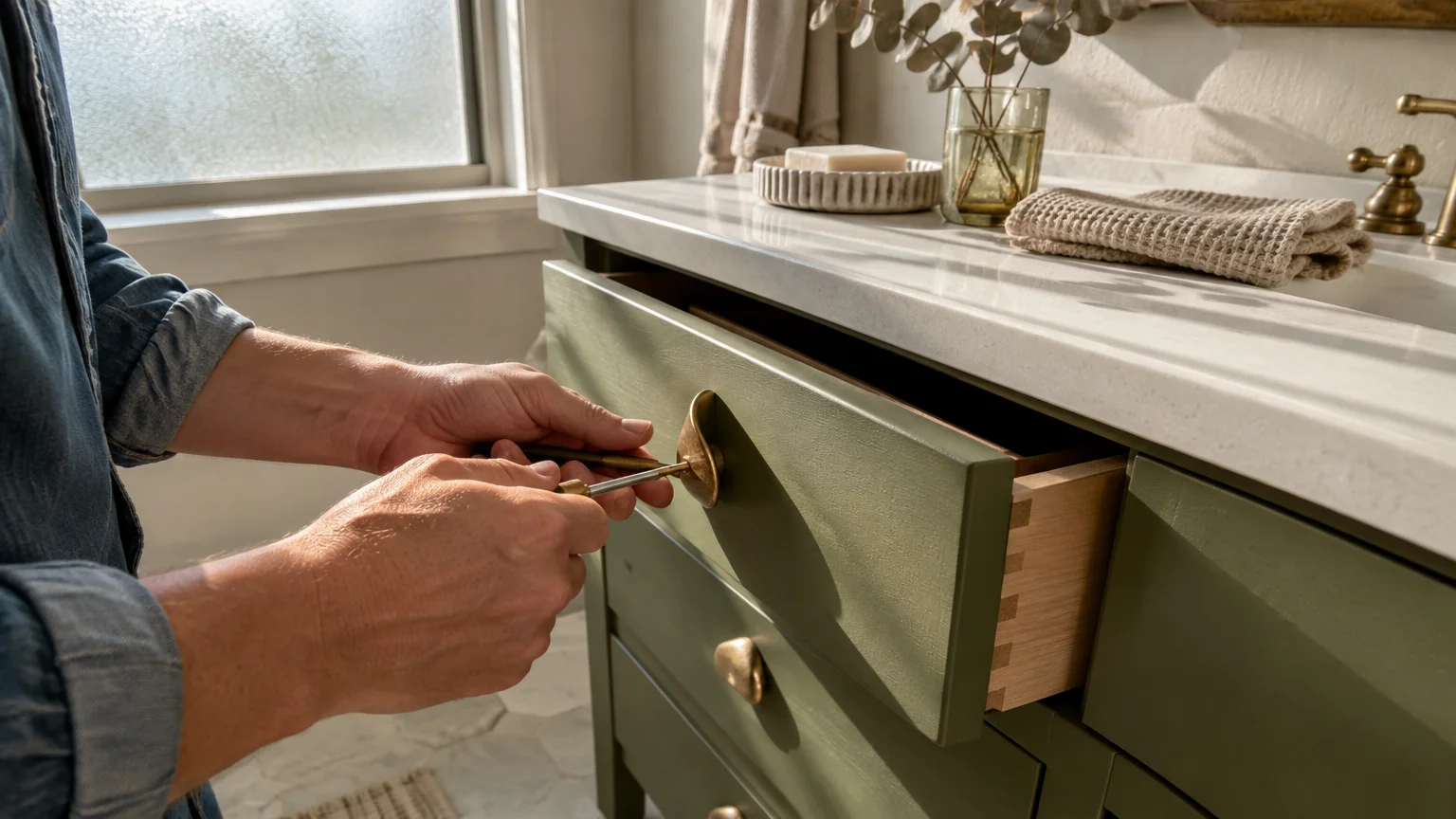
Builder-grade hardware often robs a bathroom of character, leaving the vanity feeling utilitarian and uninspired. Swapping basic knobs for sculptural silhouettes immediately establishes an elevated, bespoke tone across your cabinetry.
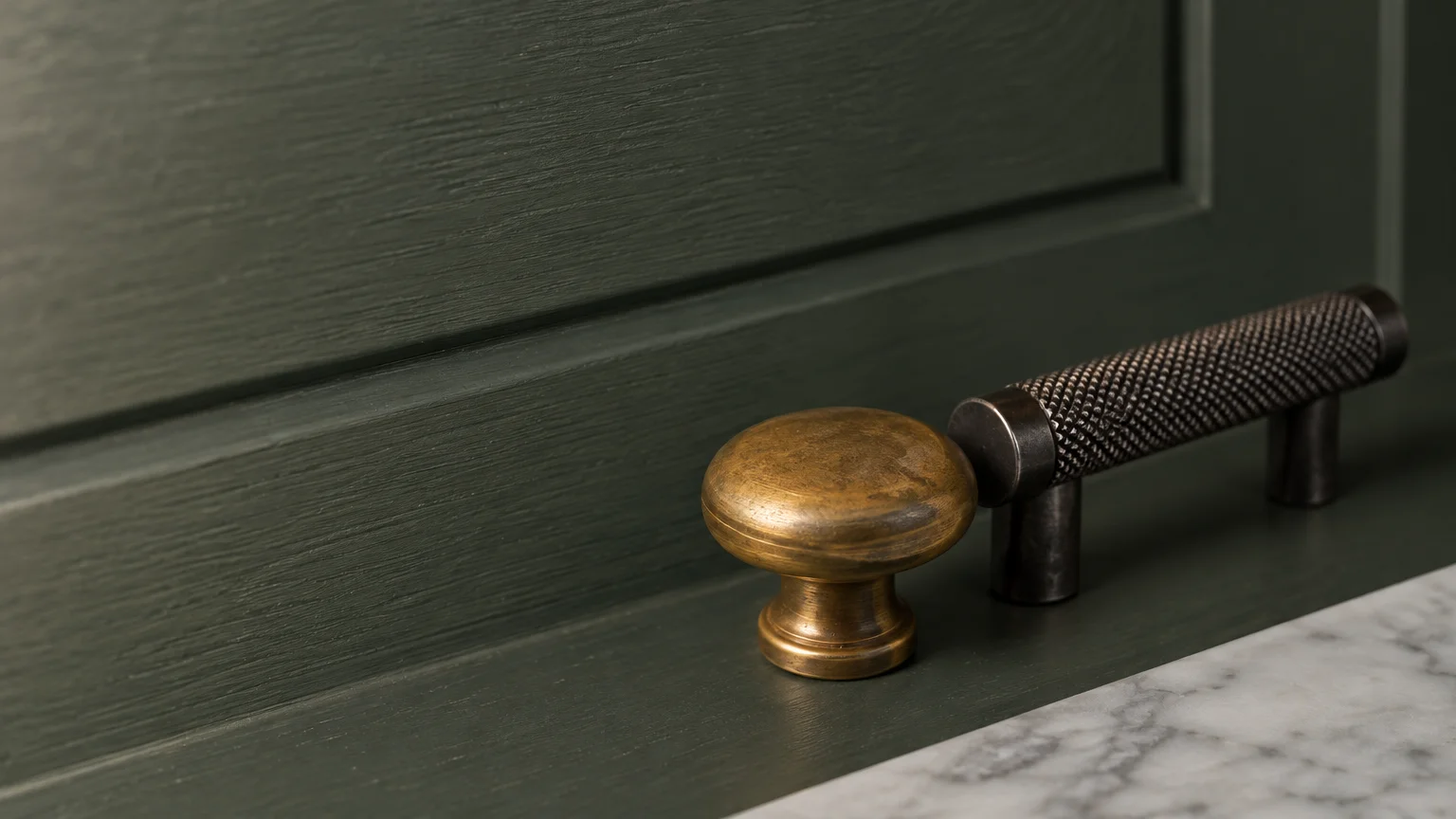
Living finishes—such as unlacquered brass and hand-rubbed bronze—introduce authentic provenance that evolves gracefully over time. These organic materials develop a rich, personal patina through daily human interaction.
If you prefer a contemporary sensibility, choose knurled blackened iron or brushed champagne bronze. These tactile profiles create compelling friction against smooth porcelain basins and polished stone countertops.
You should inspect your existing center-to-center hole measurements before ordering new pulls to avoid unnecessary drilling. Precision sizing ensures that your installation remains clean and structurally sound.
Extend this aesthetic philosophy beyond vanity drawers by replacing generic towel hooks, hinges, and toilet paper rollers. Cohesive hardware styling anchors your room in deliberate luxury without depleting your design budget.
As one of the most effective cheap bathroom upgrades, new metalwork yields an immediate sensory reward every time you enter the room. You touch these components constantly, making tactile refinement an essential everyday indulgence.
Seek out artisan-crafted pieces from vintage salvage shops or specialized independent hardware makers. Unique silhouettes infuse your vanity with bespoke charm that mass-produced components simply cannot replicate.
A unified metallic accent grounds the entire space, proving that subtle hardware shifts transform ordinary millwork into designer cabinetry.
Trend #2: Dramatic Color Drenching
Sterile, all-white bathrooms often feel clinical and cold rather than calm. Saturated color drenching envelops your interior in a continuous wash of pigment that blurs harsh structural boundaries.
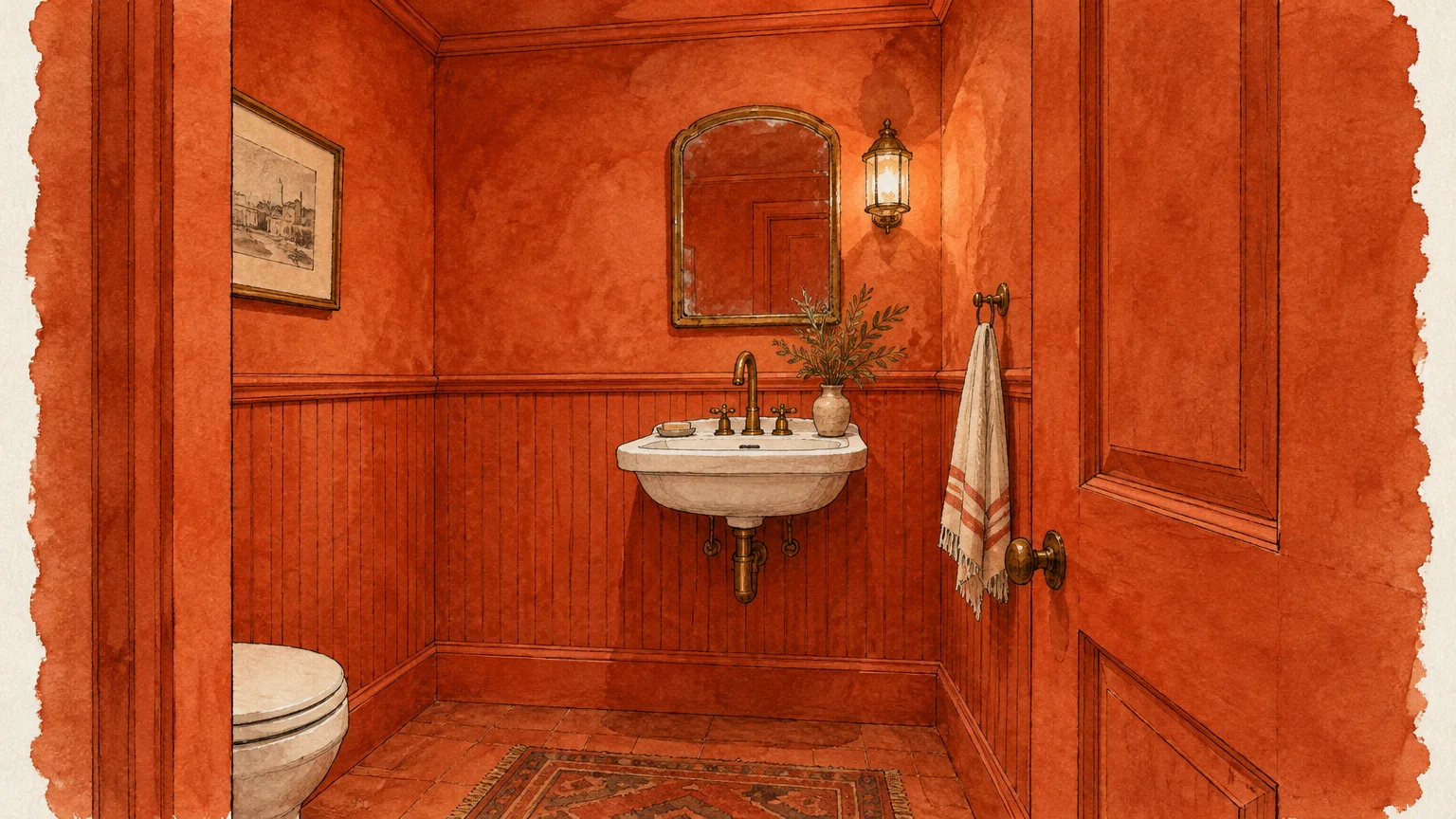
By coating walls, trim, baseboards, and even the ceiling in a single unifying shade, you cultivate an intimate, cocoon-like atmosphere. This technique conceals awkward architectural angles while delivering remarkable visual grandeur.
Earthy mineral shades like deep terracotta, moss green, and smoked eucalyptus provide grounding energy rooted in historical aesthetics. These botanical hues infuse small powder rooms with captivating drama and welcoming warmth.
Always select moisture-resistant paints with satin or semi-gloss sheens that withstand persistent humidity without peeling. High-performance formulas safeguard your investment against water vapor and mildew in poorly ventilated rooms.
Executing a bold bathroom makeover on a budget starts with paint because it fundamentally alters perceived depth and volume. You achieve the visual weight of high-end paneling simply by commanding the perimeter with saturated color.
Do not fear the ceiling, often referred to by designers as the forgotten fifth wall. Painting overhead surfaces deepens the chromatic envelope, creating an immersive jewel-box environment that delights your guests.
Pair your chosen color with warm incandescent illumination to enhance the depth of the undertones after twilight. The resulting ambiance feels deeply restorative, shifting your utilitarian washroom into a sanctuary of rest.
Trend #3: Statement Mirrors with Architectural Provenance
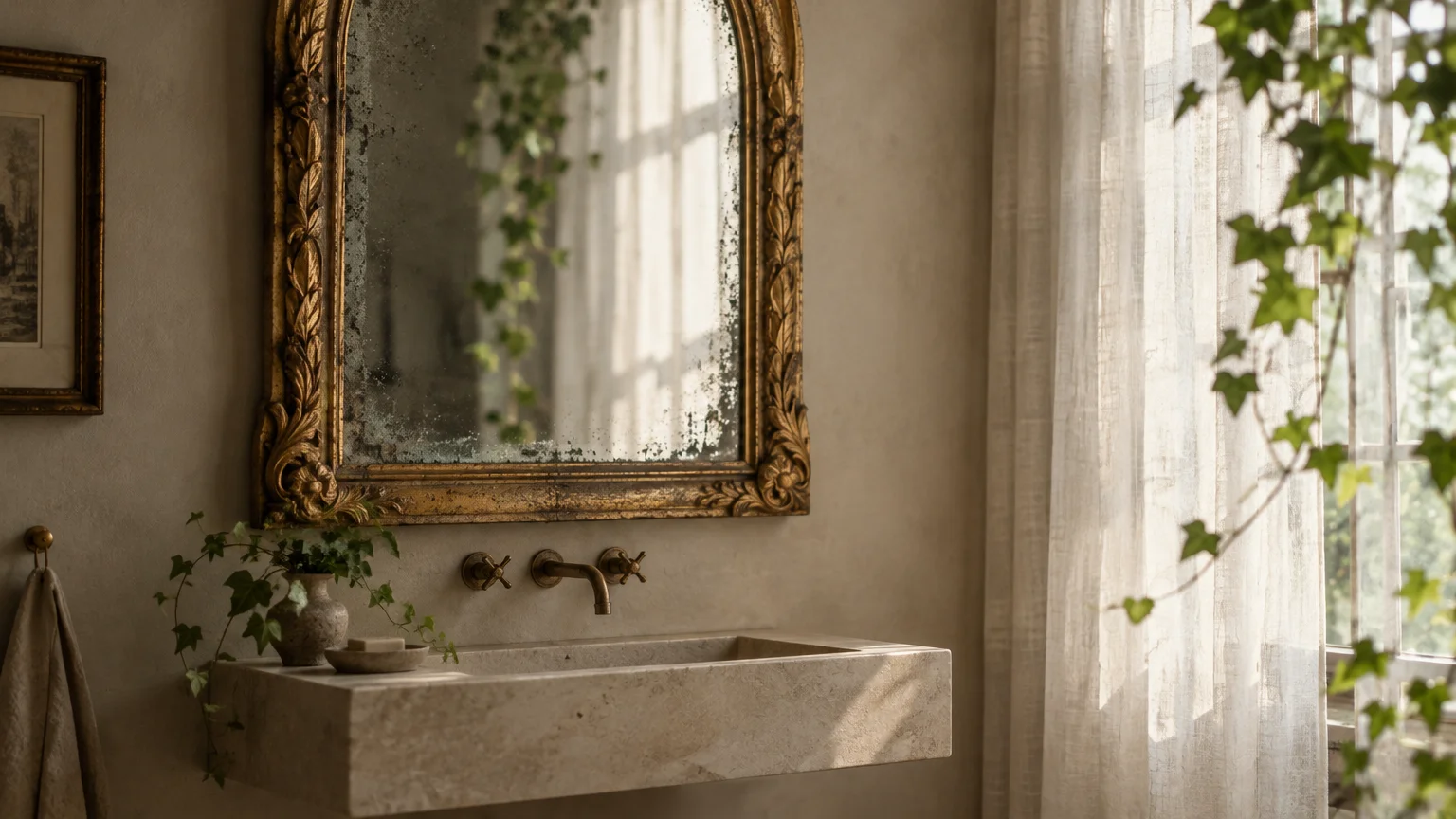
Standard frameless plate-glass mirrors instantly signal developer expediency. Replacing that expansive glass sheet with an intentional, architectural focal point redefines your room from the center outward.
Sculptural arches, pillowed silhouettes, and vintage gilded frames inject dynamic rhythm into rooms heavily dominated by rigid horizontal and vertical tile lines. These softer contours provide necessary visual relief.
A mirror with an antiqued brass or carved timber surround acts as fine art hung above your basin. It introduces a collected-over-time narrative that makes your bathroom feel thoughtfully assembled rather than quickly installed.
When browsing budget-conscious bathroom update ideas, visit estate sales, antique flea markets, or thrift boutiques for historic frames. Fitting a custom mirror glass into an ornate vintage frame delivers heirloom luxury at accessible prices.
Ensure you anchor heavier decorative mirrors directly into wall studs using heavy-duty, moisture-resistant mounting brackets. Safe installation guarantees that your architectural focal point remains secure amidst seasonal humidity shifts.
Scale matters enormously when choosing an accent mirror for your vanity alcove. An oversized frame magnifies natural ambient light, making even cramped powder rooms feel remarkably airy and expansive.
By contrasting an ornate frame against sleek contemporary tiles, you generate compelling aesthetic tension. This juxtaposition of historical charm and modern utility defines the most celebrated contemporary spaces.
Trend #4: Layered Ambient Luminescence
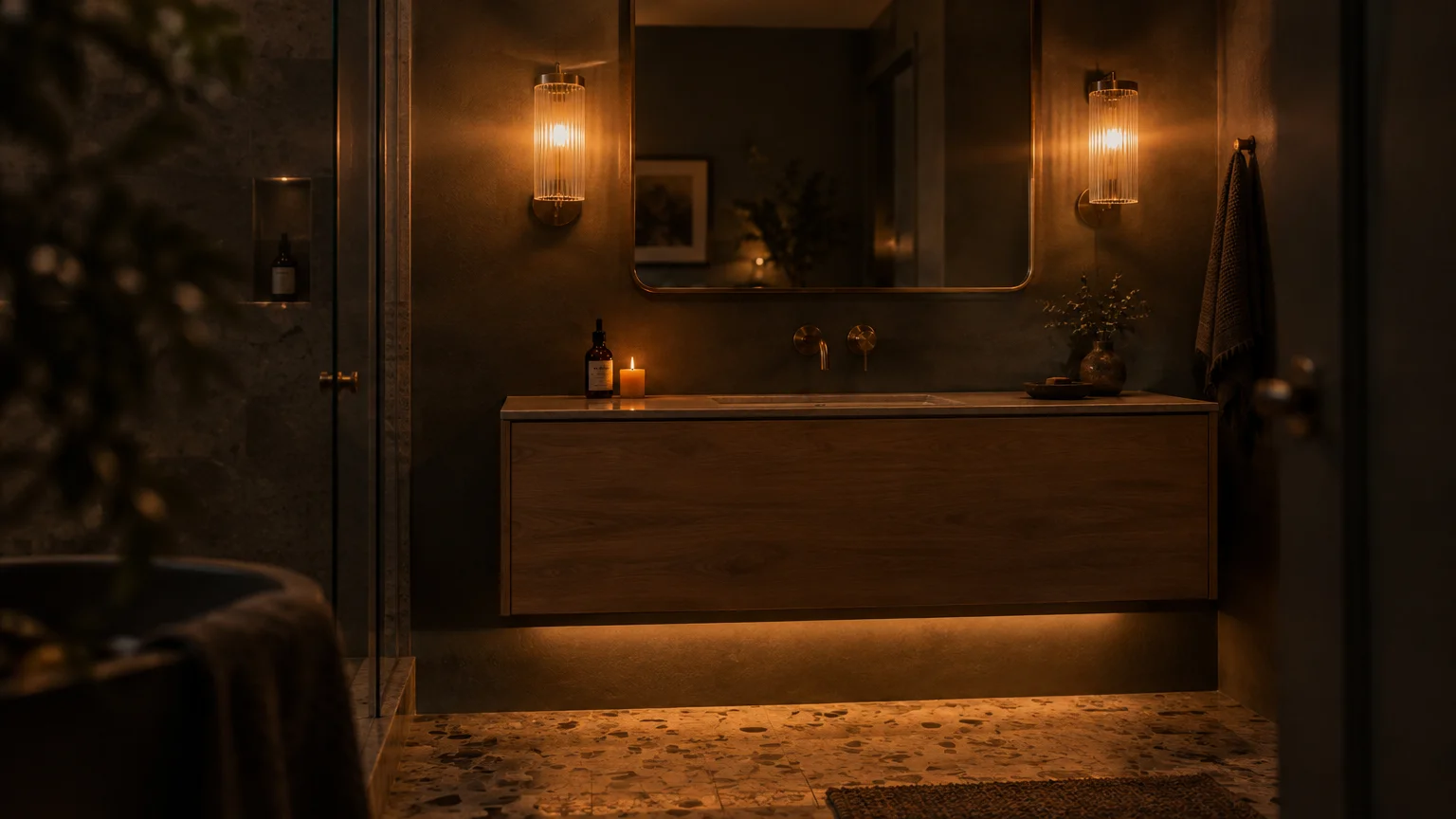
Single overhead bar fixtures cast unflattering downward shadows across your face and bathe the room in cold, harsh glare. Layered illumination represents the secret to cultivating a restorative, hotel-inspired environment.
Position wall sconces at eye level on either side of your vanity mirror to diffuse soft, even illumination across your features. This bilateral positioning eliminates harsh facial shadows during your grooming routine.
Incorporate dimmable warm-spectrum bulbs that cast a welcoming golden glow across the space. This soft light mimics late afternoon sun, softening hard tile textures and flattering every skin tone.
If hardwiring new fixtures exceeds your project scope, consider moisture-rated rechargeable cordless sconces or petite table lamps. Placing a small cordless lamp on a stone vanity tray creates unexpected, residential intimacy.
Among all affordable bathroom improvements, lighting adjustments deliver the most dramatic emotional shift for your daily routine. Switching from stark overhead lights to gentle accent glows transforms your evening bath into a meditative ritual.
Pay close attention to high color rendering qualities when sourcing light bulbs for your fixtures. Bulbs with superior rendering ensure that skin tones, makeup application, and fabric hues remain true to life.
Diffused glass globes, fluted shades, and pleated fabric sconces scatter illumination gracefully throughout the perimeter. This soft dispersion shields your eyes from raw filament glare while accentuating your decor.
Trend #5: Biophilic Sanctuaries and Living Accents
Biophilic design honors our innate human affinity for the natural world by incorporating living botanical textures into functional spaces. Introducing vibrant foliage balances the sterile feel of polished porcelain, chrome, and glazed tile.
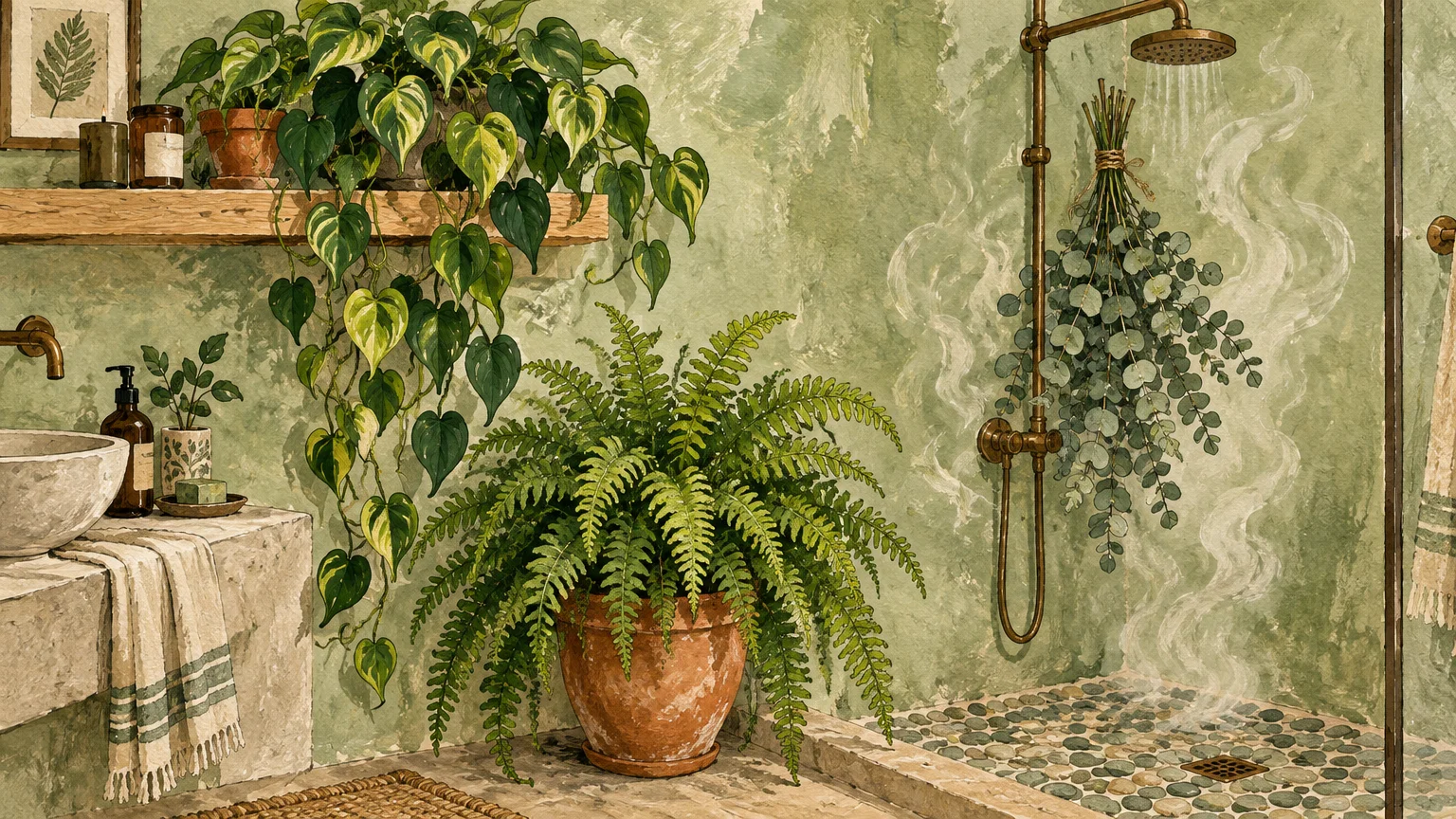
High-humidity environments provide ideal conditions for moisture-loving tropical species like Boston ferns, bird of paradise, and heartleaf philodendrons. These resilient botanicals thrive on ambient shower steam while continuously purifying indoor air.
If your bathroom lacks natural daylight, hang fresh eucalyptus branches directly behind your showerhead. The rising heat activates therapeutic essential oils, filling your enclosure with an invigorating botanical aroma during hot rinses.
Display your botanical accents in raw, unglazed terracotta pots, handcrafted ceramic vessels, or carved stone footed bowls. Natural earthen containers introduce rich mineral textures that anchor your organic interior theme.
Place a small potted snake plant or moth orchid on an open vanity shelf or stool to punctuate empty corners with architectural form. Living plants provide dynamic sculptural volume that changes subtly with each passing week.
For windowless powder rooms, high-quality botanical stems or preserved moss arrangements deliver the same tranquil visual grounding without requiring sunlight. Surrounding yourself with organic elements reduces daily stress and elevates your physical wellbeing.
This organic approach breathes authentic vitality into every corner of your home, proving that greenery represents an essential styling component.
Trend #6: Grout Transformation and Contrasting Linework
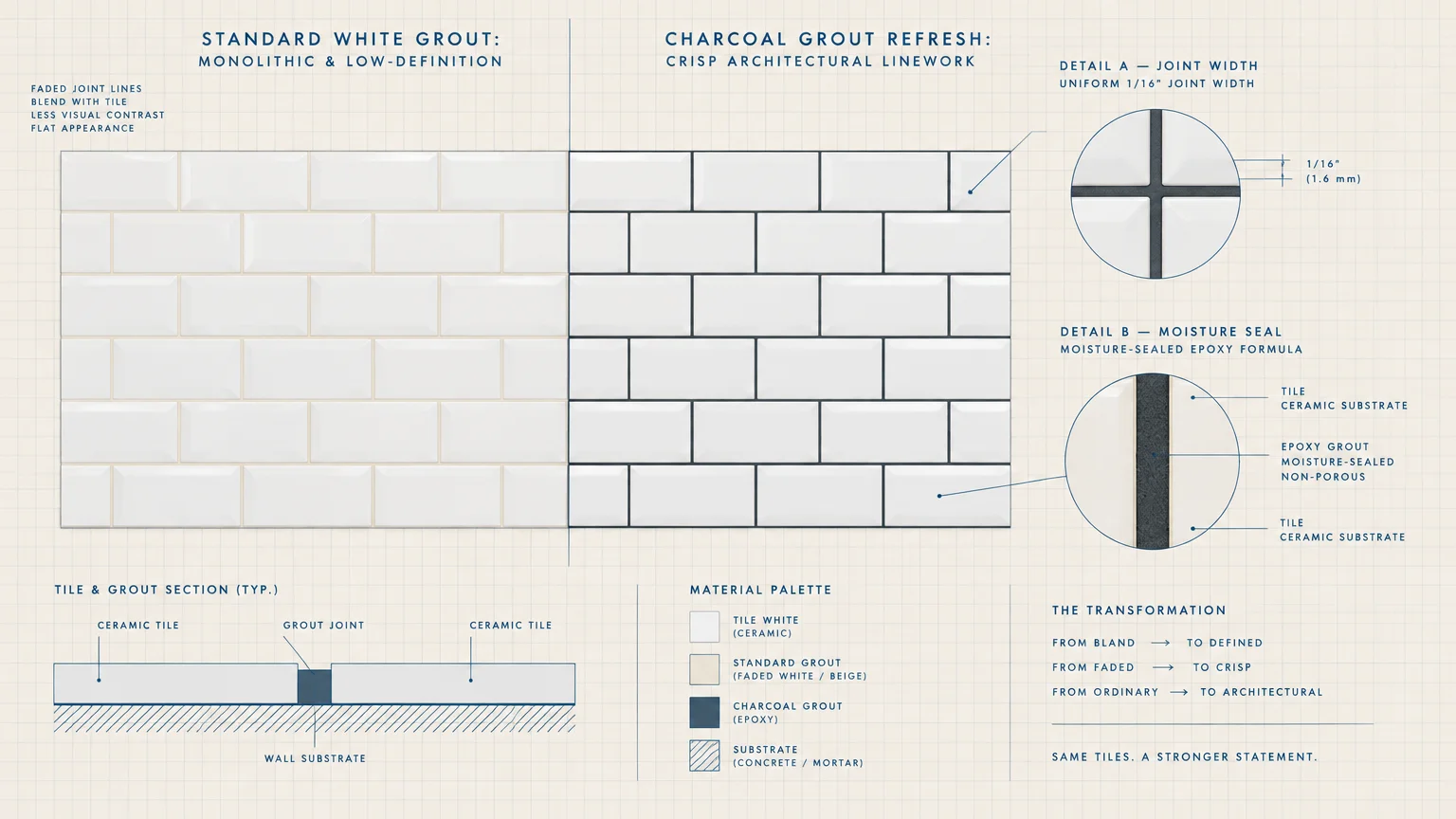
Discolored, stained grout lines can make even impeccably clean tile look worn, neglected, and outdated. Revitalizing these linear joints restores crisp architectural definition across your walls and flooring without replacing a single tile.
Specialized epoxy grout colorants allow you to recolor existing joints while sealing them against future moisture and mildew penetration. This straightforward treatment revitalizes dingy surfaces, transforming your bathroom into a pristine showcase.
Consider switching from faded white grout to a contrasting charcoal, deep pewter, or warm beige tone. Darker contrasting lines create a striking graphic grid that highlights standard subway or penny tiles with architectural intentionality.
These bold graphic lines frame each individual tile, lending inexpensive ceramic finishes the structured aesthetic of bespoke European installations. You elevate basic builder materials into an intentional design statement.
For homeowners pursuing cheap bathroom upgrades, applying a high-performance grout pen or colorant requires only minimal investment and basic precision. The resulting visual clarity rivals an expensive complete retiling job.
Be sure to thoroughly clean and degrease all tile channels before applying colorants to ensure lasting pigment adhesion. Proper surface preparation guarantees that your graphic linework resists moisture and daily scrubbings for years to come.
Fresh silicone caulking along the tub edge and vanity backsplashes finishes the transformation with crisp, professional polish. Clean seams prevent water damage and reinforce an impression of meticulous craftsmanship.
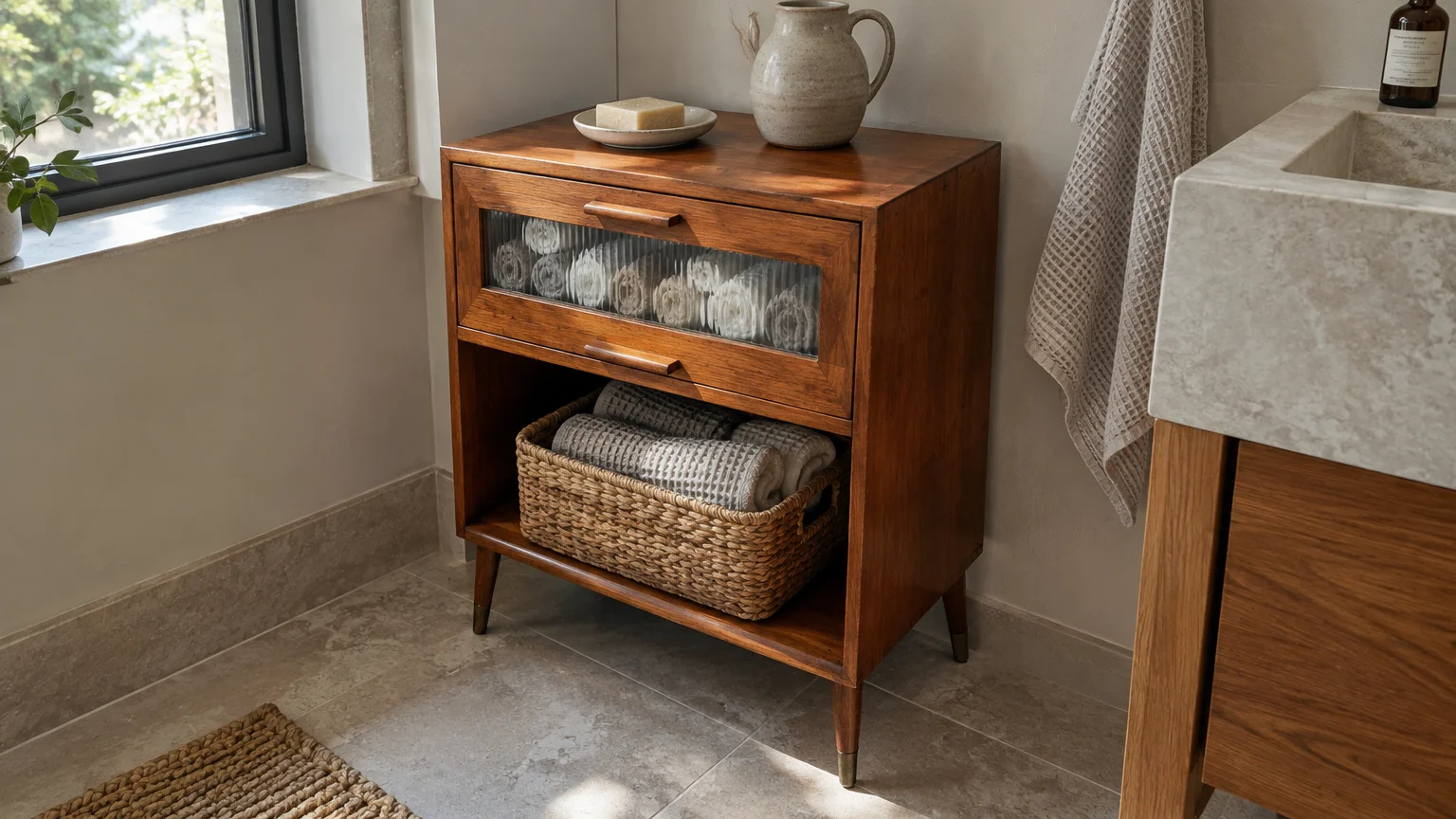
Trend #7: Bespoke Storage and Furniture Repurposing
Standard medicine cabinets and utilitarian plastic organizers can make your space feel sterile and generic. Replacing mass-produced cabinetry with repurposed antique furniture infuses the room with soulful personality and historic charm.
An antique wooden milking stool placed beside your soaking tub serves as an exquisite perch for artisanal soaps and textured sponges. Its weathered timber introduces authentic warmth against crisp ceramic surfaces.
Look for vintage wall-hung apothecary cabinets or French country glass curios to store rolled towels and perfume bottles. These storied accent pieces provide essential vertical storage while lending your walls unmatched visual intrigue.
Executing a bathroom makeover on a budget becomes exciting when you scour salvage yards for forgotten furniture treasures. A simple coat of paste wax or matte polyurethane protects seasoned wood against humidity and moisture damage.
Incorporate woven rattan trunks or lidded seagrass baskets to conceal surplus toiletries and spare linens with graceful restraint. Natural woven fibers introduce soft, tactile depth that counterbalances polished stone countertops.
Decant your daily bath essentials into amber glass bottles topped with minimalist typography labels. This small organizational detail eliminates commercial visual noise, creating an ordered, boutique-hotel aesthetic across your vanity.
Repurposing storied furnishings allows you to craft a deeply personal space that stands apart from temporary design fads. Your interior gains timeless character through functional, collected artifacts.
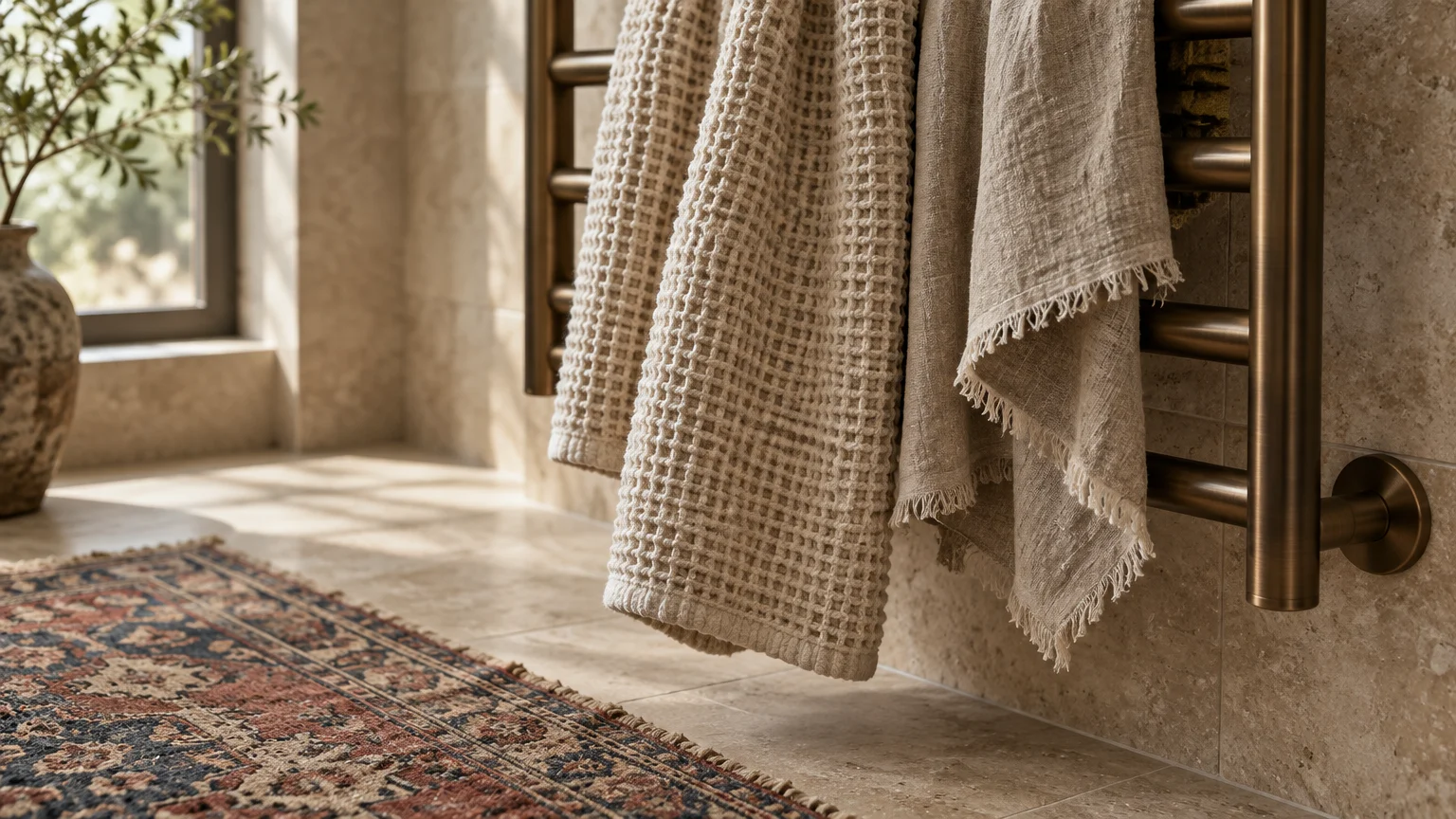
Trend #8: Curated Fine Textiles and Tactile Linens
Bathrooms are inherently dominated by cold, impermeable surfaces like porcelain, glass, and polished tile. Curating a rich textile landscape softens hard room acoustics while introducing irresistible tactile luxury.
Replace standard terrycloth towels with heavyweight French flax linen or honeycomb waffle-weave Turkish cotton. These natural, breathable fibers absorb moisture rapidly, dry efficiently, and drape with casual sculptural elegance.
Discard synthetic bath rugs in favor of vintage hand-knotted wool runners or organic flatweave mats. Wool fibers naturally repel water and resist staining, infusing your floor with rich historic motifs and cushioned warmth underfoot.
Always place a high-grip, mold-resistant rubber pad beneath vintage floor textiles to secure the rug on slick tile. Safety and sophisticated style can easily coexist when you implement proper underlayments.
Install a tailored, floor-skimming canvas shower curtain hung from sleek brass rings instead of flimsy vinyl liners. The substantial textile drape mimics high-end living room drapery, drawing the eye upward to increase perceived ceiling height.
Selecting layered fabrics represents an effortless, highly satisfying bathroom refresh that requires zero structural alterations or tools. You can rotate textile palettes seasonally to refresh your visual scheme throughout the year.
Earthy terracotta, warm oatmeal, and washed indigo textiles bring nuanced tonal harmony to your bathing ritual. These tactile touchpoints reward your senses daily, proving that true refinement lives in the everyday details.
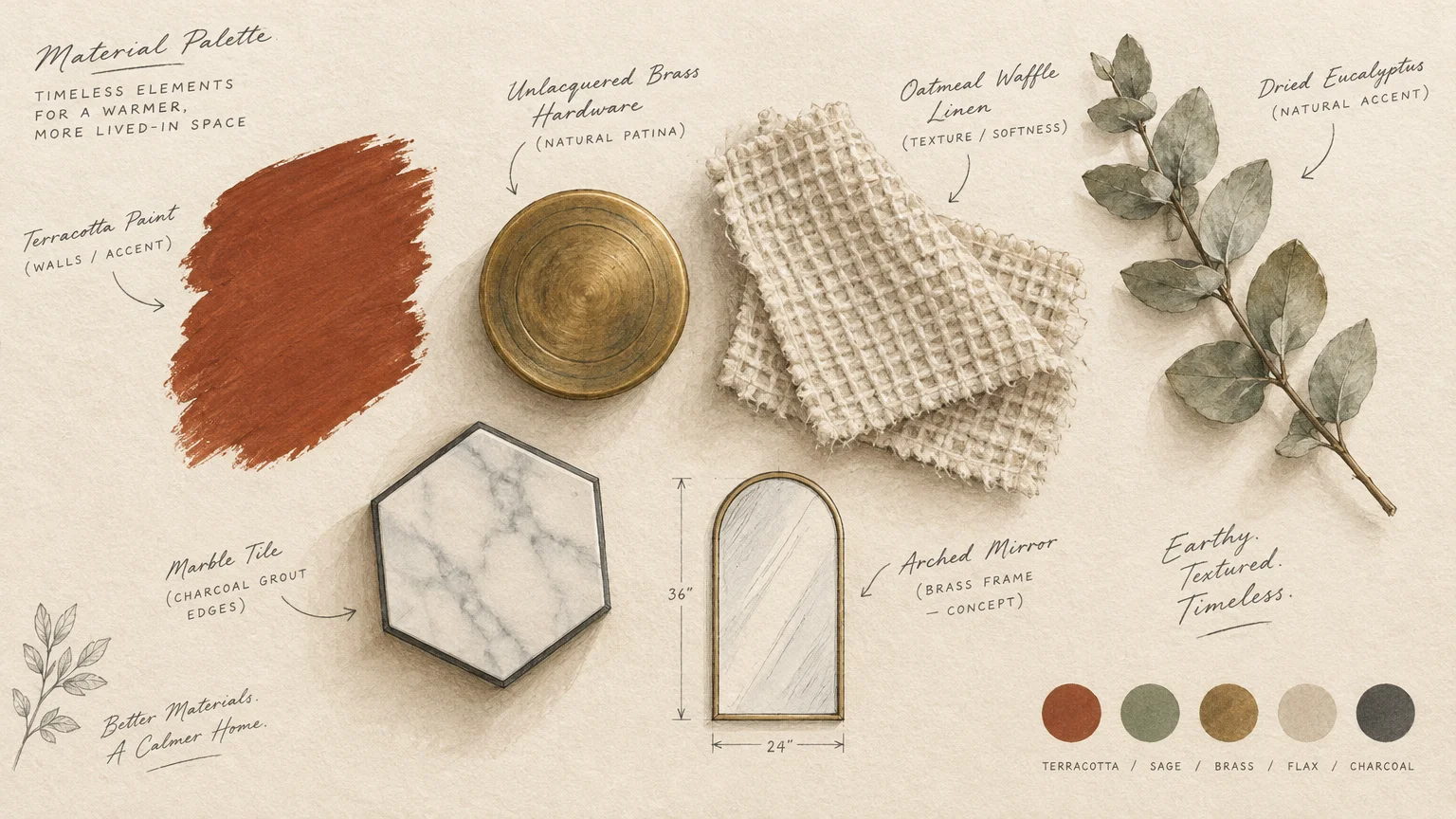
The Big Picture: Weaving These Trends into Your Home
Transforming your bathroom does not require adopting every contemporary design trend simultaneously. True aesthetic sophistication lies in curated restraint, balancing historical provenance with clean, functional modernism.
Begin your transformation by identifying the dominant visual shortcoming within your current space. Focus your energy and resources on resolving that primary flaw before introducing supplementary decorative layers.
Maintain a harmonious dialogue between your materials by repeating tones across contrasting textures. For instance, pair the warm undertones of patinated brass hardware with the earthy fibers of a vintage wool runner.
Ensure that your stylistic choices respect the overarching architectural vernacular of your entire home. A bathroom should feel like a natural, cohesive continuation of your adjoining bedrooms and hallways.
By prioritizing tactile materiality and functional beauty, you construct a timeless environment that transcends fleeting micro-trends. These modest interventions ultimately yield a sanctuary of enduring comfort and everyday restoration.
Celebrate the craftsmanship behind each curated element you introduce into your private rooms. Thoughtful curation elevates ordinary spaces into extraordinary residential experiences.
Frequently Asked Questions
How do you successfully mix metal finishes in a bathroom?
You can mix metals effortlessly by selecting one dominant finish and supporting it with a contrasting accent. For example, pair matte black plumbing fixtures with unlacquered brass hardware and mirror frames.
Limit your selection to two or three distinct metal finishes across the space to prevent visual clutter. Maintaining consistent undertones—such as pairing warm bronze with honey brass—creates effortless, cohesive balance.
Can dark paint colors work effectively in small or windowless bathrooms?
Dark hues excel in compact powder rooms because they obscure corner shadows and blur perimeter boundaries. This optical effect lends small rooms an unexpected sense of endless, cocooning depth.
To keep deep shades from feeling cavernous, install warm-spectrum lighting and reflective accents like gilded brass mirrors. The interplay between dark walls and sparkling highlights creates captivating, jewel-box drama.
How can you ensure peel-and-stick updates withstand high humidity?
Peel-and-stick products require completely clean, dry, and degreased surfaces to establish a permanent adhesive bond. Wipe your walls thoroughly with isopropyl alcohol before applying any adhesive tile or vinyl wallpaper.
Avoid placing removable adhesive materials directly inside shower enclosures where running water creates constant saturation. Instead, use them on accent walls or vanity backsplashes paired with an efficient exhaust fan.
Which affordable bathroom upgrade provides the greatest visual impact?
Upgrading your vanity mirror and wall sconces consistently delivers the most transformative aesthetic return. These two elements define the primary visual axis of your bathroom, anchoring the entire room’s design narrative.
Replacing flat builder glass and harsh overhead lighting instantly elevates both the architectural quality and emotional atmosphere. It shifts the room from an uninspired utility space to a curated luxury retreat.
For the latest color forecasts, consult industry leaders like Pantone and paint companies like Benjamin Moore. For professional design standards, refer to the American Society of Interior Designers (ASID).
Disclaimer: This article reflects design trend analysis and predictions. Personal taste and timeless design principles should always guide your decorating choices.