You can transform your bathroom into a luxurious sanctuary without spending thousands on structural plumbing alterations. Preserving your existing layout slashes overall project expenses by 40% to 60% while delivering a sophisticated aesthetic overhaul.
Relocating waste stacks and water lines adds substantial labor costs and triggers invasive subfloor demolition. Focusing on tactile materials, artisanal fixtures, and surface treatments creates dramatic visual impact within your current footprint.
These seven curated bathroom remodel ideas prove that high-end interior design thrives on clever adaptation rather than costly structural disruption.
Trend #1: Tactile Surface Layering with Seamless Micro-Cement
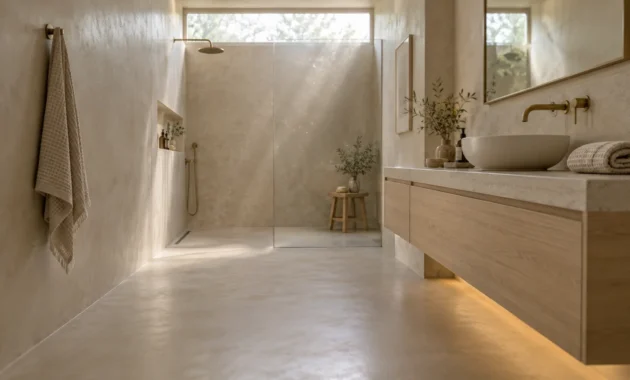
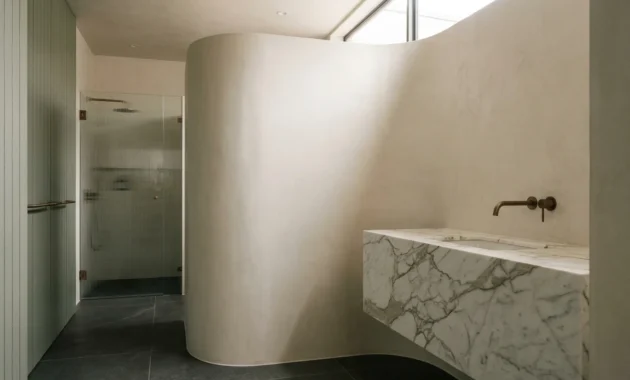
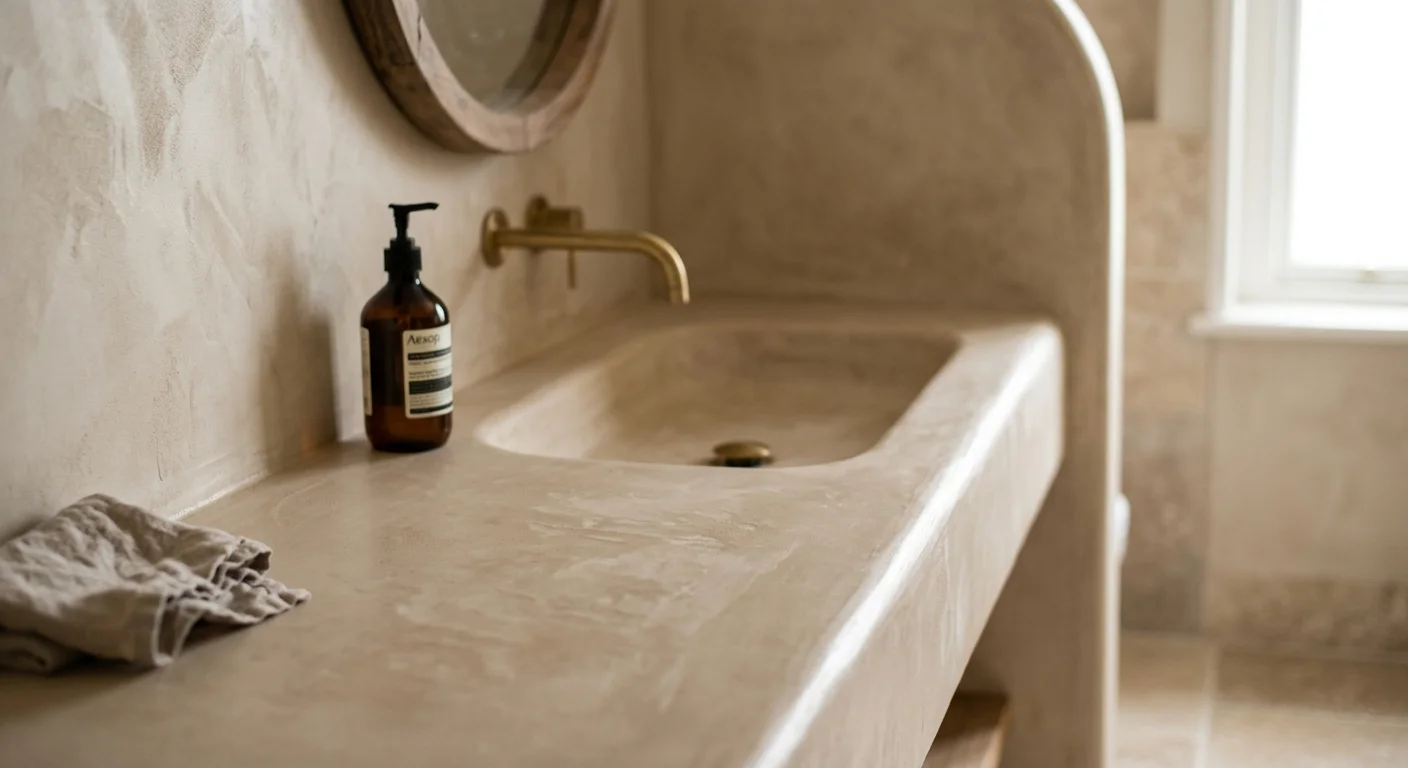
Micro-cement and waterproof Tadelakt plasters have emerged as premier choices for seamless, grout-free bathroom surfaces. These mineral overlays adhere directly over existing wall tiles without requiring messy structural demolition.
This technique captures the serene spirit of organic modernism while eliminating the visual clutter of traditional tile patterns. The hand-troweled application creates subtle tonal variations that celebrate craftsmanship and tactile warmth.
Traditional tile removal typically costs between $860 and $2,800; it also generates immense landfill waste. Applying a waterproof micro-cement skim coat bypasses this destruction while providing a resilient, continuous surface.
Pair this velvety plaster with warm earthy pigments such as limestone, warm alabaster, or muted clay. The continuous finish visually expands compact dimensions, making it an ideal strategy for a small bathroom remodel.
Ensure your contractor applies an ultra-durable polyurethane sealer over the final coat. This invisible barrier protects against water penetration, cosmetic staining, and daily wear without altering the soft matte luster.
You can apply micro-cement over both floor and wall substrates to create a seamless wet-room look. This continuous envelope blurs structural boundaries and makes narrow spaces feel expansive and uncluttered.
Incorporate subtle pigments to complement your home’s overarching palette. Soft greige or warm limestone plaster integrates beautifully with adjacent hardwood flooring and minimalist millwork.
The completed aesthetic channels the restorative tranquility of high-end wellness spas. It forms an elegant, quiet backdrop that lets statement mirrors and architectural lighting command attention.
Trend #2: Furniture-Style Vanity Conversions with Direct Footprint Alignment
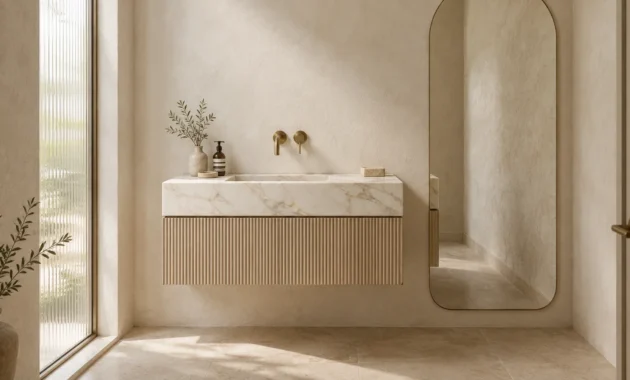
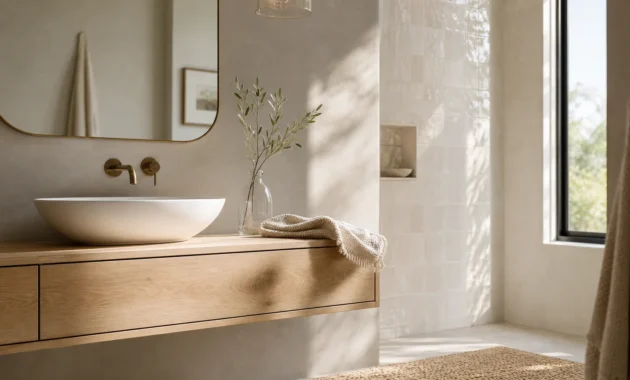
Replacing an outdated builder vanity with a bespoke, furniture-style console instantly elevates your bathroom’s architectural character. You can complete this dramatic transformation without moving supply pipes or drain connections.
Plug-and-play replacement vanities cost between $200 and $1,500 for materials, providing a budget bathroom renovation with immediate visual impact. Selecting a silhouette that aligns with your current rough-in dimensions prevents wall reconstruction.
Relocating waste lines and sink plumbing typically adds $700 to $1,500 in specialized labor. Maintaining your existing pipe locations frees your budget for superior materials like fluted oak or honed marble.
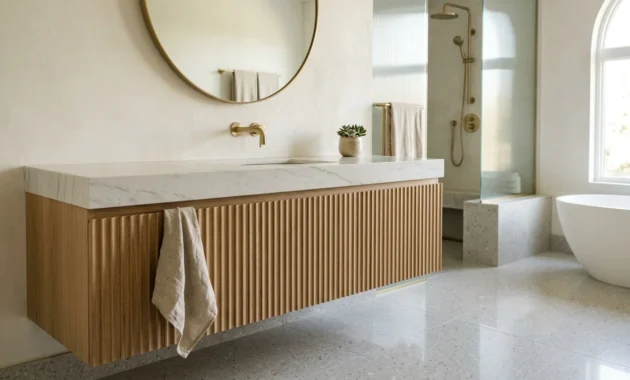
Consider freestanding consoles crafted from rich walnut, reeded white oak, or repurposed antique chests. These artisanal pieces infuse historic provenance and texture into utilitarian spaces.
Top your vanity with a custom quartzite slab and an integrated undermount stone basin. This combination delivers quiet luxury while utilizing your existing standard wall drainage locations.
Select vanities with open lower shelving to create an airy, floating effect in tight quarters. Styling the lower tier with woven baskets or folded linen towels adds textural richness.
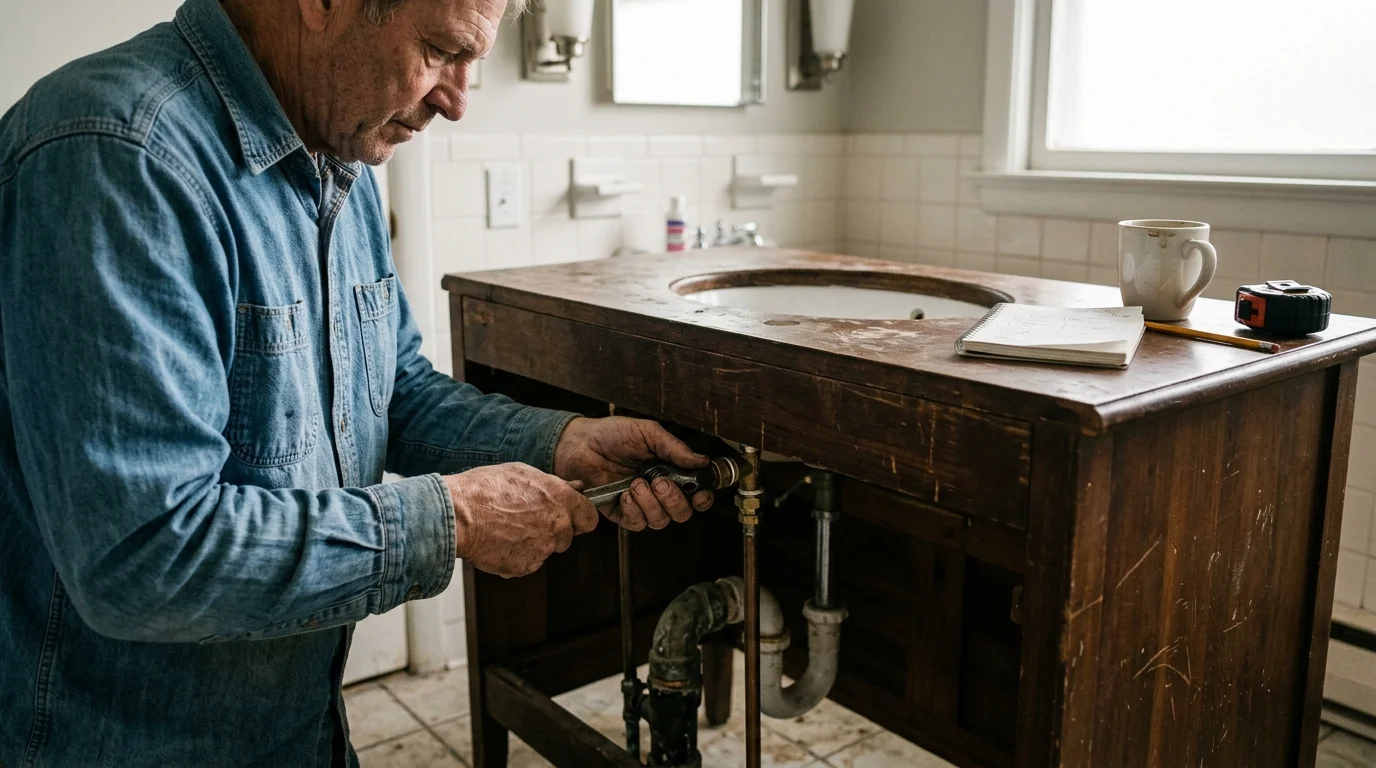
When selecting a replacement vanity, measure your existing shutoff valve heights carefully. Ensuring proper clearance inside the cabinet back saves time and prevents unexpected plumbing modifications during installation.
Maximize storage by selecting cabinetry designed with notched, U-shaped interior drawers that clear existing P-traps. This tailored joinery accommodates your current pipe stack while providing organized, functional drawer capacity.
Trend #3: Statement Tub Reglazing and Composite Enamel Restoration
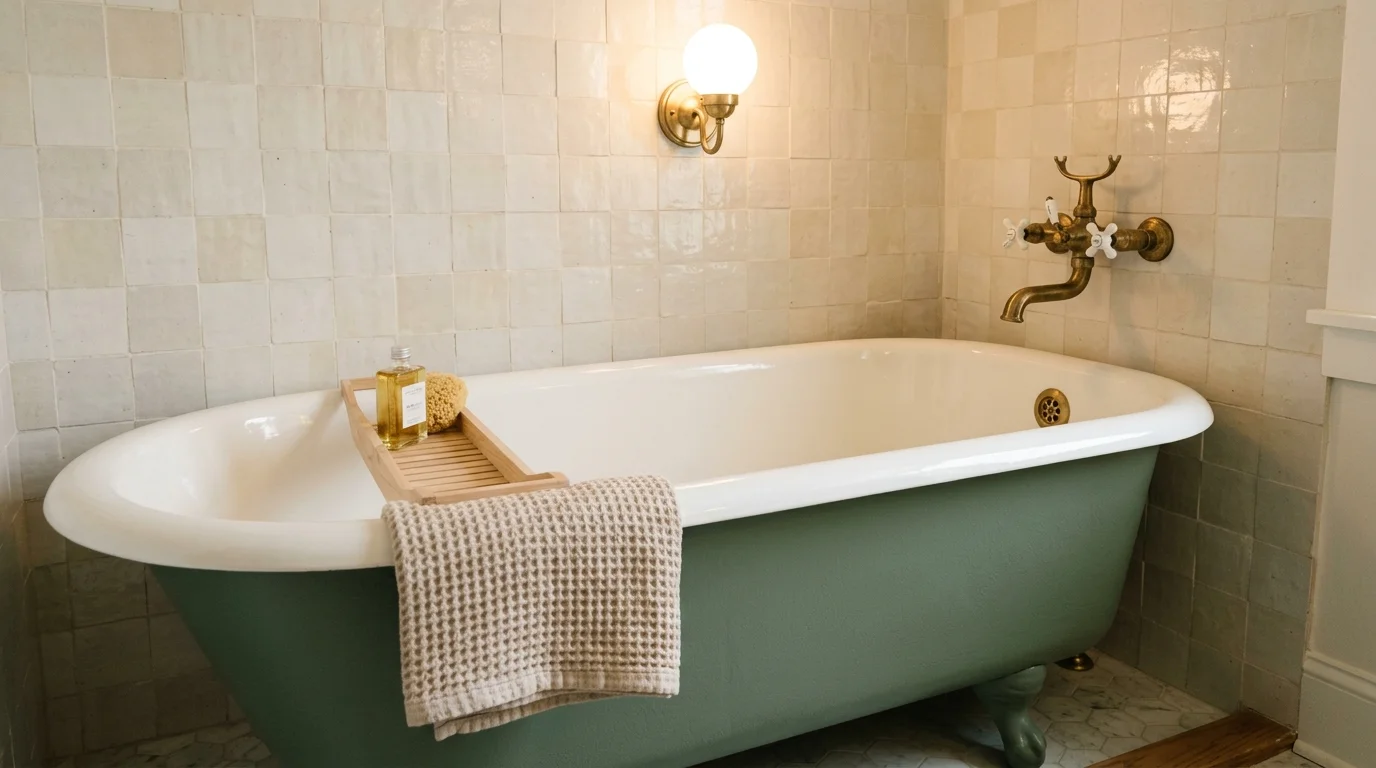
Vintage cast iron tubs and alcove fixtures feature enduring proportions that modern acrylic units struggle to match. Professional reglazing revives worn porcelain surfaces to showroom condition without invasive structural removal.
Full tub tear-outs average between $1,700 and $5,000 once wall demolition, tile surrounds, and plumbing alignments are completed. In contrast, professional refinishing costs between $350 and $650, preserving your existing drain geometry.
High-performance composite coatings create an ultra-smooth, non-porous enamel barrier that resists chipping and discoloration. The entire reglazing process takes only a few hours, avoiding weeks of disruptive bathroom downtime.
Make a striking design statement by specifying a dramatic two-tone finish. Coat the interior in crisp white while painting the exterior shell in moody charcoal or rich olive.
Refinishing also works on surrounding porcelain tile walls, creating a clean monochromatic alcove. This allows you to renew both the tub and surround in a single cohesive treatment.
Preserving a vintage cast iron tub retains superior heat retention properties that acrylic replacements lack. You maintain functional comfort while revitalizing the surface with a durable, lustrous finish.
This surface renewal eliminates the risk of disturbing older subfloor framing or fragile waste lines. It offers an environmentally conscious solution for impactful bathroom updates without replumbing.
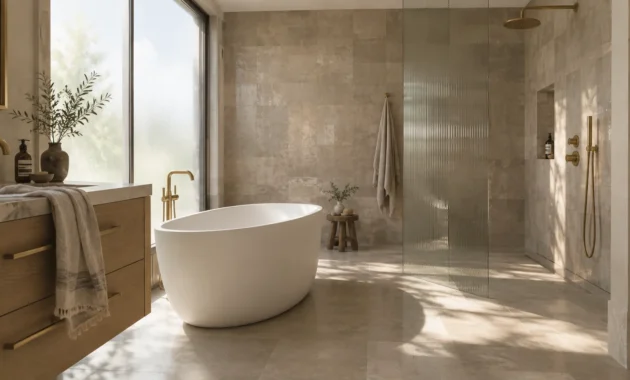
Finish the tub area by pairing the restored porcelain with contemporary deck-mounted or exposed wall-mount faucets. This curated contrast bridges historic authenticity with modern luxury performance.
Trend #4: Fluted Architectural Glass and Zoned Ambient Lighting
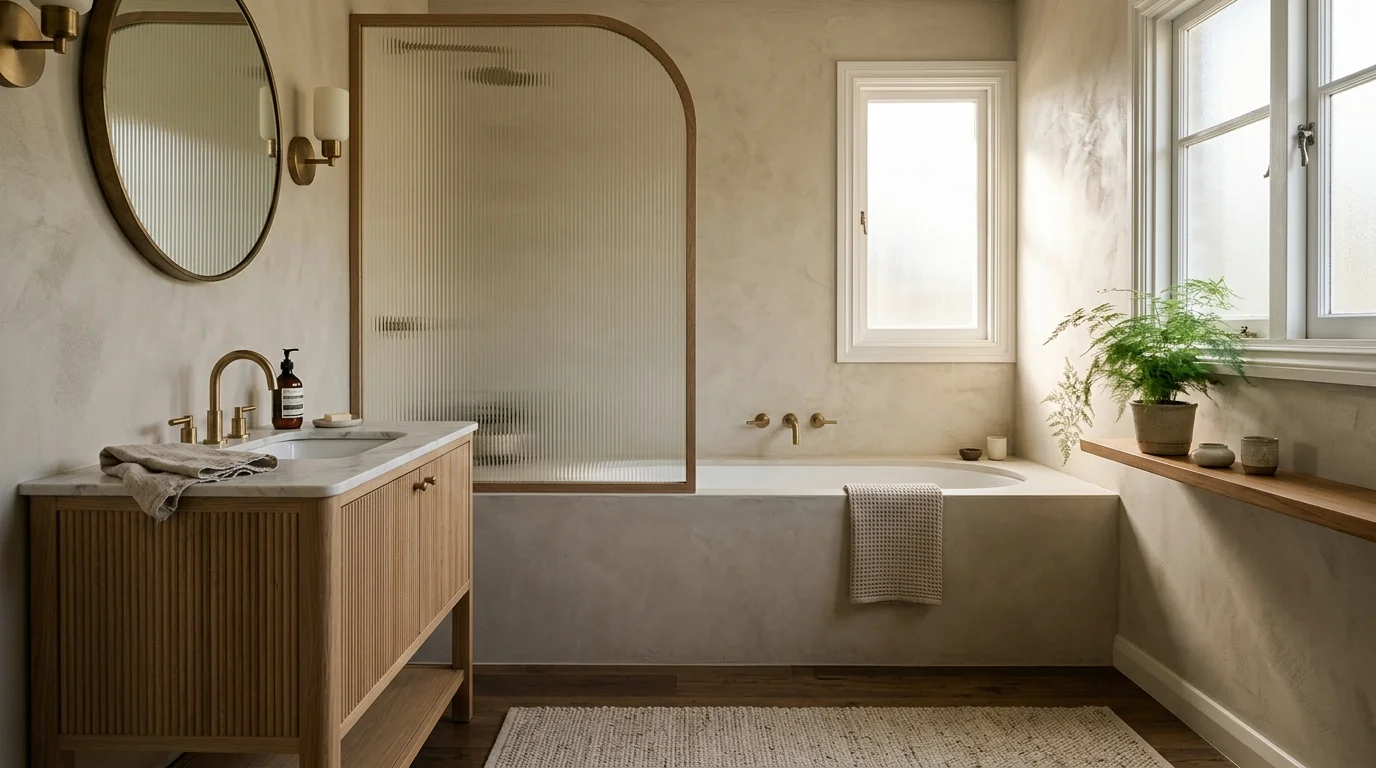
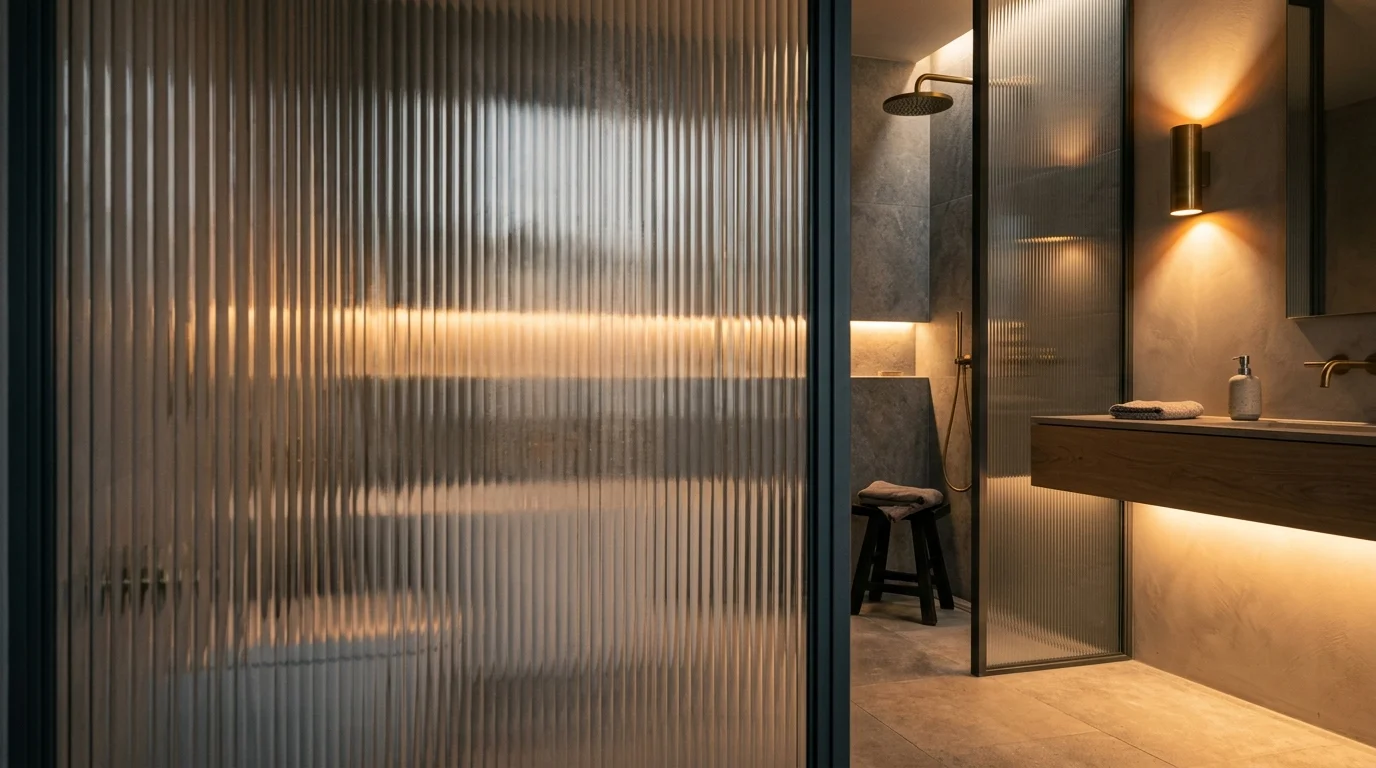
Dated frosted shower doors and heavy metal frames visually divide your bathroom, making it feel small and closed off. Swapping these partitions for architectural fluted glass screens expands spatial volume across your existing shower base.
Reeded and fluted glass panels diffuse incoming natural light while ensuring privacy and water containment. Because these screens install directly onto your current curb, they require no shower drain relocations.
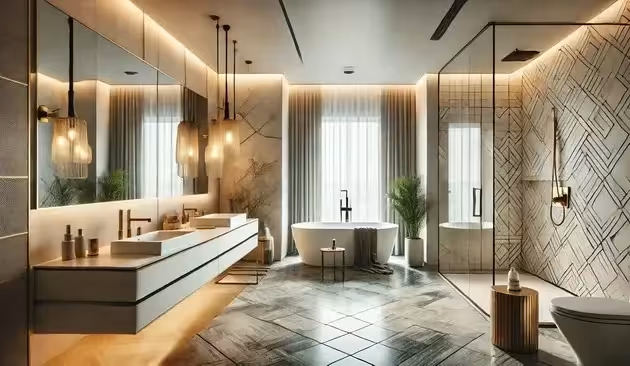
Pair this sleek glass update with a layered architectural lighting scheme. Replace single overhead builder bars with dual vertical sconces positioned at eye level for balanced, flattering illumination.
Specify warm 2700K LED bulbs to enhance complex wall undertones and render skin tones naturally. Dimmable switches give you precise control, shifting effortlessly from bright morning task lighting to soothing ambient glow.
Add concealed LED cove lighting along ceiling edges to wash textured vertical surfaces with soft radiance. This upward illumination draws the eye higher, accentuating ceiling height without touching plumbing stacks.
Fluted glass panels interact dynamically with natural daylight, casting elegant linear shadows across your floor. This dynamic texture enriches the sensory quality of the space throughout the day.
Consider adding a lighted anti-fog mirror above your vanity for integrated convenience. Modern LED mirrors deliver soft, shadowless task illumination while maintaining a clean, minimalist profile.
These optical enhancements represent easy bathroom upgrades that completely transform how your bathroom functions and feels. They demonstrate how strategic lighting and translucent materials elevate design without structural intervention.
Trend #5: Over-the-Subsurface Flooring with Luxury Mineral Composites
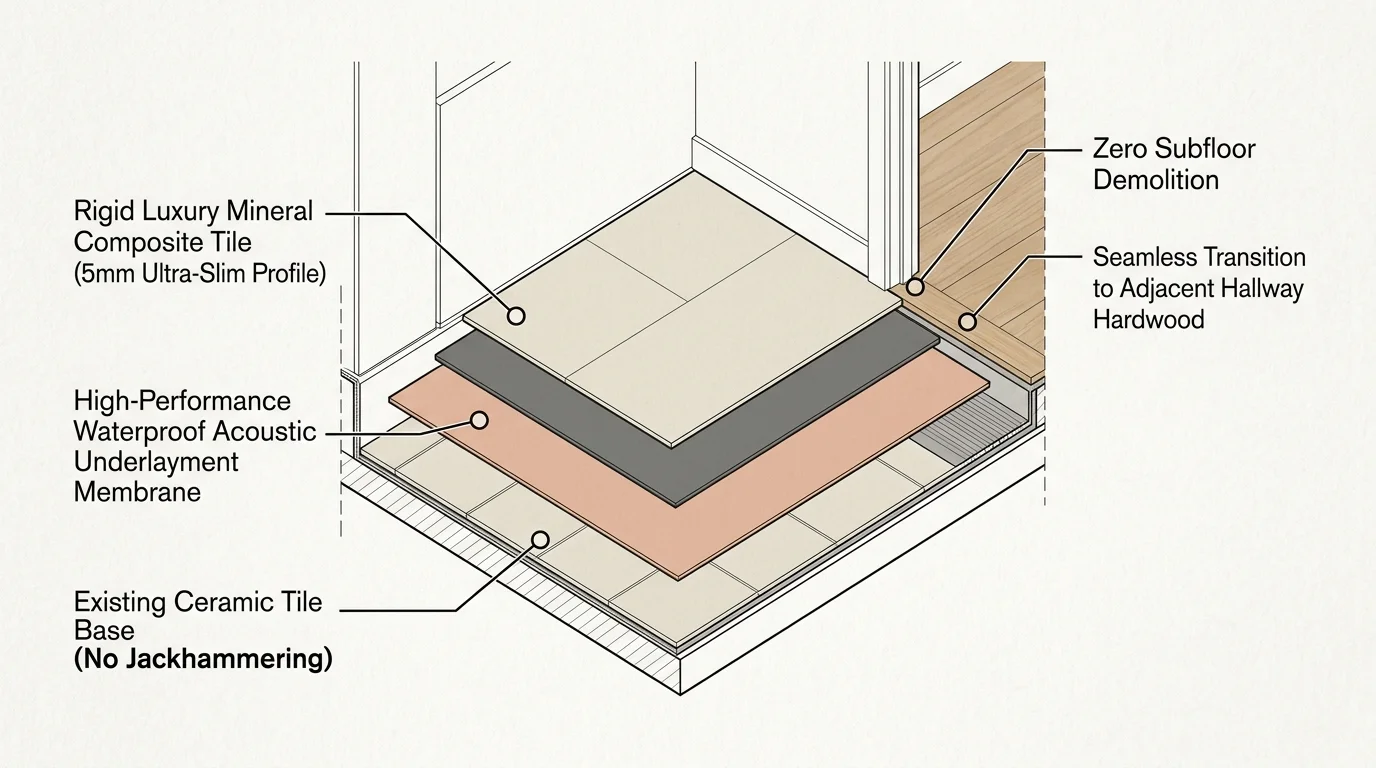
Demolishing existing floor tile creates abrasive dust, risks damaging subfloor membranes, and generates substantial disposal expenses. Modern rigid-core mineral composites and ultra-slim porcelain panels install directly over sound existing tiles.
High-grade luxury vinyl tile and composite stone systems cost between $50 and $300 for materials in standard layouts. This non-invasive approach provides the timeless look of natural stone at a fraction of the cost.
Engineered mineral composites deliver complete waterproof protection, authentic surface textures, and integrated acoustic dampening. Their ultra-thin profile allows seamless doorway transitions without interfering with existing toilet flange heights.
Select sophisticated patterns such as large-format honed slate, pale travertine, or classic herringbone wood planks. These grounding layouts bring refined balance to both expansive and small bathroom remodel projects.
Ensure your existing tile floor is structurally sound, level, and thoroughly degreased before installing your new overlay. A well-prepared substrate guarantees maximum adhesion and prevents hollow-sounding steps underfoot.
Pair your new composite flooring with tonal grout lines or seamless click-lock joints. This creates a refined, continuous plane that anchors your cabinetry and wall treatments.
Because you leave the subfloor intact, you protect underlying supply pipes and electrical radiant heating coils. This overlay technique slashes installation time from several days to a single afternoon.
The result is a solid, luxurious floor foundation that elevates your interior aesthetic while keeping renovation expenses tightly controlled.
Trend #6: Saturated Color Drenching and Biophilic Finishes
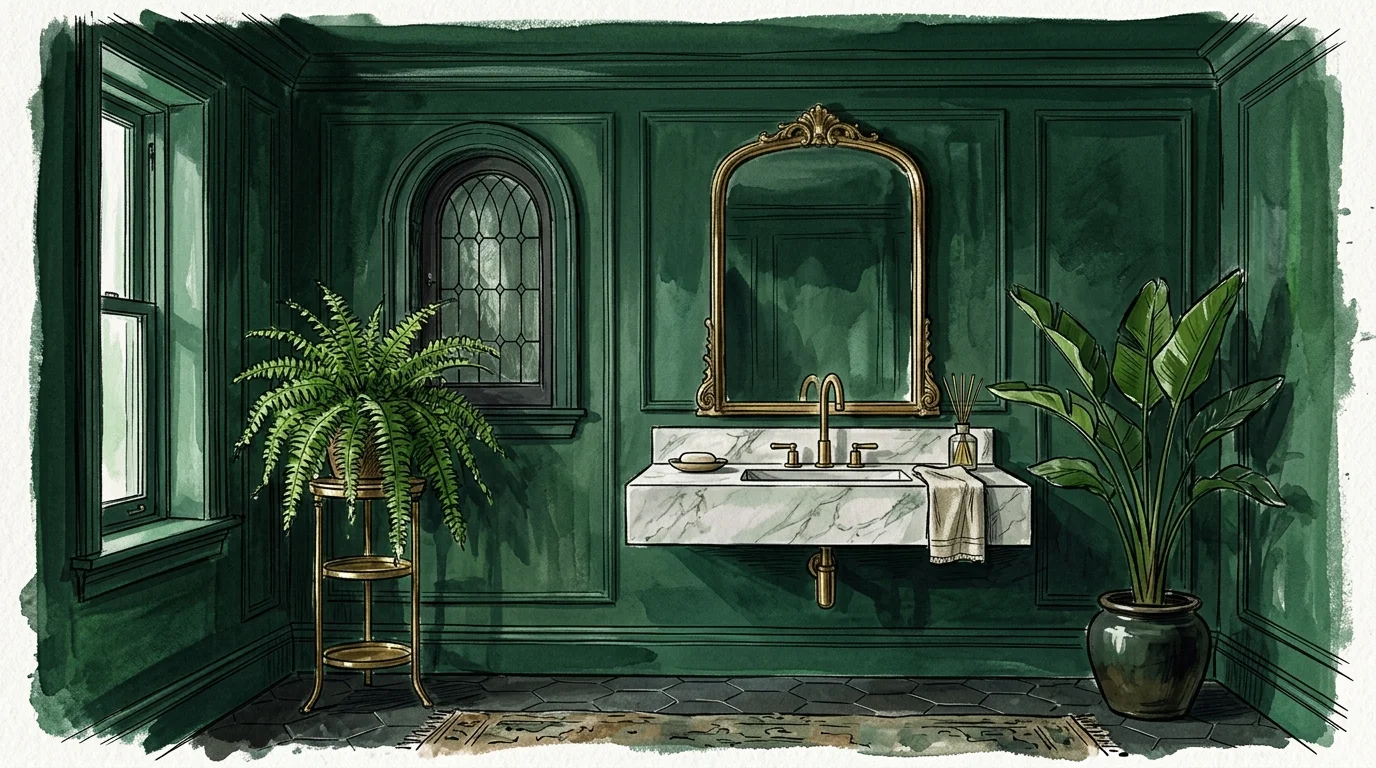
Color drenching is one of the most transformative techniques in contemporary interior design. This method involves painting walls, ceilings, baseboards, and millwork in a single, deeply saturated hue.
Enveloping a compact bathroom in continuous color softens angular transitions and erases harsh visual borders. It creates an intimate, cocoon-like atmosphere that makes small footprints feel luxurious and purposeful.
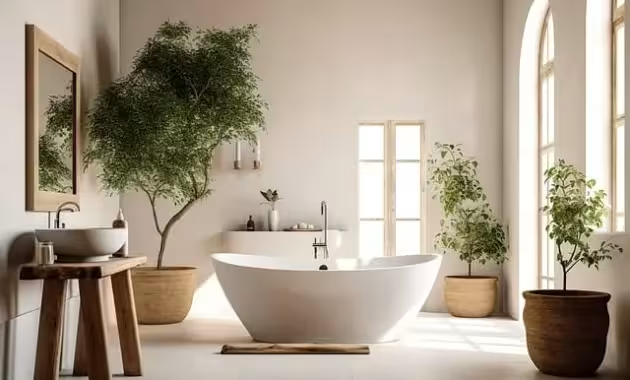
Designers are embracing rich biophilic tones such as deep forest green, baked terracotta, and atmospheric navy. These organic shades provide psychological grounding and create high-contrast backdrops for polished metallic hardware.
Select premium moisture-resistant formulations with a velvety eggshell or satin finish to withstand daily bathroom humidity. High-quality paints resist mildew growth and allow easy wiping without losing their rich depth.
Extend your chosen wall color across the ceiling to create an uninterrupted canopy of tone. This technique eliminates ceiling cut-lines, creating an illusion of boundless height in compact bathrooms.
To introduce tactile variety, apply botanical or textured grasscloth wallpaper on an upper accent wall. Water-resistant wall coverings add artisanal flair and bespoke character without requiring mechanical renovations.
Incorporate natural wood accents and woven accessories to balance saturated paint shades. Organic materials provide visual warmth and prevent deep colors from feeling overpowering or cold.
This focused color strategy transforms spatial perception entirely, proving that paint and texture can outshine costly structural overhauls.
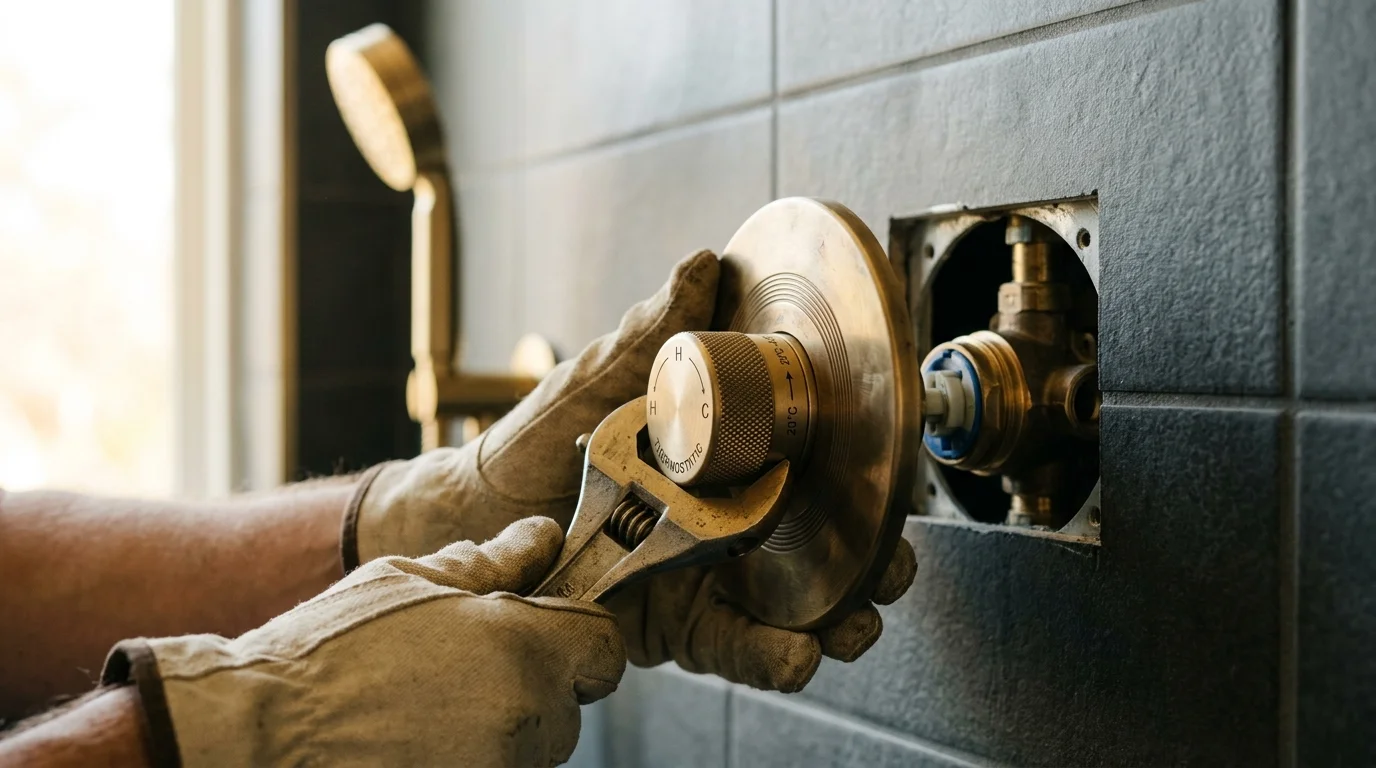
Trend #7: Living Metal Hardware and Universal Valve Trim Swaps
Outdated chrome or scratched polished brass fixtures can make a functioning bathroom feel tired and neglected. Upgrading to living metal finishes like unlacquered brass or hand-rubbed bronze brings immediate tactile prestige.
You do not need to break open shower tile walls to modernize your valves and showerheads. Leading plumbing manufacturers design universal retrofit trim kits that connect directly onto existing internal rough-in valves.
Licensed plumbers charge between $45 and $200 per hour; opening tiled walls increases labor costs significantly. Utilizing direct-fit valve trims avoids costly wall repairs while delivering a pristine, modernized aesthetic.
Unlacquered brass develops a rich, organic patina over time in response to moisture and daily touch. This evolving material reflects the principles of quiet luxury, prioritizing authentic materials over mass-produced coatings.
Opt for brushed or satin metal textures rather than high-gloss chrome to mask water spots and fingerprints. These tactile surfaces require minimal maintenance while exuding quiet, understated luxury.
Check your manufacturer’s valve compatibility charts before purchasing new trim kits. Many brands offer dedicated retrofit plates that snap directly onto older cartridge bodies without behind-the-wall plumbing work.
Unify the space by matching your shower hardware with basin faucets, towel rings, mirror trims, and cabinet pulls. A harmonized hardware palette binds disparate elements across the room into a cohesive, curated environment.
These metallic accents act as architectural jewelry, catching light and elevating your existing footprint with refined craftsmanship.
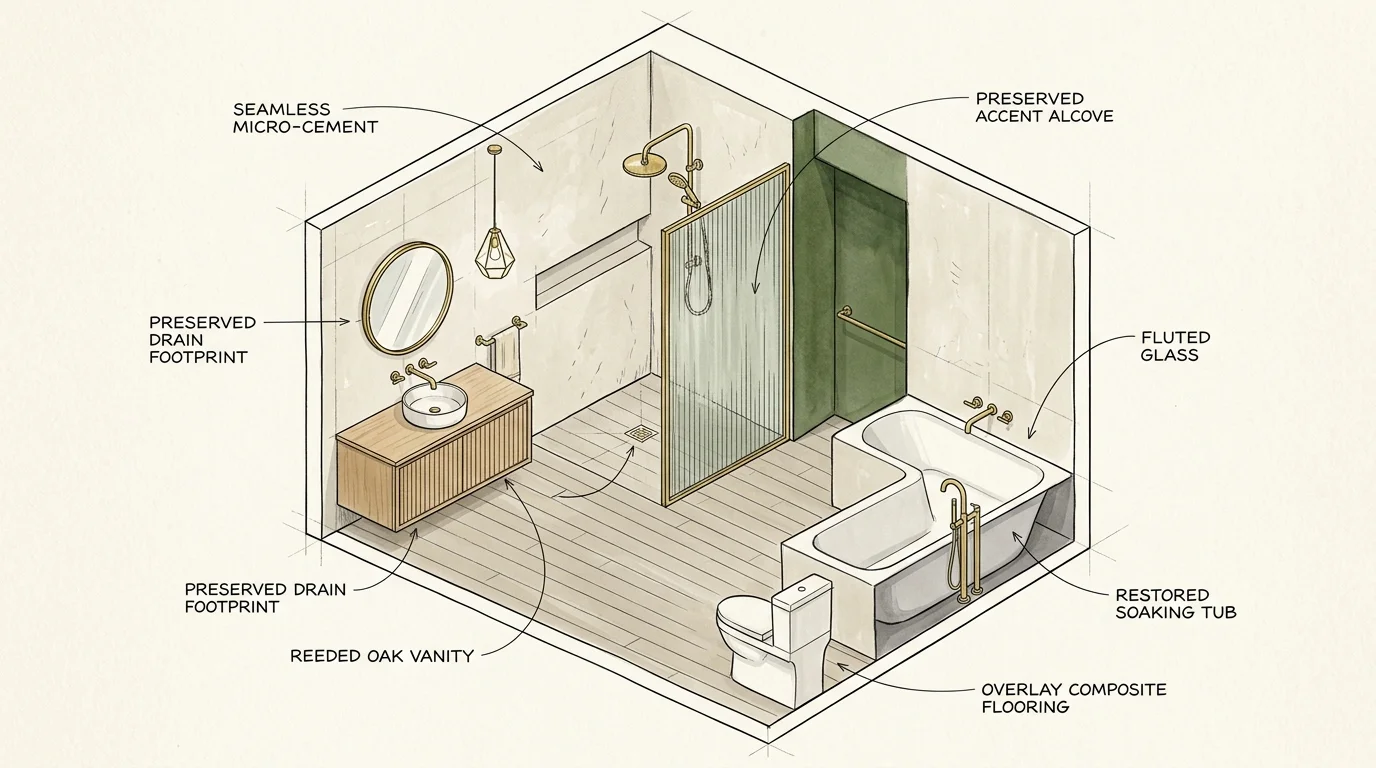
The Big Picture: Weaving These Trends into Your Home
Modernizing a bathroom without moving plumbing succeeds through the balanced interplay of rich textures, curated lighting, and premium finishes. Working within your room’s existing layout allows you to allocate resources toward artisanal craftsmanship and superior materials.
Industry data from the Remodeling Cost vs. Value Report reveals that midrange cosmetic bathroom remodels recoup 70% to 74% at resale. In comparison, upscale gut renovations involving layout changes recoup only 45% to 55% of their total cost.
Preserving your existing plumbing footprint also bypasses municipal building permits, which typically cost between $100 and $1,000. It prevents permit delays and structural surprises, ensuring your renovation finishes on schedule.
Begin your design plan by evaluating your existing fixtures and identifying what functions effectively. Layer micro-cement surfaces, furniture-grade cabinetry, and fluted glass partitions around these fixed locations.
A successful non-invasive remodel combines strategic material investments with disciplined layout preservation. Prioritize high-touch surfaces like faucets, cabinet handles, and vanity countertops to create an elevated everyday experience.
Connect your bathroom visually to adjoining spaces by echoing color palettes and metal finishes from nearby hallways or bedrooms. This thoughtful continuity guarantees a harmonious, timeless atmosphere throughout your entire home.
By avoiding plumbing relocations, you dramatically lower project risks, unexpected structural repairs, and tradesperson scheduling conflicts. You achieve a bespoke designer aesthetic with complete financial and creative control.
For the latest color forecasts, consult industry leaders like Pantone and paint companies like Benjamin Moore. For professional design standards, refer to the American Society of Interior Designers (ASID).
Frequently Asked Questions
Can I replace a vanity myself without hiring a plumber?
You can replace a vanity independently if your new cabinet matches the existing water supply and drain rough-in locations. Modern flexible braided supply lines and modular P-trap assemblies make direct-swap installations straightforward for DIY homeowners.
If your shutoff valves show corrosion or leaks, hire a licensed professional to replace the valves safely. Plumbers typically charge between $45 and $200 per hour for standard hookup services.
How durable is professional bathtub reglazing compared to a replacement?
Professional bathtub reglazing lasts between 10 and 15 years when maintained with non-abrasive, pH-neutral cleaners. The cured poly-vitreous enamel creates a tough, non-porous bond that resists chipping and moisture penetration.
Because reglazing costs $350 to $650 compared to $1,700 to $5,000 for replacement, it offers unmatched cost efficiency and durability.
What is the highest ROI bathroom upgrade without replumbing?
Upgrading the vanity, replacing outdated lighting, and refinishing wall or tub surfaces yield the strongest financial return. Midrange cosmetic remodels consistently recoup over 70% of their cost by focusing on high-impact visual surfaces.
These targeted upgrades elevate buyer appeal instantly without the risk of costly subfloor or plumbing complications.
How do I mix different metal finishes without creating visual clutter?
Design a balanced scheme by selecting one dominant metal finish, such as unlacquered brass, for 70% of your fixtures. Introduce a secondary accent finish, like matte black or polished nickel, for mirrors and cabinet hardware.
Match the warm or cool undertones of your metals to maintain harmony across the entire bathroom palette. Limiting your selection to two finishes keeps the overall aesthetic cohesive and sophisticated.
Disclaimer: This article reflects design trend analysis and predictions. Personal taste and timeless design principles should always guide your decorating choices.