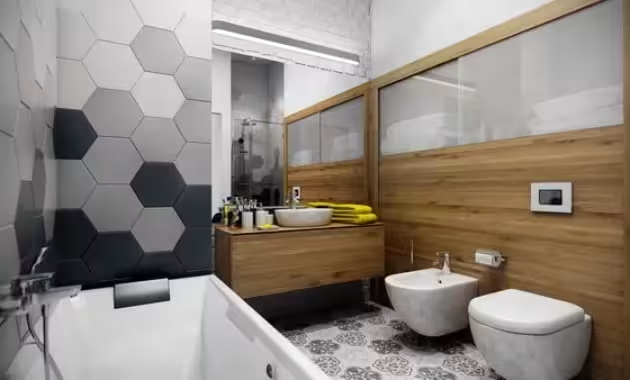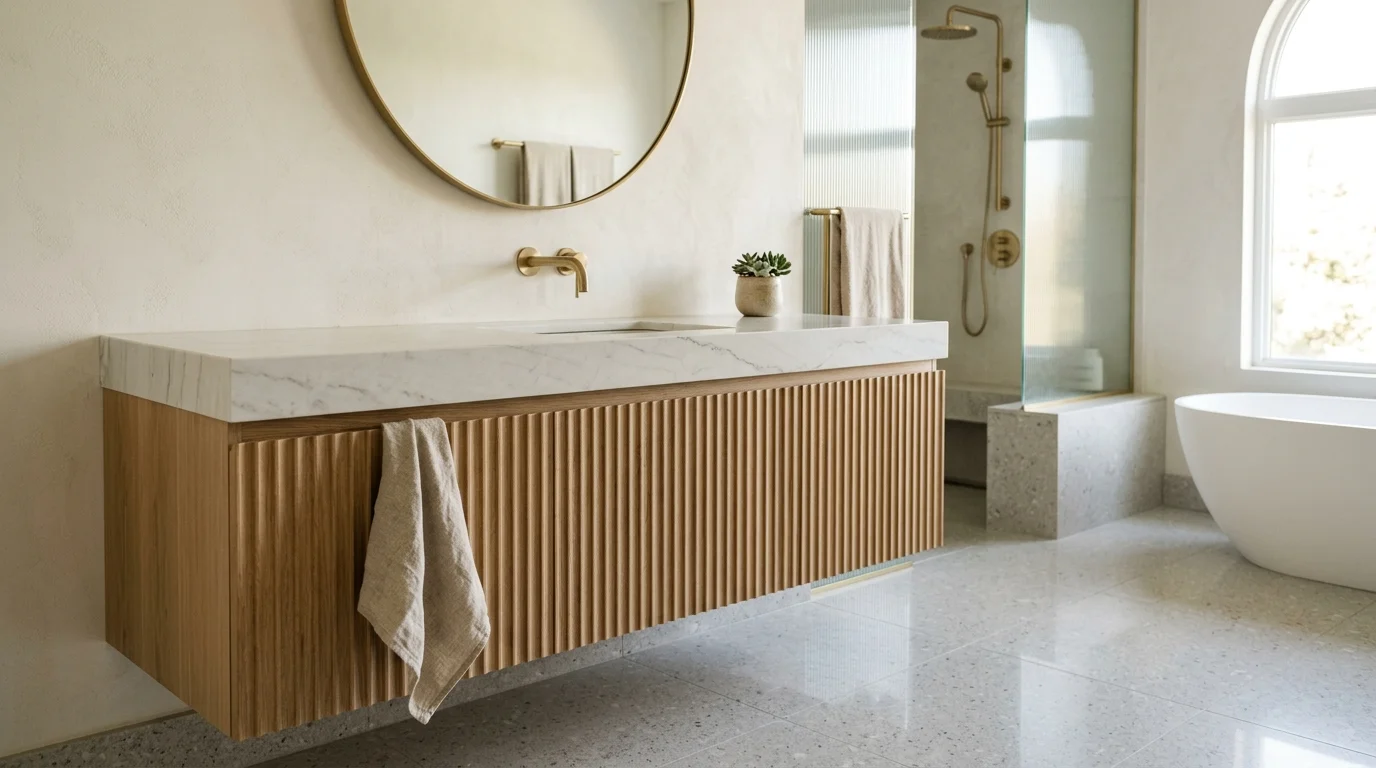
Upgrading your bathroom begins with replacing the flat, utilitarian vanity that characterizes generic residential construction. Outdated bathroom vanity trends—such as low 30-inch counter heights, hollow-core particleboard boxes, and generic cultured marble tops—are rapidly yielding to bespoke craftsmanship and tactile materials. By replacing a builder grade vanity with an intentionally designed centerpiece, you instantly elevate daily routines while boosting home equity. Modern bathroom vanity ideas prioritize architectural fluting, rich natural hardwoods, quartzite slab profiles, and integrated illumination. These trending bathroom vanity styles bridge the gap between functional utility and high-end residential luxury, transforming an uninspired washroom into a serene, curated sanctuary that enriches your entire home aesthetic.
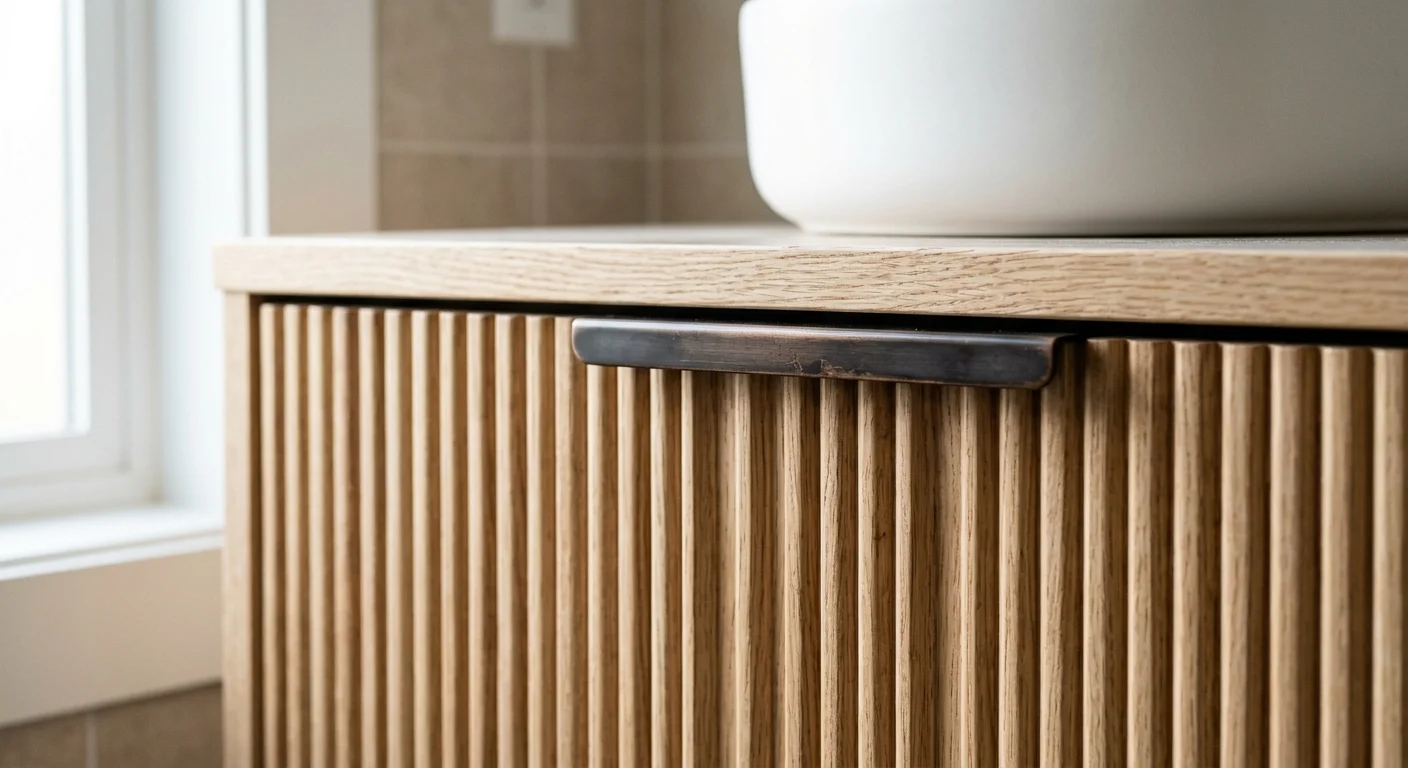
Trend #1: Tactile Fluted and Reeded Natural Woodwork
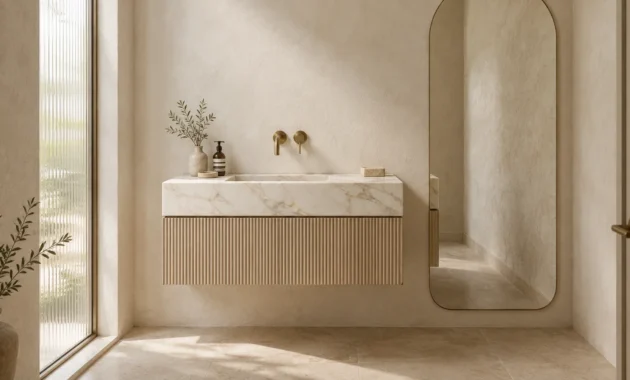
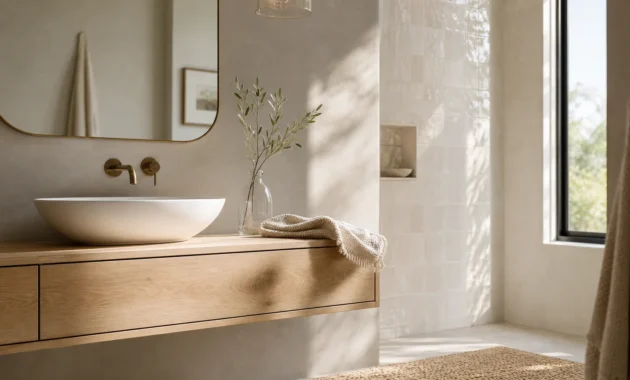
Flat-panel veneer cabinets finished in sterile white or faux espresso stain have defined production homes for decades. Today, interior designers are discarding these uninspired surfaces in favor of warm, dimensional carpentry. Fluted and reeded wood surfaces bring architectural rhythm into the bath, turning a purely utilitarian storage box into a tactile focal point. Vertical grooving introduces delicate play between light and shadow, softening the hard porcelain and polished tile surfaces that dominate wet rooms.
This aesthetic pivot relies heavily on authentic timber provenance. Light white oak, quarter-sawn walnut, and warm ash have surged past painted cabinetry; industry data reveals that natural wood finishes now capture between 20% and 26% of the vanity market, displacing monochromatic gray and stark white schemes. Homeowners increasingly favor clear, matte polyurethane seals that protect the timber against ambient humidity while highlighting natural grain patterns, mineral streaks, and organic imperfections.
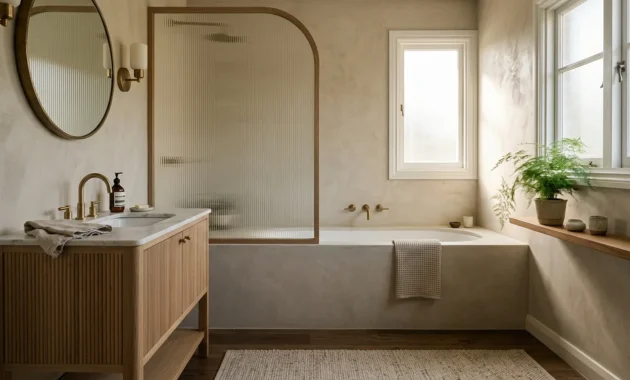
To integrate this trend effectively, balance the density of ribbed millwork with clean, minimalist hardware. Slim edge pulls in patinated brass or oil-rubbed bronze accentuate vertical lines without cluttering the visual field. If you select a reeded oak vanity, echo its organic warmth across adjoining spaces by installing matching white oak floating shelves, linen cabinet accents, or engineered hardwood flooring in the surrounding primary suite.
Trend #2: Suspended Floating Consoles with Under-Cabinet Illumination
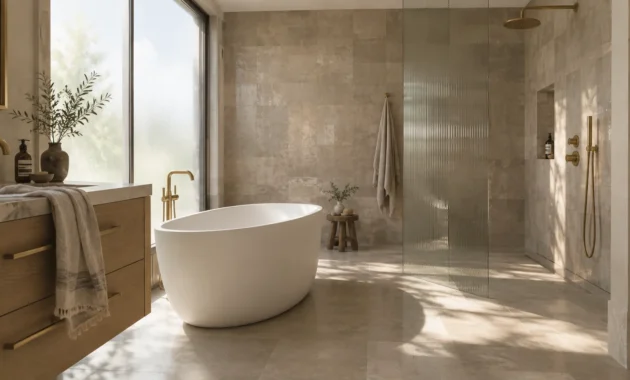
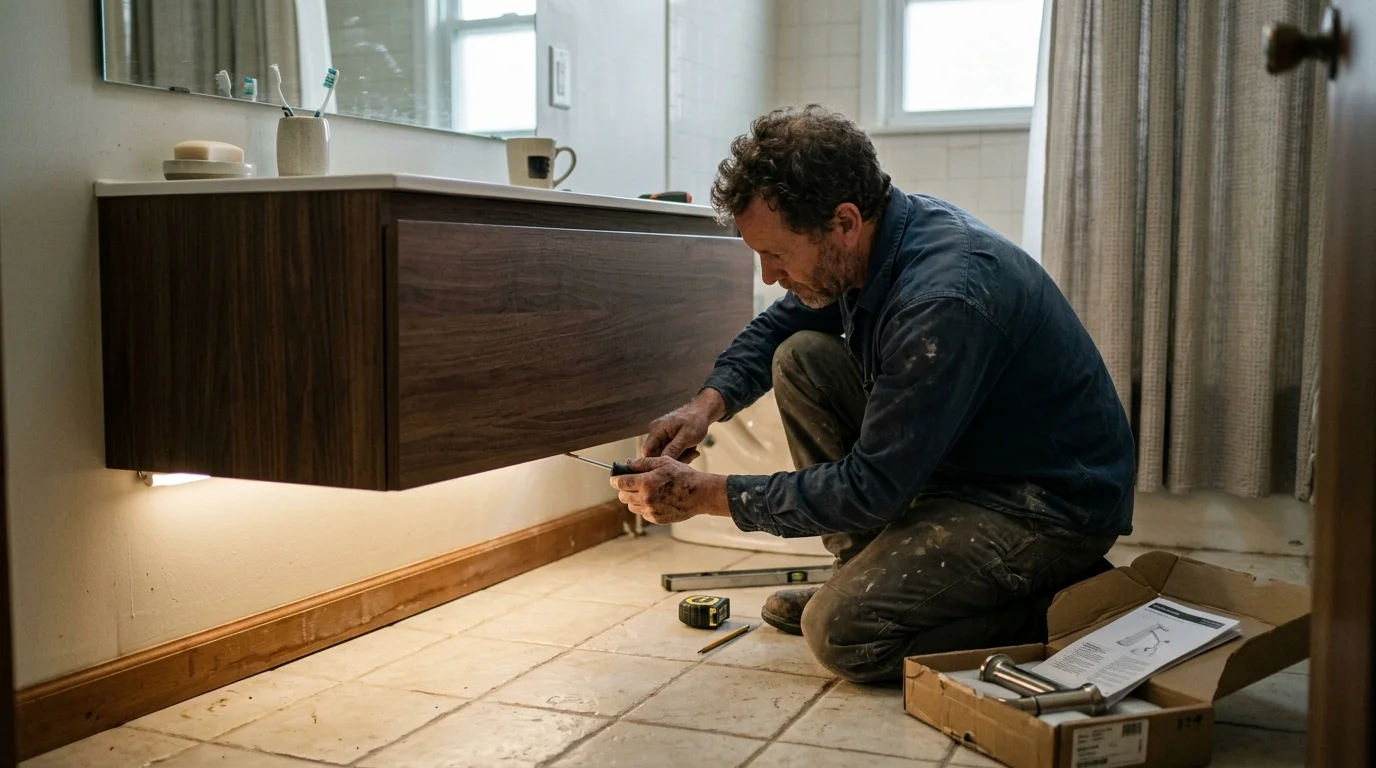
Standard builder-grade cabinetry sits directly on the subfloor, enclosed by cheap toe-kicks that accumulate dust and visually compress the room. Modern bathroom vanity ideas heavily favor suspended, wall-mounted consoles. By lifting the vanity mass off the ground, floating silhouettes expose continuous floor surfaces, tricking the eye into perceiving compact powder rooms and expansive primary baths as significantly larger than their physical footprint.
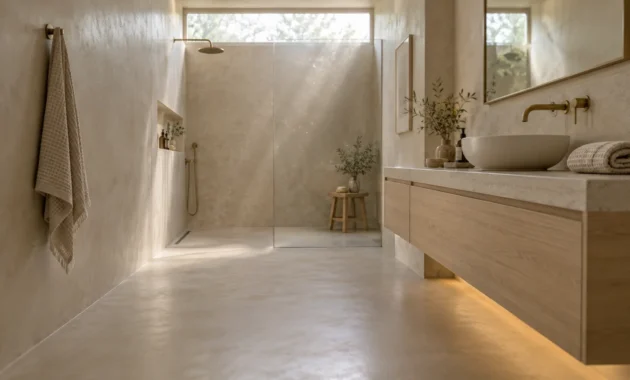
The floating silhouette creates an ideal framework for layered lighting design. Integrating low-voltage LED strip channels along the lower perimeter of a suspended cabinet casts a soft, downward glow across the floor tile. When connected to a discrete motion sensor or an automated night circuit, this ambient feature provides gentle illumination for late-night visits while establishing an upscale, hospitality-inspired atmosphere during evening hours.
Executing a wall-hung installation requires strategic structural planning. Unlike freestanding cabinets supported by the floor, suspended units exert substantial torque on framing. Carpenters must install solid structural wood blocking between wall studs before hanging the unit. However, the payoff is substantial: uninterrupted sightlines allow continuous large-format porcelain slabs or intricate herringbone tile patterns to flow seamlessly beneath the cabinet, emphasizing a clean, contemporary aesthetic.
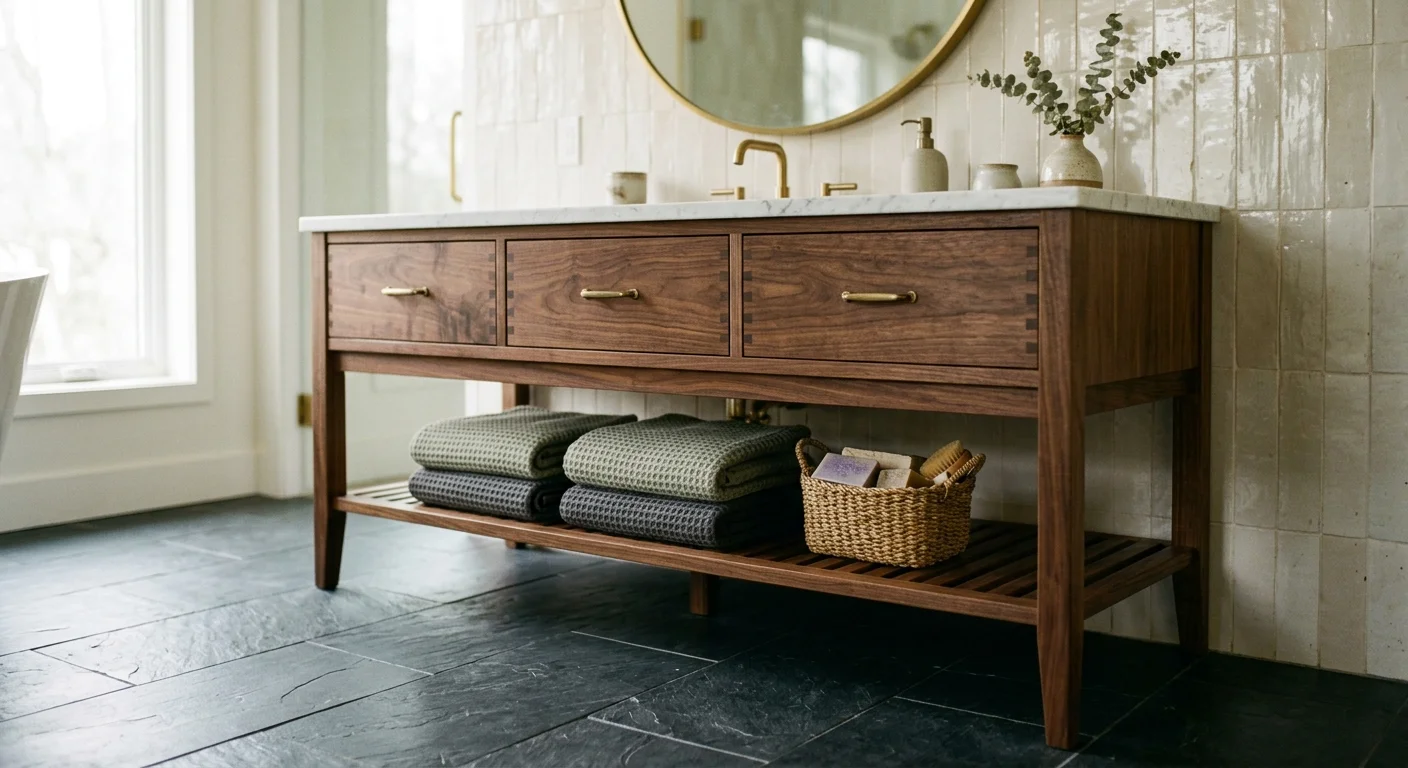
Trend #3: Bespoke Furniture-Style Silhouettes with Open Slatted Shelving
Many homeowners seek to replace the rigid, boxy look of production-built cabinets with vanities styled as curated antique furniture. Freestanding vanities elevated on tapered spindle legs, turned wood pillars, or metal-capped feet account for roughly 26% of vanity upgrades. This approach introduces an heirloom sensibility, making the bathroom feel like a naturally evolved extension of your living and dining room decor rather than an isolated utility area.
A key element of this furniture-inspired movement is the incorporation of an open, slatted lower shelf. This design feature replaces cavernous, disorganized bottom cabinets with an airy platform for curated storage. You can style the lower tier with woven seagrass storage bins, rolled Turkish cotton towels, and handmade ceramic vessels, turning everyday practical items into decorative assets.
When selecting a furniture-style console, look for authentic joinery details such as exposed dovetail corners, mortise-and-tenon framing, and hand-rubbed oil finishes. Pairing a walnut furniture console with matte black or unlacquered brass bridge faucets reinforces a timeless aesthetic that resists transient design fads, ensuring your investment retains value for years to come.
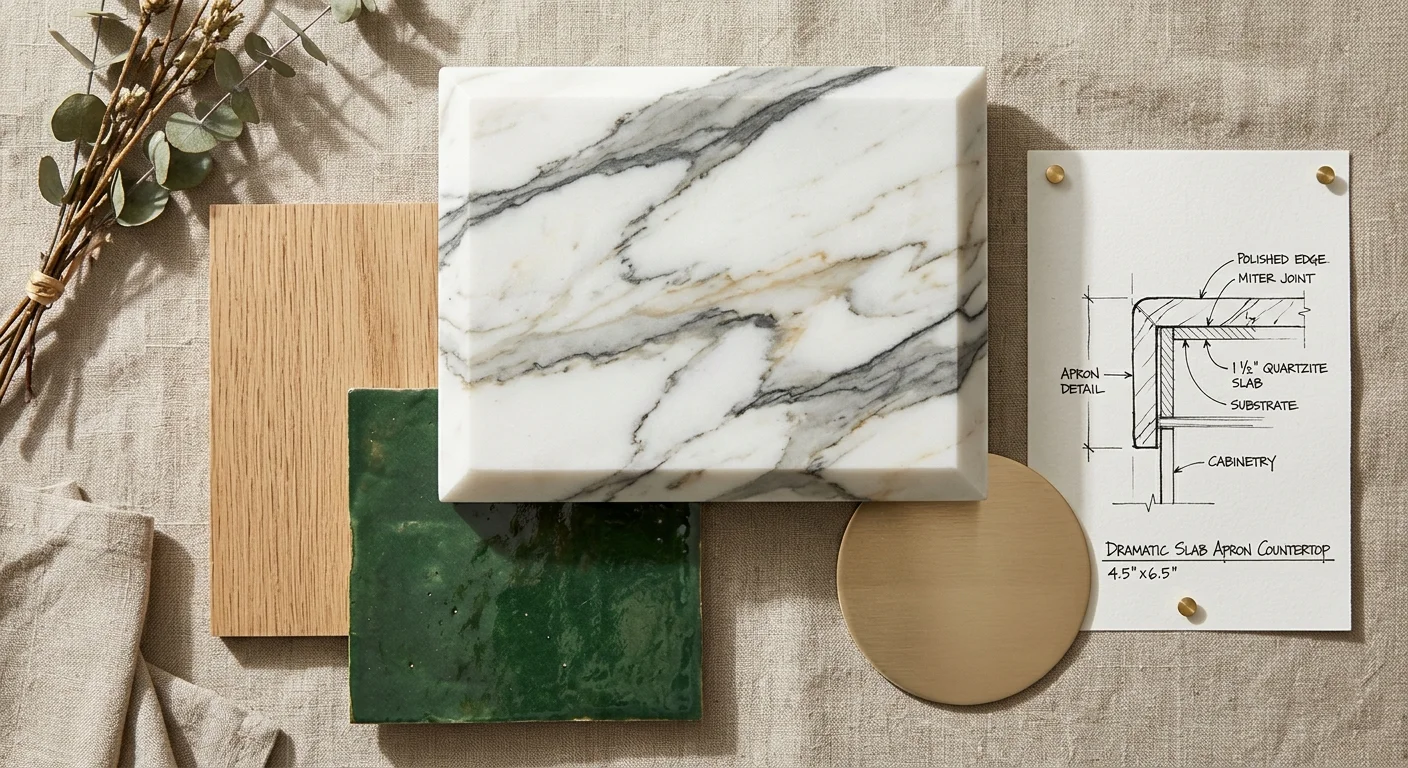
Trend #4: Architectural Quartzite and Dramatic Slab Aprons
Outdated builder-grade vanity trends frequently featured thin, half-inch cultured marble countertops with generic integrated oval bowls—materials notoriously vulnerable to scratching, discoloration, and thermal cracking. Current bathroom architecture replaces these flimsy surfaces with thick, dramatic stone installations that function as sculptural art.
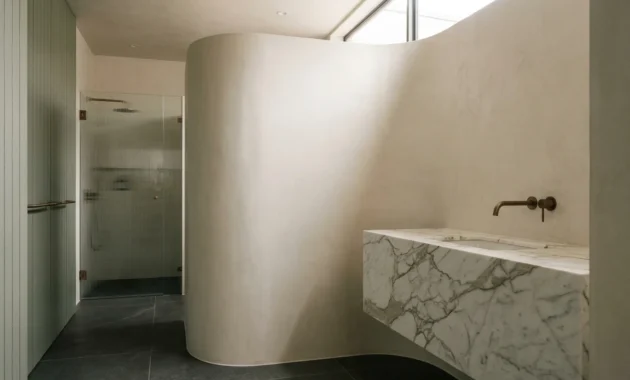
According to recent industry renovation benchmarks, engineered quartz commands 39% of the countertop market due to its non-porous resilience, while natural quartzite holds a strong 25% share among design-forward homeowners who value unique, dramatic veining. Rather than settling for a standard eased edge, renovators now specify mitered slab aprons ranging from 4 to 8 inches in height. These thick drop-front profiles give the illusion of a massive, solid block of stone anchored within the space.
Integrated stone trough sinks represent the pinnacle of this movement. Fabricators miter and join the same quartzite or marble slab used on the countertop to create a sloping, seamless basin with a concealed slot drain. This eliminates silicone caulk joints and undermount sink lips, producing a monolithic aesthetic that is remarkably easy to wipe clean while evoking the luxurious feel of a world-class spa.
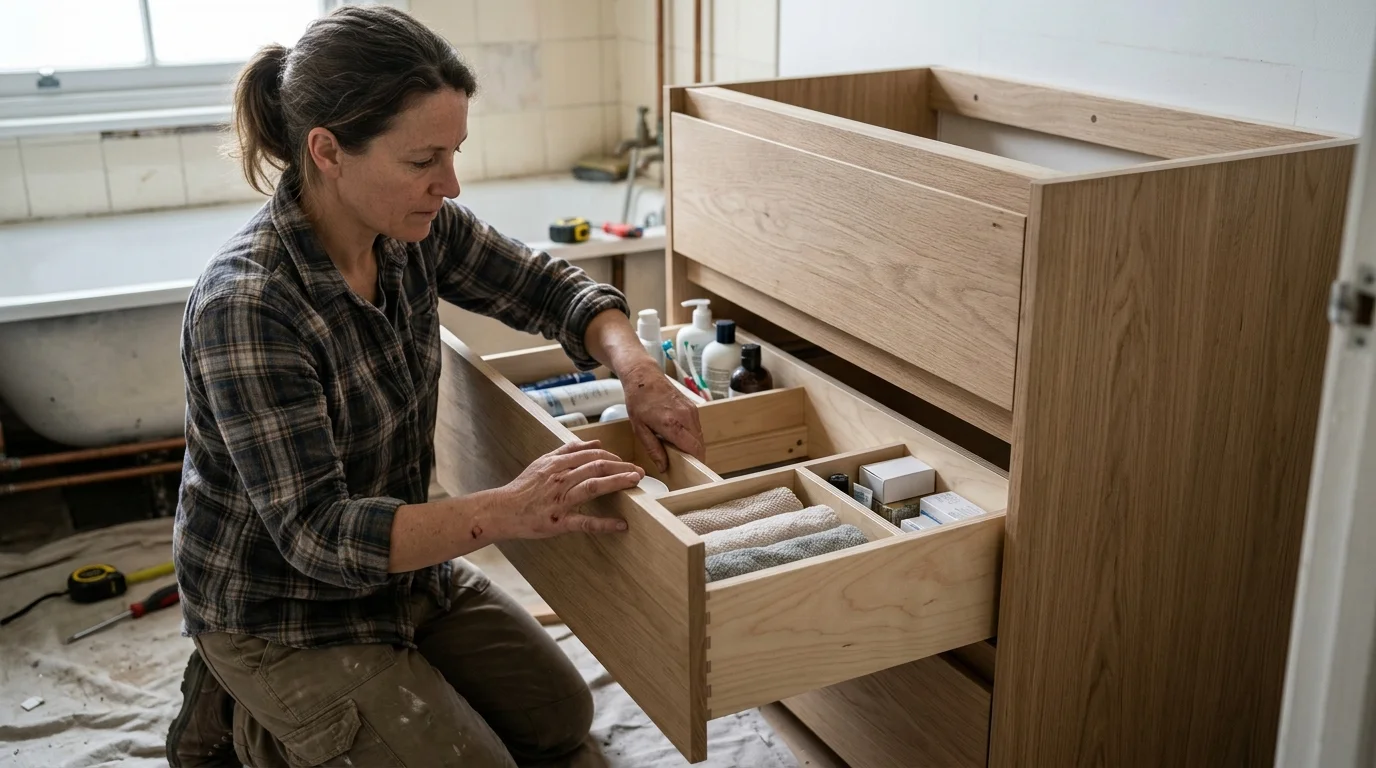
Trend #5: Ergonomic Comfort-Height Proportions and Tailored Internal Storage
For decades, residential builders installed low bathroom vanities measuring just 30 to 32 inches from the floor to the counter rim—a legacy standard originally derived from children’s ergonomic requirements. Modern design replaces this obsolete dimension with “comfort height” (or adult height) vanities standing 34 to 36 inches tall, matching standard kitchen counter elevations. This subtle adjustment significantly reduces spinal strain during daily grooming routines.
Beneath the countertop, modern cabinetry eliminates the chaotic, cavernous void found in standard builder boxes. In older models, expansive empty spaces beneath sink traps quickly turn into cluttered jumbles of toiletries. Current vanity engineering incorporates thoughtful storage solutions tailored to contemporary lifestyles:
Custom U-shaped pull-out drawers wrap neatly around plumbing P-traps, converting previously wasted vertical space into organized tiers. Lower drawers incorporate integrated electrical docking drawers equipped with heat-resistant steel holsters and built-in GFCI outlets, keeping hair dryers, curling irons, and electric shavers plugged in yet tucked away. Adjustable wooden drawer dividers, velvet-lined jewelry inserts, and magnetic grooming strips ensure every daily essential has an intentional, designated home.
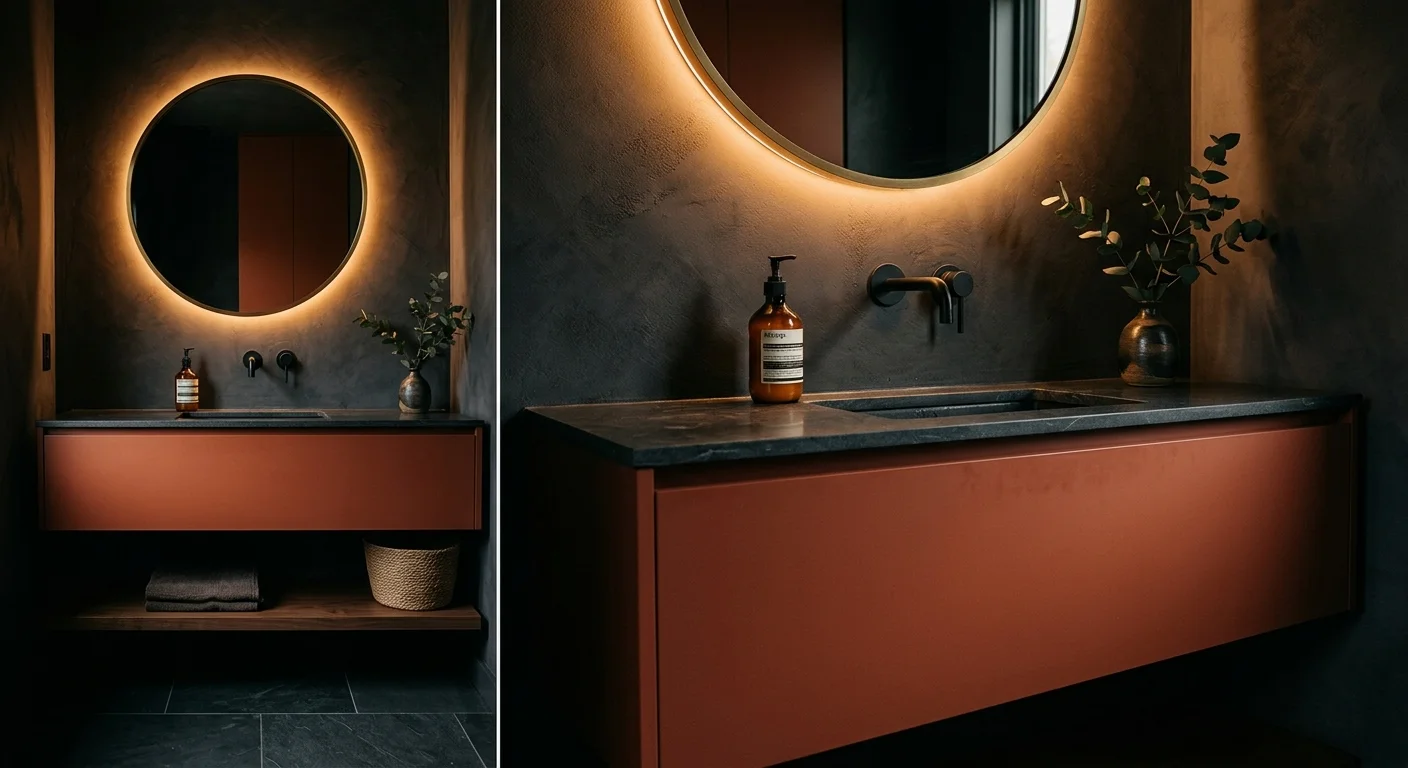
Trend #6: Saturated Earthy Lacquers and Moody Color Palettes
The all-white, sterile bathroom aesthetic that dominated the past decade is officially stepping aside. Homeowners are embracing rich, saturated color palettes that introduce personality, warmth, and visual depth into their personal retreats. When replacing a builder grade vanity, high-end renovators increasingly specify sophisticated, muted paint tones that reflect natural landscapes.
Deep forest moss, moody olive, smoky slate blue, rich terracotta, and warm mushroom taupe are emerging as premier cabinet finishes. These colors serve as grounding visual anchors against lighter marble walls and neutral zellige tiles. High-performance, ultra-matte conversion varnishes provide a velvety, non-reflective finish that repels water stains and resists fingerprint marks far better than high-gloss enamels.
Moody cabinetry creates a striking backdrop for elevated hardware selections. Warm, brushed metal accents—such as unlacquered brass, satin bronze, and polished copper—glow brilliantly against dark green or charcoal drawers. As these living metals age, they develop an authentic patina, reinforcing an organic, customized feel that distinguishes your home from standard builder spec construction.
Trend #7: Sculptural Asymmetry and Offset Basin Layouts
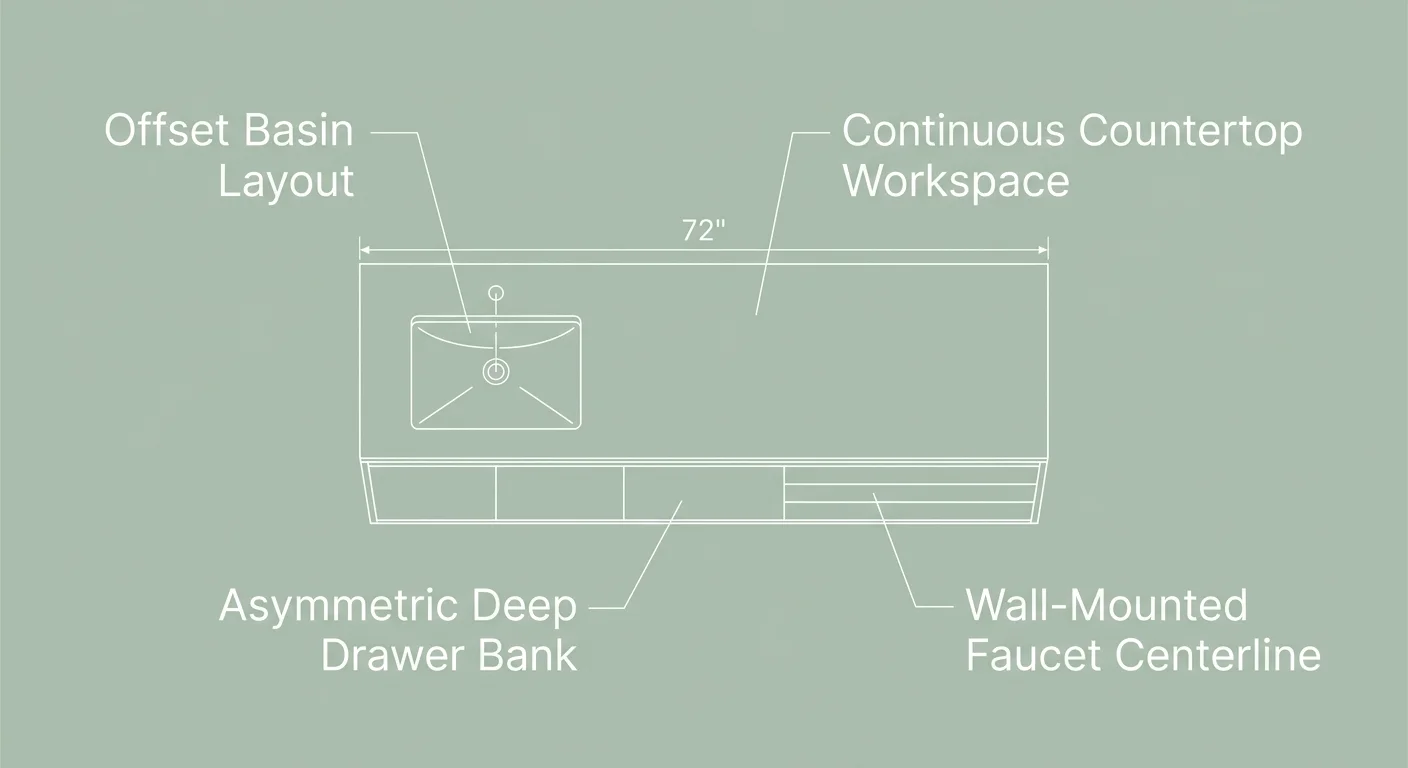
Builder-grade bathrooms almost universally rely on rigid, predictable symmetry: a single sink centered directly over a symmetrical cabinet, or two identical undermount bowls spaced evenly across a standard double vanity. Modern bathroom vanity ideas challenge this formula by introducing intentional, sculptural asymmetry that optimizes counter functionality and visual interest.
Offsetting a single basin to one side creates an expansive, uninterrupted counter surface on the opposite end. This layout provides ample room for morning makeup routines, skincare products, or decorative styling with stone trays and floral arrangements. In smaller powder rooms and compact guest baths, this configuration maximizes usable counter space without overcrowding the grooming zone.
Asymmetrical arrangements allow for dynamic vertical styling. Designers frequently pair an offset sink with a tall, arched or irregularly shaped mirror positioned over the basin, balancing the remaining negative wall space with a dropped ceramic pendant light or a sculptural wall sconce. This playful balance between positive mass and open space disrupts rigid grid layouts, giving your bathroom an artistic, gallery-level ambiance.
The Big Picture: Weaving These Trends into Your Home
Executing successful builder grade bathroom upgrades requires a comprehensive understanding of how individual design elements interact with your home’s broader architectural envelope. Renovation research shows that 63% of homeowners actively remodel vanity cabinets during primary bathroom renovations, confirming the vanity’s role as the anchor of whole-room transformations. The average national investment to replace a bathroom vanity spans from $400 to $2,200, with typical turnkey projects averaging $1,500 for materials and standard plumbing labor. Prefabricated retail consoles range from $150 to $1,500, while bespoke solid hardwood builds paired with quartzite slabs range between $1,500 and $4,000 or more. Labor for removing old cabinetry and updating plumbing rough-ins generally accounts for $300 to $900.
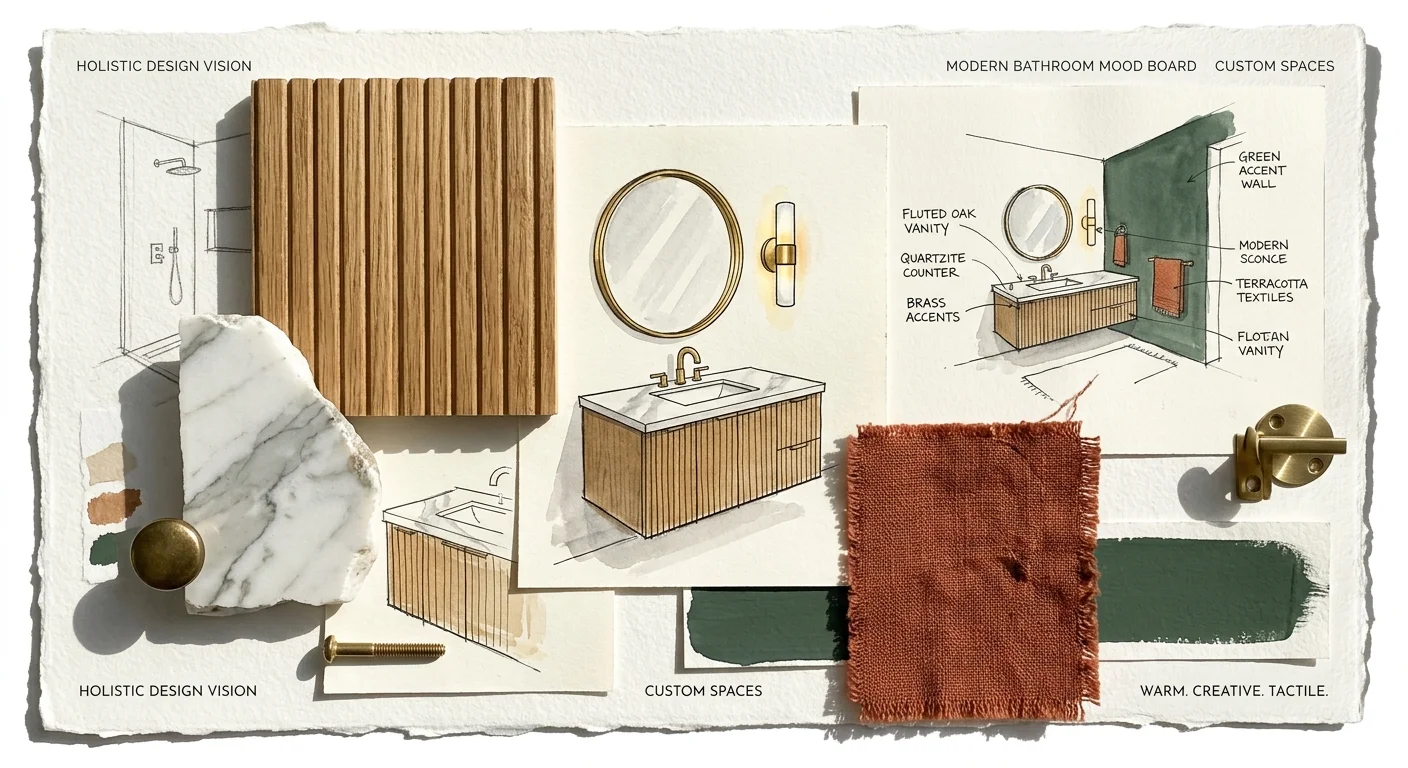
To ensure cohesive flow, align your vanity selections with adjoining interior spaces. If your primary suite features wide-plank white oak flooring and minimalist linen drapery, selecting a fluted oak vanity creates a harmonious transition from bedroom to bath. Similarly, mirroring the metal finishes used on door hardware, bedroom lighting, and living room accents reinforces a unified interior narrative.
Prioritize longevity by investing in solid wood framing, premium soft-close drawer glides, and natural stone countertops over short-lived synthetic materials. By thoughtfully blending functional ergonomics, tactile textures, and balanced lighting, replacing a builder grade vanity transforms a mundane utility zone into an enduring personal haven of comfort and refinement.
Frequently Asked Questions
How do you properly support a heavy floating vanity during installation?
Floating vanities require robust structural backing to safely bear the weight of heavy stone countertops and everyday downward pressure. Before hanging drywall or installing tile, carpenters secure solid two-by-eight or two-by-ten wood blocking horizontally between the existing wall studs at the vanity mounting height. Heavy-duty steel structural brackets or specialized cleat systems are then bolted through the finished wall directly into the blocking, ensuring rigid, sag-free support that lasts indefinitely.
Can natural wood vanities withstand everyday bathroom humidity?
Yes, natural hardwoods like white oak, walnut, and teak perform exceptionally well in wet environments when properly sealed. Cabinet makers use multi-layer, moisture-resistant polyurethane conversion varnishes or catalyzed lacquer finishes that protect timber from steam and direct water droplets. To protect your investment, always run a properly sized, high-CFM exhaust fan during and after showers, and immediately wipe standing water off wooden surfaces using a soft cloth.
What plumbing modifications are required when replacing a builder grade vanity with a modern design?
Modern vanity styles often feature distinct plumbing configurations compared to traditional cabinets. Moving from a low 30-inch cabinet to a 36-inch comfort-height vanity, or installing a floating wall-hung unit, typically requires a licensed plumber to raise the drain stub-out and water supply valves behind the wall. Additionally, if your new vanity incorporates tight U-shaped drawer boxes, the plumbing rough-in must align precisely with the designated clearance cutout to avoid obstructing drawer operation.
How do I prevent a bold vanity trend from quickly looking dated?
To achieve timeless elegance when embracing trending bathroom vanity styles, combine bold elements with classic materials. If you select a dramatic fluted texture or a deep forest green lacquer, anchor it with understated, authentic materials like natural honed Carrara marble or Taj Mahal quartzite. Avoiding overly stylized synthetic novelties in favor of solid joinery, authentic stone, and living metal hardware ensures your vanity will look distinguished for decades.
For the latest color forecasts, consult industry leaders like Pantone and paint companies like Benjamin Moore. For professional design standards, refer to the American Society of Interior Designers (ASID).
Disclaimer: This article reflects design trend analysis and predictions. Personal taste and timeless design principles should always guide your decorating choices.