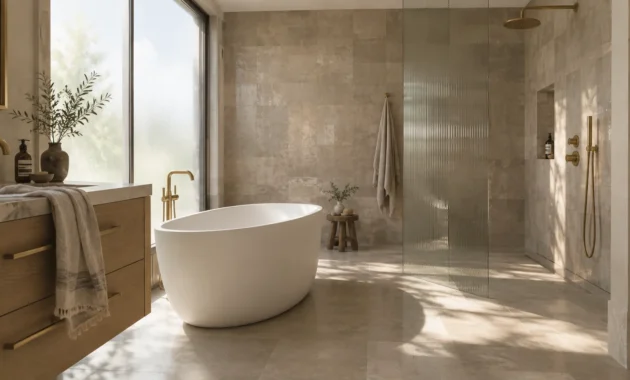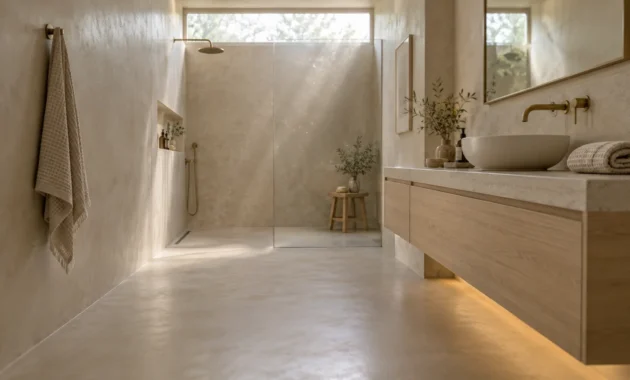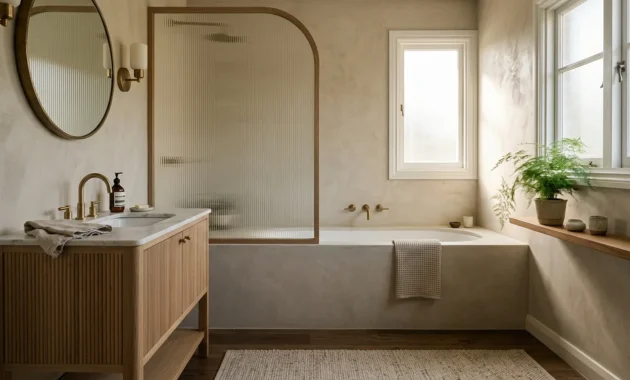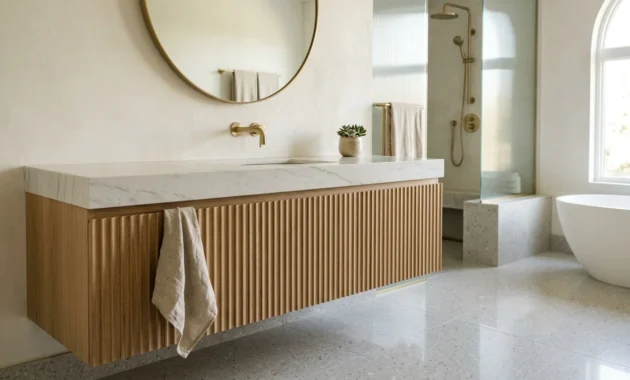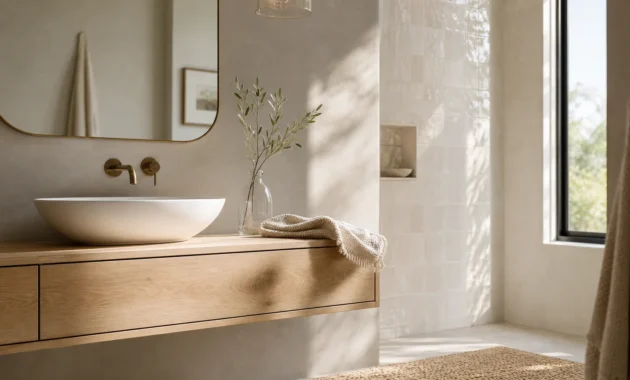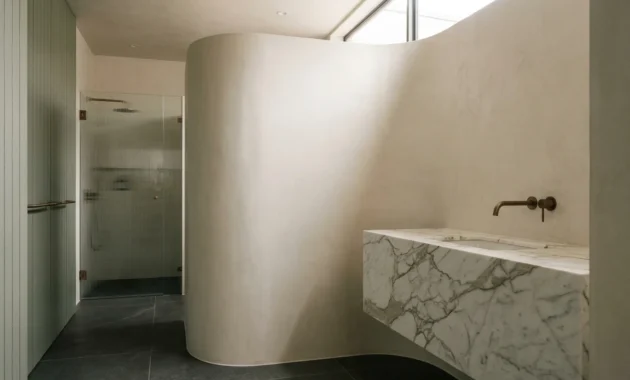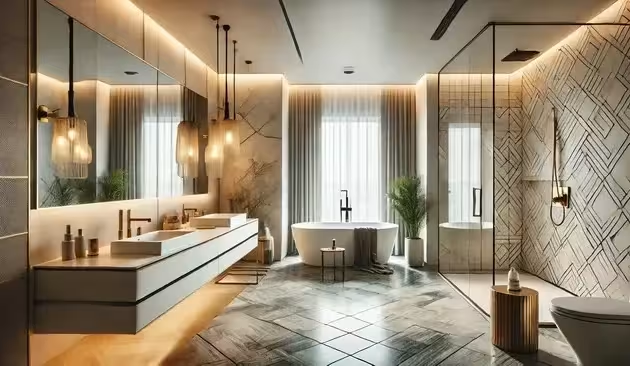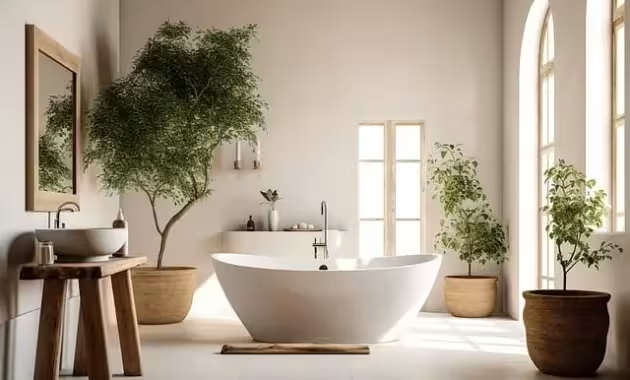
Strategic paint choices immediately dissolve visual boundaries in compact quarters. When you coat your walls in light-reflective, nuanced tones, you create an expansive spatial illusion that elevates daily wellness rituals.
Standard bright whites often fall flat in tight floor plans with limited natural light. Instead, discerning designers curate dynamic pigments that catch ambient luminescence and expand perceived depth.
These eight architectural paint colors will transform your compact sanctuary into an ethereal, breathing retreat. Each shade maximizes optical expanse while maintaining rich, tactile sophistication.
Trend #1: Alabaster Warmth
Pure brilliant whites often read as sterile and clinical in tight washrooms. Alabaster offers a balanced, warm undertone that bounces morning light effortlessly across compact tilework.
This tonal shift reflects the broader rise of quiet luxury in contemporary interiors. Homeowners want functional powder rooms to feel like tactile, welcoming spa sanctuaries rather than sterile enclosures.
To make bathroom look bigger, select formulations with high Light Reflectance Values (LRV) above seventy-five. These delicate tones visually push boundaries outward without casting cold, bluish glares on your skin.
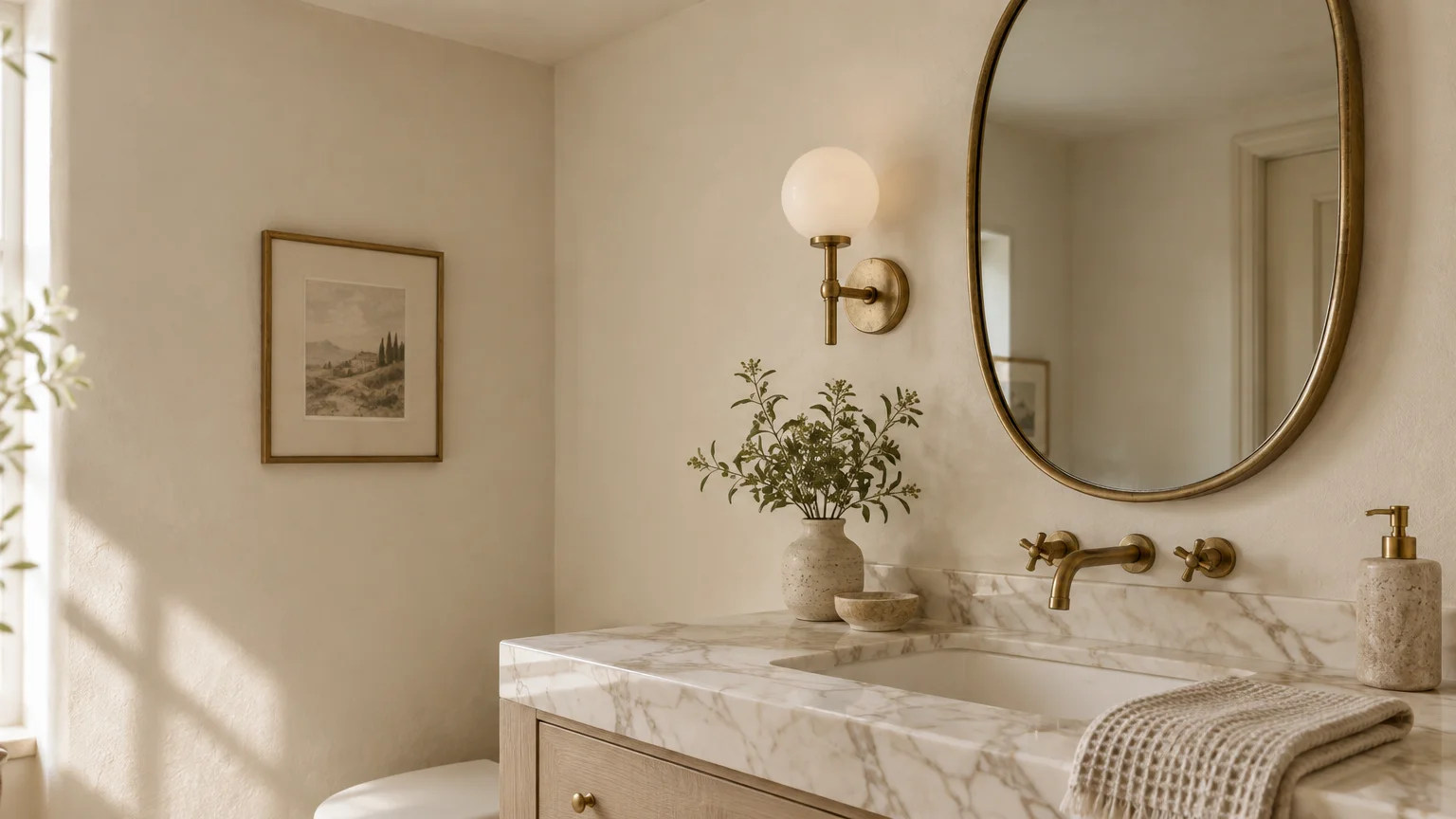
Pair this velvety shade with unlacquered brass hardware and honed Calacatta marble vanity surfaces. The warm metallic reflections amplify the paint’s luminous character, blurring corners and softening harsh shadows.
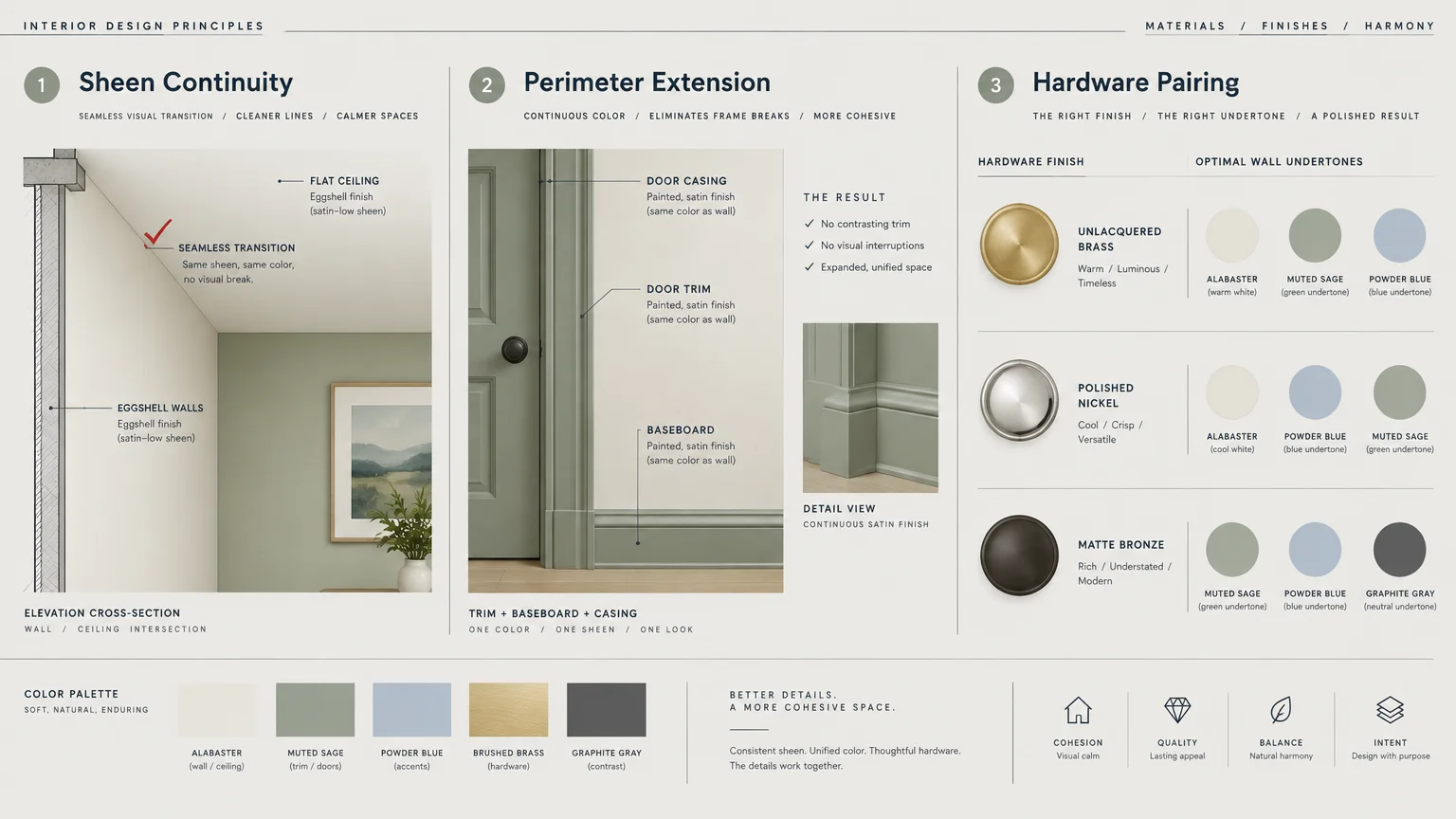
For optimal architectural continuity, apply an eggshell finish to your walls alongside an identical flat sheen on ceilings. Eliminating the chromatic dividing line between wall and ceiling elongates the vertical plane remarkably.
The resulting envelope feels grounded yet boundless. You cultivate a tailored serenity that celebrates natural daylight, whether coming through a frosted window or reflected off a fluted mirror.
This versatile base also harmonizes beautifully with fluted white oak cabinetry and woven linen accents. It anchors your small bathroom design in timeless refinement while preserving precious visual air.
Trend #2: Atmospheric Powder Blue
Human perception naturally interprets soft sky tones as endless distance rather than solid mass. Atmospheric powder blue utilizes this optical trick, persuading the eye to perceive tight walls as open horizon.
In the lexicon of high-end bathroom paint ideas, this dusty blue represents a sophisticated departure from conventional neutrals. It evokes expansive coastal skies and classical European bathing chambers.
Choose a shade imbued with gray undertones to prevent your sanctuary from skewing juvenile. This subtle desaturation lends mature depth while still acting as one of the most effective light bathroom colors.
When morning sun grazes the surface, the pigment shifts organically from soft silver to delicate azure. This dynamic response to light prevents compact, windowed spaces from feeling static or confined.
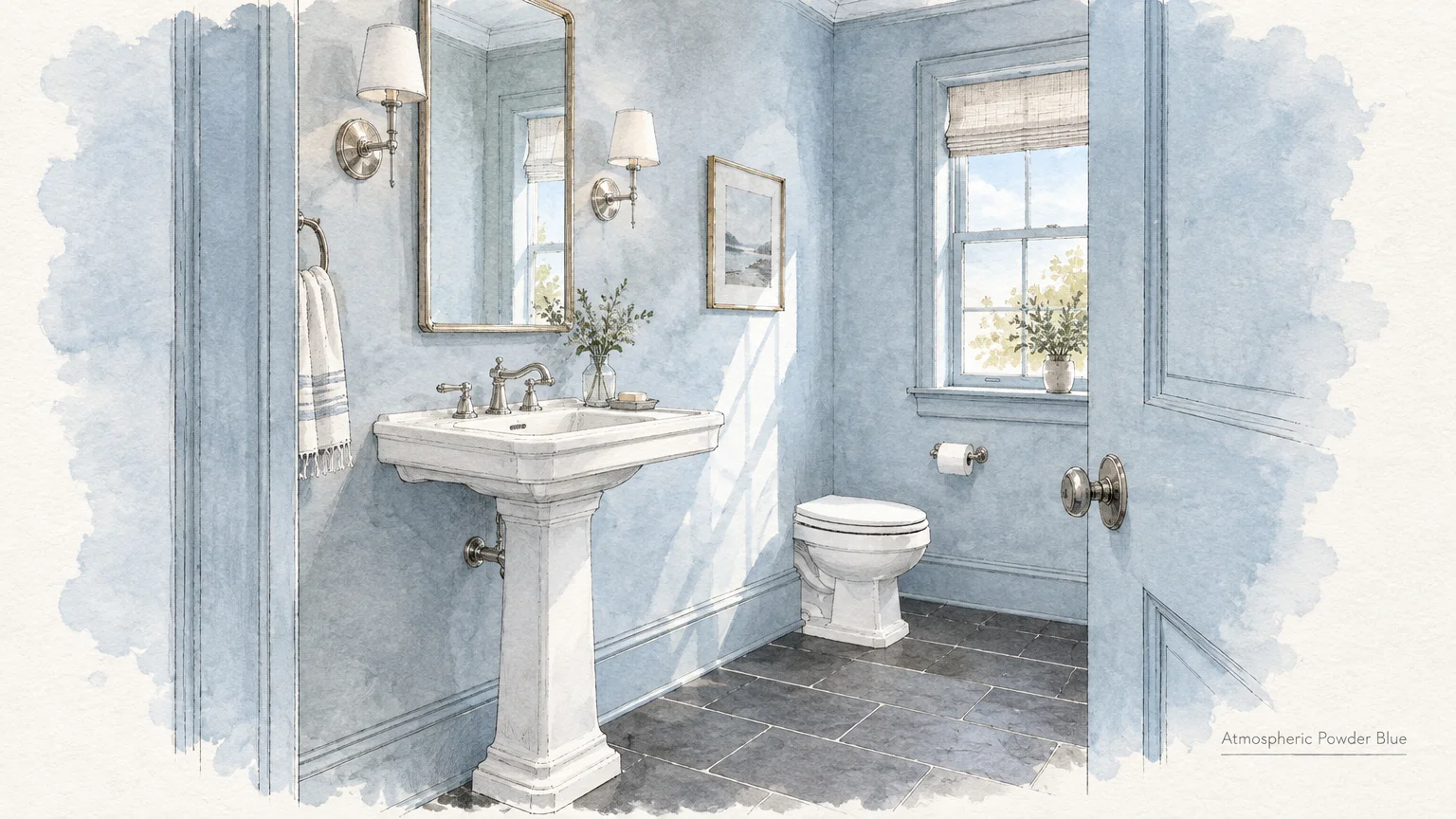
Ground this breezy chromatic treatment with polished nickel plumbing and deep charcoal slate flooring. The deliberate contrast between dark base planes and airy walls accentuates the feeling of vertical ascension.
Consider extending the shade over door trim, baseboards, and window casings in a satin formulation. Monochromatic millwork removes distracting frame breaks, tricking your perception into reading uninterrupted perimeter volume.
Incorporate crisp white porcelain sanitaryware to provide sharp focal points against the ethereal backdrop. The crisp juxtaposition elevates the room’s overall freshness, fostering an inspiring, restorative morning routine.
Trend #3: Misty Biophilic Celadon
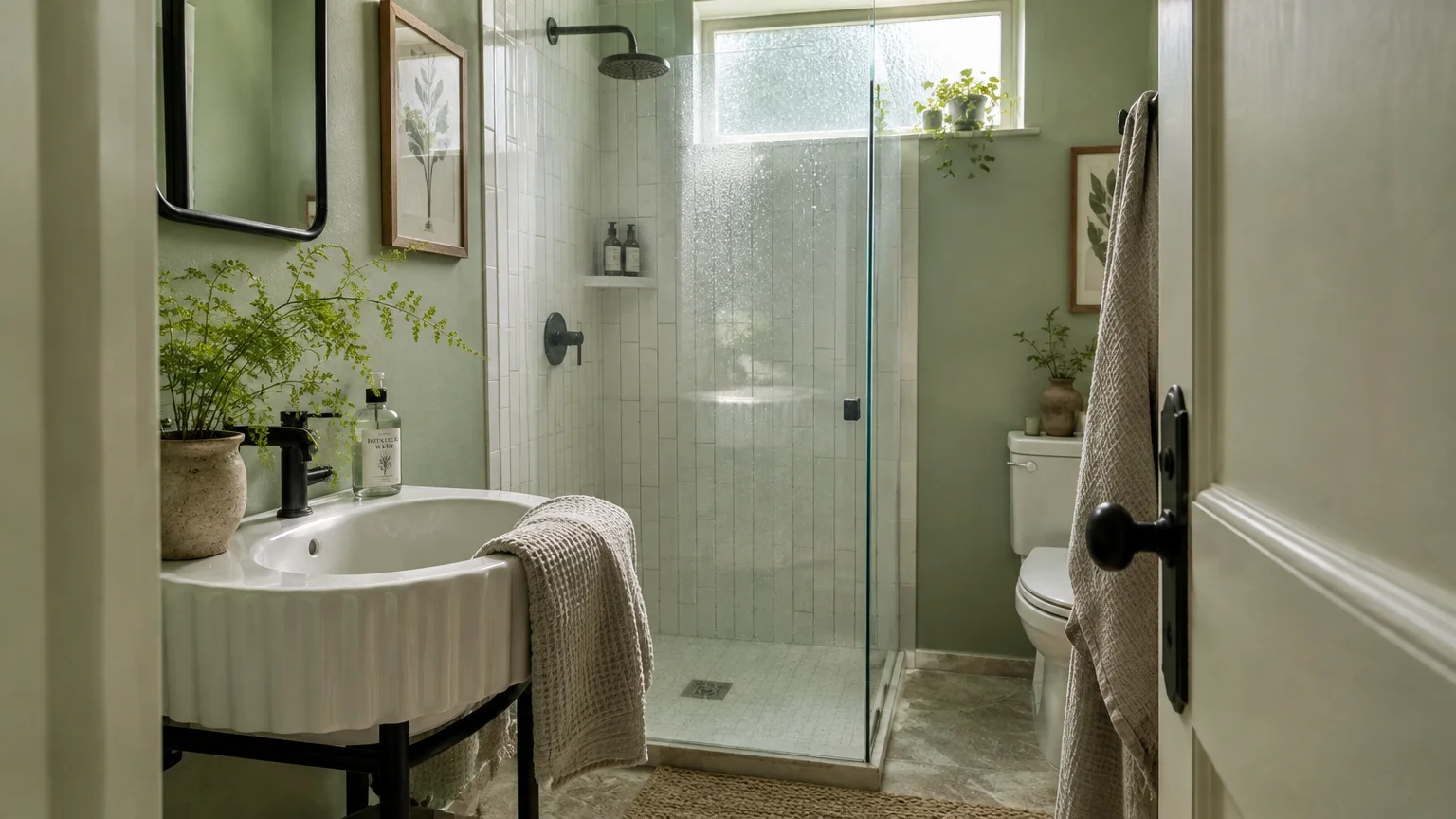
Biophilic principles have redefined modern residential wellness, making soft botanical greens essential in small bathroom design. Misty celadon introduces organic life into utilitarian rooms lacking abundant outdoor exposure.
Unlike dense forest hues that swallow room perimeter, muted celadon carries silver undertones that reflect ambient lighting. It softens geometric tile grids and brings soothing visual cadence to tight quarters.
The cultural shift toward restorative self-care drives this palette forward. Homeowners increasingly view bathrooms as quiet havens to recalibrate after frantic digital workdays.
When deployed strategically, this gentle sage variant harmonizes seamlessly with natural stone and raw timber. It mirrors the restorative atmosphere of an alpine forest bathed in morning mist.
Pair pale celadon with handmade zellige tiles along shower surrounds to produce dimensional surface reflections. The glazed, undulating ceramic tiles bounce light across the painted drywall, enhancing overall spatial depth.
Matte black fixtures or dark bronze accents punctuate the gentle wall color with graphic architectural intention. These sharp lines ground the airy green, ensuring the composition feels curated and structurally defined.
Complement the envelope with a trailing potted fern or eucalyptus branches on floating shelving. Living greenery reinforces the color’s natural provenance while drawing the gaze upward toward the ceiling line.
Trend #4: Ethereal Chalked Blush
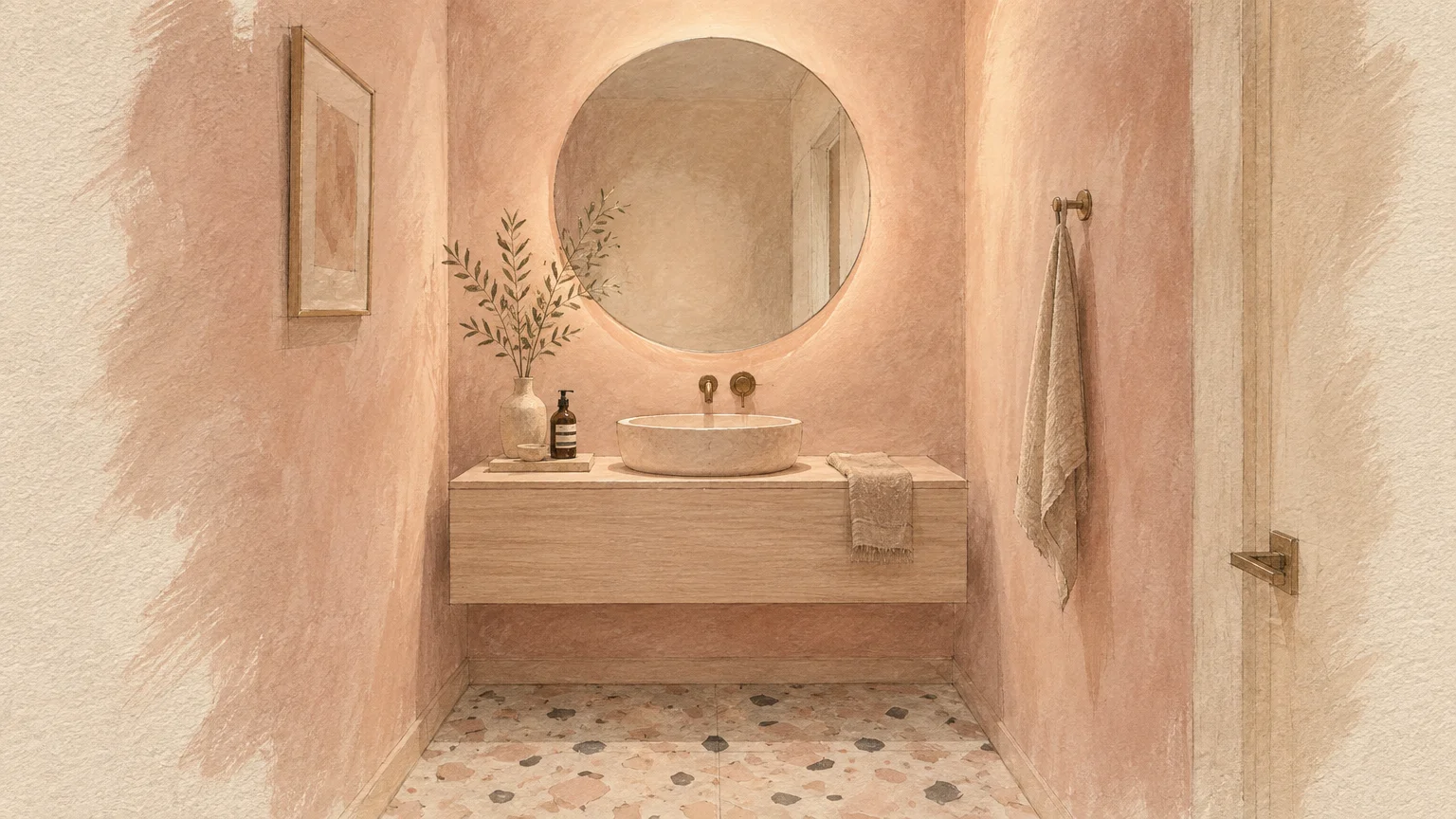
Far from saturated bubblegum, modern chalked blush functions as a sophisticated, light-diffusing neutral. It introduces an inviting, warm glow that enriches small footprints often starved of natural golden-hour rays.
This hue traces its lineage to traditional lime washes and old-world Venetian plaster finishes. The gentle mineral quality creates an ethereal softness that expands perimeter perception through understated warmth.
As paint colors small bathroom enthusiasts frequently overlook, desaturated pinks offer exceptional chromatic flattery. The undertones cast a healthy radiance on skin tones while softening angular vanity architecture.
Avoid high-gloss finishes that create distracting glare hotspots across narrow sightlines. Instead, specify an ultra-matte or chalk-finish formula engineered specifically for high-humidity bathroom environments.
Balance blush walls with warm brushed brass fixtures and clean travertine vanity countertops. Travertine’s natural fissures and creamy beige veins integrate seamlessly with the wall’s delicate warmth.
Incorporate crisp ivory accents through waffle-weave towels and ribbed porcelain sconces to maintain visual freshness. These bright focal markers prevent the dusty pink from reading overly monochromatic or heavy.
The result is a cocooning yet spacious sanctuary that feels tailored and effortlessly chic. You achieve a luxurious, spa-like sensibility that makes tight confines feel intentional and delightfully intimate.
Trend #5: Mineral Pale Greige
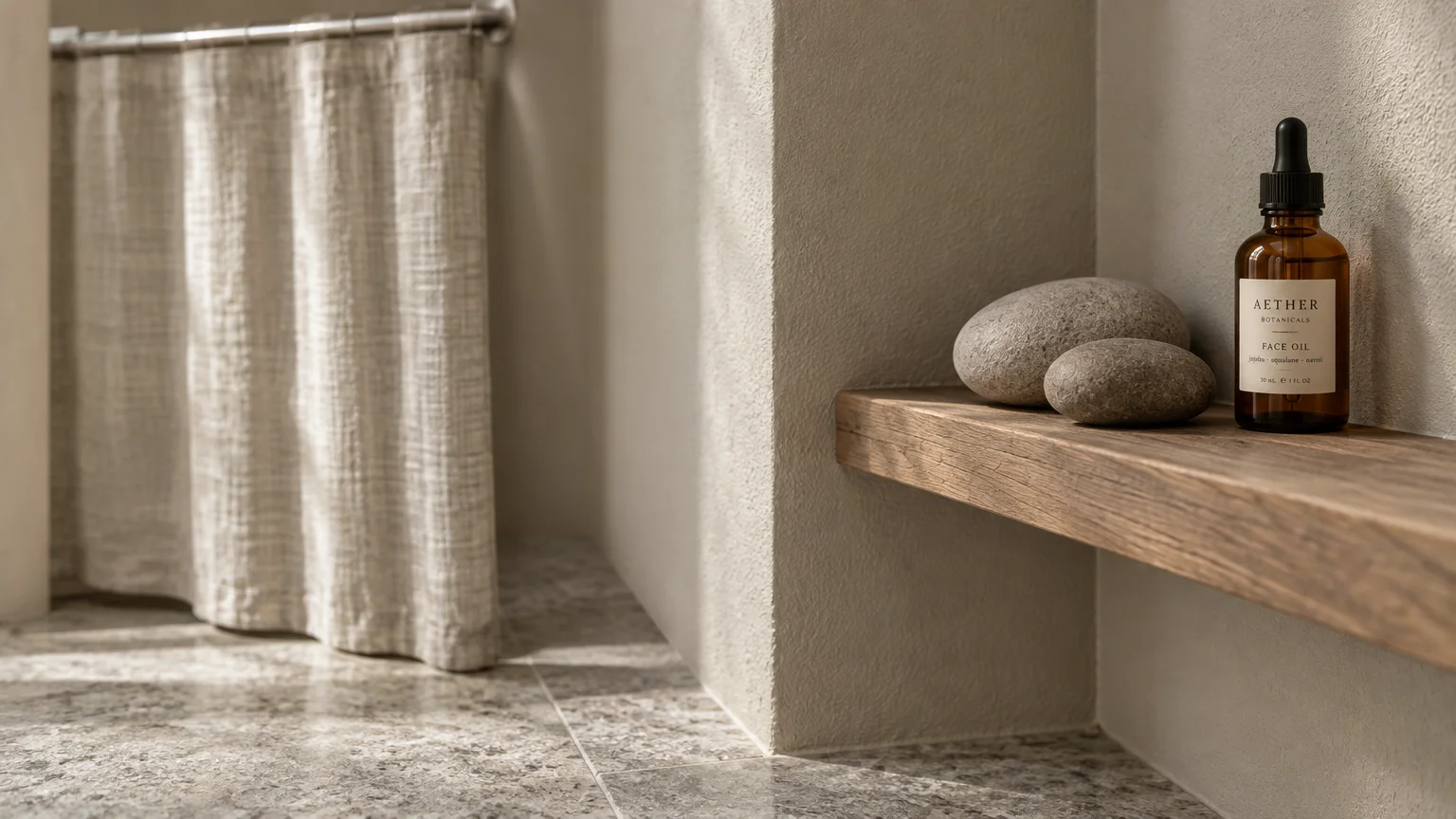
Finding the equilibrium between cold modern gray and dated beige defines modern color theory. Mineral pale greige captures the crispness of stone alongside the welcoming comfort of fine linen.
In tight floor plans, pure gray can skew somber, whereas muddy beiges absorb light greedily. Mineral greige walks the middle path, reflecting daylight while retaining welcoming tactile warmth.
This chameleon shade adapts seamlessly to fluctuating light qualities throughout the day. Under morning sun, it reads as a crisp limestone; by twilight, it shifts into cozy sand.
Architects consistently favor mineral neutrals to craft clean visual continuity across compact urban dwellings. By minimizing chromatic disruption, greige allows structural elements and plumbing fixtures to take center stage.
Contrast this versatile neutral against deep walnut cabinetry and polished chrome fittings for modern tension. Chrome adds mirror-like reflections that actively amplify luminance across the greige wall plane.
Opt for large-format porcelain floor tiles matching the wall tone to blur horizontal thresholds. Extending a unified tone across both walls and flooring eliminates visual borders, making footprints appear vast.
Layer subtle textures—such as ribbed glass shower screens and bouclé bath mats—to enrich the space. These tactile nuances provide architectural depth without cluttering the compact room’s optical volume.
Trend #6: Whispering Dewdrop Gray
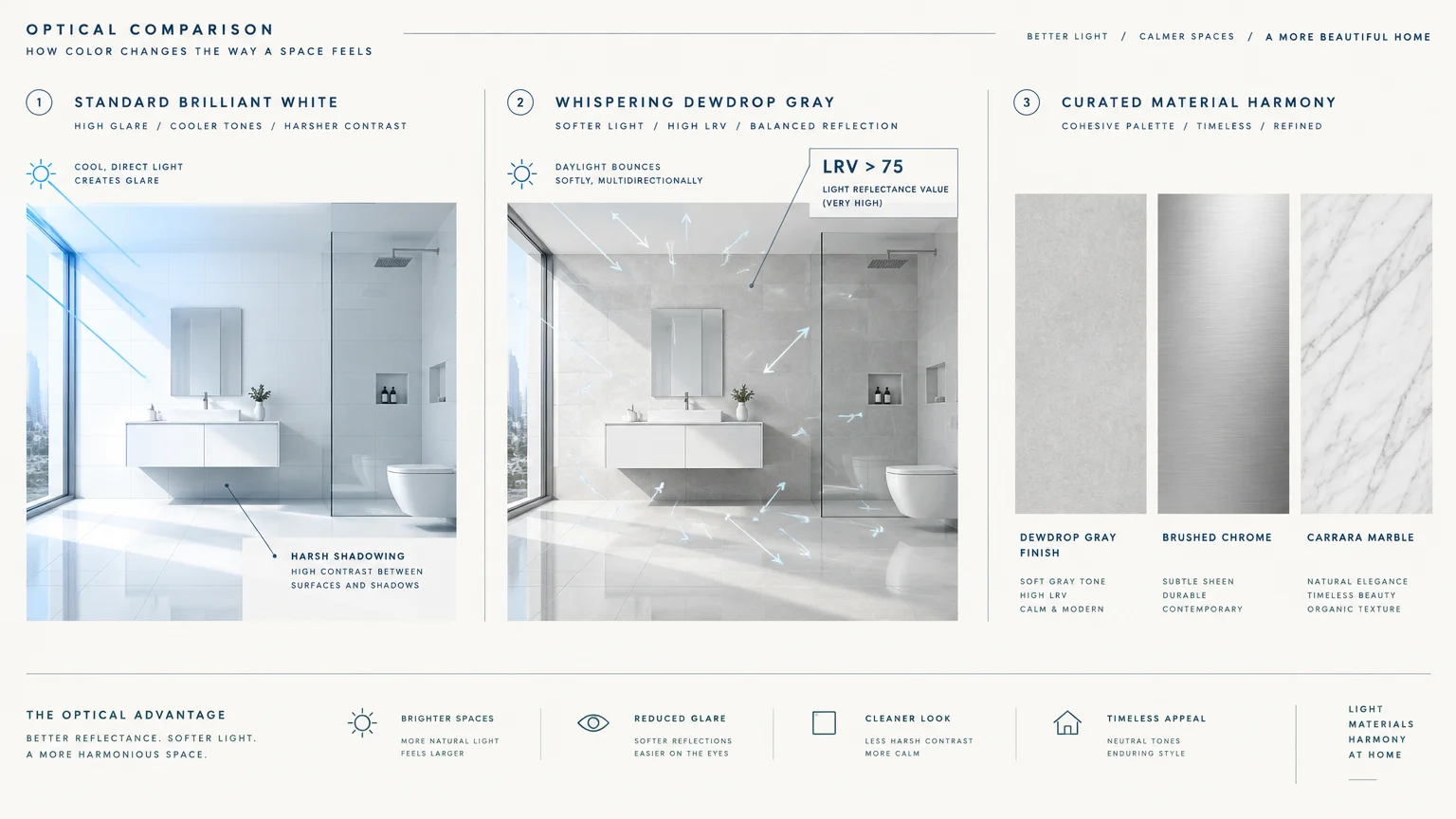
Dewdrop gray features delicate silver undertones that mimic morning water droplets on architectural glass. It provides an exquisitely pale canvas that magnifies both daylight and artificial LED task lighting.
Unlike heavy slate tones, this whispered hue prevents narrow powder rooms from feeling subterranean. It preserves architectural sharpness while dissolving hard shadow lines in ceiling corners and alcove recesses.
This shade aligns with the contemporary desire for serene, decluttered living environments. Its crisp presence cleanses visual noise, instilling an immediate sense of structural clarity and expansive calm.
To maximize spatial depth, combine dewdrops on walls with high-gloss pure white lacquer on moldings. This contrast catches highlights along perimeter edges, drawing the eye dynamically outward and upward.
Incorporate brushed nickel fittings, clear glass pendant lights, and frameless shower enclosures. Unobstructed sightlines let the pale silver-gray wash uninterrupted across every square foot of the footprint.
Introduce a Carrara marble vanity top featuring delicate charcoal veining that references the wall paint. This deliberate chromatic harmony establishes a cohesive rhythm that expands perceived bathroom width.
Finish the concept with crisp monochrome photography framed in slim metal borders. Such disciplined decorative additions emphasize high design without encroaching upon the space’s airy, meditative atmosphere.
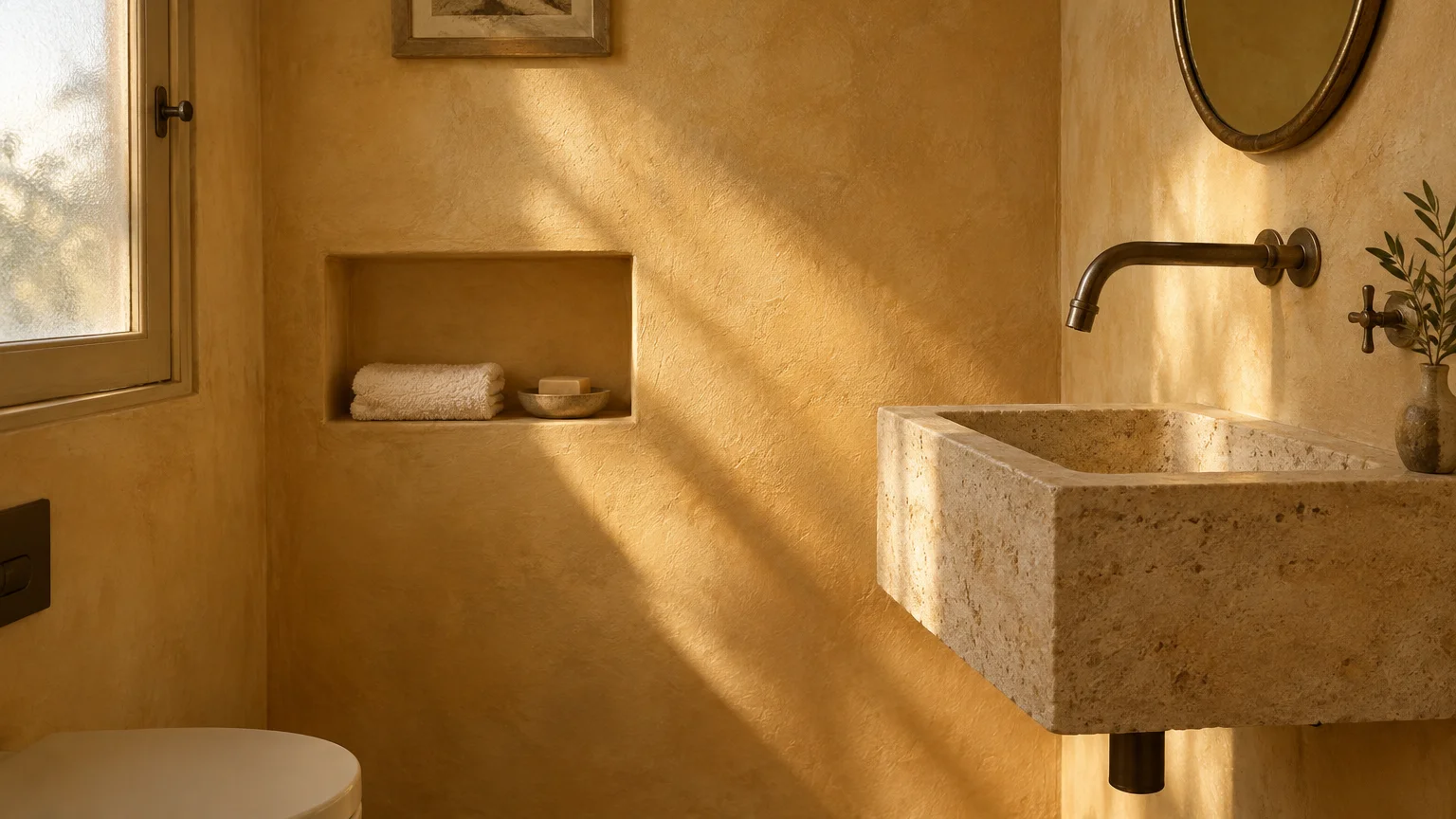
Trend #7: Luminous Soft Ochre
Windowless or north-facing small bathrooms often struggle with persistent gloom and cool cast shadows. Luminous soft ochre simulates gentle, natural morning sunlight, instantly warming and opening claustrophobic quarters.
This sophisticated hue leaves behind harsh mustard tones, favoring muted, buttery straw pigments. It channels historic Italian villas, bringing radiant European provenance directly into contemporary residential spaces.
The resurgence of warm yellow undertones celebrates joyful individuality within modern interior design. Homeowners are embracing energetic yet refined palettes that banish sterile monotony from compact daily routines.
Soft ochre actively reflects artificial light bulbs, turning low-wattage fixtures into radiant, ambient chandeliers. This luminous diffusion softens hard wall angles, visually expanding small bathroom footprints effortlessly.
Complement pale ochre walls with matte white subway tile, terracotta floor pavers, and burnished bronze accents. The interplay between earthy flooring and sunny vertical surfaces creates balanced, grounded verticality.
Use satin or semi-gloss finishes on custom vanity joinery painted in the same sunny tone. Wrapping millwork in matching pigment creates uninterrupted vertical expanses that elongate tight, awkward corners.
Add crisp white linen hand towels and amber glassware to complete the curated setting. These thoughtful accessories catch warm reflections, reinforcing an uplifting, bespoke boutique-hotel ambiance.
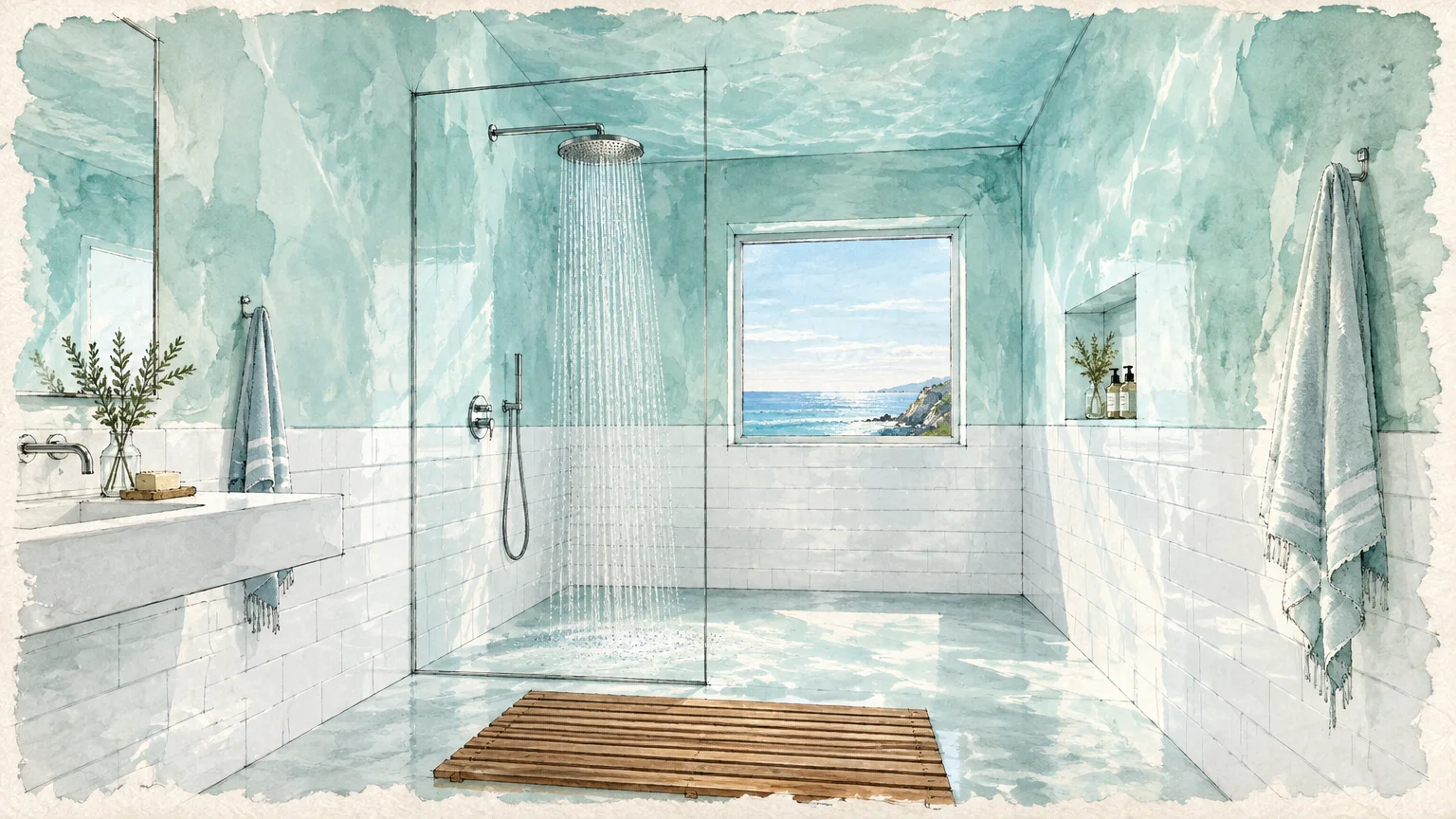
Trend #8: Translucent Glacial Aqua
Glacial aqua evokes crystalline alpine lakes, merging clean sky blue with restorative pale mint. This hybrid hue possesses extraordinary luminosity, making it an elite choice to make bathroom look bigger.
Because aqua intrinsically associates with flowing water, it feels natively appropriate inside wet rooms and baths. Its crystalline clarity dissolves physical perimeter confines, turning modest enclosures into dynamic, airy pavilions.
Design trends emphasize immersive sensory environments that revitalize mental clarity. A delicate glacial tone delivers crisp freshness every morning, transforming rushed hygiene into an energizing spa experience.
Pair this pale, watery hue with reeded glass shower partitions and polished chrome plumbing brassware. The reflective metal and textured glass fracture ambient rays, dispersing luminous light washes across every wall.
Install a floating vanity with integrated under-cabinet lighting to reinforce the room’s floating, weightless aesthetic. Illuminating the floor surface underneath exaggerates square footage across tight horizontal floor planes.
Anchor the space with pale terrazzo flooring incorporating quartz chips that echo the wall tone. The terrazzo’s mineral speckles add tactile interest without overwhelming the eyes in compact quarters.
Glacial aqua proves that bold personality and spatial expansion can coexist harmoniously. You gain an artful, vibrant washroom that feels remarkably liberating and endlessly bright.
The Big Picture: Weaving These Trends into Your Home
Transforming a compact washroom requires more than selecting an inspiring swatch from a paint deck. You must orchestrate color, surface reflectance, and architectural lighting into a seamless spatial composition.
Light bathroom colors perform at their peak when supported by strategic illumination schemes. Layer recessed perimeter lighting, wall-mounted eye-level sconces, and dimmable LEDs to eradicate shadow pockets completely.
Pay rigorous attention to paint sheens when selecting bathroom paint ideas for humid settings. Eggshell and satin sheens resist moisture while diffusing illumination gently across drywall surfaces without distracting glare.
Color drenching represents another powerful technique to expand spatial perception in constrained rooms. Coating walls, baseboards, door frames, and ceilings in a single tone erases boundary lines completely.
For the latest color forecasts, consult industry leaders like Pantone and paint companies like Benjamin Moore. For professional design standards, refer to the American Society of Interior Designers (ASID).
Balance airy wall tones with grounded architectural fixtures like stone sinks, fluted timber, or woven textiles. Layering rich materiality ensures your luminous washroom feels intentional, tactile, and deeply sophisticated.
Remember that light colors thrive on intentional material balance. Introduce tactile organic elements, such as ribbed wood detailing or tumbled limestone, to keep your expanded sanctuary from feeling detached.
By aligning your chromatic choices with sophisticated proportion and disciplined detailing, your compact washroom becomes an architectural gem. You cultivate a generous sensory environment where functional efficiency meets serene luxury.
Disclaimer: This article reflects design trend analysis and predictions. Personal taste and timeless design principles should always guide your decorating choices.
Frequently Asked Questions
Which paint finish makes a small bathroom look biggest?
An eggshell or satin finish works best in small bathrooms because it gently bounces ambient illumination. High-gloss finishes produce harsh, distracting glare, while matte finishes can absorb precious lighting.
Modern satin formulations also provide critical moisture resistance and easy cleanability in high-humidity shower zones.
Should you paint a small bathroom ceiling the same color as the walls?
Painting your ceiling the exact same color as your walls visually erases the perimeter border line. This technique, known as color drenching, draws your gaze upward and creates an illusion of boundless height.
If your chosen wall color is slightly dark, use a fifty percent tint of that shade overhead. It preserves chromatic continuity while keeping the upper zone buoyant and light.
How does lighting affect paint colors in windowless bathrooms?
Windowless spaces rely entirely on artificial lighting, which dramatically alters color temperature perception. Cool LED bulbs can make pale grays look clinical, while warm bulbs can turn soft whites overly yellow.
Select LED bulbs with a 2700K to 3000K color temperature and test swatches directly under your vanity fixtures.
Incorporating layered lighting at varied heights prevents dark shadow lines from cutting off spatial depth in compact rooms.
Can dark paint colors ever work in a small powder room?
Deep, moody paint colors create stunning, jewel-box drama in powder rooms where spatial expansion is not your primary goal. However, if your goal is an airy, expansive atmosphere, pale light-reflective hues remain superior.
Light bathroom colors maximize available luminescence, transforming restrictive layouts into open, restorative retreats.
If you crave rich character, introduce deep pigments through a marble vanity countertop or patterned floor runner instead.