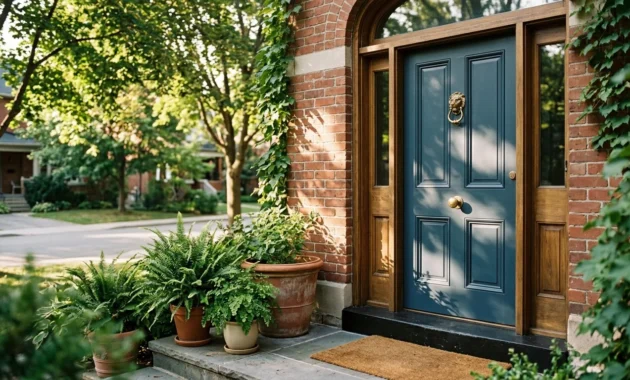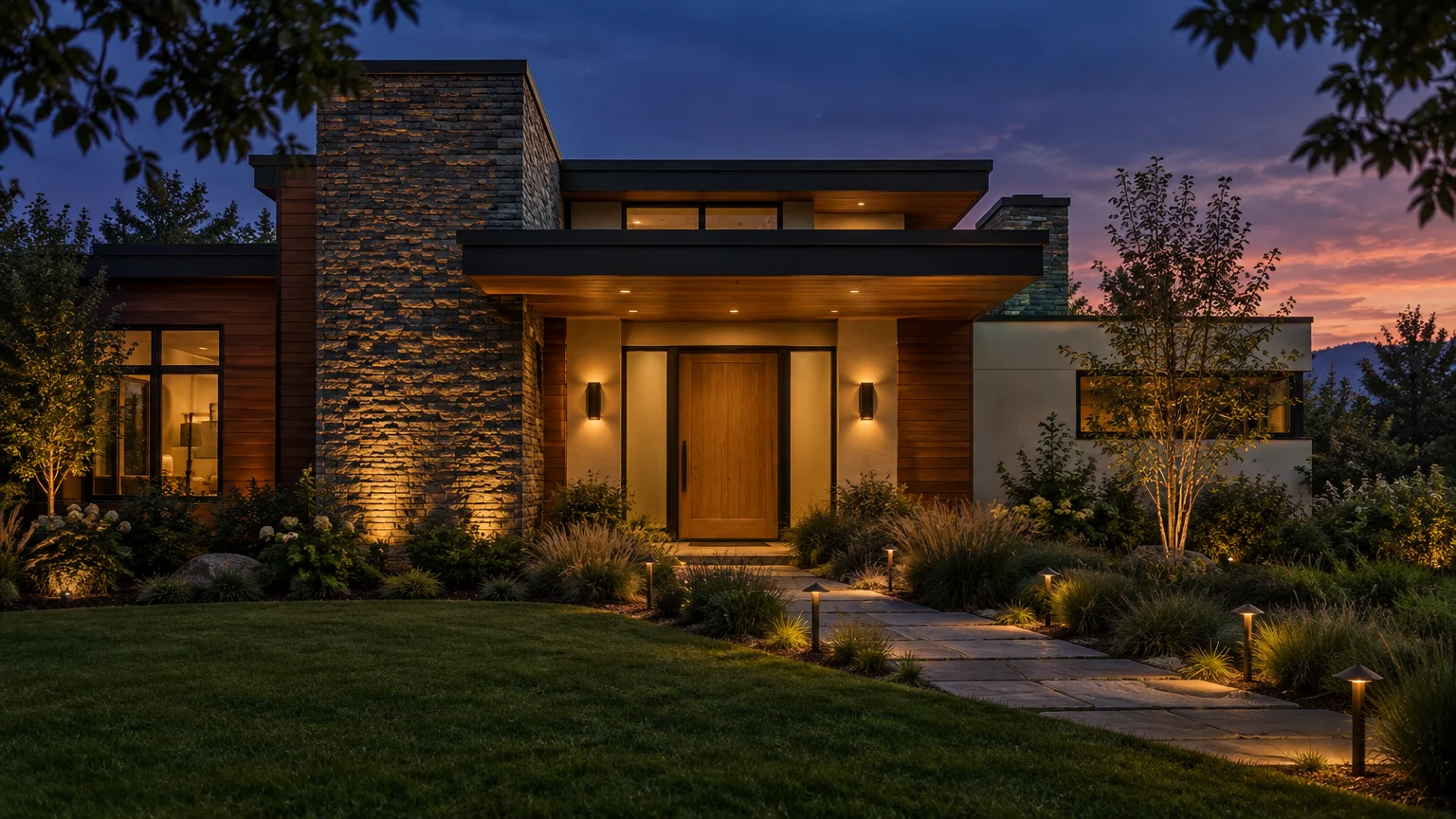
Thoughtfully engineered illumination instantly elevates your facade while establishing an unmistakable architectural presence from the curb. Strategic outdoor lighting design tips turn standard exterior surfaces into breathtaking evening showcases that command immediate visual prestige.
Exterior fixtures create magnetic curb appeal while enhancing nighttime safety and lifestyle functionality. According to the National Association of Home Builders, 82% of homebuyers actively rank exterior illumination as an essential or desirable asset.
Implementing purposeful exterior lighting ideas for curb appeal crafts an enduring first impression. The best exterior lighting for homes blends understated luxury with high-performance engineering to transform ordinary residential architecture into art.
Trend #1: Architectural Surface Grazing
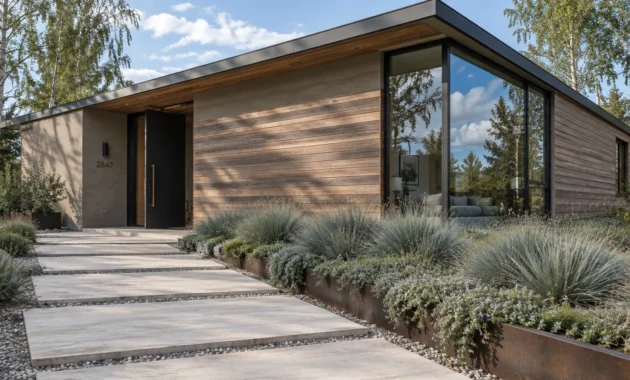
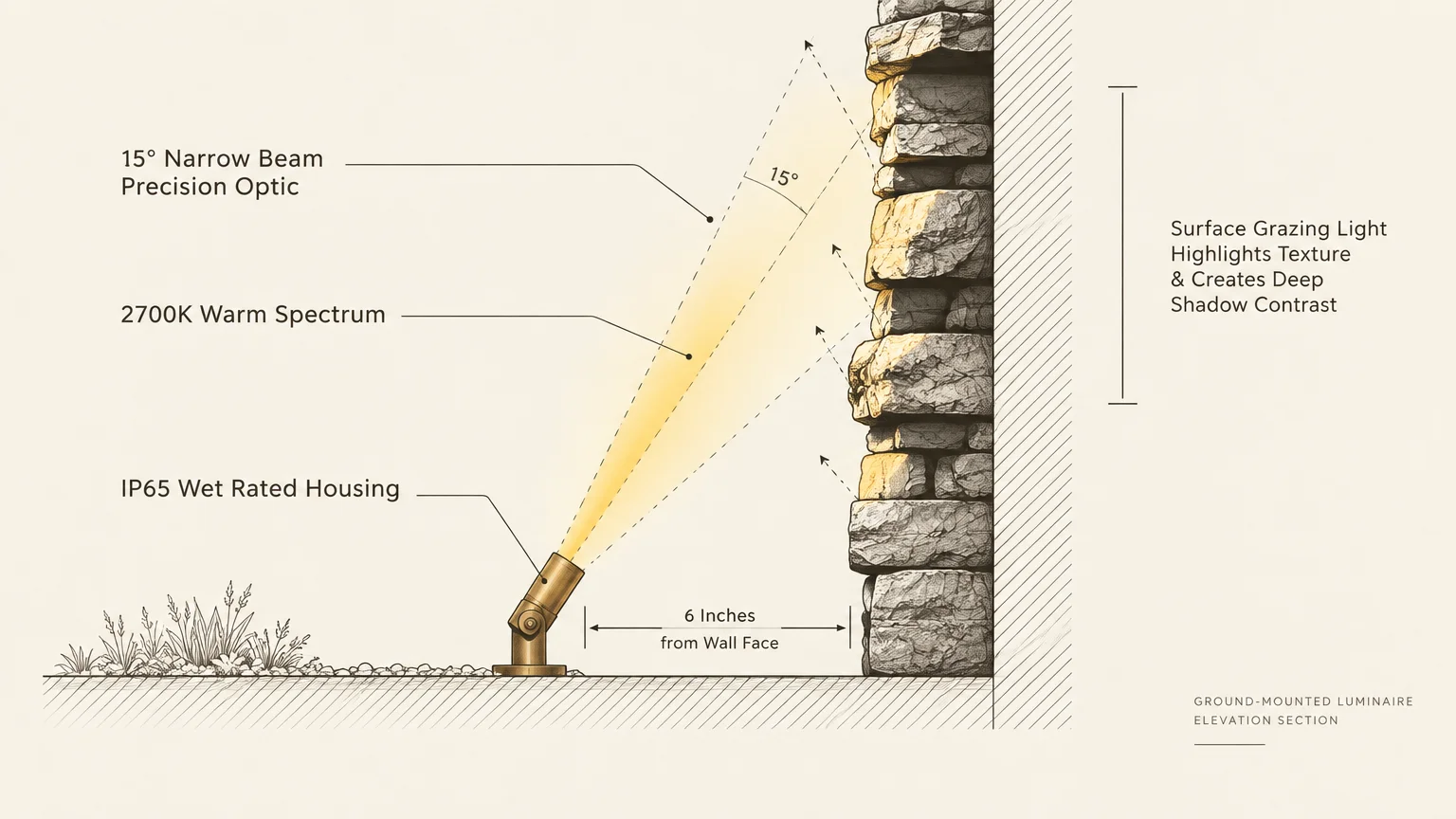
Architectural grazing places light fixtures mere inches from a wall to illuminate tactile textures from an acute angle. This technique emphasizes the rugged depth of stacked stone, reclaimed brick, and natural cedar siding.
Designers rely on narrow-beam precision optics to cast dramatic shadows upward across building elevations. This treatment prevents the flat, washed-out appearance caused by standard floodlights.
The aesthetic aligns closely with the quiet luxury movement, prioritizing texture and structural authenticity over gaudy ornamentation. Instead of staring at an exposed bulb, you perceive the rich depth of the architectural envelope.
Specify unlacquered brass or patinated bronze housings that blend inconspicuously into foundation plantings. These living finishes age gracefully alongside stone veneer and organic masonry.
Keep light temperatures at an inviting 2700K to accentuate the warm, earthy undertones of natural building materials. Cooler illumination can make masonry appear clinical, sterile, and uninviting.
Ground-mounted grazing luminaires must feature durable IP65 wet ratings to resist lawn irrigation and seasonal storm runoff. High ingress protection prevents moisture vapor from fogging internal optical lenses.
Installing directional grazing elevates flat facades into sculptural centerpieces when twilight falls. It establishes high-contrast visual drama that anchors the residence to its surrounding landscape.
Trend #2: DarkSky-Compliant Moonlighting
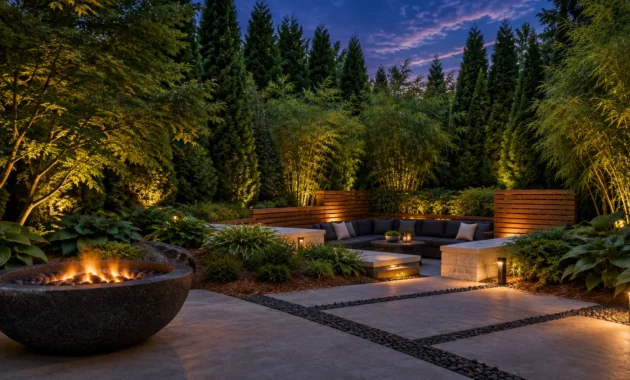
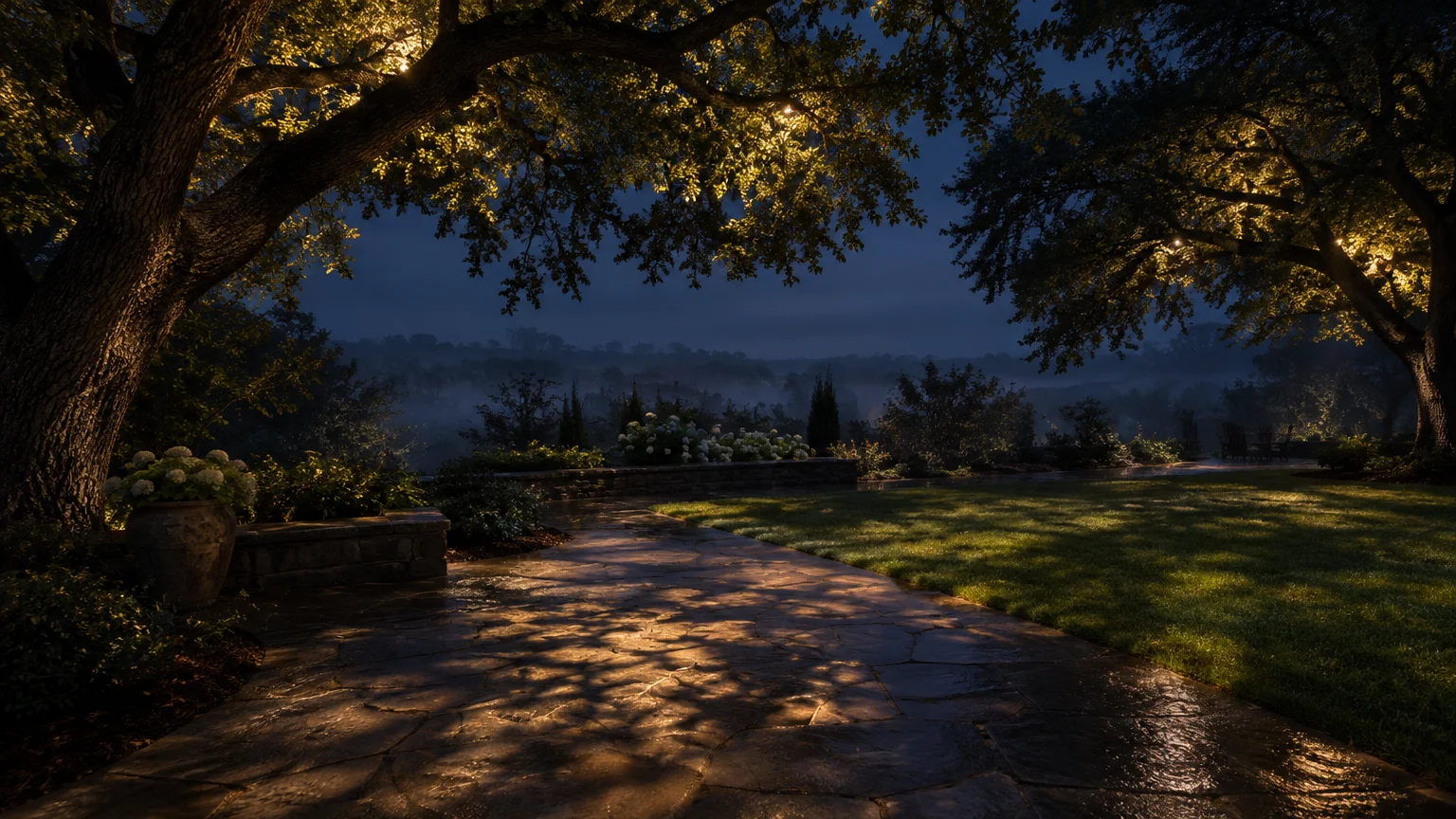
Moonlighting mimics the natural celestial glow of a full moon filtering softly through mature tree canopies. Technicians position downward-angled luminaires high in branches or along architectural eaves to wash lawns in dappled shadows.
This understated method replaces harsh perimeter glare with soft pools of cascading light. It creates a serene, grounded atmosphere across motor courts, sprawling lawns, and flagstone garden terraces.
Modern environmental stewardship drives the growing residential adoption of dark sky principles. Discerning homeowners increasingly demand outdoor luminaires that honor natural circadian rhythms and protect nocturnal wildlife.
DarkSky International mandates that exterior fixtures emit zero uplight above the horizontal 90-degree plane. Choosing fully shielded downlights eliminates light trespass into adjacent properties and prevents suburban light pollution.
Maintain a correlated color temperature of 3000K or lower, as recommended by environmental standards. Cooler, blue-heavy wavelengths scatter readily into the atmosphere, creating unwanted ambient haze.
Hidden fixtures ensure the source of illumination remains completely invisible during daylight and evening hours. You experience pure atmospheric luminescence rather than competing with aggressive, glaring hardware.
Moonlighting establishes effortless transition zones between cultivated garden borders and wild perimeter woods. The resulting canopy shadows produce a painterly tapestry across your property after sundown.
Trend #3: Biophilic Low-Voltage Pathway Illumination
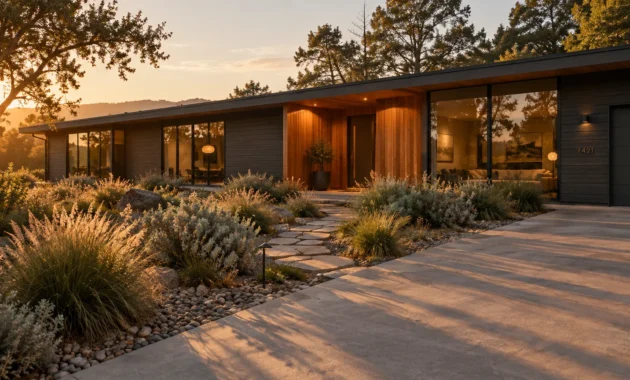
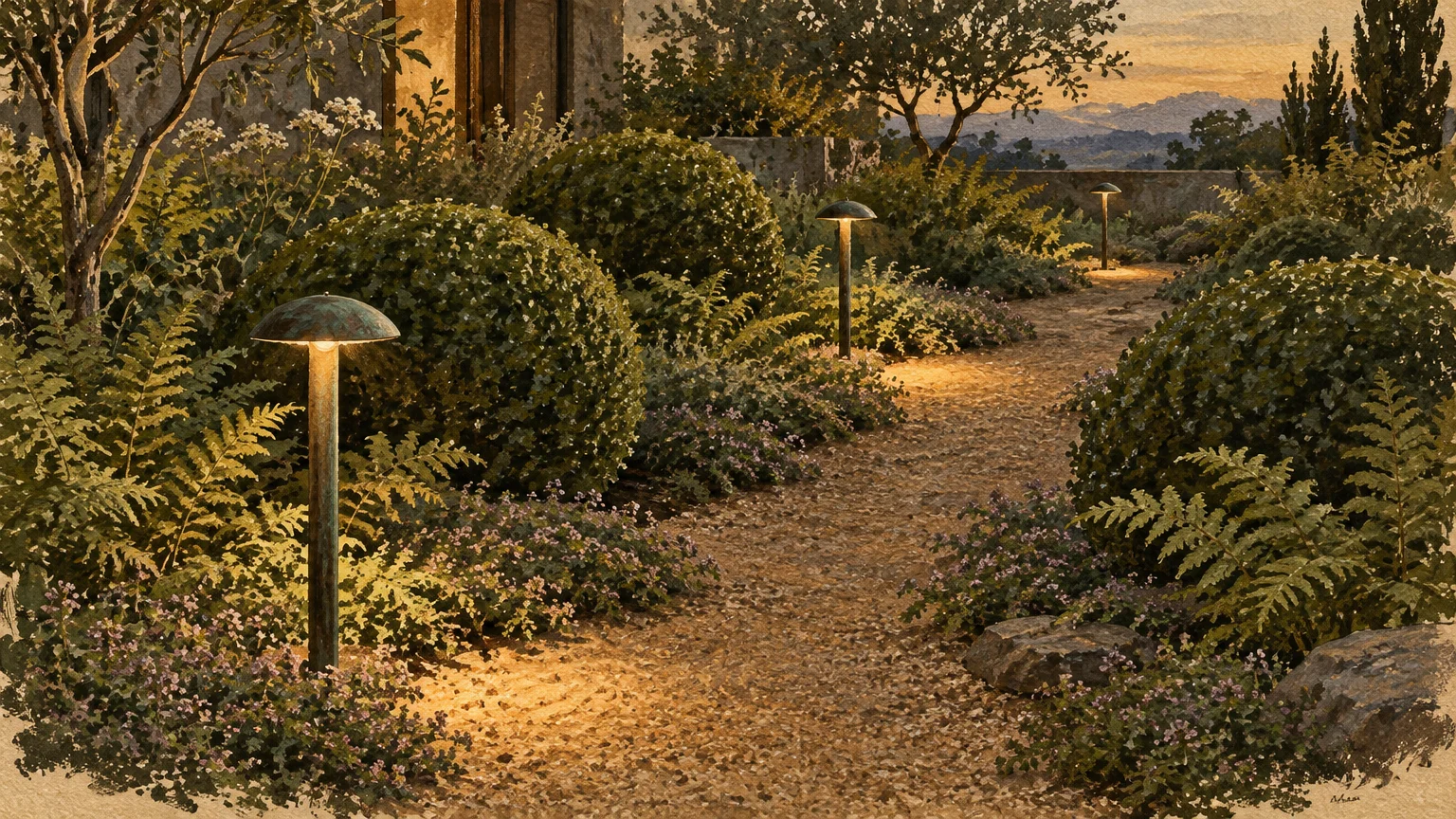
Outdated pathway illumination often resembled airport runways with harsh, evenly spaced light posts along sidewalks. Today’s landscape lighting ideas favor organic, offset arrangements nestled gracefully within native ornamental grasses and perennials.
Biophilic lighting design harmonizes illumination with organic garden forms rather than forcing rigid geometric alignments. The eye moves naturally across meandering flagstone paths, guided by rhythmic, subtle pools of warmth.
Select low-profile bollards and path lights fabricated from patinated copper, cast brass, or weathered zinc. These organic metals develop an exquisite verdigris patina that deepens with humidity and seasonal rain.
Modern low-voltage systems operate on safe, efficient 12-volt alternating current powered by a centralized exterior transformer. This low voltage eliminates shock hazards while granting complete flexibility to adjust fixture locations.
Low-voltage cabling requires minimal soil excavation compared to high-voltage residential wiring. Under National Electrical Code Table 300.5, you only need to bury low-voltage wiring six inches deep.
Shielded hat fixtures or directional mushroom caps cast all lumens downward toward the walking surface. This deliberate beam control guarantees safe footsteps without blinding dinner guests approaching your entryway.
Staggering fixtures across alternating sides of your pathway creates an expansive visual rhythm. It draws visitors forward while celebrating the organic beauty of your specimen shrubbery.
Trend #4: Linear Recessed Hardscape and Step Lighting
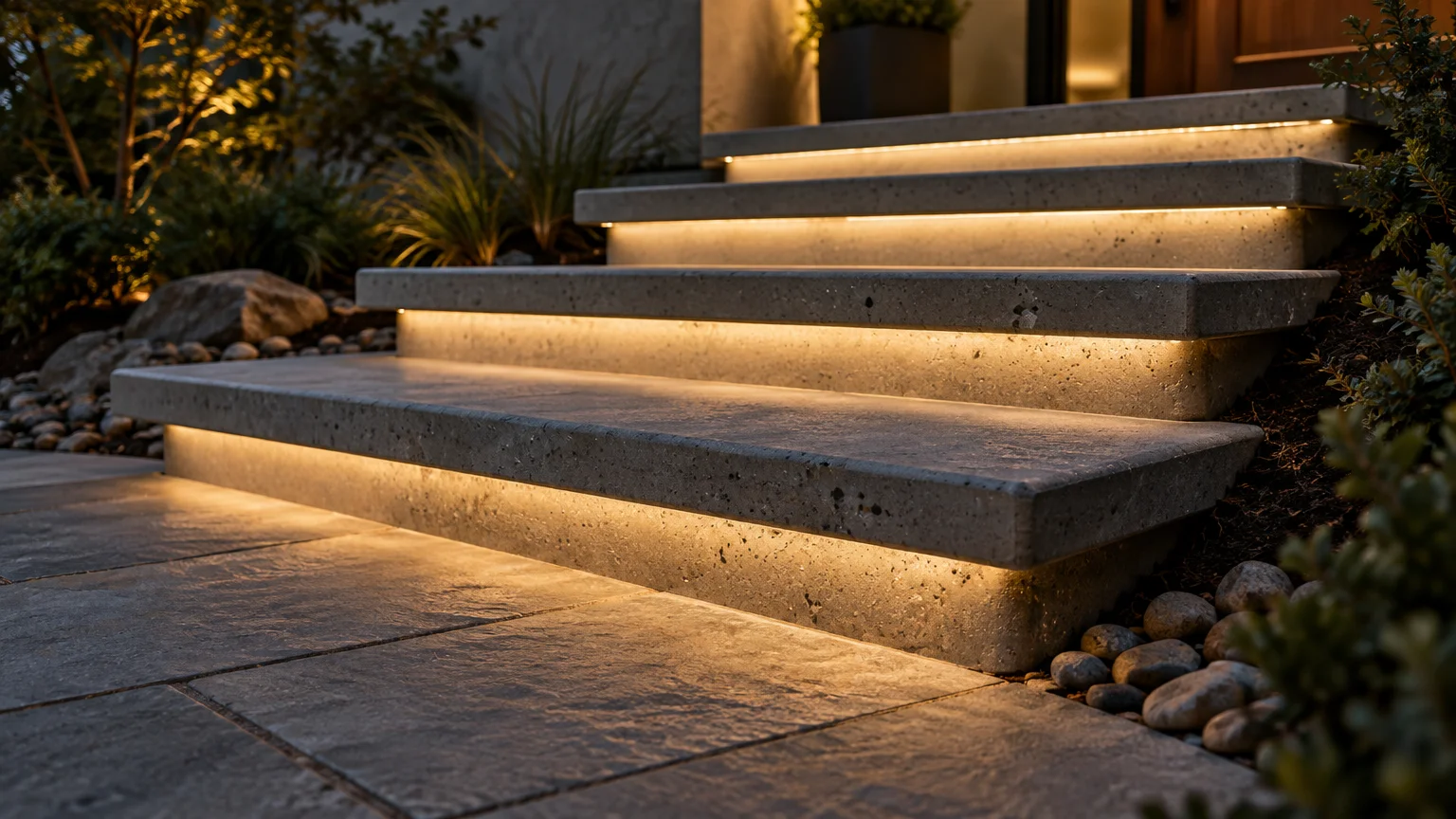
Linear lighting transforms outdoor staircases and stone retaining walls into floating architectural wonders. Recessed LED micro-channels cast an uninterrupted glow beneath tread overhangs, patio coping, and cantilevered seating benches.
This discreet execution embodies the minimalist ethos of modern luxury estates. By concealing the light source beneath structural edges, you highlight crisp hardscape geometries and crisp masonry seams.
Continuous linear channels eliminate hazardous dark shadows on outdoor stairs and changes in elevation. Guests navigate terraced patios and steep garden transitions with complete confidence and refined ease.
Specify waterproof flexible LED light channels boasting minimum IP65 or IP67 ratings for wet outdoor installations. Encapsulated silicone diffusers withstand torrential rain, foot traffic, and winter frost cycles without cracking.
Pair warm linear accents with neutral concrete pavers, honed limestone, or rich ipe hardwood decking. The radiant low-level horizontal illumination emphasizes the warm grain of natural wood and architectural stone.
Integrate low-voltage dimming drivers to balance the luminous intensity of your hardscape features. Subtle, whisper-quiet light output always delivers a more sophisticated aesthetic than excessive brightness.
Linear integration blends safety with high-end modernism across your outdoor living zones. It frames the perimeter of exterior lounges, extending indoor entertaining into the nocturnal open air.
Trend #5: Sculptural Oversized Lanterns in Patinated Metals
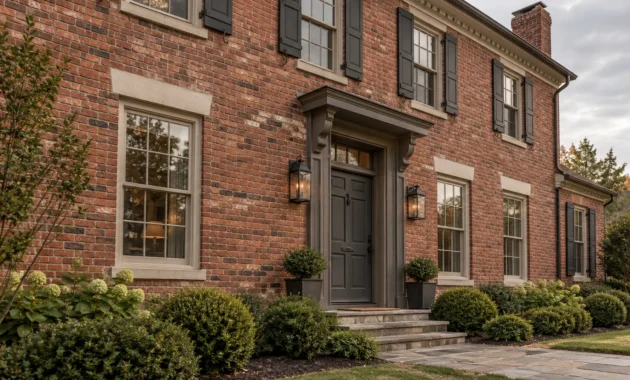
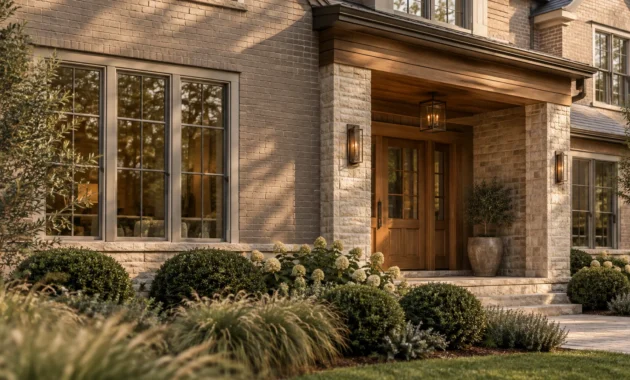
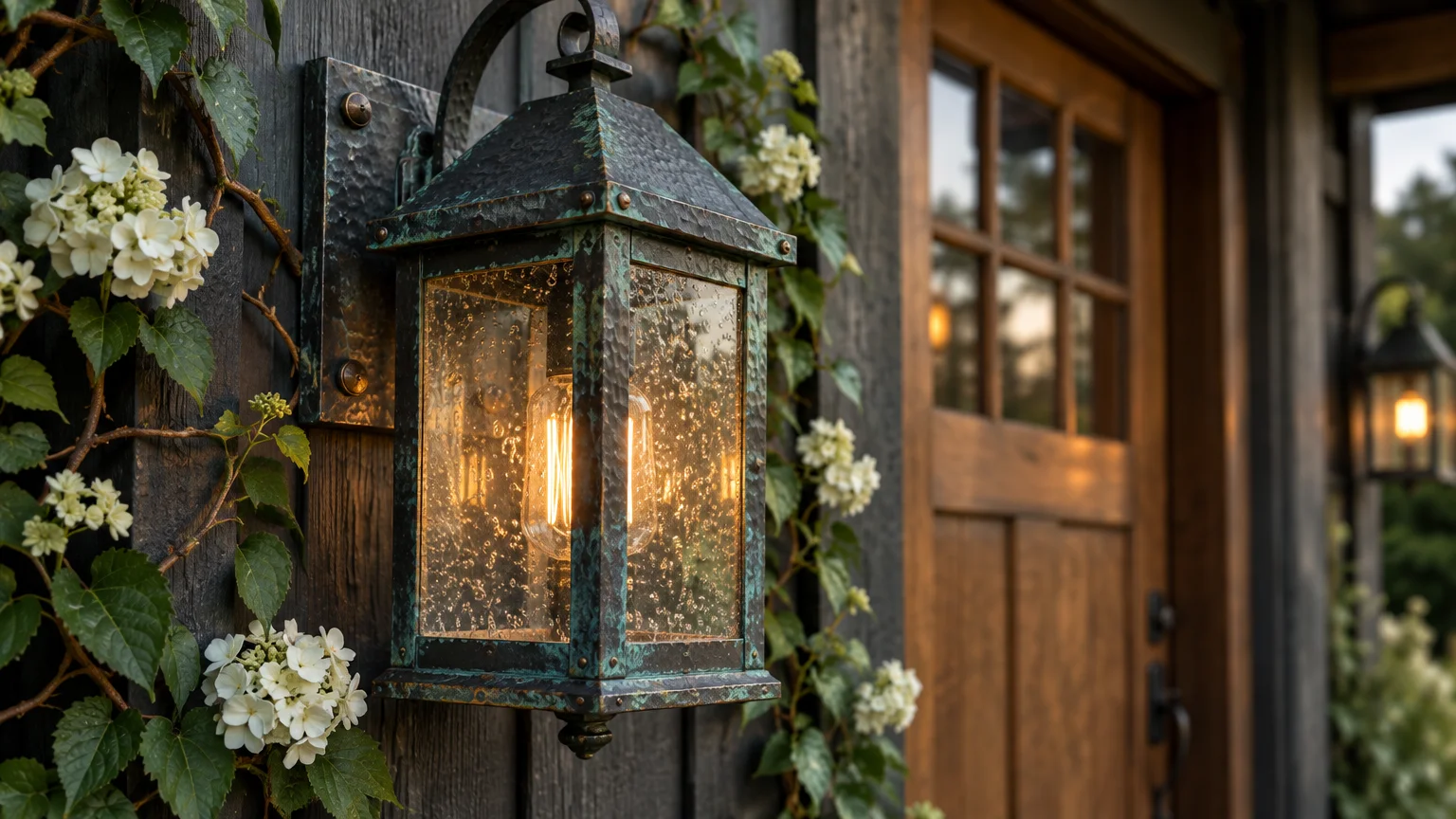
Exterior sconces are breaking free from diminutive builder-grade proportions to become magnificent sculptural statements. Oversized wall lanterns flanking a front entrance create immediate gravitas and heighten vertical curb appeal.
Leading architects often choose fixtures measuring one-third the height of the front entry door. These generous proportions anchor towering porticos and balance grand, multi-story facade architecture.
This trend reflects a broader appreciation for authentic craftsmanship and historical provenance. Hand-forged ironwork, hammered blackened tin, and heavy unlacquered brass add rich historic romance to transitional elevations.
Choose hand-blown seeded glass or water glass to soften and refract internal light rays. These heritage glass textures gently diffuse LED filament bulbs while preventing harsh focal glare.
Finish options like aged bronze or blackened copper offer dramatic contrast against creamy white stucco or pale siding. They anchor the entrance with confident architectural intention and historic authority.
For covered porches, ensure your chosen statement lanterns carry at least an IP44 damp location rating. Damp-rated construction protects delicate wiring connections and sockets against ambient moisture and windblown humidity.
Sconce selections announce your personal design aesthetic before guests even cross the threshold. An artisanal fixture functions as exterior jewelry that frames your front door with memorable charm.
Trend #6: Symmetrical Entryway Portals and Column Washes
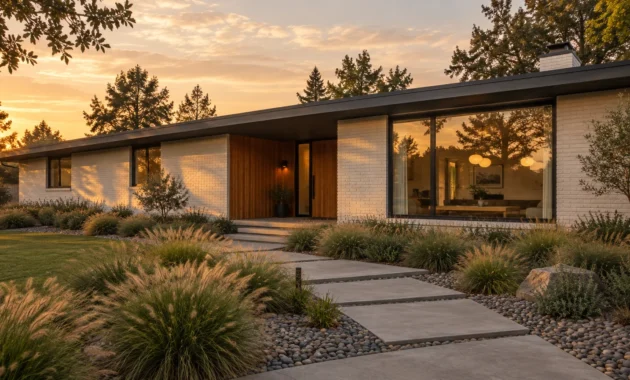
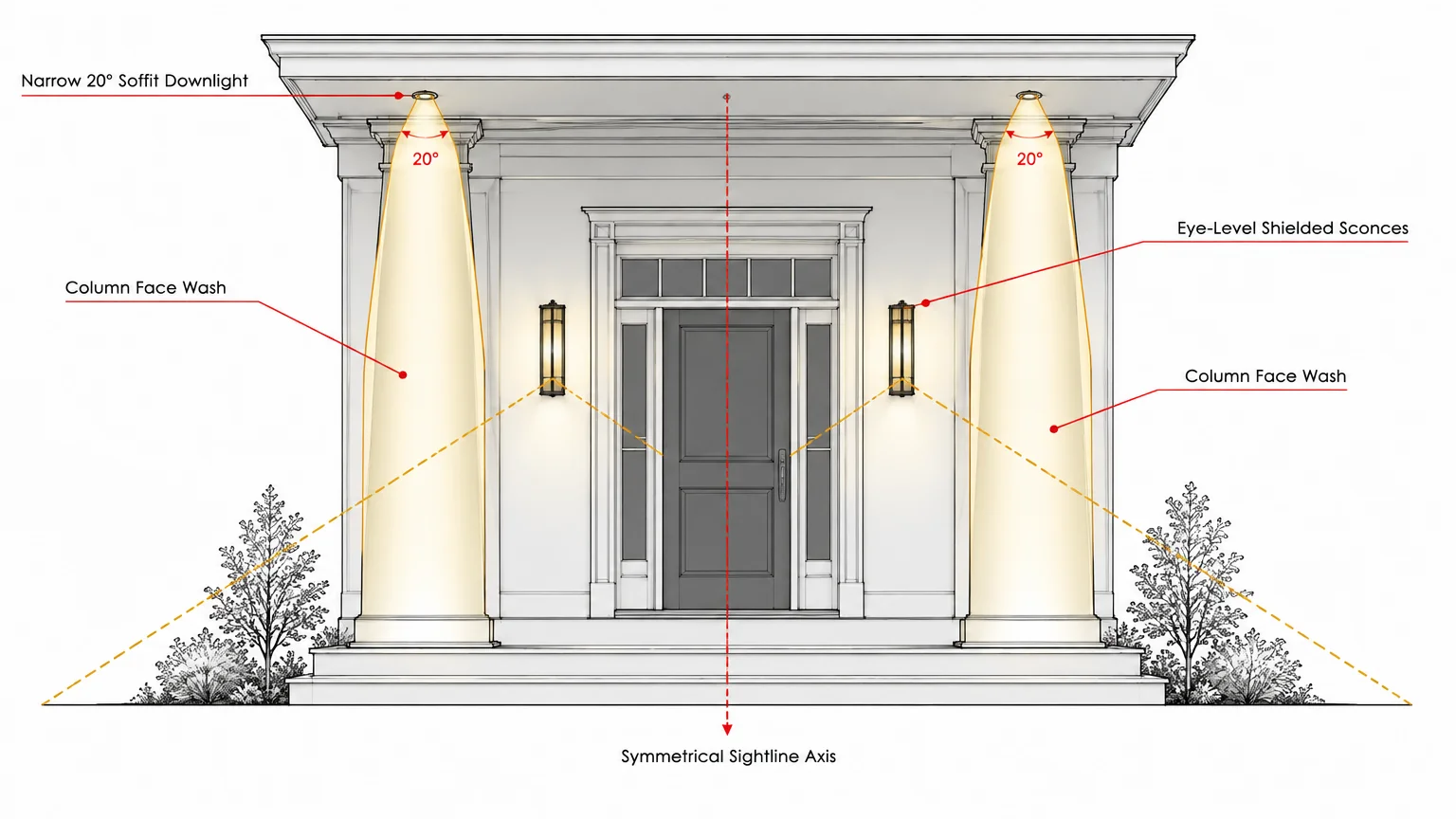
Symmetry provides visual equilibrium and instills an immediate sense of arrival at your front entry. Illuminating architectural columns and porticos creates a balanced gateway that frames the heart of the home.
Narrow-beam uplights positioned at column bases highlight vertical fluting, classical capitols, or contemporary steel posts. Uplighting columns draws the eye toward soaring rooflines, amplifying the home’s vertical height and presence.
Dual-directional cylinder sconces that wash light both upward and downward establish clean, graphic silhouettes. These fixtures emphasize geometric door casings while casting practical downlight across the welcome mat.
This disciplined technique draws inspiration from neoclassical facades and mid-century pavilion architecture. Balanced lighting guides the human eye naturally to the main entry point without sensory confusion.
Keep lighting levels across symmetrical elements perfectly calibrated to avoid unbalancing your elevation. Mismatched wattages or uneven beam spreads immediately ruin the intended architectural harmony.
Ensure all exterior wall sconces complement the hardware finish of your entry door set. Consistent metals—such as matte black, oil-rubbed bronze, or polished nickel—reinforce sophisticated curb appeal.
A balanced, beautifully illuminated portico creates a welcoming haven for evening arrivals. It establishes an exquisite focal point that grounds the entire exterior composition.

Trend #7: Organic Silhouette Lighting and Botanical Uplighting
Transforming ornamental landscaping into nighttime art requires strategic positioning of directional spotlights. Aiming an adjustable spotlight at specimen flora projects dynamic shadows across light-colored facade walls.
Japanese maples, multi-trunk birch trees, and architectural agaves produce striking graphic forms when backlit. This silhouetting technique introduces depth perception, expanding the visual scale of your property after dark.
Alternatively, placing in-ground well fixtures at tree bases washes internal canopy branches in warm illumination. Uplighting branch structures reveals sculptural trunks and delicate foliage unseen during daytime hours.
Look for fixtures with adjustable optical zoom collars and hex-cell louver shields. Louvers eliminate stray glare, ensuring observers see radiant foliage rather than offensive fixture light sources.
Match the beam angle to the physical habit of your specimen plant material. Narrow ten-degree spotlights flatter tall, slender Italian cypresses, while broad sixty-degree floodlights envelop weeping willows.
Wet-rated IP65 ground fixtures prevent internal water entry from sprinkler systems and seasonal snowpacks. Watertight silicone O-rings safeguard sensitive LED chips from moisture oxidation and corrosion.
Layering botanical lighting behind path markers builds three-dimensional visual depth. Your property feels expansive, immersive, and intimately connected to the surrounding natural environment.
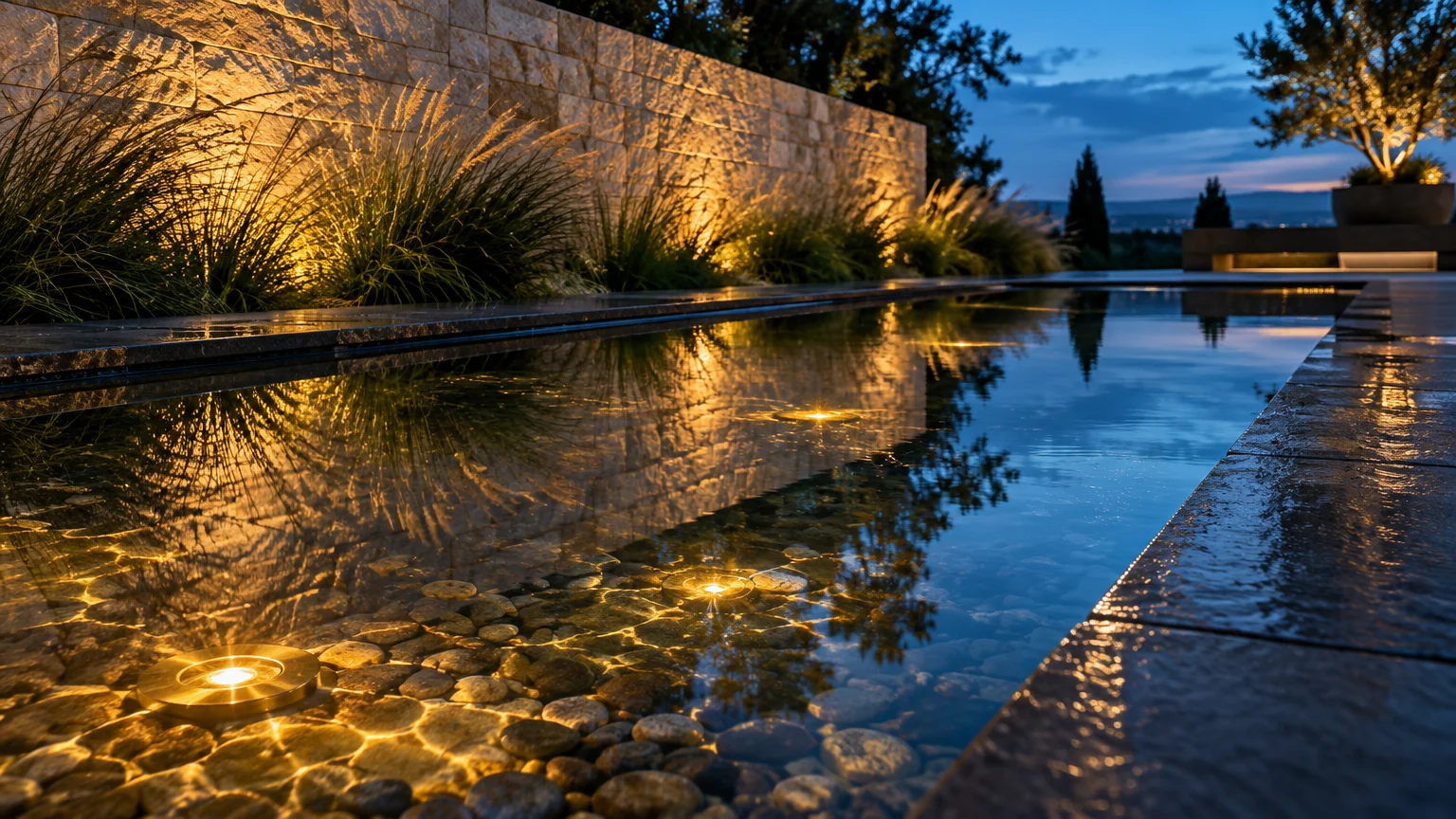
Trend #8: Submersible and Reflective Water Feature Radiance
Water features bring hypnotic movement, cooling ambient sound, and luminous optical drama to modern home grounds. Illuminating cascading fountains and mirror pools from within turns water into liquid crystal.
Submersible LED spotlights placed beneath turbulent water cascades capture moving air bubbles in dancing light. The resulting illumination shimmers across adjacent stone walls, introducing soothing kinetic energy to outdoor seating areas.
Still reflection pools require dark, submerged well fixtures directed outward toward surrounding landscape sculpture. The undisturbed water surface mirrors softly illuminated trees and sky like a polished obsidian lens.
Submerged luminaires demand maximum ingress protection ratings of IP68 for continuous underwater duty. Cast bronze or surgical stainless steel housings resist chemical treatments and mineral buildup.
Electrical safety around landscape water features remains paramount for all residential installations. The National Electrical Code requires Ground-Fault Circuit-Interrupter protection for all receptacles powering water transformers.
Equip exterior outlets with weatherproof in-use covers to prevent dangerous moisture intrusion during heavy storms. Proper safety protocols guarantee your nocturnal aquatic retreat remains both safe and enchantingly luminous.
Illuminating water elements establishes an ultra-luxurious resort atmosphere within private residential grounds. It turns an ordinary backyard into a meditative sanctuary built for evening relaxation.
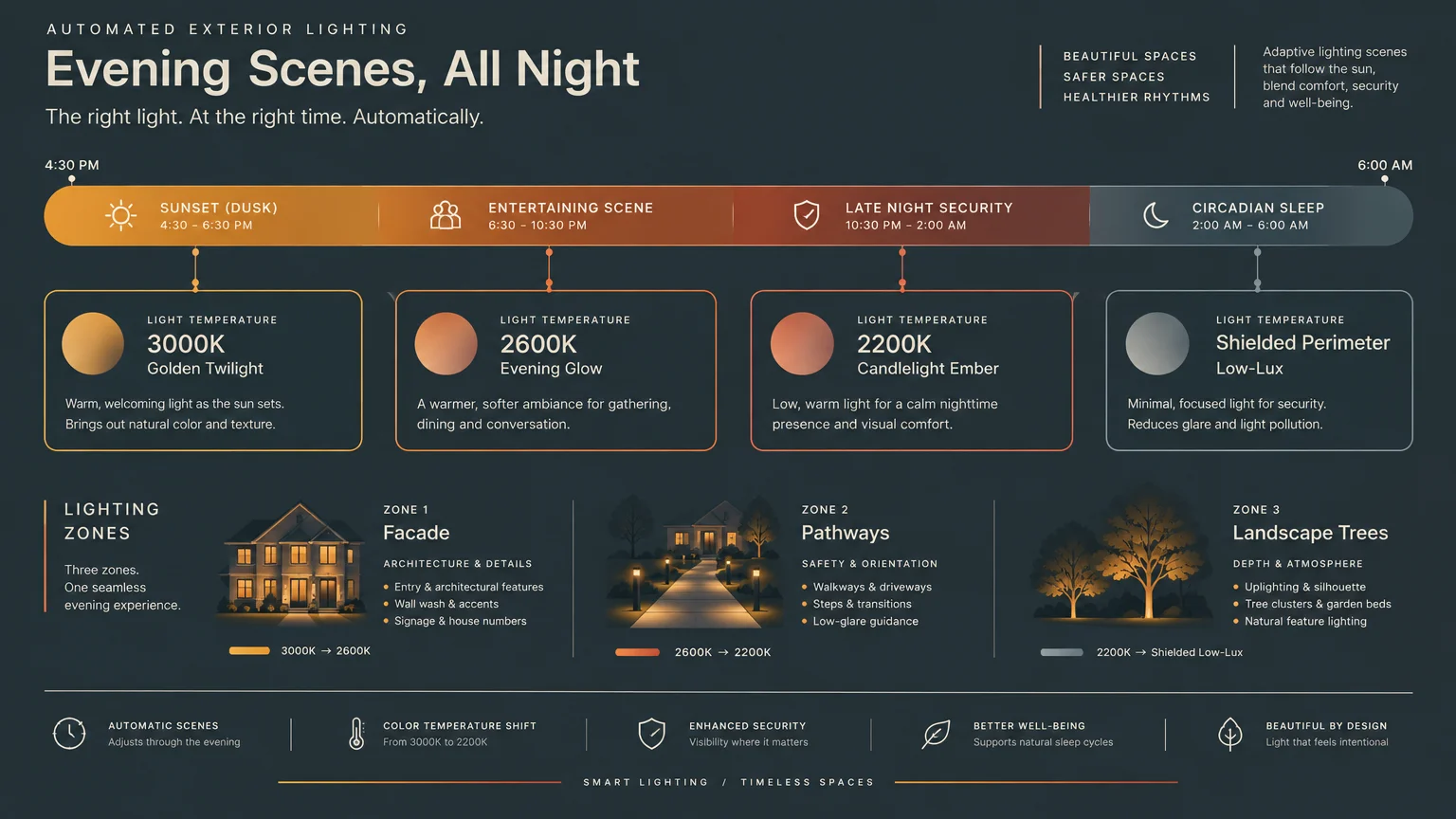
Trend #9: Smart Tunable Warmth and Zoned Scene Automation
Modern luxury home exterior lighting upgrades rely on sophisticated intelligent control systems and micro-zoned programming. Homeowners can now modulate individual lighting zones, shifting effortlessly from bright entertaining to tranquil resting scenes.
Tunable white LED technology allows correlated color temperatures to adjust automatically throughout the evening. Fixtures can glow at 3000K during twilight arrivals before softening to an intimate 2200K late at night.
Astronomical clock integration ensures exterior luminaires sync seamlessly with natural local sunset and sunrise times. You never have to manually adjust timers when seasons transition or daylight saving hours shift.
Advanced LED drivers achieve remarkable efficiency while reducing global environmental footprints. According to the U.S. Department of Energy, outdoor LED lighting uses 75% to 90% less energy than incandescent sources.
In addition, ENERGY STAR-rated LEDs last 25,000 to 50,000 hours, outlasting traditional incandescent bulbs by 15 to 25 times. This extraordinary longevity eliminates dangerous ladder work to replace burnt-out bulbs on steep rooflines.
Wireless smart bridges allow instant control through mobile apps, voice prompts, or discreet architectural wall keypads. You can illuminate pathways for approaching guests or extinguish perimeter accents with one simple command.
Intelligent scene automation delivers effortless energy savings alongside peerless aesthetic versatility. Your home presents a dynamically tailored facade that adapts gracefully to every nighttime occasion.
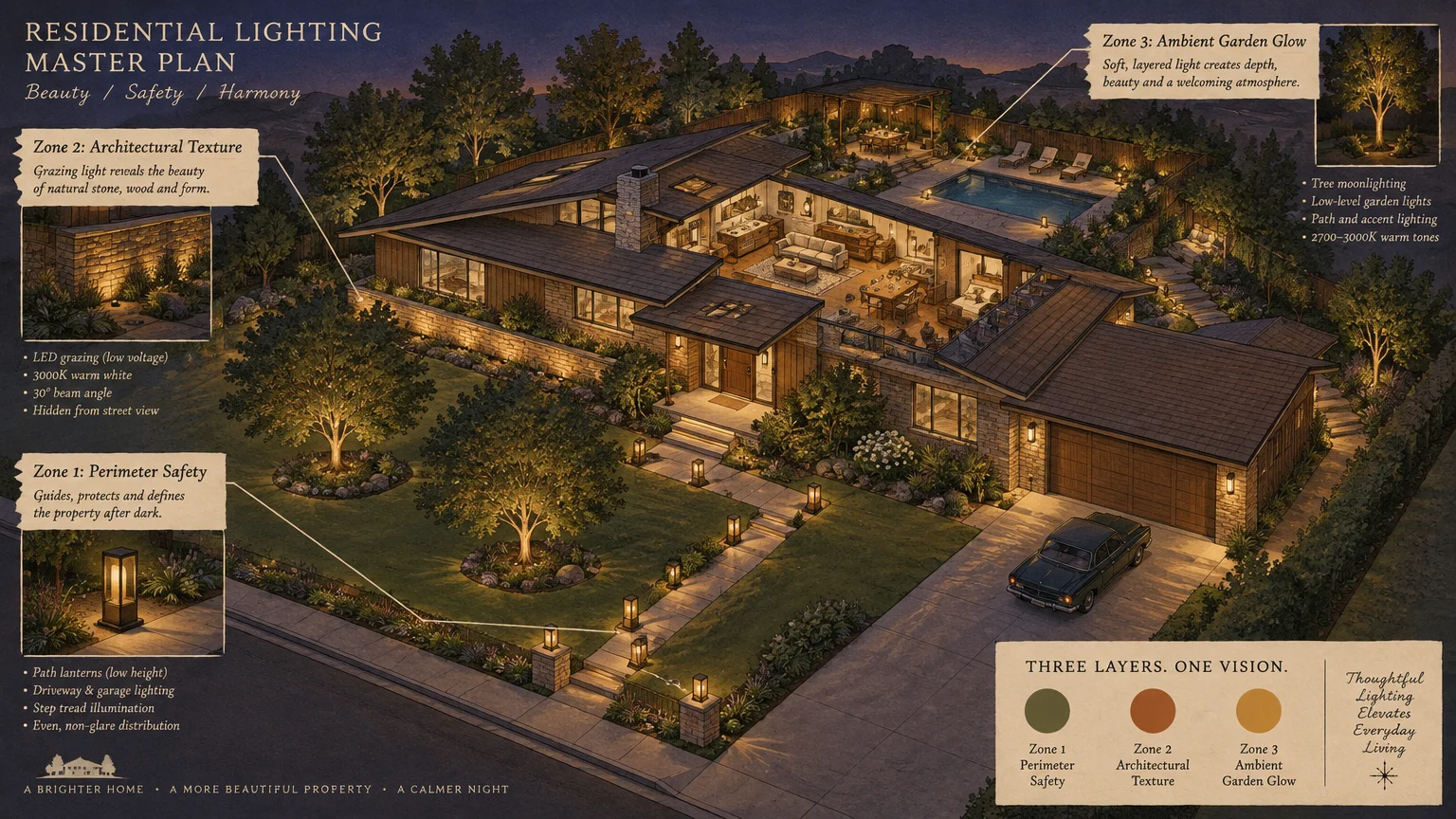
The Big Picture: Weaving These Trends into Your Home
Designing an elevated exterior lighting scheme requires thoughtful restraint rather than indiscriminate brightness. Successful outdoor environments celebrate shadow as much as light, orchestrating contrast to build architectural mystery.
Start by identifying the three essential lighting layers: ambient background glow, focused task lighting, and sculptural accents. Harmonizing these three distinct layers produces visual harmony across the entire property footprint.
Professional installations generally balance aesthetic artistry with robust infrastructural electrical requirements. National data indicates homeowners invest between $2,000 and $6,000 for a comprehensive professional landscape lighting package.
If you prefer a hands-on approach, high-quality low-voltage DIY starter kits range between $200 and $500. These modular kits provide a flexible entry point for experimenting with path illumination and spotlighting.
Maintain cohesive color temperatures across all fixtures to protect visual flow and curb appeal. Mixing stark blue-white spotlights with amber wall sconces disrupts architectural unity and looks disjointed.
Consider how exterior lighting connects visually with your interior living spaces through large panoramic windows. Warm exterior illumination dissolves reflective glass glare, visually expanding your interior rooms outward into the garden.
For the latest color forecasts, consult industry leaders like Pantone and paint companies like Benjamin Moore. For professional design standards, refer to the American Society of Interior Designers (ASID).
Disclaimer: This article reflects design trend analysis and predictions. Personal taste and timeless design principles should always guide your decorating choices.
Frequently Asked Questions
How do I choose the correct color temperature for home exterior lighting upgrades?
Select warm white color temperatures between 2700K and 3000K for residential facades and garden plantings. Warm light flatters natural stonework, rich wood siding, and lush green foliage without harsh glare.
Avoid bulbs exceeding 3000K, as high-kelvin, blue-toned illumination appears clinical and causes disruptive skyglow. Warm illumination preserves a welcoming ambiance while respecting DarkSky environmental guidelines.
Can I install modern landscape lighting ideas myself, or should I hire a professional?
Homeowners can easily install low-voltage 12-volt starter kits, which present minimal electrical hazards and simple burial requirements. Low-voltage cables only require a shallow six-inch trench beneath mulch or turf.
Hire a licensed electrician if your project demands new 120V line-voltage conduit trenches or extensive GFCI subpanels. Professional designers also bring advanced photometric expertise to balance complex layered installations.
What IP rating is necessary to protect outdoor fixtures from extreme weather?
Fixtures placed under sheltered porch eaves require a minimum rating of IP44 for damp location protection. This rating shields internal electronics from ambient humidity, fog, and light airborne spray.
Exposed fixtures—such as path lights, garden uplights, and well luminaires—require at least an IP65 wet-location rating. Submerged water fixtures demand an IP68 rating for prolonged underwater immersion.
How do dark sky regulations impact residential curb appeal?
Dark sky guidelines actually enhance curb appeal by replacing blinding outward glare with purposeful, fully shielded illumination. Fixtures with zero uplight direct lumens precisely where needed to highlight textures and walkways.
The resulting design looks refined and architecturally deliberate rather than harsh or chaotic. You celebrate nighttime architectural silhouettes while actively protecting the nocturnal ecosystem.