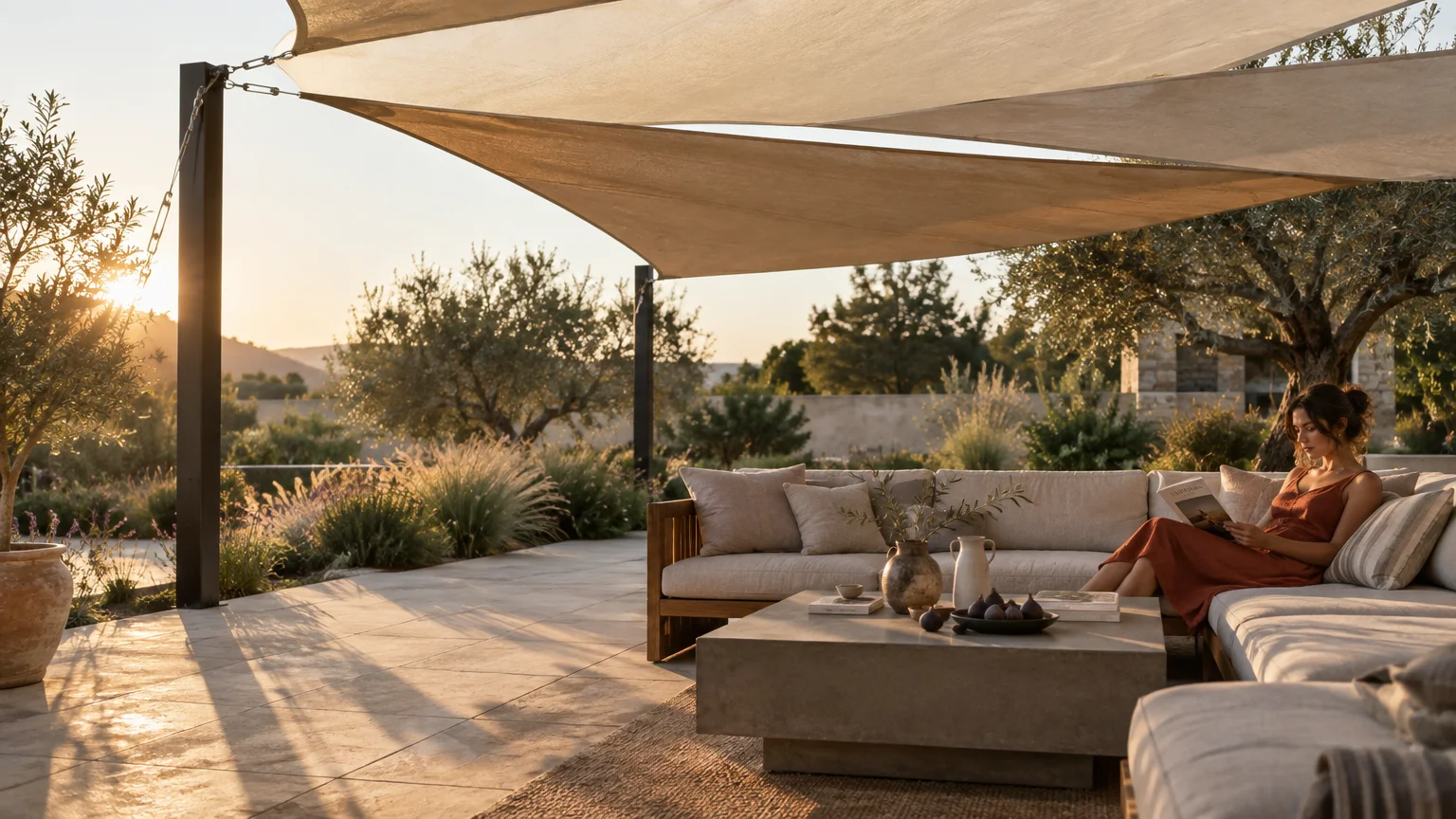
You can transform a sun-baked terrace into a cool, sophisticated lounge without hiring a contractor or enduring months of construction. Strategic exterior shade upgrades instantly elevate your architecture while delivering immediate thermal comfort.
High-performance patio shade solutions redefine how you experience open-air living, merging quiet luxury with practical climate control. Modern materials allow you to curate shaded outdoor sanctuaries quickly and affordably.
By selecting flexible, modular installations, you preserve your property value and bypass permit headaches entirely. Here are eleven designer-approved upgrades to cool your outdoor space today.
Trend #1: Tensioned Architectural Shade Sails
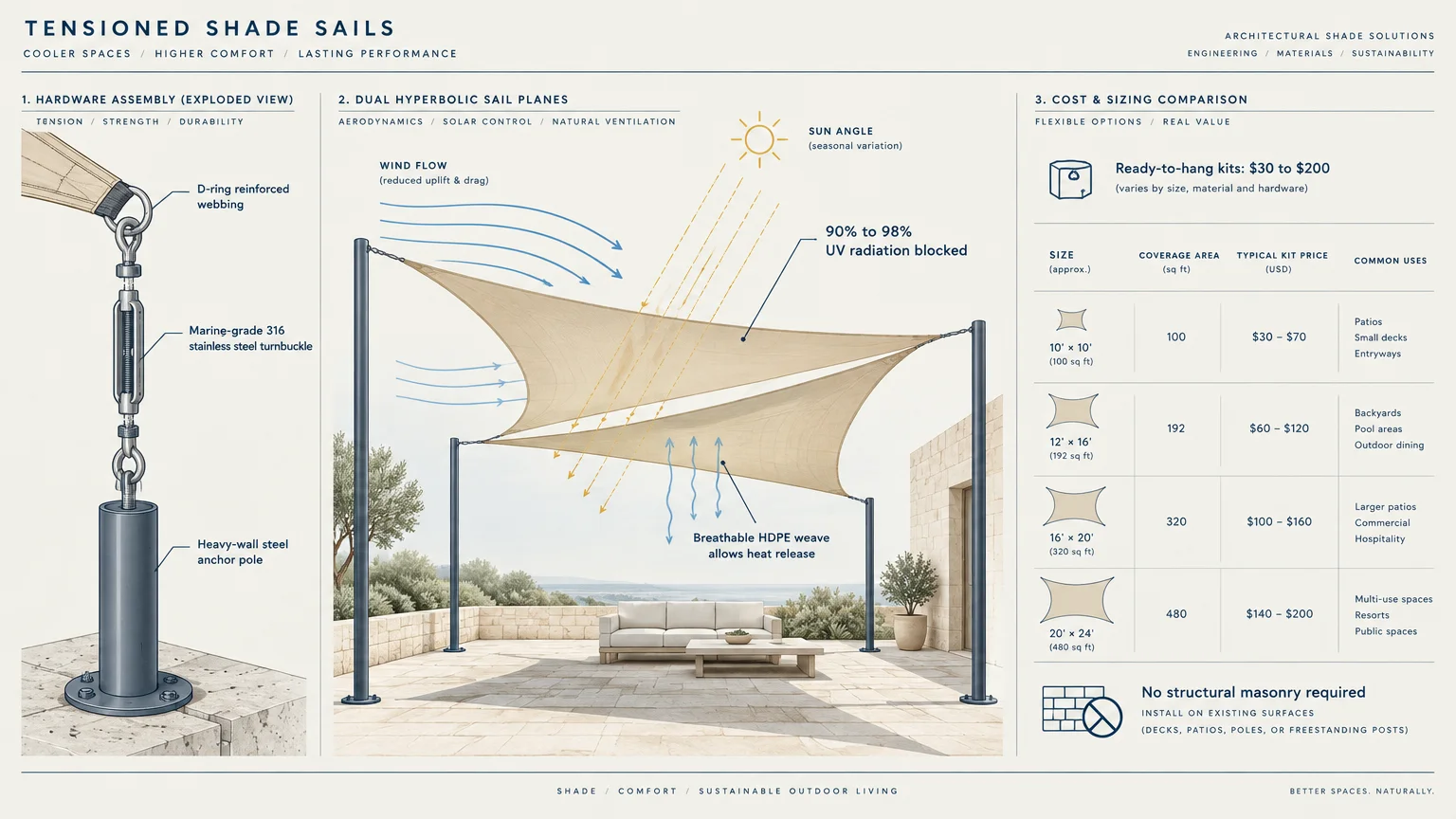
Tensioned shade sails bring sculptural drama and crisp geometry to modern residential landscapes. They suspend aloft with minimal hardware, casting dynamic silhouettes across stone pavers and timber decks.
Unlike heavy timber constructions, these sails deliver outdoor shade without renovation or permanent landscape alteration. They celebrate airy, modern silhouettes while catching cooling cross-breezes.
High-density polyethylene (HDPE) shade fabric provides remarkable durability under harsh environmental conditions. The breathable weave blocks 90% to 98% of harmful UV radiation without trapping radiant heat underneath.
Budget-conscious homeowners love the accessibility of this solution; ready-to-hang kits cost merely $30 to $200. Marine-grade stainless steel turnbuckles secure the tension against unexpected summer gusts.
Pair warm ecru or stone-grey sails with matte black anchor poles for an understated, tailored look. The resulting canopy feels less like an afterthought and more like intentional exterior art.
This effortless installation frames your garden views while carving out an intimate dining pavilion. It exemplifies how thoughtful material choices can reinvent your exterior living space.
Trend #2: Motorized Retractable Valance Awnings
Motorized retractable awnings have evolved from dated suburban fixtures into sleek, concealed architectural elements. Modern low-profile cassettes mount discreetly beneath rooflines, blending seamlessly into exterior facades.
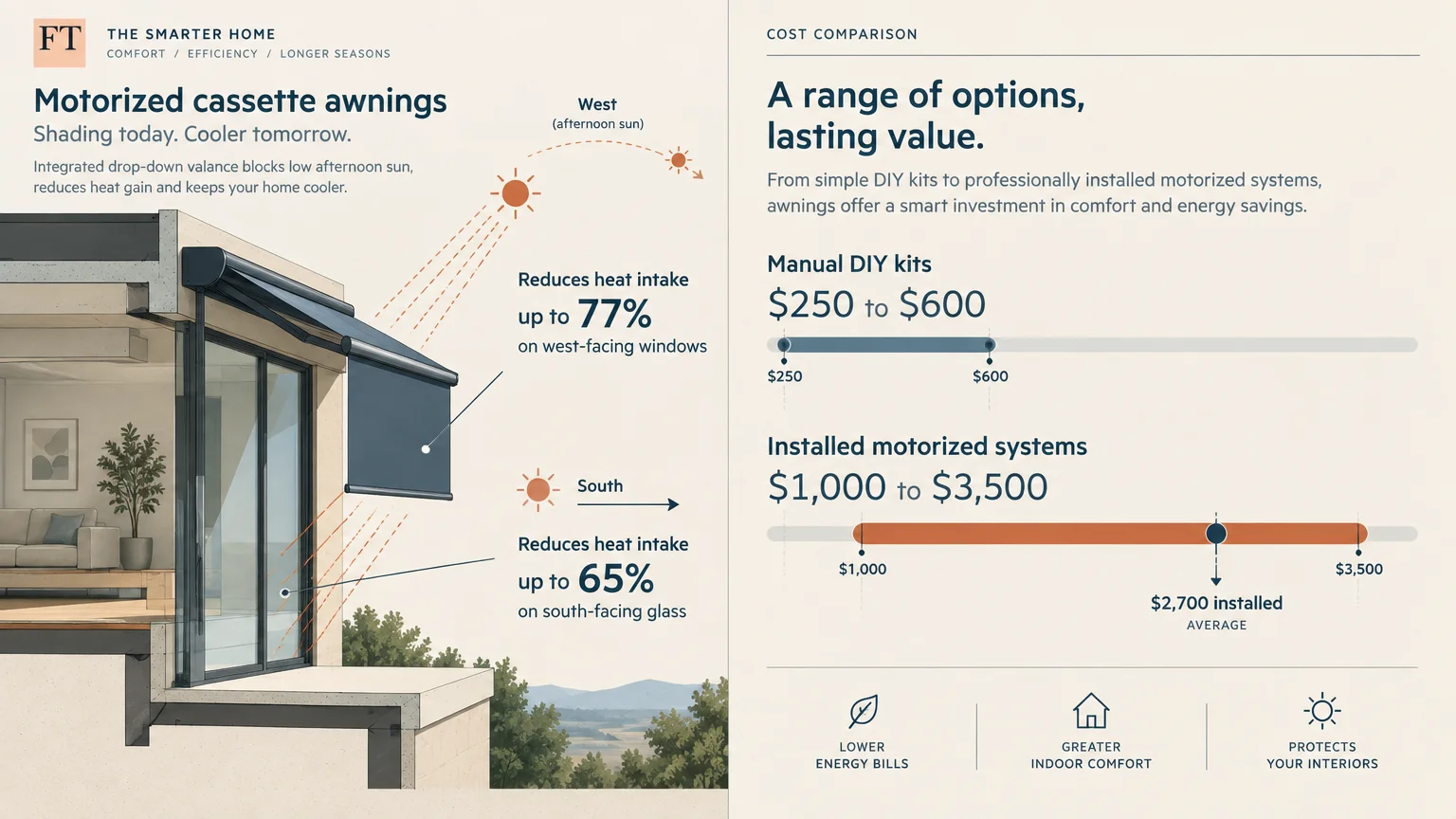
According to the U.S. Department of Energy, exterior window and patio awnings reduce solar heat gain substantially. They decrease heat intake by up to 65% on south-facing glass and 77% on west-facing windows.
This dramatic reduction drops indoor ambient temperatures while cooling adjacent outdoor living rooms. It allows you to transition your indoor dining space effortlessly into the fresh air.
Nationwide home improvement data indicates retractable awnings average roughly $2,700 installed, with projects typically spanning $1,000 to $3,500. Alternatively, manual DIY kits offer entry points between $250 and $600.
Opt for saturated charcoal or crisp slate canvases with an integrated drop-down valance. This feature shields your eyes when late-afternoon sun angles dip below standard canopy projections.
Wind sensors automatically retract the fabric during sudden squalls, protecting your investment. You achieve seamless indoor-outdoor connectivity with minimal visual interruption.
Trend #3: Freestanding Louvered Pergola Kits
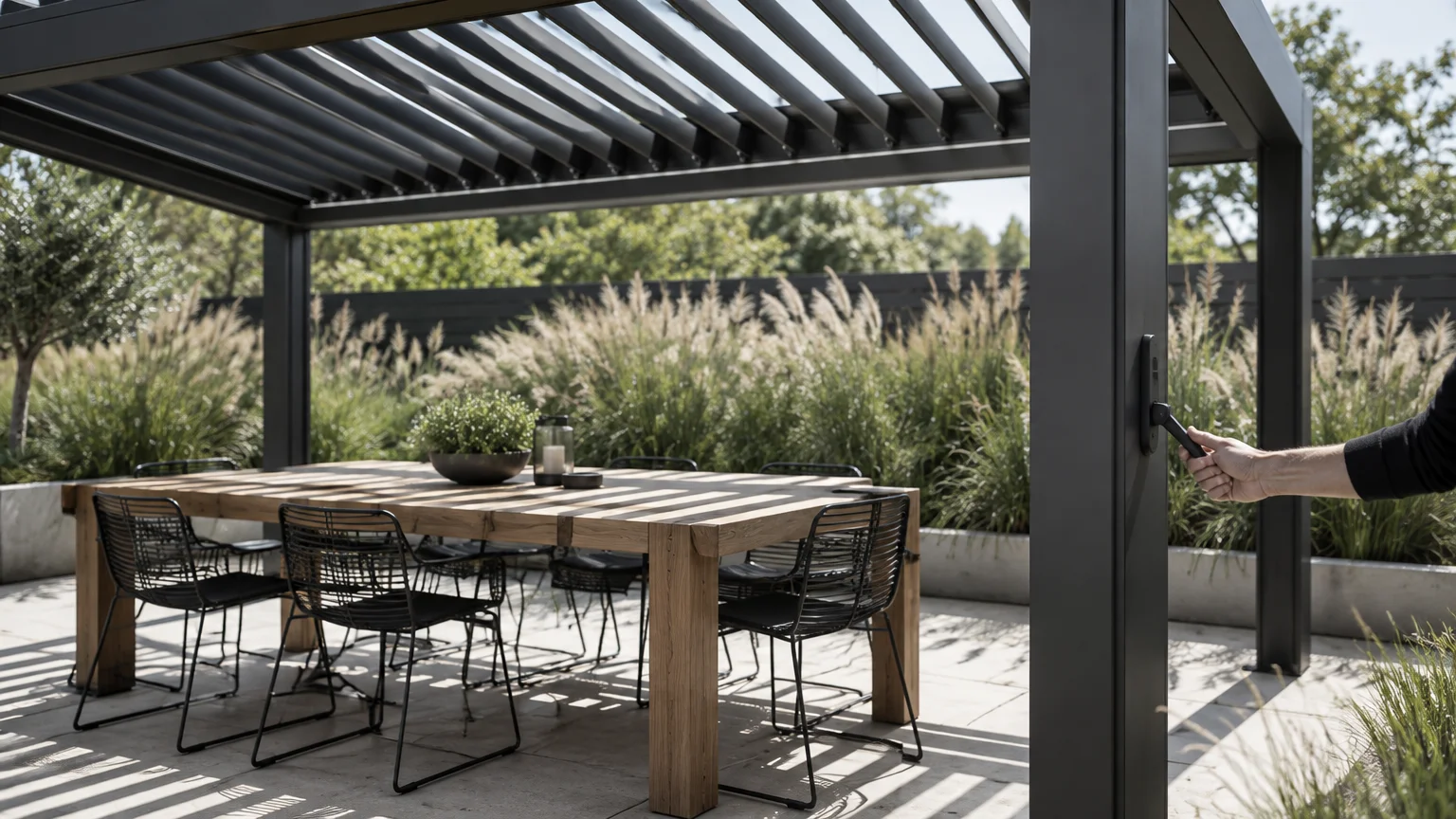
Freestanding aluminum pergolas with dual-walled adjustable louvers provide biophilic mastery over sunlight and airflow. You can rotate the ceiling blades manually or via remote control to track the sun.
These modular kits bypass the expensive engineering and framing required by custom masonry additions. Freestanding prefabricated pergola kits generally start around $1,200 to $4,000, presenting substantial savings.
Under the International Residential Code, freestanding shade structures under 120 to 200 square feet typically escape permitting requirements. Always check municipal regulations, but many freestanding setups sidestep lengthy zoning approvals.
When closed, the interlocking louvers create a watertight roof system with integrated internal gutters. Rainwater channels silently down concealed leg posts, protecting your fine outdoor upholstery beneath.
Choose dark bronze or architectural white finishes to anchor your outdoor lounge furniture. The clean right angles offer a structured contrast against lush backyard greenery.
Add integrated LED lighting strips along the interior perimeter to extend evening entertaining. This upgrade yields an architectural centerpiece that feels completely bespoke.
Trend #4: Cantilevered Offset Umbrellas with Weighted Pedestals
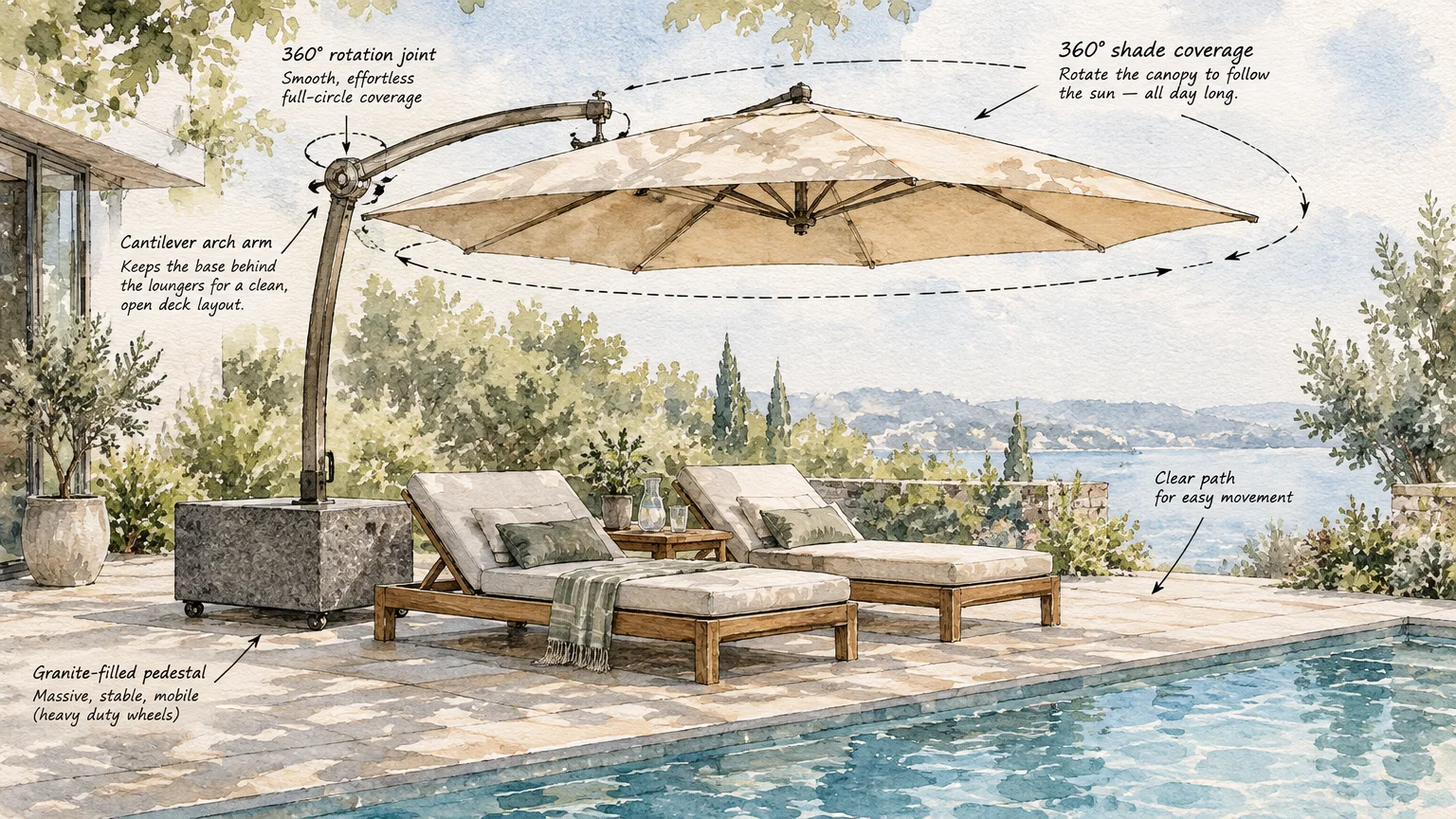
Cantilevered umbrellas free your patio from center-pole obstructions, offering full 360-degree rotational shade. Their side-mounted arched arms suspend broad canopy fabrics directly over expansive seating clusters.
This flexibility lets you position plush sectionals and dining tables without accommodating clumsy central poles. You simply swivel the mast as shadows lengthen across the patio floor.
Look for commercial-grade aluminum frames paired with solution-dyed acrylic canopies like Sunbrella. These marine-grade fabrics resist bleaching from sun exposure while shedding moisture effortlessly.
Heavy wheeled bases filled with water or gravel allow you to reposition the footprint whenever entertaining demands shift. You gain the presence of a permanent pavilion without drilling into delicate stonework.
Embrace muted neutral tones such as sand, bone, or olive to channel European resort refinement. The visual weight remains light, preserving your garden sightlines throughout the day.
Tilting canopies adapt effortlessly to morning brunch or late afternoon cocktails. It is an indispensable, non-invasive patio shade solution for versatile backyards.
Trend #5: Exterior Solar Roller Shades
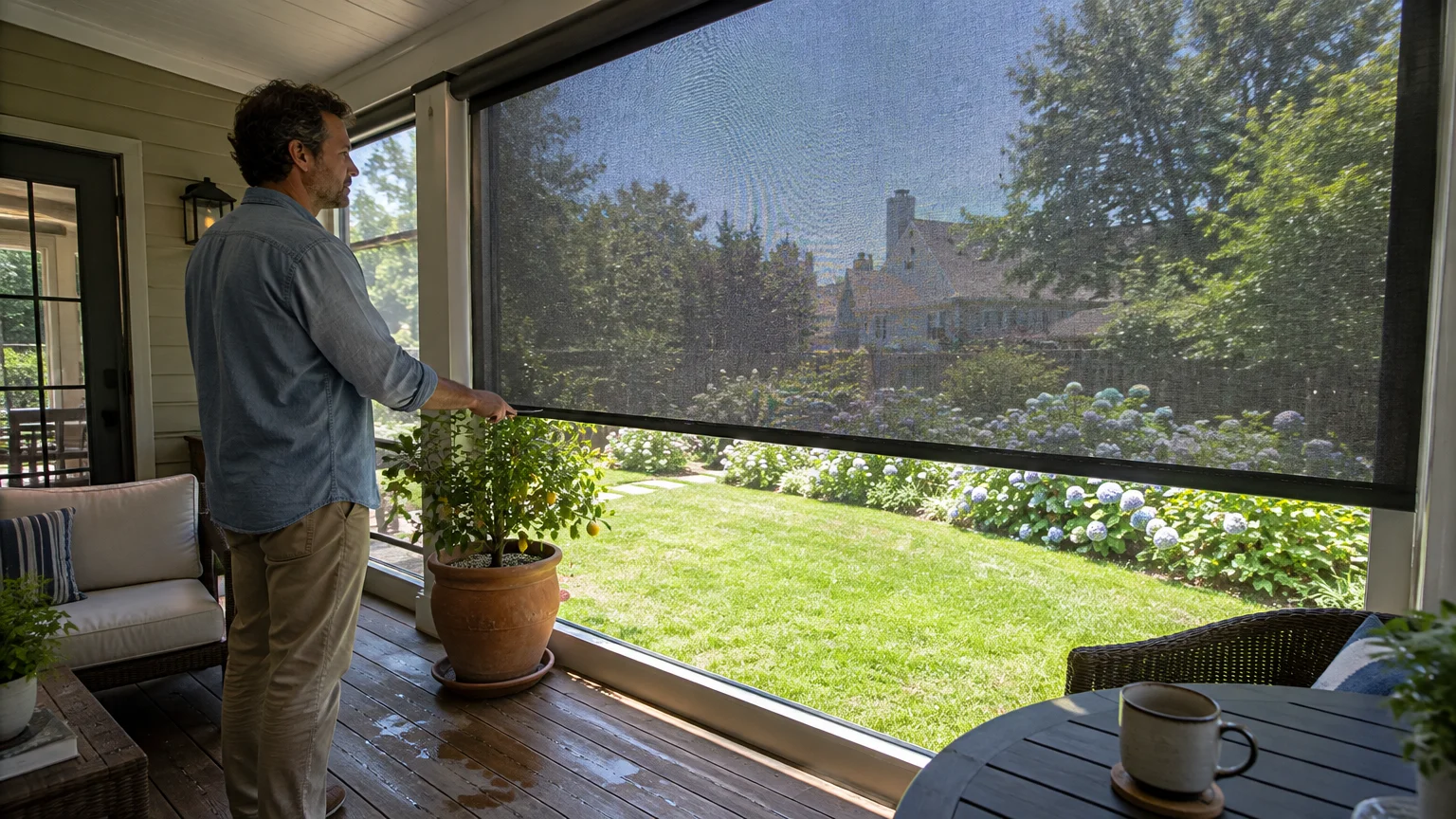
Exterior solar roller shades mount along porch perimeters, balcony beams, or covered deck ceilings. They establish crisp vertical boundaries that block intense glare while preserving your outward vista.
Woven PVC-coated polyester yarns filter the sun before radiation penetrates deep into your outdoor seating zone. You preserve panoramic views of your garden without squinting against brutal afternoon light.
These shades are an indispensable patio shade solution for west-facing exposures where low-angled sun overwhelms standard overhead covers. They cool ambient temperatures beneath covered verandas by several degrees.
Side-retention zip channels keep the fabric taut during sudden wind gusts, preventing annoying fabric flapping. Automated sensors can even lower the screens automatically when ambient sunlight peaks.
Selecting a dark screen fabric optimizes outward transparency, creating an optical illusion of clear glass. It lends your patio the serene exclusivity of a private interior solarium.
By deflecting solar heat before it reaches exterior windows, you simultaneously lower indoor air conditioning costs. It delivers quiet luxury through understated, functional engineering.
Trend #6: Wire-Hung Roman Canopy Drapes
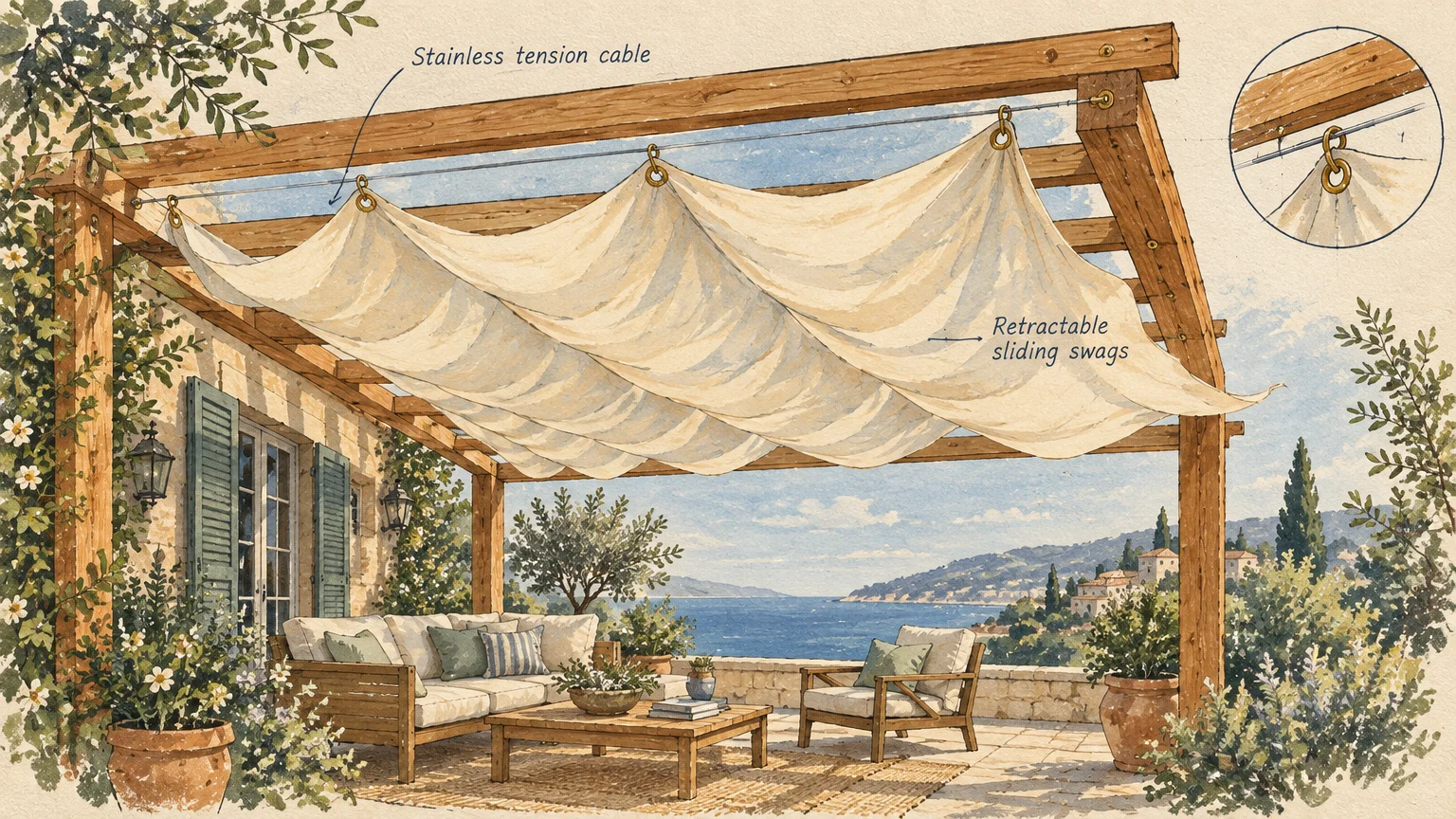
Wire-hung Roman canopies introduce romantic European provenance to existing deck joists and open trellis frameworks. Fabric panels glide smoothly along parallel aircraft-grade stainless steel cables suspended overhead.
When extended, the fabric forms soft undulating swags that introduce textural depth to rigid structural framing. You can retract them completely on cloud-covered afternoons to maximize natural sky exposure.
Because they affix with simple eyelet hardware, they represent a quintessential outdoor shade without renovation project. You upgrade an unshaded timber structure in an afternoon without invasive demolition.
Select lightweight outdoor linen blends or solution-dyed acrylics in warm ivory and terracotta. The billowy ripples soften industrial architecture and echo coastal Mediterranean villas.
Integrate weighted hem bars into the fabric leading edges to maintain graceful draping in breezy conditions. The soft folds catch evening landscape uplighting, creating an enchanting ambient glow.
This customizable pergola shade upgrade injects effortless tactile luxury into exposed structures. You gain bespoke sun control while celebrating classic architectural romance.
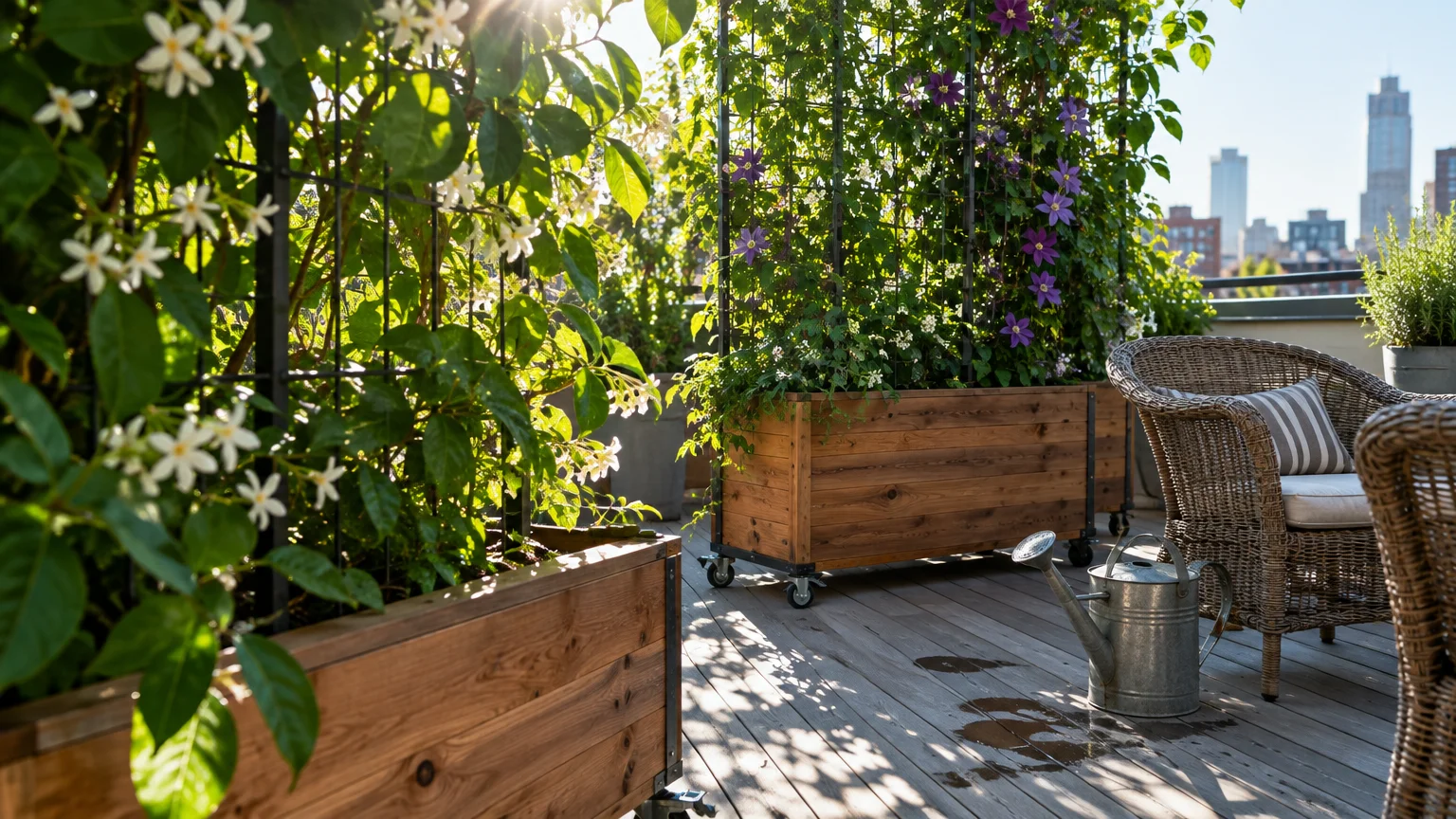
Trend #7: Living Green Canopy Screens and Mobile Trellises
Living botanical screens bring biophilic luxury and natural cooling to sun-drenched exterior decks. Dense foliage naturally consumes heat energy through evapotranspiration, reducing localized air temperatures faster than synthetic materials.
Plant vigorous, fragrant climbers like star jasmine, climbing hydrangea, or bougainvillea in oversized rolling planter boxes. These self-contained planters allow you to maneuver vertical plant walls wherever shade is needed most.
As the vines climb powder-coated wire grids, they create dappled light patterns that dance across deck flooring. The moving shadow play generates an innate sense of tranquility and seclusion.
This natural strategy provides effective backyard shade ideas without altering rooflines or violating local HOA structural rules. Mobile planter systems fall outside permanent building restrictions because they lack fixed footings.
Complement the leafy screen with potted dwarf citrus trees and olive varieties in aged terracotta vessels. The organic scent and rich verdant textures completely transport your outdoor dining area.
Over time, the lush greenery creates an acoustic buffer that softens neighborhood street noise. You cultivate an immersive, restorative sanctuary right outside your back door.
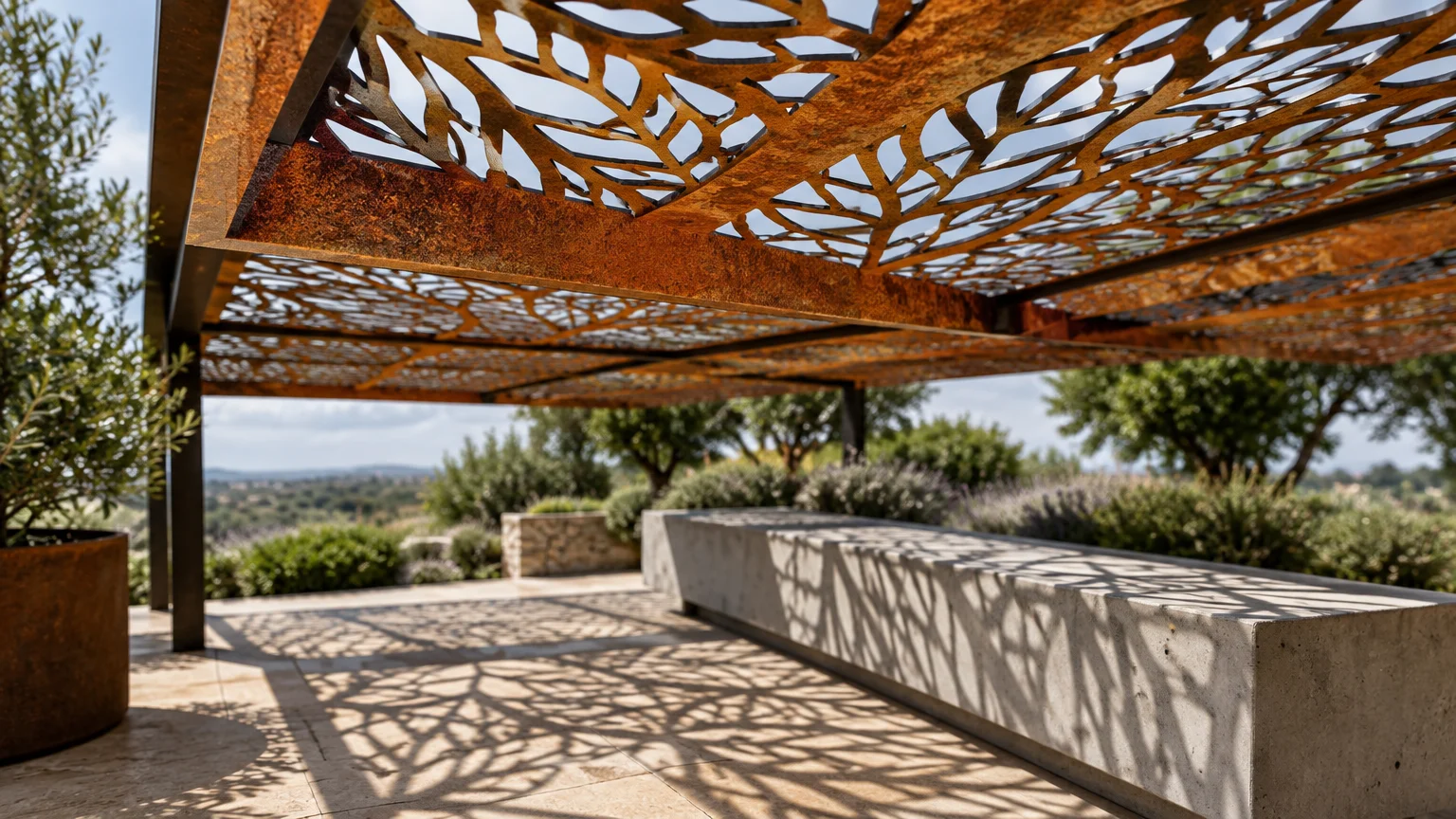
Trend #8: Decorative Laser-Cut Shade Panels
Laser-cut aluminum shade panels turn harsh sunlight into dynamic, patterned artwork across your terrace. Mounted horizontally atop existing pergola rafters, they filter direct sun while projecting intricate graphic shadows.
Marine-grade powder-coated aluminum panels resist corrosion, warping, and fading across decades of weathering. They require zero maintenance compared to traditional wood battens that demand annual staining.
Geometric motifs—such as Moroccan trellis work or mid-century hexagonal abstractions—impart an instant designer signature. You can match the pattern scale to your existing home architecture.
Beyond overhead shading, you can mount matching panels vertically as privacy screens against encroaching neighboring lots. They break forceful crosswinds into gentle breezes, elevating outdoor dining comfort.
Select a matte graphite or warm bronze finish to emphasize architectural precision. The interplay of sharp shadows and soft outdoor textiles yields an impeccably curated aesthetic.
Fastening these modular screens atop existing beams requires only simple brackets and screws. It delivers an avant-garde exterior makeover without structural alterations.
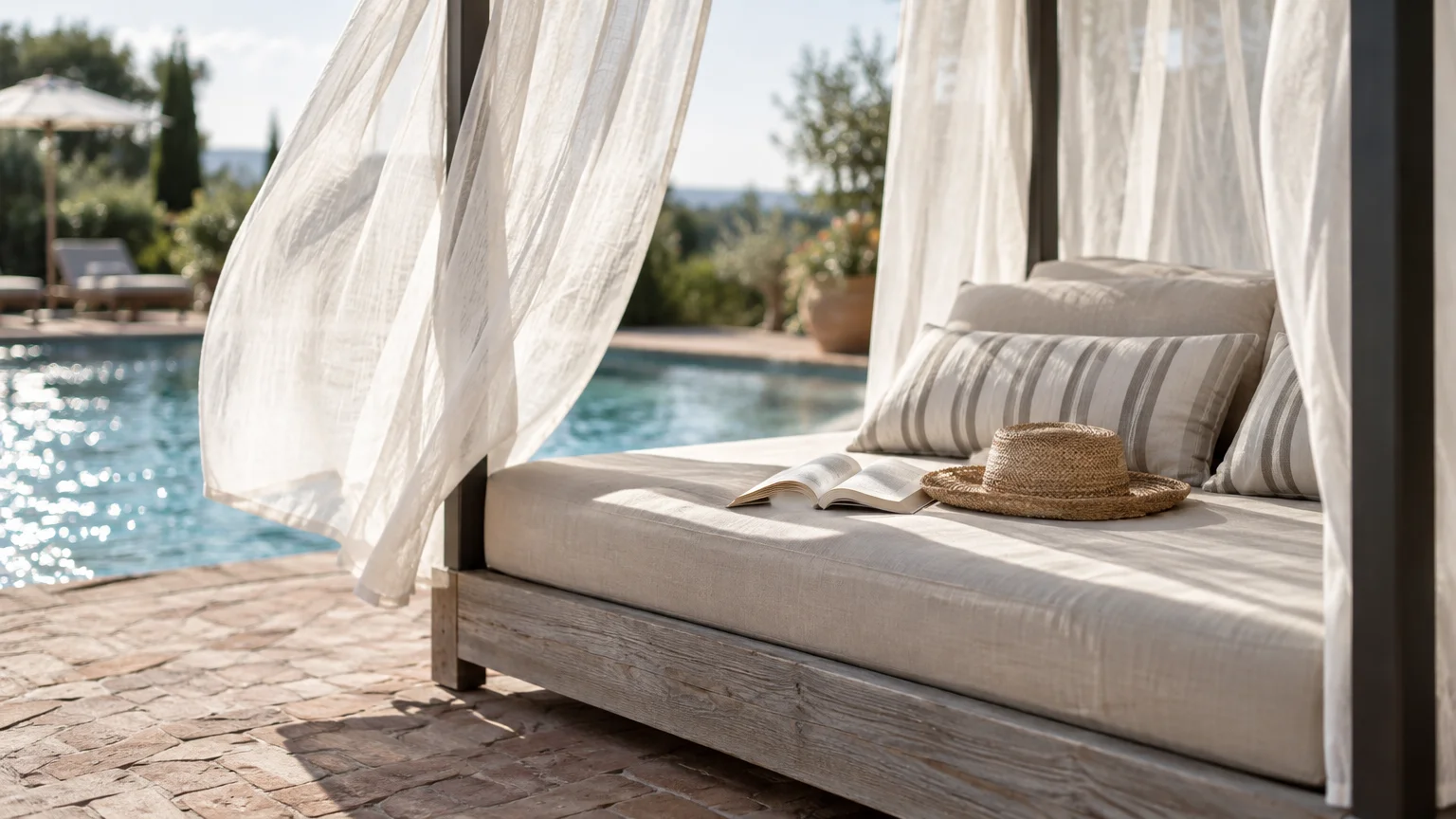
Trend #9: Freestanding Cabana Daybeds with Sheer Drapes
Freestanding cabana daybeds infuse residential landscapes with the quiet luxury of a five-star resort. These self-supporting furniture structures combine deep upholstered lounging surfaces with an integrated four-post canopy.
Flowing sheer side curtains adjust along hidden rods, offering personalized light filtration and thermal seclusion. You pull the curtains closed during high noon or sweep them back for morning sunshine.
Because these cabanas classify as patio furniture, they require neither architectural permits nor complex concrete foundations. You establish an intimate, shaded sanctuary on a lawn, paver patio, or poolside deck.
Pair weather-resistant teak or powder-coated aluminum framing with plush cushions wrapped in high-performance reticulated foam. Water passes straight through, keeping your shaded retreat ready for immediate use.
Dress the retreat in understated monochromatic palettes, pairing sand cushions with bone sheer curtains. The look exudes quiet sophistication while offering deep functional respite from summer heat.
Add textured lumbar pillows and a lightweight cashmere throw for cool summer twilights. It provides an indulgent haven for afternoon reading and weekend contemplation.
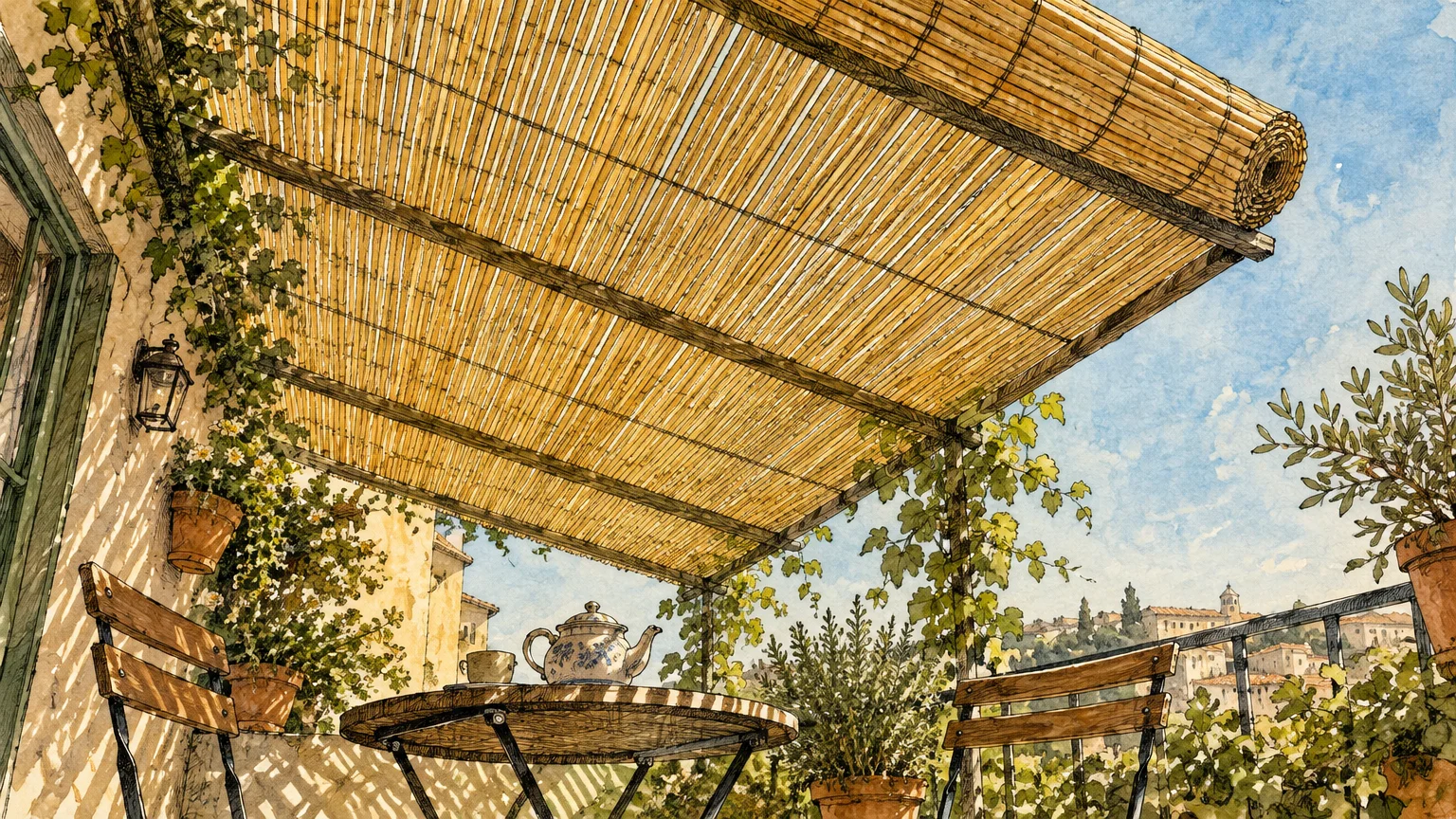
Trend #10: Natural Bamboo and Reed Slat Screens
Natural reed, peeled bamboo, and eucalyptus slat rolls introduce warm tactile organicism to outdoor pergolas. Fastened overhead with heavy-duty exterior zip ties or staples, they deliver instant rustic shade.
The microscopic variations in bamboo stalks diffuse harsh direct sunlight into warm, amber-toned ambient luminescence. Your patio gains a relaxed, bohemian elegance inspired by Balinese and Japanese sanctuaries.
This budget-friendly installation requires no structural modifications or specialized woodworking skills. A single roll can cover an entire patio pergola within a matter of hours.
The breathable gaps between individual reeds allow rising warm air to escape freely toward the sky. This constant convective ventilation keeps the living space beneath remarkably breezy and comfortable.
Layer natural fiber flat-weave rugs and sculptural stoneware planters beneath the canopy to complete the tactile journey. The organic materials create a seamless dialogue between your home interior and the garden.
Reed screens weather gracefully into a soft silver-grey patina over multiple seasons. They offer an earthy, environmentally conscious shade upgrade for bohemian and rustic modern homes.
Trend #11: Wall-Mounted Articulated Shade Arms
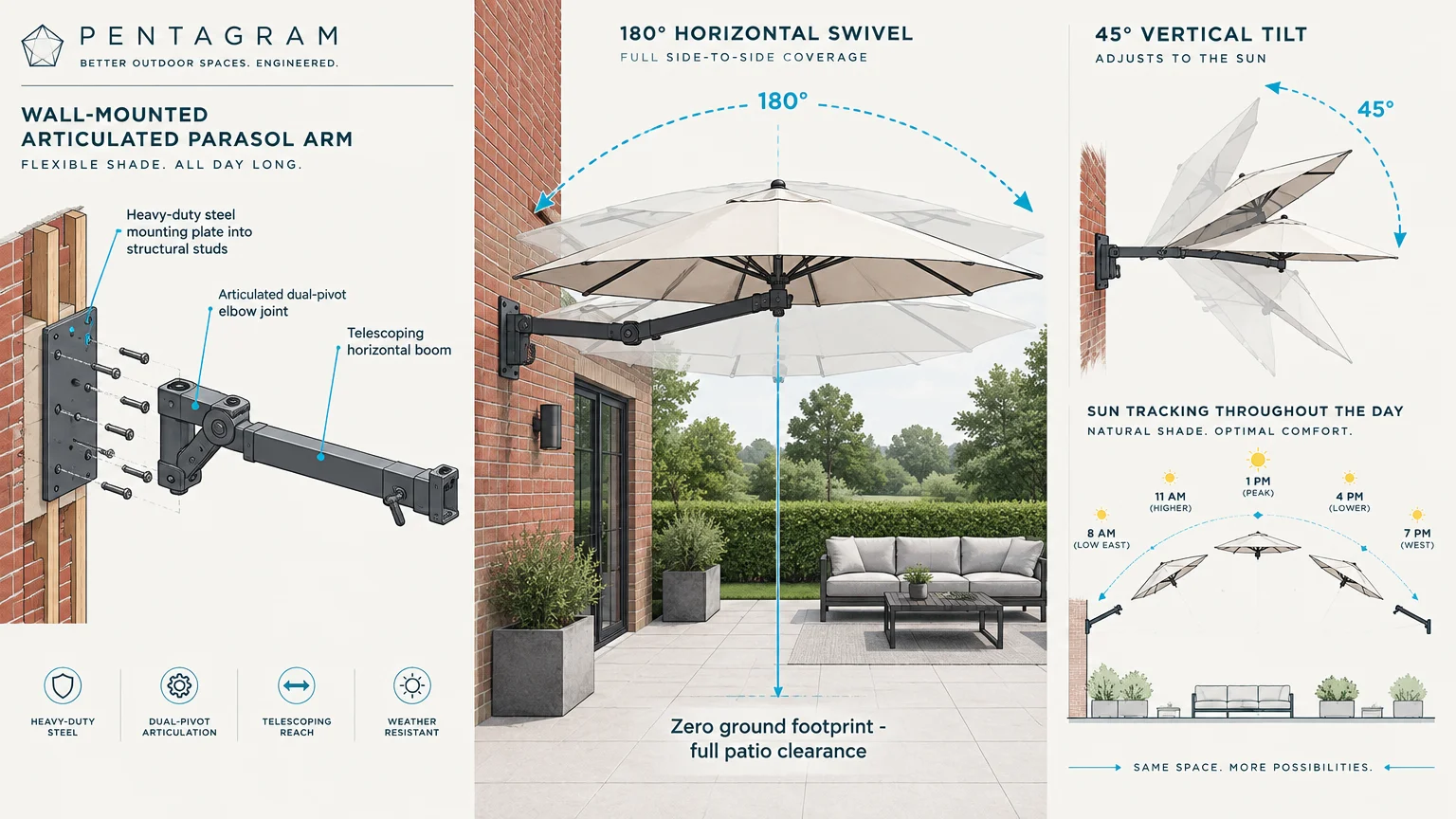
Wall-mounted articulated shade arms provide surgical sun protection for compact urban terraces and courtyard patios. Fixed directly to exterior structural brick or timber framing, the telescoping arm pivots freely on a heavy-duty bracket.
You can angle the canopy horizontally, vertically, or diagonally to track low winter rays or oppressive overhead sun. When folded against the facade, the entire assembly consumes virtually zero ground space.
Under the International Residential Code, attachments projecting more than 54 inches often necessitate permits or strict HOA architectural review. Keep your mountings compact and compliant to ensure smooth exterior enhancement without regulatory hurdles.
These installations shine over compact outdoor dining nooks where a traditional umbrella base would crowd dining chairs. The elevated arm leaves your entire patio footprint uncluttered and functional.
Select minimalist black hardware paired with a neutral linen canopy to create a graphic architectural statement. It blends high-performance engineering with the subtle sophistication of contemporary loft design.
When winter arrives, the fabric canopy detaches in seconds for clean seasonal storage. It remains the ultimate micro-footprint shade upgrade for refined metropolitan spaces.
The Big Picture: Weaving These Trends into Your Home
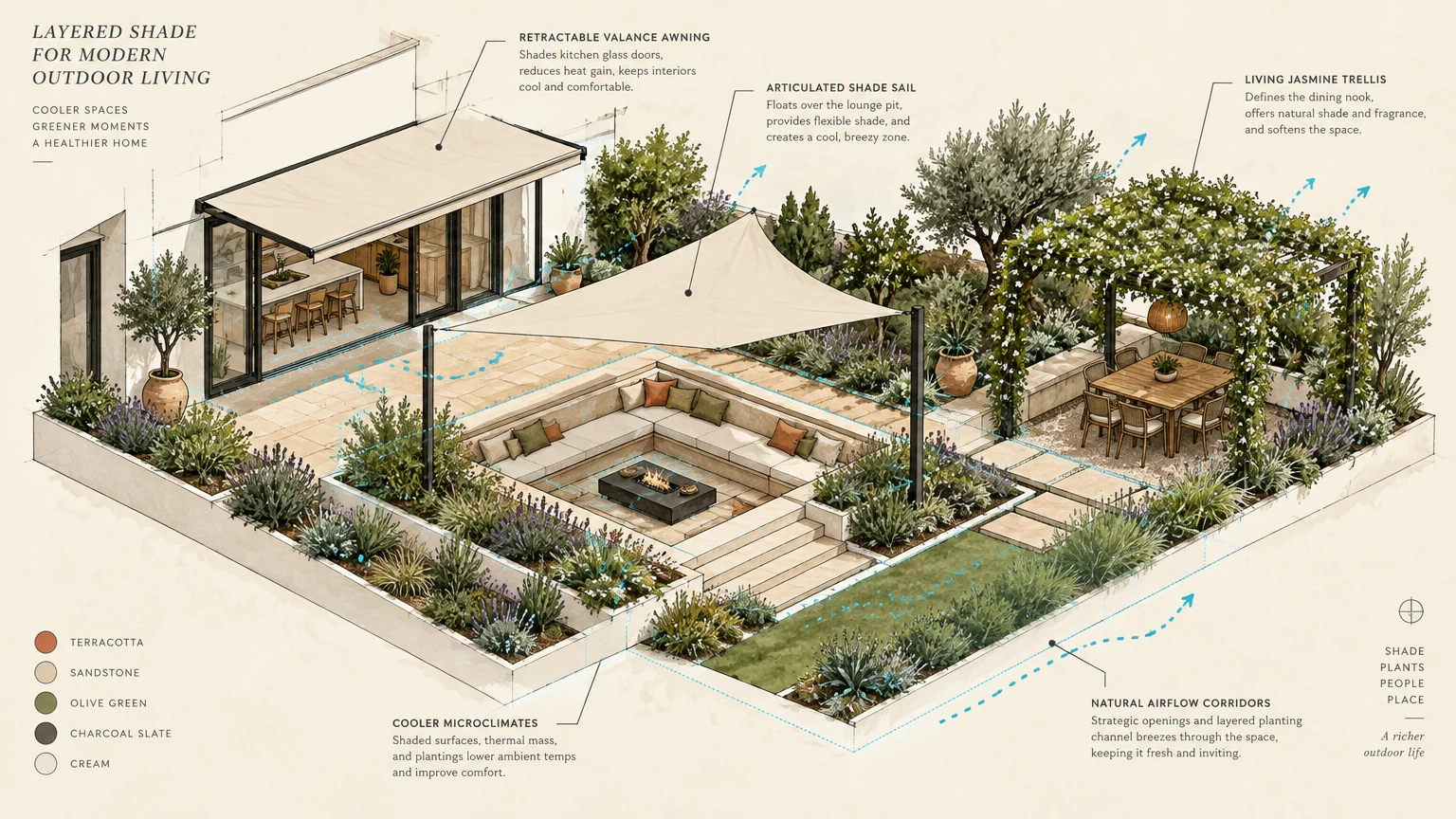
Executing exterior shade upgrades requires a holistic approach that bridges indoor style with outdoor architecture. Rather than treating shade as an afterthought, view each canopy or screen as an extension of your interior floor plan.
Begin by mapping your property’s daily solar trajectory before investing in specific shading hardware. Identify exactly when and where glaring heat compromises your enjoyment of the patio.
Harmonize your shade structures with your existing exterior palette by echoing siding trim, window frames, and masonry. Neutral tones such as taupe, slate, and bone offer superior visual longevity compared to fleeting saturated trends.
Layer diverse textures—such as woven fabrics, powder-coated metals, and leafy vines—to build visual dimension. This curated layering transforms functional thermal protection into an inviting open-air lounge.
Incorporate modular solutions that evolve alongside your lifestyle and changing seasonal entertaining needs. By sidestepping invasive renovations, you retain total creative autonomy over your outdoor spaces.
For the latest color forecasts, consult industry leaders like Pantone and paint companies like Benjamin Moore. For professional design standards, refer to the American Society of Interior Designers (ASID).
Disclaimer: This article reflects design trend analysis and predictions. Personal taste and timeless design principles should always guide your decorating choices.
Frequently Asked Questions
Do non-permanent exterior shade structures require municipal building permits?
Most freestanding temporary shade structures under 120 to 200 square feet do not require permits under the International Residential Code. However, permanent awnings projecting more than 54 inches or attached framing may trigger local inspections and HOA approvals.
Always verify municipal setback requirements and neighborhood covenants before installing attached hardware into exterior load-bearing walls. Choosing freestanding alternatives provides an effortless path around restrictive red tape.
How do different shade fabric materials affect heat buildup underneath?
Breathable fabrics like high-density polyethylene (HDPE) shade cloth allow trapped heat to vent upward through micro-pores. This convective airflow prevents heat domes from developing over your outdoor living area.
Non-breathable vinyl fabrics trap rising hot air unless paired with open side ventilation or elevated rooftop peaks. For maximum thermal cooling, prioritize open-weave synthetic textiles or natural woven reeds.
Can non-renovation exterior shade solutions withstand severe wind and weather?
Tensioned shade sails, retractable awnings, and cantilever umbrellas should be retracted or dismounted during winds exceeding 35 miles per hour. Heavy-duty aluminum louvered pergolas remain durable year-round when louvers stay rotated open during snowfalls.
Investing in marine-grade 316 stainless steel turnbuckles and automated wind sensors prevents structural damage during surprise summer squalls. Simple preventative care ensures your shade fixtures perform reliably for years.
What canopy colors provide optimal cooling without making adjacent interiors too dark?
Mid-tone neutrals like warm grey, taupe, and woven sand strike the ideal balance between solar reflectance and light transmission. They diffuse blinding glare while allowing soft ambient illumination to filter indoors.
Dark charcoal canopies absorb radiant heat effectively while maintaining outward view clarity on vertical solar screens. Brilliant white fabrics reflect the most solar radiation but can create uncomfortable reflective glare on bright afternoons.