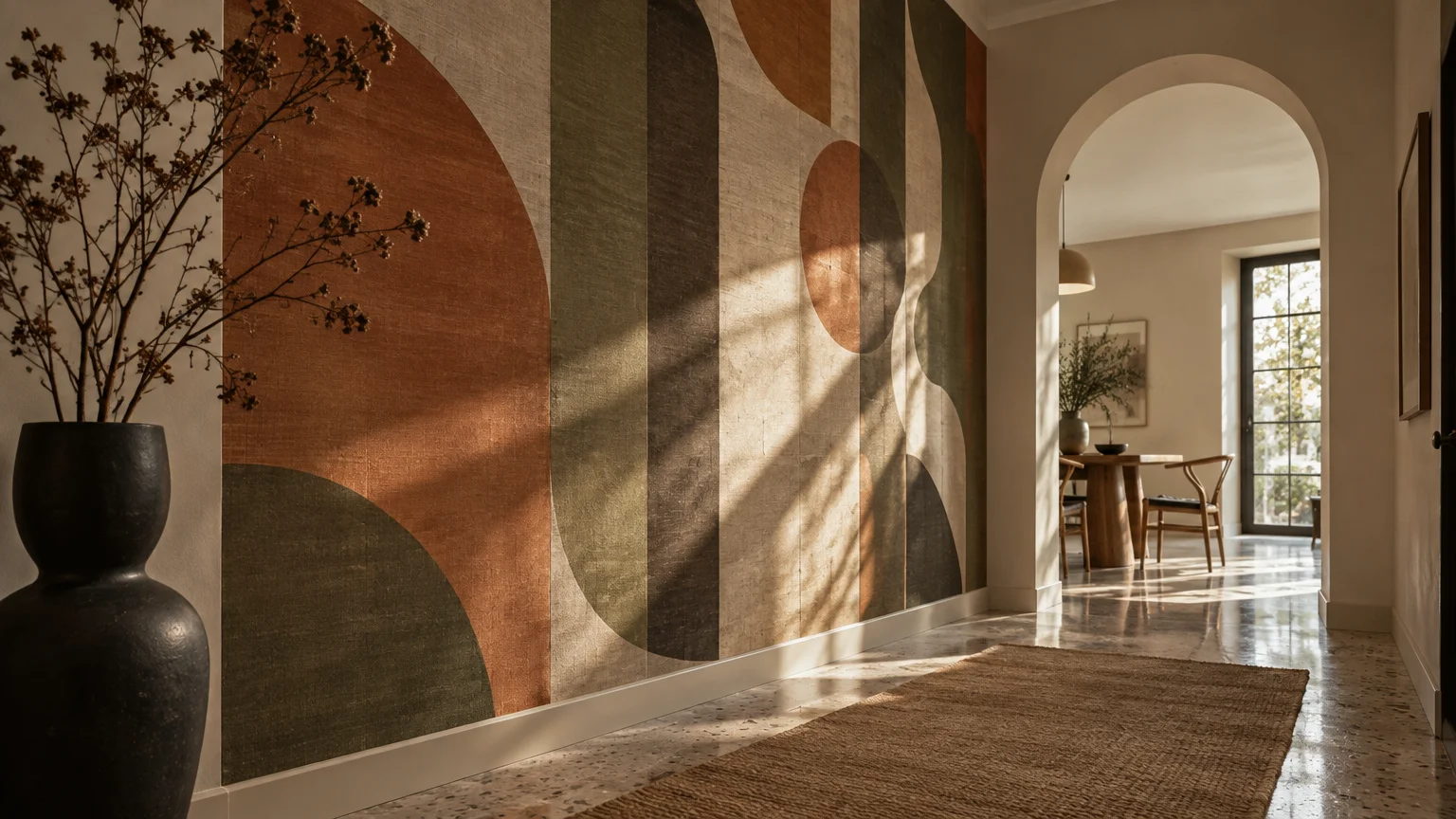
Plain drywall drains the architectural life from modern living spaces; pattern immediately introduces depth, texture, and personalized distinction. Transforming your room begins when you move past basic monochromatic paint to embrace intentional surface styling.
Dynamic motifs across your home decor walls anchor open layouts and establish captivating focal points effortlessly. Modern design balances dramatic expression with functional poise to redefine everyday environments.
Here are twelve transformative wall pattern designs that will elevate your interior architecture and banish sterile rooms. Explore these sophisticated concepts to discover the ultimate accent wall ideas for your personal space.
Trend #1: Biophilic Murals and Botanical Reliefs
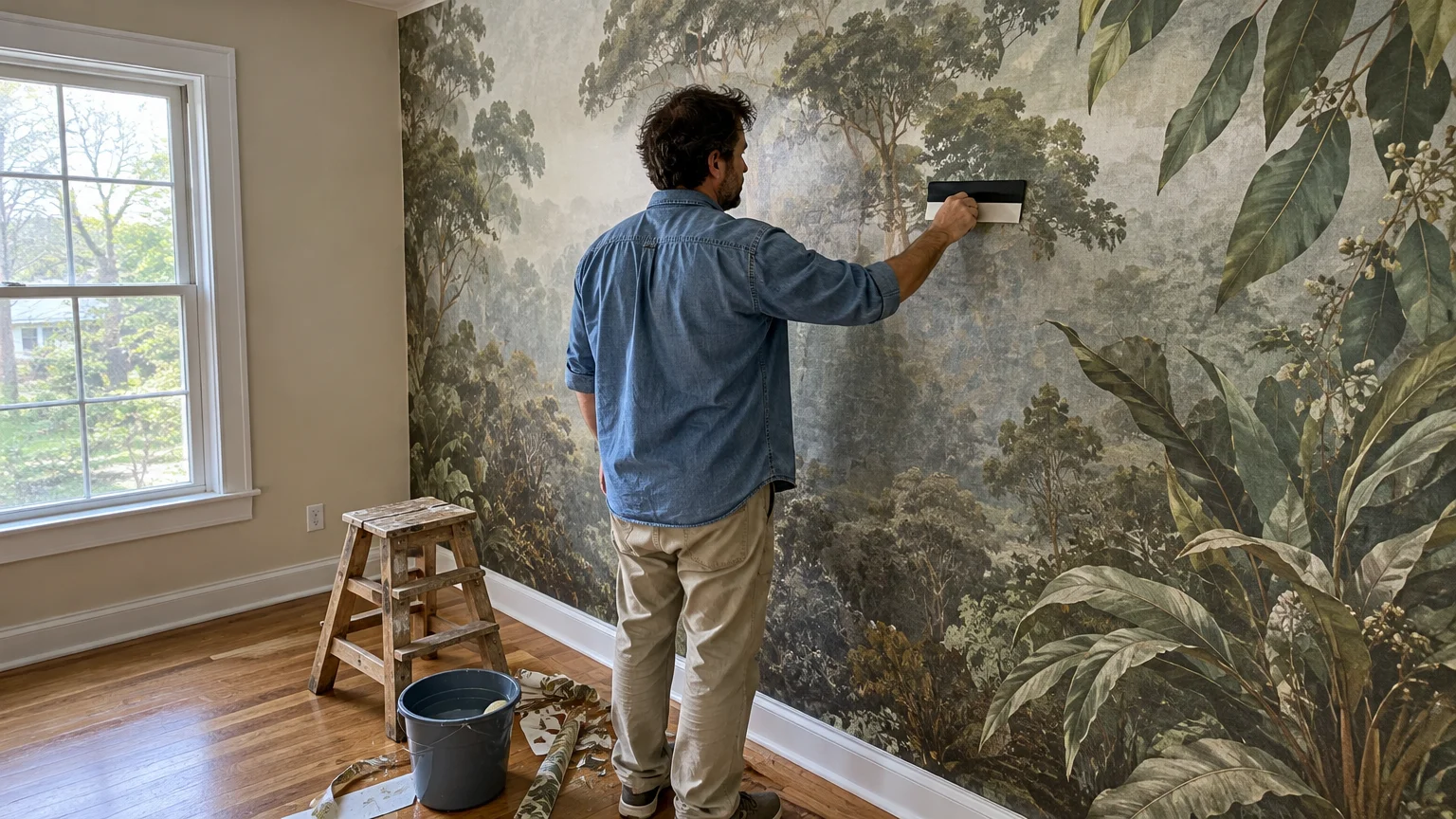
Modern biophilic design extends far past simple house plants into immersive, large-scale botanical murals. These artistic compositions envelop your vertical surfaces in lush foliage, misted tree canopies, and macro-scale floral silhouettes.
Instead of repetitive vintage repeats, choose continuous scenic panoramas that treat your space as an organic conservatory. This treatment dissolves rigid boundaries, expanding compact dining rooms or executive home studies with poetic grandeur.
Pair these sprawling wallpaper ideas with tactile linen upholstery, raw oak case goods, and brushed bronze hardware. The organic dialogue softens sharp contemporary architecture, grounding modern rooms in calming natural provenance.
For a sophisticated atmosphere, specify desaturated moss greens, deep forest umber, and muted eucalyptus tones over neon shades. Matte paper or woven grasscloth substrates lend authentic depth to the detailed illustrative artwork.
Install these nature-inspired surfaces along the primary sightline visible upon entering the room. This strategic placement commands immediate attention while preserving visual balance throughout your adjoining living areas.
Trend #2: Oversized Checkerboard and Broken Plaid Geometry
Classic checkerboards have surged beyond historic entryway floors directly onto prominent living room surfaces. Today’s elevated iterations abandon clinical black-and-white grids in favor of nuanced earth tones and asymmetric proportions.
You can execute these dynamic wall paint patterns using premium painter’s tape and low-sheen eggshell formulas. Alternating tones like warm terracotta, olive green, and sandy linen establish rich character without visual chaos.
Designers frequently deploy staggered or broken plaid configurations to disrupt predictable symmetry in casual entertaining spaces. This subtle deconstruction feels both architecturally grounded and rebelliously fresh in urban apartments.
Balance this high-order geometry with curvy mid-century seating and rounded travertine tables. The interplay between rigid lines and soft silhouettes prevents the surrounding atmosphere from feeling stiff.
When painting the grid, always seal your tape edge with the underlying base color first. This professional trade technique prevents pigment bleed, ensuring razor-sharp edges every single time.
Trend #3: Fluted Architectural Slatting and Dimensional Relief
When flat wall pattern designs fail to fulfill your sensory expectations, three-dimensional fluting introduces authentic shadow play. Thin acoustic timber slats or sculpted plaster profiles transform static surfaces into tactile, rhythmic architectural features.
This structural approach establishes quiet luxury through natural material richness rather than distracting high-contrast graphics. Installing vertical ribs also draws the gaze skyward, significantly increasing the perceived ceiling height of your room.
Place fluted acoustic paneling behind media consoles or along primary bedroom headboard walls to dampen sound reverberation. You achieve both acoustical performance and bespoke craftsmanship in a single sophisticated installation.
Finish your woodwork with warm walnut oil, white oak wax, or monochromatic paint matching the trim. Integrating concealed indirect LED channel lighting at the ceiling perimeter amplifies every subtle vertical shadow.
For high-moisture spaces like powder rooms, select water-resistant polyurethane moldings instead of raw timber. They provide identical visual depth while resisting humidity-induced warping over time.
Trend #4: Neo-Classical Trompe L’Oeil and Paneling Illusions
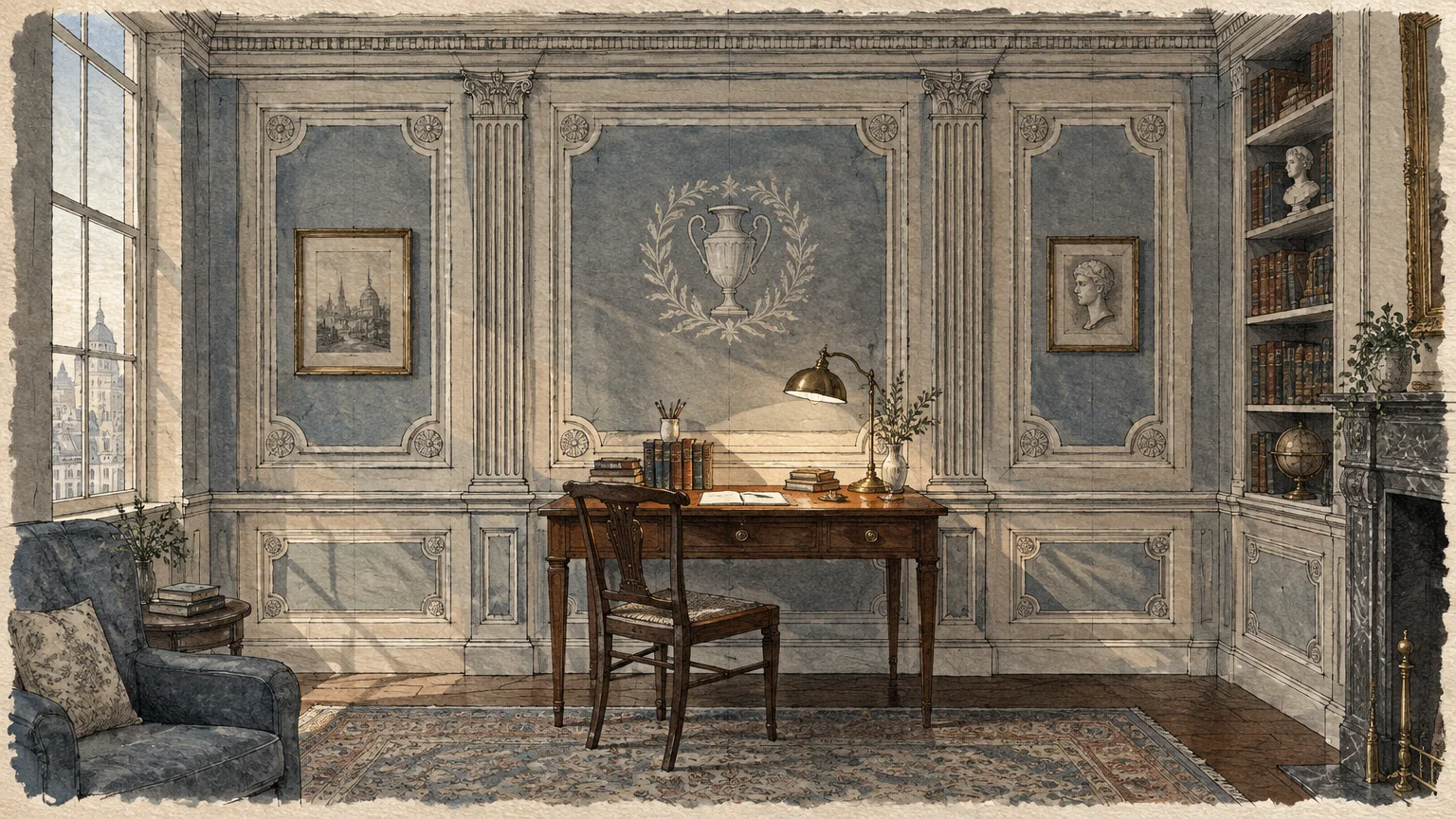
Contemporary trompe l’oeil wallpaper ideas deliver historical plaster mouldings, coffered niches, and arched alcoves without custom millwork expenses. These printed illusions trick the eye, creating architectural depth where only flat drywall exists.
Modern renditions celebrate clean perspective lines and refined neoclassical symmetry rendered in monochromatic stone and chalk palettes. The technique brings architectural provenance to newly constructed properties that otherwise lack period detailing.
Apply this sophisticated finish inside compact powder rooms, formal dining niches, or narrow transition corridors. The perceived dimensionality opens tight square footage while showcasing elevated decorative intelligence.
Layer authentic antique gilded mirrors and sculptural minimalist sconces directly over the printed panel motifs. This deliberate friction between vintage illusion and authentic three-dimensional decor creates captivating visual intrigue.
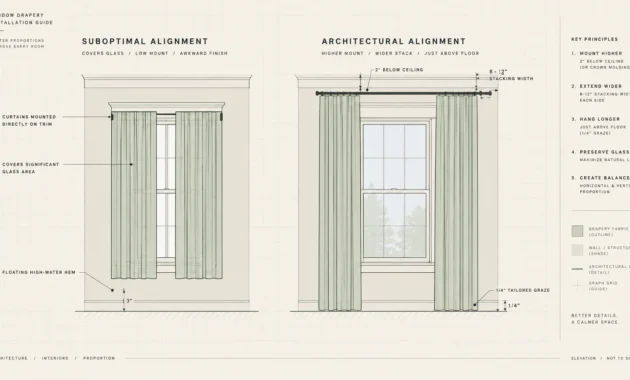
Keep flanking drapery simple and tailored to let the architectural illusion command primary focus. Solid Belgian linen panels in quiet neutral tones frame the walls without competing for attention.
Trend #5: Saturated Color Blocking and Curvilinear Arches
Architectural color blocking utilizes pigmented geometry to zone open-concept layouts without erecting structural partition walls. Sweeping hand-painted arches and overlapping angular shapes guide movement and define intentional functional spaces.
Paint a deep ochre arch behind your entryway console or define a dedicated reading nook with rich cobalt. These expressive wall paint patterns provide immediate focal points while keeping investment costs remarkably modest.
To execute this concept cleanly, choose premium flat paints that eliminate glare across adjoining pigment thresholds. Use flexible painter’s tape or a pivoting string compass to chart precise, crisp curvilinear perimeters.
Ensure your chosen hues share identical warm undertones to maintain cohesive visual harmony across the perimeter. Accentuate the graphic shapes by matching low-profile floating shelving directly to the background wall color.
Restrain your palette to three coordinating hues within any single sightline. Overloading a room with contrasting pigments can quickly turn architectural sophistication into visual noise.
Trend #6: Folkloric Woodblock Prints and Chinoiserie Panels
The contemporary appetite for storied, artisanal finishes has renewed enthusiasm for traditional block-printed and Chinoiserie surfaces. These heritage wall pattern designs introduce artisan character through detailed flora, fauna, and historic landscapes.
Modern styling avoids fussy traditionalism by installing these intricate repeats inside minimalist, edited architectural settings. Juxtaposing romantic block-print patterns against monolithic steel hardware and industrial concrete establishes striking aesthetic balance.
Incorporate these expressive wallpapers across home decor walls in guest suites, private libraries, or moody jewel-box lavatories. The ornate, fine-lined storytelling provides continuous entertainment and intimate domestic warmth.
For a serene mood, select two-tone sepia prints, soft celadon washes, or chalky slate backgrounds. Let the patterned backdrop dictate secondary fabric choices by pulling accent shades into your drapery and cushions.
Frame individual scenic wallpaper drops inside pre-existing wall moulding panels to create bespoke framed art murals. This restrained approach delivers couture style without overwhelming your entire room footprint.
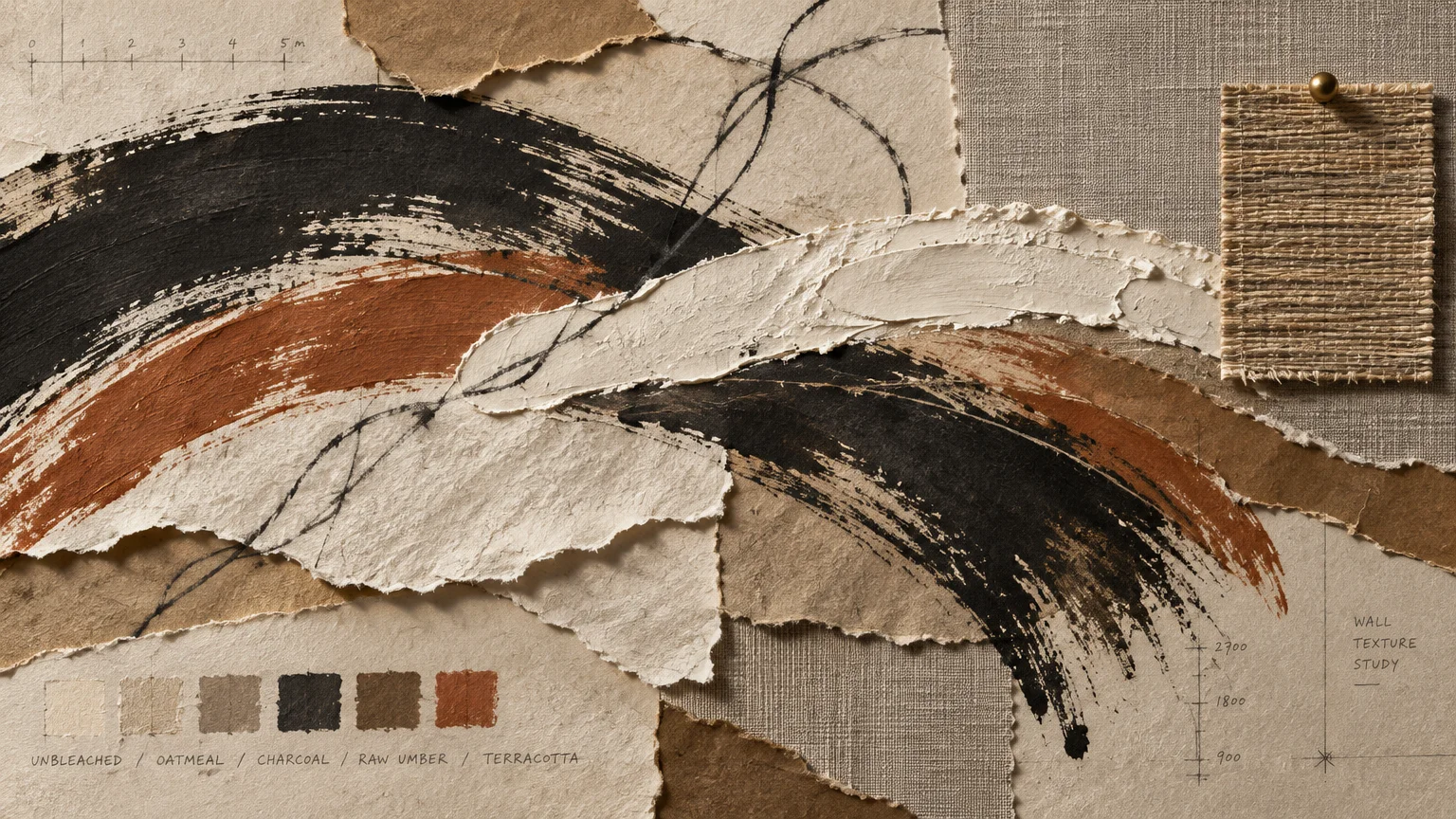
Trend #7: Gestural Brushstrokes and Abstract Linework
Break away from rigid geometric repetition by painting spontaneous, gestural abstract brushwork patterns across your focal surface. Inspired by mid-century action painters, these expressive strokes celebrate human touch, fluidity, and deliberate imperfection.
You can implement these wall paint patterns using wide artist brushes and diluted mineral pigments directly on matte drywall. Sweeping arcs, imperfect squiggles, and textured slashes inject irrepressible vitality into casual family lounges.
This approach embraces the Japanese philosophy of wabi-sabi, finding enduring beauty in organic asymmetry and spontaneous craft. Because no two strokes align perfectly, your room acquires a custom, gallery-worthy installation.
Ground dynamic gestural murals with substantial, tailored furniture pieces crafted from boucle, matte leather, and honed stone. Controlled furnishing shapes anchor the surrounding kinetic wall energy, preventing decorative overwhelm.
Practice your brush technique on scrap cardboard sheets before committing paint directly to the wall. Mastering your paint dilution and wrist movement beforehand ensures confidence and fluid execution.
Trend #8: Ultra-Fine Micro-Stripes and Barcode Bands
Broad awning stripes have yielded to tightly calibrated pinstripes, hairline vertical grids, and asymmetrical barcode banding. These refined wall pattern designs deliver subtle optical vibration without dominating your existing art collection.
Applied in high-contrast pairings like espresso and ivory, micro-stripes impart crisp sartorial elegance akin to bespoke tailoring. From afar, the narrow bands soften into a cohesive, textured wash of color that flatters subtle lighting.
For seamless results, install finely striped non-woven wallcoverings rather than laboring over hundreds of hand-taped paint lines. Precision manufacturing ensures unwavering plumb alignment from ceiling baseboards to crown moldings.
This motif serves as an exquisite canvas for curated salon-style gallery arrangements and floating sculptural consoles. The vertical rhythm structures the wall space without competing against your hung artwork.
In rooms with lower ceilings, run the pinstripes strictly vertical to elevate the room volume instantly. Horizontal orientations produce a wider, grounding effect ideal for long, narrow hallways.
Trend #9: Textured Mineral Finishes and Troweled Grooves
Elevate beyond two-dimensional wallpaper ideas by integrating tactile Roman clay, limewash, and troweled Venetian plaster finishes. Artisans are carving subtle geometric flutes, raked combing, and linear striations directly into wet plaster coats.
These sculptural treatments react dynamically to shifting natural sunlight, evolving from dawn until dusk across your living spaces. The resulting surface provides organic movement and quiet luxury that flat synthetic paints simply cannot replicate.
Choose warm mineral pigments such as travertine beige, raw terracotta, crushed chalk, and pale volcanic ash. These earthen compounds release no synthetic volatile chemicals, improving indoor air quality alongside architectural beauty.
Contrast these raw, combed plaster accents with ultra-sleek polished metals like brushed chrome or blackened steel. The deliberate tension between hand-troweled earthen texture and cold industrial finishes defines contemporary interior elegance.
Seal high-touch plaster areas with natural beeswax emulsion to protect the delicate relief from scuffs and hand oil. The wax imparts an exquisite, silky satin sheen without altering underlying mineral colors.

Trend #10: Liquid Agate and High-Gloss Marbled Veining
Swirling liquid marble and organic agate patterns bring the geological grandeur of monumental stone slabs to your accent wall ideas. These fluid patterns ripple with undulating ribbons of quartz, malachite, and crystalline veining.
Digitally printed silk wallcoverings and custom hand-painted hydro-dipped panels capture immense movement across expansive feature surfaces. A single marbled accent wall behind a minimalist bed frame instantly elevates the entire suite.
Apply a clear lacquer or semi-gloss glaze coat over faux stone surfaces to emulate polished quarry slabs. The reflective gloss bounces interior illumination, lending luminous richness to dramatic dining areas or cocktail lounges.
Keep accompanying decorative trim and furnishings clean-lined to avoid overwhelming the delicate marbled veining. Monolithic velvet seating, smoked glass tables, and understated lighting elements provide ideal complementary counterpoints.
Limit liquid stone patterns to a single focal plane rather than wrapping all four walls completely. High-movement stone patterning requires restful negative space around it to maintain high-end sophistication.
Trend #11: Sartorial Suiting Patterns and Monochromatic Herringbone
Menswear-inspired patterns—including refined herringbone, micro-houndstooth, and Prince of Wales checks—bring tailored sophistication indoors. These heritage textiles translate seamlessly onto home decor walls through tactile grasscloths, wool felts, and textured vinyls.
Monochromatic iterations in charcoal, slate, and camel offer refined understated character ideal for home offices and libraries. The disciplined symmetry creates an atmosphere of intellectual calm and enduring stability throughout your study.
You can also replicate herringbone patterns with stencil applications or dimensional wood batten trim painted in single-tone hues. The relief casting shadows produces textural interest while maintaining serene color uniformity across the room.
Combine these tailored wall surfaces with cognac saddle leather, dark bronze hardware, and rich walnut furnishings. The timeless sartorial dialogue produces an impeccably styled sanctuary steeped in masculine elegance.
If installing fabric wallcoverings, ensure professional wall prep includes a heavy-duty mildew-resistant primer. Proper wall sizing ensures heavy textiles hang flat without bubbling or seam separation over time.
Trend #12: Terrazzo Aggregates and Inlaid Stone Geometrics
Terrazzo has escaped its traditional mid-century flooring roots to emerge as an exhilarating, composite decorative wall motif. Patterned wallpaper ideas and custom aggregate panels showcase suspended stone chips, colored quartz, and fractured marble shards.
Modern aggregate patterns experiment with scaled-up fragments, energetic color pairings, and irregular, asymmetrical mosaic arrangements. Incorporating terrazzo accents infuses casual kitchens, powder baths, and breakfast nooks with playful Mediterranean vitality.
The energetic speckled backdrop conceals minor surface imperfections while providing a remarkably resilient decorative focal point. Its organic stone cadence bridges the gap between structured geometric grids and natural freeform textures.
Pair energetic terrazzo patterns with crisp white marble countertops, warm brass tapware, and fluted pastel cabinetry. The harmonious mix of colors in the stone fragments offers endless options for pulling cohesive accent tones.
Choose aggregate scales that match your room proportions; larger flecks flatter open, expansive rooms. Micro-terrazzo flecks perform best across compact splashbacks or narrow alcove walls.
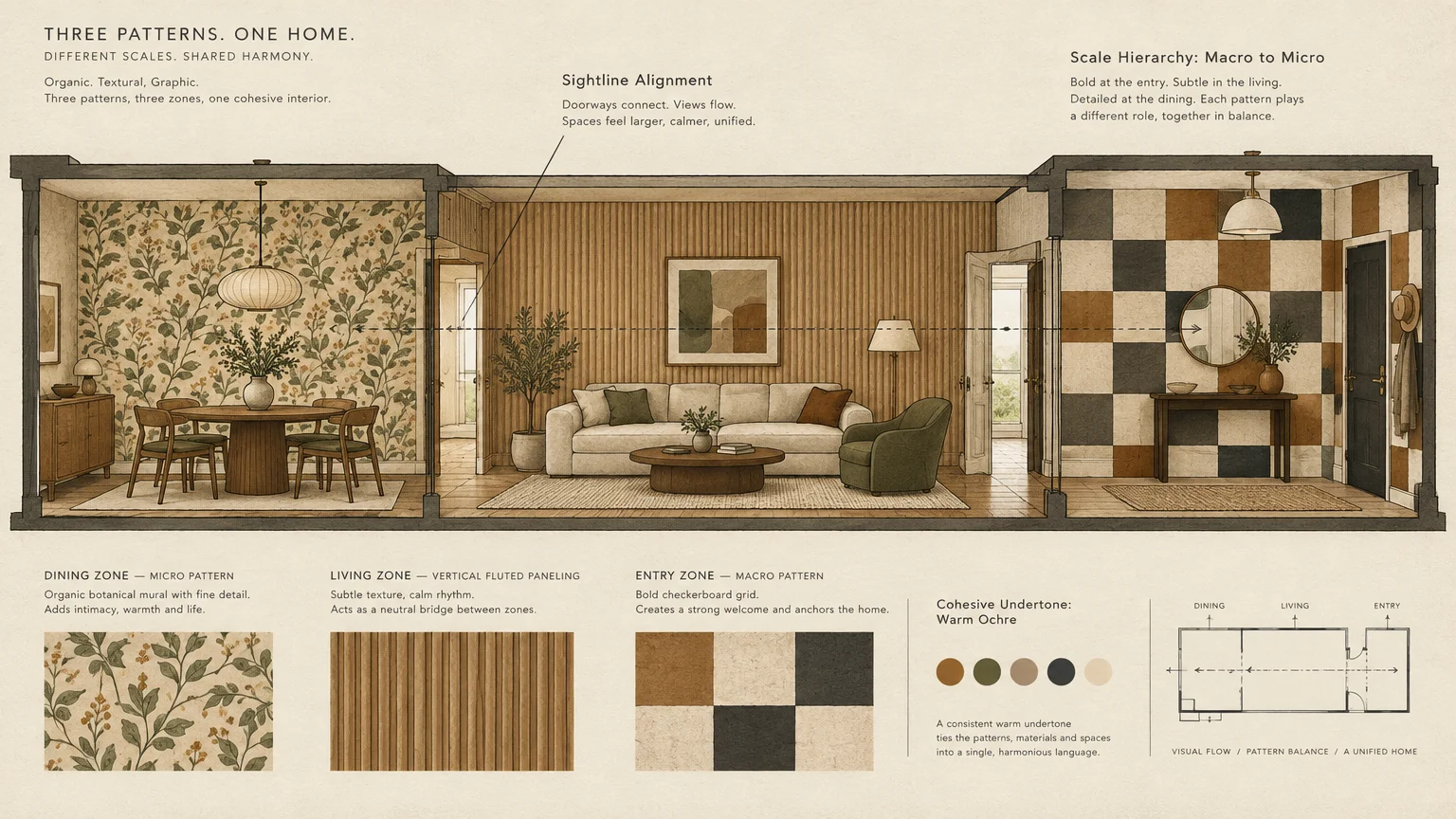
The Big Picture: Weaving These Trends into Your Home
Selecting the right pattern requires analyzing your room’s natural lighting, spatial volume, and existing architectural trim. High-contrast motifs demand ample natural light, while moody, textured plaster flourishes in softly lit, intimate environments.
Consider sightlines from adjacent spaces before committing to bold accent wall ideas. A dramatic pattern should act as an intentional visual anchor rather than competing against adjoining room palettes.
Remember that scale dictates psychological impact across any interior envelope. Expansive, oversized prints create calm airiness in grand spaces, while delicate micro-patterns offer cocooning warmth in compact powder rooms.
Always order physical wallpaper swatches and paint sample boards to observe undertones across different times of day. Testing finishes under artificial evening illumination guarantees your chosen design maintains its intended allure.
Balance your patterned feature wall by leaving surrounding surfaces clean and uncluttered. Allowing negative space lets your statement pattern breathe, transforming an ordinary room into a curated sanctuary.
For the latest color forecasts, consult industry leaders like Pantone and paint companies like Benjamin Moore. For professional design standards, refer to the American Society of Interior Designers (ASID).
Frequently Asked Questions
How do I choose between wallpaper and painted wall patterns?
Wallpaper provides precise intricacy, metallic sheens, and specialty textures like grasscloth that paint cannot reproduce. Conversely, painted patterns offer affordable customization, simpler repair options, and complete freedom to adjust pigment tones.
Can bold wall patterns work in small rooms?
Yes, wrapping a compact powder room or vestibule in a bold pattern creates a striking, jewel-box sensation. Bold designs actually distract the eye from tight boundaries, making small spaces feel intentional and expansive.
How do I prevent pattern clashes with existing furniture?
Balance busy vertical surfaces by grounding the room with solid-colored upholstery, neutral rugs, and unadorned drapery. Pull one subtle background hue from the wall pattern into your accent pillows for effortless harmony.
Which finish is best for painted wall patterns?
Matte and eggshell sheens absorb harsh light, concealing plaster imperfections while keeping complex patterns sophisticated. Avoid high-gloss paint for intricate stenciled patterns unless you intend to highlight deliberate architectural contrasts.
How many walls should feature a bold pattern?
Typically, limiting a high-contrast pattern to a single accent wall prevents visual fatigue in primary living areas. However, fully wrapping intimate spaces like powder rooms or reading nooks creates an immersive, cohesive cocoon.
Disclaimer: This article reflects design trend analysis and predictions. Personal taste and timeless design principles should always guide your decorating choices.