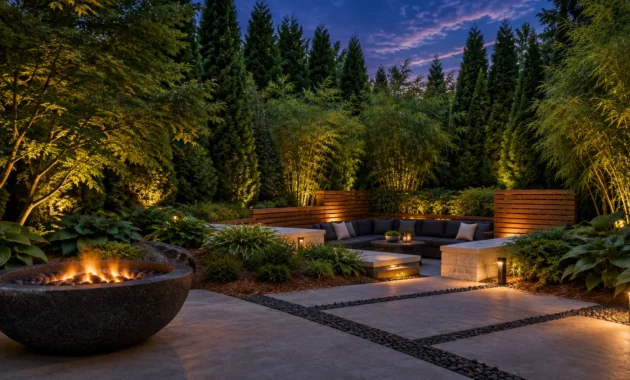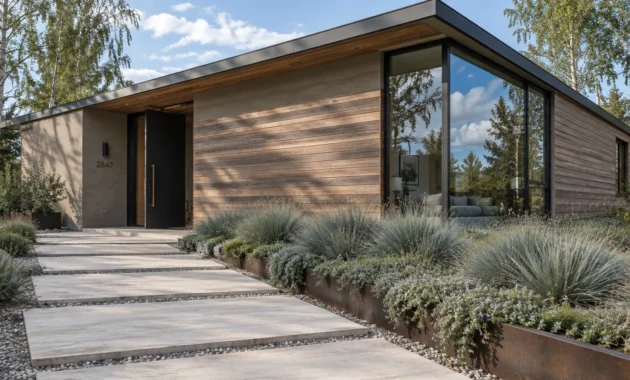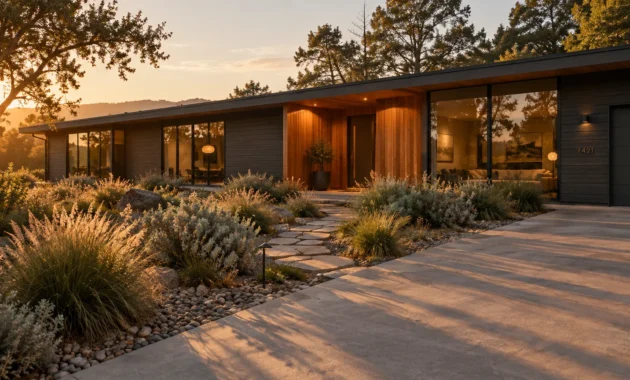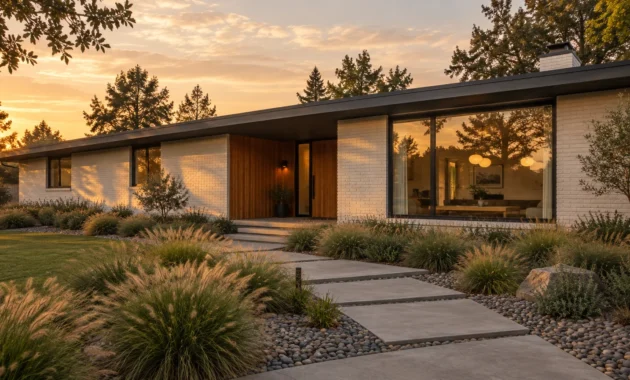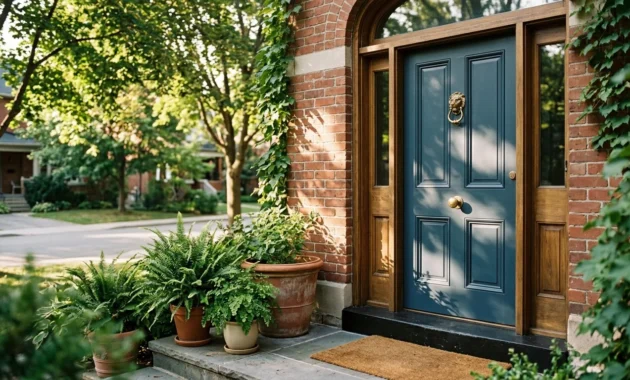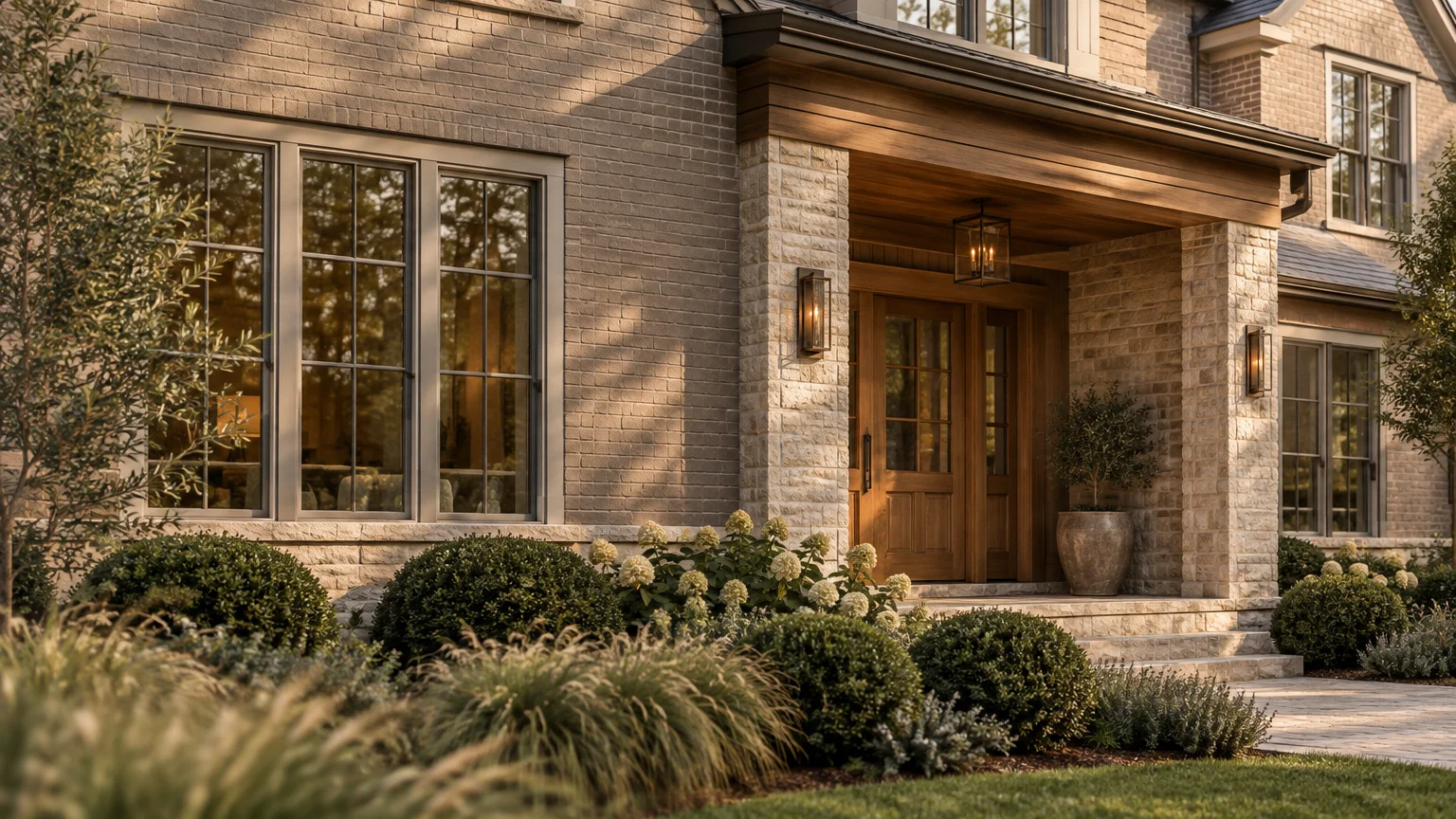
Your home’s facade establishes its architectural credibility long before anyone steps across the threshold. Eliminating outdated exterior home features instantly protects your property value while projecting refined, modern elegance to every passing guest.
A landmark study published in the Journal of Real Estate Finance and Economics reveals that exceptional curb appeal elevates a property’s sale price by 7% to 14%.
Furthermore, the National Association of Realtors reports that 92% of agents recommend upgrading exterior aesthetics before listing; 97% view curb appeal as crucial. Upgrading your exterior preserves both timeless beauty and capital.
Trend #1: Undersized Decorative Shutters and the “Shutter Tape” Look
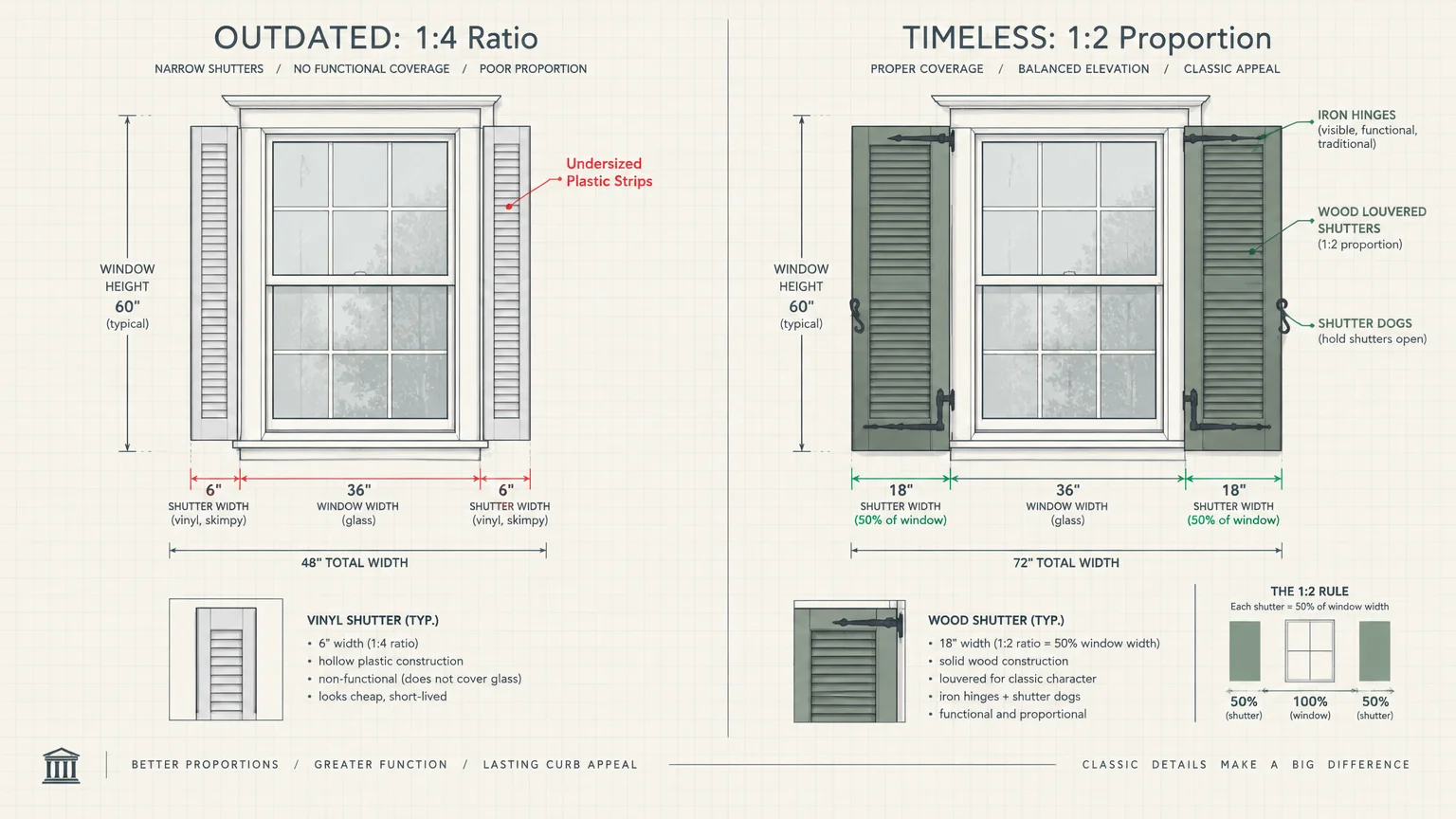
Screwing non-functional vinyl shutters onto vinyl siding remains one of the most recognizable home exterior features that age a house. Builders in the 1980s and 1990s routinely attached vinyl slats that could never physically cover the glass.
Authentic historical shutters always match the window’s dimensions; decorative substitutes betray the home’s architectural integrity. When shutters look like decorative stickers, they instantly cheapen an otherwise handsome facade.
These ornamental plastic strips have become prominent curb appeal mistakes across suburban neighborhoods. They collect grime behind their hollow backs while warping under prolonged summer heat exposure.
To restore harmony, follow the strict exterior shutter sizing rule of a 1:2 proportion. Each individual shutter must measure exactly 50% of the total window opening width so that a closed pair would theoretically seal the glass.
Never mount shutters flat against double-mulled or triple-mulled picture windows. Because a shutter could never close over a triple window, mounting miniature panels on the outer edges violates basic architectural logic.
If your home lacks the wall space for proportional shutters, remove them entirely. Clean casing trim around window frames creates an intentional, contemporary silhouette that elevates your curb appeal immediately.
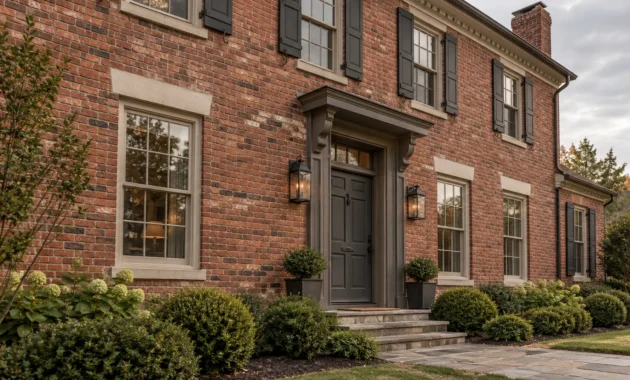
For homes that historically require shutters—such as Georgian, Federal, or Colonial styles—invest in authentic wood or high-density composite materials. Mount them on functioning hinges and secure them with traditional iron shutter dogs.
Functional-looking hardware casts subtle dimensional shadows across the facade; this depth signals craftsmanship and enduring value. Embracing architectural provenance transforms your facade from subdivision-standard to bespoke quiet luxury.
Trend #2: Ornate Tuscan Leaded-Glass Front Doors
During the late 1990s and early 2000s, ornate front doors with oval leaded-glass inserts and polished brass caming dominated suburban developments. These fussy entryways attempted to simulate European grandeur but ended up looking dated and theatrical.
Today, ornate faux-vintage glass inserts read as prominent curb appeal mistakes. They obscure natural light while clashing with modern interior layouts and contemporary aesthetic sensibilities.
The entry door acts as the focal anchor of your home’s exterior envelope. Investing in a streamlined replacement delivers transformative visual clarity alongside measurable financial dividends.
According to Zonda Media’s authoritative Cost vs. Value Report, replacing an outdated entryway with a modern energy-efficient steel door delivers an ROI of roughly 188% to 216%. You will recoup more than double your investment upon resale.
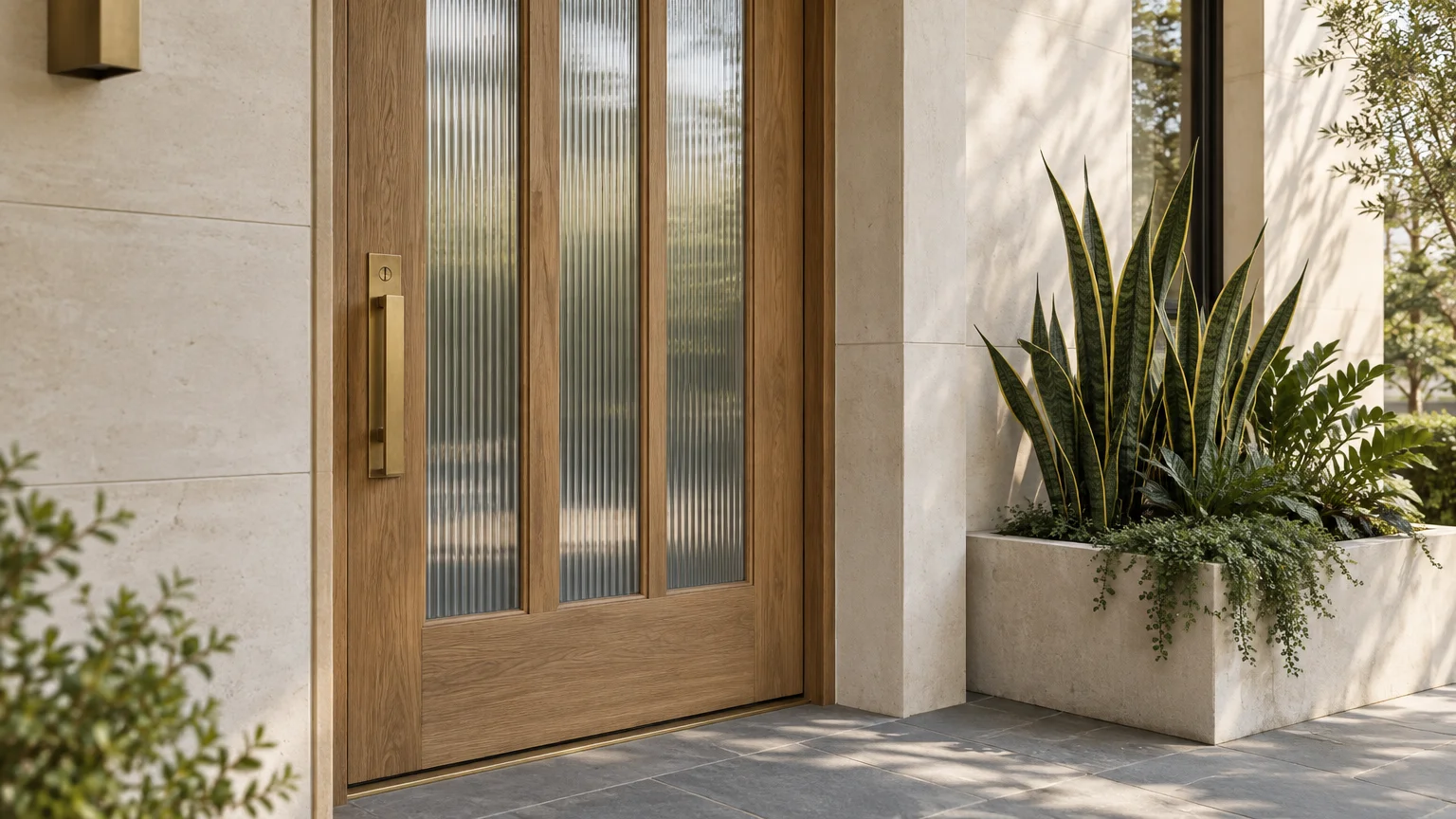
When updating an outdated home exterior, choose a door style that honors your home’s structural geometry. Consider a solid white oak slab with vertical reeded glass or a crisp architectural steel door with minimalist horizontal lites.
Select understated, tactile hardware in matte bronze, satin nickel, or unlacquered brass. A refined escutcheon plate combined with an integrated deadbolt provides both elevated security and sophisticated minimalism.
Saturating your front entry in an evocative accent hue—such as rich obsidian, deep loden green, or warm ochre—creates an inviting threshold. This subtle focal point draws the eye without relying on dated ornamental filigree.
A streamlined entryway provides an immediate cue about the sophistication awaiting inside. Upgrading this single touchpoint recalibrates how guests experience your home from the very first step.
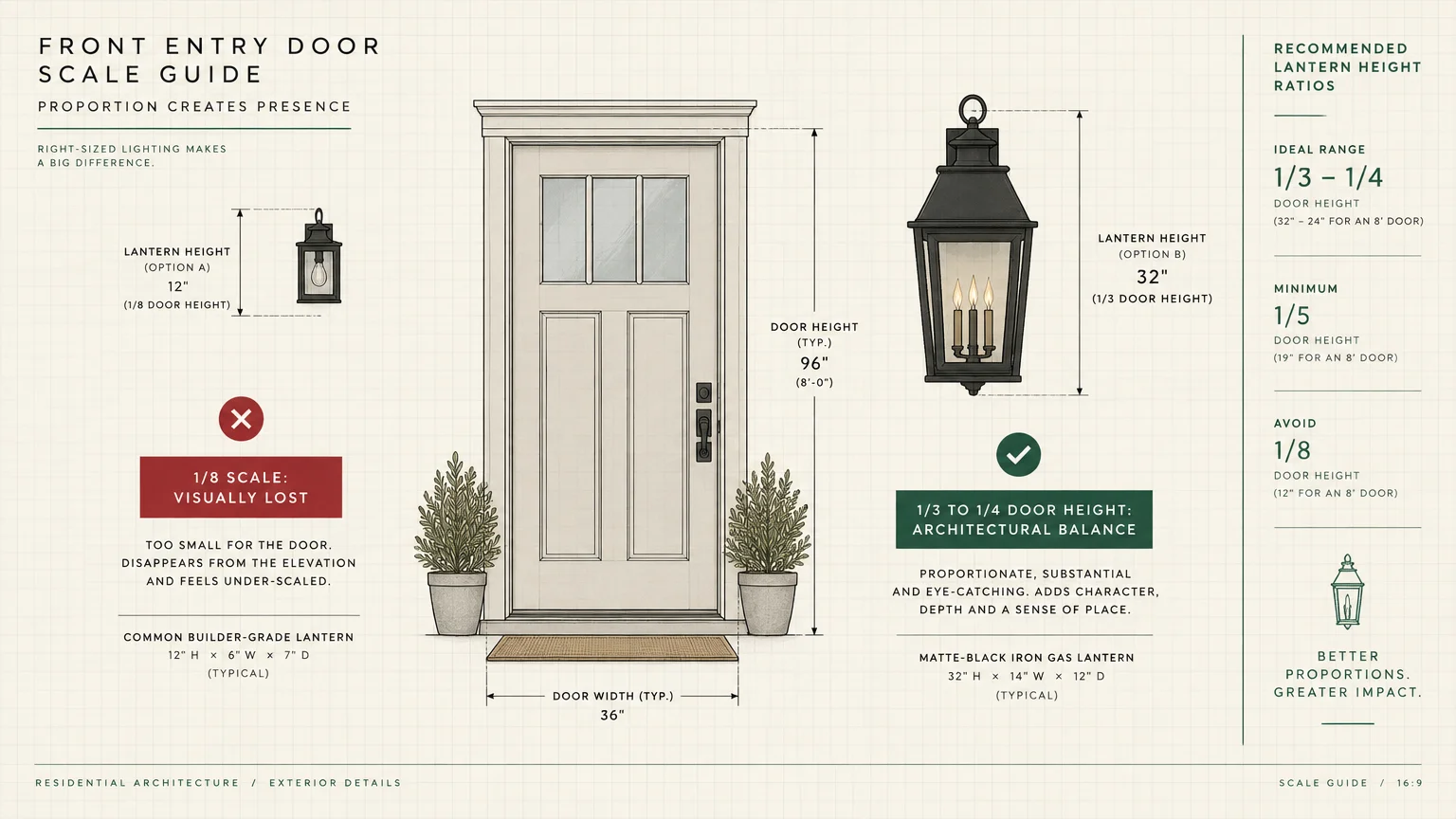
Trend #3: Undersized Builder-Grade Exterior Lanterns
Undersized, builder-grade carriage lanterns flanking a grand front entrance disrupt visual scale. Tiny fixtures hung beside a tall doorway look like an afterthought, shrinking the visual presence of your entry.
Lighting should serve as exterior jewelry; it should define the entrance with confidence and purpose. Skimping on fixture scale is among the most pervasive exterior design trends to avoid when elevating your exterior.
Professional designers rely on the exterior lighting proportion guideline to establish architectural balance. A single fixture beside a front door should measure roughly 1/3 the height of the door.
When installing paired fixtures flanking the doorway, each lantern should measure approximately 1/4 of the door’s total height. For an eight-foot door, you should select twenty-four-inch fixtures to maintain proper scale.
Position lanterns at eye level, roughly 66 inches from the porch floor to the fixture’s visual center. This placement casts a welcoming, flattering glow on visitors while anchoring the surrounding millwork.
Upgrade outdated polished brass or black plastic housings to living finishes like hand-rubbed brass or natural copper. Natural copper oxidizes over time, adding gorgeous organic patina to your facade.
Always pair statement fixtures with warm 2700K LED bulbs; cool white illumination creates a harsh institutional feel. Warm lighting highlights textured exterior materials while reinforcing an atmosphere of gracious hospitality.
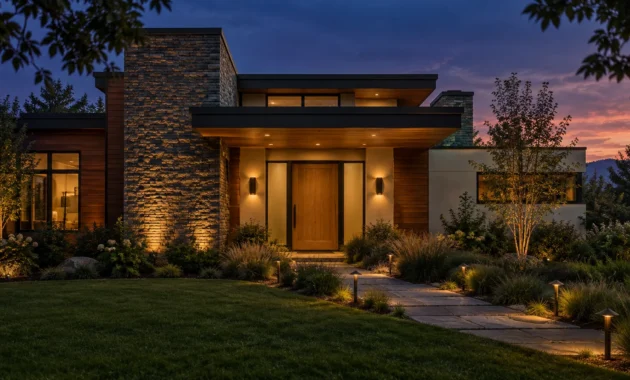
Complement wall lanterns with discrete low-voltage landscape lighting tucked into garden beds. Layering your illumination highlights architectural textures while guiding guests naturally toward the front porch.
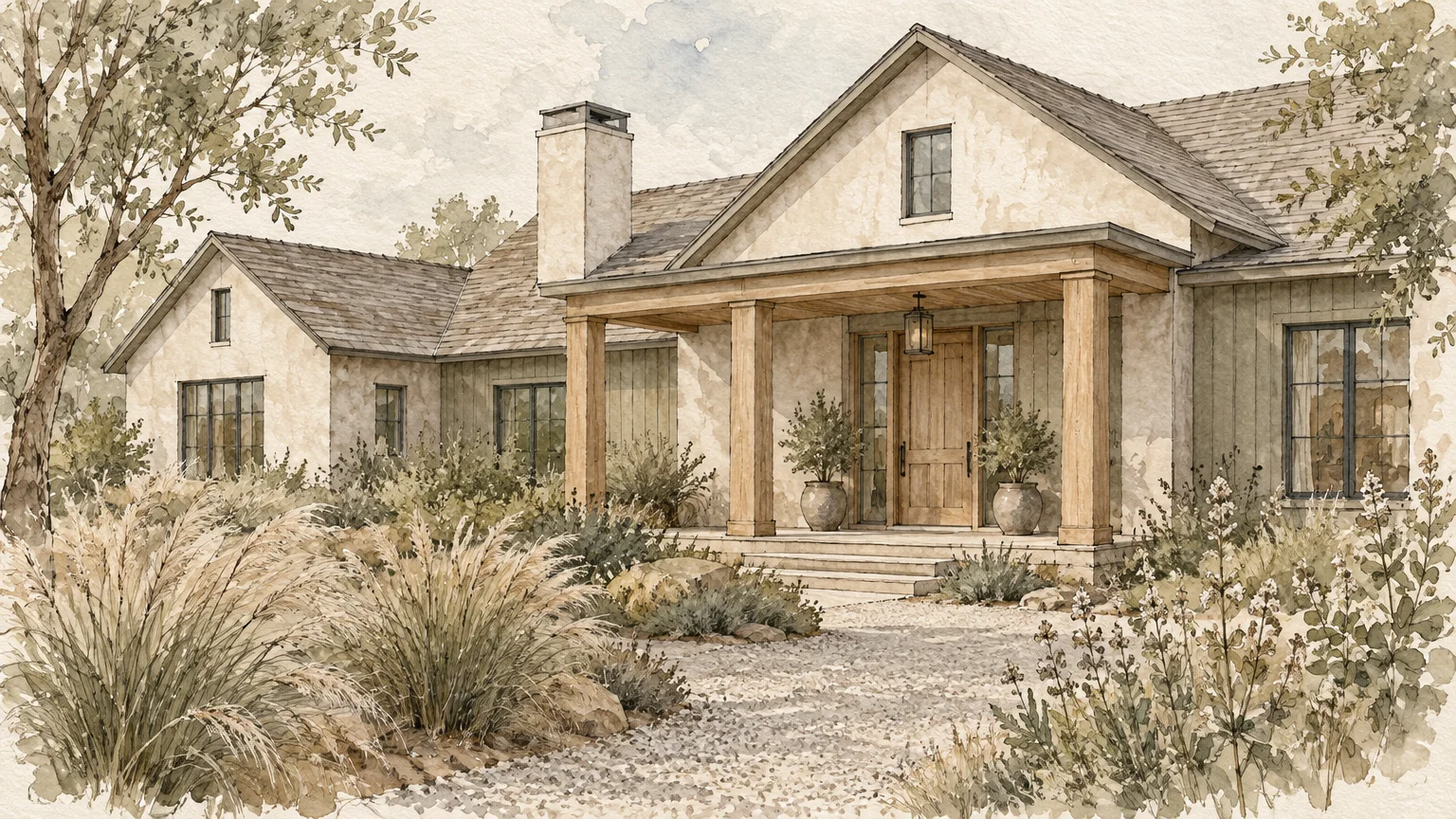
Trend #4: Stark High-Contrast Modern Farmhouse Color Schemes
The stark black-and-white modern farmhouse aesthetic achieved absolute ubiquity over the past decade. Dousing vertical board-and-batten siding in stark white and outlining windows in jet black has reached aesthetic saturation.
This severe contrast flattens architectural depth and disconnects the structure from its surrounding landscape. What felt crisp and novel in 2018 now signifies an era-specific design cliché.
High-contrast paint schemes often emphasize awkward construction transitions and disguise fine historic craftsmanship. Moving away from rigid monochrome allows your home to breathe within its natural environment.
Leading exterior designers now champion tonal harmony and organic modernism. Layering tonal neutrals creates depth through texture and light rather than jarring, graphic contrasts.
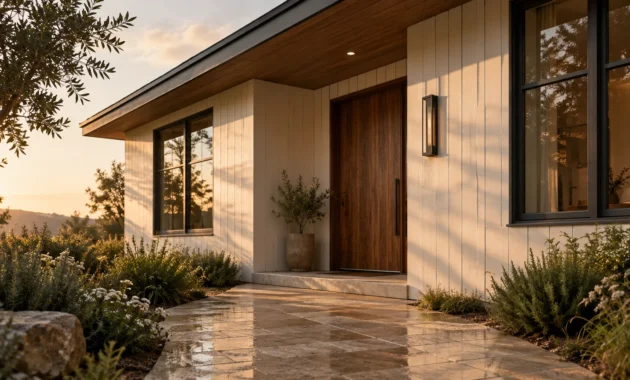
Replace stark black window trim with softer charcoals, bronze undertones, or creamy muted taupes. These shades maintain modern definition without dissecting your home’s facade into rigid geometric blocks.
Instead of blinding chalk-white siding, select nuanced off-whites with warm bone, beige, or stone undertones. Nuanced paints shift pleasantly under natural daylight, evolving gracefully from morning sun to twilight.
Embracing biophilic greens, warm drabs, and understated mineral hues integrates your home seamlessly into its garden landscape. This subtle cohesion produces an enduring elegance that withstands shifting micro-trends.
Natural stone, aged brick, and warm timber accents pair effortlessly with these gentler mineral hues. By softening stark contrasts, you foster a welcoming environment characterized by understated quiet luxury.
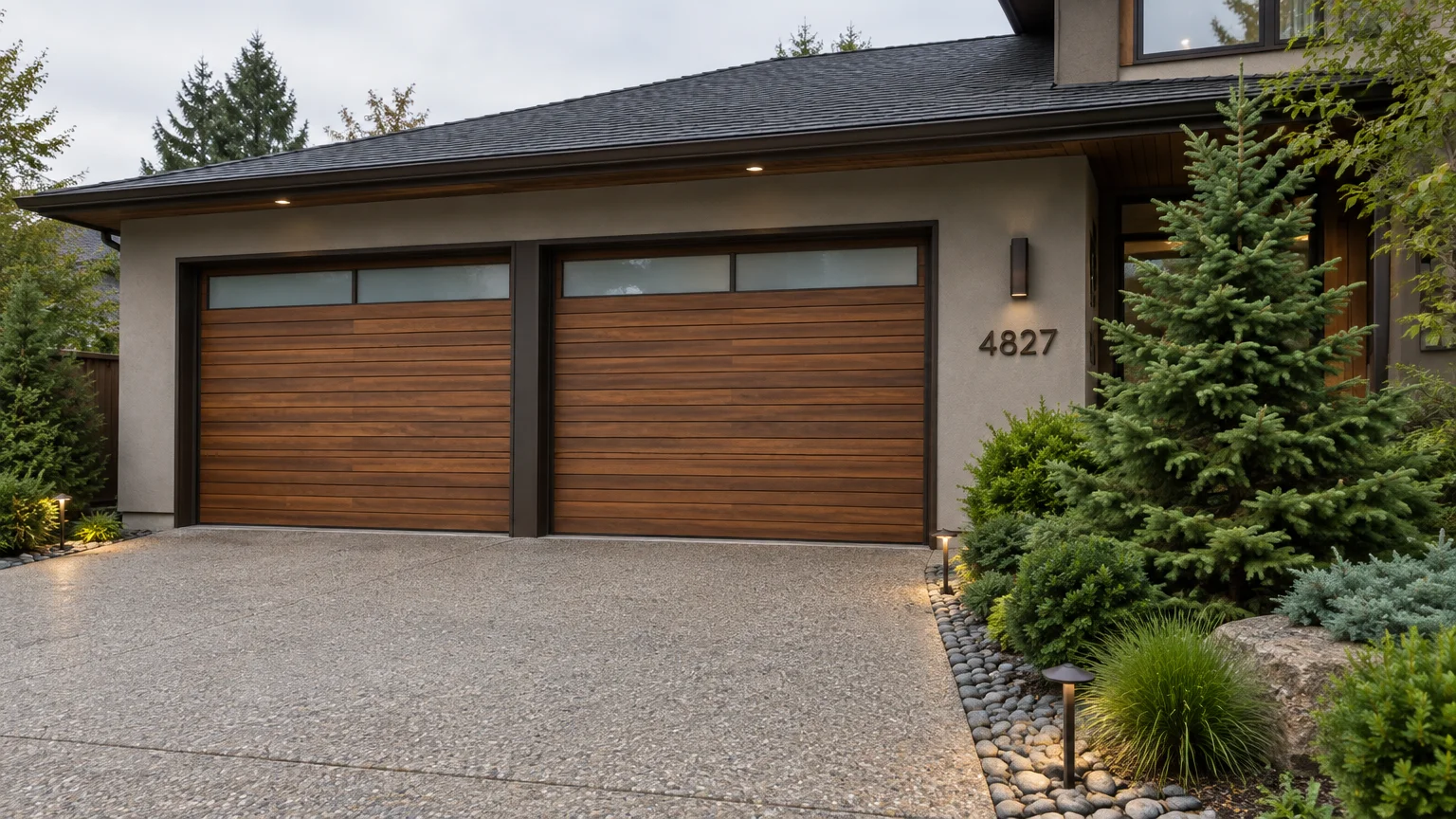
Trend #5: Monolithic White Stamped-Steel Garage Doors
On many suburban homes, front-facing garages occupy upwards of 40% of the street-level elevation. Installing generic, stamped-steel white doors creates an industrial void that pulls focus away from the main entrance.
Monolithic white panels expose every speck of dirt, dent, and seam, instantly creating an uninspired builder-grade look. Neglecting this massive canvas is one of the most visible curb appeal mistakes homeowners make.
Upgrading your garage doors yields an astonishing financial return alongside visual transformation. Zonda Media’s Cost vs. Value Report reveals that garage door replacement consistently delivers an ROI of 194% to 268% nationwide.
Replacing outdated doors recoups more than double its installation cost at resale. Few single exterior renovations generate such significant equity while instantly modernizing your property’s silhouette.
If you prefer traditional architecture, choose carriage-house doors featuring divided-lite upper windows and authentic iron strap hinges. These details break up vast horizontal surfaces while echoing classic outbuilding craftsmanship.
For contemporary and mid-century modern residences, select flush-panel designs or horizontal slat profiles crafted from composite cedar or thermowood. Full-view frosted glass doors set in anodized bronze aluminum frames offer another striking option.
If replacing the door is not immediately viable, paint your existing door the same color as the surrounding siding. Camouflaging the garage prevents it from overpowering your entryway and establishes architectural cohesion.
Adding discrete down-lighting above your garage doors illuminates high-end textures after dusk. Thoughtful lighting shifts the garage from a utility zone into an integral design feature.
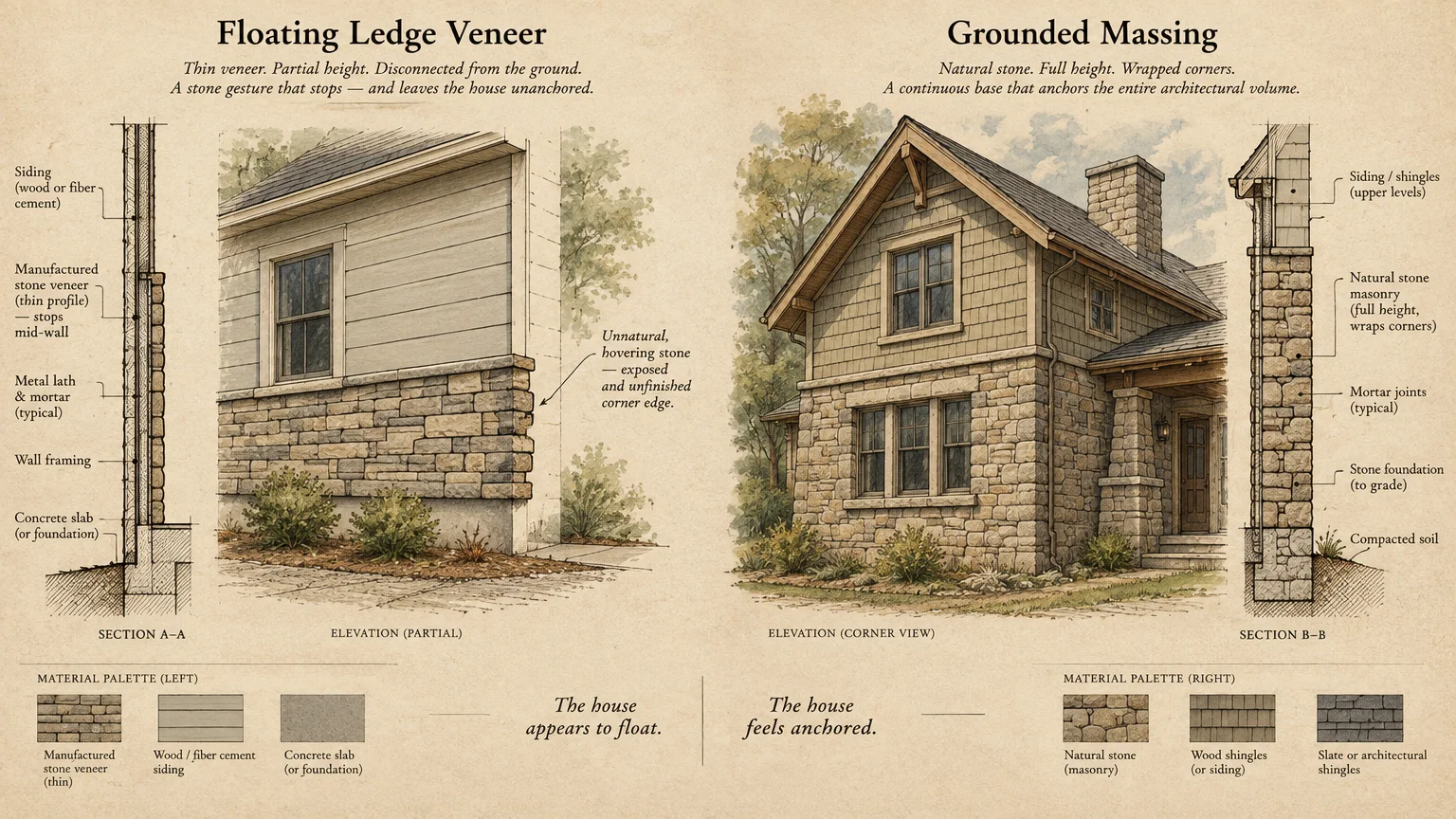
Trend #6: Arbitrary Faux Stone Wainscoting and Sticky Rock
Gluing thin manufactured stone veneer along the bottom third of a front elevation became standard builder practice in the 2000s. Known colloquially as “stone wainscoting,” this treatment creates an awkward horizontal line across the facade.
Traditional masonry foundations carried real structural weight, running continuously into the earth to support the building above. Faux stone slapped onto drywall substrate lacks tectonic logic and ends unconvincingly at exterior corners.
Seeing raw cut edges where the veneer terminates exposes the synthetic nature of the material. This disjointed application ranks among the most noticeable home exterior features that age a house.
Modern exterior design values authentic material provenance over superficial decoration. A wall should celebrate its genuine composition rather than wearing decorative cladding like an apron.
When updating an outdated home exterior, consider removing the disjointed stone band entirely in favor of continuous siding. Extending a single cladding material from base to soffit restores vertical continuity and visual height.
If removing the stone proves cost-prohibitive, coat both the stone and siding in an opaque, breathable masonry mineral paint. Unifying disparate materials under a single monochromatic tone softens conflicting textures immediately.
When adding masonry to new builds, commit the material to an entire architectural volume, such as a full two-story entry bump-out or an entire chimney stack. Anchoring stone to the ground grounds the design with historical permanence.
When selecting natural building stone, seek varieties indigenous to your geographical area. Sourcing regional materials grounds your home within its local environment, reinforcing a profound sense of place.
Trend #7: Yellow-Beige Vinyl Siding and Washed-Out Palettes
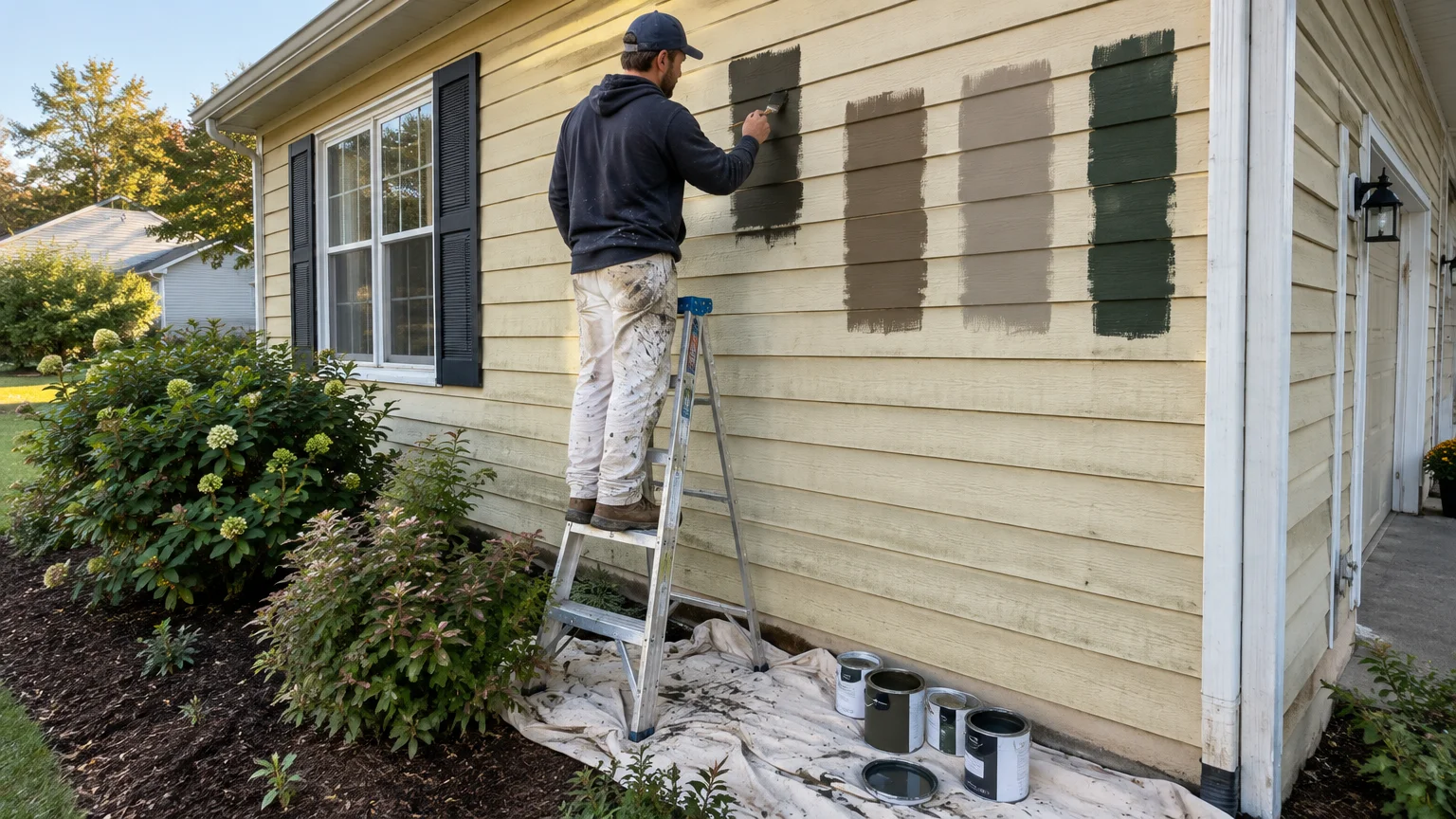
Thousands of neighborhoods built between 1995 and 2008 remain blanketed in dull, yellow-tinged beige vinyl siding. This dated “builder tan” palette absorbs daylight poorly, leaving homes looking flat, muddy, and tired.
Vinyl lap siding with pronounced faux wood grain also accumulates grime in its artificial grooves. Over time, UV exposure fades the plastic unevenly, signaling deferred maintenance to anyone passing by.
Elevating your home’s exterior envelope requires replacing one-dimensional tans with multi-tonal, pigment-rich palettes. Modern exterior paint formulations incorporate complex undertones that respond dynamically to shifts in natural outdoor lighting.
Consider adopting the principles of biophilic design by pulling inspiration directly from local regional landscapes. Muted lichen greens, stormy slate grays, and rich umber browns anchor suburban properties naturally into mature foliage.
If replacing your siding is outside your current remodeling budget, high-performance acrylic paints formulated for vinyl offer an exceptional alternative. Select colors with a low Solar Reflectance Index to prevent siding warping under direct heat.
Apply flat or low-lustre finishes across main wall surfaces to disguise minor siding imperfections; gloss highlights surface irregularities. Reserve subtle satin sheens exclusively for window sashes and architectural trim to introduce refined micro-contrast.
Refreshing faded cladding shifts your entire neighborhood perspective from dated builder-grade anonymity to intentional designer curation. A sophisticated palette redefines your exterior envelope with modern sophistication.
Pair your renewed siding palette with rich, complementary door and trim accents. This thoughtful, holistic application ensures your home projects confidence and enduring curb appeal for years to come.
The Big Picture: Weaving These Trends into Your Home
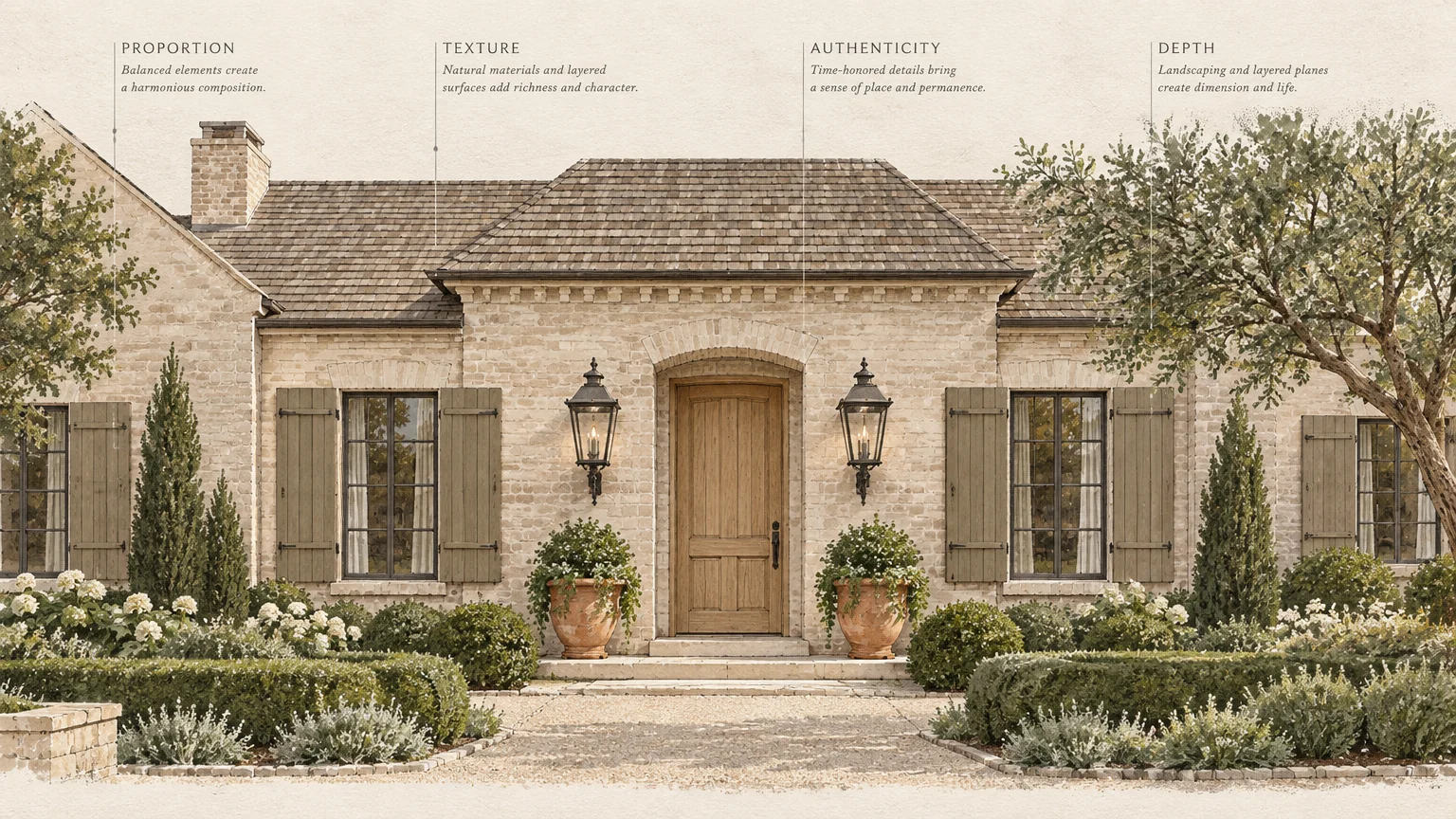
Modernizing your home’s exterior does not require an aggressive demolition of its original architectural character. The most successful facade transformations celebrate a building’s original pedigree while shedding superficial, era-specific ornamentation.
Begin your exterior renovation by auditing architectural proportion and symmetry across the entire front elevation. Remove decorative additions that do not serve functional or structural purposes, such as vinyl shutter tape or faux stone veneers.
Focus your remodeling capital on high-touch elements that offer significant return on investment. Upgrading an outdated garage door and replacing a dated front entry immediately enhance street presence while building substantial equity.
Ensure your exterior lighting maintains proper scale and balance relative to surrounding doorways and porticos. Scale creates subconscious harmony, signaling thoughtful architectural planning to prospective buyers and design-minded visitors alike.
Integrate sustainable, authentic materials—such as genuine wood, architectural steel, and natural copper—wherever possible. These organic surfaces age gracefully, developing an attractive patina that synthetic materials simply cannot replicate over time.
Treat your home exterior and interior as an unbroken aesthetic journey. Align exterior trim hues with interior entry palettes to create a seamless transition from the curb into your living room.
Prioritize restraint and architectural quiet luxury above short-lived viral trends. An exterior grounded in classic proportion, honest materials, and tailored color will remain stylish for decades.
By focusing on high-return investments and authentic detailing, you eliminate visual noise. The result is a refined residence that honors architectural craftsmanship while projecting timeless contemporary sophistication.
Frequently Asked Questions
How do I know if my exterior shutters are the correct architectural size?
Authentic shutters must mirror the exact dimensions of the window opening they flank. If closed, each shutter should span precisely half of the window’s width, meeting seamlessly in the center.
If your shutters overlap your siding without covering the casing or appear narrower than half the glass, they are purely decorative. Removing these undersized vinyl strips immediately refines your home’s exterior silhouette.
What exterior paint colors offer the highest resale value and longevity?
Nuanced warm neutrals—such as soft greige, muted alabaster, and organic taupe—consistently yield the highest return on investment. These sophisticated shades avoid the harshness of sterile stark white while eliminating muddy yellow undertones.
Deep forest greens, charcoal grays, and soft navy also offer timeless appeal when applied to traditional architectural styles. Always test large swatch boards against different facades under varied morning and evening sunlight conditions.
Is it worth replacing an outdated front door before selling a home?
Replacing an outdated front door is one of the most profitable pre-listing home improvements available. Industry data demonstrates that upgrading to an energy-efficient steel door delivers an ROI between 188% and 216%.
Beyond monetary return, a crisp new front door establishes an immediate impression of quality and security. It reassures prospective buyers that the entire property has been maintained with meticulous care.
How can I update a dated home exterior on a modest budget?
You can transform your facade without extensive structural remodeling by focusing on high-impact cosmetic upgrades. Removing undersized vinyl shutters and painting the window trim creates an instant contemporary aesthetic for minimal cost.
Next, upgrade outdated exterior lanterns to properly proportioned fixtures and paint your front entry door an inviting accent color. These targeted alterations eliminate glaring curb appeal mistakes while dramatically boosting your street-side presence.
For the latest color forecasts, consult industry leaders like Pantone and paint companies like Benjamin Moore. For professional design standards, refer to the American Society of Interior Designers (ASID).
Disclaimer: This article reflects design trend analysis and predictions. Personal taste and timeless design principles should always guide your decorating choices.