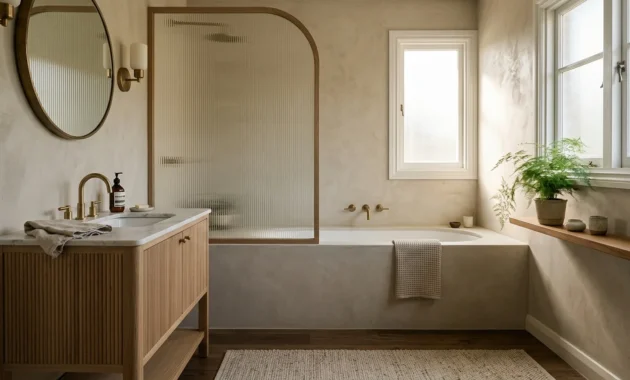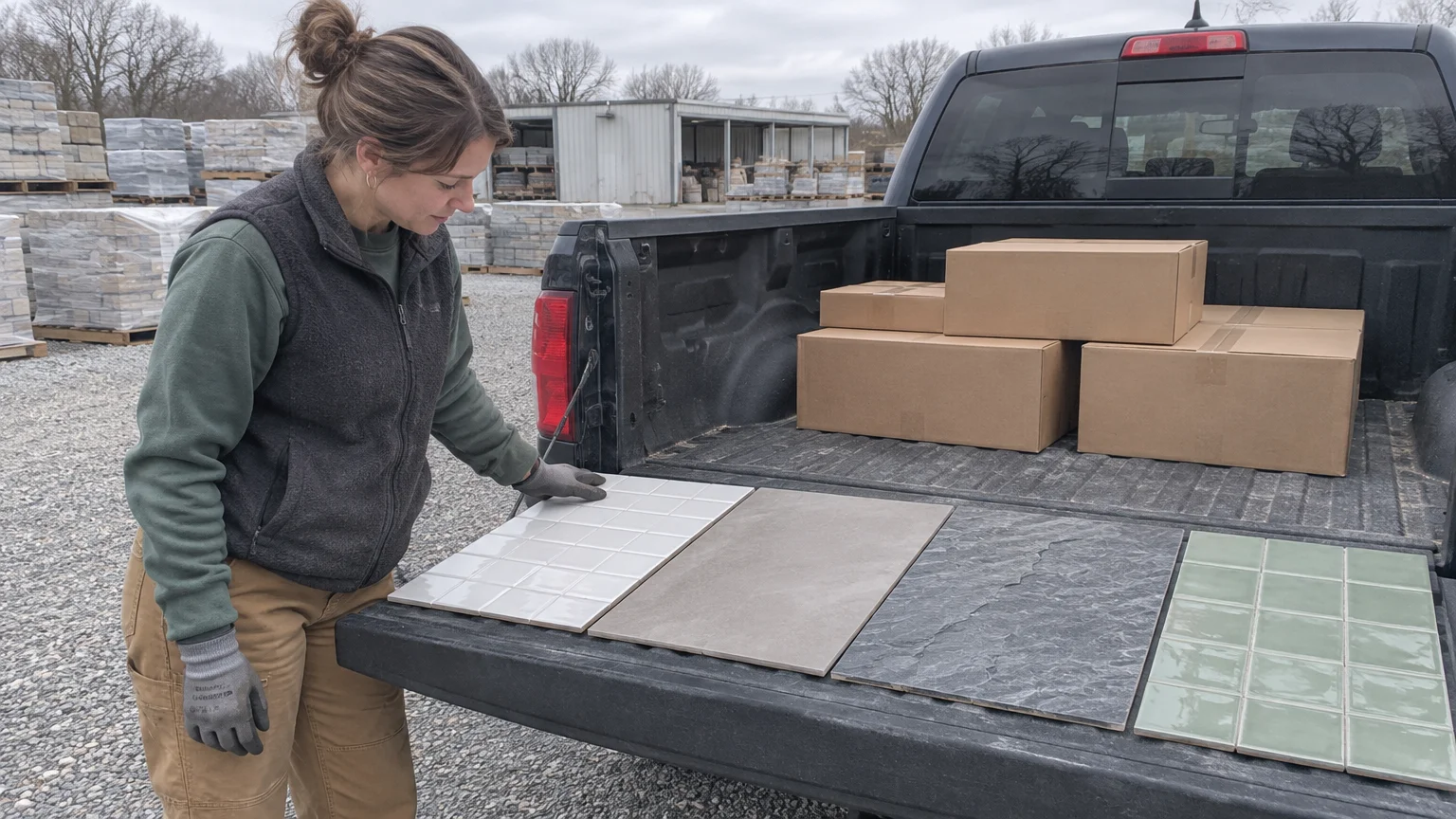
Choosing bathroom tile colors shapes how your space feels every morning. While bold fads date a room fast, timeless shades protect your investment and anchor a serene, spa-like routine.
Whether you want a bright sanctuary or a moody retreat, the right palette elevates your entire bathroom remodel. Classic hues pair effortlessly with warm woods, brushed metals, and evolving smart fixtures.
Below, discover seven enduring tile shades backed by industry data, material science, and practical installation specs. Use this guide to pick finishes that stay fresh for decades.
Bathroom Trend #1: Crisp Classic White
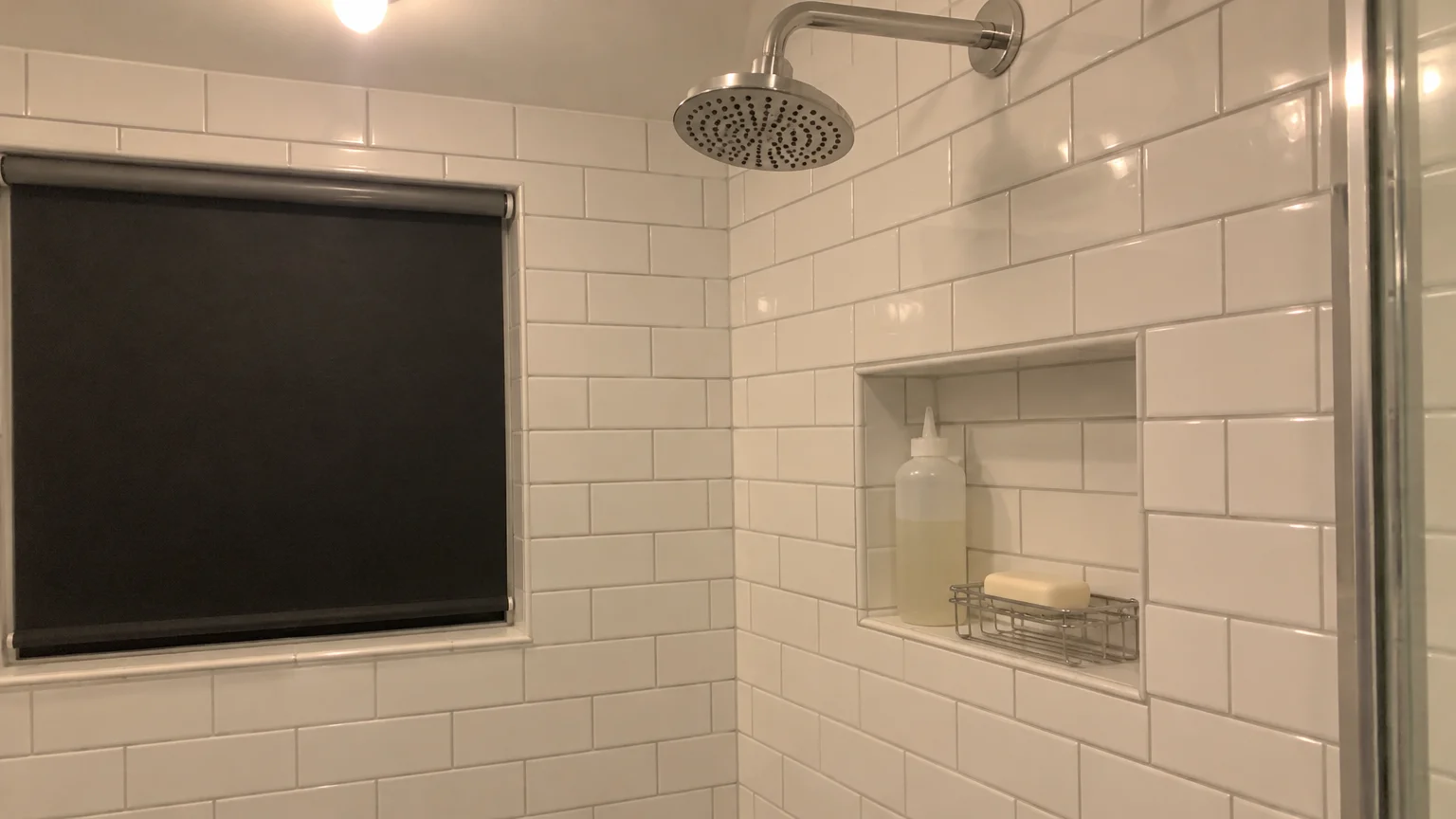
White remains the undisputed anchor of timeless bathroom tile. According to the 2026 U.S. Houzz Bathroom Trends Study, white leads all bathroom tile colors at 34% on shower walls and 23% on non-shower walls.
Its staying power began in 1904, when architects George C. Heins and Christopher Grant La Farge designed glossy white 3×6-inch ceramic tiles for New York City subway stations. Homeowners adopted that hygienic, light-reflecting look in the 1920s.
To keep white walls crisp rather than sterile, vary your layout and grout. Horizontal brick layouts lead at 27% on shower walls, while vertical stacks follow closely at 25%.
Choose true porcelain with water absorption of 0.5% or less for wet zones, and pair glossy wall tile with matte porcelain floor mosaics. You can integrate radiant floor heating beneath white porcelain for quiet morning thermal therapy.
Bathroom Trend #2: Warm Off-White and Cream
If pure white feels too stark for your bathroom design, warm off-white delivers soft, sunlit calm. In the National Kitchen & Bath Association (NKBA) 2026 Bath Trends Report, off-white led the neutrals designers cited as most popular, at 58%.
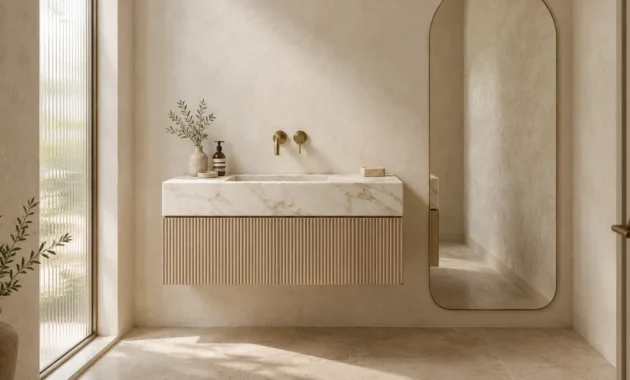
Homeowners agree, placing off-white at 22% for both shower and non-shower walls in the 2026 Houzz study. Creamy tones flatter warm brass faucets, oak vanities, and diffused circadian vanity lighting.
Large-format off-white porcelain slabs are especially smart for floors, where 89% of NKBA designers say clients want fewer grout lines. When laying tiles larger than 15 inches in a running-bond pattern, maintain a 1/8-inch minimum joint for rectified tile.
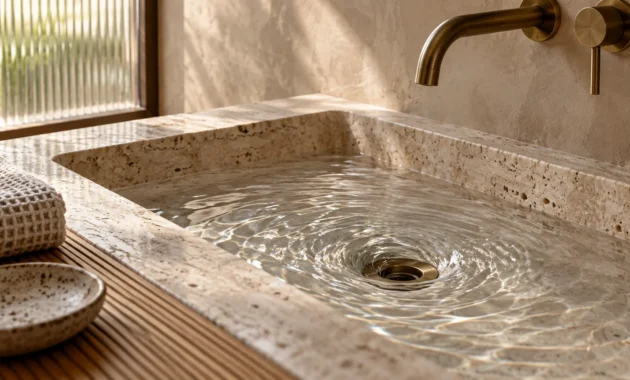
Select glazed floor tiles rated at least PEI 3 for everyday residential durability. For an organic touch, choose creamy honed marble or travertine—which average $11–$54 per square foot installed—and seal wet shower stone every 6–12 months.
Bathroom Trend #3: Soft Beige and Warm Taupe
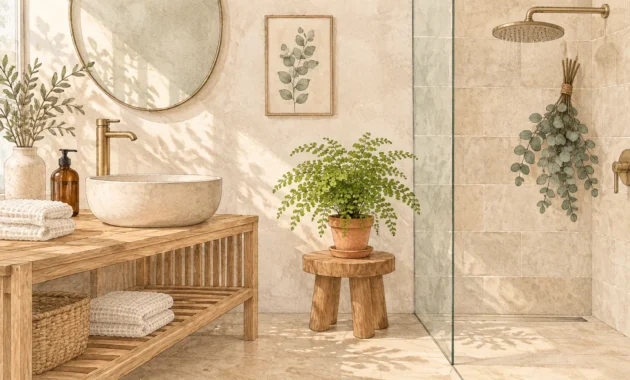
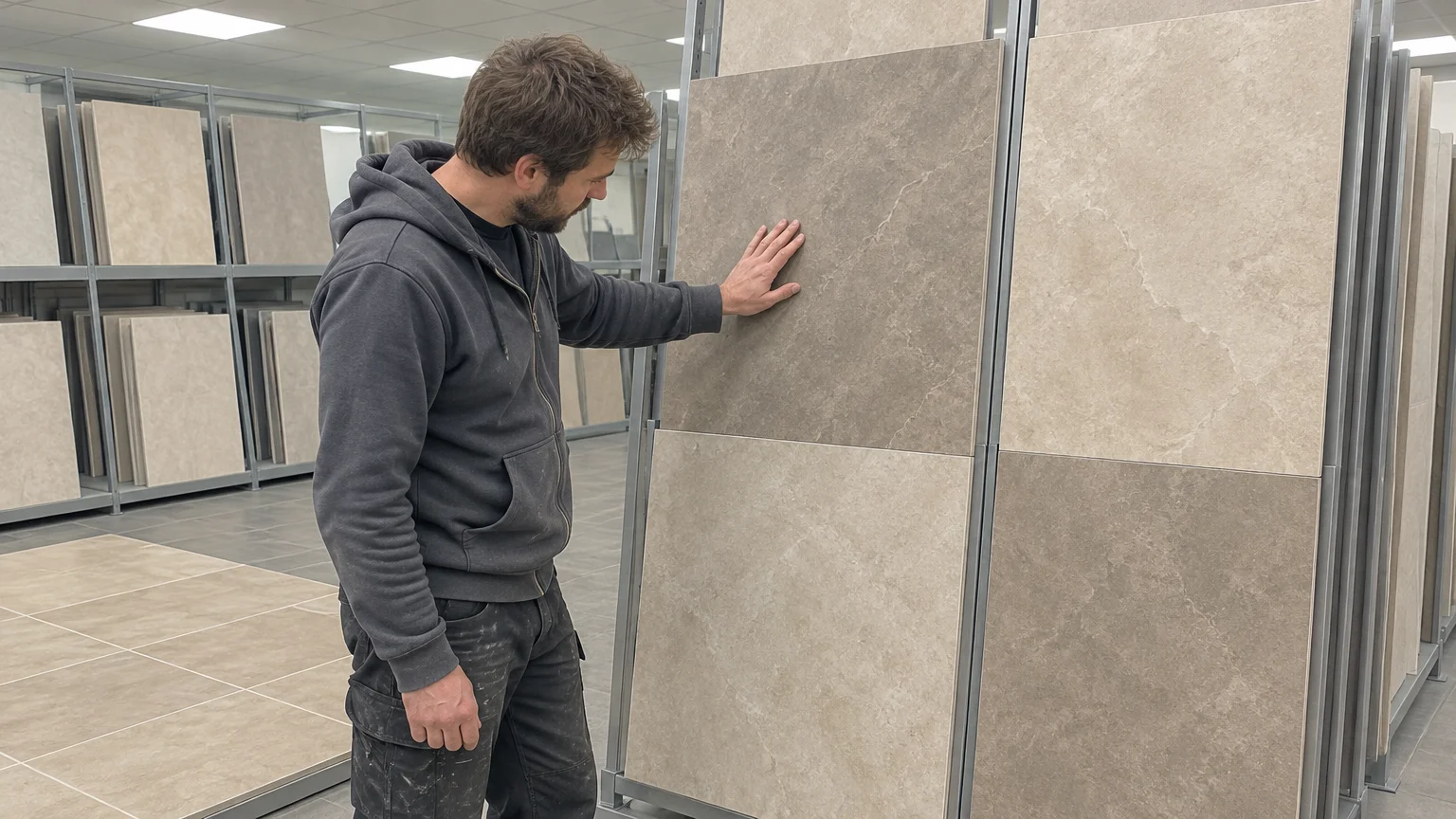
Earthy neutrals are surging back into luxury spas and primary suites. Beige climbed five percentage points year over year to 13% on shower walls in the 2026 Houzz study, while NKBA designers rank light brown and tan at 54%.
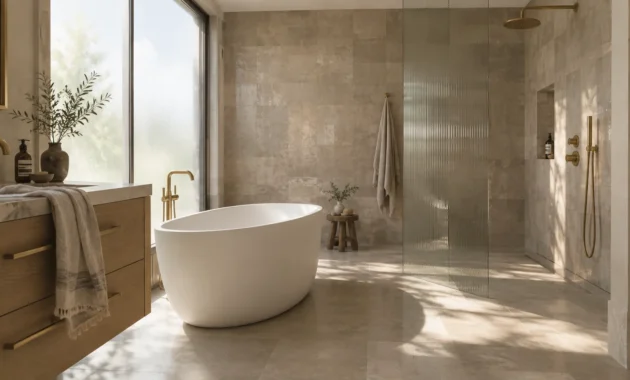
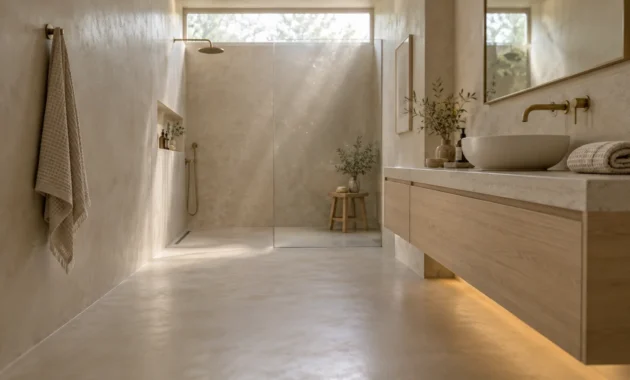
Soft beige, sand, and mushroom taupe warm up zero-threshold showers—curbless walk-in entries that create seamless floor flow. These sunbaked tones turn an everyday rinse into a grounded wellness ritual.
Textured beige porcelain mimics natural limestone without acid sensitivity or heavy sealing. Always verify that bathroom floor tiles meet a minimum wet DCOF of 0.42 under ANSI A326.3, and require 0.50 or higher inside barefoot shower zones.
Pair taupe walls with unlacquered bronze fixtures, floating walnut vanities, and soft warm-gray grout. Because beige sits squarely in the transitional style favored by 70% of NKBA designers, it appeals broadly to future homebuyers.
Bathroom Trend #4: Earthy Sage and Olive Green
Nature-inspired greens bring restorative biophilic energy indoors without overwhelming small rooms. In NKBA’s 2026 report, brown-based greens dominate accent choices, with sage at 64% and olive at 43%—far outpacing emerald at 16%.
Sage ceramic tiles with handmade-style glazes feature subtle tonal shifts that ripple like calm water under steam shower lighting. Installing green ceramic tile runs roughly $10–$45 per square foot, making an accent niche or vanity backsplash an accessible splurge.
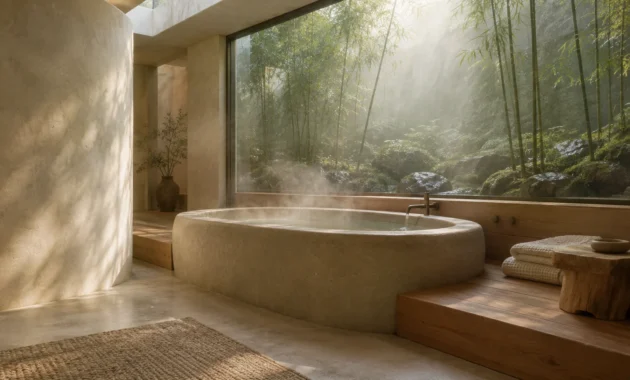
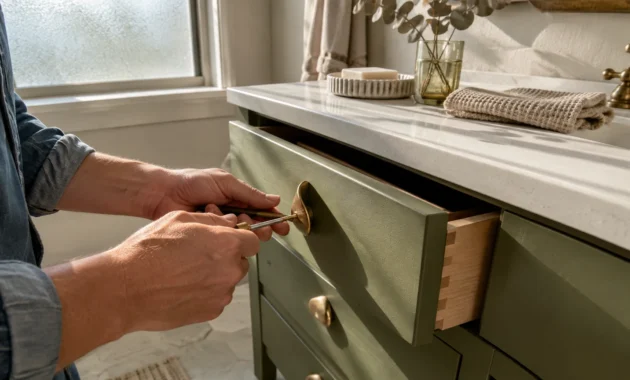
Consider framing a freestanding soaking tub or steam shower wall in muted olive, since 34% of renovating homeowners now add a dedicated accent wall. Balance rich green glaze with crisp off-white trim and warm white oak cabinetry.
Note that handmade-look ceramic glazes often carry PEI 0–1 ratings, meaning they belong on vertical walls only. Order 15%–20% extra tile if you plan a diagonal or herringbone pattern to cover intricate niche cuts.
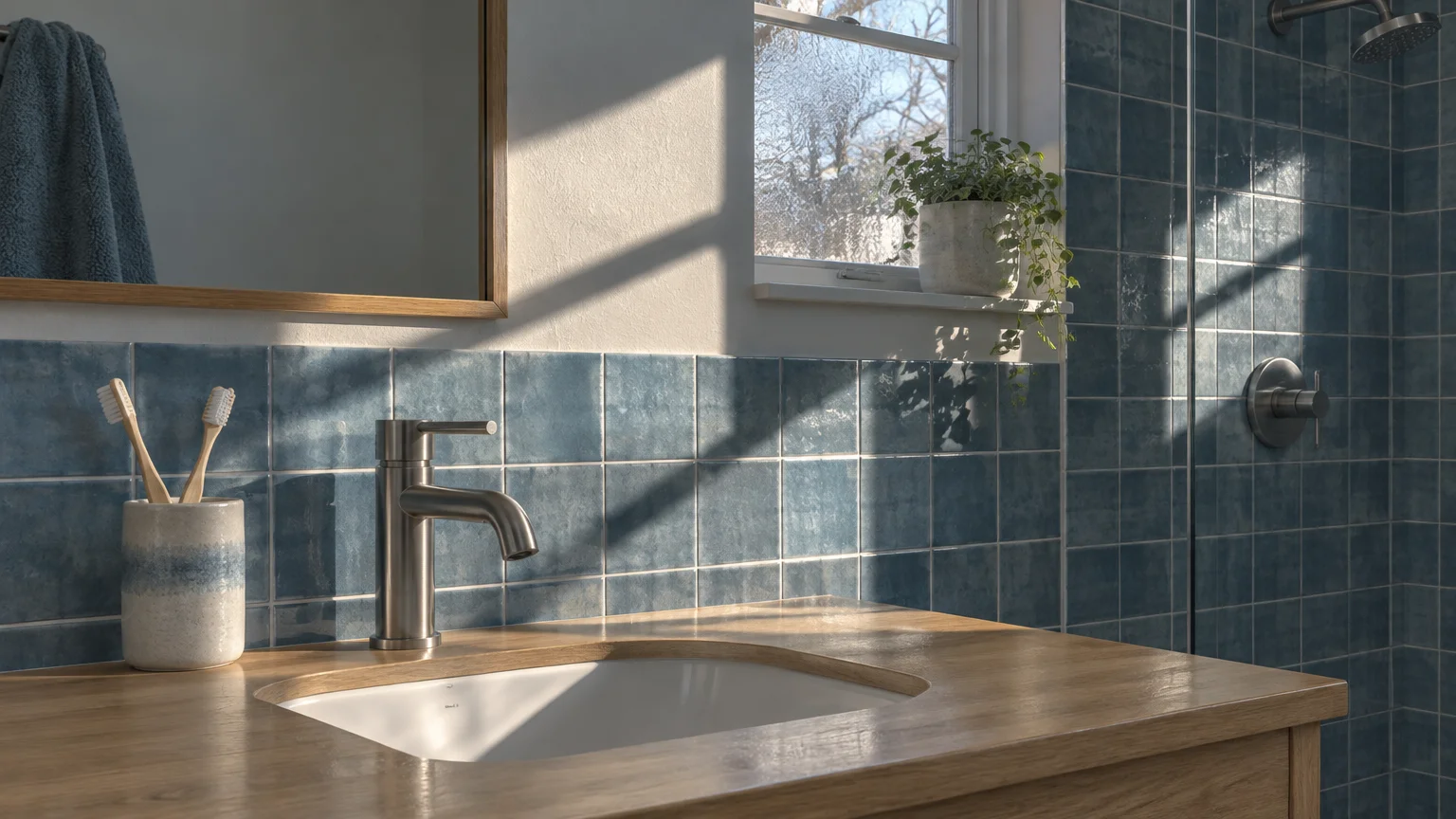
Bathroom Trend #5: Serene Coastal and Slate Blue
Blue evokes water, sky, and quiet mental clarity, securing its spot among classic tile ideas. In the 2026 Houzz study, blue appears on 11% of non-shower walls and ties with white at 19% for bathroom accent walls.
Dusty coastal blues, powdery slate, and deep navy outlast fleeting bright teals. Pair slate-blue hexagonal shower floor tiles—the top shower floor shape at 26%—with crisp white subway walls and polished nickel fixtures.
Small-format blue mosaics (ranging from $13–$28 per square foot installed) naturally add extra grout lines that boost barefoot traction on wet shower pans. Make sure your installer slopes the shower floor at least 1/4 inch per foot toward the drain.
At change-of-plane corners where blue tile meets white trim, insist on flexible ASTM C920 elastomeric sealant rather than rigid grout. That simple step prevents hairline cracks as your home shifts seasonally.
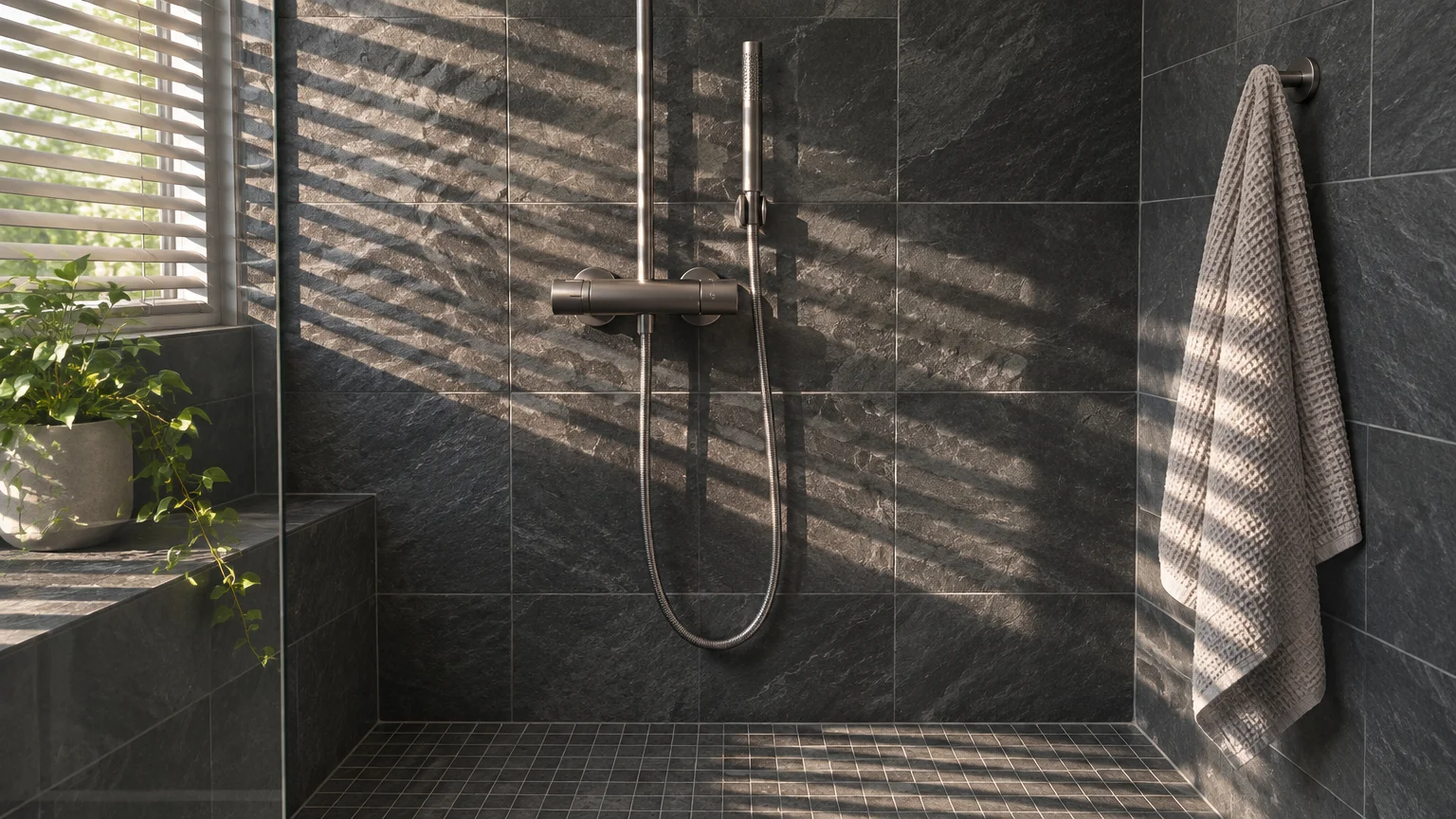
Bathroom Trend #6: Charcoal and Deep Slate Gray
While flat silver grays have cooled—dropping to 7% on shower walls in 2026—deep charcoal and slate gray remain timeless anchors. NKBA designers still place dark gray and slate at 18% for sophisticated architectural bathrooms.
Charcoal grounds airy spaces, giving radiant-heated floors and curbless walk-in showers visual weight. Natural slate runs $9–$38 per square foot installed, while matte charcoal porcelain delivers an even lower-maintenance alternative at $14–$45 per square foot.
To avoid a cave-like feel, pair charcoal floors with bright white walls, backlit LED mirrors, and chromotherapy—the use of colored light inside showers to support relaxation. Charcoal also disguises everyday dust and water spots between cleanings.
Dark floors show soap haze if you skip proper curing. Wait 48–72 hours before walking on newly set porcelain or stone, and seal cement-based dark grout only after it finishes curing.
Bathroom Trend #7: Matte Obsidian Black
Black tile delivers tailored contrast that feels as current today as it did in classic 1920s black-and-white basketweave floors. NKBA’s 2026 report ranks black alongside dark gray at 18% among popular bath colors.
Matte black hexagon or penny-round micro-mosaics—tiny tiles under two inches wide—create effortless vintage charm underfoot. Because matte surfaces scatter light gently, they avoid the harsh glare and water-spot visibility of glossy black slabs.
Use black strategically on a vanity wainscot, shower niche, or floor border to keep compact baths feeling open. Smart thermostatic shower valves in brushed brass or matte black blend seamlessly against dark tile walls.
If you choose honed black marble instead of porcelain, skip vinegar or citrus sprays entirely, as acids etch calcite stone instantly. Clean matte black stone with pH-neutral stone soap to preserve its velvety sheen.
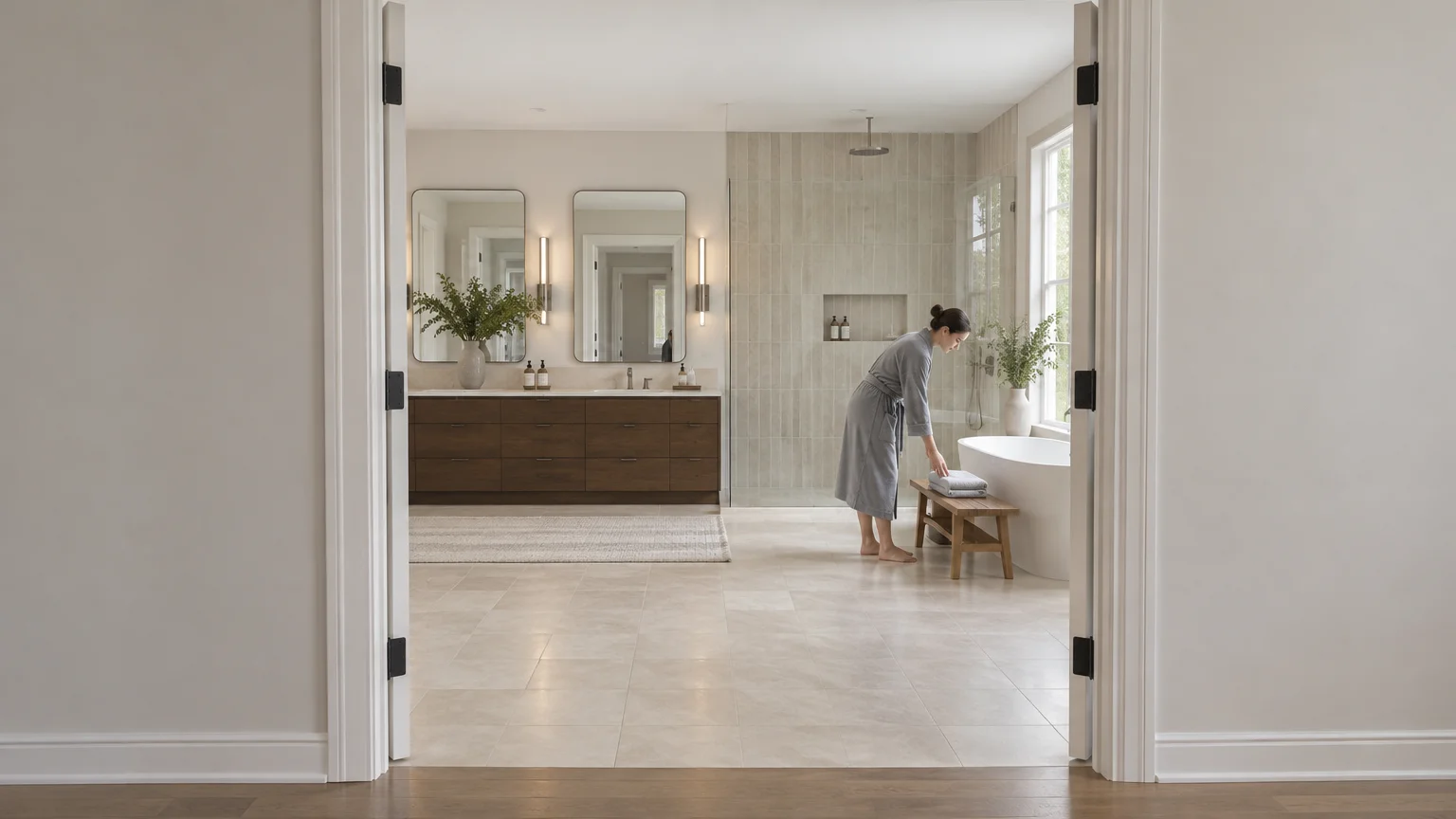
Creating a Spa-Like Retreat at Home
Great bathroom design balances visual calm with smart budgeting. According to the 2026 Houzz study, the national median spend for a primary bathroom remodel is $15,000, climbing to $25,000 for major overhauls.
Timeless colors protect that budget where it counts most. Zonda and Remodeling Magazine’s 38th Annual Cost vs. Value Report shows a midrange bathroom remodel recoups 80.0% of its cost at resale nationally, versus 41.7% for upscale overhauls.
Limit your palette to one dominant neutral, one subtle accent shade, and one warm metal finish. Repeating white or beige across walls and large-format floors reduces visual clutter and minimizes maintenance.
Layer in wellness upgrades like steam controls, heated towel bars, and quiet exhaust fans to complete the sanctuary. Finally, seal all perimeter joints with silicone and verify shower slopes before grouting begins.
For professional standards in bathroom design, refer to the National Kitchen + Bath Association (NKBA). Explore fixture and material innovations showcased at events like the International Contemporary Furniture Fair (ICFF).
Frequently Asked Questions
How do I choose between porcelain, ceramic, and natural stone?
Porcelain offers water absorption of 0.5% or less, making it ideal for shower pans and wet floors. Ceramic excels on vertical walls at lower material cost, while natural stone like marble adds organic veining if you commit to regular sealing.
How often should I reseal bathroom tile grout and natural stone?
Reseal standard cement-based grout every 1–2 years, or upgrade to non-porous epoxy grout to skip sealing altogether. Check marble or travertine in wet shower zones every 6–12 months using a 10–15 minute water-drop test—if water darkens the stone, reseal it.
Can I mix two timeless tile colors in a small bathroom?
Yes—pairing a light neutral on walls with a deeper shade underfoot actually expands a compact room visually. Try white horizontal brick walls with charcoal or sage hexagonal floors, keeping your grout color consistent so the transition feels intentional.
Which tile colors give the best return on a bathroom remodel?
Warm off-white, crisp white, and soft beige consistently deliver the broadest buyer appeal. Because 96% of NKBA designers cite neutrals as the leading bath palette, sticking to understated tones safeguards your resale value.
Disclaimer: This article reflects design trend analysis and predictions. Personal taste and timeless design principles should always guide your decorating choices.