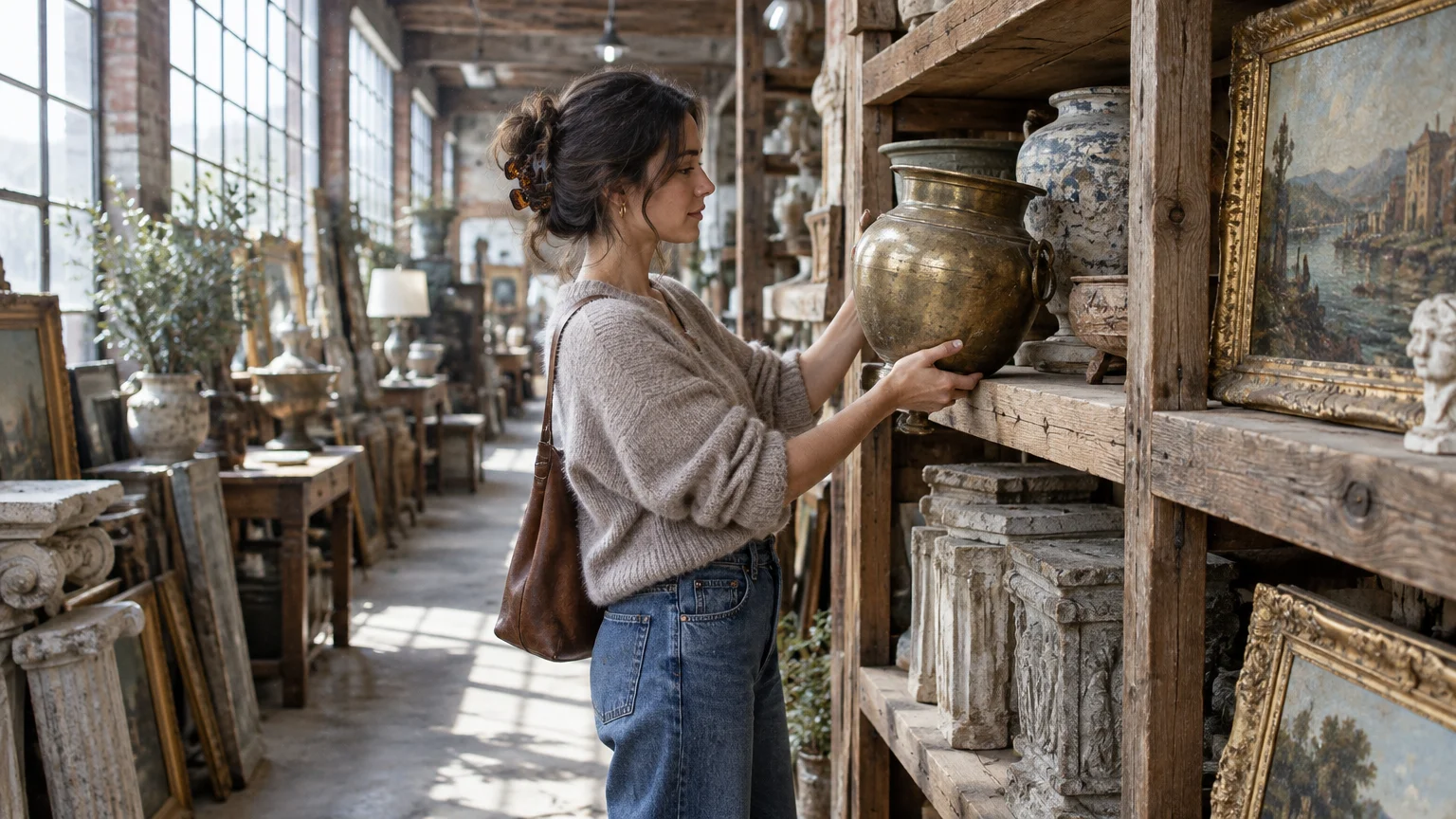
Sourcing secondhand decor gives your home instant provenance and layers of quiet luxury that catalog purchases cannot replicate. Designers scour charity shops for specific heirloom materials that appreciate in character over time.
When you know which materials to spot, you can transform ordinary thrift store decor into high-end statements. Focusing on authentic craftsmanship elevates your space without inflating your budget.
These five designer-approved vintage home finds bring enduring architectural depth and timeless warmth to any interior aesthetic. Here is what you should look for on your next hunt.
Trend #1: Solid Brass Candlesticks and Vessels
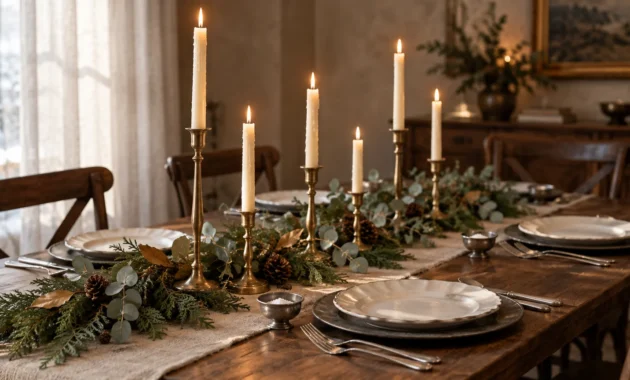
Solid brass brings rich warmth and an organic patina that synthetic, mass-produced gold finishes completely fail to capture.
You will often discover substantial brass candlesticks, bowls, and trays tucked into dusty thrift store shelves.
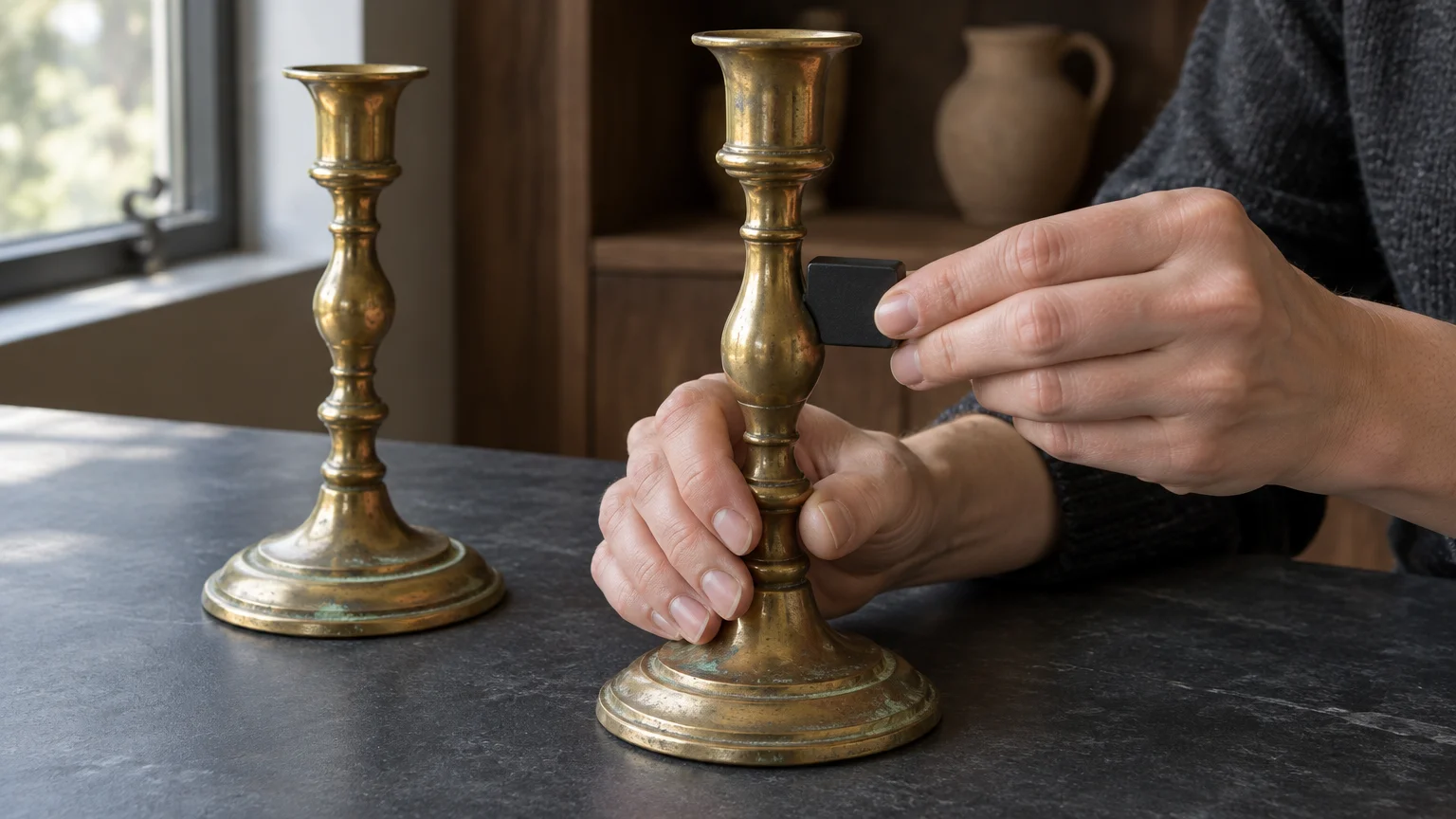
To verify authenticity, test the piece with a magnet; solid brass is an alloy of copper and zinc, making it entirely non-magnetic.
A strong magnetic pull reveals an iron or steel core, but remember that pot metal, or zinc alloy, is also non-magnetic.
You must check the weight and wear patterns to distinguish true brass from brass-plated pot metal.
Solid brass boasts a dense weight of roughly 8.50 grams per cubic centimeter, feeling noticeably heavier than zinc alloy.
Inspect worn edges or a hidden scratch under the base; plated metal reveals a silvery-gray core rather than uniform yellow brass.
Moisture causes zinc to develop white, powdery corrosion, whereas genuine brass develops a deep brown or green verdigris patina over decades.
Style your brass finds on dark wood dining tables or soapstone counters to establish an authentic sense of quiet luxury.
Trend #2: Hand-Thrown Studio Pottery and Vases
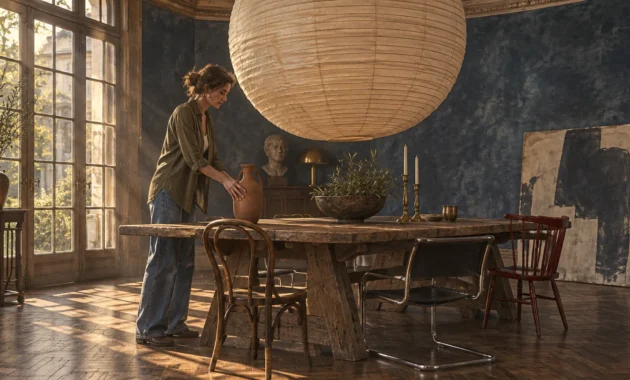
Handmade studio ceramics infuse living spaces with tactile warmth and a grounding, biophilic sensibility.
Unlike uniform factory ceramics, hand-thrown vases and urns celebrate imperfect proportions, visible throwing rings, and distinctive glazes.
These artisanal qualities soften stark modern architecture and provide an earthy counterpoint to sleek contemporary furniture.
Inspect the underside of every vase or vessel for an artist signature, etched initials, or an impressed maker mark.
Seek unglazed stoneware bottoms that reveal raw terracotta, buff, or charcoal clay bodies with substantial textural tooth.
Display your pottery finds in sculptural clusters of three on open shelving or styling consoles.
Fill them with wild, structural branches or leave them empty to highlight their handcrafted silhouettes.
Trend #3: Solid Wood and Carved Picture Frames
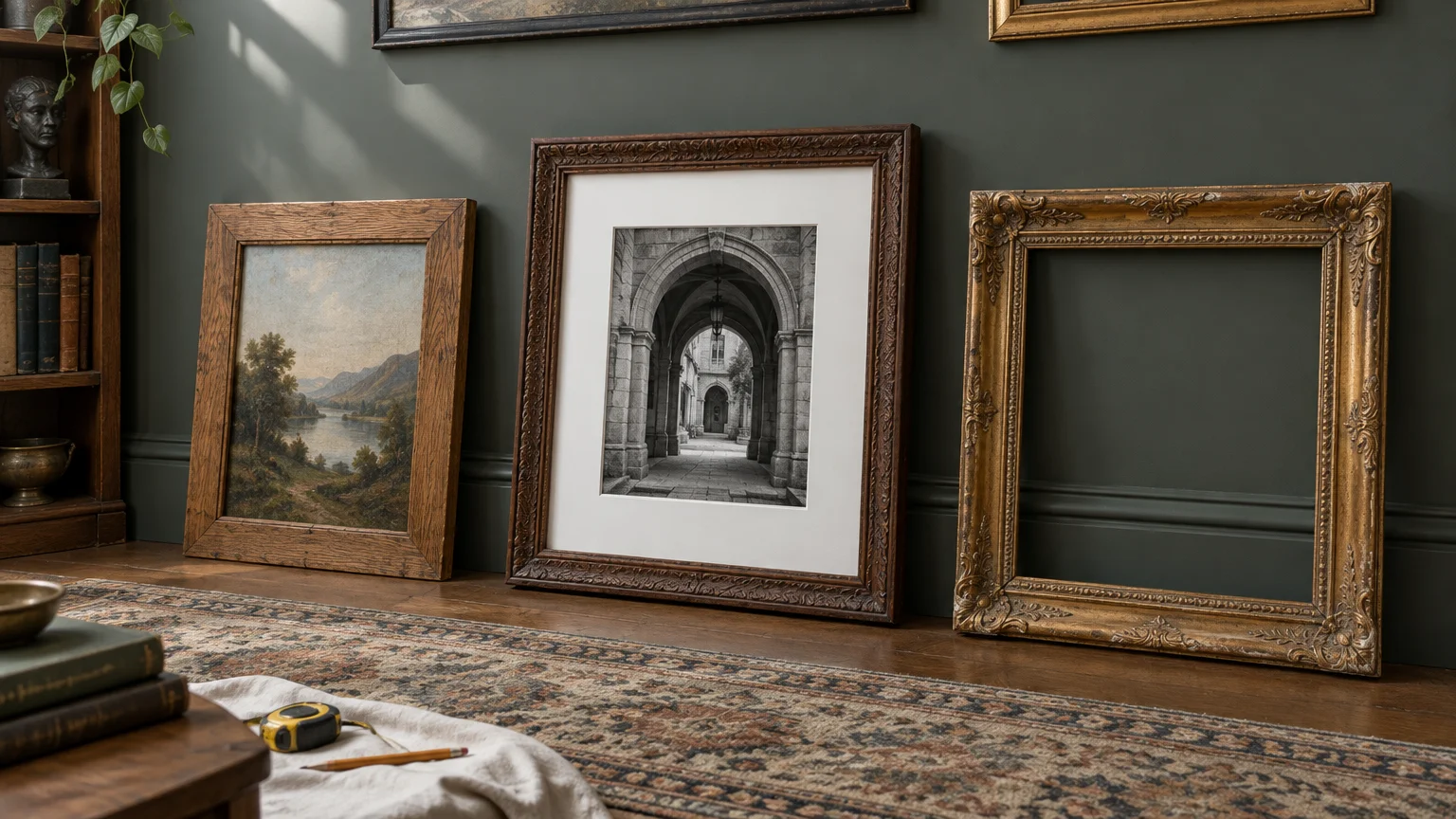
Vintage picture frames crafted from solid oak, walnut, or carved gilded wood instantly elevate contemporary gallery walls.
High-end designers actively collect vintage frames for their intricate mitering and rich grain that modern synthetic mouldings lack.
Keep in mind that standard United States frame dimensions always refer to the interior glass opening rather than outer moulding dimensions.
Familiar standard interior sizes include 8×10, 11×14, 16×20, and 24×36 inches; international metric sizes do not match domestic prints.
When adapting these vintage home finds to modern art, pair them with custom-cut mats for a professional finish.
Standard matting windows feature openings cut one-half inch smaller overall, creating a one-quarter inch overlap on each side.
An 11×14 inch frame matted for an 8×10 print requires a precise 7.5×9.5 inch mat window opening.
Similarly, a 16×20 frame displaying an 11×14 photograph utilizes a 10.5×13.5 inch opening to hold your art securely.
Hang these framed pieces against deep, muted wall colors to create sophisticated focal points with historical resonance.
Trend #4: Architectural Marble and Natural Stone Plinths
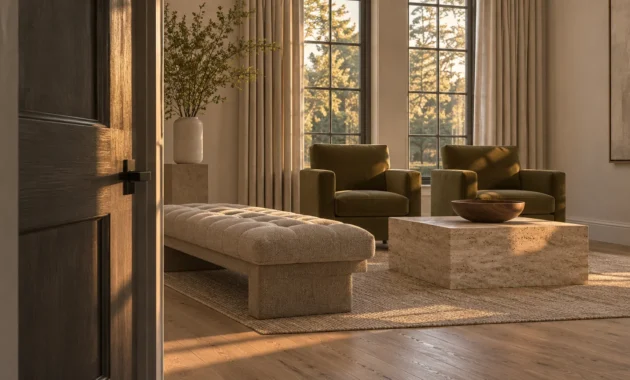
Substantial stone accessories—from honed marble bookends to solid travertine trays—bring cool elegance to coffee tables and credenzas.
Natural metamorphic stone provides physical weight and visual permanence, anchoring lighter upholstery and woven textiles.
Look beyond decorative bowls and seek carved alabaster catchalls, stone obelisks, and heavy marble coasters.
Authentic stone feels cold to the touch and features irregular veining that synthetic cast resins cannot imitate.
Minor chips along the rim often reveal natural mineral crystallization, proving you have found genuine quarried rock.
Incorporate these pieces into your designer styling tips by using stone trays to corral crystal glassware or keys.
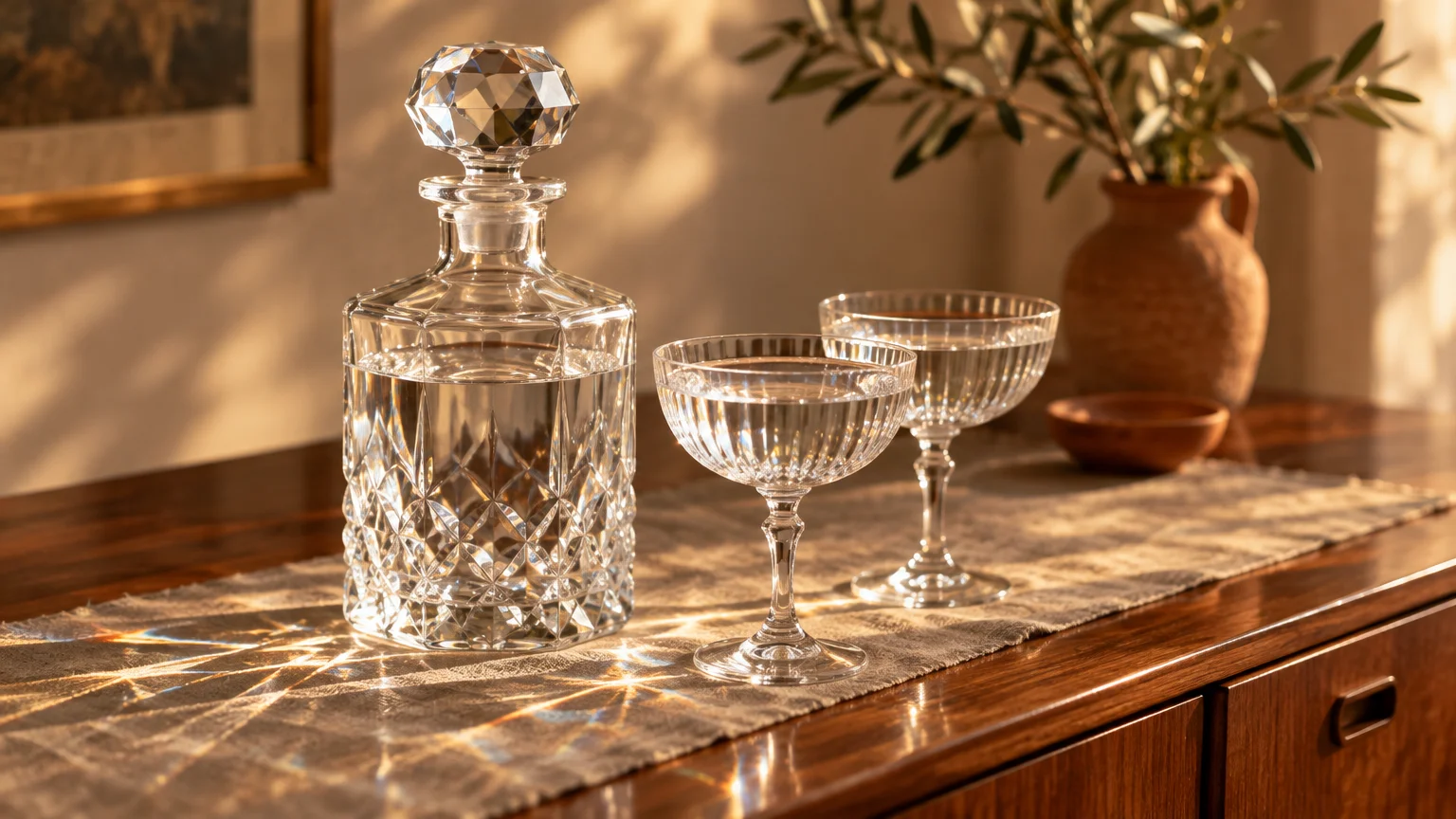
Trend #5: Original Hand-Cut Crystal and Glassware
Vintage lead crystal decanters and hand-blown coupes introduce brilliant light refraction and timeless charm to dining rooms and bars.
Unlike lightweight soda-lime machine glass, vintage hand-cut crystal possesses an unmistakable brilliance and dense musical ring when tapped gently.
The sharp faceting and artisanal cuts cast kaleidoscopic light patterns across polished wood tables and linen tablecloths.
Search for heavy barware, footed compotes, and ribbed flutes with polished pontil marks on the base.
These sparkling accents create visual friction against matte pottery and rustic wood surfaces, producing a layered, curated look.
The Big Picture: Weaving These Trends into Your Home
Successful interior curation relies on tension; your space should never look like a single decade or a matching showroom.
Blend your secondhand decor with crisp modern lines to maintain an intentional, contemporary rhythm.
Contrast the warm luster of solid brass against cool honed stone to keep your styling dynamic and balanced.
Let each vintage find breathe by avoiding cluttered displays and honoring negative space.
For the latest color forecasts, consult industry leaders like Pantone and paint companies like Benjamin Moore. For professional design standards, refer to the American Society of Interior Designers (ASID).
Disclaimer: This article reflects design trend analysis and predictions. Personal taste and timeless design principles should always guide your decorating choices.
Frequently Asked Questions
How do you clean and restore vintage solid brass finds?
Remove surface grime with warm water and mild dish soap before applying gentle polish with a soft microfiber cloth.
If you prefer an aged look, leave the natural verdigris patina intact rather than stripping the surface bare.
Can you mix different wood tones when buying vintage frames?
You can comfortably mix walnut, oak, and cherry as long as you maintain a consistent undertone across the collection.
Unifying varied wood species with matching white mats creates an intentional and cohesive gallery wall presentation.
Why is vintage hand-thrown pottery superior to mass-produced decor?
Hand-thrown pottery carries unique textural nuances and organic irregularities that inject personality into minimalist interiors.
These one-of-a-kind pieces ground your home aesthetic while honoring traditional ceramic craftsmanship.