Smart apartment upgrades now pair gallery-worthy style with measurable utility relief. With U.S. residential electricity averaging 18.2 cents per kilowatt-hour across 2026, your decor choices directly shape your monthly bills.
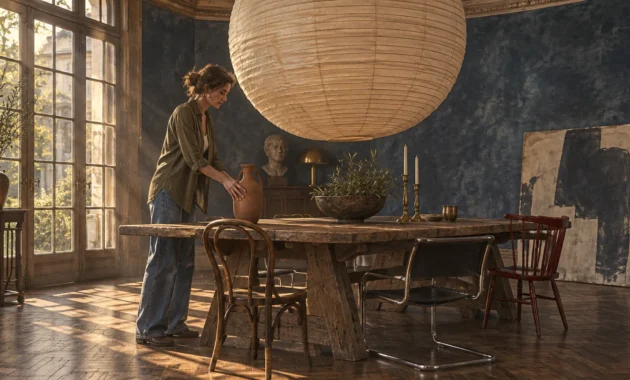
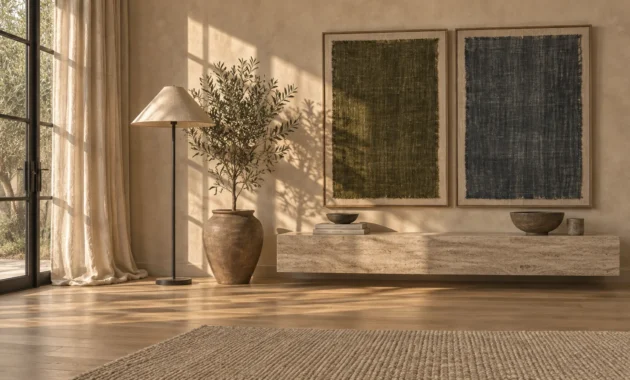
Today’s renters and condo owners are embracing quiet luxury—an understated aesthetic built on tactile materials and intentional restraint. Every fixture in your floor plan can lower waste without sacrificing visual polish.
These eight renter friendly upgrades elevate your rooms today while helping you save money at home every single month.
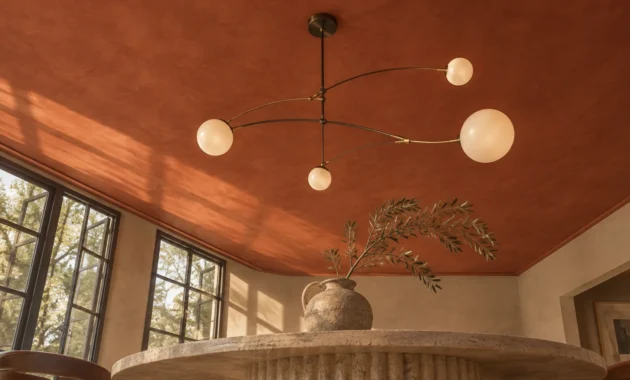
Trend #1: Architectural Warmth Through High-Efficiency LED Lighting
Lighting shapes how every finish, textile, and paint color reads in your apartment. According to the U.S. Department of Energy (DOE), lighting also accounts for roughly 15 percent of an average home’s electricity use.
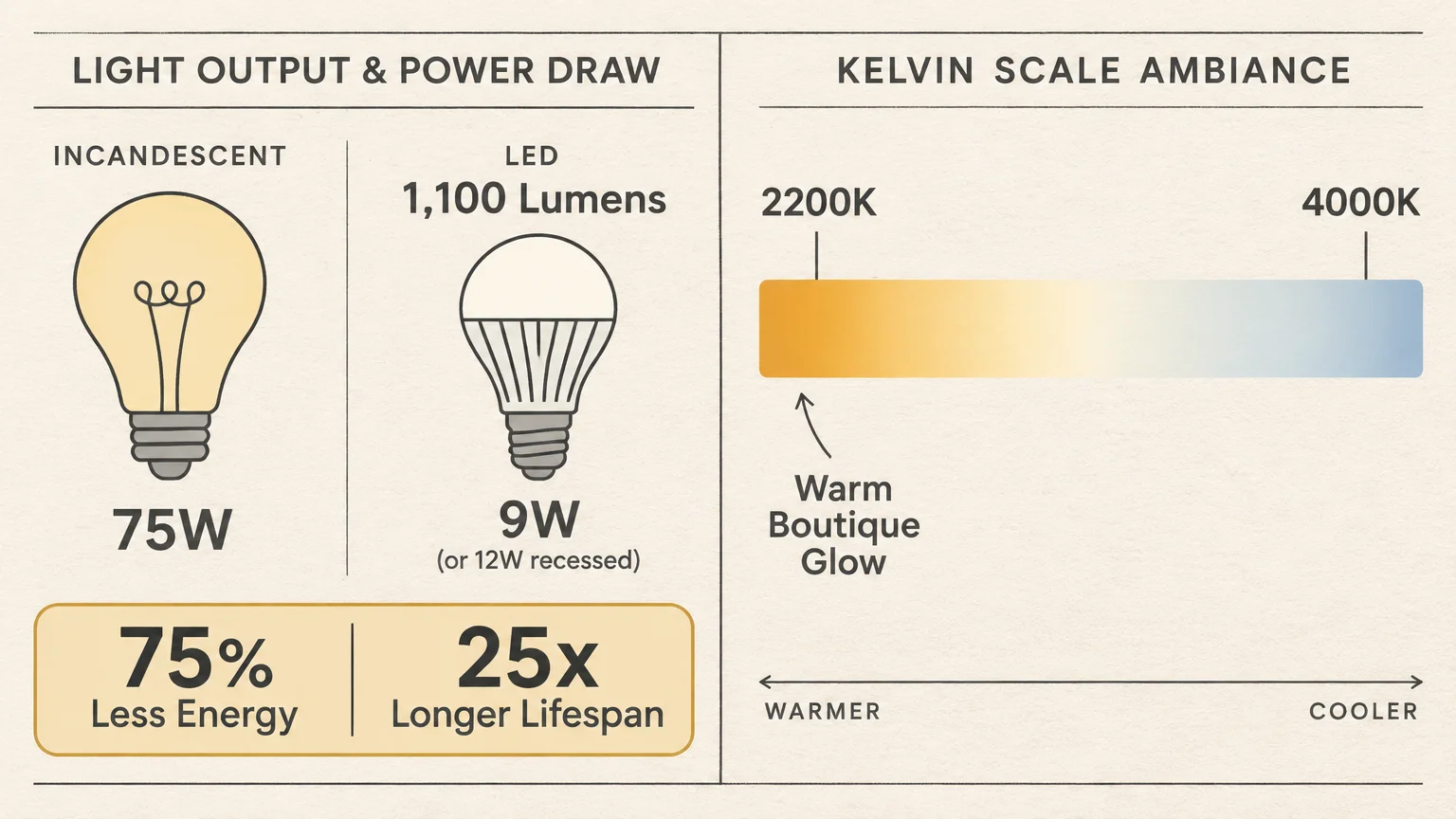
Swapping outdated bulbs for modern LEDs is one of the fastest apartment upgrades you can make. DOE guidance confirms that LEDs use at least 75 percent less energy than incandescent bulbs, emit virtually no heat, and last 25 times longer.
Mastering Lumens and the Kelvin Scale
Forget shopping by wattage when curating your apartment decor ideas. The DOE notes that brightness is measured in lumens, meaning a 1,100-lumen LED replaces a 75-watt incandescent while drawing as little as 9 watts—or 12 watts for recessed fixtures.
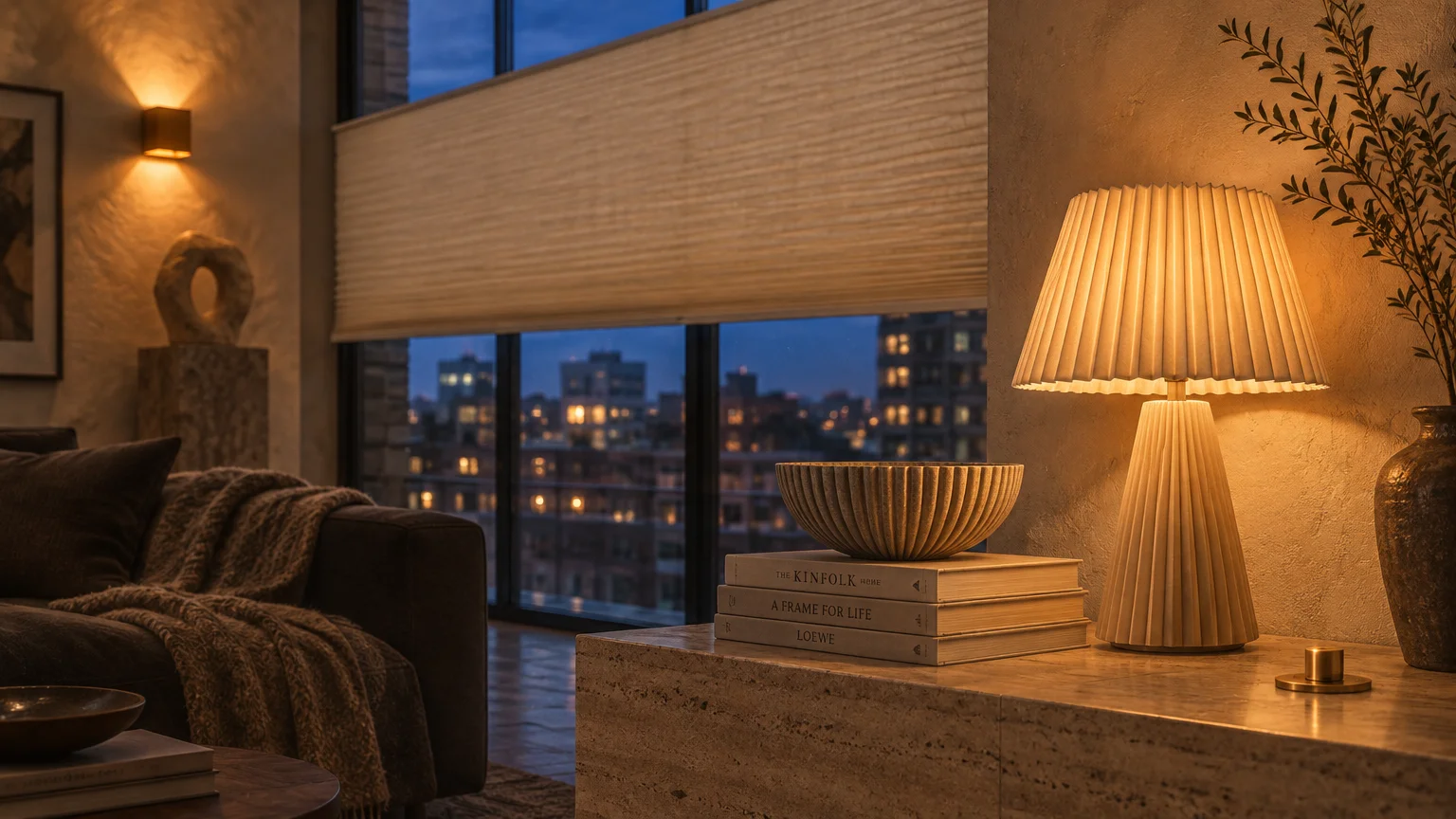
To preserve a cozy, boutique-hotel ambiance, pay close attention to Kelvin ratings. Lower Kelvin numbers produce warm, yellow light closest to traditional incandescents, whereas higher Kelvin numbers cast a cooler, bluer glow suited to task zones.
Choosing ENERGY STAR certified LEDs pushes your efficiency and environmental impact even further. ENERGY STAR reports these certified bulbs use up to 90 percent less energy, last 15 times longer than standard bulbs, and prevent an average of 780 pounds of greenhouse gas emissions over one bulb’s lifetime.
Fixture Compatibility and Design Layering
Before installing new bulbs in vintage pendants or flush-mount globes, check the packaging carefully. The DOE warns in its September 2026 guidance that heat buildup shortens LED lifespan, so you must verify ratings before placing LEDs in fully enclosed fixtures.
Always confirm dimmer compatibility on the box before pairing new bulbs with existing wall dimmers. Combining warm-tone LEDs across table lamps, sconces, and floor uplights creates rich dimensional depth while keeping energy waste remarkably low.
Trend #2: Tailored Cellular Shades and Draped Thermal Layers
Bare builder-grade blinds instantly flatten an otherwise curated living room. Worse, the DOE notes that vinyl or metal blinds make up 60 percent of U.S. window coverings, leaving millions of apartments vulnerable to seasonal drafts.
Although windows represent only about 10 percent of a typical home’s surface area, joint DOE, Lawrence Berkeley National Laboratory (LBNL), and Pacific Northwest National Laboratory (PNNL) findings from 2023 show they cause 30 to 40 percent of winter heat loss. The DOE adds that windows account for 10 to 25 percent of heating bills.
Why Honeycomb Architecture Outperforms Blinds
Nearly 80 percent of U.S. homes still rely on inefficient single- or double-pane windows, according to the DOE. Replacing flimsy slats with tailored cellular shades introduces crisp, pleated architectural lines that soften harsh glare.
LBNL simulations reveal that cellular—or honeycomb—shades deliver higher energy savings than any other interior shading device. Well-fitted, energy-efficient window attachments can save 15 percent of annual HVAC energy use compared to vinyl blinds, per DOE data.
Selecting Ratings and Styling Your Windows
When shopping for energy saving home upgrades, look for Attachments Energy Rating Council (AERC) certifications on packaging. For example, DOE, LBNL, and PNNL guidance highlights Minnesota’s efficiency standards, which specify AERC-certified shades with a Warm Climate Rating of at least 36 and a Cool Climate Rating of at least 9.
You can amplify that quiet-luxury look by layering floor-length curtains—which make up just 19 percent of U.S. window coverings—over neutral cellular shades. Close your shades and curtains at night during winter to block drafts, then open them by day to invite passive solar warmth inside.
Trend #3: Invisible Low-E Window Films and Interior Storm Panels
If your apartment boasts skyline views or historic casements, you may resist covering the glass at all. Fortunately, modern optical glazing upgrades stay nearly invisible while stabilizing your indoor climate.
Low-emissivity—or low-e—window film applies directly to the interior glass surface with a clean, distortion-free finish. According to the DOE, low-e film keeps indoor heat from radiating outward in winter, with performance rated by the National Fenestration Rating Council (NFRC).
Targeted Solar Control Without Losing Daylight
Harsh afternoon sun can fade hardwood floors, natural linen upholstery, and treasured artwork with clear provenance—meaning an object’s documented origin and history. ENERGY STAR and the DOE Federal Energy Management Program note that solar film on east- and west-facing windows cuts summer solar heat gain while letting most visible light pass through.
If you live in a warmer climate, apply solar film to south-facing windows as well. Many static-cling and wet-apply films peel off cleanly at move-out, making them ideal renter friendly upgrades for sunny high-rises.
Removable Storm Panels and Condensation Caution
For older apartments with rattly frames, interior low-e storm panels offer a sleek secondary barrier that quiets street noise too. The DOE reports that interior or exterior low-e storm windows reduce window heat loss by 25 to 50 percent and save 10 to 30 percent on heating and cooling costs.
Pay strict attention to perimeter fit when installing removable panels. The DOE cautions that friction-fit or removable window attachments carry a higher risk of condensation than permanently tracked models unless you seal the interior-most layer as tightly as possible.
Trend #4: Minimalist Smart Thermostats and Automated Climate Schedules
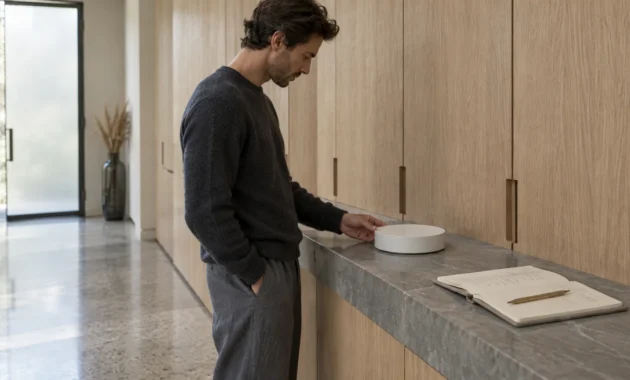
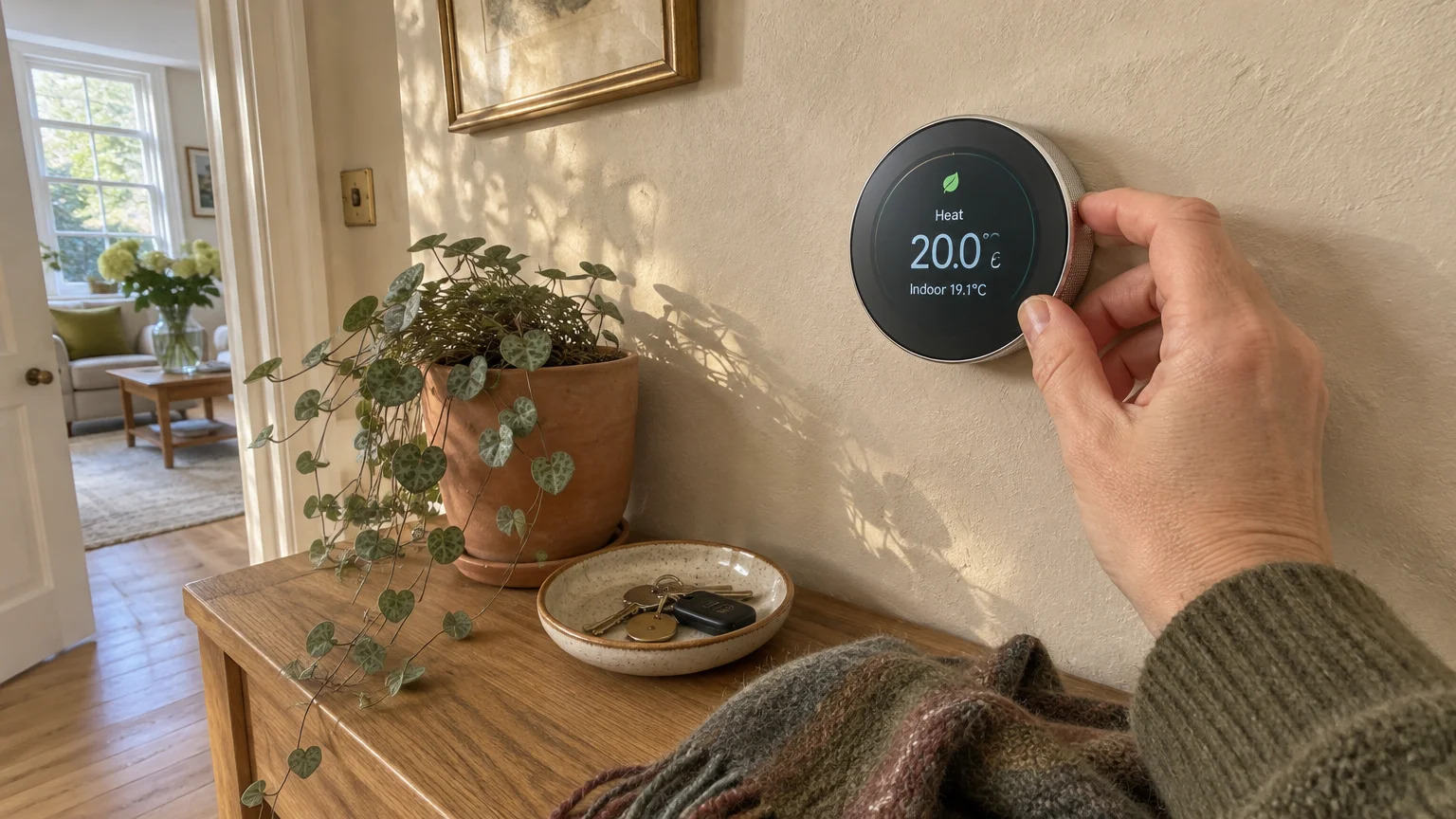
Bulky plastic thermostats from decades past disrupt the clean wall planes prized in contemporary interiors. Upgrading to a slim, matte-finish smart thermostat turns climate hardware into a subtle, intentional wall accent.
Beyond sleek aesthetics, automated scheduling takes the guesswork out of temperature management. According to the DOE, turning your thermostat back 7°F to 10°F for 8 hours a day can save up to 10 percent per year on heating and cooling.
Verified Savings for Busy Schedules
If you commute to an office or travel often, smart sensors adapt effortlessly to your routine. ENERGY STAR reports that independently certified smart thermostats cut heating and cooling bills by more than 8 percent, saving roughly $50 per year on average—or about $100 annually if your home sits unoccupied much of the day.
In high-rate states, every kilowatt-hour saved carries outsized value. U.S. Energy Information Administration (EIA) data from October 2026 shows August residential electricity rates hit 29.02 cents per kilowatt-hour in California, 26.42 cents in Massachusetts, and 25.34 cents in Rhode Island, compared with 8.91 cents in North Dakota.
Critical Rules for Heat Pumps and Placement
Before swapping your wall unit, verify what type of mechanical system heats your apartment. The DOE warns against manually setting back a heat pump thermostat if doing so triggers expensive electric-resistance backup heat; instead, choose a multistage programmable or smart thermostat engineered specifically for heat pumps.
Thoughtful furniture placement also keeps your system accurate and efficient. ENERGY STAR recommends keeping electronics and heat sources away from thermostats while ensuring sofas, consoles, and drapery stay completely clear of air registers.
Trend #5: Sculptural Ceiling Fans With Intentional Proportions
Ceiling fans have shed their dated, clunky reputation in favor of organic timber blades, brushed brass housings, and whisper-quiet motors. Treated as overhead sculpture, a well-proportioned fan anchors a seating group much like a contemporary chandelier.
The cooling math is equally compelling during humid summer afternoons. According to the DOE, running a ceiling fan creates a wind chill effect that lets you raise your thermostat by about 4°F in summer with zero loss of comfort.
Seasonal Blade Direction and Occupancy Habits
Your ceiling fan works year-round when you adjust its rotation to match the season. The DOE advises setting blades to spin counterclockwise in summer for a cooling downdraft, then reversing them to clockwise at low speed in winter to push trapped warm air down from the ceiling.
Always flip the wall switch off when you walk out of a bedroom or living space. As the DOE emphasizes, ceiling fans cool people through air movement rather than cooling empty rooms.
Exact Clearances for Optimal Airflow and Safety
Proportion and clearance dictate both visual balance and aerodynamic performance. DOE Building America standards specify mounting blades 7 to 9 feet above the floor and 10 to 12 inches below the ceiling for optimal circulation.
Never crowd blades against architectural beams or nearby walls. Keep fan blades at least 8 inches from the ceiling and 18 inches from walls, and note that rooms longer than 18 feet perform better with multiple fans.
Trend #6: Spa-Grade WaterSense Showerheads and Brass Aerators
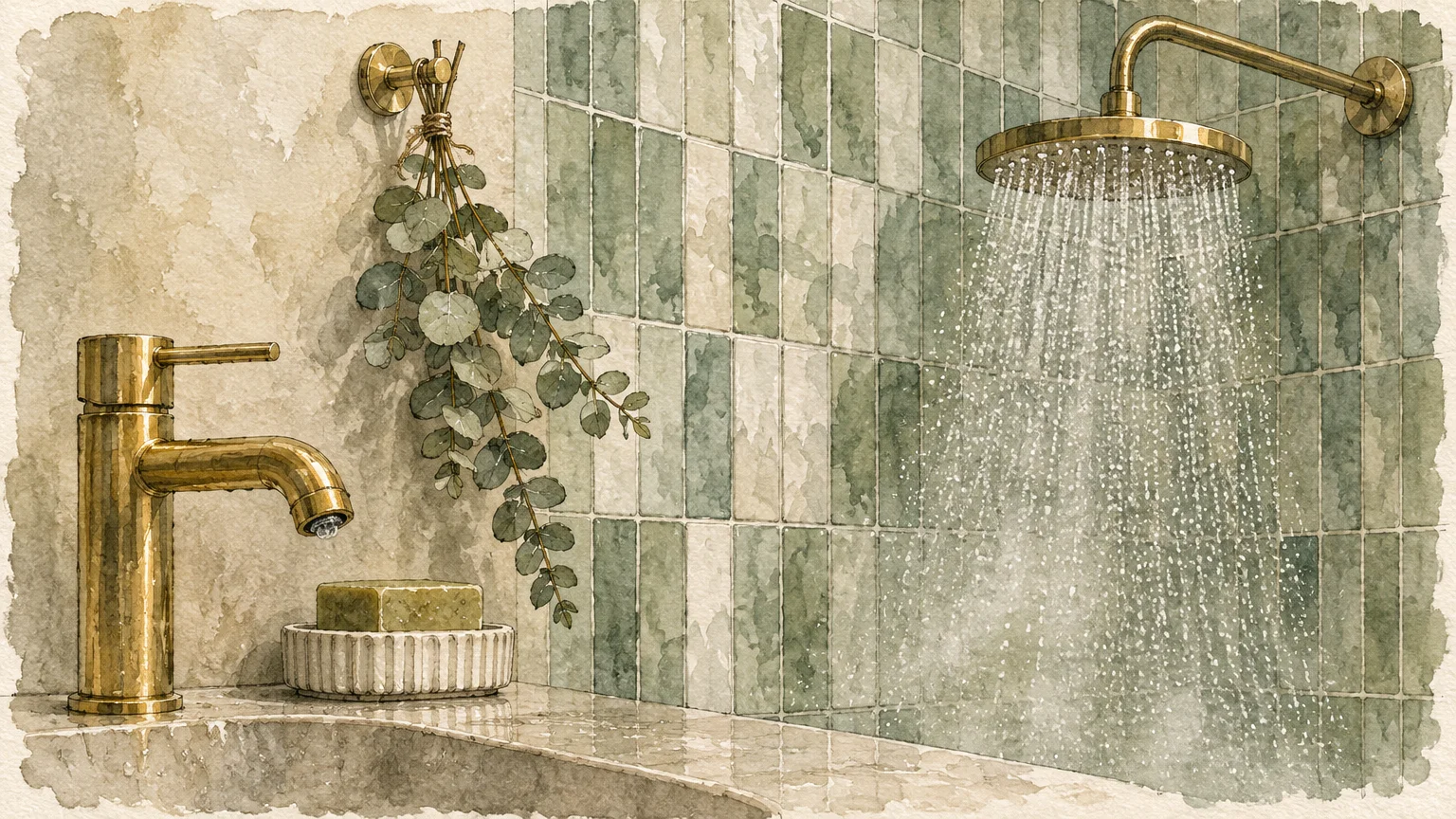
In compact apartments, the bathroom offers the richest opportunity for everyday luxury. Replacing a lime-crusted builder-grade showerhead with a sleek WaterSense fixture upgrades both your morning ritual and your utility footprint.
According to U.S. EPA WaterSense data from March 2026, showering accounts for nearly 17 percent of indoor residential water use—almost 40 gallons per day for the average family. Standard showerheads flow at 2.5 gallons per minute (gpm), whereas WaterSense labeled showerheads use 2.0 gpm or less while passing independent tests for spray force and coverage.
High-Design Aerators That Cost Pocket Change
You do not need a full plumbing remodel to upgrade your vanity sink. Twist-on bathroom faucet aerators cost as little as a few dollars, install in minutes without tools, and tuck neatly inside brass, matte black, or brushed nickel spouts.
U.S. EPA WaterSense data from December 2024 notes that WaterSense labeled bathroom faucets and aerators cap flow at 1.5 gpm—cutting sink flow by 30 percent or more below the 2.2 gpm national standard. Notably, the EPA also issued a draft Version 2.0 specification in December 2024 proposing to lower that private bathroom faucet limit from 1.5 to 1.2 gpm.
Compounding Water and Heating Savings
Cutting hot water waste delivers a double financial win because you pay for both the water and the energy required to heat it. EPA WaterSense calculates that replacing old bathroom faucets or aerators with WaterSense models saves the average family 700 gallons of water per year—equal to 45 showers, or nearly 11,000 gallons over the fixture’s lifetime—plus enough water-heating energy to run a hairdryer 17 minutes a day for a year.
Pair your hardware swap with mindful daily habits around the basin. The EPA reports that turning off the tap while brushing your teeth saves up to 3,000 gallons per year, while ENERGY STAR notes that fixing a dripping hot water faucet prevents wasting hundreds of gallons annually.
Trend #7: Concealed Cord Management With Advanced Power Strips
Nothing undermines calm, minimalist apartment decor ideas faster than a tangled nest of black cords behind your media console. Designers increasingly treat cable concealment as an essential architectural detail rather than an afterthought.
Slotting an advanced power strip inside a woven seagrass basket or cable-management box solves visual clutter and standby waste simultaneously. The DOE warns that phantom—or vampire—loads from electronics drawing standby power when switched off can add an extra 5 to 10 percent to your monthly utility bill.
How Smart Strips Eliminate Standby Drain
Unlike basic surge protectors that feed electricity continuously, advanced power strips actively monitor how you use your space. Equipped with built-in timers, activity monitors, or remote controls, these strips automatically cut power to idle devices so they stop drawing standby electricity, per DOE guidance.
This upgrade shines brightest in living rooms and compact home offices where printers, monitors, soundbars, and gaming consoles cluster together. When your television or primary workstation powers down, the strip cuts energy to peripheral accessories automatically.
Rising Electricity Costs Make Phantom Loads Costlier
Eliminating background power drain matters more than ever as residential utility rates climb nationwide. EIA figures from May and October 2026 show the average U.S. residential electricity price reached 18.16 cents per kilowatt-hour in August 2026—up 3.4 percent from 17.57 cents in August 2025.
Across all of 2026, residential electricity prices average nearly 5 percent higher than in 2025, with the EIA forecasting another 2 percent rise in 2027. Taming hidden vampire loads protects your monthly budget automatically while keeping floors clear and serene.
Trend #8: Discrete Air Sealing and Calibrated Water Heating
The most sophisticated interiors share one invisible luxury: effortless thermal comfort without whistling drafts. When cold air creeps around entry doors or outlet plates, rooms feel unsettled no matter how sumptuous your wool rug may be.
According to the DOE, combining recommended air sealing, insulation, and thermostat settings with efficient HVAC equipment can cut heating and cooling bills by about 30 percent. Best of all, the cleanest sealing upgrades vanish completely into your existing millwork.
Renter-Safe Gasket and Weatherstripping Fixes
You can tackle major leak points in a single Saturday afternoon using hardware-store staples. The DOE highlights low-cost DIY measures including applying weatherstripping and caulk around leaky doors and windows, sealing plumbing and wiring wall penetrations, and slipping foam gaskets behind outlet and switch plates.
Foam outlet gaskets sit invisibly beneath your brass or painted wall plates, blocking hidden wall-cavity drafts with zero permanent alteration. Color-matched silicone caulk and crisp peel-and-stick door sweeps clean up gaps while keeping your security deposit intact.
The 120-Degree Water Heater Sweet Spot
If your apartment includes an accessible in-unit water heater, check its temperature dial before touching anything else. The DOE advises setting water heaters to 120°F to maximize energy savings while protecting your household from scalding.
That simple adjustment carries urgent safety value alongside lower utility costs. Per DOE data, water heated to 140°F can cause a burn after just 6 seconds of skin contact, whereas 120°F delivers comfortable showers without standby overheating.
The Big Picture: Weaving These Trends into Your Home
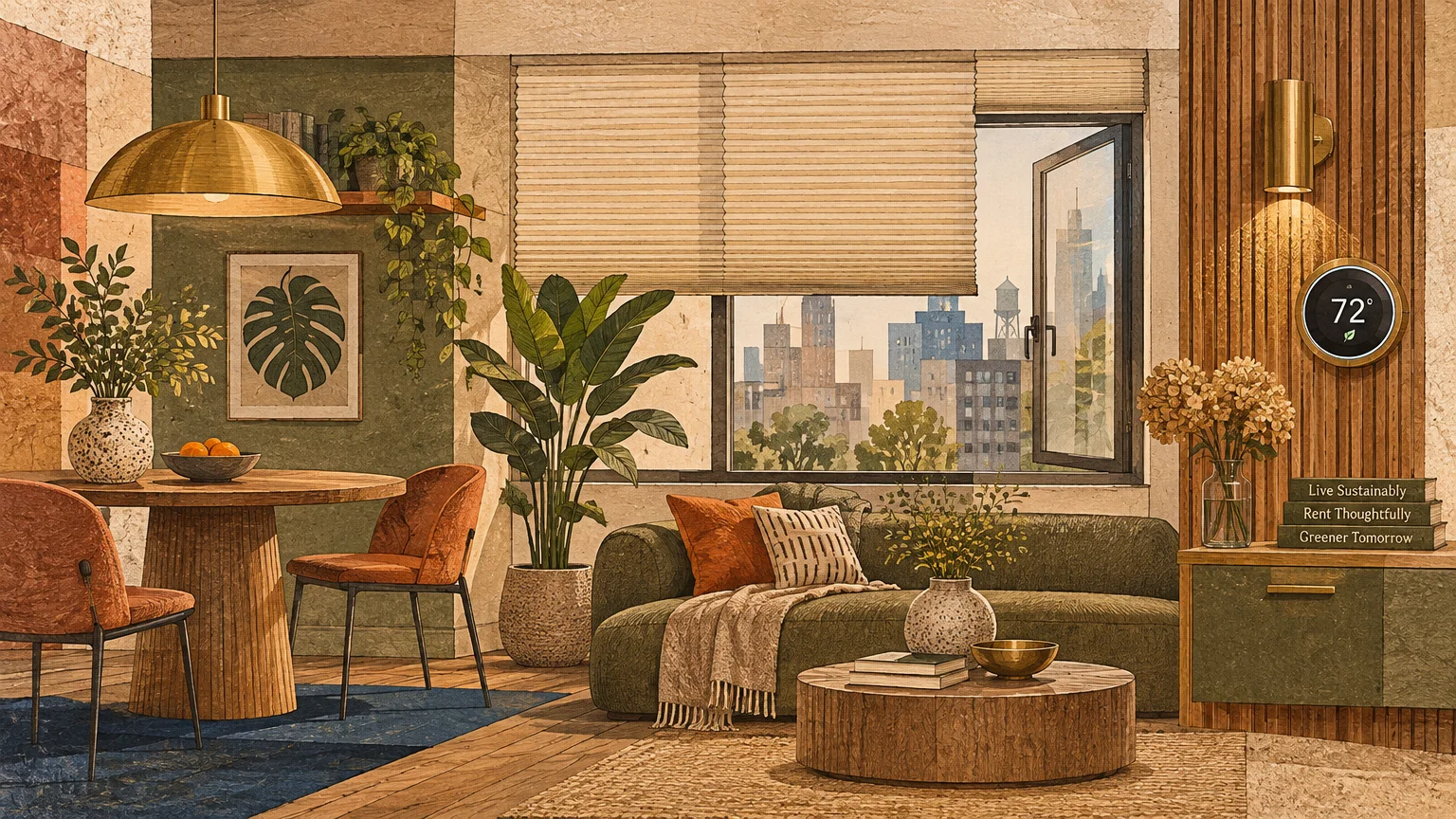
True quiet luxury emerges when aesthetic intention and functional efficiency operate in harmony. Rather than treating utility updates as sterile chores, weave them into a cohesive sensory palette built around biophilic warmth—meaning design choices that echo natural light, airflow, and organic textures.
Start with the upgrades that transform both sightlines and comfort immediately, such as warm-tone LEDs and cellular honeycomb shades. From there, layer invisible performance upgrades like foam outlet gaskets, solar window film, and advanced power strips behind your styled vignettes.
For the latest color forecasts, consult industry leaders like Pantone and paint companies like Benjamin Moore. For professional design standards, refer to the American Society of Interior Designers (ASID).
Keep original landlord fixtures labeled in a closet bin whenever you swap showerheads, aerators, or wall thermostats. That simple habit lets you enjoy tailored, cost-cutting performance for years and restore everything effortlessly before moving day.
Frequently Asked Questions
Which apartment upgrades deliver the fastest return without tools?
Swapping in warm-tone ENERGY STAR LED bulbs, plugging media gear into advanced power strips, and twisting on a WaterSense bathroom faucet aerator require no tools at all. Each takes minutes to install and immediately trims lighting, standby power, and hot water waste.
Do cellular shades look stylish enough for formal living spaces?
Yes—modern cellular shades feature tailored pleats in crisp linens, soft neutrals, and subtle woven textures that complement contemporary and classic rooms alike. You can also mount floor-length drapery panels outside the window frame to add dramatic vertical height and softness.
Are window films and removable storm panels safe for apartment glass?
Static-cling and low-e films rated by the NFRC typically peel away cleanly, though you should confirm lease rules before applying adhesives to specialty coated glass. If you add removable interior storm panels, seal the interior-most layer tightly to prevent condensation buildup.
Should I ask my landlord before installing a smart thermostat or ceiling fan?
Always request written approval before altering hardwired electrical or HVAC connections, and confirm whether your apartment uses a heat pump that requires a specialized multistage thermostat. Many landlords welcome reversible efficiency upgrades when a qualified technician handles installation.
What temperature should I set my apartment water heater for safety and savings?
The DOE recommends setting residential water heaters to 120°F for optimal energy efficiency and scald prevention. Higher settings such as 140°F waste standby energy and can burn skin in just 6 seconds of contact.
Disclaimer: This article reflects design trend analysis and predictions. Personal taste and timeless design principles should always guide your decorating choices.