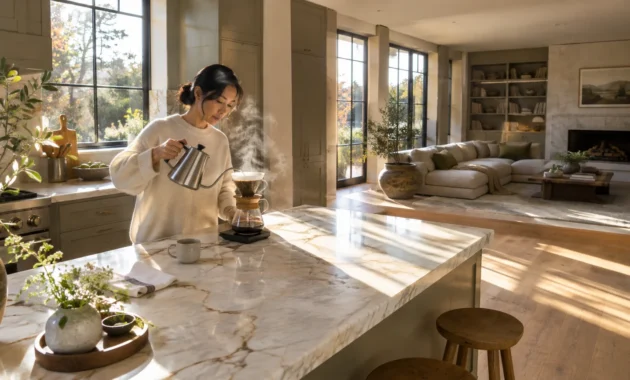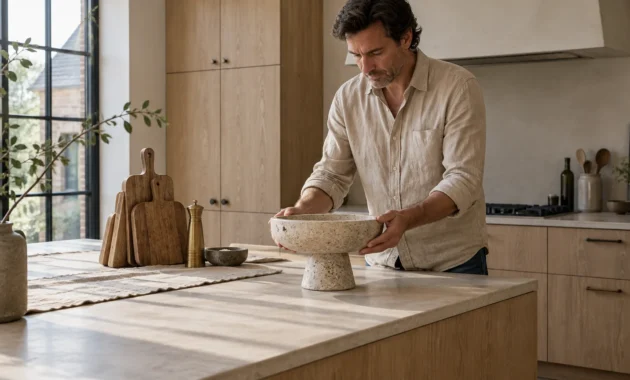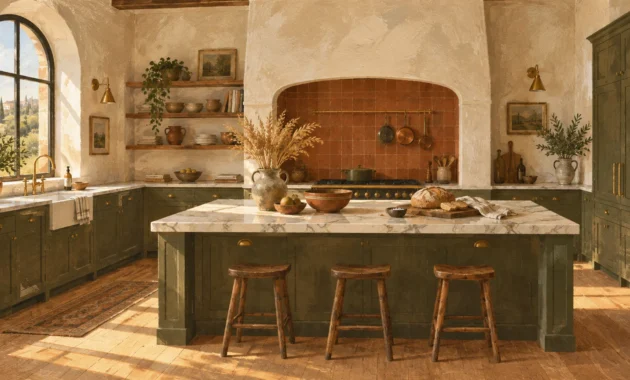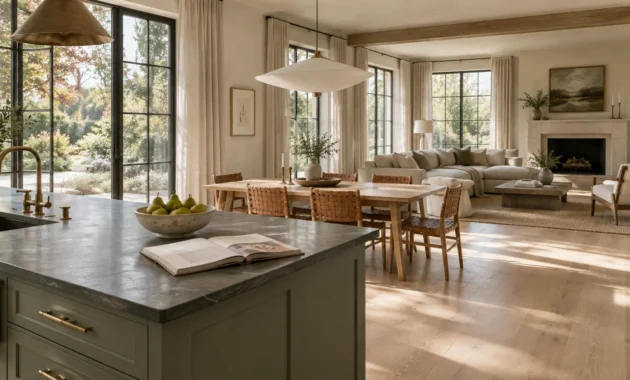
Upgrading your cabinet hardware is the fastest way to transform a tired kitchen into a design-forward showpiece. You can revitalize your entire room over a single weekend without the stress of an invasive renovation.
Outfitting an average kitchen costs between $100 and $500, delivering maximum visual impact for minimal investment. Strategic hardware choices elevate your cabinetry while tying adjoining living and dining spaces into one cohesive aesthetic narrative.
By replacing generic pulls with curated architectural fixtures, you instantly redefine your home’s character. Modern kitchen knob and handle ideas turn everyday functional touchpoints into luxurious, tactile focal points.
Trend #1: Unlacquered Brass and Living Finishes
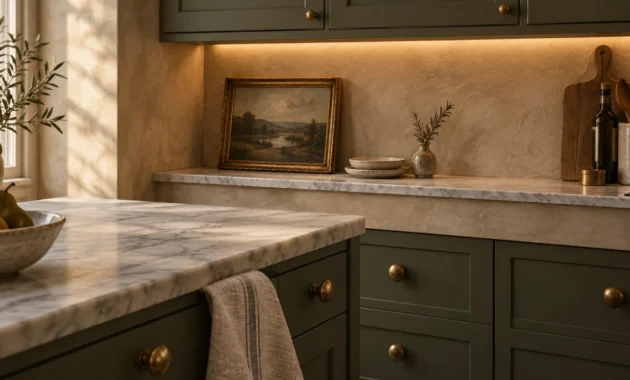
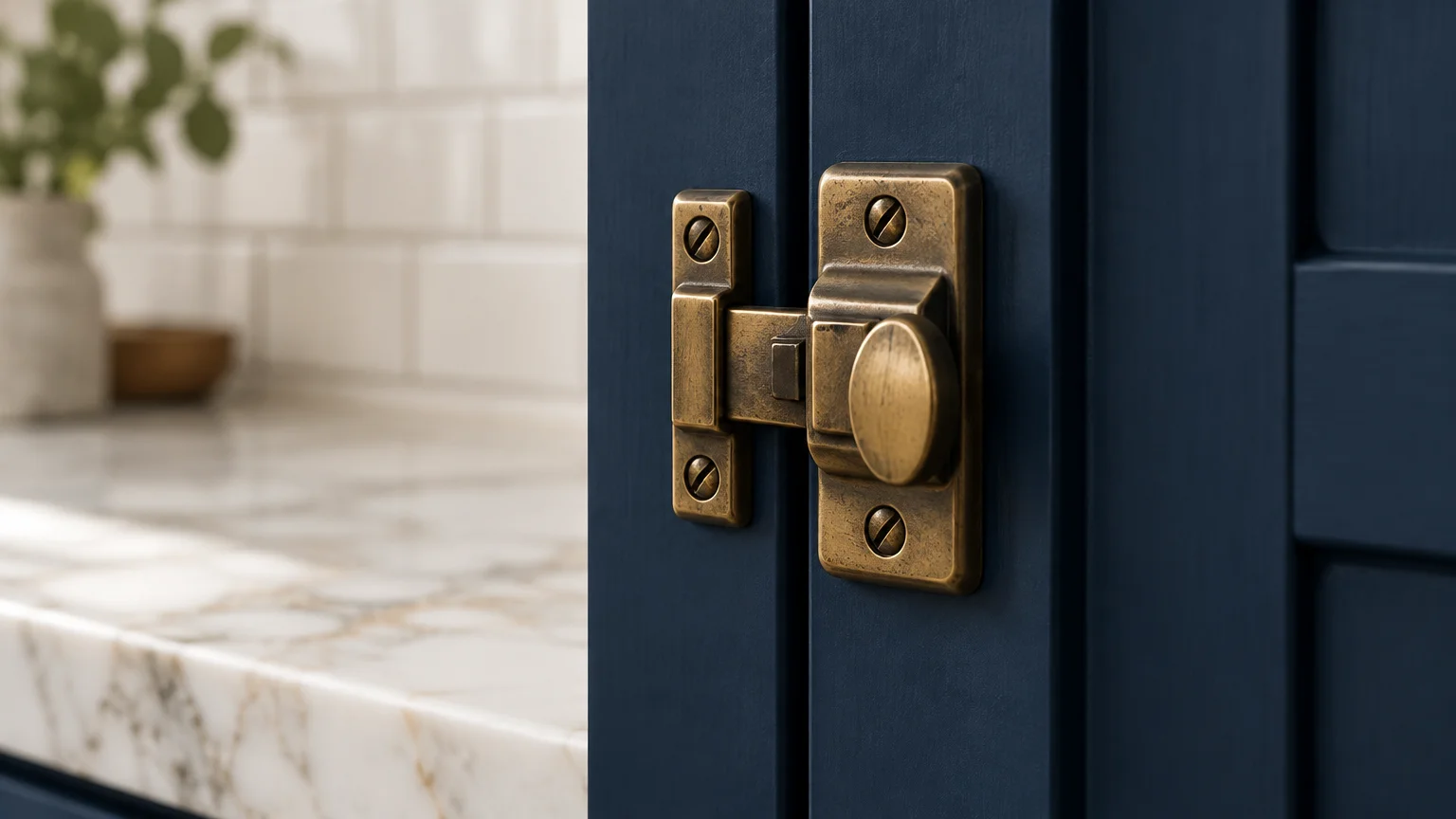
You can replace sterile, high-shine chrome with unlacquered brass to infuse your culinary space with historic warmth. This living finish reacts to touch and air, developing an organic patina that tells a rich visual story.
Design enthusiasts embrace this shift toward quiet luxury and authentic provenance. Raw metals ground modern cabinetry, establishing an effortless connection to vintage dining furniture and textured living room palettes.
While brushed gold accounts for 12% of hardware choices according to Houzz, untreated brass offers superior aesthetic longevity. The metal ages gracefully alongside rich marble countertops and warm hardwood flooring.
Unlike sealed lacquer, living brass reveals golden highlights on frequently touched edges while deepening into antique bronze in crevices. This tonal evolution prevents your kitchen from ever looking mass-produced or static.
For a seamless cabinet hardware upgrade, measure your existing holes before purchasing new pieces. Standard center-to-center pull sizes commonly measure 3 inches or 3.75 inches, simplifying your installation process.
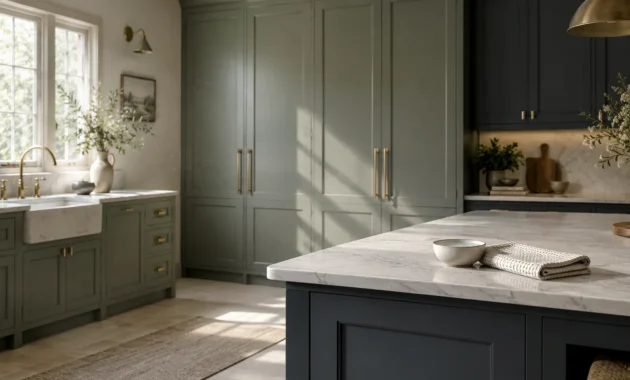
Pair warm brass latches with muted sage cabinetry or deep navy pantry doors. The subtle golden reflection introduces soft illumination that flatters both cooking zones and adjacent entertaining spaces.
You can complement these living accents with unlacquered brass switch plates in your breakfast nook. Carrying the metal into adjoining areas weaves a unified, bespoke design story throughout your main level.
This simple swap transforms flat surfaces into layered works of art. You achieve a timeless European ambiance without replacing a single cabinet box.
Trend #2: Oversized Statement Bar Pulls
Swapping diminutive knobs for elongated bar pulls creates instant architectural drama across your kitchen perimeter. Modern proportions favor bold, extended silhouettes that anchor broad drawer stacks and tall pantry millwork.
Industry research confirms that bar pulls dominate consumer preferences, with 74% of renovating homeowners selecting this versatile profile. Their sleek geometry provides a clean, continuous horizontal line that visually expands compact kitchens.
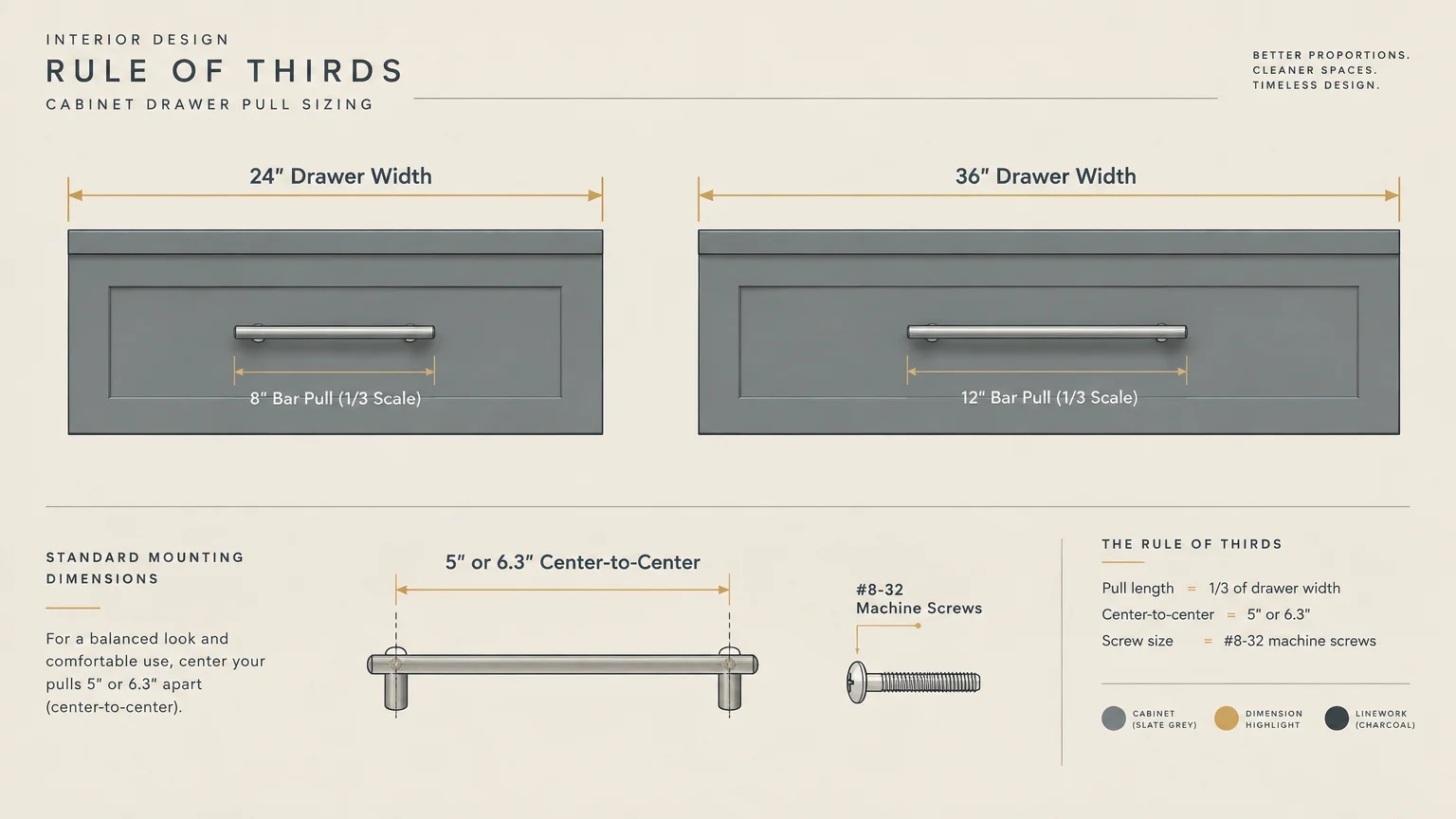
To master proper scale, apply the interior design rule of thirds to your drawer fronts. Your pull’s total length should measure approximately one-third of the drawer width, ensuring balanced visual weight.
An 8-inch pull anchors a 24-inch drawer beautifully, while wide 36-inch drawers accommodate generous 12-inch handles effortlessly. This deliberate scaling mirrors the expansive proportions found in contemporary open-plan living rooms.
Look for standard 5-inch or 6.3-inch center-to-center dimensions to maximize ergonomics. Most quality pulls mount securely with #8-32 machine screws, guaranteeing reliable stability under heavy daily use.
Elongated pulls also offer superior accessibility for family members with limited mobility. The generous clearance allows you to slip your entire hand behind the bar rather than pinching with fingertips.
Install these substantial pulls on integrated appliance panels to unify your cabinetry with surrounding architectural elements. The resulting aesthetic feels tailored, confident, and undeniably sophisticated.
When extended vertically on full-height pantry cabinets, oversized pulls draw the eye upward toward high ceilings. This vertical emphasis amplifies the sense of volume in both your kitchen and dining areas.
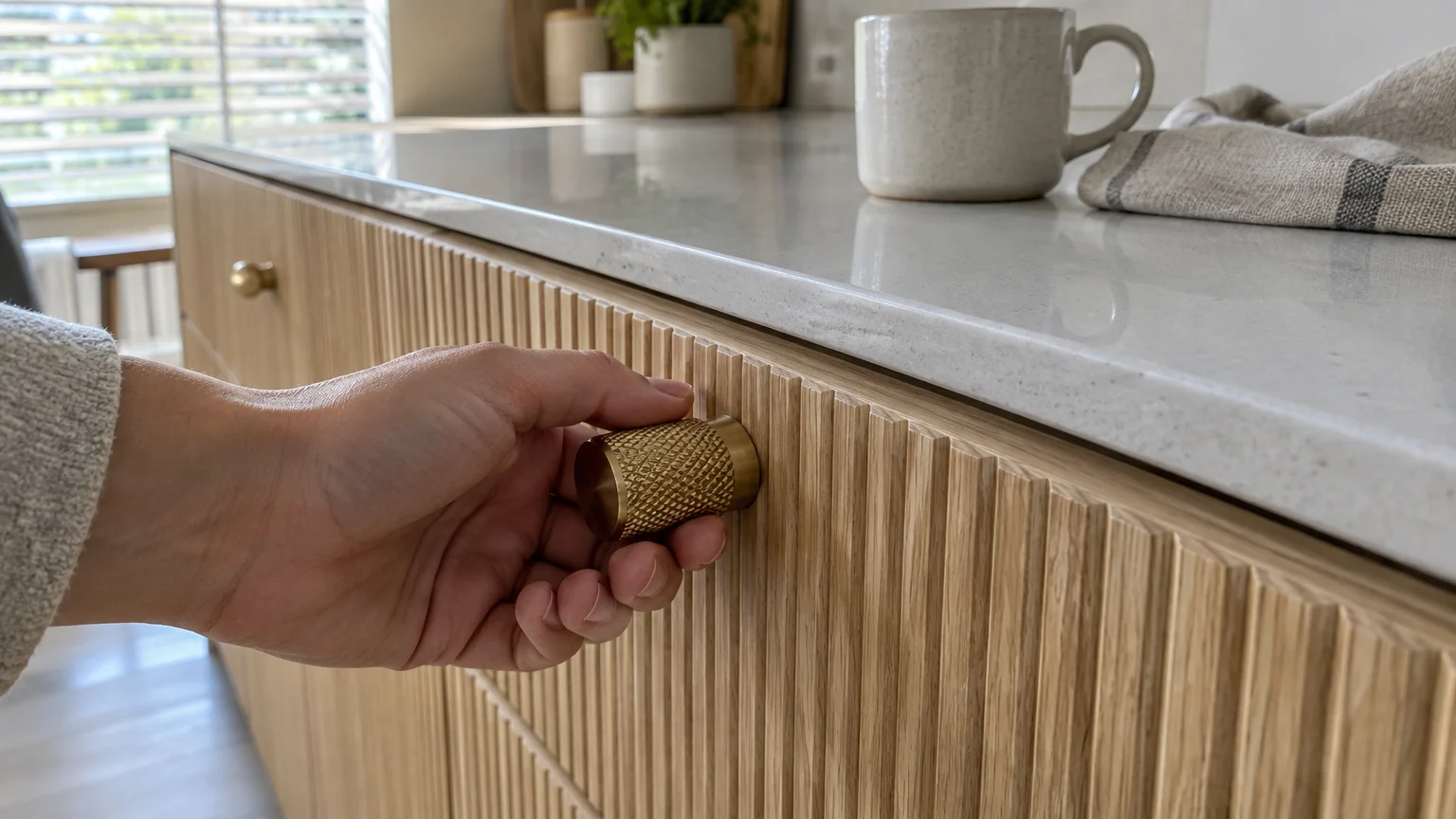
Trend #3: Tactile Knurled and Fluted Textures
Modern kitchen hardware trends emphasize tactile engagement through precision-machined knurled surfaces and fluted linear details. These grooved textures transform a routine physical motion into a satisfying sensory experience.
Knurling draws inspiration from fine engineering and industrial craftsmanship, delivering an exquisite diamond or linear cut. The resulting relief catches overhead task lighting, producing an understated, shimmering jewel-like effect.
This micro-texture harmonizes beautifully with broader interior motifs, such as reeded dining credenzas and fluted glass partitions. Incorporating rhythmic ridges establishes a sophisticated design dialogue between your kitchen and living quarters.
You will appreciate the practical benefit of slip-resistant grip during busy meal preparation. Knurled cylindrical pulls provide superior traction while withstanding grease, moisture, and daily household wear.
Select knurled handles in matte bronze or graphite to accentuate modern flat-panel slab cabinets. The textured relief prevents dark finishes from feeling flat or clinical under daylight.
If your living room features fluted wood paneling or ribbed ceramic lamps, these handles reinforce that stylistic narrative. Repeating subtle textural details across rooms produces an exceptionally cohesive interior environment.
Precision knurling also masks minor surface scratches that occur over years of active kitchen use. Your hardware retains its pristine showroom luster without requiring constant polishing or specialized care.
This thoughtful switch infuses your kitchen with bespoke craftsmanship. It signals exceptional attention to detail that discerning guests will notice immediately.
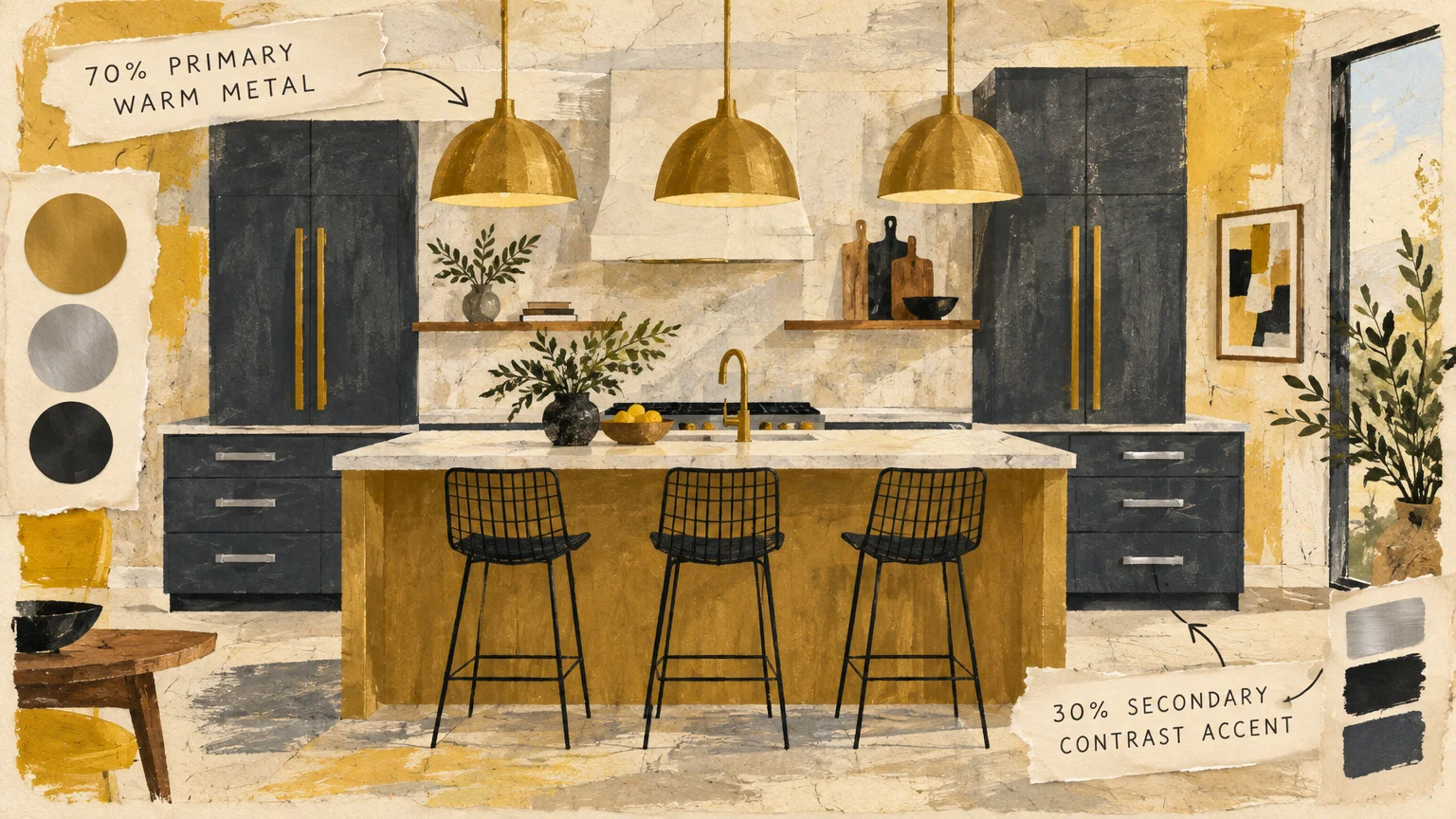
Trend #4: Curated Mixed-Metal Combinations
Rigid rules that mandate matching every metallic finish throughout a home are officially obsolete. Today, 67% of design professionals enthusiastically specify mixed-metal combinations to build layered, collected kitchen interiors.
The National Kitchen & Bath Association notes that 92% of designers view the kitchen as an expressive reflection of personal style. Intentional metal mixing creates a curated atmosphere that looks gathered over time rather than purchased from a catalog.
Start your composition by establishing a dominant metal that covers roughly two-thirds of your room’s fixtures. Brushed nickel, chosen by 28% of homeowners, provides a timeless, warm silver foundation across perimeter cabinets.
Introduce a complementary secondary finish on your kitchen island or auxiliary beverage bar. Warm brushed brass knobs against deep charcoal island cabinetry introduce captivating warmth and deliberate contrast.
You can also use matte black cabinet pulls to anchor a polished chrome sink faucet. The juxtaposition between warm and cool tones prevents the kitchen from feeling monochromatic or sterile.
Ensure your hardware finishes converse fluidly with neighboring spaces. Echoing black cabinet handles in your dining room chandelier creates an organic visual rhythm across open-concept layouts.
Distribute both metals evenly throughout the space rather than isolating one finish in a single corner. This deliberate dispersion guides the eye smoothly across cooking, dining, and gathering zones.
Restricting your palette to two or three distinct metal tones prevents chaotic visual discord. This balanced friction yields an authentic, editorially styled space filled with nuanced personality.
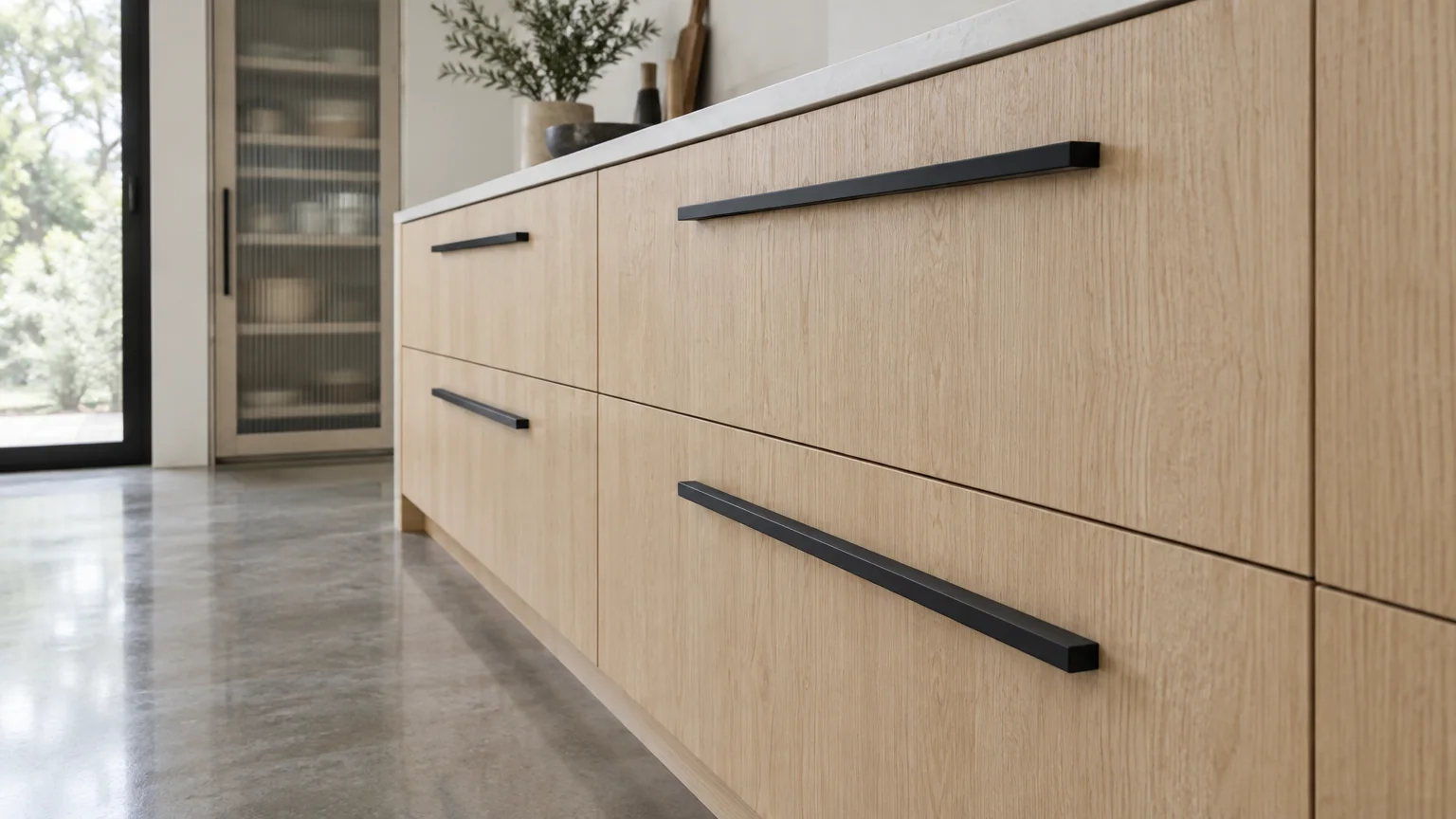
Trend #5: Matte Black Architectural Accents
Matte black hardware remains a powerhouse design selection, capturing 18% of the market in recent renovations. These velvety, non-reflective pulls provide crisp graphic punch against painted millwork and organic wood tones.
Black accents function like eyeliner for your kitchen cabinetry. They trace sharp silhouettes that define drawer banks, balancing light-colored quartz counters and pale oak flooring.
If your home features black steel patio doors or dark light fixtures, black hardware extends that contemporary aesthetic indoors. This visual repetition produces a polished, continuous transition into dining and lounge spaces.
Choose slim, rectangular bar profiles or geometric drop pulls to emphasize streamlined modern architecture. The powdered matte surface resists unsightly fingerprints, maintaining a pristine look even in high-traffic households.
Consider pairing matte black t-bar knobs with warm walnut cabinets or creamy off-white shaker doors. The striking monochromatic tension creates an unforgettable, design-forward impression.
Black hardware also grounds colorful cabinetry, tempering bold shades like mustard yellow, terracotta, or deep forest green. It injects industrial discipline that keeps expressive color schemes sophisticated and mature.
You can source quality black pulls for three to fifteen dollars each, making this an extraordinarily cost-effective transformation. Outfitting your cabinetry creates a dramatic impact that rivals a full kitchen renovation.
This affordable kitchen updates strategy delivers maximum stylistic return. A quick hardware swap completely reframes standard cabinetry into high-end architectural millwork.
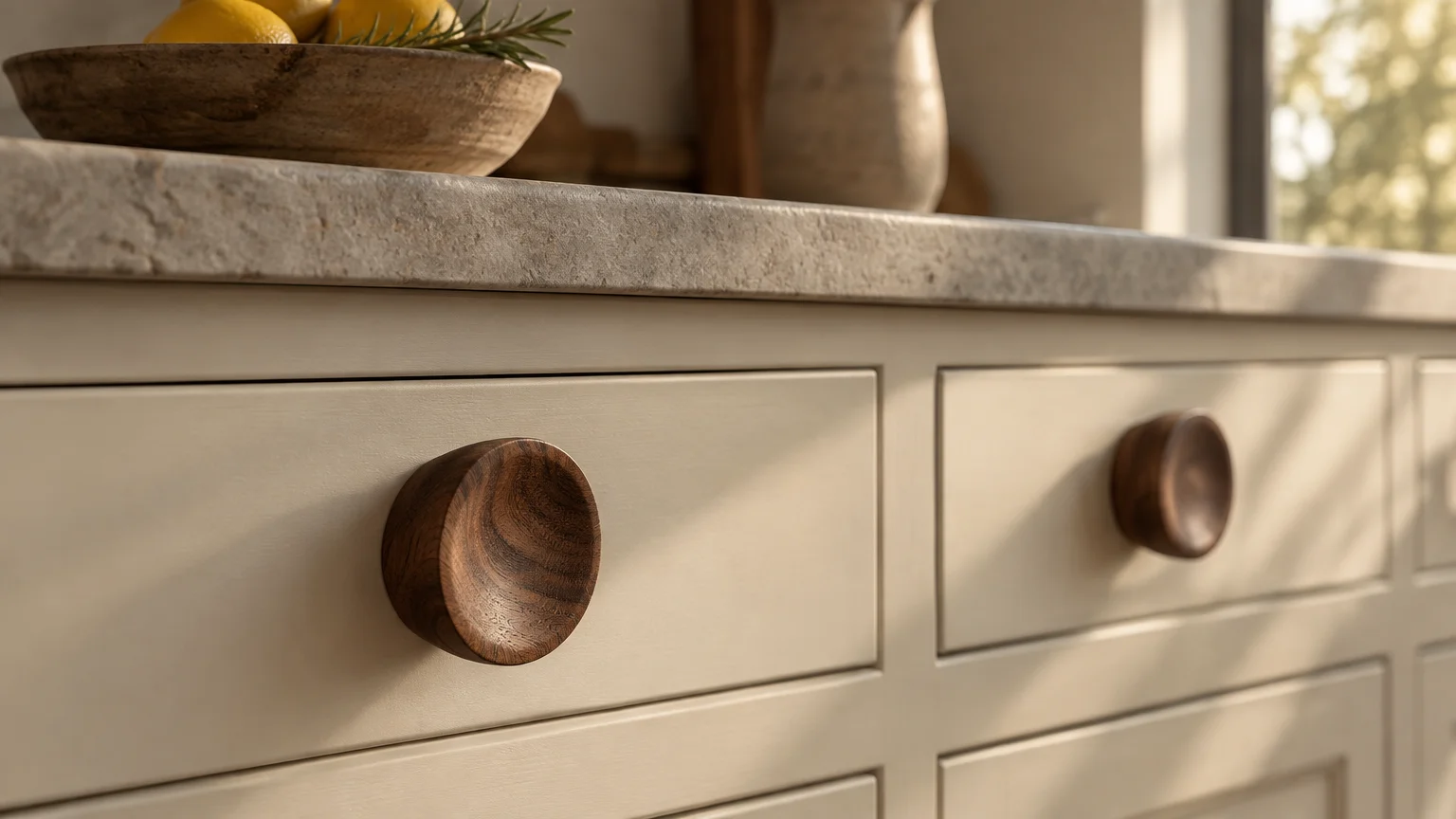
Trend #6: Sculptural and Organic Wood Knobs
Biophilic design continues to revolutionize home interiors, inspiring homeowners to introduce organic timber hardware into culinary spaces. Hand-turned wooden knobs celebrate honest materials, tactile grain patterns, and sustainable craftsmanship.
Smooth oak, rich walnut, and pale ash hardware soften the hard stone and metallic surfaces common in modern kitchens. They infuse an earthy warmth that instantly connects your cooking environment with nature.
Match your timber hardware species with adjacent interior details, such as dining tables, open shelving, or wide-plank hardwood flooring. This cohesive palette brings serene, Scandinavian-inspired balance to busy open-plan floor plans.
Select sculptural half-moon pulls or smooth spherical knobs finished in durable matte conversion varnishes. Quality topcoats protect the natural grain from cooking oils, ambient moisture, and frequent handling.
Wooden pulls pair exceptionally well with neutral stone countertops like soapstone, limestone, or honed quartzite. The interplay between raw stone and warm timber honors authentic organic modernism.
Pairing carved walnut knobs with forest green or terracotta cabinets generates an inviting, organic modern palette. The harmonious earth tones establish an intimate, comforting sanctuary for casual gathering.
You can also introduce timber pulls to painted utility spaces like laundry rooms or sculleries. These artisanal accents turn utilitarian secondary zones into natural extensions of your primary living areas.
By embracing timber hardware, you soften rigid cabinetry lines. The result is a welcoming, textural culinary space brimming with soulful authenticity.
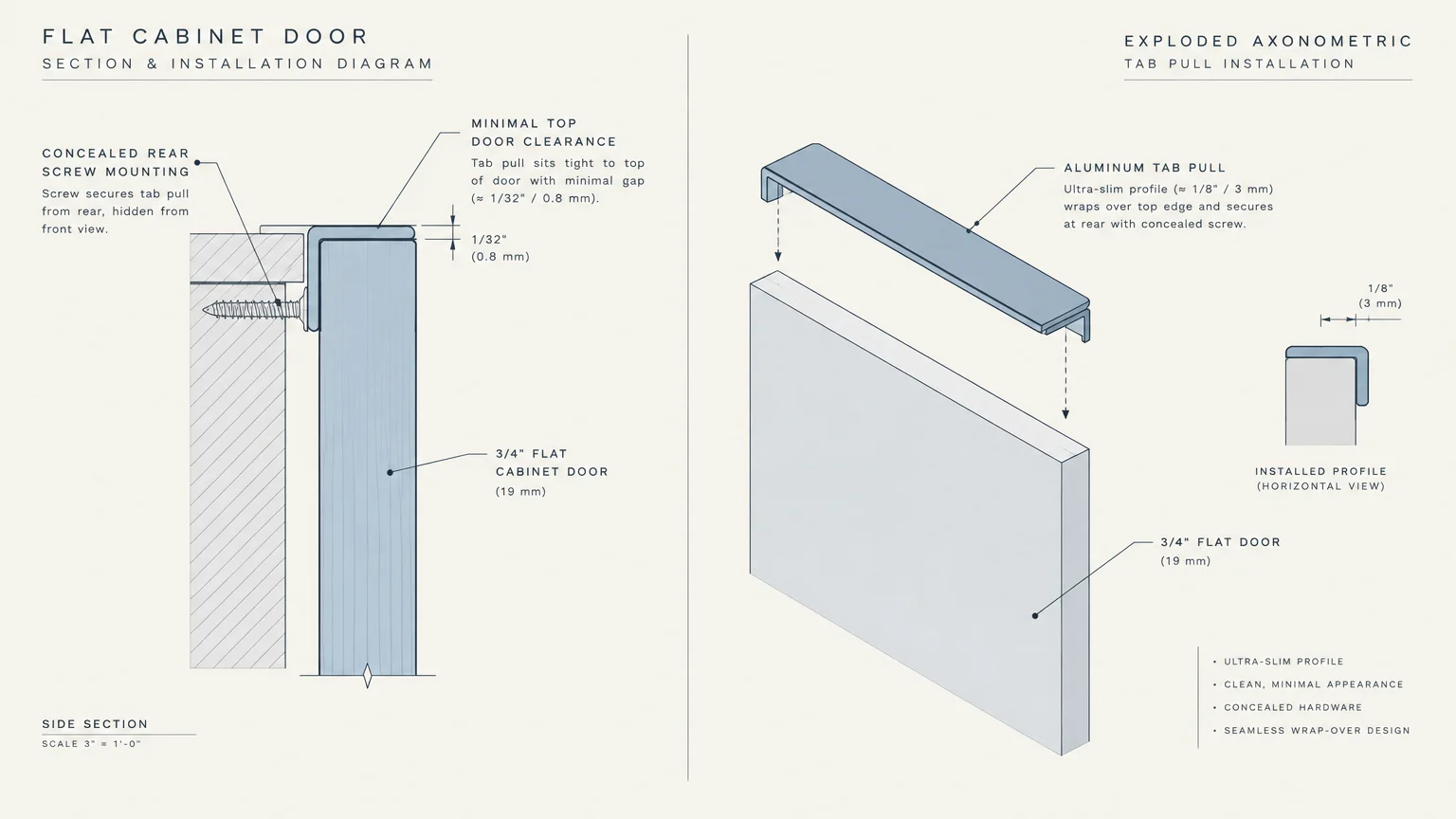
Trend #7: Minimalist Edge and Tab Pulls
For enthusiasts of streamlined modernity, low-profile edge pulls offer a discreet alternative to traditional projecting handles. These slim aluminum or brass tabs mount flush to the door tops, creating seamless, uninterrupted cabinet faces.
Edge pulls deliver the uncluttered elegance of integrated touch-latches while maintaining superior physical practicality. You preserve pristine cabinet finishes by eliminating the grease and fingerprints associated with push-to-open doors.
The 2026 Houzz study reveals that 95% of renovating homeowners install dedicated hardware rather than relying on cutouts or push mechanisms. Minimalist edge pulls satisfy this demand for hardware reliability while honoring sleek architectural minimalism.
Specify edge pulls across expansive runs of flat-panel cabinetry to maintain long, uninterrupted horizontal sightlines. This horizontal orientation naturally draws your gaze across the room, making narrow kitchens appear considerably wider.
Because edge pulls mount directly along door margins, they prevent snagging aprons, belt loops, or pockets during frantic prep work. Their ergonomic profile keeps your work zones safe, functional, and effortlessly sleek.
Extend this clean aesthetic toward your living zone by outfitting built-in media consoles with matching tab hardware. The unified hardware language creates smooth, visual continuity throughout contiguous entertaining areas.
Choose anodized champagne bronze or brushed anthracite to introduce subtle metallic refinement. These understated accents elevate contemporary cabinetry without overpowering your surrounding interior decor.
Minimalist tabs prove that small design interventions yield immense visual shifts. They provide an exquisitely quiet backdrop that allows your statement stone and lighting to shine.
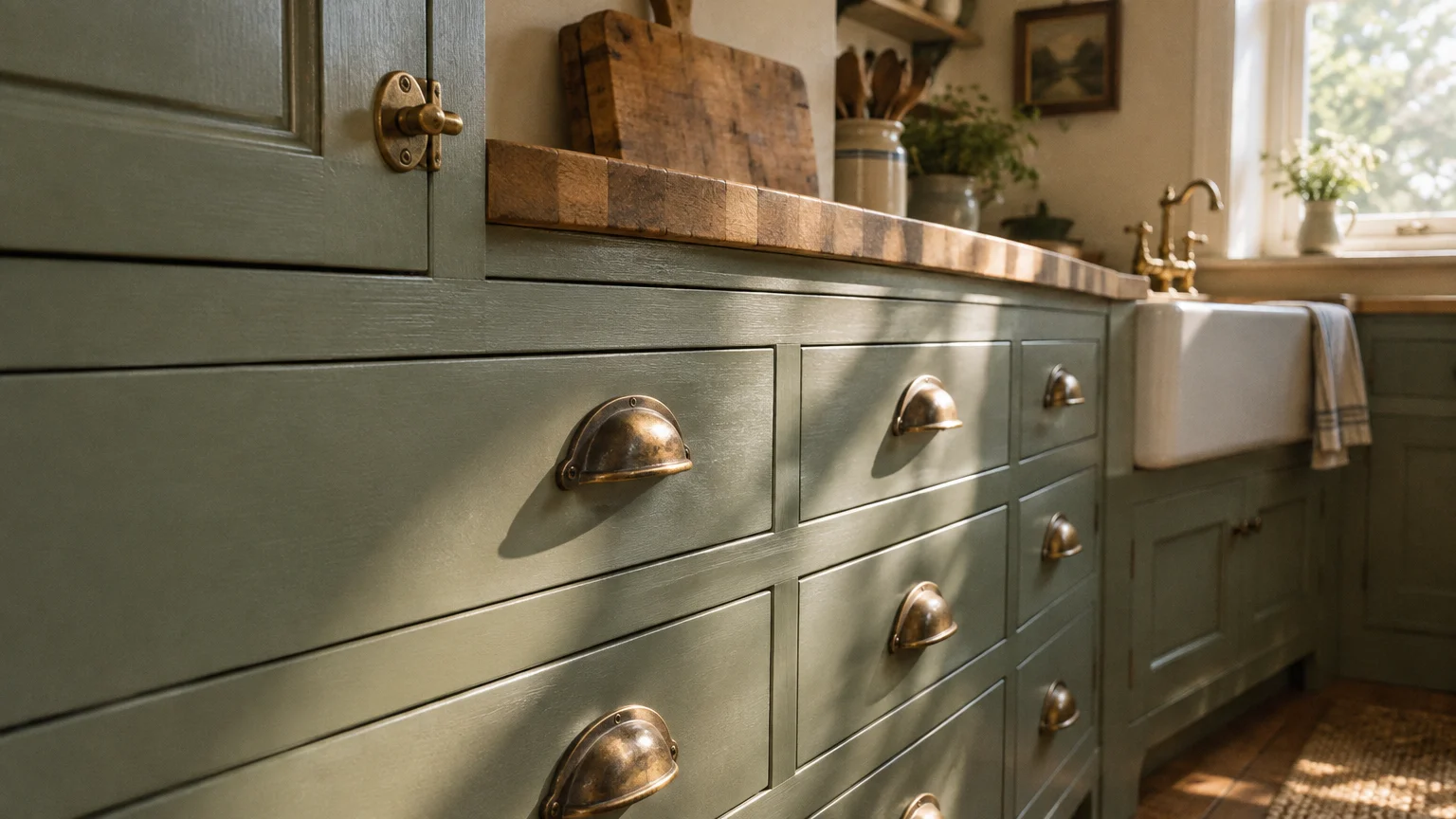
Trend #8: Vintage-Inspired Cup Pulls and Latches
Vintage-inspired bin pulls, turn latches, and forged iron handles bring romantic nostalgia back into contemporary culinary design. These heritage fittings inject historic depth into new builds and historic homes alike.
Turn latches installed on upper cabinet doors evoke the charm of antique English pantries and vintage butler spaces. Their tactile clicking mechanism delivers an auditory sensation that underscores old-world craftsmanship.
Combine classic cup pulls on lower drawers with coordinating mushroom knobs on upper doors to achieve timeless balance. This traditional combination honors authentic Shaker cabinet proportions while supporting ergonomic daily use.
Standard 3-inch center-to-center cup pulls fit most pre-drilled vintage cabinetry holes without requiring messy wood filler or patching. Fastening them with authentic slotted screws rather than modern Phillips heads enhances their historical integrity.
These historical profiles ground cottage, modern farmhouse, and traditional Georgian kitchen aesthetics with quiet dignity. They evoke an inviting sense of permanence that transient modern trends cannot match.
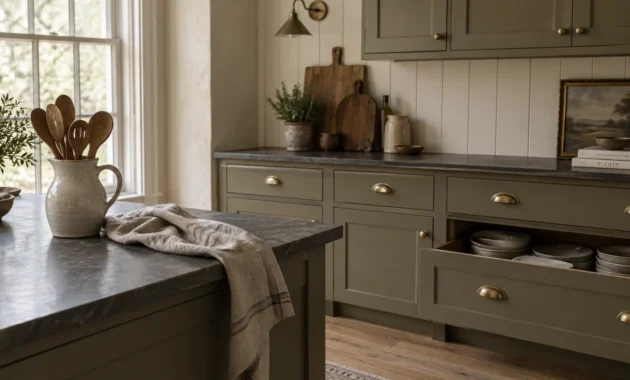
Anchor these antiqued fixtures against traditional paint colors, such as muted heritage greens, pale putty, or creamy buttermilk. The resulting aesthetic harmonizes effortlessly with heirloom dining buffets, plaster moldings, and rustic stone floors.
Carry this vintage aesthetic onto nearby built-in bookcases or entryway credenzas to establish historic continuity throughout your floor plan. Repeating nostalgic hardware accents weaves an enduring architectural romance through every room.
Incorporating heritage hardware restores authentic soul to your cooking space. It proves that timeless styling and modern functionality can coexist harmoniously in your home.
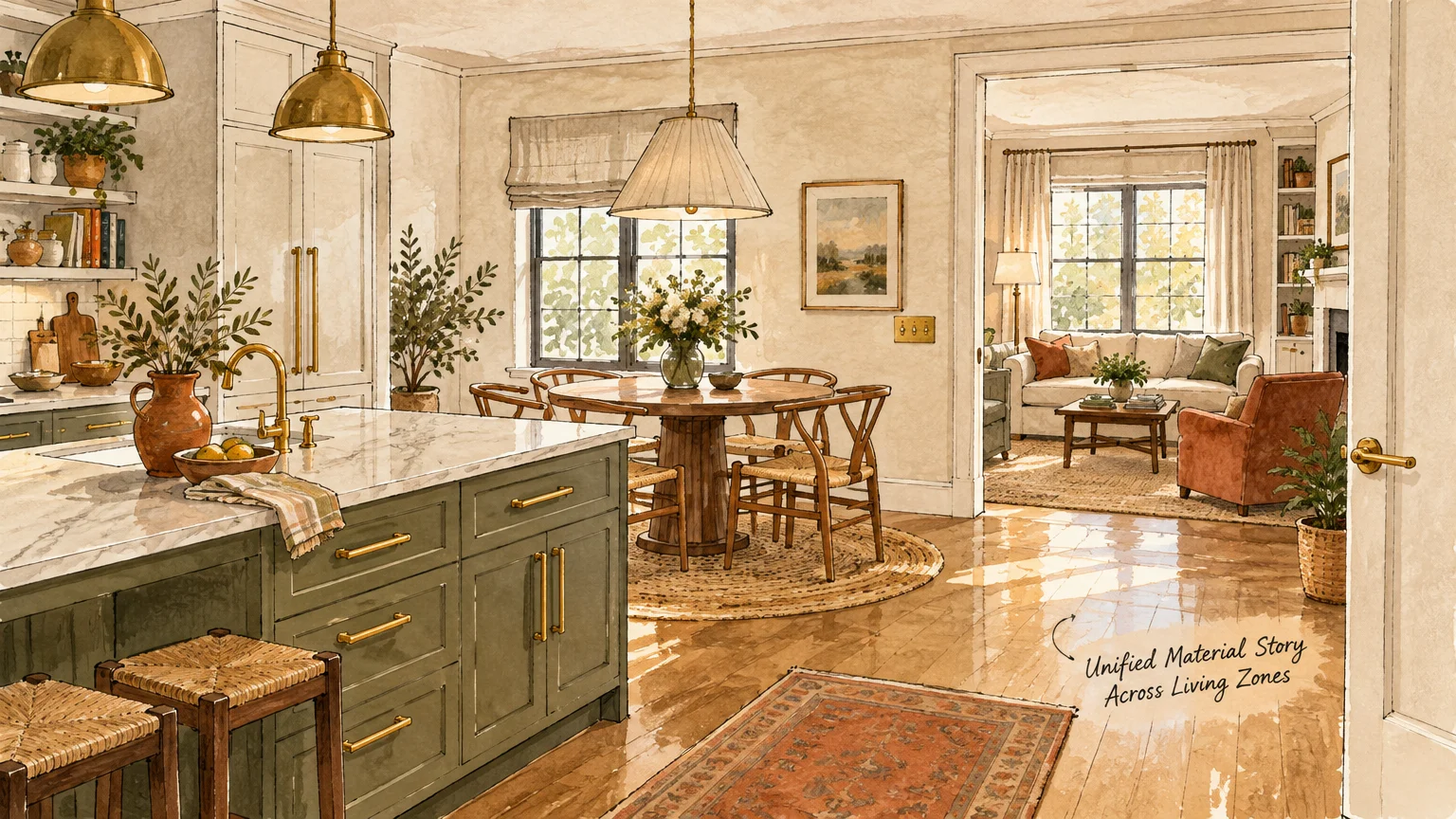
The Big Picture: Weaving These Trends into Your Home
A successful cabinet hardware upgrade requires looking beyond the immediate perimeter of your kitchen counters. Your hardware functions as an architectural anchor that connects cooking areas with adjacent dining and living spaces.
Before drilling fresh installation holes, survey the existing finishes and fixtures throughout your shared living zones. Echoing the tones of your dining chandelier or fireplace trim creates a cohesive, whole-home aesthetic narrative.
Focus on quality over novelty by investing in solid brass, cast bronze, or hand-finished timber selections. High-grade hardware offers substantial weight in hand, imparting a sense of permanence and understated luxury.
Take precise measurements of your drawer widths and existing hole spacings before finalizing any hardware purchase. Verifying center-to-center distances and using the rule of thirds protects you from costly installation mistakes.
Balancing trendy elements with enduring foundational finishes preserves your kitchen’s market appeal and personal enjoyment. Thoughtful hardware selections allow you to celebrate personal creativity without undertaking an exhaustive, expensive remodel.
Consider how natural daylight and artificial ambient lighting illuminate your chosen finishes throughout the evening. Matte textures soften bright sunlit rooms, whereas polished metals amplify intimate low-light settings.
For the latest color forecasts, consult industry leaders like Pantone and paint companies like Benjamin Moore. For professional design standards, refer to the American Society of Interior Designers (ASID).
Disclaimer: This article reflects design trend analysis and predictions. Personal taste and timeless design principles should always guide your decorating choices.
Frequently Asked Questions
Can you mix knobs and pulls in the same kitchen without clashing?
You can easily combine knobs and pulls by assigning them specific functional zones across your cabinetry. Designers routinely install knobs on vertical cabinet doors and sturdy horizontal pulls on deep drawers.
Maintain visual harmony across the space by ordering both styles within the identical finish collection. This consistent metallic finish unifies differing shapes while preserving tailored visual order.
You can also place knobs on perimeter cabinetry while outfitting your central island drawers with matching pulls. This distinction highlights your island as a unique furniture centerpiece.
How do you determine the correct pull size for wide drawers?
Apply the standard interior design rule of thirds to establish ideal visual and physical balance. Your pull’s total length should measure approximately one-third of your drawer front’s total width.
An 8-inch pull perfectly fits a 24-inch drawer, creating balanced proportions. For drawers exceeding 30 inches wide, you can mount either a single oversized statement pull or two smaller pulls.
Installing dual handles spaced evenly across wide drawer fronts ensures smooth, two-handed gliding operation. It also protects heavy drawer slides from excessive lateral strain over time.
What are the most durable hardware finishes for high-traffic kitchens?
PVD coated brass and quality brushed nickel offer the highest resilience against heavy daily wear and cooking moisture. Brushed nickel, selected by 28% of homeowners, naturally conceals water spots and persistent fingerprint smudges.
Powder-coated matte black finishes also provide exceptional longevity when applied over solid brass or stainless steel bases. Avoid cheap plated alloys that can chip or flake under frequent household impact.
If you select living unlacquered brass, anticipate natural tarnishing and oxidation over time. Many homeowners cherish this organic aging process for its authentic antique warmth.
What screw length do you need when replacing cabinet hardware?
Most North American cabinet doors require standard #8-32 machine screws measuring one inch in length. This size accommodates typical three-quarter-inch solid wood or medium-density fiberboard door panels perfectly.
Deeper five-piece drawer boxes with separate applied drawer fronts typically require longer 1.5-inch machine screws. Keep breakaway utility screws in your DIY toolkit to adjust lengths easily on the spot.
Always tighten hardware screws manually with a handheld screwdriver rather than an aggressive power drill. Hand tightening prevents stripping screw threads and cracking delicate cabinet face frames.