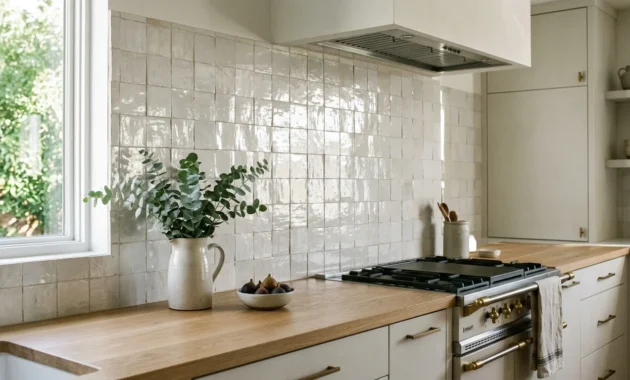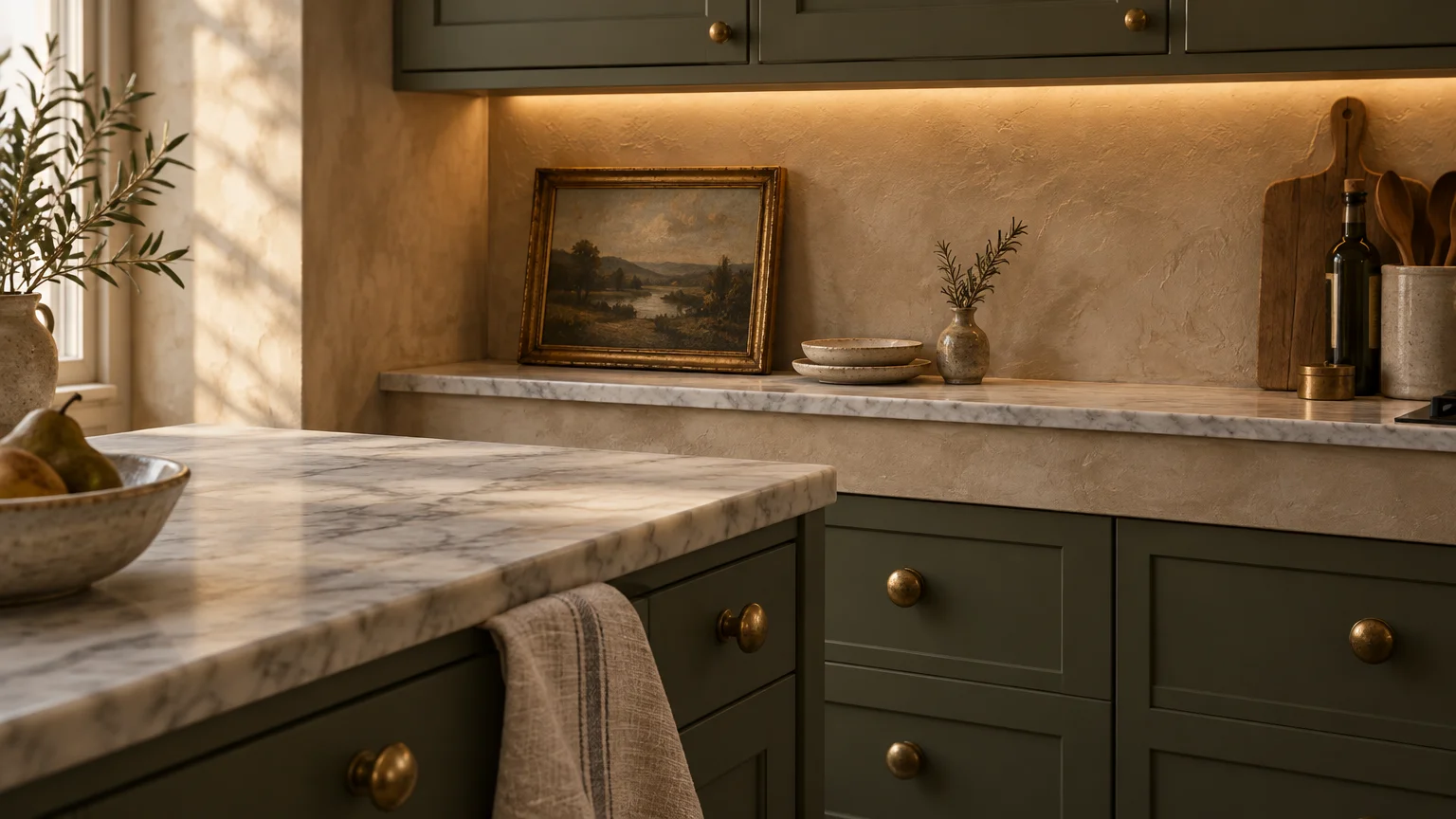
Elevating your culinary space does not require a disruptive, five-figure renovation. With strategic discernment, you can introduce high-end editorial sophistication using kitchen updates under $100 that completely alter the room’s atmosphere.
Discerning interior designers rely on tactile materials, intentional illumination, and refined finishes to craft an ambiance of understated luxury. These subtle interventions bypass generic aesthetics to cultivate genuine architectural character.
By deploying targeted, affordable kitchen upgrades, you can achieve the collected elegance of a bespoke European kitchen on an accessible budget. Here are six transformative design shifts that maximize visual impact without exorbitant investment.
Trend #1: Unlacquered Brass and Sculptural Hardware
The Tactile Magic of Living Finishes
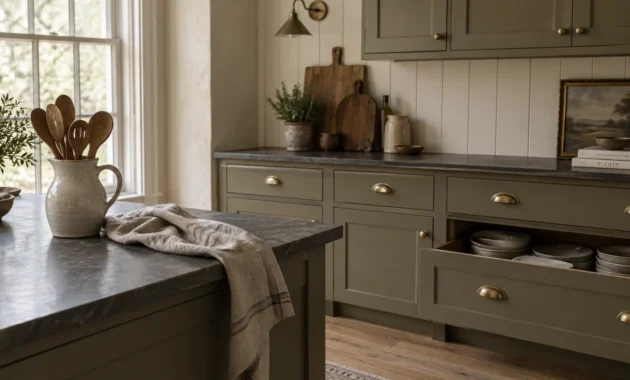
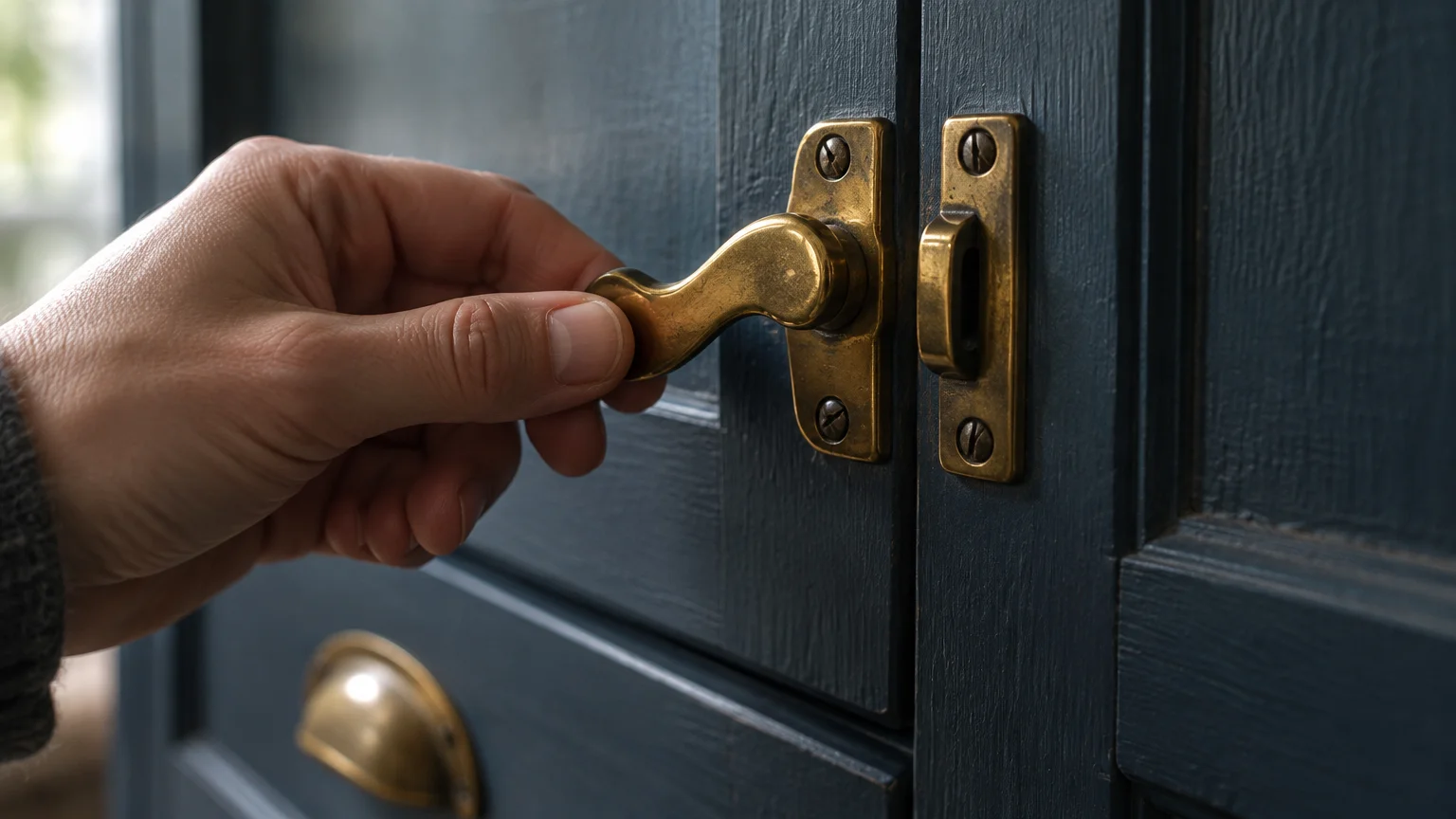
Standard builder-grade cabinet pulls often broadcast budget constraints through synthetic coatings and featherweight alloys. Replacing generic handles with authentic unlacquered brass introduces a tactile richness that mass-market hardware simply cannot emulate.
Unlike sealed lacquered metal, unlacquered brass oxidizes gracefully over time. Your daily touch accelerates a natural, uneven patina that imparts immediate historical provenance to contemporary cabinetry.
Designers celebrate this evolving finish as a living element that connects a home to traditional metalcraft traditions. Each subtle mark of age reflects genuine daily use rather than manufactured perfection.
Strategic Procurement Under Budget
Sourcing luxury hardware does not necessitate high showroom markups. Online architectural suppliers, estate liquidators, and direct brass manufacturers frequently sell multipacks of solid brass mushroom knobs for under $75.
Focus your investment on primary drawer banks and high-traffic cupboards where hands land daily. This tactile point of contact sets an elevated tone for your entire budget kitchen makeover.
If outfitting every cabinet exceeds your budget, prioritize upper cabinets or central island drawers first. This selective placement draws the eye to high-visibility focal points without overspending.
Curating Form and Proportions
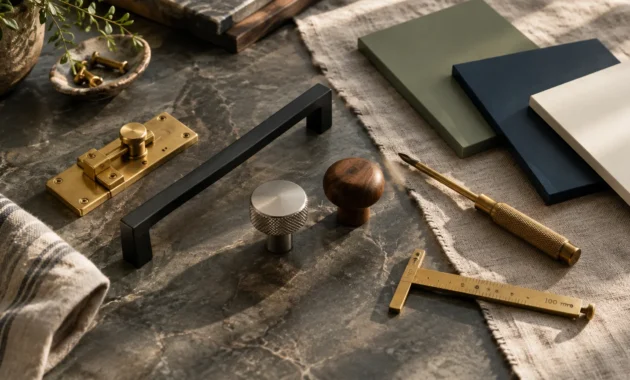
Avoid modern minimalist bar pulls, which often look dated quickly. Instead, select compact teardrop pulls, knurled knobs, or traditional cabinet latches reminiscent of high-end English joinery.
These classic silhouettes establish an aura of quiet luxury against painted and stained wood finishes alike. The subtle visual friction between aged metal and crisp painted surfaces creates instant bespoke character.
Pairing small round knobs on upper cabinets with cup pulls on lower drawers introduces varied architectural interest. This classic pairing breaks the monotony of uniform factory cabinetry.
Even standard flat-front cabinets instantly read as custom millwork when anchored by heavy, solid metal. It remains one of the most cost-effective kitchen remodel ideas available today.
Trend #2: Concealed Warm-Spectrum Architectural Lighting
Shifting from Clinical to Ambient Glow
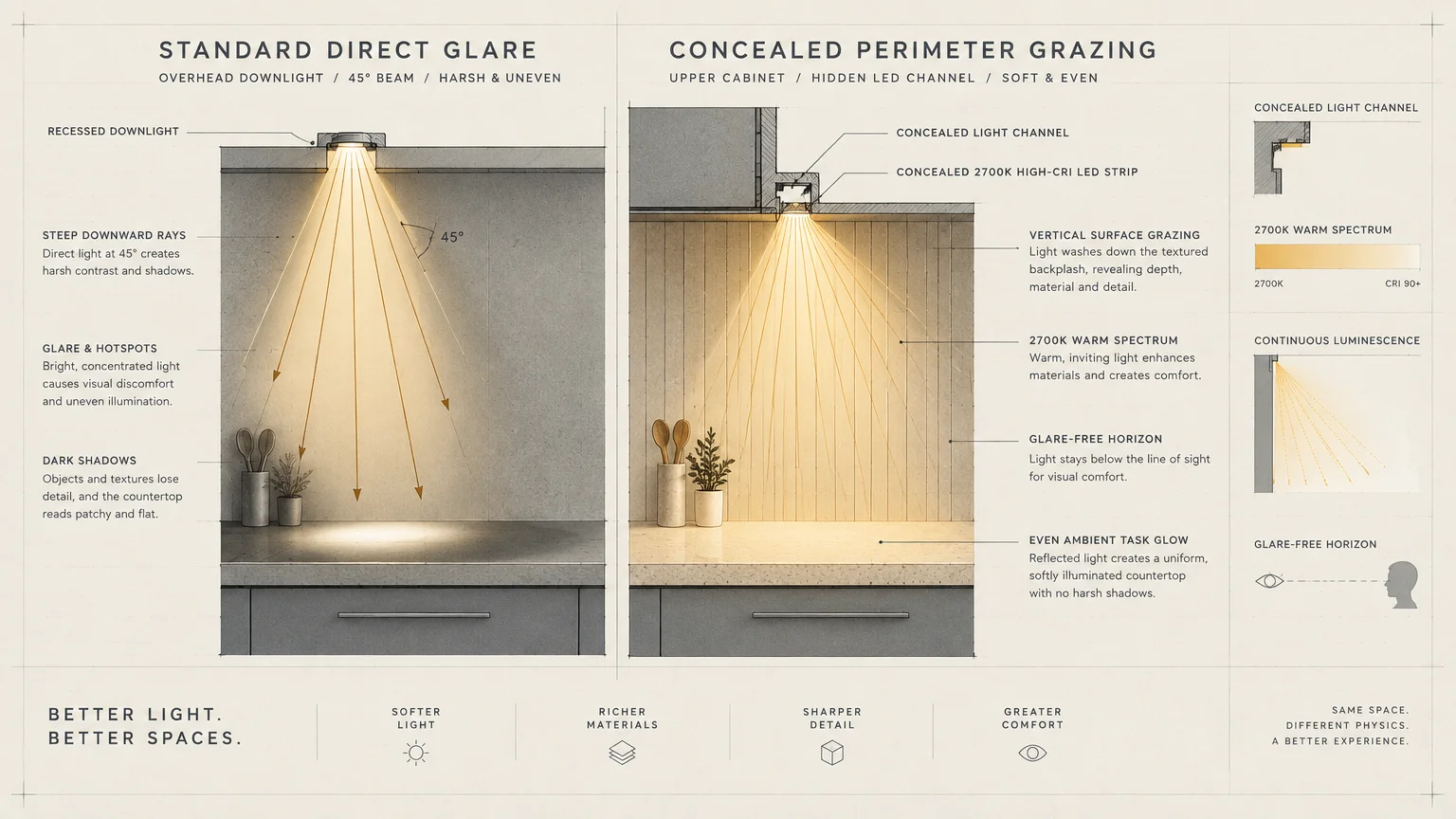
Harsh overhead recessed cans often drain warmth from a kitchen, casting sharp shadows across countertops. High-end kitchens avoid this sterile atmosphere by layering concealed, low-level illumination across every working zone.
You can replicate this high-end architectural effect by installing warm-temperature LED strips beneath upper cabinets. The golden wash instantly makes stone counters and glazed tile backsplashes appear richer and more dimensional.
In interior design theory, warm perimeter grazing visually expands room boundaries. Countertops glow softly, drawing the eye across the entire length of the kitchen rather than trapping it beneath glaring spotlights.
Executing Continuous High-CRI Illumination
Avoid cheap fairy lights or bluish cool-white strips that produce visible diode dots. Instead, invest in a continuous chip-on-board (COB) LED tape kit calibrated to 2700 Kelvin.
These diffused ribbons cost around $40 to $60 and provide seamless, unbroken illumination. Look for a Color Rendering Index (CRI) of 90 or higher to ensure your produce and surfaces appear vibrant.
Lower CRI light strips produce a muddy, gray cast that dulls natural marble and rich wood tones. High-CRI emitters render marble veins and rich paint pigments with pristine clarity.
Concealment and Diffuser Channels
Mount your light channels directly behind the front lip of the upper cabinets, directing light backward toward the wall. Pair the strip with an inexpensive aluminum channel and frosted diffuser cover.
This low-cost aluminum housing eliminates reflective glare on glossy polished quartz counters. It also conceals the electrical wiring, creating an integrated look worthy of bespoke custom cabinetry.
The absence of visible light sources adds mystery and architectural refinement to your kitchen updates under $100. At night, running only this under-cabinet glow yields a cozy, boutique hotel aesthetic.
Trend #3: Mineral Paint and Artisan Lime Plaster Accents
Embracing Organic, Chalky Depth
High-gloss surfaces and flat latex emulsions can feel synthetic in an age defined by biophilic design. Modern luxury now celebrates organic texture, movement, and artisanal depth across architectural surfaces.
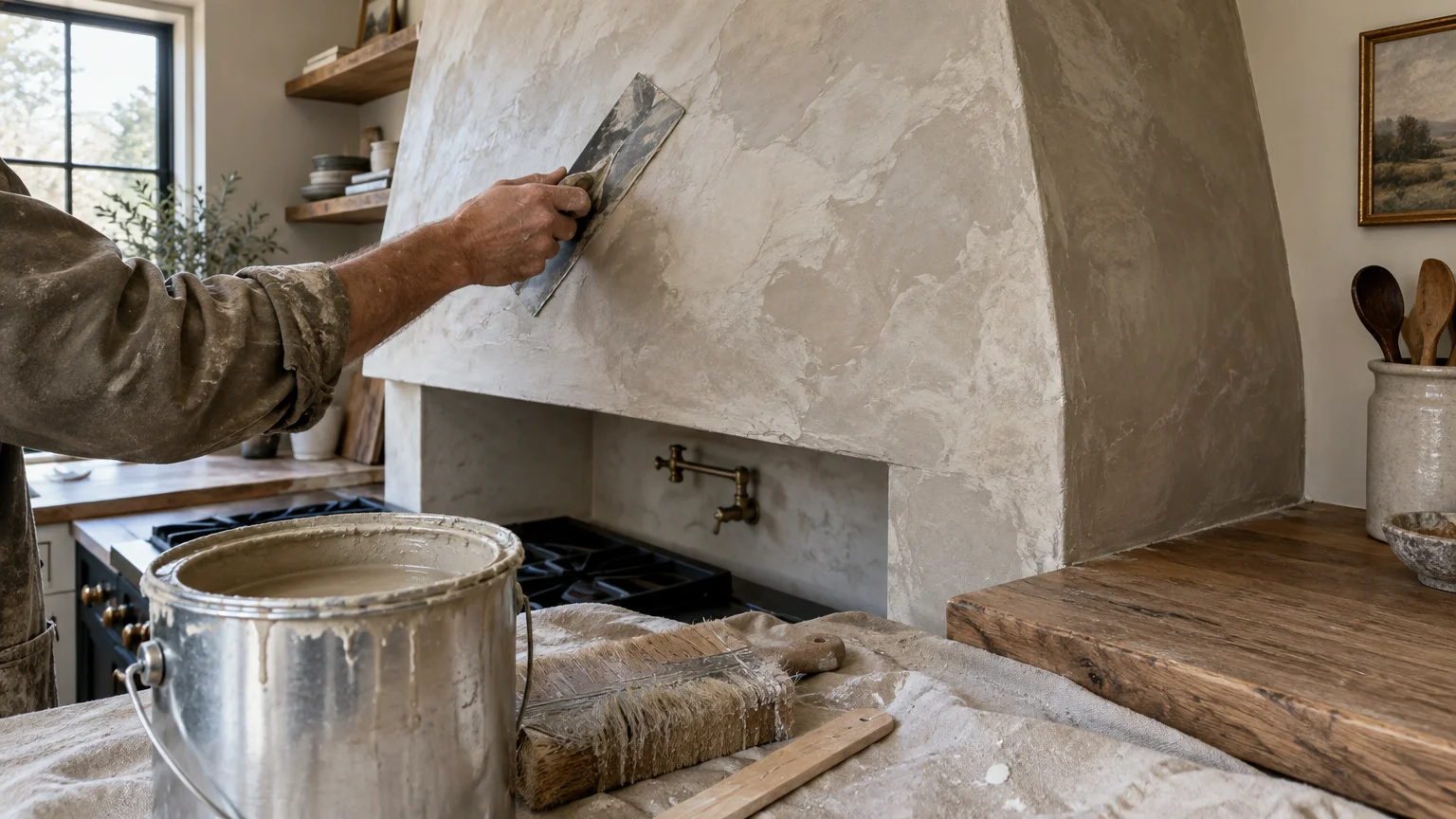
Mineral paints, limewash, and Roman clay deliver this tactile warmth without demanding major masonry work. These finishes create subtle suede-like gradations that react beautifully to shifting natural sunlight.
The natural mottling of lime and clay softens hard kitchen edges with European romance. Sunlight glancing across the surface reveals subtle tonal shifts reminiscent of Tuscan villas or historic Parisian apartments.
High-Impact Micro Applications
A single quart of mineral paint or Roman clay costs between $40 and $70. While re-plastering an entire room requires a hefty budget, targeting a strategic focal zone yields maximum visual return.
Apply the finish across a range hood enclosure, an arched pantry alcove, or an empty transition wall. The textured micro-plaster effect transforms mundane drywall into an old-world European focal point.
Using textured mineral paint behind open shelving frames ceramics with dramatic, earthy texture. The muted chalkiness makes simple white stoneware and glassware appear curated and gallery-worthy.
Simple Application with Professional Polish
Applying Roman clay or limewash requires minimal technical skill, relying primarily on expressive cross-hatch strokes with a trowel or block brush. Irregularity is the primary objective of this artisanal technique.
Work in small sections, allowing the mineral base to build dimensional depth naturally. As the material dries, its light-refracting calcite crystals produce a soft, velvety luster impossible to achieve with standard paint.
Seal the surface with a breathable matte protective sealer to resist occasional moisture and cooking splatters. Your kitchen immediately gains an earthy, time-worn substance that whispers quiet luxury.
Trend #4: The Curated Marble Ledge and Floating Stone
The Rise of the Micro Slab
Bulky upper cabinets often close in a kitchen, making the room feel heavy and utilitarian. Design masters frequently replace row after row of wall boxes with slender, floating stone shelves.
This micro-slab intervention introduces authentic natural stone veining right at eye level. It instantly communicates architectural investment, even when executed on a strict sub-$100 shoestring budget.
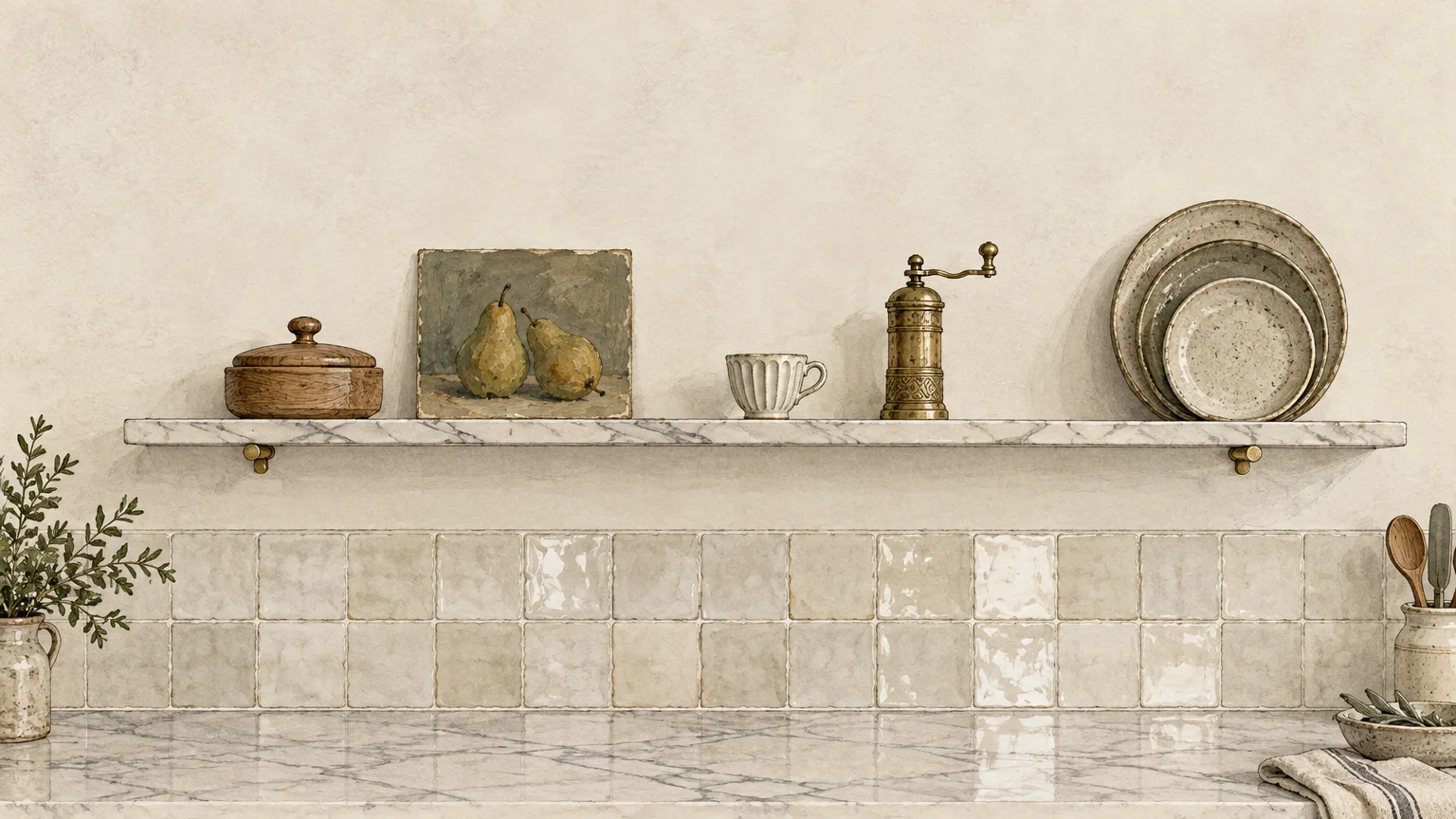
A low stone ledge creates horizontal continuity, elongating the visual span of your backsplash. It offers an elegant perch for functional kitchen tools without cluttering your valuable countertop workspace.
Sourcing Stone Remnants for Peanuts
You do not need an entire slab of Calacatta marble to capture this luxurious look. Local stone fabricators routinely discard small, narrow off-cuts that are perfect for a floating display ledge.
Fabrication shops will often cut and hone a small remnant strip for twenty to forty dollars. Inquire about off-cut pieces of Carrara marble, soapstone, or honed quartzite for the best design value.
Alternatively, visit a home improvement supplier to purchase a prefabricated polished marble door threshold for under $50. With a quick honing using fine sandpaper, you create a gorgeous, matte marble shelf.
Mounting and Curating the Ledge
Mount the stone strip using heavy-duty hidden steel brackets or slender unlacquered brass shelf supports. Ensure the shelf anchors directly into wall studs to support the stone’s substantial mass safely.
Style the ledge sparingly with collected objects: an antique brass pepper mill, ceramic olive oil cruets, or a framed miniature sketch. This Parisian bistro aesthetic turns everyday utility into an artful vignette.
Avoid overcrowding the ledge with mundane clutter. Thoughtfully edited objects celebrate negative space, allowing the natural marbling to stand as the primary artistic statement.
Because natural stone possesses intrinsic weight and character, it grounds your kitchen remodel ideas with undisputed visual authenticity.
Trend #5: Monolithic Color Drenching on Secondary Millwork
The Power of Intentional Hue
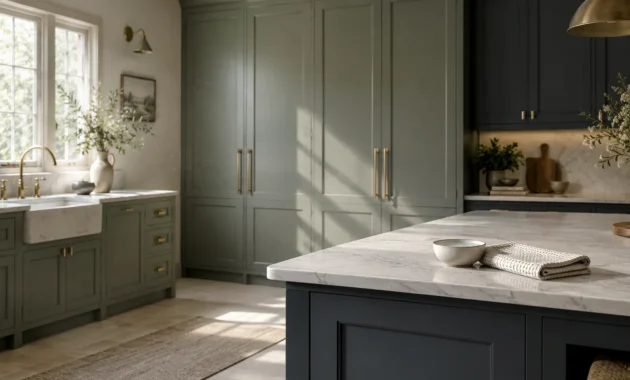
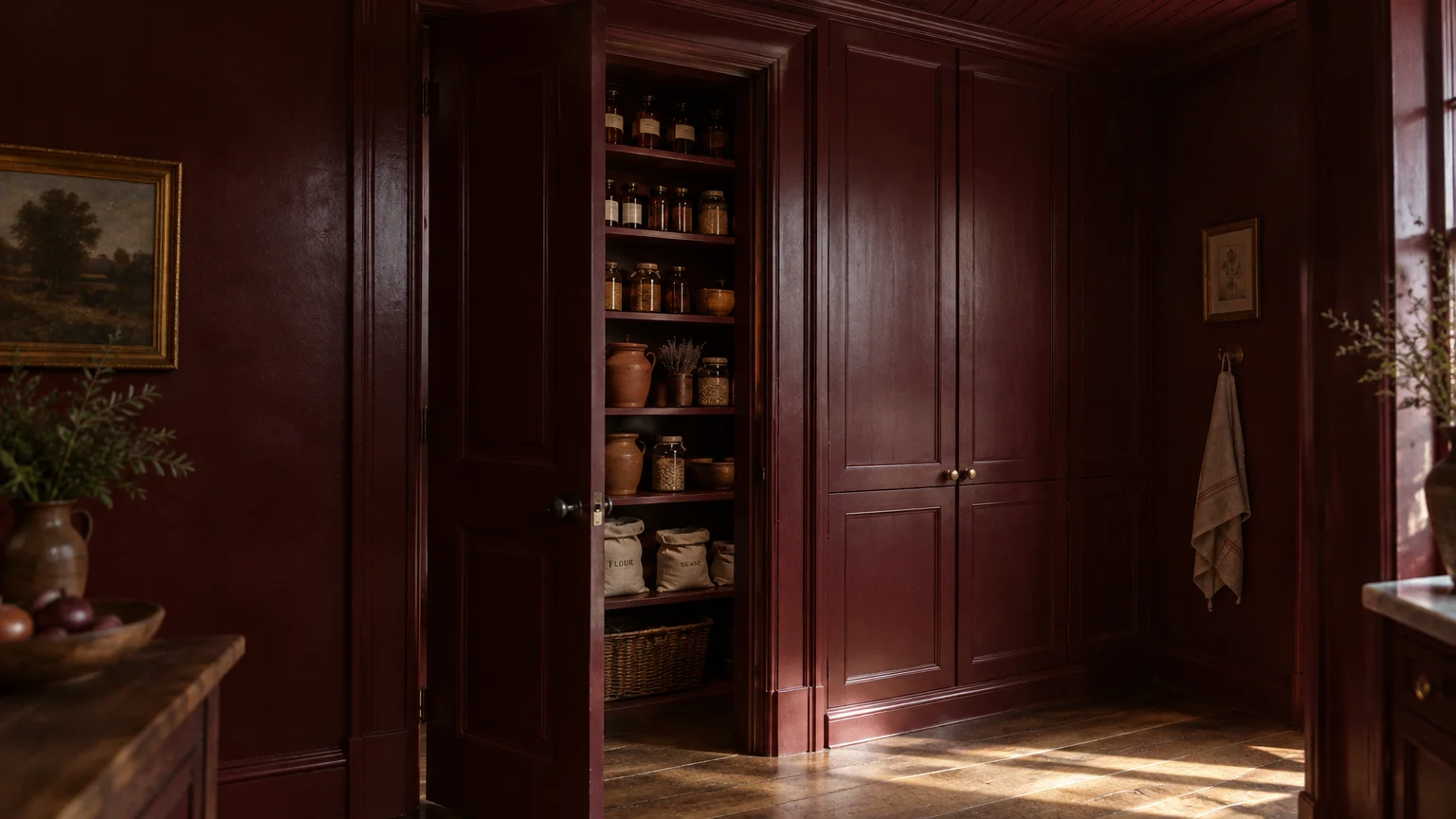
White shaker kitchens often read as uninspired when built from builder-grade materials. Color drenching—painting millwork, trim, and surrounding surfaces in a single saturated tone—delivers an immediate bespoke transformation.
By choosing a rich, moody pigment, you camouflage humble cabinetry construction while injecting editorial drama. The resulting monochromatic cohesion mimics custom cabinetry found in high-end design showcases.
Monolithic color hides awkward seams, inexpensive hinges, and dated door profiles in one fluid sweep. The human eye perceives the bold architectural shape rather than dissecting individual budget components.
Focusing on Islands and Pantries
Repainting all kitchen cabinets can prove overwhelming and costly. Instead, direct your attention toward a freestanding island, a pantry door, or an isolated hutch for an affordable kitchen upgrades project.
A single quart of premium cabinet enamel costs roughly $45. Coupled with proper sanding pads and primer, your total material investment easily stays beneath the $100 ceiling.
Transforming an island into an anchor piece grounds an open-plan layout effortlessly. It forms a visual bridge connecting the culinary zone with adjacent dining and living spaces.
Selecting Sophisticated Designer Undertones
Steer clear of primary colors or overly bright hues that cheapen the overall aesthetic. Opt for nuanced shades like smoky olive, deep aubergine, blackened teal, or warm chocolate brown.
These complex colors absorb light gracefully and create an intimate, grounded ambiance within open-concept layouts. Finish with low-sheen satin or eggshell to ensure a smooth, velvety finish.
Pair deep earthy paints with warm metallic knobs or brushed copper accessories for striking contrast. The rich background intensifies the glow of metallic finishes, magnifying their perceived quality.
This single strategic pop of deliberate color convinces guests that your kitchen was designed by a high-end architectural firm.
Trend #6: Tailored Pleated Sconces and Soft Ambient Luminaires
Softening Hard Kitchen Planes
Kitchens contain an abundance of hard, reflective surfaces: cold quartz, reflective stainless steel, and glazed tile. Introducing fabric shades and residential table lamps softens these rigid lines with welcome hospitality warmth.
Treating your kitchen counters like a living room credenza represents one of the strongest contemporary shifts in residential design. It dissolves the barrier between utilitarian cooking zones and relaxed entertaining spaces.
Bringing decorative lighting into utilitarian spaces creates an immediate sense of intimacy. Guests naturally gravitate toward intimate pools of warm light, turning the kitchen island into a cozy social hub.
The Petite Countertop Luminaire
Add a petite cordless, rechargeable table lamp to an unadorned kitchen corner or next to the espresso machine. Quality rechargeable brass lamps with dimmable LEDs retail online for $35 to $65.
Alternatively, top an existing compact lamp with a gathered linen or block-printed pleated shade for under $25. The delicate textile texture provides tactile contrast against sleek stone countertops.
Look for pleated patterns featuring mini-florals, ticking stripes, or block prints. These nostalgic patterns inject traditional English country charm into sterile modern kitchens.
Plug-In Sconces with Designer Flair
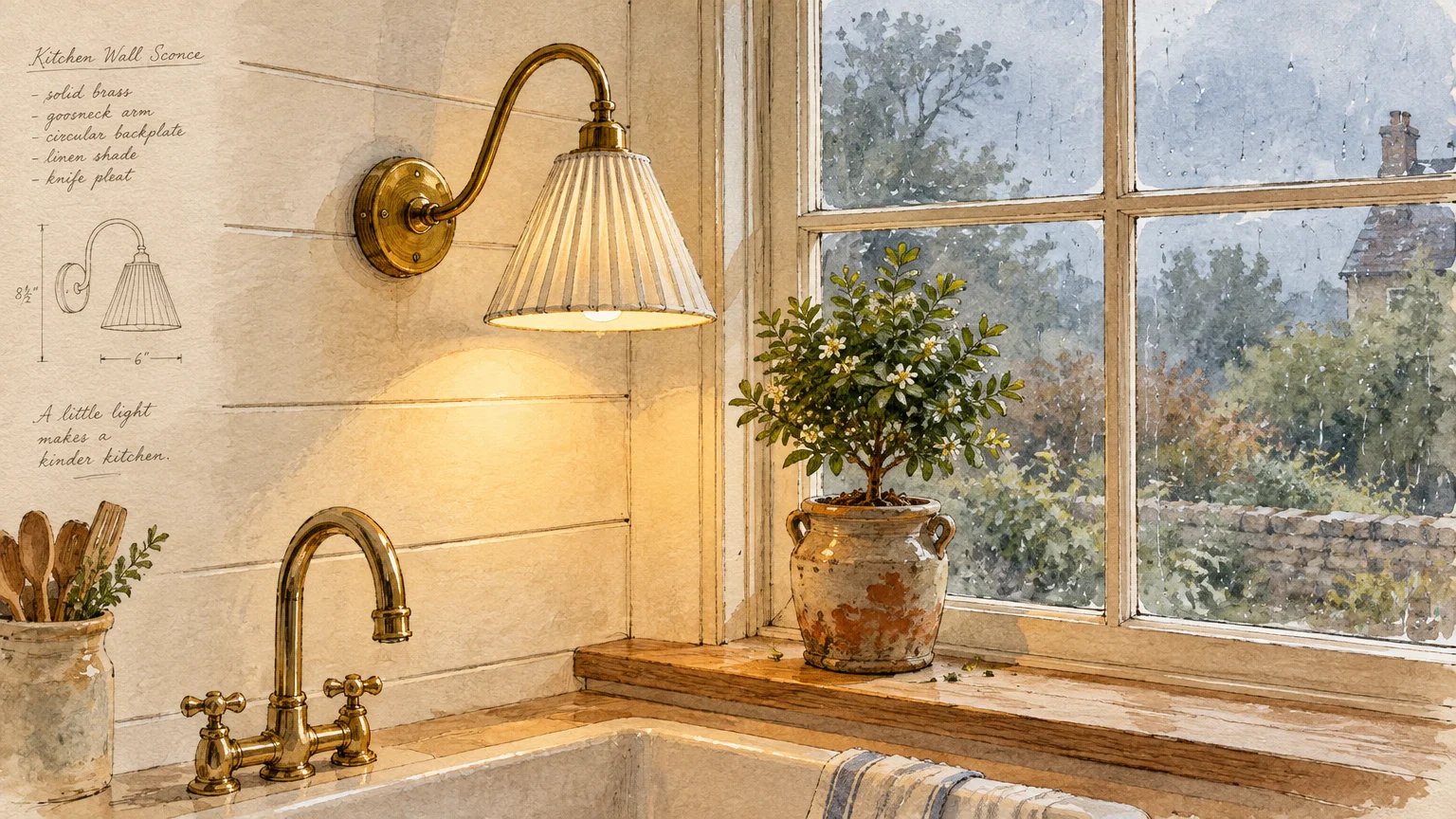
If counter space is limited, install an affordable plug-in swing-arm brass wall sconce beside your open shelving. Conceal the cord inside an attractive fabric or brass cable cover for a built-in look.
Select a 2200K to 2700K warm-spectrum bulb to cast a flattering, golden pool of light. This single fixture provides dramatic task lighting while reinforcing the cozy, lived-in charm of a historic flat.
Position the sconce so its shade sits just above eye level when standing. The directed light washes over cutting boards and cookbooks, transforming food preparation into an atmospheric ritual.
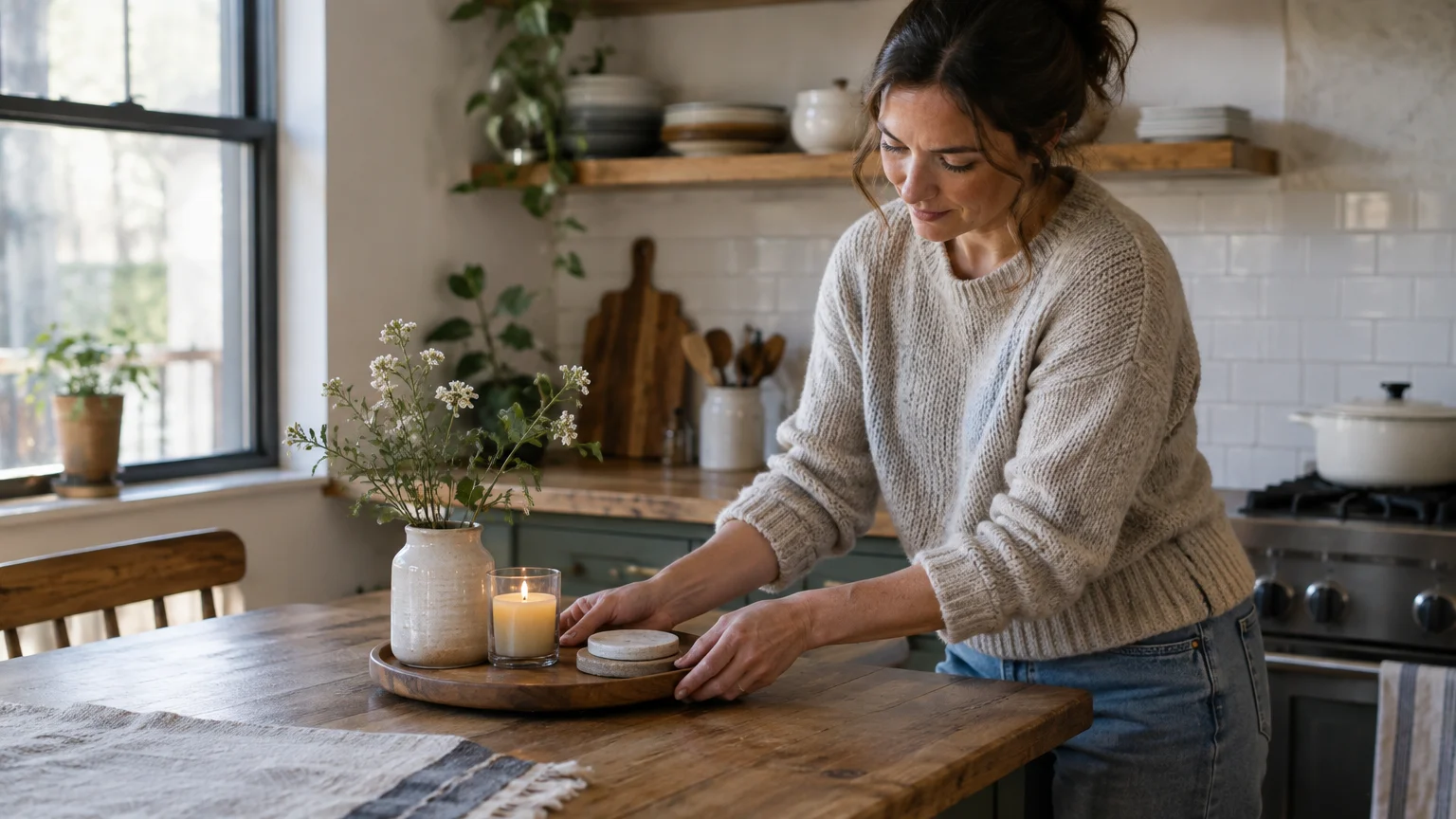
The Big Picture: Weaving These Trends into Your Home
Cultivating Harmony Through Restraint
Executing a budget kitchen makeover does not require implementing every trend simultaneously. True sophistication stems from restraint and a thoughtful dialogue between contrasting materials.
Evaluate your kitchen through an objective, editorial lens before purchasing materials. Identify the single element that currently compromises your room’s aesthetic, whether it is sterile lighting or cheap plastic hardware.
Layering too many visual shifts at once can overwhelm modest square footage. Select two or three compatible updates that build upon your home’s existing architectural strengths.
Bridging Adjoining Living Spaces
Your kitchen should never feel like an isolated laboratory. Integrate design cues from adjacent living and dining rooms to establish visual continuity across your entire floor plan.
Echo the unlacquered brass pulls in your dining room sideboard hardware. Carry the warm limewash texture from an accent wall into your kitchen pantry niche for seamless flow.
Repeating colors and materials throughout adjoining rooms creates a sense of intentional architectural cohesion. This rhythmic flow expands perceived space, making your home feel grander and more thoughtfully curated.
The Philosophy of Quiet Luxury
Affluent spaces rarely shout; they exude confidence through craftsmanship, tactile materials, and flattering illumination. By focusing on cheap kitchen updates rooted in natural finishes, you elevate the everyday sensory experience.
Invest your effort into details you physically touch and perceive daily. The satisfying weight of solid brass and the gentle glow of warm lighting create genuine enduring value.
Small, disciplined changes compound to create an unmistakably curated interior. With thoughtful execution, your sub-$100 interventions will outshine costly, trend-chasing remodels for years to come.
Frequently Asked Questions
Can cheap kitchen updates actually stand up to daily culinary wear and tear?
Yes, provided you choose materials with honest durability rather than synthetic imitations. Solid raw brass hardware, mineral paints sealed with matte protective topcoats, and real stone withstand heat and moisture beautifully.
These natural materials actually improve with age, developing an attractive patina that conceals minor scuffs. Avoid faux finishes or peel-and-stick vinyls that degrade and peel under heavy cooking steam.
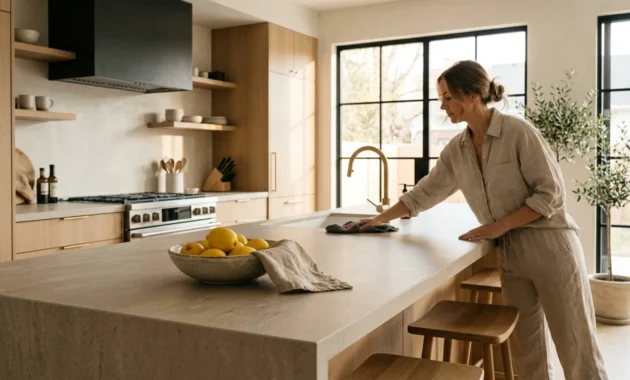
Routine maintenance also plays a vital role in longevity. Clean solid brass and stone surfaces with mild soaps and microfiber cloths rather than harsh chemical abrasives.
How do I mix warm brass hardware with existing stainless steel appliances?
Mixing metals is a hallmark of sophisticated, designer-led kitchens. The secret lies in maintaining an intentional ratio, such as 70 percent primary metal and 30 percent accent finish.
Let your stainless steel appliances serve as the functional foundation, then layer warm unlacquered brass on cabinet hardware and lighting. This intentional tension makes the kitchen appear collected over time rather than purchased in a set.
You can further harmonize contrasting metals by introducing an accessory that features both tones. A vintage brass bowl or a polished nickel frame on a marble shelf ties contrasting finishes together effortlessly.
Which affordable kitchen upgrades provide the highest visual return on investment?
Strategic lighting improvements consistently yield the highest immediate visual return. Swapping cold overhead glare for warm 2700K concealed under-cabinet LEDs softens imperfections and enhances every existing material in the room.
Cabinet hardware upgrades rank a close second. Because hardware is both visual and tactile, heavy solid metal handles immediately signal bespoke quality to anyone entering the room.
Prospective homebuyers register quality instantly through touch and light quality. These two micro-investments yield an outsized psychological impression during walk-throughs.
How can I make rental kitchen cabinets look expensive without permanent alterations?
Focus on reversible, non-invasive enhancements that elevate ambiance without breaching lease agreements. Swap out rental hardware for solid unlacquered brass pulls, storing the landlord’s original handles safely in a labeled bag.
Introduce a cordless rechargeable lamp to an empty corner and install battery-operated warm puck lights under cabinets. These portable additions infuse quiet luxury into your space and travel with you to your next home.
Lean a marble threshold or wooden cutting board against the rental backsplash to conceal dated tiles. This removable styling trick injects rich organic texture without driving a single nail into the wall.
For the latest color forecasts, consult industry leaders like Pantone and paint companies like Benjamin Moore. For professional design standards, refer to the American Society of Interior Designers (ASID).
Disclaimer: This article reflects design trend analysis and predictions. Personal taste and timeless design principles should always guide your decorating choices.