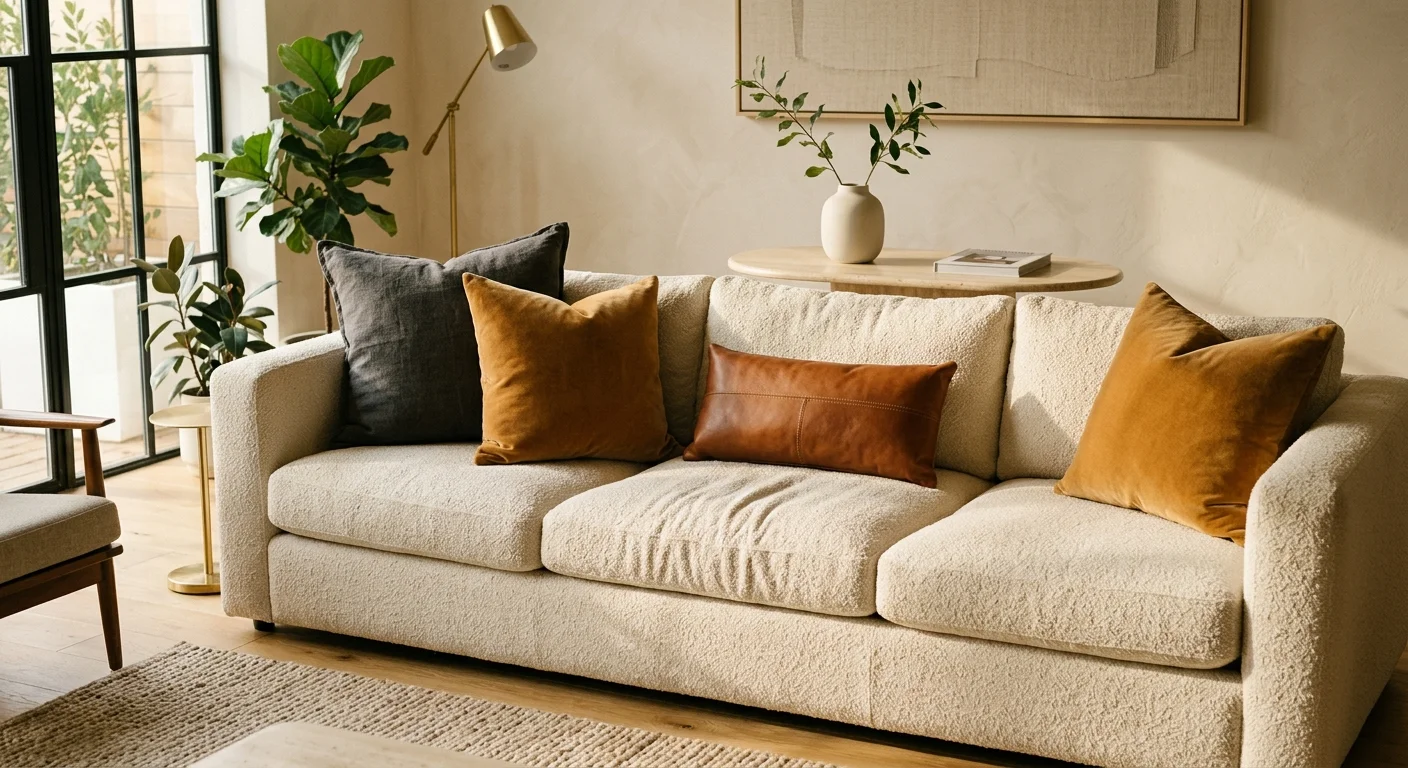
Striking the perfect balance between tactile luxury and functional comfort defines modern living room pillow arrangement guide strategies. Pillows set the visual weight of your seating area, anchoring your living space while reflecting quiet luxury and spatial harmony. When your accent cushions fall out of scale, your entire room loses its compositional balance and refined feel. Recognizing the signs you have too many or too few sofa pillows allows you to master spatial proportions, optimize seating depth, and curate a sophisticated home environment. By evaluating your couch through a trained editorial lens, you can easily determine the correct number of throw pillows that blend effortless comfort with high-end interior aesthetics.
Sign 1: Guests Squeeze onto the Edge Because Pillows Claim the Seating Depth
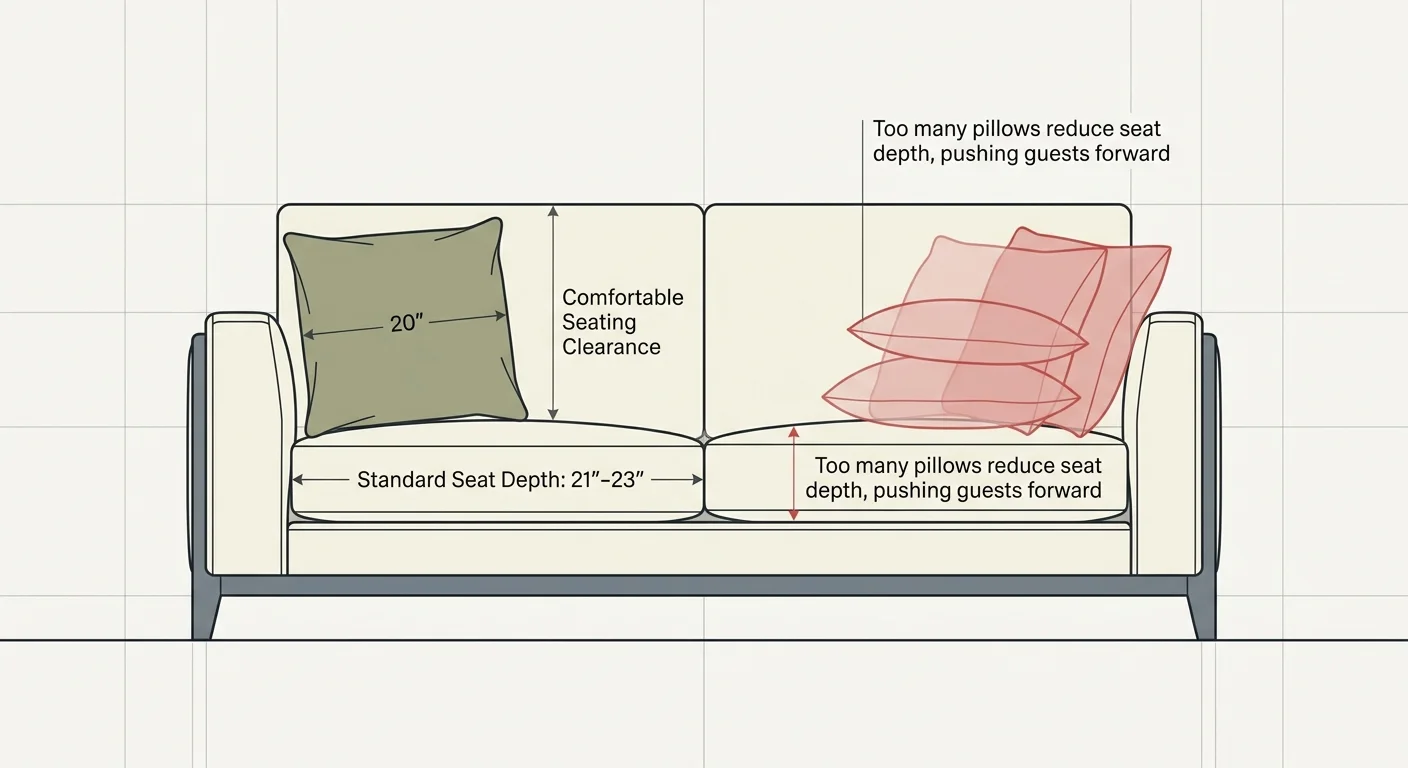
When visitors sit awkwardly on the forward edge of your sofa cushions, your seating arrangement suffers from functional overcrowding. High-end furniture design relies on ergonomic seat depth; when decorative textiles steal physical space, aesthetic appeal undermines actual comfort. Dense down forms and excessive layered stacks often push human bodies forward, destroying the architectural relaxation that deep-seated sectionals and tailored Lawson sofas provide. To resolve this issue, assess the functional seat depth of your sofa frame before selecting accessories. Standard couch seats measuring twenty-one to twenty-three inches deep comfortably accommodate a single layer of twenty-inch cushions without restricting natural seating positions. Deep-set sectionals measuring twenty-four inches or more allow for layered pillow arrangements, but low-profile contemporary frames require discipline. Replace bulky accent cushions with tailored bouclé covers or low-profile lumbar shapes that nestle flat against the backrest. Maintaining generous physical clearance communicates warm hospitality while upholding a streamlined visual footprint. Furthermore, evaluating seating utility ensures your living room remains an inviting sanctuary rather than a museum-like display of untouchable textiles. Paying close attention to how guest body weight compresses your cushions helps you refine your arrangement over time.
Sign 2: Your Sofa Looks Flat and Uninviting Against the Back Wall
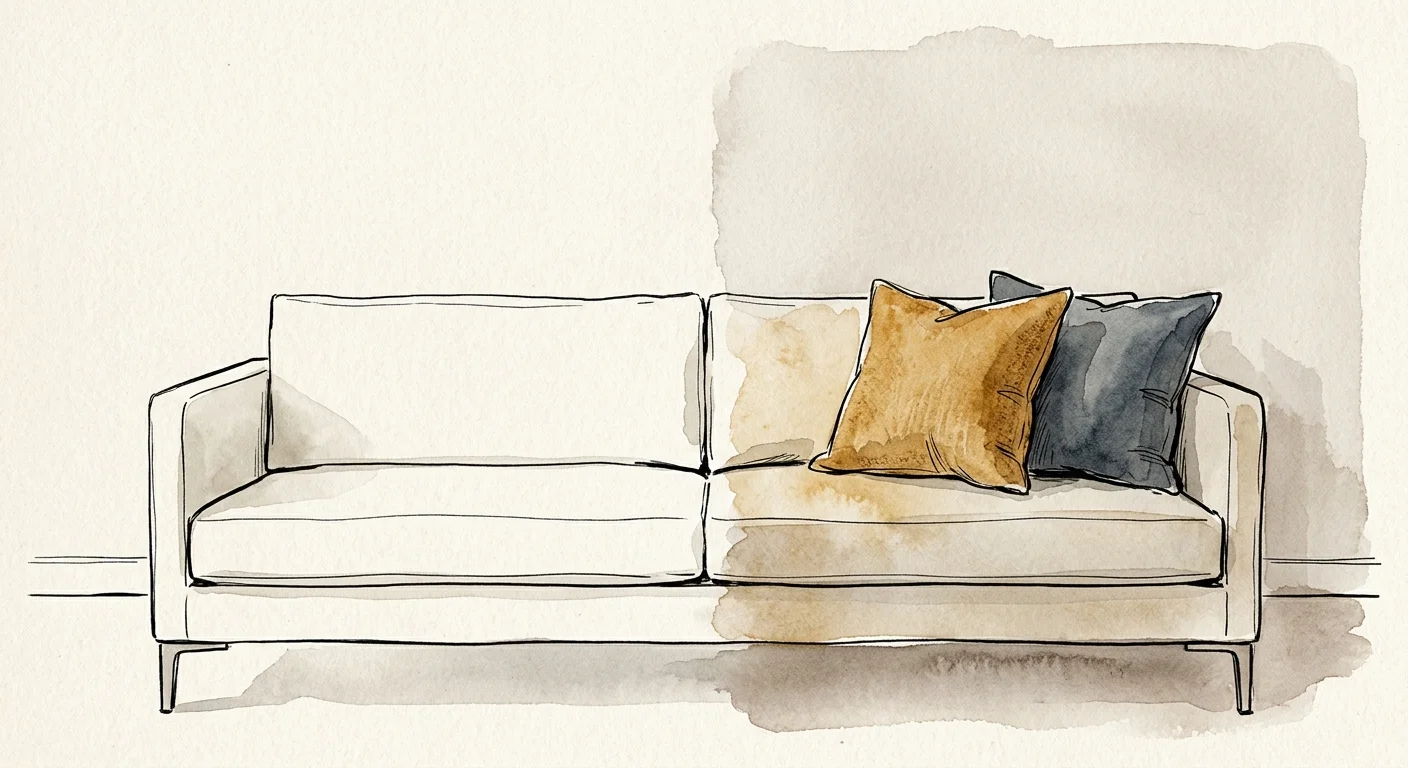
A completely bare sofa creates an immediate architectural void within a tailored living space. Without the layered dimension of rich textiles, upholstered furniture appears stark, monolithic, and disconnected from surrounding interior details. Design enthusiasts often fall into this minimalist trap out of fear of visual clutter; however, eliminating accent cushions entirely strips your living room of emotional warmth and textural tactile appeal. In sophisticated interior styling, textiles act as a soft architectural bridge connecting structured furniture with wall finishes, rugs, and surrounding millwork. Introducing two carefully chosen accent cushions on a contemporary sofa anchors the eye and softens hard geometry. If your sofa feels lost against your wall paint, position cushions featuring subtle tonal contrast—such as rich ochre against cream upholstery or deep slate against warm taupe—to build immediate visual depth. Incorporating biophilic materials like raw silk, slubbed linen, textured bouclé, or mohair velvet elevates a basic seating frame into a multidimensional focal point. By adding targeted pillow layers, you bring curated provenance, tactile depth, and structural warmth back into your primary living zone without cluttering the silhouette.
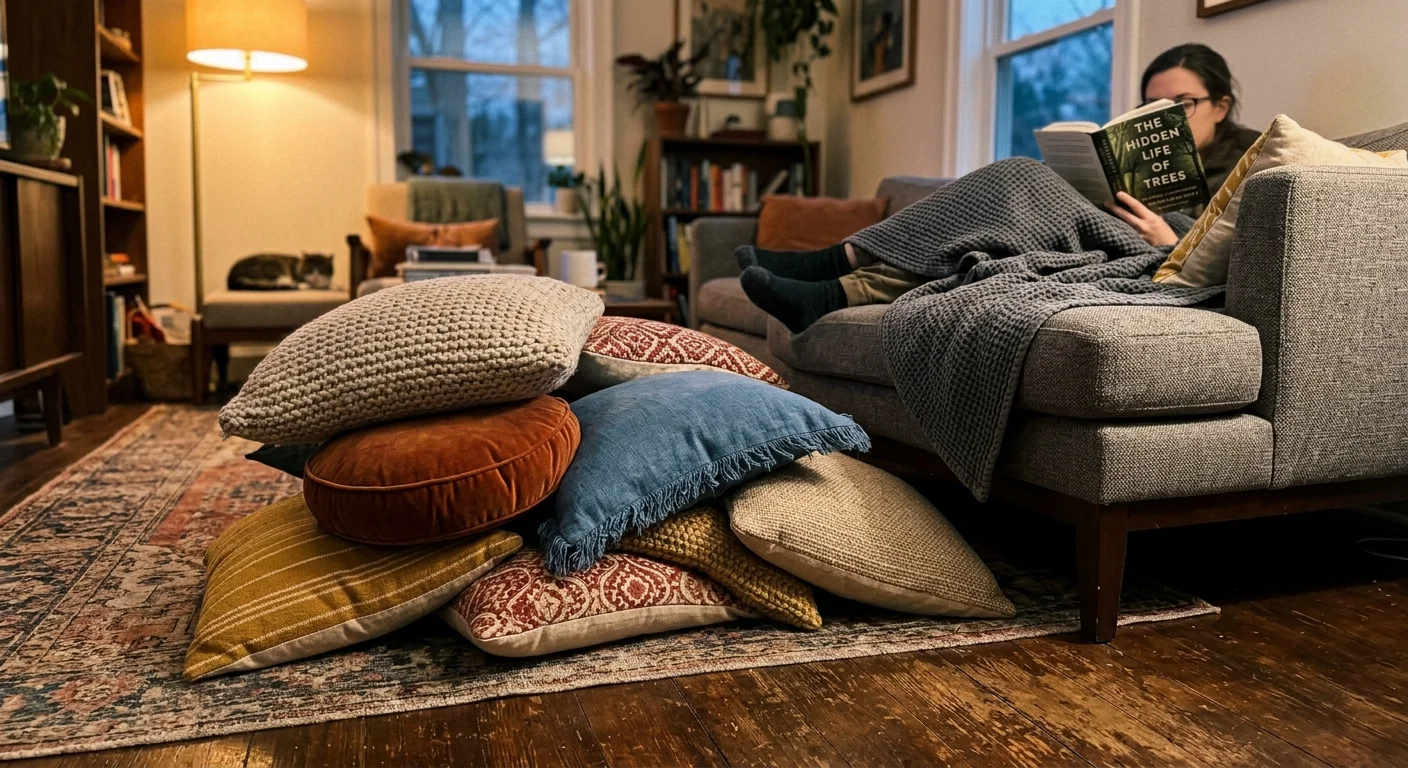
Sign 3: You Must Relocate Cushion Piles to the Floor Just to Lie Down
A definitive indicator of over-accessorizing occurs when relaxing on your sofa requires clearing a mountain of decor first. Throw pillows must elevate everyday leisure rather than demand tedious physical labor; if your daily evening routine involves moving five or six decorative cushions onto the floor or coffee table, your living room balance skews toward excess. The fundamental principle of high-end sofa pillow styling tips demands that decorative accents co-exist naturally with practical daily living. For a standard three-seater couch, a total of three to five cushions represents the exact ceiling for preserving functional comfort while achieving an editorial aesthetic. Choosing high-density feather-and-down inserts allows cushions to yield gently behind your spine during use, eliminating the constant need to clear them away. Streamlining your pillow count ensures your living space feels effortlessly hospitable rather than overly staged. Removing excessive layers unburdens your visual landscape, keeping your primary seating area anchored in quiet luxury, spatial clarity, and functional elegance. Evaluating your lifestyle needs ensures your furniture remains an inviting sanctuary for daily relaxation.
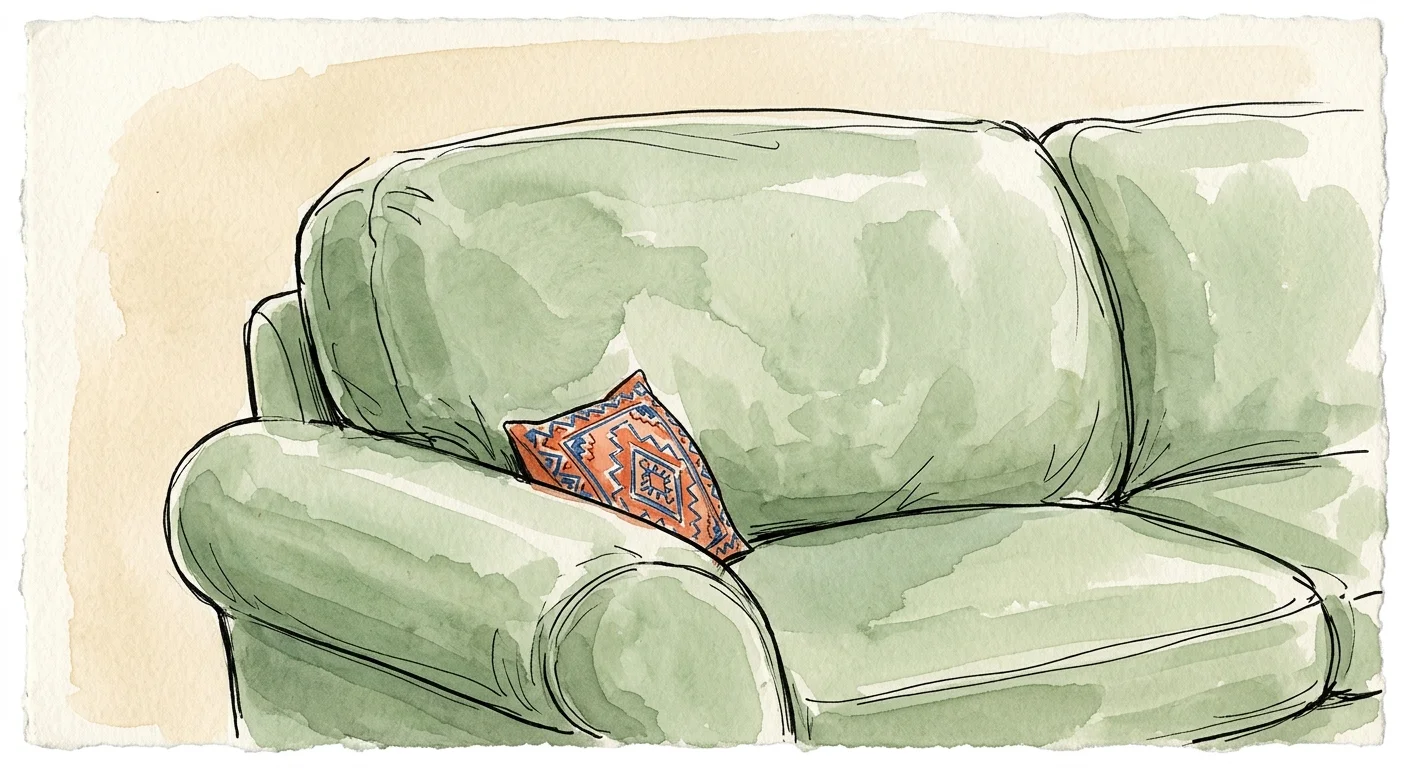
Sign 4: The Anchor Pillows Disappear Behind Large Back Cushions
Under-scaled accent cushions represent a common spatial proportion flaw in living room decor. Placing small sixteen-inch pillows on a large track-arm sofa creates a noticeable disparity in scale, making the accents look lost, insignificant, and accidental. Modern interior design relies heavily on spatial proportion; anchor cushions must hold sufficient visual weight relative to the mass of the underlying upholstery frame. When decorative accents are too small, they drown behind the sofa’s back cushions, failing to provide vertical support or geometric balance. To correct this imbalance, scale up your foundation cushions to generous twenty-two or twenty-four-inch square forms. Position these anchor pieces at the outer corners of your couch to define structural boundaries and frame the seating area. Once you establish solid proportion with large base pillows, layer smaller textured squares or elongated lumbar shapes in front to build dynamic architectural depth. Understanding how many pillows on a couch create balanced proportions allows you to curate an arrangement that commands attention while naturally honoring your furniture’s dimensions.
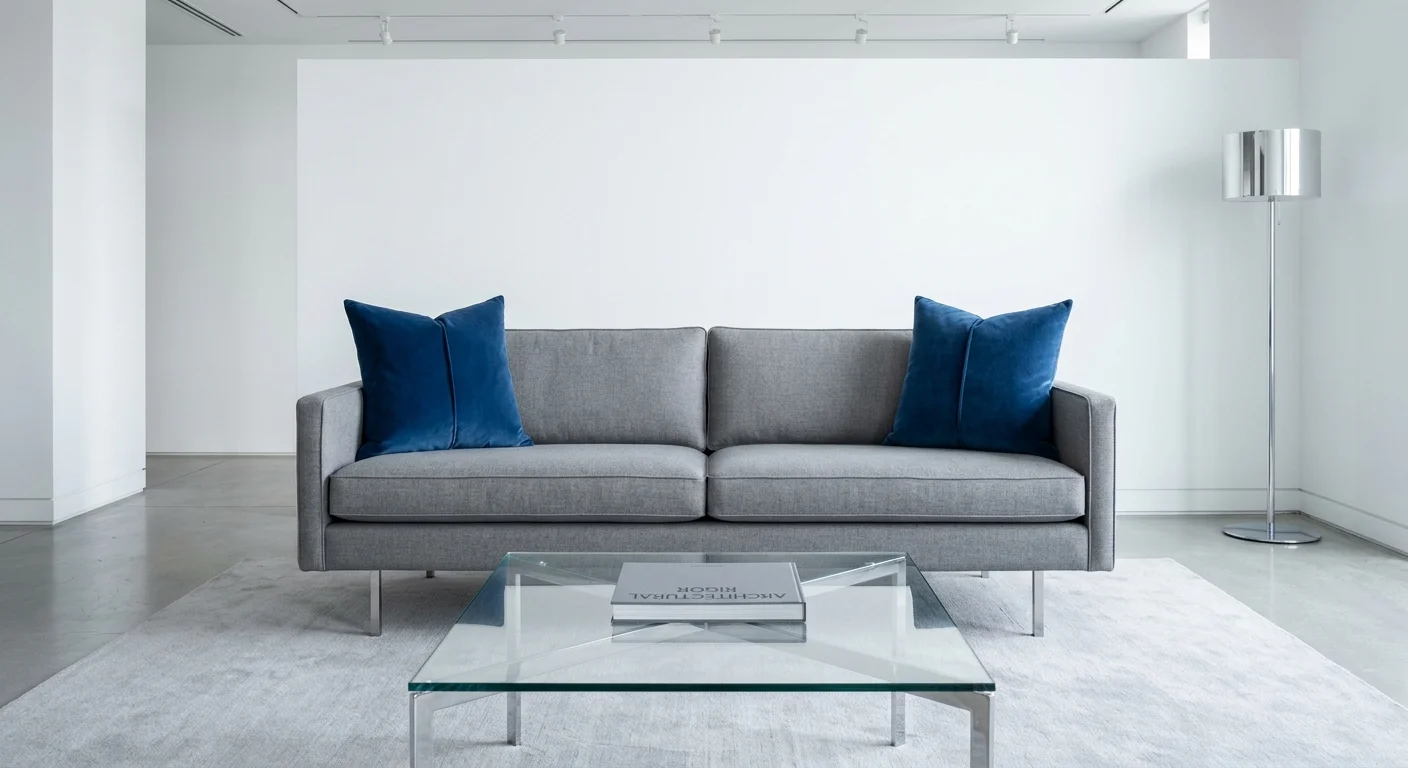
Sign 5: Symmetrical Matching Sets Create a Stiff, Showroom Atmosphere
Mirrored pillow arrangements—such as identical square cushions placed rigidly at opposite ends of a sofa—often look artificially tailored and commercial. While perfect symmetry offers predictability, rigid pairing strips your living space of organic warmth, artistic nuance, and curated personality. Modern trend forecasts favor relaxed asymmetry, where subtle variation creates visual energy without compromising compositional harmony. Instead of buying pre-packaged matching pillow sets, blend distinct textures, geometric forms, and subtle pattern variations across the sofa length. Try pairing a large bouclé pillow and a linen square on one end of the sofa, while placing a single textured velvet lumbar cushion on the opposite side. Unify the collection with a cohesive color story—such as warm terracotta, olive green, or deep tobacco—so the elements feel related yet distinct. This bespoke approach gives your living room an authentic, designer-curated feel that evolves naturally over time, avoiding the static look of a retail furniture showroom and bringing true artistic character into your home.
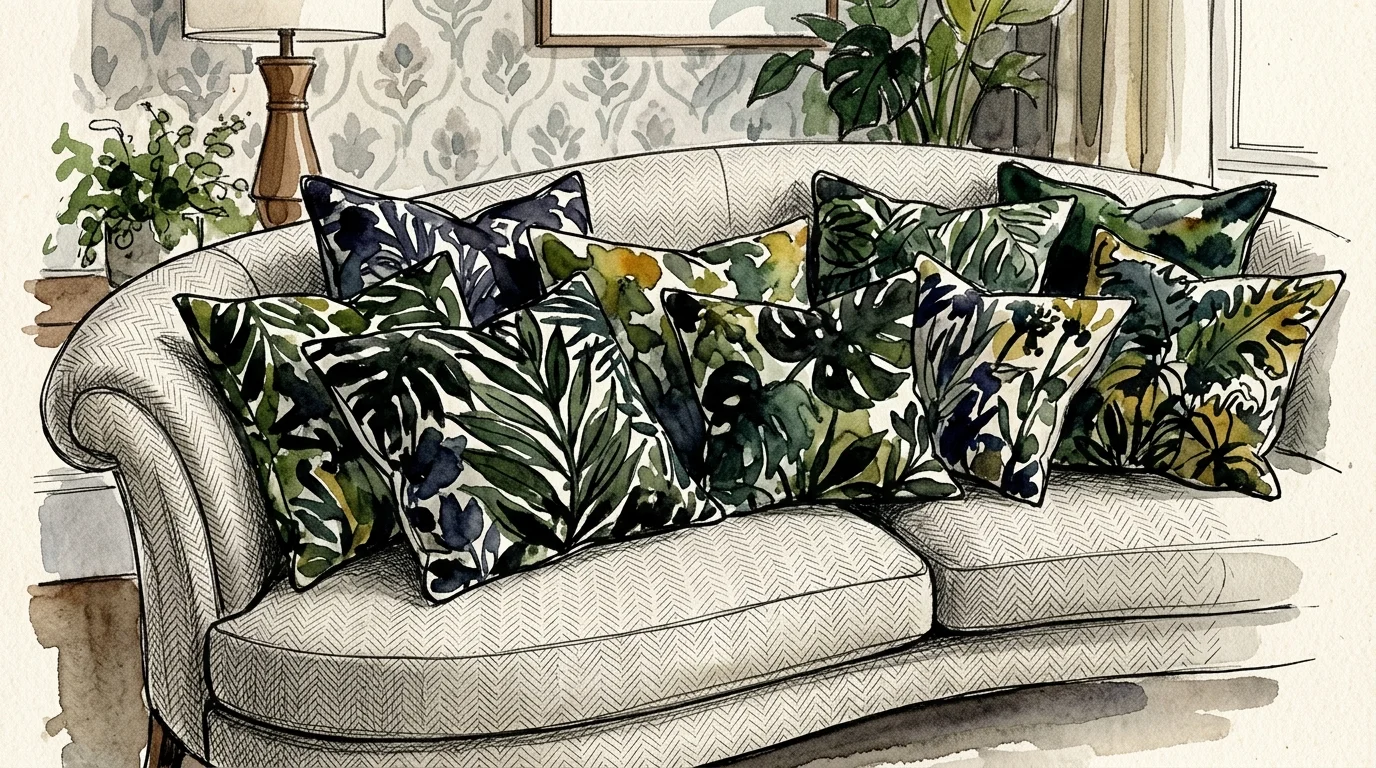
Sign 6: The Cushion Pattern Swallows the Sofa Fabric Entirely
When high-contrast geometric prints, vibrant botanical motifs, or competing abstract patterns dominate your seating area, your sofa upholstery gets completely eclipsed. Although mixing patterns adds vibrancy to an interior scheme, overloading a single piece of furniture creates intense visual noise and disrupts calm elegance. To avoid pattern overload while maintaining stylistic interest, follow established color distribution guidelines. Pair one dominant large-scale pattern with a smaller geometric accent, and ground both with solid, highly tactile fabrics. Ensure the background shade of your patterned pillow connects directly to the underlying sofa fabric, creating an organic dialogue between the furniture and accessories. Preserving negative space—allowing clean, unadorned stretches of sofa fabric to remain visible—gives the eye room to rest while showcasing the tailored details of your furniture frame. Balancing expressive prints with neutral, textured solids maintains quiet luxury across your entire living space while honoring the rich character of your primary seating.
Sign 7: Floating Solitary Pillows Look Lost and Accidental
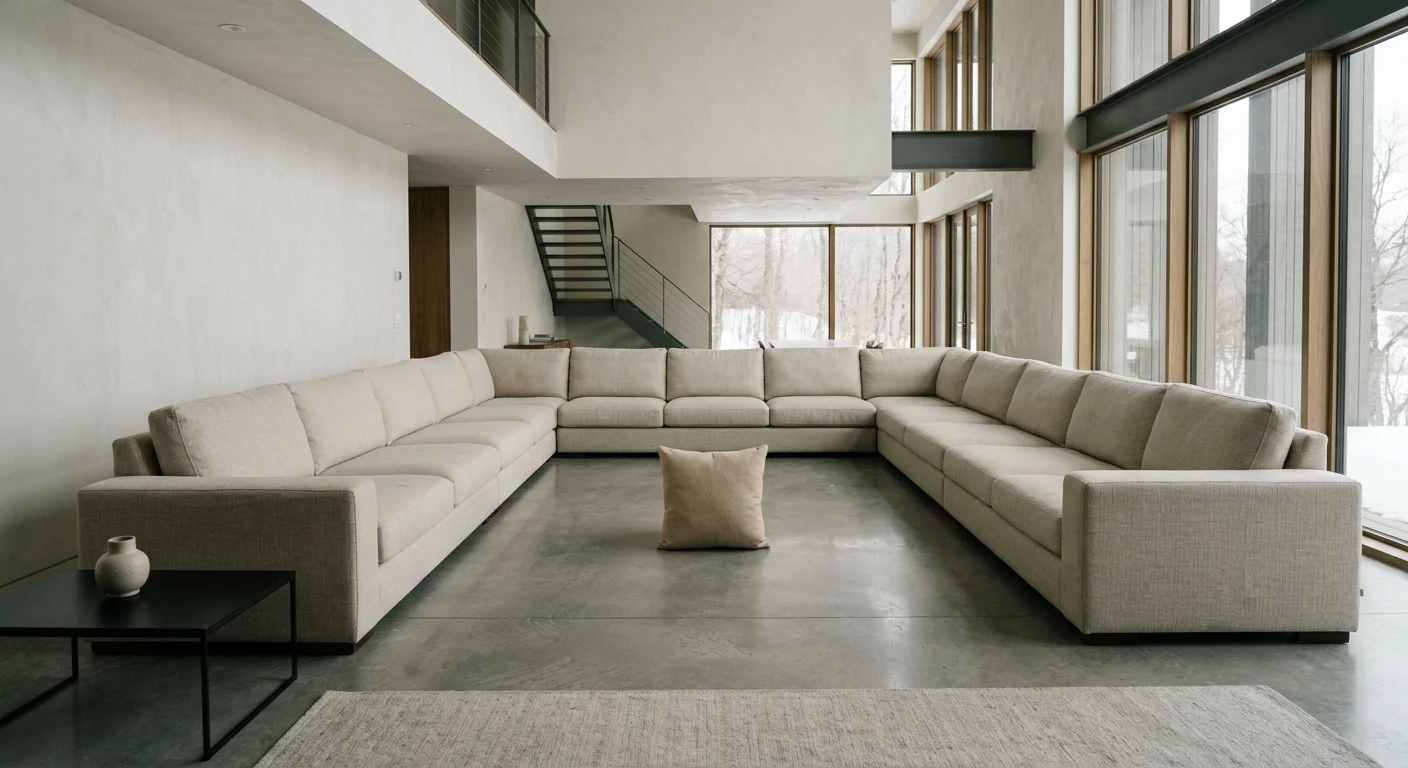
A lone eighteen-inch cushion resting by itself in the corner of an eight-foot sofa looks incomplete rather than intentionally minimalist. Solitary accents disrupt the natural flow of a room, creating asymmetrical visual weight that pulls the focus off-center. Unless you are styling a compact accent chair or a narrow window bench, a single throw pillow lacks the physical presence required to ground a full-sized couch. When designing your layout, apply the interior design rule of odds to achieve artistic equilibrium. Grouping cushions in sets of three or five creates a dynamic triangular sightline that naturally guides the eye across the furniture piece. Arrange a pair of complementary pillows on one side of the sofa and balance it with a single offset pillow on the opposite side. This asymmetrical grouping creates natural movement, establishing grounded visual anchor points across your primary seating area while infusing modern visual charm.
Sign 8: Soft Architecture Collapses Due to Rigid, Synthetic Fillers
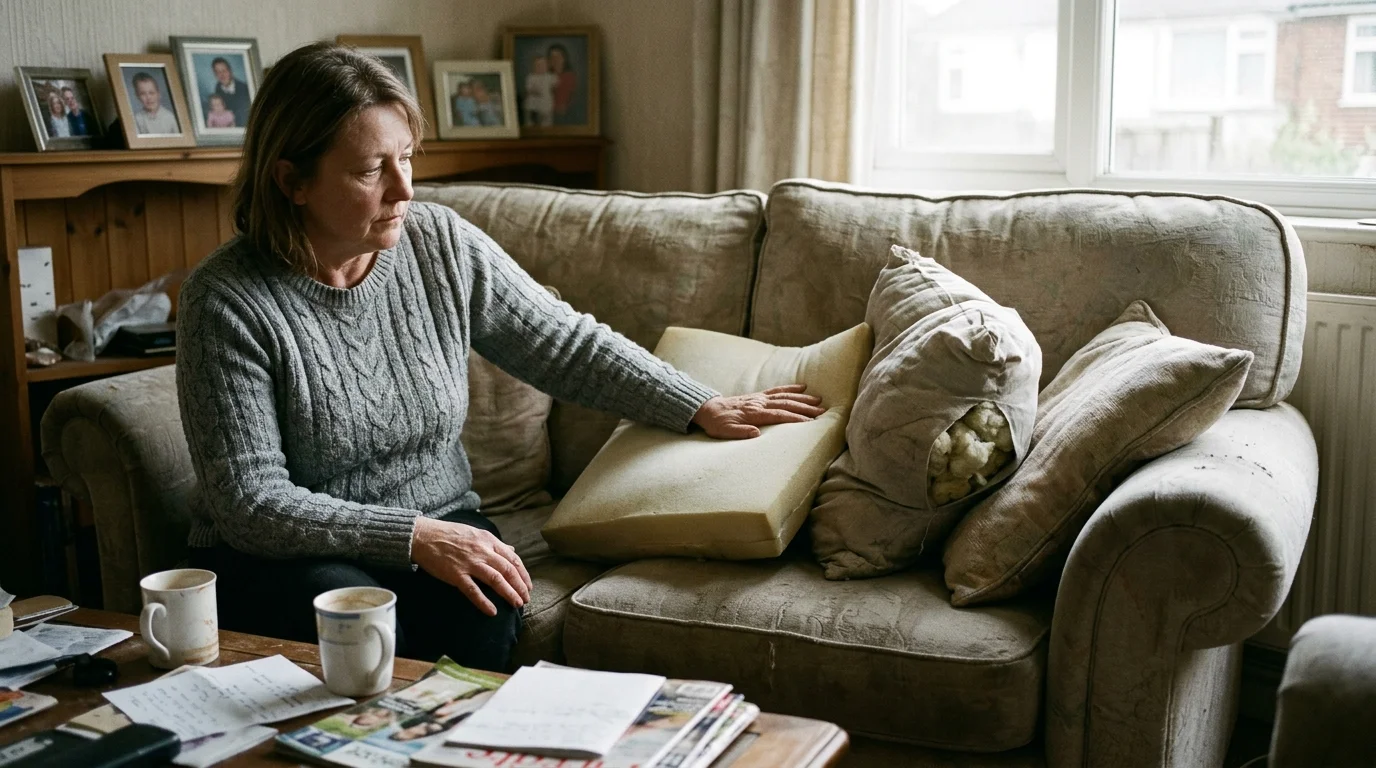
Even high-end pillow covers fail when paired with inferior, rigid inserts. Stiff polyester poly-fill inserts create artificial, boxy silhouettes that sit awkwardly against soft upholstery without conforming to human contours or draped styling. Over time, synthetic fills lump together, rendering your seating area tired, flat, and neglected. High-end interior design prioritizes soft architecture—accent cushions that maintain full volume while displaying a soft crease along the top edge. Upgrade synthetic inserts to premium feather-and-down blends or high-grade down-alternative micro-gel fills. Quality down inserts allow you to perform the classic center chop, creating inviting shadows, tactile richness, and organic drape across your sofa. Upgrading your pillow inserts restores structural integrity, elevates overall fabric drape, and ensures your couch maintains an inviting, high-end appearance for years to come while maintaining luxurious ergonomic support.
The Big Picture: Weaving These Trends into Your Home
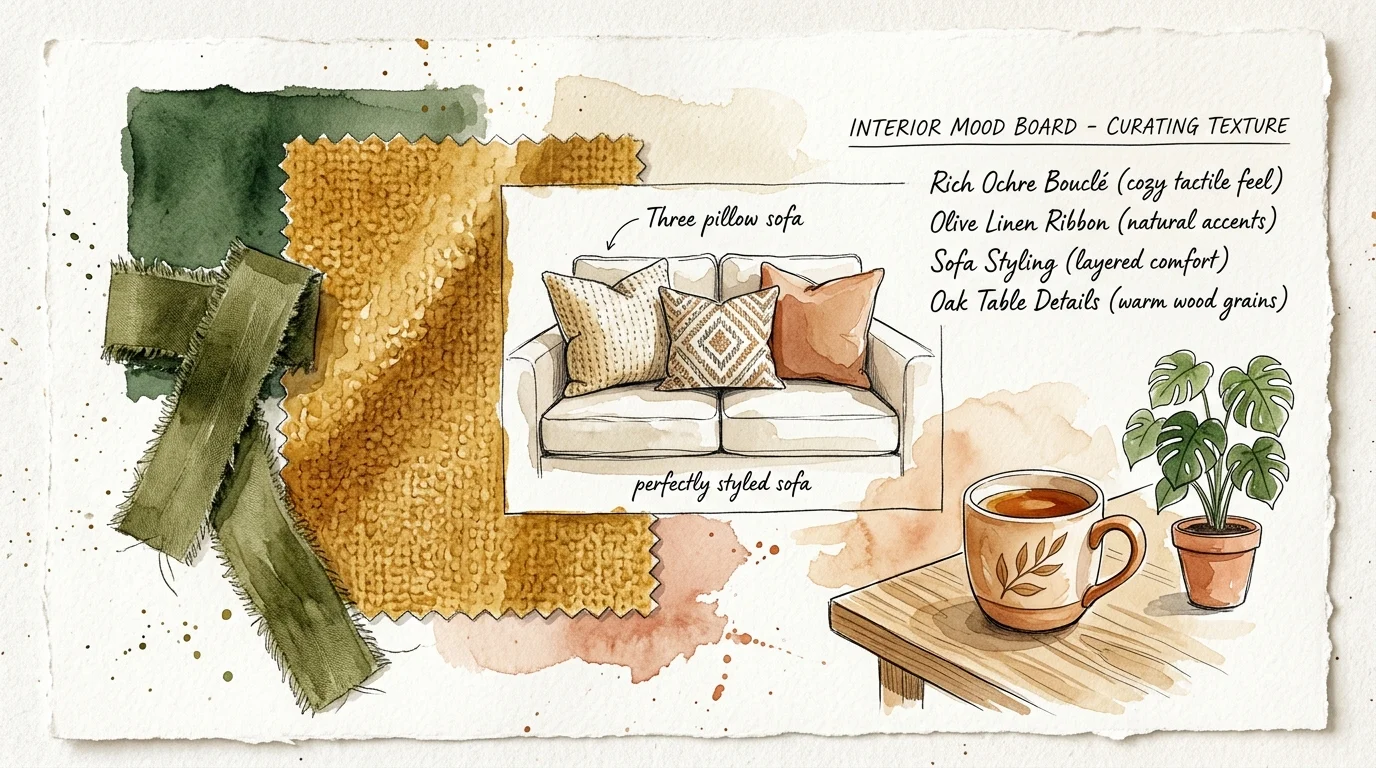
Achieving a refined living room aesthetic requires viewing your sofa styling as part of a larger, interconnected environment. Throw pillows do not exist in isolation; they interact continuously with your rug’s texture, your drapery’s drop, your wall color palette, and the ambient light entering your room. To weave these styling principles seamlessly into your home without falling victim to transient fads, prioritize provenance, high-touch materials, and deliberate scale. Start by assessing your room’s dominant palette, then introduce pillows that pull subtle accent shades from existing artwork or architectural accents. Select tactile materials like heavyweight linen, ribbed velvet, slubbed silk, and raw bouclé to cultivate a rich sensory experience that feels elevated yet approachable.
Furthermore, flexibility remains the hallmark of sophisticated interior design. As seasons change, adjust your cushion arrangements to reflect shifts in light and atmosphere. During warmer months, transition to lighter linen blends, cool mineral tones, and minimalist three-pillow configurations that promote airy openness. As colder seasons arrive, introduce richer textures like alpaca, shearling, or deep jewel-toned velvets in five-piece asymmetrical groupings to foster cozy warmth. By focusing on quality inserts, spatial scale, and balanced asymmetry, your sofa will remain an enduring centerpiece of quiet luxury and inviting comfort.
Frequently Asked Questions
How many pillows should you place on a standard three-seater sofa?
For a standard three-seater sofa measuring between seventy-two and eighty-four inches, three to five throw pillows provide optimal visual balance without overcrowding the seating surface. A three-pillow arrangement—featuring a layered pair on one side and a single accent pillow on the opposite corner—creates an attractive asymmetrical look. A five-pillow setup works exceptionally well for deeper sofa frames, allowing you to establish layered depth with base squares and decorative lumbars.
What is the secret to mixing pillow patterns without causing visual chaos?
The key to mixing patterns successfully lies in varying pattern scales and maintaining a unified color palette. Combine one large-scale pattern (such as a floral or bold stripe) with a smaller geometric motif (such as a subtle grid or houndstooth) and balance both with solid, highly textured fabrics. Ensure all patterned fabrics share at least one common background tone that links back to your sofa upholstery, creating a cohesive visual rhythm.
Should throw pillow fabrics match your curtains or rugs exactly?
Exact matching creates a flat, overly coordinated look that feels dated. Instead of matching fabrics directly, select throw pillow textiles that complement and converse with your room’s existing materials. If your curtains feature a smooth linen, introduce slubbed silk or matte velvet cushions that pull a secondary accent shade from your rug pattern, building layered richness and dynamic depth.
Is the classic center chop method still relevant in modern interior styling?
The central chop remains a valuable styling technique, provided it is applied subtly rather than aggressively. A soft crease in a feather-and-down insert breaks up rigid boxiness, introducing organic shadows and an inviting, relaxed silhouette. Avoid sharp, deep chops that make cushions look pinched or unnatural; instead, aim for a gentle crease that highlights quality down fill and relaxed luxury.
For the latest color forecasts, consult industry leaders like Pantone and paint companies like Benjamin Moore. For professional design standards, refer to the American Society of Interior Designers (ASID).
Disclaimer: This article reflects design trend analysis and predictions. Personal taste and timeless design principles should always guide your decorating choices.