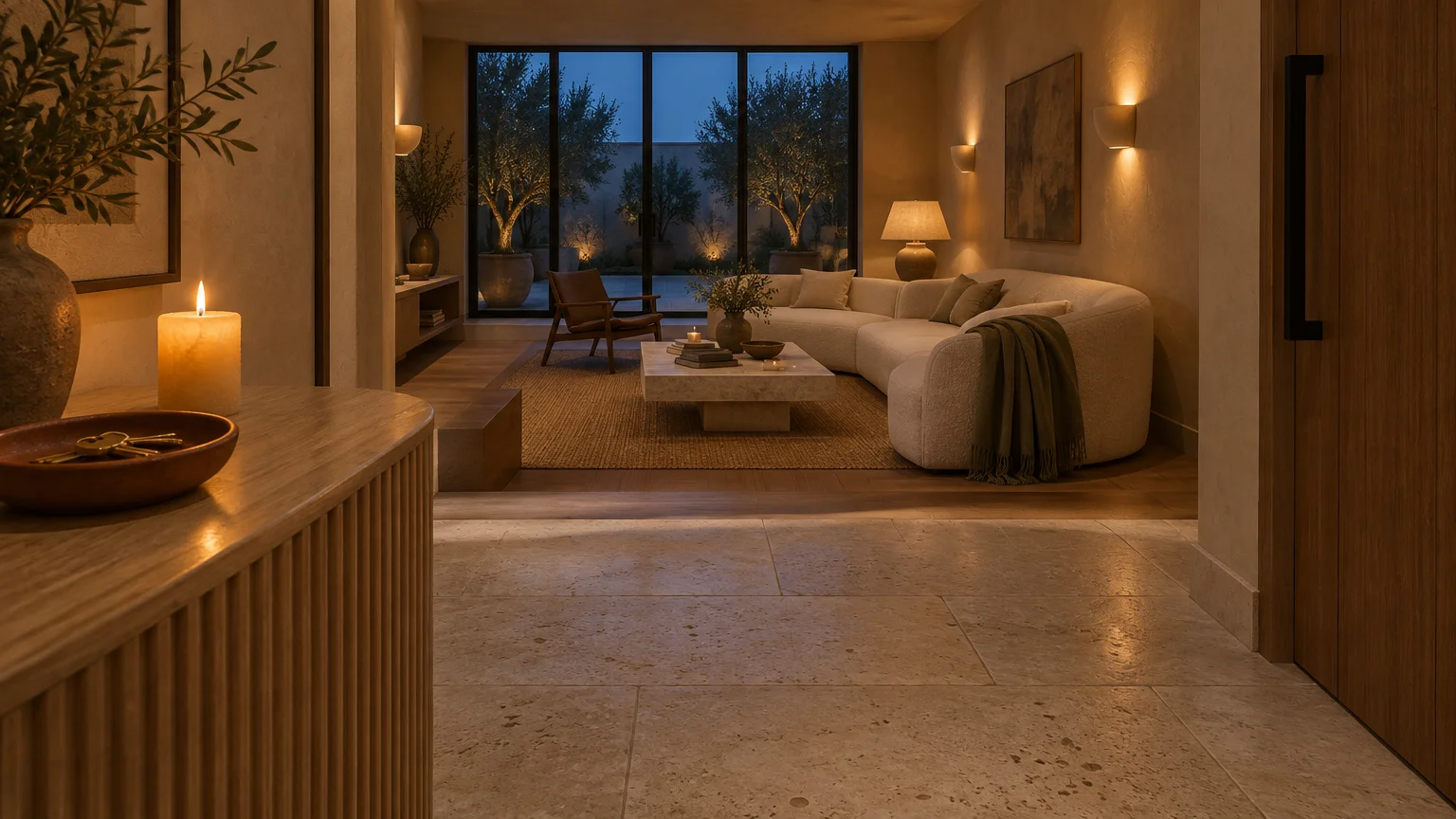
Thoughtful spatial curation transforms a routine visit into an unforgettable hospitality experience. By anticipating the subtle sensory needs of your visitors, you establish an immediate atmosphere of warmth and ease.
Preparing for guests extends beyond standard housekeeping chores to embrace elevated interior styling. True residential luxury reveals itself in the deliberate details that greet someone the moment they cross your threshold.
Designing an impeccably guest ready home requires balancing high aesthetics with effortless functionality. Here are the top design movements reshaping the art of welcoming guests into modern living spaces.
Trend #1: Olfactory Architecture and Bespoke Scent Layering
Scent serves as the silent introduction to your interior aesthetic, engaging memory faster than visual cues. A bespoke fragrance sets a welcoming narrative before a single piece of furniture is observed.
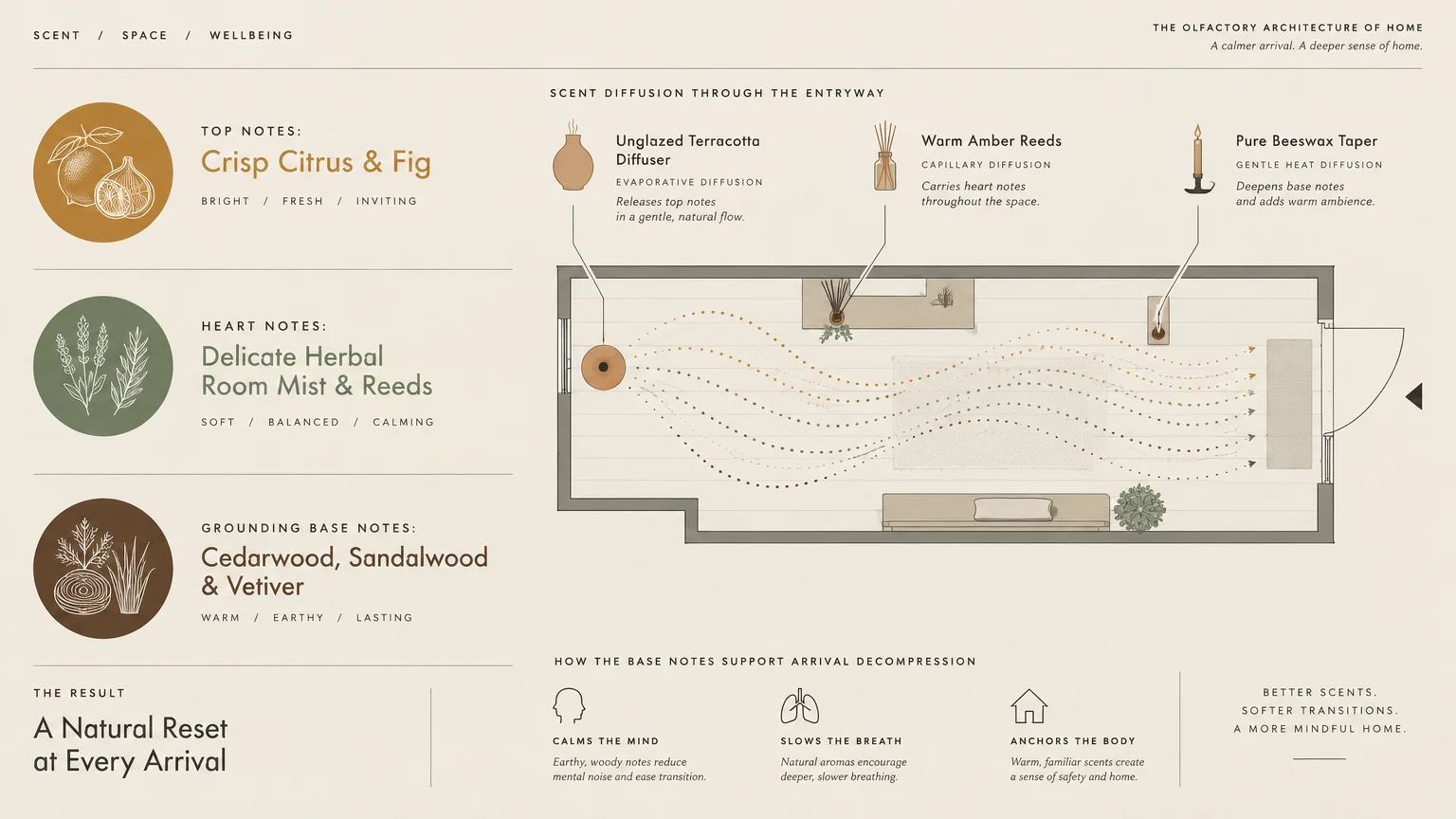
Leading hospitality spaces now utilize layered olfactory profiles rather than overpowering singular candles. You can achieve this harmony by pairing warm amber reeds with delicate herbal room mists.
Natural materials like unglazed terracotta diffusers and pure beeswax tapers release subtle essences throughout the foyer. Avoid synthetic aerosol sprays, which can cause sensory fatigue or trigger chemical sensitivities in arriving visitors.
Incorporating grounding base notes like cedarwood, sandalwood, and vetiver anchors the arrival threshold. These woodsy profiles invite arriving friends to exhale and decompress immediately after their journey.
Rotate your scent profiles seasonally to mirror the natural shifts occurring outside your windows. Crisp citrus and fig elevate warm summer afternoons, while smoked vanilla comforts during chilly winter evenings.
This thoughtful ambient layer forms an invisible bridge between exterior stresses and domestic sanctuary. It proves that welcoming guests begins with invisible, nuanced sensory details.
Trend #2: The Curated Drop Zone and Entry Foyer Sanctum
Modern entry foyers have evolved beyond utilitarian dumping grounds into highly styled transitional sanctuaries. A dedicated drop zone prevents entryway clutter while providing your visitors with effortless physical orientation.
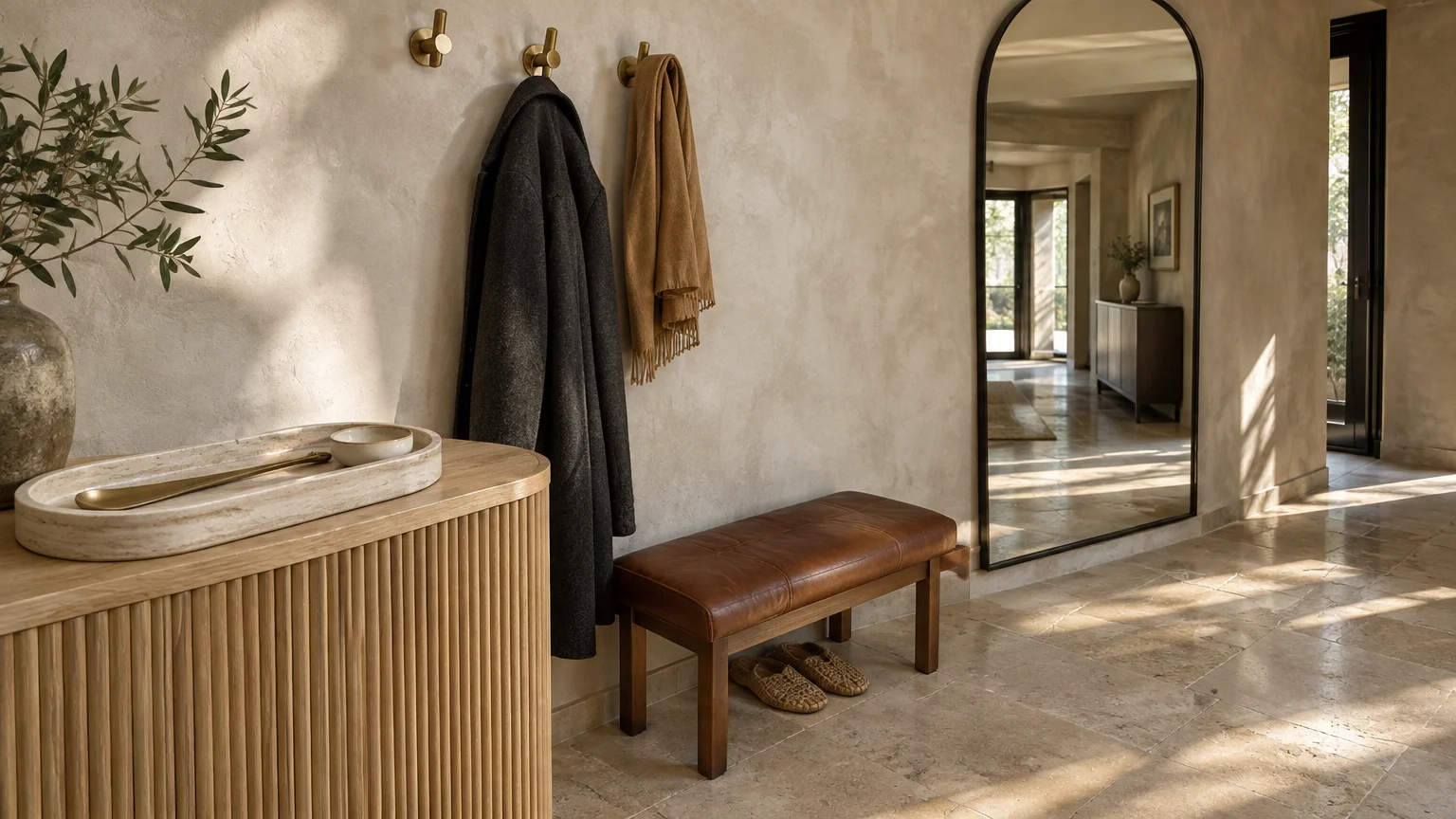
Incorporate artisanal travertine trays, fluted timber consoles, and concealed storage benches to receive outerwear seamlessly. When coats and bags vanish instantly, physical peace settles over the entire environment.
Provide sleek brass hooks or dedicated sculptural hangers for heavy jackets and delicate scarves. Clear negative space on your entryway console shows visitors that you planned ahead for their belongings.
Introduce a comfortable velvet or leather stool to assist guests as they remove their footwear. Offering woven organic slippers invites them to shed outdoor grime and transition into relaxation.
This deliberate reception zone establishes your home hosting checklist with refined sophistication. It signals unconditional hospitality from the exact second guests cross your front door.
Architectural mirrors placed above the console reflect ambient light while allowing visitors a discrete vanity check. These small spatial courtesies make all the difference in modern entryway design.
Trend #3: Sculptural Accent Seating and Conversational Layouts
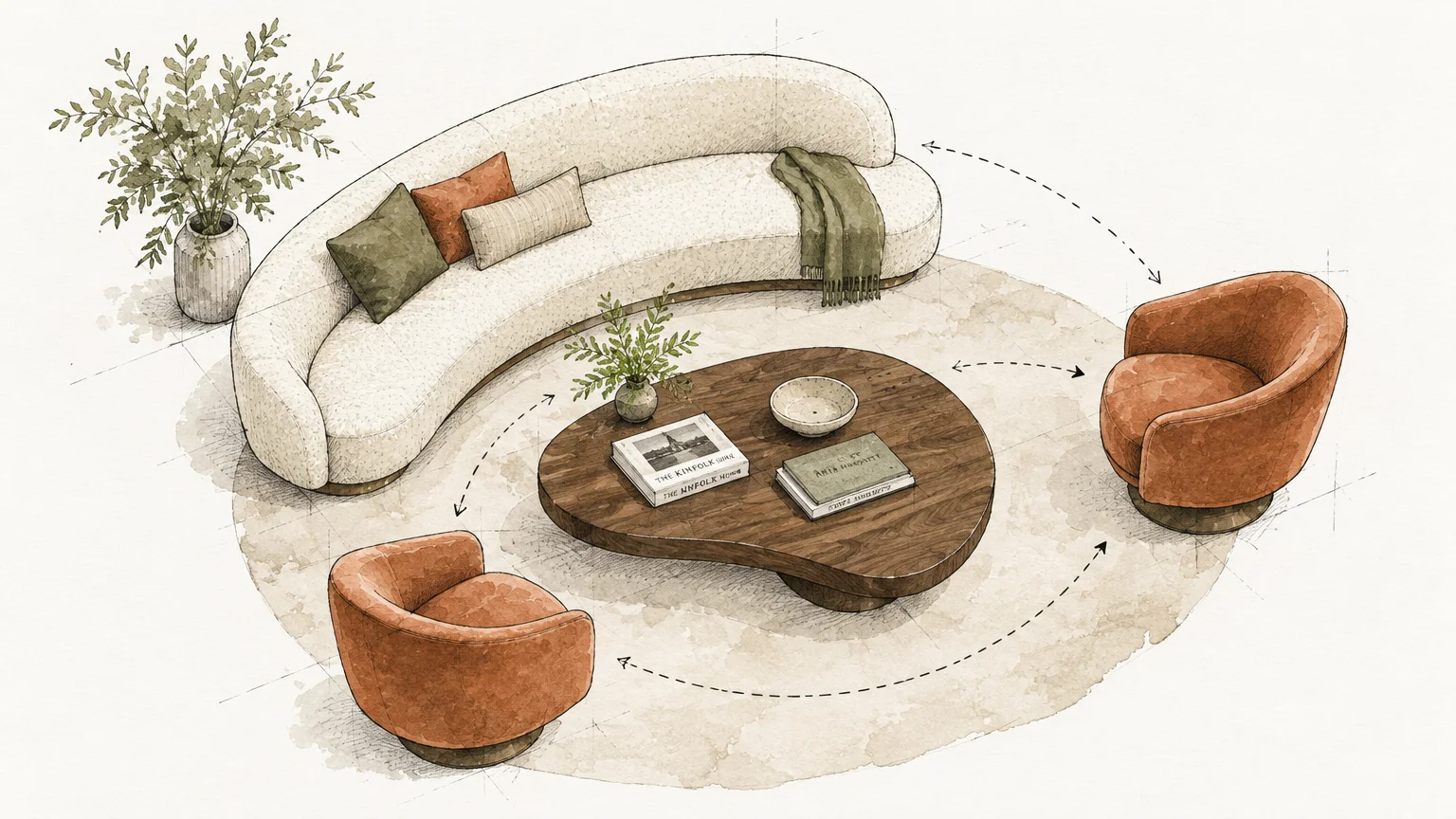
Rigid, television-centric living rooms are yielding to fluid, conversational layouts that foster intimate dialogue. Arranging sculptural armchairs in gentle curves invites authentic social engagement and effortless eye contact.
Biophilic curved sofas and swivel lounge chairs allow guests to pivot between dynamic group discussions. These fluid forms eliminate awkward sightlines and encourage open, relaxed physical posture.
Ground these seating vignettes around oversized organic coffee tables crafted from honed limestone or walnut. Such focal anchors provide accessible surfaces for artisanal drinks and shared culinary plates.
Incorporating varied seat heights and tactile textures creates an inclusive lounge environment. Guests can select the seating style that best accommodates their personal physical comfort and social mood.
Ensure that every seat remains within comfortable arm reach of a side table. Your company should never struggle to rest a delicate wine glass or teacup while conversing.
Float furniture away from perimeter walls to facilitate graceful movement throughout the room. This generous circulation space encourages guests to mingle freely without navigating crowded domestic obstacles.
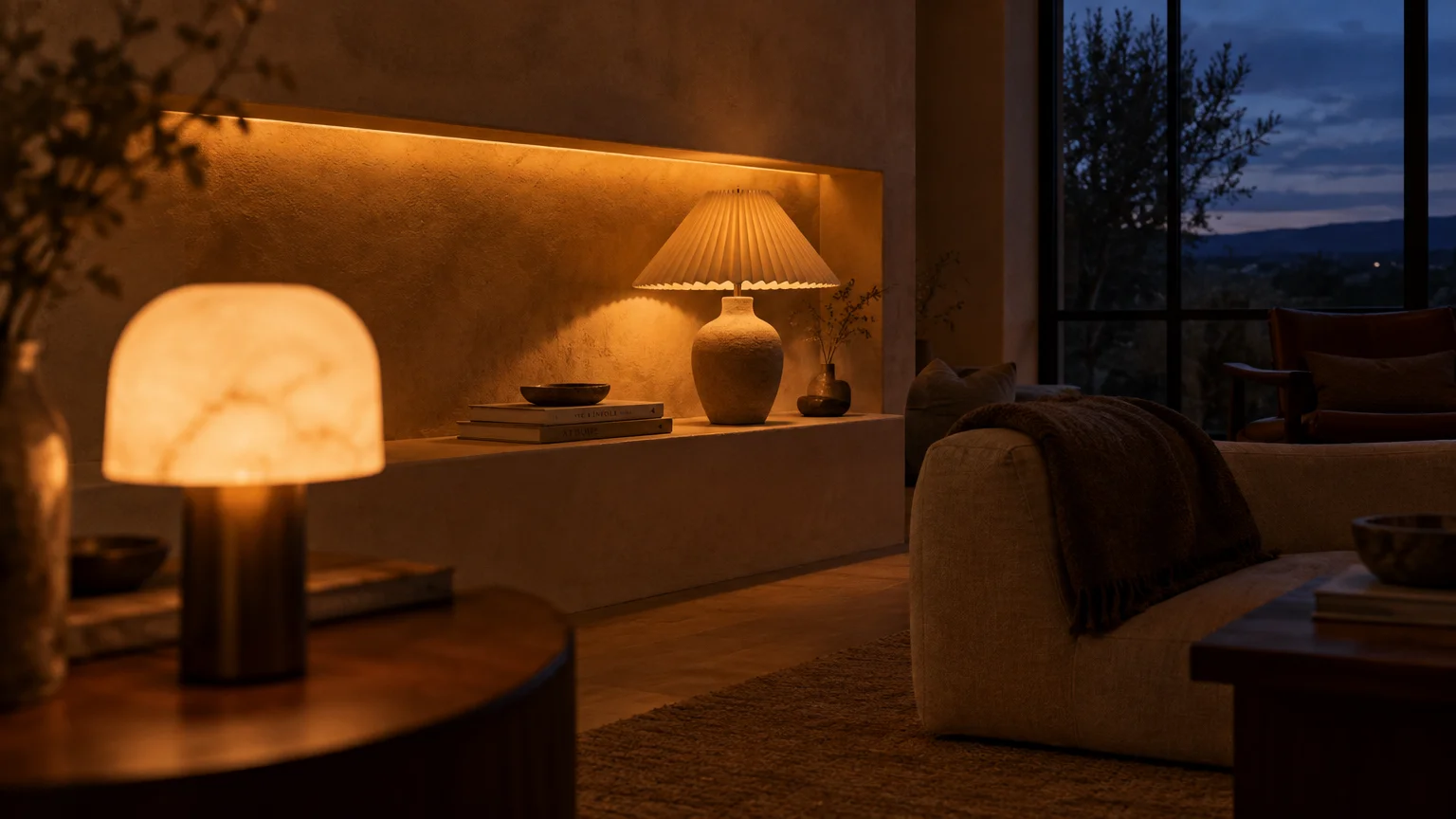
Trend #4: Ambient Circadian Lighting and Warm Luminescence
Overhead illumination can feel clinical and unwelcoming when evening visitors arrive at your home. Modern hosting tips prioritize layered ambient lighting schemes that foster genuine emotional warmth and tranquility.
Swap harsh ceiling fixtures for dimmable accent lamps featuring warm bulbs calibrated under 2700 Kelvin. This gentle golden cast flatters skin tones and prompts natural neurological relaxation after sunset.
Place portable cordless LED lamps on side tables and deep credenzas to eliminate shadowy corners. Their sculptural silhouettes double as contemporary art objects during daylight hours.
Sconces equipped with textured linen shades or frosted globes diffuse light evenly across common entertaining areas. This multifaceted illumination wraps your interior in an embrace of quiet luxury.
Illuminate baseboards and stair risers with concealed LED ribbon lighting to guide evening movement safely. Soft accent light prevents disorientation without breaking the relaxing, moody atmosphere of nighttime hospitality.
Group hand-poured sculptural candles in varied heights on non-flammable stone trays for flickering organic charm. Natural firelight softens architectural lines and generates immediate communal warmth.
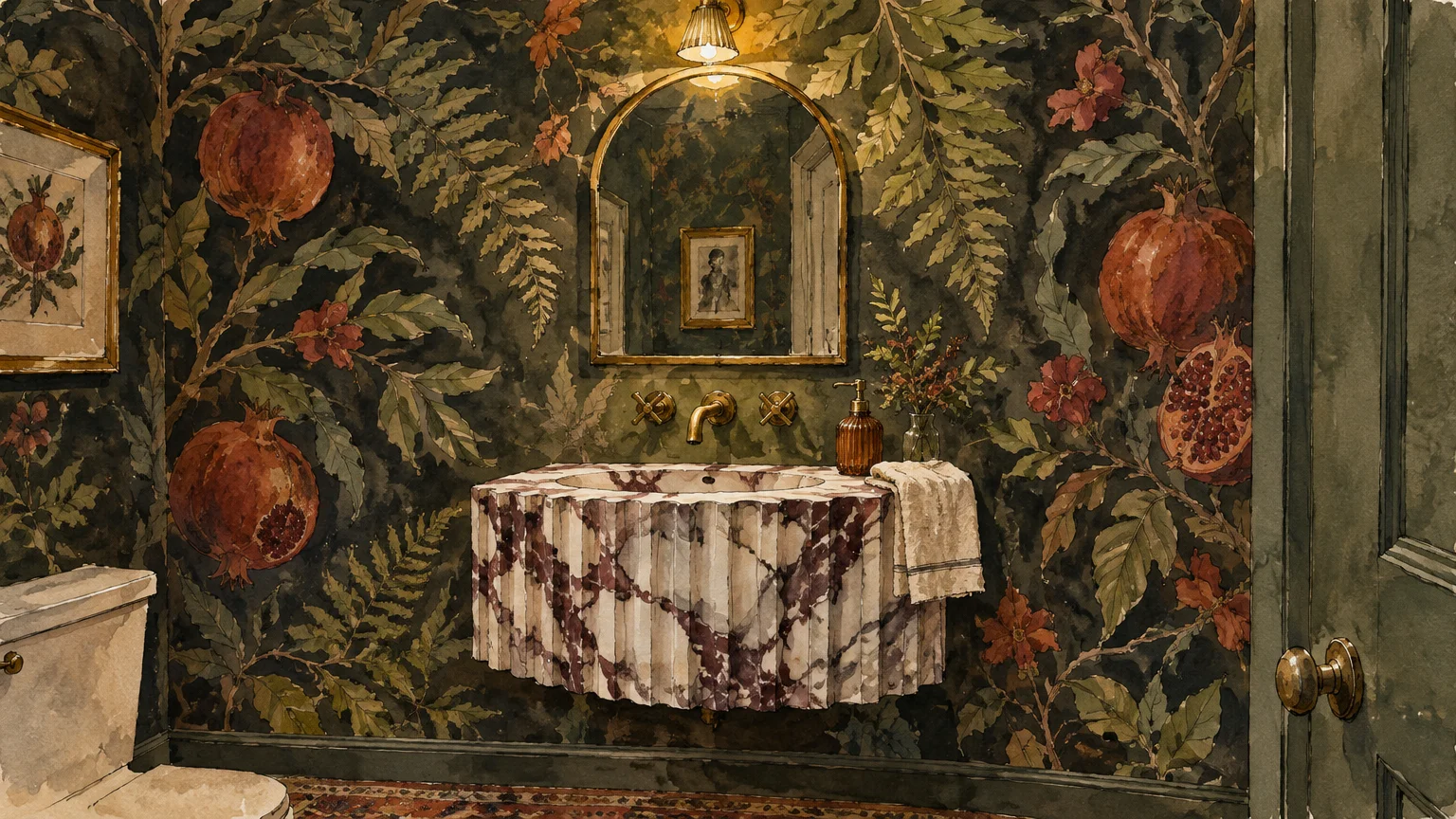
Trend #5: Tactile Powder Rooms and Powder Bath Maximalism
The powder room provides an ideal canvas for dramatic, immersive design moments within your residence. Because it functions as an enclosed retreat, guests appreciate bold stylistic surprises within its walls.
Envelop the space in moody botanical wallpapers, rich mineral limewash, or fluted stone tiles. High-contrast palettes create an intimate, jewel-box sensation that leaves a lasting visual impression.
Equip the vanity with heavyweight linen hand towels and aromatic botanical liquid soaps. Glass carafes and tactile ribbed vessels elevate simple handwashing into a restorative sensory ritual.
Concealed soft backlighting behind vanity mirrors provides flattering, warm illumination. Every thoughtful embellishment reminds your guests that their comfort was carefully considered prior to their arrival.
Select an unlacquered brass faucet that develops a charming living patina over repeated daily use. The enduring provenance of raw metals brings historical grounding to an otherwise modern powder bath.
Tuck a small architectural bud vase holding fresh eucalyptus on the vanity counter. The steam and movement release delicate herbal aromas that naturally purify the enclosed space.
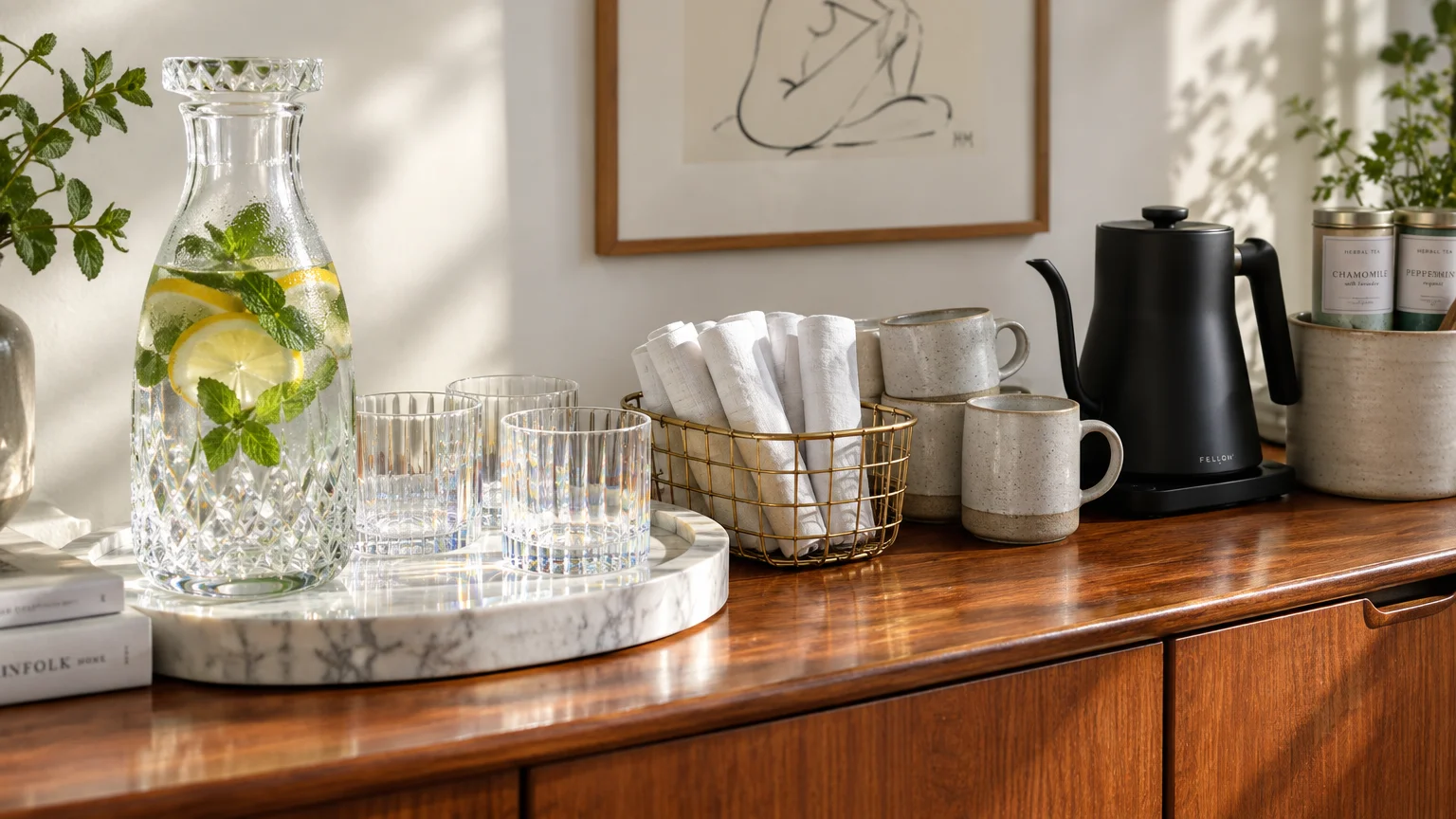
Trend #6: Dedicated Self-Service Hospitality Stations
Modern entertaining embraces guest autonomy, allowing visitors to refresh themselves without needing to ask permission. A curated self-service beverage bar dissolves social friction and makes visitors feel instantly at home.
Style a dedicated marble console or bar cart with artisanal glassware, carafes, and fresh garnishes. Present sparkling mineral waters alongside curated botanical teas and premium vintage wines.
Clearly displayed barware encourages your company to craft their own drinks at their preferred pace. This practical self-reliance fosters casual relaxation throughout the entire gathering.
Keep solid brass ice tongs, textured linen cocktail napkins, and citrus peelers within arm reach. Seamless access to essentials ensures the host remains fully present with the company.
Label specialty decanters with minimalist ceramic tags so guests can navigate beverage choices effortlessly. Clarity removes hesitation and empowers arriving visitors to indulge comfortably.
Provide a discreet countertop receptacle for discarded citrus rinds and used cocktail picks. Maintaining an orderly beverage counter preserves aesthetic beauty throughout long evenings of lively entertaining.
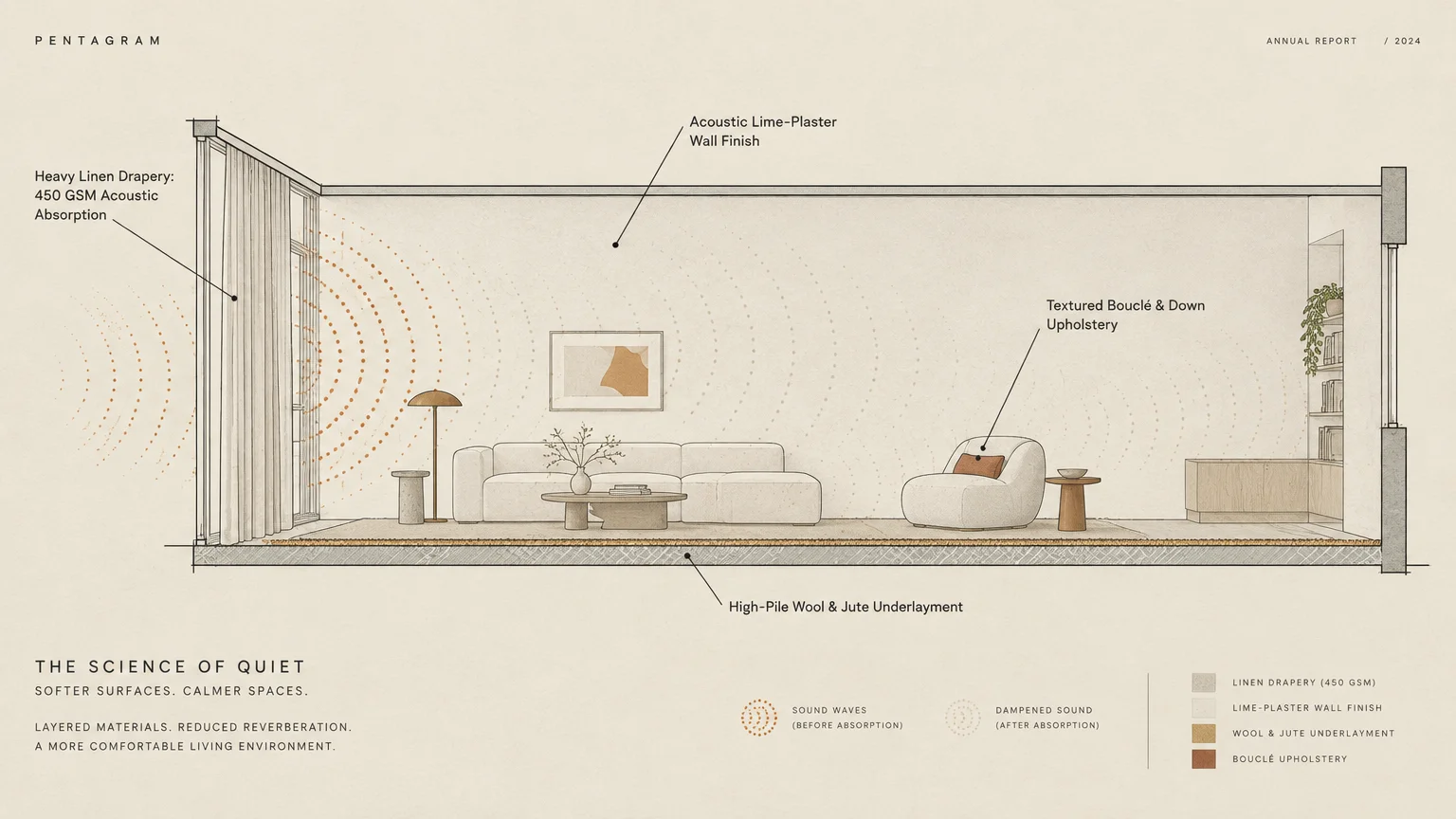
Trend #7: Acoustic Softening Through Textural Layering
Hard surfaces like polished concrete, hardwood floors, and expansive glass can create uncomfortable echo chambers. Mitigating reverberant noise is essential for maintaining an intimate social atmosphere during dinner parties.
Introduce high-pile wool rugs, bouclé upholstery, and heavy velvet drapery panels to dampen harsh sound reflections. These plush materials absorb ambient chatter and soften foot traffic footsteps across the room.
Bookshelves filled with diverse volumes and textured woven wall hangings further break up sonic frequencies. Good acoustic architecture allows lively conversation to flourish without requiring raised voices.
Background music should be delivered through well-dispersed, multi-room audio speakers set at ambient volume. Balanced acoustic environments keep dinner parties vibrant yet delightfully restful for every participant.
Upholstered dining chairs featuring textured woven fabrics ensure guests linger comfortably around the table for hours. Soft tactile surfaces encourage extended conversations long after the meal concludes.
Consider felted acoustic backing behind decorative timber slat accent walls in expansive open-concept layouts. This architectural integration merges contemporary visual elegance with functional sound control.
Trend #8: Biophilic Micro-Moments and Living Florals
Bringing botanical elements indoors reconnects interior architecture with the calming rhythms of the natural world. Strategic greenery infuses guest spaces with organic vitality and sculpted natural color.
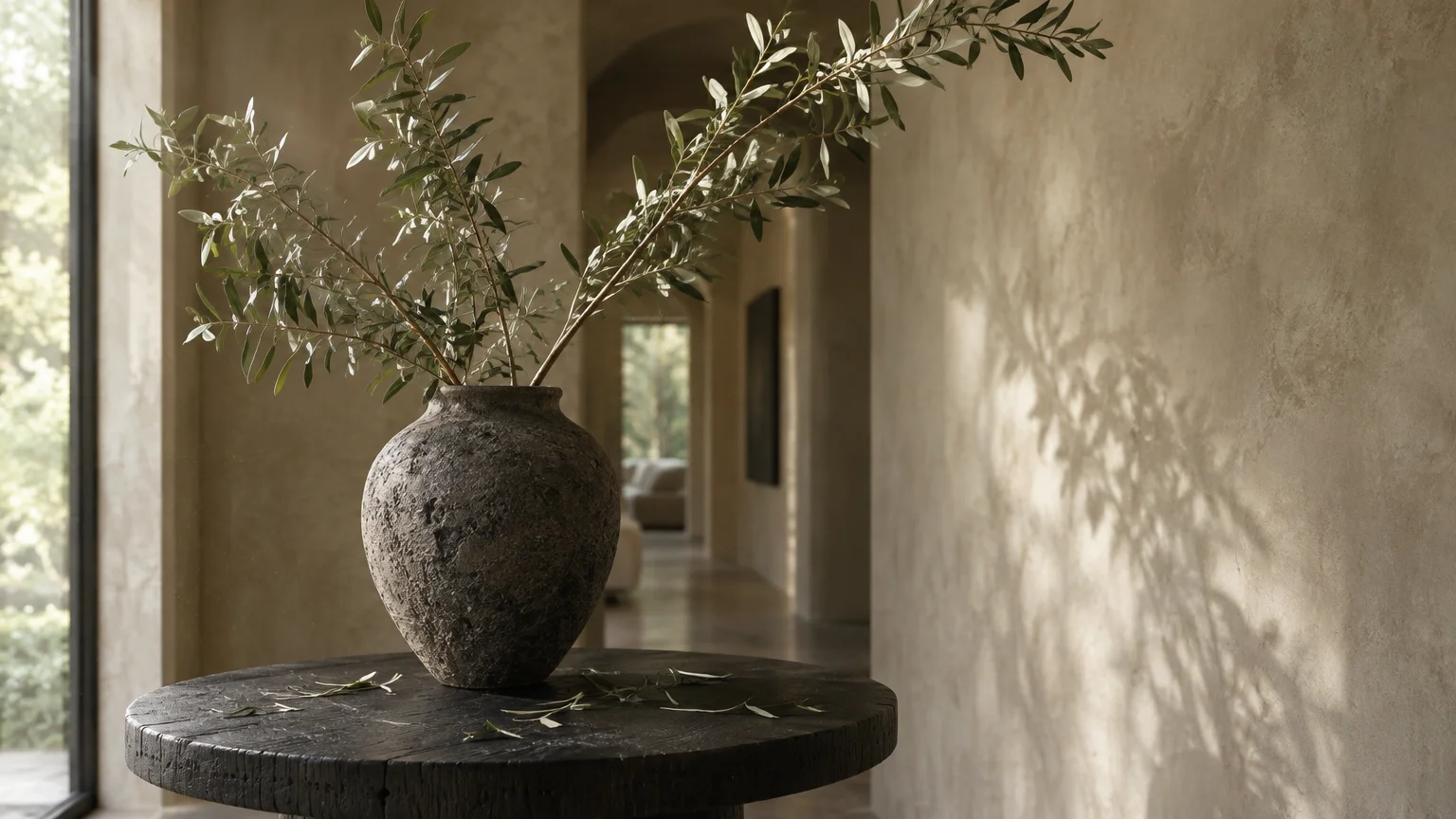
Avoid stiff, overly formal floral arrangements in favor of structural branches and seasonal wild blooms. A single flowering quince or olive branch in an earthen vase makes a modern architectural statement.
Place miniature potted succulents or fragrant herbs on kitchen islands and dining tables. These living accents enhance air quality while grounding your aesthetic in natural provenance and sustainable beauty.
Biophilic styling introduces texture that balances geometric joinery and sleek metallic finishes. It breathes quiet life into every corner where your visitors gather to connect.
Choose hand-thrown ceramic planters with matte stoneware finishes to complement your botanical selections. Earthy vessels ground vibrant green foliage within a cohesive, nature-inspired design language.
Incorporating seasonal foliage reflects the calendar year outside, anchoring your home in the present moment. Guests intuitively sense and appreciate this harmonious relationship with the surrounding natural landscape.
Trend #9: Considered Guest Bath Linens and Spa Amenities
Transforming a guest bathroom into a boutique spa sanctuary elevates residential hospitality to world-class hotel standards. Plush textiles and premium toiletries demonstrate extraordinary care for your overnight visitors.
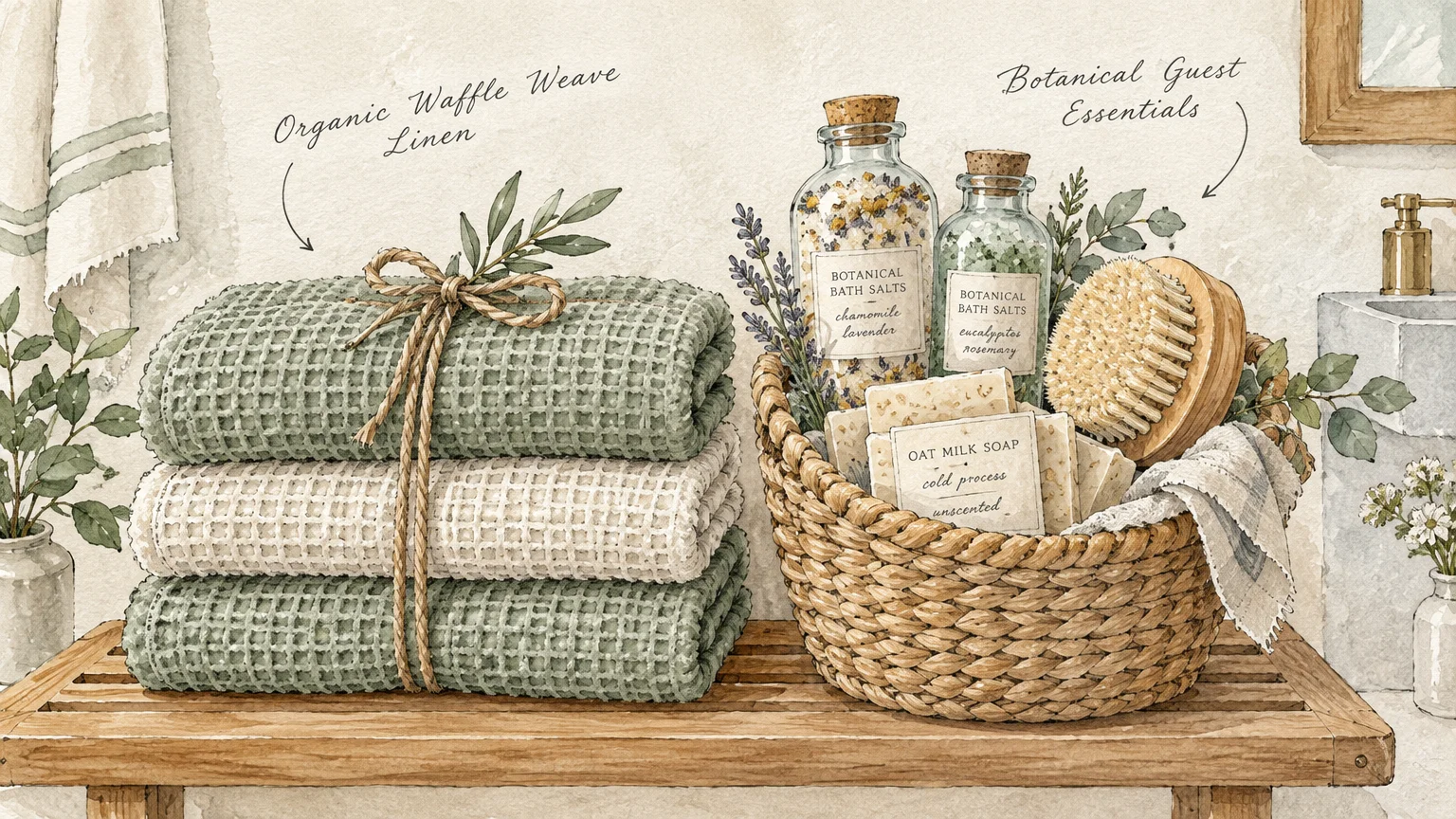
Supply generous bundles of 600-gram Turkish cotton bath sheets in soothing, understated neutral tones. Crisp waffle-weave robes and plush organic bath mats provide tactile indulgence underfoot after every shower.
Stock an open woven basket with travel essentials, including organic hair serums, bamboo toothbrushes, and artisanal lotions. These anticipatory provisions eliminate the embarrassment of forgotten personal items.
Displaying these amenities neatly on floating timber shelves prevents guests from rummaging through private medicine cabinets. Thoughtful organization communicates quiet generosity and welcoming ease.
Add a compact teak bath stool inside the shower enclosure for added functional comfort and warmth. Teak wood withstands moisture while imparting a luxurious, spa-like sensibility to the bathroom.
Roll extra plush washcloths inside a wire basket placed directly adjacent to the sink basin. Visible, abundant fresh linens eliminate guesswork and assure guests of your thorough preparation.
Trend #10: Thoughtful Bedroom Micro-Luxuries and Tech Integration
The guest bedroom must balance serene comfort with intuitive technological convenience. Creating an effortless environment ensures your overnight visitors wake up feeling deeply refreshed and revitalized.
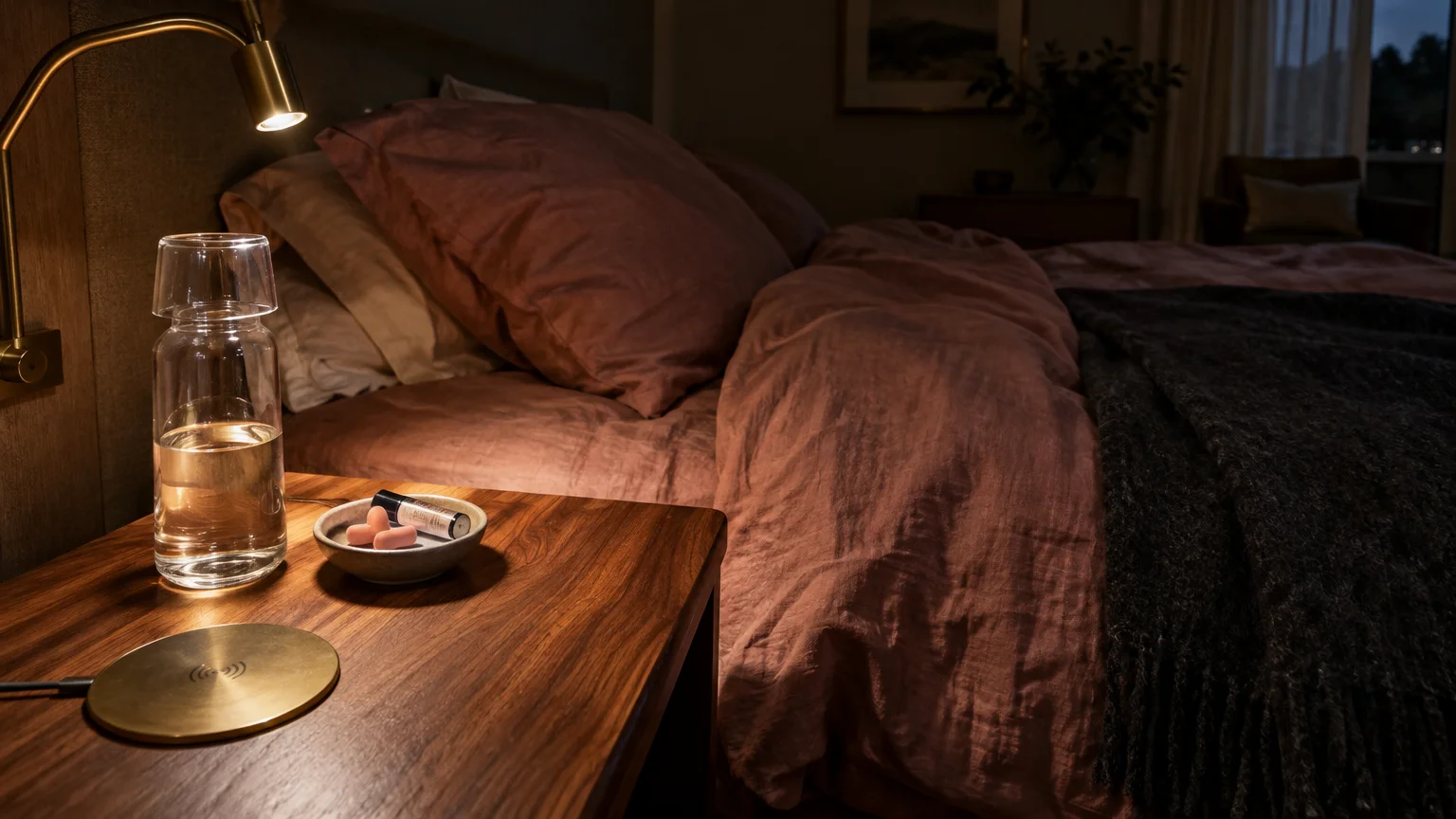
Layer the bed with breathable washed linen sheets, down alternative duvets, and pillows of varying firmness. Natural fibers regulate body temperature throughout the night for optimal sleep quality.
Frame a discreet card containing your home Wi-Fi network credentials on the bedside table. Accompany this with a multi-device charging station so guests can effortlessly plug in their electronics.
Place a carafe of filtered water alongside reading material tailored to their personal intellectual interests. These gracious touches make visitors feel genuinely cherished and perfectly at home.
Provide blackout window drapery paired with sheer privacy panels to offer guests complete control over illumination. Tailoring ambient lighting to individual sleep preferences ensures restorative rest.
Empty several bureau drawers and provide matching wooden hangers inside the guest closet. Offering dedicated wardrobe storage invites overnight visitors to unpack and settle in comfortably.
The Big Picture: Weaving These Trends into Your Home
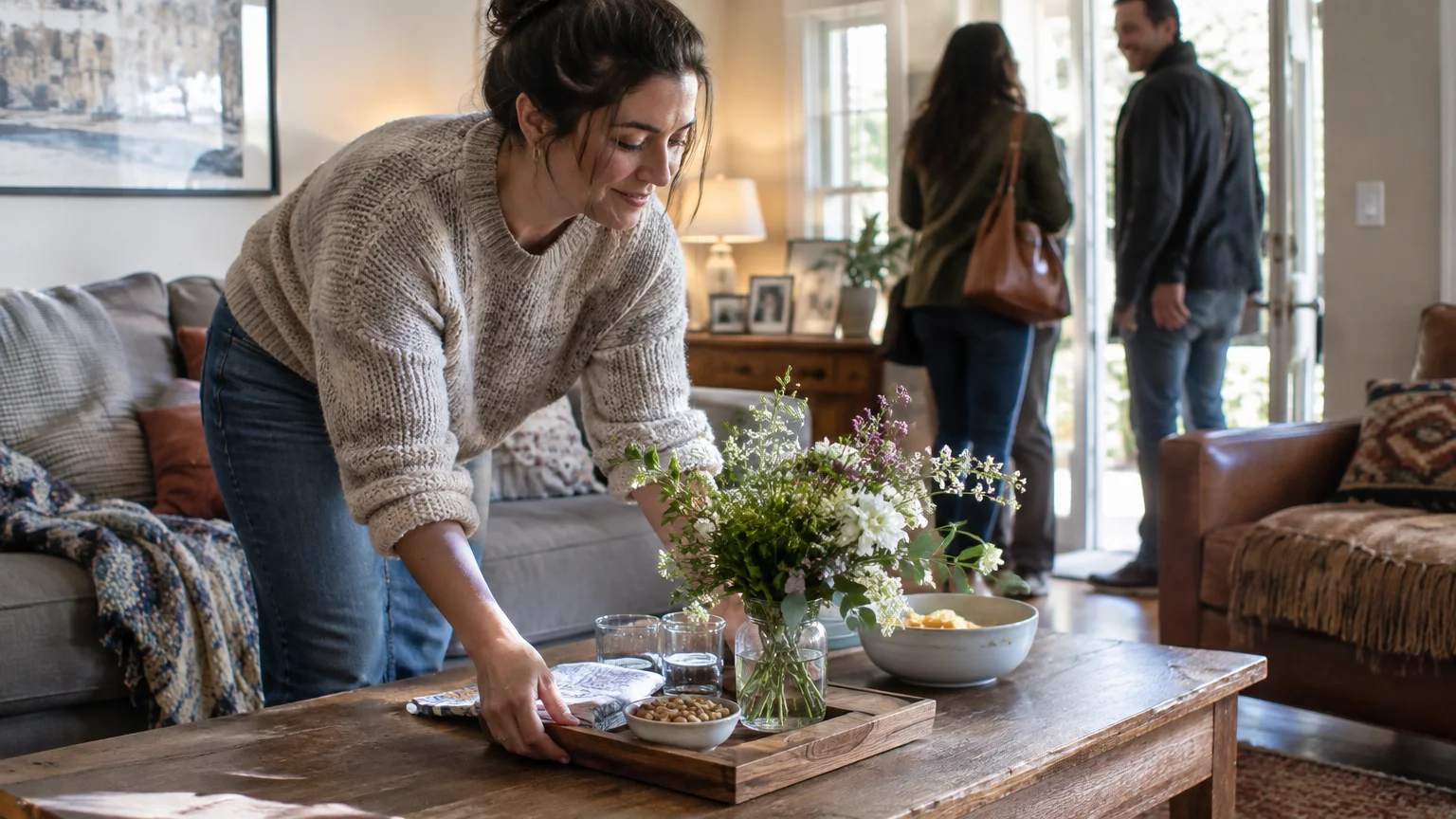
Integrating hospitality trends into your interior design does not require a complete architectural overhaul. Focus instead on intentional micro-moments that prioritize comfort, flow, and sensory delight.
Begin your transformation by auditing your entryway and public zones from an outsider perspective. Walk through your front door and note how light, scent, and spatial organization greet you.
Select sustainable materials and authentic textures that align with your existing interior architecture. Quiet luxury flourishes when functionality and aesthetics blend in unforced harmony.
Curate timeless furnishings rather than chasing ephemeral trends that quickly lose their contextual relevance. Investing in durable, high-craftsmanship pieces ensures your home hosting checklist remains permanently elevated.
Remember that true hospitality stems from generosity of spirit reinforced by intelligent spatial design. When your home anticipates basic human needs, visitors feel seen, valued, and completely relaxed.
For the latest color forecasts, consult industry leaders like Pantone and paint companies like Benjamin Moore. For professional design standards, refer to the American Society of Interior Designers (ASID).
Disclaimer: This article reflects design trend analysis and predictions. Personal taste and timeless design principles should always guide your decorating choices.
Frequently Asked Questions
How can you prepare a home for guests when square footage is limited?
Focus on vertical organization and multipurpose furniture to optimize compact living footprints. A slim wall-mounted console and floating hooks establish an efficient drop zone without consuming precious floor area.
Utilize nesting accent tables and portable rechargeable lamps that can adapt to changing entertaining configurations. Thoughtful sensory touches like premium linens and signature scents require zero square footage yet deliver immense luxury.
Which interior design investments offer the most lasting value for hosting?
Prioritize high-performance upholstery fabrics, ergonomic seating layouts, and architectural lighting controls. Quality seating and layered dimmable lighting create an immediate, enduring foundation for welcoming guests year after year.
Invest in authentic natural materials like solid hardwoods, natural linen textiles, and honed natural stone. These durable surfaces age gracefully while imparting timeless tactile warmth to every gathering.
How do you select the best color palette for a relaxing guest room?
Opt for muted, biophilic tones such as warm plaster neutrals, sage greens, or serene slate blues. These calming hues reduce visual noise and promote restorative sleep for travelers.
Avoid overly stimulating neon tones or jarring contrasting patterns in spaces reserved for rest. Ground the palette with textured cream wools and warm wood accents to evoke understated sophistication.
What is the most common mistake hosts make when preparing for guests?
Overlooking the sensory experience represents the most frequent oversight in residential entertaining. Hosts often polish surfaces while neglecting harsh lighting, ambient room temperature, and acoustic comfort.
Balance visual tidiness with intuitive hospitality by ensuring drinks, extra blankets, and necessities remain immediately accessible. True luxury empowers guests to relax without needing to request basic accommodations.