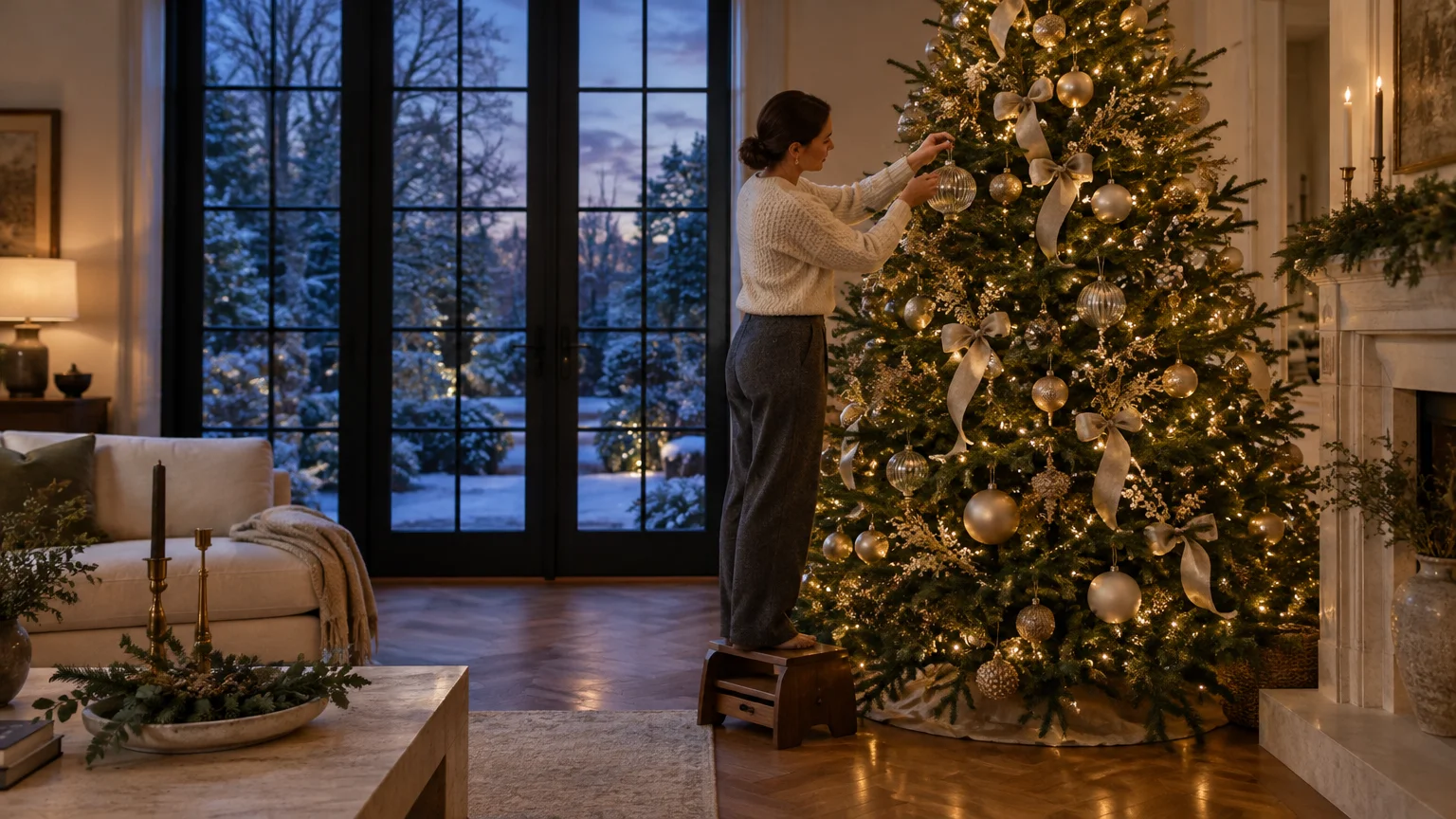
A picture-perfect holiday centerpiece demands deliberate structural staging rather than haphazard ornament hanging. You can transform standard greenery into a breathtaking designer christmas tree using proven visual balance principles.
Professional designers approach holiday decor through the lens of architectural composition and lighting density. They balance scale, texture, and negative space to create captivating seasonal focal points.
These eight insider christmas tree decorating tips reveal how top stylists craft showstopping displays for luxury homes. Master these refined methods to elevate your holiday decor effortlessly this season.
Trend #1: Architectural Branch Shaping and Internal Fluffing
Shaping artificial branches requires patience and architectural discipline rather than rushed unbending. You must manipulate individual wired tips to recreate organic growth patterns found in mature conifers.
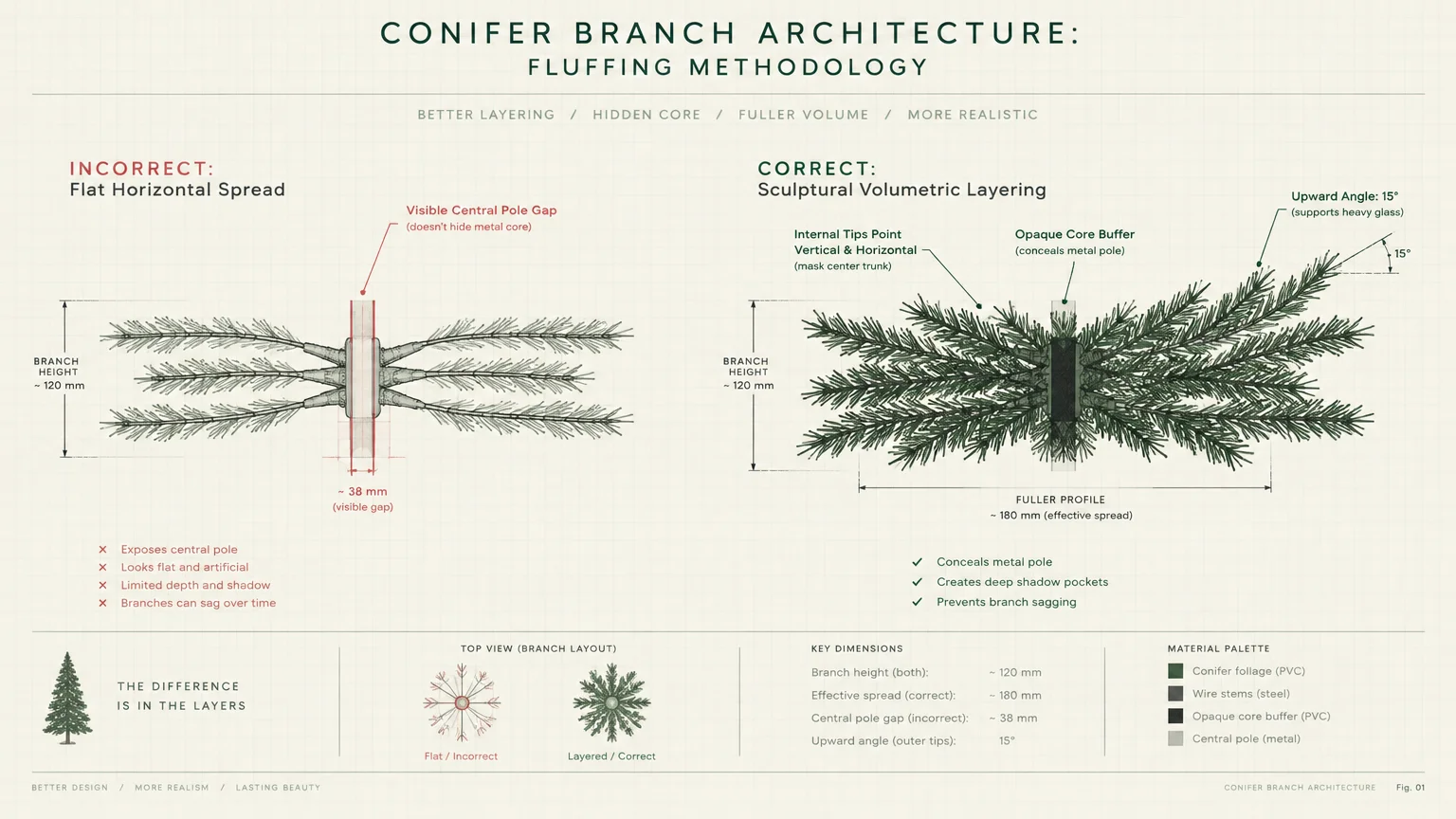
Point internal branch tips vertically and horizontally to conceal the central metal pole completely. This dense interior layer creates an opaque green canvas that blocks unsightly gaps under room lighting.
Angle outer branch tips slightly upward to support heavy glass ornaments securely without sagging. This structural preparation establishes a tailored silhouette and creates deep pockets for layered decorations.
Many homeowners rush through branch shaping, leaving sparse voids that ruin the final composition. Spending ample time fluffing every single branch transforms an ordinary faux pine into a sculptural masterpiece.
For fresh firs, prune errant shoots cleanly with bypass shears to enhance natural exterior symmetry. Crisp, balanced perimeter lines provide a pristine foundation for sophisticated holiday decor.
Step back every few minutes to assess your progress from varied living room angles. Consistent silhouette shaping ensures balanced visual weight across the entire installation.
High-end designers often spend hours perfecting this branch architecture before touching a single ornament. Mastering this fundamental step guarantees a dense, luxurious foundation for the remaining decorative elements.
Trend #2: Dimensional Interior Lighting and Luminescent Layering
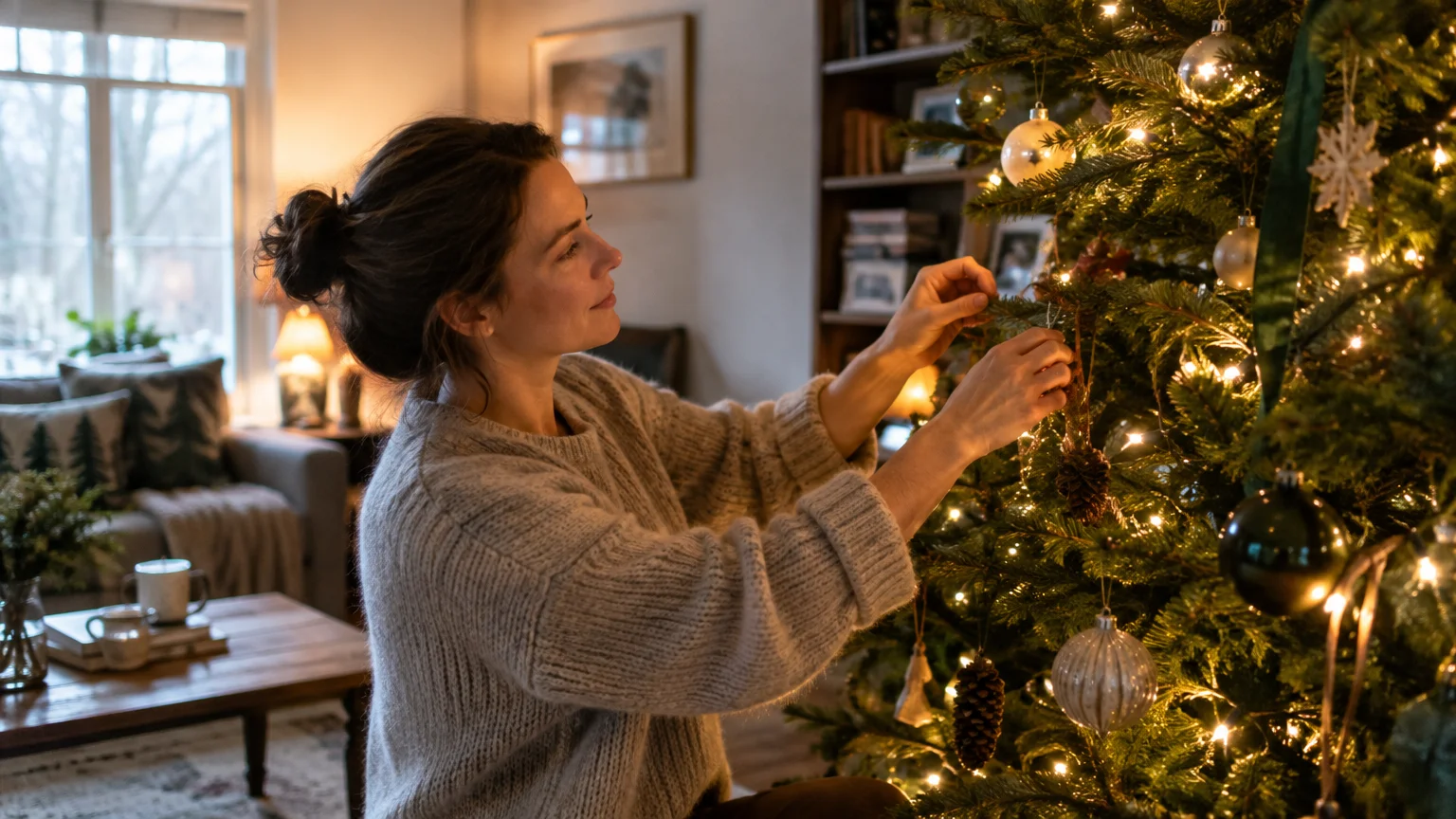
Mesmerizing illumination stems from building depth within foliage rather than draping bulbs across outer branches. Weave light strands deep along interior limbs directly against the tree trunk.
This radiant core creates an alluring luminescence that emanates outward through the needles. It eliminates dark interior cavities and makes your designer christmas tree glow warmly from within.
Maintain consistent color temperature across every strand by choosing warm white bulbs between 2700K and 3000K. Cool blue LEDs disrupt sophisticated interior palettes and clash with ambient living room fixtures.
Mix micro-fairy lights with standard globes to generate dynamic visual dimension across your display. Varied bulb scales produce rich textural sparkle that flatters adjacent furniture and timber flooring.
Calculate adequate density by applying at least one hundred lights per vertical foot of tree height. Generous illumination ensures balanced radiance without producing harsh glare or dark patches.
Conceal green wire runs and connection plugs by tucking them neatly behind dense foliage. Clean electrical presentation keeps the visual focus squarely on your refined aesthetic.
Connect your light strands to a discreet foot switch or smart dimmer plug for effortless control. Calibrating brightness allows you to tailor tree radiance to changing evening ambient conditions.
Trend #3: Tonal Monochromatism and Quiet Luxury Palettes
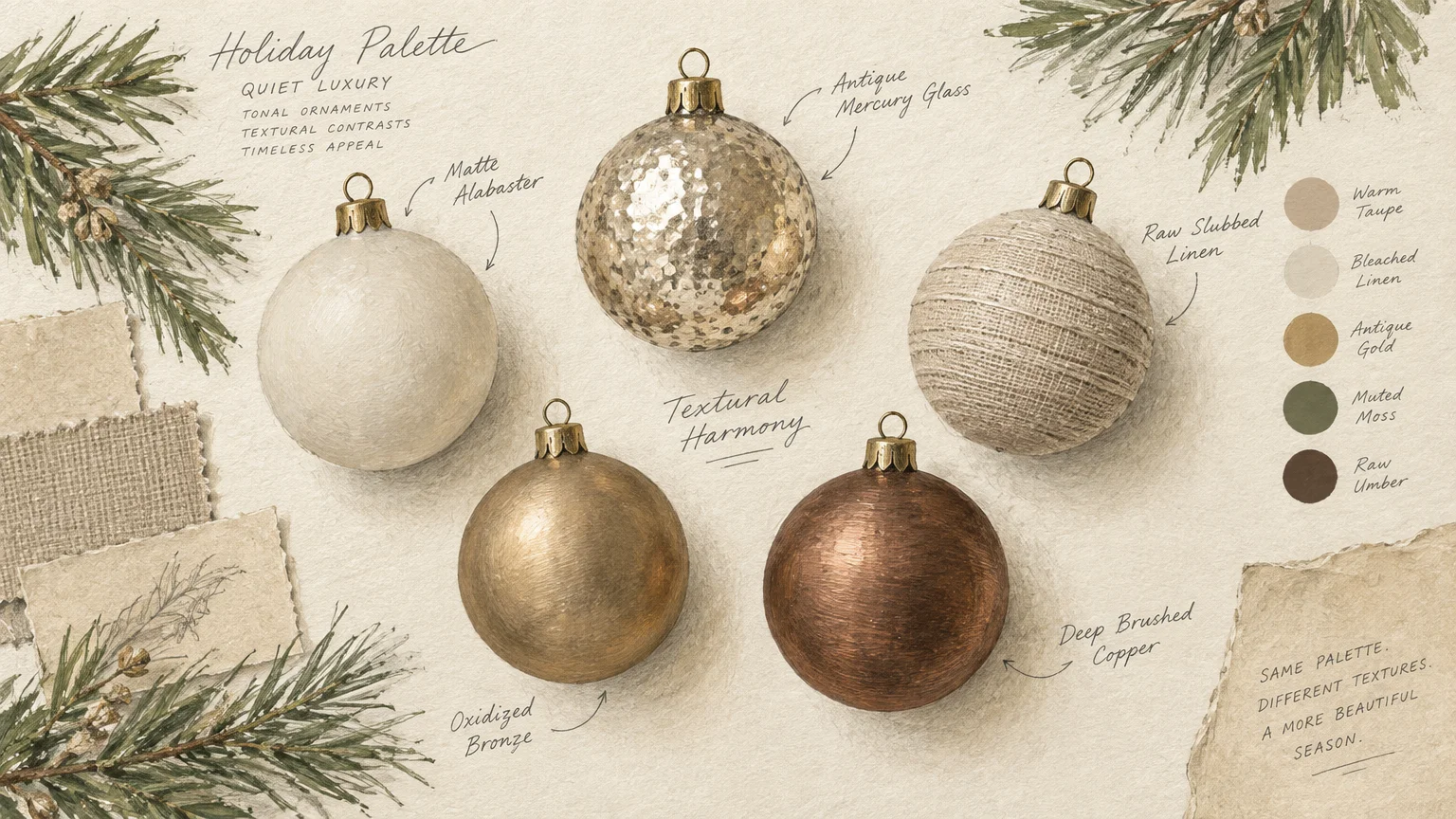
The quiet luxury movement champions restrained, monochromatic palettes over chaotic multicolored schemes. You establish elevated elegance by layering subtle variations within a single curated color family.
Pair alabaster, champagne, and brushed bronze to complement warm timber floors and neutral linen furnishings. This subtle harmony connects your tree to the broader interior design of your home.
Contrast diverse surface finishes to keep monochromatic schemes visually compelling and rich. Interlace matte ceramics, burnished metals, mercury glass, and faceted crystal across the branches.
High-gloss globes reflect interior lighting, while velvet and matte finishes absorb it softly. This deliberate optical interplay produces exceptional visual richness without chromatic conflict.
Study your existing wall paints and textile accents before finalizing your seasonal palette. Seamless color continuity makes your festive styling feel intentional and inherently bespoke.
Restraint remains the hallmark of sophisticated residential styling. A focused color scheme conveys curated discernment, bringing calm serenity to your living room.
Introduce subtle metallic touches like antiqued pewter or champagne gold to bridge warm and cool undertones. These gentle metallic highlights catch holiday illumination without overwhelming your curated color story.
Trend #4: Sinuous Ribbon Architecture and Waterfall Cascades
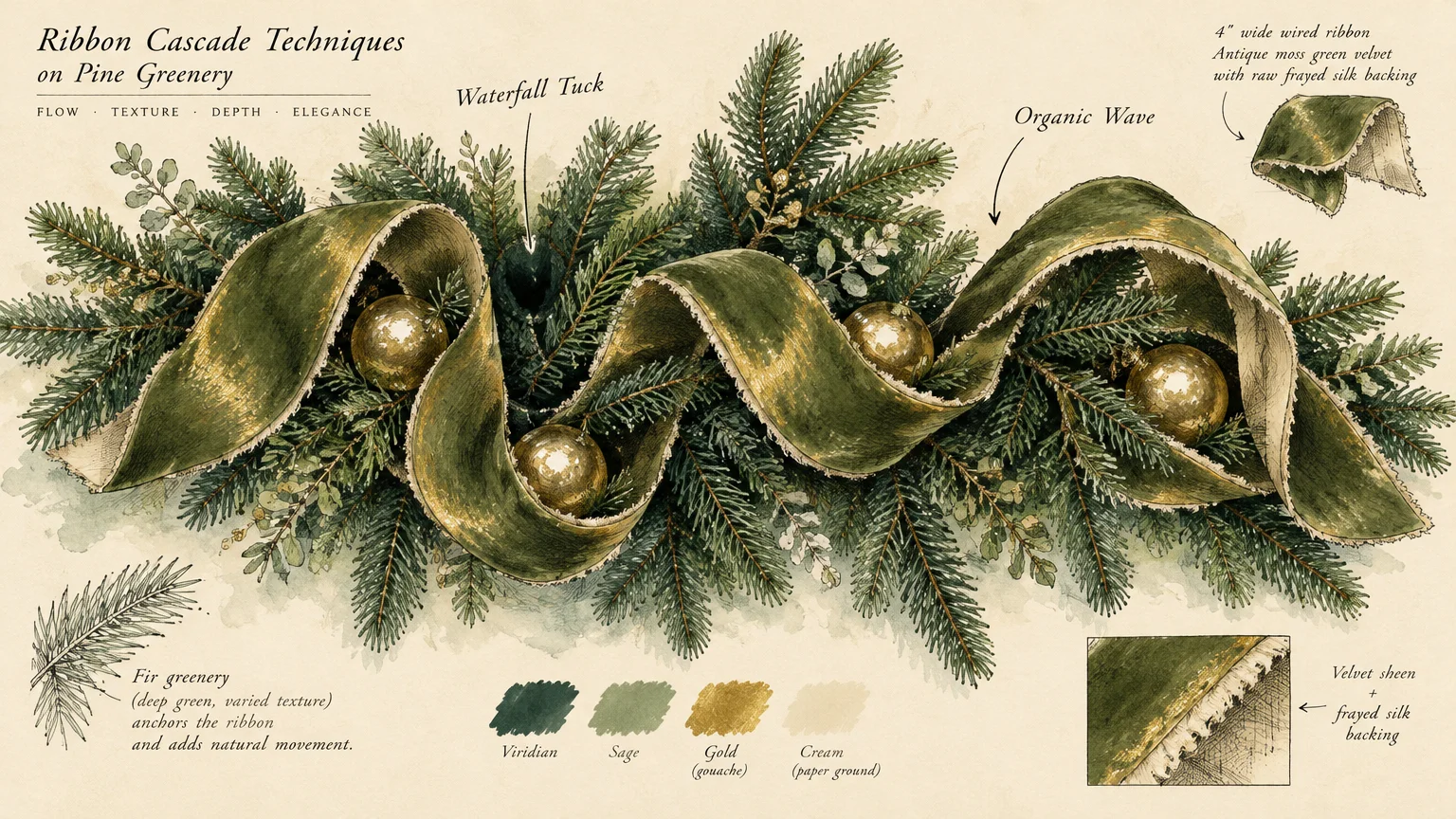
Masterful ribbon integration delivers fluid movement across structured evergreen foliage. Avoid stiff, horizontal spiraling wraps that compress branches and truncate natural conical lines.
Cut wire-edged ribbons into two-foot lengths to fashion graceful, billowy cascades. Tuck one end deep inside the boughs, looping the fabric outward before tucking the tail back inside.
Select luxurious textiles like double-faced velvet, raw woven linen, or dupioni silk for tactile appeal. Heavy fabrics hold their sculptural shape while contributing tactile warmth to your living space.
Combine two complementary ribbons of differing widths to create layered visual depth. Pairing a four-inch tonal velvet with a two-inch satin ribbon enriches your overall texture profile.
Direct your cascading ribbon trails along diagonal paths to guide the viewer’s gaze downward. This rhythmic visual flow connects tree tiers into an organic, harmonious composition.
Allow ribbon tails to flutter naturally toward branch tips without pinning them too rigidly. Soft, relaxed draping creates effortless designer sophistication throughout the branches.
Incorporating textural fabrics softens sharp evergreen needles and harmonizes with nearby window drapery. This tactile continuity blurs the line between festive installation and permanent interior decor.
Trend #5: Strategic Scale Graduation and Visual Weight Balancing
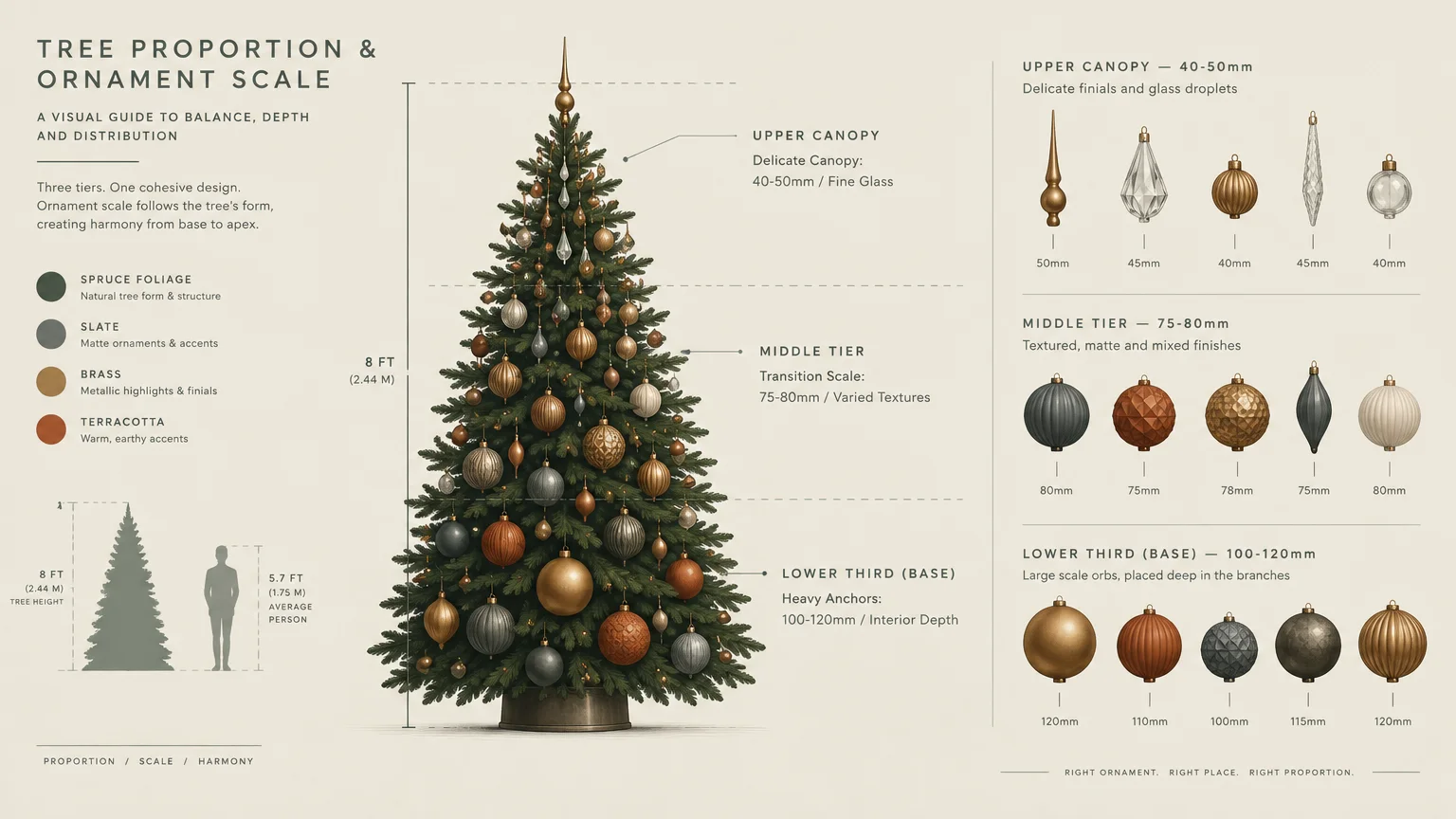
Understanding optical weight is essential when learning how to decorate a christmas tree professionally. Hang your largest statement ornaments deep inside the branches to ground the overall composition.
Recessing oversized glass spheres creates the illusion of limitless tree depth. It pulls the viewer’s eye past the branch tips into the radiant interior heart of the tree.
Reserve medium ornaments for mid-branch positions, spacing them evenly to establish structural rhythm. This intermediary zone bridges your large internal anchors with your fine external embellishments.
Suspend delicate mouth-blown finials and intricate heirlooms near the very ends of outer branches. This placement protects fragile pieces while catching natural ambient light from your living room windows.
Distribute heavy materials toward lower tiers to mimic the natural pyramid geometry of conifers. Tapering ornament scale toward the peak prevents top-heavy instability and awkward visual proportion.
Step across the room periodically to identify uneven visual clumps or lopsided ornament distribution. Balanced scale graduation ensures photographic symmetry from every vantage point.
Scale graduation prevents decorative chaos by organizing ornaments into clear visual tiers. Your tree achieves architectural presence when every bauble occupies its optimal spatial niche.
Trend #6: Biophilic Elements and Botanical Floral Sprigs
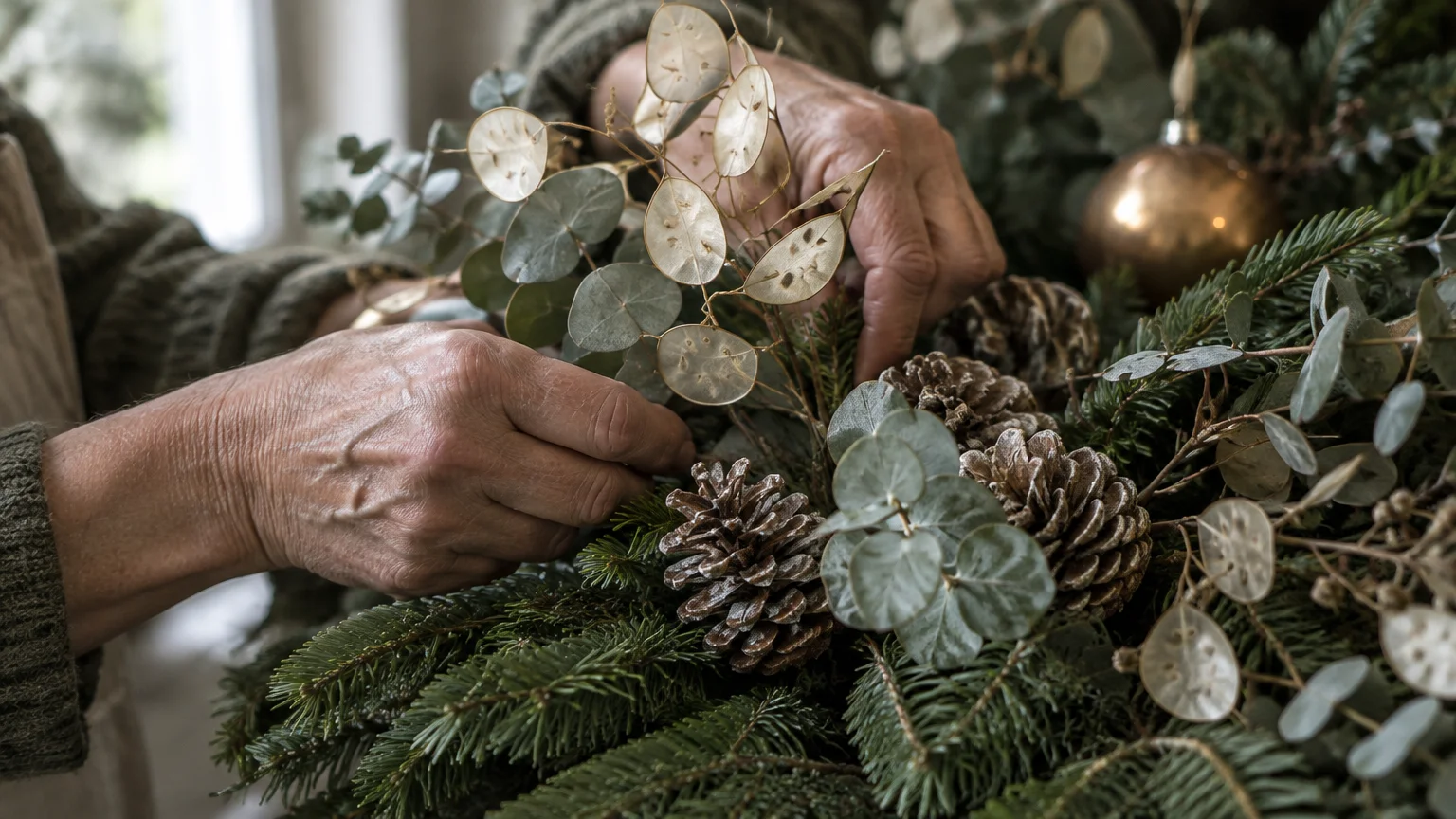
Biophilic design continues to redefine modern residential interiors with organic textures and natural provenance. Incorporate botanical sprigs to introduce lifelike movement into artificial or natural firs.
Insert glossy magnolia leaves, dried hydrangea blooms, or weeping cedar branches deep into foliage seams. These distinct botanical forms break up rigid evergreen outlines with wild, dynamic flair.
Choose natural accents that complement your room’s architectural millwork and outdoor landscaping. Frosted sugar pinecones and bleached eucalyptus sprigs bridge contemporary living spaces with organic beauty.
Angle botanical picks outward and upward to echo the natural ascension of evergreen branches. This consistent directional momentum creates an authentic woodland presence.
Integrate preserved botanicals in odd-numbered groupings to cultivate unforced asymmetry. Natural irregularity softens formal ornament arrangements and creates relaxed visual poetry.
Use wired florist picks to anchor heavy branches securely to the tree trunk. Proper mechanical fastening prevents botanical elements from shifting over weeks of festive entertaining.
Exploring fresh christmas tree ideas allows you to craft personal provenance with seasonal authenticity. This botanical layering transforms standard greenery into a living sculptural expression.
Trend #7: Curated Ornament Clustering and Visual Anchors
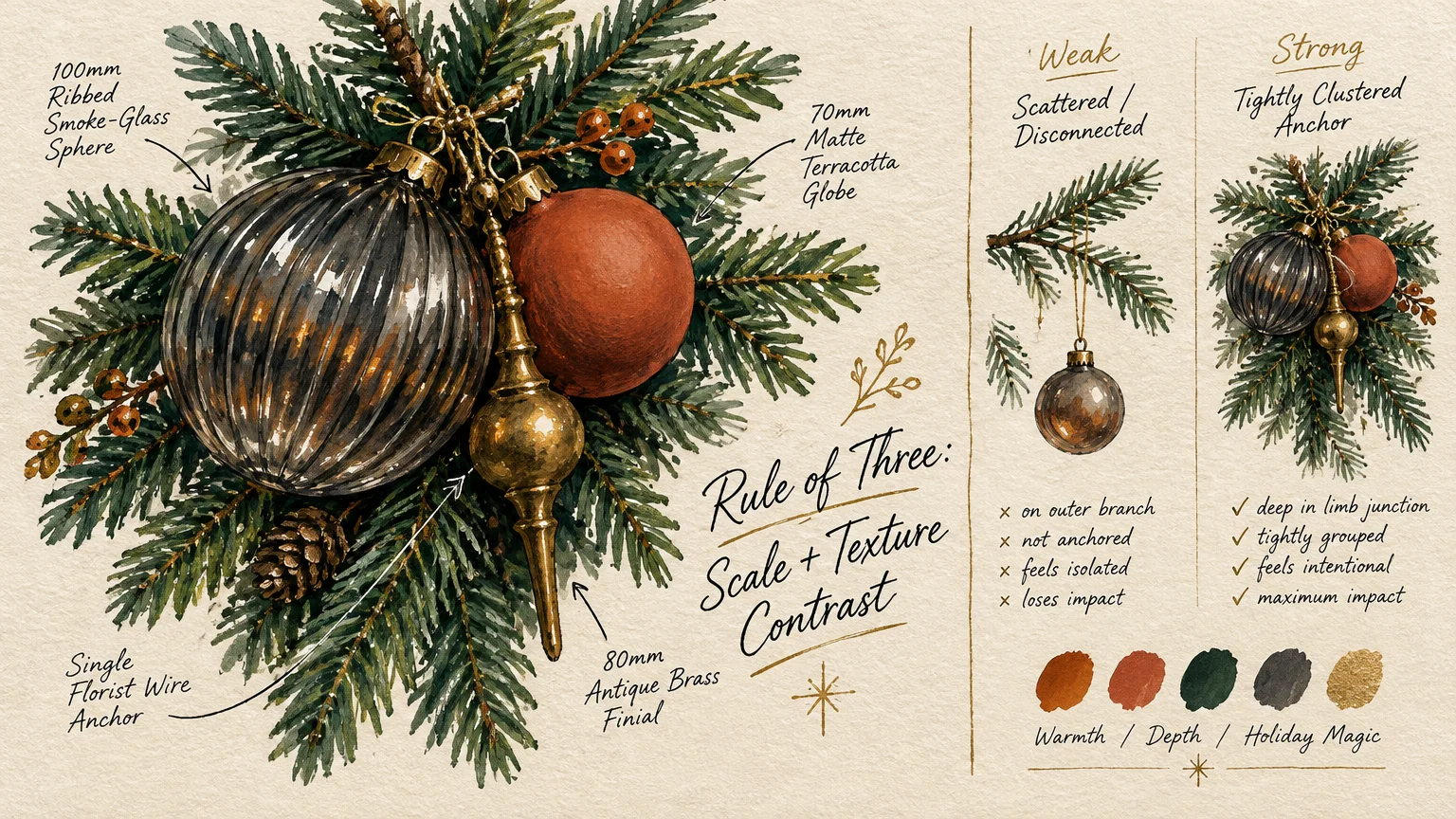
Individual ornaments scattered uniformly often read as disorganized clutter rather than cohesive design. Instead, cluster ornaments in trios using floral wire to build powerful focal moments.
Combine three distinct baubles featuring contrasting textures, finishes, or complementary hues. A matte sphere, a mercury glass finial, and an etched drop form a striking textural vignette.
Fasten these clusters firmly near branch forks rather than dangling them loosely from fragile needles. Anchoring them against sturdier limbs stabilizes the weight and generates visual authority.
Repeat this clustering rhythm at staggered heights across all faces of the tree. This deliberate repetition guides the eye along an engaging zigzag trajectory around your seasonal centerpiece.
Intersperse these dense clusters with open negative space to give each decorative grouping room to breathe. Strategic breathing room emphasizes fine artisanal details on individual vintage or artisan pieces.
Clustering also maximizes ornament impact, enabling you to achieve a lush designer aesthetic with fewer total items. It transforms eclectic ornaments into unified, high-impact decorative statements.
You can also tuck small sprigs of berry or ribbon tails directly into each cluster. This tight integration unifies your various design layers into cohesive visual vignettes.
Trend #8: Tailored Basework and Bespoke Tree Collars
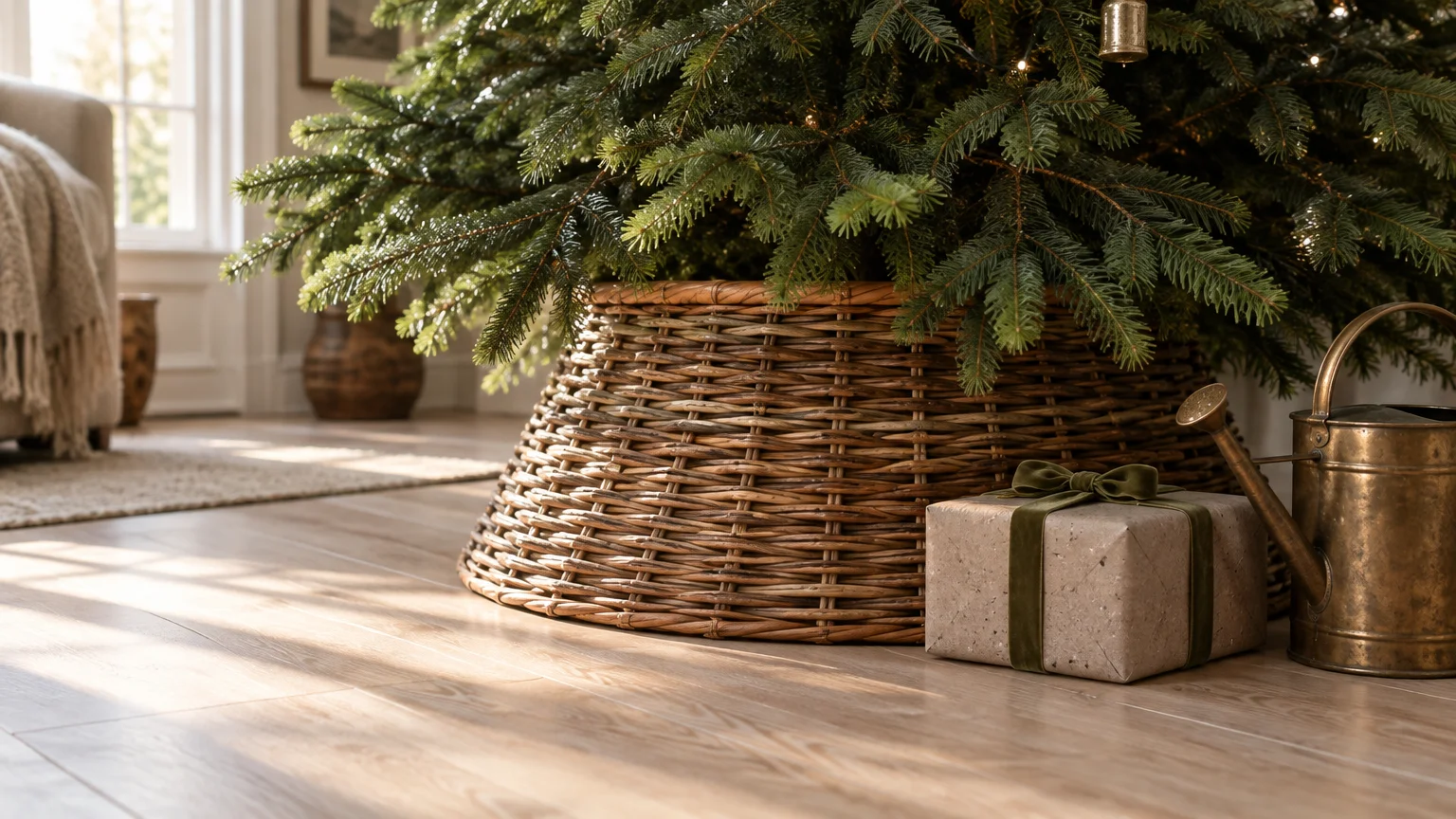
An uninspired metal stand or rumpled skirt instantly undermines even the most exquisite designer tree. Ground your seasonal installation with tailored basework that echoes your living room furniture.
Select woven rattan collars for coastal rooms, hammered brass basins for modern glam, or fluted timber for Scandinavian spaces. Bespoke enclosures hide unsightly hardware and anchor the tree to your flooring.
Elevate shorter trees within antique stone planters or weathered French urns for added architectural stature. Raising the base elevates foliage eye-level, making the entire display feel regal and commanding.
If you favor traditional fabrics, drape heavy Belgian linen or quilted velvet with purposeful folds. Tailor the fabric neatly around the base rather than letting it puddle haphazardly across floorboards.
Coordinate the finish of your base collar with adjacent architectural details like metal hardware or fireplace hearths. Cohesive materiality integrates holiday decor seamlessly into existing residential aesthetics.
Ensure your base leaves adequate clearance for watering real trees or accessing power cords safely. Exceptional design marries pristine aesthetics with effortless functional utility.
Concealing structural mechanics beneath an elevated vessel provides a definitive architectural grounding. This thoughtful finishing touch completes the transition from tree base to finished hardwood flooring.
The Big Picture: Weaving These Trends into Your Home
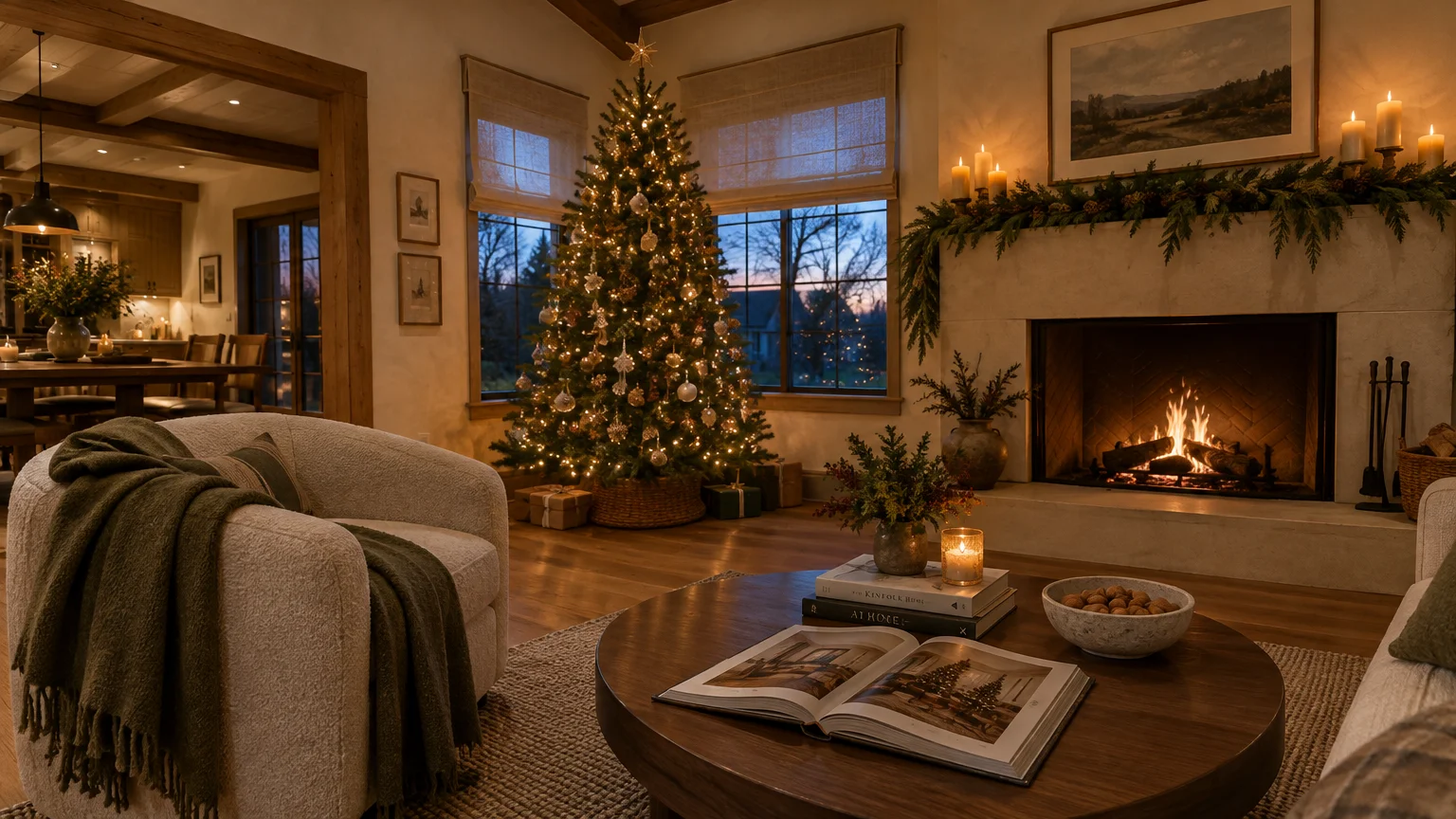
True holiday elegance stems from harmonizing seasonal decor with your established architectural surroundings. Rather than adopting every trend indiscriminately, choose elements that flatter your living room proportions and lighting conditions.
Evaluate how your tree silhouette interacts with neighboring dining room vistas, ceiling heights, and flooring textures. A massive fir overwhelms low ceilings, while an undersized pencil pine gets lost in grand double-height great rooms.
Extend your tree’s palette and botanical materials across mantelpieces, stairwells, and dining centerpieces. Repeating tactile ribbons and cedar foliage throughout adjacent spaces establishes seamless spatial cohesion.
Personal provenance remains the heart of exceptional residential styling. Integrate meaningful family heirlooms alongside your curated clusters to preserve emotional warmth without compromising high aesthetic standards.
Professional styling should enhance your lifestyle, welcoming guests into a gracious, artfully composed holiday haven. A picture-perfect tree elevates festive gatherings while reflecting your personal taste.
Select two or three core techniques to master this year before expanding your decorative repertoire. Thoughtful execution yields far better results than overcomplicating your holiday decor routine.
For the latest color forecasts, consult industry leaders like Pantone and paint companies like Benjamin Moore. For professional design standards, refer to the American Society of Interior Designers (ASID).
Frequently Asked Questions
How do I mix family heirlooms into a designer Christmas tree?
Cluster sentimental pieces alongside tonal glass spheres to integrate varied designs into cohesive visual groupings. Tucking personal heirlooms inside structured arrangements maintains sophisticated balance while honoring cherished family memories.
Disperse individual quirky ornaments evenly across mid-branch levels where foliage offers a quiet backdrop. This positioning lets meaningful items shine without interrupting your overarching color theme.
What is the golden ratio for ornaments per foot of tree?
Designers generally hang twelve to twenty ornaments per vertical foot, depending on bauble scale and branch density. Vary your ornament diameters widely to build depth rather than relying on uniform sizing.
Place roughly half of those pieces deep within inner branches to establish optical density. Reserve the remaining ornaments for exterior display where ambient light catches their surfaces.
Which lighting temperature works best for holiday decor?
Warm white lights between 2700K and 3000K provide the most flattering ambiance for living room interiors. This warm glow enhances metallic finishes and pairs beautifully with natural evergreen tones.
Avoid mixing cool daylight bulbs with warm incandescent strands on the same evergreen framework. Inconsistent color temperatures create visual friction and distract from your curated ornament palette.
How can I make an artificial tree look authentic?
Interweave real cedar sprigs, fragrant eucalyptus, and natural pinecones into artificial boughs to introduce authentic scent and texture. Detailed branch shaping and matte foliage finishes also blur the line between faux and genuine greenery.
Dust branch tips lightly with botanical floral spray to eliminate artificial plastic sheen. These tactile interventions fool the eye and elevate faux evergreens to luxury design standards.
Disclaimer: This article reflects design trend analysis and predictions. Personal taste and timeless design principles should always guide your decorating choices.