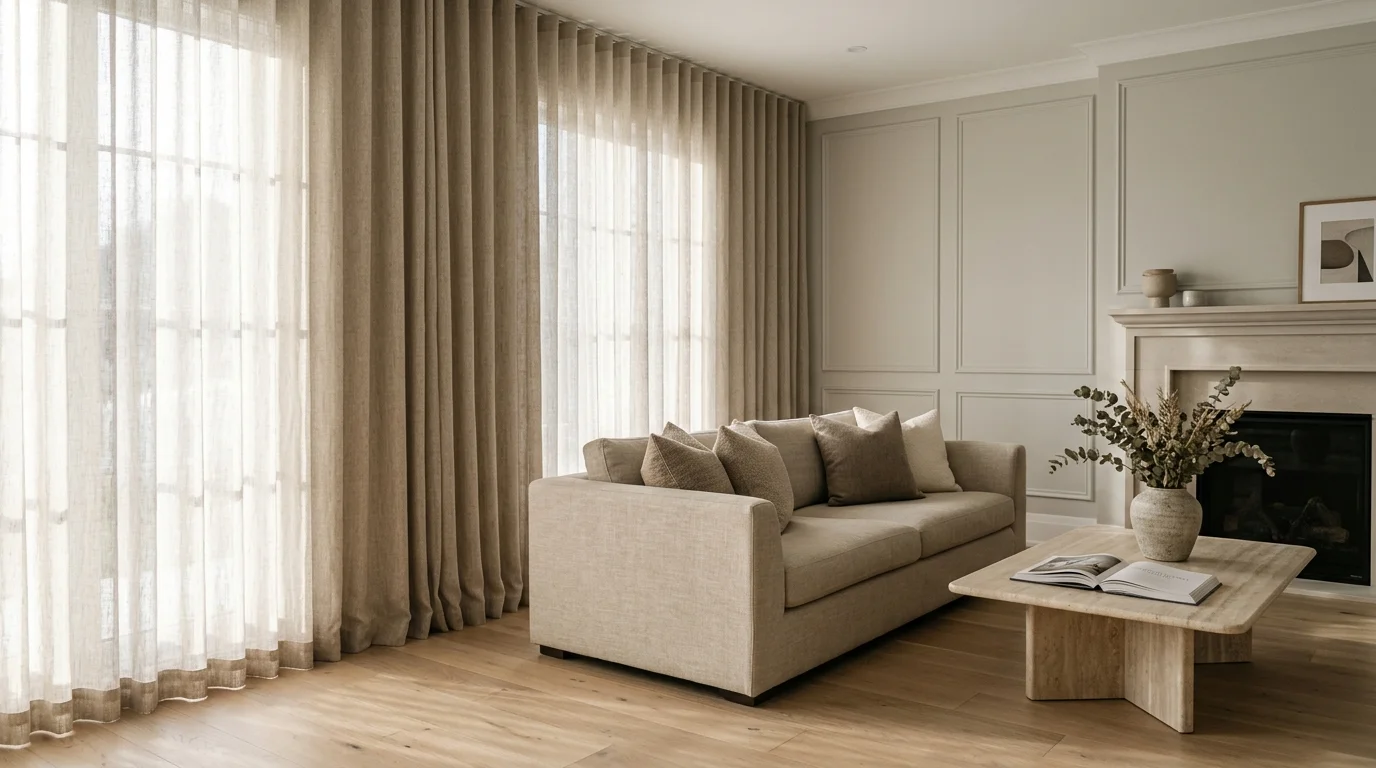
Your window treatments define the architectural proportion and ambient light of your living space. Updating outdated curtain styles instantly elevates a room from tired to impeccably tailored.
Modern drapery favors refined textures, quiet luxury, and precise proportions over fussy ornamentation. Eliminating obsolete details brings fresh energy, effortless movement, and balanced scale into your home.
We analyzed the latest window treatment trends to identify eight specific drapery styles designers now avoid. Here is how to upgrade your windows with sophisticated, enduring alternatives.
Trend #1: Metal Grommets and Heavy Ring Tops
Why Grommet Headers Look Dated
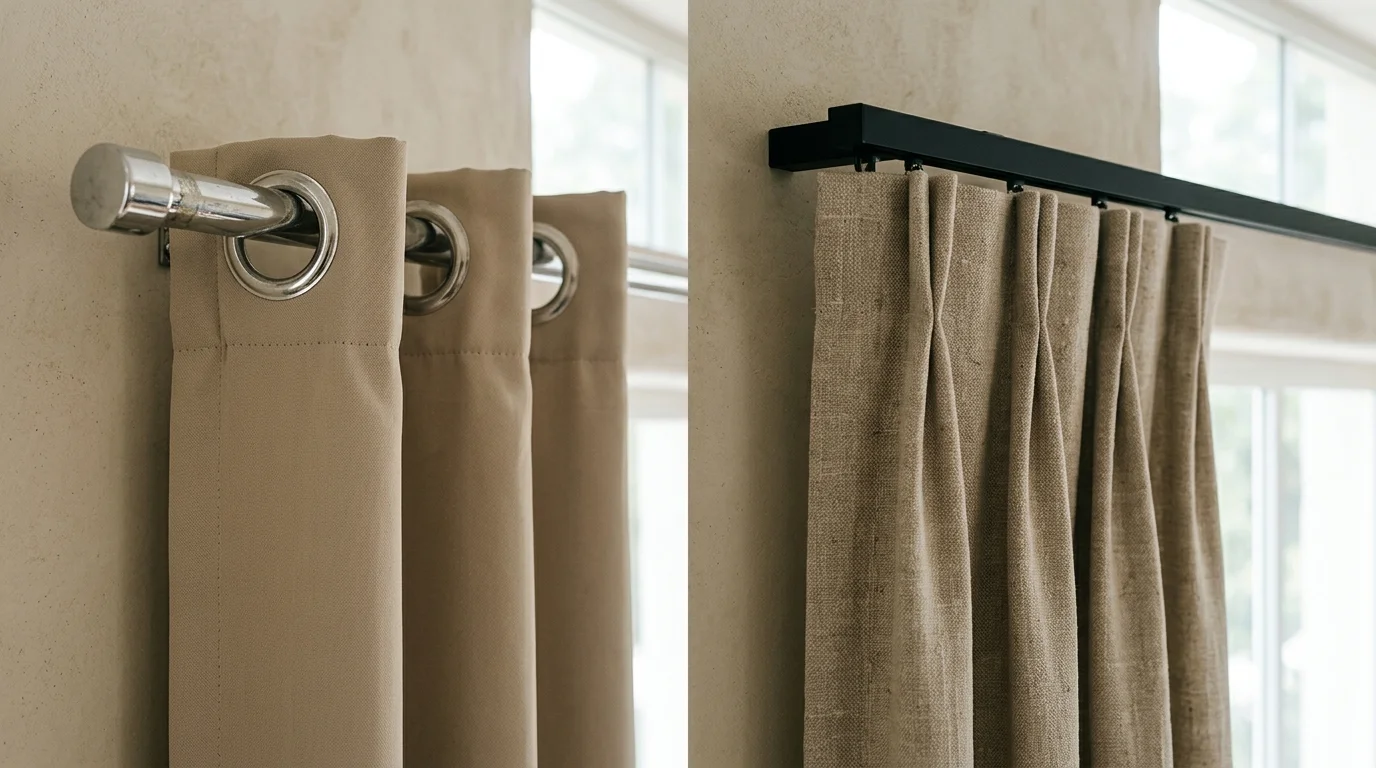
Metal grommet curtains once offered casual convenience, but top designers now universally reject them. Large metallic rings punch harsh holes through fabric, creating stiff, mechanical folds that disrupt visual harmony.
These exposed eyelets draw the eye toward budget hardware rather than accentuating room height. You lose the bespoke, fluid drape that defines modern curtain ideas.
The metallic clatter of rings sliding across metal rods also detracts from a serene home environment. Over time, grommets can scratch hardware and pull awkwardly against delicate drapery weaves.
The Modern Solution: Tailored Pleats and Wave Folds
Replace industrial grommets with refined Euro pleats, tailored French pinch pleats, or sleek ripple-fold tracks. These bespoke headers allow fabric to cascade naturally with soft, rhythmic elegance.
Euro pleats pinch fabric at the very top, letting the panels drape into relaxed, elegant folds below. This header style complements both traditional dining rooms and transitional living spaces.
Ripple-fold systems glide along ceiling-mounted tracks, hiding hardware entirely from sight. This clean architectural treatment creates continuous waves of fabric that visually elevate low ceilings.
Hardware and Fabric Styling
Pair tailored pleats with slim architectural traverse rods in matte black or brushed bronze finishes. Concealed drapery hooks eliminate visual clutter along the header line.
Choose medium-weight woven linens or textural cotton blends that hold structured folds effortlessly. This combination delivers a polished, designer-grade look that stands the test of time.
Trend #2: High-Water Floats and Sill-Length Drops
The Problem with Floating Curtains
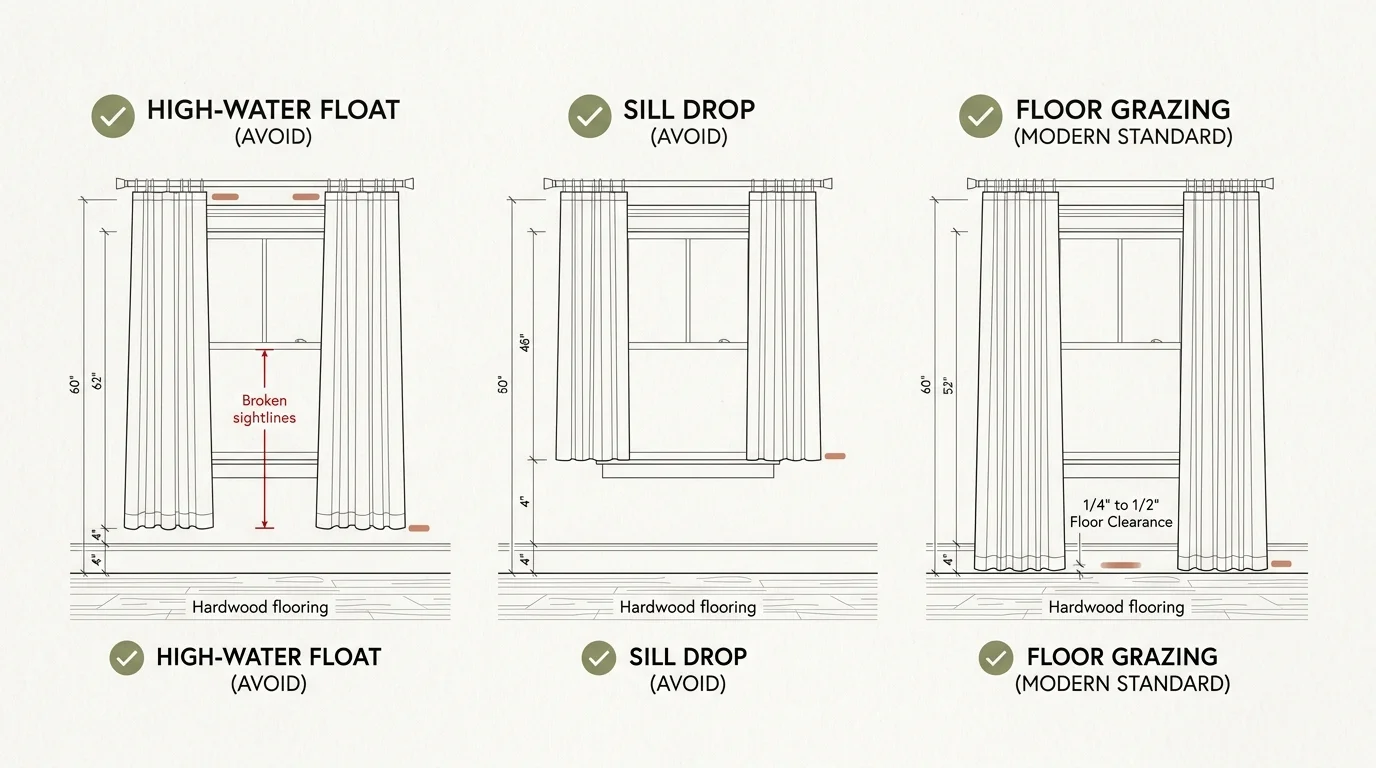
Drapery panels that hover several inches above your flooring visually truncate the walls. These high-water curtains break vertical sightlines and make grand ceilings appear noticeably shorter.
Short panels ending abruptly at the window sill look equally disjointed in living and dining rooms. Unless baseboard heaters force a shorter cut, floating hems feel like an accidental measurement mistake.
Incomplete drops expose distracting baseboards and wall gaps beneath the fabric. This styling error disrupts the cohesive color palette and architectural flow of your room.
The Modern Solution: Precise Floor Grazing
Professional interior design curtain tips dictate hanging drapes to graze the finished floor precisely. Aim for a hem clearance of one-quarter to one-half inch above the floorboards.
This minute clearance keeps your hemline pristine while establishing a clean vertical line from rod to floor. Your panels will move smoothly without gathering floor dust or catching on area rugs.
Floor-grazing drapery creates an unbroken column of color that draws the eye upward. This technique maximizes vertical volume across both modest apartments and spacious open-concept layouts.
Achieving Custom Hem Precision
Always install your curtain hardware before measuring the final finished length of your drapery panels. Account for the exact drop of your rings, hooks, or ceiling track gliders.
Insert weighted lead tape into the bottom hem to ensure panels hang perfectly straight. Hem weights prevent fabric flare and keep lightweight linens aligned with your floorboards.
Trend #3: Excessive Floor Puddling
Why Dramatic Fabric Puddles Are Obsolete
Dramatic six-inch puddles of heavy fabric once symbolized aristocratic opulence and old-world grandeur. Today, excessive pooling feels impractical, messy, and decidedly dated in modern living spaces.
Puddled fabrics trap dust, collect pet hair, and turn routine vacuuming into a frustrating chore. Over time, dragged hems become crushed, soiled, and permanently creased.
Excessive fabric pooling also creates a chaotic floor perimeter that conflicts with clean modern flooring. It obscures bespoke hardwood, polished concrete, and natural stone finishes.
The Modern Solution: The Tailored Break
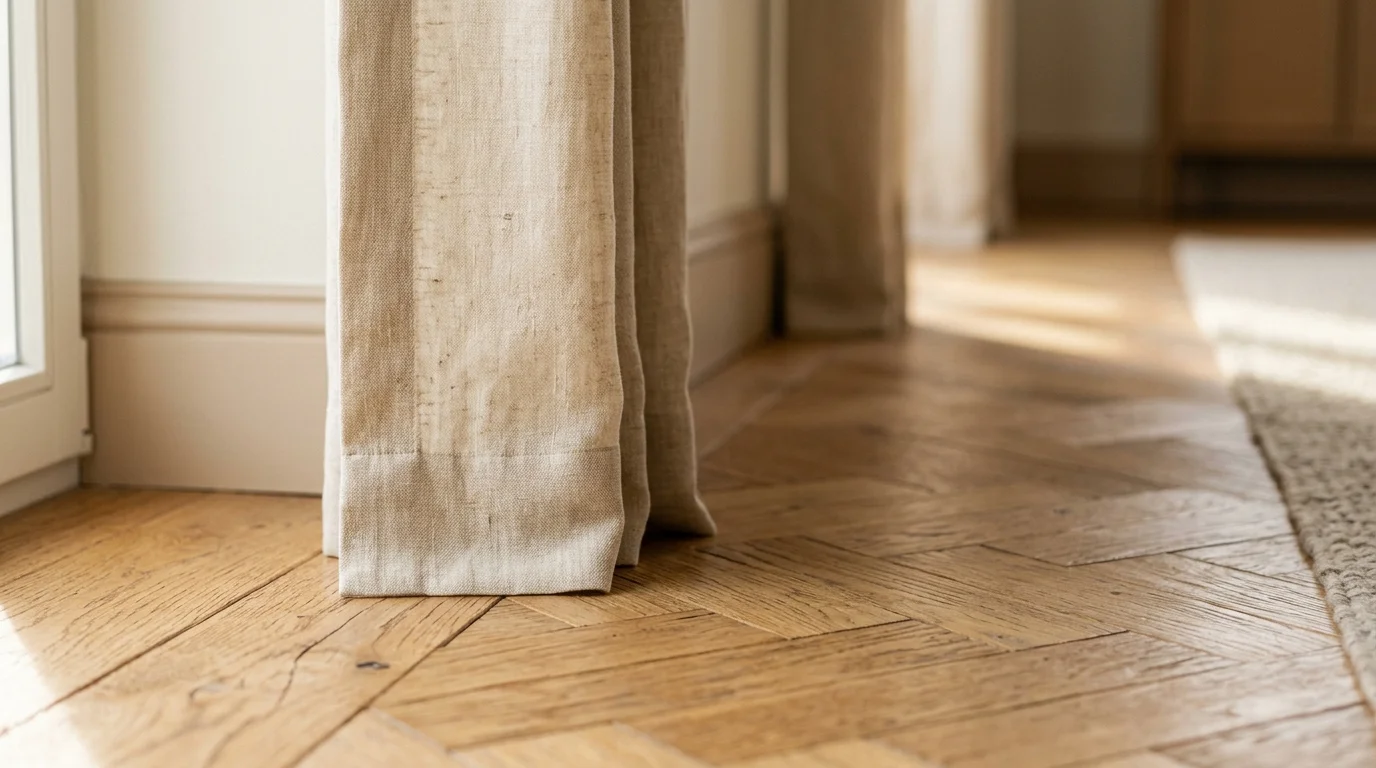
Contemporary interior aesthetics prioritize clean lines and effortless functional elegance. Designers now prefer a subtle, tailored break measuring only one to two inches of floor contact.
A tailored break resembles the break of a fine suit pant over dress shoes. It grounds the curtain panels gracefully without turning your floor into a messy sea of fabric.
This tailored drop works exceptionally well with heavyweight textiles like Belgian linen, wool blends, and velvet. It imparts relaxed sophistication while remaining easy to maintain daily.
Maintaining Tailored Hems
Hang your drapery panels and allow them to settle for forty-eight hours before finalizing the hem. Humidity and gravity naturally relax woven fibers over the first two days.
Train your pleats by gently steaming the fabric from top to bottom once hung. Steam encourages natural fibers to fall into tidy, cohesive folds along the floorline.
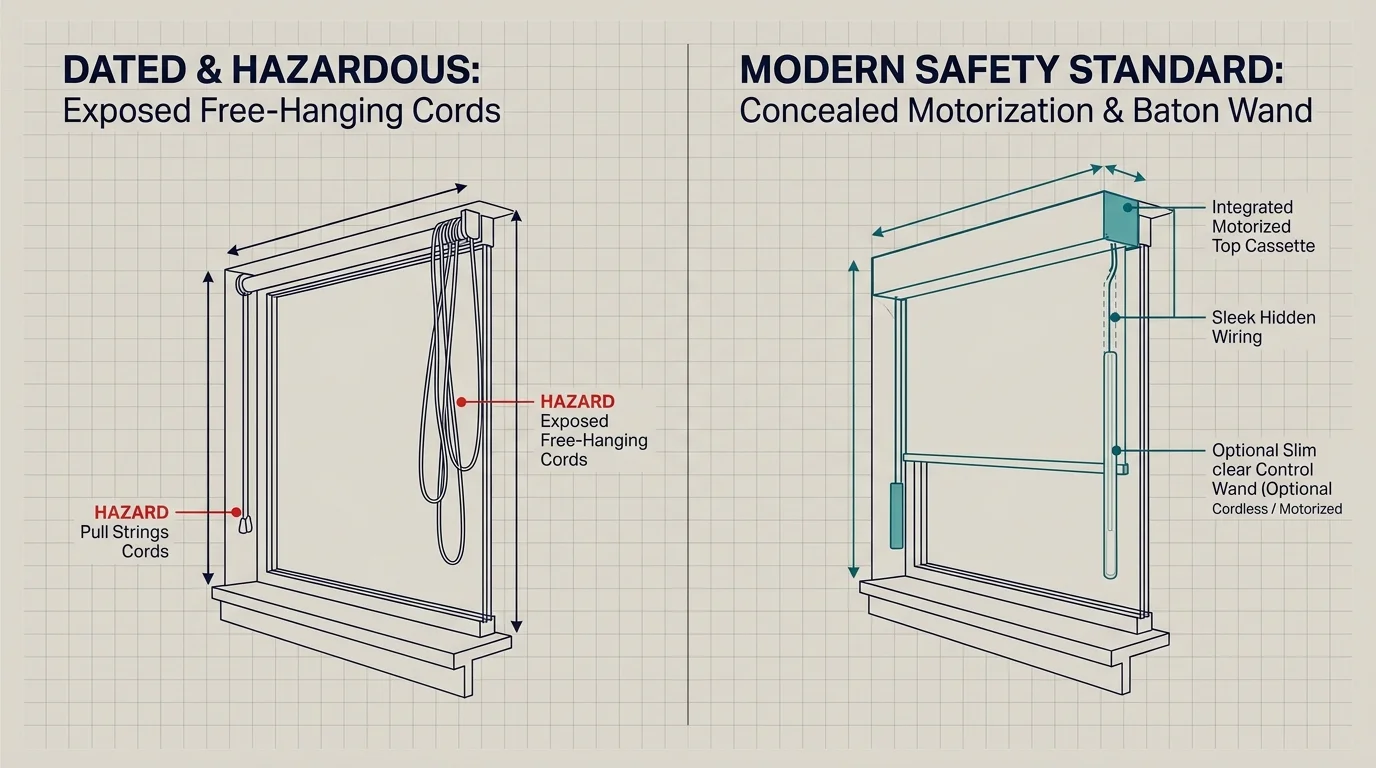
Trend #4: Exposed and Free-Hanging Operating Cords
The Demise of Dangerous Window Cords
Dangling pull cords and looped strings on drapery are no longer just an aesthetic nuisance. They represent a serious household hazard that modern safety regulations have decisively eliminated.
The updated ANSI/WCMA A100.1-2022 safety standard enacted on June 1, 2024, eliminates free-hanging cords on stock and custom coverings. This landmark regulation protects children and pets from preventable entanglement risks.
Beyond critical safety compliance, dangling strings clutter your window trim with messy, knotted hardware. They disrupt the clean architectural perimeter that defines high-end designer window treatments.
The Modern Solution: Wand Control and Smart Motorization
Upgrade your windows with discreet baton wands or integrated motorized traverse systems. Wand-operated tracks allow smooth manual gliding without a single exposed string in sight.
Smart motorized tracks integrate seamlessly into home automation systems, letting you schedule daily light cycles effortlessly. You can open drapes at sunrise with voice commands or automated smartphone routines.
Motorization also protects delicate fabrics by eliminating human hand contact along the leading edge. Panels remain clean and free from natural skin oils over years of daily operation.
Sleek Cordless Integration
Conceal motorized tracks inside recessed ceiling pockets or behind slim architectural fascia boards. This hidden installation keeps the mechanics invisible while showcasing flowing drapery textiles.
Choose rechargeable battery motors or hardwired systems during renovations for whisper-quiet performance. Modern motors operate silently, bringing effortless luxury into bedrooms and formal living areas.
Trend #5: Narrow Rods Mounted on Window Casings
Why Casing-Mounted Hardware Shrinks Rooms
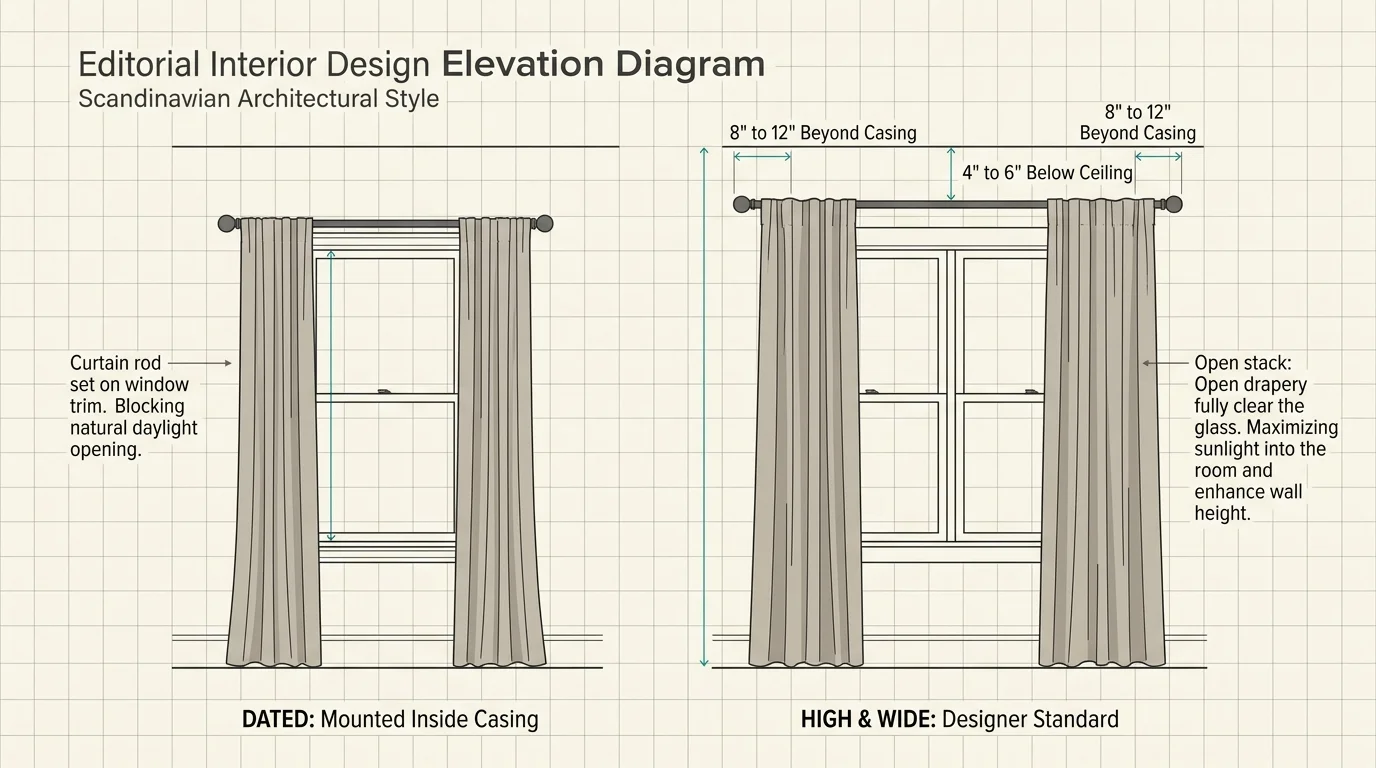
Mounting curtain hardware directly onto window trim is a frequent mistake that cramps interior proportions. Placing rods flush against the frame visually reduces the size of your window openings.
When you open drapes on a narrow rod, the stacked fabric covers the window glass. This obstruction blocks natural daylight and hides handcrafted woodwork and window moldings.
Tight hardware installations also make walls feel narrow and ceilings feel uncomfortably low. The entire room loses architectural grandeur and airy openness.
The Modern Solution: High and Wide Mounting
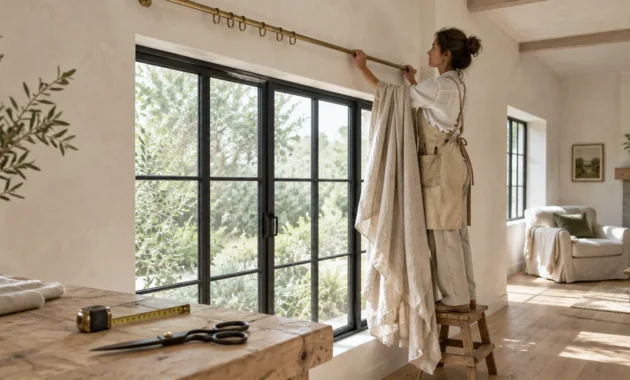
Interior designers follow the high-and-wide installation rule to dramatically expand room scale. Mount your curtain rods four to six inches above the frame, or just below crown molding.
Extend your curtain hardware eight to twelve inches beyond the outer window frame on each side. This generous extension allows opened drapes to stack completely clear of the window glass.
Stacking fabric on the flanking drywall floods your living spaces with unobstructed daylight. Your windows immediately appear twice their actual size, creating a grand, luminous focal point.
Hardware Selection for Wide Spans
Select sturdy curtain rods with a minimum diameter of one to one-and-a-half inches for wide spans. Stouter rods prevent sagging when supporting heavy, multi-panel drapery installations.
Install center support brackets for spans exceeding six feet to maintain perfect horizontal alignment. Level hardware ensures your drapes glide smoothly without catching or binding.
Trend #6: Heavy Swags, Jabots, and Rigid Valances
The Clutter of Ornate Top Treatments
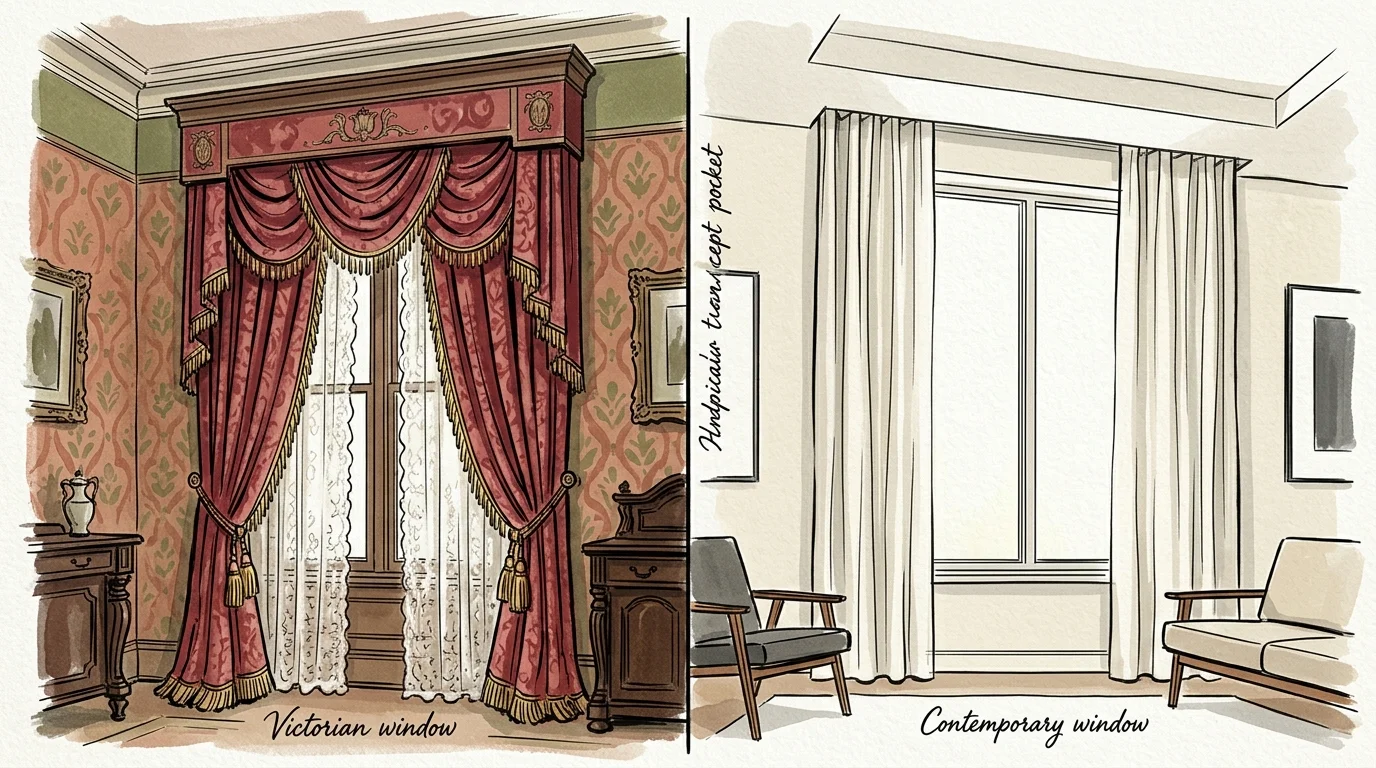
Elaborate fabric swags, cascading jabots, and tasseled valances dominated formal interiors in decades past. Today, these ornate top treatments feel heavy, suffocating, and hopelessly out of touch.
Layering multiple ruffled swags across the upper casing traps airborne dust and blocks incoming sunlight. It chops vertical wall height in half, creating a visually congested ceiling line.
Rigid floral box valances also conflict with the minimalist ethos of contemporary home aesthetics. They add unnecessary visual noise that fights against clean modern furniture and subtle color palettes.
The Modern Solution: Architectural Recesses and Clean Lines
Modern curtain ideas prioritize architectural simplicity over fussy fabric layering. Conceal your curtain tracks within ceiling-recessed pockets for an ultra-sleek, built-in appearance.
Recessed ceiling tracks make drapery panels look like they emerge effortlessly from the architecture itself. This minimalist detail creates an unbroken vertical expanse that heightens any interior space.
If you prefer a structured header, choose a slim, flat-faced cornice upholstered in neutral linen. Simple geometric profiles provide tailored structure without introducing dated frills or heavy swags.
Styling Modern Window Tops
Keep the upper window perimeter monochromatic and visually calm to emphasize natural light. Align your cornice fabric with your wall paint for a seamless, tone-on-tone finish.
Clean lines at the ceiling allow statement lighting fixtures and art pieces to command visual attention. Your windows become a serene architectural frame rather than a cluttered distraction.
Trend #7: Shiny Synthetics and High-Gloss Fabrics
The Drawbacks of High-Gloss Fabrics
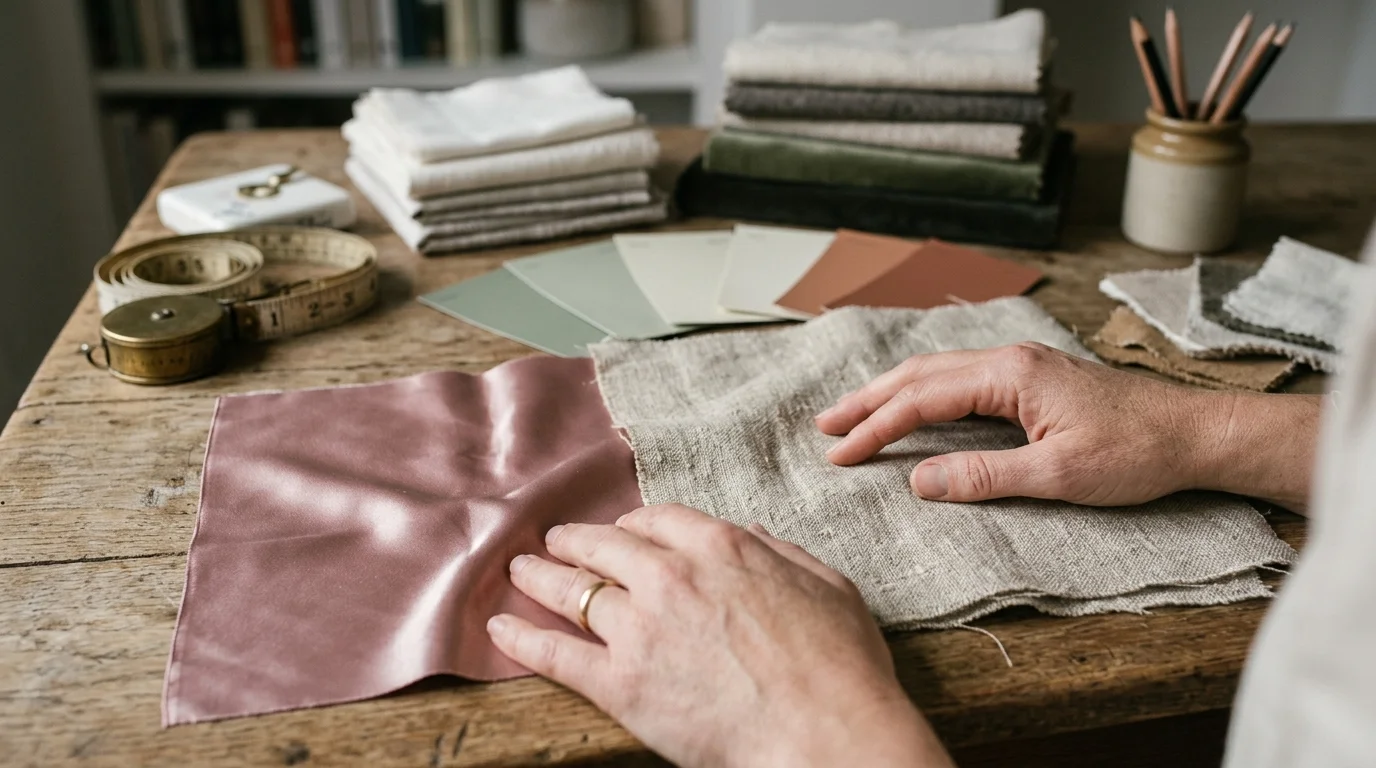
High-gloss synthetic polyesters and shiny faux silks create an artificial glare under modern lighting. These petroleum-based textiles look rigid, generate static electricity, and lack authentic tactile warmth.
Shiny synthetics often hold stubborn creases and drape with a stiff, unnatural stiffness. They instantly diminish the perceived quality of an otherwise carefully curated interior design scheme.
Glossy fabrics also date quickly because they reflect cheap manufacturing rather than artisanal craftsmanship. They fail to deliver the understated sophistication required in contemporary quiet luxury homes.
The Modern Solution: Tactile Natural Fibers
Invest in breathable natural textiles like washed Belgian linen, raw slub cotton, and matte wool blends. These biophilic materials filter sunlight gently, casting a soft, nuanced glow across your rooms.
Natural fibers boast subtle slubs and organic variations that celebrate genuine material provenance. Their matte finish absorbs light gracefully, creating a relaxed, grounded ambiance in living areas.
Linen-cotton blends offer the perfect balance of organic texture and durable structural stability. They resist stretching while delivering the breezy, effortless drape prized in modern decor.
Color Forecasting and Fabric Sourcing
For the latest color forecasts, consult industry leaders like Pantone and paint companies like Benjamin Moore. For professional design standards, refer to the American Society of Interior Designers (ASID).
Select earthy neutrals, warm sands, soft ochres, and muted moss tones for timeless longevity. Matte finishes harmonize effortlessly with hardwood flooring, woven rugs, and natural stone countertops.
Trend #8: Flat Panels Lacking Fabric Fullness
Why Flat Drapery Feels Incomplete
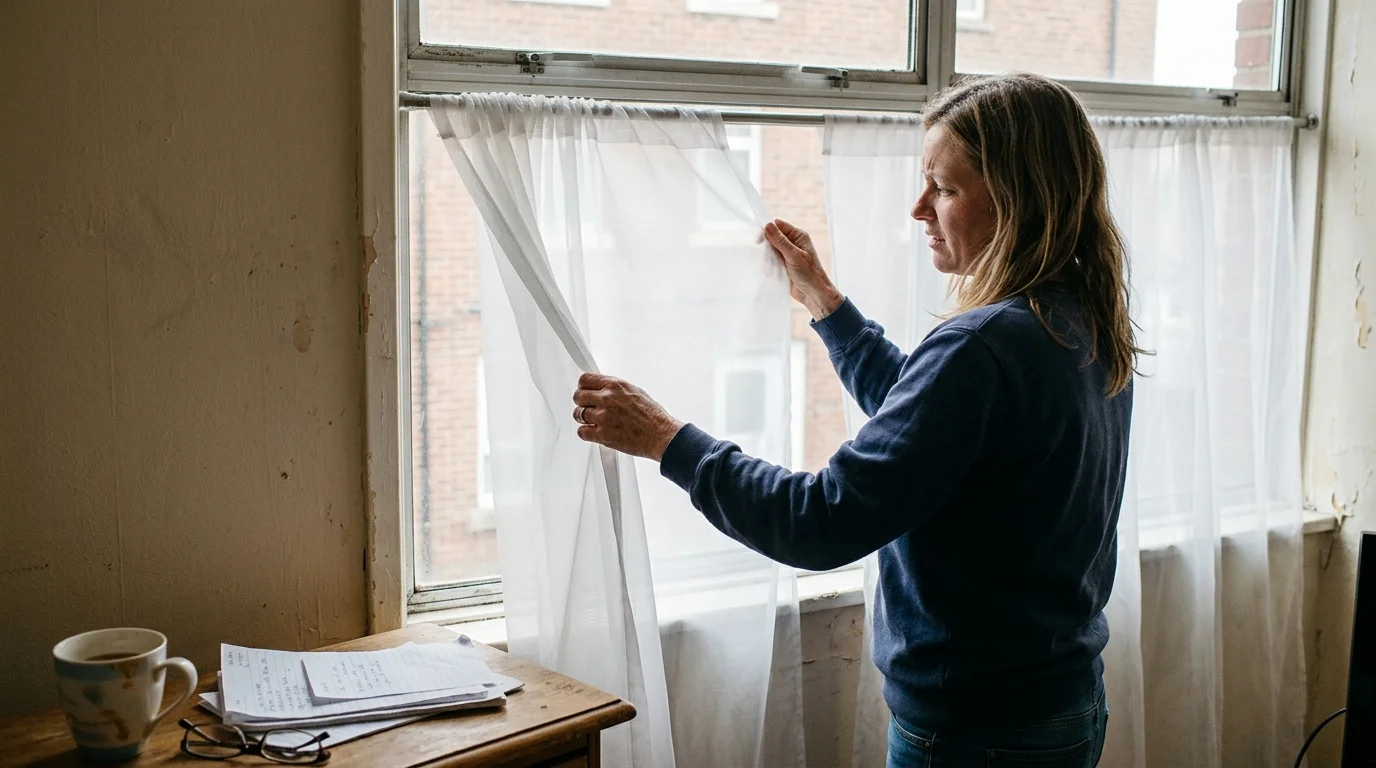
Hanging skimpy drapery panels that stretch completely flat when closed is a major styling mistake. Thin, single-width panels look like hanging sheets rather than luxurious, purposeful window treatments.
Without adequate fabric fullness, drapes lose their architectural depth and acoustic dampening benefits. Flat panels leave your room feeling barren, cold, and visually unresolved.
Skimpy drapery also exposes panel seams and light leaks along the outer edges. It undermines room darkening capabilities in bedrooms and home media spaces.
The Modern Solution: 2x to 2.5x Fullness Ratios
Professional designers calculate fabric yardage using a fullness ratio of 2x to 2.5x the window width. This industry standard ensures your curtains maintain rich, structural pleats whether open or closed.
To achieve this ratio, combine multiple fabric widths per panel or order custom double-width drapery. Deep, undulating folds create shadows and texture that bring dimensional luxury to your walls.
Fuller drapes also provide superior thermal insulation against drafty windows and summer solar heat. They improve energy efficiency while enhancing the tactile comfort of your living spaces.
Acoustics and Lining Considerations
Always line your drapery panels with high-density cotton sateen or premium blackout lining materials. Quality lining protects face fabrics from ultraviolet fading and adds substantial body to every pleat.
Double-lined curtains absorb ambient room reverberation, creating a hushed, serene acoustic environment. This acoustic dampening is especially valuable in open-concept living rooms with hardwood or tile flooring.
The Big Picture: Weaving These Trends into Your Home
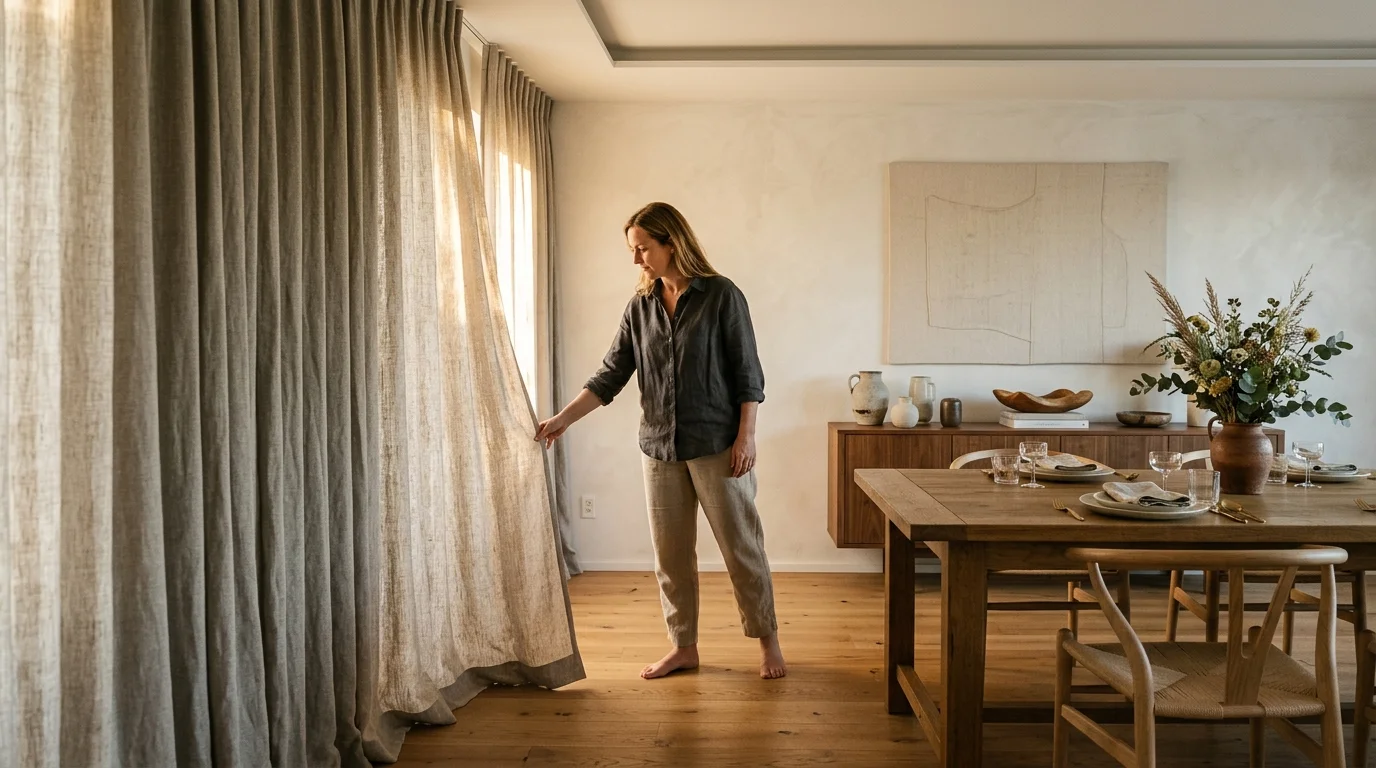
Elevating your window treatments requires balancing architectural proportions, natural lighting, and tactile material choices. Avoid treating curtains as an afterthought by planning your hardware and fabrics early in renovations.
Create visual harmony by coordinating drapery colors with your broader interior palette and flooring tones. A neutral linen panel paired with rich oak flooring establishes an effortlessly grounded aesthetic.
Consider layering sheer drapery panels behind opaque linen drapes for versatile day-to-night light control. Sheers soften intense glare during daylight hours while maintaining daytime privacy without blocking outdoor views.
When evening arrives, draw the heavier outer panels to create an intimate, cocoon-like atmosphere. This double-layer strategy delivers both functional adaptability and rich textural depth.
Focus on timeless craftsmanship, generous fabric fullness, and clean architectural lines rather than fleeting fads. Well-executed window treatments frame your daily life with enduring comfort, sophistication, and quiet luxury.
Disclaimer: This article reflects design trend analysis and predictions. Personal taste and timeless design principles should always guide your decorating choices.
Frequently Asked Questions
How high should I mount my curtain rod if I have standard 8-foot ceilings?
Mount your rod four to six inches above the top casing, or two inches below the ceiling crown. This positioning visually stretches your wall height, making standard eight-foot ceilings feel significantly loftier.
Are curtain tiebacks and decorative holdbacks considered outdated?
Elaborate tasseled tiebacks and ornate metallic holdbacks are definitely outdated in modern interiors. If you must secure your drapes, use simple fabric ties made from the matching drapery textile.
Most modern designers prefer letting tailored pleats hang straight down without any tiebacks. Straight vertical lines create a cleaner, more architectural silhouette along your window perimeter.
How do I calculate the correct drapery width for my windows?
Measure the total width of your curtain rod, including the extensions beyond the frame. Multiply that measurement by 2 or 2.5 to determine the total combined fabric width needed.
Can I mix different window treatment styles within an open-concept space?
Yes, you can mix drapery panels with woven wood shades or roman blinds in one space. Maintain cohesion by using consistent hardware finishes and a harmonious, unified color palette across all windows.