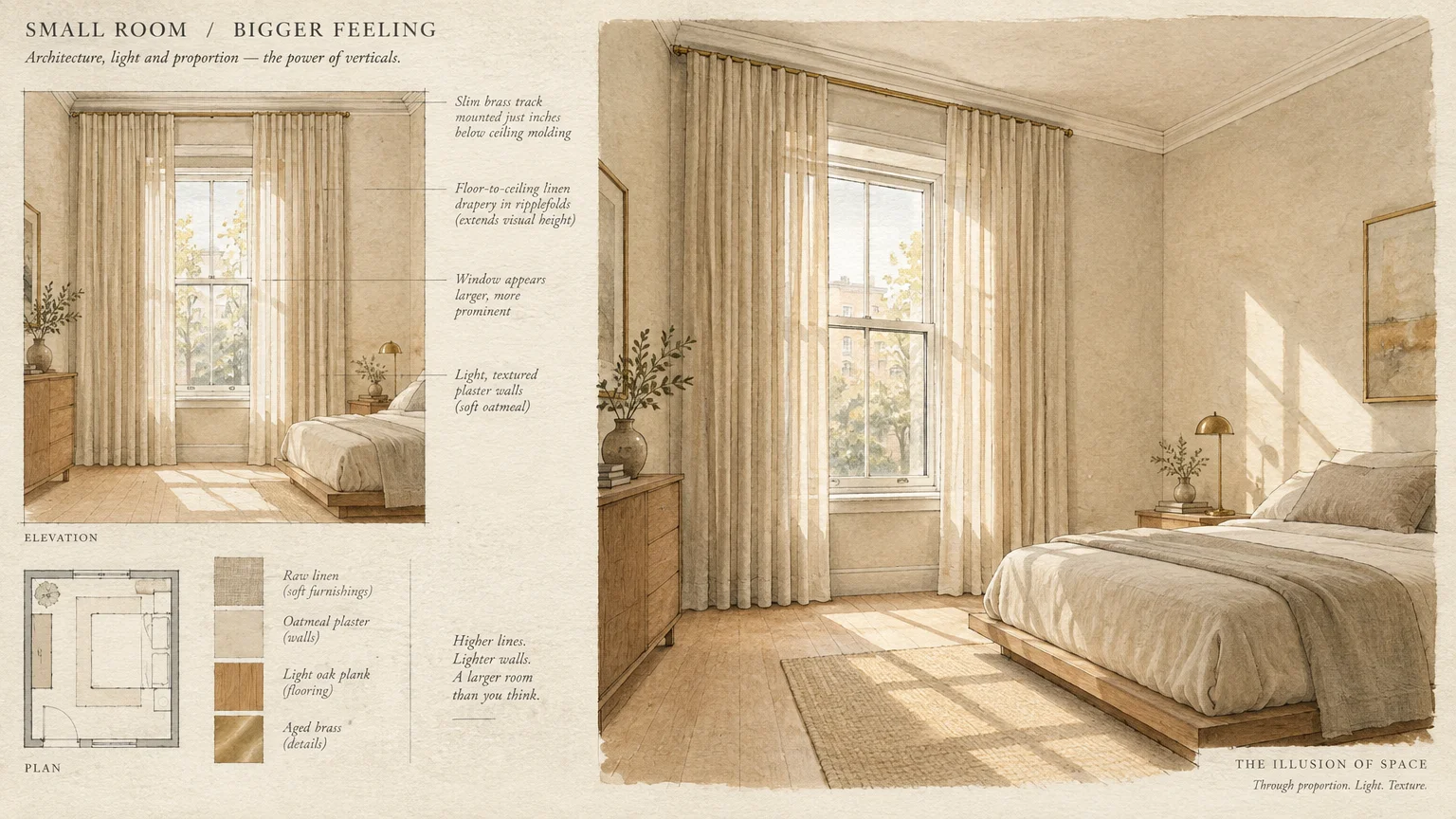
You can immediately transform modest, undersized glass into commanding architectural statements without executing costly renovations. Strategic window decorating redefines spatial proportions and dramatically maximizes ambient daylight across your entire home.
When you intentionally realign drapery tracks and curate bespoke textiles, you effortlessly dissolve rigid structural perimeters. These refined styling choices guide the gaze upward and outward, establishing the illusion of sweeping panoramic vistas.
Explore seven elevated design choices crafted to make small windows look bigger with effortless poise. Every deliberate technique introduces balance, tactile warmth, and grand architectural presence into compact residential quarters.
Trend #1: The Floor-to-Ceiling Drapery Illusion
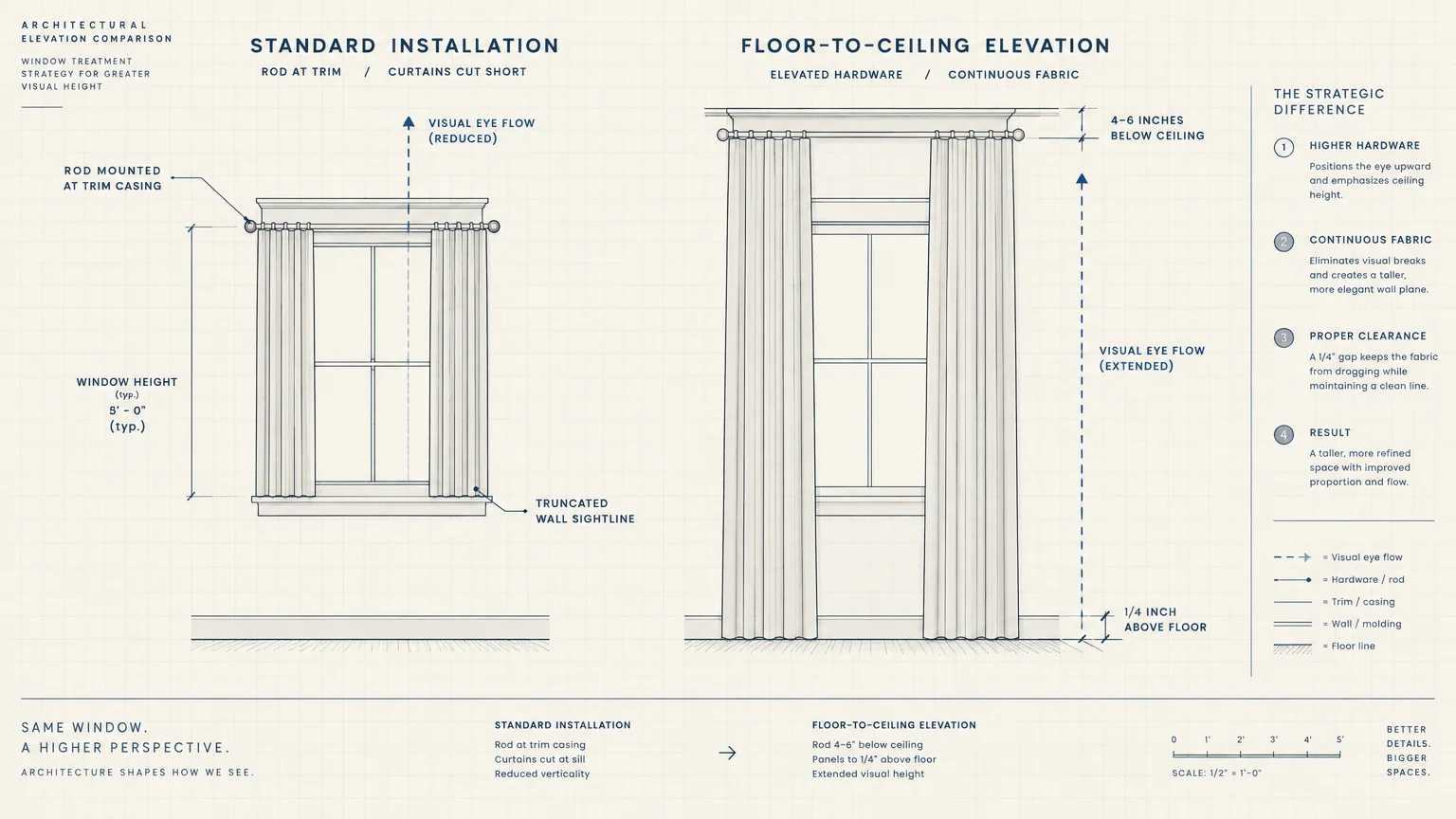
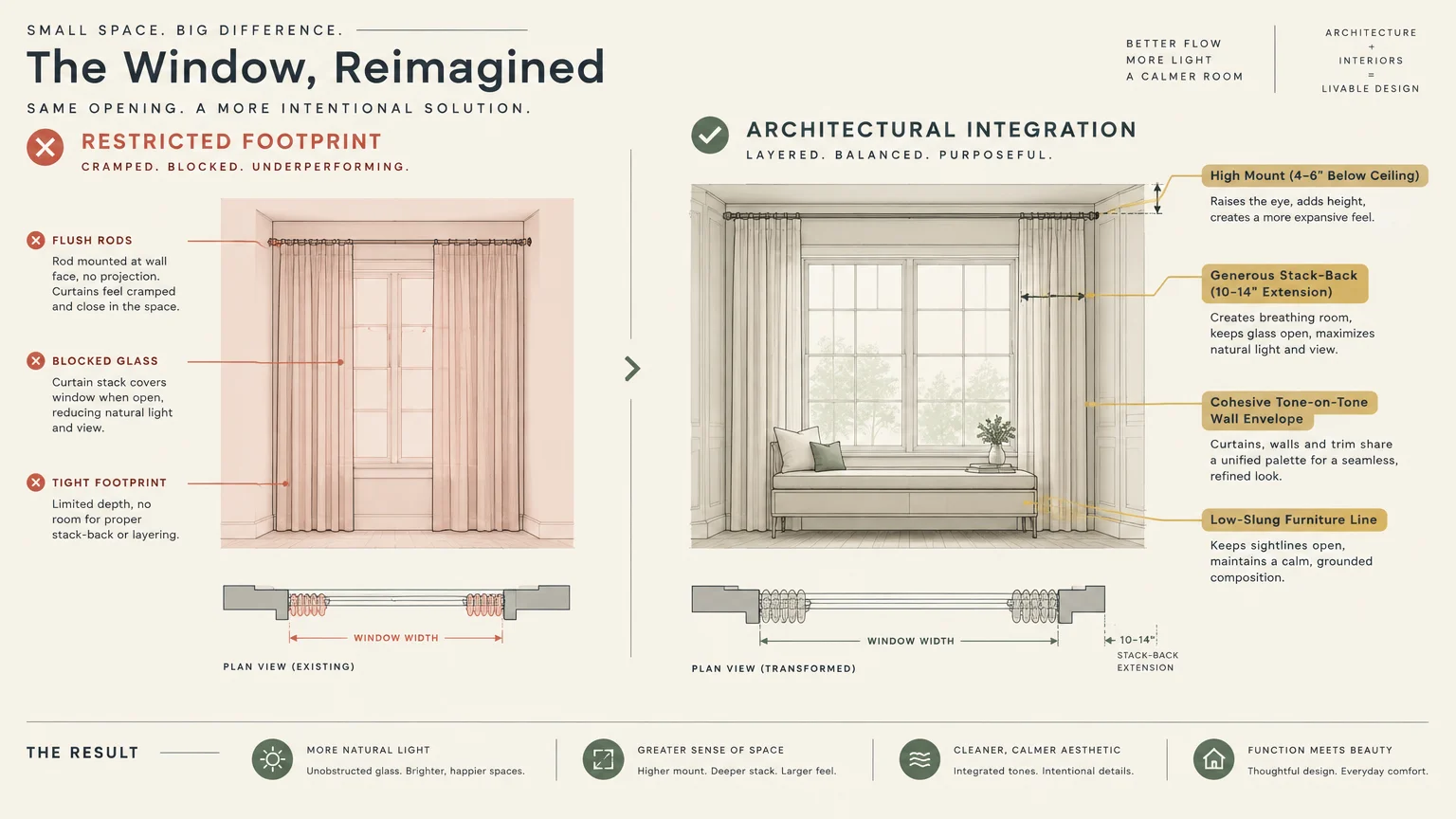
Standard decorating conventions often dictate hanging curtain rods just above the window casing, but this practice truncates your walls. Raising your hardware toward the ceiling creates immediate vertical grandeur throughout the room.
Position your rod approximately four to six inches below the crown molding or ceiling line. This simple elevation forces the eye upward, immediately expanding the perceived ceiling height and architectural volume.
Ensure your drapery panels extend continuously to the floor rather than stopping at the windowsill. Short drapes slice the wall horizontally and draw unflattering attention to compact window dimensions.
For a tailored finish, let the fabric graze the flooring or hover precisely one-quarter inch above. This precise tailoring exudes quiet luxury while maintaining crisp, clean lines across your baseboards.
When executing these window treatment ideas, avoid busy horizontal patterns that interrupt vertical flow. Tone-on-tone pinstripes or rich solid weaves guide the eye upward smoothly without visual distraction.
Select structured header styles such as French pleats or architectural ripplefolds rather than casual grommets. These structured folds create uninterrupted linear rhythm from ceiling to floor, making small openings feel monumental.
These curtain tips emphasize vertical continuity, turning awkward wall voids into deliberate design statements. By treating the entire vertical plane as the primary canvas, you camouflage modest glazing behind tailored architecture.
The physical window ceases to register as a cramped cutout on the wall surface. Instead, the drapery commands the space, projecting the illusion of sweeping floor-to-ceiling glass.
Trend #2: Extended Hardware Projections and Generous Stacking
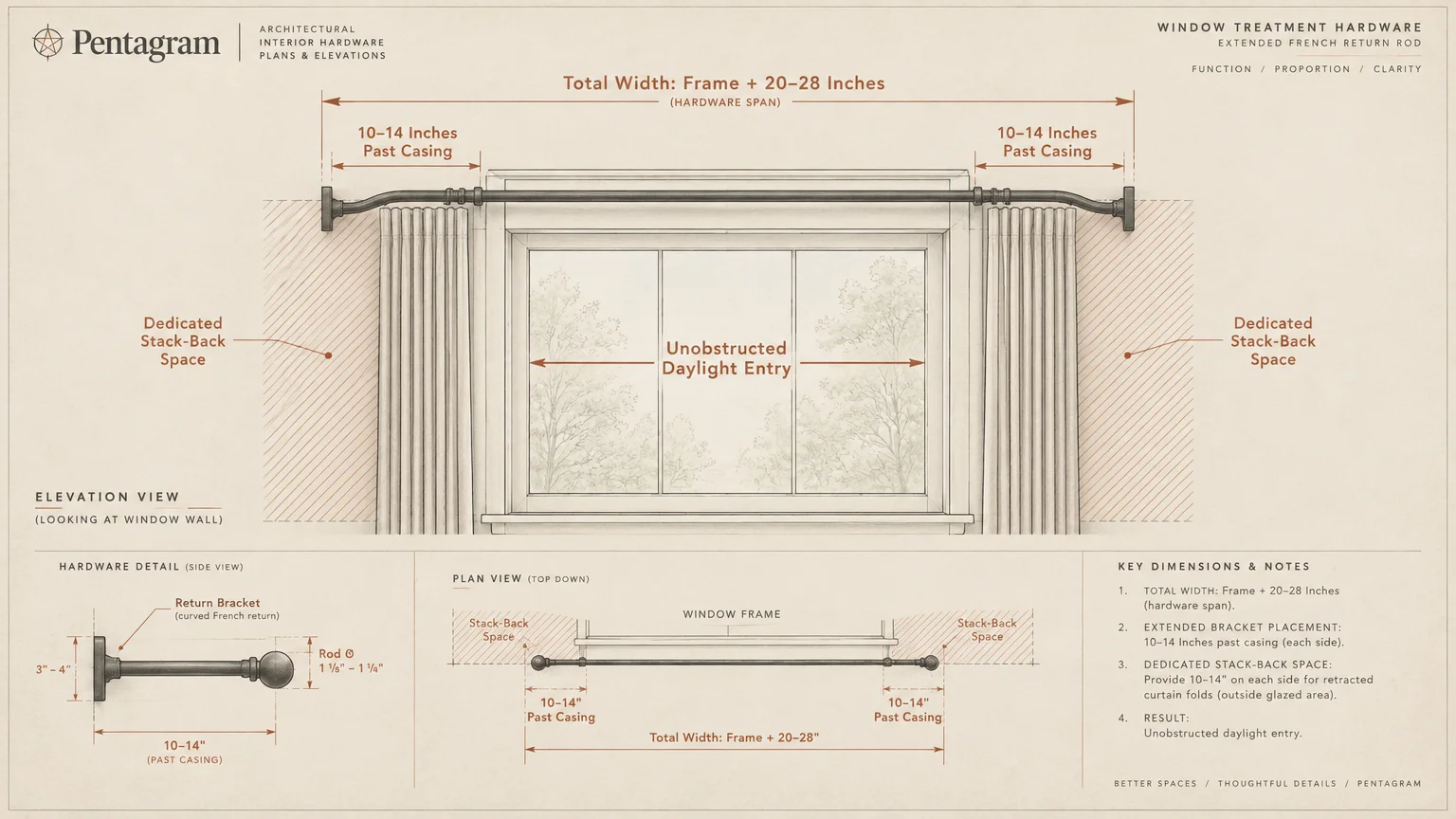
Mounting curtain rods flush with window edges covers precious glass and blocks incoming natural daylight. Extending your curtain rod ten to fourteen inches past the casing completely redefines your window footprint.
This generous extension allows retracted curtain panels to rest entirely against the adjacent drywall. Designers refer to this dedicated perimeter area as the stack-back space.
Because your curtains rest outside the glass boundary, you maximize daylight entry across every season. Unobstructed glass creates brighter, more expansive living environments and banishes gloomy perimeter shadows.
When drapes remain closed, they suggest an expansive picture window hidden behind the fabric. Viewers instinctively assume the glass spans the entire width of the drapery installation.
Incorporate sturdy French return rods that curve gracefully back into the wall surface. This seamless return eliminates peripheral light gaps and integrates the hardware into your existing architecture.
Calculate your hardware width by measuring the window frame and adding twenty to twenty-eight inches. This precise mathematical allowance gives every textile panel ample resting room without crowding the glass.
This strategic footprint will reliably make small windows look bigger across compact living rooms and dining spaces. You establish a majestic focal wall where a narrow aperture once appeared constrained.
Generous drapery stacking creates rhythmic architectural framing that enriches your entire interior layout. The resulting symmetry transforms small windows into expansive, deliberate statements.
Trend #3: Monochromatic Color Drenching and Boundary Erasure
High-contrast trim colors visually isolate small windows, framing them like miniature postage stamps on vast walls. When dark casing outlines compact glass against pale drywall, the eye registers strict architectural boundaries.
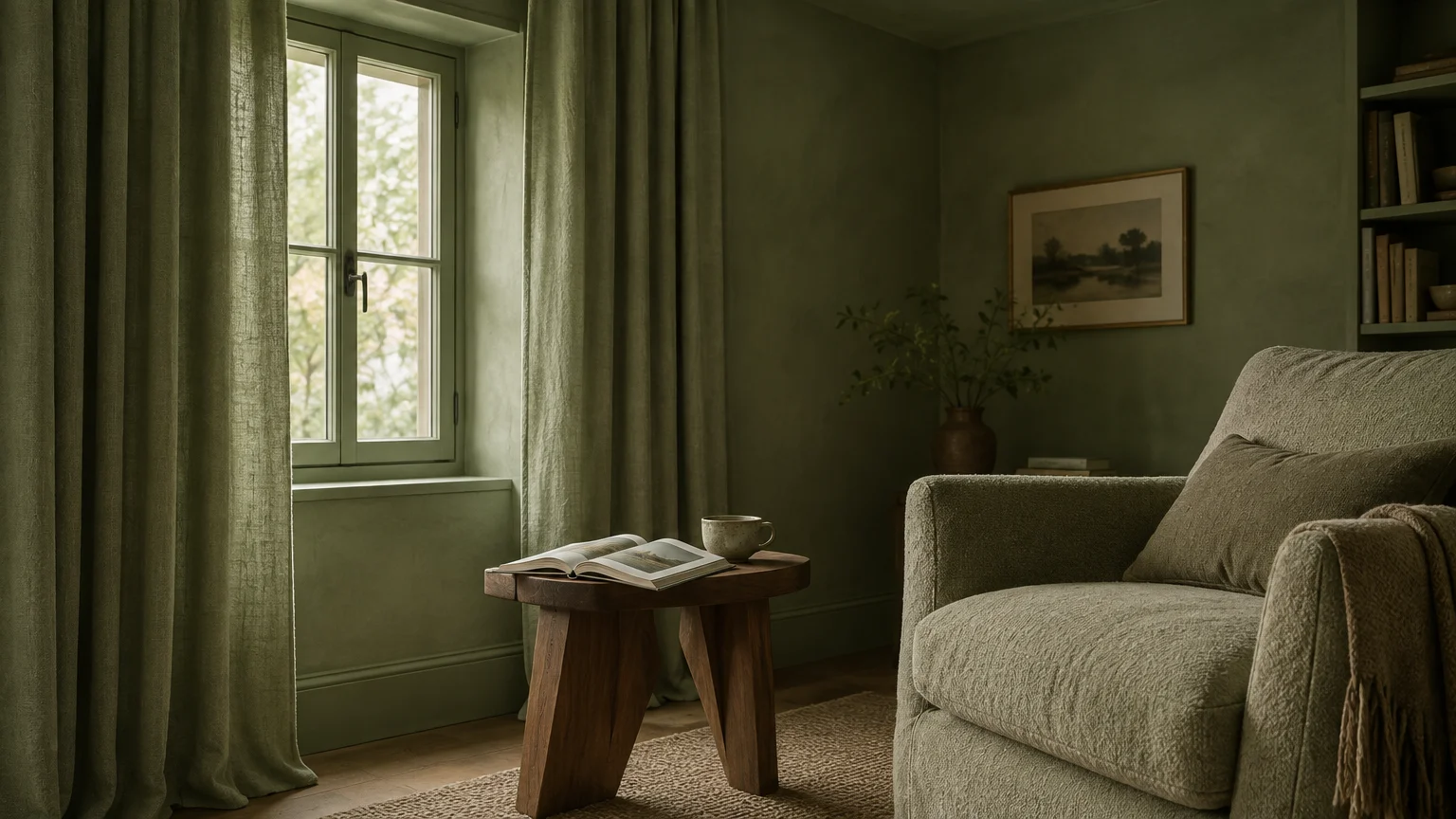
Modern interior design embraces monochromatic color drenching to eliminate these jarring perimeter transitions. By painting trim, casing, and walls in identical chromatic values, you dissolve visual friction across the elevation.
Select matching or tonal drapery fabric to complete this seamless, enveloping architectural statement. When your window coverings blend softly into the walls, spatial perimeters expand into the room’s periphery.
This unified approach exemplifies quiet luxury, fostering tranquil spaces free from fragmented visual breaks. The window casing recedes gracefully, allowing daylight to take center stage without harsh framing.
If you prefer subtle dimension, calibrate your trim one shade lighter or darker than the drywall. This delicate contrast preserves architectural character while preventing small windows from feeling boxed in.
Soft neutral palettes like warm taupe, muted chalk, and warm linen work exceptionally well. These nuanced shades bounce natural daylight across surfaces, softening sharp corners and enlarging your visual field.
Applying this sophisticated window decorating approach softens architectural defects into cohesive, soothing environments. The physical frame disappears into a unified tapestry of rich color and texture.
Color continuity tricks the eye into perceiving continuous space across the room envelope. Your walls feel grander, and modest windows feel like natural, expansive apertures.

Trend #4: Ethereal Light-Filtering Sheers and Organic Weaves
Heavy, opaque fabrics suffocate modest openings by absorbing daylight and crowding the glass. Compact windows demand breathable, translucent textiles that celebrate ambient sunshine and enhance airiness.
Gauzy Belgian linen and open-weave sheer panels diffuse sunlight into soft, luminous illumination throughout the day. This gentle glow softens harsh interior shadows and creates an expansive, welcoming atmosphere.
Biophilic design principles emphasize this vital connection between natural outdoor light and human wellbeing. By maximizing daylight entry, sheer fabrics connect your living spaces directly with the outdoor landscape.
The subtle slubbing of woven flax introduces provenance and artisanal tactility without adding visual bulk. These refined textiles drape with effortless grace, softening window frames without shrinking the room.
For rooms requiring evening privacy, install a dual-track curtain system behind your sheer panels. Pair translucent foreground fabrics with discreet blackout drapes mounted along an independent back track.
During active daylight hours, slide the blackout drapes into your extended stack-back zone beside the casing. Your room remains flooded with light while your sheer panels filter harsh direct glare.
Embracing these airy window treatment ideas instantly lifts physical weight from compact perimeter walls. Sunlight spreads effortlessly into shadowy corners, lending an expansive presence to modest openings.
Translucent fabrics maintain connection to outside greenery while preserving daytime privacy. The visual boundary between outdoors and indoors dissolves into pure, glowing light.
Trend #5: Sleek Architectural Inside-Mount Shades
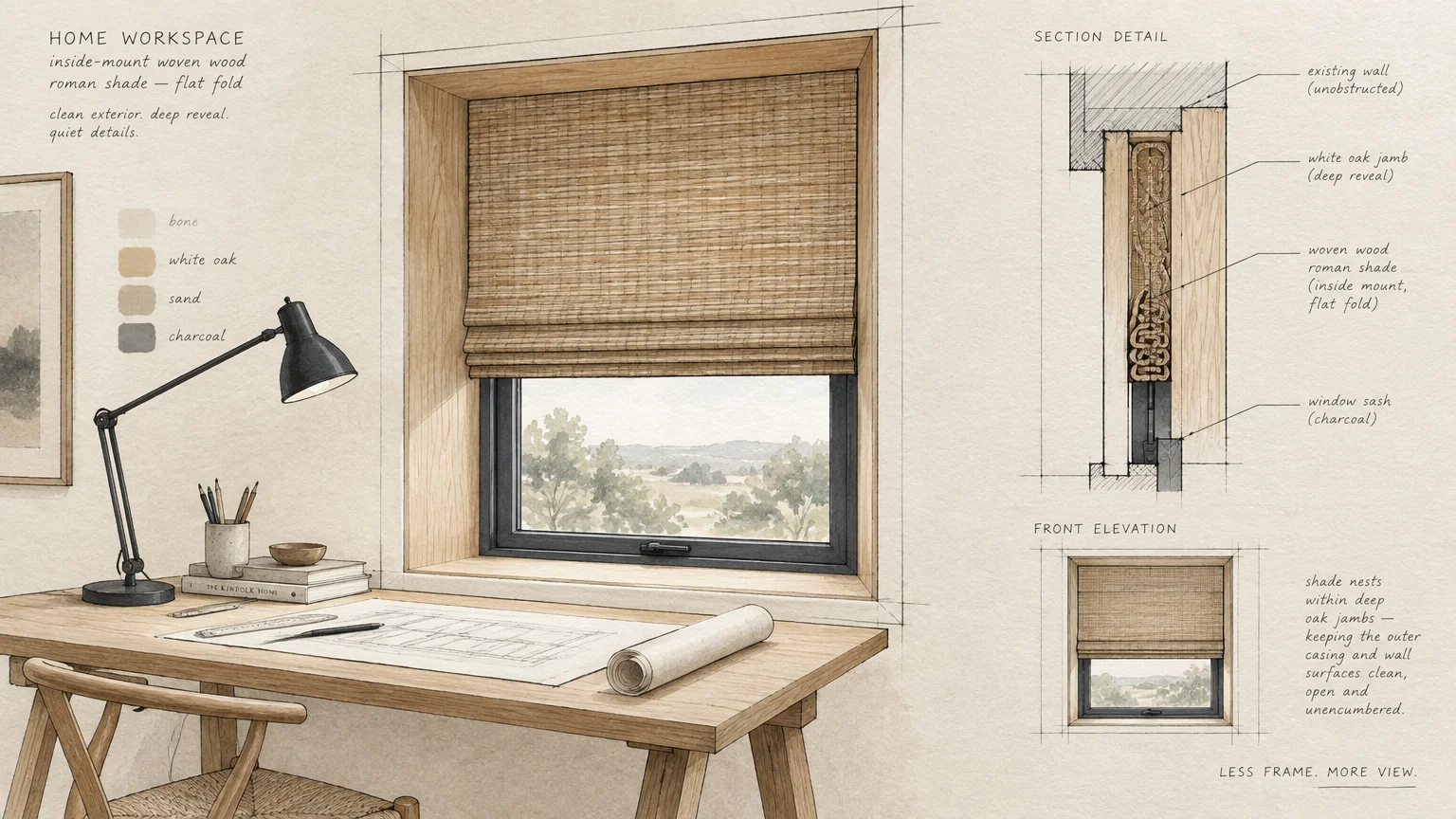
When floor-length drapes crowd your floor space, tailored shades provide a clean, modern alternative. Inside-mount shades sit neatly within the window jambs, emphasizing architectural structure and uncluttered lines.
This tailored placement leaves surrounding wall planes exposed, preserving visual cleanliness across minimalist spaces. Uncluttered drywall surfaces amplify feelings of spaciousness and order across compact contemporary rooms.
Select flat-fold Roman shades or woven wood grasscloth to introduce organic warmth without bulky projections. Avoid heavy balloon shades or ruffled Austrian valances that crowd small glass surfaces with unnecessary fabric.
Natural grasscloth, woven jute, and bamboo reeds introduce rich organic texture into modern living spaces. These artisanal materials provide tactile interest while keeping profile depths exceptionally slim and streamlined.
Mount the headrail at the highest point of the inner casing to maximize glass exposure when raised. When fully retracted, the folded fabric rests cleanly at the top without obstructing outdoor vistas.
Alternatively, specify high-performance motorized roller shades equipped with concealed architectural fascia panels. These discreet rollers retract into an invisible cassette, presenting an unencumbered sheet of glass during daytime.
This tailored discipline embodies small window decor at its most refined and restrained. Precision craftsmanship and bespoke tailoring showcase the glass as a deliberate, modern architectural aperture.
Flush styling anchors the eye, celebrating the window as an intentional, crisp glass portal. Compact dimensions appear purposeful rather than restricted.
Trend #6: Specular Mirror Integration and Reflective Light Bouncing
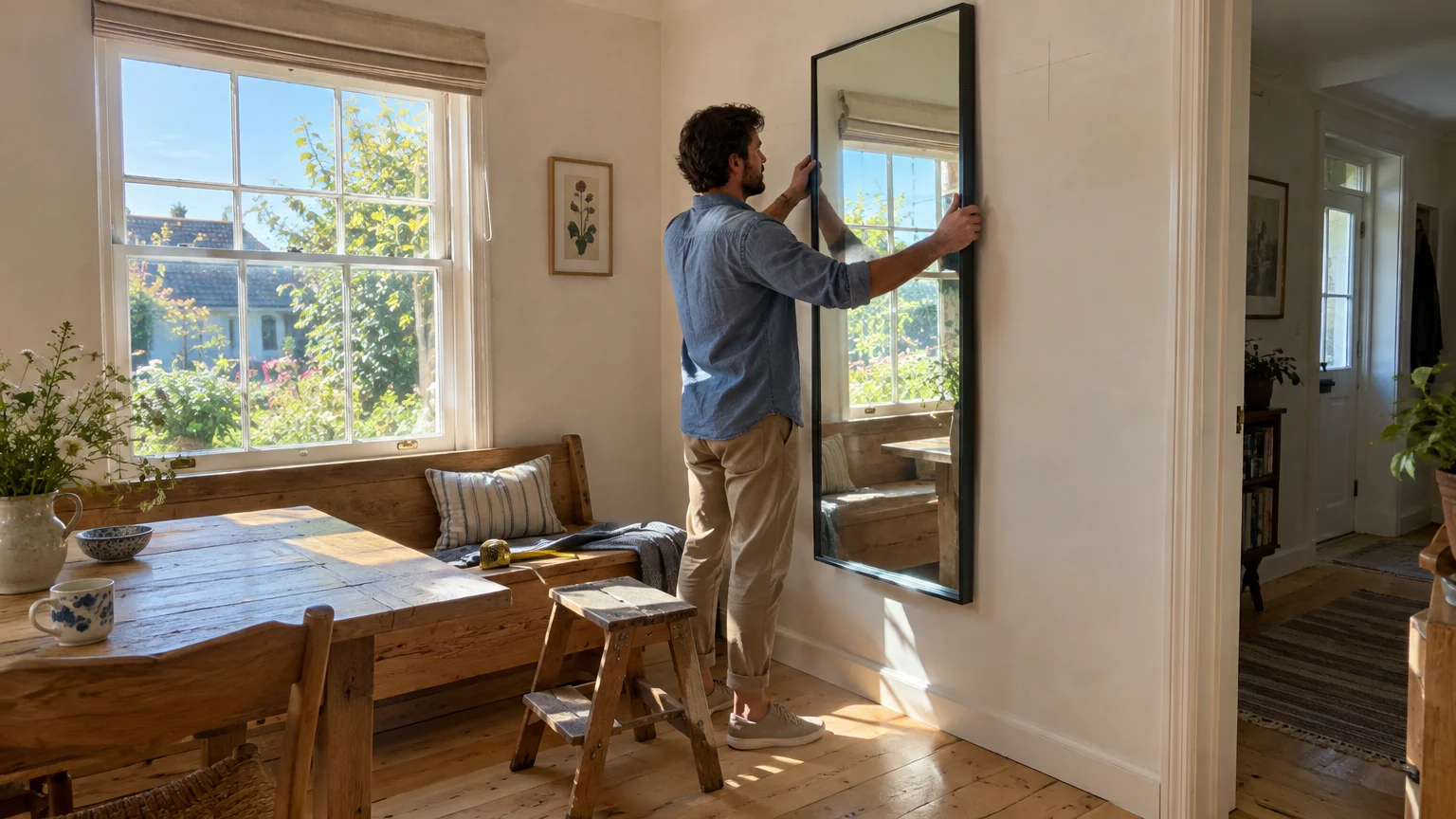
Mirrors remain the premier styling tool for designers seeking to expand interior volume and distribute daylight. Positioning a substantial mirror adjacent or perpendicular to a small window duplicates incoming light across dim walls.
The reflective surface acts as a secondary portal, doubling the visible presence of natural light and outdoor views. This clever pairing creates the optical sensation of an additional, matching window opening.
To heighten this illusion, select a mirror with grid mullions that mimic traditional divided-light windows. A multi-pane mirror introduces classic architectural symmetry directly opposite your modest casing.
Scale matters significantly when executing this reflective strategy in compact dining or sitting areas. Choose an oversized floor mirror or broad horizontal wall mirror to establish an expansive visual horizon.
Angle your mirror slightly to capture outdoor foliage, moving clouds, or bright sky rather than plain drywall. Reflecting natural greenery indoors reinforces biophilic harmony while energizing quiet living spaces.
Incorporate slender brass or blackened iron frames that echo your existing lighting and drapery hardware. This decorative cohesion binds the reflective glass naturally into your holistic interior aesthetic.
By treating reflection as an extension of daylight, you make small windows look bigger through pure optical physics. Your living space gains luminous depth, spatial rhythm, and radiant warmth.
Mirrors banish oppressive shadows that make small rooms feel confined and dark. The resulting environment feels twice as expansive and vibrant.
Trend #7: Low-Slung Furniture Staging and Clear Sightlines
Crowding furniture against an undersized window cuts off the sill and suffocates the surrounding wall. When high-backed sofas or bulky case goods overlap the casing, the window looks tiny and cramped.
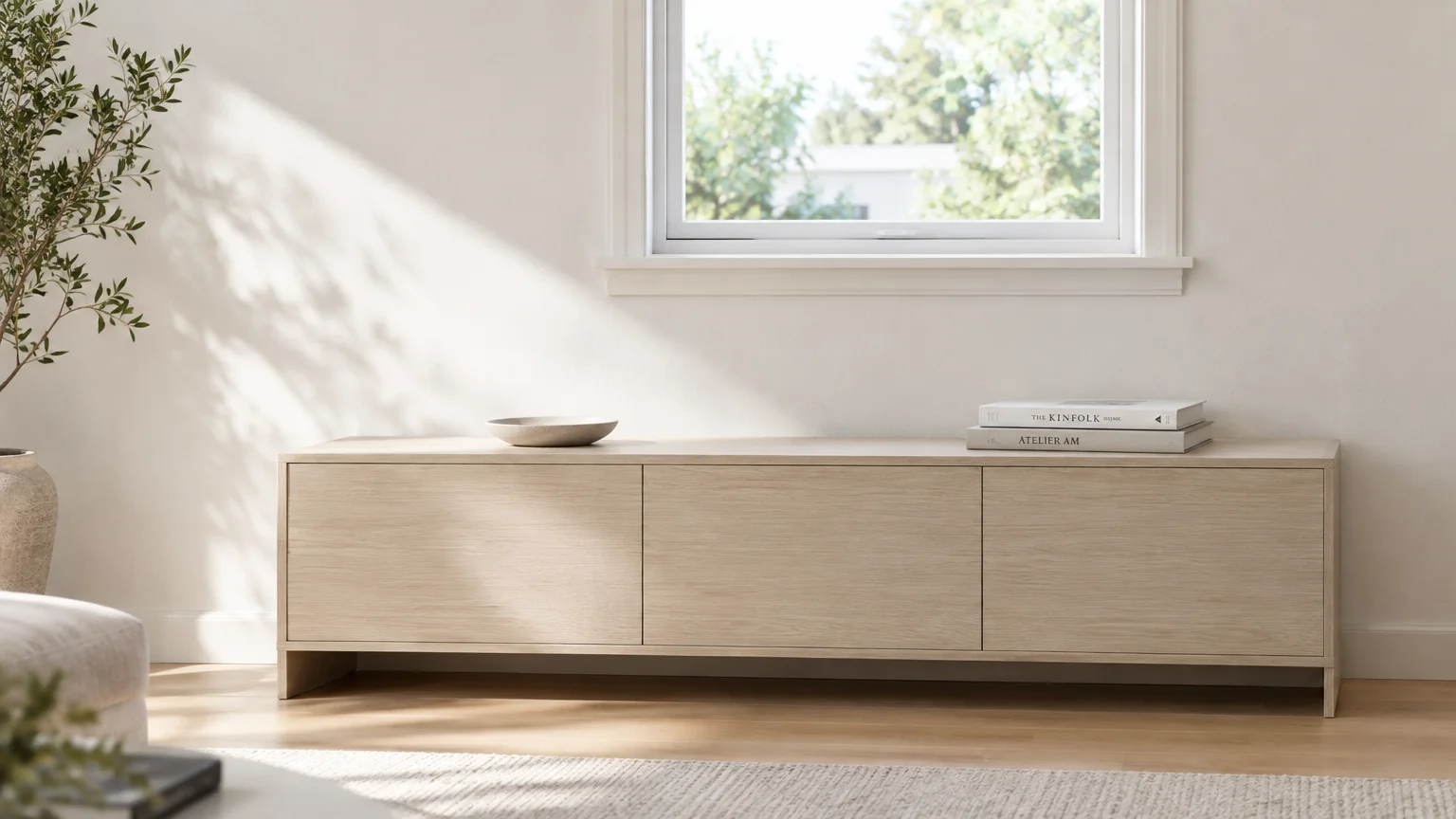
Emphasize unobstructed sightlines by choosing low-slung, modern furniture that sits well beneath the windowsill. Low-profile seating allows the gaze to travel cleanly toward the window pane without spatial resistance.
Maintain at least eighteen inches of negative space around the perimeter of your window framing. This breathing room honors architectural boundaries and allows ambient light to pool smoothly across the floor.
Avoid using the windowsill as an improvised display shelf for dense house plants or decorative knick-knacks. Window decorating thrives on disciplined restraint; a single hand-thrown ceramic vessel makes a far grander statement.
If you position a reading bench beneath the aperture, select a floating design supported by slender legs. Open space beneath the bench permits light to flow freely across the room, preserving airiness.
Consider floating your main seating group into the center of the room rather than against exterior walls. This layout creates dedicated circulation paths that keep window areas open and luminous.
Unencumbered negative space around your sill reframes the window as a thoughtful architectural destination. Light travels deeper into your home, giving even modest glazing an expansive, commanding presence.
Clean thresholds guide attention straight to the horizon outside, blurring indoor and outdoor boundaries. Your interior atmosphere breathes with renewed spaciousness and sophisticated grace.
The Big Picture: Weaving These Trends into Your Home
Achieving timeless sophistication requires balancing these spatial illusions with your home’s unique architectural narrative. Rather than implementing every design strategy simultaneously, select the complementary techniques that suit your layout.
High-mounted drapery paired with extended side brackets creates immediate impact in primary living rooms and bedrooms. In kitchens or powder rooms, inside-mount woven shades deliver pristine architectural proportion without excess textile weight.
Maintain material integrity throughout your selections by investing in authentic textiles like slubbed linen and wool flannel. Authentic textures age with grace and exude effortless pedigree across changing seasonal trends.
Coordinate your window hardware finishes with your room’s broader metallic palette for visual continuity. Muted unlacquered brass, blackened bronze, and brushed nickel lend bespoke polish without distracting from outside views.
Remember that scale is fundamentally relational inside any carefully curated residential environment. By harmonizing wall color, drapery height, and spatial flow, you reshape how your rooms breathe and function.
Masterful interior design does not fight against physical boundaries; it sculpts perception through proportion, light, and geometry. Small windows cease to be limitations when you treat them with deliberate, architectural respect.
For the latest color forecasts, consult industry leaders like Pantone and paint companies like Benjamin Moore.
For professional design standards, refer to the American Society of Interior Designers (ASID).
Disclaimer: This article reflects design trend analysis and predictions. Personal taste and timeless design principles should always guide your decorating choices.
Frequently Asked Questions
Can dark drapery work on small windows without shrinking the room?
Dark drapes work exceptionally well on small windows when paired with a matching monochromatic wall color. This monochromatic drenching conceals window boundaries and creates moody, enveloping luxury across intimate spaces.
Avoid pairing dark curtains against high-contrast pale walls, as this sharp delineation highlights narrow window dimensions. Tone-on-tone application ensures the fabric adds depth without compressing your visual space.
How high above the window should I mount my curtain rod?
Mount your curtain rod approximately four to six inches below the ceiling crown or drywall junction. If your ceiling height exceeds ten feet, position the rod eight to twelve inches above the casing.
This elevated placement draws the eye upward, celebrating vertical wall height rather than the window’s compact top line. Avoid placing hardware directly against the casing trim under any circumstances.
What is the ideal drapery fullness for compact window frames?
Aim for a fullness ratio of two to two-and-a-half times the width of the curtain rod. Generous fabric yardage creates rich, deep pleats that convey customized luxury rather than skimpy drapery panels.
Even when pulled wide on extended rods, full pleats project bespoke architectural character across your walls. Skimpy fabric panels flatten against the wall and immediately signal budget compromises.
How do you style asymmetric or off-center small windows?
Hang drapery tracks across the entire wall span to center the textile panels along the architectural center line. When drapes hang closed or partially open, they establish perfect symmetry regardless of glass placement.
Balance the adjacent wall with a tall floor mirror, targeted artwork, or sculptural lighting fixture. This intentional composition equalizes spatial weight across the entire room elevation.