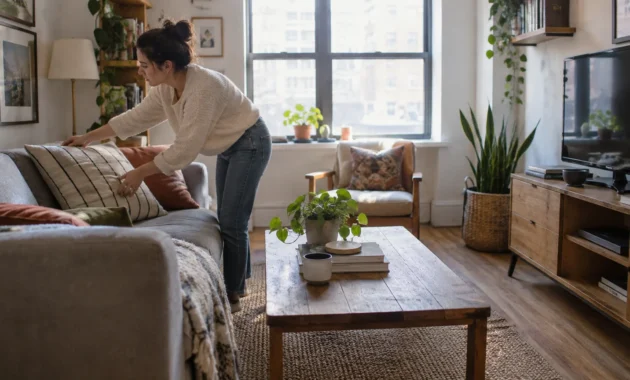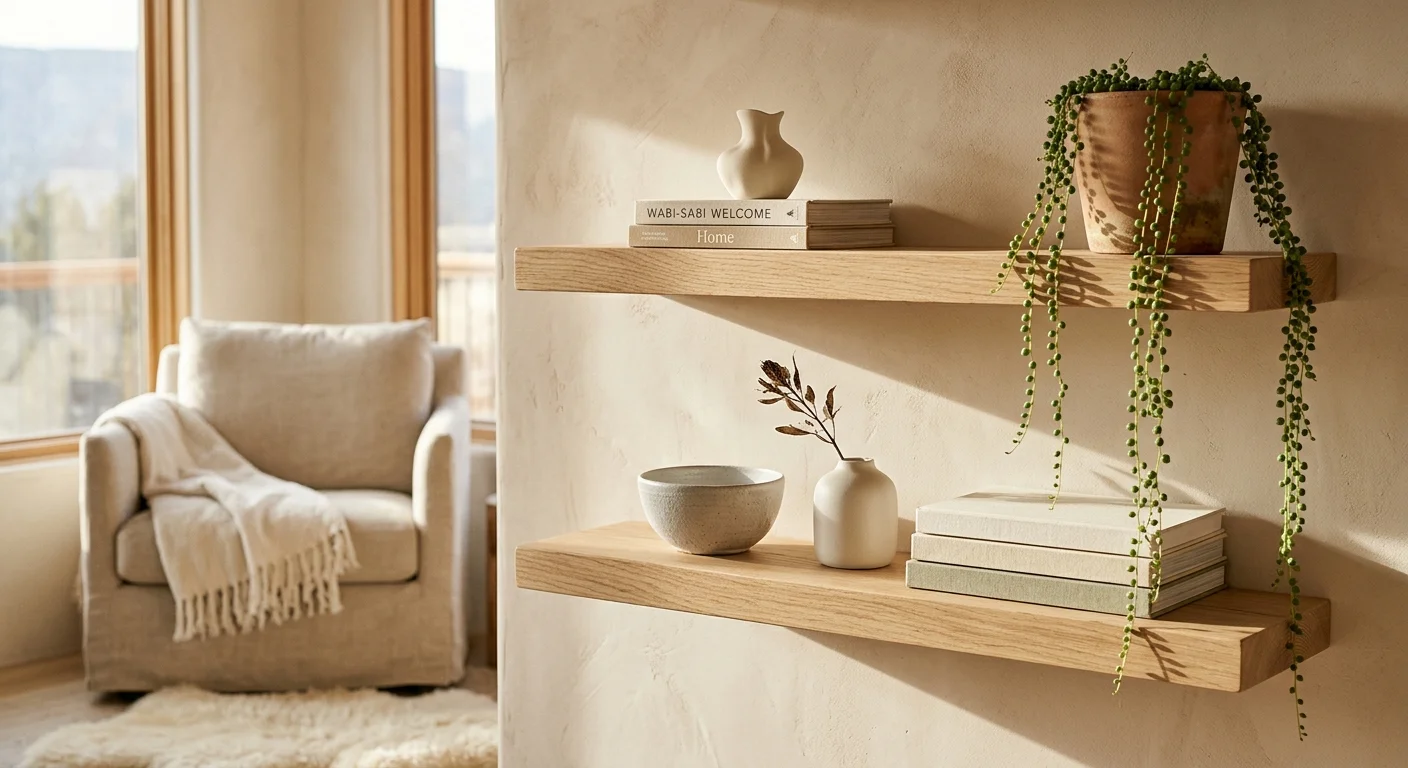
Mastering open shelf decor ideas transforms chaotic wall space into a refined architectural feature that elevates your entire home. You can eliminate visual clutter while displaying daily essentials by balancing structural proportions, grouping objects thoughtfully, and leveraging intentional negative space. Successful styling relies on treating each ledge as a curated canvas rather than a storage catchall. When you combine purposeful material contrasts with functional items, open shelving becomes both an efficient storage solution and a captivating design centerpiece. Implementing high-end organizing open shelves techniques allows you to highlight your favorite heirloom pieces, artful ceramics, and tactile greenery without compromising on sophisticated interior aesthetics.
Trend #1: Spatial Rhythm and Intentional Negative Space
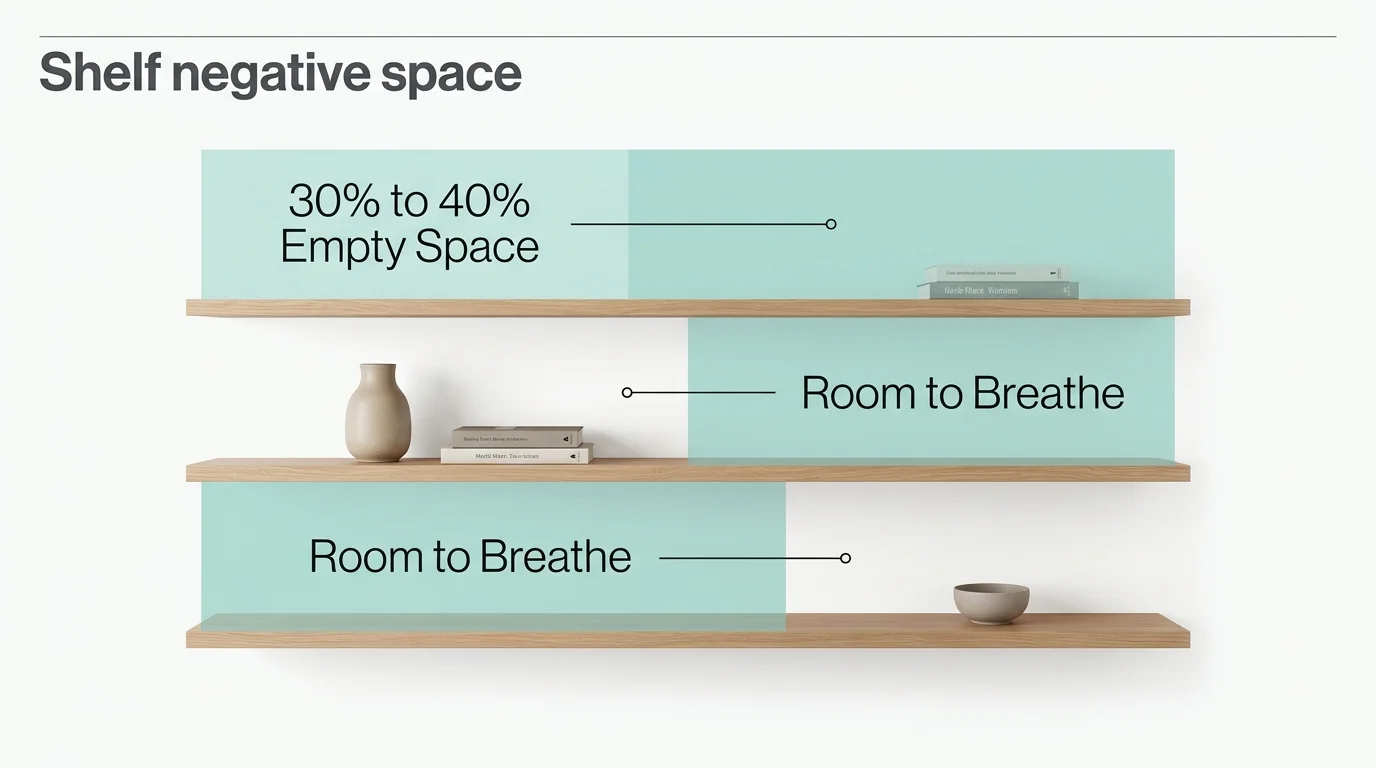
The most common mistake homeowners make when decorating open kitchen shelves or living room display ledges involves packing every available inch with decorative objects. Top interior stylists utilize negative space—the intentionally empty area around and between objects—as a core architectural element that gives your eyes room to breathe. Leaving approximately thirty to forty percent of your shelf surface completely bare creates an instant sense of quiet luxury and spatial balance.
Think of negative space as the silent framework that dictates spatial rhythm across your walls. When you leave generous gaps around a sculptural stoneware vase or a small stack of linen-bound books, you elevate those individual items into deliberate artwork. Rather than placing items in a continuous, uninterrupted line across a timber plank, assemble your display in distinct, isolated clusters. This technique creates a visual rhythm across the wall, transforming a potentially overwhelming wall unit into a serene, museum-quality arrangement.
Trend #2: Ton-sur-Ton Color Curation
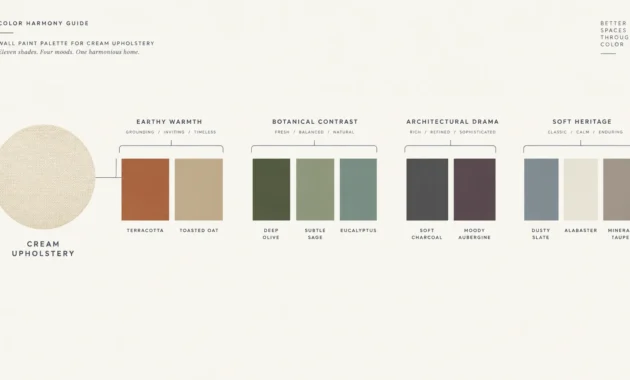
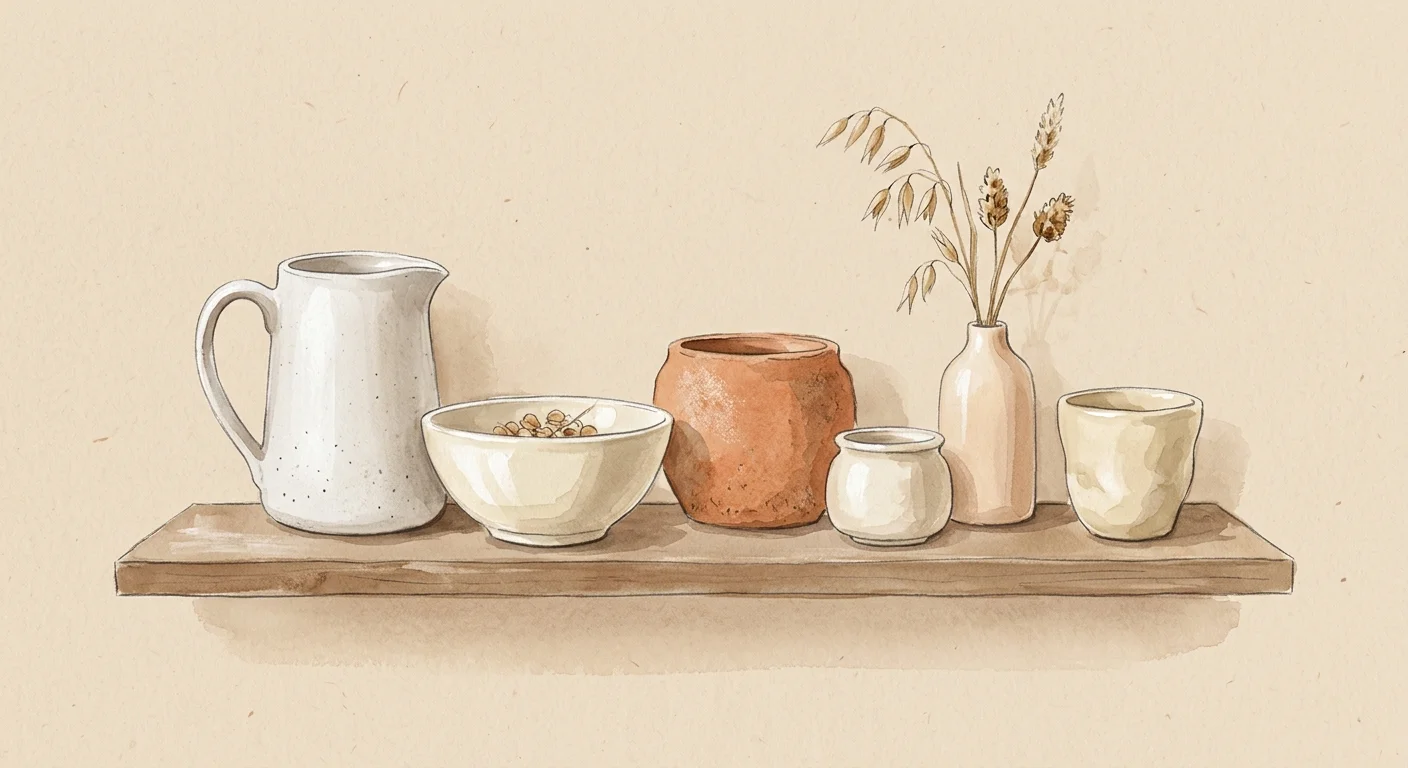
Visual clutter often stems from chaotic color variation rather than an excess of physical objects. Adopting a ton-sur-ton—or tone-on-tone—color palette establishes instant visual harmony across open display ledges. By restricting your palette to three complementary, low-contrast shades, such as warm alabaster, muted terracotta, and creamy oat, you establish a cohesive narrative that feels calm and intentionally tailored.
Grouping ceramics and glassware by subtle shade gradations reduces visual noise significantly. Place matte white stoneware alongside off-white porcelain and cream-toned vessels to build subtle dimension without introducing harsh color clashes. When you align your shelf accessories with your room’s broader architectural color scheme, open shelving integrates smoothly into the background, complementing your walls and flooring rather than competing with them for attention.
Trend #3: The Triangular Balance and Dynamic Asymmetry
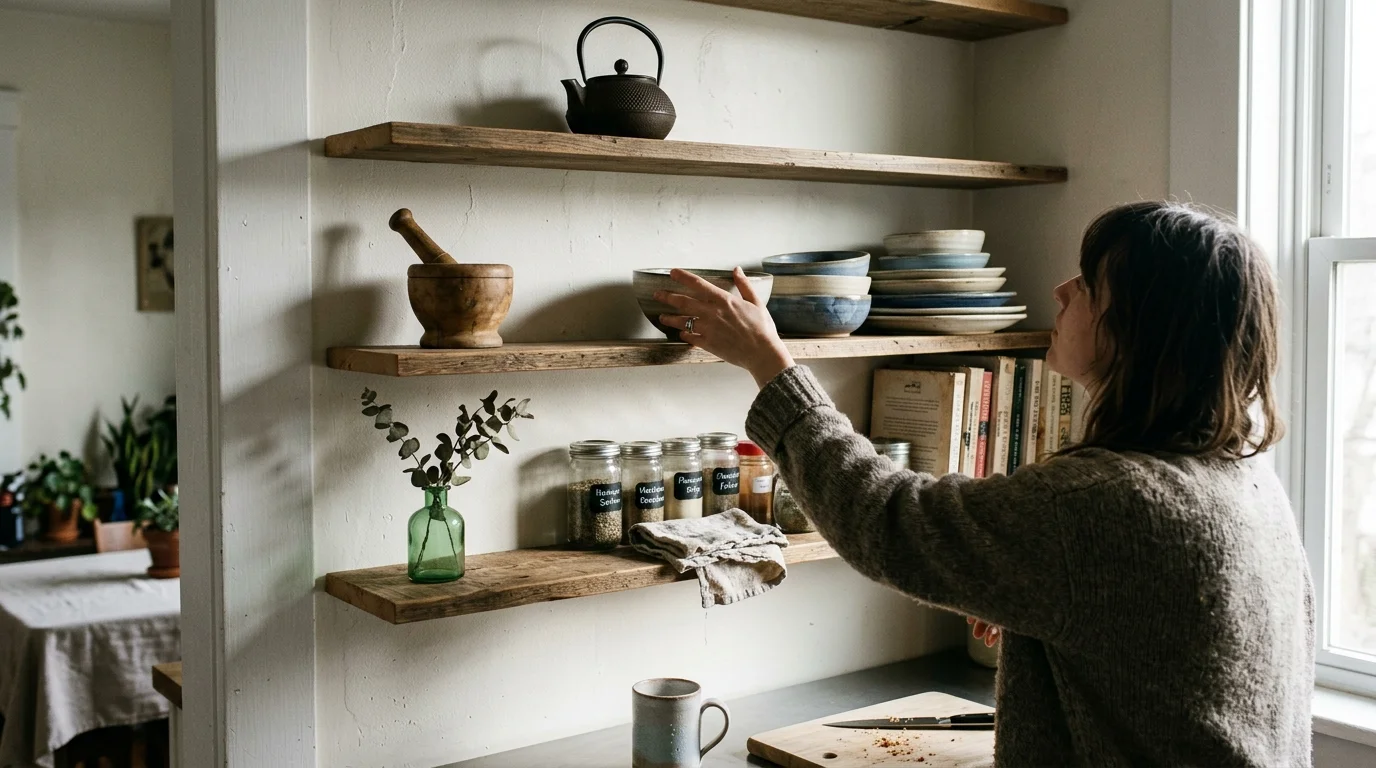
Achieving equilibrium across open shelves requires moving past rigid, symmetrical alignments that feel like a commercial retail display. Instead, apply the rule of thirds and create asymmetrical triangles across multiple shelf levels. Position a tall item, such as a large ceramic pitcher or a framed canvas print, on the top left shelf, then balance it visually with a substantial object on the middle right and bottom center shelves.
This triangular positioning guides the observer’s eye naturally across the entire display in a smooth, zigzagging path. By deliberately varying heights and visual mass across opposite ends of your shelving unit, you cultivate a dynamic balance that feels organic yet carefully considered. Essential open shelving styling tips emphasize that visual weight extends beyond physical height; a heavy, dark walnut bowl can easily balance a taller, lightweight clear glass vessel on an opposing shelf tier.
Trend #4: Tactile Materiality and Mixed Surface Finishes
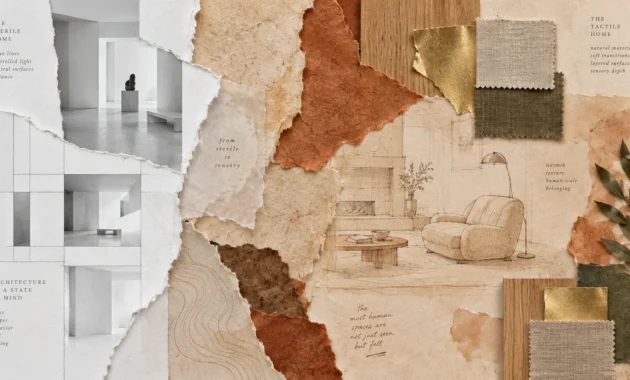
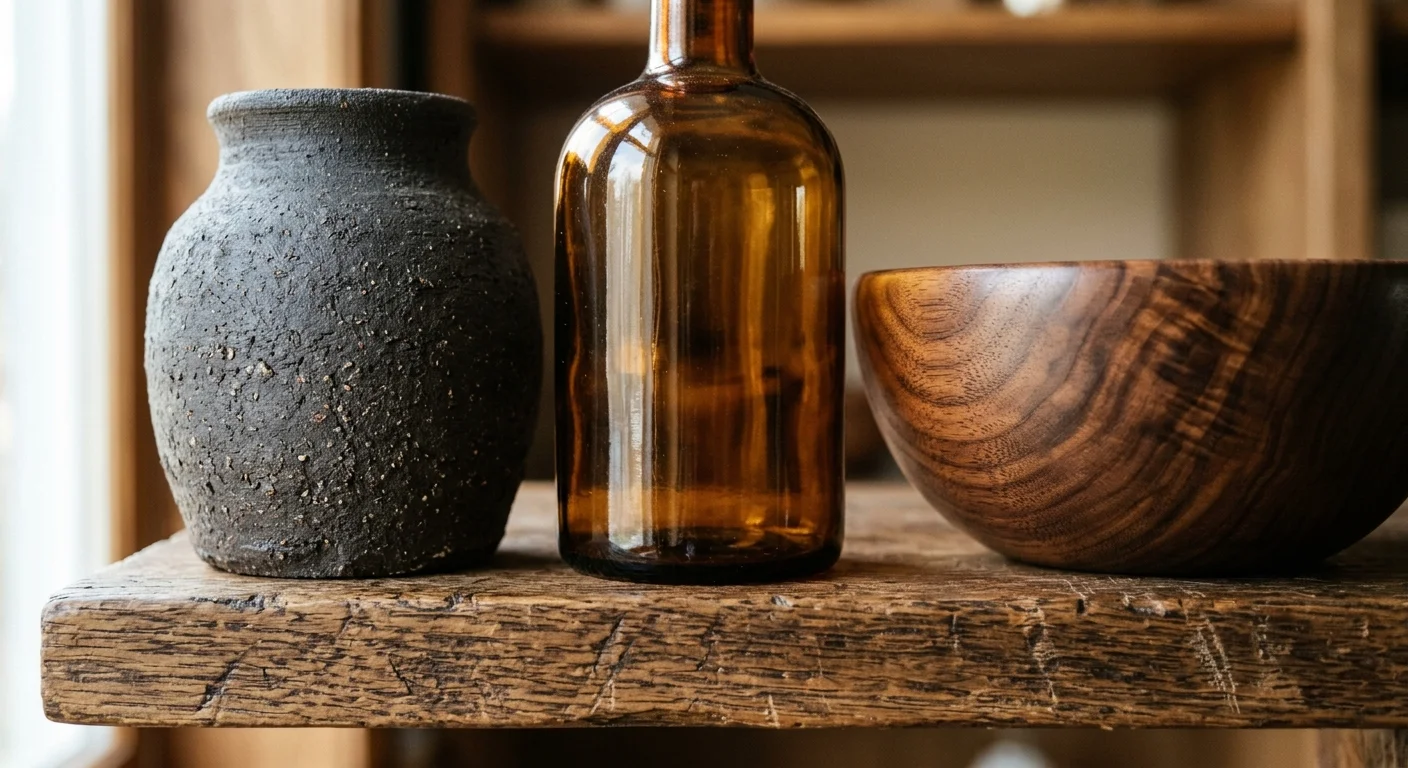
A minimalist shelf arrangement runs the risk of feeling flat or clinical if you neglect physical texture. Mixing diverse surface finishes introduces sophisticated depth and rich tactile interest while avoiding cluttered shelving. Pair rough, travertine vessels against smooth, honed timber shelves, or set delicate, mouth-blown glassware alongside matte-glazed earthenware pieces.
Integrating contrasting materials—such as hand-hammered unlacquered brass, cold-cast concrete, warm oiled oak, and ribbed fluted glass—engages the senses without adding physical volume. Sunlight interacts differently with each distinct surface, bouncing off polished metals while absorbing into raw terracottas. This interplay of light and shadow generates intrinsic architectural detail, allowing you to build rich, multi-layered visual compositions using fewer overall pieces.
Trend #5: Functional Vignettes and Culinary Provenance
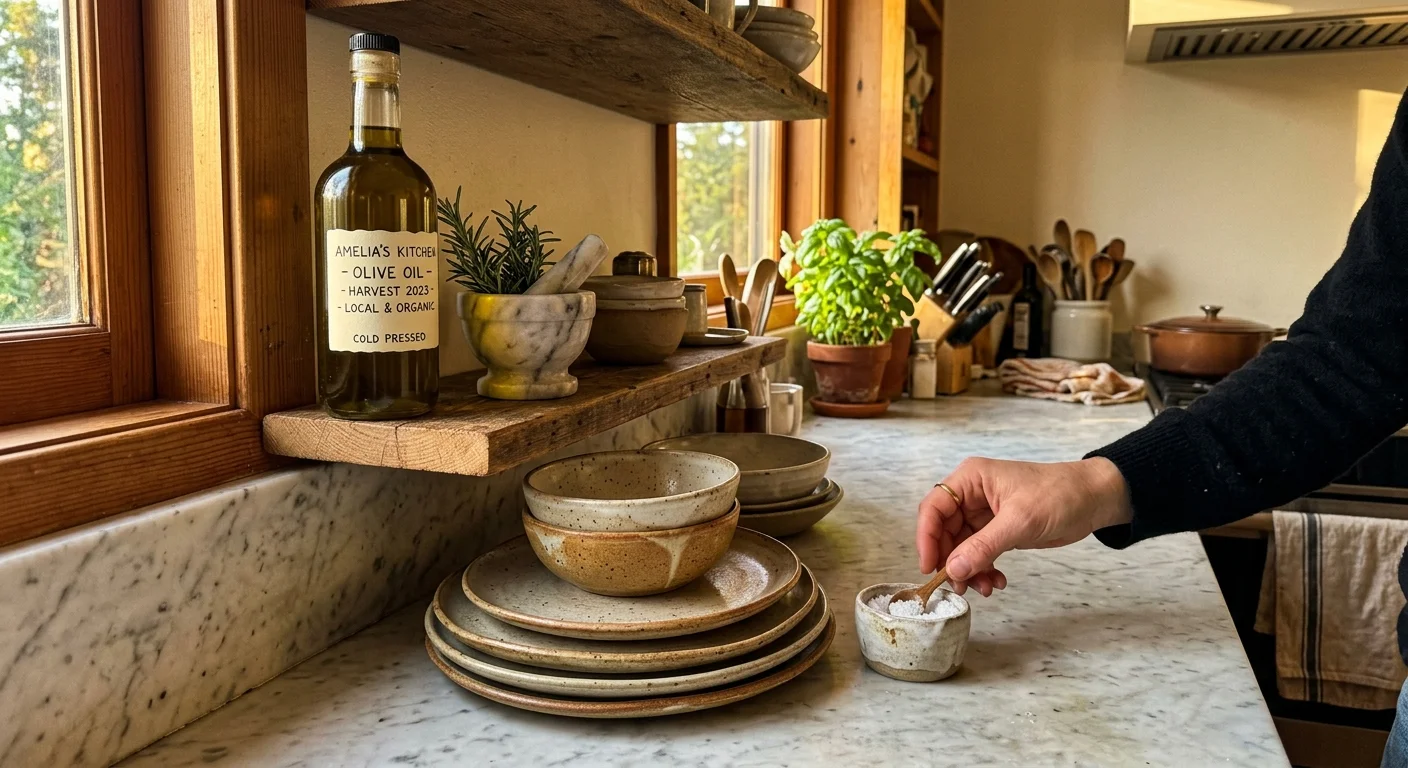
When styling open kitchen shelves, pure ornament can sometimes feel impractical or disconnected from the space. Modern design trends merge utility with elegance by showcasing functional kitchen objects that display exceptional craftsmanship and authentic provenance. Grouping everyday items into artistic vignettes elevates daily cooking routines into aesthetic design moments.
Instead of hiding your essential tools inside closed cabinets, curate a functional cluster featuring a solid marble mortar and pestle, a hand-carved olive wood salt cellar, and poured glass bottles of single-origin olive oil. Arrange these practical tools alongside stacked, hand-thrown stoneware plates and artisanal ceramic cups. This approach ensures every object earns its place on your shelf, eliminating unnecessary trinkets while keeping your primary culinary tools within easy reach.
Trend #6: Strategic Verticality and Horizon Layering
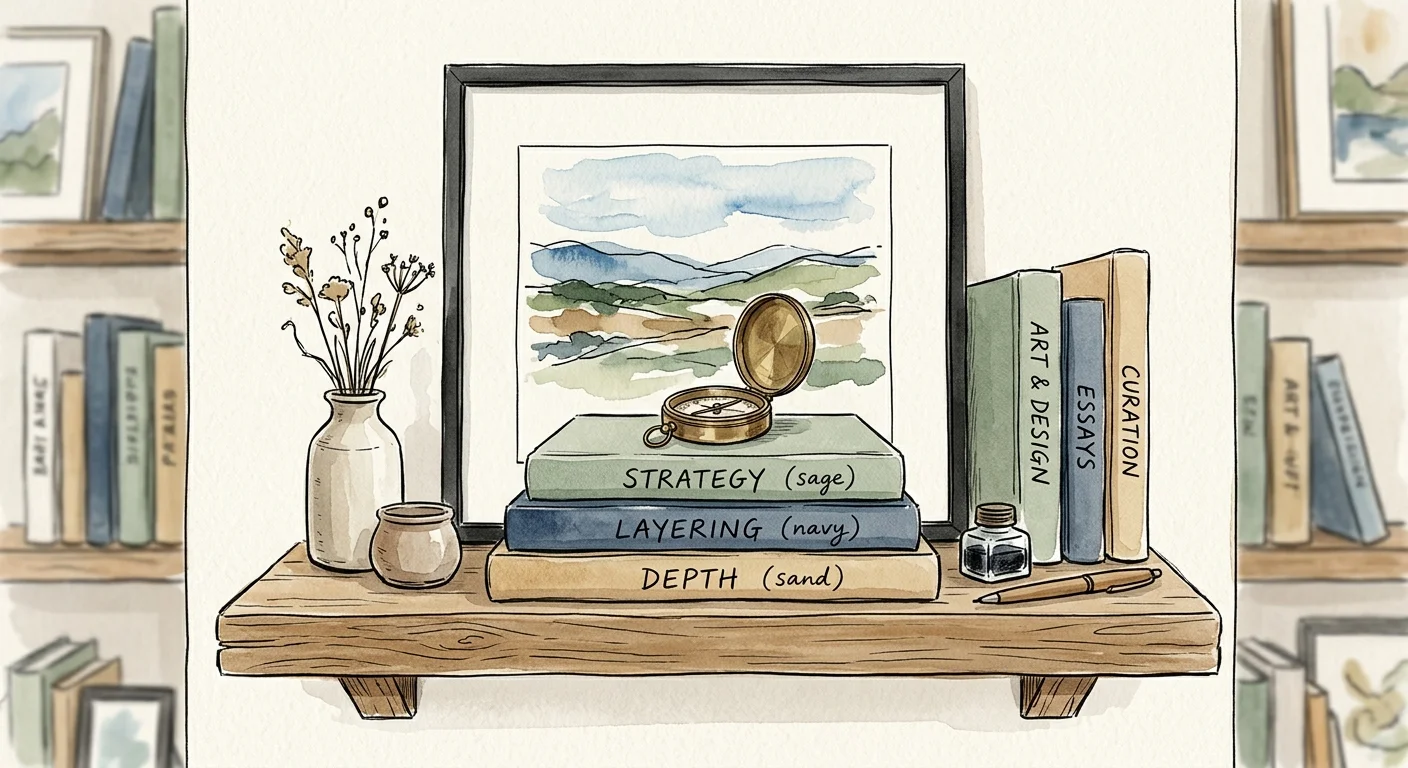
Placing objects in a single flat line creates a monotonous, two-dimensional look that often appears messy. You can solve this by mastering vertical stacking and horizontal front-to-back layering. Build foundational anchor points by stacking heavy design books horizontally, using them as elevated pedestals for smaller treasures like brass decorative boxes or small carved marble spheres.
Layering objects from back to front establishes dramatic depth on deep shelf ledges. Lean a framed minimalist sketch or textured abstract art print directly against the back wall, then overlap it slightly with a lower, rounded ceramic bowl positioned in front. This overlapping technique connects vertical and horizontal planes seamlessly, turning isolated objects into a unified, editorial display that draws the eye deep into the shelf alcove.
Trend #7: Architectural Lighting Integration
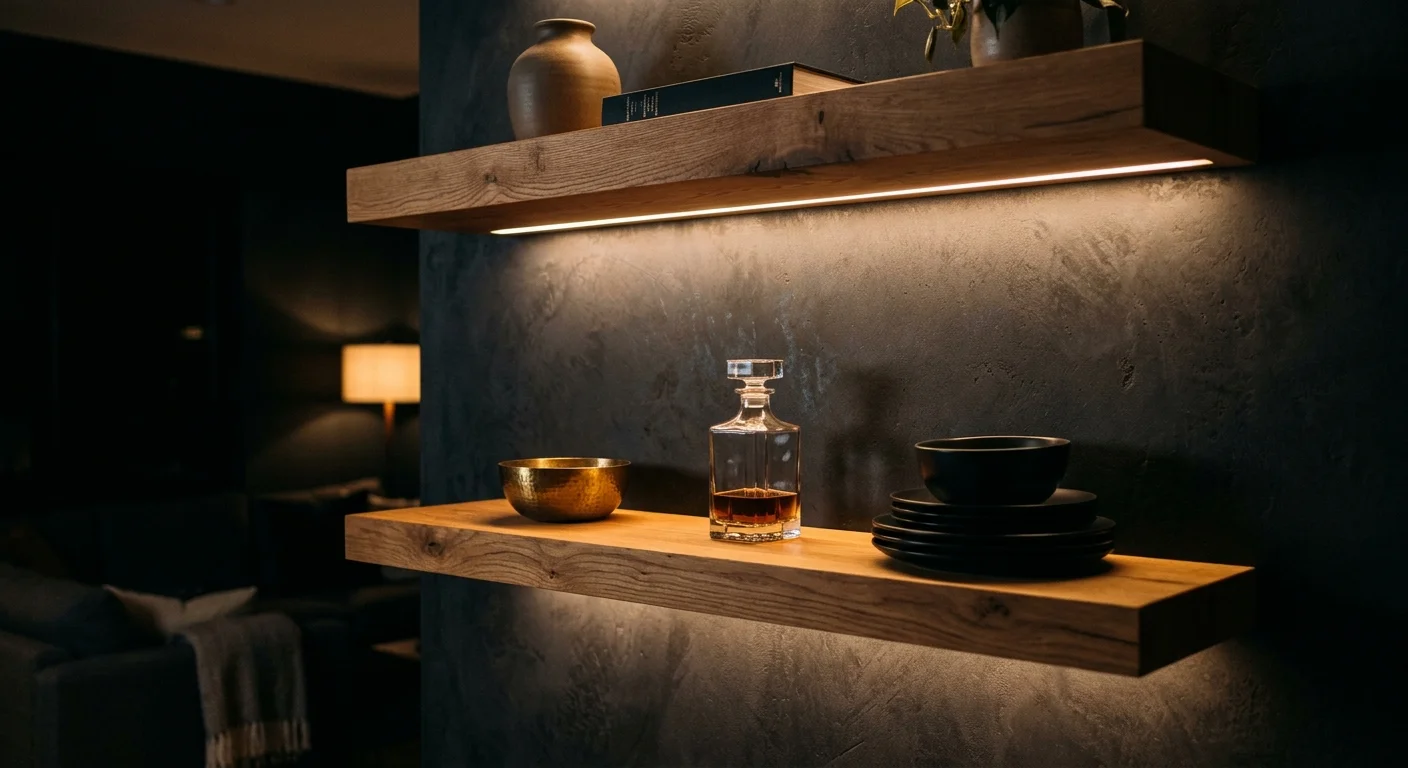
Lighting dictates how open shelving is perceived within a room’s spatial layout. Poor ambient lighting leaves shelves casting dark, muddy shadows that make even curated displays look chaotic and unkempt. Integrating concealed architectural lighting transforms open ledges into luminous floating features that radiate modern sophistication.
Install ultra-slim, warm-toned LED light strips—ideally set to a warm 2700K color temperature—into routed channels along the undersides of your shelves. This hidden illumination casts a soft ambient glow downwards, highlighting subtle wood grains and accentuating the silhouettes of displayed ceramics. For a flexible alternative in dining rooms or living spaces, place wireless rechargeable accent lamps or small sculptural lighting fixtures directly onto wide shelf ledges to create cozy focal points.
Trend #8: Biophilic Elements and Organic Forms
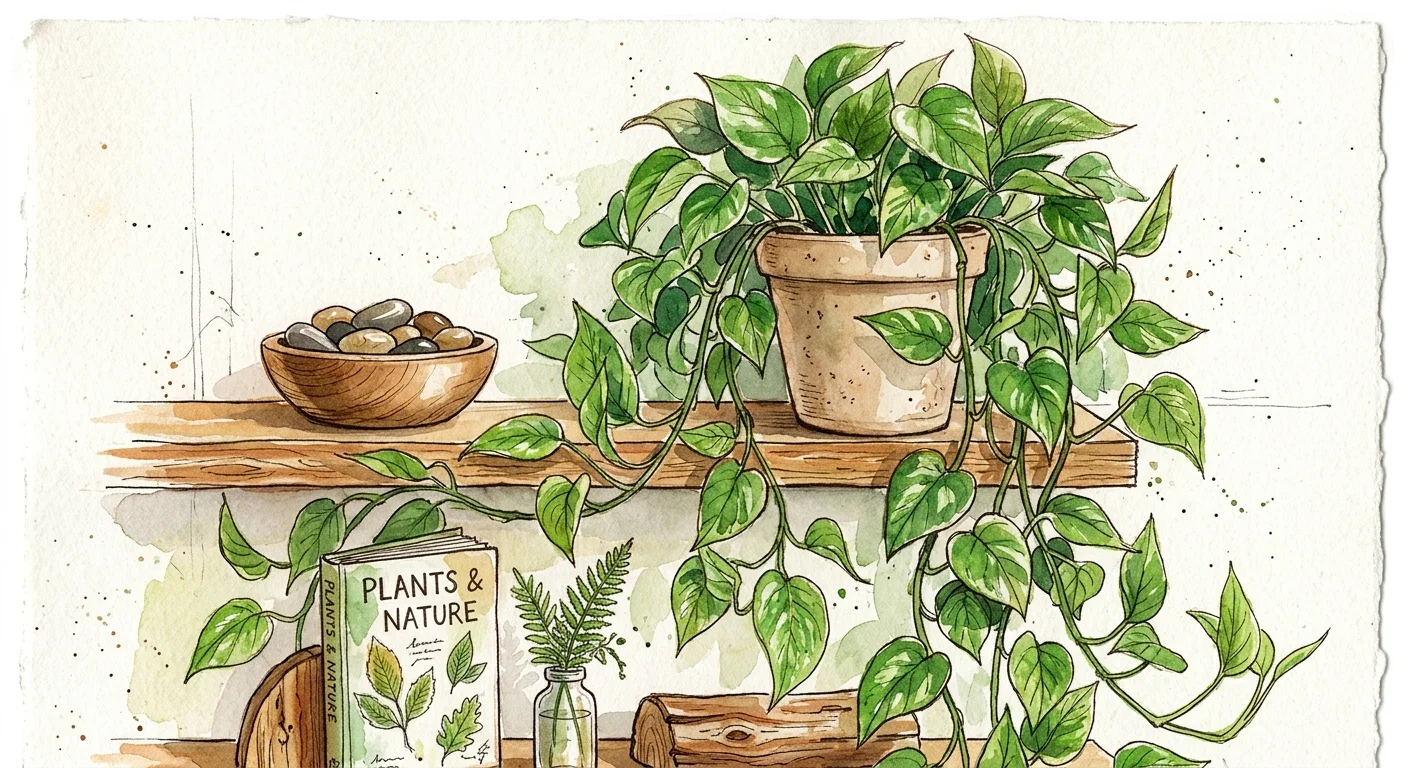
Hard architectural lines, straight shelf edges, and structured ceramic forms benefit immensely from the softening presence of biophilic design. Introducing organic forms and living plants breaks up rigid linear geometries and adds vibrant movement, making organizing open shelves feel effortless, living, and inviting.
Select trailing houseplant varieties—such as satin pothos, string of hearts, or cascading ivy—and position them on upper shelves to allow green foliage to drape gently over edge lines. Balance these delicate vines with structured, broad-leaf plants or dried botanical stems like eucalyptus arranged in heavy stone vessels. Natural greenery introduces soft curves, grounding your shelving arrangement with rich biological texture and refreshing color.
Trend #9: Curated Concealment with Woven Vessels
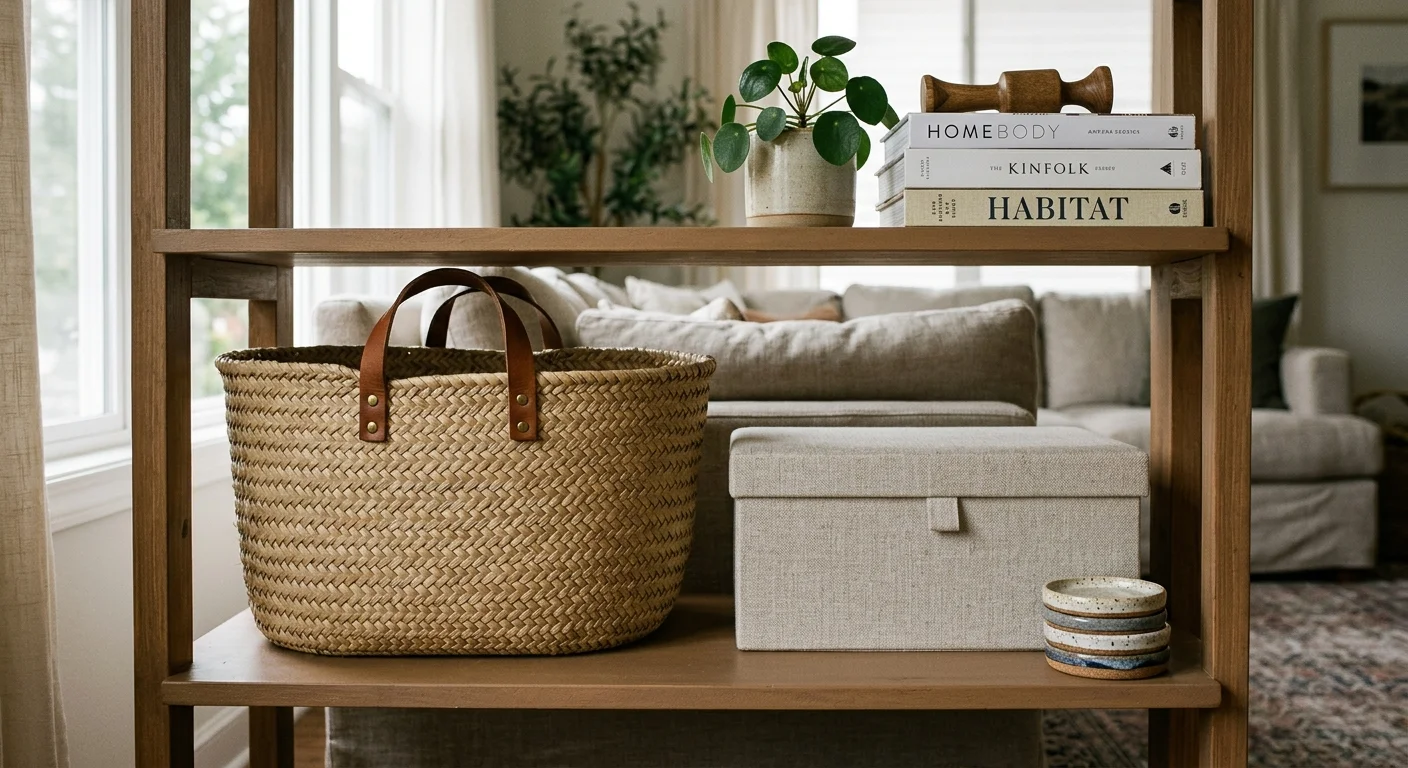
Not every functional household item possesses the aesthetic qualities required for open display. Open shelving systems in living rooms, entries, or kitchens quickly accumulate small everyday items like spare charging cables, matches, tea tins, and loose hardware. Applying the principle of curated concealment allows you to maintain sleek, uncluttered displays while storing necessary items close at hand.
Incorporate high-end woven storage containers, hand-sewn leather storage boxes, or lidded stone canisters on lower or middle shelf tiers to discreetly tuck away functional items. Choose storage baskets crafted from natural woven rattan, seagrass, or dark felt that complement the textural narrative of your room. This technique converts messy miscellaneous objects into clean, geometric forms that anchor your shelving structure visually.

Trend #10: The Sculptural Hero Object
Designers frequently advocate for including a hero object—a single, extraordinary statement piece that draws immediate focus and defines the character of the entire arrangement. Rather than populating every shelf tier with multiple small trinkets, dedicate one prime shelf location to a single large-scale sculptural piece, such as an oversized ceramic vase, an antique bronze statue, or an expressive piece of carved driftwood.
Surround this hero object with generous negative space to emphasize its form, material quality, and visual importance. By anchoring your open shelving unit around one commanding focal point, you establish a clear visual hierarchy that instantly organizes the remaining shelves. This practice embraces the ethos of quiet luxury, proving that one well-chosen, high-impact piece possesses far more presence than a dozen smaller decorative fillers.
The Big Picture: Weaving These Trends into Your Home
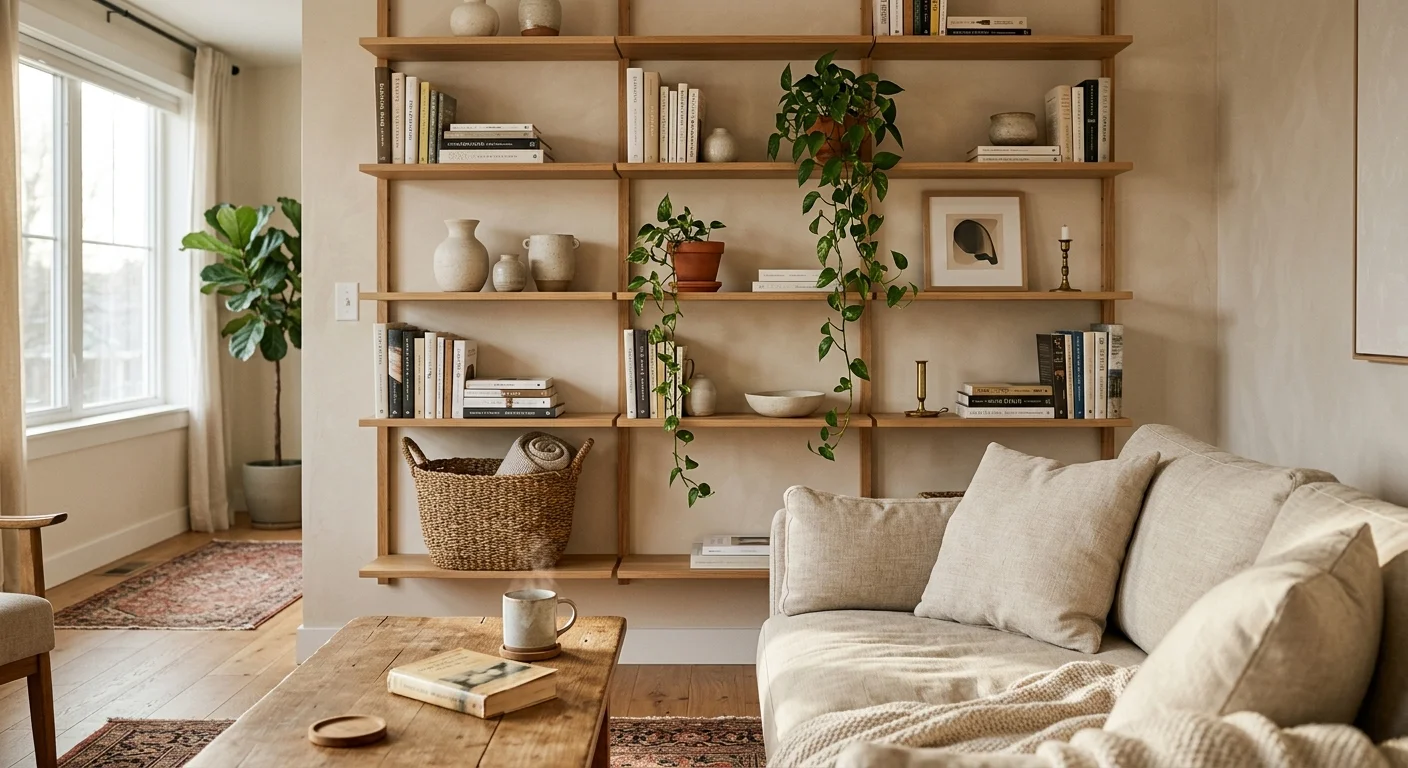
Styling open shelving without visual clutter requires a thoughtful balance between functional storage and curated artistic display. By blending negative space, tonal color discipline, dynamic vertical layering, and tactile material choices, you can turn plain shelves into elevated architectural statements. The goal is not to create a sterile showroom, but rather to craft an authentic, serene reflection of your personal lifestyle and aesthetic taste.
Begin your styling process by clearing every shelf completely to evaluate your space with fresh eyes. Group your collected items by tone and size, select your hero object, and build out functional vignettes before editing away unnecessary elements. Retain only what brings joy, serves daily utility, or provides genuine textural beauty. Through deliberate restraint and artistic balance, your open shelves will serve as an elegant visual anchor in your home for years to come.
For the latest color forecasts, consult industry leaders like Pantone and paint companies like Benjamin Moore. For professional design standards, refer to the American Society of Interior Designers (ASID).
Disclaimer: This article reflects design trend analysis and predictions. Personal taste and timeless design principles should always guide your decorating choices.
Frequently Asked Questions
How do I keep open kitchen shelves from looking messy over time?
Maintain clean open kitchen shelves by applying a strict one-in, one-out policy whenever you purchase new kitchen accessories or tableware. Stick to a restricted color scheme and store everyday items—like daily coffee mugs or dinner plates—on lower shelves where they move in and out of use constantly. Keep seasonal or secondary items inside enclosed cabinetry or within closed woven baskets on the shelving unit to keep dust and visual clutter to a minimum.
What is the golden rule for decorating open shelf arrangements?
The golden rule for decorating open shelves is editing. Interior designers frequently advise that once you finish styling a shelf, you should remove at least one or two items to allow remaining objects space to breathe. Balancing active display items with at least thirty percent empty negative space prevents visual fatigue and ensures every curated item receives proper focus.
How can I mix wood tones and metal finishes on open display shelves without clashing?
Mix wood tones and metal finishes by choosing one dominant metal finish, such as matte black or brushed brass, and repeating it at least twice across different shelf tiers. When combining wood tones, contrast dark timber shelves with lighter pale wood bowls or ceramic vessels to create deliberate balance rather than near-matches that look like accidental mistakes.
Are open shelves still trendy in high-end modern interior design?
Yes, open shelves remain a timeless design element in modern interior design, especially within quiet luxury and warm minimalist aesthetics. Today’s trend leans toward thick floating ledges, integrated lighting, raw stone materials, and minimal, highly curated displays that prioritize craftsmanship and spatial breathing room over densely packed storage.