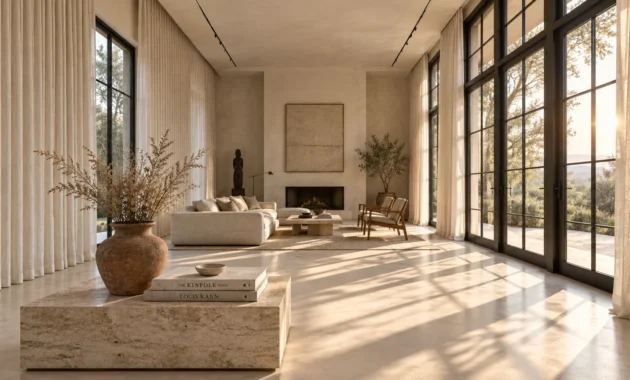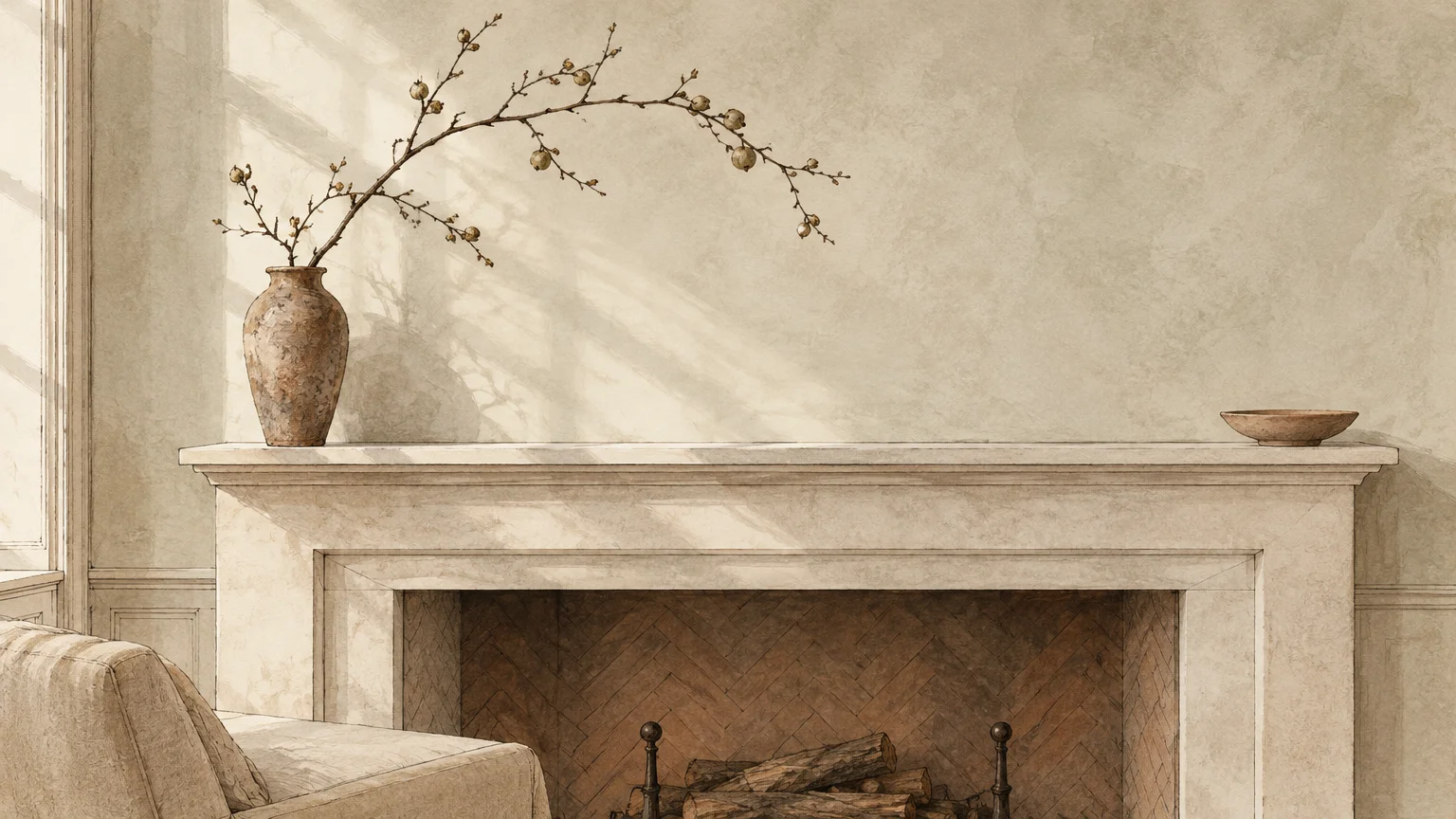
A fireplace mantel anchors your living space, yet it easily succumbs to visual clutter and dated design tropes. Mastering the art of understated curation instantly elevates your room from chaotic to architecturally refined.
When you style a mantel with intentional restraint, every object commands attention and tells a cohesive story. You do not need an abundance of accessories to make an indelible aesthetic impression.
Contemporary mantel decorating ideas celebrate breathing room, organic forms, and thoughtful architectural balance over mindless accumulation. Here is how you achieve an editorial look that feels authentic, timeless, and effortlessly composed.
Trend #1: Asymmetric Balance and Visual Weight
Symmetrical arrangements often feel rigid and predictable in modern living spaces. Embracing an off-center layout creates dynamic tension that immediately draws the eye across the hearth.
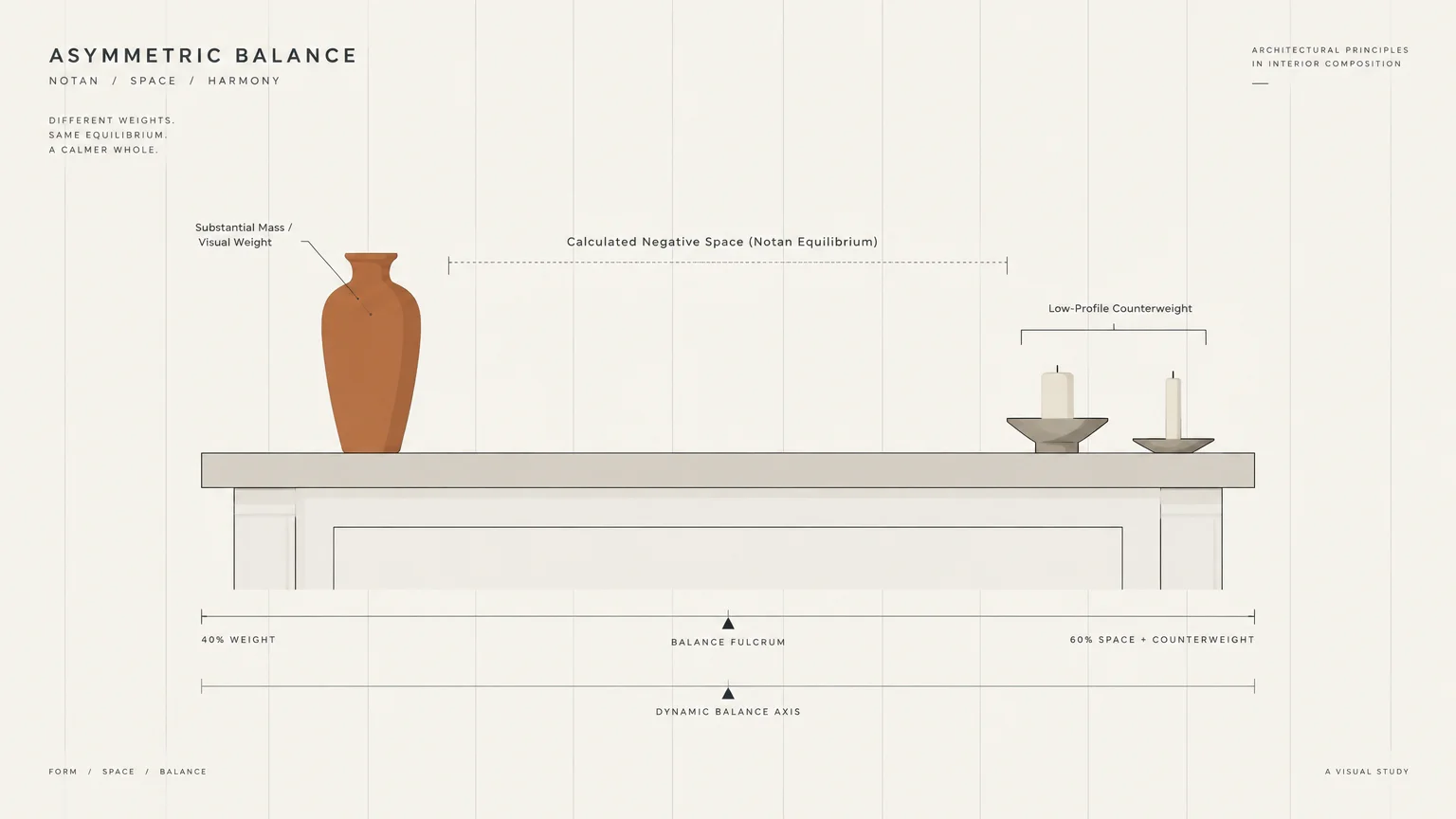
To execute this concept, place a substantial piece of art or an oversized ceramic vessel on one side. Balance that physical weight on the opposite side with negative space or a much smaller textured accent.
This approach honors the Japanese aesthetic of notan, where light and dark or mass and void work in dynamic equilibrium. It moves away from mirror-image decor toward deliberate, relaxed sophistication.
Pair a tall, textured earthenware jug with two low-profile candle holders placed several inches away. The resulting composition feels curated over time rather than staged in an afternoon.
Use matte finishes and unglazed surfaces to keep the focus entirely on the silhouette. If your fireplace surround feels visually heavy, this calculated imbalance restores fluid visual movement.
Remember that the eye naturally seeks harmony. By distributing visual interest rather than identical objects, you achieve an effortless, high-design atmosphere.
Trend #2: Monolithic Stone and Textural Restraint
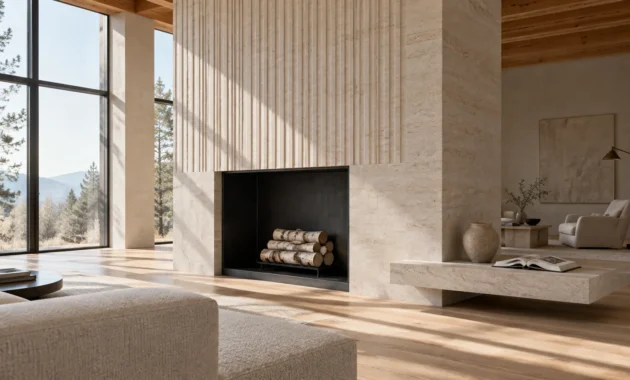
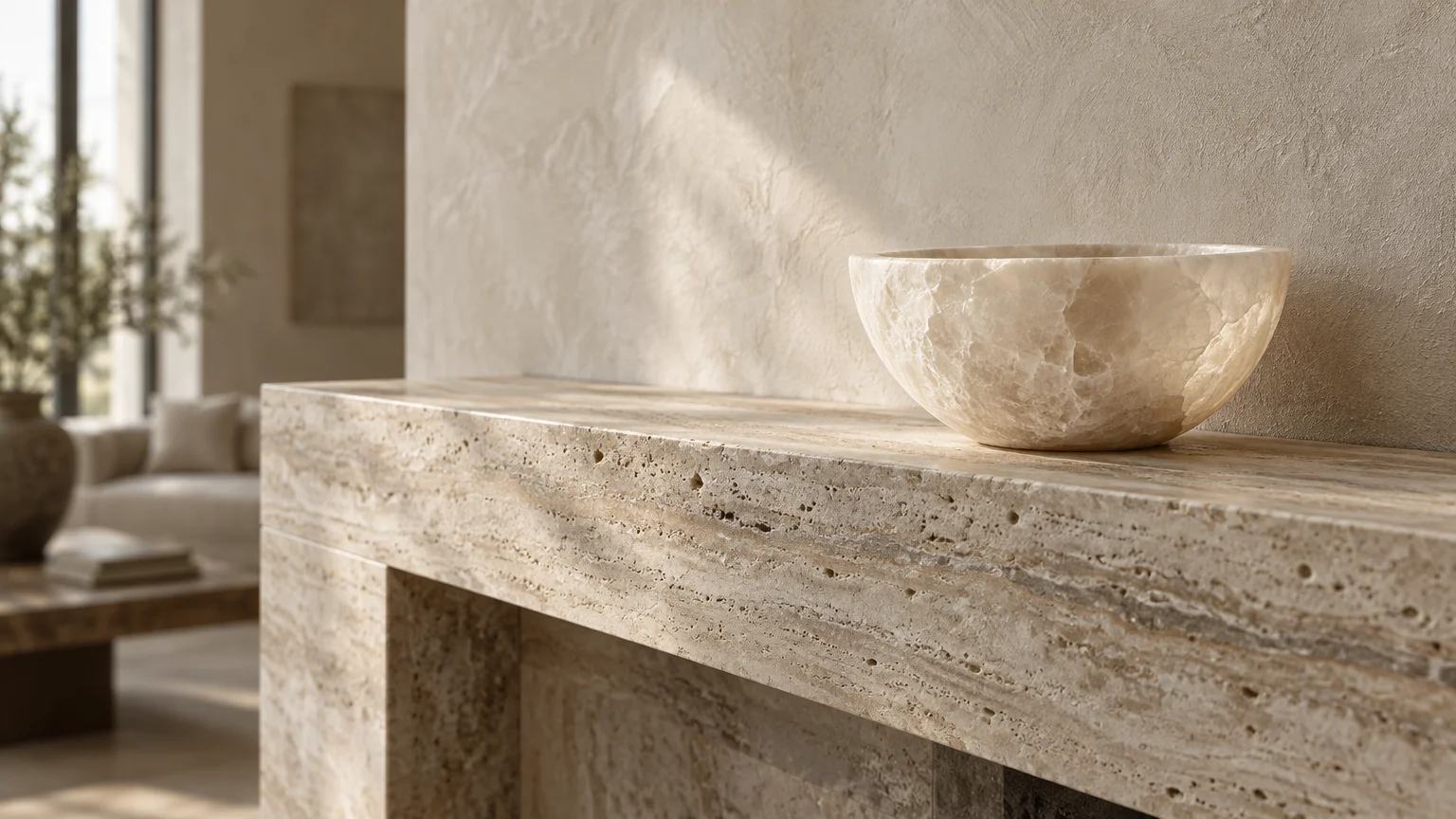
Contemporary interiors increasingly treat the fireplace surround and mantel shelf as a single architectural sculpture. Using seamless travertine, soapstone, or fluted limestone eliminates the need for surface-level decoration.
When your mantel boasts rich tactile character, excessive trinkets only detract from the stone’s natural veining. Let the raw material itself serve as the primary focal statement in your room.
If you decide to add objects, select pieces carved from contrasting natural minerals or unpolished marble. A single solid alabaster bowl creates functional utility without breaking the quiet luxury aesthetic.
Keep your color palette strictly neutral, drawing tones directly from the stone’s subtle fissures. Warm creams, dusty grays, and muted taupes preserve the hearth’s monolithic integrity.
By prioritizing texture over quantity, you create a minimalist mantel that commands respect through material presence alone. This restraint invites viewers to appreciate craftsmanship over decorative excess.
Pair this stone focus with limewash walls to soften the boundary between architecture and decor. The subtle mineral textures will elevate the entire room without requiring additional knickknacks.
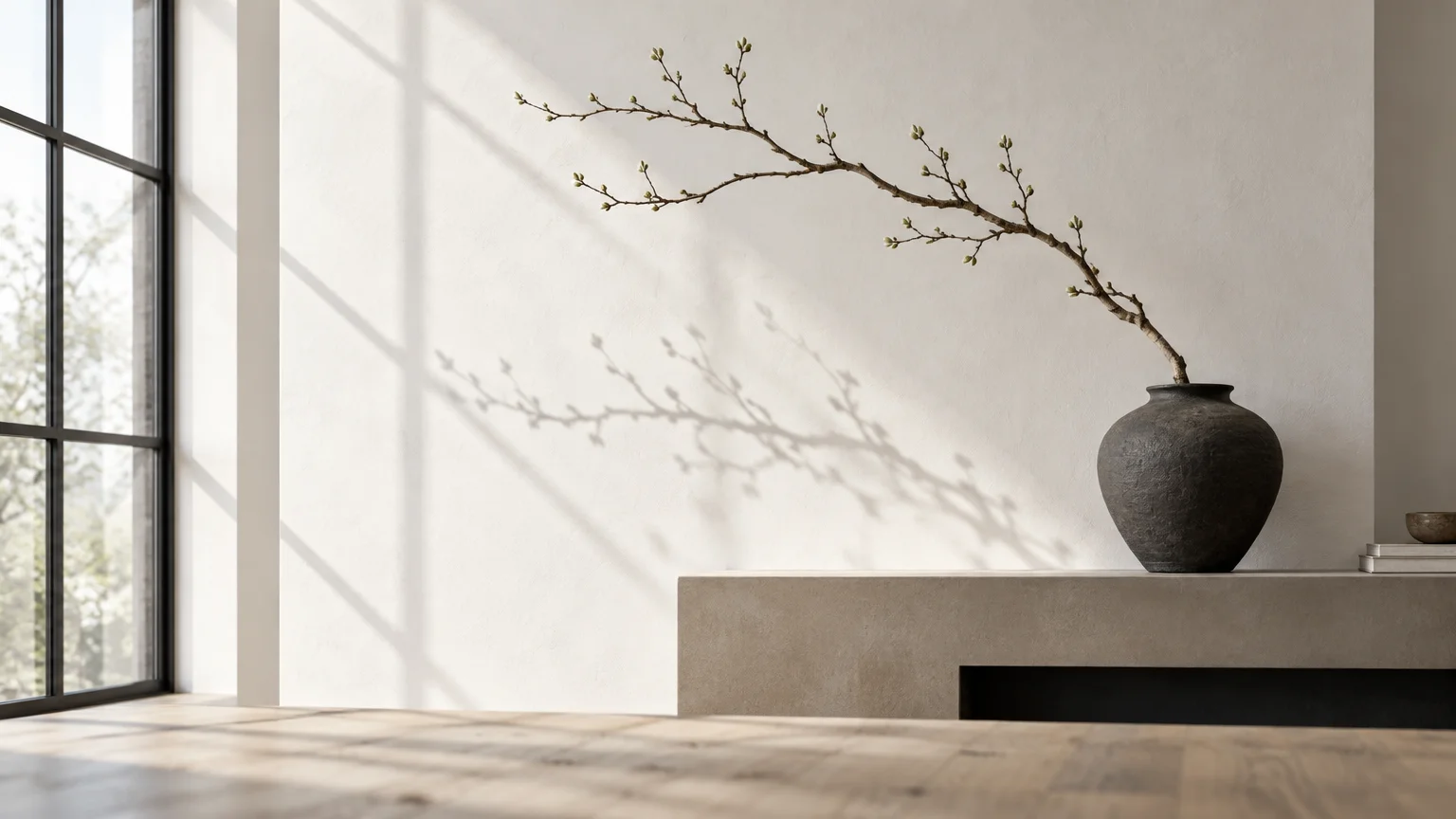
Trend #3: Sculptural Flora and Biophilic Branches
Dense floral arrangements often look overly formal and crowd the mantel shelf. Instead, modern designers favor solitary architectural cuttings that celebrate natural, imperfect silhouettes.
Consider a single, arching branch of quince, olive, or bare magnolia placed inside an earthen urn. The dramatic height draws your gaze upward, accentuating ceiling height without cluttering the surface below.
Biophilic design bridges the built environment with the organic world outside your window. A sculptural branch brings life, movement, and shifting shadows into your living space throughout the day.
Avoid symmetry by placing the branch vessel off-center, allowing the stems to drift gently across the wall. Leave the rest of the mantel completely bare to amplify the branch’s graphic lines.
Refresh the cutting seasonally to maintain relevance without purchasing disposable plastic decor. In winter, bare branches offer striking geometric clarity; in spring, tender buds signal quiet renewal.
Choose heavy stone or unglazed ceramic vessels that provide adequate counterweight for tall branches. This ensures your arrangement remains structurally stable while looking entirely natural.
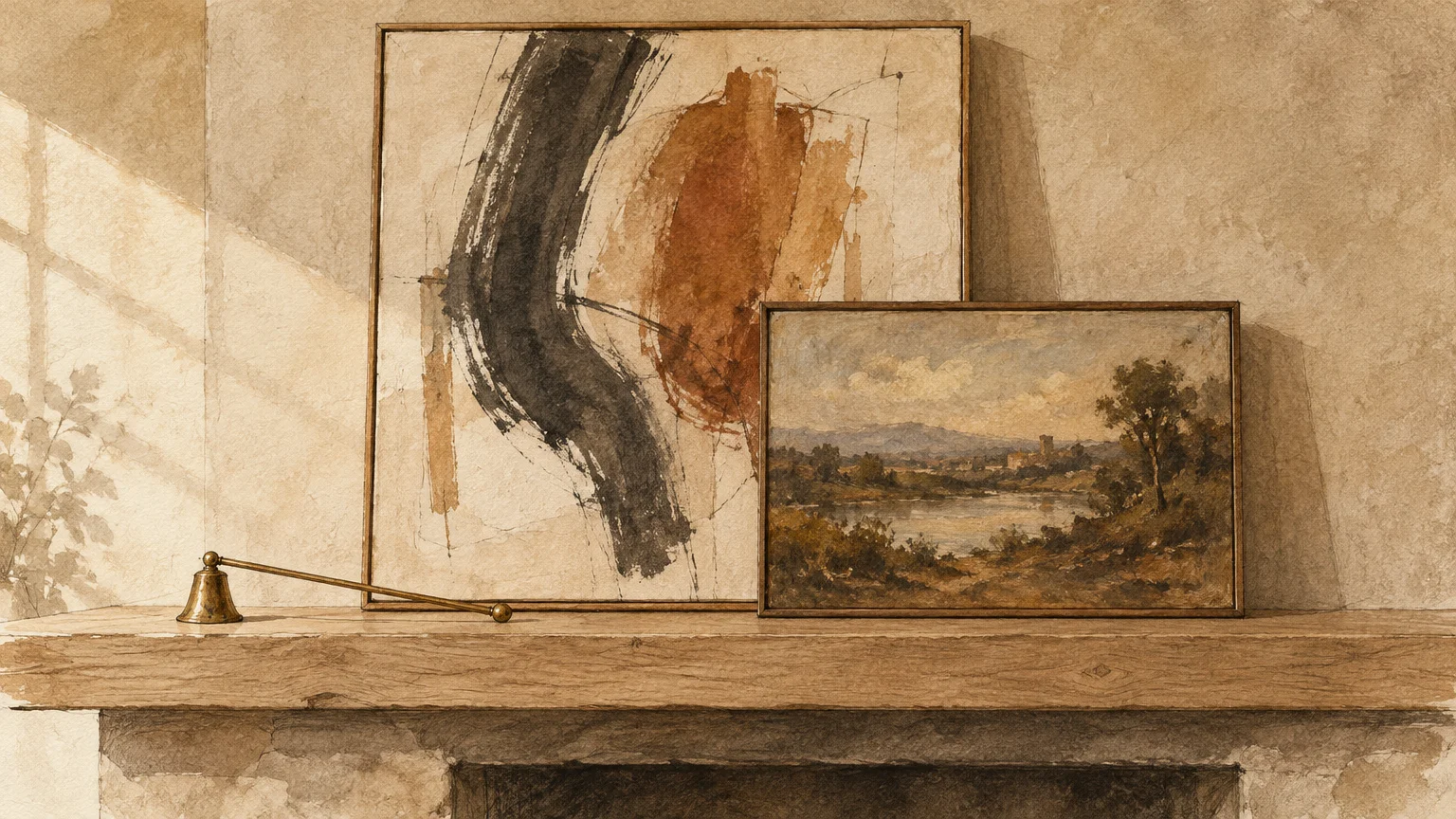
Trend #4: The Curated Gallery Lean
Hanging art perfectly centered above a mantel can sometimes feel stiff and clinical. In contrast, casually leaning framed canvases introduces an effortlessly chic, atelier-inspired ambiance.
Layering one smaller painting slightly over a larger framed photograph establishes depth without demanding physical space. Make sure the frames contrast subtly, such as thin black metal paired with raw oak.
This technique prevents unnecessary nail holes in delicate plaster or heritage stone walls. It also affords you the flexibility to rotate art as your personal collection evolves.
Select artwork with restrained palettes and generous matting to keep the vignette feeling calm. Abstract wash paintings, line drawings, and monochromatic photography blend seamlessly into this format.
Anchor the resting frames with discreet adhesive pads on their bottom edges to protect the mantel surface. This detail prevents slippage while ensuring pristine condition for your woodwork.
Limit your display to two overlapping pieces to prevent visual chaos. Over-layering quickly transforms a sophisticated lean into an untidy storage ledge.
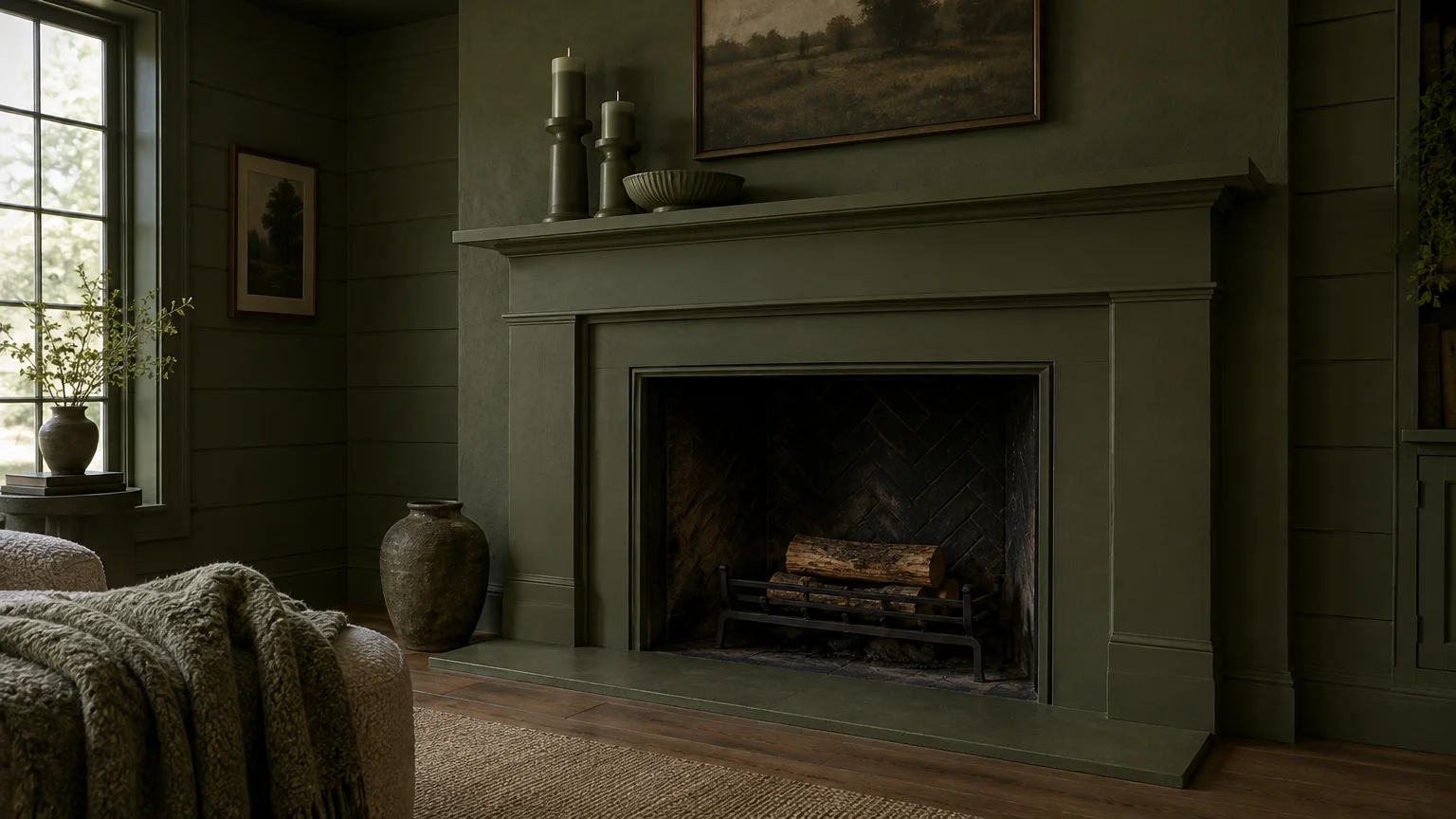
Trend #5: Tonal Color Drenching and Material Camouflage
Color drenching extends a single paint hue across walls, trim, millwork, and the mantelpiece. This enveloping technique blurs structural boundaries, making smaller living rooms feel remarkably expansive.
When the mantel shares the exact pigment of the wall behind it, the architectural structure transforms into an elegant shadow box. Accessories placed here should whisper rather than shout.
Style the shelf with objects rendered in the same chromatic family for an ethereal, tonal look. For instance, pair terracotta vessels against a rich rust backdrop, or cream ceramics against warm plaster.
Vary the sheens of your objects to build subtle contrast without introducing loud colors. Matte chalkware, glazed stoneware, and soft brushed metal reflect light differently across a monochromatic plane.
This approach strips away visual static and highlights pure form. It provides an ideal solution when you want a rich, moody hearth without overwhelming visual clutter.
Select deep, contemplative colors like slate blue, olive drab, or warm charcoal for a dramatic effect. These deep shades recede visually, creating an intimate and cozy environment.
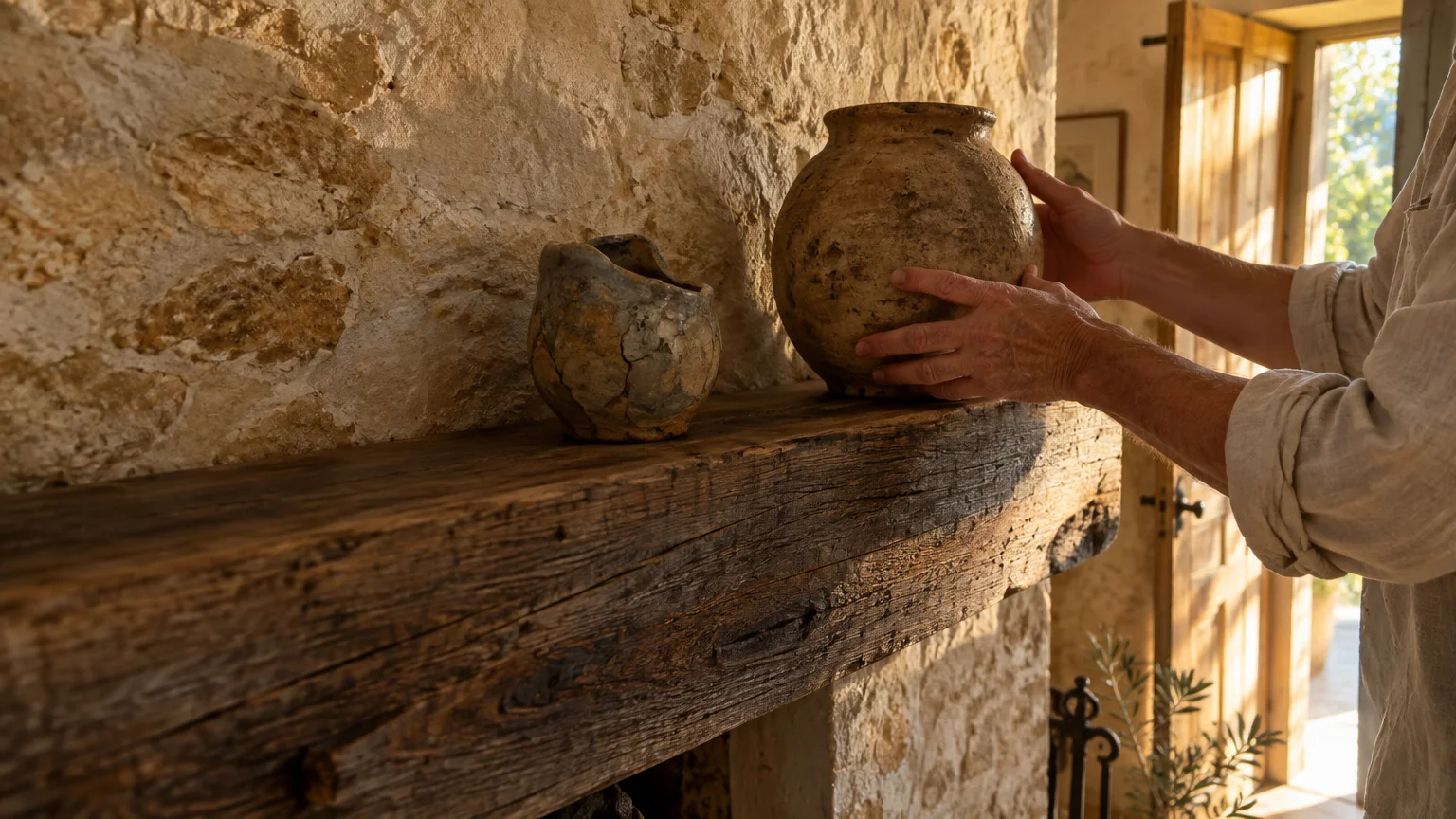
Trend #6: Antiquated Vessels and Wabi-Sabi Ceramics
Mass-produced home accessories often leave a space feeling sterile and impersonal. Design aficionados now seek antique vessels, weathered pots, and wabi-sabi ceramics that showcase authentic provenance.
A single ancient olive jar or an unglazed vessel with natural patina introduces soulful warmth. Its irregular contours and weathered glaze tell an enduring story that modern decor cannot replicate.
Grouping vessels in strict pairs reduces their impact; instead, display one commanding relic alone or alongside a smaller companion. Allow the imperfections, rough textures, and mineral blooms to be the focal points.
Earthy tones such as ochre, charcoal, and warm clay ground your fireplace mantel decor. These natural pigments harmonize effortlessly with hardwood flooring and woven natural rugs.
Resisting the urge to fill these vessels with artificial stems keeps the overall look authentic and grounded in historic integrity. The empty opening emphasizes form and historical craftsmanship.
Source authentic pottery from local vintage markets, salvage yards, or independent ceramic artisans. Authentic handcrafting instantly elevates your mantel above mass-market commercial interiors.
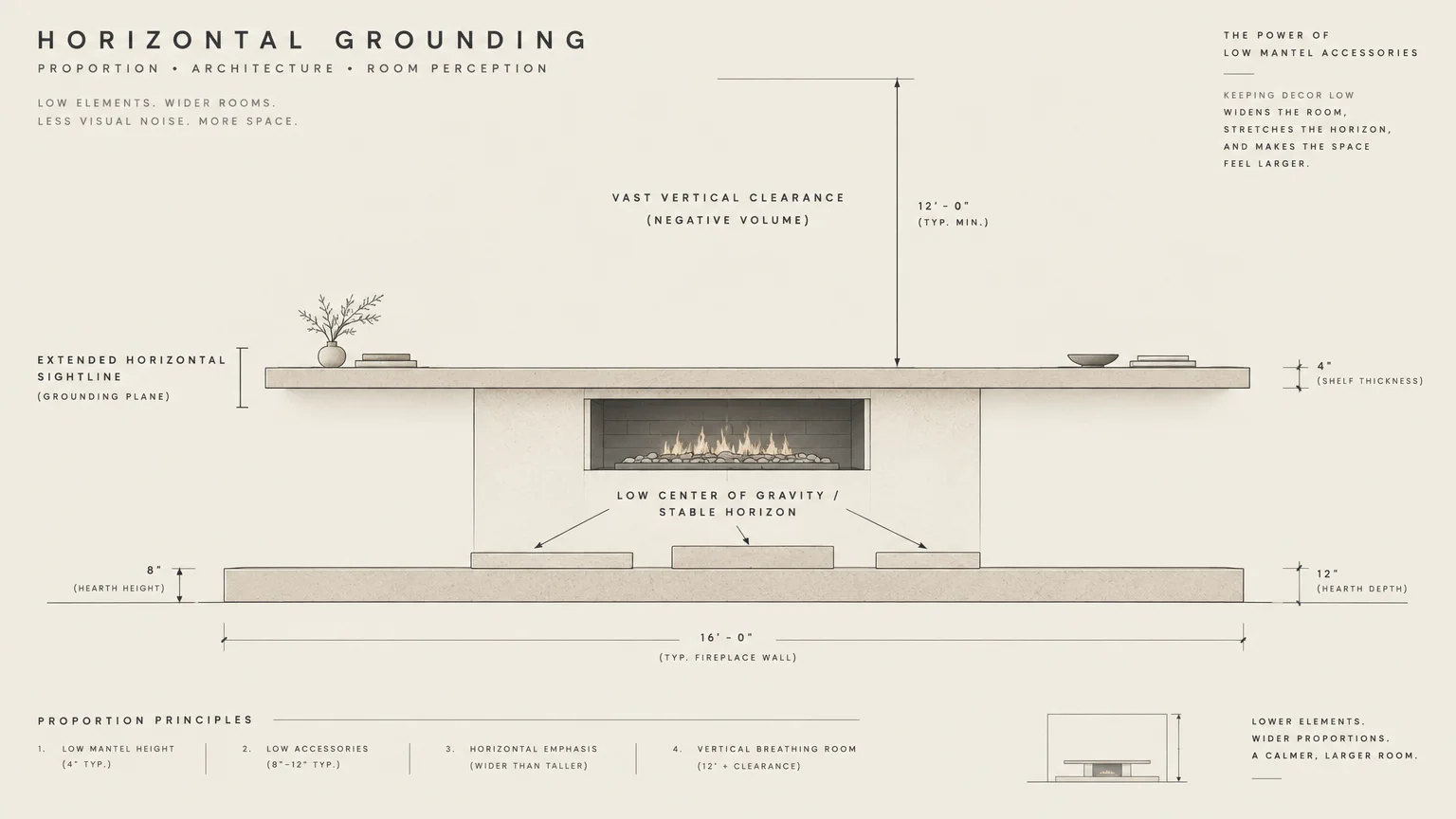
Trend #7: Low-Slung Geometry and Horizontal Grounding
While vertical elements draw the eye upward, horizontal styling fosters a tranquil, grounding sensation in your living room. Low-slung objects echo the horizontal plane of the mantel beam itself.
Arrange a sequence of low brass trays, shallow stone troughs, or carved wooden bowls along the shelf. These flat profiles maintain completely unobstructed sightlines across your room.
This method works exceptionally well below wall-mounted televisions or substantial architectural windows. It grounds the space below without competing with the primary focal point above.
Keep the heights uniform to create a rhythmic, calming cadence that soothes the senses. Introduce textural variation through hand-carved wood grains, cast iron, or brushed bronze finishes.
A low-slung arrangement feels modern, understated, and intrinsically connected to Japanese and Scandinavian design ideals. It proves that decoration does not need vertical dominance to feel complete.
Leave generous gaps between each horizontal object to preserve an airy, uncluttered feel. Three well-spaced shallow dishes make a stronger design statement than a solid row of items.
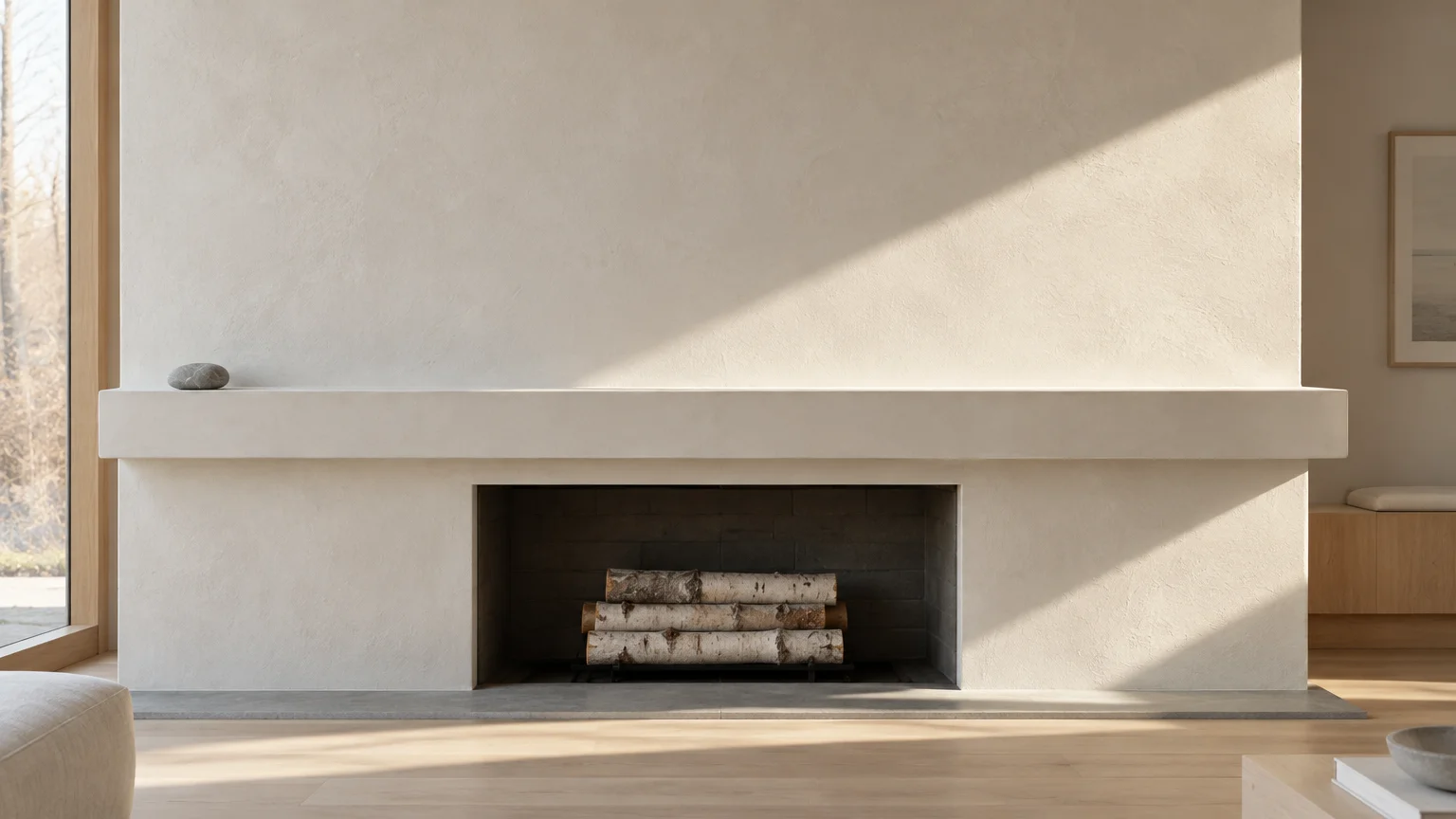
Trend #8: Negative Space as an Architectural Element
In interior architecture, what you leave empty matters just as much as what you fill. Treating negative space as an intentional design choice transforms your mantel into a study in restraint.
Resist the temptation to cover the entire length of the shelf from end to end. Dedicating at least sixty percent of the mantel to absolute emptiness lets the remaining pieces truly resonate.
Empty space provides a visual resting place, reducing cognitive fatigue and instilling a sense of calm. It accentuates the craftsmanship of your fireplace surround, whether hand-carved limestone or clean-lined plaster.
Place a single, perfect object—such as a cast bronze figurine or a sculptural marble block—on one side. The expansive bare surface surrounding it magnifies its artistic importance.
This radical simplicity epitomizes the quiet luxury movement, proving that confidence in interior design stems from knowing when to stop. True sophistication never screams for attention.
When friends and guests enter your home, their eyes will appreciate the tranquil pause that empty space provides. Minimalist styling invites calm introspection in an otherwise busy world.
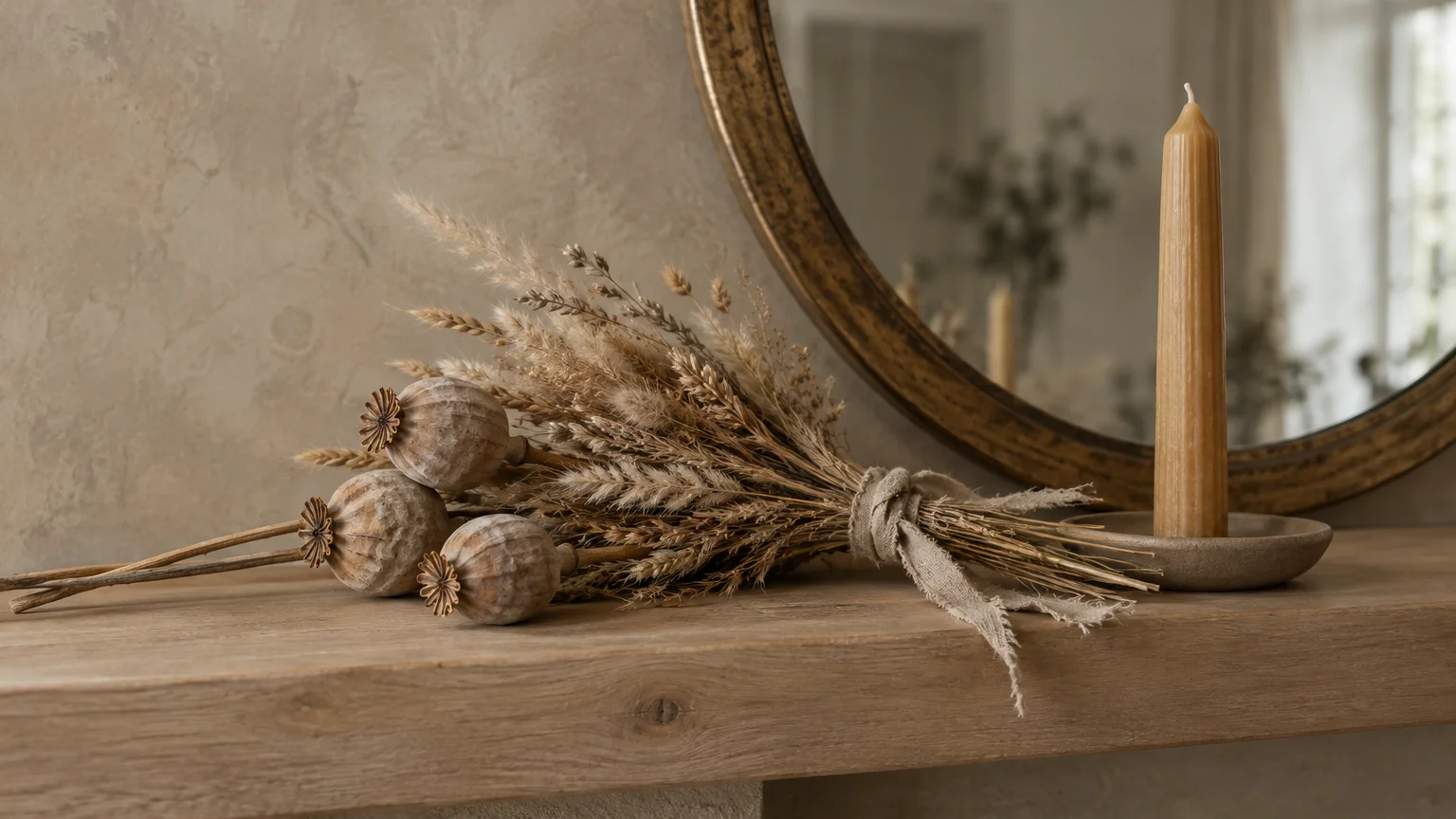
Trend #9: Understated Seasonal Layers and Organic Botanicals
Seasonal decorating frequently degenerates into an overabundance of plastic garlands and synthetic glitter. Modern holiday mantel styling instead embraces subtle organic touches and muted festive tones.
Ditch dense, wired pine ropes for a delicate, asymmetrical drape of real cedar or eucalyptus. Allow the foliage to pool gently on one side of the hearth for a relaxed, poetic drape.
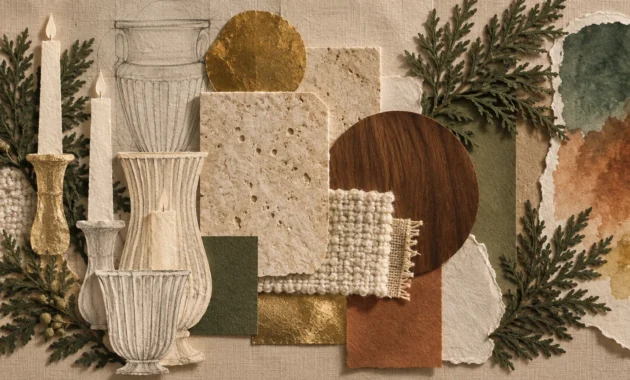
Integrate slender beeswax taper candles in understated iron holders to bring warm, flickering luminescence. Raw brass, unbleached linen ribbons, and dried citrus slices lend celebratory nostalgia without visual chaos.
Keep the seasonal palette authentic by pulling hues directly from nature—deep spruce green, muted cranberry, and warm honey. These organic tones feel sophisticated rather than commercial.
When the holiday concludes, removing these organic components leaves behind your clean, curated baseline without leaving your mantel feeling desolate. You transition effortlessly into the new year.
By relying on fresh botanicals rather than boxed decorations, your holiday mantel feels fresh and fragrant. It captures the spirit of the season through sensory authenticity.
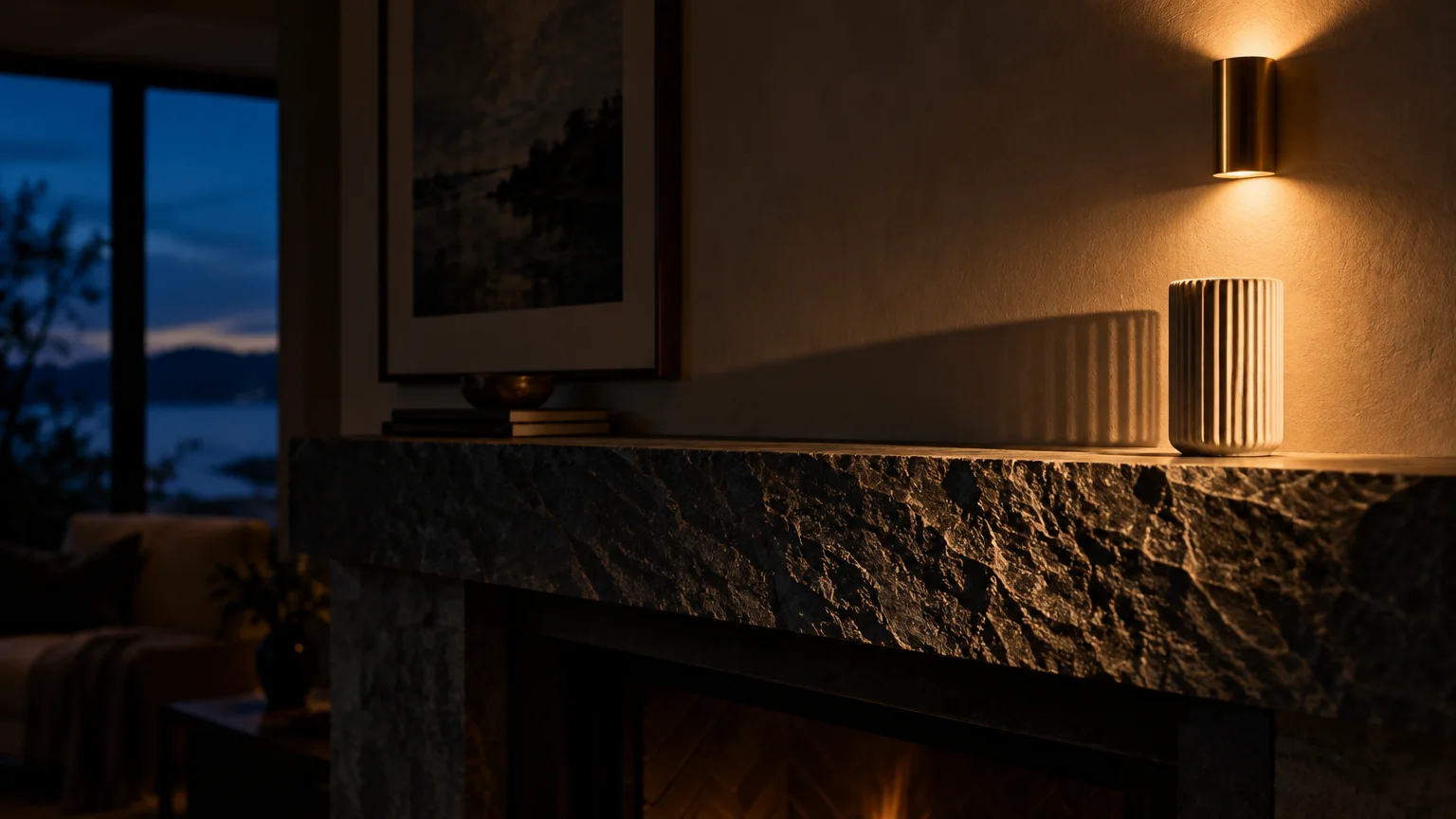
Trend #10: Architectural Lighting and Shadow Play
The objects on your mantel are only as compelling as the illumination that reveals them. Installing discreet, warm architectural lighting highlights textures and casts dramatic shadows across your hearth wall.
Consider hardwiring a pair of minimalist plaster wall sconces slightly above the mantel shelf. Plaster fixtures blend seamlessly into the wall finish while casting soft directional light upward and downward.
Alternatively, introduce cordless rechargeable picture lights or low-voltage puck lights hidden behind sculptural pottery. The indirect ambient glow adds moody layers of illumination as daylight fades.
Warm light with a soft golden hue flatters both natural stone and decorative ceramics. Avoid cool, harsh lighting, which makes living spaces feel sterile and uninviting.
When the lighting does the heavy aesthetic lifting, your mantel decor can remain exceptionally sparse while maintaining an inviting warmth. Illumination becomes an artistic medium in its own right.
Experiment with dimmers to adjust the mood between daytime clarity and intimate evening gatherings. Controllable illumination allows your minimalist fireplace mantel decor to adapt instantly to any occasion.
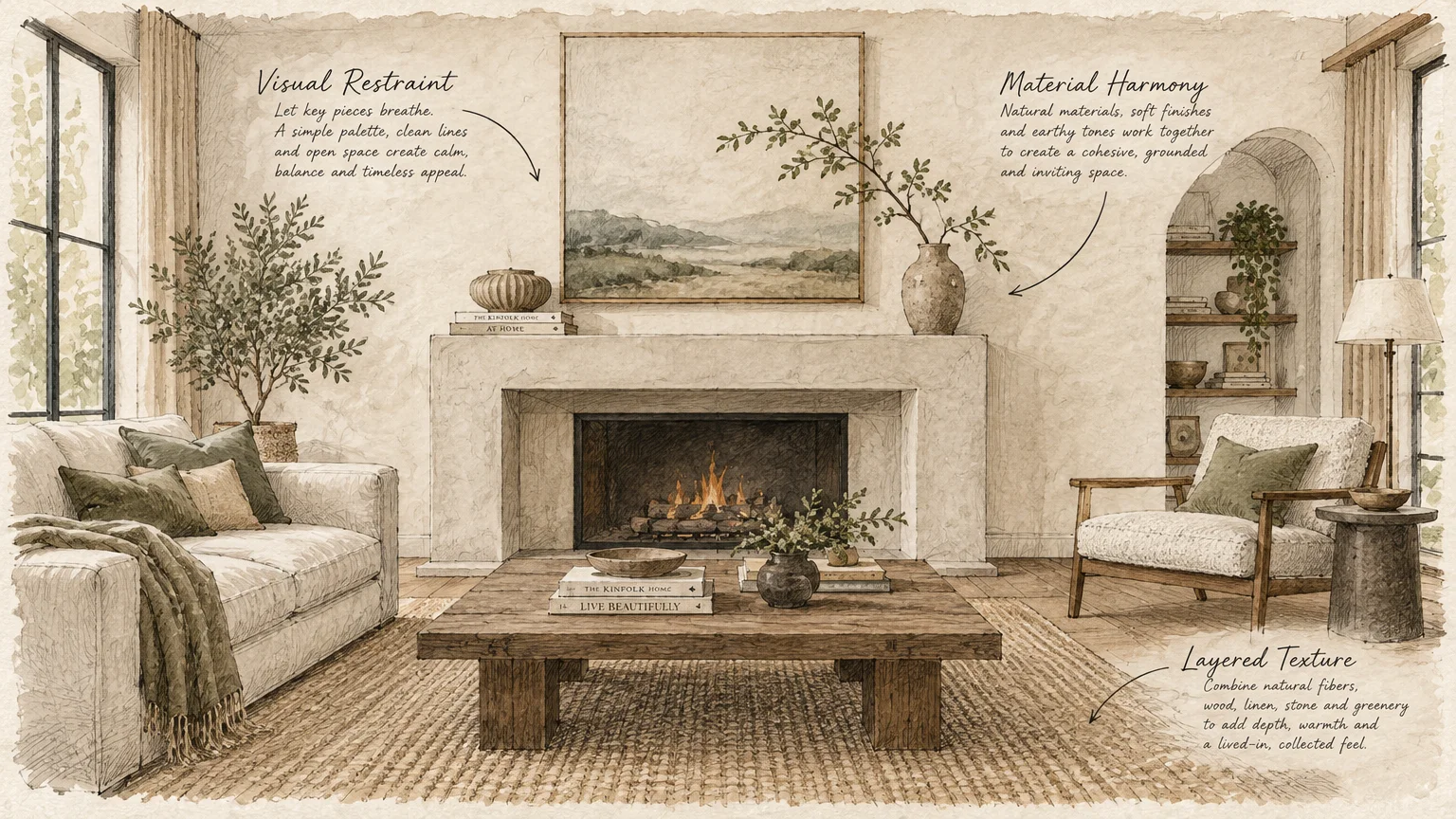
The Big Picture: Weaving These Trends into Your Home
Blending modern fireplace trends into your home requires an honest assessment of your existing architecture. Look at your ceiling height, hearth proportions, and natural light before purchasing new decor.
Start by stripping your mantel down to its bare surface. Living with an empty shelf for a few days recalibrates your visual palate and reveals the mantel’s true lines.
Select one primary concept from these trends to act as your design foundation, such as asymmetrical balance or tonal color drenching. Introducing too many concepts at once leads directly to clutter.
Layer in your personal artifacts with immense care. A vintage ceramic vessel discovered while traveling or an heirloom brass tray adds soulful narrative to a minimalist setting.
Consider how your mantel palette converses with adjacent elements like accent chairs, area rugs, and wall colors. Cohesion across the entire room ensures your fireplace feels integrated rather than isolated.
For the latest color forecasts, consult industry leaders like Pantone and paint companies like Benjamin Moore. For professional design standards, refer to the American Society of Interior Designers (ASID).
Treat your mantel as an evolving exhibition rather than a permanent shrine. Swapping an art print or trimming a seasonal branch keeps your home feeling dynamic and attuned to the passing year.
Frequently Asked Questions
How high should I lean artwork above the mantel?
When leaning art, the frame should sit directly on the mantel shelf and extend upward without overwhelming the ceiling line. Ensure the canvas height does not exceed two-thirds of the wall space above.
If you layer two pieces, overlap the smaller piece by no more than one-third of the larger frame. This proportions the composition gracefully while maintaining clear visibility of both artworks.
Can I style a minimalist mantel if I have a television mounted above it?
Yes, you can achieve an editorial look beneath a television by adhering strictly to low-slung, horizontal decor. Avoid tall vases, candlesticks, or branches that obstruct the television screen or create reflections.
Choose shallow stone trays, low wooden bowls, or horizontal art books placed flat on the shelf. This provides grounding texture without competing with the media screen.
How do I choose between symmetrical and asymmetrical mantel styling?
Architecture should guide your decision. Symmetrical styling complements strictly formal, classical rooms with traditional millwork and centered focal points.
Asymmetrical arrangements feel more modern, relaxed, and visually dynamic. If your fireplace surround is off-center or your room features eclectic furnishings, asymmetry creates natural balance.
What is the most common mistake people make when styling a mantel?
The most frequent error is overcrowding the shelf with too many small, unrelated decorative trinkets. Small knickknacks create visual static and cheapen the architectural presence of your fireplace.
Edit ruthlessly by replacing multiple small items with one or two substantial, high-quality pieces. Remember that negative space acts as a framing device, giving your objects room to breathe.
Disclaimer: This article reflects design trend analysis and predictions. Personal taste and timeless design principles should always guide your decorating choices.