A luminous carpet anchors your living room and elevates your entire interior aesthetic. When luxurious fibers lose their luster, routine cleaning habits are often the unsuspected culprits.
You can restore vibrant texture and rich depth by correcting common textile maintenance missteps. Thoughtful fiber preservation protects your design investment while reviving faded floor coverings.
Understanding how modern floor textiles interact with moisture, friction, and chemicals ensures lasting beauty. Here are ten carpet cleaning mistakes that dull your carpets and the expert methods to fix them.
Trend #1: Over-Saturating Fibers in Low-Profile Natural Weaves
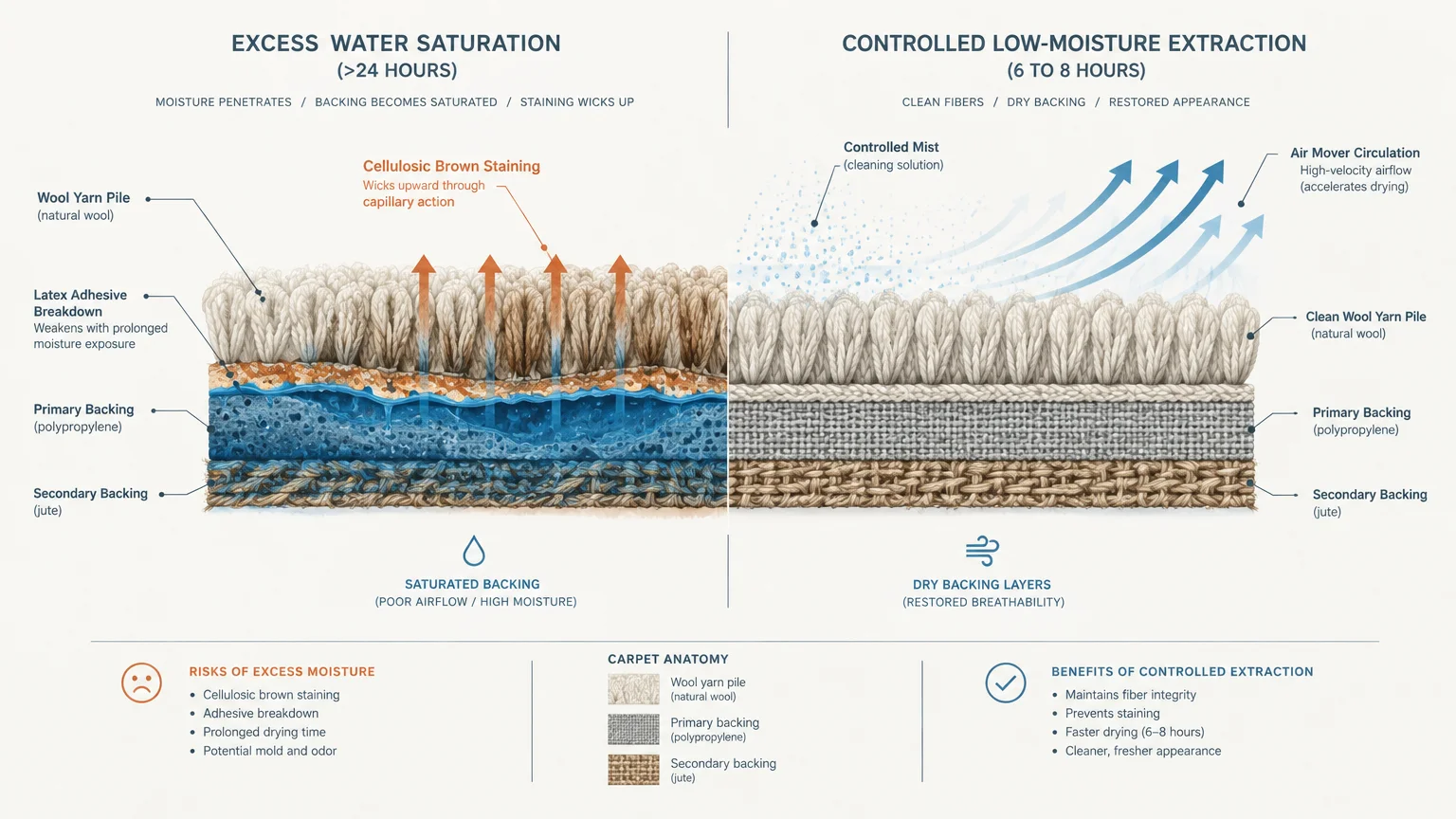
Saturating your woven flooring with excess water creates hidden moisture pockets beneath the surface. This heavy moisture traps grime against the backing, transforming vibrant yarns into a dull carpet.
Modern interior design celebrates organic textures like flat-weave wool, ribbed wool blends, and woven sisal. These artisanal materials showcase understated elegance; however, their cellular structure absorbs water like a sponge.
When moisture lingers beyond twenty-four hours, backing latex degrades and wicks dirt back to the tips. You lose the luminous, light-reflecting quality that defines fine floor coverings.
Excess water can also cause underlying jute backings to release brown cellulosic staining onto surface fibers. This discoloration clouds the crisp tonal purity of cream, sand, and stone color palettes.
To safeguard your investment, practice low-moisture extraction methods. Use controlled misting and high-velocity air movers so your flooring dries completely within six to eight hours.
Controlled hydration preserves fiber integrity while accentuating architectural shadows across your room. Your floors retain their fresh warmth without suffering water-induced discoloration.
Trend #2: Aggressive Friction on Delicate Bouclé and Cut Piles
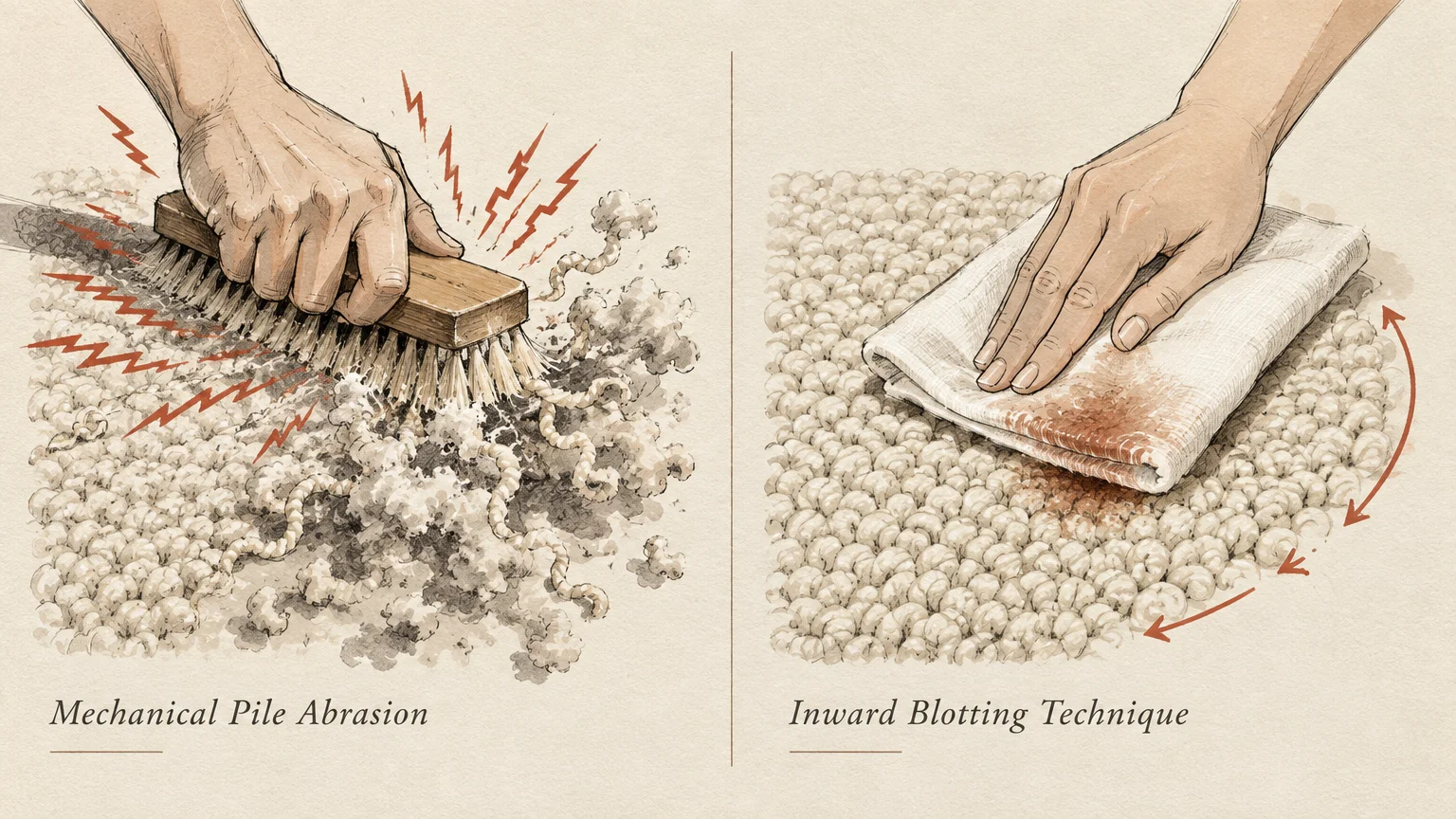
Vigorously rubbing a sudden spill causes immediate mechanical damage across carpet fibers. This friction frays pile tips, scattering ambient light irregularly and producing a permanently worn, hazy appearance.
High-end residences frequently highlight plush bouclé textures, velvet cut piles, and dense wool loops. These lavish surfaces rely on crisp yarn definition to communicate quiet luxury and textural dimension.
Scrubbing untwists fiber bundles and shreds delicate tips beyond aesthetic repair. What looks like stubborn ground-in soil is often irreversible light distortion from abraded fibers.
Once pile filaments untwist, they trap ambient shadows and lose their directional sheen. Even pristine rooms look tired when focal carpets exhibit fuzzy, worn traffic lanes.
Always blot spills using a clean, undyed cotton cloth working inward from the perimeter. This gentle motion pulls pigment upward without unraveling your carpet’s intricate structural twist.
Masterful blotting protects the crisp visual clarity of your statement rugs. You maintain a tailored look while handling everyday spills with professional grace.
Trend #3: Surfactant Buildup in Minimalist Pale Color Palettes
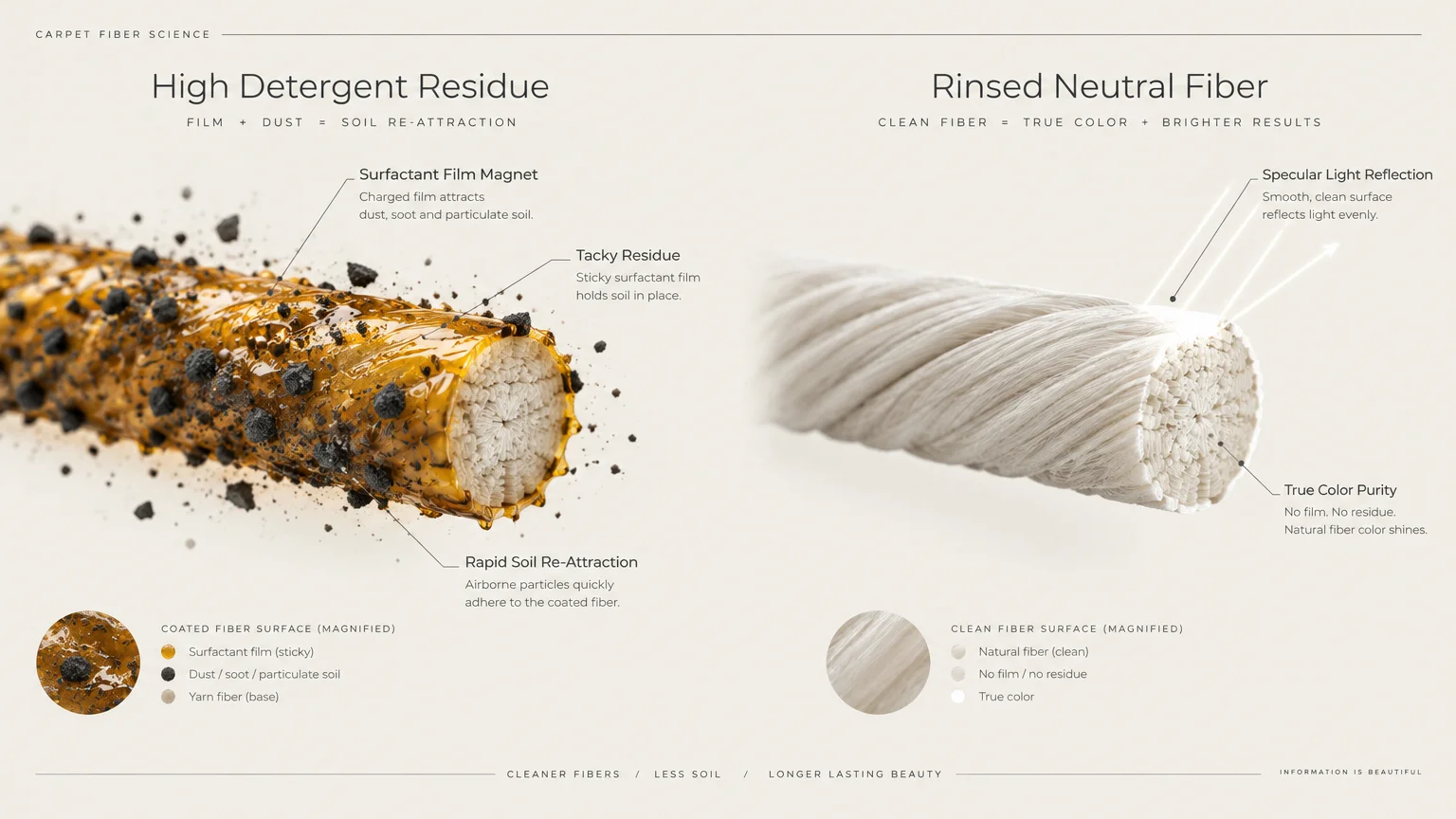
Using excessive detergent coats fibers in a sticky, invisible film of chemical residue. This residue acts like a microscopic magnet, attracting airborne dust and creating a noticeably dull carpet.
Contemporary design schemes favor ethereal palettes such as alabaster, chalk, oatmeal, and soft greige. These serene tints expand spatial perception, yet they ruthlessly expose dark soil tracked onto soapy residue.
Soap residues alter the tactile hand of fine yarns, making once-soft fibers stiff and tacky. Over time, recurring foot traffic packs ambient pollutants directly into the surfactant layer.
Many homeowners repeatedly apply more foaming shampoo to mask this rapid re-soiling cycle. This compounding habit exacerbates chemical buildup and accelerates surface dinginess across your living spaces.
Rinse your carpets thoroughly with pure, softened water or a mildly acidic neutralizing agent. Removing leftover cleaning agents allows the natural brilliance of pale fibers to shine unhindered.
Precise dilution prevents stubborn chemical buildup across open-concept layouts. Your home retains the effortless airy feeling essential to modern residential curation.
Trend #4: Neglecting Dry Soil Extraction in Biophilic Interiors
Postponing your regular vacuuming allows dry grit to settle deep within the carpet foundation. Approximately eighty percent of carpet dirt consists of dry, abrasive mineral particles.
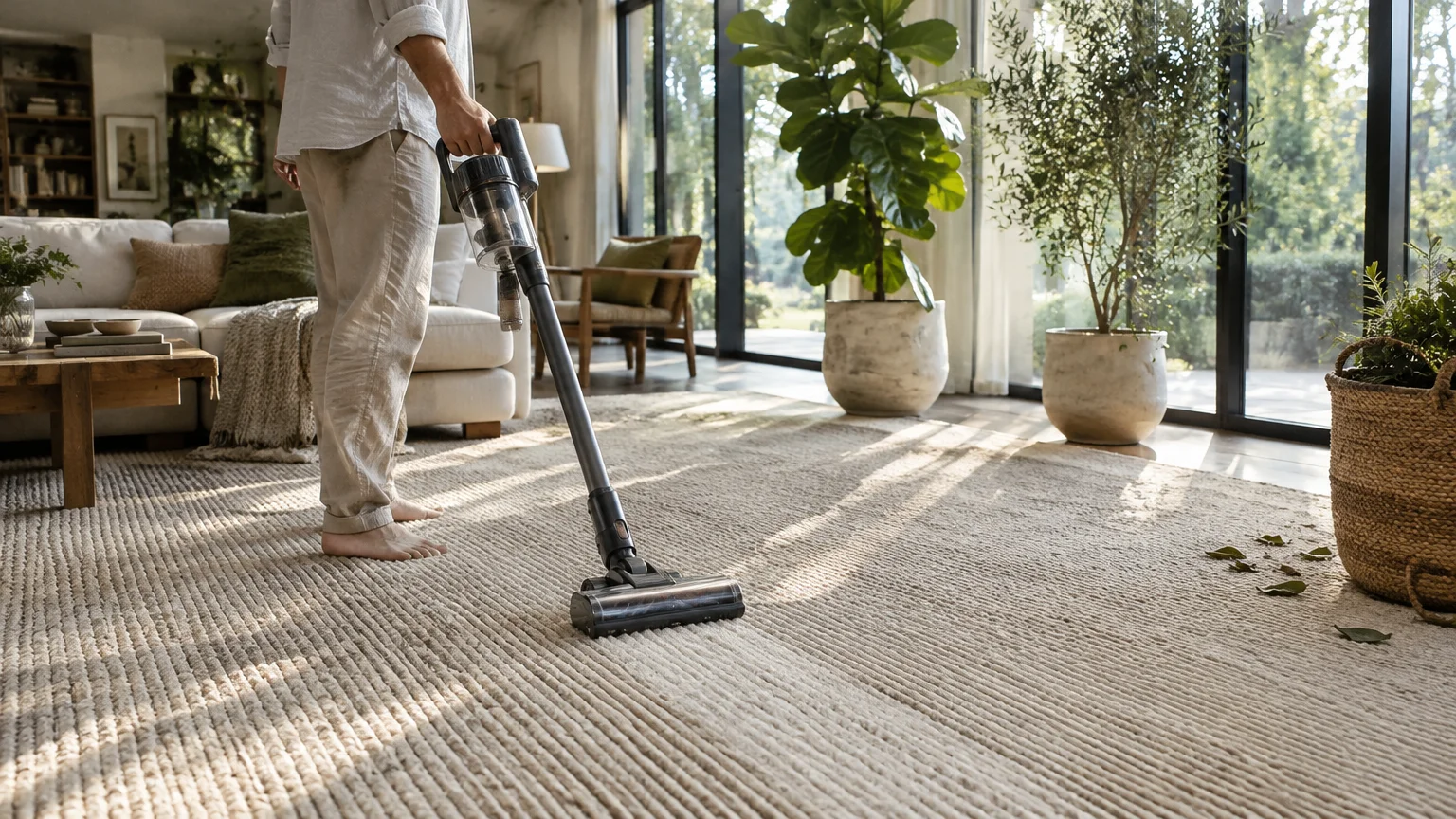
Biophilic interior design connects indoor living spaces with nature through expansive windows, patio transitions, and potted botanicals. Unfortunately, these generous outdoor connections introduce fine dust, crushed sand, and gritty soil.
Walking across embedded grit acts like micro-sandpaper against synthetic and natural yarn filaments. This scratching dulls reflective luster, permanently clouding warm moss, terracotta, and ochre color stories.
When scratched fibers lose their smooth outer cuticle, they can no longer reflect interior illumination evenly. The carpet appears perpetually dirty even after thorough surface wiping.
Invest in a dual-motor vacuum equipped with a verified HEPA filtration system. Slow, methodical passes twice weekly extract gritty matter before it lacerates delicate yarn shafts.
Frequent extraction forms the true foundation of professional carpet care tips. You protect your sensory sanctuary by eliminating micro-abrasives at the surface level.
Trend #5: Applying High-Alkaline Spotters to Artisanal Wool Rugs
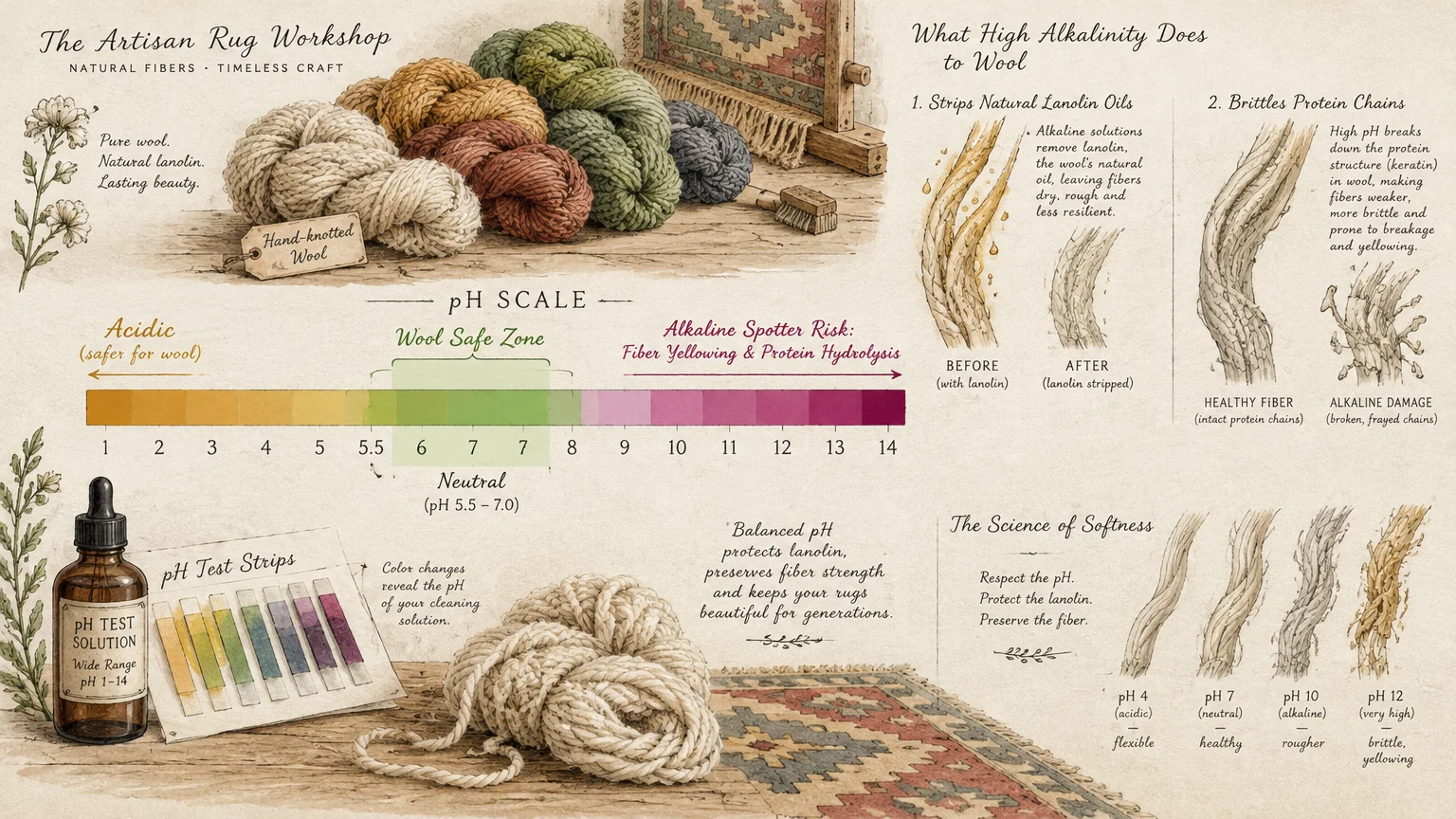
Generic supermarket cleaning agents often possess aggressive alkaline pH ratings above ten. Spraying high-pH chemicals directly onto natural wool burns protein fibers, stripping away natural oils and vibrancy.
Discerning homeowners gravitate toward hand-knotted Persian, Moroccan, and Scandinavian wool rugs. These curated pieces celebrate rich cultural provenance, displaying nuanced vegetable dyes and organic lanolin sheen.
Extreme alkalinity bleeds delicate dyes and degrades wool cuticle scales, leaving fibers brittle and lifeless. Once chemical scorching occurs, optical clarity cannot easily return.
Alkaline burns also cause wool yarn to yellow prematurely when exposed to ambient indoor lighting. This yellow cast alters carefully calibrated room color schemes, muting crisp contrasts.
Verify that spot treatments maintain a balanced pH between 5.5 and 8.0 for all wool blends. Specially formulated wool-safe cleaners preserve structural elasticity and protect delicate tonal gradations.
Respecting fiber chemistry honors historical craftsmanship inside your contemporary living room. Your curated textiles retain their museum-grade elegance across generations of daily living.
Trend #6: Delaying Immediate Spot Treatment in High-Traffic Spaces
Ignoring fresh spills permits tanning acids, oils, and pigments to chemically bond with yarn matrices. As spills oxidize over forty-eight hours, they permanently stain fibers and cause muddy, dull carpet patches.
Modern floor plans unify formal living rooms, dining zones, and entertaining spaces into seamless environments. This energetic lifestyle increases the likelihood of red wine, artisan coffee, and culinary spills.
Fresh moisture suspends pigment on outer fiber jackets before capillary action draws it into core cells. Prompt intervention prevents stains from setting into structural fiber bonds.
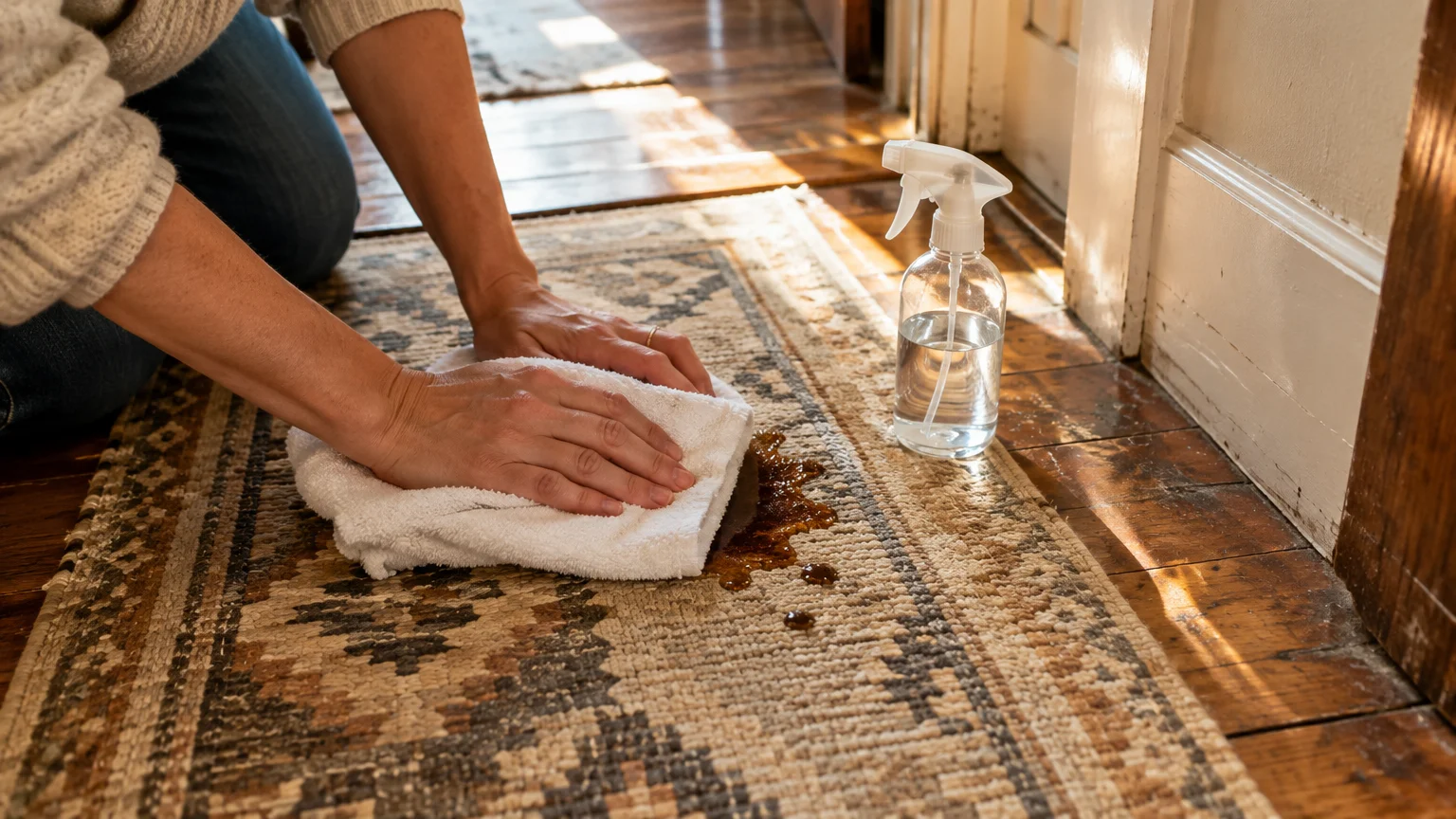
Dried stains frequently require aggressive chemical interventions that accelerate fiber fatigue. By contrast, immediate blotting removes the majority of staining agents using mere room-temperature water.
Establish a dedicated emergency spot kit stocked with white cotton towels, neutral spotters, and tamping brushes. Act within the first five minutes to neutralize spills before they stain.
Decisive action safeguards the continuous chromatic harmony of wide-open entertainment spaces. You preserve seamless transitions between gathering zones and intimate seating areas.
Trend #7: Bypassing High-Heat Extraction Protocols
Relying solely on superficial surface vacuuming fails to lift compacted atmospheric grease and body oils. Without occasional thermal extraction, oily soils build up and create a shadowy film across floor coverings.
Architectural homes embrace expansive broadloom carpeting in private master suites and secluded listening rooms. These retreats showcase rich charcoal, slate, and cocoa palettes that highlight peaceful comfort.
Atmospheric cooking vapors, city dust, and skin oils slowly adhere to fiber shafts over time. Ordinary dry extraction simply cannot dissolve these hydrophobic greasy binders.
Over several seasons, this unseen lipid film darkens fibers and flattens tactile pile rebound. Your carpet loses its cloud-like softness and takes on a dingy cast.
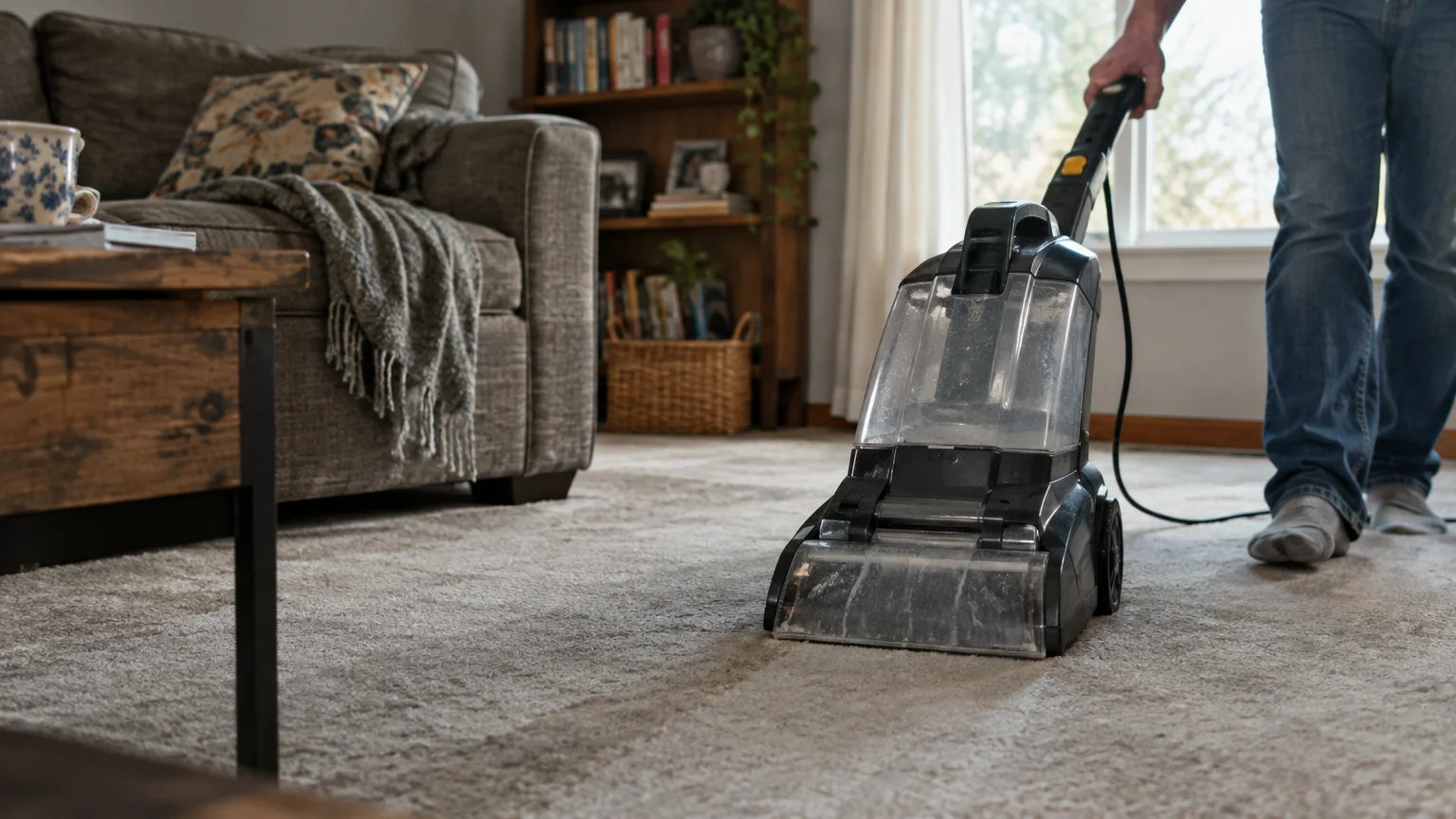
Schedule hot water extraction every twelve to eighteen months to deep clean carpet fibers. High-temperature steam breaks oily bonds while vacuum extraction whisks away deeply buried grime.
Professional thermal rinsing restores the buoyant spring and luminous clarity of your plush broadloom. Your private sanctuaries regain their quiet luxury aesthetic and inviting atmosphere.
Trend #8: Overusing Abrasive DIY Concoctions on Luxury Silks
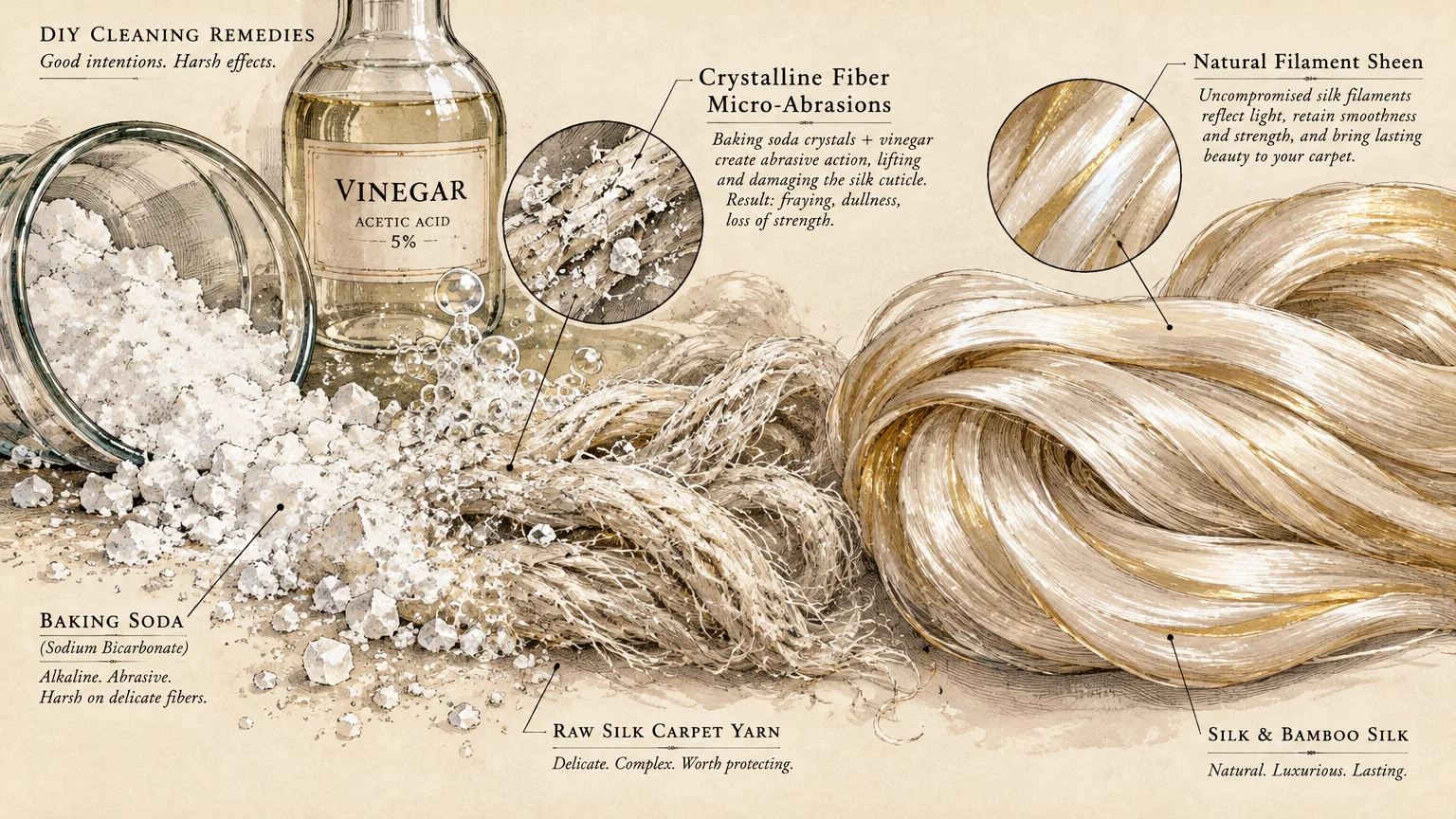
Spreading baking soda or undiluted white vinegar across carpets represents one of the worst carpet cleaning mistakes. Fine powders penetrate carpet backing, while unbuffered acids break down silky plant and animal fibers.
Refined interiors embrace botanical silk, bamboo viscose, and spun tencel for their radiant, shimmering sheen. These luxury fibers scatter ambient illumination across a room, creating an ethereal glow.
Baking soda crystals act like jagged razor blades when crushed under normal foot traffic. Furthermore, acidic vinegar dissolves cellulose fibers, leaving once-shimmering surfaces dull and stiff.
Once micro-abrasive powders migrate into the dense primary backing, household vacuums cannot extract them. Each subsequent step grinds those mineral shards deeper against delicate pile bases.
Forgo internet home remedies in favor of specialized dry-cleaning compounds designed for delicate fibers. These targeted formulations lift impurities without introducing harsh crystal abrasives or damaging acids.
Understanding how to clean carpet without abrasive powders preserves the couture sheen of your textiles. You maintain the opulent gleam that defines high-end designer floor coverings.
Trend #9: Misusing Optical Brighteners and Harsh Bleaches
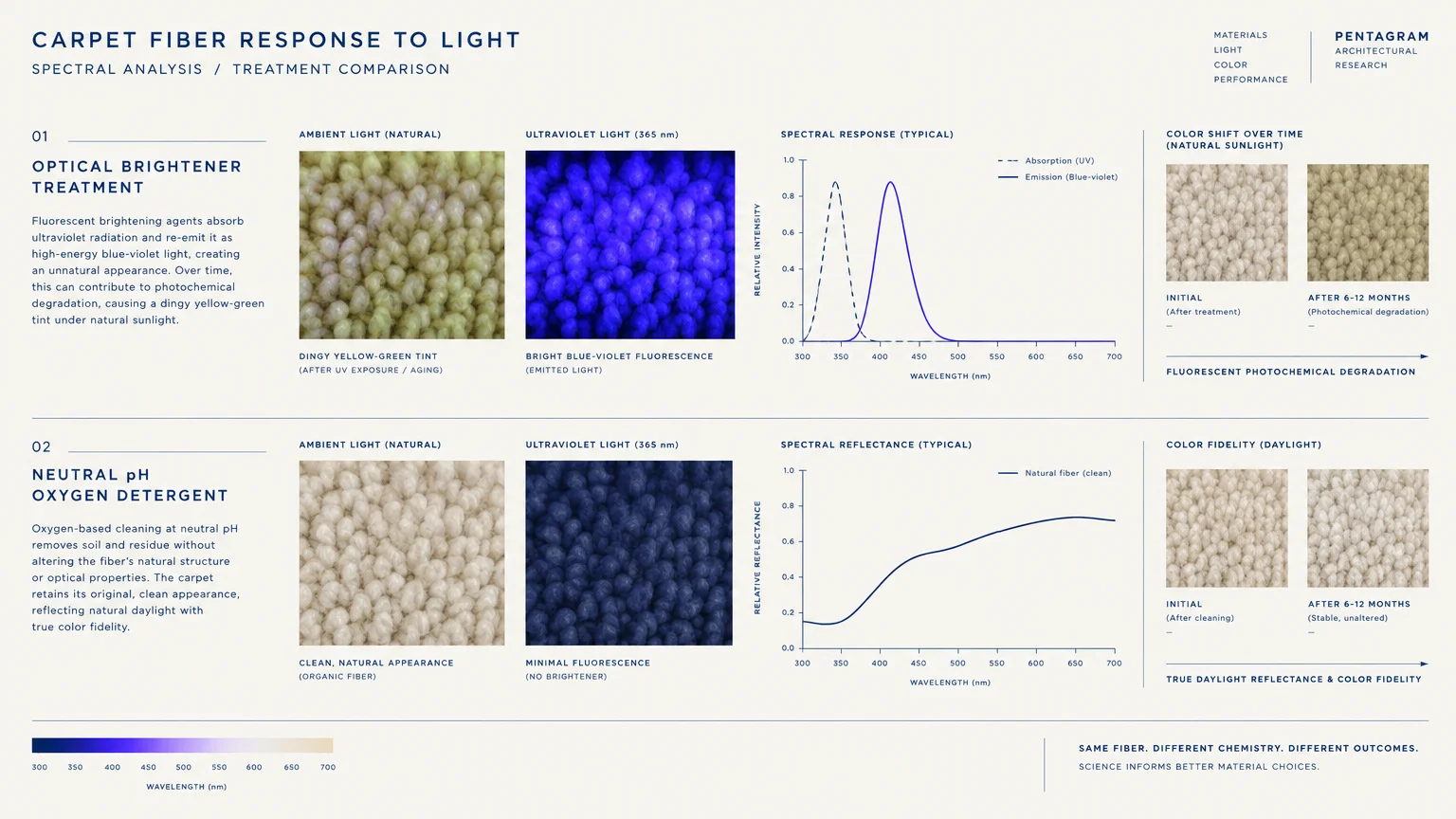
Applying commercial cleaning formulas loaded with chemical brighteners causes severe progressive yarn discoloration. These synthetic fluorescent dyes degrade under natural sunlight, turning crisp light carpets yellow and dingy.
Modern architectural pavilions celebrate abundant daylight through floor-to-ceiling glass doors and panoramic skylights. This sun-drenched environment accelerates chemical reactions between artificial brighteners and intense ultraviolet rays.
Optical brighteners merely mask soil by converting invisible ultraviolet light into blue spectrum illumination. Over time, daylight exposure degrades these unstable chemicals, leaving behind irreversible yellow staining.
Harsh chlorine or peroxide bleaches also permanently strip tone from dyed yarns, creating bleached, lifeless spots. These bleached areas destroy the visual rhythm of intentional room color palettes.
Select clean, dye-free formulas verified by independent rug institutes when maintaining sunlit spaces. Pure cleaning chemistry extracts dirt cleanly without masking issues behind synthetic optical dyes.
Protecting fibers from harsh bleaching agents preserves genuine color honesty across bright sunrooms. Your interior maintains authentic warmth under shifting morning and afternoon daylight.
Trend #10: Omitting Fiber Realignment and Pile Grooming
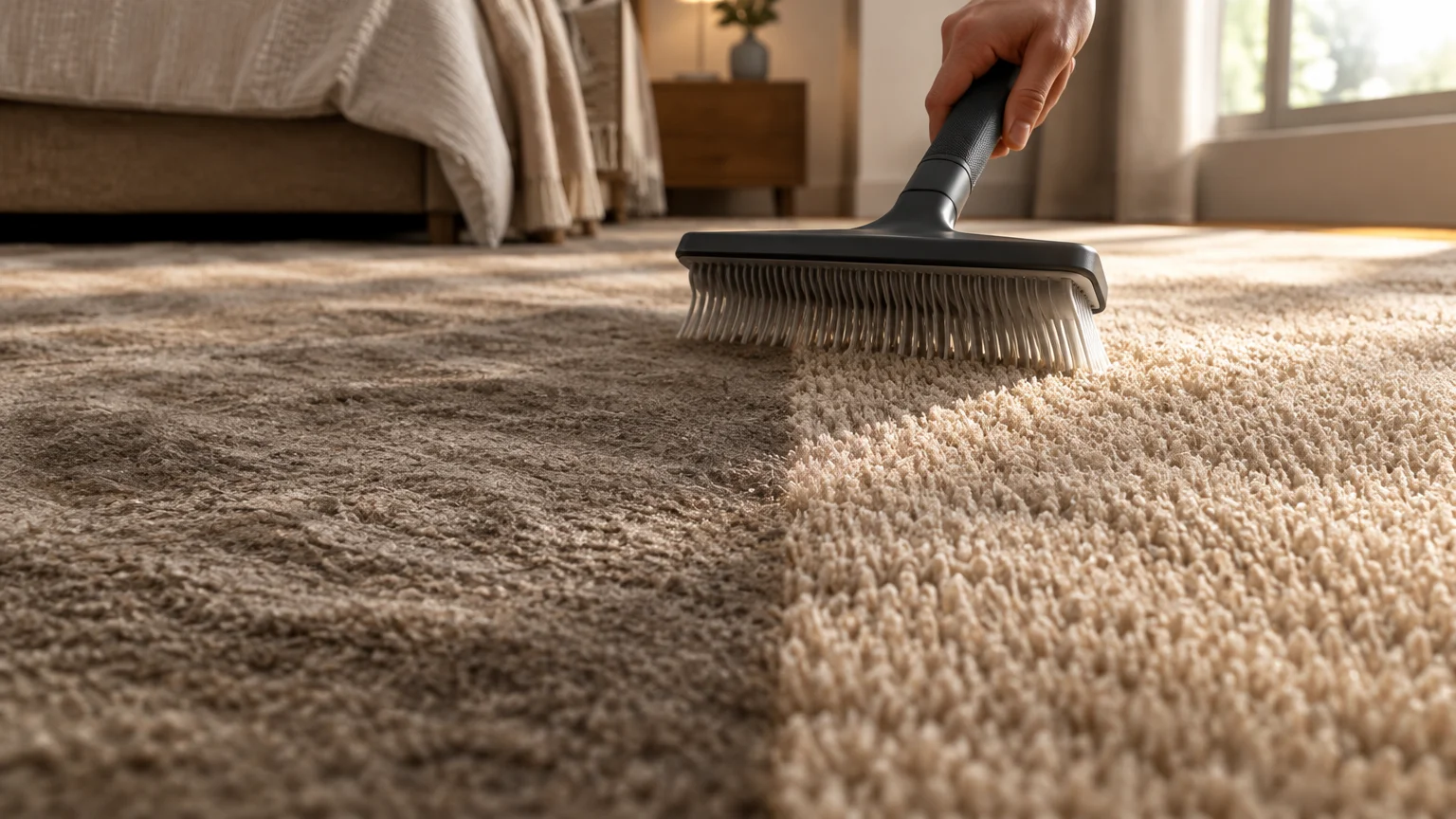
Allowing heavy foot traffic to crush carpet pile without grooming leaves fibers permanently flattened. Matted yarns absorb light rather than reflecting it, creating shaded, lifeless pathways across your living spaces.
Contemporary design showcases low-profile sculpted patterns, tip-sheared finishes, and high-twist yarns. These dynamic surfaces rely on standing upright to reflect natural lighting across a room.
Heavy foot traffic bends flexible fibers sideways, exposing their duller lateral shafts to ambient illumination. Without routine pile grooming, directional shading mimics dark, unwashed traffic lanes.
Over time, uncorrected fiber compression turns into permanent pile distortion known as tracking or pooling. This optical effect makes impeccably clean floors look worn and neglected.
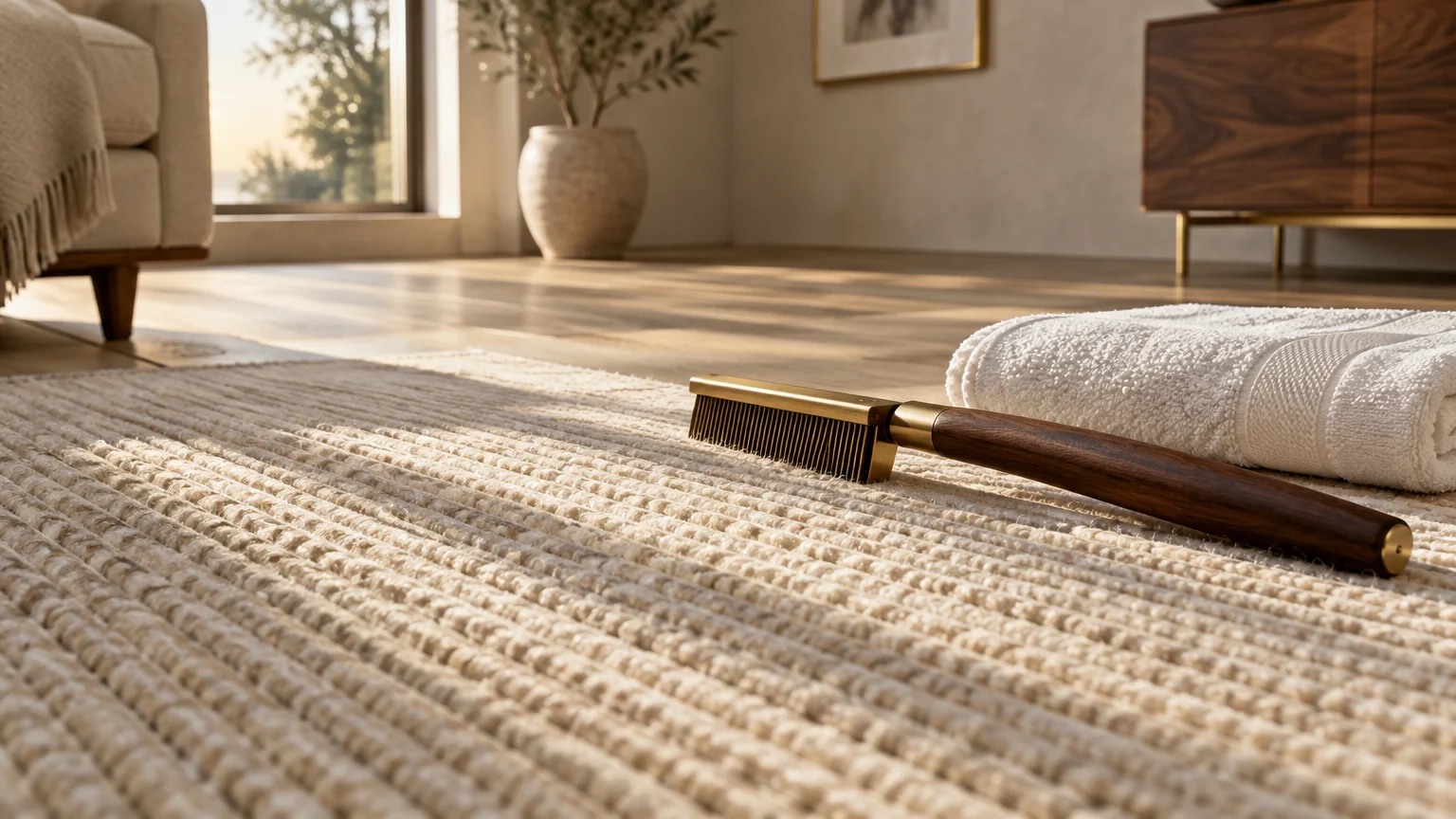
Utilize a professional carpet grooming rake after every thorough vacuuming and extraction session. Lifting crushed fibers upward restores even light reflection and revives plush loft.
Regular pile lifting maintains crisp dimensional rhythm in high-traffic hallways and active family rooms. Your floors look vibrant, energetic, and perfectly manicured every single day.
The Big Picture: Weaving These Trends into Your Home
Harmonizing meticulous textile preservation with high-end interior decoration elevates your entire home. Floor coverings should feel like foundational art that anchors your lifestyle, not fragile museum relics.
To build a sustainable maintenance routine, match cleaning protocols to your specific textile construction. Treat durable synthetic blends with scheduled thermal rinsing, while preserving wool loops with neutral formulas.
High-traffic corridors demand resilient fiber architectures, while private lounges accommodate softer, light-reflective silk blends. Thoughtful placement reduces unnecessary wear and minimizes aggressive cleaning demands.
Pair proactive care routines with high-performance walk-off mats at every home exterior entryway. Trapping coarse soils at your threshold stops eighty percent of abrasive particulates from entering.
For the latest color forecasts, consult industry leaders like Pantone and paint companies like Benjamin Moore. For professional design standards, refer to the American Society of Interior Designers (ASID).
Combining intentional color palettes with precise fiber preservation maintains exquisite residential ambiance. You establish an effortless balance between curated high style and comfortable everyday living.
Investing time into proper carpet care tips protects your flooring investment for decades. Your living spaces will continuously radiate quiet luxury, sophisticated warmth, and understated elegance.
Mindful maintenance turns routine chores into an empowering act of architectural preservation. You ensure your home remains an inspiring, tactile sanctuary for everyone who enters.
Frequently Asked Questions
How often should you deep clean carpet in a modern home?
Schedule a professional extraction every twelve to eighteen months for standard residential settings. High-traffic living areas with children or pets benefit from biannual deep cleaning.
Regular hot water extraction removes compacted particulate matter before fibers suffer friction damage. This thoughtful cadence keeps carpets luminous without exposing backing latex to excessive moisture.
Can you reverse fiber dullness caused by detergent residue?
You can reverse dullness caused by surfactant residue using an acidic rinse extraction. Rinsing fibers with pure water mixed with a mild neutralizing agent dissolves stubborn soap deposits.
Once you strip away the gummy film, pile fibers bounce back immediately. Your floor coverings recover their soft touch, vibrant depth, and natural light reflection.
What is the safest way to spot clean luxury wool carpets?
Blot spills immediately using a clean, undyed cotton towel to absorb liquid volume. Apply a specialized wool-safe spotter with a balanced pH between 5.5 and 8.0.
Never scrub or brush vigorous strokes into wet wool yarn bundles. Work gently from the spill edges inward to prevent spreading color outward.
Why do carpets look darker in traffic lanes even after vacuuming?
Traffic paths often look dark because crushed fibers bend sideways and cast directional shadows. Ground-in micro-scratches on fiber surfaces also scatter ambient light irregularly instead of reflecting it.
Combine deep soil extraction with specialized pile grooming to lift matted yarn bundles upright. Restoring vertical fiber orientation immediately brightens the path and eliminates deceptive shadows.
Disclaimer: This article reflects design trend analysis and predictions. Personal taste and timeless design principles should always guide your decorating choices.