High-end floor coverings anchor your interior architecture, yet daily living inevitably challenges their pristine surfaces. Mastering rapid carpet stain removal protects your investment and preserves the visual balance of your curated rooms.
Contemporary lifestyles celebrate open entertaining, which exposes plush wools and flatweaves to unexpected spills. You can conquer common carpet stains effortlessly when you understand proper chemical reactions.
From tannin marks to deep grease splatters, the right intervention prevents permanent fiber discoloration. Elevate your maintenance regimen with these refined, proven solutions designed for luxury residential flooring.
Trend #1: Red Wine Spills in Entertaining Spaces
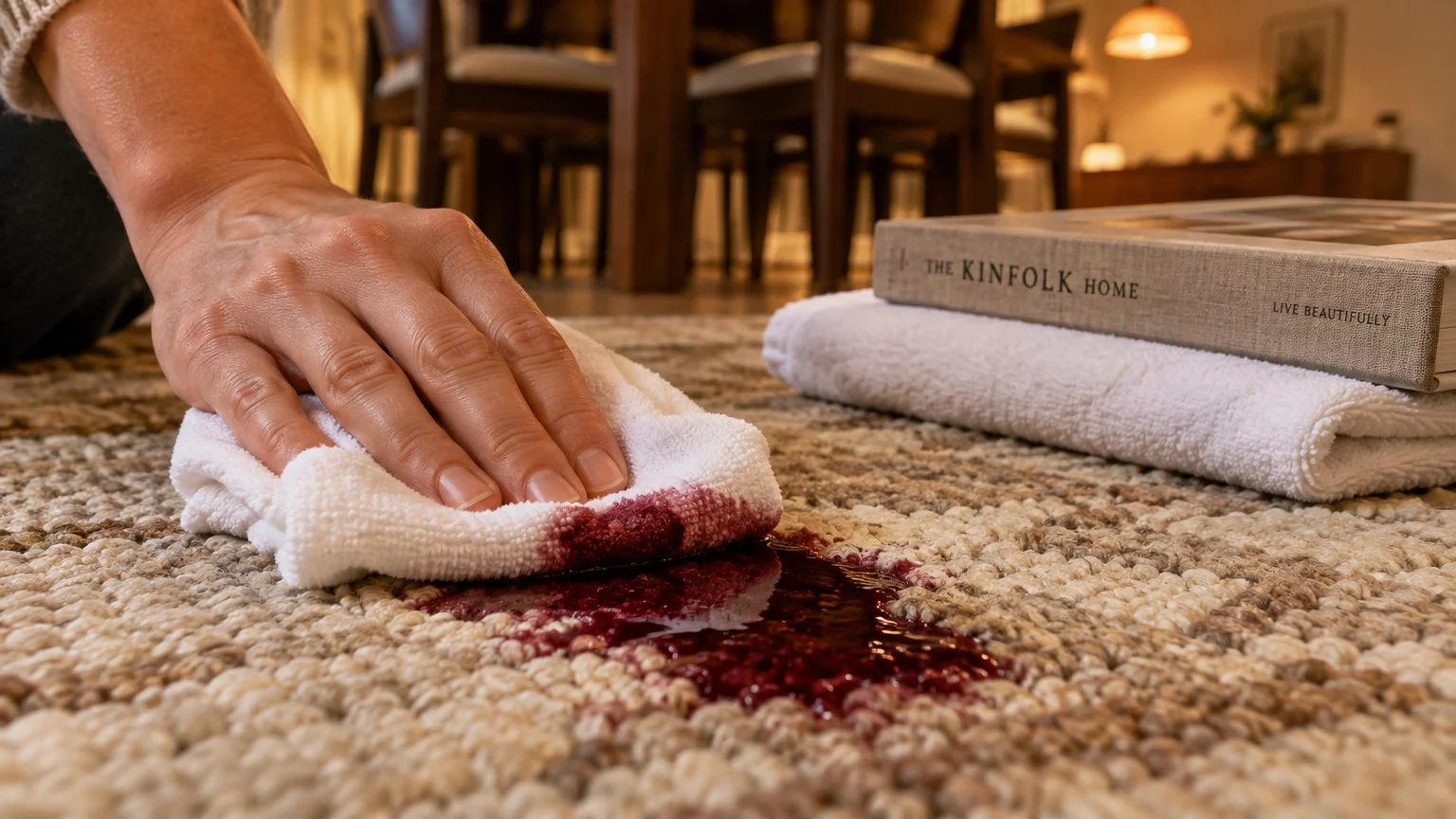
Rich cabernet brings warmth to your dining room gatherings, but accidental spills introduce stubborn chromogens into porous textiles. Understanding how to remove carpet stains saturated with dark tannins safeguards your investment.
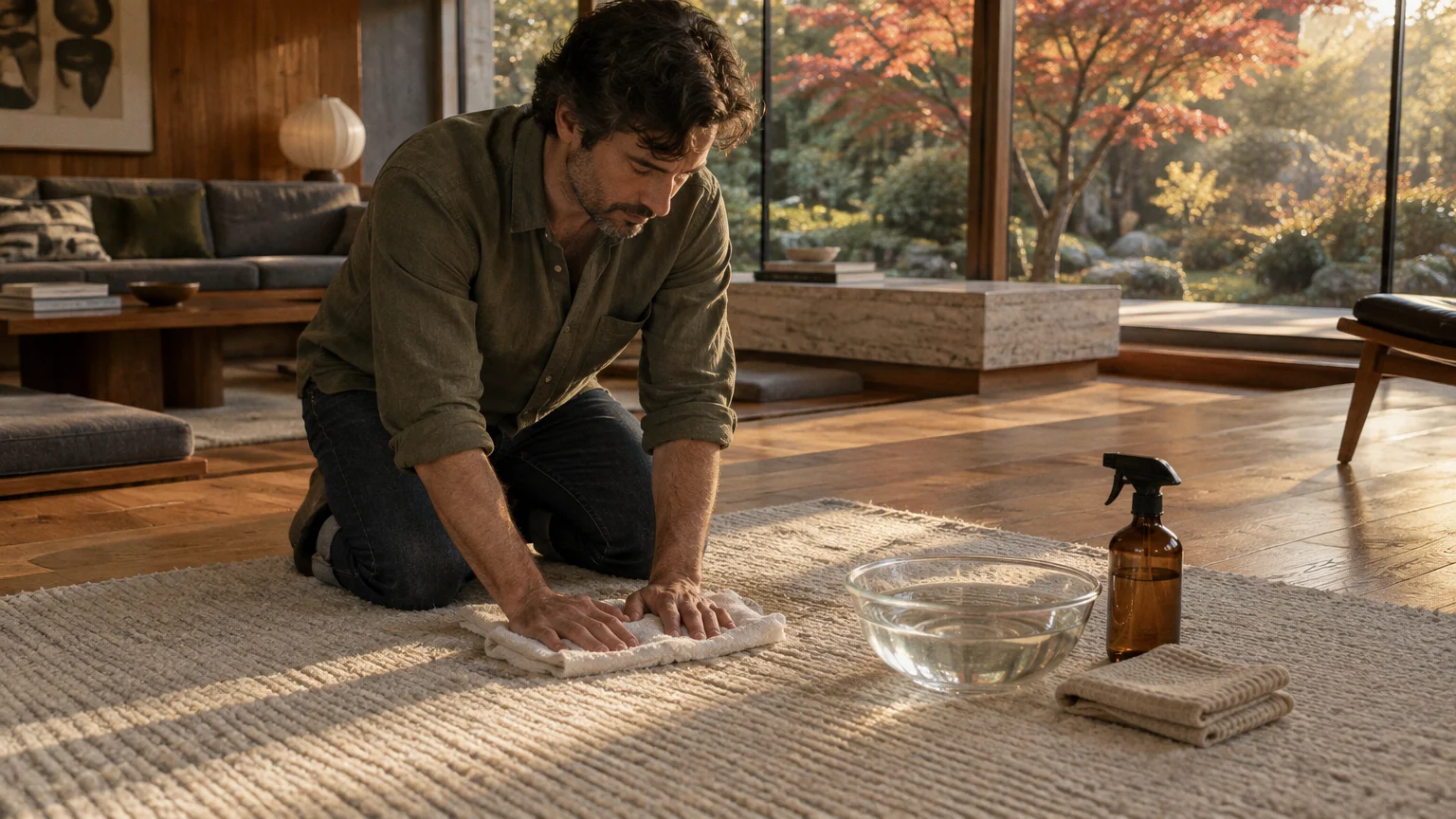
Act immediately by blotting the spill with a clean, un-dyed microfiber cloth to lift excess moisture. Never scrub the surface, as abrasive friction distorts delicate twisted fibers permanently.
Mix one tablespoon of hand dishwashing liquid with one tablespoon of white vinegar and two cups of warm water. Apply this balanced solution sparingly with a clean sponge, blotting continuously until the red pigment transfers completely.
For persistent shadows on light synthetic fibers, a small misting of three-percent hydrogen peroxide oxidizes residual color. Always pre-test this lifting method on an inconspicuous corner to verify colorfastness before treating prominent areas.
Neutralize any remaining moisture by dabbing the spot with cool distilled water. Distilled water prevents mineral rings from forming as the carpet dries.
Conclude the treatment by pressing dry cotton towels over the damp patch under a heavy decorative book. This sustained pressure wicks subsurface liquid away from the primary carpet backing.
Trend #2: Artisanal Coffee and Espresso Marks
The rise of specialty espresso culture brings warm, rich tones into morning spaces alongside noticeable tannin vulnerabilities. Fresh coffee contains natural oils and acid that bond quickly with unsealed cellulose or animal fibers.
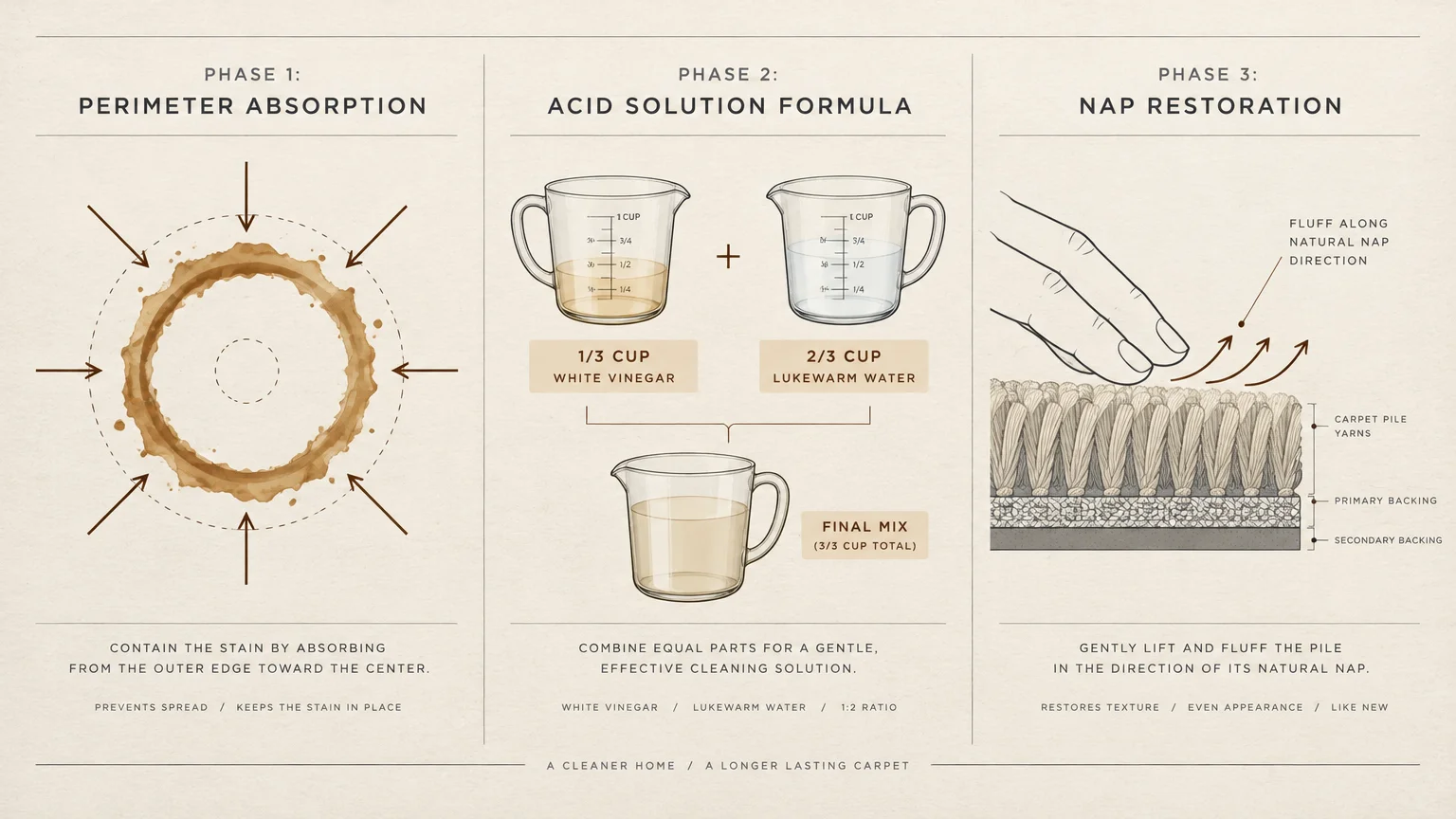
Absorb wet pools instantly using dry paper towels, working methodically from the perimeter inward to prevent boundary halos. This containment step prevents coffee oils from traveling downward into dense underlayment pads.
Combine one-third cup of white vinegar with two-thirds cup of lukewarm water to formulate an effective stain remover carpet treatment. Acidic vinegar gently breaks down bitter tannins without dissolving sensitive natural fiber bonds.
Dab the affected weave gently with your acidic mixture, alternating with a dry cloth to draw out the brown hue. Avoid hot water entirely; elevated temperatures cook beverage proteins directly into delicate wool yarns.
If milk or cream accompanied the brew, follow with a diluted mild dish soap rinse to capture residual dairy lipids. Rinse thoroughly with cold water to ensure zero soapy residue remains behind to attract atmospheric dust.
Fluff the damp pile gently with your fingertips in the natural direction of the nap. Allowing air circulation restores the yarn’s original tactile softness.
Trend #3: Companion Animal Accidents and Organic Soils
Modern residences effortlessly integrate beloved companions, yet biological accidents require immediate enzymatic intervention to preserve interior air quality. Pet urine presents both acidic and alkaline challenges as it dries across delicate weaves.
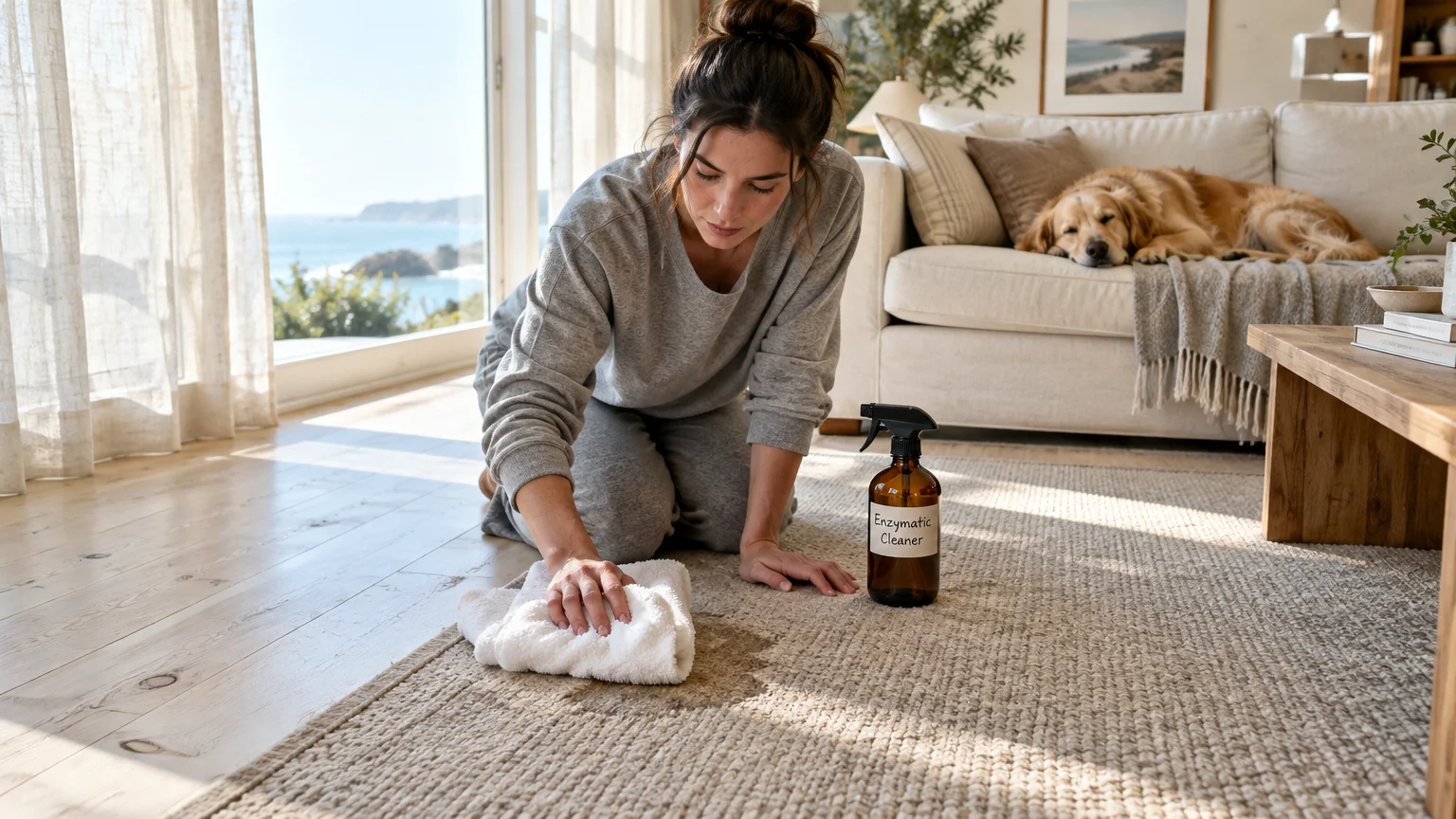
Blot fresh liquid with layers of absorbent terry cloth until no yellow tint appears on the towel. Rapid extraction prevents uric acid crystals from penetrating deep into floorboards beneath your flooring.
Saturate the spot with a specialized bio-enzymatic cleaner formulated specifically for carpet stain removal. Live enzymes consume uric salt crystals and organic proteins rather than merely masking lingering odors.
Cover the treated zone with a damp cotton cloth for several hours so the biological enzymes remain active. Enzymatic cultures require continuous moisture to dismantle complex pheromones and stain molecules.
Rinse the area lightly with lukewarm water and press dry with clean microfiber cloths. Thorough drying stops mold spores from proliferating within deep carpet underlays.
Once dry, sprinkle a light veil of sodium bicarbonate across the textile, vacuuming thoroughly twenty-four hours later. This final polish deodorizes room fibers while refreshing the pile’s natural loft.
Trend #4: Culinary Grease and Gourmet Oil Splatters
Contemporary architecture favors seamless transitions between gourmet kitchens and open living lounges, exposing carpets to airborne culinary grease. Lipid-based stains attract airborne soot, transforming subtle smears into visible dark patches over time.
Gently scrape solidified fats from the surface using the dull edge of a kitchen butter knife. Avoid pressing downward, which drives hydrophobic grease deeper into your rug foundation.
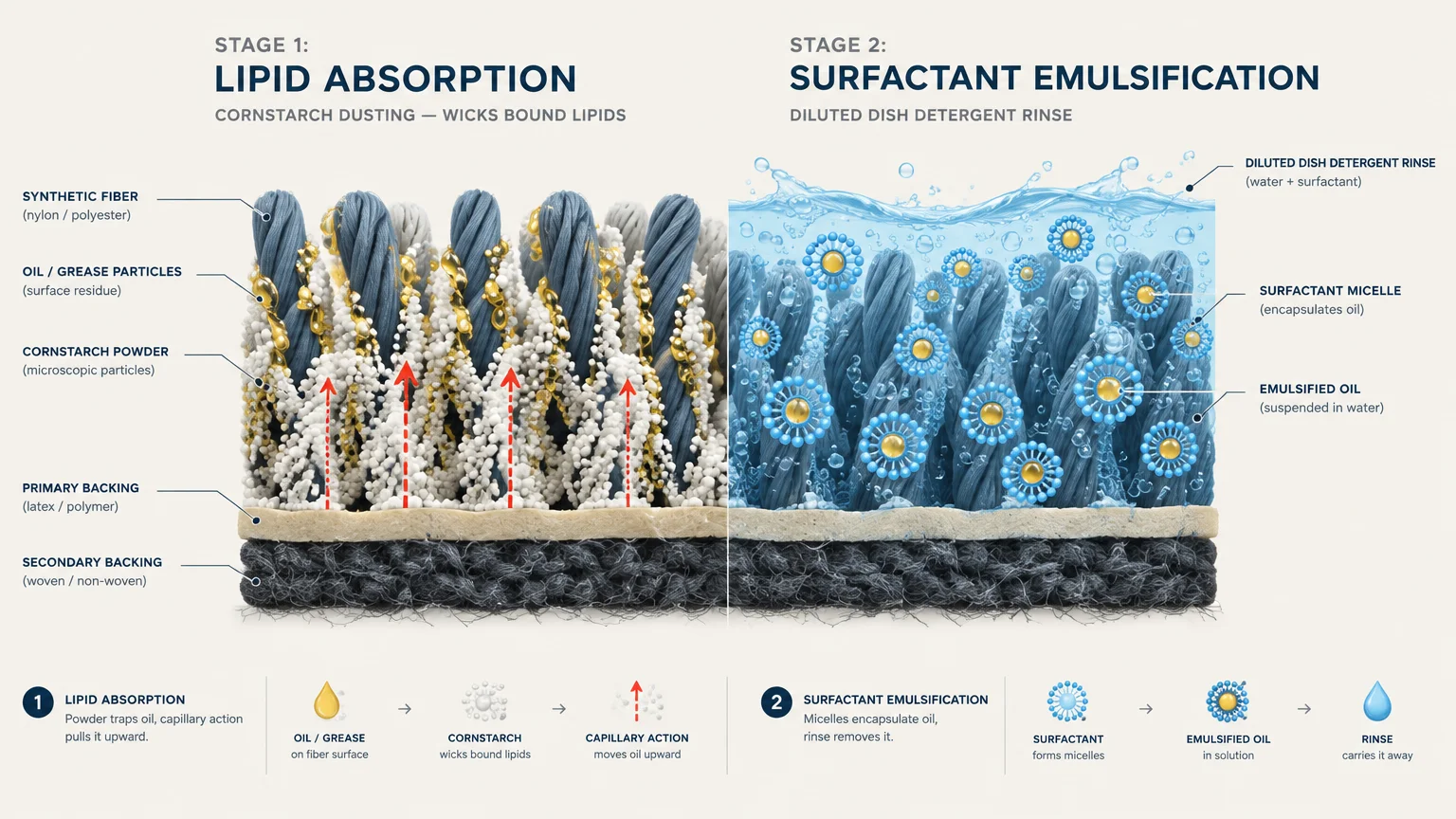
Dust cornstarch or baking soda liberally across the oily imprint, allowing the powder to sit undisturbed for fifteen minutes. These fine starches draw stubborn fatty lipids straight out of dense carpet piles.
Vacuum away the saturated powder before applying a solution of clear dishwashing detergent mixed with lukewarm water. The surfactant molecules encapsulate remaining oils, lifting them cleanly away from synthetic or natural strands.
Blot with a damp cloth soaked in clean water, removing all detergent traces meticulously. Detergent residues act as grease magnets if left unrinsed in your living spaces.
Brush the tufts lightly with a soft-bristled brush while damp to maintain an even, plush texture. Proper grooming prevents matting along high-traffic corridors adjacent to entertaining zones.
Trend #5: Biophilic Mud and Tracking Garden Soils
Seamless indoor-outdoor living merges landscaped terraces with interior salons, inviting rich botanical soil into elegant entryways. Mineral-dense garden soils can permanently abrade delicate carpet filaments if you handle them incorrectly.
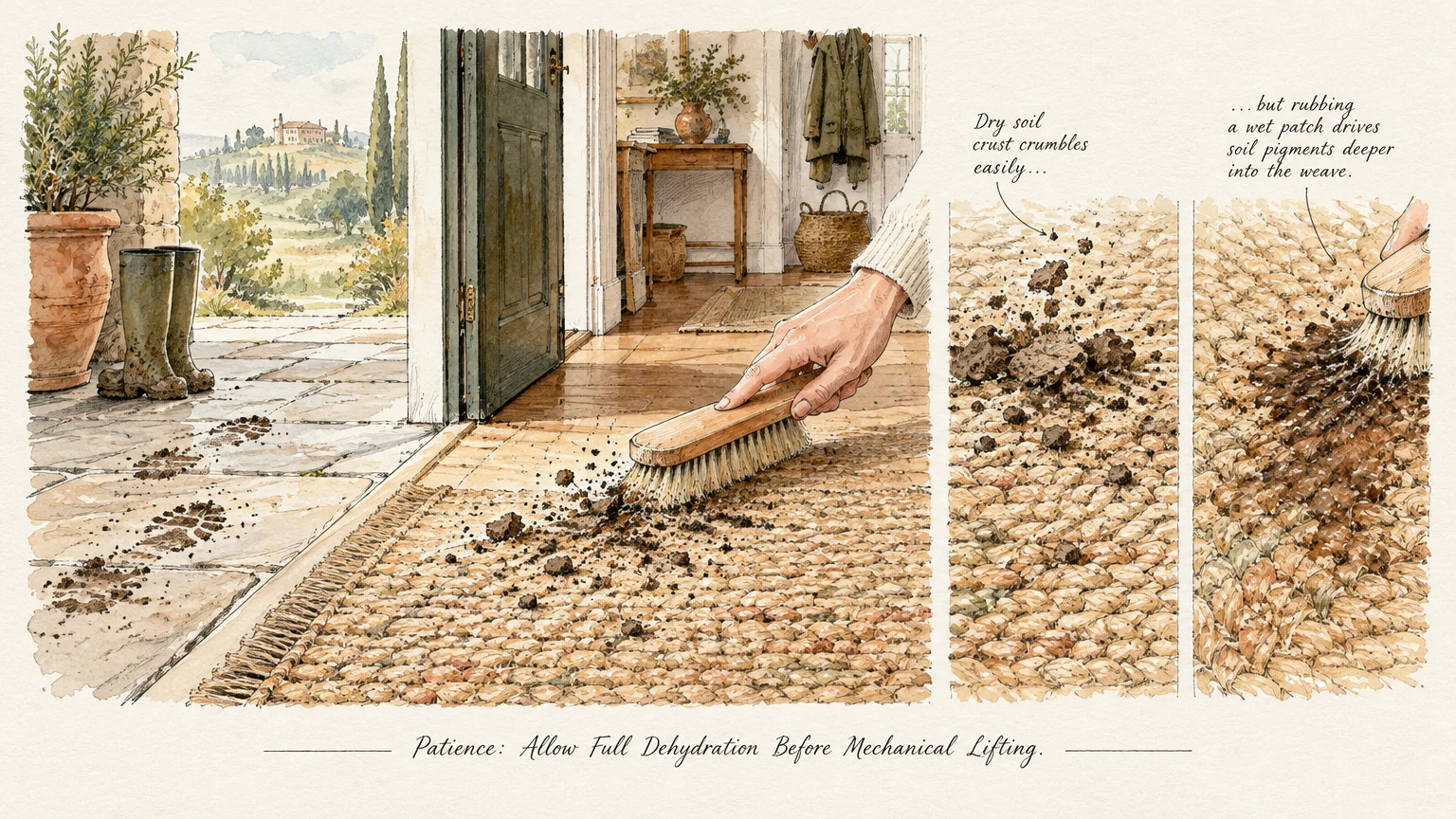
Counterintuitively, you must allow wet outdoor mud to dry completely before attempting any restorative cleaning. Wiping wet earth pushes abrasive micro-particles deep into rug knots, exacerbating visible staining.
Once thoroughly dry, vacuum the crusty residue slowly using your machine’s hose attachment without the spinning beater bar. This focused suction extracts dried earth particles without crushing them against foundational threads.
Dissolve one teaspoon of neutral detergent into a cup of warm water to treat any lingering earthy coloration. Blot gently from outside boundaries inward, lifting fine silt without saturating the base woven grid.
Rinse the fibers by dabbing them with a cloth dampened with cool distilled water. Distilled rinses wash away suspended colloidal clay particles that cause gray shadows.
Inspect the underlying wool or synthetic pile under bright natural light to verify total pigment removal. Mist lightly with distilled water and dry with clean towels to restore immaculate texture.
Trend #6: Scented Candle Wax and Botanical Oils
Atmospheric candlelight enhances evening ambience, yet stray wax drips pose a common threat to custom floor coverings. Solidified paraffin and soy wax trap soot and dye pigments deep between twisted yarn strands.
Harden the molten spill immediately by placing an ice cube inside a sealed plastic bag directly over the wax. Brittle wax fractures easily, preventing structural distortion when you peel away top layers.
Carefully break the frozen wax with a blunt spoon and vacuum away loose fragments from the rug pile. Remove as much solid material as possible before introducing any thermal extraction techniques.
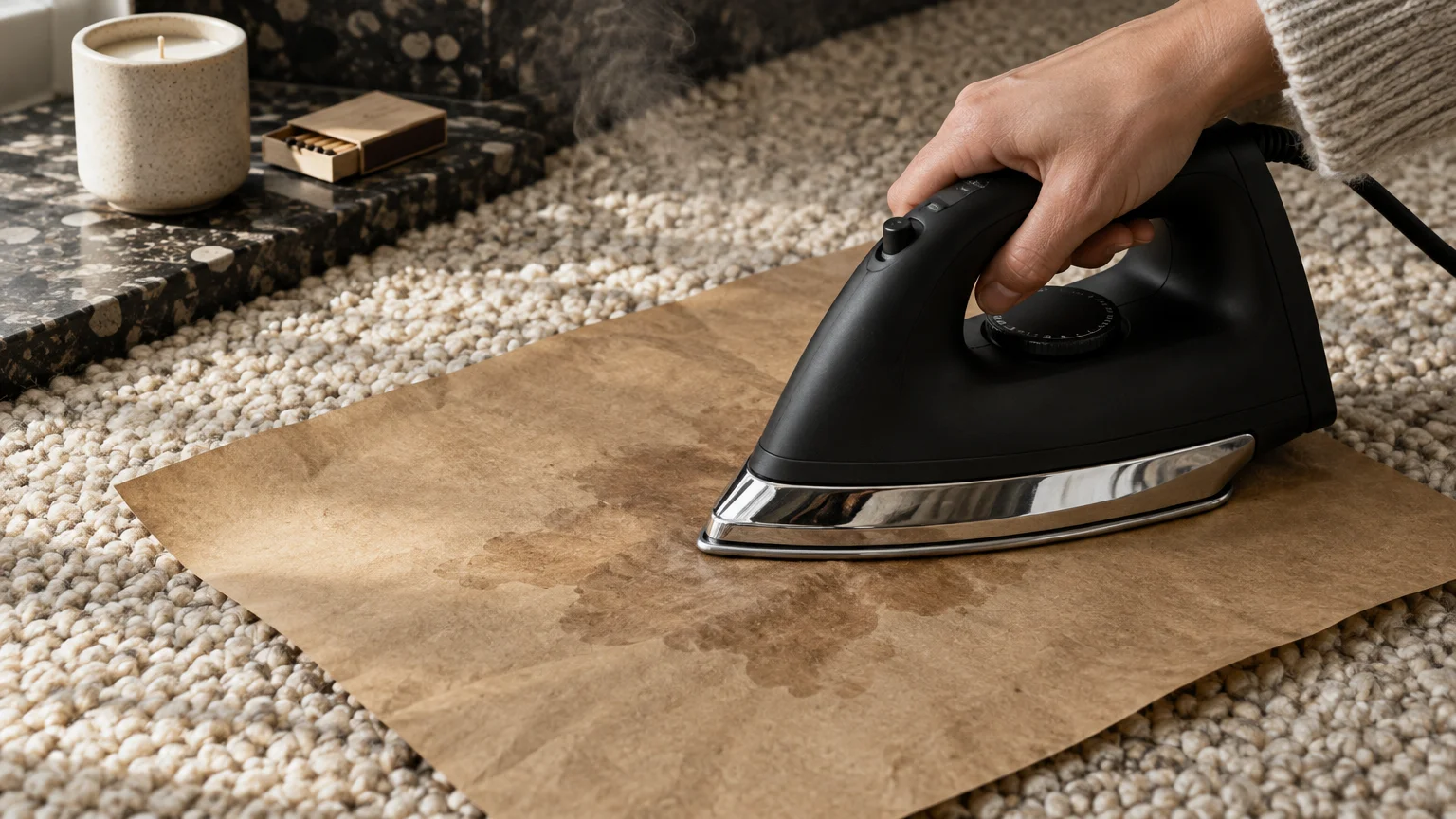
Place clean unprinted brown craft paper or a white cotton towel directly over remaining wax remnants. Glide a household clothes iron set to low, dry heat across the paper without lingering on one spot.
The liquefied wax wicks effortlessly into the porous paper, leaving your fibers clean and soft. Repeat this step with fresh paper sections until the sheet absorbs no further translucent residue.
Dab any residual color tint with rubbing alcohol to remove manufacturer dye additives. This final solvent swipe restores pristine fiber tones without disrupting carpet pile construction.
Trend #7: Pigmented Ink and Studio Calligraphy Stains
The renaissance of bespoke home studies and creative ateliers brings fine inks close to delicate floor textures. High-pigment inks present concentrated synthetic colorants that require prompt, solvent-based carpet stain removal.
Dab wet ink instantly with dry paper towels without applying downward pressure that spreads fluid laterally. Containment remains your primary objective during the initial moments of an ink spill.
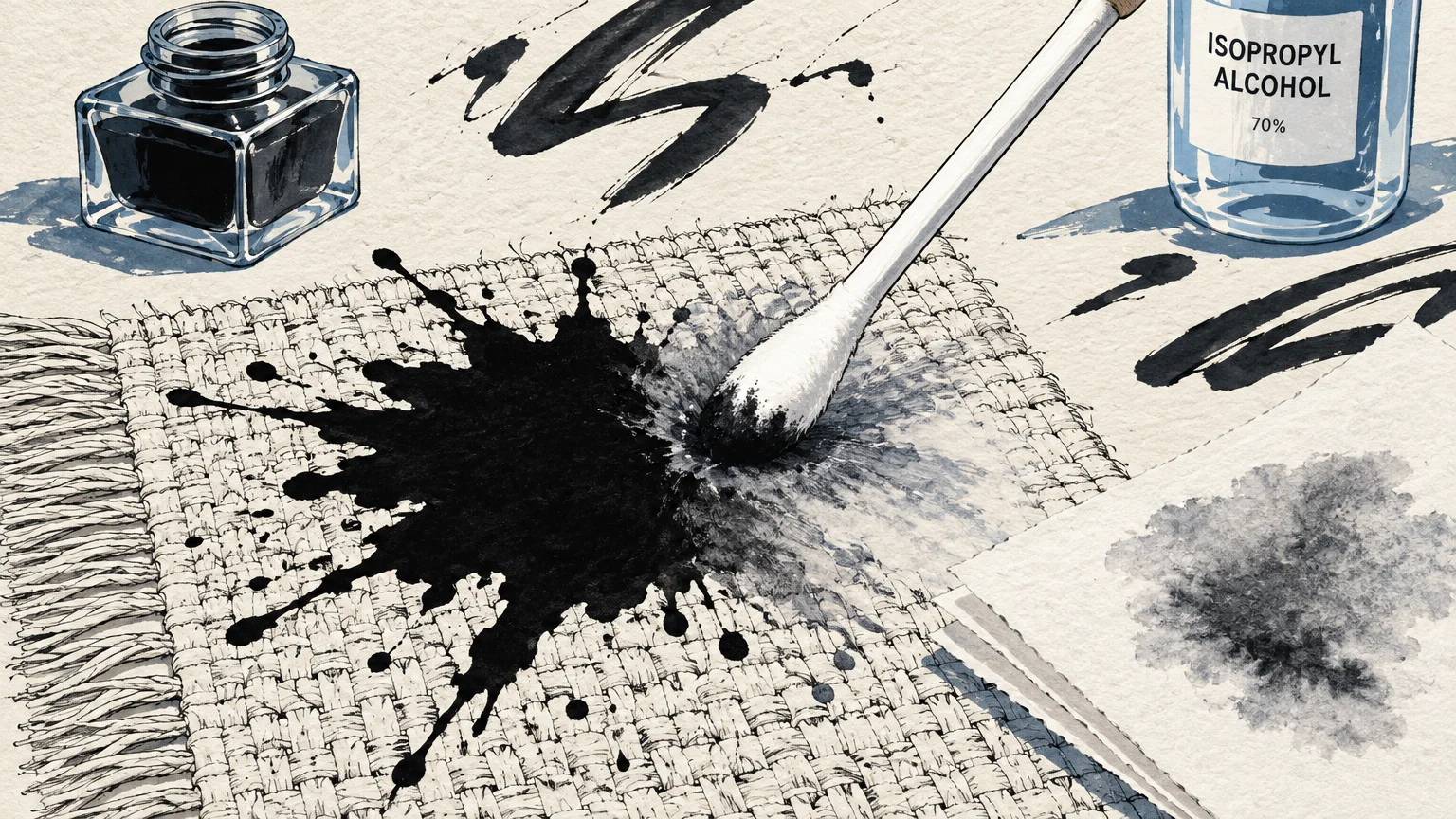
Moisten a white cotton pad with standard isopropyl rubbing alcohol or non-oily solvent. Press the solvent-soaked pad gently onto the ink mark, allowing the alcohol to liquefy rigid ink binders.
Rotate to clean sections of your cloth constantly as the pigment transfers from floor to textile. Never pour rubbing alcohol directly onto the carpet, as solvent migration damages latex backing adhesives.
Treat lingering carbon residues with a delicate lather of neutral liquid dish soap and cool water. Blotting with gentle soap captures free-floating particles suspended by the solvent application.
Rinse by dabbing with cool distilled water and compress under heavy towels to dry. Patient lifting guarantees complete restoration for treasured executive office floors.
Trend #8: Vibrant Berry Purees and Fruit Juices
Fresh organic living celebrates antioxidant-rich berries, yet vibrant fruit purees create formidable marks on neutral floors. Natural plant pigments possess intense staining capability that quickly binds to wool and nylon fibers.
Spoon up thick puree gently using a flat palette knife to clear surface debris without grinding seeds into yarns. Quick clearing protects your yarn structure while preparing the surface for liquid extraction.
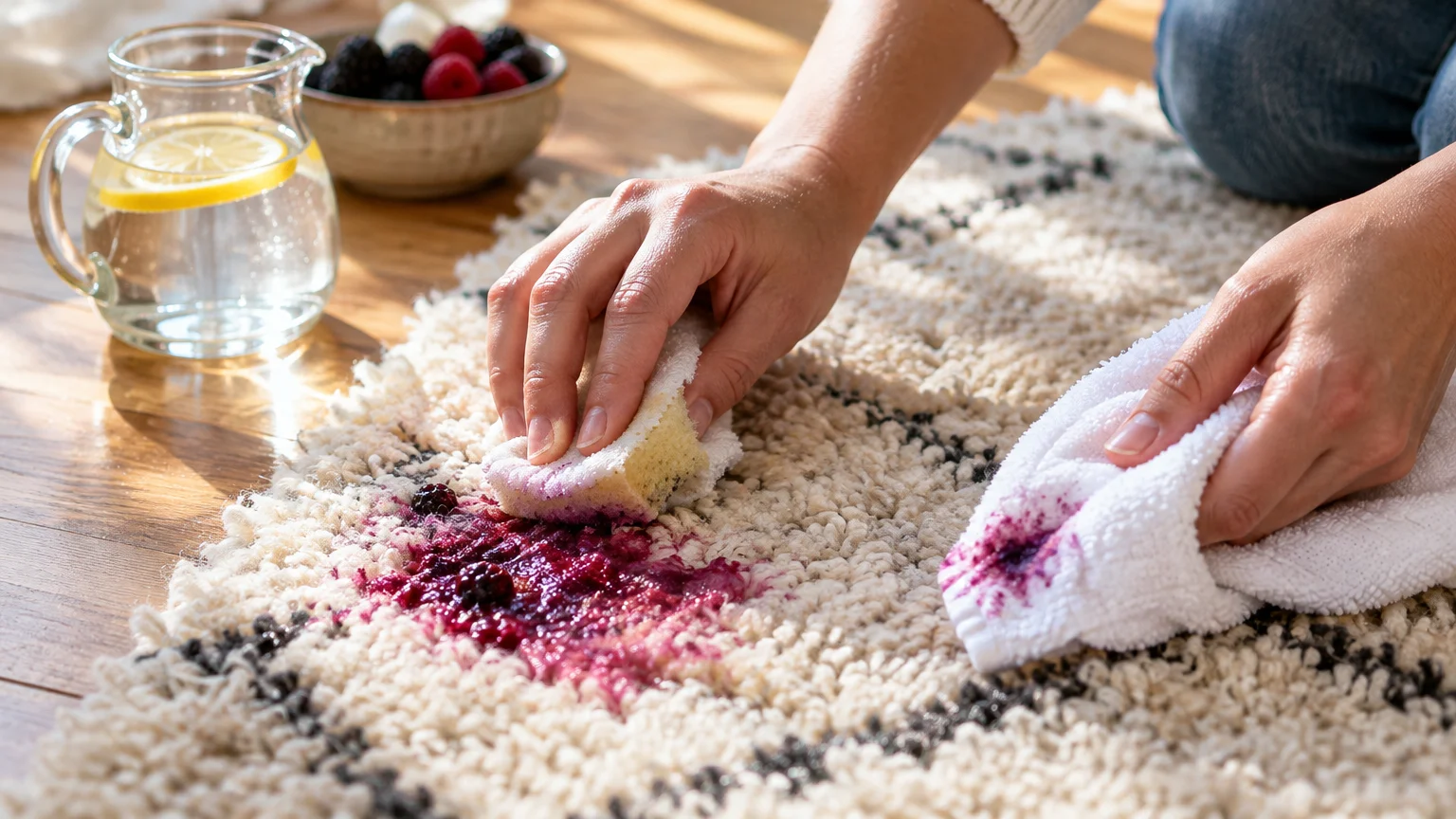
Prepare an acidic rinse by combining one tablespoon of white vinegar with two-thirds cup of cold water. Vinegar neutralizes vibrant organic dyes, preventing fruit acids from setting permanently into light palettes.
Apply the vinegar solution with a clean sponge, blotting firmly from the outside toward the center. Alternate your sponge applications with dry towel blots until color transfer ceases entirely.
For persistent berry tints on non-wool carpets, apply an oxygen-based powdered bleach dissolved in cool water. This gentle oxygenating wash clears remaining organic hues while respecting delicate fiber integrity.
Rinse thoroughly with chilled water to remove lingering natural fruit sugars that attract airborne dirt. Pat the surface dry with clean microfiber cloths to finish.
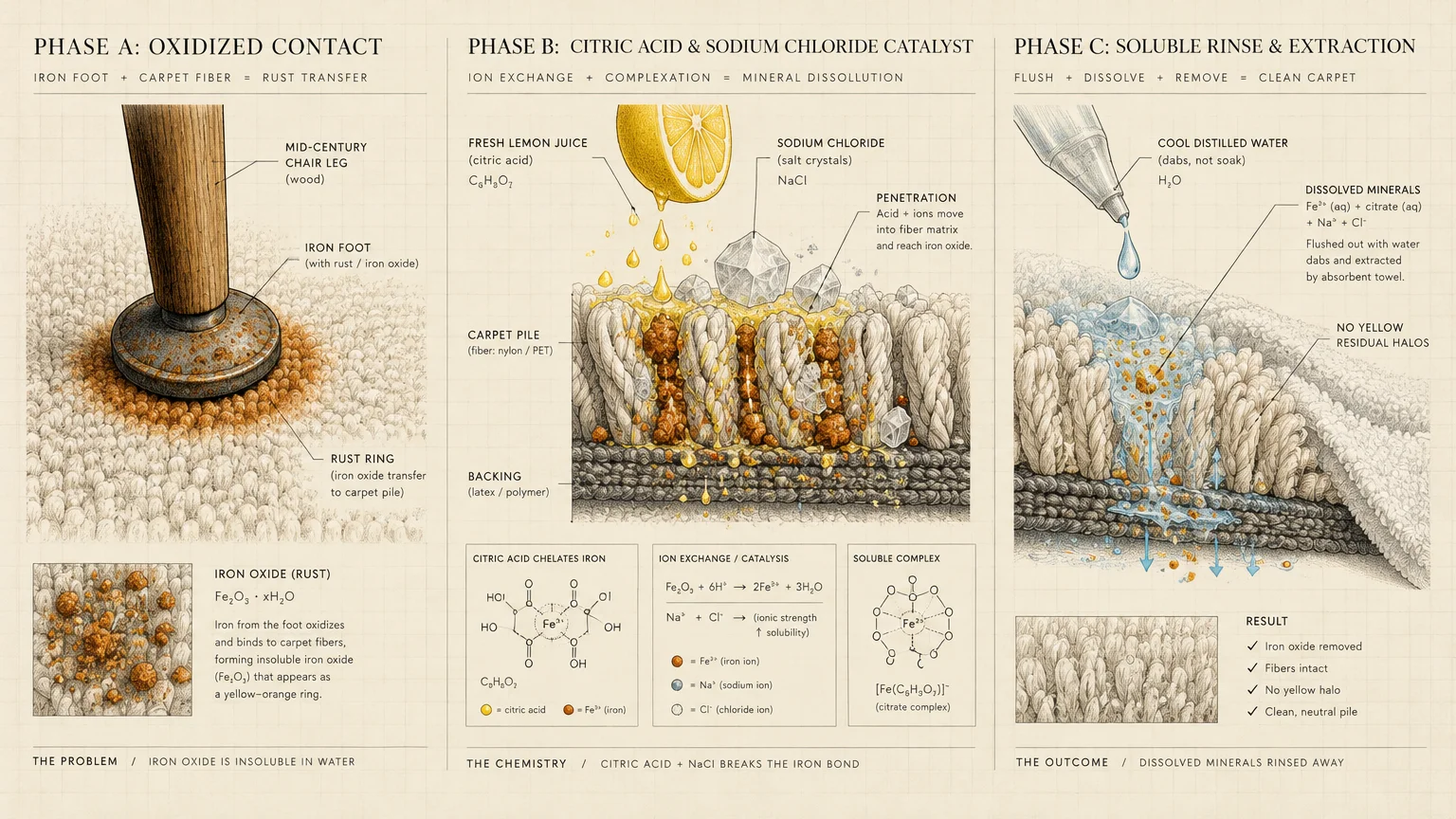
Trend #9: Oxidized Rust Marks from Vintage Metal Furniture
Layering patinated antiques over modern carpeting provides tactile contrast, but oxidized iron legs often leave stubborn orange rust rings. Rust forms an insoluble mineral bond that regular household detergents cannot dissolve.
Never apply chlorine bleach or alkaline detergents to iron stains, as these chemicals instantly oxidize and darken rust. Instead, rely on mild organic acids capable of solubilizing oxidized iron particles.
Combine fresh lemon juice with coarse table salt to form a gentle, rust-lifting chemical paste. Apply this natural paste directly over the rust deposit, allowing it to rest for thirty minutes.
The mild citric acid chelates iron oxide while salt crystals absorb the discolored moisture from rug filaments. Blot the area repeatedly with a damp, warm towel to lift the salt-acid matrix.
Rinse the patch with clear lukewarm water to neutralize residual lemon acid within the base foundation. Blotting firmly removes all acidic moisture before it can affect delicate backing fibers.
Vacuum thoroughly once dry to remove all microscopic salt grains that could abrade soft pile yarns. Place protective felt or lucite coasters beneath antique furniture casters to prevent recurring oxidation.
Trend #10: Protein Spills and Accidental Blood Transfers
Unplanned domestic accidents can transfer protein-based blood stains onto beloved bedroom or hallway runners. Protein stains demand strict temperature control, as incorrect techniques permanently coagulate biological molecules within textile fibers.
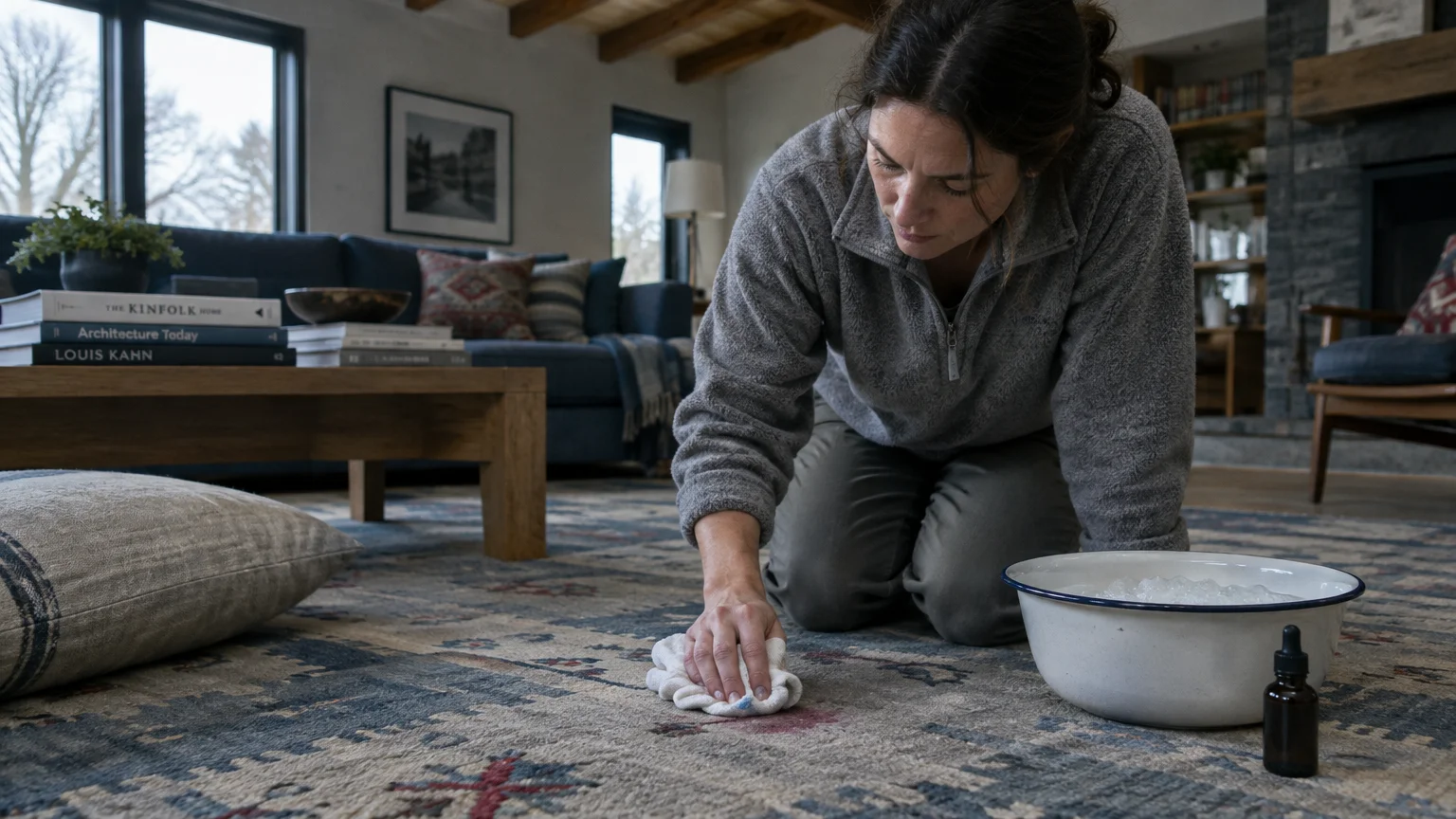
Always treat protein spills using strictly cold water; warm or hot water cooks biological proteins into the carpet core. Immediate cold hydration keeps organic molecules soluble for easy lifting.
Mix two teaspoons of liquid dishwashing soap into two cups of crisp cold water. Saturate a clean white washcloth with the solution and dab the stain with rhythmic, gentle pressure.
For stubborn dried blood, dilute one tablespoon of household ammonia into one-half cup of cold water on synthetic carpets. Ammonia safely breaks down dried protein bonds, releasing them cleanly from nylon and polyester filaments.
Avoid using ammonia solutions on authentic wool or silk rugs, as alkaline substances dissolve natural protein fibers. On fine wool, substitute diluted three-percent hydrogen peroxide applied cautiously with a dropper.
Rinse thoroughly with ice-cold water and blot firmly with pristine white towels until completely dry. Fast moisture extraction prevents dark discoloration from resurfacing through capillary action.

The Big Picture: Weaving These Trends into Your Home
Curating an exceptional living space requires balancing bold aesthetic choices with realistic maintenance strategies. Selecting durable high-twist wools or treated synthetic weaves ensures your design vision withstands lively social entertaining.
Incorporate custom low-pile area rugs in dining environments where spill risks naturally concentrate. Low-pile profiles simplify spot removal and allow cleaning agents to penetrate soil without lingering in deep yarns.
Essential carpet cleaning tips protect your textile flooring throughout every season of entertaining. Establishing structured care routines preserves both tactile comfort and vibrant visual appeal across varied rooms.
Assemble a sophisticated carpet emergency kit stocked with microfiber towels, white vinegar, clear dish soap, and enzyme treatments. Storing dedicated supplies in your utility pantry ensures rapid response times when spills occur.
Place elegant architectural runners along high-transition corridors linking kitchen prep areas to formal sitting rooms. These sacrificial layers protect irreplaceable wall-to-wall carpets while framing pathways with textural interest.
Establish regular maintenance protocols, including bi-weekly HEPA-filter vacuuming and annual professional hot-water extraction. Routine extraction cleans deeply embedded grit that undermines fiber strength over extended periods.
By pairing timeless flooring selections with disciplined spot-cleaning techniques, you preserve both comfort and architectural elegance. Your carpets will continue to deliver quiet luxury and tactile warmth for decades to come.
For the latest color forecasts, consult industry leaders like Pantone and paint companies like Benjamin Moore. For professional design standards, refer to the American Society of Interior Designers (ASID).
Disclaimer: This article reflects design trend analysis and predictions. Personal taste and timeless design principles should always guide your decorating choices.
Frequently Asked Questions
How do you test carpet fibers for colorfastness before spot cleaning?
Moisten an inconspicuous section, such as an interior closet corner, with your chosen cleaning solution using a white cloth. Press firmly against the pile for sixty seconds to check for unstable dyes.
If color transfers to your cloth, discontinue cleaning immediately and contact professional textile restorers. Untested solutions risk causing permanent bleaching or color bleed across prominent floor areas.
Can you apply steam cleaning to fresh tannin or protein stains?
Avoid applying thermal steam directly onto fresh biological or tannin spills. High heat instantly denatures proteins and binds plant chromogens, fusing the stain permanently into synthetic and natural fibers.
Always extract liquid stains using cold or lukewarm chemical spot treatments prior to using steam. Steam extraction functions best as an annual sanitizing measure across previously spot-cleaned flooring.
Which carpet fibers offer the greatest stain resistance and longevity?
Solution-dyed nylon provides unparalleled stain resilience because pigments permeate the entire chemical strand during manufacture. This synthetic structure repels liquid penetration while retaining brilliant saturation under direct sunlight.
High-grade New Zealand wool also offers inherent resistance thanks to its natural protective lanolin coating. Wool provides quiet luxury and flame resistance, making it an enduring staple for high-end residential interiors.
Why is immediate blotting superior to aggressive scrubbing?
Aggressive scrubbing untwists yarn plies, causing permanent fiber bloom and fraying that ruins your carpet’s surface light reflection. Scrubbing also spreads dissolved pigment outward into surrounding pristine areas.
Gentle blotting draws liquids vertically out of the pile without damaging structural weave geometry. Consistent vertical absorption removes up to ninety percent of liquids before stains take hold.