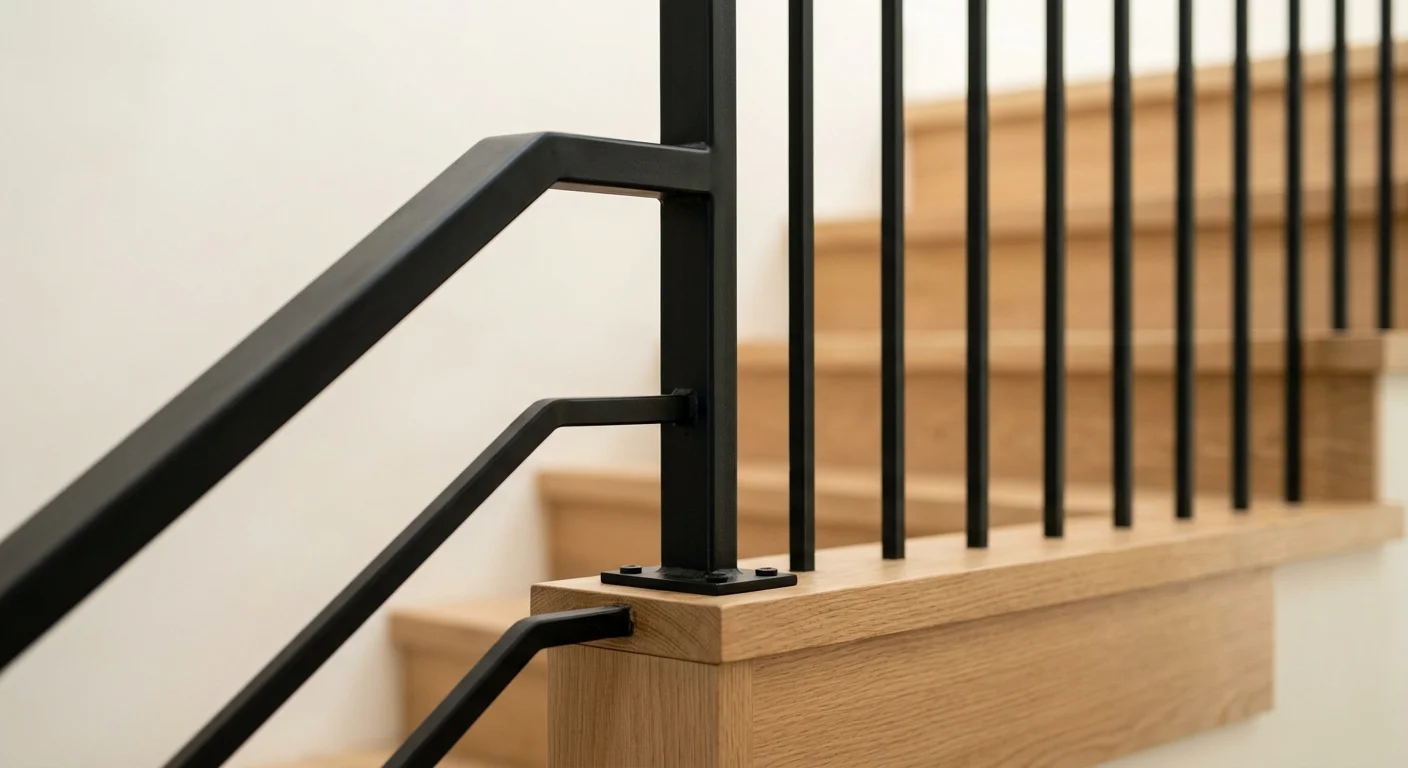
Trend #7: Custom Ironwork and Modernized Railing Profiles
Updating your staircase railing system produces one of the most immediate structural transformations in a home renovation. Outdated wooden spindles can weigh down an entryway, whereas modern ironwork, fluted timber balusters, or sleek cable rail systems restore light flow and spatial transparency. When decorating stair railings, balance artistic expression with rigorous building safety codes to ensure long-term functionality and structural compliance.
Building safety regulations enforce strict dimensions for elevated residential structures. According to IRC Section R311.7.8, residential handrails must be installed at a height between 34 and 38 inches, measured vertically from the nose of the stair tread to the top of the gripping surface. Furthermore, IRC Section R312.1 mandates guardrails with a minimum height of 36 inches for open-sided staircases or elevated landings positioned more than 30 inches above the lower floor level. Handrails are mandatory on at least one side of any staircase flight containing 4 or more risers. Additionally, vertical spindles or decorative panels must comply with the 4-inch sphere rule, meaning gaps between balusters must be spaced narrowly enough that a 4-inch sphere cannot pass through at any point. Adhering to these safety margins protects children while allowing you to explore modern wrought-iron motifs, matte-black steel grids, or warm oak top-rails.