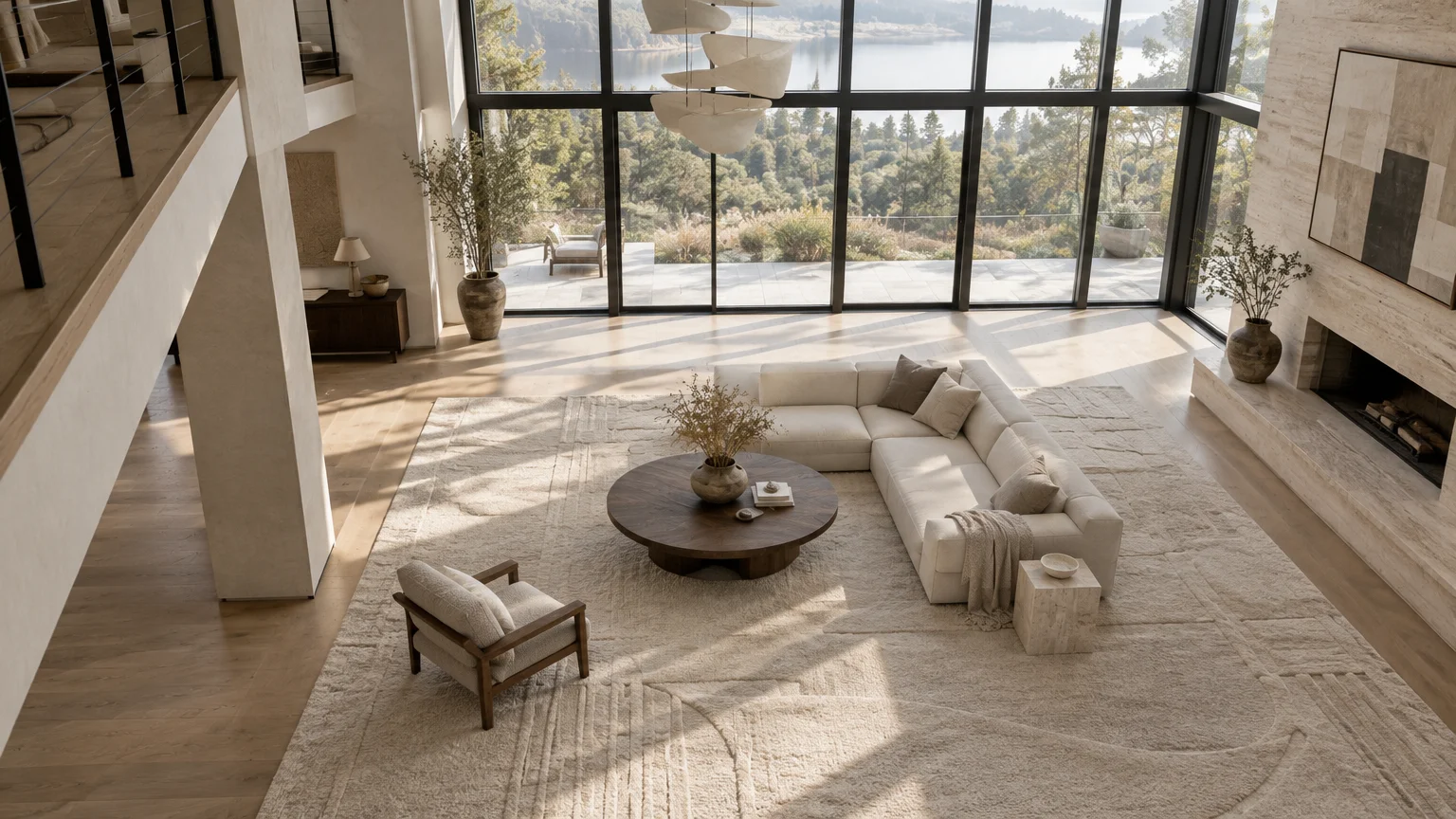
An exceptional area rug does more than protect your flooring; it instantly establishes scale, anchors furniture, and harmonizes disparate design elements. Choosing the right foundation transforms an ordinary seating arrangement into an intentional, curated sanctuary.
Today’s living room rugs balance tactile luxury with enduring craftsmanship. By understanding current shifts in texture, pattern, and proportion, you can select a statement piece that elevates your entire home.
Explore our definitive edit of ten transformative rug trends designed to bring cohesive elegance to your living room decor.
Trend #1: High-Low Sculptural Wool
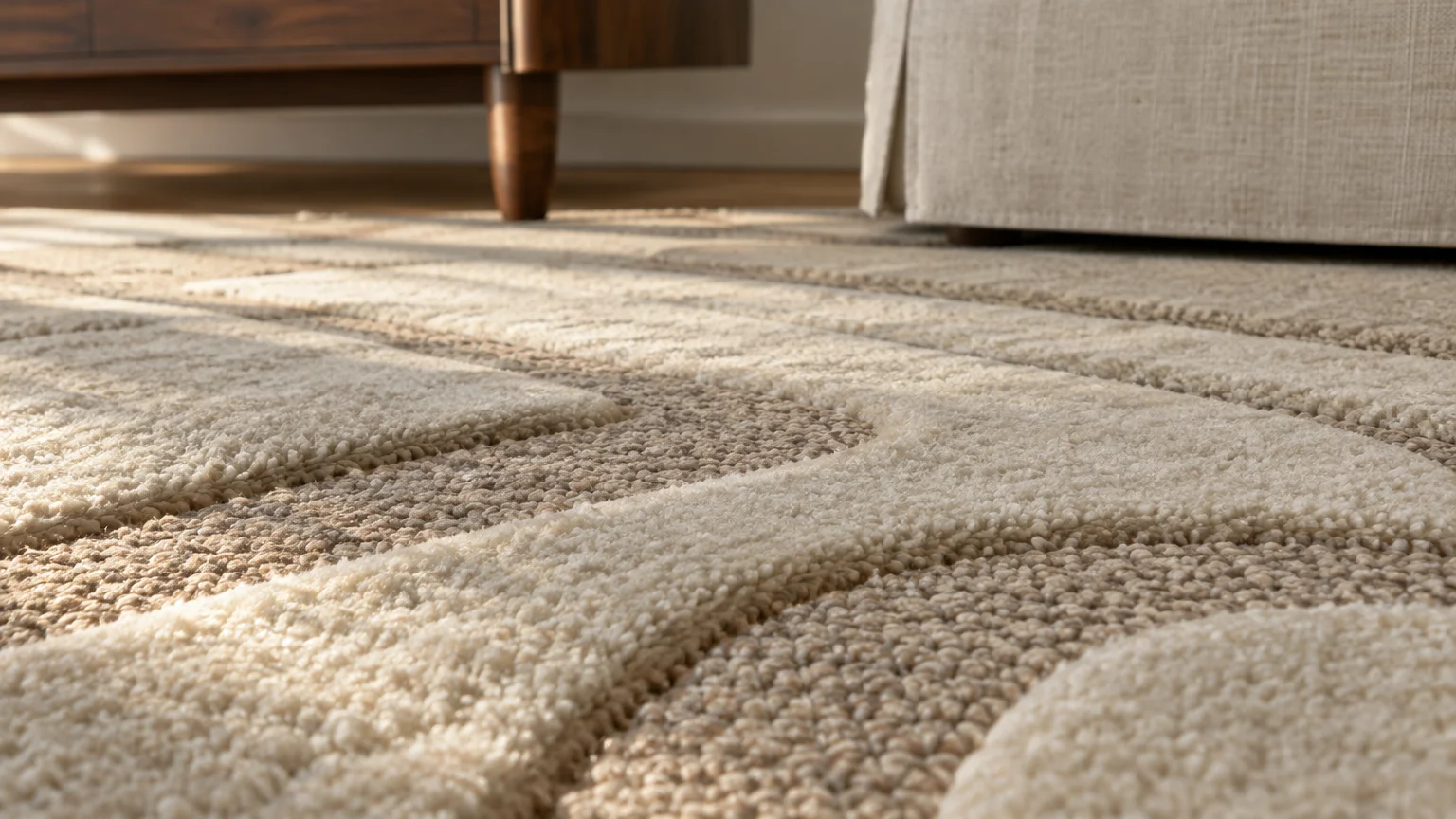
Sculptural rugs utilize variable pile heights to carve subtle architectural patterns directly into plush wool. This tactile approach delivers rich visual intrigue without overwhelming a serene interior palette.
Designers rely on this high-low architecture to introduce quiet luxury into contemporary living spaces. The raised loops capture ambient light beautifully throughout the day, generating delicate shifts in shadow.
Hand-tufted New Zealand wool remains the benchmark material for this dimensional aesthetic. Its natural lanolin content repels stains while providing resilient underfoot cushion that withstands regular family use.
Choose warm ivory, oatmeal, or soft alabaster tones to maximize the architectural depth of the sheared fibers. These understated hues allow the artisanal shearing and micro-grooves to command focus.
Pair your sculptural wool rug with sleek walnut side tables and linen upholstery. The juxtaposition of smooth wood against plush wool creates an inviting, balanced living room decor.
Maintain the defined edges of the pile by rotating the rug biannually. This simple care ritual distributes foot traffic evenly and keeps the carved motifs sharp.
Trend #2: Distressed Heritage Oushaks
Authentic antique and vintage-inspired Oushak rugs bring historical depth and romantic provenance to contemporary spaces. Their softly faded motifs soften rigid architectural lines with effortless, aged grace.
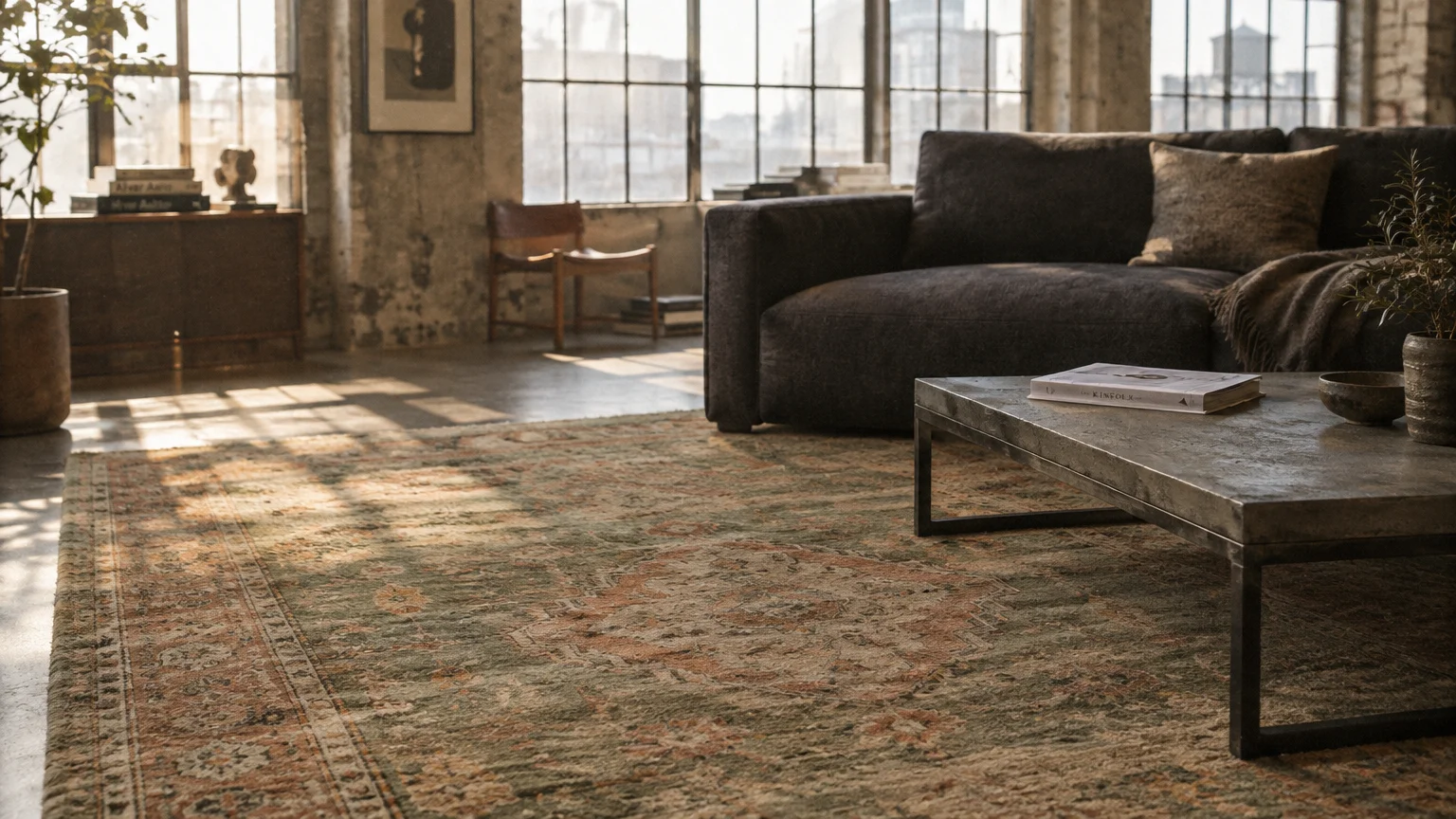
These storied textiles feature muted vegetable-dye palettes, including dusty sage, faded apricot, and weathered terra cotta. Such tones bridge the gap between historic grandeur and relaxed modernism.
A distressed Turkish weave introduces lived-in warmth, grounding minimalist seating with authentic soul. The natural abrash—intentional color variation in the yarn—hides daily foot traffic remarkably well.
Hand-knotted from hand-spun wool, these rugs feature a loose knot structure that feels remarkably relaxed underfoot. They adapt gracefully to both historic residences and industrial loft settings.
Place an oversized Oushak beneath modern modular seating to generate immediate visual tension. This deliberate contrast makes contemporary furniture feel collected, personal, and timeless.
Pair these vintage weaves with blackened steel light fixtures or raw concrete accents. The clash of rugged industrial finishes and soft, timeworn wool yields an evocative, layered aesthetic.
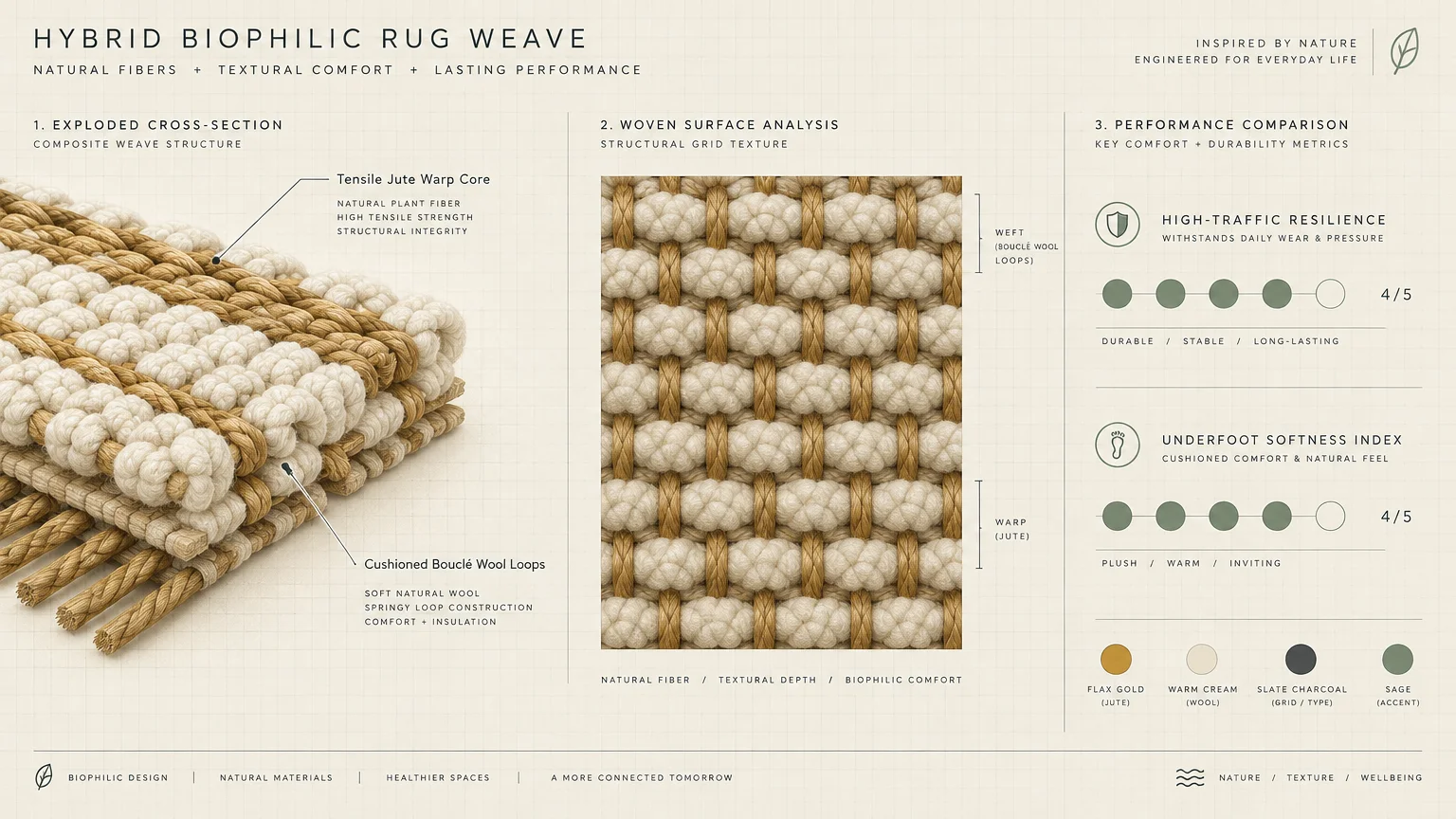
Trend #3: Biophilic Jute and Bouclé Blends
Biophilic interior design continues to reshape residential spaces by celebrating raw, natural textures. Modern weavers now blend coarse jute fibers with soft bouclé wool to create durable, tactile foundations.
Traditional raw jute can feel coarse underfoot, but introducing plush loops creates surprising residential comfort. This composite weave resists wear while maintaining an organic, earthy presence.
The resulting surface delivers golden wheat tones and creamy undertones that harmonize with indoor foliage. Natural plant fibers reflect outdoor light softly, brightening darker corners of your living room.
This hybrid material performs exceptionally well in high-traffic zones where pure wool might show wear. The structural integrity of jute anchors the textile, preventing unsightly stretching or curling.
Style this blend in casual living rooms or sunlit dens where organic modernism reigns. It pairs effortlessly with travertine cocktail tables, unlacquered brass accents, and raw linen drapes.
Avoid placing jute blends in damp environments to protect the organic plant stems from moisture damage. A dry micro-seal treatment provides additional stain resistance for everyday peace of mind.
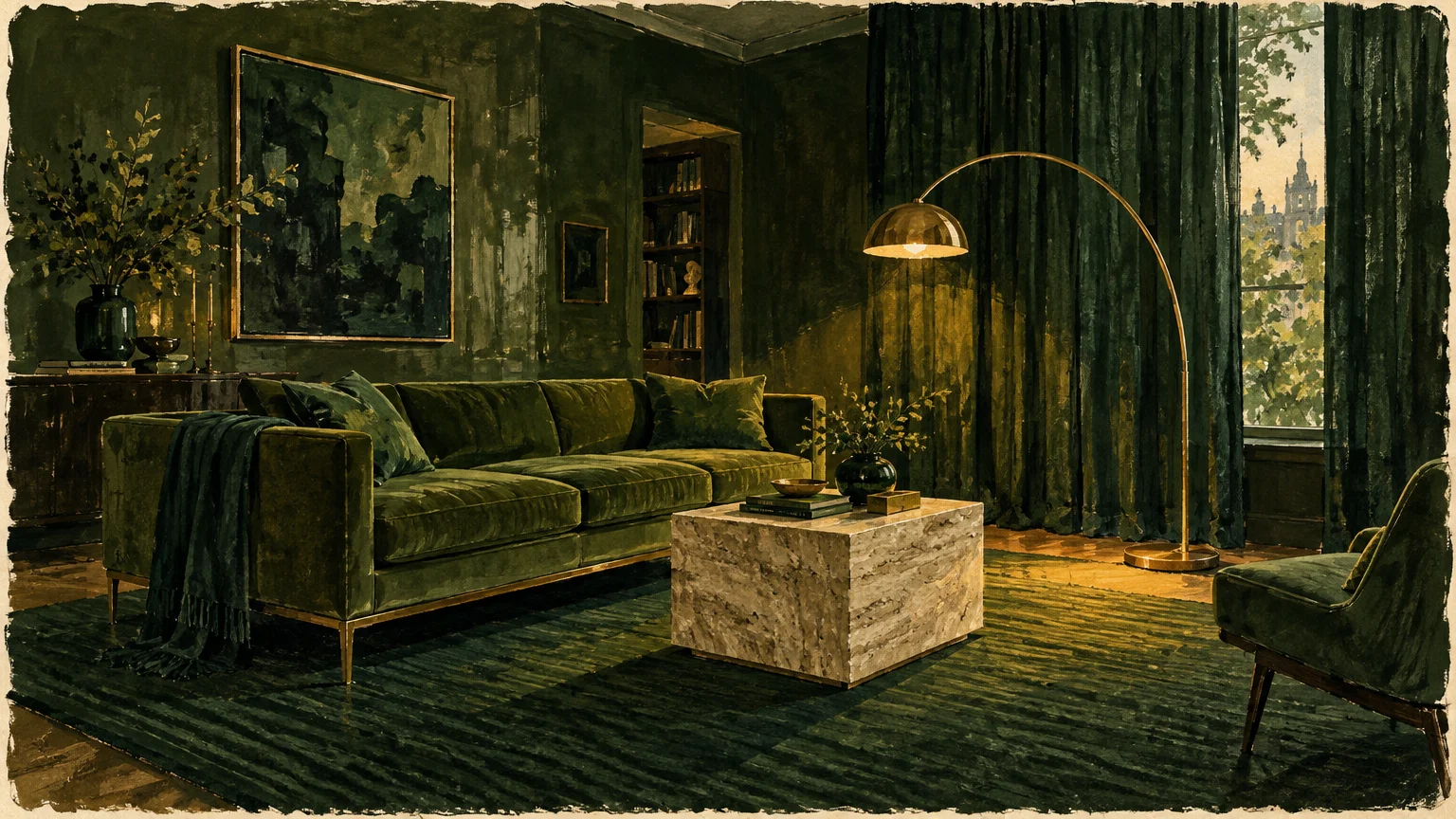
Trend #4: Chromatic Color Drenching
Saturated living room rugs act as the dramatic foundation for bold color drenching schemes. Rather than treating flooring as an afterthought, this approach establishes the rug as the chromatic epicenter.
Deep ochre, rich forest green, and burgundy anchor the floor while wrapping the space in tonal warmth. Extending these shades upward onto upholstered seating creates an enveloping, cozy atmosphere.
High-saturation floor coverings define seating zones decisively in expansive open-concept layouts. They command visual focus, instantly clarifying spatial boundaries without physical dividers.
Select dense cut-pile wool or plush velvet finishes to give the saturated color maximum optical depth. The cut pile absorbs ambient glare, allowing the dye to appear richer and more uniform.
Balance an intense jewel-toned rug with tailored silhouettes and clean architectural lines. Matte walls and understated lighting prevent the vibrant pigment from overwhelming your living room decor.
Echo the primary rug shade in decorative throw pillows, artwork, or ceramic vessels. This rhythmic repetition of color weaves the entire scheme into a unified design statement.
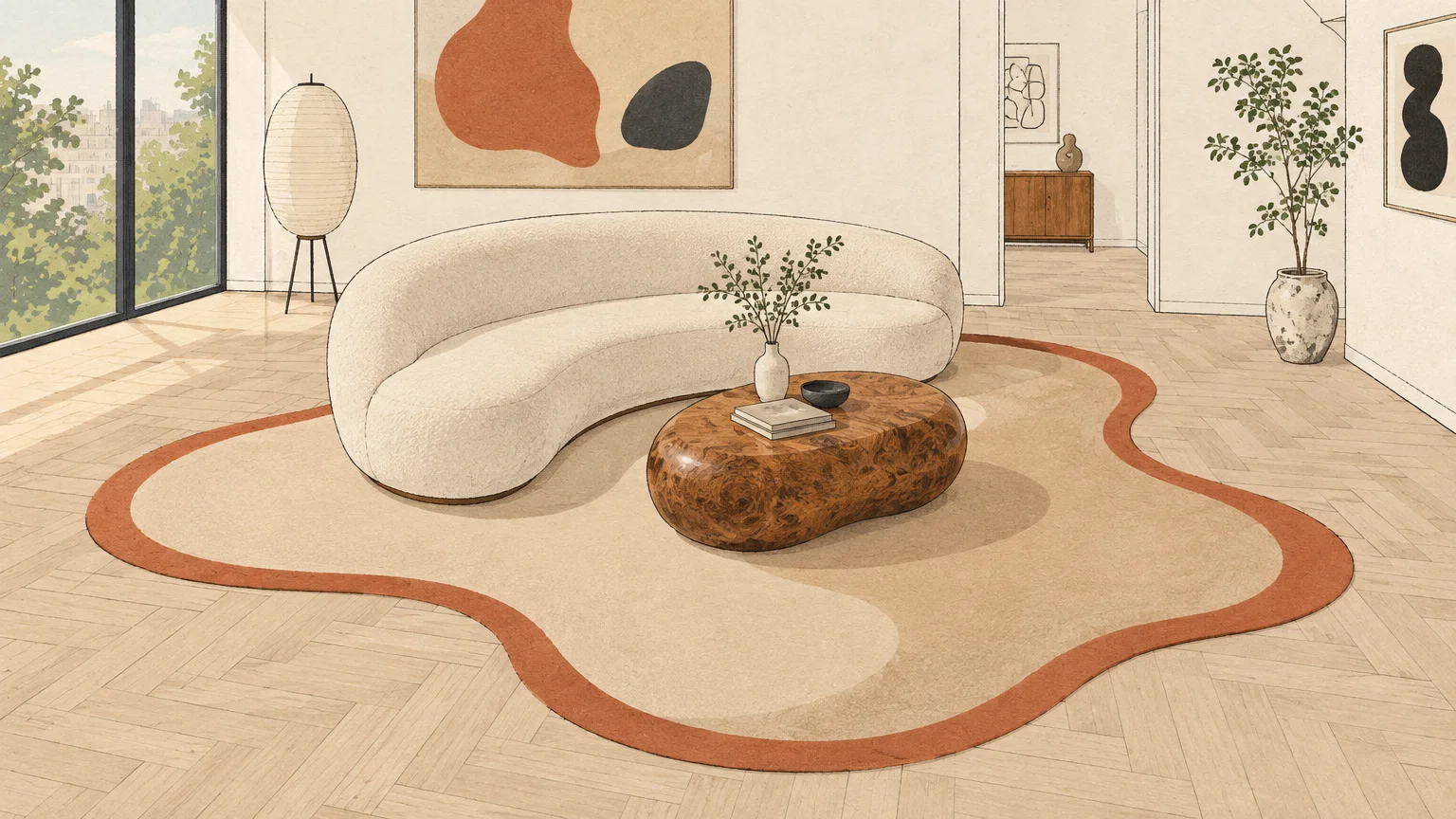
Trend #5: Asymmetrical and Freeform Contours
Rigid rectangular layouts are yielding to organic, curvilinear rug shapes that soften boxy living rooms. Fluid silhouettes break the tyranny of parallel lines, injecting dynamic energy into open floor plans.
These artistic area rug ideas resemble undulating river stones or abstract watercolor strokes on canvas. Their irregular perimeters draw the eye outward, creating an illusion of expanded square footage.
A freeform contour pairs naturally with curved sofas and rounded accent seating. By echoing organic architectural elements, the rug unites disparate furniture pieces into an intentional arrangement.
Weavers execute these bespoke silhouettes using custom hand-tufting techniques that permit sweeping, unconstrained borders. Beveled edges outline the contours, giving each piece a distinct, tailored profile.
Select low-sheen wool or dense botanical silk to keep the unconventional silhouette refined. Neutral, heathered tones let the sculptural boundary become the true focal point.
Position the widest section of an irregular rug beneath your main sofa to ground the arrangement. Allow the narrower, asymmetrical curves to meander gracefully toward entryways and accent seating.
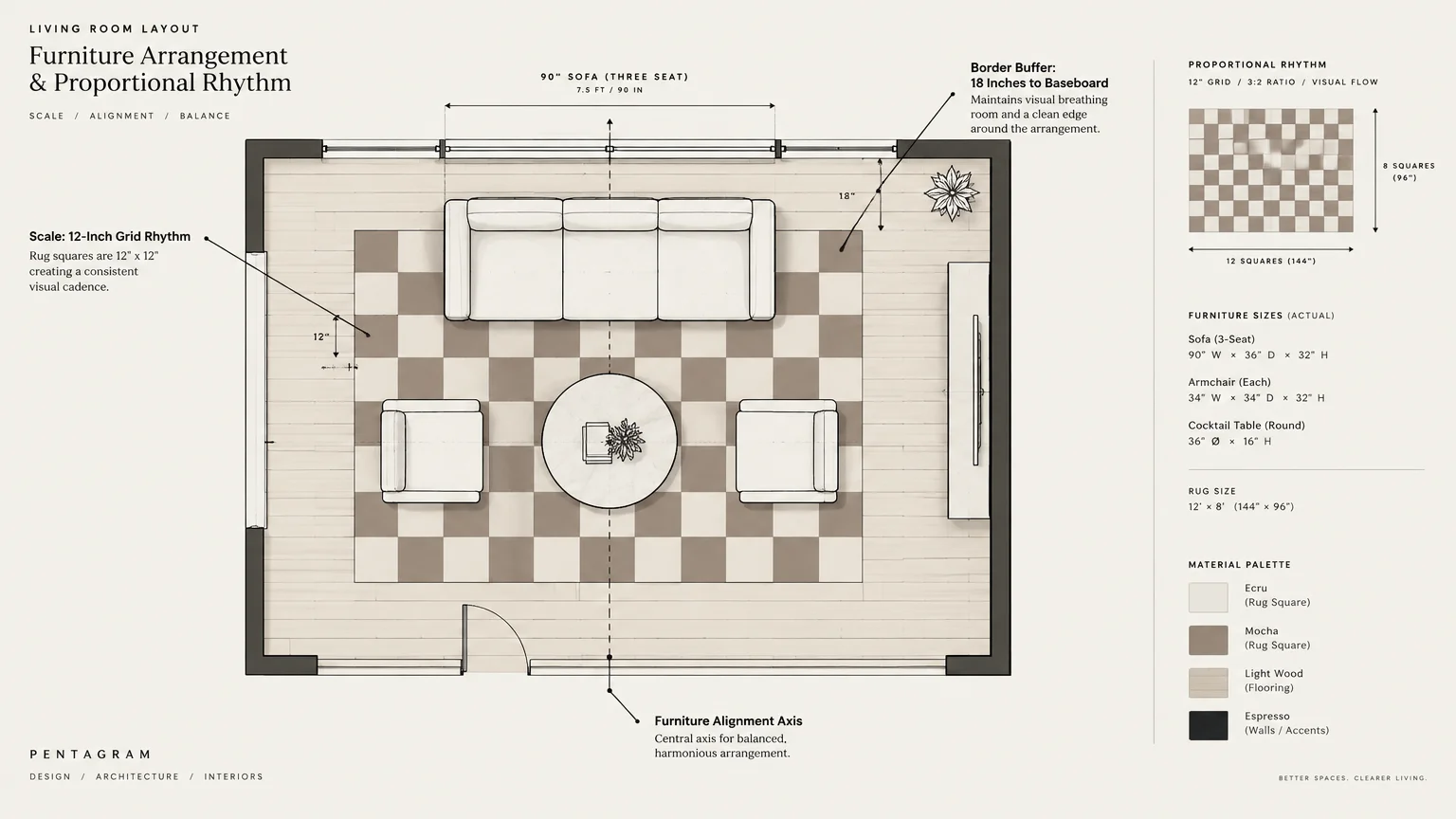
Trend #6: Checkerboard and Graphic Rhythm
Modern checkerboard patterns offer a fresh interpretation of classic Parisian parquet and marble flooring. Enlarged, soft-edged squares replace harsh checkerboard lines, delivering tailored rhythm without visual chaos.
Designers utilize two-tone palettes like olive and cream, or taupe and bone, for a sophisticated aesthetic. This subtle contrast injects playful energy into otherwise restrained, transitional interiors.
The repeating grid provides structural stability beneath eclectic furniture arrangements. It visually organizes the floor, allowing you to showcase varied accent chairs and sculptured tables seamlessly.
Flatwoven wool constructions suit graphic checks particularly well, ensuring clean lines and minimal pile distortion. The tight flatweave resists furniture indents while providing a crisp, graphic presentation.
Ensure your rug styling tips include scaling the grid proportion appropriately to the room. Oversized blocks suit expansive rooms, while smaller scale grids work best in compact seating nooks.
Temper the graphic geometry by introducing rounded coffee tables and organic ceramic accessories. The contrast between angular floor lines and curvy tabletop decor fosters visual equilibrium.
Trend #7: Silk-Embossed Abstract Landscapes
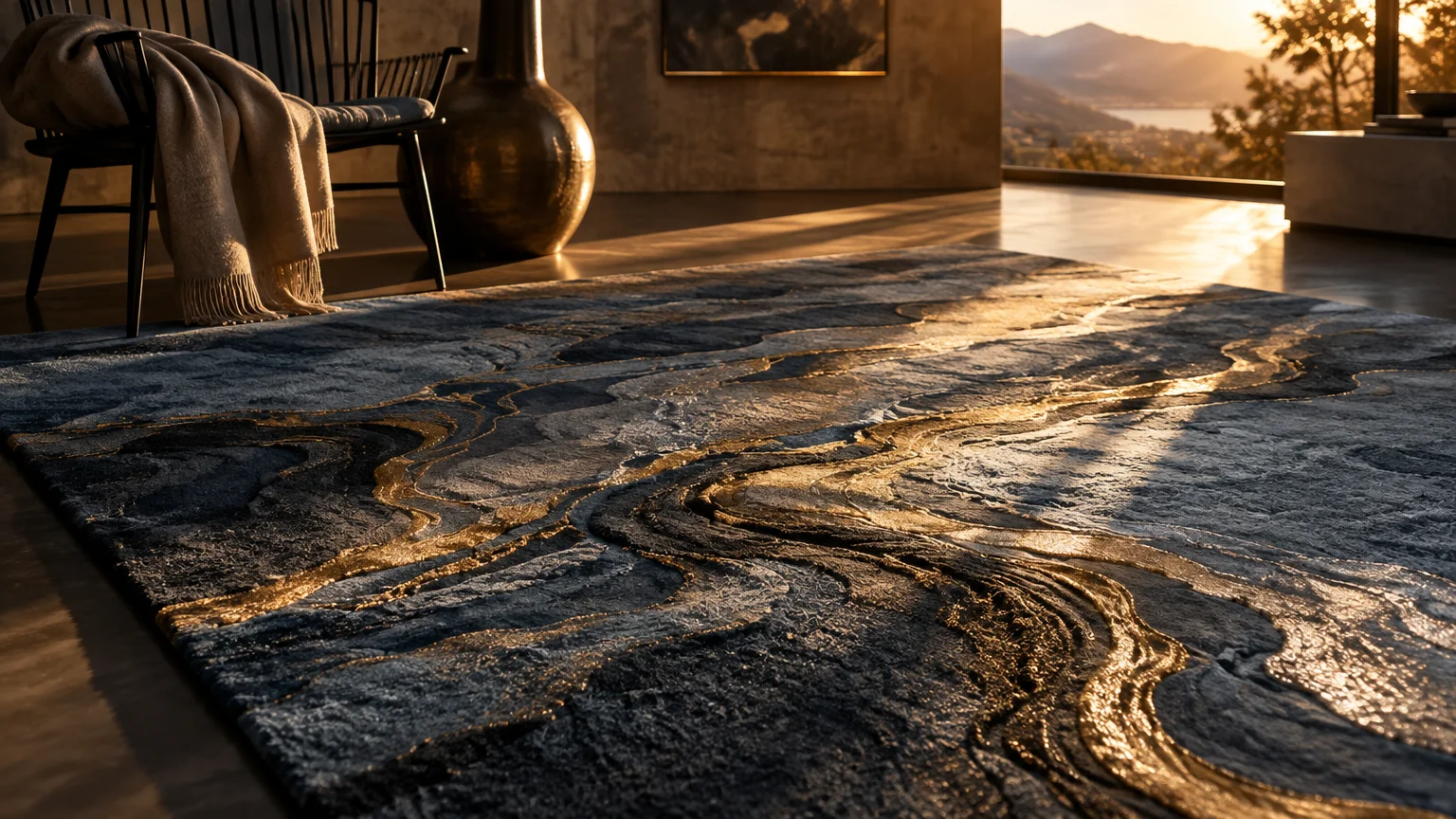
Evoking mist-covered mountains and painterly horizon lines, abstract landscape rugs serve as functional art. Weavers combine matte New Zealand wool with shimmering bamboo silk to create dimensional, ethereal compositions.
The reflective sheen of silk catches natural daylight, creating subtle shifts in tone as you navigate the room. This kinetic quality breathes continuous life into formal living spaces.
Palette options frequently draw from mineral landscapes, incorporating slate blue, charcoal, and warm quartz. These moody hues establish quiet, contemplative luxury without demanding loud accent pieces.
Hand-embossed carving separates the silk accents from the matte wool ground. This tactile delineation elevates the floor textile from a simple floor covering into museum-grade textile art.
Keep surrounding furniture streamlined and low-profile so the floor composition remains visible. Floating glass or slender metal tables ensure the rug’s painterly brushstrokes take center stage.
Position directional picture lights or dimmable floor lamps to wash across the silk surface. Strategic illumination highlights the contrasting fiber sheens during evening entertaining.
Trend #8: Earthy Terracotta and Clay Weaves
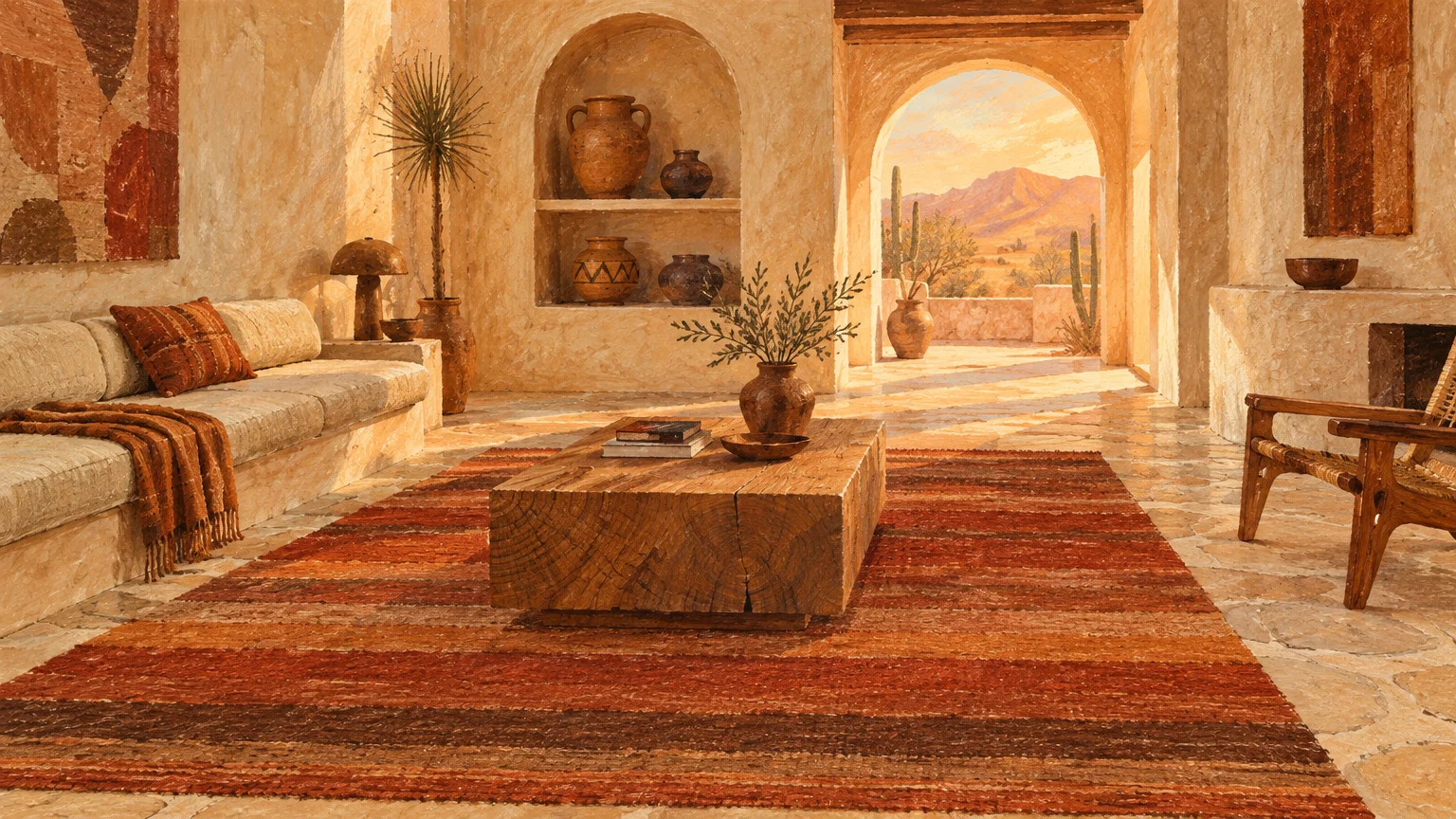
Warm earth pigments have displaced cold grays, bringing Mediterranean warmth to contemporary flooring. Terracotta, sienna, and baked clay rugs infuse living rooms with grounding, comforting energy.
Hand-knotted flatweaves in these sunset hues evoke rustic villas and sun-drenched coastal architecture. They establish a cozy, welcoming mood that encourages relaxed social gatherings.
Clay tones provide an exceptional backdrop for dark wood finishes, patinated leather, and brushed bronze hardware. The natural pigments deepen under warm indoor lighting, enriching the evening ambiance.
Weavers achieve these sunbaked tones using natural madder root, pomegranate rind, and iron-rich clays. These natural dye baths develop an enviable patina over decades of residential use.
Combine a terracotta foundation with soft cream upholstery to avoid an overly heavy look. Natural stone accents, such as limestone or travertine, complete the serene Mediterranean aesthetic.
Incorporate olive trees or ficus plants in aged terracotta urns to mirror the floor’s warmth. This living greenery introduces a refreshing botanical counterweight to the warm, mineral textile.
Trend #9: Layered Flatweaves over Raw Sisal
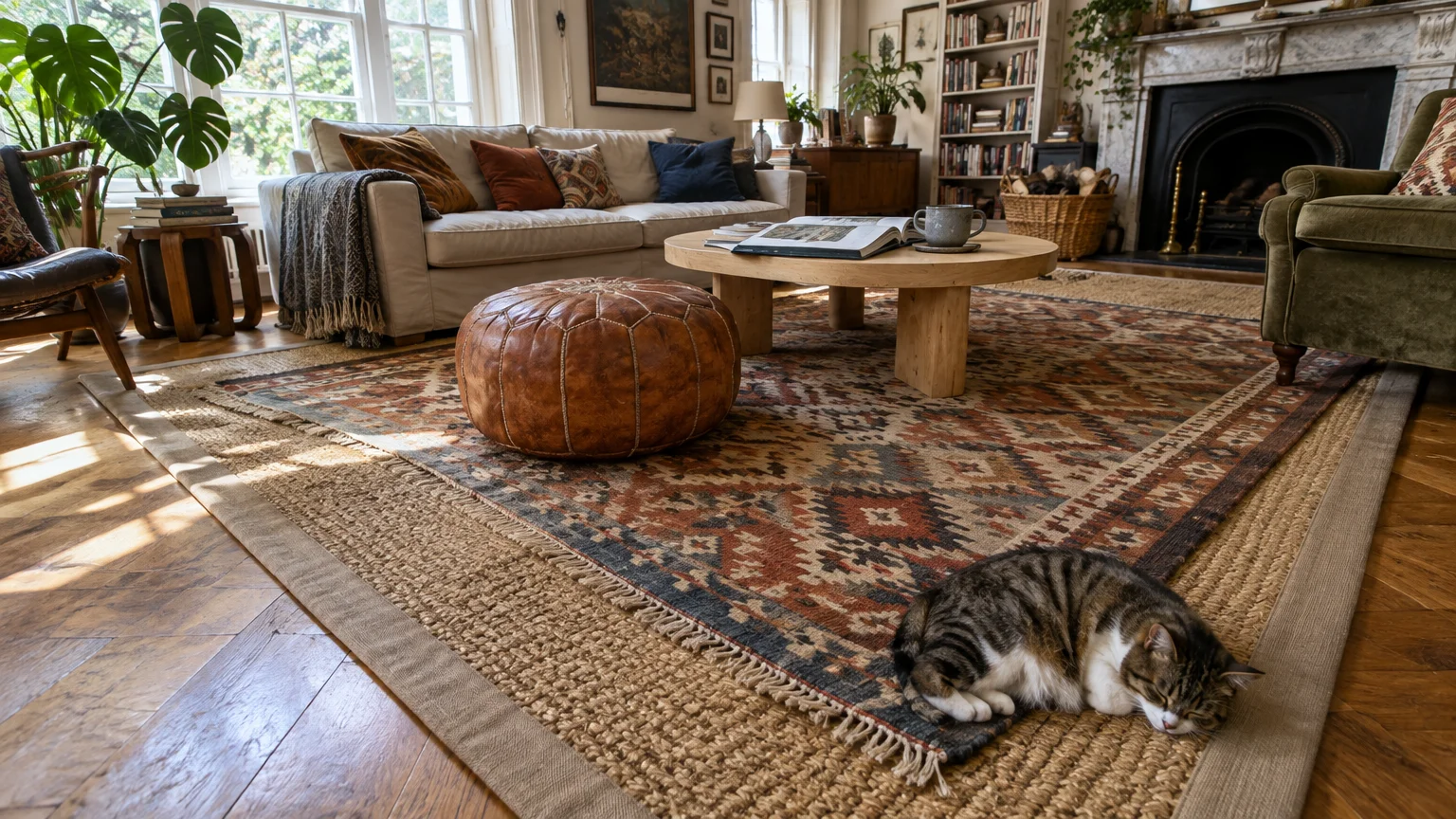
Layering textiles remains a favored technique among interior designers seeking dimensional depth. Placing a smaller, patterned vintage flatweave over a broad, neutral sisal rug produces relaxed sophistication.
This method solves common rug size guide dilemmas in unusually shaped or expansive rooms. The large base rug defines the primary zone, while the top accent rug frames the central seating group.
Contrasting textures heighten sensory interest across the floor. The coarse, structured sisal provides a sturdy frame, letting the supple wool flatweave take the spotlight.
Select a chunky bouclé or herringbone weave for your base sisal rug. The visible woven texture prevents the oversized neutral base from appearing sterile or unfinished.
Maintain visual cohesion by selecting an accent rug that echoes the undertones of the base layer. Secure both textiles with quality rug pads to prevent shifting and bunching.
Angle the top layer slightly askew for an informal, bohemian touch, or align it squarely for modern restraint. Both arrangements celebrate layered textures and intentional styling mastery.
Trend #10: Deep Indigo and Moody Noir
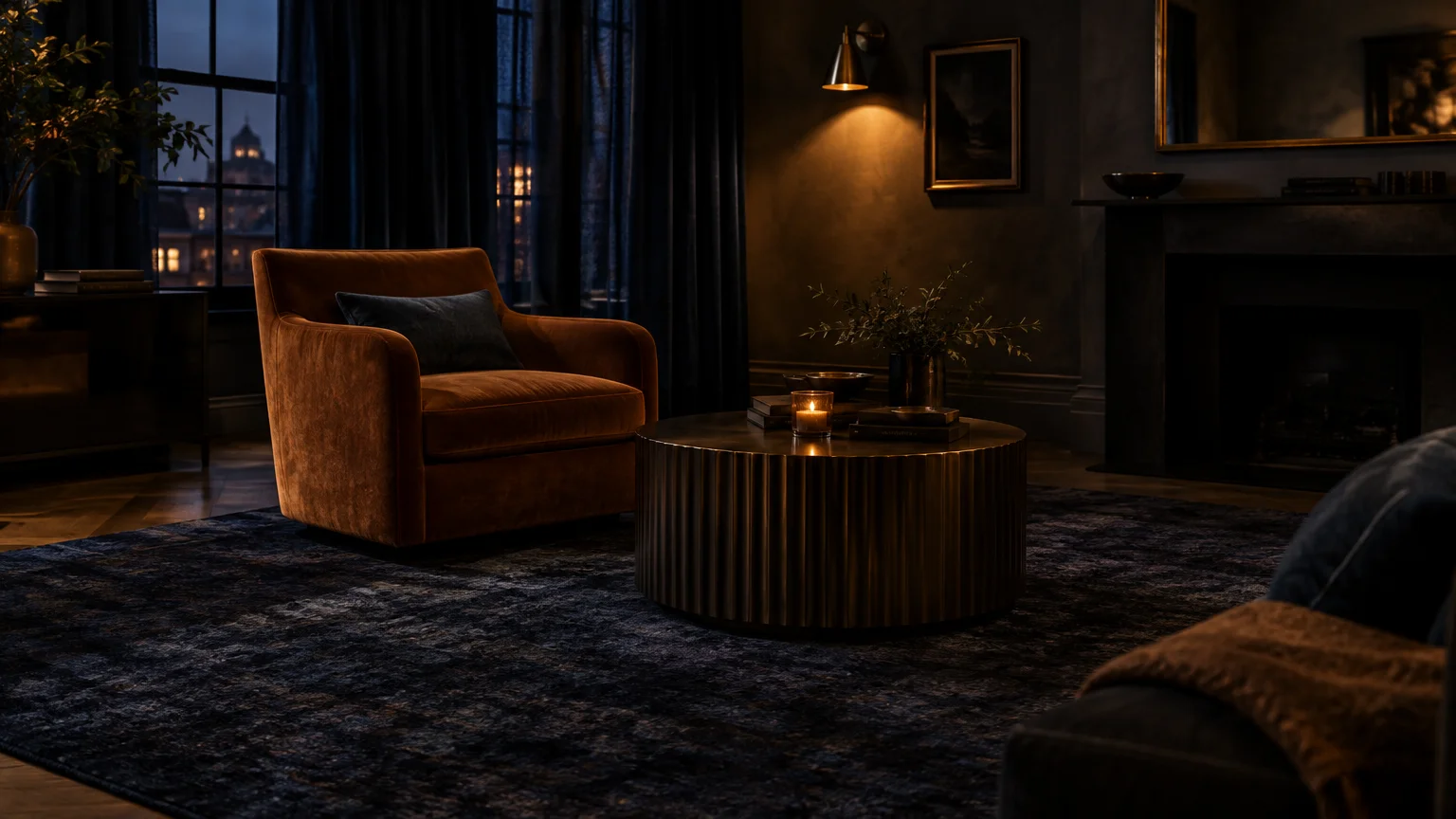
Rich midnight blues and muted blacks anchor a room with undeniable gravitas. Rather than darkening a living room, a deep indigo rug establishes a crisp, theatrical foundation.
Dark textiles contrast crisply against light oak flooring and pale plaster walls. This striking tonal difference emphasizes perimeter borders and architectural millwork.
Look for subtle low-contrast detailing, such as tone-on-tone pinstripes or faded traditional borders. These delicate nuances prevent the deep hue from reading as a flat, unyielding void.
Wool dyed with authentic indigo develops subtle ocean-deep variations that shift under diverse lighting angles. This chromatic complexity imparts quiet prestige to contemporary or classical rooms alike.
Pair noir rugs with warm metallic accents and cognac leather seating to soften the palette. The interplay between dark wool and warm leather creates an atmosphere of timeless sophistication.
Ensure ample ambient and task lighting illuminates seating perimeters to maintain visual balance. Soft, warm lighting prevents dark-toned textiles from swallowing shadows in the evening.
The Big Picture: Weaving These Trends into Your Home
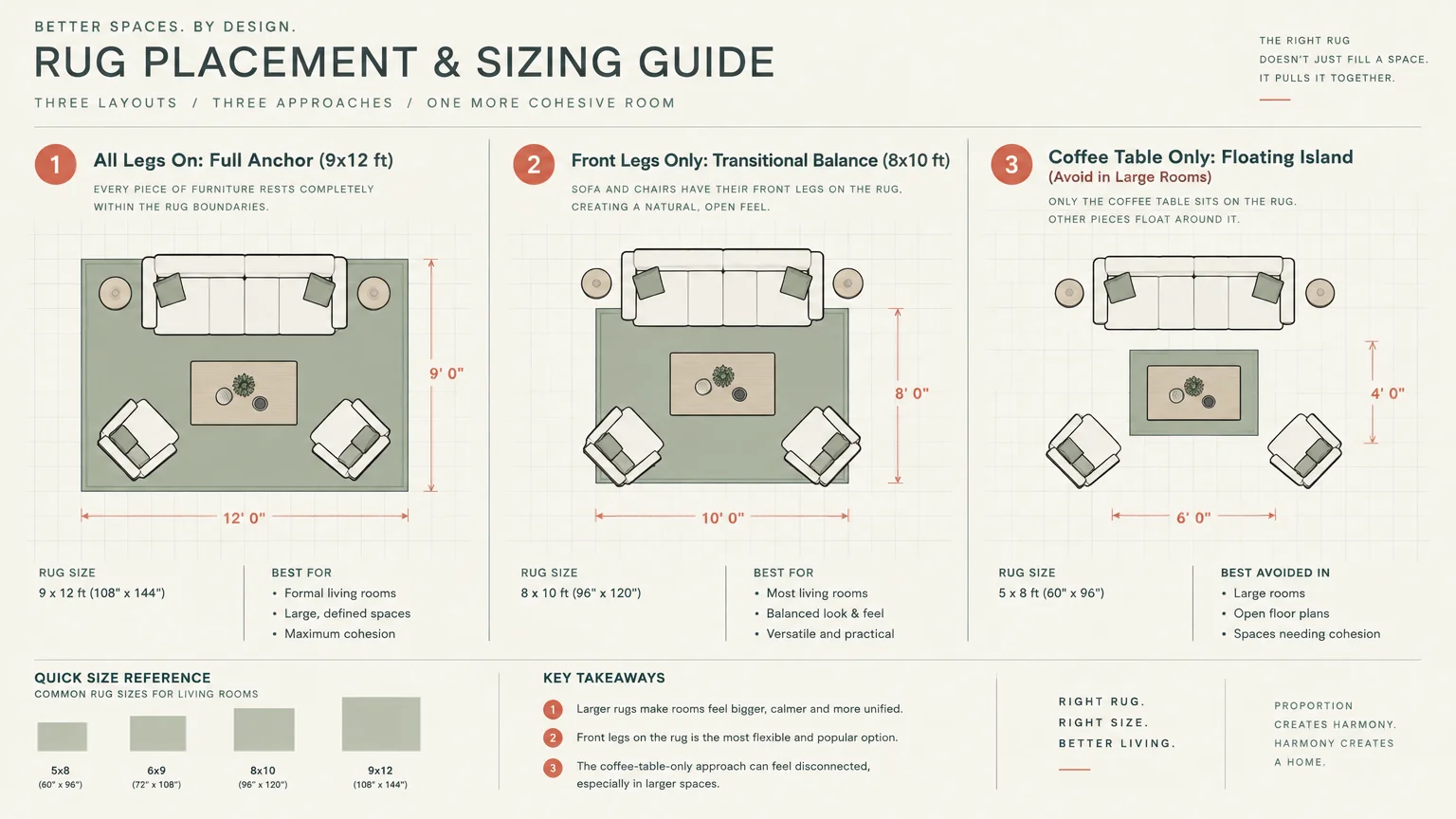
Selecting the right area rug requires balancing personal aesthetic tastes with spatial proportions. A rug should never float like an isolated island adrift in your seating area.
Adhere to a proper rug size guide to ensure structural harmony throughout your floor plan. All front furniture legs should rest securely on the textile to unify the conversational group.
In larger living rooms, position all furniture legs entirely on the rug surface. This creates an expansive, cohesive footprint that feels grand, grounded, and luxurious.
Leave at least ten to eighteen inches of bare flooring exposed around the perimeter of the room. This breathing room frames the textile and accentuates your natural hardwood or stone flooring.
Consider your lifestyle needs alongside visual aesthetics before committing to delicate materials. High-traffic living rooms benefit from high-twist wool, while formal parlors welcome luminous silk accents.
Layer lighting thoughtfully to showcase subtle textures and low-profile weaves after dusk. Downlights, floor lamps, and natural light each reveal different dimensions within artisanal piles.
Always invest in a dense, felted rug pad to protect both your flooring and the textile weave. Quality pads prevent slipping, absorb acoustic vibrations, and provide luxurious underfoot comfort.
For the latest color forecasts, consult industry leaders like Pantone and paint companies like Benjamin Moore. For professional design standards, refer to the American Society of Interior Designers (ASID).
Disclaimer: This article reflects design trend analysis and predictions. Personal taste and timeless design principles should always guide your decorating choices.
Frequently Asked Questions
How do I choose the correct rug size for an open-concept living room?
Measure the footprint of your primary seating arrangement rather than the outer walls. Choose a rug large enough to anchor all front legs of sofas and accent chairs comfortably.
A well-proportioned rug establishes clear architectural boundaries within an open floor plan. Avoid undersized rugs, which fragment sightlines and diminish visual flow.
Can you layer modern rugs over wall-to-wall carpeting?
Layering an area rug over wall-to-wall carpeting adds dimensional depth and protects underlying fibers. Choose a firm, low-profile carpet base to prevent excessive shifting.
Use a specialized carpet-to-carpet non-slip pad underneath to keep edges flat. Select contrasting textures, such as placing a thick wool rug over looped berber.
How do I know if a bold rug trend will stand the test of time?
Evaluate whether the trend relies on quality natural materials and artisanal construction techniques. Handcrafted wool, silk, and natural vegetable dyes possess inherent durability that outlasts fleeting novelty.
Look for organic patterns and balanced hues that complement your existing architectural finishes. Timeless designs harmonize with your architecture rather than competing with it.
What is the best way to maintain high-low textured rugs?
Vacuum your textured wool rug regularly using suction-only mode without rotating beater bars. Beater brushes can snag delicate loops and fray raised shearing over time.
Blot spills immediately with clean, dry towels rather than scrubbing the pile aggressively. Professional cleaning every few years preserves natural fiber integrity and restores tactile softness.