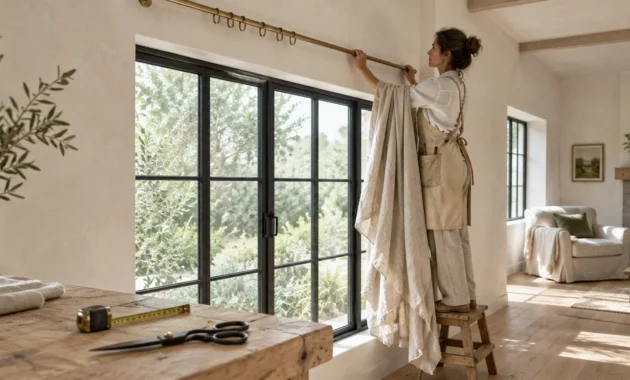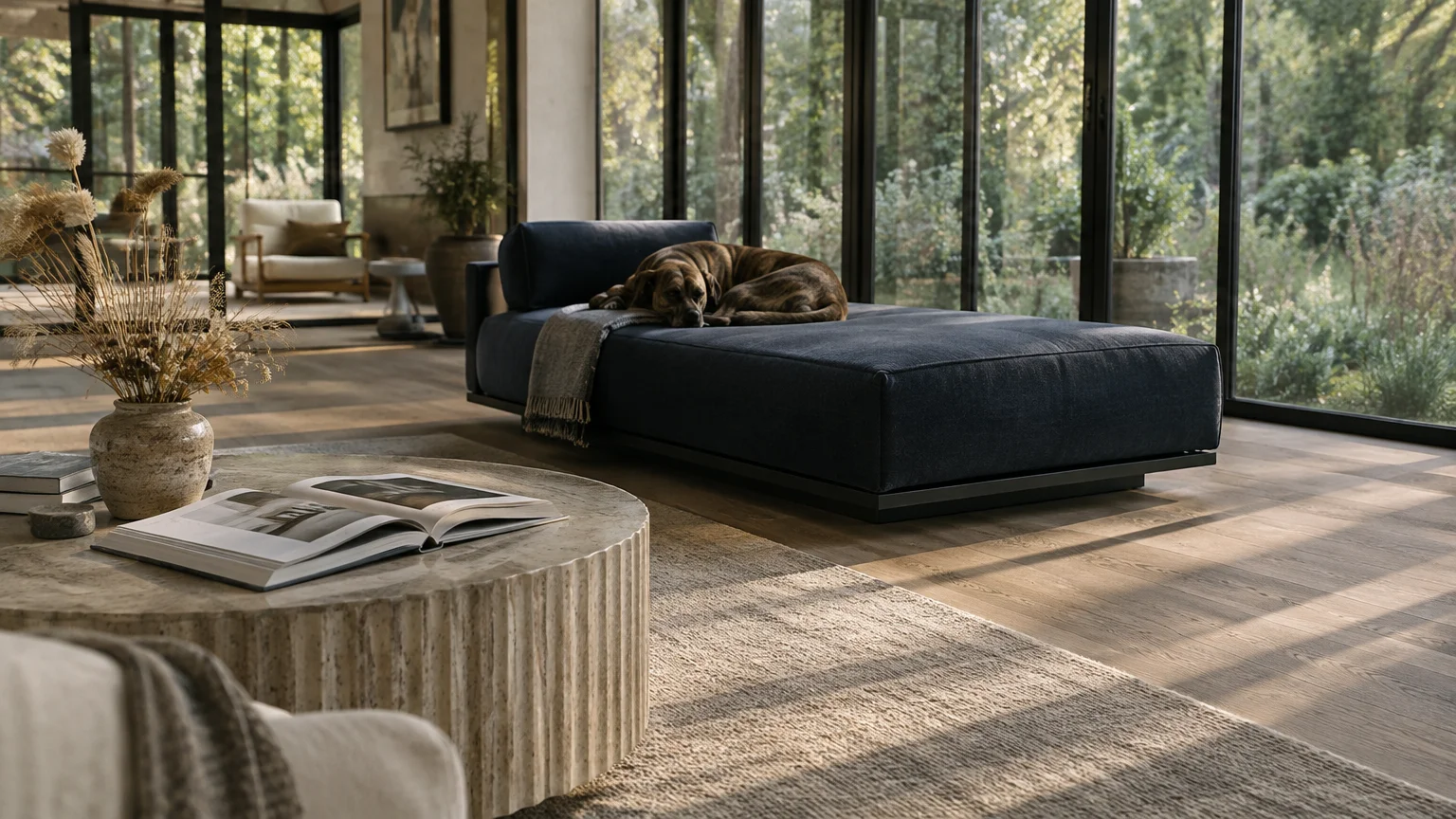
You can curate an immaculate, magazine-worthy sanctuary without exiling your four-legged companion to the periphery. Modern pet friendly design seamlessly merges tailored aesthetics with rugged durability, proving that high design and canine companionship coexist beautifully.
Discerning homeowners no longer compromise on plush textures or bespoke architectural millwork to protect against daily wear. By embracing intelligent dog friendly home decor, you elevate your interior while effortlessly withstanding muddy paws and relentless shedding.
Transforming your residence into a stylish, dog proof home requires strategic material provenance and thoughtful spatial planning. Discover the seven prevailing design hacks redefining luxury living for pet owners today.
Trend #1: Performance Velvet and Crypton Upholstery
Performance textiles now define modern interior luxury, shedding their utilitarian reputations. You no longer need to sacrifice sumptuous velvet or tactile linen to preserve your bespoke upholstery.
Crypton technology embeds an impenetrable barrier within fabric fibers that prevents liquid absorption and bacterial growth. Spills, muddy paw prints, and pet dander remain on the exterior where they wipe away cleanly.
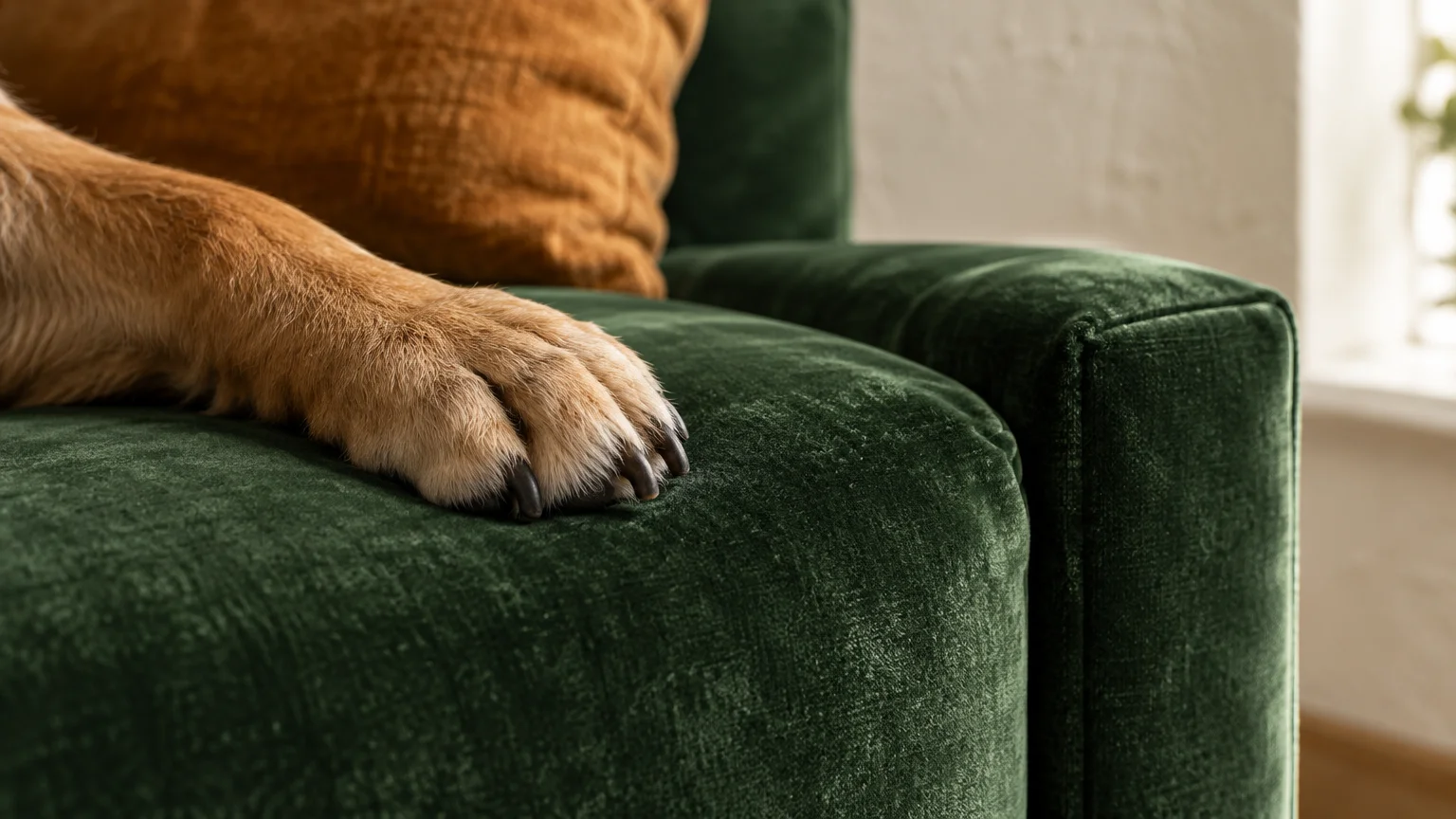
Unlike loose weaves that snag on claws, tight velvet piles prevent sharp nails from catching threads. This structural density makes performance velvet one of the most effective design ideas for dog owners.
When sourcing upholstery, always review the Wyzenbeek or Martindale abrasion ratings. Look for residential fabrics rated for at least 50,000 double rubs to ensure remarkable longevity against energetic dogs.
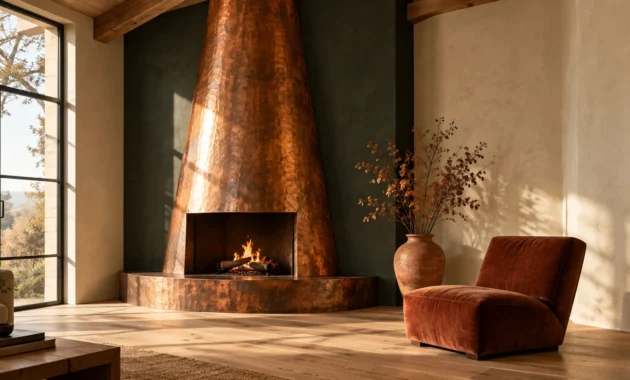
Richly saturated colors like forest green, burnt ochre, and deep midnight navy add sophisticated depth to living spaces. These complex hues also gracefully camouflage transient stray hairs between routine cleanings.
Choose bench cushions and tight-back silhouettes rather than loose down-filled pillows. Structured seating maintains its crisp architectural profile even when your dog curls against the sofa backrest.
For decorative throw pillows, introduce solution-dyed acrylics from luxury performance mills. These outdoor-grade textiles now offer the exquisite hand feel of brushed cotton without absorbing stubborn canine odors.
Maintain your velvet seating by brushing the pile weekly with a natural soft-bristle garment brush. This brief ritual removes loose dander and restores the fabric’s luminous, multi-dimensional luster.
Embracing these advanced textiles lets you welcome your dog onto the sofa without dreading premature fabric wear.
Trend #2: Built-in Millwork and Architectural Dog Niches
Traditional dog beds often create unsightly visual clutter across an otherwise meticulously styled floor plan. Contemporary architects solve this by incorporating dedicated pet niches directly into custom structural millwork.
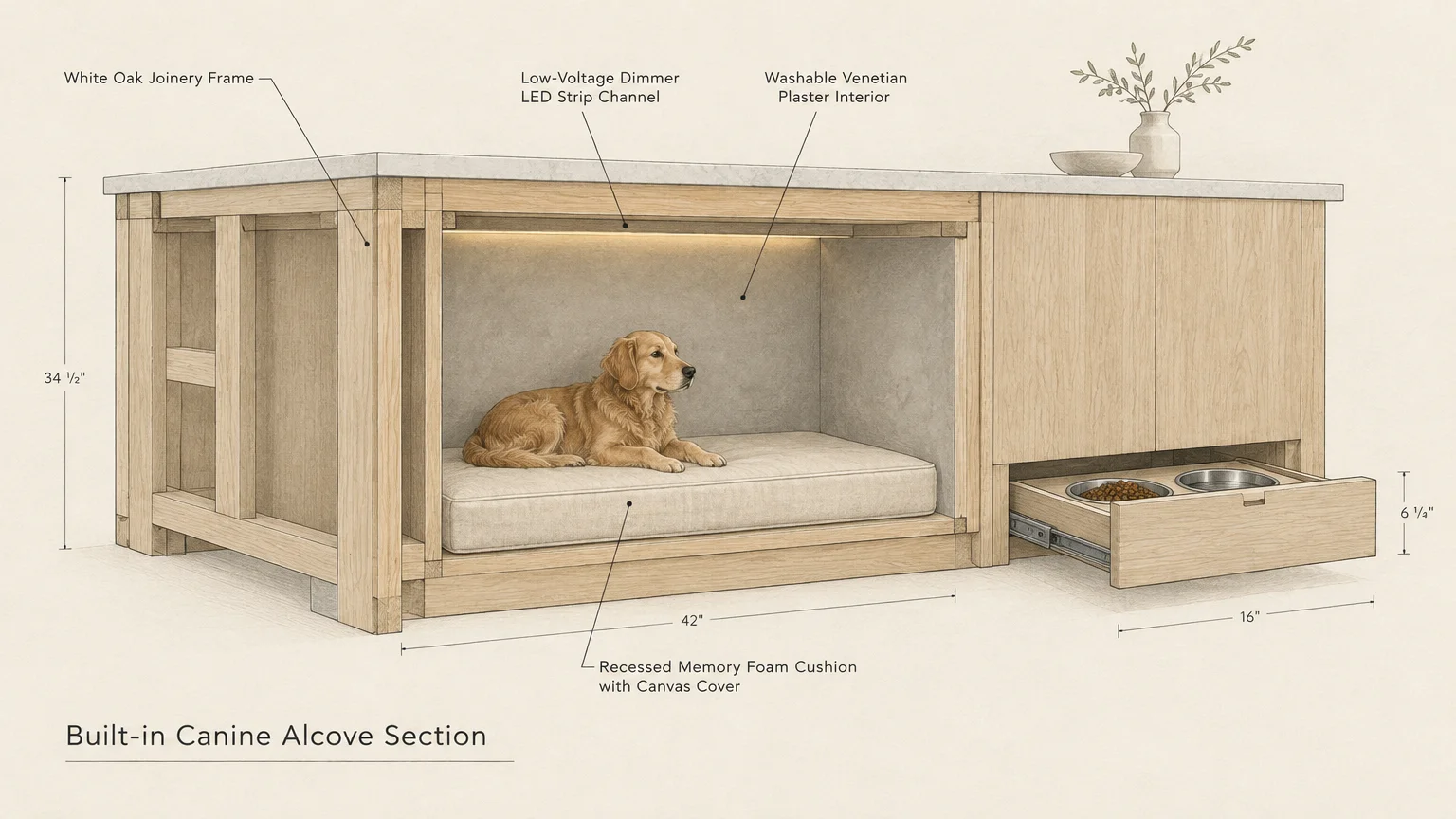
You can convert the lower alcove of a kitchen island or media console into an intimate canine bedroom. Framing the opening with warm white oak reinterprets traditional joinery while providing your dog with a safe den.
This seamless integration demonstrates how thoughtful pet friendly design merges structural elegance with daily utility. Your dog enjoys an instinctive haven, and your open-concept living area remains visually undisturbed.
Line the interior niche walls with durable fluted paneling or washable Venetian plaster. These resilient materials withstand resting paws and resist greasy coat oils far better than painted drywall.
Fit the base with a custom memory foam mattress wrapped in a heavy-gauge water-resistant canvas. Select tailored, zippered covers in tailored neutrals that harmonize with your room’s curated aesthetic.
Install recessed, low-voltage LED strip lights in the ceiling of the alcove on a discreet dimmer switch. A subtle warm glow transforms a utilitarian dog niche into a striking architectural focal point.
Construct soft-close pull-out cabinetry directly above the niche to store grooming brushes, medications, and spare leashes. Concealed storage keeps essential pet supplies easily accessible without compromising your home’s tailored, serene atmosphere.
Position these millwork alcoves within central family zones rather than isolated laundry rooms. Dogs crave proximity to their owners, and a social location ensures they use their dedicated bed happily.
This bespoke design strategy proves that canine comfort can elevate, rather than detract from, high-end residential architecture.
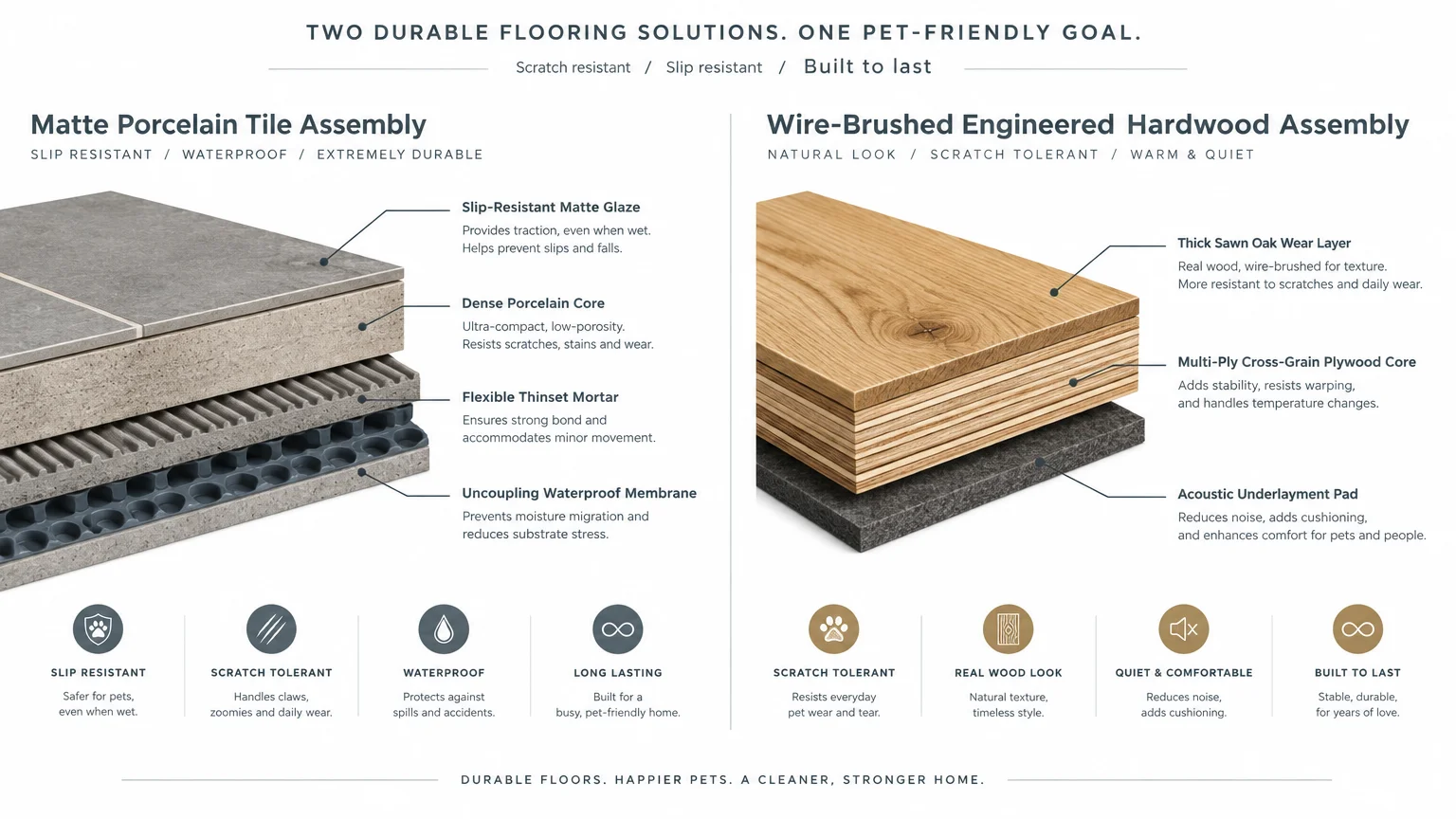
Trend #3: Biophilic Flooring with Matte Porcelain and Engineered Hardwood
Flooring bears the brunt of canine claws, active play, and outdoor moisture tracking through your house. Selecting durable materials with biophilic warmth ensures your flooring remains stunning despite constant canine traffic.
Large-format porcelain tiles that replicate French limestone or slate offer exceptional surface hardness. These impervious slabs resist claw scratches completely and do not absorb moisture from wet paws or spills.
Always select a matte or lightly textured slip-resistant tile finish rather than high-gloss polishing. Textured surfaces provide secure traction for running dogs, safeguarding their joints from hazardous slips and hip injuries.
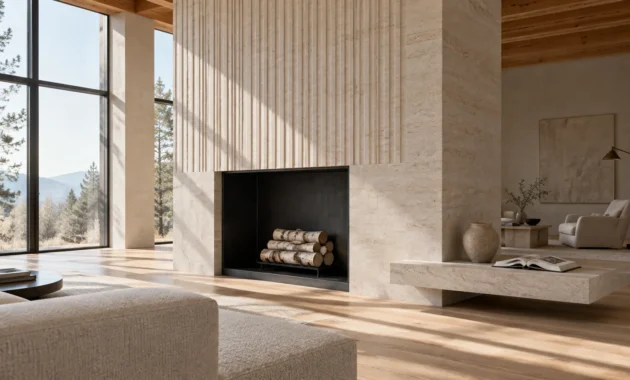
If you prefer timber flooring, choose wire-brushed engineered white oak finished with an ultra-matte polyurethane coat. Wire-brushing removes soft surface pulp, creating a textured grain that cleverly masks minor claw marks.
Avoid softer wood species such as walnut, birch, or heart pine in high-traffic dog zones. Dense hardwoods paired with engineered multi-ply construction resist dimensional warping caused by localized moisture and temperature shifts.
Pair hard-surface stone flooring with radiant in-floor hydronic heating systems. Heated floors offer soothing warmth for resting dogs during cold months while eliminating the need for bulky electric heating pads.
Grout porcelain tiles with non-porous epoxy formulas rather than porous Portland cement grouts. Epoxy grout repels moisture, resists pet stains, and wipes clean without requiring periodic chemical sealers.
Incorporating these durable flooring strategies creates a resilient base for your dog friendly home decor.
Your floors will retain their timeless elegance while enduring the playful antics of your canine companions.
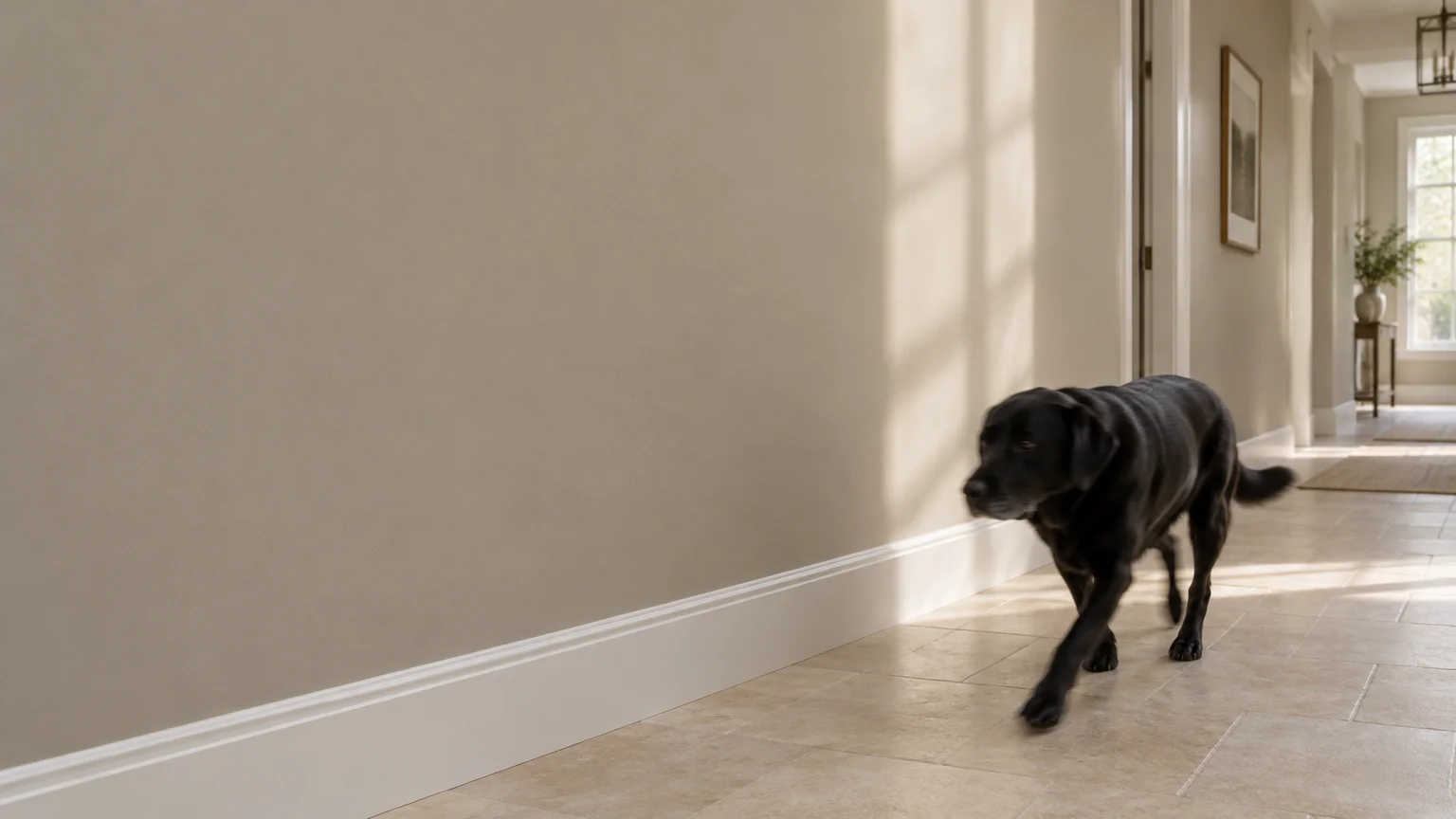
Trend #4: Low-Sheen Scuff-Resistant Wall Finishes
Active dogs often lean against perimeter walls, transferring body oils and leaving noticeable scuffs along skirting boards. Traditionally, designers relied on high-gloss enamels for washability, compromising subtle matte textures.
Advanced ceramic-infused paints now offer velvety matte finishes with superior scrub resistance. You can achieve an exquisite low-sheen ambiance across your living spaces without worrying about burnished marks during cleaning.
Mineral paints and micro-cement plaster coatings offer another sophisticated defense for busy hallways and foyers. These breathable materials cure into stone-like surfaces that resist claw scratches and naturally deter microbial buildup.
For classic painted walls, choose specialized scuff-resistant architectural coatings designed for rigorous commercial use. These innovative paints repel black friction marks caused by energetic dogs brushing against corridor corners.
Install architectural tongue-and-groove paneling or classic wainscoting across the lower half of your walls. This defensive woodwork protects fragile drywall while adding timeless architectural proportion and tailored character to your home.
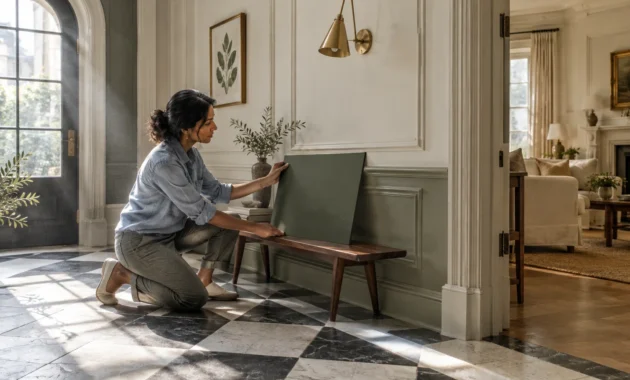
Finish the lower paneling in rich, grounding tones such as smoky olive, charcoal, or deep espresso. Saturated lower walls hide scuffs effortlessly and create a dramatic, grounded foundation for your interior palette.
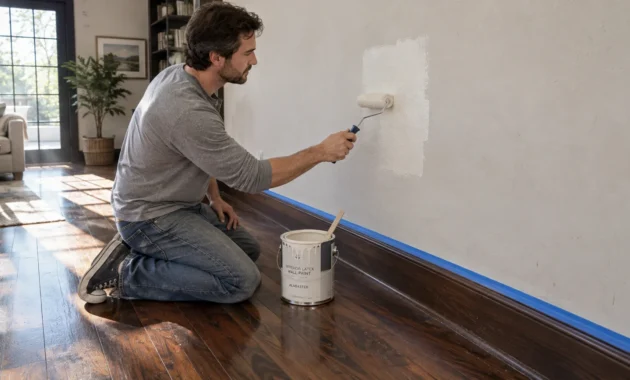
Apply durable satin enamel to all baseboards, casing moldings, and door frames throughout the residence. This washable finish allows you to sanitize muddy thresholds repeatedly without eroding the crisp color pigments beneath.
These durable wall applications establish a truly dog proof home that withstands daily canine contact with ease.
Your home retains an immaculate, freshly painted aesthetic despite the energetic movement of multiple pets.
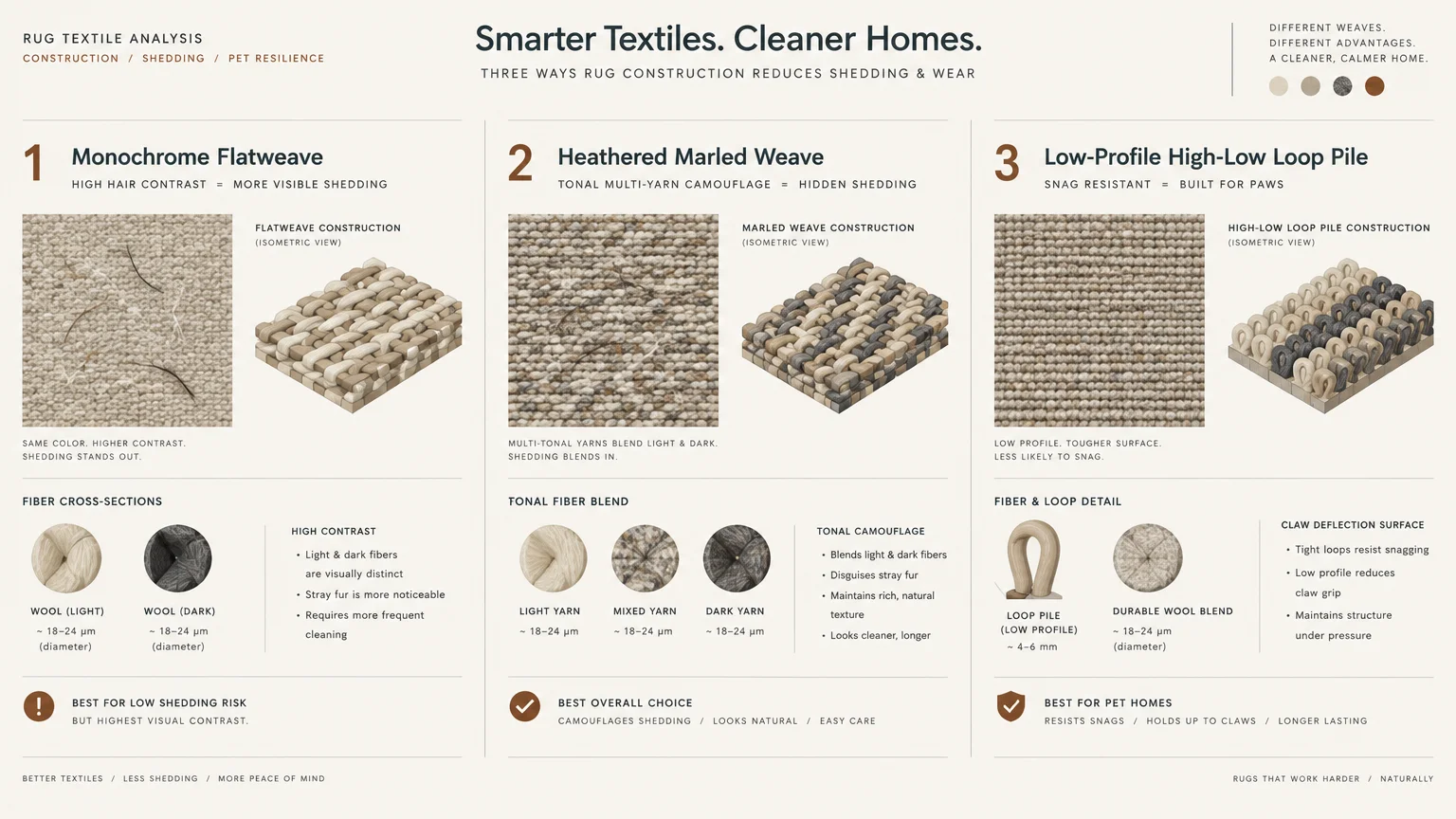
Trend #5: Tonal Camouflage and High-Texture Rug Strategies
High-pile shag rugs and looped Berber carpets catch dog claws and trap shedding undercoats deep inside fibers. Curating an elegant living space requires rethinking floor textiles through durable flatweaves and intentional color blending.
Tightly woven wool flatweaves like Scandinavian rollakans and Turkish kilims eliminate snag hazards entirely. Wool naturally contains protective lanolin oils, making it inherently stain-resistant and remarkably easy to spot-clean.
Apply tonal camouflage by choosing rug palettes that harmonize with your dog’s natural fur shades. Heathered yarns, subtle striations, and variegated geometric patterns disguise stray fur between your standard vacuuming routines.
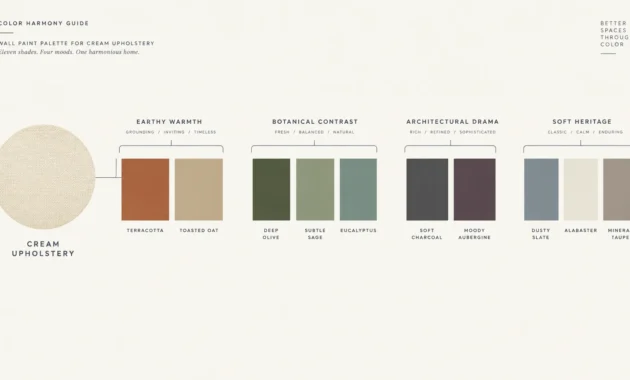
For white or cream-coated breeds, incorporate soft oatmeal, limestone, and warm ecru tones into your textiles. Golden and dark-coated dogs pair seamlessly with tobacco, charcoal, and warm rust palettes.
Luxury performance rugs woven from recycled polymer yarns offer the soft feel of natural wool flatweaves. These UV-stabilized textiles withstand aggressive spot cleaning and can be rinsed outside on a patio after unexpected accidents.
Avoid plant-based fibers like raw jute and sisal in primary canine lounging spaces. Plant reeds absorb moisture almost immediately, making water stains and organic pet accidents nearly impossible to eradicate.
Always anchor your rugs with thick, recycled-rubber non-slip pads beneath the entire surface. Premium padding prevents rugs from buckling under sprinting dogs and softens the acoustic impact of canine claws.
These functional textile solutions demonstrate sophisticated home ideas for pet owners seeking chic, practical comfort.
You achieve a layered, tactile interior that embraces canine companionship without constant aesthetic stress.
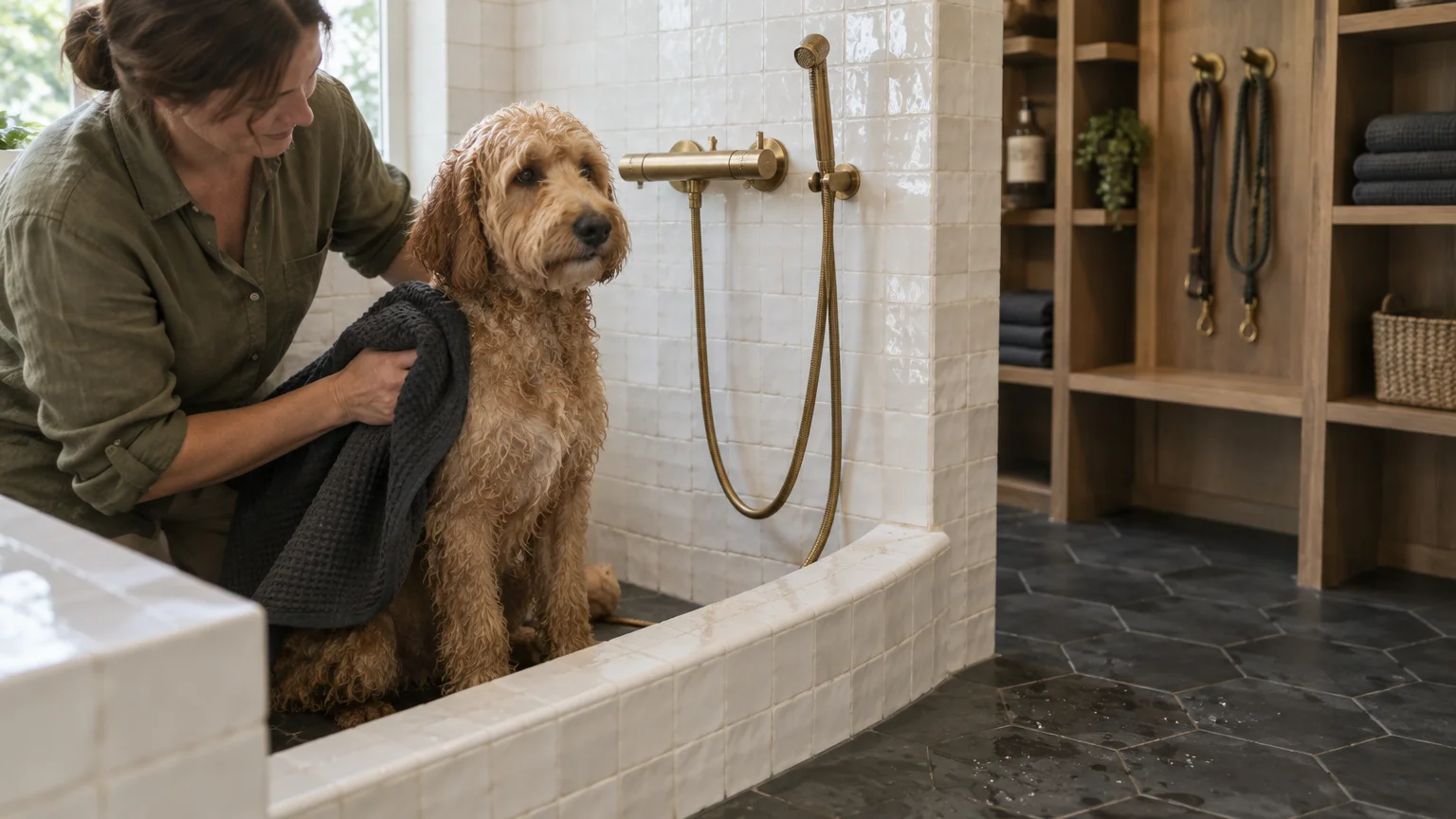
Trend #6: Dedicated Mudroom Dog Spas and Integrated Wash Stations
The modern mudroom has evolved from a simple storage drop-zone into a luxurious canine spa pavilion. Installing a designated dog shower keeps mud, debris, and outdoor moisture far away from your primary living rooms.
Elevate the shower basin approximately thirty inches above the floor level for optimal grooming ergonomics. This thoughtful height prevents painful back strain during washes while creating an eye-catching architectural feature.
Line the wash station walls with handcrafted zellige or textured porcelain tile for an artisanal ambiance. Pair glossy ceramic tiles with brushed brass or matte black fixtures to deliver an elevated, spa-like environment.
Install a professional thermostatic handheld shower wand with adjustable spray patterns and an instant pause function. Thermostatic valves maintain a consistent, soothing water temperature that prevents accidental burns and keeps dogs relaxed.
Incorporate an industrial-grade drain with an integrated, removable hair basket directly beneath the standing floor grate. This plumbing feature prevents clogged pipes and makes post-bath cleanup effortless after wet, muddy walks.
Position slatted teak drying benches and brass hooks for plush waffle towels adjacent to the shower. Naturally rot-resistant teak introduces rich biophilic warmth while standing up to frequent water splashes.
House quiet, high-velocity pet dryers inside vented cabinetry lined with water-resistant solid surfacing. Concealing grooming equipment maintains a tranquil, clutter-free aesthetic while keeping high-performance drying tools immediately accessible.
This dedicated wellness station perfectly exemplifies forward-thinking pet friendly design for discerning homeowners.
It transforms a daily maintenance chore into an enjoyable, serene ritual within a beautifully detailed space.
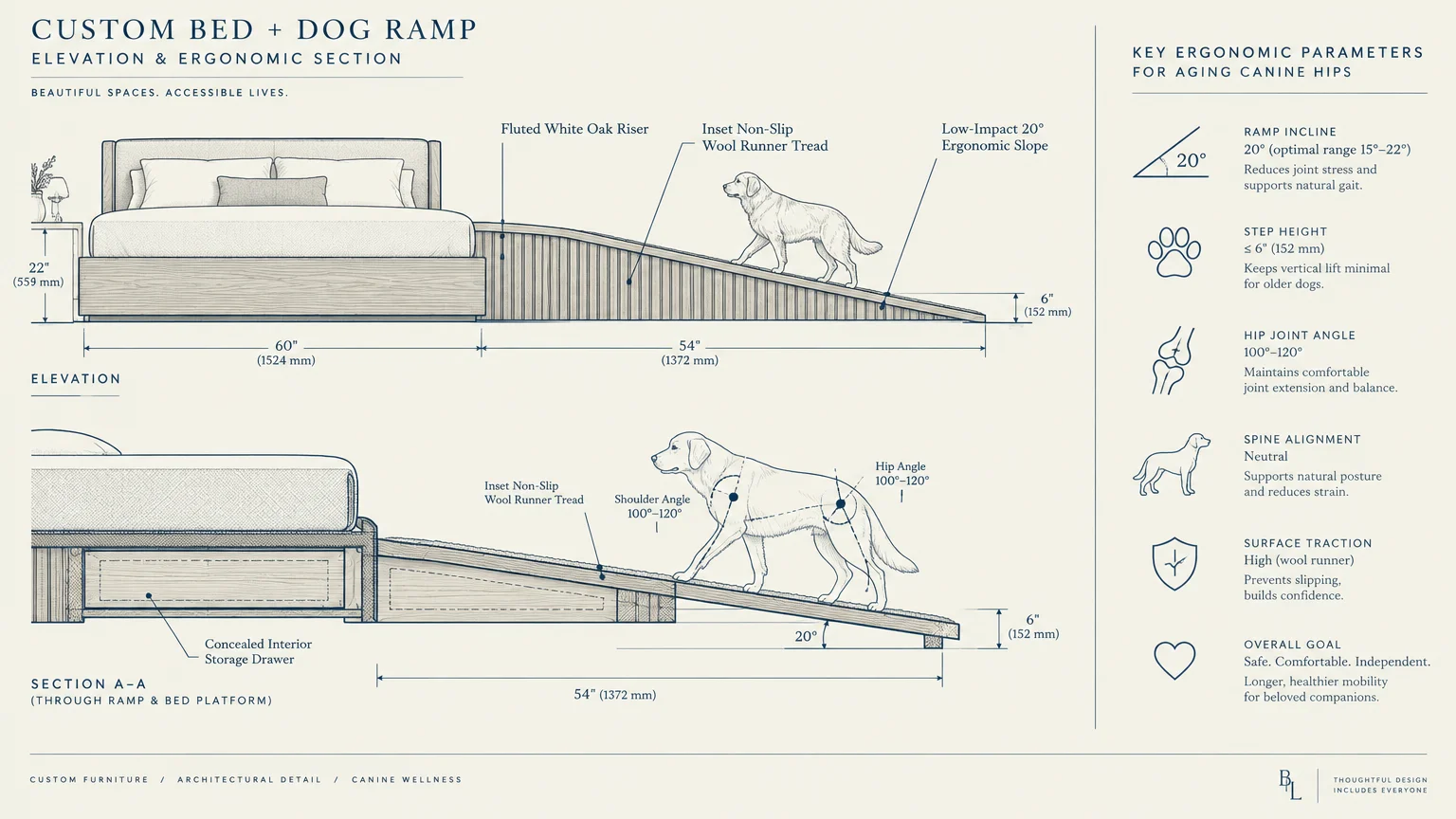
Trend #7: Elevated Non-Slip Access and Hidden Canine Ergonomics
Repeatedly jumping onto elevated sofas and beds causes long-term joint strain for small and senior dogs. Rather than placing clumsy plastic stairs in your bedroom, incorporate sculptural furniture pieces that serve dual functions.
Position a broad, low-profile performance velvet ottoman at the foot of your bed as an intermediate platform. This upholstered perch integrates with your bedroom scheme while giving your dog safe, confident elevation.
In living areas, commission bespoke tiered side tables that feature concealed, graduated climbing surfaces. These custom wood accents provide discreet access to high seating without reading as utilitarian pet apparatus.
Ensure all climbing surfaces feature recessed leather pads or low-pile wool runners to guarantee secure grip. Smooth, uncarpeted wood surfaces can cause slipping, leading to canine hesitation or painful joint injuries.
Incorporate raised feeding and hydration bowls into custom pull-out kitchen cabinetry or stone-topped islands. Elevated dining posture improves digestive health in large breeds while keeping food bowls off open kitchen floors.
Line the feeding station recess with non-porous quartz or honed granite that resists water staining. Durable stone surfaces wipe clean effortlessly and protect underlying cabinetry from enthusiastic water splashes during meals.
Fit feeding drawers with soft-close hardware and touch-latches so you can tuck bowls away during social gatherings. This streamlined functionality preserves clean sightlines and keeps your dining spaces feeling impeccably tailored.
Implementing disguised ergonomic details represents the future of clever design ideas for dog owners.
You protect your pet’s physical health while preserving an uncompromising standard of sophisticated interior beauty.
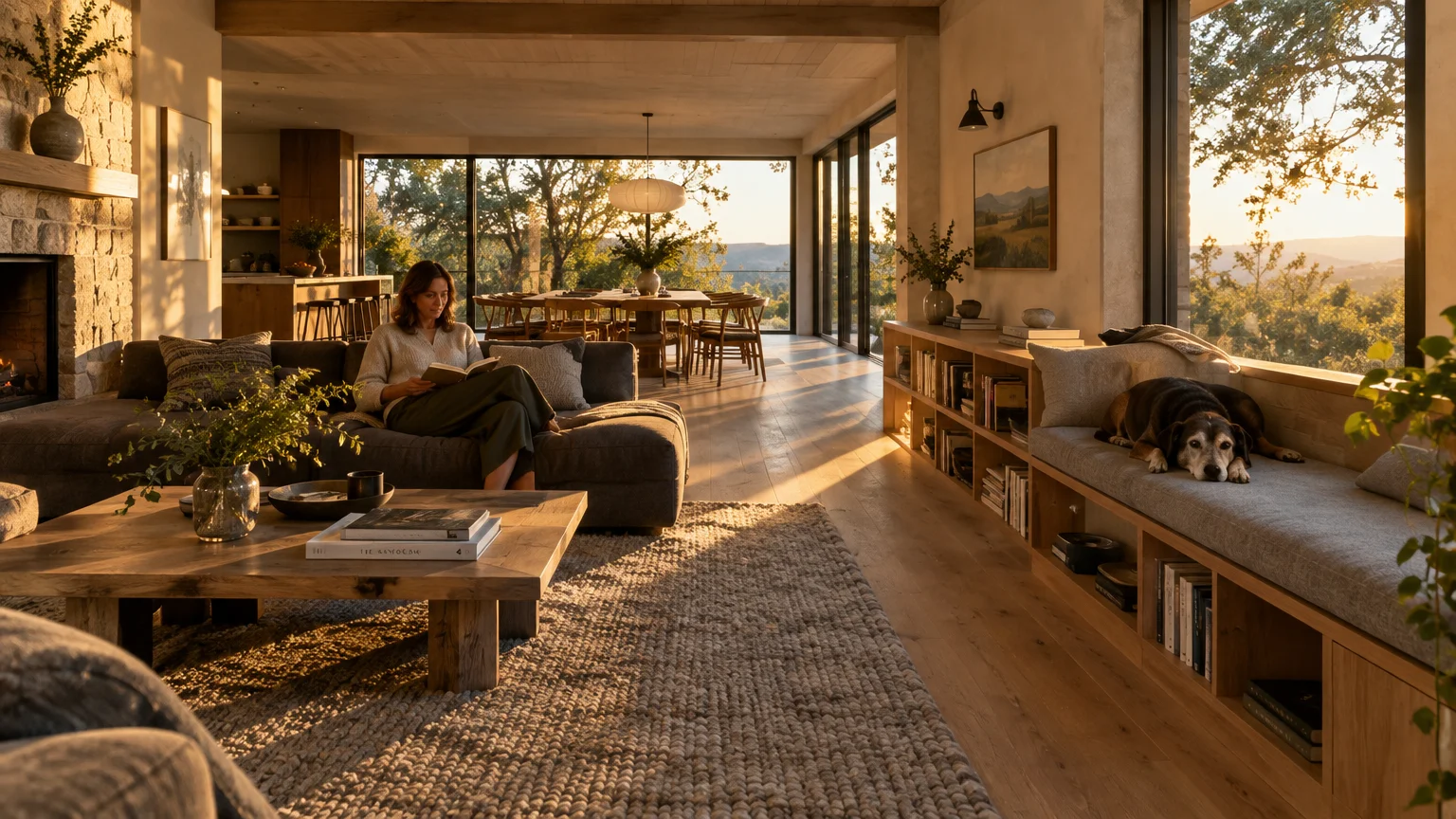
The Big Picture: Weaving These Trends into Your Home
Merging canine lifestyle needs with sophisticated interior design requires intentional curation and holistic spatial planning. You never need to compromise on tailored aesthetics to share your home happily with dogs.
Begin by mapping your home’s daily traffic zones and identifying where moisture, dirt, and friction accumulate. Applying high-performance surfaces strategically at these critical transition points prevents premature wear across your entire floor plan.
Prioritize material integrity by investing in commercial-grade upholstery, non-porous tile flooring, and scrubbable ceramic wall finishes. Choosing enduring provenance over disposable furnishings saves significant replacement costs and protects your property value over time.
Ensure your pet accessories harmonize with your home’s architectural palette rather than contrasting awkwardly against it. Hand-thrown ceramic bowls, vegetable-tanned leather collars, and woven wool dog beds read as curated artistic objects.
Balance practical durability with tactile comfort so that every room feels relaxing, warm, and inviting. True quiet luxury never feels sterile; it celebrates purposeful living alongside the companions you cherish most.
By layering durable textiles, architectural niches, and tailored ergonomics, your residence achieves effortless, livable sophistication. Your interiors will reflect a cohesive visual story that supports both your lifestyle and your beloved companion.
For the latest color forecasts, consult industry leaders like Pantone and paint companies like Benjamin Moore. For professional design standards, refer to the American Society of Interior Designers (ASID).
Disclaimer: This article reflects design trend analysis and predictions. Personal taste and timeless design principles should always guide your decorating choices.
Frequently Asked Questions
Can luxury natural stone withstand living with multiple large dogs?
Dense natural stones such as quartzite and dark granite withstand heavy canine claws and spills without sustaining damage. You must avoid unsealed polished marble, which etches quickly when exposed to acidic drool or dirty water.
Always apply a commercial penetrating sealer annually to prevent organic oils from staining the stone’s porous core. Choosing a honed or leathered finish disguises superficial wear far better than a reflective polished surface.
What is the most durable sofa material for homes with shedding dogs?
Performance velvet and full-aniline distressed leather provide the highest durability and easiest maintenance for dog owners. Velvet prevents claws from catching loose loops, while conditioned leather develops an attractive patina that hides scuffs.
Steer clear of loose linen weaves, boucle, and delicate chenille that trap shed hairs deeply within threads. Instead, specify fabrics treated with crypton or solution-dyed acrylic technology for simple spot-cleaning.
How do you eliminate pet odors without using synthetic room sprays?
Introduce natural air-purifying houseplants like peace lilies and areca palms to filter interior air continuously. Ensure regular cross-ventilation by opening opposing windows for ten minutes each morning to flush stagnant air.
Choose washable slipcovers and naturally antimicrobial wool floor coverings that resist odor retention. Regular vacuuming with a high-efficiency particulate air filter eliminates pet dander before it settles into underlying cushions.
How can you stop dogs from scratching interior timber doors and trim?
Coat all interior baseboards and lower door surfaces in scuff-resistant polyurethane or hard-wearing acrylic enamel paint. These resilient coatings resist gouging from sharp claws and clean effortlessly with a damp microfiber cloth.
Install heavy-gauge decorative brass or bronze kick plates along the bottom six inches of high-traffic doors. These architectural plates protect fine timber moldings while introducing warm, traditional metallic details into your living spaces.