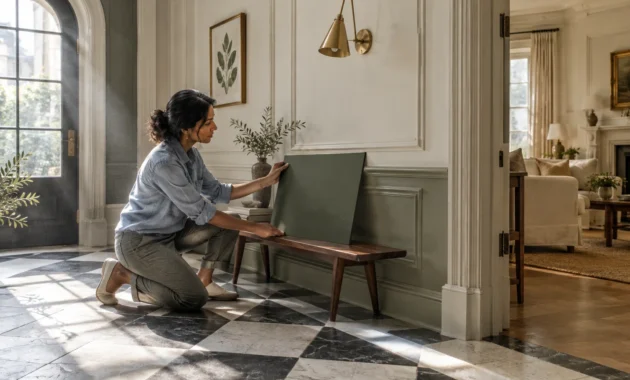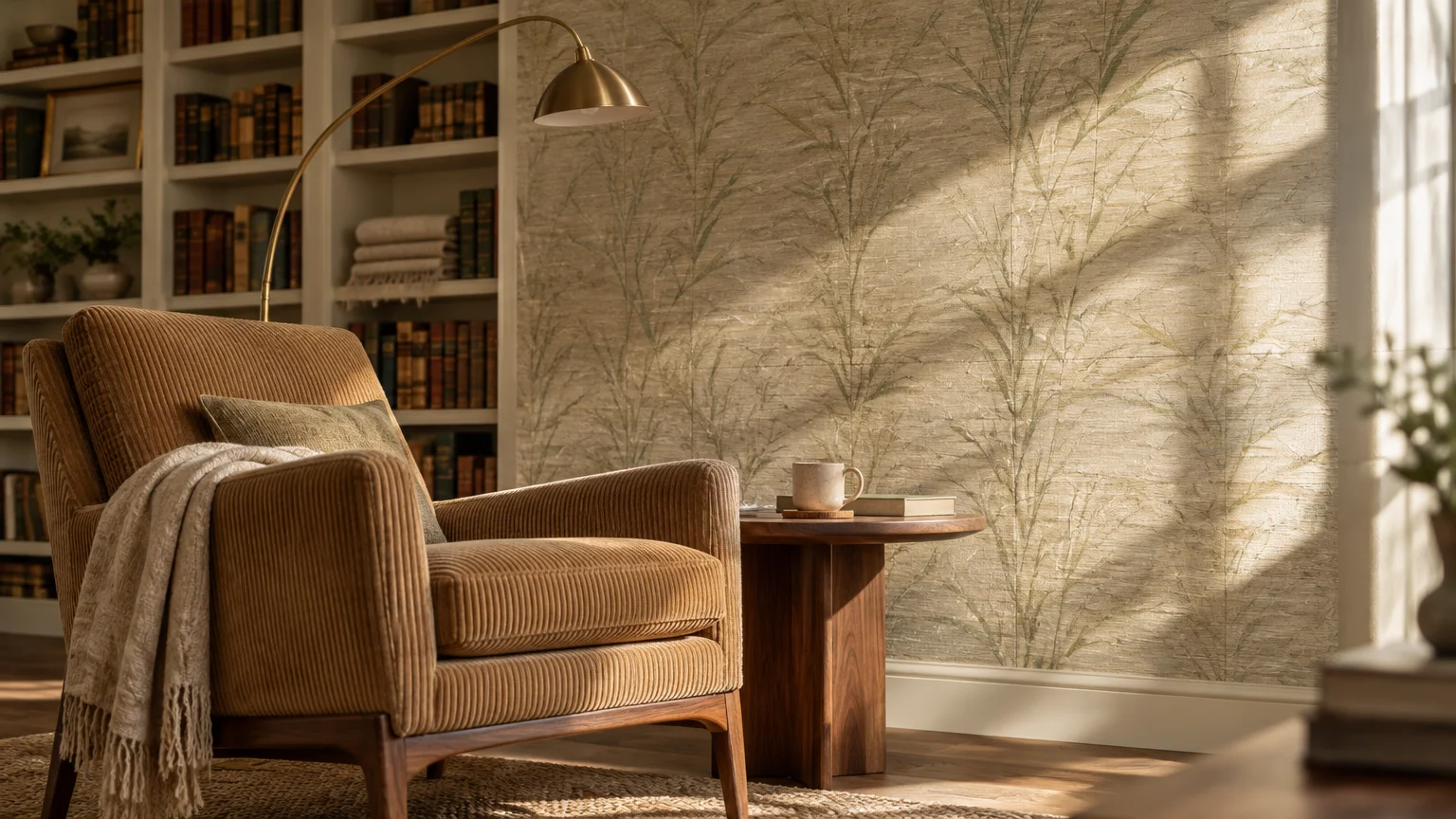
You can transform an interior instantly by choosing subtle wallpaper ideas that elevate architectural depth without suffocating your senses. Thoughtful pattern selection introduces tactile warmth and curated personality while maintaining a serene visual baseline.
Striking this balance requires prioritizing understated texture, tonal continuity, and calibrated scale over aggressive motifs. Rather than overpowering your furniture, refined wallcoverings act as an atmospheric backdrop that anchors your entire aesthetic.
Whether you select a tactile grasscloth or a soft-focus mural, the right application unlocks enduring sophistication. Here is how modern designers use decorative coverings to deliver character with calculated restraint.
Trend #1: Tactile Grasscloth and Woven Fibers
Textured wallcoverings lead modern interiors because they engage your sense of touch before capturing your sight. Materials like sisal, seagrass, and woven bouclé introduce organic variation across flat walls.
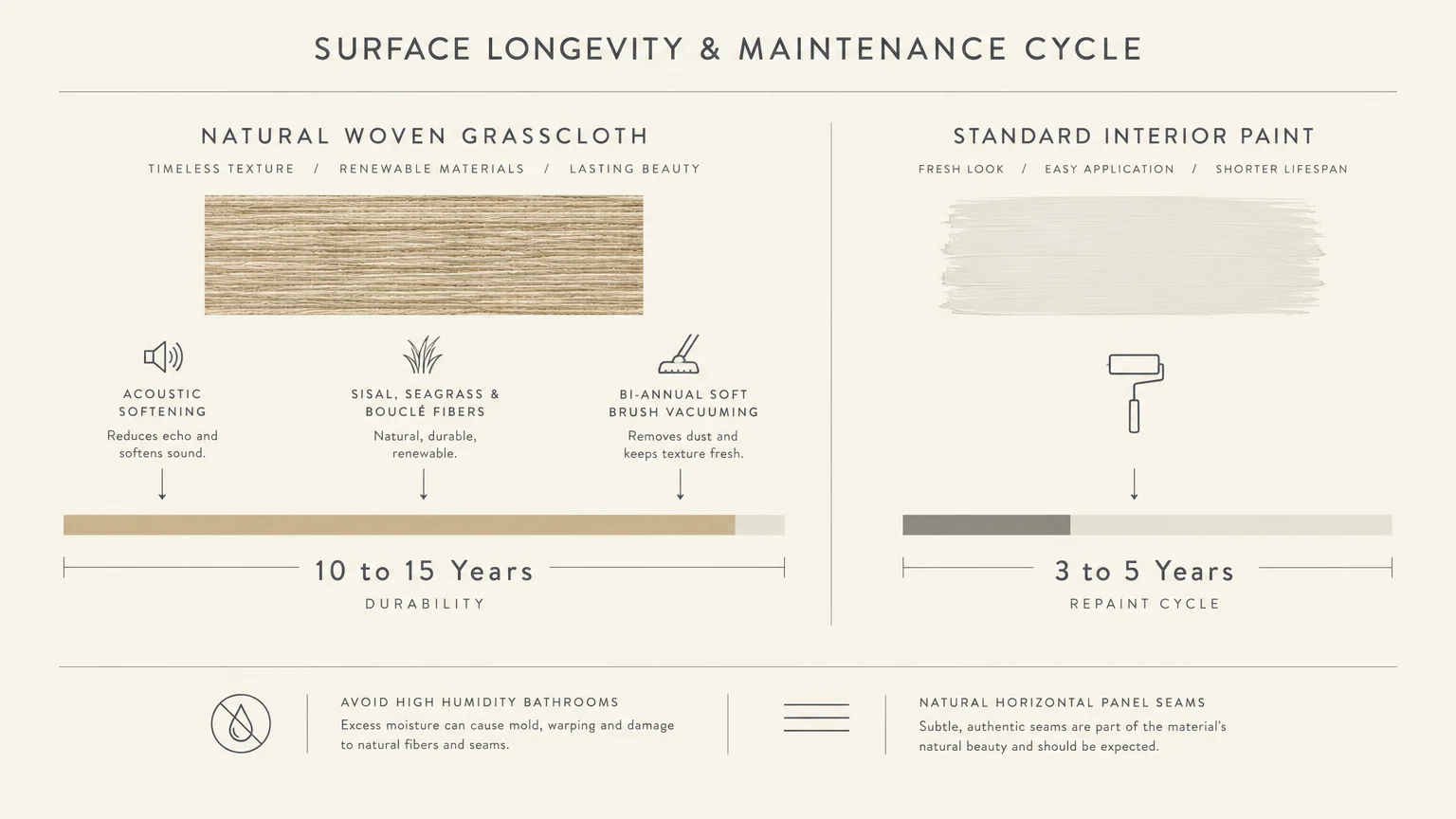
These tactile papers soften acoustics while infusing rooms with warmth and genuine artisanal provenance. Because the visual interest stems from weave variation rather than bold pigment, the effect remains effortlessly calm.
You should pair natural grasscloth with crisp painted millwork to highlight the organic fibers against clean lines. Warm oyster, ivory, and soft wheat tones maintain an airy aesthetic while adding tangible character.
Unlike synthetic prints, authentic woven wallcoverings display natural horizontal seams that celebrate their handmade origins. Embracing these organic panel lines adds architectural authenticity to contemporary and traditional spaces alike.
Properly installed woven coverings deliver outstanding durability, often lasting 10 to 15 years with minimal upkeep. This longevity vastly outperforms interior paint, which typically requires a fresh coat every 3 to 5 years.
Use grasscloth in quiet zones like home libraries or dining rooms where natural light enhances the dimensional shadows. Avoid high-humidity bathrooms, as unsealed plant fibers absorb moisture readily.
Vacuum your grasscloth surfaces gently with a soft brush attachment twice yearly to remove dust buildup. This simple maintenance preserves the fiber’s rich organic sheen without loosening delicate horizontal strands.
Trend #2: Tone-on-Tone Monochromatic Prints
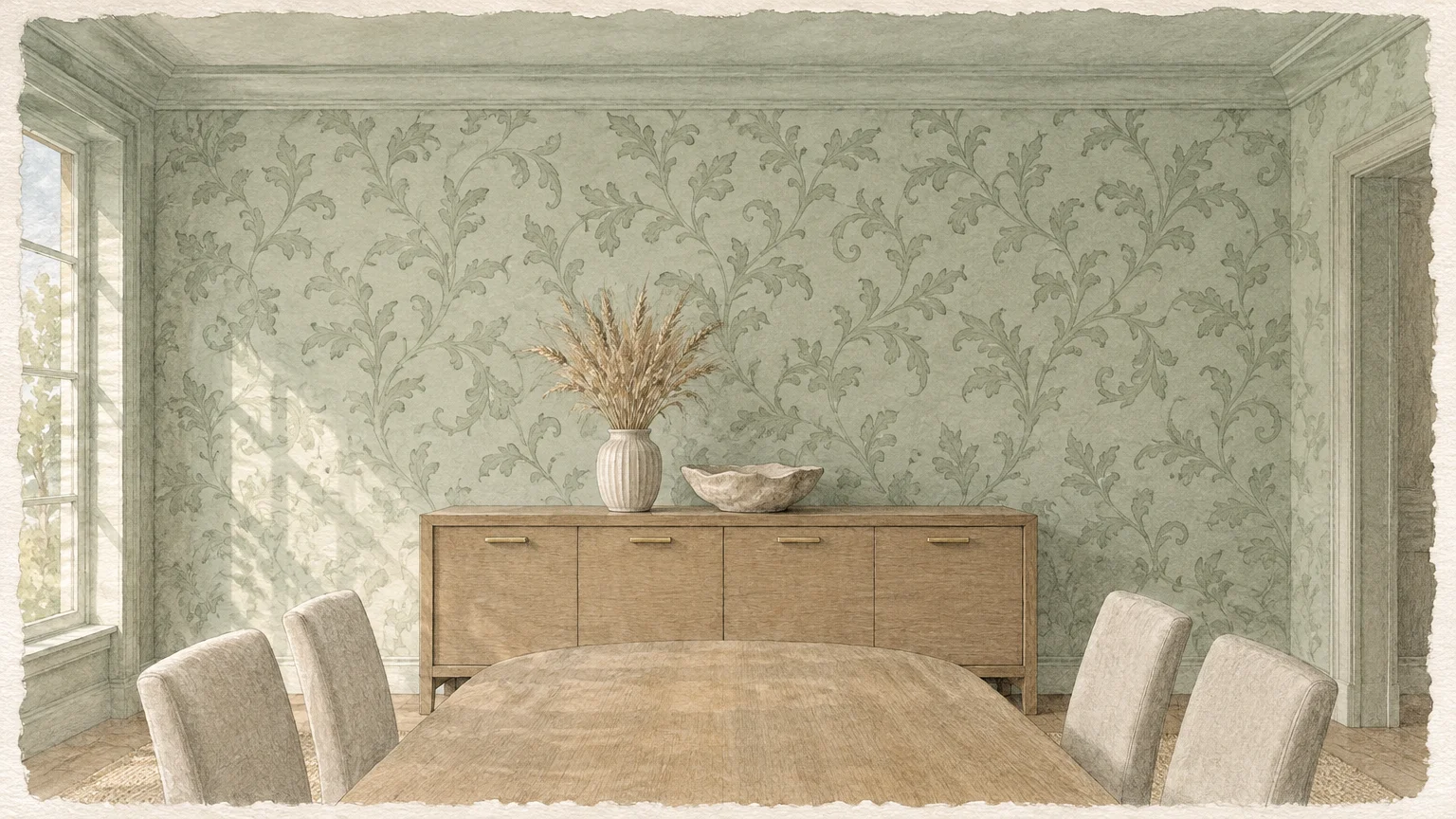
Monochromatic wallpaper ideas deliver dynamic visual depth without triggering sensory overload. By restricting the pattern and ground to varying values of a single hue, designers achieve harmonious sophistication.
Consider a soft sage motif printed over a pale celadon base, or creamy ecru rendered on warm ivory. The pattern reveals itself gradually as natural light traverses the room throughout the day.
This technique prevents the visual friction that high-contrast color pairings frequently introduce into serene spaces. You gain the movement of an ornate pattern alongside the psychological tranquility of a solid painted wall.
To execute this look successfully, match your ceiling paint directly to the lightest undertone within the paper. This creates a cohesive color envelope that expands room volume instead of compartmentalizing it.
Matte chalk finishes work exceptionally well for tone-on-tone designs; they absorb glare and maintain a soft, velvety appearance. You can incorporate them effortlessly into formal dining spaces or restful primary bedrooms.
Pair these tonal designs with understated wool upholstery and brushed brass hardware for a layered, quiet luxury finish. The resulting space feels curated over time rather than styled from a seasonal showroom floor.
Layer contrasting textures—such as ribbed ceramics and tumbled stone—against these subtle walls to amplify dimension. Physical textures keep monochromatic rooms engaging without needing competing accent colors.
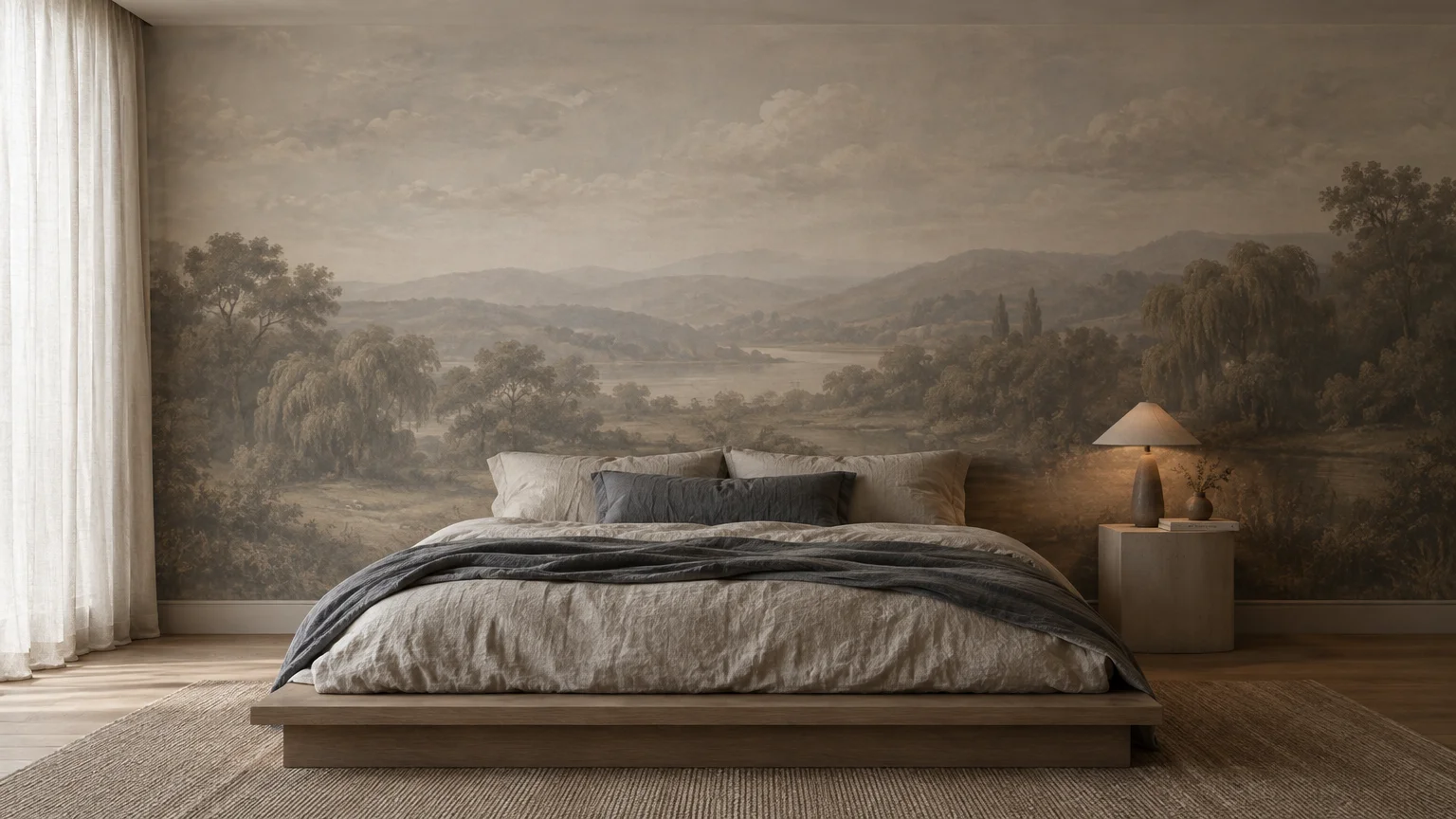
Trend #3: Expansive Low-Contrast Scenic Murals
Scenic murals no longer feature the dense, saturated pigments of historical tapestries. Today’s subtle wallpaper ideas focus on misty landscapes, washed grisaille sketches, and ethereal watercolor botanicals.
Consumer enthusiasm confirms this aesthetic transition; Google searches for mural wallpaper surged by over 1,150% in 2025. Homeowners increasingly choose expansive pictorial narratives over repetitive, vibrating micro-prints.
Because scenic murals lack repetitive grid lines, your eye travels freely across the room without fatigue. The panoramic scale creates an illusion of boundless space by dissolving rigid perimeter boundaries.
Select compositions dominated by atmospheric negative space, such as distant mountains veiled in fog or delicate willow boughs. Keep foreground elements desaturated so your furniture remains the true focal point of the environment.
Position a low-contrast mural behind a low-profile sofa or headboard to establish a calming horizon line. This placement grounds large walls while preserving an uncluttered, contemplative atmosphere.
Ensure your installer assesses wall flatness before hanging scenic panels, as large continuous imagery highlights substrate imperfections. A smooth surface guarantees seamless pattern alignment from corner to corner.
Balance scenic imagery by keeping your window drapery simple, opting for sheer linen panels in a tonal hue. Unembellished curtains allow the landscape narrative to flow uninterrupted across your walls.
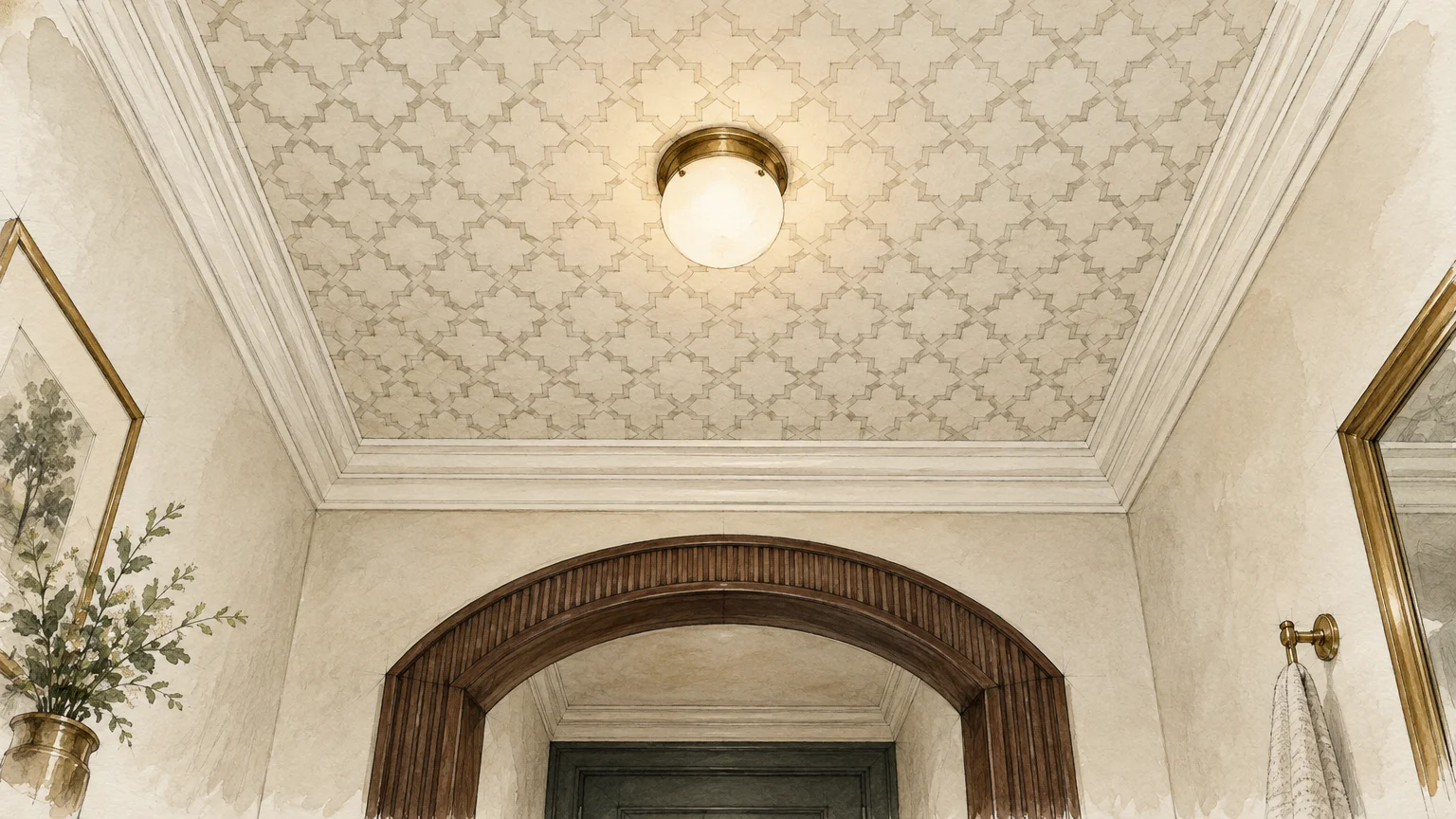
Trend #4: The Architectural Fifth Wall
Treating your ceiling as an artistic fifth wall allows you to introduce adventurous patterns without cluttering eye-level sightlines. This technique reserves vertical perimeter walls for soothing solid colors and curated artwork.
When you apply subtle wallpaper ideas overhead, the room feels sheltered, deliberate, and undeniably custom. The upward gaze uncovers a delightful design detail without confronting continuous visual stimulation.
Opt for organic motifs like swirling cloudscapes, soft botanical canopies, or delicate star charts in pale neutrals. These flowing patterns feel natural overhead and avoid the claustrophobia caused by dark, geometric blocks.
Pairing an overhead pattern with warm perimeter walls creates an intimate canopy effect that flatters dining rooms and powder baths. Paint your crown molding in a coordinating trim color to frame the ceiling paper crisply.
Ceiling installations demand precise labor, with professional installation rates averaging $5 to $10 per square foot in 2026. The striking architectural impact, however, delivers exceptional return on your design investment.
Recessed ceiling coves provide the ideal architectural container for papering the fifth wall. The surrounding drop molding conceals edge cuts and highlights subtle surface textures.
Install a dimmable chandelier that casts soft upward wash lighting against the papered surface. This illuminating technique accentuates the overhead motif during evening dinner parties without causing glaring reflections.
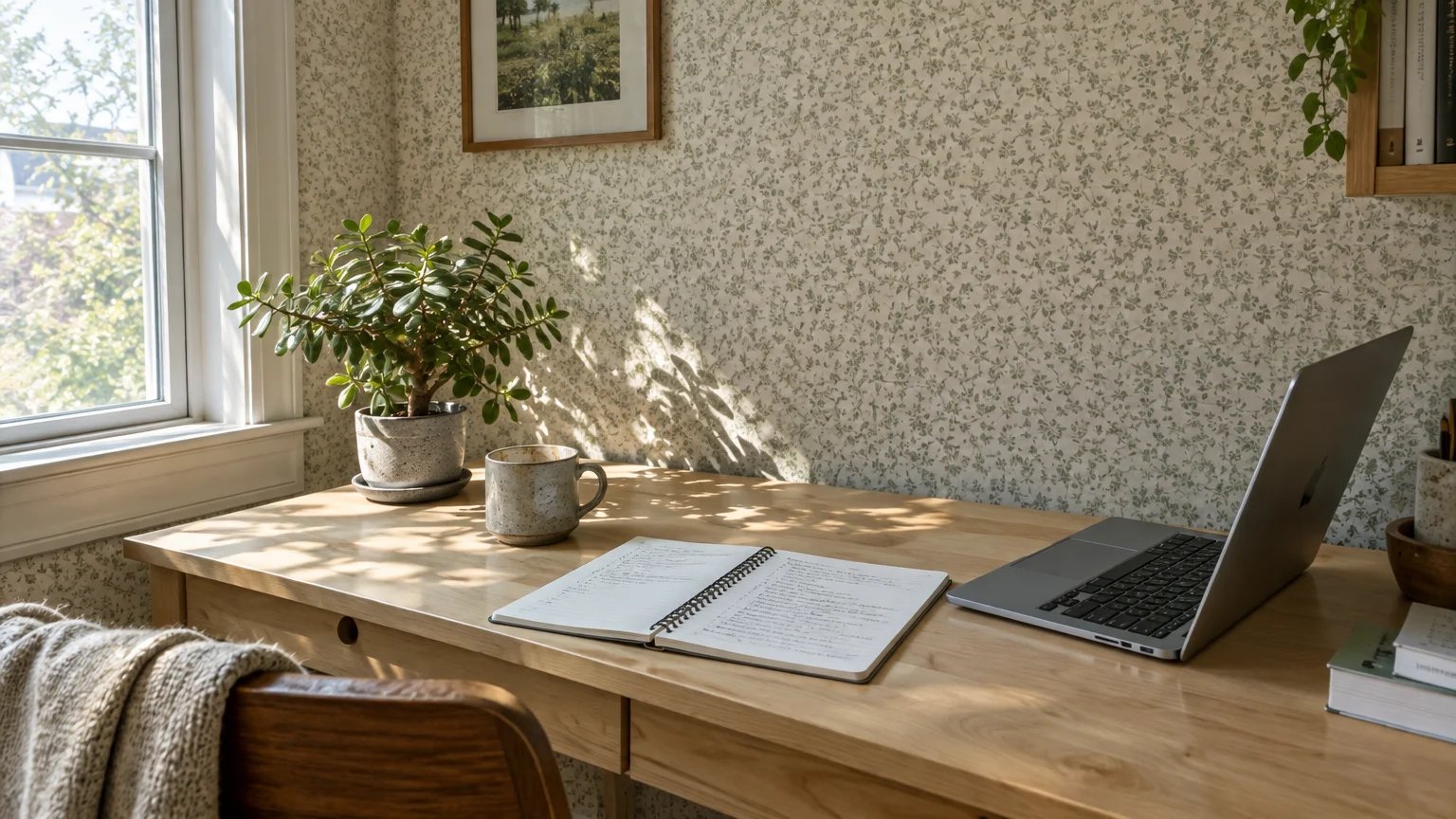
Trend #5: Micro-Scale Botanical Patterns
Micro-scale florals and delicate leaf silhouettes infuse living spaces with biophilic charm without the drama of oversized tropical foliage. From across the room, these miniature motifs read as soft textural tone.
As you step closer, the intricate detail emerges, rewarding your eye with whimsical storytelling and botanical provenance. This dual-reading quality makes micro-prints exceptionally versatile in both compact spaces and sprawling open layouts.
Select wallpaper for living room applications that features muted earth pigments such as sage, moss, and warm biscuit. These grounded shades connect indoor living directly to nature without visual shouting.
Balance ditsy botanicals with contemporary furniture featuring clean, geometric silhouettes. Modern architectural lines prevent vintage-inspired patterns from drifting into overly rustic or grandmotherly territory.
Combine small-scale prints with rich natural materials like honed marble, natural oak, and textural woven rugs. This juxtaposition establishes an inviting, collected atmosphere that honors classic design heritage.
Micro-patterns also conceal minor wall flaws better than glossy solids or sprawling murals. Their dense yet delicate structure masks surface waves and settling cracks effectively.
Anchor micro-botanicals with solid drapery fabrics rather than patterned curtains to avoid competing visual rhythms. A single tailored velvet or linen window panel provides the perfect visual rest stop.
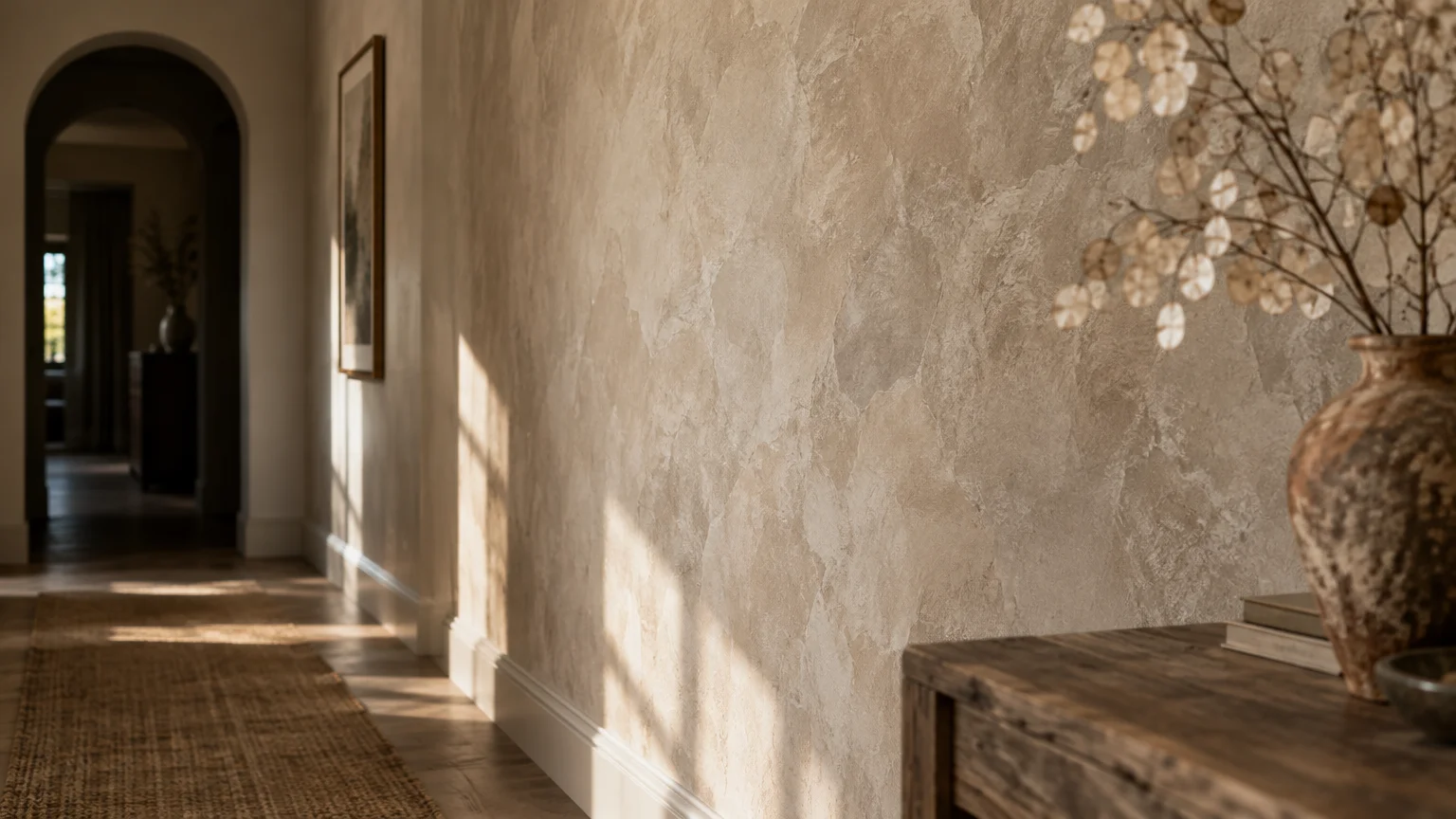
Trend #6: Faux Plaster and Limewash Effects
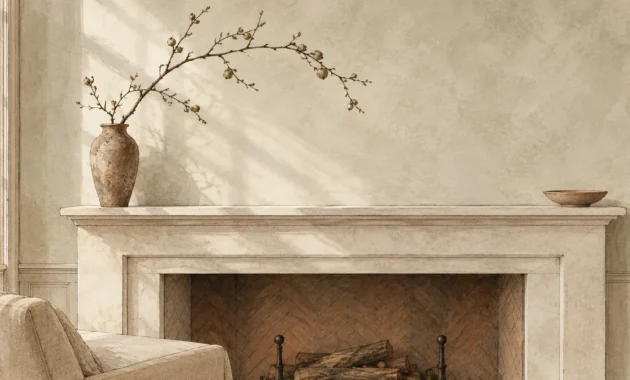
Faux plaster and limewash wallcoverings satisfy the desire for tactile Old World depth without the labor-intensive troweling process. These papers mimic artisan mineral finishes, cloudy color washes, and raw Roman clay.
They introduce soft, organic movement that mimics natural light filtering through ancient masonry walls. By avoiding defined pattern repeats, faux mineral papers wrap rooms in seamless atmospheric texture.
Modern wallpaper design trends prioritize these matte, suede-like finishes for their ability to hide surface glare. Their chalky touch elevates contemporary minimalist spaces by injecting warm, wabi-sabi tactile depth.
Choose gentle hues like greige, chalky sand, or pale travertine to foster a grounding, tranquil environment. These neutral backgrounds complement raw timber beams and dark patinated bronze fixtures impeccably.
Opting for quality faux plaster rolls costs between $30 and $100 per roll, covering roughly 58 square feet. That makes authentic mineral aesthetics accessible without paying specialty plaster artisan fees.
These durable coverings resist the chipping and staining that often trouble authentic lime-plastered surfaces. You enjoy timeless architectural texture alongside modern wipe-clean durability.
Complete this earthy aesthetic by incorporating ceramic vessels, hand-thrown pottery, and linen lampshades throughout the room. These tactile decor pieces mirror the organic variations captured in your mineral wallcovering.
Trend #7: Soft-Edged Geometric Motifs
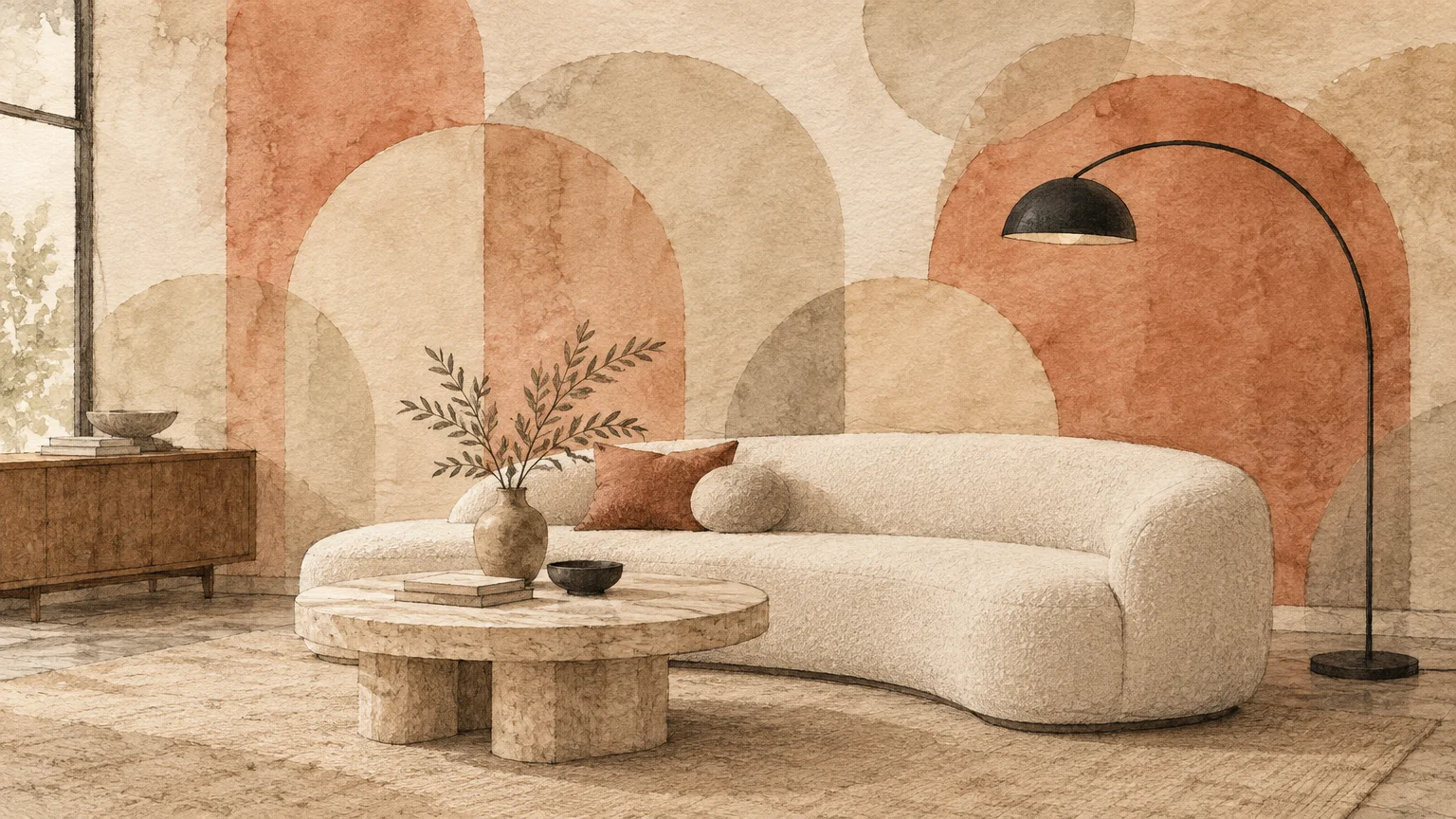
Rigid geometric designs can feel aggressive in relaxing living areas; modern alternatives prioritize soft, organic curves. Gentle arcs, pill-shaped outlines, and watercolor check patterns deliver structure with welcoming fluidity.
These muted patterns inject rhythmic order into a room without creating harsh contrasts that agitate your peripheral vision. They provide a tailored, mid-century sensibility that enhances modern furnishings.
Embrace trending earthy neutrals like warm tans and chocolate browns to ground curved geometric shapes. Warm cocoa lines on a creamy oat backdrop create comforting, architectural sophistication.
Soft geometrics complement modern sculptural lighting, such as spherical globes and undulating pendant lamps. The shared geometric dialogue weaves your lighting and wall surfaces into a unified whole.
Use these patterns in transition spaces like hallways, entryways, or casual dining rooms. They introduce directional movement that carries your eye gracefully from one living zone into another.
Keep baseboards and trim painted in a unifying neutral shade to prevent visual breaks at the perimeter. Unbroken lines preserve the calming rhythm of curved patterns.
Balance curved geometric wall patterns with linear furniture pieces, like a rectangular console table or floating credenza. This contrast prevents the room from feeling overly rounded or visually unbalanced.
Trend #8: Tailored Pinstripes and Fine Linens
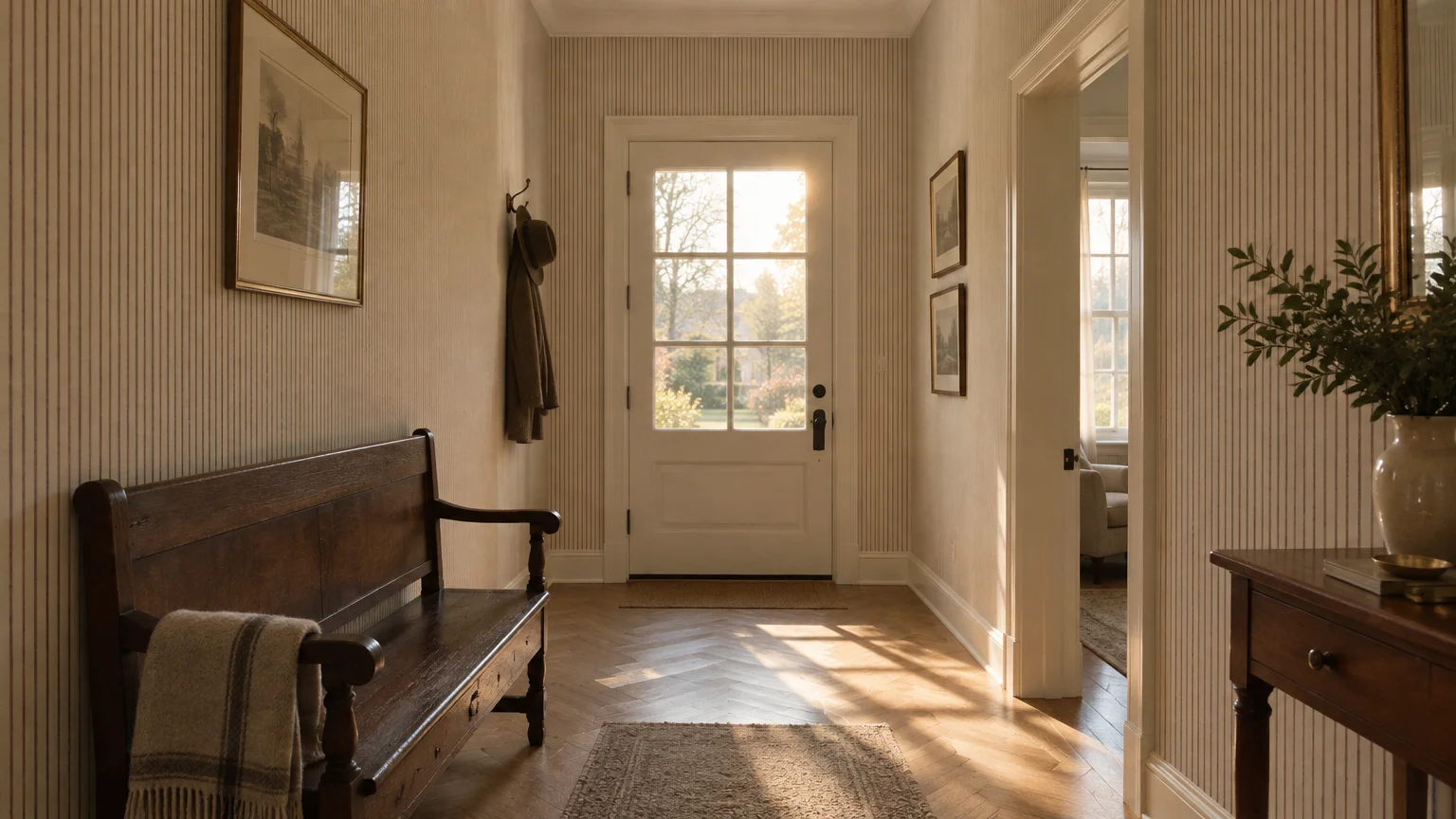
Borrowing inspiration from bespoke menswear, tailored pinstripes and fine linen-look papers deliver understated refinement. Ultra-thin vertical lines gently draw the eye upward, making standard eight-foot ceilings feel significantly taller.
Linen-look wallpaper adds subtle slubbed textures that replicate high-end fabric wall upholstery at a fraction of the cost. The fine cross-hatching introduces quiet complexity without demanding constant visual attention.
Select soft color pairings like dove grey with chalk white, or faded denim blue on oatmeal. These subdued combinations read as neutral textures rather than loud, contrasting stripes.
Tailored stripes provide a crisp backdrop for eclectic art collections and oil paintings. The orderly lines offer structured discipline that frames framed gallery walls with sartorial elegance.
Standard wallpaper rolls covering roughly 58 square feet allow you to calculate your required yardage accurately. Always order an extra roll to account for pattern matching along vertical seam junctions.
Pinstripes also align seamlessly with both contemporary iron fixtures and antique mahogany furniture. Their classic pedigree ensures your walls will look relevant for decades to come.
Consider running vertical pinstripes inside a home office or formal study to establish an orderly, contemplative mindset. The rhythmic linearity promotes focus while maintaining residential warmth.
Trend #9: Earthy Warm Neutrals and Terracotta Washes
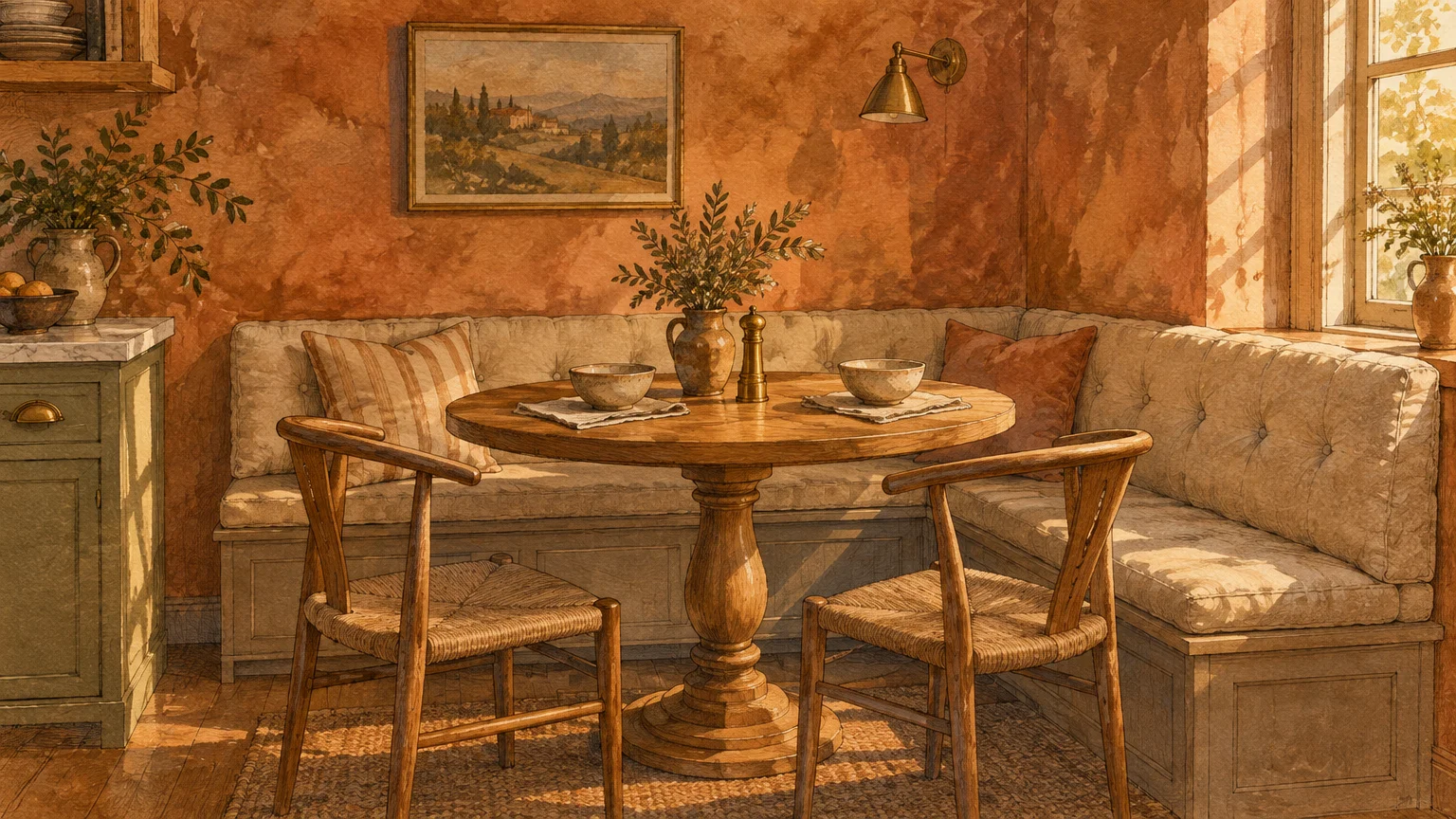
Cool greys have yielded to comforting, nature-derived tones that envelope spaces in cocooning warmth. Modern subtle wallpaper ideas spotlight rich caramel, terracotta washes, toasted almond, and raw sienna.
These sun-baked colorways reflect natural light warmly, combating the sterile chill often felt in modern builds. They create a flattering ambient glow that enhances skin tones and softens ambient shadows.
Incorporate wallpaper for living room walls that features watercolor gradients or distressed terra-cotta grounds. The weathered patina prevents solid warm walls from appearing one-dimensional or flat.
Pair warm earth-toned papers with natural blonde oak flooring, boucle seating, and unlacquered brass accents. This combination radiates quiet luxury and rooted, organic comfort.
Earthy palettes also form a seamless bridge to outdoor landscape views through large windows and patio doors. Your interior spaces feel intimately connected to the surrounding natural environment.
In rooms with cool northern exposure, these warm grounds neutralize blue daylight effectively. They transform dim, shadowy parlors into welcoming, golden retreats.
Incorporate matte black accents—such as slim metal frames or iron hardware—to punctuate warm neutral wallpaper. A touch of black prevents warm monochromatic schemes from feeling overly muted.
Trend #10: Framed Molding Panels and Inset Accents
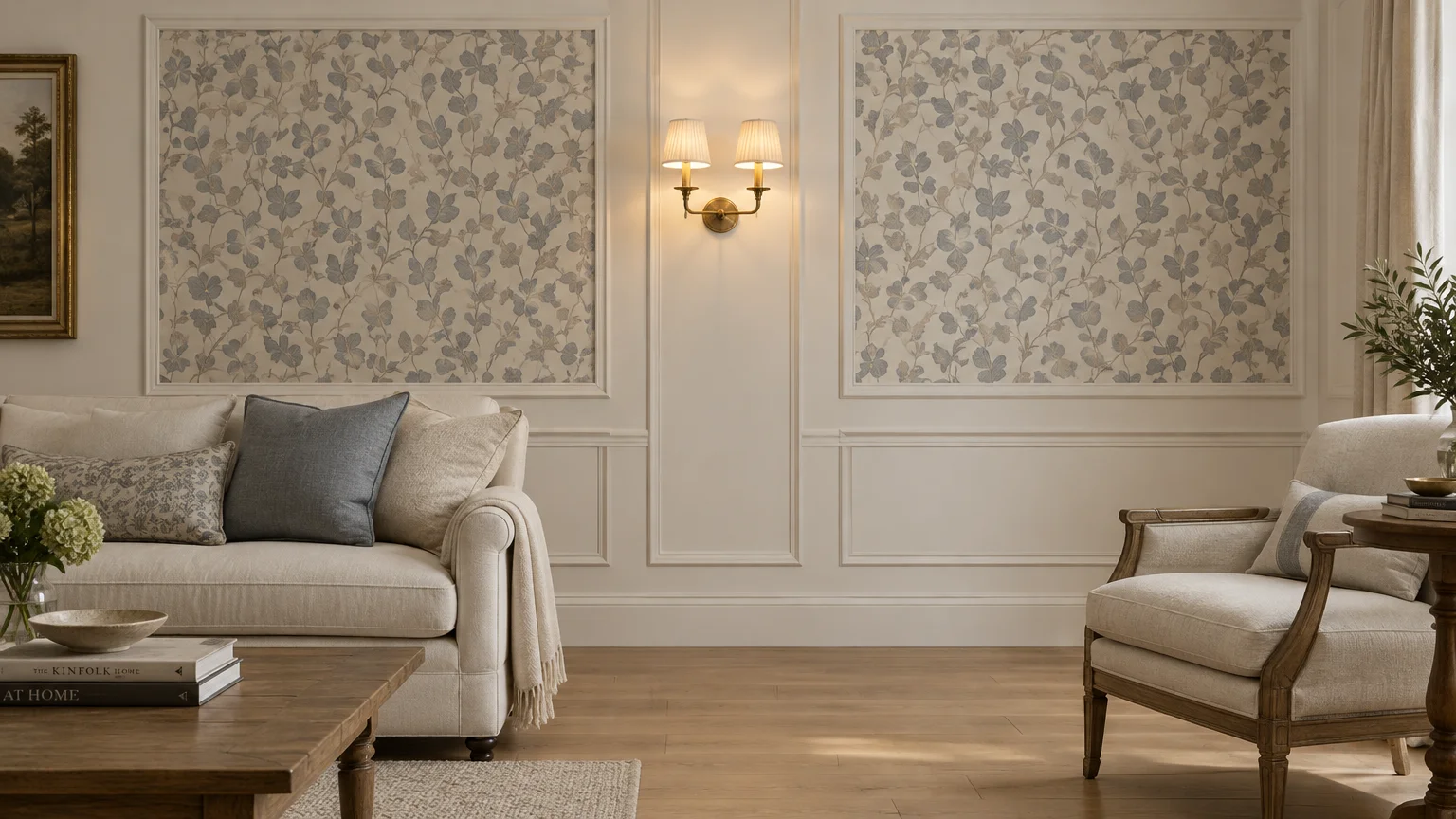
You do not need to wrap an entire room to make a lasting design impression. Installing accent wall wallpaper within traditional picture frame molding creates an architectural gallery effect without overwhelming your space.
This technique divides large drywall surfaces into balanced, classical proportions while highlighting specific focal zones. It delivers the artistic impact of wallpaper murals while preserving surrounding neutral paintwork.
Limiting wallcovering to an inset panel or an accent wall drops your project cost to $200 to $400. This budget-conscious strategy makes luxury designer papers remarkably affordable.
Paint the exterior molding and wainscoting in a shade that harmonizes with the paper’s secondary accent tone. This creates a tailored architectural frame that elevates decorative prints into high art.
Inset panels work magnificently in long dining rooms or behind living room consoles. They introduce color and depth precisely where you want them, leaving open sightlines undisturbed.
Installing panels also simplifies future design refreshes, as swapping paper inside moldings requires minimal prep work. You can update your aesthetic direction without stripping full-height walls.
Position wall sconces directly within each framed panel to illuminate the decorative paper like fine museum canvas. The centered lighting accentuates pattern depth while casting flattering ambient illumination across your entertaining zones.
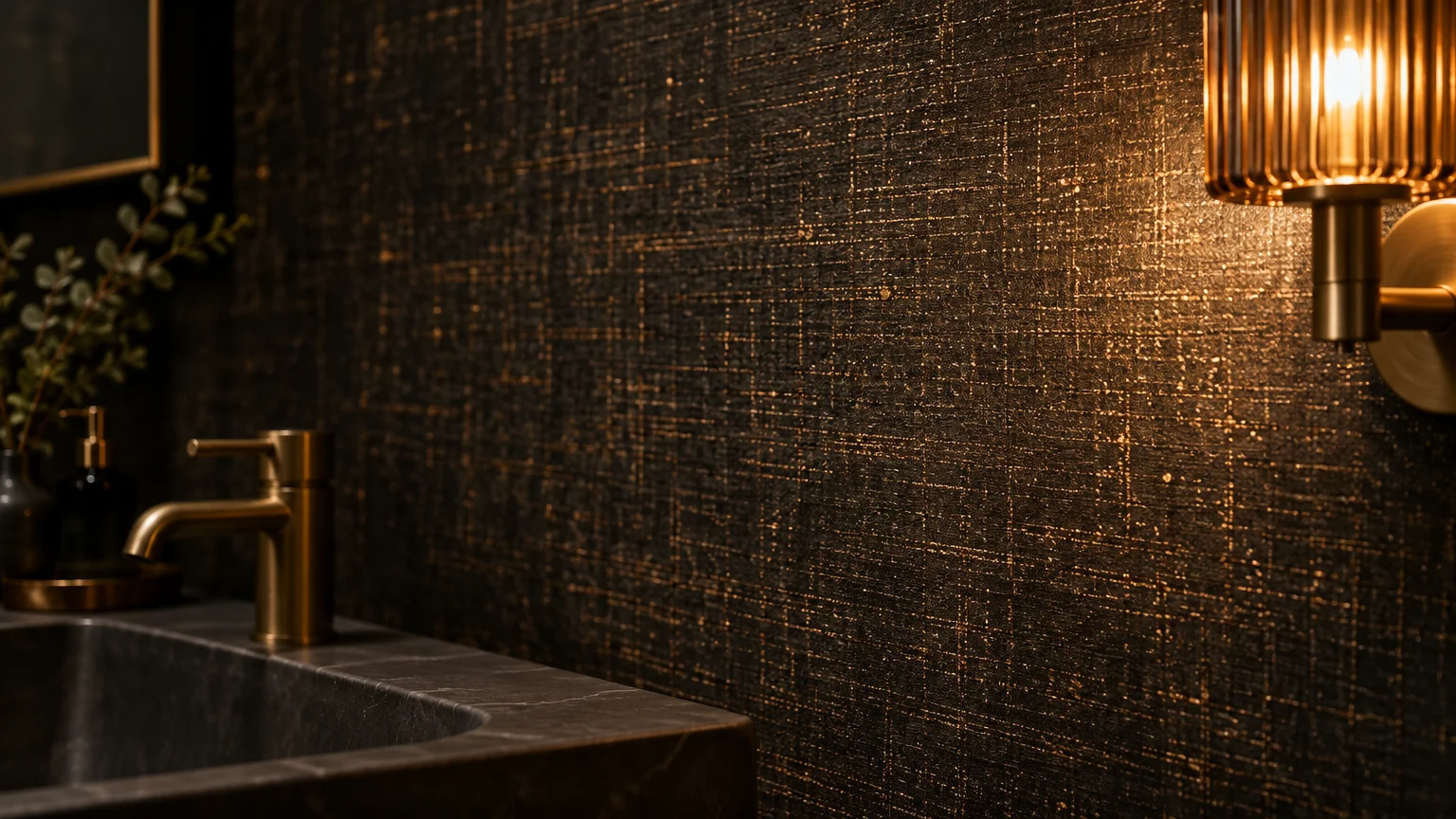
Trend #11: Muted Metallic Accents and Mica Sheens
Modern metallic wallcoverings have abandoned high-gloss chrome in favor of understated, light-diffusing mica powders and soft gilded veining. These delicate accents capture ambient light, casting a warm luminescence throughout the room.
By day, the pattern remains discreet; as dusk falls, lamps reveal soft, shimmering reflections across the wall surface. This kinetic quality brings walls to life without demanding bold pigment.
Select champagne, brushed bronze, or pewter undertones layered across chalky charcoal or linen-textured backgrounds. These tarnished metal details evoke the romantic, timeworn charm of antique leafing.
Pairing gentle metallic sheens with soft velvet fabrics and dark walnut furniture creates an alluring evening atmosphere. It introduces quiet glamour that flatters intimate entertaining environments.
Ensure you position directional lighting carefully so accent lamps wash across the surface at an angle. Angled grazing highlights delicate metallic flecks without causing blinding point-source glare.
Mica-flecked papers perform beautifully in powder rooms and formal dining areas where candlelight accentuates their glow. They create an inviting jewelry-box effect that guests remember long after leaving.
Combine these shimmering surfaces with matte wall paint on adjacent walls to balance luminous reflections. Contrast between chalky paint and soft metallic flecks makes the wallcovering appear intentionally curated.
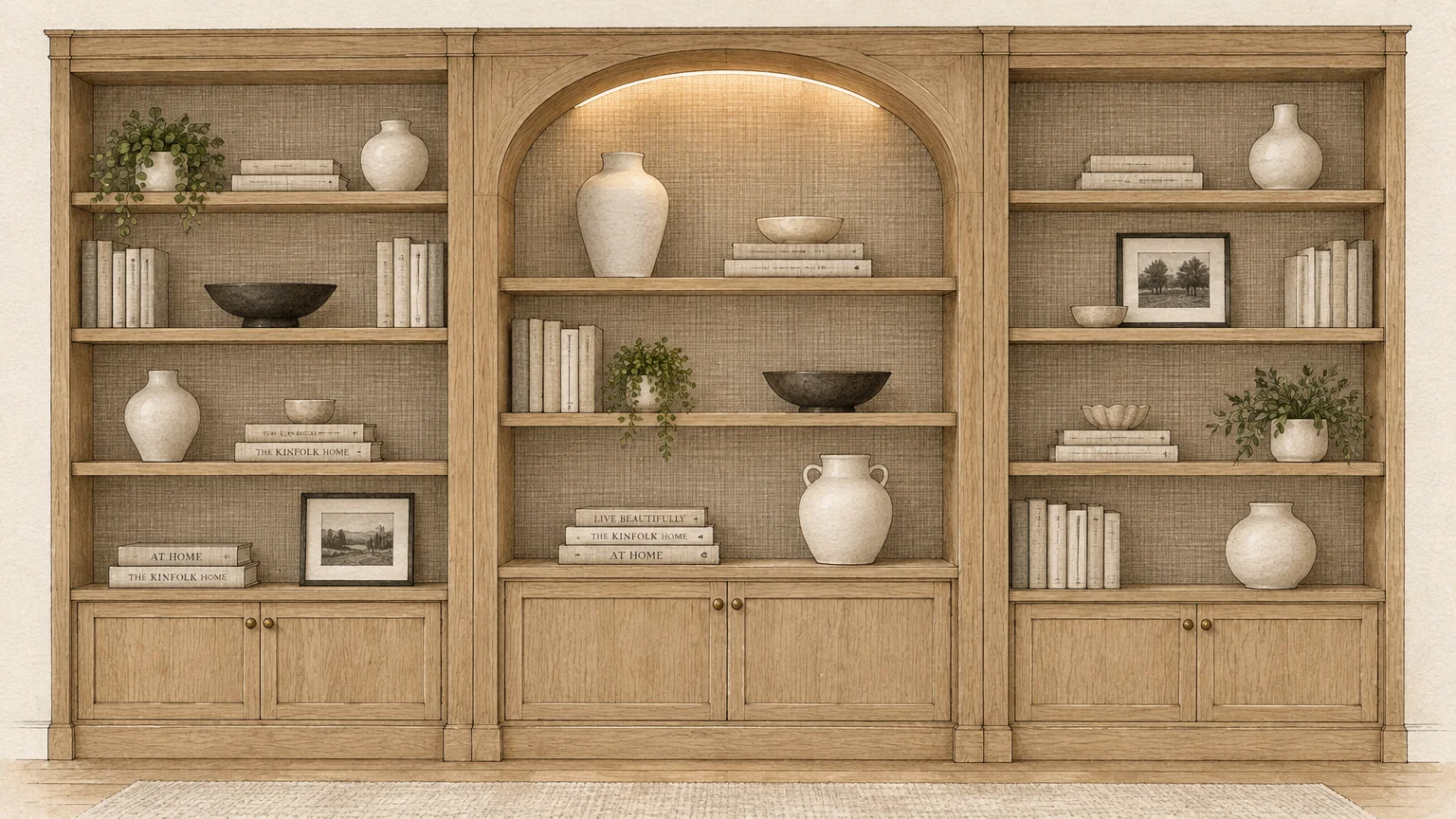
Trend #12: Strategic Niche and Built-In Backdrops
Lining the backs of built-in bookshelves, bar cabinets, or reading alcoves introduces playful character with surgical precision. This micro-application lets you showcase beloved patterns without committing four full perimeter walls.
The wallpaper peeks through between book spines, ceramics, and glassware, turning utilitarian storage into an artful vignette. It adds delightful three-dimensional depth to everyday cabinetry.
Retailers report that sales of peel-and-stick removable wallpaper are up over 50% entering 2026. This user-friendly material allows you to paper small niches easily without mess or professional labor.
You can conquer this simple DIY project using $75 to $100 in basic tools and prep materials. A sharp utility knife, straight edge, and smoothing blade are all you need for crisp execution.
Opt for small botanical prints or geometric tile motifs that contrast cleanly with painted joinery. A dark forest green pattern behind white oak shelving creates crisp, graphic definition.
Because the surface area remains compact, you can indulge in ultra-luxury designer remnants without blowing your budget. It represents the ultimate low-risk, high-reward design experiment.
Consider installing warm LED strip lighting under each shelf to illuminate your patterned niche backdrops evenly. Concealed task lighting pulls your selected pattern forward, framing decorative objects with inviting warmth.
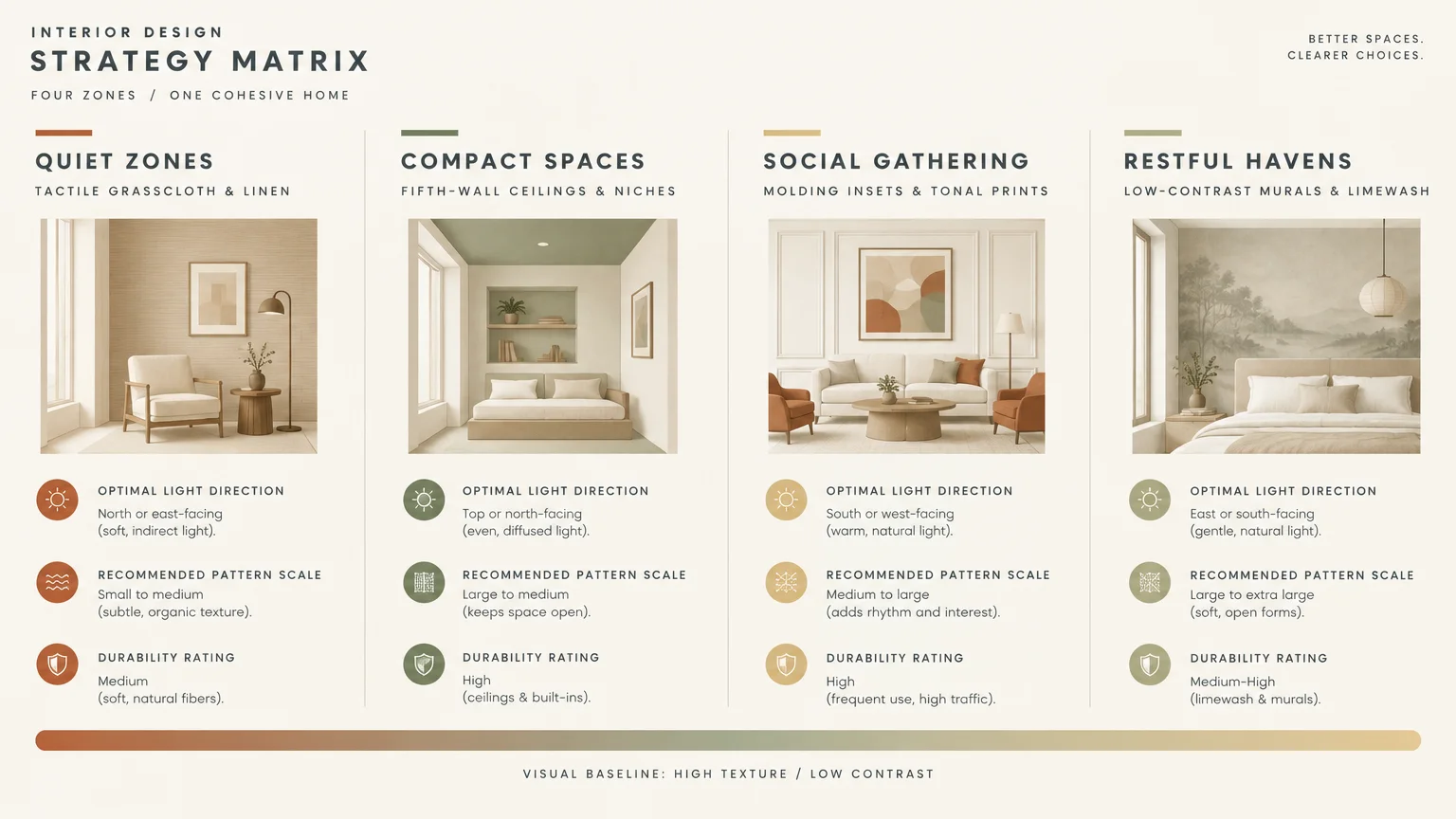
The Big Picture: Weaving These Trends into Your Home
Integrating subtle wallpaper ideas into your home requires harmonizing architectural proportion, light exposure, and everyday lifestyle needs. Modern wallcoverings are designed to build atmospheric layering rather than compete for primary attention.
The global wallpaper market was valued at $2.4 billion in 2024 and is projected to grow to $2.9 billion by 2030. This sustained surge reflects a collective craving for personal character, tactile materials, and authentic craftsmanship within modern interiors.
When budgeting your renovation, consider that the average cost for a standard residential wallpaper installation ranges from $500 to $1,500. For a typical 12×18-foot room, expect professional costs between $800 and $1,200.
Professional labor rates in 2026 average $5 to $10 per square foot, with basic jobs running $2 to $7 per square foot. Alternatively, specialty installers charge between $60 and $150 per double roll.
Standard wallpaper rolls typically cost between $30 and $100 per roll, covering roughly 58 square feet. Factoring in matching waste ensures you order sufficient rolls to complete your project seamlessly.
To achieve a cohesive aesthetic, pull your trim and ceiling paint colors directly from the wallpaper’s subtlest undertones. This prevents disjointed borders and weaves your decorative walls seamlessly into the surrounding architecture.
Evaluate your existing floor finishes before finalizing pattern choices. Warm oak parquet pairs naturally with woven grasscloth, whereas sleek polished concrete calls for softening limewash textures.
Always test physical wallpaper samples against your walls across varying daylight conditions before placing a full order. Natural morning illumination and warm incandescent evening bulbs reveal drastically different undertones in textured papers.
For the latest color forecasts, consult industry leaders like Pantone and paint companies like Benjamin Moore. For professional design standards, refer to the American Society of Interior Designers (ASID).
Disclaimer: This article reflects design trend analysis and predictions. Personal taste and timeless design principles should always guide your decorating choices.
Frequently Asked Questions
How do I select the right wallpaper scale for a small room?
Contrary to common myth, small rooms do not require miniature prints. Expansive low-contrast murals or sweeping tonal patterns can eliminate perceived corners and make compact spaces appear larger.
If you prefer repeating motifs, select micro-scale patterns that read as gentle texture from an entrance. Avoid high-contrast mid-scale designs, which visually chop up compact wall planes.
Will subtle wallpaper patterns hold their aesthetic value over time?
Subtle designs rooted in organic materials, tonal colorways, and architectural textures possess exceptional longevity. Because they avoid trendy saturated palettes and aggressive motifs, they remain timeless backdrops for evolving decor.
Properly installed wallpaper lasts 10 to 15 years with minimal maintenance. This durability ensures your aesthetic investment outlasts standard interior paint by nearly a decade.
Can I mix wallpaper patterns across adjoining living spaces?
You can combine multiple wallcoverings successfully by establishing a shared neutral color thread between adjacent rooms. For instance, pair a tactile grasscloth in your living room with a tonal botanical pattern in your dining room.
Vary the scale and texture between adjoining spaces rather than competing with similar prints. Let one room feature tactile woven fibers while the next highlights a smooth, painted mural.
Should I choose traditional pasted paper or peel-and-stick rolls?
Traditional unpasted or pre-pasted paper provides unmatched permanence and seamless alignment for primary living areas. Professional installers favor traditional papers for their superior seam adhesion and longevity.
Peel-and-stick wallpaper is ideal for rental properties, interior cabinetry niches, and fast DIY transformations. If you anticipate changing your aesthetic every few years, removable vinyl papers offer unmatched flexibility.