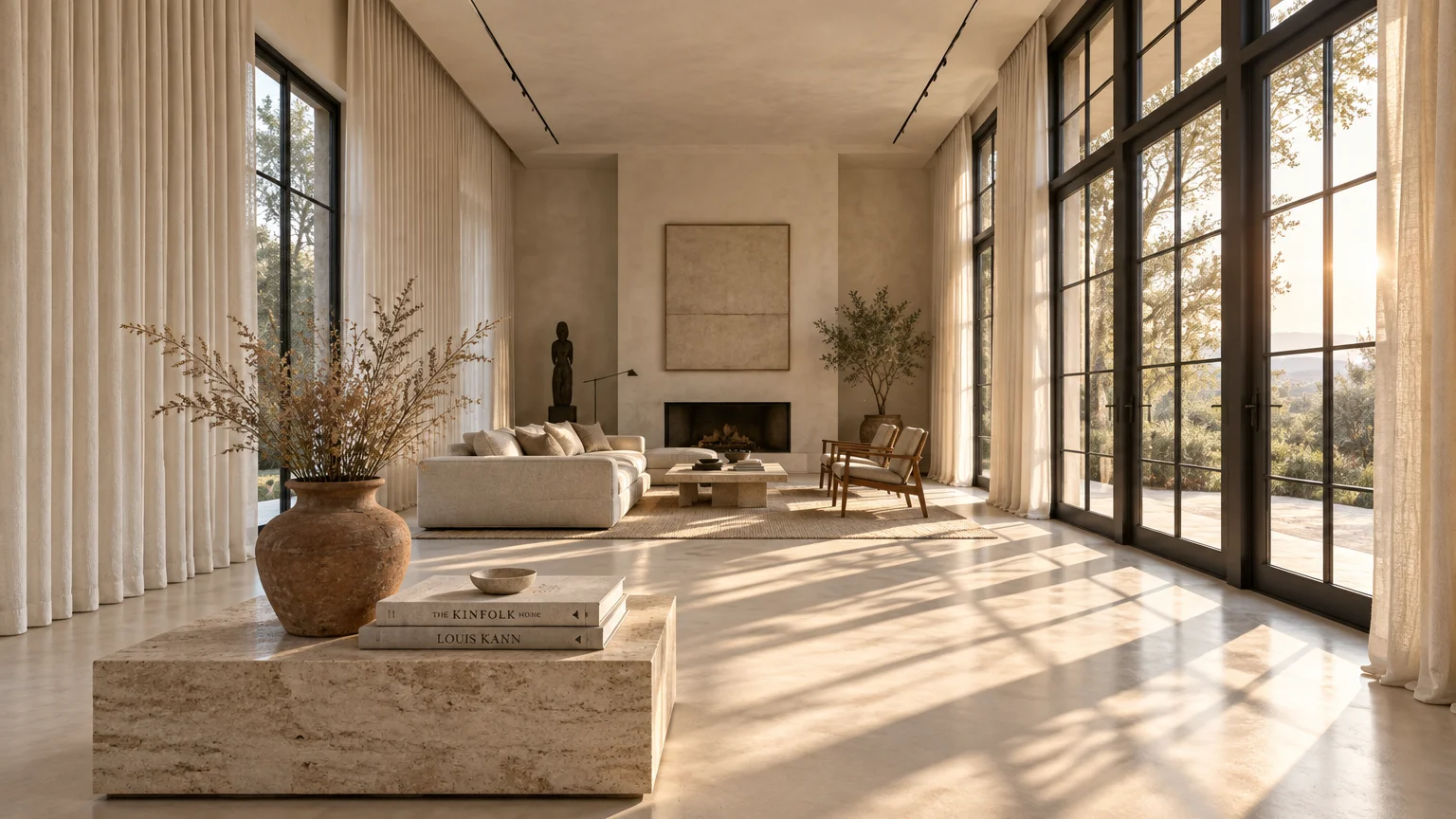
Window treatments dictate how your brain registers spatial volume and ambient daylight. Hanging drapery incorrectly can shrink your living space instantly, truncating ceilings and boxing in natural architecture.
Discerning decorators view window styling as spatial engineering rather than mere surface ornament. When you master how to hang curtains properly, you create the illusion of grand scale across compact rooms.
Explore these sophisticated design shifts to eliminate common curtain mistakes and make your room look bigger. Refined curtain tips will elevate your home aesthetic with enduring polish.
Trend #1: Ceiling-Mounted Rods to Fix Truncated Heights
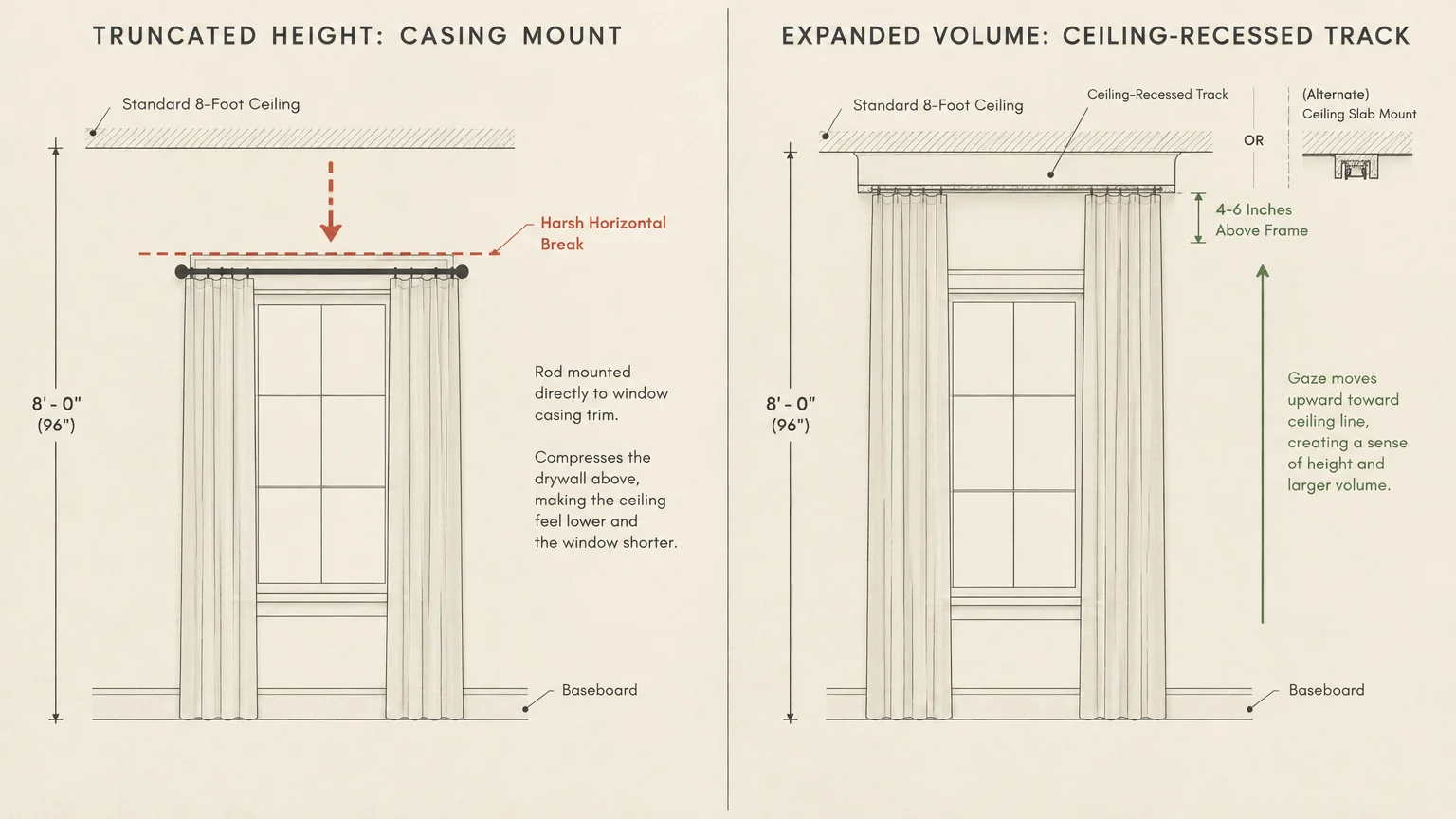
Mounting your drapery rod directly above the window casing remains one of the most damaging curtain mistakes. This low placement cuts wall height in half, creating a harsh horizontal boundary.
When you place hardware immediately over the trim, you emphasize the empty drywall space above. Your eyes register a low ceiling, making the entire room feel uncomfortably compressed.
Leading interior architects avoid this trap by embracing high-hung hardware mounted just beneath the ceiling cornice. Raising your rod guides the gaze upward in an uninterrupted sweep.
For standard eight-foot ceilings, install your curtain rod four to six inches above the window frame. In rooms with higher ceilings, position it roughly two-thirds of the distance toward the crown molding.
If your architecture features dropped ceilings or minimal trim, mount your hardware directly to the ceiling slab. Ceiling-recessed tracks completely eliminate visual breaks between plaster and fabric.
This vertical continuity relies on optical science. By extending fabric unbroken from ceiling to baseboard, your brain perceives significantly greater architectural volume.
Pair high-mounted treatments with slender, architectural metalwork. Choose quarter-inch brushed brass rods, blackened iron poles, or concealed aluminum tracking systems.
Heavy, ornate brackets ruin this streamlined silhouette. Keep mounting hardware discreet and color-matched to your wall or ceiling surface.
For your color palette, select quiet neutrals like chalk plaster, warm alabaster, or pale greige. Matching your drapery tone to the ceiling perimeter magnifies the vertical illusion.
Treat rod height as an architectural correction tool rather than an aesthetic choice. This simple installation shift can make a modest room feel twice as tall.
Trend #2: Wide Wall Stacking to Avoid Light Deprivation
Squeezing curtain panels directly across window glass chokes daylight and restricts visible sightlines. Covering window glass is a foundational window treatment mistake that makes interiors feel claustrophobic.
When fabric obstructs perimeter glass, your room loses its natural illumination source. Shadowed corners shrink the perception of usable floor space.
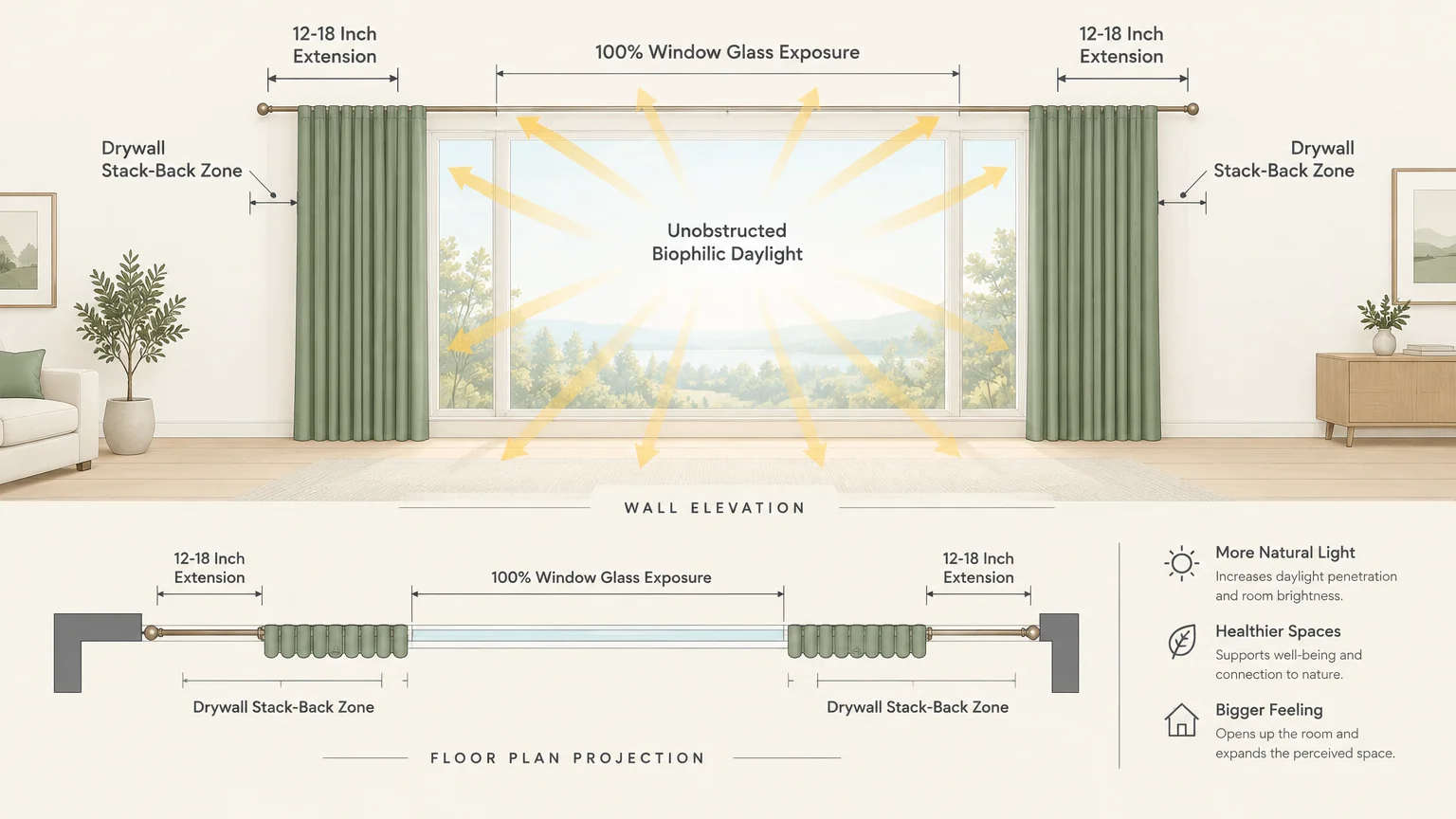
Modern interior designers solve this issue with generous wall stacking. You extend your curtain rod twelve to eighteen inches beyond each side of the window frame.
This extended span ensures that open curtains rest completely against drywall rather than glass. Your window aperture stays fully uncovered, welcoming maximum biophilic daylight.
Natural light bounces across flooring and reflects off ceiling planes. This ambient brightness expands spatial perception, making compact rooms feel open and airy.
The extended rod also creates a clever optical illusion. Strangers will assume your windows span the entire width of the drapery stack.
When selecting textiles for wide stacking, prioritize supple fabrics with low stack-back density. Medium-weight linens and soft cotton blends compress gracefully without stiff resistance.
Avoid rigid backings or stiff jacquards that flare outward awkwardly when pushed aside. Bulky stacks crowd wall decor and make tight perimeter pathways feel narrow.
Embrace subtle earth tones such as oat, bleached driftwood, and pale moss. These organic hues transition smoothly from exterior foliage into interior living zones.
Before drilling holes, measure your available lateral wall space carefully. Allowing ample room for wide stacking instantly turns undersized windows into grand architectural features.
Trend #3: Bespoke Floor Grazing to Eliminate Awkward Floating Hems
Curtains that hover awkwardly two or three inches above the floor visually truncate a room. These high-water hems break vertical rhythm and make your ceilings appear stunted.
Discerning homeowners often fear floor contact due to dust or fabric wear. However, floating panels look unfinished and shrink the room’s apparent vertical scale.
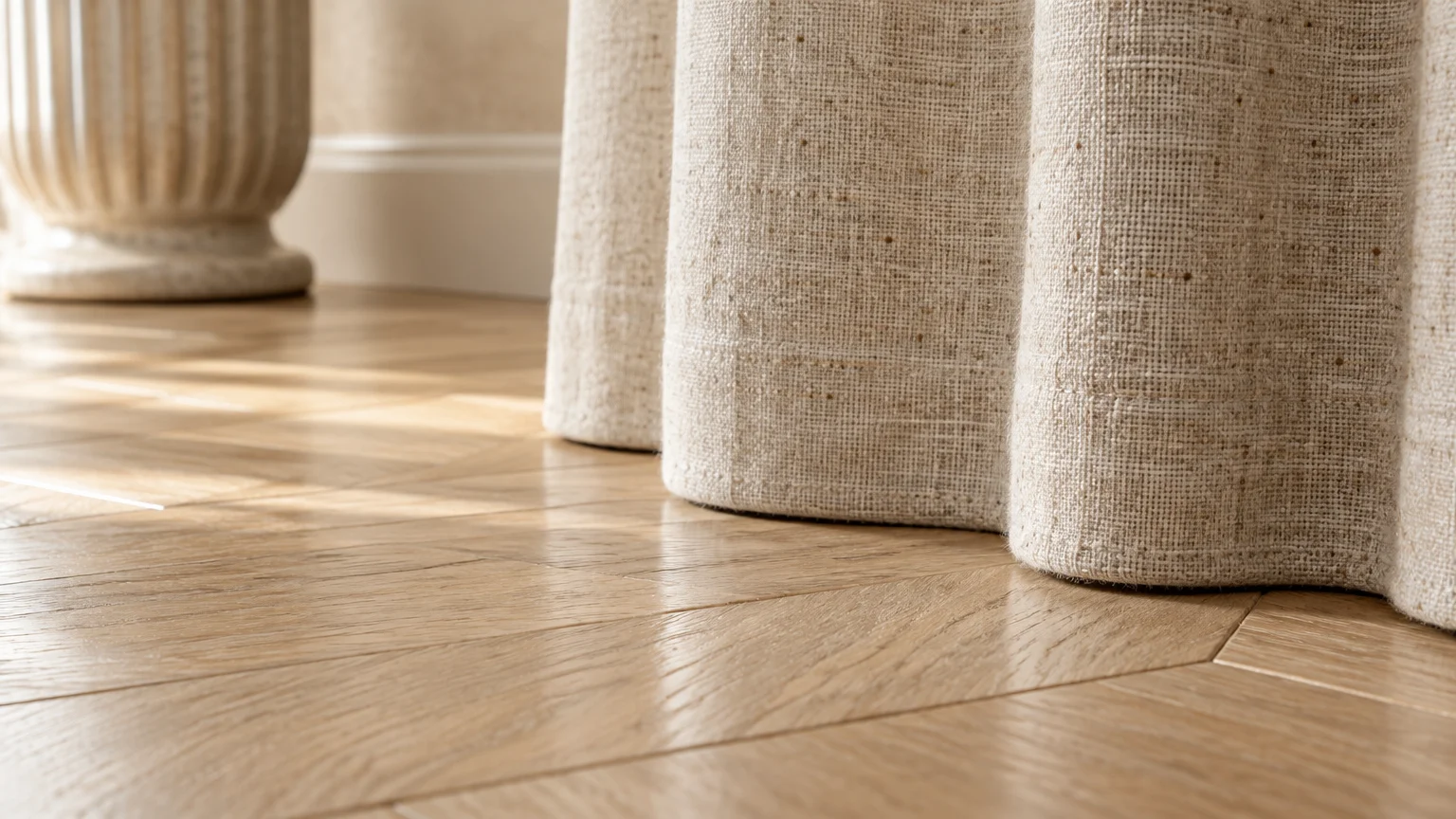
Leading designers favor a tailored grazing hemline, often known as the kissing drape. In this approach, fabric lightly skims the floorboards with exact precision.
A kissing hem creates a seamless connection between your walls and flooring. This anchored line establishes a feeling of architectural intentionality and refined luxury.
For formal dining rooms or primary suites, consider a tailored one-inch break. A slight break adds soft elegance without accumulating mounds of dust.
Avoid dramatic twelve-inch puddles in compact living areas. Excess fabric pooling on the ground eats valuable floor surface and clutters walking paths.
Always hang your hardware before taking final hem measurements. Subtle ceiling dips or uneven hardwood floors require tailored adjustments across each individual panel.
Insert lead drapery weights into bottom hem corners during fabrication. These small weights pull fabric straight down, keeping pleats taut and vertical lines razor-sharp.
Choose natural materials that respond well to pressing, such as Belgian flax and crisp wool flannel. These fabrics hang with structural integrity and timeless poise.
Precision tailoring eliminates awkward visual gaps at floor level. When drapery grazes the ground cleanly, your room gains an immediate aura of quiet luxury.
Trend #4: Ethereal Light Filtration Over Suffocating Heavy Fabrics
Heavy brocades and suffocating velvet panels absorb light, turning small rooms into dark caves. Dense, light-blocking drapery visually weighs down window frames and shrinks perceived volume.
Opulent fabrics may look striking in sprawling historic manors, but they overpower compact modern living rooms. Dark corners close in on you, making tight layouts feel constricted.
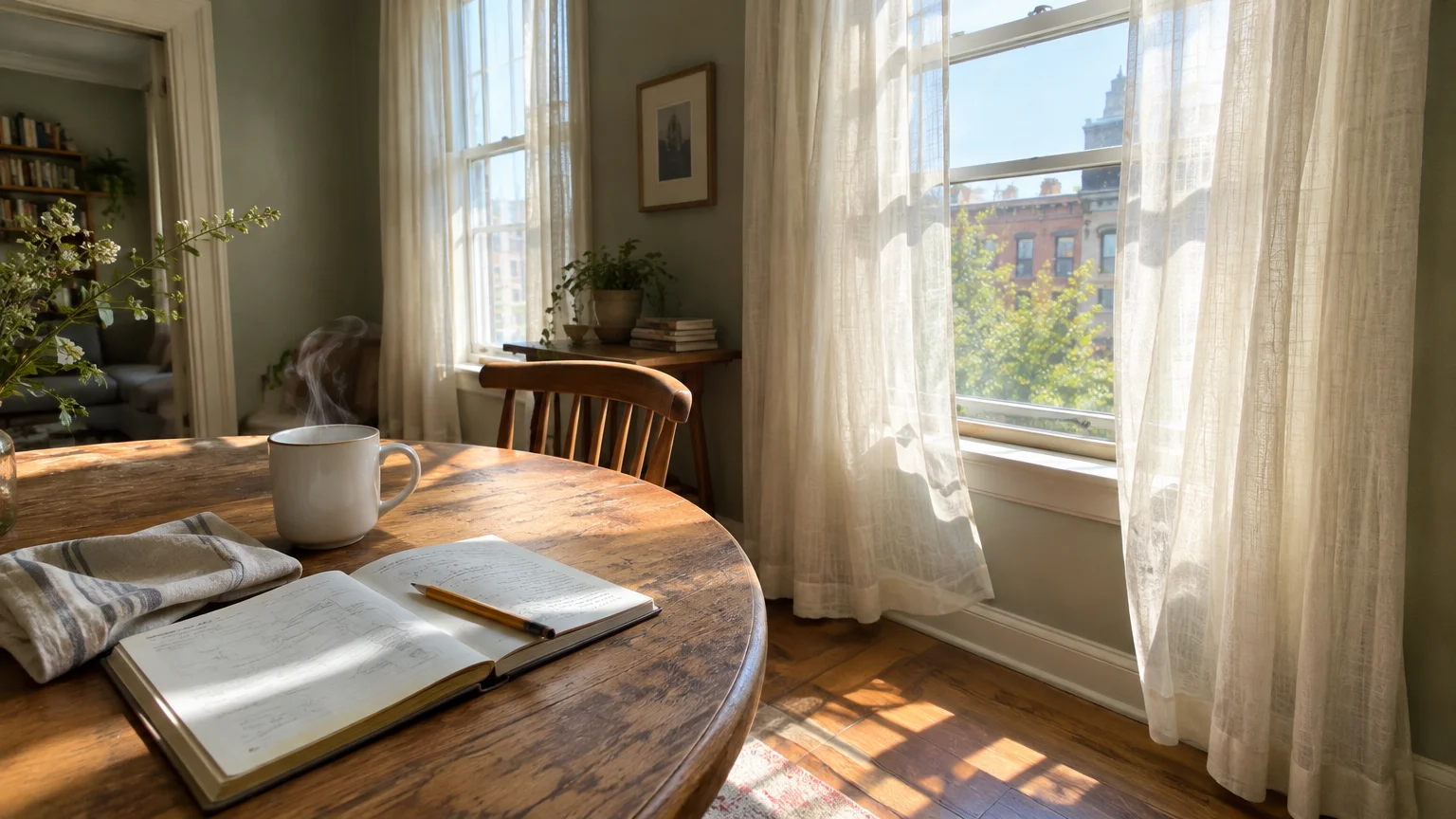
Contemporary trendsetters replace dense drapes with luminous semi-sheers and open-weave linens. These translucent textiles diffuse harsh sunbeams while maintaining ambient brightness.
By softening exterior sunlight, sheer panels cast a warm, flattering glow across your interior. Natural daylight acts as an expansive visual brush, illuminating dim architectural corners.
Lightweight materials introduce a sensory, biophilic quality as gentle breezes rustle the weave. This kinetic movement injects airiness into static living spaces.
If your bedroom requires complete light exclusion, install a dual-track drapery system. Pair gauzy daytime sheers with concealed blackout roller shades mounted inside the window recess.
This dual approach guarantees nocturnal comfort without forcing you to endure dark, oppressive drapery during daytime hours. You preserve expansive natural light at all times.
Palette selection should emphasize light-reflective minerals like chalk, raw silk, soft bone, and pale ecru. These bright tones reflect daylight deep into your home.
Test fabric swatches against your windows at varying hours of the day. Observing how sunlight filters through the weave ensures optimal diffusion and privacy balance.
Prioritizing ethereal, light-filtering fabrics allows daylight to expand your living area. Your space will instantly feel brighter, broader, and infinitely more welcoming.
Trend #5: Voluminous Double-Fullness Over Skimpy Single Panels
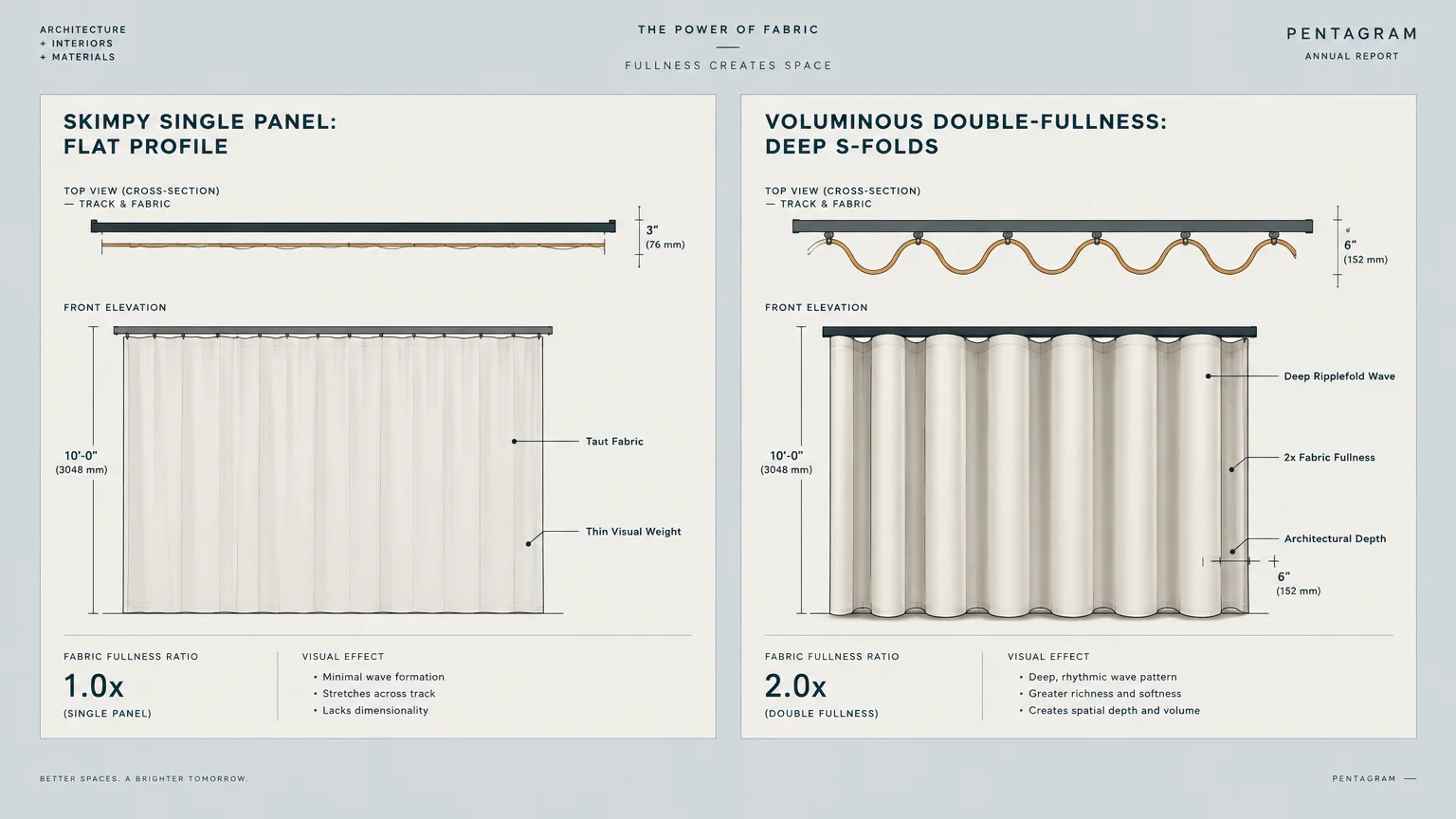
Hanging single curtain panels that stretch flat when drawn shut is a common decorating mistake. Flat, skimpy curtains expose budget compromises and highlight small room dimensions.
Window drapery requires rich fabric fullness to achieve architectural presence. When panels lack adequate volume, they look like stiff sheets suspended from a pole.
High-end design standards dictate a fullness ratio between two and two-and-a-half times your window width. For ultra-sheer textiles, increase that ratio to three times the width.
Generous fabric fullness creates deep, rhythmic pleats that cast soft vertical shadows. These repeating folds trick your perception into reading the wall as substantially wider.
Sculptural folds also offer noticeable acoustic advantages across modern living spaces. Thick fabric folds absorb sound reverberations, creating a calm, quiet atmosphere.
Explore tailored heading styles like French pinch pleats or modern ripple fold systems. Ripple fold carriers space fabric snaps evenly, guaranteeing flawless S-curve waves every time.
Avoid rod-pocket headings, which bunch tightly and slide clumsily along hardware. Rod pockets bunch unevenly and ruin the clean vertical lines necessary for spatial expansion.
Always purchase two wide panels per window rather than trying to stretch a single narrow drape. Symmetrical fullness frames your view with polished grace.
Invest in high-quality cotton or flannel interlinings to support your drapery pleats. Interlining adds rich body and tactile depth without stiffening your drapery fabric.
Committing to double fullness turns humble window treatments into bespoke architectural focal points. This tailored volume gives your room an undeniable sense of grandeur.
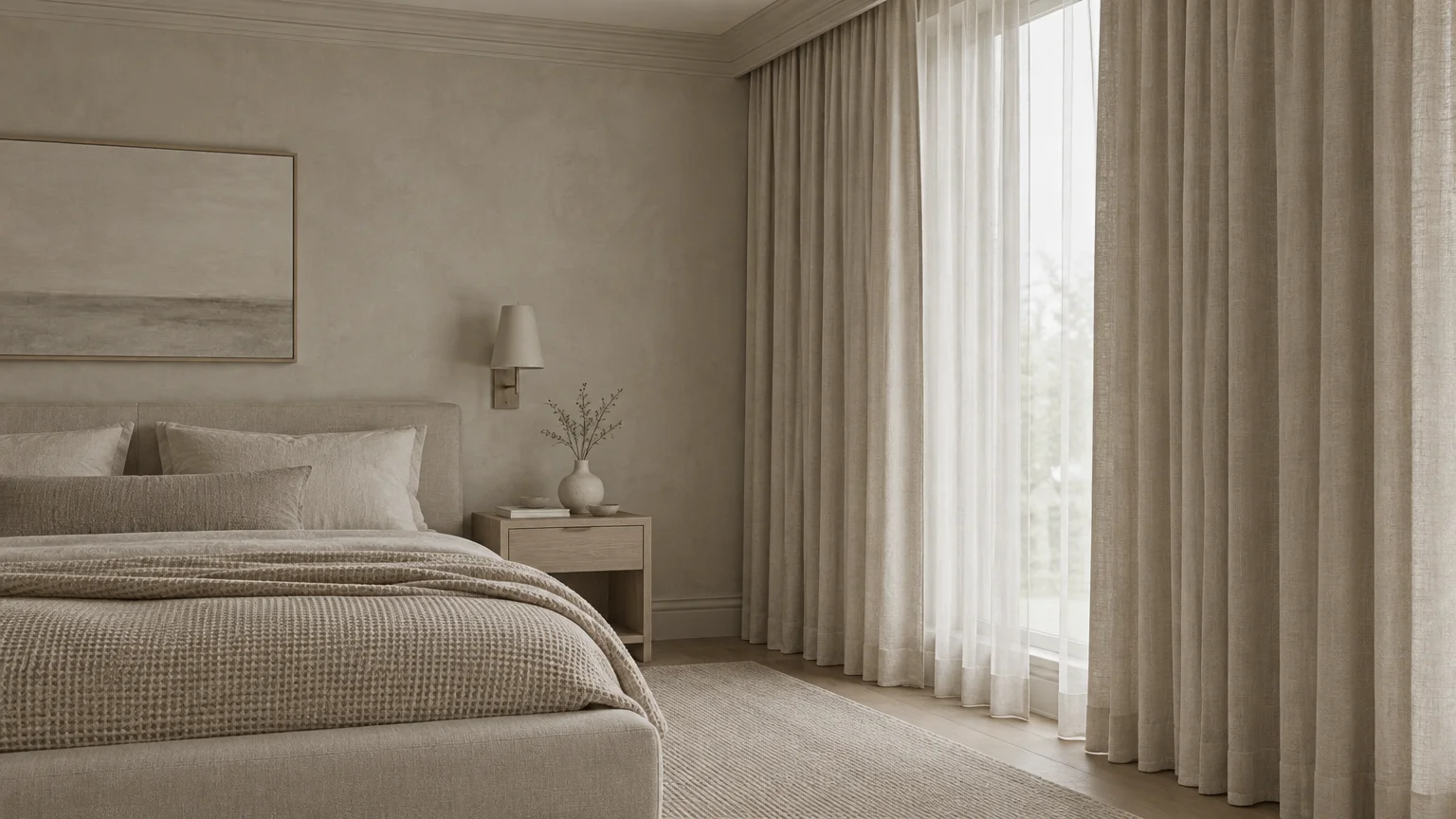
Trend #6: Monochromatic Color Drenching Over Choppy Contrast Borders
Selecting curtains in a stark contrasting hue chops your perimeter walls into disconnected segments. High-contrast drapery creates aggressive visual borders that make rooms feel boxed in.
When dark curtains flank light walls, your eye constantly halts at the boundary lines. This visual friction highlights room perimeters and diminishes perceived square footage.
Trend reports spotlight monochromatic color drenching as a powerful remedy. Select curtain textiles that closely mirror your surrounding wall paint color.
When drapery and walls share an identical color family, physical perimeter boundaries dissolve. The eye travels smoothly across your room, perceiving uninterrupted spatial flow.
To prevent your space from feeling flat, introduce subtle tactile contrasts. Pair smooth eggshell wall finishes with slubbed linen or bouclé curtain weaves.
Soft mineral hues like limestone, desert sand, and misty sage perform beautifully in tone-on-tone palettes. These quiet shades create a peaceful sanctuary suited for modern living.
For the latest color forecasts, consult industry leaders like Pantone and paint companies like Benjamin Moore. For professional design standards, refer to the American Society of Interior Designers (ASID).
Bring paint swatches to your textile showroom before finalizing drapery orders. Comparing fabric samples against painted surfaces under natural light ensures perfect color harmony.
Monochromatic treatments establish visual continuity across adjacent living and dining zones. Connecting adjoining rooms through unified window hues expands your overall floor plan.
Eliminating sharp visual contrasts allows your architecture to expand effortlessly. Color drenching transforms fractured rooms into cohesive, sprawling spaces.
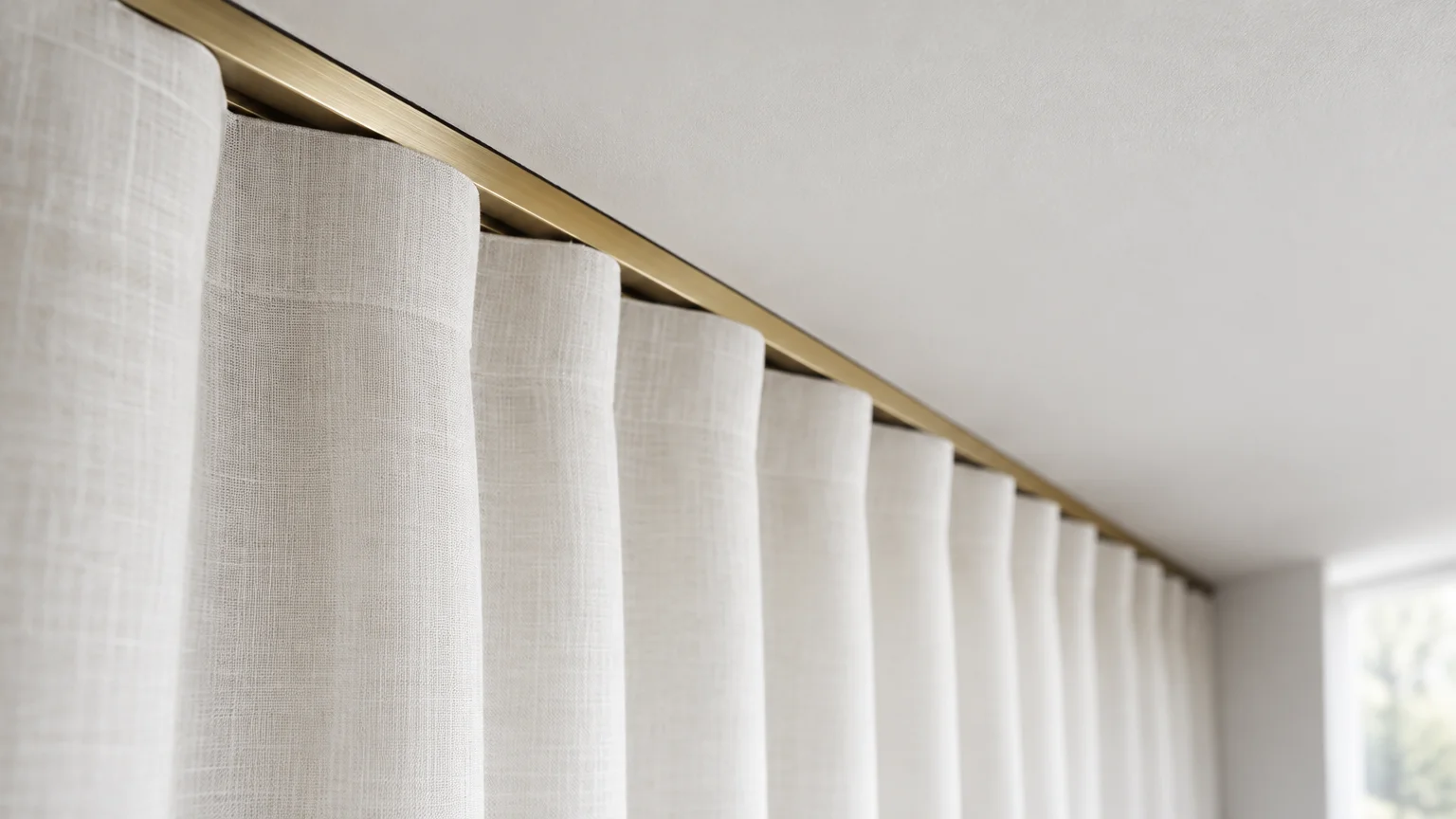
Trend #7: Minimalist Architectural Tracks Over Clunky Finials
Oversized decorative finials, thick wooden poles, and ornate corbels crowd window headers. This bulky hardware creates visual clutter, pulling your ceiling line downward.
Heavy hardware acts like an anchor on your wall, drawing focus to structural limitations. In smaller rooms, ornate rod ends consume valuable stacking space.
Today’s design innovators embrace minimalist architectural tracks and concealed ceiling pockets. These low-profile mounting systems merge invisibly into your ceiling architecture.
Ceiling-recessed drapery pockets hide the curtain header entirely from view. Fabric appears to float out of the ceiling, creating an ethereal waterfall effect.
If recessed framing is impossible, install ultra-slim surface-mounted ceiling tracks. Finished in matte white, these tracks blend seamlessly into standard plaster finishes.
Streamlined hardware strips away unnecessary decorative noise. Your room breathes easily, letting fabric texture and natural vistas remain the primary visual focal points.
For wall-mounted installations, choose sleek rods with flush end-caps instead of bulbous finials. End-caps allow your drapery to stack tightly into tight corner spaces.
Matte black, aged bronze, and satin nickel offer subtle industrial polish without overwhelming your room. These muted finishes support clean architectural lines.
Motorized smart tracks represent the ultimate integration of quiet luxury and modern technology. Quiet motors glide curtains smoothly without requiring visible wands or cords.
Replacing clunky hardware with sleek architectural tracks cleanses your visual field. Your room instantly feels more modern, open, and serene.
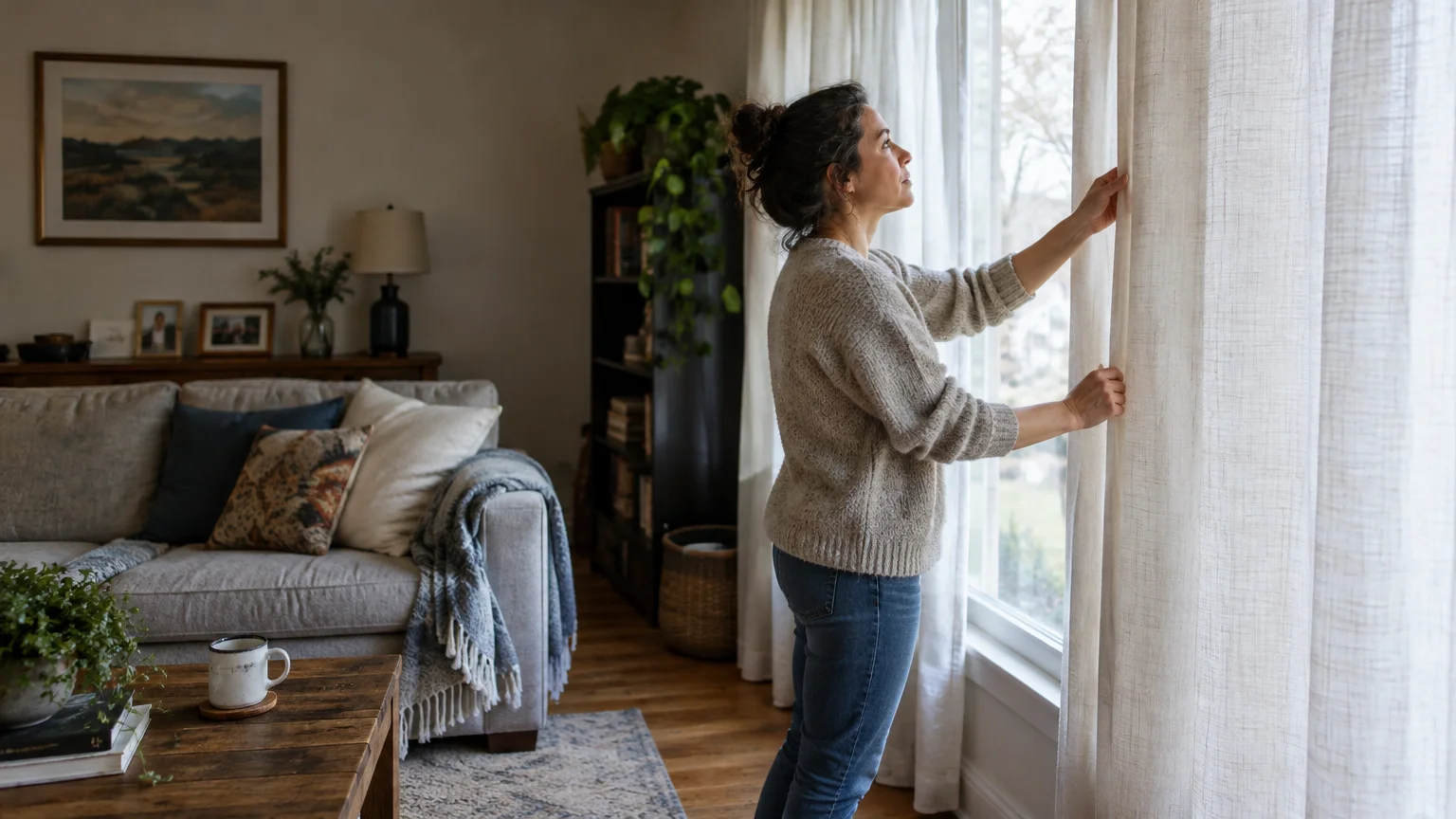
The Big Picture: Weaving These Trends into Your Home
Elevating your window treatments does not require stripping your home of warmth or character. Instead, view these curtain tips as an architectural foundation for your personal style.
Begin by mapping the daylight conditions in every room across different hours. Identify which spaces need wider wall stacking and which require ethereal, light-filtering weaves.
Maintain consistent hardware heights across connected open-concept living and dining rooms. Shared curtain rod elevations create visual continuity that links separate spaces together.
When choosing fabrics, invest in timeless materials with demonstrable provenance. Belgian linen, organic wool, and slubbed cotton outlast synthetic textiles and age gracefully.
Custom drapery fabrication offers unmatched returns on your interior design investment. Bespoke sizing guarantees exact kissing hems and perfectly calculated fabric fullness.
Do not overlook proper curtain maintenance after completing your installation. Regular steaming and delicate vacuuming preserve fabric folds and prevent dust buildup.
Avoid impulsive purchases of pre-packaged curtain panels that compromise on width and length. Patient planning ensures your window treatments flatter your home’s unique dimensions.
Window treatments serve as the connective tissue between your interior decor and natural daylight. Mastering how to hang curtains turns any compact room into a spacious sanctuary.
Frequently Asked Questions
How high above the window should you hang curtains if ceilings are low?
In rooms with low ceilings, mount your hardware as close to the ceiling line as possible. Positioning rods just below the ceiling draws your gaze upward.
This unbroken vertical line counteracts low clearance and creates the illusion of elevated ceiling height. Avoid resting rods on the window casing at all costs.
For flat ceilings without crown molding, choose ceiling-mounted tracks. Ceiling tracks eliminate blank drywall gaps and make your walls appear notably taller.
What is the ideal curtain fullness ratio to make rooms look bigger?
Aim for a fabric fullness ratio between two and two-and-a-half times your rod width. Sheer fabrics often benefit from a three-times fullness ratio for optimal depth.
Generous fabric fullness generates sculptural vertical folds that catch natural shadows. These deep waves guide your eyes upward and expand horizontal wall perception.
Panels that lack proper fullness hang flat and limp when drawn shut. Skimpy fabric accentuates small room dimensions and diminishes your overall decorating aesthetic.
Can dark curtains ever work in a small living room?
Dark curtains succeed in small rooms when you execute a monochromatic color drenching strategy. Pair charcoal, espresso, or deep olive curtains with matching wall paint.
When your drapery matches dark walls, perimeter boundaries blur seamlessly. You achieve an intimate, cocooning atmosphere without visually shrinking the floor plan.
Avoid pairing dark curtains with bright white walls in compact rooms. That sharp contrast creates harsh boundaries that make rooms feel boxed in.
Should curtains touch the floor or hover above it?
Curtains should always make intentional contact with the floor surface. Floating panels that stop a few inches above floorboards truncate your vertical wall height.
Tailor your drapery to lightly kiss the floor or break by a half-inch. This bespoke hemline anchors your room and delivers undeniable tailored elegance.
Use corner hem weights to maintain straight vertical pleats from top to bottom. Weighted hems prevent flair and keep your drapes hanging in crisp formation.
Disclaimer: This article reflects design trend analysis and predictions. Personal taste and timeless design principles should always guide your decorating choices.