
Bathroom design is undergoing a profound transformation as sterile, uniform tile formats give way to tactile, continuous, and highly personalized surface materials. Your next renovation requires a departure from standard subway tiles and ubiquitous gray ceramics, shifting toward elements that introduce warmth, texture, and architectural depth to your most intimate spaces. New bathroom decor trends favor seamless installations, organic forms, and rich, sensory experiences over clinical precision. As you rethink your daily rituals, adopting these emerging material innovations allows you to craft a sophisticated sanctuary that prioritizes both visual impact and long-term durability. Moving beyond conventional boundaries will help you establish an elevated aesthetic that fundamentally redefines modern bathroom luxury.
Trend #1: Seamless Tadelakt Plaster
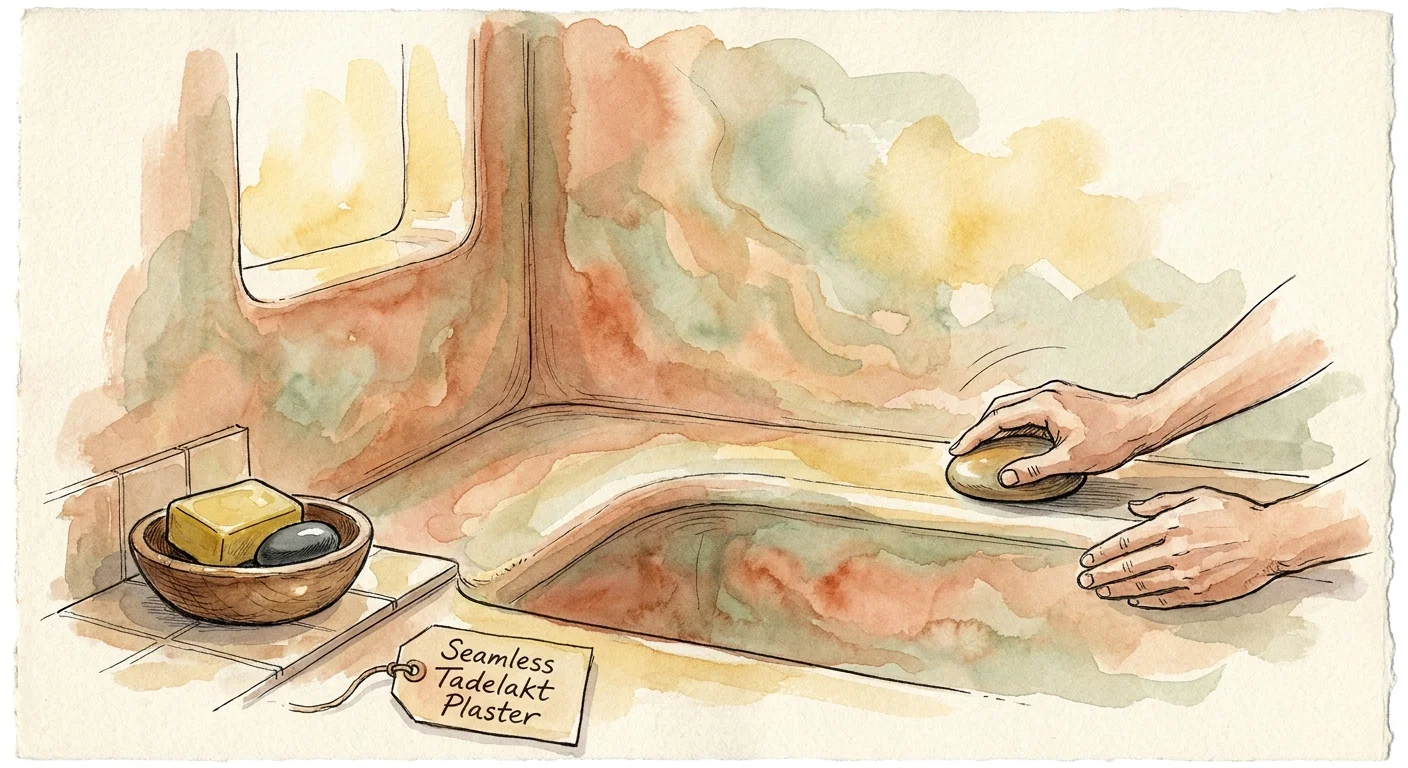
Standard bathroom renovations historically relied heavily on ceramic grids, forcing you to maintain endless grout lines that inevitably discolor over time. Tadelakt—a traditional Moroccan lime plaster—provides a waterproof, seamless alternative that instantly elevates your space. This living finish relies on a chemical reaction between natural lime and olive oil soap, creating a lustrous, water-resistant surface with an incredibly soft, organic texture. Choosing Tadelakt allows you to wrap your walls, shower enclosures, and even custom vanity contours in a continuous, unbroken sweep of material. The resulting aesthetic feels deeply rooted in nature while maintaining a highly sophisticated, minimalist profile that suits contemporary architecture.
Because the plaster contains no synthetic resins, it breathes naturally, mitigating moisture accumulation and improving indoor air quality. When planning your bathroom renovation ideas, consider applying this plaster in warm, earthy tones like terracotta, sage, or soft bone. The undulating, hand-troweled surface plays beautifully with natural light, establishing a calming, spa-like environment that standard square tiles simply cannot achieve. You must secure an experienced artisan for the application; investing in a specialized installer ensures the longevity, structural integrity, and water-tight performance of the finish.

Trend #2: Large-Format Porcelain Slabs
For decades, standard twelve-by-twelve tiles dominated bathroom floors and walls, creating busy visual grids that visually shrunk the space. Today, the design industry favors expansive large-format porcelain slabs that drastically reduce visual interruptions. These monumental pieces—often reaching up to ten feet in height and manufactured in profiles as thin as a quarter inch—allow you to clad entire shower enclosures with a single sheet of material. Manufacturers use advanced high-definition printing technology to perfectly mimic the complex veining of rare Italian marbles, oxidized metals, and heavily textured natural stone. This shift ranks among the most impactful modern bathroom tiles available on the market today.
By eliminating nearly all grout lines, you create an optical illusion of increased square footage, making even compact bathrooms feel expansive and palatial. Beyond aesthetics, the sheer scale of these slabs minimizes the porous areas where mold and mildew typically breed, offering you a highly practical, low-maintenance solution. When incorporating these massive panels, you must secure an experienced contracting team; the installation requires specialized handling equipment with vacuum suction cups and precise, perfectly leveled substrate preparation. The final result delivers an uncompromising, luxurious monolith that anchors your entire design scheme.

Trend #3: Fluted Architectural Paneling
Flat, two-dimensional surfaces are quickly losing their appeal in luxury residential design. Fluted and ribbed architectural paneling now steps in to provide the critical depth that flat ceramics lack, transforming blank walls into dynamic focal points. Whether crafted from moisture-resistant medium-density fiberboard, engineered polymers, or sculpted natural stone, these vertical ridges create a striking interplay of light and shadow throughout the day. Integrating ribbed textures introduces a distinctly tactile element to your bathroom decor trends, inviting touch and breaking up the visual monotony of sleek mirrors, polished plumbing fixtures, and glass shower enclosures.
You can effectively deploy fluted panels as lower wainscoting, dramatic vanity backdrops, or even as the facing material for custom cabinetry. The vertical orientation of the fluting naturally draws the eye upward, giving the illusion of higher ceilings and grander proportions. To maintain a refined and elegant look, pair this heavy architectural texture with understated, matte hardware and simple, modern lighting fixtures. This intentional contrast highlights the structural beauty of the ribbed surfaces without overwhelming the visual balance of the room.

Trend #4: Bespoke Poured Terrazzo
While small mosaic patterns once ruled the shower floor, bespoke poured terrazzo offers a continuous, highly customizable surface that feels far more intentional and artistic. Originating in Italy as an ingenious way to repurpose marble fragments, modern terrazzo binds natural stone chips, recycled glass, and even mother-of-pearl in an advanced epoxy or cementitious base. Pouring this mixture in place allows you to cover floors, transition into walls, and form integral sinks without encountering a single seam. The true power of poured terrazzo lies in its limitless customization; you dictate the aggregate size, the density of the chips, and the exact pigment of the binding matrix.
If you prefer a subtle and quiet aesthetic, select a monochromatic blend with micro-aggregates that read as a soft, speckled texture from afar. For a bolder, avant-garde statement, choose oversized chunks of contrasting marble set against a dark, moody base. This material requires professional grinding and polishing on-site, yielding an exceptionally durable, slip-resistant finish. Its rapid resurgence represents a broader shift toward artisanal, custom-tailored elements in bathroom interior trends, proving that you no longer have to settle for mass-produced solutions.

Trend #5: Waterproof Botanical Wallcoverings
Homeowners traditionally avoided wallpaper in wet zones due to the inevitable peeling, bubbling, and water damage caused by steam. However, recent advancements in material science have introduced high-performance, waterproof wallcoverings that successfully replace the traditional accent tile wall. Woven from durable vinyl or specialized fiberglass, these modern wallpapers actively repel moisture while resisting fungal growth. They allow you to introduce large-scale botanical prints, intricate scenic murals, and vivid, painterly designs that would be impossible—or prohibitively expensive—to recreate with ceramic mosaics.
Enveloping a powder room or a master bath in a lush, oversized floral print instantly shifts the mood, creating an immersive, jewel-box effect that demands attention. When executing this bold trend, pair the dynamic wallpaper with quiet, understated floor finishes to properly anchor the room. You must ensure your bathroom features adequate mechanical ventilation to maximize the lifespan of the wallcovering, and always mandate the use of a marine-grade adhesive specifically formulated for high-humidity environments. This approach injects immediate personality and storytelling into your space.

Trend #6: Microcement Floor and Wall Systems
The pursuit of quiet luxury demands materials that feel both substantial and purposefully understated. Microcement—a versatile, polymer-modified coating—delivers an industrial yet highly refined aesthetic that adheres directly over existing substrates. If you are exploring bathroom renovation ideas to cover dated, unwanted tiles without enduring the mess and cost of full demolition, microcement offers a highly practical solution. Applied in multiple ultra-thin layers by hand, the final finish measures just a few millimeters thick, yet it provides exceptional durability and functions as a completely waterproof membrane.
The troweled application leaves subtle, organic variations in color and texture, reminiscent of aged concrete but entirely smooth to the touch. This material empowers you to build a monolithic wet room where the floor slopes imperceptibly into a linear drain, and the walls merge seamlessly into custom-built shampoo niches and floating benches. Opt for warm greige, soft taupe, or muted sand tones to prevent the space from feeling too cold or utilitarian. Microcement beautifully complements brushed brass or matte black plumbing fixtures, establishing a sophisticated, contemporary sanctuary.

Trend #7: Artisanal Zellige and Hand-Formed Clay
While the broader industry moves toward seamless, large-scale surfaces, a passionate counter-movement celebrates the deeply irregular, handcrafted nature of Moroccan Zellige. This trend does not abandon tile; rather, it vehemently rejects the sterile, machine-made perfection of traditional subway tiles in favor of these captivating new tile styles. Craftsmen hand-shape and kiln-fire each individual piece of clay, resulting in dramatic, unpredictable variations in thickness, glaze pooling, and color saturation. When installed, a Zellige wall dances with light, reflecting illumination in dozens of different directions due to its beautifully uneven surface.
The visual effect feels undeniably warm, possessing a profound sense of provenance, history, and human touch. To maximize the architectural impact, instruct your installer to stack the tiles closely with minimal grout, allowing the chipped edges and raw imperfections to remain entirely visible. Because no two pieces are identical, you acquire a highly bespoke installation that cannot be replicated. Embrace these natural variations; they serve as the exact feature that injects soul and historical weight into your modern bathroom design.

Trend #8: Sintered Stone Surfaces
Durability and unmatched performance sit at the absolute forefront of modern architectural material selection. Sintered stone represents a massive technological leap forward, rapidly replacing traditional natural stones like marble and limestone that require constant sealing and vigilant maintenance. Manufacturers subject natural earth minerals to extreme heat and immense pressure, essentially replicating the Earth’s natural tectonic processes in a matter of hours. The resulting slabs emerge entirely non-porous, impervious to harsh chemical cleaners, and highly resistant to scratching, chipping, or thermal shock.
Unlike some engineered quartzes on the market, sintered stone contains no synthetic binding resins, meaning it will never yellow or degrade when exposed to direct UV sunlight pouring through a bathroom skylight. This characteristic makes it an unparalleled choice for custom vanity tops, expansive shower walls, and radiant heated flooring systems. As you explore modern bathroom tiles and surface options, consider sintered stone in honed or leathered finishes. These matte textures offer a softer, more inviting tactile experience underfoot while ensuring your bathroom remains a pristine, low-maintenance environment for decades to come.

Trend #9: Warm Thermally Modified Wood
Historically, integrating real wood into high-moisture environments invited a predictable disaster of warping, swelling, and rot, forcing designers to rely on cold, unconvincing wood-look ceramics. The introduction of thermally modified timber completely rewrites these outdated rules. By baking the wood at extreme temperatures in an oxygen-free environment, the process permanently alters the cellular structure of the timber, eliminating its ability to absorb ambient moisture. This technological breakthrough allows you to confidently install rich, genuine wood slatted floors, acoustic ceiling treatments, and even custom Japanese-style soaking tubs directly in your wet zones.
The deep, roasted tones of the modified ash, oak, or pine inject profound warmth and a distinct biophilic connection into the space. Walking barefoot on real wood provides a soft, acoustic dampening effect and a sensory warmth that no porcelain tile can ever replicate. Treating the modified wood with natural, penetrating oils enhances the grain structure and deepens the color profile, anchoring your bathroom with organic elegance while effortlessly standing up to the daily rigors of heavy steam and humidity.

Trend #10: Three-Dimensional Sculptural Surfaces
Flat walls are rapidly giving way to robust, three-dimensional sculptural surfaces that play aggressively with geometry, shadow, and light. Moving entirely past flat, printed ceramics, these architectural elements utilize deeply molded contours—such as raised pyramids, soft asymmetrical waves, or sharp faceted prisms. When illuminated with proper directional lighting, these sculptural pieces cast dramatic, shifting shadows throughout the day, effectively turning a standard shower wall into a compelling, immersive work of art.
These dynamic surfaces require careful, deliberate placement; they serve best as distinct feature walls behind a freestanding soaking tub or framing an expansive double vanity, rather than covering the entire room. Incorporating 3D surfaces forces you to consider the lighting design as deeply as the material selection itself. Grazing the textured wall with recessed ceiling channels or vertical LED strips highlights the protruding shapes, amplifying the textural drama. This approach represents the pinnacle of modern bathroom design, proving that your walls can function as active, sculptural participants in your home’s architecture.

The Big Picture: Weaving These Trends into Your Home
Navigating these bold, transformative bathroom decor trends requires a strategic and highly edited approach. You must avoid the temptation to cram every new material into a single space, which inevitably creates visual chaos and sensory overload. Instead, select one dominant architectural feature—such as a sweeping microcement wall, a dramatic poured terrazzo floor, or a vibrant botanical wallcovering—and allow it to dictate the surrounding elements. If you commit to a heavily textured material like artisanal Zellige, pair it intentionally with quiet, matte fixtures and understated, monolithic floors.
Balancing proportion and restraint guarantees that your bathroom remains a tranquil retreat rather than a chaotic designer showroom. You should carefully analyze the natural light in your space before finalizing any dark, thermally modified woods or deeply pigmented plasters, as lighting fundamentally alters how these rich textures read at different times of the day. Furthermore, your bathroom should never feel entirely disconnected from the rest of your home; pull subtle color cues or recurring metallic finishes from your living room, bedroom, or kitchen to ensure a cohesive architectural flow. By thoughtfully integrating these advanced surface materials and new tile styles, you create an enduring, bespoke environment that gracefully outlives fleeting fads and significantly enhances your daily routines.
Frequently Asked Questions
How do I successfully mix contrasting textures without overwhelming a small bathroom layout?
Success lies in balancing visual weight and strictly limiting your material palette. If you introduce a highly active texture like fluted architectural paneling or irregular artisanal Zellige, counter it with a large-format, visually silent surface like microcement or oversized porcelain slabs. Restrict your color palette to a tight, tonal range. When the underlying colors harmonize, the contrasting textures can interact beautifully without making the room feel enclosed or chaotic. You should also ensure that your lighting setup evenly washes over these mixed textures, preventing any single corner from feeling too visually heavy.
Are groutless surfaces like Tadelakt and microcement more difficult to maintain than traditional ceramic tiles?
No, they are generally much easier to maintain on a daily basis because they completely eliminate porous grout lines, which are the primary breeding ground for mold, mildew, and stubborn discoloration. However, these continuous finishes do require specific, mindful care. You must avoid harsh, abrasive chemical cleaners that can permanently degrade their protective sealants. Cleaning with mild, pH-neutral soaps and occasionally reapplying manufacturer-recommended waxes or sealers will keep these seamless surfaces pristine for years.
Can I install new large-format porcelain slabs directly over my existing, outdated bathroom tiles?
In many renovation scenarios, yes. Because large-format porcelain slabs and modern sintered stones can be manufactured in profiles as thin as a quarter inch (6mm), they are frequently installed directly over existing tile to save on extensive demolition costs and time. Your professional installer must first ensure that the existing tile substrate is structurally sound, perfectly level, and properly primed to accept the new adhesive. If the old substrate is failing, cracking, or experiencing moisture damage, complete removal remains absolutely necessary.
Does replacing traditional tiles with botanical wallcoverings pose a risk to long-term property value?
Not when executed with high-quality materials and professional installation techniques. Luxury real estate markets increasingly reward spaces that feature strong, bespoke design points rather than generic, builder-grade finishes. By using marine-grade, waterproof wallcoverings in well-ventilated powder rooms or master baths, you add immense character and perceived value. If future buyers ultimately prefer a blank slate, high-quality modern wallpaper is far easier and less expensive to remove than tearing out intricately installed ceramic mosaics.
For the latest color forecasts, consult industry leaders like Pantone and paint companies like Benjamin Moore. For professional design standards, refer to the American Society of Interior Designers (ASID).
Disclaimer: This article reflects design trend analysis and predictions. Personal taste and timeless design principles should always guide your decorating choices.
