

Designing a secure and stylish entryway transforms how you interact with your home during your golden years. A well-executed front door area marries sophisticated aesthetics with crucial accessibility standards, ensuring you glide through daily transitions safely and independently. In 2026, the industry shifts toward quiet luxury and intuitive layouts that discreetly support mobility without compromising high-end design. You no longer have to choose between a chic foyer and a practical environment. By integrating intentional lighting, ergonomic seating, and non-slip surfaces, you create a supportive envelope that anticipates your physical needs. These seven foundational ideas modernize entry spaces for aging in place, turning purely functional drop zones into elevated, secure sanctuaries that celebrate both independence and impeccable style.
Trend #1: Biophilic Lighting and High-Visibility Thresholds
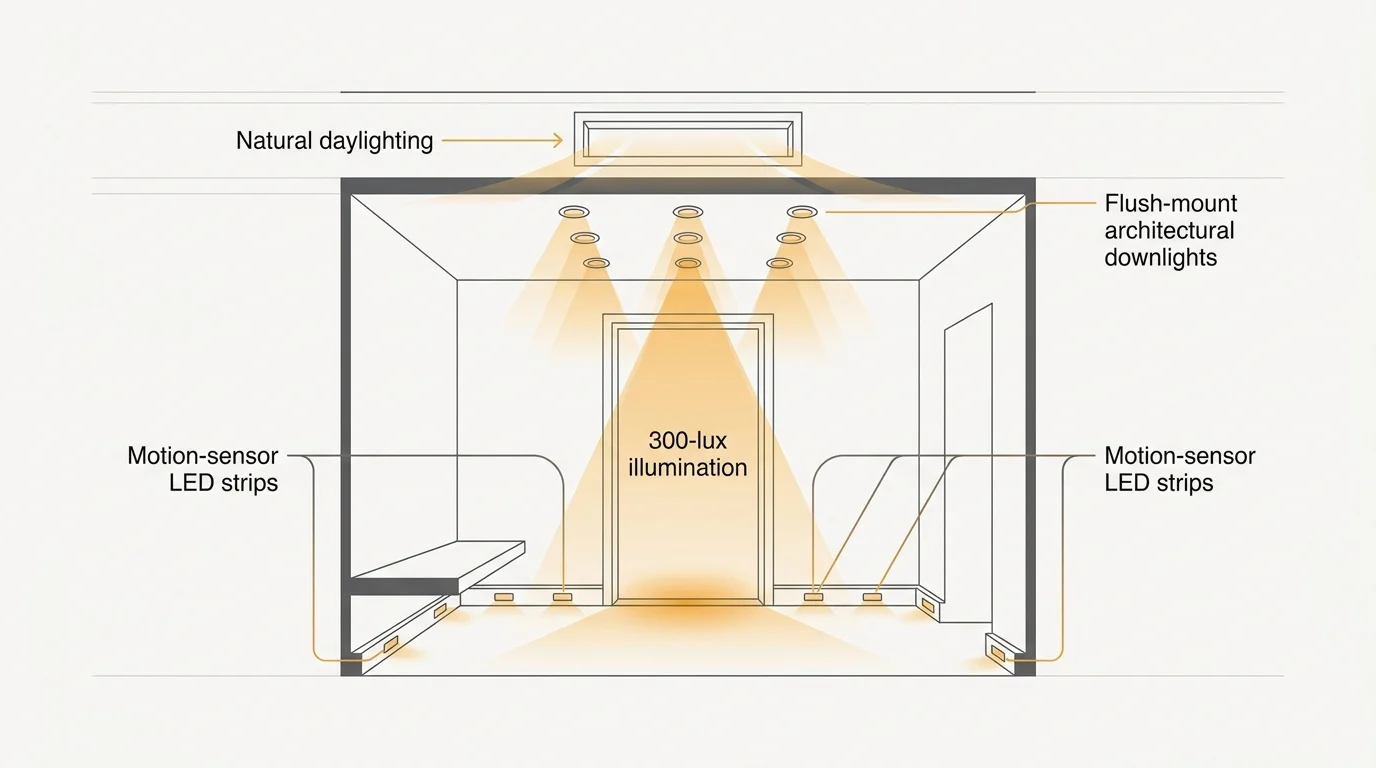
Biophilic design—the architectural concept of connecting indoor environments to the natural world—dramatically enhances visibility and emotional well-being in your foyer. As visual acuity naturally changes over time, adequate, high-quality illumination transitions from a purely aesthetic choice to a non-negotiable safety feature. You must maximize natural daylighting through frosted sidelights or transom windows to bridge the gap between the outdoors and your interior without sacrificing privacy. Complement this natural glow with layered, artificial lighting solutions that eliminate harsh shadows across the floor; shadows can easily disguise changes in elevation or discarded shoes.
Install motion-sensor LED strips along baseboards, stair risers, and underneath built-in benches to provide immediate, glare-free illumination the moment you step inside. This automated approach guarantees that entry hall seniors navigate the space effortlessly, eliminating the frantic search for light switches in the dark. Transition zones directly at the front door require a minimum of 300-lux illumination to definitively highlight the threshold and prevent tripping. Rather than relying on a single, dramatic chandelier that casts disorienting, localized shadows, implement a grid of flush-mount architectural downlights featuring warm, diffused bulbs. This strategy ensures even light distribution across the entire mudroom. When you prioritize continuous, even lighting inspired by natural daylight, you drastically reduce eye strain and cultivate an inviting, secure environment that immediately puts residents and guests at ease.
Trend #2: Provenance-Driven Seating with Ergonomic Integrity
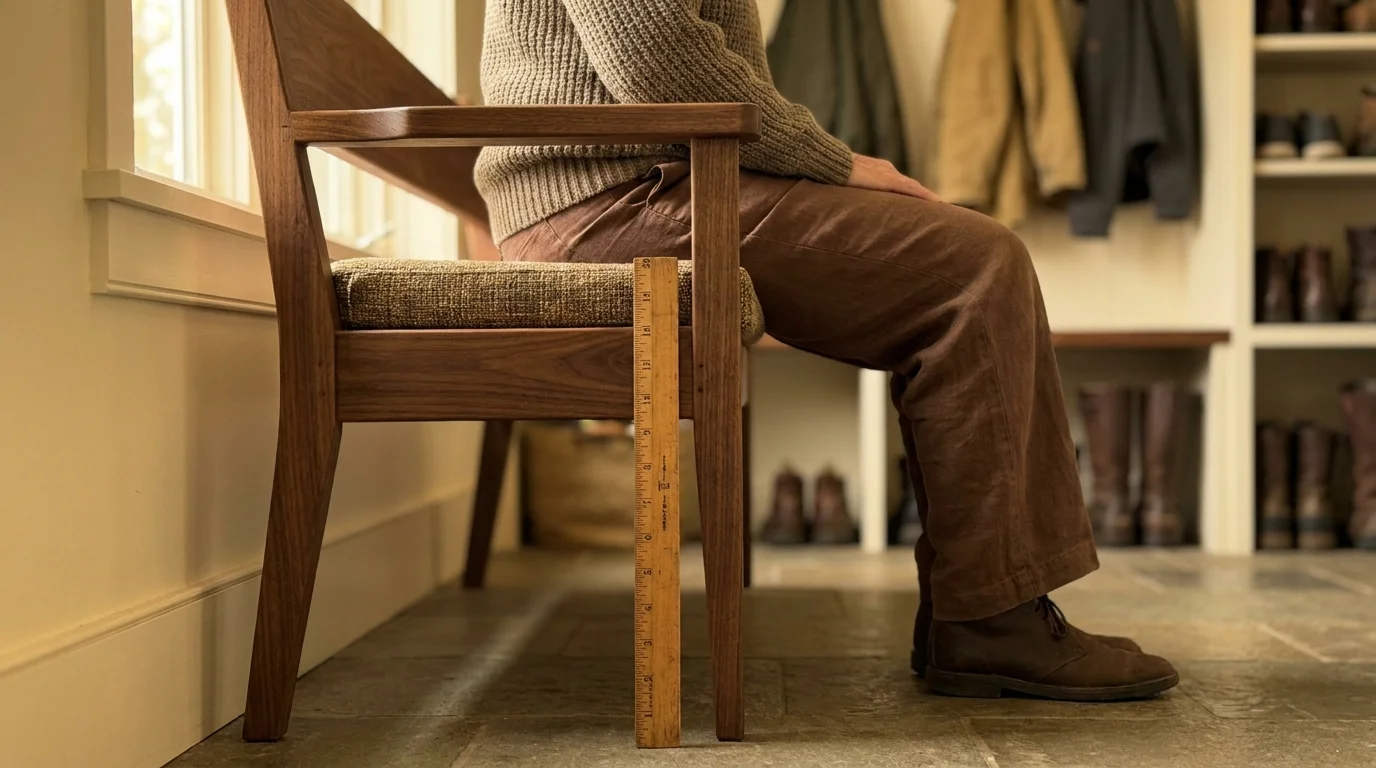
Provenance—the history, origin, and authenticity of a piece—infuses your space with soul, but in a senior-friendly entryway, historical charm must strictly align with ergonomic science. Removing shoes or resting after a long walk requires physical stability; therefore, a dedicated seating area serves as the foundational anchor of effective mudroom organization 60+ households rely on daily. Skip the deep, low-slung decorative benches that make standing difficult and strain the lower back. Instead, invest in a firm, high-backed settee or a custom-built, solid walnut bench situated exactly eighteen to twenty inches off the floor. This specific height aligns with universal design principles, allowing you to plant your feet flat on the ground while maintaining a ninety-degree knee angle for effortless rising.
Incorporate sturdy, integrated armrests into your seating choice to provide essential leverage when you stand up or sit down. If you prefer antique or heirloom pieces that carry deep personal provenance, ensure they undergo professional reinforcement to handle daily, weight-bearing use safely. Upholster these seats in high-performance, stain-resistant fabrics like solution-dyed acrylics, which offer the luxurious texture of Belgian linen without the demanding maintenance. Surrounding this ergonomic seating with strategic organization—such as waist-height hooks and pull-out shoe drawers—prevents you from bending over precariously. By anchoring the front door area with a historically rich yet scientifically supportive chair, you elevate the room’s aesthetic pedigree while fundamentally safeguarding your daily mobility.
Trend #3: Quiet Luxury Non-Slip Flooring Solutions
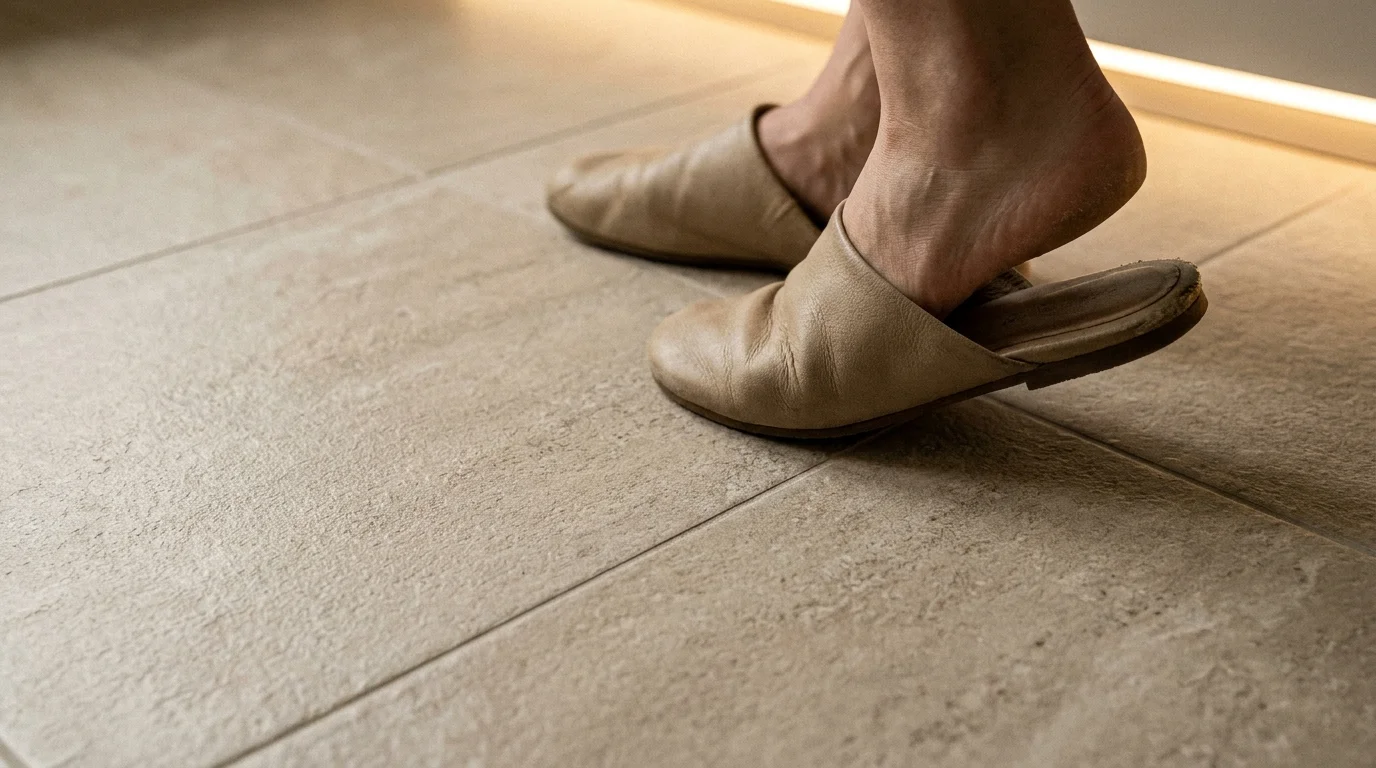
The concept of quiet luxury emphasizes understated elegance, premium materials, and flawless execution over flashy logos or loud patterns. When designing a safe entryway home environment, this philosophy seamlessly translates into high-performance, non-slip flooring that looks magnificent but works tirelessly beneath your feet to prevent falls. Polished marble and high-gloss ceramic tiles present severe slipping hazards, particularly when wet shoes track rain or snow indoors. Instead, transition your foyer to texturized natural stone, such as honed slate, flamed granite, or brushed limestone. These premium materials provide intrinsic slip resistance—boasting high Dynamic Coefficient of Friction (DCOF) ratings—through their subtly rugged surfaces while maintaining an undeniably sophisticated architectural profile.
If you prefer the visual warmth of natural wood, opt for wire-brushed engineered oak finished with a matte, aluminum-oxide coating that actively enhances traction underfoot. Grout lines also play a critical role in fall prevention; utilizing smaller format tiles, such as a classic herringbone mosaic, significantly increases the density of grout lines, which naturally generates extra friction for shoe soles and mobility aids. Furthermore, completely eliminate thick, unanchored throw rugs that easily bunch up and aggressively catch the toes of shoes or walkers. Replace them with custom-cut, low-pile walk-off mats recessed directly into the floor structure so they sit perfectly flush with the surrounding stone or wood. This seamless integration embodies quiet luxury—a meticulously planned detail that remains visually unobtrusive while serving as a reliable defense against moisture and mobility hazards.
Trend #4: Custom Millwork for Effortless Reach and Grasp
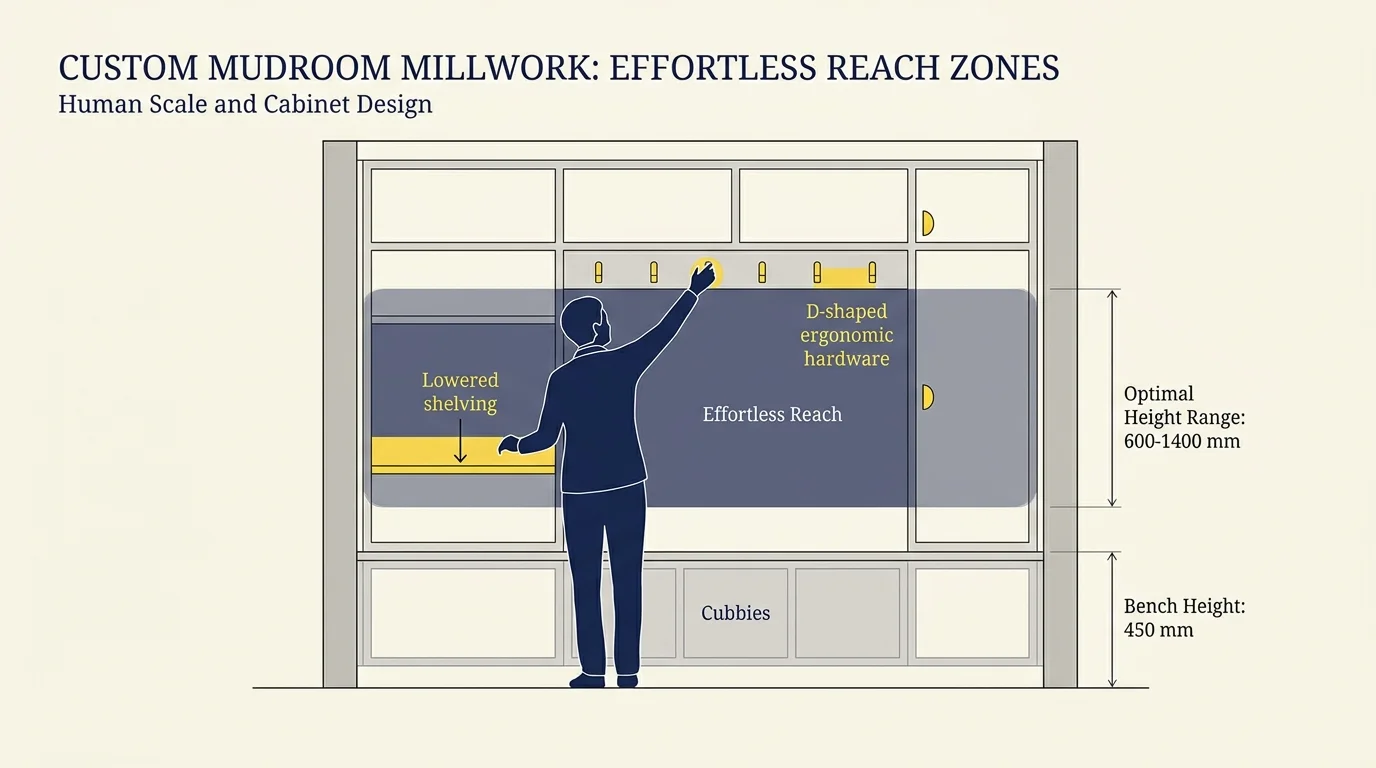
Custom millwork transforms chaotic drop zones into streamlined architectural features, completely reinventing how you organize front door area necessities while honoring your physical capabilities. Standard closet rods and deep, floor-level storage bins force you into uncomfortable bending, reaching, and stretching, which can easily induce vertigo or muscle strain. Modern, accessibility-focused cabinetry heavily prioritizes the “comfort zone”—the accessible vertical space located precisely between your knees and your shoulders. By installing shallow, easily adjustable shelving exactly within this ergonomic window, you ensure that daily essentials like house keys, mail, dog leashes, and sunglasses remain immediately accessible without straining your back or compromising your balance.
Integrate innovative pull-down closet rods in your coat storage; a simple, gas-assisted hydraulic mechanism allows you to pull heavy winter coats down to waist level for effortless retrieval before gently pushing the rod back into the upper cabinet space. Replace tiny, frustrating cabinet knobs with oversized, D-shaped pulls or continuous edge pulls finished in brushed brass, polished nickel, or matte black. These substantial hardware choices require a simple hand-slip rather than a tight, arthritic pinch, accommodating varying levels of hand strength with utmost grace. For footwear, specify full-extension, soft-close drawers equipped with heavy-duty glides rather than static cubbies located dangerously near the floor. When the drawer extends fully, you can comfortably select your shoes from a standing position. This highly personalized approach seamlessly hides everyday clutter behind beautifully crafted doors, ensuring your foyer maintains its gallery-like serenity while functioning flawlessly.
Trend #5: Contrast-Mapping Through Sophisticated Color Theory
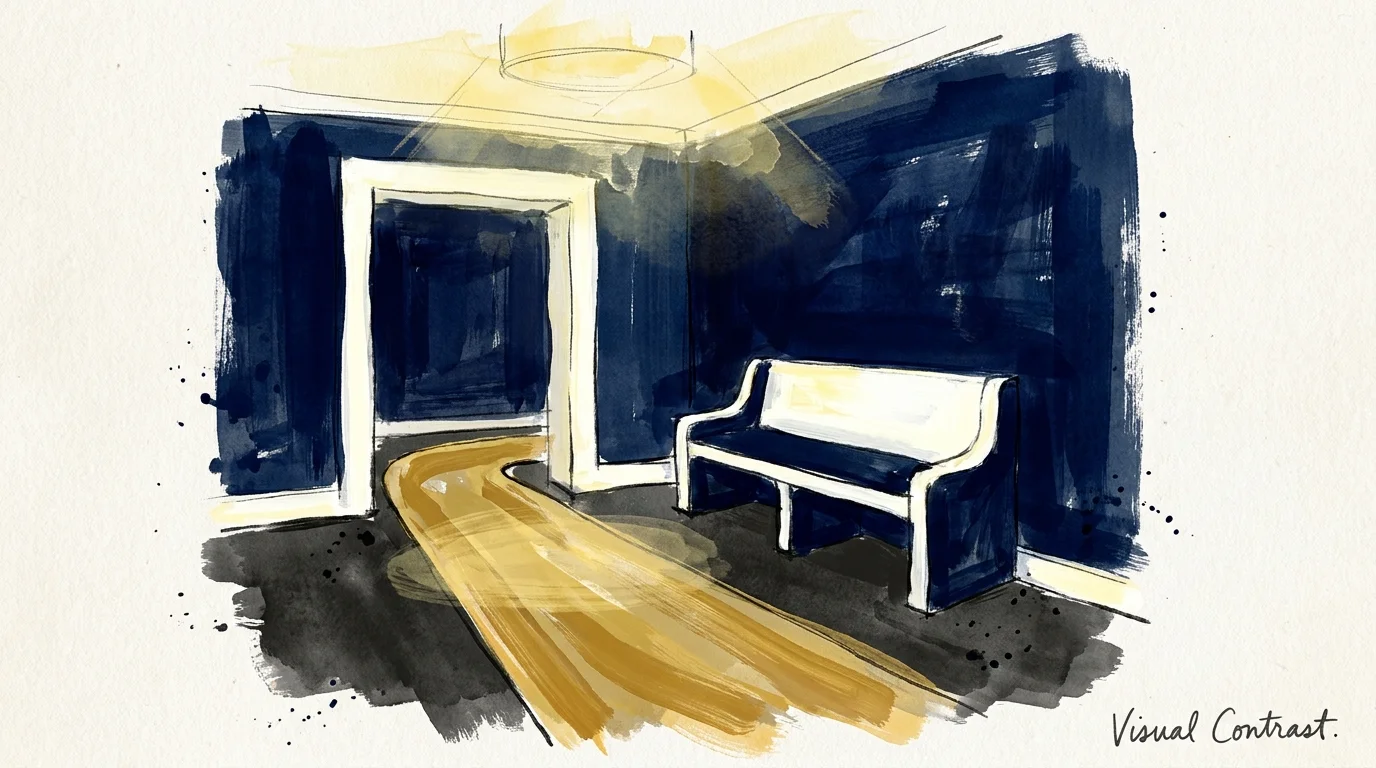
Contrast-mapping is an innovative design technique that utilizes distinct color variations to help the aging eye effortlessly distinguish between different functional zones, floor surfaces, and potential architectural obstacles. As depth perception and contrast sensitivity naturally decline with age, monochromatic color schemes can dangerously obscure the vital boundaries between the floor, the walls, and the freestanding furniture. You can intelligently implement sophisticated color theory to create intuitive visual cues without sacrificing a highly elegant aesthetic. Pair a dark, grounding floor material, such as charcoal slate or deep walnut, with crisp, warm-white baseboards and wall paneling to clearly define the room’s perimeter.
Apply this high-contrast strategy directly to your entryway furniture and hardware choices. If your custom mudroom cabinetry is painted a soft sage green, install deeply saturated bronze or matte black cabinet pulls so they instantly pop against the lighter background, making them incredibly easy to locate and grasp. Paint the interior side of your front door a bold, grounding shade—like a deep navy blue or an elegant forest green—to explicitly mark the exact point of egress against lighter adjacent walls. This deliberate, calculated use of Light Reflectance Value (LRV) differences drastically reduces navigational hesitation. Additionally, utilize differing textures alongside color variations; a smooth, painted wall contrasted with a highly textured linen wallcovering provides both visual and tactile feedback as you move through the space. By embracing high-contrast elements, you actively build an environment that guides your movements intuitively, allowing you to walk through the space with absolute confidence.
Trend #6: Tech-Integrated Hardware and Automated Wayfinding
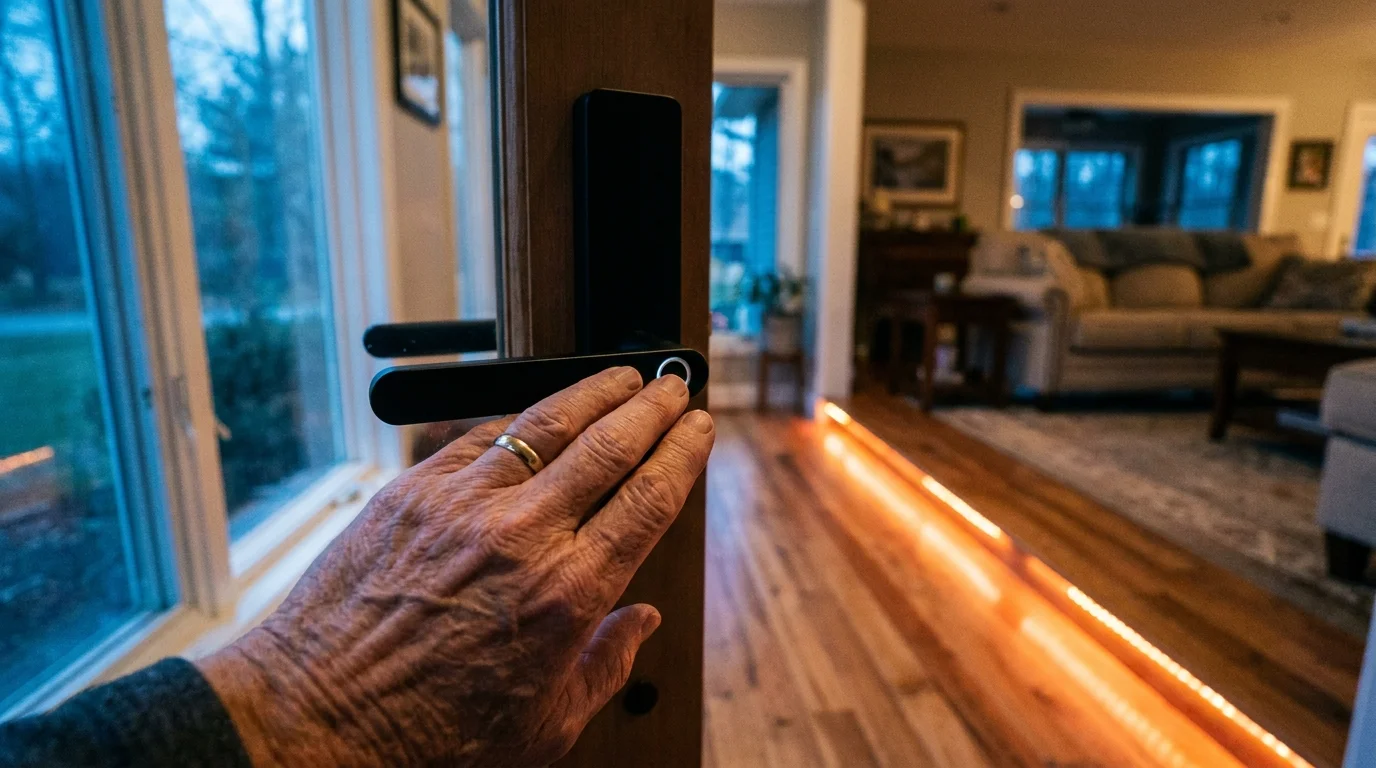
The seamless integration of smart home technology within high-end interior architecture has officially evolved from a futuristic gimmick into a vital component of independent living. When researching modern senior home entrance ideas, unobtrusive technological assistance firmly stands at the forefront of the design movement. Traditional key-turn deadbolts often present insurmountable challenges for individuals managing severe arthritis or fine-motor fatigue. Upgrading to a highly responsive biometric smart lock or a sleek keypad entry system completely eliminates the archaic need for physical keys, allowing you to quickly secure or access your home with a simple fingerprint scan or a memorable four-digit code.
Combine these robust smart locks with an automated video doorbell integrated directly into a dedicated tablet stationed on your entryway console. This advanced setup allows you to clearly identify visitors and communicate verbally with delivery drivers without physically rushing to the door or awkwardly peering through a tiny peephole. Wayfinding technology further elevates the daily safety of your foyer. Install smart climate and lighting sensors that communicate flawlessly with your home’s central hub; the exact moment the front door unlocks, the entryway lights automatically illuminate to full brightness, and the ambient temperature adjusts to your specific preferred setting. Heated flooring systems controlled via smart thermostats can also be precisely programmed to warm up your stone tiles right before you arrive home, actively preventing stiff joints. These discreet, high-tech interventions weave an invisible safety net throughout your mudroom, prioritizing your security while maintaining an uncluttered aesthetic.
Trend #7: Zoned Transition Spaces for Adaptive Mobility
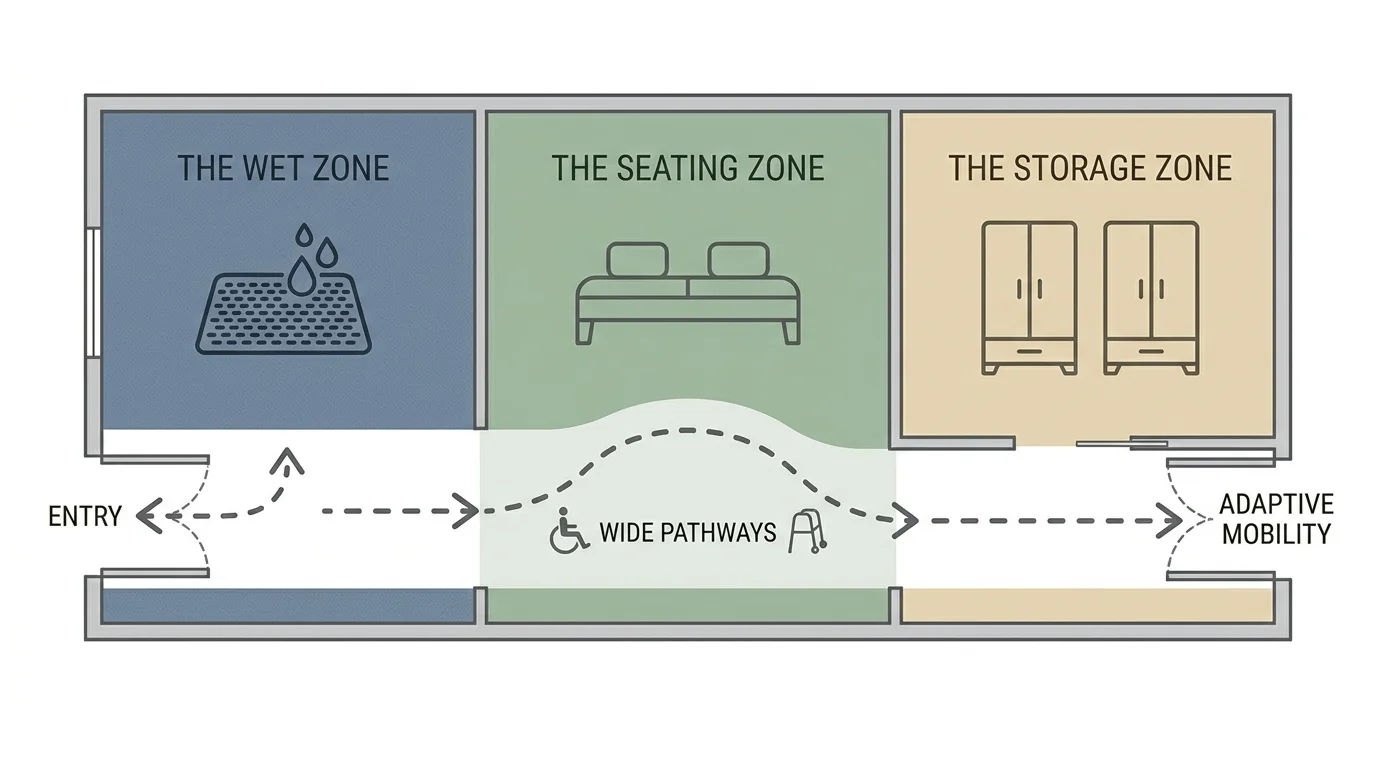
A truly supportive foyer operates as a crucial decompression chamber between the unpredictable exterior world and the controlled sanctuary of your home. To successfully achieve this atmosphere, leading interior designers advocate for zoned transition spaces—distinct, meticulously planned micro-environments within the entry hall dedicated to specific transitional tasks. Rather than carelessly combining your coat storage, seating, and package-drop areas into one chaotic corner, logically separate these functions to brilliantly support adaptive mobility. Create a dedicated “arrival zone” immediately inside the threshold featuring a resilient, flush walk-off mat and an elegant, waist-high console table specifically designated for setting down heavy bags or groceries the moment you safely step inside.
Adjacent to the arrival zone, establish a quiet “preparation zone” safely positioned entirely out of the main traffic path. This specific area should exclusively house your ergonomic seating, shoe storage, and coat hooks. By physically separating the act of entering from the act of disrobing, you actively prevent the dangerous bottleneck effect that routinely leads to trips and falls over discarded items. Ensure the clearance paths traversing between these distinct zones measure at least thirty-six to forty-two inches wide, easily accommodating the strict turning radius of walkers or wheelchairs. Strongly avoid placing any freestanding coat racks, decorative floor vases, or umbrella stands within these critical circulation routes. Meticulously zoning your entryway beautifully transforms it from a mere pass-through space into a highly organized, sequential environment that respects and anticipates your changing mobility requirements at every single step.
The Big Picture: Weaving These Trends into Your Home
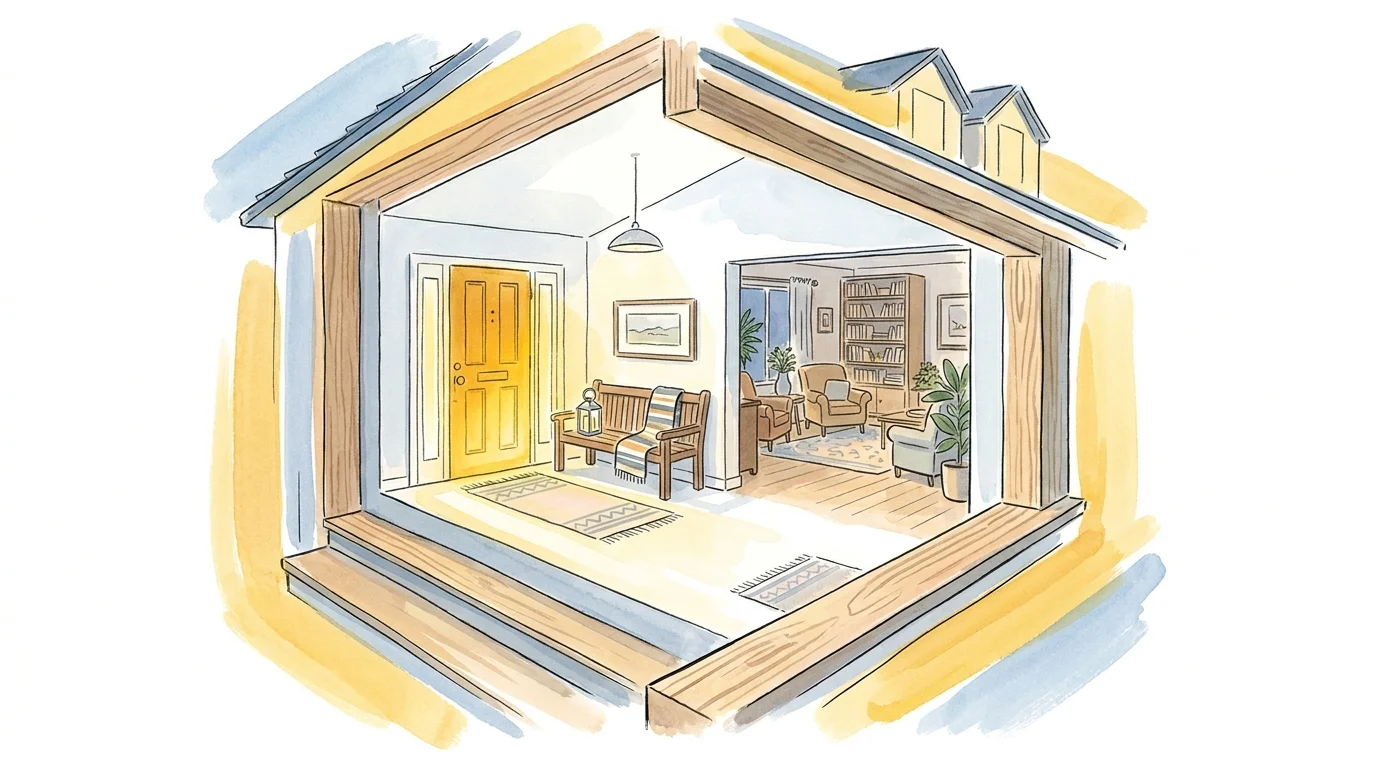
Implementing these advanced, forward-thinking design concepts requires a thoughtful, holistic approach rather than disjointed, piecemeal updates. The ultimate goal is to skillfully craft a highly cohesive environment where vital accessibility features remain virtually undetectable beneath gorgeous layers of sophisticated styling. Begin by honestly assessing your most immediate, daily friction points; if lighting feels noticeably inadequate or if simply stepping over the front threshold causes physical anxiety, prioritize biophilic illumination and seamless floor transitions first. You absolutely do not need to execute a complete structural demolition to experience profound, immediate improvements in your daily routine.
Focus intensely on upgrading your cabinet hardware, refining your spatial color contrast, and investing in a magnificent piece of provenance-driven seating as highly impactful introductory steps. As you eventually plan larger renovations, firmly mandate that your chosen contractors and interior designers strictly adhere to universal design principles, ensuring that door frames are appropriately widened and flooring choices meticulously eliminate slipping hazards. The brilliant synergy between quiet luxury aesthetics and targeted ergonomic functionality ensures that your entryway not only welcomes guests with breathtaking style but also vigorously protects your hard-earned independence. By treating your front door area as a crucial architectural transition rather than a forgotten hallway, you set a supreme standard of safety, elegance, and organization that positively resonates throughout the rest of your home.
Frequently Asked Questions
What is the ideal height for a mudroom bench to ensure safe use for seniors?
To consistently facilitate easy sitting and standing without causing unnecessary joint strain or lower back pain, your dedicated mudroom bench should sit exactly between eighteen and twenty inches off the ground. Always ensure the seating incorporates sturdy, securely fastened armrests to provide necessary, weight-bearing leverage, and select firm cushioning rather than plush, sinking foam to seamlessly maintain your physical stability while lacing up shoes.
How can I make my existing entry hall floors safer without completely replacing them?
If tearing up your current flooring is not an immediate financial or logistical option, you can significantly enhance foot traction by carefully applying professional-grade, invisible anti-slip treatments designed specifically for natural stone or polished tile. Additionally, firmly replace all loose, decorative scatter rugs with custom-fitted, low-pile mats that feature heavy-duty rubberized backing, strictly ensuring they lay perfectly flat and securely grip the floor surface to prevent edge curling.
Which lighting temperature is best for a senior-friendly foyer?
Aim for a specific color temperature precisely between 3000K and 3500K. This optimal range beautifully produces a warm, inviting white light that accurately renders colors and brilliantly maximizes spatial contrast without creating the harsh, clinical glare routinely associated with higher Kelvin daylight bulbs. Consistent, meticulously layered lighting remains the single most effective defense against age-related visual disorientation.
Can I achieve a quiet luxury aesthetic while strictly prioritizing accessibility?
Absolutely. The philosophy of quiet luxury perfectly complements accessibility because both demanding disciplines emphatically emphasize high-quality, tactile materials, intentional architectural spacing, and deeply uncluttered environments. By selecting premium, matte-finished natural stones, investing in bespoke custom millwork with proper ergonomic proportions, and confidently choosing sophisticated, high-contrast color palettes, your foyer will exude unparalleled elegance while flawlessly supporting your exact mobility needs.
For the latest color forecasts, consult industry leaders like Pantone and paint companies like Benjamin Moore. For professional design standards, refer to the American Society of Interior Designers (ASID).
Disclaimer: This article reflects design trend analysis and predictions. Personal taste and timeless design principles should always guide your decorating choices.
