

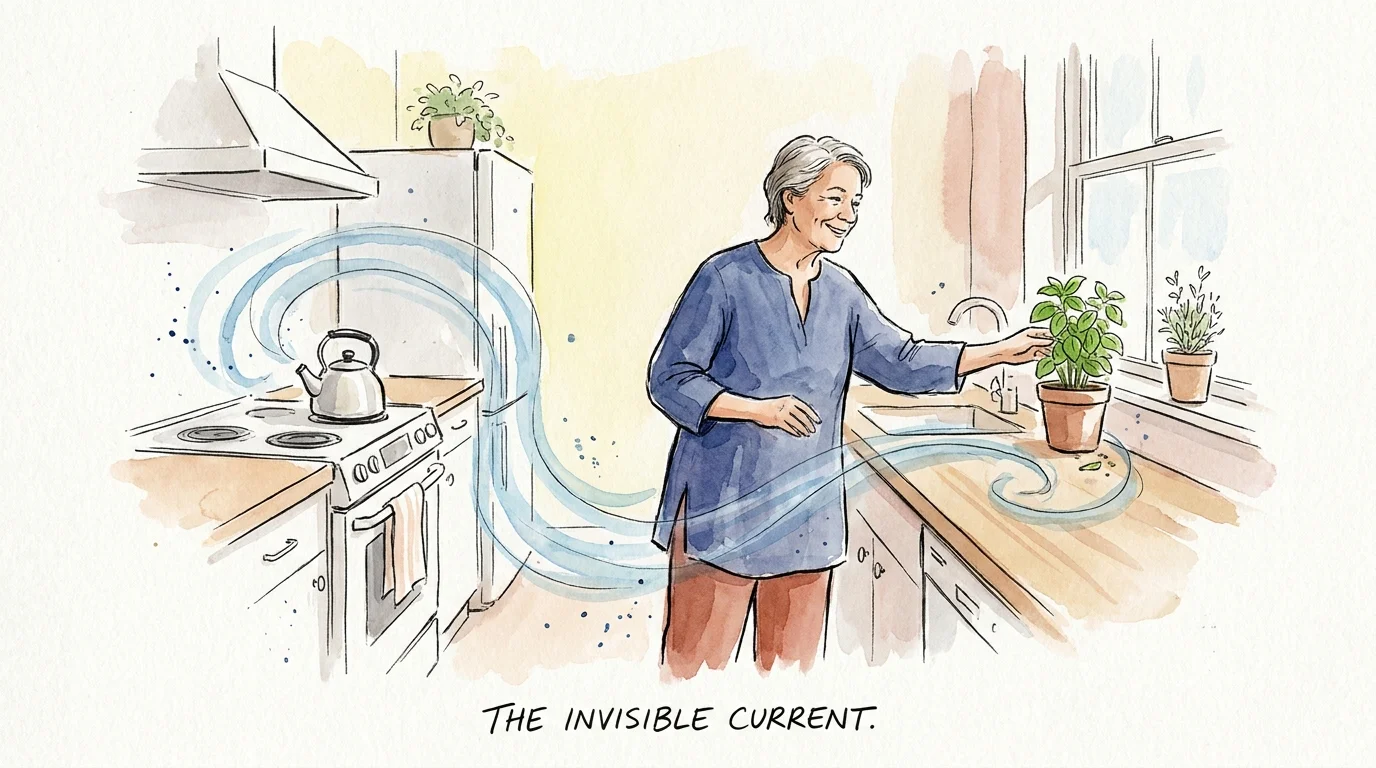
Introduction: Defining the Look of 2026
The culinary space represents the beating heart of your home; it is where you entertain, experiment, and nourish yourself. As you step into your sixties and beyond, you demand a kitchen that works seamlessly with your body rather than against it. Gone are the days when designing an accessible kitchen meant compromising on style or settling for clinical, utilitarian modifications. Today, the design industry recognizes that true luxury lies in effortless functionality. The modern kitchen 60+ movement proves that high-end aesthetics and ergonomic universal design are inextricably linked.
In 2026, we see a distinct shift toward environments that anticipate your needs. Homeowners now integrate principles of quiet luxury—unobtrusive, highly refined, and deeply personal upgrades—to create an easy cooking space. You no longer have to stoop to find a heavy cast-iron skillet, nor do you have to strain your eyes under inadequate lighting. By weaving smart technology, specialized hardware, and thoughtful spatial planning into the very architecture of your room, you create a sanctuary that empowers your culinary passions. Whether you plan a complete renovation or seek targeted kitchen upgrades seniors can implement immediately, mastering these sophisticated design shifts will dramatically elevate your daily routine.
Trend #1: The Drawers-First Foundation
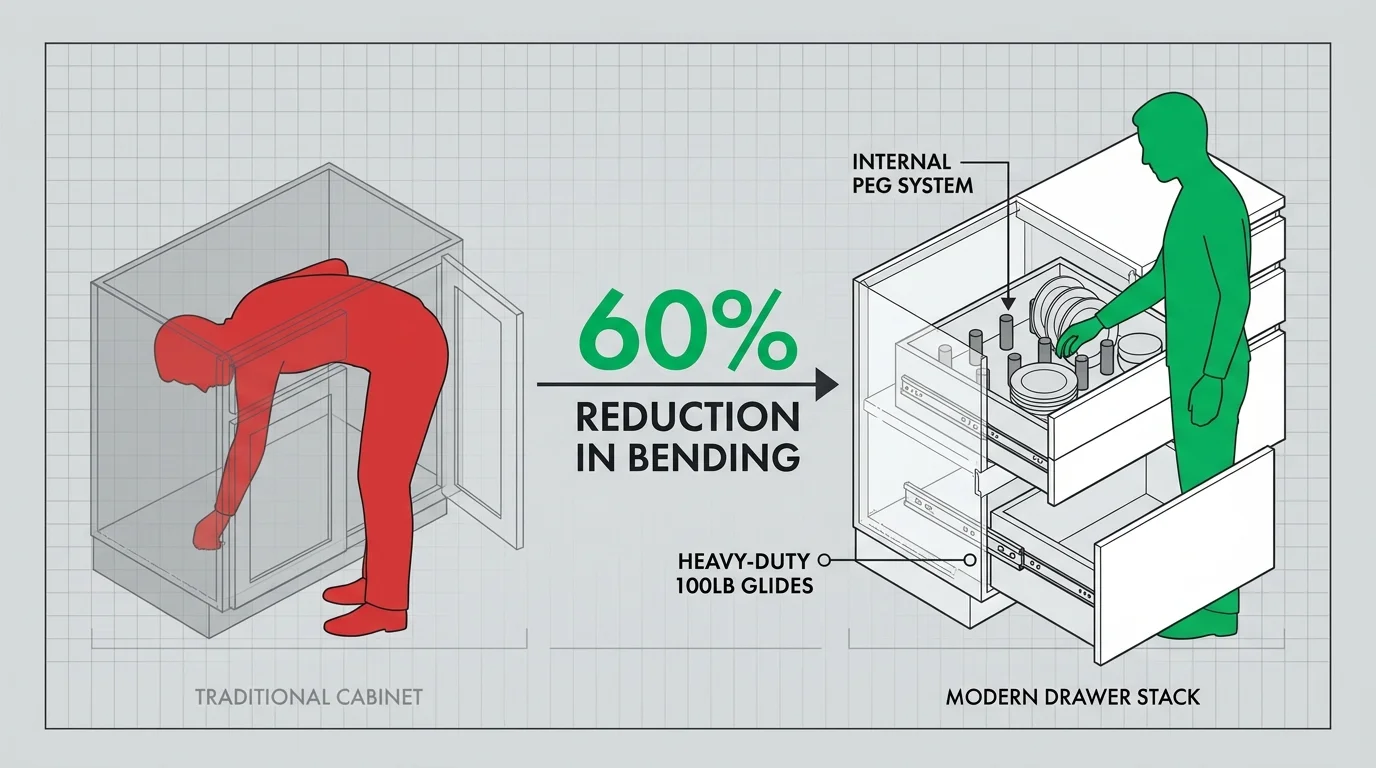
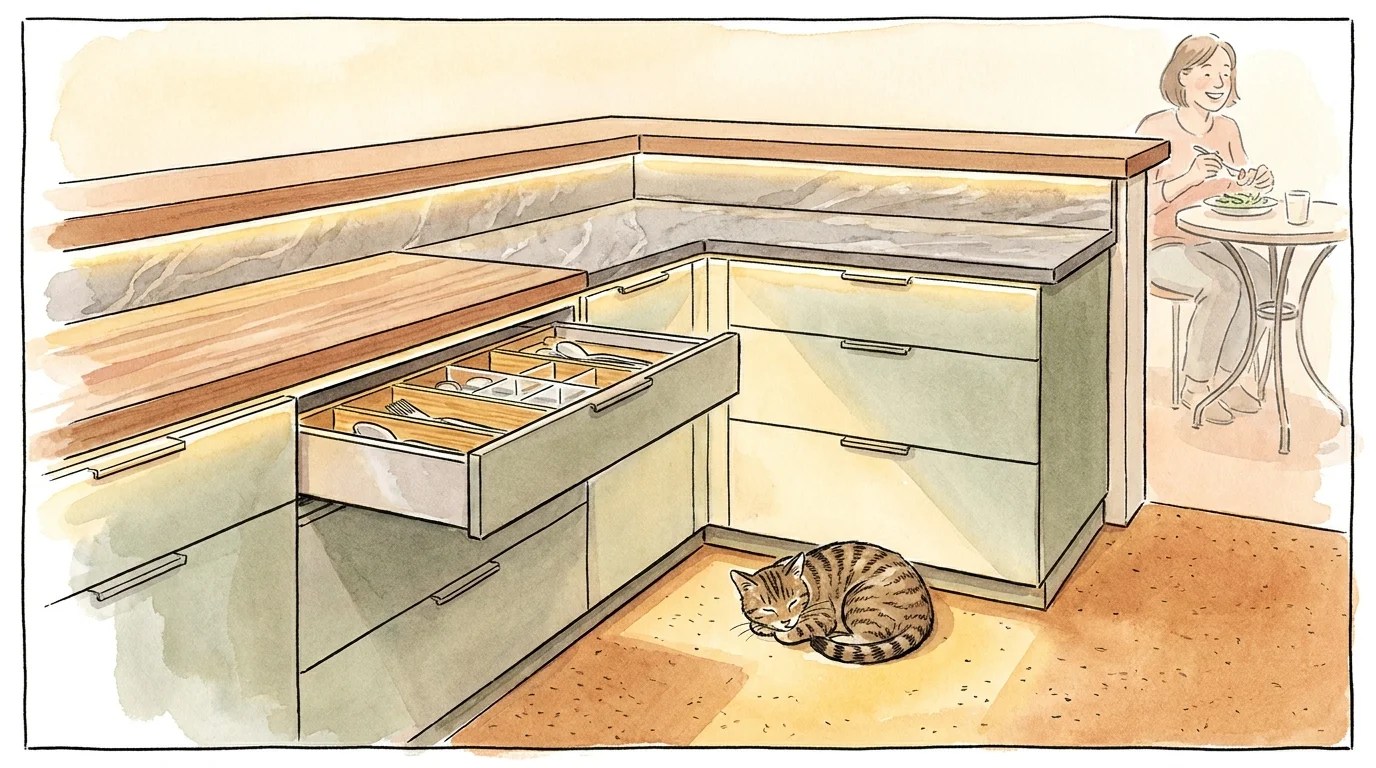
For decades, lower cabinetry relied on a standard formula: swinging doors hiding deep, dark shelves. This archaic design forces you into deep knee bends and awkward spinal contortions just to retrieve a mixing bowl. The most impactful structural upgrade you can make today involves replacing those lower doors with deep, heavy-duty drawer stacks. Drawers completely revolutionize your relationship with your storage by pulling the contents directly into your line of sight.
Modern drawer glides support up to 100 pounds, effortlessly managing the weight of enameled Dutch ovens and towering stacks of ceramic plates. When you specify these base cabinets, you incorporate internal peg systems to keep your dishware securely locked in place during movement. Ergonomic studies demonstrate that switching to a drawers-first base layout reduces repetitive bending motions by up to 60 percent. This subtle shift fundamentally protects your lower back and knees while delivering the streamlined, horizontal aesthetic that currently dominates high-end European kitchen design.
Trend #2: Sculptural, Multi-Tiered Surfaces
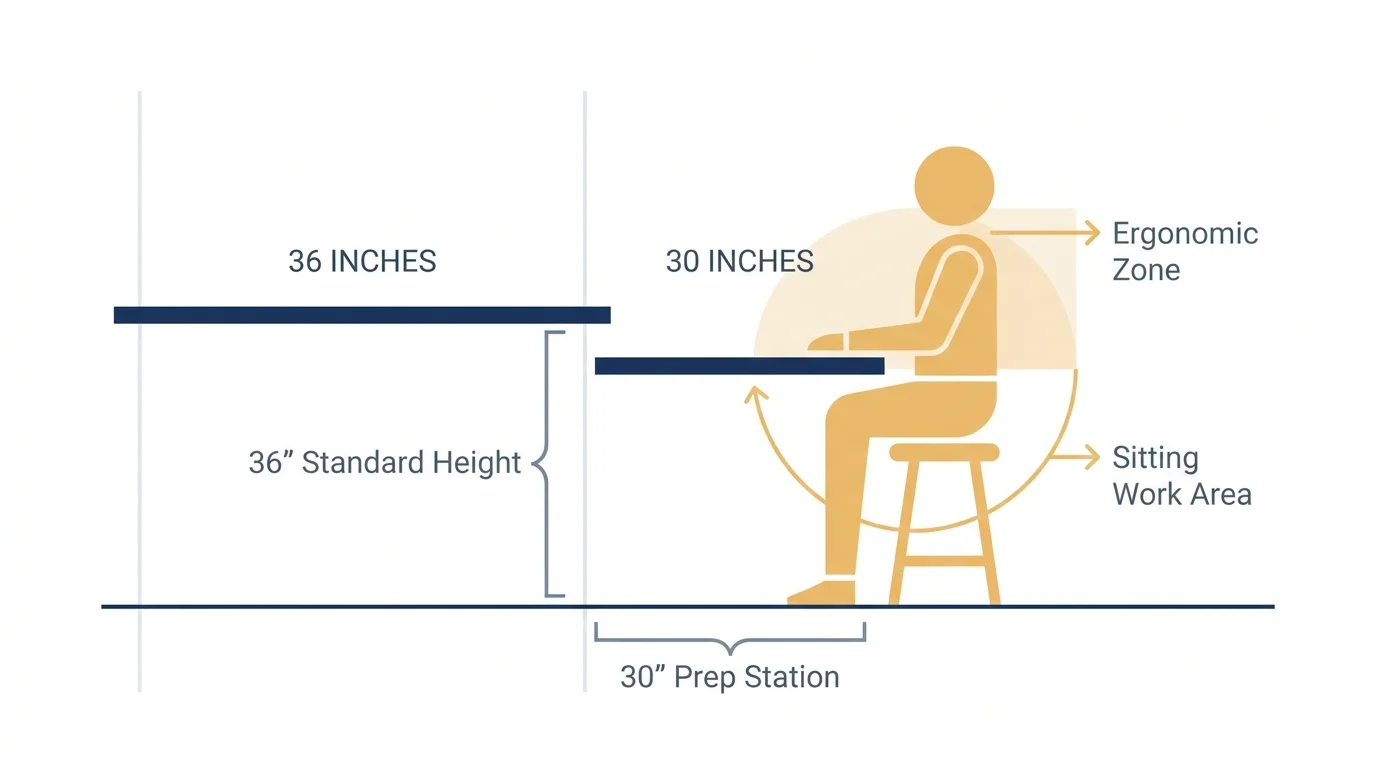
Standardized counter heights ignore the diverse physical demands of intensive meal preparation. A uniform 36-inch surface works well for quick tasks, but prolonged chopping or kneading inevitably strains your shoulders and neck. Forward-thinking designers now implement multi-tiered countertops, breaking up the visual monotony of the room while offering tailored ergonomic zones. You introduce a dedicated 30-inch prep station—often integrated directly into the island—that allows you to sit comfortably on a standard chair while you work.
This staggered approach also opens the door for biophilic design integration. You might contrast a cool, resilient quartz primary counter with a lowered, warm walnut chopping block. Incorporating natural wood tones provides a tactile, grounded connection to nature, which environmental psychologists link to reduced stress levels. By varying your surface heights, you craft a dynamic, sculptural focal point that accommodates your changing physical needs without sacrificing an ounce of sophisticated style.
Trend #3: Intuitive, Layered Illumination
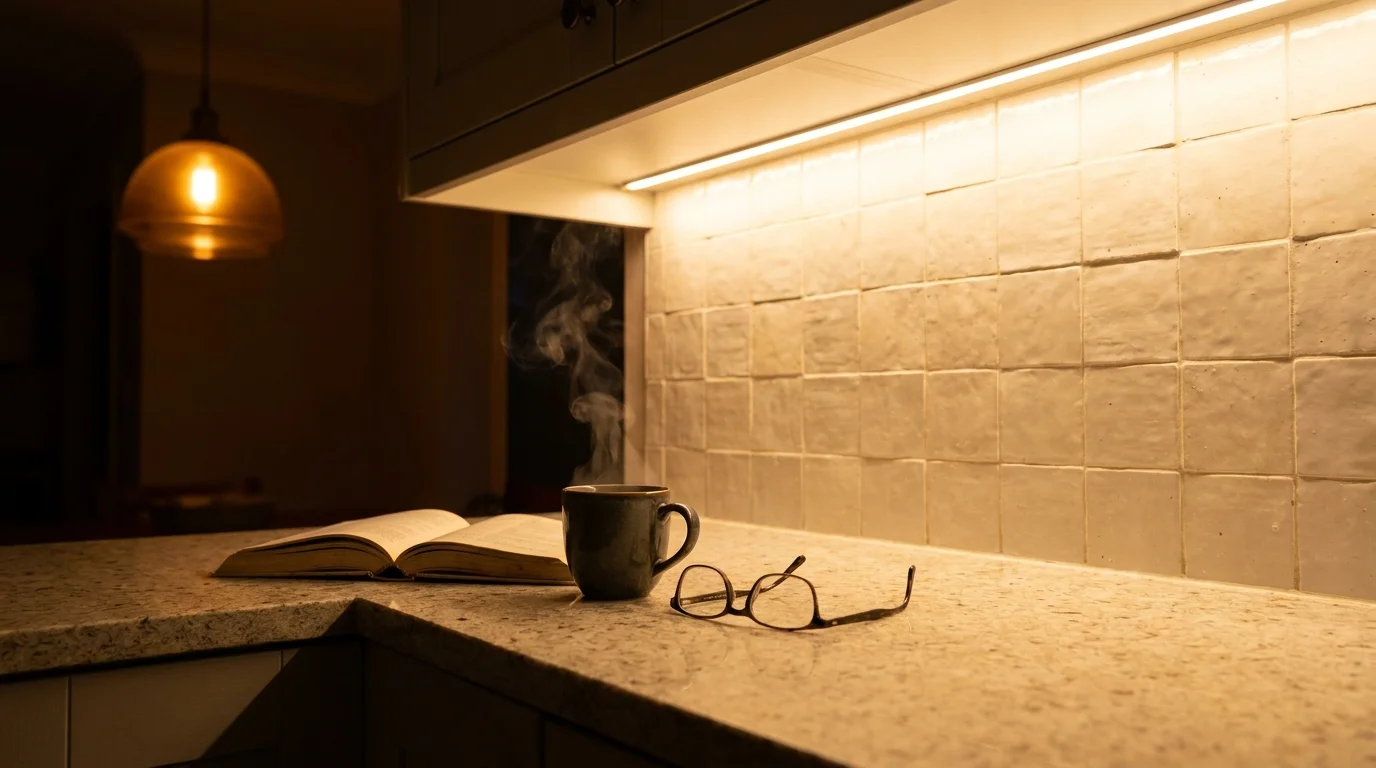
As you age, your eyes require significantly more ambient and direct light to focus on fine details. Relying solely on a central ceiling fixture creates hazardous shadows over your work surfaces. To combat this, you must engineer a comprehensive, layered lighting ecosystem. A beautifully illuminated room relies on three distinct pillars: ambient overhead lighting, focused task lighting, and subtle accent illumination.
You install high-CRI (Color Rendering Index) LED strip lighting continuously under your upper cabinets, casting a uniform, shadow-free glow across your cutting boards. Designers currently favor color temperatures between 3000K and 3500K; this range delivers crisp clarity for reading small recipe print without the harsh, blue glare that induces eye fatigue. Furthermore, integrating motion-activated toe-kick lighting near the floor provides safe navigation during midnight trips for a glass of water. Smart home integration allows you to adjust these zones via voice command, ensuring you never have to fumble for a switch with wet or messy hands.
Trend #4: The Return of the Appliance Garage
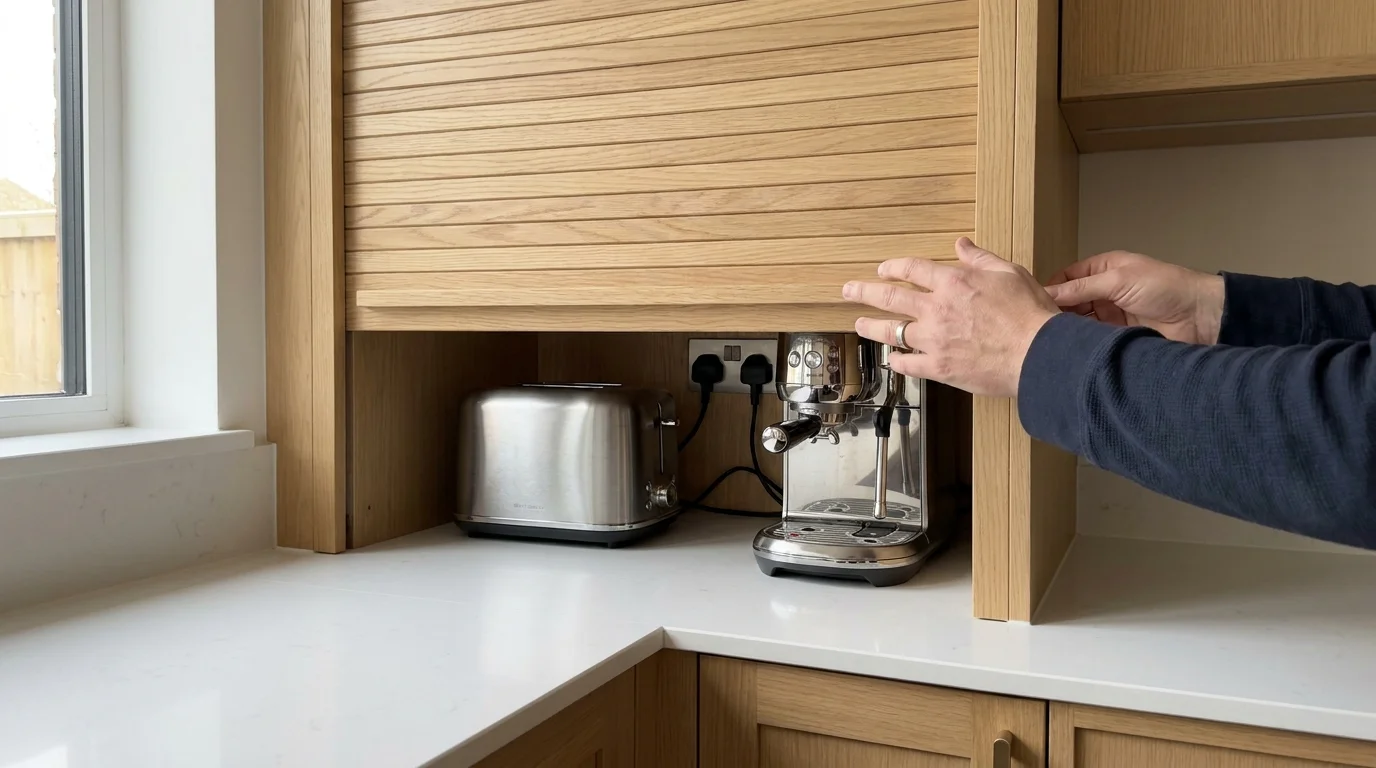
The concept of the appliance garage has evolved from its clunky 1990s origins into a cornerstone of contemporary quiet luxury. Heavy countertop appliances—like stand mixers, food processors, and espresso machines—weigh enough to cause severe wrist or back strain if you constantly lift them from lower cabinets. Conversely, leaving them permanently scattered across your countertops creates visual clutter that disrupts the harmony of your interior design.
You solve this by designing counter-level appliance garages concealed behind sleek pocket doors or motorized tambour panels. You slide your heavy mixer forward when needed and effortlessly tuck it away when finished, all without lifting a single pound. These custom garages feature built-in electrical outlets and task lighting, transforming them into fully functional, hidden workstations. This approach ensures your primary surfaces remain pristine and unobstructed, honoring the minimalist elegance of a modern kitchen 60+.
Trend #5: Ergonomic, Shallow-Depth Appliances
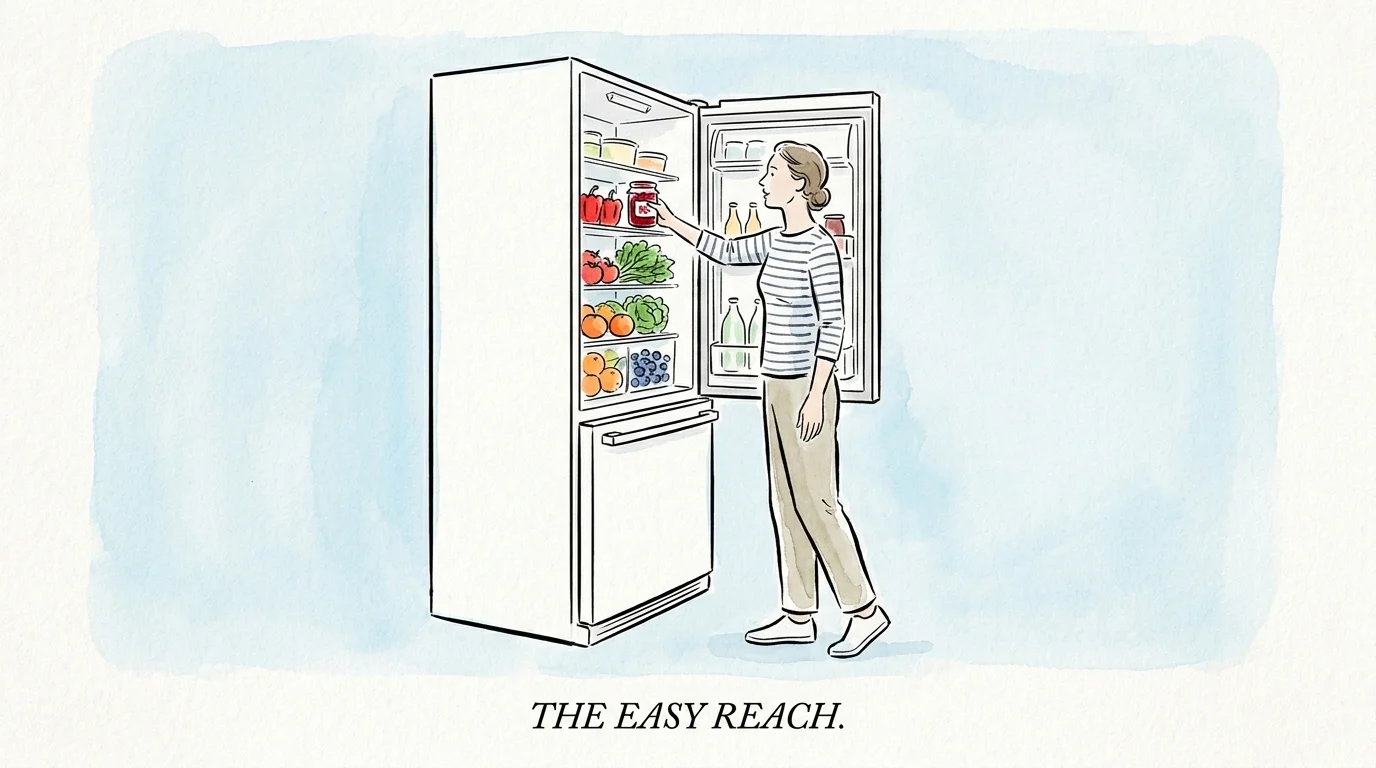
Traditional appliance design often ignores the mechanics of the human body. Reaching over a hot, drop-down oven door to baste a heavy turkey presents a significant burn risk and severely challenges your core balance. The luxury appliance market addresses this beautifully with the widespread introduction of French-door wall ovens. Mounted directly at waist height, these double doors swing outward, allowing you to step squarely up to the oven cavity for safe, direct access to your food.
Similarly, you upgrade your cleanup zone by replacing the standard drop-down dishwasher with dual dishwasher drawers. You position the primary drawer directly beneath the counter, allowing you to load and empty daily plates without bending forward. The secondary lower drawer handles overflow from dinner parties or large pots. Additionally, transitioning to a shallow-depth, French-door refrigerator ensures no rogue condiment ever gets lost in the dark depths of a bottom shelf. Every ingredient remains highly visible and easily within your arm’s reach.

Trend #6: Tactile, High-Performance Flooring
The foundation of any accessible kitchen relies on flooring that forgives. Hardwood and ceramic tile historically dominated the upscale market; however, their rigid, unyielding surfaces exact a heavy toll on aging joints. Today’s senior kitchen design trends prioritize shock-absorbing materials that mimic the provenance and visual depth of traditional finishes without the associated physical strain.
Premium cork flooring and high-end luxury vinyl plank (LVP) represent the pinnacle of this shift. Cork inherently possesses microscopic air pockets, offering exceptional buoyancy underfoot and naturally regulating room temperature. High-quality LVP replicates the textured grain of wide-plank European oak while providing a critical layer of cushioning. More importantly, both materials feature advanced slip-resistant wear layers. When you prioritize a high Dynamic Coefficient of Friction (DCOF) rating in your flooring, you drastically reduce the risk of accidental slips caused by spilled water or cooking oils.
Trend #7: Frictionless Water Delivery Systems
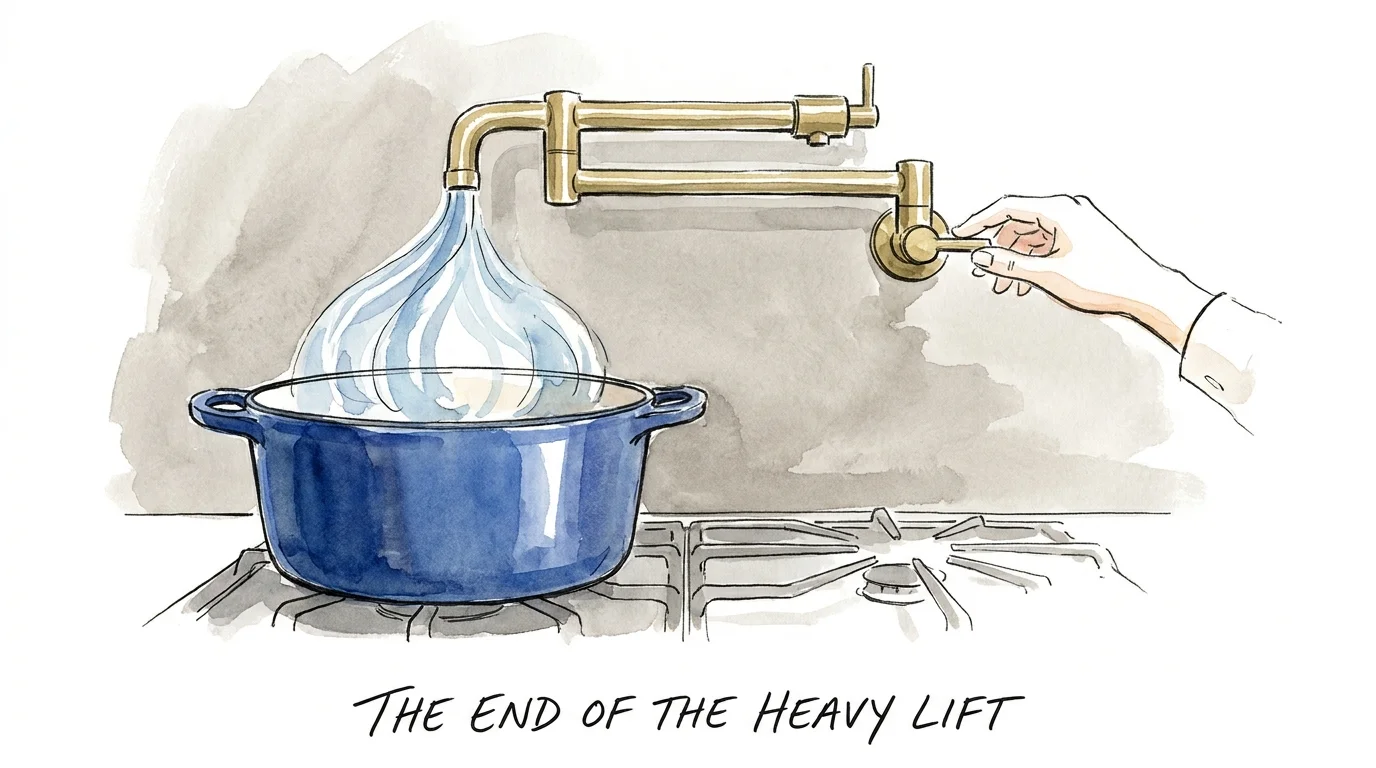
Arthritis and diminished grip strength can make operating traditional plumbing fixtures a painful chore. The simple act of twisting a tight faucet knob disrupts your workflow and introduces unnecessary discomfort. You eliminate this friction entirely by upgrading to touchless, voice-activated smart faucets. These fixtures represent a massive leap forward in both household hygiene and ergonomic accessibility.
Modern smart faucets feature precision sensors that activate the water flow with a simple wave of your hand or a tap of your forearm. The integration of smart home bridges allows you to command the faucet verbally; you simply ask for exactly two cups of water at a specific temperature, and the fixture delivers it flawlessly. This technology drastically reduces the physical effort required for meal preparation. Visually, these faucets maintain a striking, architectural presence—often finished in unlacquered brass or matte black—serving as a piece of functional jewelry for your room.
Trend #8: High-Contrast Aesthetic Zoning
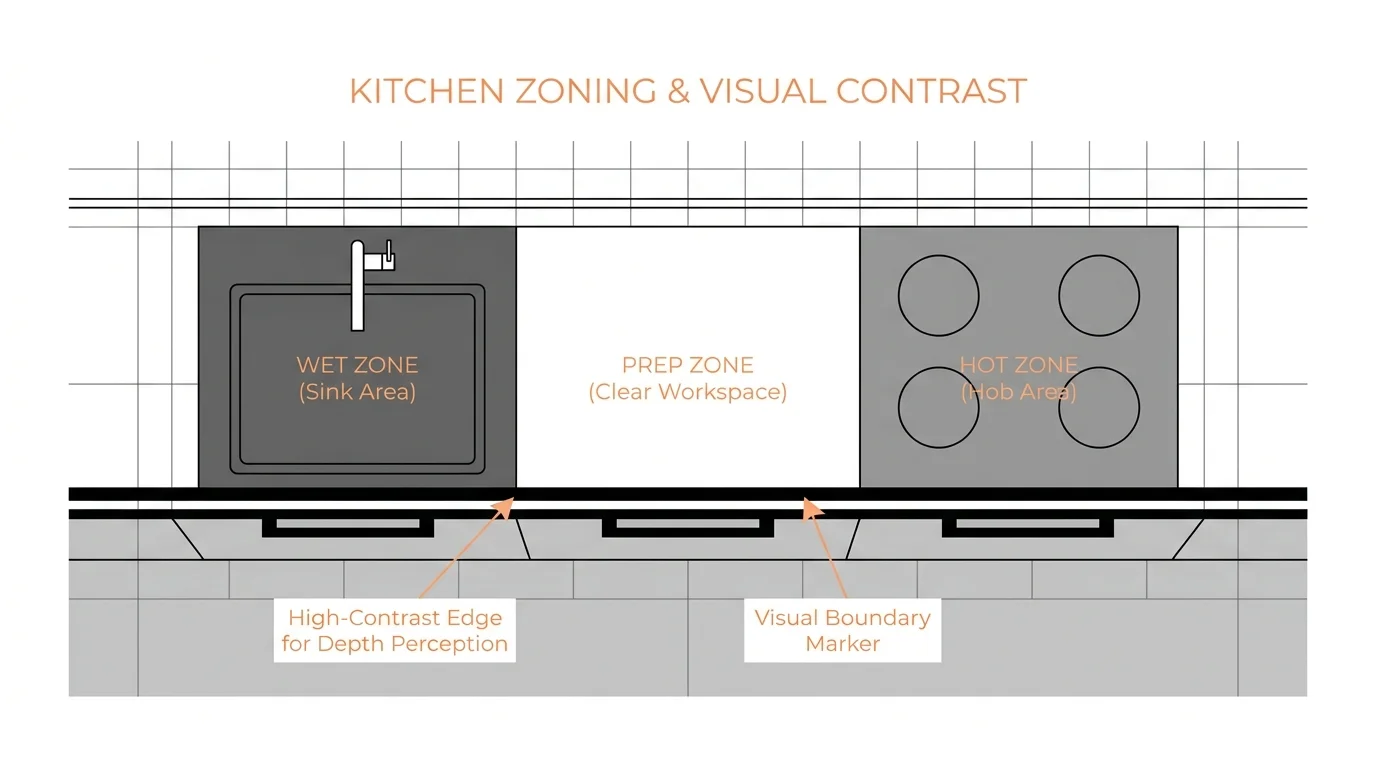
As depth perception and contrast sensitivity subtly decline over the years, a monochrome white-on-white kitchen becomes incredibly difficult to navigate safely. Visual boundaries blur, making it hard to distinguish where a countertop ends and the floor begins. You mitigate this by employing sophisticated color theory to create high-contrast aesthetic zoning. This design strategy uses bold, elegant color pairings to visually map the room.
You ground your layout by pairing dark, honed granite or soapstone countertops against lighter, natural wood cabinetry. This stark contrast creates a sharp visual edge, immediately signaling the boundary of your work surface. You also use bold backsplash tiles to frame your cooking zone, guiding your eye naturally toward the stove. This thoughtful application of color ensures you move confidently through the space. The result is a richly layered, visually captivating environment that simultaneously serves as a crucial navigational aid.
Trend #9: The Integrated Workstation Sink
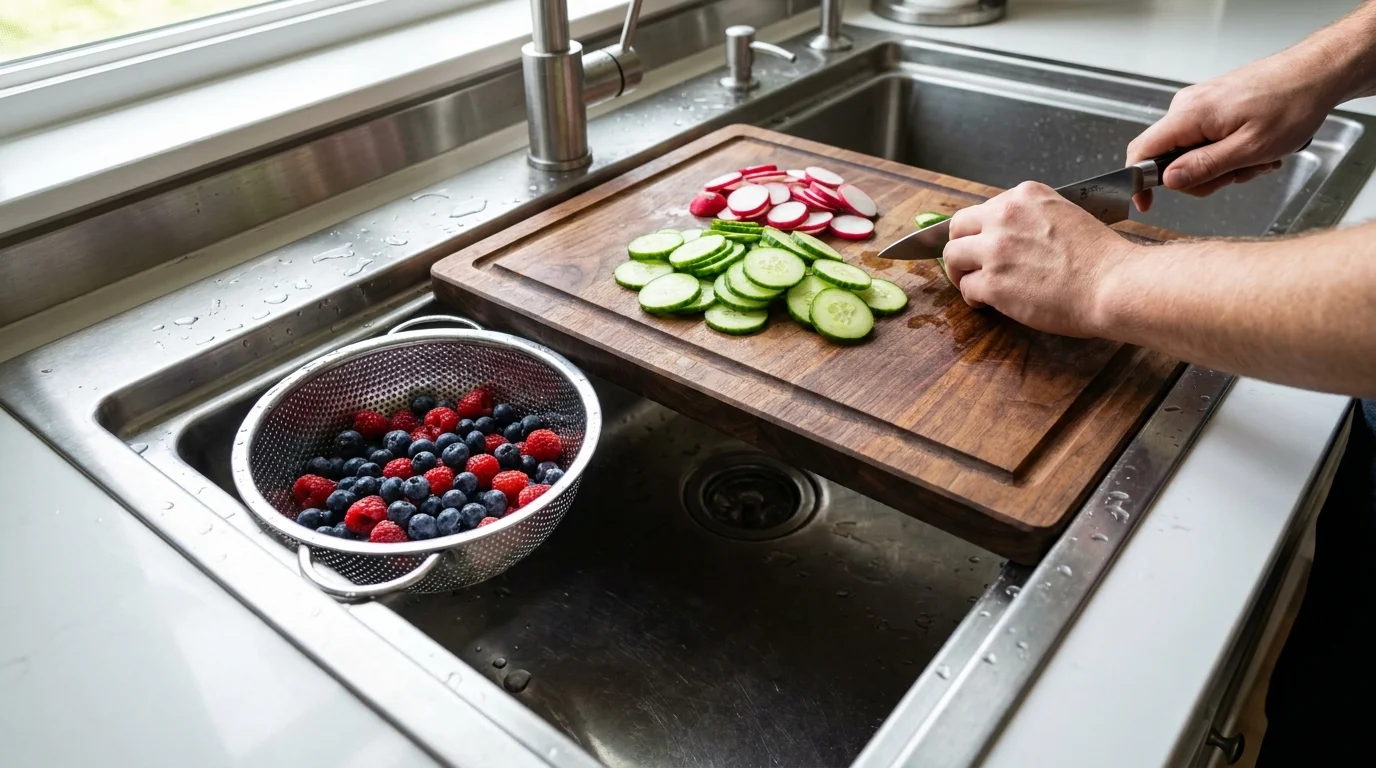
The sink traditionally functions as a simple basin for washing up, but modern design reimagines it as a comprehensive culinary command center. The integrated workstation sink dramatically reduces the distance you must carry heavy, water-filled pots and pans. By building functionality directly into the sink, you centralize your mess and minimize hazardous movement across the room.
These large-format sinks feature interior ledges that perfectly support custom accessories. You slide a heavy-duty cutting board directly over the basin, allowing you to chop vegetables and sweep the scraps straight into the disposal below. You place colanders on the tracks to drain heavy pots of pasta without lifting them out of the sink. By confining your preparation and cleanup to one highly engineered zone, you streamline your workflow and protect your body from unnecessary strain. The workstation sink embodies the ultimate synthesis of professional-grade utility and luxurious convenience.
The Big Picture: Weaving These Trends into Your Home
Designing an easy cooking space requires you to view your room holistically. You are not simply installing grab bars or lowering a single cabinet; you are orchestrating a symphony of tactile materials, intuitive technology, and customized spatial planning. Every upgrade you select must align with your personal culinary habits and your physical requirements. A successful modern kitchen 60+ effortlessly masks its accessibility features behind a veil of bespoke, high-end design.
As you plan your renovation, collaborate with professionals who understand the delicate balance between universal design and sophisticated aesthetics. Color and light dictate how you interact with your environment. Take the time to sample materials under your new layered lighting ecosystem to ensure maximum visibility and aesthetic harmony.
For the latest color forecasts, consult industry leaders like Pantone and paint companies like Benjamin Moore. For professional design standards, refer to the American Society of Interior Designers (ASID).
Frequently Asked Questions
Does an accessible kitchen have to look clinical or institutional?
Absolutely not. The contemporary approach to senior kitchen design relies heavily on the concept of quiet luxury. Today’s universal design elements—such as touchless hardware, deeply pigmented contrast zones, and biophilic multi-level islands—are indistinguishable from standard high-end luxury upgrades. You achieve safety and ergonomics through custom architecture, rich materials, and smart technology, entirely avoiding the institutional aesthetic.
Are heavy-duty drawer base cabinets more expensive than standard door cabinets?
Yes, converting your lower storage entirely to drawer stacks increases your initial cabinetry costs. Drawers require more raw materials, complex joinery, and expensive, high-weight-capacity hardware glides. However, the return on investment is monumental. You instantly eliminate the daily physical strain of kneeling and digging through deep shelves, making this specific upgrade the most crucial investment for aging in place comfortably.
Can I implement these upgrades without completely gutting my kitchen?
You can seamlessly integrate several of these strategies without undertaking a full demolition. Upgrading to a touchless smart faucet, installing highly responsive LED under-cabinet task lighting, and organizing your existing countertops with a concealed appliance garage are all manageable, high-impact projects. You can also replace standard drop-in ranges with safer induction cooktops to eliminate open flames while using your existing counter cutouts.
Why are French-door wall ovens recommended for those over 60?
Traditional drop-down oven doors force you to lean forward awkwardly over a hot surface while lifting heavy roasting pans. This movement stresses your lower back and severely compromises your balance. French-door ovens open outwardly from the center, allowing you to stand vertically and step intimately close to the racks. This straightforward ergonomic correction radically improves kitchen safety and preserves your physical stamina.
Disclaimer: This article reflects design trend analysis and predictions. Personal taste and timeless design principles should always guide your decorating choices.
