

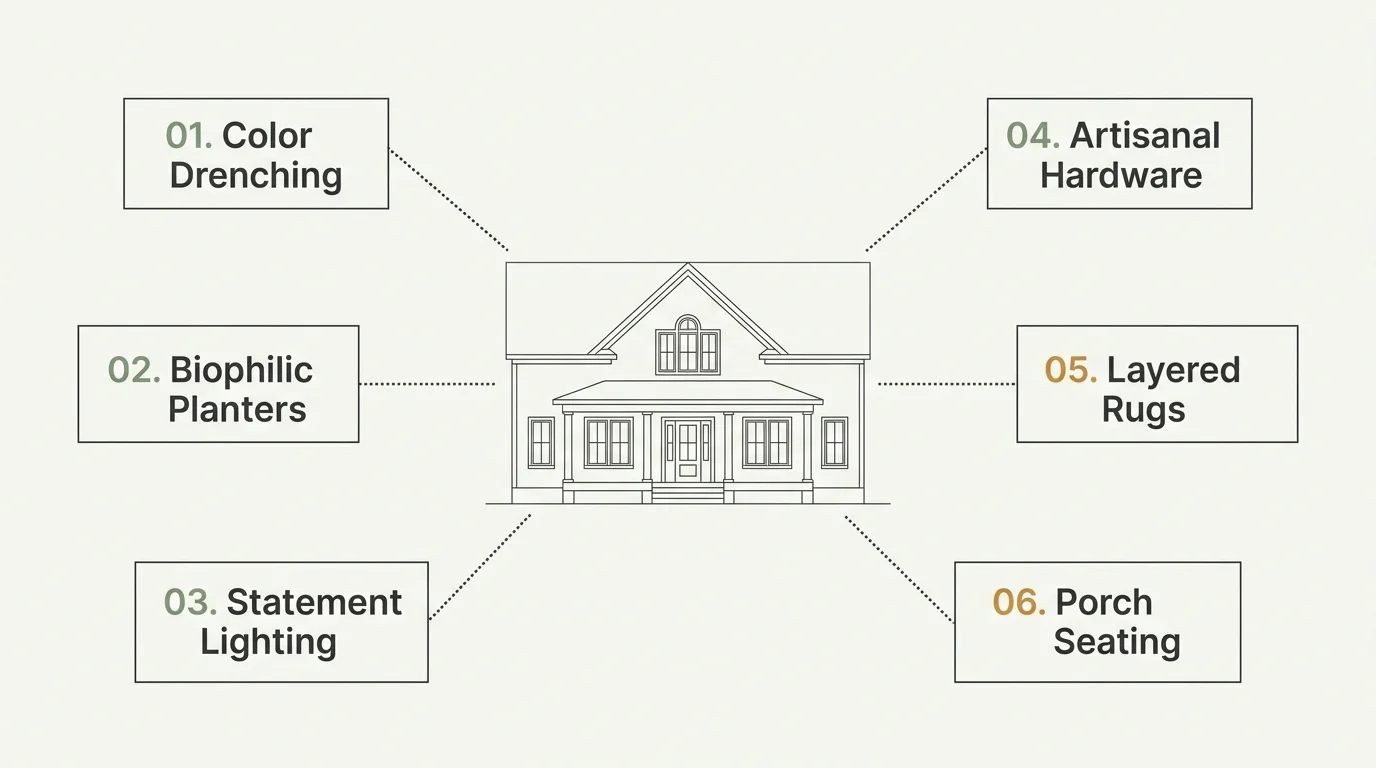
Your front porch serves as the architectural handshaking moment of your home, setting an immediate design narrative before anyone crosses the threshold. Upgrading this critical space yields quantifiable returns; real estate valuation studies consistently show that high-impact exterior enhancements can boost a property’s overall market value by as much as seven percent. By merging architectural intent with quiet luxury—using tactile organic materials, warm ambient lighting, and layered greenery—you create an inviting focal point that elevates your entire exterior aesthetic. These seven sophisticated front porch decorating ideas offer practical, high-impact strategies for boosting home curb appeal while establishing an authentic sense of warmth and refined entrance design.
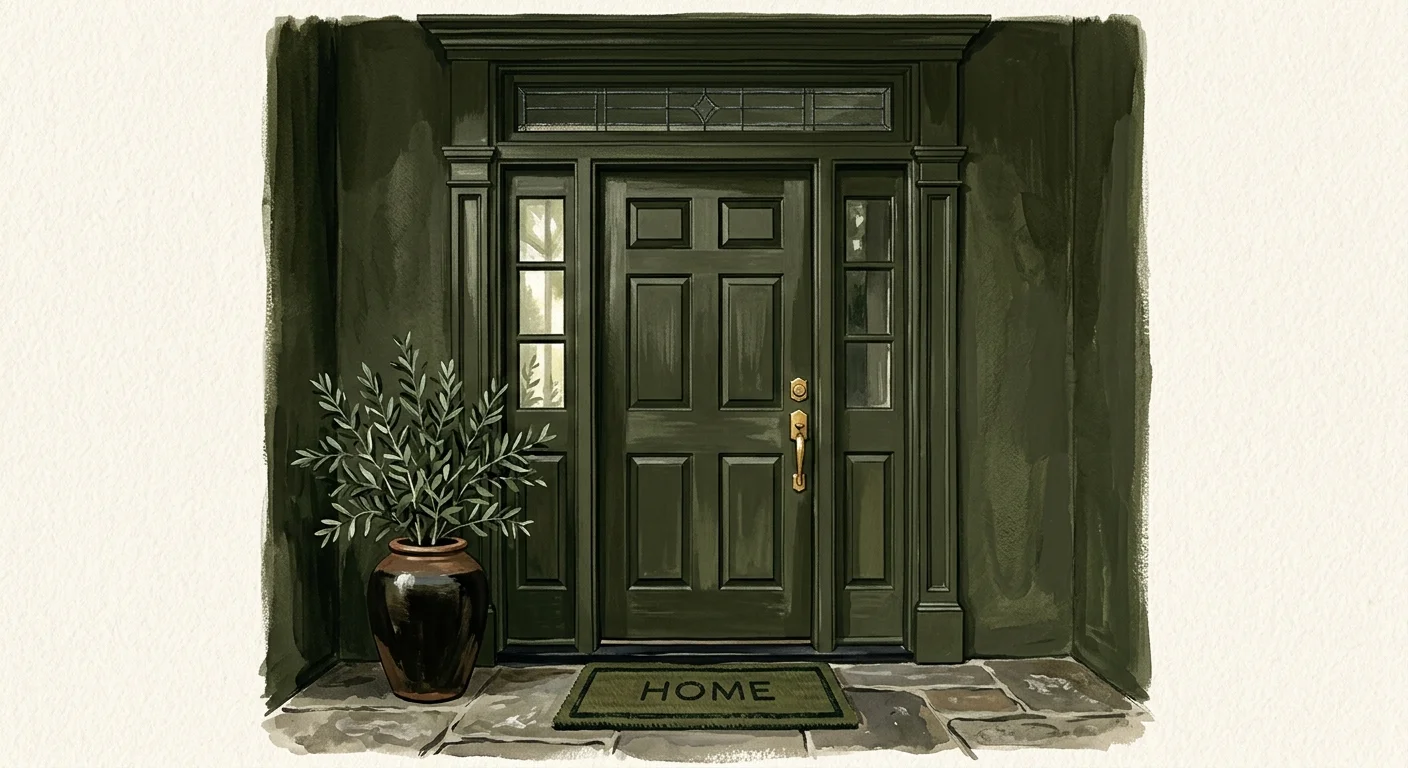
Trend #1: Architectural Color Drenching for the Entryway
Color drenching has moved from interior living rooms to exterior entryways, creating an unforgettable visual signature. Rather than painting only the front door in a contrasting shade, forward-thinking designers now saturate the entire entryway envelope—including the door, casing, sidelights, trim, and portico frame—in a single, expressive hue. This monochromatic application blurs harsh architectural seam lines, making compact porches feel exponentially grander and deeply intentional. By wrapping the full entryway frame in cohesive pigment, you eliminate visual clutter and establish a commanding focal anchor for your facade.
When selecting your palette, look beyond standard glossy red or basic navy. Deep, nuanced shades like charcoal plum, dark forest olive, slate indigo, or rich aubergine infuse your home with quiet luxury and timeless sophistication. High-gloss sheens bounce ambient daylight during the afternoon and catch porch illumination at night, giving your entryway dynamic dimensional depth. For homeowners executing a porch makeover on a budget, high-impact exterior paint represents one of the most accessible curb appeal updates available. Selecting an exterior acrylic latex enamel formula ensures UV resistance, preventing chalking or fading under intense sunlight while keeping your entrance looking pristine across every season.
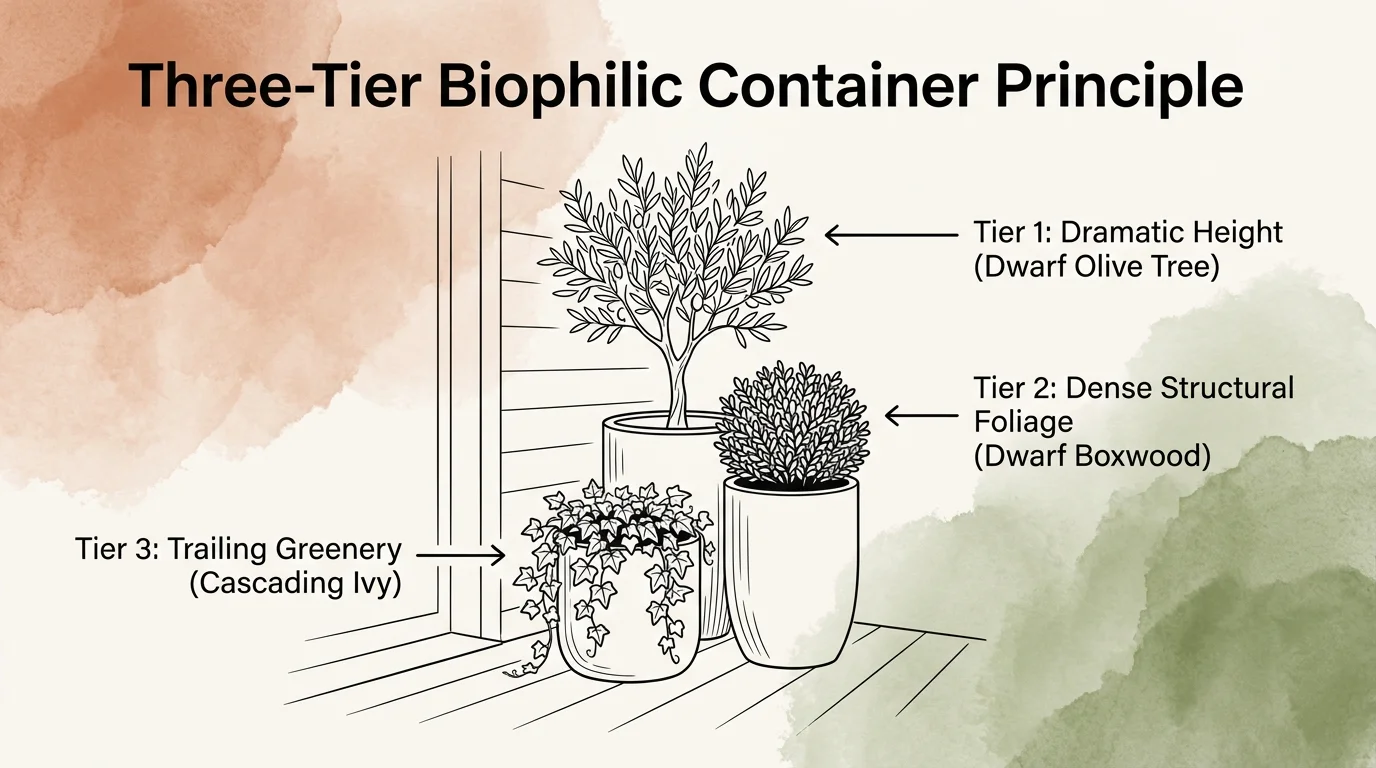
Trend #2: Layered Biophilic Planters and Living Thresholds
Biophilic design principles emphasize a continuous, organic connection between structured architecture and nature. Moving far beyond the predictable arrangement of twin potted mums flanking a doorway, modern exterior design embraces asymmetry, varied sculptural heights, and rich material patinas. Create a living threshold by grouping containers crafted from raw, tactile materials—such as hand-thrown terracotta, lead-finished cast stone, ribbed concrete, and weathered teak planters.
To master this aesthetic, apply classic horticultural composition principles by layering three plant tiers: dramatic height, dense structural foliage, and trailing greenery. Pair an accent tree like a Japanese maple, dwarf olive, or standard bay laurel with textured mid-height foliage like feathery fountain grasses, dwarf boxwoods, or dark plum heuchera. Finish the arrangement with cascading sweet potato vines or variegated ivy creeping over container lips. Varying container heights on tiered risers or low stone blocks adds architectural depth. Utilizing drought-tolerant perennials alongside evergreen foliage guarantees year-round structure, providing valuable front entrance decor tips that maintain visual richness across spring, summer, autumn, and winter.
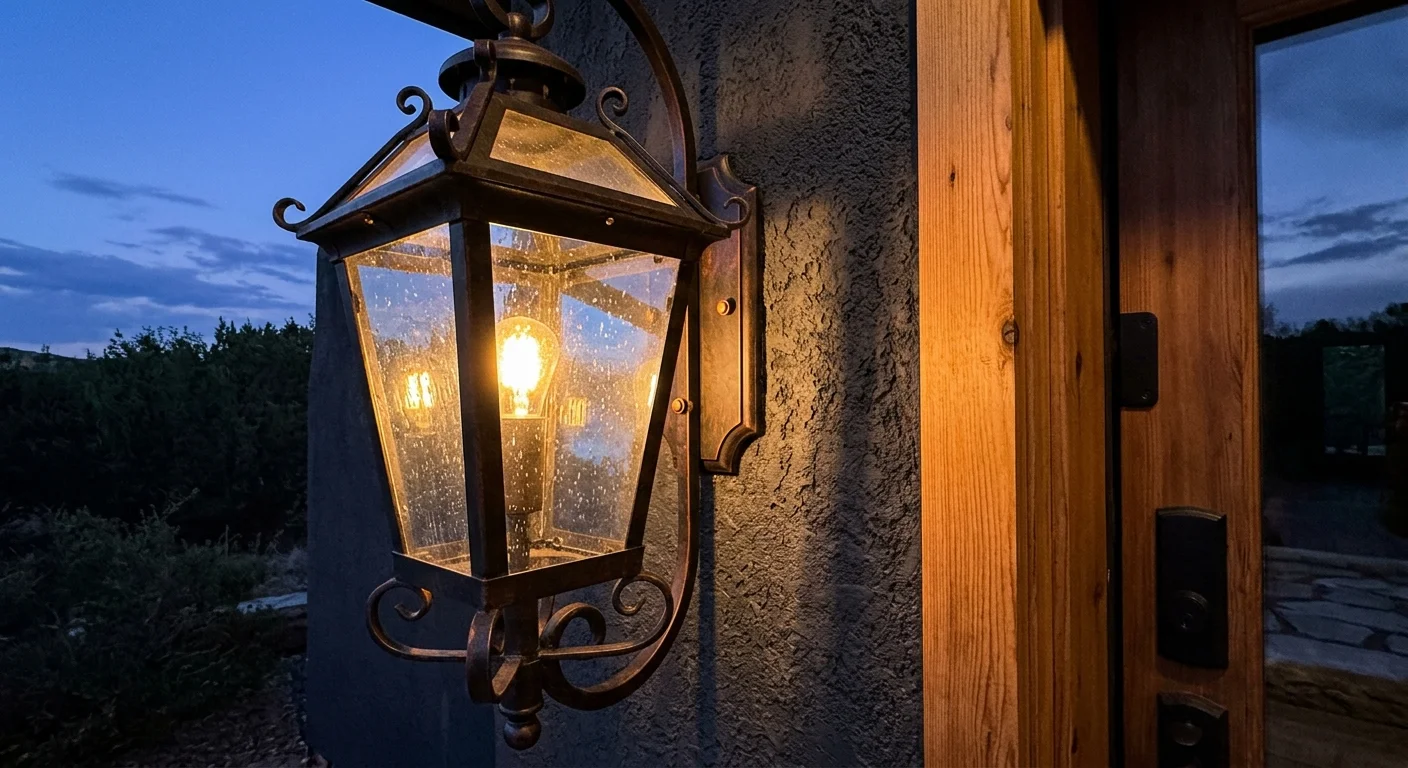
Trend #3: Sculptural Statement Lighting with Warm Color Temperatures
Exterior lighting functions as the jewelry of your home’s elevation, yet many properties suffer from undersized, builder-grade fixtures that fail to establish presence. Upgrading to oversized, sculptural lighting fixtures instantly redefines your home’s curb presence. A well-proportioned lantern or wall sconce should measure approximately one-fourth to one-fifth the height of the front door, commanding visual attention without crowding the portico structure.
Choose fixtures that celebrate high-grade materiality—think patinated unlacquered brass, hand-forged blackened iron, or sleek geometric frames paired with clear seeded glass. Pay equal attention to color temperature, which fundamentally dictates your home’s evening mood. Standard cool-white exterior LED bulbs emitting 3000K or higher create a clinical, blue-tinted glare that flattens architectural textures. Swap these for warm 2700K LED filament bulbs. This subtle adjustment produces a welcoming, candle-like glow that highlights the natural beauty of stone, brick, or timber siding. Layering sconces with low-voltage landscape uplighting directed at accent planters or porch columns frames your entryway in a sophisticated, multi-dimensional halo of illumination.

Trend #4: Tactile Hardware and Artisanal House Numbers
Every physical touchpoint on your front porch communicates quality, craftsmanship, and care. Replacing lightweight, contractor-grade door hardware with heavy, unlacquered solid brass or hand-forged iron pieces provides immediate tactile satisfaction when entering your home. Unlacquered brass develops a rich, organic patina over time as it interacts with humidity and human hands—a signature characteristic of authentic, quiet luxury design.
Extend this meticulous attention to detail to your house numbers and accent trim. Move away from generic vinyl stickers or standard hardware store numbers in favor of custom, oversized metal typography mounted on floating standoffs, or hand-carved stone address plaques. Aligning these numbers vertically along a stone pillar or embedding them directly into porch masonry adds a tailored architectural flourish. A heavy brass door knocker, a matching kick plate, and an integrated smart lock with a classic escutcheon seamlessly bridge historical charm with modern convenience. These tactile enhancements cost a fraction of major construction projects, serving as essential front porch decorating ideas that yield substantial impact.
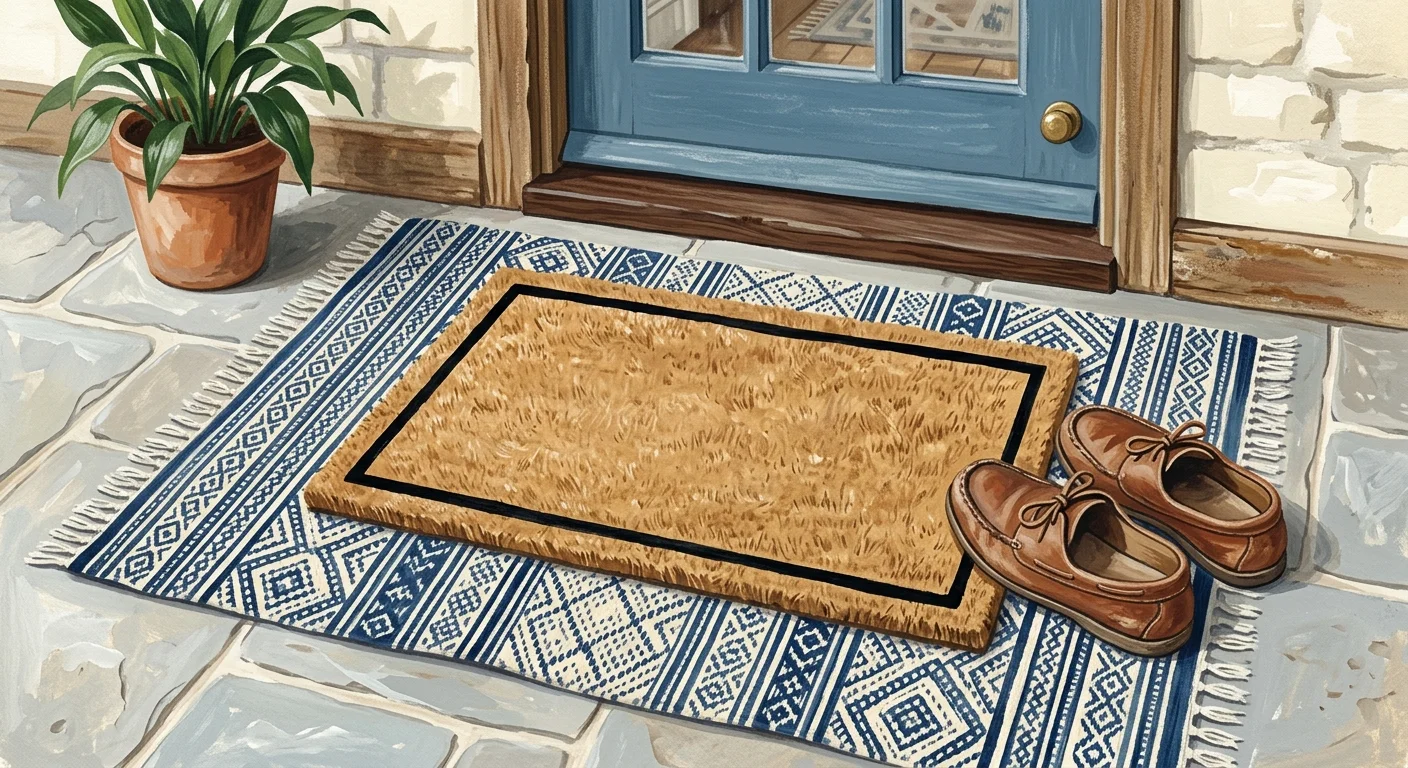
Trend #5: Mixed-Textile Grounding and Coordinated Layered Rugs
Grounding your entry threshold with textured, layered textiles creates an inviting visual frame that anchors the entire front porch composition. Rather than relying on a solitary small door mat, layer an oversized, high-density natural coir mat over a larger outdoor performance rug. The bottom rug provides a patterned or textured backdrop, while the top natural fiber mat delivers practical soil scraping and raw, organic warmth.
Choose base rugs woven from UV-stabilized polypropylene or recycled PET yarn that emulate high-end indoor flat-weave textiles without absorbing moisture, shedding, or growing mildew. Subtle geometric motifs, classic ticking stripes, or muted herringbone weaves introduce tactile interest without overpowering your front door color. Ensure the base rug extends beyond the door frame by at least six to eight inches on either side to establish generous, elegant proportions. This layered textile approach softens hard concrete decking or flagstone floors, adding tactile comfort underfoot. It represents a highly effective method for boosting home curb appeal while keeping costs strictly controlled.
Trend #6: Porch Seating as a Living Room Extension
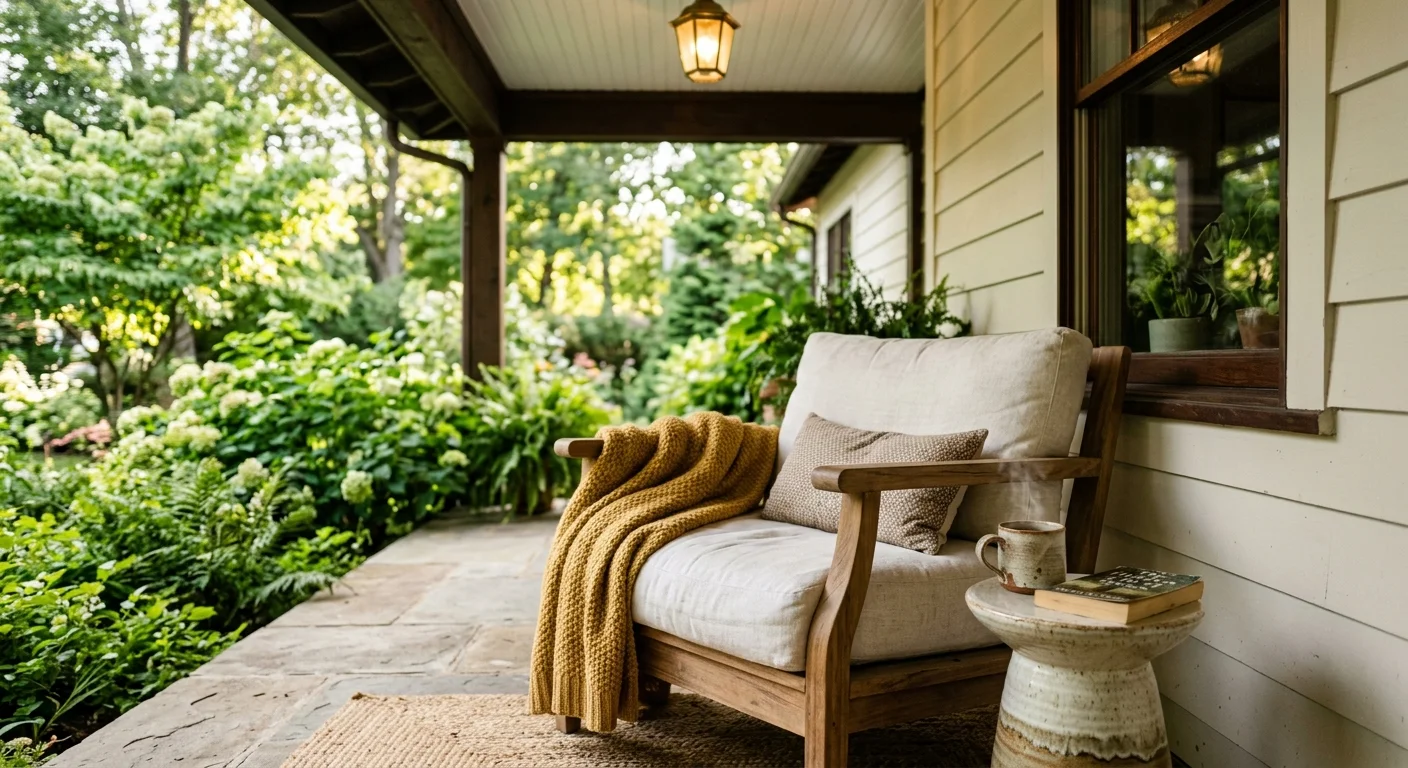
Modern exterior architecture treats the front porch as a true extension of your interior living space rather than a passive exterior ledge. Treat your porch seating with the same curatorial care you bring to your formal living room. Replace flimsy folding chairs or dated plastic furniture with substantial, weather-resilient pieces defined by clean, architectural silhouettes.
Opt for enduring materials like sustainable grade-A teak, powder-coated aluminum framing, or hand-woven all-weather rope. Outfit deep-seated lounge armchairs, bench settees, or suspended porch daybeds with thick cushions upholstered in high-performance outdoor textiles. Textured bouclés, slubbed outdoor linens, and rich performance velvets bring indoor softness outside while offering complete resistance to mildew, stains, and solar fading. Complete the nook with weather-resistant throw pillows in rich terracotta, moss green, or ochre hues, paired with a low ceramic or teak side table for resting drinks. By transforming your front porch into a functional outdoor room, you communicate warm hospitality and expand your usable living square footage.
Trend #7: Integrated Architectural Millwork and Ceiling Treatments
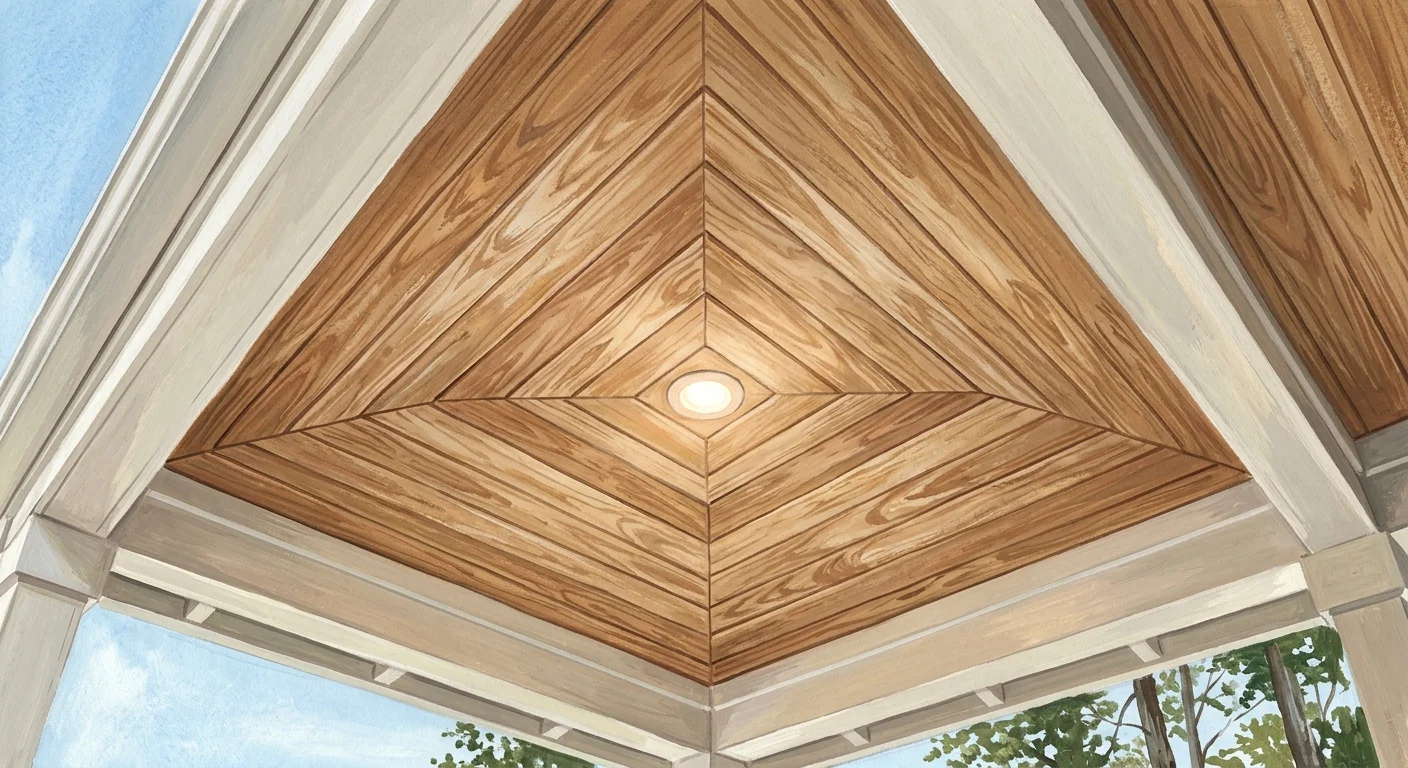
The overhead ceiling represents one of the most frequently overlooked surfaces on a front porch. Elevating this fifth wall with custom architectural millwork transforms a basic overhang into a custom design masterpiece. Installing natural wood planking—such as warm western red cedar, rich cypress, or dark ipe wood—draws the eye upward, infusing the entry structure with natural organic warmth and architectural weight.
If natural timber finishes conflict with your home’s exterior color palette, install classic tongue-and-groove beadboard painted in a soft haint blue, muted sage, or warm cream. Haint blue ceilings carry deep historical roots in regional architecture, originally intended to evoke the expansive light of open sky and visually extend daylight hours. Frame the ceiling perimeter with bold crown molding or wrapped trim bands to neatly conceal joint seams. Integrating flush-mounted LED downlights or a central damp-rated hanging lantern into the wood ceiling completes the installation, delivering a polished, high-end look that raises your entire home elevation.
The Big Picture: Weaving These Trends into Your Home
Executing a successful front porch transformation requires balancing trend-forward ideas with your home’s foundational architectural language. Avoid incorporating every trend at once; instead, select three or four cohesive updates that amplify your property’s existing character. A Mid-Century Modern home benefits immensely from sculptural lighting, oversized floating house numbers, and teak seating, whereas a Colonial or Craftsman residence shines with full color drenching, rich brass hardware, and beadboard ceiling millwork.
Maintain visual continuity between your interior living areas and exterior entry. Your front porch serves as the opening chapter of your home’s interior narrative—the materials, color temperatures, and textures established at the front threshold should flow naturally into your foyer and main living spaces. Invest in quality over quantity, choosing rot-resistant woods, unlacquered metals, and outdoor fabrics that age gracefully under exterior weathering.
Pay close attention to scale, proportion, and foot traffic pathways. Avoid overcrowding small porches with oversized furniture or excessive plant pots that obstruct entryways. Ensure a clear, comfortable walking path of at least 36 inches from front steps to the main door. Every design addition should feel intentional, functional, and visually balanced.
For the latest color forecasts, consult industry leaders like Pantone and paint companies like Benjamin Moore. For professional design standards, refer to the American Society of Interior Designers (ASID).
Disclaimer: This article reflects design trend analysis and predictions. Personal taste and timeless design principles should always guide your decorating choices.
Frequently Asked Questions
How can I execute an impactful porch makeover on a budget?
Prioritize high-impact surface changes that deliver dramatic visual contrast without structural alteration. Applying a fresh coat of high-gloss exterior paint to your front door and surrounding casing creates an immediate focal point for minimal material cost. Replacing basic house numbers with modern floating typography and swapping worn doormats for a layered rug combination instantly elevates the threshold. Complement these steps by placing two dynamic planter groupings filled with budget-friendly perennials on either side of the entrance.
Which curb appeal updates offer the highest return on investment?
Real estate data consistently indicates that door upgrades and architectural lighting updates yield exceptional returns at resale. Replacing an old entryway door with a solid wood or high-grade steel system frequently recovers over 80 percent of its cost upon property sale. Similarly, replacing outdated lighting fixtures with scale-appropriate, energy-efficient lanterns dramatically improves nighttime photography for real estate listings, making your property stand out in competitive housing markets.
How do I select front door colors that harmonize with exterior siding?
Evaluate the underlying undertones of your siding, brick, or stone cladding. Warm cladding materials like red brick, stone with golden veins, or warm beige siding pair exceptionally well with warm undertones like olive green, deep terracotta, or warm aubergine. Cool gray siding or white trim complements deep slate blue, charcoal indigo, or rich forest greens. Test paint swatches directly on your front door under both morning sunlight and evening shadow to observe how light shifts the color depth throughout the day.
What are the best front entrance decor tips for small or narrow front porches?
On compact or narrow porches, focus on vertical space rather than floor footprint. Use slim, vertical house numbers mounted alongside the door frame and replace bulky floor pots with wall-mounted sconce planters or hanging baskets. Choose vertical color drenching to draw the eye upward and select low-profile wall lanterns rather than wide hanging pendants. A single slim bench or small ceramic garden stool provides seating without cluttering the main walking path, keeping the entryway expansive and welcoming.
