

Unlocking real square footage in your home does not require an expensive room addition; it requires reclaiming your underutilized attic and basement transition zones. When you eliminate critical storage space mistakes in these subterranean and overhead areas, you instantly elevate your home’s functionality while protecting your valuable interior decor assets. Poor organization, climate oversights, and generic shelving units actively waste up to thirty percent of a home’s usable volume. By transitioning from chaotic dumping grounds to curated, climate-managed architectural storage systems, you seamlessly expand your living environment, preserve precious family heirlooms, and maintain a refined, quiet luxury aesthetic throughout your entire residence.
1. Ignoring Microclimates and Environmental Conditions in Unfinished Spaces
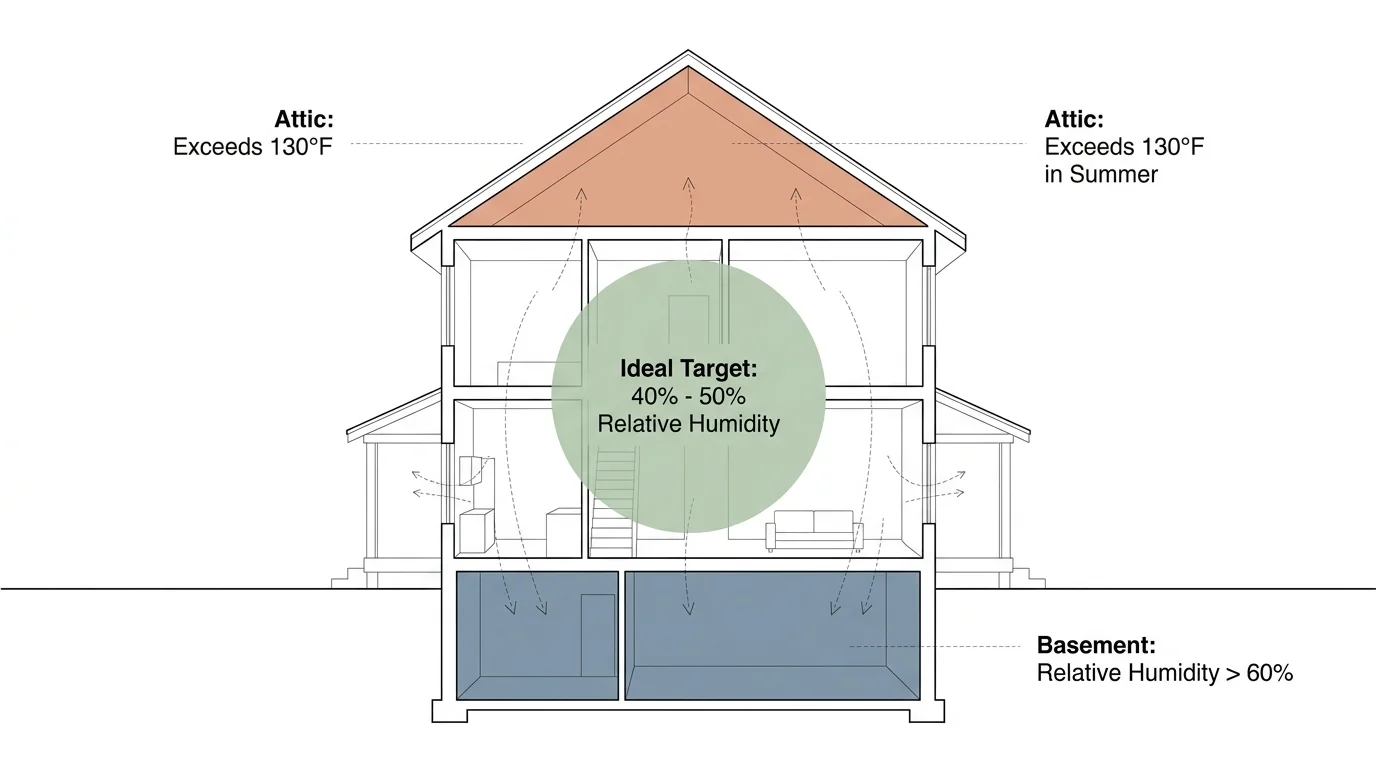
When you store items in attics and basements without regulating temperature and ambient moisture, you expose your finest possessions to microclimate destruction. Attics frequently reach summer temperatures exceeding 130 degrees Fahrenheit, while unconditioned basements consistently push relative humidity levels above 60 percent. These extreme environmental shifts cause solid wood furniture to warp, delicate textiles to suffer dry rot, and fine oil paintings to crack. Committing these attic storage mistakes costs you thousands of dollars in lost furniture, rugs, and seasonal home accessories over time.
To safeguard your investments, implement active atmospheric control before adding structural shelving. Install continuous vapor barriers, spray-foam insulation along rafters, and dedicated dehumidification systems designed to lock relative humidity between 40 and 50 percent. When you regulate these secondary architectural zones, you convert unheated storage areas into stable museum-grade archives. For optimal basement storage solutions, place wireless thermo-hygrometer sensors in remote corners to monitor real-time atmospheric shifts on your smartphone. Elevating your storage strategy begins with ambient protection; without environmental control, even the most expensive built-in millwork fails to protect your curated home inventory.
2. Relying on Opaque Plastic Totes Instead of Bespoke Modular Cabinetry
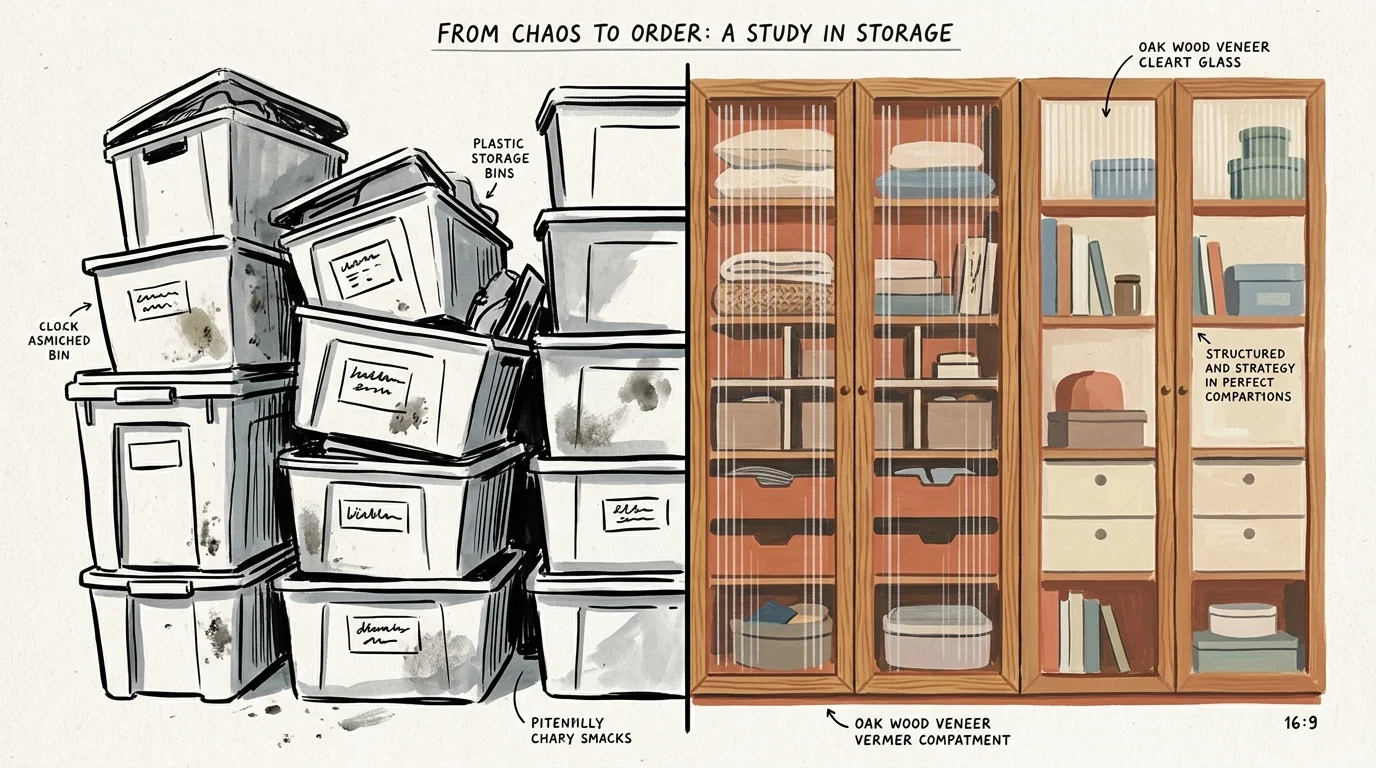
Stacking mismatched, opaque plastic bins against unfinished drywall creates visual chaos and severe operational friction. While plastic totes appear convenient, they represent one of the most common storage space mistakes in modern homes. Dark, stacked containers force you to unstack heavy boxes whenever you search for seasonal dining room linens, holiday place settings, or spare living room cushions. This disorganization destroys floor layout flexibility and encourages mindless accumulation rather than intentional, curated living.
Replace chaotic plastic containers with bespoke modular cabinetry systems that reflect quiet luxury design principles. Incorporate deep full-extension drawers, clear fluted tempered glass doors, and warm oak veneer frames. Modular joinery lets you view your belongings instantly while maintaining a dust-free, sophisticated environment. Incorporate structured velvet-lined dividers for delicate decor accessories, integrated shoe raceways, and custom canvas wardrobe boxes for seasonal designer apparel. By organizing your belongings in tailor-made architectural millwork, you optimize every inch of horizontal depth while elevating your basement organization tips into a cohesive design language that rivals primary living zones.
3. Neglecting Vertical Height and Sloped Architectural Eaves
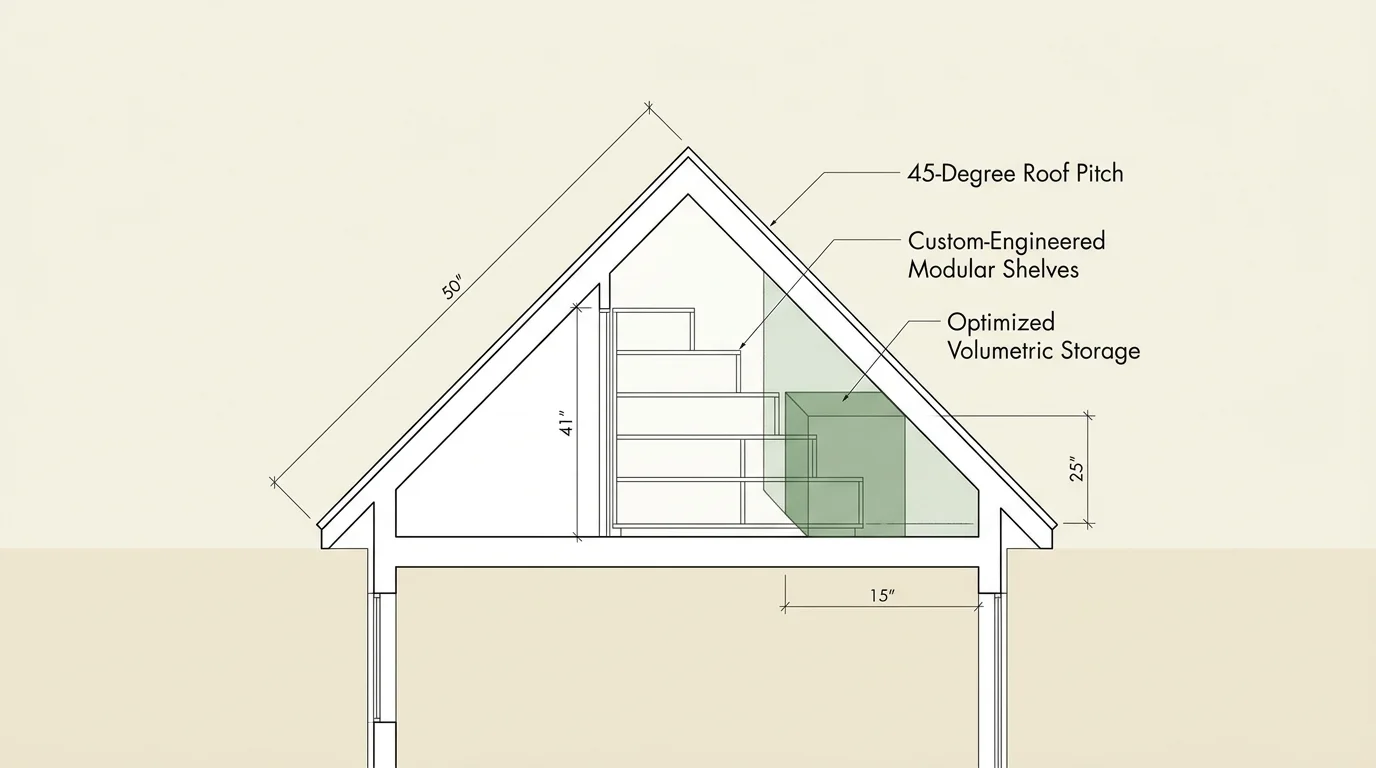
Homeowners frequently overlook the architectural geometry of attic eaves and sloped rafter pitches, leaving massive volumetric pockets completely unused. Allowing roof pitch angles—such as standard 45-degree eaves—to remain vacant floor space represents a major flaw in maximizing attic storage. Standard rectangular furniture cannot fit under low knee-walls, which often leads to awkwardly clustered items in the center of the room that choke open floor space and compromise structural traffic lanes.
Capitalize on awkward roof pitches by installing custom-built eave drawers and rolling knee-wall cabinetry. Design deep pull-out drawer carriages mounted on heavy-duty ball-bearing runners that slide out 36 to 48 inches from the lowest point of the ceiling slope. Utilize full-height gable walls by erecting floor-to-ceiling vertical shelving units paired with slender rolling library ladders. Custom architectural joinery transforms dead architectural corners into sleek, high-capacity repositories for large living room area rugs, framed artwork, and bulky decor. When you align your storage structures with the natural angle of your home’s roofline, you reclaim hundreds of cubic feet without encroaching on primary walking paths.
4. Mismanaging Moisture Dynamics and Floor Contact in Subterranean Zones
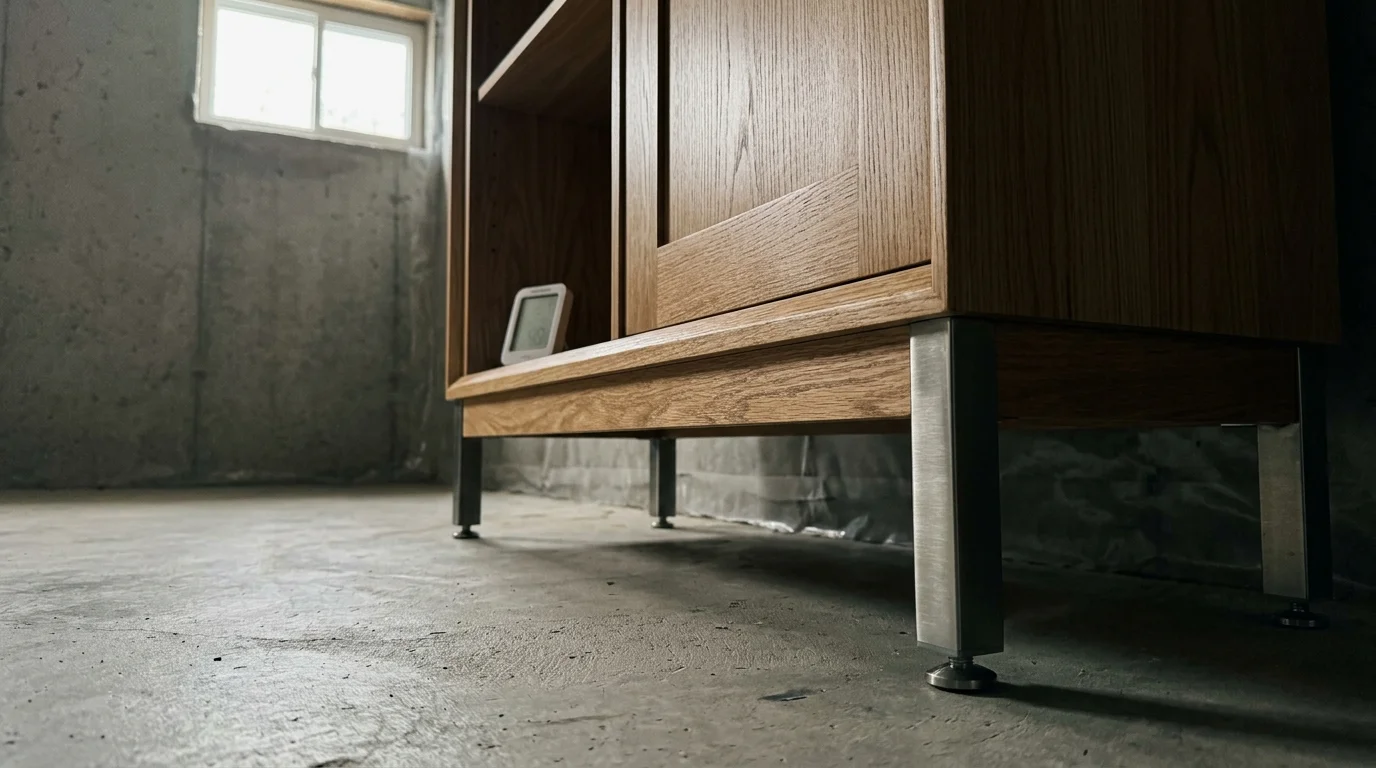
Placing storage containers, vintage wooden furniture, or rolled wool carpets directly onto concrete basement floors invites moisture absorption through capillary action. Concrete slabs inherently transmit ground moisture vapor upward into porous materials. When you allow cardboard boxes or unsealed timber legs to sit directly on subterranean floors, you invite fungal decay, warping, and persistent musty odors that migrate into your upper-level living room and dining room environments.
To master basement storage solutions, raise every storage structure off the bare ground using elevated platform plinths or steel architectural legs. Install floating cabinetry mounted directly to wall studs, or elevate free-standing shelving units at least six inches above the floor slab. Apply commercial-grade, low-VOC epoxy coatings or luxury vinyl planking over subfloor vapor membranes to create an impermeable barrier against rising dampness. Combine these protective flooring foundations with sleek aluminum shelving frames. This structural separation protects your high-end interior finishes, preserves expensive floor coverings, and ensures that subterranean air quality remains pristine.
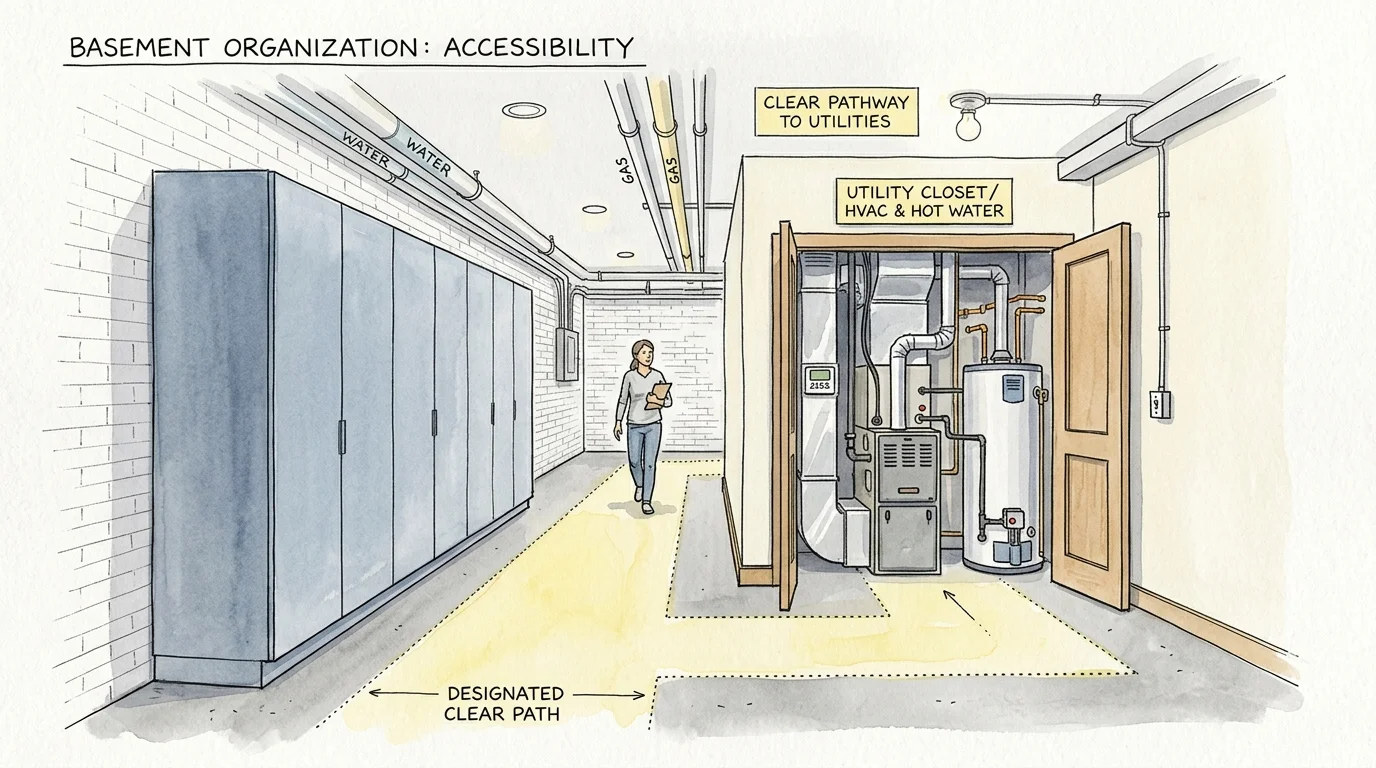
5. Blocking Mechanical Access and Architectural Pathways
Encroaching upon residential mechanical systems with oversized storage bins creates severe maintenance friction and safety hazards. Homeowners often push excess living room furniture, luggage, and holiday boxes against water heaters, HVAC air handlers, electrical breaker panels, and sump pumps. Blocking these essential service zones violates standard architectural clearance guidelines—which require a minimum 36-inch clear envelope—and restricts natural ventilation around heating elements.
Integrate smart spatial zoning into your basement organization tips by establishing clear mechanical access corridors. Frame utility units with architectural slatted timber partitions, biophilic bamboo screens, or concealed pocket doors that maintain air circulation while screening machinery from view. Place surrounding storage items on heavy-duty, lockable caster wheels so you can relocate entire shelving bays instantly during routine maintenance or plumbing emergencies. By respecting mechanical infrastructure and defining dedicated transit aisles, you protect your home’s mechanical health, streamline repair accessibility, and maintain a high-end, ordered environment.
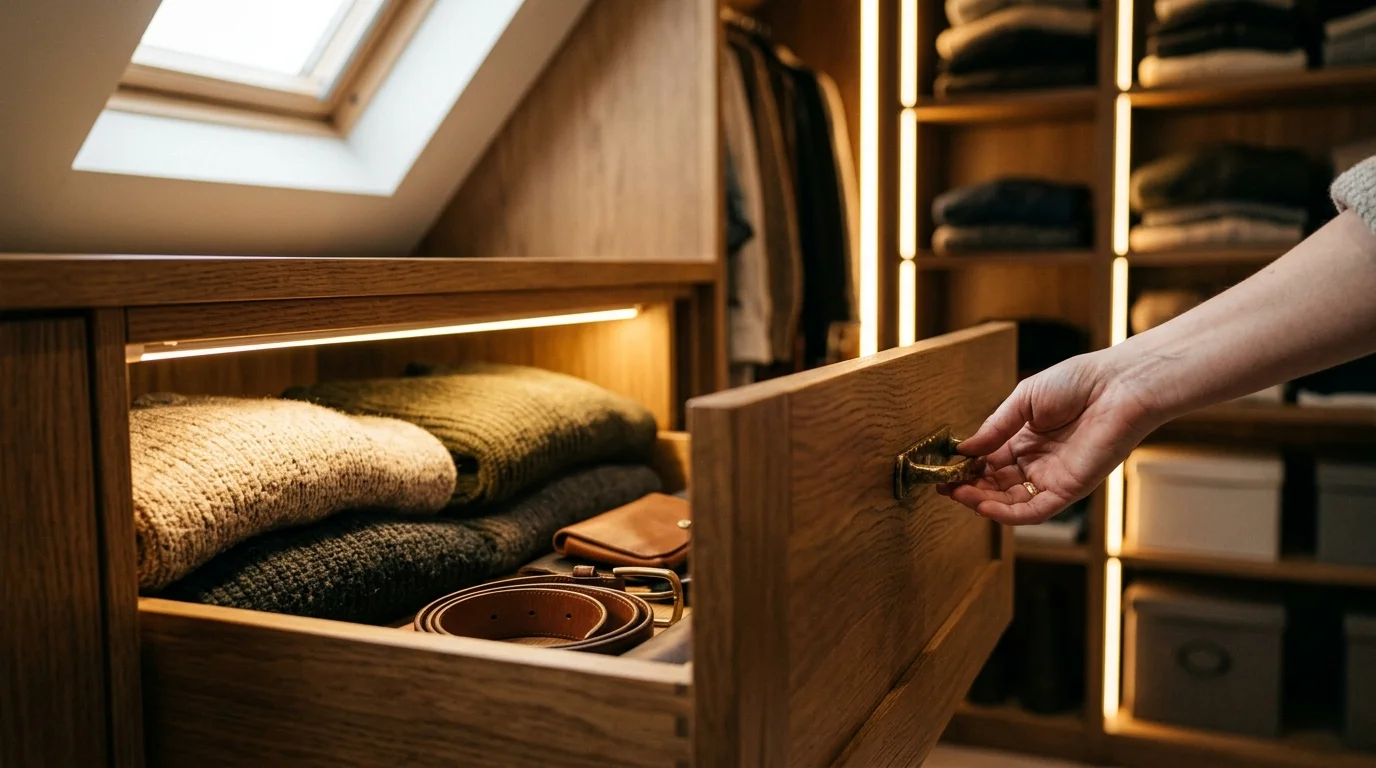
6. Failing to Implement Zoned Lighting and Integrated Illumination
A single, bare incandescent light bulb dangling from a ceiling joist cannot illuminate expansive storage zones. Poor lighting creates dark shadow pockets, making retrieval operations frustrating and causing you to overlook stored inventory. Navigating poorly lit attics and basements transforms routine seasonal storage changes into an unpleasant chore, often leading homeowners to make recurring attic storage mistakes like double-purchasing items they simply could not see.
Transform dark secondary zones into inviting, high-function spaces with layered architectural lighting schemes. Install low-profile, energy-efficient linear LED channels with a 3000K warm temperature along primary ceiling beams and under cabinet ledges. Integrate passive infrared motion sensors inside deep wardrobes and knee-wall drawers so soft light turns on automatically when you open a cabinet door. Diffused, high-CRI lighting eliminates harsh shadows, renders true textile colors, and gives your storage archives the polished appearance of a luxury retail showroom.
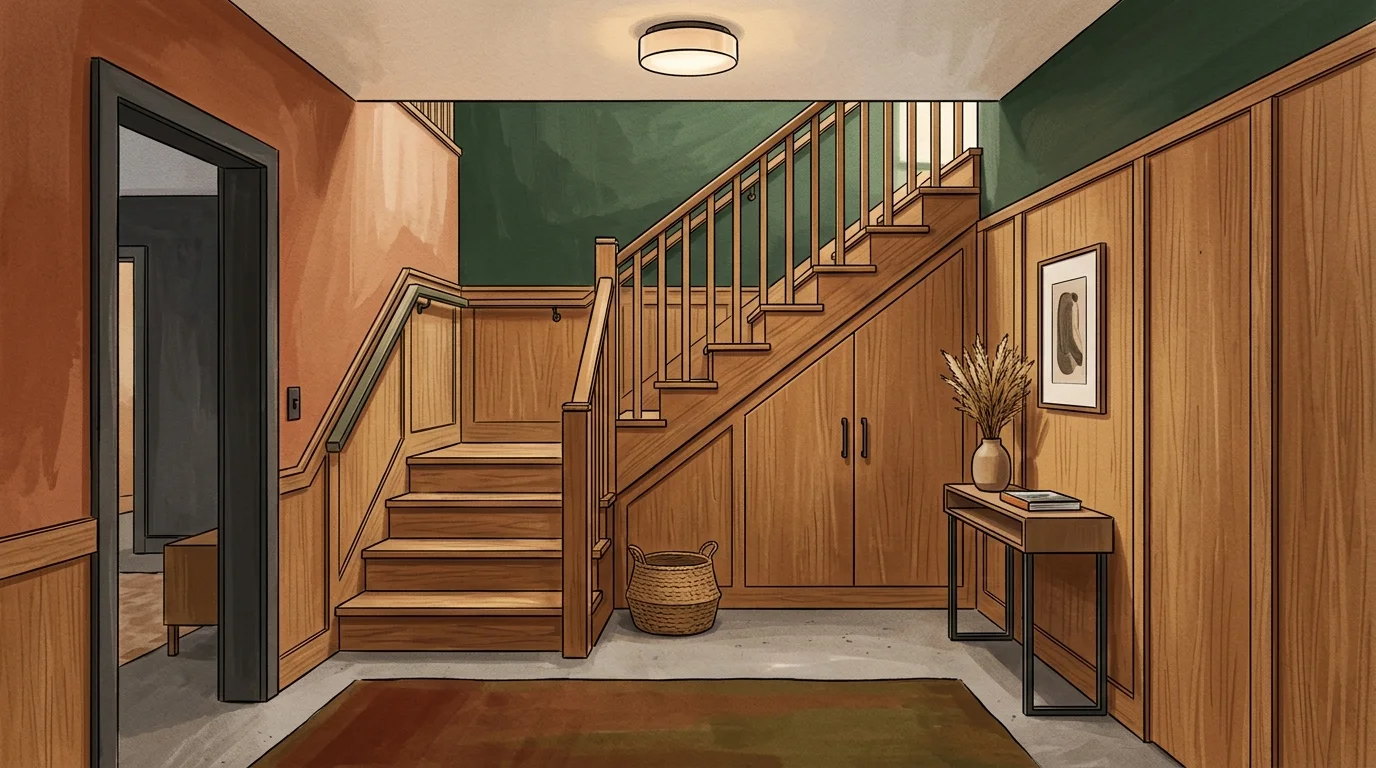
7. Treating Secondary Storage as an Isolated Aesthetic Wasteland
Treating secondary storage zones as disconnected, utility-only basements or attics creates a jarring visual contrast with the rest of your curated home. When you apply refined color palettes, natural organic textures, and premium flooring throughout your living room and dining room, but neglect your storage spaces, you break the seamless aesthetic continuity of your residence. Unpainted concrete, exposed utility wiring, and rough plywood shelves degrade your home’s overall design narrative and lower perceived property value.
Extend your primary interior design philosophy directly into your storage zones to create continuous quiet luxury. Paint basement and attic walls in warm, light-reflecting neutral hues such as greige, warm alabaster, or soft terracotta to bounce light into dim corners. Select rich brass or matte black iron hardware that matches your main floor cabinetry. Incorporate natural woven basketry, FSC-certified hardwood trims, and durable floor finishes to harmonize utility areas with your living spaces. When you design secondary storage with the same aesthetic care as primary living zones, you cultivate an organized home environment that feels calm, elegant, and unified.
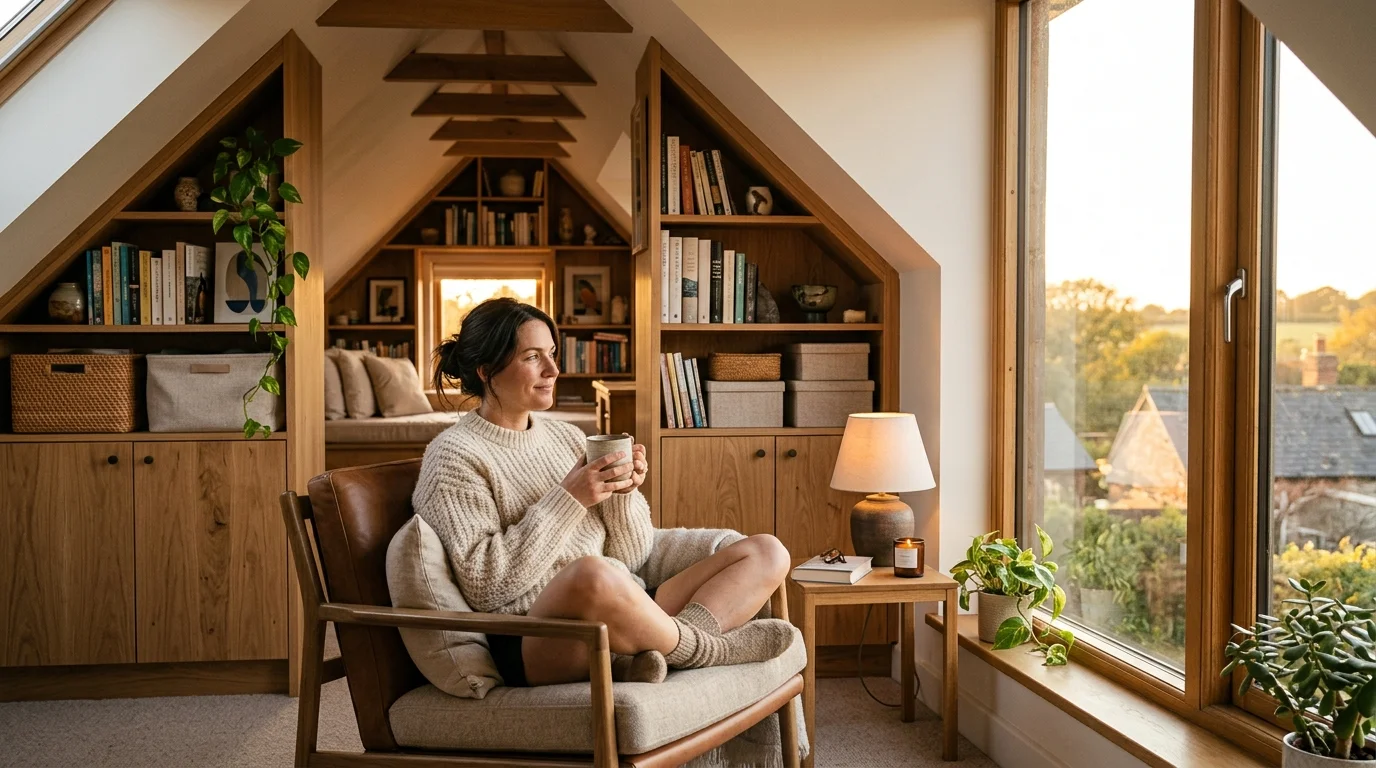
The Big Picture: Weaving These Trends into Your Home
Transforming your home’s storage footprint requires shifting your perspective from quick organizational fixes to long-term architectural planning. By correcting standard storage space mistakes, you convert forgotten attics and basements into highly functional extensions of your primary living environment. True spatial luxury relies on balance: controlling microclimates, introducing custom architectural joinery, layering ambient illumination, and maintaining aesthetic continuity from the foundation to the rafters.
When you invest in bespoke cabinetry, moisture-resistant flooring, and climate control, you protect your prized interior decor assets and maximize your home’s true volumetric value. View every square foot as an opportunity to reinforce your lifestyle vision, combining biophilic materials, disciplined curation, and high-performance organization. Embrace these intelligent design solutions to build an organized, elegant home that seamlessly blends high utility with quiet luxury.
Frequently Asked Questions
Q1: How do I balance climate control requirements with custom joinery design in a humid basement?
A1: Achieve optimal balance by installing a continuous wall vapor barrier and a dedicated, energy-efficient dehumidifier before fitting custom cabinetry. Select moisture-resistant materials like marine-grade plywood or powder-coated aluminum frames rather than raw particle board, and leave a two-inch air gap behind cabinetry to encourage continuous air circulation.
Q2: Can custom attic storage solutions really increase my home’s resale value?
A2: Yes, tailor-made attic storage solutions add measurable value by converting dead eaves into usable square footage. Highlighting clean, climate-controlled, built-in storage during home tours elevates buyer perception, demonstrating exceptional care and superior spatial utility throughout the residence.
Q3: What color palettes and materials best transition basement storage into an extension of primary living spaces?
A3: Use luminous neutral paint colors like soft greige, creamy alabaster, or light stone to maximize light reflection. Pair these wall shades with natural wood accents, brushed nickel or brass hardware, and light luxury vinyl plank flooring to match the warm, inviting tone of upper-level living and dining rooms.
Q4: How should I store delicate seasonal decor, silk textiles, and fine art safely in an attic?
A4: First, ensure your attic maintains stable temperatures between 60 and 75 degrees Fahrenheit with controlled relative humidity. Store delicate textiles in acid-free archival tissue paper inside breathable canvas boxes, and protect fine art in specialized climate-controlled art crates elevated off the floor.
For the latest color forecasts, consult industry leaders like Pantone and paint companies like Benjamin Moore. For professional design standards, refer to the American Society of Interior Designers (ASID).
Disclaimer: This article reflects design trend analysis and predictions. Personal taste and timeless design principles should always guide your decorating choices.
