

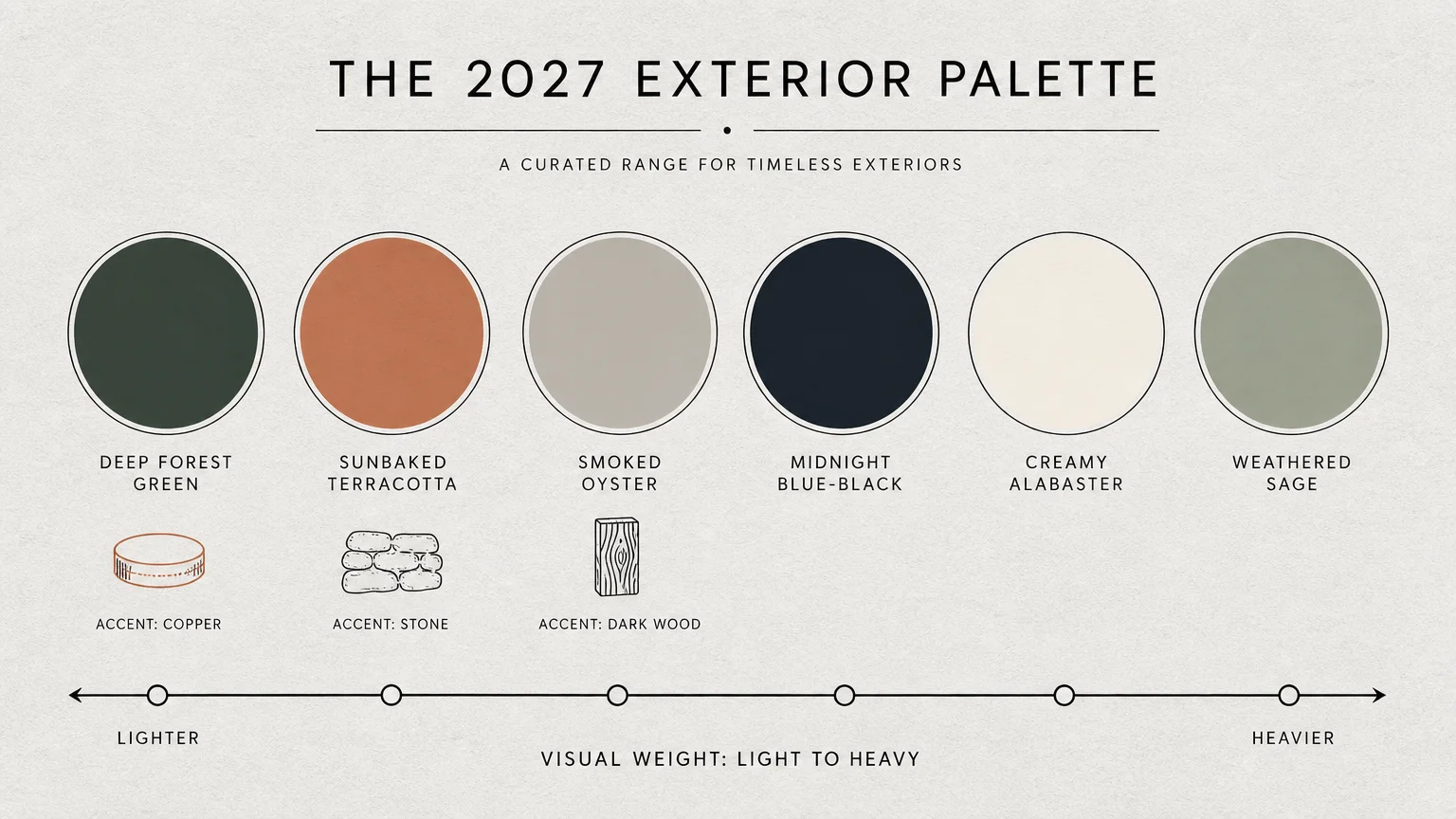
Transforming your property’s curb appeal starts with mastering the subtle yet profound shifts in exterior paint colors 2027 has on the horizon. Moving away from stark contrasts, the upcoming year embraces deeply grounded, complex hues that connect architecture to its surrounding landscape. You will see a refined focus on authenticity, blending organic inspiration with quiet luxury to create facades that feel both timeless and incredibly current. Exploring these emerging house paint trends allows you to elevate your home exterior design with confidence and sophistication. Understanding these six designer-approved shades gives you the blueprint to create a striking, welcoming presence that commands attention while remaining perfectly rooted in its environment.
Trend #1: Deep Forest Green
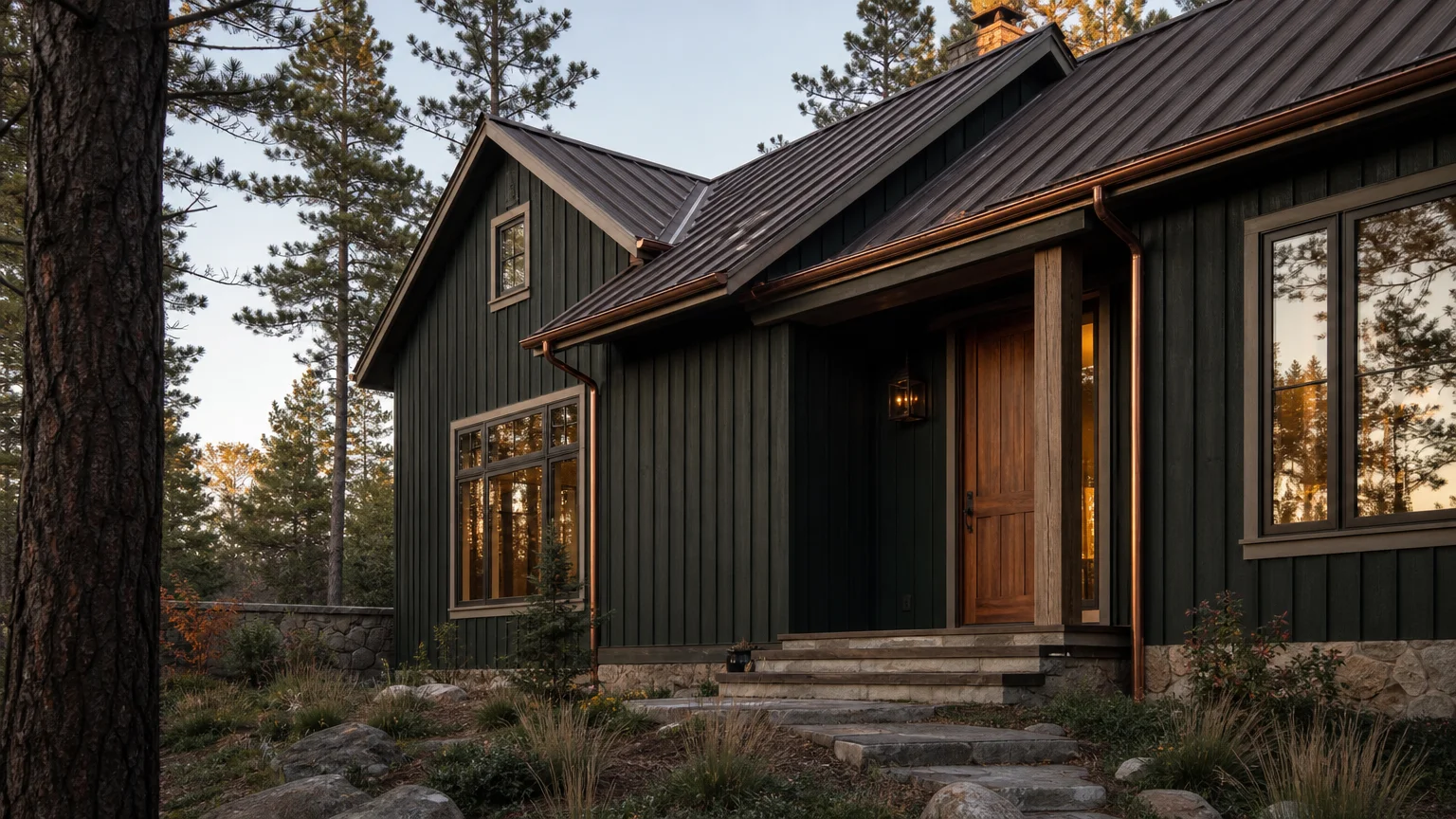
Architecture is increasingly blurring the boundaries between the built environment and the natural world; this philosophy directly drives the surge of deep forest green. Homeowners and designers are stepping away from the austere charcoal grays that dominated the previous decade, favoring this rich, organic hue instead. Deep green successfully grounds your home in its environment, pulling tones directly from surrounding foliage to create a seamless visual transition from your landscaping straight to your siding.
This color exemplifies biophilic design, an approach that satisfies our innate human desire to connect with nature on a daily basis. Forest green possesses a unique gravity and elegance, giving homes a distinct sense of established provenance even if they are newly constructed builds. When you apply this highly saturated shade to cedar shingles, classic board-and-batten siding, or traditional stucco, the physical texture of the material creates beautiful, subtle variations in the color throughout the day. In the bright midday sun, the green reads vibrant and alive; in the evening, it deepens into an almost black, intensely sophisticated shadow.
To master this specific look, pair deep green exteriors with warm, authentic natural materials. Unpainted copper gutters that will gracefully patina over time, richly stained walnut front doors, and raw stone foundations offer the perfect textural and visual contrast. You must actively avoid stark white trim, which creates a jarring, outdated contrast that breaks the organic spell. Instead, opt for soft putty, warm greige, or mushroom tones for the fascia, window casings, and eaves. This precise combination delivers highly actionable curb appeal ideas for those wanting a sophisticated, earthy aesthetic that commands profound respect without aggressively demanding attention.
Trend #2: Sunbaked Terracotta
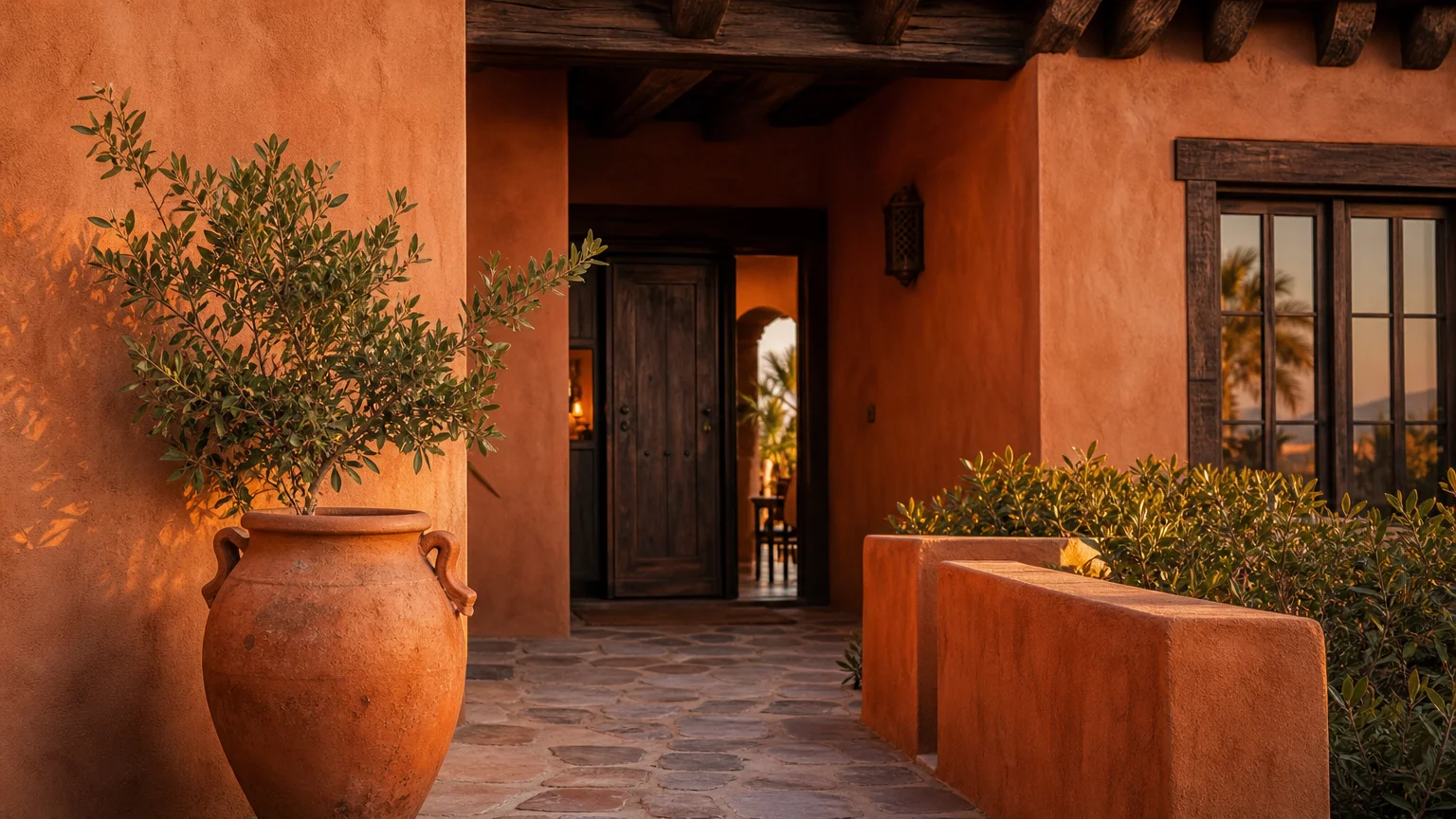
While coastal aesthetics and modern farmhouse styles relied heavily on bright whites and cool grays for years, 2027 welcomes the triumphant return of profound, saturated warmth. Sunbaked terracotta is boldly leading this charge, offering an earthy elegance that transforms a home’s exterior into a deeply welcoming retreat. This rich color draws direct inspiration from historic Mediterranean, Spanish Colonial, and Southwestern architecture, but it receives a modernized, slightly muted update that works beautifully across highly diverse climates and architectural styles.
Terracotta brings an undeniable, vibrant energy to home exterior design, yet its muddy, browned-down undertones keep it exceptionally sophisticated rather than loud or overly saturated. The true appeal of terracotta lies in its highly dynamic relationship with natural sunlight. During the crisp morning hours, the color reads as a rich, dense clay-like brown; as the sun sets, it catches the golden hour rays and glows with a fiery, brilliant amber. This organic, ever-changing quality makes it an exceptional choice for smooth stucco, long Roman brick, or deeply textured horizontal siding.
Implementing terracotta properly requires a thoughtful, strategic approach to your secondary color palettes. You must anchor this powerful hue with dark, grounding accents to prevent it from feeling overwhelmingly bright. Dark oil-rubbed bronze or matte black window frames provide the necessary contemporary edge that modernizes the entire facade. Meanwhile, muted sage green or dusty storm-blue front doors offer a beautifully complementary color scheme that strictly honors color theory. If you want to integrate this trend incrementally rather than painting the entire house, consider applying terracotta to a specific architectural focal point—such as an entryway alcove, a prominent chimney, or a detached guest house. The resulting facade radiates quiet luxury and unmatched, inviting hospitality.
Trend #3: Smoked Oyster
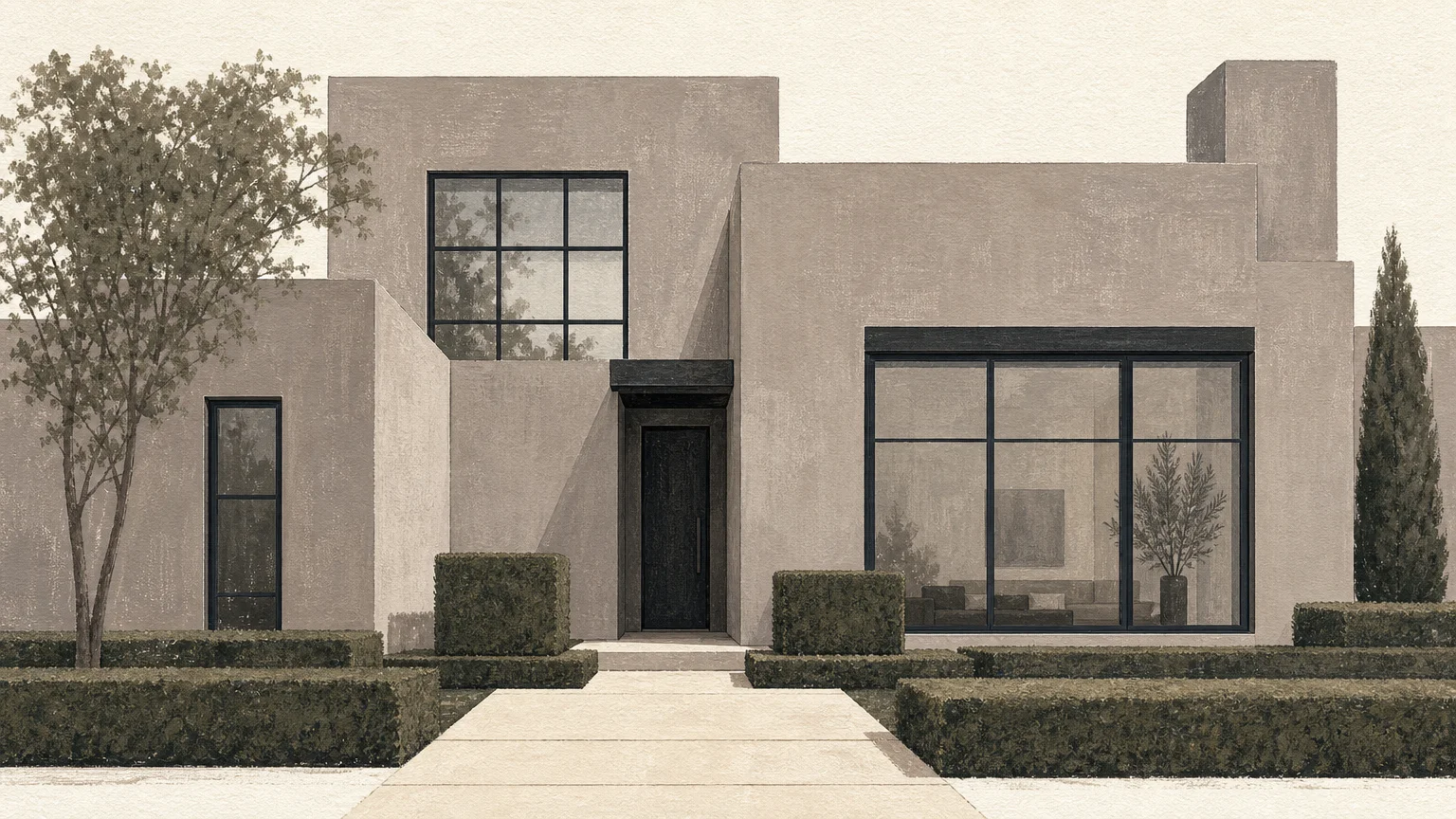
Selecting the perfect exterior neutral often feels like an impossible balancing act between boring and chaotic; however, smoked oyster emerges as the definitive, elegant solution for 2027. This incredibly complex color masterfully bridges the gap between warm taupe, soft gray, and subtle, shadowy violet. Unlike the flat, lifeless beiges or stark contractor grays of the past, smoked oyster possesses a chameleon-like quality that adapts flawlessly to its surrounding environment, rightfully earning its premier place among the top house paint trends.
The absolute genius of smoked oyster lies in its sophisticated undertones. Because it balances both warm and cool visual elements, it works harmoniously with nearly any hardscaping or roofing material you might currently have, from cool blue-gray slate walkways to warm tumbled brick driveways. This immense versatility grants you exceptional freedom when selecting exterior home colors for an intensive renovation. The hue fully embodies the essence of the quiet luxury aesthetic—it feels inherently expensive, deeply considered, and intentionally understated.
For a truly striking, magazine-worthy application, use smoked oyster as your primary siding color and boldly pair it with tone-on-tone architectural accents. Painting your trim, fascia, and gutters just one or two shades darker or lighter than the main body creates a monolithic, highly contemporary aesthetic. This sophisticated monochromatic approach deliberately draws the eye to the physical shape, massing, and texture of your home rather than sharply dividing it with high-contrast, distracting lines. You can further enhance this deeply sophisticated palette by incorporating unlacquered brass exterior hardware, rich mahogany doors, and oversized, modern gas-lantern light fixtures to elevate the entire visual experience for anyone approaching the property.
Trend #4: Midnight Blue-Black
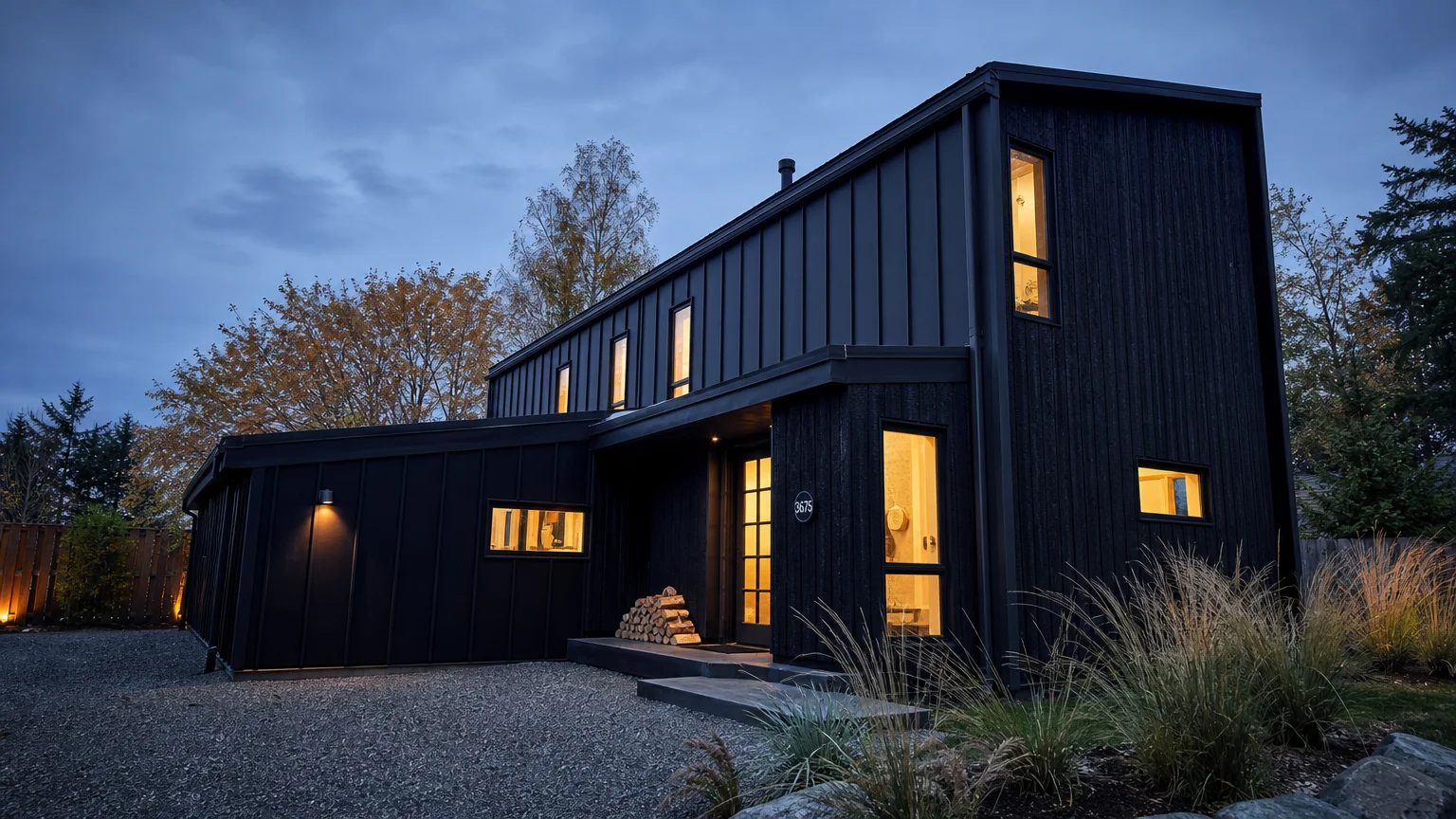
The dramatic, all-black exterior has enjoyed significant mainstream popularity over recent years, but 2027 officially introduces a much more nuanced, intensely livable alternative. Midnight blue-black offers all the striking, head-turning impact of a dark facade while deliberately removing the harsh, sometimes clinical edge of pure, unadulterated black. This deeply saturated, luxurious hue reads as a soft, velvety charcoal when cast in shadows, but direct, bright sunlight beautifully reveals a rich, hidden navy undertone that adds incredible depth and architectural character.
Choosing midnight blue-black demonstrates a highly confident, sophisticated approach to modern home exterior design. It serves as an absolutely exceptional, contrasting backdrop for vibrant landscaping, making lush green ferns, blooming white hydrangeas, and fiery red Japanese maples pop with extraordinary, museum-quality brilliance. This specific dark color also beautifully masks minor architectural imperfections, helping older, weathered siding or irregular stonework visually recede into a cohesive, elegant whole.
When utilizing the dramatic exterior paint colors 2027 heavily champions, you must meticulously balance the visual weight of the overall property. Expansive, light-reflecting glass windows become crucial to prevent the home from feeling like a heavy, intimidating void. You should introduce necessary warmth through rich, honey-toned wood accents strategically placed on wide soffits, custom garage doors, or the main front entry sequence. Natural stone chimneys, sweeping limestone pathways, or robust brick foundations also help effectively break up the dark expanse, visually grounding the structure to the earth. This careful, calculated balance of moody dark paint and inviting warm textures ensures your property maintains a welcoming, dynamic atmosphere despite its dramatically dark palette.
Trend #5: Creamy Alabaster
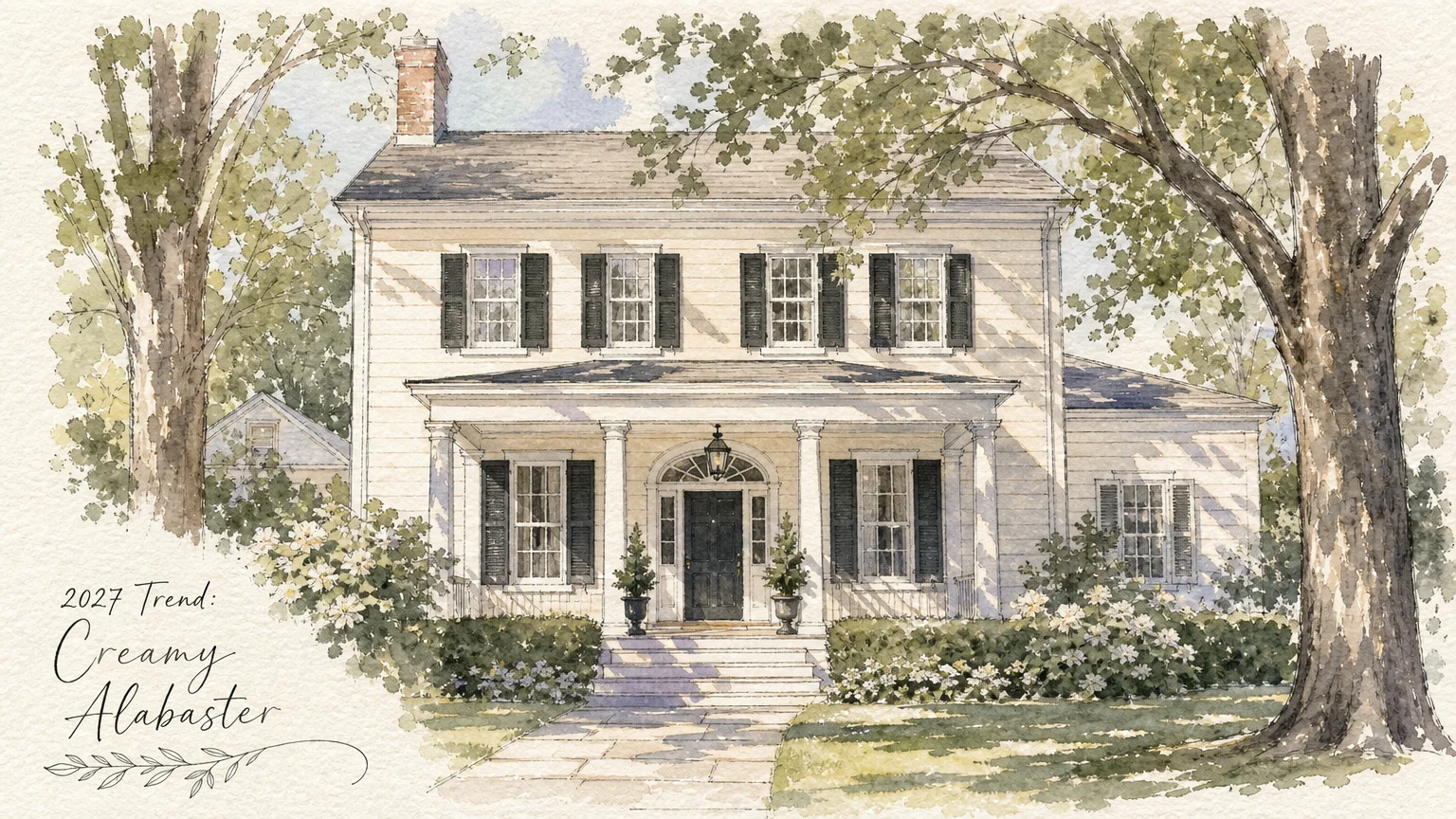
The pervasive era of the stark, blindingly bright white house is officially behind us. In its place, top architectural designers are turning enthusiastically toward creamy alabaster and soft, sun-washed plaster tones. This distinct shift directly reflects a broader cultural desire for residential spaces that feel authentically lived-in, historically rooted, and deeply comforting from the moment you pull into the driveway. Creamy alabaster successfully offers the clean, tailored crispness of white but carries a heavy, deliberate dose of yellow and brown undertones, resulting in a buttery, radiant warmth that glows beautifully in natural ambient light.
This nuanced, highly sophisticated neutral works absolute miracles on traditional and historic homes, honoring their original architecture while simultaneously providing a fresh, pristine canvas. However, it is equally effective and striking on contemporary modern builds, where it softens rigid, sharp angles and successfully prevents ultra-minimalist designs from feeling cold or sterile. Alabaster closely mimics the gorgeous look of natural, aged European lime wash, bringing a distinct sense of heritage and permanence to everyday American neighborhoods.
To effectively maximize your curb appeal ideas with creamy alabaster, you must pay strict, unwavering attention to your roof and trim color selections. This warm, enveloping white pairs exquisitely with naturally weathered cedar shake roofs or warm brown architectural shingles. For the trim, actively avoid cool, icy grays or harsh, unforgiving blacks; instead, opt for soft, earthy greiges, pale olive greens, or even muted French blues. These gentle, low-contrast combinations actively enhance the creamy, rich nature of the main siding, creating an inviting, masterfully layered exterior that feels entirely custom and meticulously curated by a professional.
Trend #6: Weathered Sage
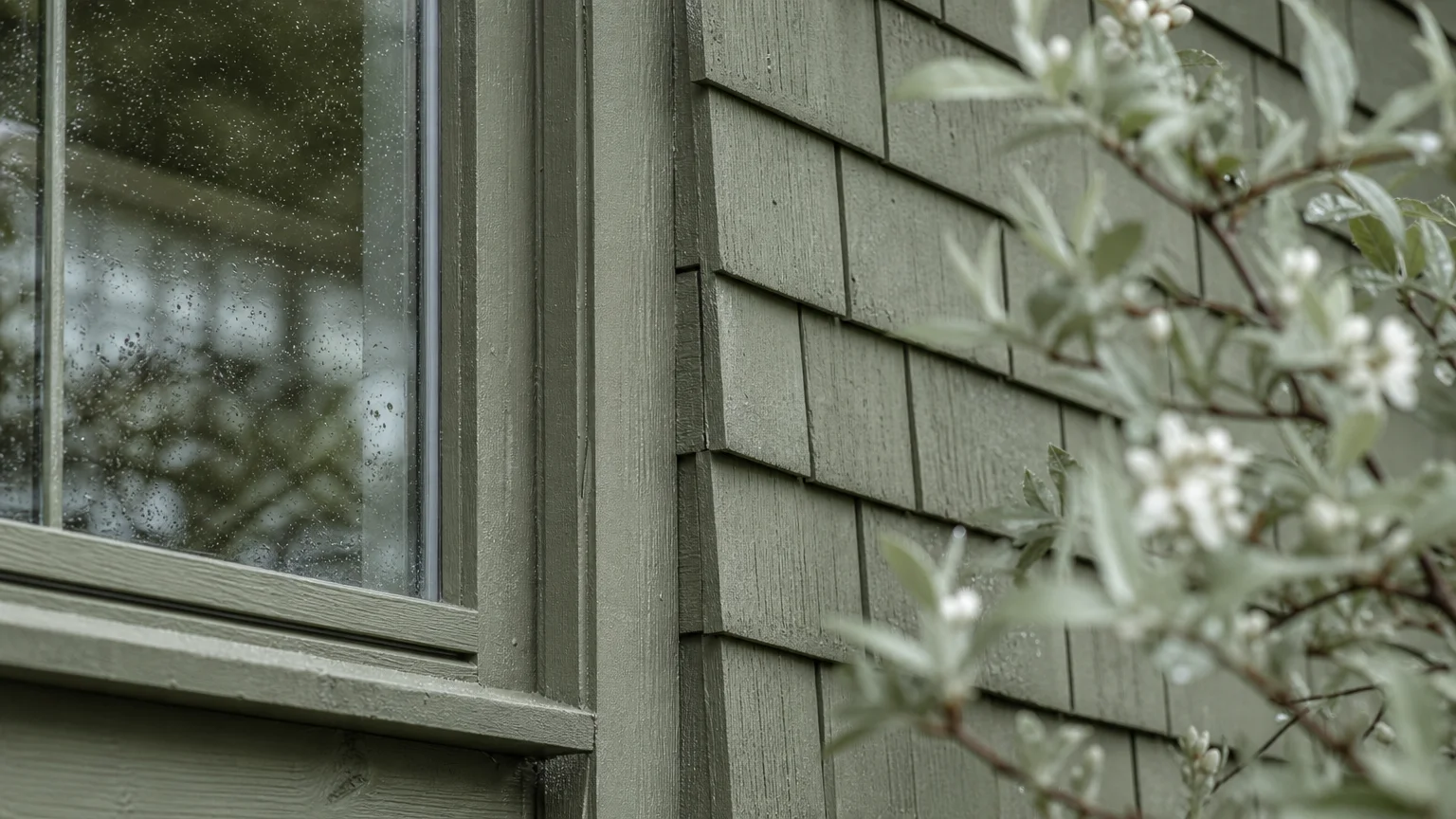
As homeowners increasingly seek to purposefully transform their properties into private, restorative sanctuaries, weathered sage quickly emerges as a dominant frontrunner in high-end exterior design. This extraordinarily soft, dusty green-gray perfectly captures the very essence of transitional serenity. It beautifully bridges the aesthetic gap between charming historical reverence and modern, tailored restraint, offering a subtle infusion of organic color for those who find traditional neutrals far too uninspired but consider vibrant, loud hues too intimidating for a permanent exterior application.
Weathered sage acts as a highly effective visual palate cleanser. It is inherently calming and restorative, accurately reflecting the soft, muted tones of silver dollar eucalyptus leaves, dried culinary herbs, and distant misty mountain ranges. Because it heavily leans into its gray undertones, it functions almost identically to a true neutral, allowing you to easily and confidently pair it with a remarkably wide variety of architectural styles. From rambling, expansive coastal shingle-style homes to crisp, low-slung mid-century modern ranches, weathered sage adapts effortlessly and immediately enhances the structure’s absolute best features.
When applying this highly sought-after color, seriously consider the immense power of a semi-transparent stain if you feature natural cedar or pine wood siding. This technique allows the organic wood grain to proudly show through, resulting in an exceptionally textured, earthy appearance. If using standard solid paint, intentionally pair weathered sage with creamy white trim and raw copper exterior accents that will naturally patina and age gracefully over time. A brightly colored front door—perhaps a deep, rich oxblood red or a sophisticated mustard yellow—can serve as a brilliant, welcoming focal point against the soft, restrained sage background. This strategic approach guarantees an exterior that remains perpetually fresh, inviting, and endlessly stylish for decades to come.
The Big Picture: Weaving These Trends into Your Home
Adopting the most highly anticipated exterior paint colors 2027 offers requires significantly more effort than simply picking a trendy shade from a hardware store swatch book; it demands a comprehensive, holistic understanding of your entire property. Successful, enduring home exterior design fundamentally treats the primary house, the surrounding landscaping, and the integrated hardscaping as a single, beautifully unified composition. When you finally decide to update your home’s exterior palette, you must first critically evaluate the permanent, fixed elements you cannot easily or affordably change. Your existing roof color, robust brick or stone foundations, expansive driveway materials, and even the size and maturity of your surrounding trees all play absolutely critical roles in determining which trending color will actually work best for your specific home environment.
For example, a cool-toned, blue-gray slate roof will inevitably clash aggressively with a warm, sunbaked terracotta facade, whereas that exact same roof will sing beautifully alongside smoked oyster or midnight blue-black siding. Similarly, an aggressively shaded, heavily wooded lot might completely swallow a deep forest green house, making a radiant, light-reflecting creamy alabaster the far superior choice to capture and bounce ambient sunlight.
You should always ruthlessly prioritize overall harmony over simply checking a box on an annual trend list. The most sophisticated, visually arresting properties often utilize these emerging colors in incredibly subtle, masterfully layered ways. Consider purposefully adopting a tailored tri-color scheme: select one primary grounding color for the main body, a secondary stabilizing color for the trim and fascia, and a strategic, personality-driven accent color for the front door and window sashes. By taking a highly methodical, thoroughly customized approach to these prominent house paint trends, you effectively ensure your home not only looks brilliantly current but also actively maintains an enduring, timeless elegance that drastically elevates its long-term market value and everyday neighborhood curb appeal.
Frequently Asked Questions
How do I accurately test these exterior home colors before committing to a full paint job?
You must always test paint colors directly on your home’s exterior; never make a final decision just by looking at a tiny paper swatch inside your artificially lit kitchen. Purchase sample pots of your top designer choices and paint large, two-foot sections of inexpensive poster board. Tape these painted boards directly to different sides of your house—specifically targeting the north, south, east, and west-facing walls. Meticulously observe how the colors shift and morph throughout the day as the sun moves. A smoked oyster tone that looks perfectly balanced and neutral in the crisp morning light might turn unexpectedly purple in the warm, fading late afternoon sun. This rigorous, hands-on testing phase is absolutely crucial for flawlessly executing your ultimate curb appeal ideas.
Should my garage doors match the primary siding color or the accent trim?
For the most elegant, seamless, and high-end look, you should almost always paint your garage doors the exact same color as your primary siding. Garage doors naturally take up a massive amount of visual real estate on most standard facades; painting them a heavily contrasting trim color violently draws the eye directly to them, unintentionally highlighting a strictly utilitarian feature rather than your home’s beautiful, carefully crafted architectural details. By deliberately blending the heavy garage doors into the main body of the house, you allow the front entry sequence, the porch, and the windows to rightfully command primary attention. Alternatively, if your doors are crafted from high-quality, authentic natural wood, leaving them beautifully stained and sealed offers an excellent, luxurious textural contrast that warms up the entire property.
Can I combine multiple house paint trends on a single facade without it looking chaotic?
You absolutely can mix multiple contemporary trends, provided you do so with a strict, disciplined eye for visual balance and architectural proportion. The absolute key to success is establishing a very clear, undeniable hierarchy among the chosen hues. Choose one specific trend to act as the dominant, guiding force—such as creamy alabaster for the main stucco siding—and use a second, complementary trend, like weathered sage, strictly for the functioning shutters, the trim, or the board-and-batten gables. You must ensure the underlying color undertones of both selections share a remarkably similar temperature or saturation intensity. By consistently keeping the application highly intentional, restrained, and purposeful, you expertly create a bespoke exterior that feels professionally designed, deeply cohesive, and infinitely engaging to anyone passing by.
For the latest color forecasts, consult industry leaders like Pantone and paint companies like Benjamin Moore. For professional design standards, refer to the American Society of Interior Designers (ASID).
Disclaimer: This article reflects design trend analysis and predictions. Personal taste and timeless design principles should always guide your decorating choices.
