

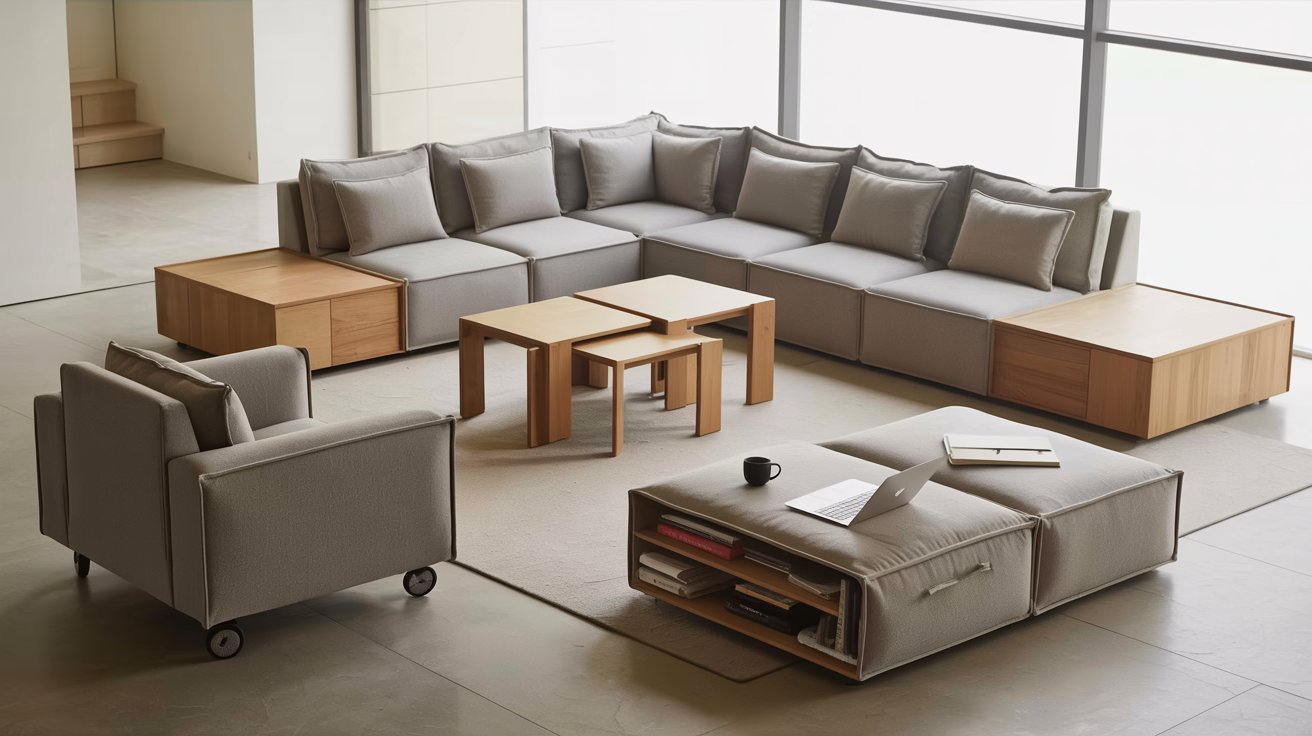
Trend #1: The Deconstructed Living Room — Flexible Zones Over Fixed Arrangements
In 2026, traditional living room layouts (sofa against the wall, fixed TV focal point, symmetrical seating) are being replaced by the deconstructed living room — a flexible, modular approach to furniture arrangement. Instead of permanent, activity-specific zones, the entire space is treated as adaptable and reconfigurable based on changing daily needs.
This trend emphasizes modular sectionals, movable chairs, nesting tables, and multifunctional ottomans that can easily shift between work, relaxation, and entertainment setups. It aligns closely with the rise of remote and hybrid work, where living rooms must serve multiple purposes throughout the day.
From an investment standpoint, the trend encourages spending on high-quality, durable flooring (since it remains visible as furniture moves) and layered, adaptable lighting systems — including recessed lighting, portable lamps, and smart lighting technology that can adjust to different room configurations.
Overall, the deconstructed living room prioritizes flexibility, multifunctionality, and long-term value over rigid, traditional layouts.
