

Transforming your kitchen does not require a massive renovation budget or weeks of disruptive construction; strategic, affordable updates instantly elevate the heart of your home to reflect modern design sensibilities. By focusing on high-impact details—from tactical color shifts to sculptural lighting—you achieve a curated, luxurious aesthetic without the prohibitive costs. Contemporary design now favors authenticity, textural richness, and functional elegance over sterile layouts. Whether you plan to refresh outdated cabinetry, introduce biophilic elements, or embrace the principles of quiet luxury through understated hardware, these accessible modifications breathe new life into your culinary space. Explore these eight achievable enhancements to masterfully blend everyday practicality with sophisticated, forward-thinking interior design.
Trend #1: Elevating Cabinetry with Quiet Luxury Hardware
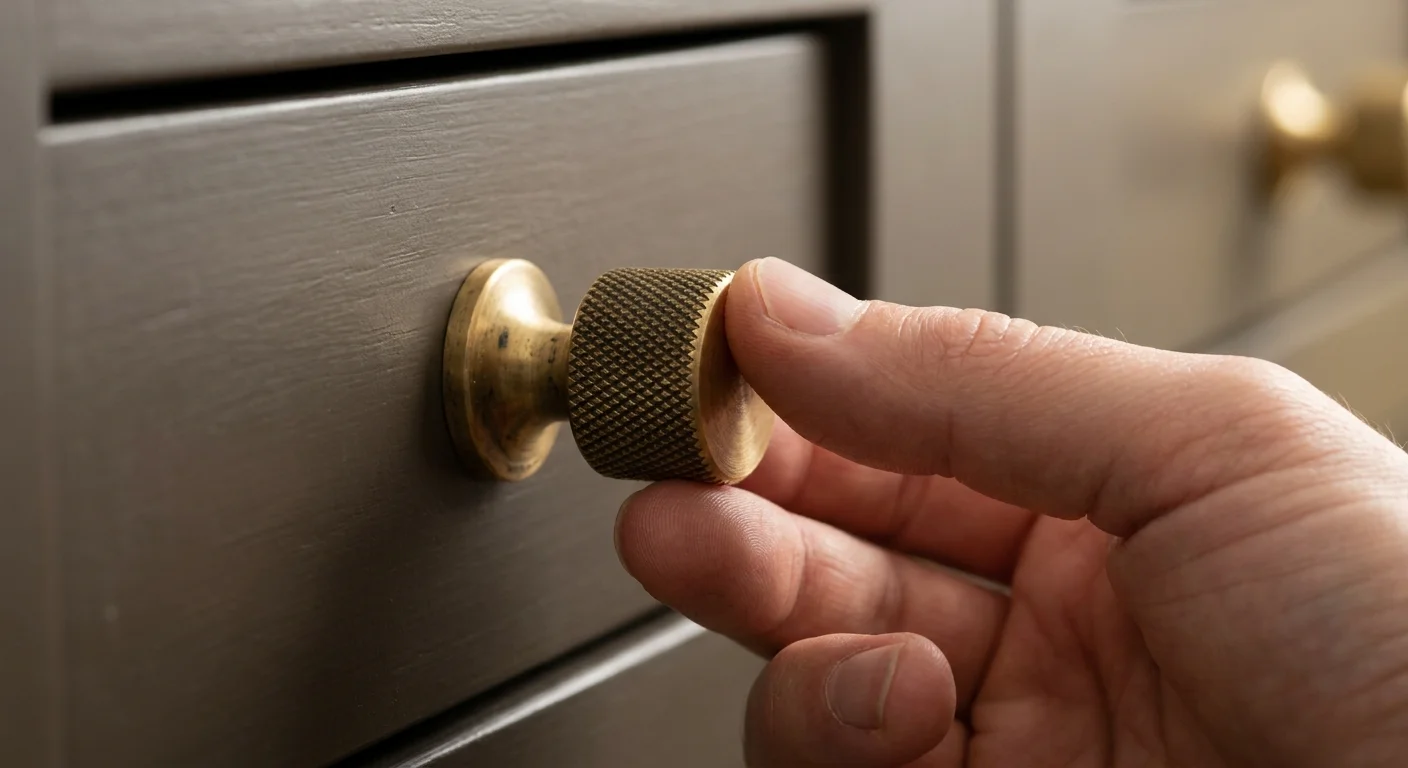
The concept of quiet luxury focuses on high-quality materials and understated elegance rather than flashy trends or overt displays of wealth; this philosophy translates perfectly to kitchen hardware. Builder-grade cabinet pulls often drag down the aesthetic of an otherwise functional space, signaling rapid construction rather than intentional design. By swapping out generic, lightweight hardware for solid, weighty materials, you instantly elevate the tactile experience of the room. Every time you open a drawer, the substantial feel of a well-crafted handle communicates exceptional quality and grounded sophistication.
Consider installing unlacquered brass, brushed nickel, or matte iron fixtures to anchor your aesthetic. Unlacquered brass, in particular, represents a pinnacle of modern design because it develops a personalized patina over time; the metal physically reacts to your touch and the environment, creating a living finish that adds immediate provenance and character to your cabinetry. This simple swap serves as one of the most cost-effective kitchen upgrades available, delivering a disproportionately high return on your visual investment. You avoid the disruption of a full demolition while fundamentally altering how the space feels and functions on a daily basis.
When selecting your new hardware, pay close attention to proportions and structural geometry. Oversized pulls work beautifully on large pantry doors, while smaller, knurled knobs add a tailored sophistication to upper cabinets. The knurling—a textured, diamond-patterned grip originally used in industrial manufacturing—introduces subtle architectural elegance that pairs magnificently with both flat-panel and classic shaker-style doors. You can maintain consistency in your chosen finish across the room, but carefully mix shapes and lengths to cultivate a layered, custom appearance that defies predictable, cookie-cutter standards.
Trend #2: Transformative Color Palettes Through Painted Cabinets
Ripping out perfectly functional cabinetry wastes both environmental resources and your renovation budget. Instead, executing an affordable remodel through strategic painting dramatically shifts the energy and perceived size of your kitchen. Modern aesthetics continue to move away from the stark, clinical whites and cool grays that dominated the previous decade. Today, interior design embraces warmth, depth, and a deep connection to the natural world, making earthy, saturated tones the premier choice for contemporary cabinet updates.
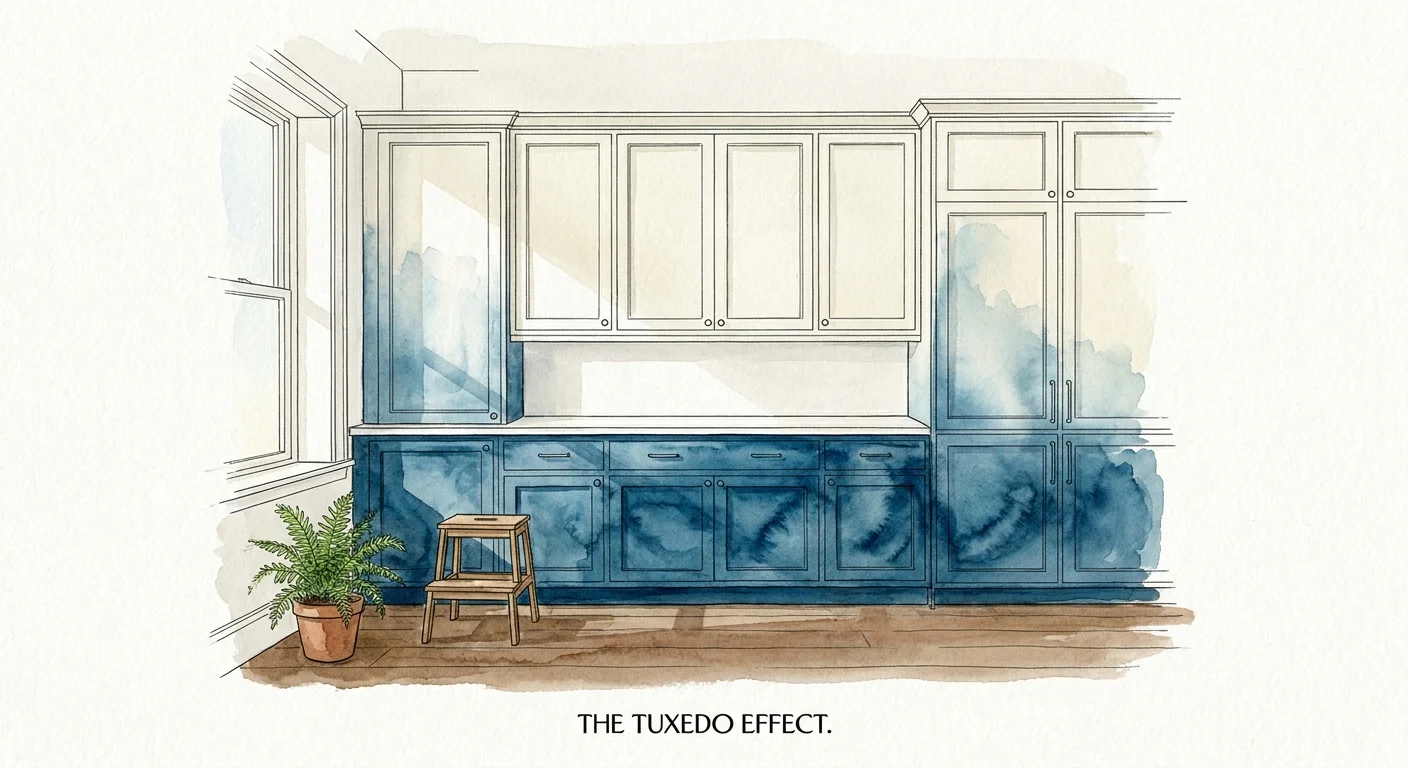
To achieve a sophisticated look, drench your cabinets in muddy sage greens, deep mushroom taupes, or moody oceanic blues. These complex colors change dynamically throughout the day depending on your natural light exposure, adding a layer of architectural intrigue to the room. If painting the entire kitchen feels overwhelming, embrace the tuxedo effect; paint your lower cabinets or the central island a rich, grounding shade while keeping the upper cabinets a soft, creamy off-white. This technique visually anchors the room, drawing the eye downward and making standard ceilings feel substantially higher and more expansive.
Proper execution ensures the longevity of your newly painted surfaces. You must rigorously clean, degloss, and prime the wood or medium-density fiberboard (MDF) before applying a durable cabinet-specific enamel. While this project demands considerable elbow grease, the final result mimics a bespoke, custom-built kitchen installation. The strategic application of color acts as a powerful architectural tool, allowing you to define zones and introduce personality without altering the physical footprint of the room.
Trend #3: Sculptural Lighting and the Return of Provenance
Lighting dictates the mood, functional utility, and perceived volume of your kitchen more than any other singular element. Relying entirely on harsh, overhead recessed lighting flattens the room, creating an atmosphere reminiscent of a commercial office rather than a welcoming home. Modernizing your space requires a layered lighting approach—blending ambient, task, and accent fixtures—to cultivate warmth and visual interest. Replacing outdated pendant lights over an island or dining nook instantly modernizes the entire spatial composition.
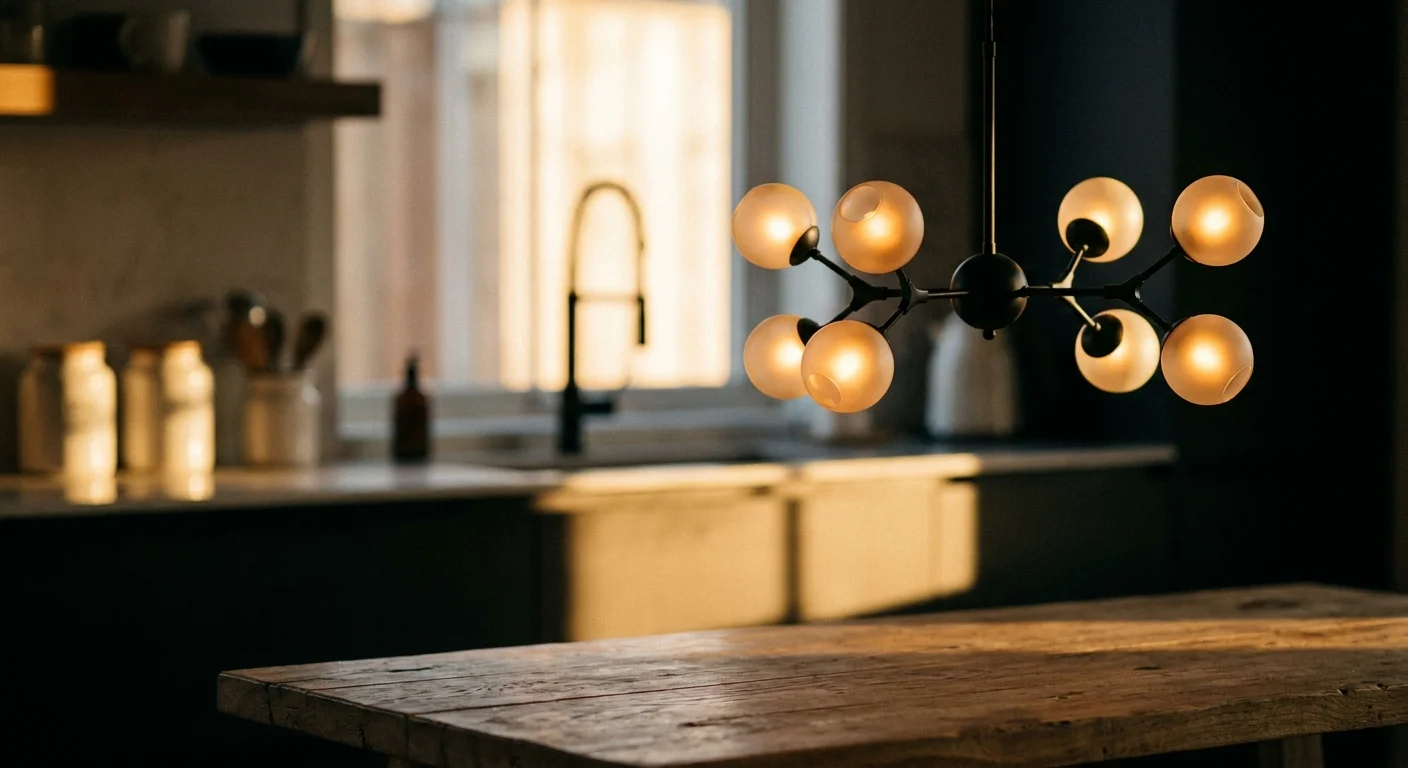
Embrace fixtures featuring curved silhouettes, organic shapes, and materials that tell a story. Provenance—the history and authenticity of an object—plays a massive role in current home decor trends. Wabi-sabi influences, which celebrate imperfection and natural materials, encourage the use of raw ceramic shades, hand-blown seeded glass, or woven rattan pendants. These sculptural elements soften the inherently hard, orthogonal lines of kitchen cabinetry and major appliances, acting as suspended artwork that draws the eye upward.
Beyond the physical fixture, you must strictly control the color temperature of your bulbs. Swap out cool, blue-toned daylight bulbs for soft, warm white LEDs measuring between 2700K and 3000K. This subtle adjustment dramatically transforms the atmosphere, bathing your countertops and food preparation areas in an inviting, golden glow. Installing dimmer switches further amplifies your control over the environment, allowing you to transition seamlessly from bright task lighting during meal preparation to a subdued, intimate ambiance for evening entertaining.
Trend #4: Cultivating Organic Modernism with Open Shelving
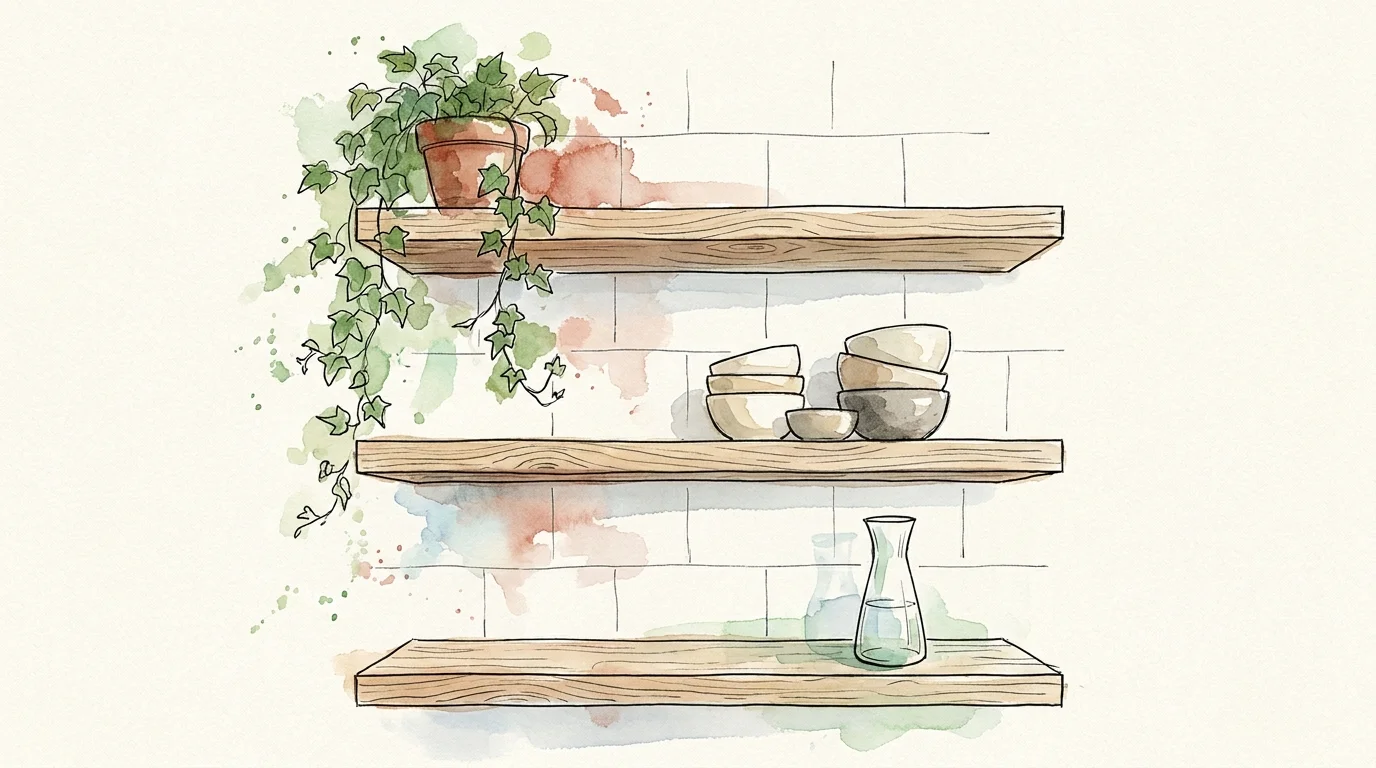
Modern interior design continuously draws inspiration from the natural world, a concept known as biophilic design. You can easily introduce this aesthetic into your kitchen by removing a section of heavy, imposing upper cabinets and replacing them with thick, floating wood shelves. This architectural modification breathes air into cramped layouts, breaking up the visual monotony of continuous cabinetry and exposing more of your walls, which visually expands the room’s boundaries.
Floating shelves provide a dedicated stage for purposeful curation. Select solid white oak or rich walnut planks to introduce natural wood grain, which acts as a warming counterpoint to sleek quartz countertops or stainless steel appliances. Support these shelves with minimalist internal steel brackets for a clean, floating effect, or opt for unlacquered brass gallery rails to lean heavily into a vintage, European bistro aesthetic. The juxtaposition of organic wood against flat drywall or glossy tile instantly elevates the architectural sophistication of the space.
Once installed, style these shelves with intention. Display stacks of handcrafted stoneware, trailing pothos plants, and clear glass jars filled with dry pantry staples. The key to successful open shelving lies in rigorous editing; you must balance negative space with functional items. Avoid cluttering the boards with mismatched plastic containers. Instead, utilize the rule of three—grouping items in odd numbers—and vary the heights of your displayed objects to keep the visual rhythm engaging and harmonious.
Trend #5: Tactile Backsplashes and Surface Innovations
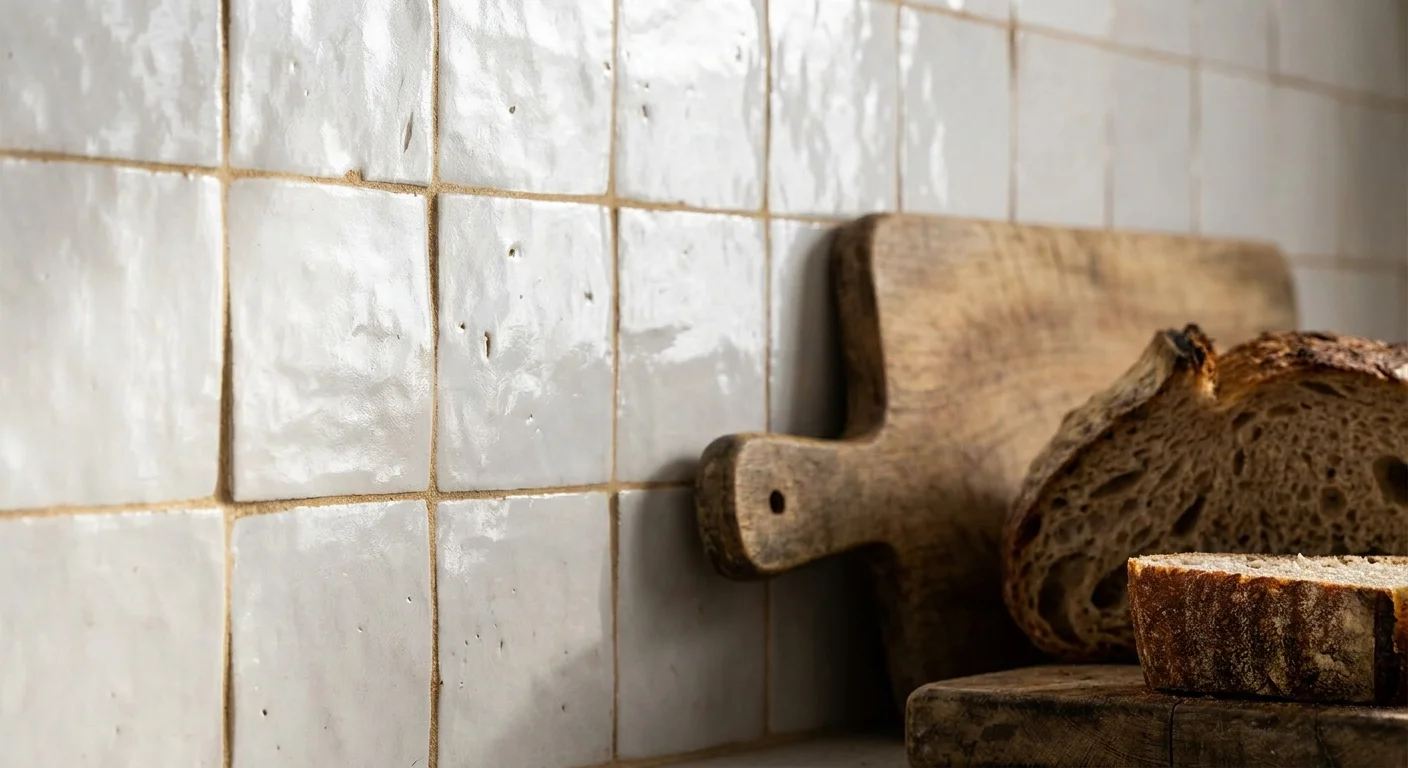
The vertical backdrop of your cooking area carries immense visual weight, framing your stove and bridging the gap between your upper and lower cabinets. Traditional, flat-printed subway tiles often feel sterile and overly ubiquitous. Modern spaces now prioritize tactility and texture over busy, high-contrast patterns. Upgrading your backsplash introduces immediate luxury, and contemporary material innovations make this one of the most accessible kitchen updates available to the average homeowner.
Authentic Moroccan Zellige tiles currently dominate high-end design portfolios. These handmade clay tiles feature subtle variations in thickness, glaze, and color tone. When installed, they bounce light erratically around the room, creating a shimmering, watery effect that feels incredibly organic and bespoke. You can replicate this opulent look on a budget by sourcing ceramic tiles designed with faux-undulating edges and varied glaze pools, paired with a closely matched grout to create a seamless, textural expanse.
If you rent your home or strictly need to cap your spending, high-quality peel-and-stick backsplash materials offer a stunningly realistic alternative. Advanced manufacturing techniques now produce adhesive tiles made from actual gel resin, thin-cut stone veneers, or embossed vinyl that mimics the texture of beadboard and raw plaster. Installing these innovative materials requires nothing more than a utility knife and a few free hours, yet they completely redefine the architectural envelope of your kitchen without the permanence or expense of traditional mortar and grout.
Trend #6: Ergonomic Refinements for Senior Homes and Universal Living
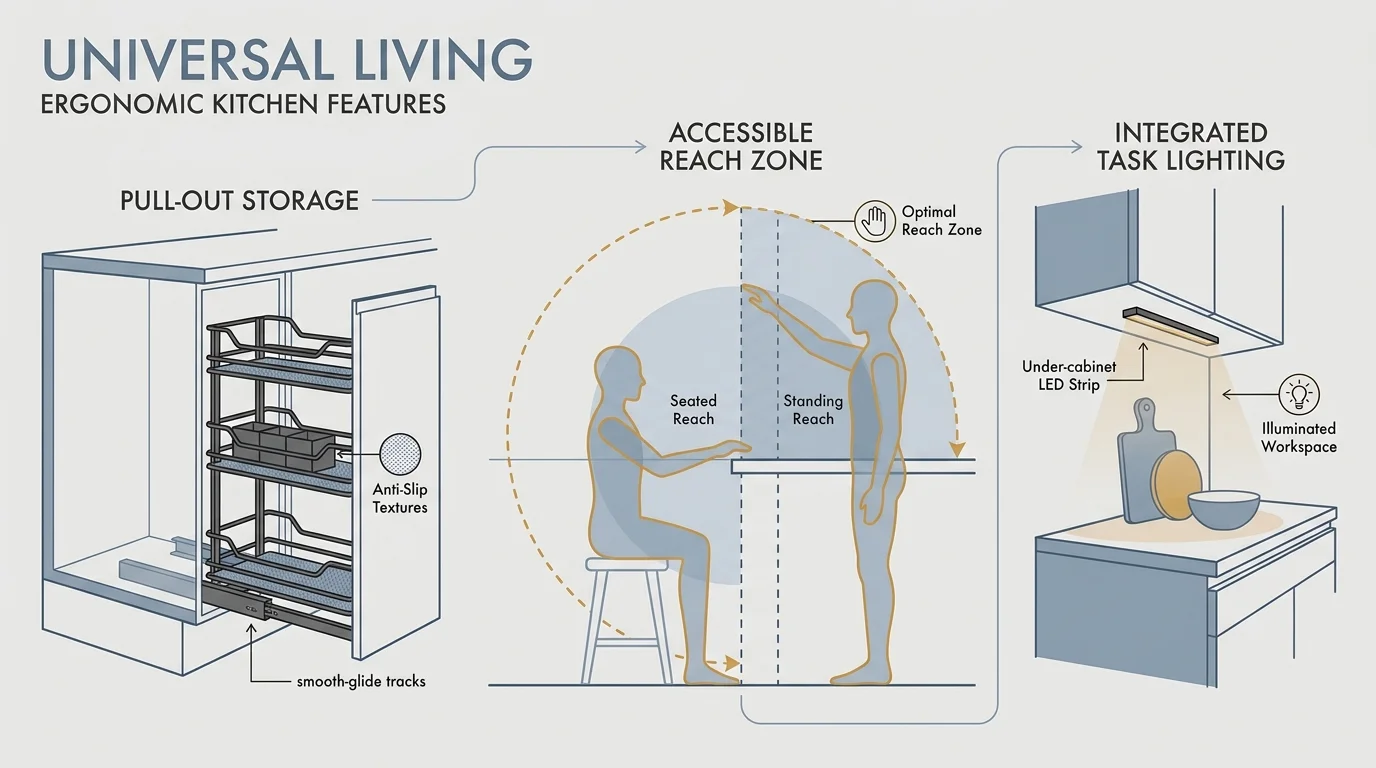
Outstanding interior design must prioritize function alongside aesthetics; this holds especially true when adapting spaces for multi-generational living or optimizing senior homes for long-term comfort. The principles of universal design ensure that an environment remains accessible, safe, and intuitive for individuals of all ages and mobility levels. Fortunately, the industry has shifted away from institutional-looking accessible hardware; modern ergonomic modifications look incredibly chic and intentional.
Upgrading your primary sink faucet to a high-arc, pull-down model with touchless sensor technology represents a massive leap in both hygiene and usability. Touchless faucets prevent the spread of raw food bacteria and drastically reduce the physical strain on arthritic hands. Similarly, replacing tight cabinet knobs with wide, D-shaped pulls allows users to hook their fingers or wrists behind the hardware, requiring significantly less grip strength to access daily necessities.
Within the cabinets themselves, retrofitting fixed shelves with smooth, glide-out pantry drawers eliminates the need to bend, kneel, or awkwardly reach into dark corners. You can easily install heavy-duty, soft-close sliding tracks into existing cabinetry. These thoughtful, structural modifications guarantee that your kitchen actively supports your lifestyle and physical well-being. By integrating these universal design elements seamlessly into your decor, you future-proof your home while maintaining a decidedly elevated, contemporary appearance.
Trend #7: Layering Textiles for Architectural Softness
Kitchens inherently feature a high concentration of hard, reflective surfaces—stone countertops, glass windows, metal appliances, and sealed wood floors. Without strategic softening, these spaces easily echo and feel uncomfortably austere. Introducing high-quality textiles bridges the gap between purely utilitarian cooking zones and comfortable living areas, effectively pulling your home decor aesthetic directly into the culinary workspace.
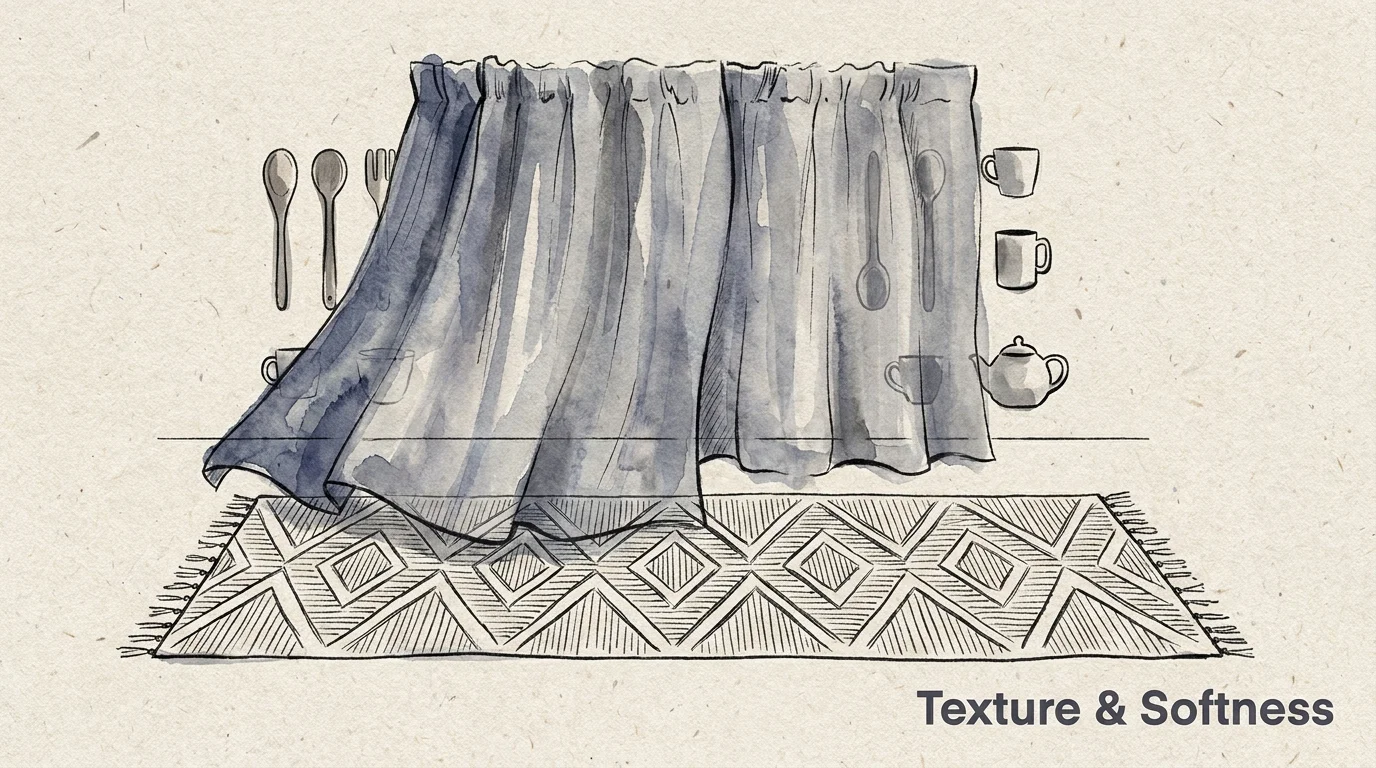
Begin by anchoring your main walking path with a vintage-inspired runner rug. A low-pile or flat-weave rug running parallel to your kitchen island introduces rich, grounding colors and complex, distressed patterns that hide minor spills brilliantly. Today’s market offers a wealth of washable rug options that perfectly mimic antique Persian or Turkish designs. These durable textiles provide essential cushioning underfoot—relieving joint pressure during extended cooking sessions—while significantly dampening acoustic reverberation throughout the room.
Address your windows by swapping out generic aluminum blinds for textured Roman shades or breezy cafe curtains. Woven wood shades made from bamboo, jute, or natural grasses add an essential layer of organic warmth and filter harsh afternoon sunlight into a soft, diffused glow. If you prefer fabric, select performance linens or heavy cotton blends that resist moisture and odors. These fabric additions frame your views outdoors, soften the sharp geometric angles of your window casings, and finalize the tailored, decorated feel of the space.
Trend #8: Curating Countertops with Purposeful Home Decor
The final, most affordable layer of any successful kitchen upgrade relies entirely on the objects you choose to leave on display. No amount of expensive tile or premium cabinetry can overcome the chaotic visual noise of cluttered, disorganized countertops. Modernizing your kitchen requires a strict evaluation of your daily tools and a commitment to displaying only items that serve both a functional and aesthetic purpose. You must treat your kitchen counters with the same curatorial eye as your living room coffee table.
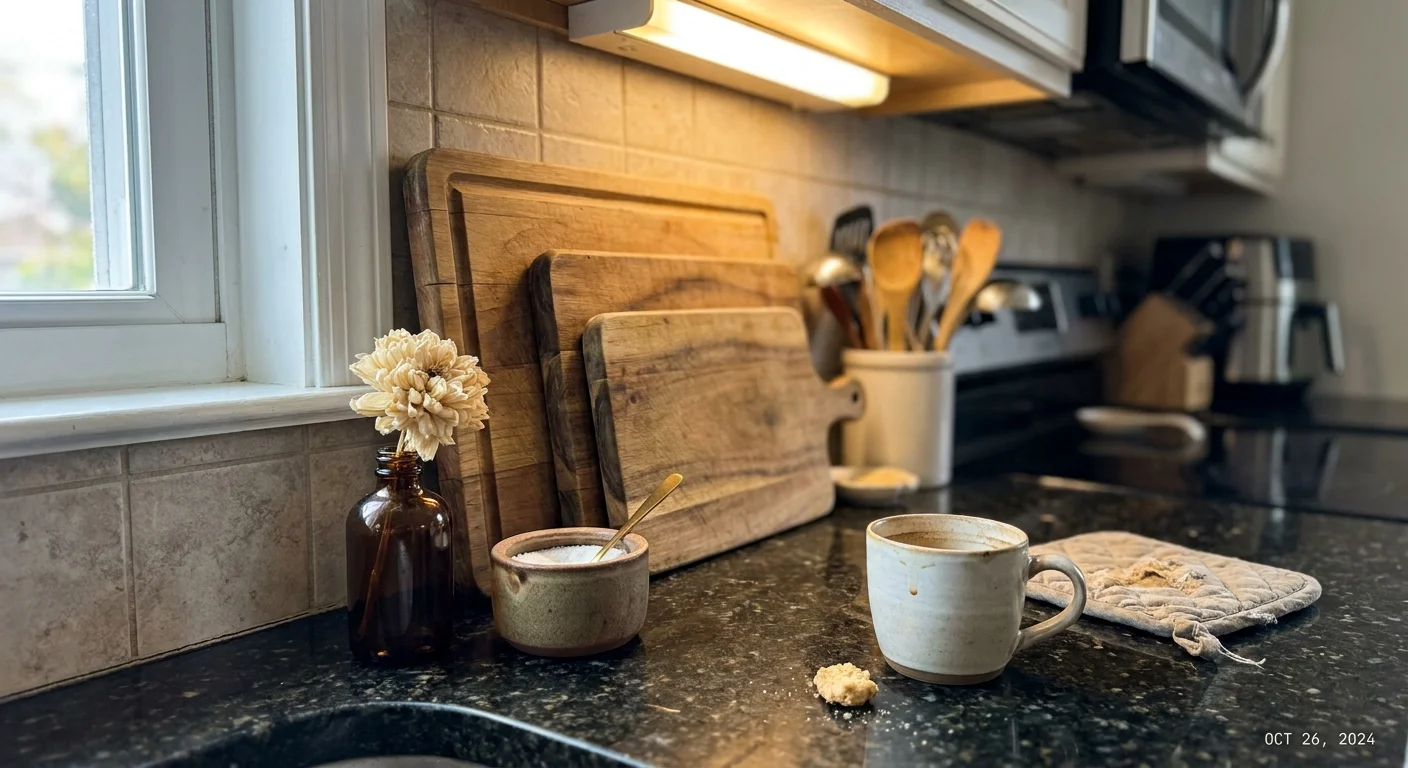
Begin by decanting visually disruptive branded packaging. Transfer your dish soap and hand lotion into matched, matte ceramic or amber glass pump dispensers. Store frequently used cooking oils in elegant cruets, and corral salt cellars, pepper grinders, and garlic bulbs onto a beautiful marble or foundational wood pedestal tray. Grouping these loose items onto a single tray instantly transforms scattered clutter into a deliberate, stylized vignette. This tactic immediately elevates the perceived tidiness and luxury of the entire room.
Finally, lean thick, well-worn wooden cutting boards against the backsplash to add vertical height and natural warmth. Swap brightly colored synthetic sponges and plastic dish brushes for natural sea sponges and wooden-handled tampico brushes. Incorporate a heavy ceramic crock to hold your most attractive wooden spoons and metal spatulas. These small, highly intentional choices collectively dictate the overall caliber of the room, proving that the most compelling kitchen trends often rely on styling rather than heavy construction.
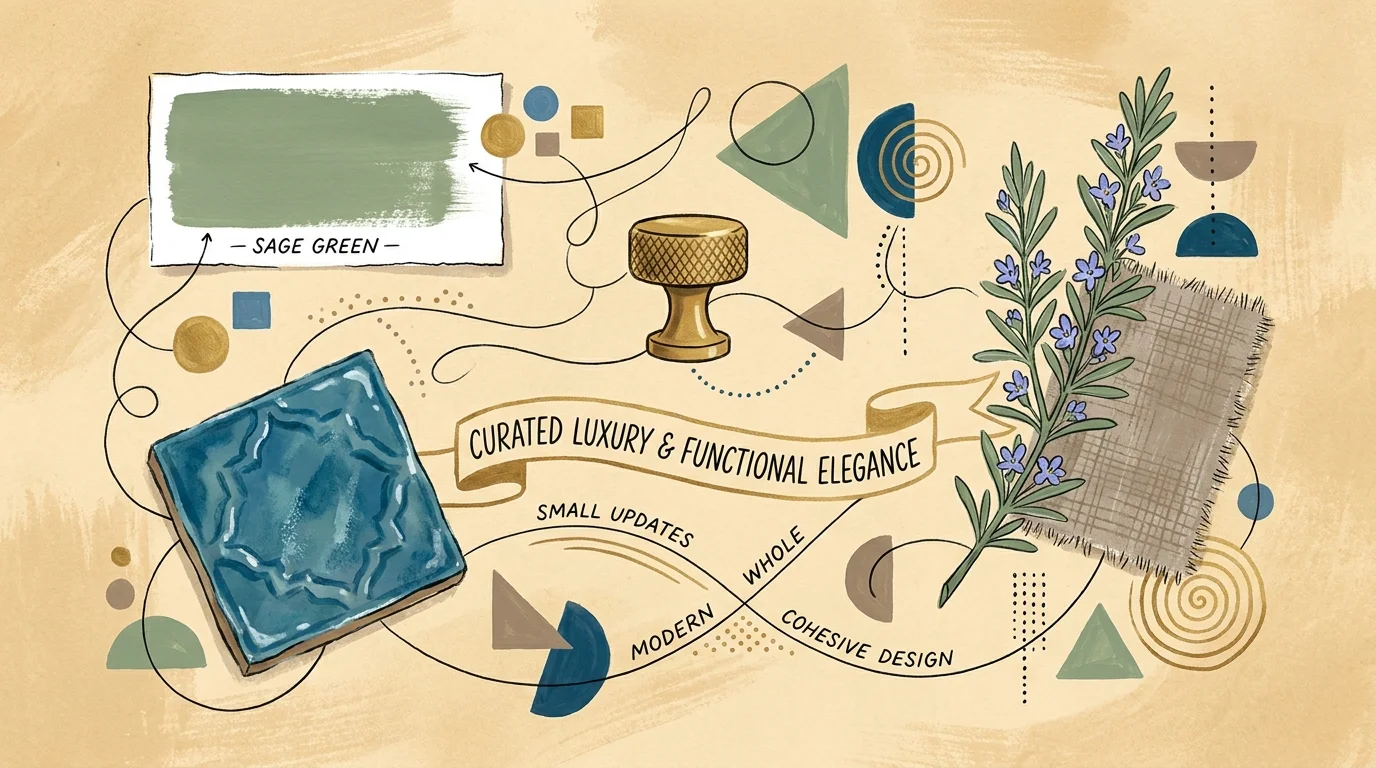
The Big Picture: Weaving These Trends into Your Home
Implementing these design strategies successfully requires restraint and a clear understanding of your home’s foundational architecture. You do not need to execute all eight trends simultaneously to achieve a modern, luxurious feel. Instead, select two or three updates that directly address your space’s current aesthetic shortcomings. If your kitchen feels dark and heavy, prioritize a fresh coat of warm, earthy paint on the cabinets and introduce layered lighting. If your space feels overly clinical and sterile, focus entirely on introducing organic modernism through floating wood shelves, handmade tactile backsplashes, and layered vintage textiles.
True modern design avoids mimicking passing fads; it emphasizes longevity, personal comfort, and high-quality material selection. By focusing on the tactile touchpoints of the room—like unlacquered brass hardware, smooth ceramic tile, and ergonomic plumbing fixtures—you build a sensory experience that feels inherently expensive and deeply welcoming. Always allow your personal lifestyle to dictate your design choices, ensuring that your newly updated kitchen remains the functional, beautiful heart of your home for decades to come.
For the latest color forecasts, consult industry leaders like Pantone and paint companies like Benjamin Moore. For professional design standards, refer to the American Society of Interior Designers (ASID).
Disclaimer: This article reflects design trend analysis and predictions. Personal taste and timeless design principles should always guide your decorating choices.
Frequently Asked Questions
How do I mix metal finishes without making the kitchen look chaotic?
Mixing metals adds an incredibly sophisticated, custom feel to your kitchen when executed with intention. The key is to establish a dominant metal finish, which should account for roughly seventy percent of your fixtures, and select a secondary accent metal for the remaining thirty percent. For example, you might use matte black for your cabinet hardware and faucet, while introducing unlacquered brass exclusively for your overhead lighting and open shelving brackets. Ensure the metals share a similar finish style—mixing a matte black with a brushed brass works beautifully, whereas pairing a highly polished chrome with a rustic oil-rubbed bronze often clashes.
Which affordable updates offer the best long-term value for a future home sale?
When considering future resale value, prioritize updates that improve the permanent fixtures and broader neutrality of the space. Professionally painting dark, dated cabinets in a warm, universally appealing neutral tone—like soft taupe or classic creamy white—yields a massive return on investment. Upgrading builder-grade hardware to solid, high-quality metals also dramatically changes a buyer’s perception of the kitchen’s overall value. Finally, replacing outdated, inadequate lighting with modern, energy-efficient LED fixtures instantly makes the space feel larger, cleaner, and more welcoming to prospective buyers.
Can I implement these design trends in a highly compact or galley kitchen?
Absolutely. In fact, small kitchens benefit immensely from these strategic updates because every square inch carries significant visual weight. In a tight galley kitchen, removing upper cabinets on one side and replacing them with open wood shelving instantly breaks the tunnel effect, making the room feel wider and taller. Relying on a monochromatic color palette, where your walls and cabinets are painted the exact same warm hue, blurs the room’s boundaries and creates an illusion of expansiveness. Furthermore, upgrading to quiet luxury hardware ensures that the few tactile details present in the small space feel incredibly premium.
How often should I update my kitchen decor to keep it looking modern?
A well-designed kitchen anchored by classic architectural principles does not require frequent overhauls. Foundational elements like cabinetry colors, backsplashes, and major lighting fixtures should comfortably last a decade or more without feeling dated, provided you avoid hyper-specific, fleeting fads. To keep the space feeling fresh and modern year after year, focus your updates on the easily swappable layers. Changing out your vintage runner rugs, refreshing your window treatments, and curating new countertop accessories every few seasons allows your kitchen to evolve effortlessly with current home decor trends without demanding a continuous influx of major capital.
